Monday, November 16, 2020


Anti-war Statement of Azerbaijani Leftist Youth

Anti-war Statement of Azerbaijani Leftist Youth

Statement by signatories of a group of left wing Azerirbaijani youths denouncing the current conflict between Azerbaijan and Armenia and the system of nations, xenophobia and capitalism that have allowed it to happen.

The Nagorno-Karabakh conflict has been with us since 1988, ever since the largely ethnic Armenian population of this province of the Azerbaijan Soviet Socialist Republic demanded a union with Armenia. The ensuing war ended in 1994 with Nagorno-Karabakh and some neighboring Azerbaijani territories under Armenian control and nearly a million people as refugees. Ever since then, as Azerbaijan has tried to retrieve the lost territories and the occasional negotiations proving fruitless, there have been periodic escalations of the conflict such as the Four-Day War of 2016, but never has the fighting reached the magnitude of the fighting for the last couple of days, with hundreds of soldiers (and many civilians) killed on each side. As nationalist propaganda in both countries has reached a fever pitch and the very little anti-war activity is not only drowned by vitriol but punished with arrests, LeftEast is proud to share this statement of young Azerbaijani leftists.

The recent round of escalations between Azerbaijan and Armenia in Nagorno-Karabakh once again demonstrates how outdated the framework of a nation-state is for present realities. Inability to transcend the line of thought that divides people into humans and non-humans solely based on their place of birth and then proceeds to establish superiority of the “humans” over their dehumanized “others” as the sole possible scenario for a life within certain territorial boundaries is the only occupier that we have to struggle with. It is the occupier of our minds and abilities to think beyond the narratives and ways of imagining life, imposed upon us by our predatory nationalist governments. It is this line of thought that makes us oblivious to the exploitative conditions of our bare survival in our respective countries as soon as the “nation” issues its call to protect it from the “enemy”. Our enemy though is not a random Armenian, whom we have never met in our lives and possibly never will. Our enemy are the very people in power, those with specific names, who have been impoverishing and exploiting the ordinary people as well as our country’s resources for their benefit for more than two decades. They have been intolerant of any political dissent, severely oppressing the dissenters through their massive security apparatus. They have occupied natural sites, seasides, mineral resources for their own pleasure and use, restricting access of ordinary citizens to these sites. They have been destroying our environment, cutting down trees, contaminating water, and doing the full-scale “accumulation through dispossession”. They are complicit in the disappearance of historical and cultural sites and artifacts across the country. They have been diverting resources from essential sectors, such as education, healthcare, and social welfare, into the military, making profits for our capitalist neighbors with imperialist aspirations – Russia and Turkey. Strangely enough, every single person is aware of this fact, but the sudden wave of amnesia hits everyone as soon as the first bullet gets shot on the contact line between Armenia and Azerbaijan. Blinded, just like characters from Saramago’s novel of the same name, they immediately turn self-destructive, cheering the deaths of our youth in the name of “martyrdom” for the “sacred” cause. This cause has never been anything more than an existential platform, keeping the governments of both Azerbaijan and Armenia in place and serving as the justification for unending militarization of societies along with the pursuit of more violence and deaths.

We don’t blame the people though: in the absence of alternative interpretative frameworks to make sense of the war and the conflict between the two nations, the nationalist ideology remains uncontested. If there is one thing that our underfunded educational institutions do well, that is definitely teaching to accomplish hatred and spread nationalist propaganda. Because hatred is never a product of individual psyches, but is constructed and produced within particular power relations. In a context where there is no direct contact between the ‘hating’ and the ‘hated’, the more the ‘hating’ audience becomes concerned with its own matters of everyday economic survival within the system that denies them equal redistribution of resources and services and accumulates more and more daily misery, the more there is a need to constantly remind the ‘hating’ audience to hate the ‘hated’ and reproduce their hate. Hatred needs to be accomplished. They stole “our” lands, we say, so we hate them. Never mind that there must be a myriad of other ways of inhabiting that land without a single group claiming its uncontested ownership over it.

A teenage brother of one of us once exclaimed in awe after having heard of a pending work meeting with Armenian colleagues abroad. “Are you going to see a REAL Armenian?”, he said. Come to think of it, generations of people have grown up in a vacuum without a contact with those, we have been coexisting with in the same space for centuries. What kind of violence does such isolation of existence bear upon our minds and creative abilities? Needless to say, it is also a perfect recipe for dehumanization of the “other”. What can be easier than attributing all the evil qualities onto the people, I have never interacted with in my life?
Years after the signing of the Bishkek agreement (1994) resulted in a ceasefire between the parties, Armenian and Azerbaijani governments have been accumulating serious amounts of lethal weaponry, which they now are preparing to use against one another. Last time the countries came close to the peace resolution was in 2001, during the Key-West peace talks with the mediation of the Minsk Group co-chairs — France, Russia, and the US. However, due to prevailing nationalist sentiments and the fact that the leaders on both sides were not prepared to compromise, the peace talks failed. And it has never been approached as decisively as it was at the beginning of the 21st century.

We find it extremely challenging to seek the ways of avoiding another war in the region in the current situation. We observe increasing, widespread hate speech dominating the narrative on both sides, especially when it comes to TV channels, official statements or social media posts circulating with worrying intensity. Claims are being made from both sides that are difficult to verify and thus create an atmosphere of fear, mutual hatred, and anti-trust.

People on both sides have suffered and endured through pandemic and economic recession, trying to keep up with the challenges that the crises brought with itself, and now they are being dragged into a military conflict, which delays any potential constructive resolution of the Nagorno Karabagh conflict. It also requires a great deal of economic and human resources to maintain the conflict, so that the elites from both sides keep benefiting from it. Azerbaijan’s military budget for 2020 has risen to $2.3 billion, while for Armenia this indicator stands at $634 million, essentially constituting 5% percent of GDP in both countries.

It is long due that we, Azerbaijani and Armenian youth, take the resolution of this outdated conflict into our hands. It should no longer be the prerogative of the men in suits, whose aim is the accumulation of capital, both economic and political, and not the conflict’s resolution. We should shed away this ugly cloak of the nation-state, which belongs in the dustbin of history, and imagine and create new ways of common and peaceful coexistence. For this, it is very important to revive political, grassroots initiatives, comprised primarily of ordinary local citizens, that will re-establish peace talks and cooperation. We, leftist activists in Azerbaijan, by no means support any further mobilization of the country’s youth into this meaningless war and see restoring the dialogue as our primary goal.

We do not see our future or the resolution of the conflict in further military escalations and spreading mutual hatred. Recent military clashes in NK don’t do any good for the purpose of the establishment of peace in the region. We do not even want to envision the risks of being dragged into a full-scale war, as we understand what kind of implications it could have for our societies and future generations. We strongly condemn every move taken to prolong the conflict and deepen hatred between the two peoples. We want to look back and take the steps necessary to rebuild the trust between our societies and the youth. We reject every nationalist and state-of-war narratives that exclude any possibility of us living together again on this soil. We call for peacebuilding and solidarity initiatives. We believe that there is an alternative way out of this stalemate through mutual respect, peaceful attitude, and cooperation.

Signatories:
Vusal Khalilov
Leyla Jafarova
Karl Lebt
Bahruz Samadov
Giyas Ibrahim
Samira Alakbarli
Toghrul Abbasov
Javid Agha
Leyla Hasanova

Hosted on Left East http://www.criticatac.ro/lefteast/anti-war-statement-of-azerbaijani-leftist-youth/


Class War 11/2020: Capitalism Kills

CLASS WAR's new bulletin:

Class struggle in times of Plague Inc.

“War against the virus” is the continuation of the 

permanent war waged against us

THIS IS AN EXCERPT SEE THE WHOLE ISSUE HERE
https://www.autistici.org/tridnivalka/class-war-11-2020-capitalism-kills/
http://www.autistici.org/tridnivalka/wp-content/uploads/class_war_11-2020-en.pdf

Class struggle in times of Plague Inc.

Year 2019 was a year of worldwide class movement of the scale and intensity not seen for decades, perhaps since the wave of revolutionary struggles in sixties and seventies. The capitalist normality of business as usual had been profoundly shaken by myriads of protests, strikes, riots and in some places even military and police mutinies. Hundreds of thousands of angry proletarians had taken to the streets of Chile, France, Lebanon, Iraq, Haiti, Hong-Kong, Iran, India, Colombia and many other places. For many communist militants these movements represented a breath of fresh air. On this momentum we were watching riots in Sao Paulo, Recife, Rio or even subway occupation in New York or protests against polluting business in Wenlou in Pearl River Delta with a lot of anticipation that these are the signs that the proletarian wildfire is spreading further and starting to engulf these huge centers of the accumulation of Capital. New Year came and the movement was showing no signs of losing energy. On the contrary, new eruptions were appearing almost every week in yet another city, region, country… And then, three months into 2020 it all came abruptly to halt. Or so it seemed.
We do not claim, as some do, that Covid-19 pandemic as such is a hoax or propaganda of the State, fabricated in order to crush and silence the class movement and to re-forge the “social peace” and inter-class united front against the “common enemy”. But in practice, it brings exactly the same effects. As the Covid-19 pandemic is spreading around the world, so are the repressive measures of the State against the proletariat with massive curfews, ban on gatherings, hacking of the Smart Phones in order to “trace the virus”, updates of face-recognition software behind the omnipresent CCTV cameras to recognize faces of people wearing a medical mask, sealing the borders, etc. Hand in hand with those measures comes a bourgeois ideological narrative of a struggle for the common good, of the need to stay calm and patient, while “our national heroes” on the front line wage a battle against “the invisible enemy”. And make no mistake, the narrative says, these heroes are not just doctors and nurses treating the Covid-19 patients, but also cops guarding us “for our own good”, “philanthropists” like Bill Gates or Elon Musk with their visionary solutions to save us all (while still making “few” bucks along the way) or media reporters bringing the new analyses and reports on number of dead to the confined masses.
We also cannot claim for sure that Covid-19 was deliberately created in a lab as a weapon, although there is a long history of military-scientific complex of the capitalist State doing precisely that: from experiments with Syphilis in Tuskegee, through outbreak of Marburg virus out of “Cold War” virologist lab in Germany, up to the development of Bubonic Plague bacteria carried by war-heads in Soviet Union, and not to mention the famous Wuhan Institute of Virology (and its lab P4), one specialization of whose is precisely the research on… coronaviruses, and which fueled so much the fertile imagination of some conspiracy milieus, it is clear that infectious diseases have their firm place in Capital’s murderous arsenal. Most probably Covid-19 originated in one of the wild animals sold at a food market and mutated to human transmittable strain. But whatever is its origin, what creates the conditions for spreading of infections is the very nature of the capitalist society – centered around densely populated urban hubs, poles of accumulation of Capital and trade links between them serving the circulation of resources, commodities and workers, including future workers (students) and workers in a process of reproducing their labor power (tourists).
As Capital’s accumulation inevitably also represents accumulation of misery, each such agglomeration contain overcrowded neighborhoods, public transport vehicles, factories and offices where production logic makes it impossible to protect oneself, a health care system that is only designed for a purpose of “quickly fixing workers”, etc. Of course due to modern transportation we are all required to travel further, faster and in higher numbers than any time before. And as the situation in Brazil shows us, even bourgeois can spread the virus with their leisure or business trips. Yes, everyone can potentially catch the virus, this is a grain of truth in a bourgeois propagandist fable, that: “We are all in it together”. When these billionaire bastards spread the virus to their nanny or Bolsonaro himself on a public meeting, it will be once again proletarian neighborhoods that it will decimate.
Of course it is a proletarian who is once again given free and democratic “choice” of getting sick with Covid-19 or going hungry and homeless or being brutalized by repressive forces or all of the above. But this time imposition of this terror does not come so smoothly for Capital and its State. The pandemic and related lock-down had initially a huge pacifying effect on the raging proletarian movement, but at the same time it clearly exposed the inhumanity inherent to this society based only on generation of profit at all human costs. We are supposed to believe that measures imposed by the State are meant for our protection. We are irresponsible hooligans, when we take to the streets to oppose their law and order, when we meet to discuss and organize ourselves or when we are looting supermarkets, yet when we travel to work in a bus full of coughing people or when we sit shoulder to shoulder by a conveyor belt or by an office desk, we are somehow vaccinated by the surplus value that we produce. The reality is simple: it has always been in the interest of Capital to make us “social distance” in order to cripple our ability to organize ourselves for class struggle, but not when it needs us to produce commodities, and/or to reproduce social peace and therefore the capitalist social relation, through the mediated cooperation. Face to face with this fallacy, it did not take long before the lock-down propaganda started to crumble and class resistance started to erupt again.
In Italy, it first started with prison mutinies all around the country when visits had been banned. At the same time, no means of protection against the disease had been provided to prisoners. Violent confrontation with guards and cops hit twenty-seven prisons, with prison in Modena practically destroyed. Guards were taken hostage and some prisoners managed to escape. At least seven prisoners had been murdered. State propaganda will later shamelessly claim that their deaths were due to drug overdose.
Soon after that, a wave of wildcat strikes swept across the country, when workers of many industrial companies including FIAT and Arcelor Mittal (ex-Ilva) demanded and in many cases successfully imposed the immediate closure of the factories. This was followed by strikes in supermarkets and strikes of food delivery workers demanding protective equipment and sanitation. Trade unions first openly opposed these strikes for undermining the economy, only to later pathetically give some of them “their blessing” when the struggle was over. Meanwhile in Southern Italy, which is less affected by the actual infection, but where curfew pittance is even smaller and food distribution is crumbling, occasional confrontations with cops and looting of supermarkets threaten to grow into “hunger riots”. But it did not end with Italy.
All around the world, prisoners are among the most severely impacted by this double inhuman reality of the deadly disease and repressive measures of the State, because of the overcrowded conditions and isolation inside the prisons. Whatever they did to be thrown in jail, whoever they are prisoners are essentially proletarians persecuted by the capitalist society for disrespecting to some of them its holiest fetish (i.e. private property), while most of the others are cynically locked down for disregarding the conventional and legal process of appropriation of desirable commodities. Generally speaking, they are locked up for breaking the monopoly of violence usurped by the State, after being pushed into fratricide bloodshed by the social contradictions and alienation inseparable from the capitalist modus operandi: “property is theft” and vice versa. They were among the first who have risen up against the new social control measures, against further atomization and dehumanization and separation from their loved ones. Against the extraordinary high rate of Covid-19 mortality due to the disgusting and unhealthy environment they are forced to live in. Despite the horrible State violence and the little organized solidarity from outside, all around the world, they were among the first to break the enforced “social peace” of the lock-down and to fight the guards and special police units, to burn down the prisons, to try to escape and reach the comrades outside. This was also the case in Colombia, Venezuela, France, Argentina, USA, Brazil, Lebanon, Russia, Iran, etc. In this sense, they represented through their social practice (at a specific time and under particular circumstances) a spark of the current and upcoming class movement; they embodied the driving force of our class, what our class is called upon to do for its liberation. They have cut through the numbing curtain of the “public health” propaganda and have shown to the rest of the class the naked reality we are facing and how to fight against it.
And a surge of wildcat strikes, riots and looting is re-emerging across all the continents – in France, Cameroon, USA, Indonesia, Kenya, Colombia, Lebanon, Venezuela, Chile, India, Russia, Belgium, Turkey, Iran, Senegal… to name just a few. Although the movement is still far weaker and more sporadic than before the pandemic – because of the repression, more sophisticated social control or fear of contracting the disease, the social contradictions that gave birth to the last wave are still here and are bound to get even more extreme in the coming months.
In Lebanon as elsewhere in the world, the proletarian anger has been boiling under cover of lock-down measures since March to finally spill over in the form of an uprising in Qoubbeh prison in Tripoli on April 8th. Soon after, the streets of many cities all around the country again filled with angry protesters. This time, huge but largely pacifist demonstrations that formed a big part of the 2019 movement are replaced by smaller, but determined and violent confrontations. The militant proletarian current that had been always present in the movement has resurfaced and it again chooses the targets belonging to our class enemy – burning down banks, police stations, military check-points and vehicles, looting the supermarkets, etc.
Let’s note in passing an important element: the fact that the proletariat, in its struggle against exploitation and more particularly in its struggle against the increase in the rate of exploitation, is targeting through direct action the banks and financial institutions of national and international capitalism, this is a fundamental thing that we do support. Now, the fact that some militant structures are developing a whole theory that comes to personify Capital through the disgusting face of the bank and financial capital, and therefore to straddle the workhorse of denouncing “bancarization”, “financial oligarchy” and “plutocracy”, this is yet another thing and we cannot follow them on this dangerous terrain whose consequence is about diverting the proletariat from its struggle against the very foundations of the capitalist society and ultimately denying our communist critic on the totality of what exists. Definitely the proletariat is the irreconcilable enemy of money but the latter is nothing but an abstract form expressing the exchange value and it cannot in any way be amalgamated with the very essence of Capital and its social relations…
But let’s go back to the development of our class struggles in times of pandemic. As we were writing this text, the murder of George Floyd by cops in Minneapolis has proved to be the last straw that broke the camel’s back and massive demonstrations against State violence and misery are spreading across USA, with daily riots, attacks on police stations, on bourgeois media, looting of commodities, blocking of highways, etc. and had forced Donald Trump to hide in a bunker. With years of accumulated anger and the reality of crushing poverty, cynical attitude of the government to handling of Covid-19 pandemic and 40 millions of unemployed, there seems to be no calming on the horizon.
To understand, what this pandemic and related curfew means for social and economic conditions of this society and why it is potentially a point of no return, we have to take a little bit closer look on the capitalist “business as usual”.
In order to realize profit a capitalist has to sell his commodities on the market, commodities that realize thus their value, the value that is crystalized within them during the process of production. As he has to constantly compete with other capitalists for it, he has to try to sell his commodities cheaper than competitor. To keep their rate of profit, they have to constantly push lower the production unit cost of the commodity. This can be done by lowering of labor costs (the well named “variable capital”) – e.g. to push down a worker’s hourly wage. However the wage of a worker cannot be squeezed under the minimal level necessary to allow him to physically survive and also to reproduce his labor force. The only other choice for the capitalist is to try to increase the productivity of a worker, to make him produce more commodities for the same time period, or in other words to increase the rate of “unpaid labor” provided by the latter. This way a capitalist can pay fewer workers to produce the same amount of commodities. The amount of labor a single worker can perform for a given time period also cannot grow forever, but it is determined by the physiological limits of a human body.
A capitalist can overcome this problem through automation – through replacing as much human labor as possible with machines. The worker then becomes more and more just an appendage to the machine, loading the resources and unloading finished products, controlling their quality, repairing and maintaining the machine, etc. while the machine is autonomously spitting one product after another. This allows an individual capitalist to lower the production unit price of a commodity and through selling more units of this commodity at a lower price to conquer a larger part of the market than his competitors.
This capitalist loses this advantage however, at the moment his competitors introduce the same technological innovations and new lower price of a commodity becomes a new average. The only logical way forward for him then is to repeat the whole cycle. The problem is that by getting rid of workers and replacing them with machines, this capitalist has decreased the ratio of living labor (which is the only one that can be exploited to generate surplus value and therefore a profit – i.e. workers) to dead labor (which on the contrary requires investments to keep it running – i.e. machines). As all factions of Capital follow the same logic, at a certain point the average rate of profit (in a given region or globally) drops under the level necessary for the investment to restart this cycle. The final option, in an attempt to postpone an inevitable crisis, is to take out a loan– i.e. a monetary expression of the profits promised to be realized in the future.
This brings us back to the reality of pandemic, of global lock-down and the realization of many bourgeois factions (and their creditors) that there is no future profit waiting for them. Not only most of them were not able to produce their commodities, but with many workers (who are also primary consumers of commodities in capitalism) losing their jobs now or in a near future and with further deepening of general misery, there will be nobody to buy them. Bankruptcies of many businesses are popping up like mushrooms after the rain and soon the banks and insurance companies will follow. As the majority of the world is either still under at least partial curfew, or is waking up from it into a reality of boarded-up shop-screens, the Holy Cow of the Economy is ailing from the Foot and Mouth Disease.
Global bourgeoisie is beginning to split into two ideological alliances, depending on their economical and strategical interests. The first one was either able to scrape more profit from the lock-down situation or had savings that allowed it to temporarily postpone it and bet on “new” strategies in social control to keep the proletariat off of the streets and safely under bourgeois ideological dominance. It is aligned with the sectors that can make their workers work from home over the internet, that deliver the goods and services to the consumers trapped at home or provide medical and pharmaceutical services.
Of course the military-industrial complex also falls into this category. Military spending is not only not decreasing during the pandemic, but on the contrary many national factions of the global State are investing heavily to both their social control capacity (further police and border guards militarization, new spy software, etc.) and murderous capacity (fighter jets, tanks, missiles, etc.). It is clear that this is a preparation for repression of the anticipated class struggle or for an attempt to hijack it and turn its participants into cannon fodder in yet another capitalist war. With ever present competition between USA, China and Russia as well as many smaller powers, the peril of the global inter-bourgeois war grows every day. Especially as the bourgeoisie of these countries will find it more attractive as a mean to channel the proletarian anger at home.
The second alliance has been affected much more, its profit is in free fall and it wants to restart the business immediately, even if it takes few millions of dead workers. Either way, the proletariat is expected to make sacrifice for “common good” – e.g. to support the continuation of the capitalist society of misery, exploitation, alienation and oppression.
Covid-19 pandemic has blown off the bourgeois masquerade and has uncovered the deep structural crisis of capitalism. We can already see the unemployment skyrocketing as millions of workers are being fired in US, Europe, Russia, Brazil, India, etc. and we can expect this trend to continue in the future months. The proletarian reaction seems to be inevitable and just a matter of time.
But our class enemy is not going to wait with folded arms. The State violence and terror will intensify along with increasing utilization of the digital technologies and artificial intelligence (AI) to control the labor force and to suppress any expression of proletarian resistance. As our homes will on much larger scale than ever before become part of our workplace, so will our exploiters and their State develop further means (technical, social, legislative, etc.,) to spy on us, to control us even at home. Hand in hand with that comes an ideology of “new technical revolution” and “Industry 4.0”, trying to convince us that we should support and embrace the development of AI and automation and capitalist progress in general because “it will make the work of all of us easier”. Even if those robots are meant to accelerate disposal of us as a labor force and leave us with no means to sustain ourselves. This tendency inevitably creates a reaction of our class, which materializes into “modern or digital Luddite” movement opposing the automation and the adoption of AI in a context of resistance against capitalist progress. Unfortunately, this movement is often co-opted by primitivist social-democracy that instead of expropriating the digital means of production and repurposing them for the needs of proletarian struggle, push for a vulgar rejection of the technology and leave it solely to our class enemy to weaponize it against us.
As usual, we can expect a whole range of pacifying techniques used by every variation (“socialist”, “communist”, “anarchist”, unionist, left- and right-wing, ethnic) of the social-democracy – which is nothing but a bourgeois organization for the workers. Some of these techniques have a long history of being used to weaken and divide the proletarian movements in the past, to scare off, co-opt, separate, isolate, disorganize us, they will appeal to our “common sense”, threaten us with unemployment, pit us against each other based on the national, racial, gender, religious, political, etc. lines, they will promise us breadcrumbs and invite us to participate in the organization of our own exploitation. We can see it clearly for example in the pacifist and divisive approach of career activists from Black Lives Matter movement, co-opting the movement against State violence in USA. “Green” bourgeois faction – fronted by groups like “Extinction Rebellion” (that should be renamed more properly “Extinguish Rebellion”) and backed by Big Energy investors – will get more active and will aggressively try to sell us a program of “individual green choices” and “support for sustainable alternatives” as a false solution to the capitalist catastrophe. Last but not least, there is always a possibility of a second wave of the pandemic, and many other pandemics in the future as further exploitation of the nature will uncover new pathogens like for example the anthrax and other “giant viruses” that would resurface on earth when the deep frozen soils of the permafrost where they are contained since centuries and millenniums will melt down as a result of the warming climate). But this time global bourgeoisie – armed with a new scientific knowledge and vaccines, with newly equipped repressive forces and with new methods of social cooptation – will be prepared to efficiently and selectively weaponize it against the movement of our class.
So, what does this new normal of capitalist status quo mean for us communists and for the proletarian movement as whole? How to struggle against the inhumanity of Capital and its State and for a global human community while at the same time protect ourselves and our comrades from the deadly disease? It turns out that the movement is already able to organically grasp this issue and in practice come with solutions through class self-organization. Protection against the Covid-19 is being produced by the proletarian movement itself, just like other means necessary for sustaining of struggle (food, medicine, weapons, shelter, etc.) have always been produced by past proletarian movements. Doctors and nurses on strike or in other way involved in the struggle supply the masks and disinfection, face shields are being 3D-printed and distributed, and so are food and medical supplies looted from supermarkets – in USA, in Lebanon, in France… We have to stress that there is a need to catch and develop this energy in order to broaden it to counter-strike all murderous means the Capital unleashes against our movement besides diseases – guns, tanks, chemicals, spying, arrests and isolation, starvation, propaganda…
It is more and more clear that whole this curfew episode was just a temporary break in the activity of our class, that instead of smothering it, it served rather as a pressure cooker and stripped away all the pretense of the bourgeois society to reveal the bare bones of the capitalist contradictions. Now we once again stand on the crossroad of history. The end of this pandemic may be coming soon, but the pandemic of capitalist catastrophe can only deepen. The decade that lies ahead of us may be the most brutal in human history with global generalization of war, poverty, destruction of nature and disease and maybe the end of human race or it can be a period when whole this inhumane society will be ripped apart in a revolutionary class struggle.
• Let’s organize ourselves against the global State and all its murderous arsenal including diseases! We have to put an end to the police killing, maiming and arresting us! We have to practically resist the attempts of the State to starve us into submission by expropriating all the necessities, by expropriating the land, by expropriating the means of production!
• Let’s develop means – physical, electronic, organizational, programmatical – to protect the movement! We have to come prepared! Or better said we have to go where the State is not waiting for us! We have to “be water”! We have to denounce and attack the toxic pacifism of the social-democracy! We have to denounce and attack the defenders of private property!
• Let’s oppose every attempt of the bourgeoisie to turn us into cannon fodder in the capitalist war! We have to organize together with our proletarian brothers and sisters in uniform sent to suppress our movement to break their ranks and turn their weapons against their own commanders!
• Let’s spit in the face of all the bourgeois ideologues trying to divide us with their myriad of positive identities, symbols and flags to defend!
Against the Sword of Damocles of the capitalist catastrophe hanging over our heads we oppose the insurrectionary revolutionary struggle for Communism!
# Class War – Summer 2020 #

Just like the rest of the world, we were caught unprepared by the pandemic of Covid-19 and the related lock-down that affected our organizational capacity. We were unable to finish the publication of our materials on the rapidly developing global class movement that shook the world in 2019 and the first months of 2020. For this reason, we are publishing our text here as “an appendix” to our analysis of new “post-Covid” reality. We are convinced that not only is it important to embrace, celebrate, analyze and learn from this high tide of the class struggle yesterday, but that it is intimately related to the tsunami tomorrow.

By way of an afterword…

“War against the virus” is the continuation of the permanent war waged against us

Throughout this bulletin, we didn’t spend too much time on the seriousness or not of the Covid-19 epidemic, transformed into a pandemic by our masters and according to official figures (i.e. those of our class enemies: the State of the capitalists and its medicine) has already infected several million people across the planet and led directly or indirectly to the death of several hundreds of thousands of people. We don’t care about all these pseudo debates about masks and lock-down that touch only on a superficial aspect of the Covid-19 issue, i.e. its management by the various governments (bourgeois, by definition), and whose unique obsession is the growth of Capital and its rate of profit. On the other hand, we know full well that the effectiveness of generalized lock-down appeals more to the ruling class in terms of control and domestication of the “dangerous classes” (to use the expression of our enemies), in terms of counterinsurgency measures (even as a preventive measure) against an exploited class that has been more than greatly restless in recent months.
What we do know very well too is that the bourgeoisie and its State are permanently at war against us, against humanity, against the proletariat in struggle. We have known for too long, as we have directly and historically suffered from it in our flesh, that capitalism was built on piles of corpses and that there is no reason for it to stop doing so. Since capitalism has emerged globally as the dominant social relation, as a synthesis and dialectical overcoming of all previous social relations, it has done nothing but affirm and underpin its domination through war. This is all the more true in times of major crisis, which is only a moment of the permanent crisis of the capitalist mode of production, of its multiple internal and mortal contradictions, the most important of which is obviously the existence of the proletariat as an exploited and therefore revolutionary class, not to mention the tendency of its rate of profit to fall, which pushes capitalism to increasingly squeeze the exploited class, and to wage war on it.
And in this sense, we could easily paraphrase the military strategist Clausewitz for whom “war is a mere continuation of politics by other means” by asserting in our turn that the “war against the virus” is, for the capitalist class and its State, the continuation of the permanent war waged against us, against the future gravedigger of Capital.
Of course, the hundreds of thousands of officially recorded deaths attributed to Covid-19 (not to mention those who could very well be so as a result of the measures of repression and isolation that have been imposed) don’t represent enough surplus labor force to be eliminated; it is not with this “small” bloodletting that capitalism will find the way back to profits that it believes to be unlimited. No, what capitalism still needs (and more than ever before) is a real shock, a “cleansing” the likes of which humanity has never experienced in its history. This is more than a necessity so increasingly superheated are the contradictions of this deadly social relation, which are threatening to blow up the boiler of profits and therefore of our exploitation if pressure is not released very quickly. What capitalism needs is a massacre, a rapid and effective destruction of a large number of productive forces: both dead labor (machines) and living labor (proletarians).
Basically, if we are called and mobilized on the front line of the future military war which, like all wars, will be a war against our class, therefore a class war, it is up to the proletariat to no longer allow itself to become docilely recruited as cannon fodder after having been, just as submissively, factory fodder, or simply labor fodder… and democracy fodder!
In any case, beyond the health, medical, economic and social causes of the pandemic (and therefore its origin), what this “health crisis” has revealed or confirmed to the world is the totally anxiety-producing world that capitalism is throwing us into, which can only live and develop by producing anxiety (here in the face of the illness), fear and terror, and this has always been the case. Just look at these last 75 years (i.e. the time of three generations who know each other and live side by side, and share memories, thoughts and criticisms) to find traces of the permanence of this anxiety-producing environment: after the massacres of the two world wars (which in fact constituted only one war cycle interrupted momentarily by revolutionary eruptions), we were promised peace and happiness, after the “valleys of tears” it would finally be the time of the “valleys of honey”, of course at the cost of the exhausting work of reconstruction. Then came the bipolarization of the world, the “Cold War” and the threat of using atomic weapons for four decades (“nuclear fire”), “the West” was under the threat of “the Reds” while in the East the “fascist plot” against the “socialist homeland” was denounced. Once the mythical era of the postwar boom was dismantled, whose material existence has been overblown by ideology and propaganda, “the crisis” became the permanent leitmotif of speeches, along with pollution, diseases (AIDS, mad cow disease, cancers, etc.) and now “the apocalypse” of global warming, destruction of the planet, rising sea levels as a result of melting glaciers, disappearance of thousands of living species, the whole thing “at the speed of a galloping horse”…
Who wouldn’t react to all this joyfulness by popping antipsychotic drugs, committing suicide or being slaughtered in one or another capitalist war!? Capitalism oozes death and destruction and terror…
Now, other questions also continue to haunt us about this “war against the virus”, questions to which we are far from having all the answers. For example, we can’t help but show our contempt about the soothing narrative of the ruling class, which is bewildering us with the “unquestionable” reality of the pandemic, whereas we all know very well that the state of health emergency is a more refined form of the “classic” security emergency: any resistance is assimilated to an attack on the lives of others, of the most vulnerable, on the survival of the “community”, as a selfish refusal to “show solidarity”. On the other hand, the various governments at least initially tended to underestimate the events as to do otherwise would have pushed them to stop the normality of the system, this normality which is expressed through this sordid reality that some “yellow vests” in France have denounced with the triad “Work, Consume and Shut your Mouth!”
Some people claim (in so doing, whether they like it or not, they are the useful idiots most required by capitalism) that the State has been forced by the development and the severity of the pandemic to impose the lock-down and thus to shut down entire sectors of economy in order to “save human lives”, in accordance with the “social contract” and “its mission” which consists of “protecting” its citizens… First of all, let us recall that initially, the various governments imposed on capitalists that teleworking should be the rule in the sectors of activity (tertiary service, services…) where it was possible. Whereas almost all the industrial sectors deemed to be “non-essential” continued to run “at full capacity” (“business as usual”!!!), a large minority of struggling proletarians who did not want to risk being contaminated at work held a large number of wildcat strikes, mainly in the USA and Italy but also all over the world. Secondly, and more fundamentally, capitalists never gave a damn about human life, especially if it is abundant, redundant and in surplus (according to their criteria). The whole history of humanity is proof of this tragedy.
And finally, the so-called “shutting down the economy” as our exploiters did – although initially exacerbating the systemic problem in the immediate accumulation of profits – does not nevertheless constitute an inescapable and antagonistic obstacle to the affirmation of the global and historical needs of social peace and valorization of capitalism. The “crisis of Covid-19” is not the crisis of capitalism as such, which long predates it; the Covid-19 only exacerbated it and revealed the scale of the flaws in this totally inhuman system. In times of crisis, capitalists have no alternative but to “downsize”, to lay off, to close down unprofitable companies, to destroy… in order to start a new cycle of valorization. The lower the economy can fall, the higher it can rise and fill the pockets of the capitalists with new juicy profits.
Finally, we would like to address one final point, that of “conspiracy theories” which can be declined in at least two versions: on the one hand, those who claim that everything is being hidden from us, that there are many more deaths than we are told, that the virus is spreading in even more insidious ways than what is admitted… At the other end of the spectrum of “conspiracy theories” are those who claim that the whole Covid-19 story is a “big lie”, the pandemic does not exist and it is not the virus that kills but capitalism, which turns out to be a tautology that pushed to the absurd would make it possible to affirm that proletarians are not massacred during wars but by capitalism “in general”!
Fundamentally, capitalists do not lie to us, on the contrary they tell the truth, their class truth, because truth is not neutral in itself. There are two classes, two languages, and two truths, theirs against ours… But for some people, all this would be nothing more than a plot hatched by the capitalists to “organize a genocide against humanity”…
Why Capital would need so strongly a “fake” virus, why would it need to artificially create a “fake” pandemic in order to prepare war and “genocide” against humanity whereas simply a real and genuine virus would be much more efficient for all those purposes. War is the best way to kill massively surplus of proletarians but with new progress and technics like chemical war, bacteriologic war, phosphor bombing, etc. ad nauseam, the efficiency of the capacity of destruction by Capital is much more exponential…
We would like to debunk once and for if possible all these conspiracy theories, which are in the end only a new and more spectacular version of the everlasting police vision of history about an omnipotent and omniscient State, which also sees in the ranks of the most fighting proletarians nothing else than “provocateurs” who objectively serve the interests of Capital, whereas they are precisely those who rise up and go to barricades (although we know that the latter, although necessary, are not enough to overturn history). What we want to denounce here is the social function of conspiracy and its alter ego anti-conspiracy: both are the two jaws of the bourgeois trap that aims to make us leave our class terrain in favor of this police vision of history. Some want to explain everything by conspiracy and machinations of the ruling class; others refuse to consider that conspiracies can exist! It should also be noted in passing that the State has an unfortunate tendency to use the label “conspiracy” as an ideological weapon to control the narrative and discredit any social criticism of its dictatorship…
So, what about the capitalists who are “plotting against us”, for example via their top secret Bilderberg Club!? The World State of capitalists (which has nothing to do with the common “world government” that the followers of “conspiracy theories” put forward) is organizing, planning, coordinating and centralizing always more effectively all the counterinsurgency measures necessary to maintain their social order. And if It takes place away from the limelight, with some discretion, and even in structures other than the Bilderberg Club or the Club of Rome: it is “the normal order of things”, it is the vanguard of the exploiting class that defends its order. The problem with “conspiracy theories” is that they work like an old broken clock: it still gives the exact time, but only twice a day!
And against this, against this normal order of things, the revolutionary proletariat, the communist minorities (whether in the past they were called “socialists” or “anarchists” or whatever), in other words humanity has always sought to conspire against its masters, to organize conspiracies (hello Babeuf and Buonarroti), secret societies (hello Blanqui, Bakunin, Marx), to set up plots to support insurrectional processes, in short, to work and act as a party. “Conspiring is breathing together” (Radio Alice, Bologna, Italy 1977), and that is what organized minorities have been trying to do in Lebanon or in Belarus or even in the United States for the past few weeks (in the den of the clay-footed colossus that constitutes “the first power in the world”) in the wake of the waves of struggles that have affected almost every continent in recent months… More than ever before, in these times of rising struggles and resurgence of proletarian initiative in the permanent class war, we claim the necessity to organize the struggle, to develop it, outside and against the legality of the exploiters, and therefore to plot and conspire to achieve the work of destruction of capitalism, its State and thus its democracy!!!
Communists do not deny the existence of the disease, they do not claim that the pandemic is a lie but on the contrary communists fight the State and its medicine as class enemies. And since capitalism is the fundamental cause of diseases, we ought to use the disease as a weapon and to turn it against the capitalist society…
“Live Free or Die!”
Class War

About this blog

  • Internationalist Communist Tendency's picture

    Blog of the Internationalist Communist Tendency.

    We are for the party, but we are not the party or its only embryo. Our task is to participate in its construction, intervening in all the struggles of the class, trying to link its immediate demands to the historical programme; communism. http://www.leftcom.org/en/about-us
Behind the elephants ... 
The class struggle


This is translated from the website of the Spanish blogging collective Nuevo Curso whose work we frequently translate for the English reading audience. 

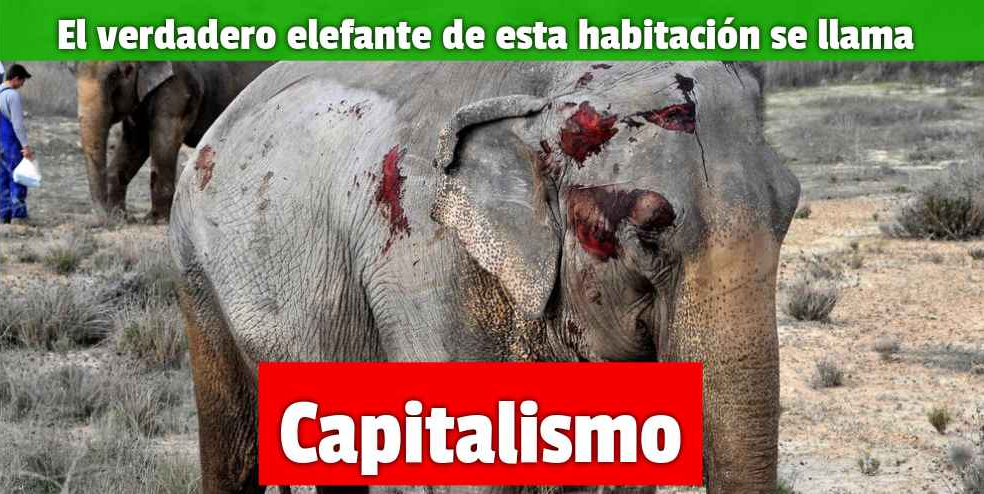
The reference to elephants arises from a recent accident involving these animals. The London Evening Standard of 3rd April described it thus; “An elephant was killed and two others were injured when a circus truck carrying five of the huge animals overturned in south-eastern Spain. The vehicle toppled over when overtaking a slow lorry on the A-30 near Pozo Canada in the central region of Castilla-La Mancha on Monday.”

Behind the elephants ... The class struggle


…. man is a debased, forsaken, contemptible being forced into servitude, conditions which cannot be better portrayed than in the exclamation of a Frenchman at hearing of a projected tax on dogs: Poor dogs! They want to treat you like men! Marx “Towards the Critique of Hegel's Philosophy of Right”

Men forget that their Law originates in their economic conditions of life, just as they have forgotten that they themselves come from the animal world. F. Engels “Contribution to the Housing Problem” 1873

Recently, the news anchors presented the news of a road accident with a sad voice. It caught our attention because normally such news is brief and the tone is bureaucratic. In the accident in question, no one had died either. Only an elephant. Four others walked, bruised, along the central reservation of the motorway. The next day the media had already informed us, in detail, about the lives of those beasts in the circus in which they worked. Today there was no newspaper that did not echo the petition organised by the animal rights party demanding "retirement" for the elephants. The expression "retirement", did not even seem shocking. After all, the very conservative media had informed us about the life of the beasts in question with dyes of social denunciation. If you read the articles there comes a time when you do not know if they are talking about undocumented immigrant field workers or animals. Well ... in fact we know this, because irregular precarious workers are not discussed and if they are, they are discussed with the most brutal hypocrisy. For the Spanish press, talking of the exploitation of people is taboo, the use of animals in shows is exploitation.

We might think that these are simply journalists’ subconscious metaphors. At the end of the day there is also a relevant correlation between migratory waves and fevers of sudden media interest due to "invasive species". We are then bombarded with articles in which the animals are associated with certain countries – even if they come from others – and, through these, linked to xenophobic issues ... So, in recent years we have read that the problem of the zebra mussel «of the Caucasus» is that «they came to stay»; that of the "Argentinian" parrots in Barcelona that had become a problem for the "pairing of native species"; and that of the "US" raccoons in Madrid that were deceiving us because they seemed charming but "really they are aggressive and dangerous".

The fact is that culture is made of metaphors. That is why we must ask ourselves if the whole animalistic tendency is not, in itself, the politicisation of a metaphor.

WHY DO THEY CALL IT A PET WHEN THEY MEAN ...


Support for animal rights is an undeniable social phenomenon. If Spain had a single district electoral system, only two or three deputies would have their current voters. The passage from a token electoral presence to a modest mass visibility has to do with something more than a constant and free presence in the media. If animal rights as a political movement is an expression of the delirium of the petty bourgeoisie, the typical activist is the personalisation of maximum alienation from Nature: a young urbanite, unemployed or student without contact with rural life. Their reference is not the hunted beast, but the pet, their pet, that animal separated from any productive function, dependent on the family even to eat or leave the claustrophobic environment of the house. Their alienation from Nature is only comparable to their alienation from work, in a country where youth unemployment remains the largest in the OECD. That is why animal rights spread among young people when they were left condemned by the crisis to an unproductive, dependent life, like the family pet.

Social change has been accompanied by the evolution of slogans. After years focused on the "no animal abuse", PACMA was present massively in and after the 15M under the slogan "animals matter." The attractiveness of the animal rights slogan at that point was the "matter". A whole sector of the petty-bourgeois youth – but also of the worker-less constrained by the miseries of the crisis – found in "the animals" a myth, an imaginary subject with which to identify and to "defend".

Suffering deprivation, outside of productive work and their socialisation, they are unable to imagine defending their collective interests. They mimic the paternalism they have received and pathetically replicate it with the only beings who think more helpless even than themselves. An abnormally magnified representation of alienation, animal rights support moves in the increasingly blurred border between petit bourgeois political reverie and clinical pathology.

Seen in the timeframe of centuries, the development of the productive capacities of humanity tends to be translated into ideological forms ever more empathic towards animals. From the deified beast, hostile and alien, we passed on to the animal-machine that relieves hunger and the burden of work and ultimately to the "experience" of the country school. Broadly speaking, the progress of the transforming capacity of the species extends our moral horizon, preparing humanity so that it can understand itself as part of a greater natural metabolism that only it can do self-consciously.

The fracture between humanity and nature cannot be healed without overcoming the fracture that sustains and divides our own species. Instead, an increasingly inhumane capitalism, proposes to "humanise" pets and animals. However, under current, historically decadent, capitalism, with its galloping social decomposition, this communion with nature cannot advance. The fracture with nature cannot be overcome without overcoming the fracture that sustains and divides our own species.

When they tell us about injured elephants and battered pets do not forget that the real "elephant in the room", the cause of a thousand and one disasters that the media seem not to see, is called capitalism. And it is not a fable.

Nuevo Curso
4 April 2018


 Group Nine’s Video News Site NowThis says it Has Unionized
Among the topics on the union’s agenda at NowThis are pay and fairness, but also
near the top of the list are diversity concerns.

October 27, 2020 Keith J. Kelly NEW YORK POST

,
NowThis, a leading producer of video news for mobile use, said Tuesday it has unionized with the Writers Guild of America East.

The parent company, Ben Lerer’s Group Nine — which also owns sites like Thrillist, The Dodo and PopSugar — agreed to recognize the union as the bargaining agent for the 90-person editorial staff. That was after an overwhelming majority of workers on Monday handed in cards saying they wanted to be represented by the union, according to a union rep.

The quick result stands in sharp contrast to the contentious battles the Writers Guild had to fight when it unionized Hearst magazines earlier this year and when the NewsGuild of New York unionized BuzzFeed early last year. While BuzzFeed recognized the NewsGuild of New York in the summer of 2019 after writers staged a one-day walkout, a contract isn’t imminent, sources said.

Hearst lost a bid to prevent its workers from voting to unionize in February, but the publishing giant has yet to begin contract negotiations. Vice, Vox Media and Huffington Post are all operating under collective bargaining agreements after management voluntarily recognized the Writers Guild as their bargaining agent.

Among the topics on the union’s agenda at NowThis are pay and fairness, but also near the top of the list are diversity concerns.

“Our workforce and leadership should reflect the company’s commitment to racial equity, rather than claiming diversity through limited representation of Black and brown employees in the company,” union organizers had stated during their drive. “When people of color, and specifically Black people, are recognized as essential to our work at the highest levels, it will be reflected in the quality of the stories we tell.”

Group Nine, like most media companies, was forced to make deep cuts to its workforce in April when it said it was chopping 7 percent of its then-700-person workforce across sites including Thrillist, The Dodo, Seeker, PopSugar and NowThis.

The company was probably better financed than most after landing a new $50 million round of funding from lead investor Discovery Inc. and German media giant Axel Springer back in September, saying at the time it wanted to use the funds for expansion of commerce and “potential strategic acquisitions.”

Then the coronavirus stalled those plans and wiped out advertising across all media.

Digital publishers were under pressure even before the pandemic. Last year, Group Nine reportedly held talks of a potential merger with BuzzFeed, another one of the big five digital publishers, but negotiations broke down reportedly over a number of questions including who would run a combined company — Lerer or BuzzFeed CEO Jonah Peretti.

BuzzFeed also was forced to make deep cuts at the start of the pandemic. During a recent call with staffers, Peretti said the company would break even this year, according to the Wall Street Journal, marking the first time since 2014.

The cost cuts reportedly saved BuzzFeed $30 million this year and were able to offset the steep advertising declines.

There’s no word on when Group Nine will sit down with the union to begin negotiations, but the company already reached accords with workers at Thrillist and The Dodo back in 2018, pre-pandemic.
Reasserting the Importance of Committed, Truthful, On-the-Ground Reporting on the Centenary of John Reed’s Passing

John Reed was confronted with the choice between popular and profitable hypocrisy in the capitalist journals, and disreputable truth in the revolutionary press. He chose the truth.

November 14, 2020 Juan Antonio Sanz EQUAL TIMES  
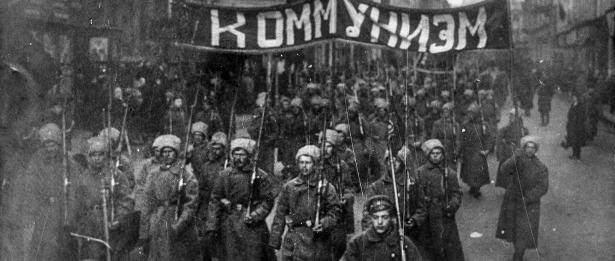
John Reed is the author of the landmark chronicle of the October Revolution of 1917. In this archive image, taken in October 1917, armed soldiers march towards the Kremlin with a banner reading ‘Communism’, AP/Russian State Documentary Film and Photo Archive


On 17 October 1920, just days before his 33rd birthday, American journalist John Reed, author of Insurgent Mexico, a book covering the Mexican Revolution, and Ten Days that Shook the World, the most famous chronicle of the October Revolution of 1917, died of typhus in a Russian hospital in Moscow. Both of these works and Reed’s career now constitute an invaluable example of engaged journalism committed to social justice while ensuring truthful reporting, respect for sources and the indispensable need for the journalist to be where the news is happening.

Reed was a forerunner of narrative or literary journalism, capable of taking his readers to the scene of the events and giving them a sense of the atmosphere surrounding them, many decades before Tom Wolfe made it fashionable under the generic term ‘new journalism’ or authors such as Rodolfo Walsh, Truman Capote, Gay Talese or Nobel Prize winner Gabriel García Márquez elevated it to the category of a literary genre.

One of Reed’s ‘brothers in arms’ and author of one of the most insightful introductions to Ten Days that Shook the World (1919), journalist Albert Rhys Williams, wrote a highly detailed portrayal of the US journalist in action in the full throes of the Revolution: “He collected material wherever he could find it, moving from place to place. He collected complete files of the Pravda and Izvestia, all the proclamations, booklets, posters, and announcements. Posters were a special passion. Every time a new poster appeared, he did not hesitate to tear it from the wall if there was no other way of getting it.” According to Williams: “Those who wanted to be abreast of contemporary affairs needed only to follow John Reed, for he always hastened, a kind of storm bird, to wherever big things happened.”


John Reed, journalist, poet, adventurer, political activist and workers’ rights defender, is the only US citizen whose remains are buried in the most sacrosanct place in the Russia that inherited the Soviet Union, the foot of the Kremlin Wall.

This empire of empires was to emerge a few years after the triumph of the Revolution, in October and November 1917, an event Reed recounted in a way few others could aspire to.

John Reed was born into a wealthy family in Portland, Oregon, on 22 October 1887. The future chronicler of conflicts and revolutions graduated from Harvard in 1910 and his interests soon turned from adolescent heroic fantasies towards the social struggle and journalism. In 1913, Reed’s life reached a turning point that shaped his political engagement. Having joined the staff of The Masses, a socialist publication headed by Max Eastman, Reed covered a series of serious labour disputes in the United States that reinforced his vision of journalism as a tool for denouncing social injustice. War in Paterson, his article on the silk workers’ strikes in New Jersey dates back to that time. As an uncomfortable witness to such labour struggles, Reed had his first experience as a guest of the federal prison system, one that would be repeated throughout his life, including in Finland, where he was imprisoned many years later on suspicion of spying for Bolshevik Russia.
Being on the scene

Reed travelled to Mexico in 1913 as a correspondent for Metropolitan Magazine, to cover the Mexican Revolution for almost four months. During his time there, he was able to interview and develop a good rapport with the guerrilla and revolutionary leader Pancho Villa, who fondly nicknamed the US correspondent ‘Chatito’. The 1914 book Insurgent Mexico was the result of those months spent chronicling the war and the insurrection, a book that would earn him great prestige as a war correspondent and paved the way for his journey to Europe, where he was sent to cover the First World War.

In The Traders’ War, an article written in September 1914 for The Masses, Reed explained that the war in Europe was, in fact, a “clash of traders”. In The Worst Thing in Europe, an article also written for The Masses, in March 1915, he gave a brief insight into Russia’s “military might”, a presage of what was to come two years later, when its army fell apart, abandoned the front and joined the Revolution: “The Russian army, inexhaustible hordes of simple peasants torn from their farms, blessed by a priest, and knouted into battle for a cause they had never heard of…,” wrote Reed.

One of the keys to Reed’s ability to describe events with such precision, and irrespective of his own political assessment of them, is that he was always on the scene of the events as they were happening.

Unlike now, in the midst of the 21st century, when the internet has become the main source of information and an excuse for not sending reporters to the scene of events, a century ago, if you wanted to write with sufficient accuracy and objectivity about any event, the Russian Revolution, for example, you had to be in Petrograd, in Moscow or on board the convoy that carried the forces of Alexander Kerensky’s provisional government to crush the Bolsheviks in the imperial city.

And that is what John Reed did. That is why he headed to Petrograd, now St. Petersburg, to give a first-hand account of the by then unstoppable Revolution. John Reed and his then partner, Louise Bryant, a feminist, left-wing activist and also a journalist, set off for Europe at the end of August 1917, with Petrograd as their final destination. It was the start of their Russian adventure.

The US journalist described in great detail the events rapidly unfolding in Russia and that formed part of the history of those “ten days that shook the world”. In a report sent to The New York Call on 22 November 1917, but which corresponds to the events of 7 November according to the Gregorian calendar (25 October 1917 according to the Julian calendar followed in Russia at the time), Reed offered this brief insight into one world that was collapsing and another that was emerging: “This morning I was at the scene of the dispersal of the Junkers [military school cadets] defending the Winter Palace by the Soviet troops. In the afternoon I was present at the opening of the All-Russian Assembly of Soviets. In the evening I witnessed the assault on the Winter Palace, entering with the first Bolsheviki troops.”

In his 1975 biography of the journalist, Romantic Revolutionary, Robert A. Rosenstone writes that the Revolution was a “dream incarnate” for Reed, who “soared into a realm of visionary transcendence”. Many in the United States had an exotic and mystical notion of Russia at the turn of the century. It was the land of the “Slavic soul”, a mystical force expressed by figures such as Dostoyevsky, Chekhov, Stravinsky or Diaghilev, the “polar opposite” to America’s materialism and pragmatism, according to Rosenstone.

The human tragedy of the First World War and the February 1917 revolution that toppled Tsar Nicholas II put an end to that, and what was happening in Russia started to be viewed as an almost millennium-long struggle between autocracy and democracy. Reed himself went on to apologise for not having understood what was happening from the outset. In an article for The Masses, in July 1917, prior to the tsunami of the October Revolution, Reed noted that although the focus in the analysis of Russia during those world war years was placed on its role in the struggle, the real key was the long frustrated uprising of the Russian masses, the purpose of which was to establish “a new human society on earth”. And even then he forecast that the drivers of this change would be the Soviets, “the real revolutionary heart of the New Russia”.

Pascual Serrano, journalist and expert in international politics, underlines John Reed’s ability to understand and interpret the events of the Russian Revolution, something which left Russian historians and scholars astonished from the outset. Serrano, author of the 2011 book Contra la Neutralidad (Against Neutrality), in which he analyses John Reed’s commitment to the truth and social rights, explains that this insight may have been due to the fact that he was a “foreign” correspondent, capable of perceiving details that a local analyst would perhaps overlook.

For Serrano, who also refers in his book to the committed journalism of authors such as Rodolfo Walsh, Robert Capa, Edgar Snow and Ryszard Kapuscinski, another of Reed’s skills was to give a voice to the leading characters of the stories, whether it be the striking textile workers in Paterson, United States, in the uprising in the dusty lands of northern Mexico, in the trenches of the Great War or in the Smolny Institute in Petrograd, where the Bolsheviks set up their headquarters. The aim was to break down false stereotypes through information and truthful reporting. Reed makes this clear in the preface to his book on the Russian Revolution:

“In the struggle my sympathies were not neutral. But in telling the story of those great days I have tried to see events with the eye of a conscientious reporter, interested in setting down the truth.”

In 1919, a year before he fell fatally ill with typhus, Reed was able to publish his most popular work, despite the obstacles put in his way by the conservative, anti-communist forces in the United States. Reed was not only confronted with condemnation on this front, but also with criticism from the inert socialist movement in his country at the time. Reed was a member of the Third International, but he was not forgiven, in socialist circles, for his independence, and not least his imagination. Max Eastman, editor of The Masses, summarised the situation in a speech paying tribute to Reed. He said, “John Reed was confronted with the choice between popular and profitable hypocrisy in the capitalist journals, and lonely disreputable truth in the revolutionary press. And he chose the truth”.

Juan Antonio Sanz is a Spanish journalist based in Cuba. He worked for Agencia EFE for over 20 years – as a correspondent in Russia and South Korea and as head of the agency in Japan and Uruguay. He has worked as a university teacher in Bolivia, for the Bolivian Armed Forces General Staff and Spain’s international development cooperation agency. His specialist areas include international security and cooperation.

This article has been translated from Spanish.

Equal Times is a trilingual (English, French and Spanish) global news and opinion website focusing on labour, human rights, culture, development, the environment, politics and the economy from a social justice perspective.
USA
Our Vaccine Infrastructure Needs a Radical Overhaul
Decades-long funding cuts for pandemic preparedness hamper coordinated distribution and equitable access. We must reimagine how to make life-saving vaccines available to everyone.

November 14, 2020 Ravi Gupta BOSTON REVIE


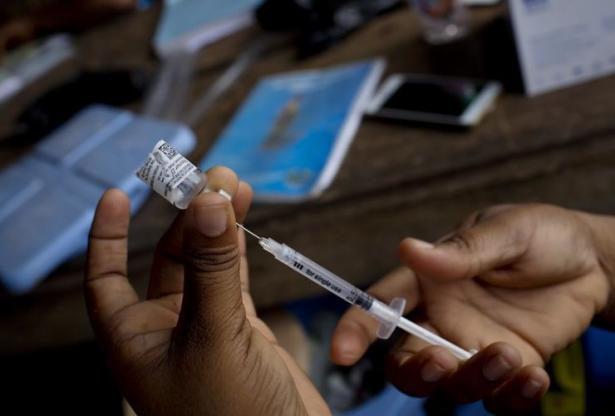
Nearly a year into a pandemic that has killed more than a million people and laid waste to both public health systems and the global economy, many have turned their hopes to a vaccine. Optimism has been buoyed by the historic pace of development of multiple COVID-19 vaccine candidates and the recent news that Pfizer, in partnership with the small company BioNTech, has reported preliminary data on a vaccine candidate showing 90 percent effectiveness. The arrival of a vaccine in the next few months would be a remarkable feat, but fundamental questions—beyond basic assurances of safety and efficacy—remain. Will there be enough doses, and who will get them?

This is not the first time we face questions of equitably deploying a vaccine during an outbreak. Eleven years ago, as the H1N1 virus swept across the United States and 73 other countries, the World Health Organization declared the first pandemic in over forty years. H1N1 seemed deadlier and more transmissible than seasonal influenza. Recollections of the 1918 Spanish flu pandemic’s colossal death toll occupied the collective psyche. An H1N1 vaccine seemed essential to prevent history from repeating, much as a COVID-19 vaccine does now.

Development of an H1N1 vaccine progressed rapidly, in large part due to existing technology and regulatory systems for seasonal influenza vaccines. But avoiding preventable deaths required ensuring the vaccine’s prompt manufacturing and equitable distribution within the U.S. and across the world. Manufacturing delays led to shortages that complicated an already halting domestic distribution plan, and by the time the vaccine supply increased, the pandemic had waned. All told, 90 of 162 million doses were utilized in the United States. The rest were donated to other countries (after broken pledges to do so earlier) or simply thrown away. A truth was illuminated that persists today: the prevailing system of vaccine production and distribution is not designed to promote equitable access.

Much has changed since the H1N1 pandemic. Technological platforms have advanced considerably. International institutions have forged partnerships to prioritize therapeutic and vaccine candidates. Financing of vaccine development has evolved, with the creation of non-profit entities like the Coalition for Epidemic Preparedness Innovations (CEPI).

Yet much remains the same. Vaccine manufacturing remains unprepared for surges and without a global entity charged with centralized financing. International legal agreements ensuring equitable access are non-enforceable. The international hoarding and price gouging for personal protective equipment early in this pandemic are harbingers for vaccine maldistribution to the highest bidder. Within the United States, in particular, decades-long funding cuts for pandemic preparedness and public health hamper coordinated distribution for efficient access. Surviving a pandemic requires extraordinary movement on these issues. We must reimagine how to make life-saving vaccines available to everyone, for pathogens both new and old.

Deployment of H1N1 vaccines faced a bottleneck that we still face today: insufficient manufacturing capacity. Coordination between manufacturers, government agencies, and universities in multiple continents led to the FDA approval of four H1N1 vaccines within six months. But enough vaccine could simply not be produced in time. Years of industry consolidation due to limited profits from vaccine development had left just three companies available to manufacture the majority of global influenza vaccines. Manufacturing capacity was dependent on well-established but time-consuming and unpredictable egg-based technology from World War II, while production lines were already occupied with seasonal flu vaccines.

Today, the leading COVID-19 vaccine candidates rely on novel technology that hasn’t yet been deployed at scale. These platforms have the potential for faster production, but they will likely face unforeseen difficulties. Messenger RNA (mRNA) vaccines, for example—like Pfizer and BioNTech’s—require temperatures as low as -94 degrees Fahrenheit to maintain stability, whereas H1N1 vaccines were easily stored in small fridges. COVID-19 vaccines will likely require two doses, doubling the total number needed, while H1N1 vaccines required just one.

At the root of the manufacturing problem is a near exclusive reliance on the private sector, which has limited incentives for preemptive investment. As a result, funding hastily flows from public coffers to private companies to bolster manufacturing capacity once an outbreak has already begun. During the H1N1 pandemic, the U.S. government awarded contracts to manufacturers to upgrade their facilities and start vaccine production. With COVID-19, we’ve seen a dizzying number of agreements between governments and private companies to scale production, among them agreements facilitated by the U.S. public-private partnership Operation Warp Speed.

Of course, it isn’t feasible to expect immediate global availability of sixteen billion doses. But a reactive approach to vaccine production grounded in a market-based logic de-emphasizes the long-term readiness and preparation needed for efficient and equitable deployment of a vaccine in a pandemic.

We need an alternative approach that centers on maintaining public manufacturing facilities to respond to the acute needs of an outbreak before it happens. In the wake of H1N1, the U.S. government invested in developing four manufacturing sites in concert with a university and private companies. But these facilities lacked sustained development and were unequipped for rapid, mass production during the COVID-19 pandemic.

In the past few months, substantial Operation Warp Speed funds have gone to the Texas A&M University System and Emergent Solutions to partner with vaccine developers to manufacture doses. It remains to be seen whether an injection of funds at this moment will help construct and maintain a sustainable, public manufacturing sector for future outbreaks. We should recognize that preparedness is not a novel concept; epidemiologists and national security experts alike have been arguing about its importance for decades. Twenty years ago, science journalist Laurie Garrett characterized the collapse of global health infrastructure as a “betrayal of trust.” We are witnessing the effects of that betrayal today.

An initial vaccine shortfall necessitates thoughtful distribution to enable equitable global access. The H1N1 pandemic exposed glaring disparities between rich and poor nations in procuring vaccines. Before a pandemic was even declared, developed countries placed large advance orders with manufacturers. The World Health Organization secured small donation commitments from developed countries and manufacturers for developing countries. The United States pledged to donate 10 percent of its vaccines, but as H1N1 cases and vaccine shortages increased, it rescinded its offer. Canada and Australia permitted exports from their domestic manufacturers only after their own citizens were immunized. Eventually, 78 million doses—an inadequate amount to begin with—were donated to 77 countries, but the worst of the pandemic had already passed.

Fears of such vaccine nationalism—countries prioritizing their own populations at the expense of a globally coordinated strategy—have materialized in the current pandemic, too. Multilateral advance market commitments, a form of payment to manufacturers predicated on proof of a successful vaccine, are meant to equitably allocate vaccines among countries. Various advance market commitments (AMCs) have been proposed and created for COVID-19 vaccines, including $2 billion in urgent funding specifically for low- and middle-income country AMCs as part of an effort by the COVAX facility—an international collaboration between the World Health Organization, CEPI, and Gavi, the Vaccine Alliance—to deliver 2 billion doses globally by the end of 2021. (COVAX estimates the total cost for delivering on its plan to be $18.1 billion.)

Though advance market commitments such as the Gavi-led pneumococcal vaccine fund have been used successfully (though not without criticism of its price and lack of transparency), COVID-19 is the first test of whether they can function during a pandemic affecting wealthy and poor countries simultaneously. Bilateral agreements between manufacturers and individual wealthy countries who seek to guarantee their own supply have undermined the COVAX advance market commitment and precluded efficient and equitable global allocation of potential vaccines. Pfizer and BioNTech, for instance, have yet to sign any agreements to provide developing countries with their vaccine, and the majority of their initial supply has already been claimed by wealthier countries.

An enforceable trade and investment agreement is needed. Sadly, simply beginning these discussions seems too advanced when the Trump administration has amazingly sought to withdraw funding and support from the World Health Organization and refused to join COVAX—even though more than 150 countries have joined.

The absence of a global strategy encompassing high-risk populations is morally reprehensible, but it also makes no biological or economic sense. The virus will continue to spread without coordination for vaccine allocation based on need. Elements of international integration and global travel that accelerated this pandemic will perpetuate transmission. Global trade and tourism will further suffer. COVID-19 has far surpassed H1N1’s scale, but a fundamental lesson remains: going it alone is a strategy in which no one emerges victorious.

Until enough vaccines are produced, the United States will face similar challenges of equitable allocation and distribution domestically. The availability of H1N1 vaccine within the United States was beset by distribution difficulties despite extensive planning. Autopsies of H1N1 vaccination efforts demonstrate how vaccines were distributed to states without accounting for their projected need. Ill-conceived tracking systems for vaccine administration and unclear communication about multiple vaccine formulations and target groups created misperceptions.

COVID-19 vaccine distribution promises to be even more complicated given multiple encouraging candidates, which may only be efficacious in certain populations and require multiple doses. In a recent missive, the Centers for Disease Control and Prevention placed responsibility on state and local health departments to identify vaccine target groups, manage vaccination plans, and track administration. This seems reasonable, but it fails to account for the decades of inexplicable, myopic funding cuts to state and local health departments.

Public health departments will be hard-pressed not only to overcome existing racial and class disparities in health care access and vaccination rates but also to address inequities in infections and deaths from coronavirus due to structural racism. As with seasonal influenza vaccines, there were troubling inequities in H1N1 vaccine rates among African Americans and Hispanics, the same groups who were particularly vulnerable to infection because of poverty, chronic medical conditions, inability to socially distance, and lower health care access. Baseline disparities and underfunding of public health departments complicate efforts to avoid similar mistakes with COVID-19, which has been devastatingly concentrated among Black, Latinx, and Native American communities.

A National Academies of Science, Engineering, and Medicine report released last month detailed a plan for equitable allocation of COVID-19 vaccines, and to its credit, includes an assessment of social vulnerability as an underlying principle for allocation. To the extent possible, black and brown communities, members of which constitute large proportions of essential workers unable to socially distance from home, must be prioritized for vaccine allocation.

Moreover, state Medicaid programs, which provide insurance coverage for nearly a third of the Black and a third of the Latinx nonelderly U.S. population, also face barriers to equitably delivering vaccines. Low Medicaid reimbursement rates for providers preclude their ability to vaccinate individuals fully and rapidly. During H1N1, states were left to determine their own reimbursement rates, but for COVID-19, federal support is needed to help increase providers’ ability to reach communities of color.

In so many ways, we are in unprecedented territory. But though the players have changed—a novel coronavirus, innovative vaccine technologies, newly formed international organizations—the game is in many other ways the same: constantly playing catchup, rewarding those with influence, unable to collectively share the fruits of human ingenuity. Nothing about this is immutable.

There are signs of progress, and lawmakers have taken notice. Senator Elizabeth Warren and Representative Jan Schakowsky proposed the COVID-19 Emergency Manufacturing Act of 2020, which seeks to establish a public system for manufacturing medicines and vaccines. If enacted, the legislation would require COVID-19 products be made available for free domestically and at cost internationally. Congresswoman Schakowsky also introduced the Make Medications Affordable by Preventing Pandemic Price-gouging Act, which prohibits monopolies on new, taxpayer-funded COVID-19 drugs and waives exclusive licenses for any drugs during a public health emergency.

The key is to extend these early steps beyond this pandemic. COVID-19 has been hailed as a once in a generation pandemic. But in this century alone we have experienced outbreaks with the potential to convert into a pandemic every few years. Old diseases spread unabated and new, more lethal viruses lie tentatively dormant. Without any changes to the underlying drivers—climate change, unchecked deforestation, increasing global travel—why should we expect that this pattern will change?

A pandemic exacerbates chronic, vexing problems, but it also sharpens our understanding of them. Crises offer rare opportunities to fundamentally change the paradigm of producing and delivering life-saving vaccines to everyone. While vaccines are far from a cure-all when it comes to fighting outbreaks, they are undeniably important. The arrival of a COVID-19 vaccine may return us to normal, but we must do better than normal—both for this pandemic and the inevitable next one.