It is a story that began three decades ago, with a little-known scientist who refused to quit.
November 15, 2020 Damian Garde (STAT), Jonathan Saltzman (Boston Globe) BOSTON GLOBE, STAT
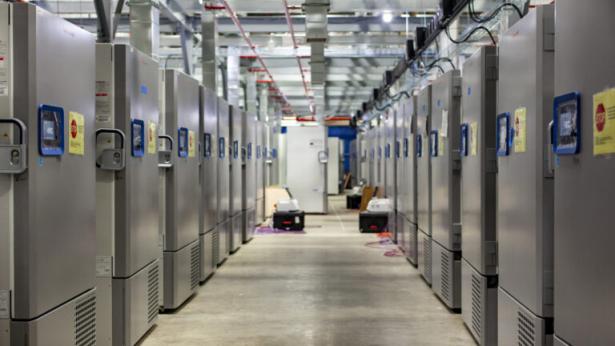
Part of a "freezer farm," a football field-sized facility for storing finished Covid-19 vaccines, under construction in Kalamazoo, Mich. Pfizer’s experimental vaccine requires ultracold storage, at about -70 C, Jeremy Davidson / Pfizer via AP
ANDOVER, Mass. — The liquid that many hope could help end the Covid-19 pandemic is stored in a nondescript metal tank in a manufacturing complex owned by Pfizer, one of the world’s biggest drug companies. There is nothing remarkable about the container, which could fit in a walk-in closet, except that its contents could end up in the world’s first authorized Covid-19 vaccine.
Pfizer, a 171-year-old Fortune 500 powerhouse, has made a billion-dollar bet on that dream. So has a brash, young rival just 23 miles away in Cambridge, Mass. Moderna, a 10-year-old biotech company with billions in market valuation but no approved products, is racing forward with a vaccine of its own. Its new sprawling drug-making facility nearby is hiring workers at a fast clip in the hopes of making history — and a lot of money.
In many ways, the companies and their leaders couldn’t be more different. Pfizer, working with a little-known German biotech called BioNTech, has taken pains for much of the year to manage expectations. Moderna has made nearly as much news for its stream of upbeat press releases, executives’ stock sales, and spectacular rounds of funding as for its science.
Each is well-aware of the other in the race to be first.
But what the companies share may be bigger than their differences: Both are banking on a genetic technology that has long held huge promise but has so far run into biological roadblocks. It is called synthetic messenger RNA, an ingenious variation on the natural substance that directs protein production in cells throughout the body. Its prospects have swung billions of dollars on the stock market, made and imperiled scientific careers, and fueled hopes that it could be a breakthrough that allows society to return to normalcy after months living in fear.
Both companies have been frequently name-checked by President Trump. Pfizer reported strong, but preliminary, data on Monday, and Moderna is expected to follow suit soon with a glimpse of its data. Both firms hope these preliminary results will allow an emergency deployment of their vaccines — millions of doses likely targeted to frontline medical workers and others most at risk of Covid-19.Related: Four reasons for encouragement based on Pfizer’s Covid-19 vaccine results
There are about a dozen experimental vaccines in late-stage clinical trials globally, but the ones being tested by Pfizer and Moderna are the only two that rely on messenger RNA.
For decades, scientists have dreamed about the seemingly endless possibilities of custom-made messenger RNA, or mRNA.
Researchers understood its role as a recipe book for the body’s trillions of cells, but their efforts to expand the menu have come in fits and starts. The concept: By making precise tweaks to synthetic mRNA and injecting people with it, any cell in the body could be transformed into an on-demand drug factory.
But turning scientific promise into medical reality has been more difficult than many assumed. Although relatively easy and quick to produce compared to traditional vaccine-making, no mRNA vaccine or drug has ever won approval.
Even now, as Moderna and Pfizer test their vaccines on roughly 74,000 volunteers in pivotal vaccine studies, many experts question whether the technology is ready for prime time.
“I worry about innovation at the expense of practicality,” Peter Hotez, dean of the National School of Tropical Medicine at Baylor College of Medicine and an authority on vaccines, said recently. The U.S. government’s Operation Warp Speed program, which has underwritten the development of Moderna’s vaccine and pledged to buy Pfizer’s vaccine if it works, is “weighted toward technology platforms that have never made it to licensure before.”
Whether mRNA vaccines succeed or not, their path from a gleam in a scientist’s eye to the brink of government approval has been a tale of personal perseverance, eureka moments in the lab, soaring expectations — and an unprecedented flow of cash into the biotech industry.
It is a story that began three decades ago, with a little-known scientist who refused to quit.
Before messenger RNA was a multibillion-dollar idea, it was a scientific backwater. And for the Hungarian-born scientist behind a key mRNA discovery, it was a career dead-end.
Katalin Karikó spent the 1990s collecting rejections. Her work, attempting to harness the power of mRNA to fight disease, was too far-fetched for government grants, corporate funding, and even support from her own colleagues.
It all made sense on paper. In the natural world, the body relies on millions of tiny proteins to keep itself alive and healthy, and it uses mRNA to tell cells which proteins to make. If you could design your own mRNA, you could, in theory, hijack that process and create any protein you might desire — antibodies to vaccinate against infection, enzymes to reverse a rare disease, or growth agents to mend damaged heart tissue.
In 1990, researchers at the University of Wisconsin managed to make it work in mice. Karikó wanted to go further.
The problem, she knew, was that synthetic RNA was notoriously vulnerable to the body’s natural defenses, meaning it would likely be destroyed before reaching its target cells. And, worse, the resulting biological havoc might stir up an immune response that could make the therapy a health risk for some patients.Related: Selling stock like clockwork, Moderna’s top doctor gets $1 million richer every week
It was a real obstacle, and still may be, but Karikó was convinced it was one she could work around. Few shared her confidence.
“Every night I was working: grant, grant, grant,” Karikó remembered, referring to her efforts to obtain funding. “And it came back always no, no, no.”
By 1995, after six years on the faculty at the University of Pennsylvania, Karikó got demoted. She had been on the path to full professorship, but with no money coming in to support her work on mRNA, her bosses saw no point in pressing on.
She was back to the lower rungs of the scientific academy.
“Usually, at that point, people just say goodbye and leave because it’s so horrible,” Karikó said.
There’s no opportune time for demotion, but 1995 had already been uncommonly difficult. Karikó had recently endured a cancer scare, and her husband was stuck in Hungary sorting out a visa issue. Now the work to which she’d devoted countless hours was slipping through her fingers.
“I thought of going somewhere else, or doing something else,” Karikó said. “I also thought maybe I’m not good enough, not smart enough. I tried to imagine: Everything is here, and I just have to do better experiments.”
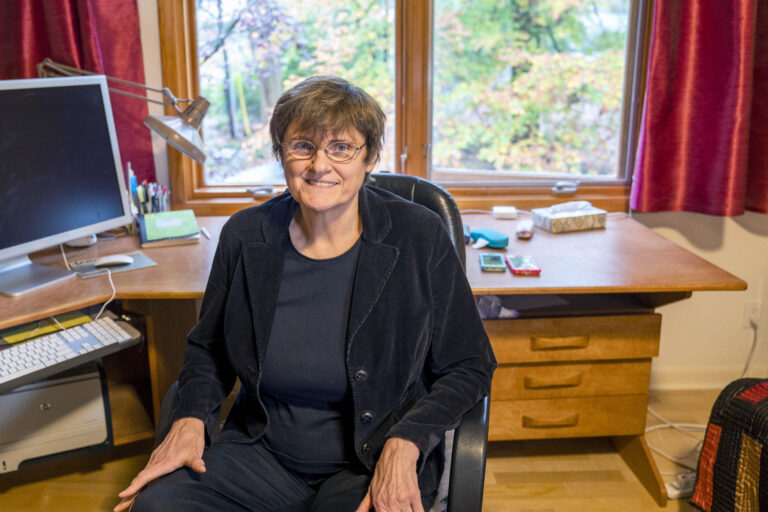
Katalin Karikó, a senior vice president at BioNTech overseeing its mRNA work, in her home office in Rydal, Penn. Jessica Kourkounis for the Boston Globe
In time, those better experiments came together. After a decade of trial and error, Karikó and her longtime collaborator at Penn — Drew Weissman, an immunologist with a medical degree and Ph.D. from Boston University — discovered a remedy for mRNA’s Achilles’ heel.
The stumbling block, as Karikó’s many grant rejections pointed out, was that injecting synthetic mRNA typically led to that vexing immune response; the body sensed a chemical intruder, and went to war. The solution, Karikó and Weissman discovered, was the biological equivalent of swapping out a tire.
Every strand of mRNA is made up of four molecular building blocks called nucleosides. But in its altered, synthetic form, one of those building blocks, like a misaligned wheel on a car, was throwing everything off by signaling the immune system. So Karikó and Weissman simply subbed it out for a slightly tweaked version, creating a hybrid mRNA that could sneak its way into cells without alerting the body’s defenses.
“That was a key discovery,” said Norbert Pardi, an assistant professor of medicine at Penn and frequent collaborator. “Karikó and Weissman figured out that if you incorporate modified nucleosides into mRNA, you can kill two birds with one stone.”
That discovery, described in a series of scientific papers starting in 2005, largely flew under the radar at first, said Weissman, but it offered absolution to the mRNA researchers who had kept the faith during the technology’s lean years. And it was the starter pistol for the vaccine sprint to come.Related: The Road Ahead: Charting the coronavirus pandemic over the next 12 months — and beyond
And even though the studies by Karikó and Weissman went unnoticed by some, they caught the attention of two key scientists — one in the United States, another abroad — who would later help found Moderna and Pfizer’s future partner, BioNTech.
Derrick Rossi, a native of Toronto who rooted for the Maple Leafs and sported a soul patch, was a 39-year-old postdoctoral fellow in stem cell biology at Stanford University in 2005 when he read the first paper. Not only did he recognize it as groundbreaking, he now says Karikó and Weissman deserve the Nobel Prize in chemistry.
“If anyone asks me whom to vote for some day down the line, I would put them front and center,” he said. “That fundamental discovery is going to go into medicines that help the world.”
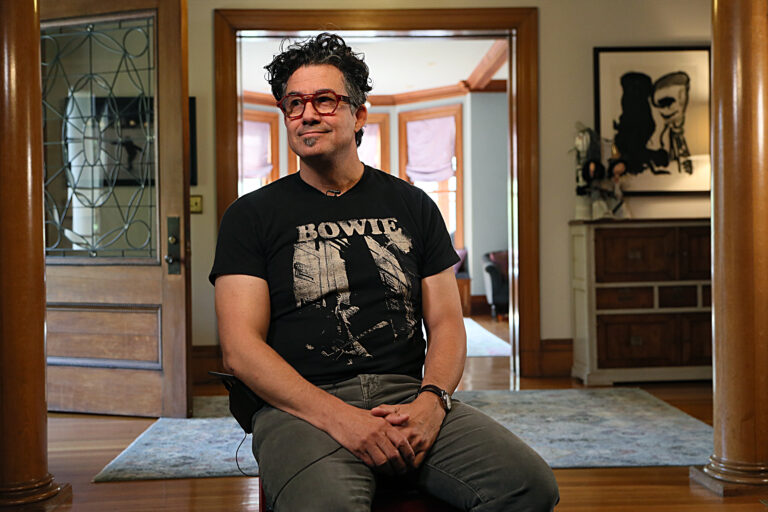
Derrick Rossi, one of the founders of Moderna, in his Newton, Mass., home. He ended his affiliation with the company in 2014. Suzanne Kreiter/the Boston Globe
But Rossi didn’t have vaccines on his mind when he set out to build on their findings in 2007 as a new assistant professor at Harvard Medical School running his own lab.
He wondered whether modified messenger RNA might hold the key to obtaining something else researchers desperately wanted: a new source of embryonic stem cells.
In a feat of biological alchemy, embryonic stem cells can turn into any type of cell in the body. That gives them the potential to treat a dizzying array of conditions, from Parkinson’s disease to spinal cord injuries.
But using those cells for research had created an ethical firestorm because they are harvested from discarded embryos.
Rossi thought he might be able to sidestep the controversy. He would use modified messenger molecules to reprogram adult cells so that they acted like embryonic stem cells.
He asked a postdoctoral fellow in his lab to explore the idea. In 2009, after more than a year of work, the postdoc waved Rossi over to a microscope. Rossi peered through the lens and saw something extraordinary: a plate full of the very cells he had hoped to create.
Rossi excitedly informed his colleague Timothy Springer, another professor at Harvard Medical School and a biotech entrepreneur. Recognizing the commercial potential, Springer contacted Robert Langer, the prolific inventor and biomedical engineering professor at the Massachusetts Institute of Technology.
On a May afternoon in 2010, Rossi and Springer visited Langer at his laboratory in Cambridge. What happened at the two-hour meeting and in the days that followed has become the stuff of legend — and an ego-bruising squabble.
Langer is a towering figure in biotechnology and an expert on drug-delivery technology. At least 400 drug and medical device companies have licensed his patents. His office walls display many of his 250 major awards, including the Charles Stark Draper Prize, considered the equivalent of the Nobel Prize for engineers.
As he listened to Rossi describe his use of modified mRNA, Langer recalled, he realized the young professor had discovered something far bigger than a novel way to create stem cells. Cloaking mRNA so it could slip into cells to produce proteins had a staggering number of applications, Langer thought, and might even save millions of lives.
“I think you can do a lot better than that,” Langer recalled telling Rossi, referring to stem cells. “I think you could make new drugs, new vaccines — everything.”
Langer could barely contain his excitement when he got home to his wife.
“This could be the most successful company in history,” he remembered telling her, even though no company existed yet.
Three days later Rossi made another presentation, to the leaders of Flagship Ventures. Founded and run by Noubar Afeyan, a swaggering entrepreneur, the Cambridge venture capital firm has created dozens of biotech startups. Afeyan had the same enthusiastic reaction as Langer, saying in a 2015 article in Nature that Rossi’s innovation “was intriguing instantaneously.”
Within several months, Rossi, Langer, Afeyan, and another physician-researcher at Harvard formed the firm Moderna — a new word combining modified and RNA.
Springer was the first investor to pledge money, Rossi said. In a 2012 Moderna news release, Afeyan said the firm’s “promise rivals that of the earliest biotechnology companies over 30 years ago — adding an entirely new drug category to the pharmaceutical arsenal.”
But although Moderna has made each of the founders hundreds of millions of dollars — even before the company had produced a single product — Rossi’s account is marked by bitterness. In interviews with the Globe in October, he accused Langer and Afeyan of propagating a condescending myth that he didn’t understand his discovery’s full potential until they pointed it out to him.
“It’s total malarkey,” said Rossi, who ended his affiliation with Moderna in 2014. “I’m embarrassed for them. Everybody in the know actually just shakes their heads.”
Rossi said that the slide decks he used in his presentation to Flagship noted that his discovery could lead to new medicines. “That’s the thing Noubar has used to turn Flagship into a big company, and he says it was totally his idea,” Rossi said.
Afeyan, the chair of Moderna, recently credited Rossi with advancing the work of the Penn scientists. But, he said, that only spurred Afeyan and Langer “to ask the question, ‘Could you think of a code molecule that helps you make anything you want within the body?’”
Langer, for his part, told STAT and the Globe that Rossi “made an important finding” but had focused almost entirely “on the stem cell thing.”
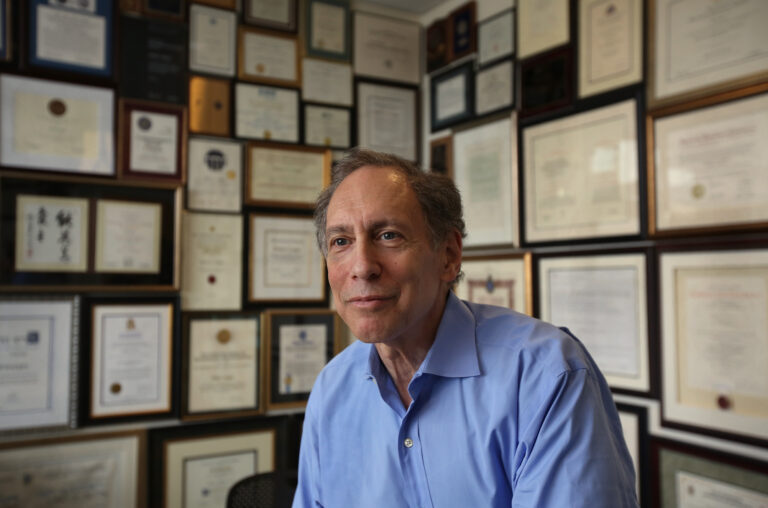
Robert Langer, the prolific inventor and MIT biomedical engineering professor, is a Moderna co-founder. Pat Greenhouse/the Boston Globe
Despite the squabbling that followed the birth of Moderna, other scientists also saw messenger RNA as potentially revolutionary.
In Mainz, Germany, situated on the left bank of the Rhine, another new company was being formed by a married team of researchers who would also see the vast potential for the technology, though vaccines for infectious diseases weren’t on top of their list then.
A native of Turkey, Ugur Sahin moved to Germany after his father got a job at a Ford factory in Cologne. His wife, Özlem Türeci had, as a child, followed her father, a surgeon, on his rounds at a Catholic hospital. She and Sahin are physicians who met in 1990 working at a hospital in Saarland.
The couple have long been interested in immunotherapy, which harnesses the immune system to fight cancer and has become one of the most exciting innovations in medicine in recent decades. In particular, they were tantalized by the possibility of creating personalized vaccines that teach the immune system to eliminate cancer cells.
Both see themselves as scientists first and foremost. But they are also formidable entrepreneurs. After they co-founded another biotech, the couple persuaded twin brothers who had invested in that firm, Thomas and Andreas Strungmann, to spin out a new company that would develop cancer vaccines that relied on mRNA.
That became BioNTech, another blended name, derived from Biopharmaceutical New Technologies. Its U.S. headquarters is in Cambridge. Sahin is the CEO, Türeci the chief medical officer.
“We are one of the leaders in messenger RNA, but we don’t consider ourselves a messenger RNA company,” said Sahin, also a professor at the Mainz University Medical Center. “We consider ourselves an immunotherapy company.”Related: Covid-19 Drugs and Vaccines Tracker
Like Moderna, BioNTech licensed technology developed by the Pennsylvania scientist whose work was long ignored, Karikó, and her collaborator, Weissman. In fact, in 2013, the company hired Karikó as senior vice president to help oversee its mRNA work.
But in their early years, the two biotechs operated in very different ways.
In 2011, Moderna hired the CEO who would personify its brash approach to the business of biotech.
Stéphane Bancel was a rising star in the life sciences, a chemical engineer with a Harvard MBA who was known as a businessman, not a scientist. At just 34, he became CEO of the French diagnostics firm BioMérieux in 2007 but was wooed away to Moderna four years later by Afeyan.
Moderna made a splash in 2012 with the announcement that it had raised $40 million from venture capitalists despite being years away from testing its science in humans. Four months later, the British pharmaceutical giant AstraZeneca agreed to pay Moderna a staggering $240 million for the rights to dozens of mRNA drugs that did not yet exist.
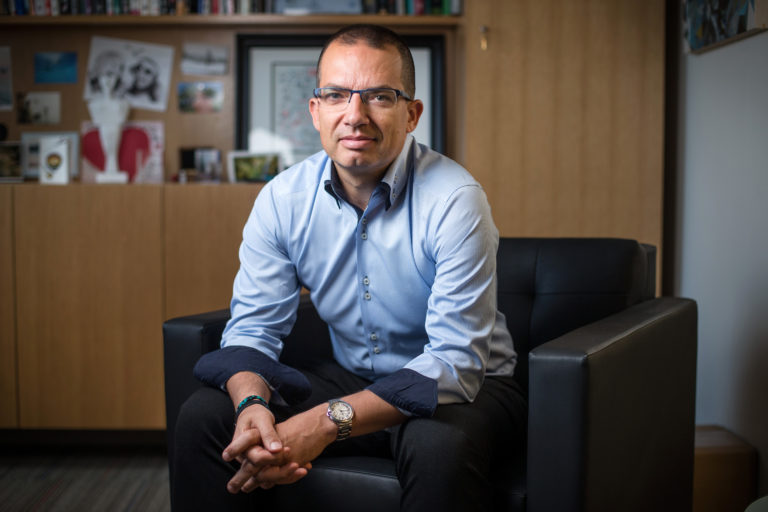
Moderna CEO Stéphane Bancel at the company’s offices in Cambridge, Mass. Aram Boghosian for STAT
The biotech had no scientific publications to its name and hadn’t shared a shred of data publicly. Yet it somehow convinced investors and multinational drug makers that its scientific findings and expertise were destined to change the world. Under Bancel’s leadership, Moderna would raise more than $1 billion in investments and partnership funds over the next five years.
Moderna’s promise — and the more than $2 billion it raised before going public in 2018 — hinged on creating a fleet of mRNA medicines that could be safely dosed over and over. But behind the scenes the company’s scientists were running into a familiar problem. In animal studies, the ideal dose of their leading mRNA therapy was triggering dangerous immune reactions — the kind for which Karikó had improvised a major workaround under some conditions — but a lower dose had proved too weak to show any benefits.
Moderna had to pivot. If repeated doses of mRNA were too toxic to test in human beings, the company would have to rely on something that takes only one or two injections to show an effect. Gradually, biotech’s self-proclaimed disruptor became a vaccines company, putting its experimental drugs on the back burner and talking up the potential of a field long considered a loss-leader by the drug industry.Related: In the race for a Covid-19 vaccine, Pfizer turns to a scientist with a history of defying skeptics — and getting results
Meanwhile BioNTech has often acted like the anti-Moderna, garnering far less attention.
In part, that was by design, said Sahin. For the first five years, the firm operated in what Sahin called “submarine mode,” issuing no news releases, and focusing on scientific research, much of it originating in his university lab. Unlike Moderna, the firm has published its research from the start, including about 150 scientific papers in just the past eight years.
In 2013, the firm began disclosing its ambitions to transform the treatment of cancer and soon announced a series of eight partnerships with major drug makers. BioNTech has 13 compounds in clinical trials for a variety of illnesses but, like Moderna, has yet to get a product approved.
When BioNTech went public last October, it raised $150 million, and closed with a market value of $3.4 billion — less than half of Moderna’s when it went public in 2018.
Despite his role as CEO, Sahin has largely maintained the air of an academic. He still uses his university email address and rides a 20-year-old mountain bicycle from his home to the office because he doesn’t have a driver’s license.
Then, late last year, the world changed.
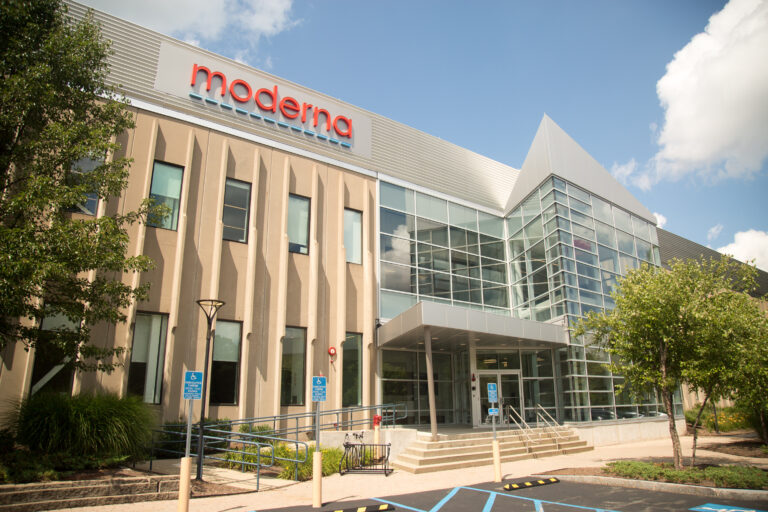
Moderna’s facility in Norwood, Mass. Alex Hogan / STAT
Shortly before midnight, on Dec. 30, the International Society for Infectious Diseases, a Massachusetts-based nonprofit, posted an alarming report online. A number of people in Wuhan, a city of more than 11 million people in central China, had been diagnosed with “unexplained pneumonia.”
Chinese researchers soon identified 41 hospitalized patients with the disease. Most had visited the Wuhan South China Seafood Market. Vendors sold live wild animals, from bamboo rats to ostriches, in crowded stalls. That raised concerns that the virus might have leaped from an animal, possibly a bat, to humans.
After isolating the virus from patients, Chinese scientists on Jan. 10 posted online its genetic sequence. Because companies that work with messenger RNA don’t need the virus itself to create a vaccine, just a computer that tells scientists what chemicals to put together and in what order, researchers at Moderna, BioNTech, and other companies got to work.
A pandemic loomed. The companies’ focus on vaccines could not have been more fortuitous.
Moderna and BioNTech each designed a tiny snip of genetic code that could be deployed into cells to stimulate a coronavirus immune response. The two vaccines differ in their chemical structures, how the substances are made, and how they deliver mRNA into cells. Both vaccines require two shots a few weeks apart.
The biotechs were competing against dozens of other groups that employed varying vaccine-making approaches, including the traditional, more time-consuming method of using an inactivated virus to produce an immune response.
Moderna was especially well-positioned for this moment.
Forty-two days after the genetic code was released, Moderna’s CEO Bancel opened an email on Feb. 24 on his cellphone and smiled, as he recalled to the Globe. Up popped a photograph of a box placed inside a refrigerated truck at the Norwood plant and bound for the National Institute of Allergy and Infectious Diseases in Bethesda, Md. The package held a few hundred vials, each containing the experimental vaccine.
Moderna was the first drug maker to deliver a potential vaccine for clinical trials. Soon, its vaccine became the first to undergo testing on humans, in a small early-stage trial. And on July 28, it became the first to start getting tested in a late-stage trial in a scene that reflected the firm’s receptiveness to press coverage.
The first volunteer to get a shot in Moderna’s late-stage trial was a television anchor at the CNN affiliate in Savannah, Ga., a move that raised eyebrows at rival vaccine makers.
Along with those achievements, Moderna has repeatedly stirred controversy.
On May 18, Moderna issued a press release trumpeting “positive interim clinical data.” The firm said its vaccine had generated neutralizing antibodies in the first eight volunteers in the early-phase study, a tiny sample.
But Moderna didn’t provide any backup data, making it hard to assess how encouraging the results were. Nonetheless, Moderna’s share price rose 20% that day.
Some top Moderna executives also drew criticism for selling shares worth millions, including Bancel and the firm’s chief medical officer, Tal Zaks.
In addition, some critics have said the government has given Moderna a sweetheart deal by bankrolling the costs for developing the vaccine and pledging to buy at least 100 million doses, all for $2.48 billion.
That works out to roughly $25 a dose, which Moderna acknowledges includes a profit.
In contrast, the government has pledged more than $1 billion to Johnson & Johnson to manufacture and provide at least 100 million doses of its vaccine, which uses different technology than mRNA. But J&J, which collaborated with Beth Israel Deaconess Medical Center’s Center for Virology and Vaccine Research and is also in a late-stage trial, has promised not to profit off sales of the vaccine during the pandemic.
Over in Germany, Sahin, the head of BioNTech, said a Lancet article in January about the outbreak in Wuhan, an international hub, galvanized him.
“We understood that this would become a pandemic,” he said.
The next day, he met with his leadership team.
“I told them that we have to deal with a pandemic which is coming to Germany,” Sahin recalled.
He also realized he needed a strong partner to manufacture the vaccine and thought of Pfizer. The two companies had worked together before to try to develop mRNA influenza vaccines. In March, he called Pfizer’s top vaccine expert, Kathrin Jansen.
“I asked her if Pfizer was interested in teaming up with us, and she, without any discussion, said, ‘Yes, we would love to do that,’” Sahin recalled.
Philip Dormitzer, chief scientific officer for viral vaccines at Pfizer, said developing a coronavirus vaccine is “very much in Pfizer’s comfort zone as a vaccine company with multiple vaccine products.”
Pfizer has about 2,400 employees in Massachusetts, including about 1,400 at its Andover plant, one of three making the vaccine for the New York-based company in the U.S.
Pfizer, through its partnership with BioNTech, isn’t taking any money upfront from the government. Rather, the federal government will pay the partners $1.95 billion for at least 100 million doses if the vaccine gets approved.
Pfizer CEO Albert Bourla, who rose through the ranks after more than 25 years with the company, said in a September interview with “Face the Nation” that if the Pfizer-BioNTech vaccine fails, his company will absorb the financial loss. He said Pfizer opted not to take government funding up front to shield the drug giant from politics.
“I wanted to liberate our scientists from any bureaucracy,” he said. “When you get money from someone, that always comes with strings.”
Top executives at Pfizer also have sold far less stock compared to Moderna since the pandemic began.
BioNTech executives haven’t sold any shares since the company went public last year, according to Securities and Exchange Commission records. Still, the soaring share prices of BioNTech and Moderna have made both Sahin and Bancel billionaires, according to Forbes.
Some experts worry about injecting the first vaccine of this kind into hundreds of million of people so quickly.
“You have all these odd clinical and pathological changes caused by this novel bat coronavirus, and you’re about to meet it with all of these vaccines with which you have no experience,” said Paul Offit, an infectious disease expert at Children’s Hospital of Philadelphia and an authority on vaccines.
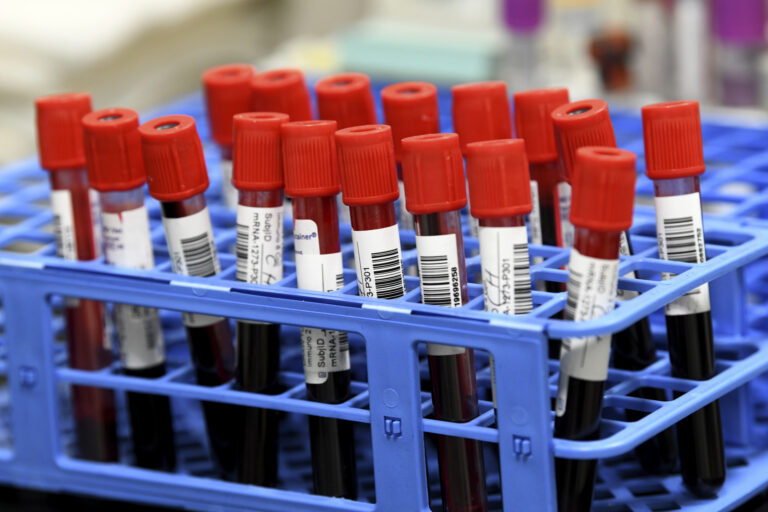
Blood samples from volunteers participating in Moderna’s Phase 3 Covid-19 vaccine trial wait to be processed in a lab at the University of Miami Miller School of Medicine.
Part of a "freezer farm," a football field-sized facility for storing finished Covid-19 vaccines, under construction in Kalamazoo, Mich. Pfizer’s experimental vaccine requires ultracold storage, at about -70 C, Jeremy Davidson / Pfizer via AP
ANDOVER, Mass. — The liquid that many hope could help end the Covid-19 pandemic is stored in a nondescript metal tank in a manufacturing complex owned by Pfizer, one of the world’s biggest drug companies. There is nothing remarkable about the container, which could fit in a walk-in closet, except that its contents could end up in the world’s first authorized Covid-19 vaccine.
Pfizer, a 171-year-old Fortune 500 powerhouse, has made a billion-dollar bet on that dream. So has a brash, young rival just 23 miles away in Cambridge, Mass. Moderna, a 10-year-old biotech company with billions in market valuation but no approved products, is racing forward with a vaccine of its own. Its new sprawling drug-making facility nearby is hiring workers at a fast clip in the hopes of making history — and a lot of money.
In many ways, the companies and their leaders couldn’t be more different. Pfizer, working with a little-known German biotech called BioNTech, has taken pains for much of the year to manage expectations. Moderna has made nearly as much news for its stream of upbeat press releases, executives’ stock sales, and spectacular rounds of funding as for its science.
Each is well-aware of the other in the race to be first.
But what the companies share may be bigger than their differences: Both are banking on a genetic technology that has long held huge promise but has so far run into biological roadblocks. It is called synthetic messenger RNA, an ingenious variation on the natural substance that directs protein production in cells throughout the body. Its prospects have swung billions of dollars on the stock market, made and imperiled scientific careers, and fueled hopes that it could be a breakthrough that allows society to return to normalcy after months living in fear.
Both companies have been frequently name-checked by President Trump. Pfizer reported strong, but preliminary, data on Monday, and Moderna is expected to follow suit soon with a glimpse of its data. Both firms hope these preliminary results will allow an emergency deployment of their vaccines — millions of doses likely targeted to frontline medical workers and others most at risk of Covid-19.Related: Four reasons for encouragement based on Pfizer’s Covid-19 vaccine results
There are about a dozen experimental vaccines in late-stage clinical trials globally, but the ones being tested by Pfizer and Moderna are the only two that rely on messenger RNA.
For decades, scientists have dreamed about the seemingly endless possibilities of custom-made messenger RNA, or mRNA.
Researchers understood its role as a recipe book for the body’s trillions of cells, but their efforts to expand the menu have come in fits and starts. The concept: By making precise tweaks to synthetic mRNA and injecting people with it, any cell in the body could be transformed into an on-demand drug factory.
But turning scientific promise into medical reality has been more difficult than many assumed. Although relatively easy and quick to produce compared to traditional vaccine-making, no mRNA vaccine or drug has ever won approval.
Even now, as Moderna and Pfizer test their vaccines on roughly 74,000 volunteers in pivotal vaccine studies, many experts question whether the technology is ready for prime time.
“I worry about innovation at the expense of practicality,” Peter Hotez, dean of the National School of Tropical Medicine at Baylor College of Medicine and an authority on vaccines, said recently. The U.S. government’s Operation Warp Speed program, which has underwritten the development of Moderna’s vaccine and pledged to buy Pfizer’s vaccine if it works, is “weighted toward technology platforms that have never made it to licensure before.”
Whether mRNA vaccines succeed or not, their path from a gleam in a scientist’s eye to the brink of government approval has been a tale of personal perseverance, eureka moments in the lab, soaring expectations — and an unprecedented flow of cash into the biotech industry.
It is a story that began three decades ago, with a little-known scientist who refused to quit.
Before messenger RNA was a multibillion-dollar idea, it was a scientific backwater. And for the Hungarian-born scientist behind a key mRNA discovery, it was a career dead-end.
Katalin Karikó spent the 1990s collecting rejections. Her work, attempting to harness the power of mRNA to fight disease, was too far-fetched for government grants, corporate funding, and even support from her own colleagues.
It all made sense on paper. In the natural world, the body relies on millions of tiny proteins to keep itself alive and healthy, and it uses mRNA to tell cells which proteins to make. If you could design your own mRNA, you could, in theory, hijack that process and create any protein you might desire — antibodies to vaccinate against infection, enzymes to reverse a rare disease, or growth agents to mend damaged heart tissue.
In 1990, researchers at the University of Wisconsin managed to make it work in mice. Karikó wanted to go further.
The problem, she knew, was that synthetic RNA was notoriously vulnerable to the body’s natural defenses, meaning it would likely be destroyed before reaching its target cells. And, worse, the resulting biological havoc might stir up an immune response that could make the therapy a health risk for some patients.Related: Selling stock like clockwork, Moderna’s top doctor gets $1 million richer every week
It was a real obstacle, and still may be, but Karikó was convinced it was one she could work around. Few shared her confidence.
“Every night I was working: grant, grant, grant,” Karikó remembered, referring to her efforts to obtain funding. “And it came back always no, no, no.”
By 1995, after six years on the faculty at the University of Pennsylvania, Karikó got demoted. She had been on the path to full professorship, but with no money coming in to support her work on mRNA, her bosses saw no point in pressing on.
She was back to the lower rungs of the scientific academy.
“Usually, at that point, people just say goodbye and leave because it’s so horrible,” Karikó said.
There’s no opportune time for demotion, but 1995 had already been uncommonly difficult. Karikó had recently endured a cancer scare, and her husband was stuck in Hungary sorting out a visa issue. Now the work to which she’d devoted countless hours was slipping through her fingers.
“I thought of going somewhere else, or doing something else,” Karikó said. “I also thought maybe I’m not good enough, not smart enough. I tried to imagine: Everything is here, and I just have to do better experiments.”
Katalin Karikó, a senior vice president at BioNTech overseeing its mRNA work, in her home office in Rydal, Penn. Jessica Kourkounis for the Boston Globe
In time, those better experiments came together. After a decade of trial and error, Karikó and her longtime collaborator at Penn — Drew Weissman, an immunologist with a medical degree and Ph.D. from Boston University — discovered a remedy for mRNA’s Achilles’ heel.
The stumbling block, as Karikó’s many grant rejections pointed out, was that injecting synthetic mRNA typically led to that vexing immune response; the body sensed a chemical intruder, and went to war. The solution, Karikó and Weissman discovered, was the biological equivalent of swapping out a tire.
Every strand of mRNA is made up of four molecular building blocks called nucleosides. But in its altered, synthetic form, one of those building blocks, like a misaligned wheel on a car, was throwing everything off by signaling the immune system. So Karikó and Weissman simply subbed it out for a slightly tweaked version, creating a hybrid mRNA that could sneak its way into cells without alerting the body’s defenses.
“That was a key discovery,” said Norbert Pardi, an assistant professor of medicine at Penn and frequent collaborator. “Karikó and Weissman figured out that if you incorporate modified nucleosides into mRNA, you can kill two birds with one stone.”
That discovery, described in a series of scientific papers starting in 2005, largely flew under the radar at first, said Weissman, but it offered absolution to the mRNA researchers who had kept the faith during the technology’s lean years. And it was the starter pistol for the vaccine sprint to come.Related: The Road Ahead: Charting the coronavirus pandemic over the next 12 months — and beyond
And even though the studies by Karikó and Weissman went unnoticed by some, they caught the attention of two key scientists — one in the United States, another abroad — who would later help found Moderna and Pfizer’s future partner, BioNTech.
Derrick Rossi, a native of Toronto who rooted for the Maple Leafs and sported a soul patch, was a 39-year-old postdoctoral fellow in stem cell biology at Stanford University in 2005 when he read the first paper. Not only did he recognize it as groundbreaking, he now says Karikó and Weissman deserve the Nobel Prize in chemistry.
“If anyone asks me whom to vote for some day down the line, I would put them front and center,” he said. “That fundamental discovery is going to go into medicines that help the world.”
Derrick Rossi, one of the founders of Moderna, in his Newton, Mass., home. He ended his affiliation with the company in 2014. Suzanne Kreiter/the Boston Globe
But Rossi didn’t have vaccines on his mind when he set out to build on their findings in 2007 as a new assistant professor at Harvard Medical School running his own lab.
He wondered whether modified messenger RNA might hold the key to obtaining something else researchers desperately wanted: a new source of embryonic stem cells.
In a feat of biological alchemy, embryonic stem cells can turn into any type of cell in the body. That gives them the potential to treat a dizzying array of conditions, from Parkinson’s disease to spinal cord injuries.
But using those cells for research had created an ethical firestorm because they are harvested from discarded embryos.
Rossi thought he might be able to sidestep the controversy. He would use modified messenger molecules to reprogram adult cells so that they acted like embryonic stem cells.
He asked a postdoctoral fellow in his lab to explore the idea. In 2009, after more than a year of work, the postdoc waved Rossi over to a microscope. Rossi peered through the lens and saw something extraordinary: a plate full of the very cells he had hoped to create.
Rossi excitedly informed his colleague Timothy Springer, another professor at Harvard Medical School and a biotech entrepreneur. Recognizing the commercial potential, Springer contacted Robert Langer, the prolific inventor and biomedical engineering professor at the Massachusetts Institute of Technology.
On a May afternoon in 2010, Rossi and Springer visited Langer at his laboratory in Cambridge. What happened at the two-hour meeting and in the days that followed has become the stuff of legend — and an ego-bruising squabble.
Langer is a towering figure in biotechnology and an expert on drug-delivery technology. At least 400 drug and medical device companies have licensed his patents. His office walls display many of his 250 major awards, including the Charles Stark Draper Prize, considered the equivalent of the Nobel Prize for engineers.
As he listened to Rossi describe his use of modified mRNA, Langer recalled, he realized the young professor had discovered something far bigger than a novel way to create stem cells. Cloaking mRNA so it could slip into cells to produce proteins had a staggering number of applications, Langer thought, and might even save millions of lives.
“I think you can do a lot better than that,” Langer recalled telling Rossi, referring to stem cells. “I think you could make new drugs, new vaccines — everything.”
Langer could barely contain his excitement when he got home to his wife.
“This could be the most successful company in history,” he remembered telling her, even though no company existed yet.
Three days later Rossi made another presentation, to the leaders of Flagship Ventures. Founded and run by Noubar Afeyan, a swaggering entrepreneur, the Cambridge venture capital firm has created dozens of biotech startups. Afeyan had the same enthusiastic reaction as Langer, saying in a 2015 article in Nature that Rossi’s innovation “was intriguing instantaneously.”
Within several months, Rossi, Langer, Afeyan, and another physician-researcher at Harvard formed the firm Moderna — a new word combining modified and RNA.
Springer was the first investor to pledge money, Rossi said. In a 2012 Moderna news release, Afeyan said the firm’s “promise rivals that of the earliest biotechnology companies over 30 years ago — adding an entirely new drug category to the pharmaceutical arsenal.”
But although Moderna has made each of the founders hundreds of millions of dollars — even before the company had produced a single product — Rossi’s account is marked by bitterness. In interviews with the Globe in October, he accused Langer and Afeyan of propagating a condescending myth that he didn’t understand his discovery’s full potential until they pointed it out to him.
“It’s total malarkey,” said Rossi, who ended his affiliation with Moderna in 2014. “I’m embarrassed for them. Everybody in the know actually just shakes their heads.”
Rossi said that the slide decks he used in his presentation to Flagship noted that his discovery could lead to new medicines. “That’s the thing Noubar has used to turn Flagship into a big company, and he says it was totally his idea,” Rossi said.
Afeyan, the chair of Moderna, recently credited Rossi with advancing the work of the Penn scientists. But, he said, that only spurred Afeyan and Langer “to ask the question, ‘Could you think of a code molecule that helps you make anything you want within the body?’”
Langer, for his part, told STAT and the Globe that Rossi “made an important finding” but had focused almost entirely “on the stem cell thing.”
Robert Langer, the prolific inventor and MIT biomedical engineering professor, is a Moderna co-founder. Pat Greenhouse/the Boston Globe
Despite the squabbling that followed the birth of Moderna, other scientists also saw messenger RNA as potentially revolutionary.
In Mainz, Germany, situated on the left bank of the Rhine, another new company was being formed by a married team of researchers who would also see the vast potential for the technology, though vaccines for infectious diseases weren’t on top of their list then.
A native of Turkey, Ugur Sahin moved to Germany after his father got a job at a Ford factory in Cologne. His wife, Özlem Türeci had, as a child, followed her father, a surgeon, on his rounds at a Catholic hospital. She and Sahin are physicians who met in 1990 working at a hospital in Saarland.
The couple have long been interested in immunotherapy, which harnesses the immune system to fight cancer and has become one of the most exciting innovations in medicine in recent decades. In particular, they were tantalized by the possibility of creating personalized vaccines that teach the immune system to eliminate cancer cells.
Both see themselves as scientists first and foremost. But they are also formidable entrepreneurs. After they co-founded another biotech, the couple persuaded twin brothers who had invested in that firm, Thomas and Andreas Strungmann, to spin out a new company that would develop cancer vaccines that relied on mRNA.
That became BioNTech, another blended name, derived from Biopharmaceutical New Technologies. Its U.S. headquarters is in Cambridge. Sahin is the CEO, Türeci the chief medical officer.
“We are one of the leaders in messenger RNA, but we don’t consider ourselves a messenger RNA company,” said Sahin, also a professor at the Mainz University Medical Center. “We consider ourselves an immunotherapy company.”Related: Covid-19 Drugs and Vaccines Tracker
Like Moderna, BioNTech licensed technology developed by the Pennsylvania scientist whose work was long ignored, Karikó, and her collaborator, Weissman. In fact, in 2013, the company hired Karikó as senior vice president to help oversee its mRNA work.
But in their early years, the two biotechs operated in very different ways.
In 2011, Moderna hired the CEO who would personify its brash approach to the business of biotech.
Stéphane Bancel was a rising star in the life sciences, a chemical engineer with a Harvard MBA who was known as a businessman, not a scientist. At just 34, he became CEO of the French diagnostics firm BioMérieux in 2007 but was wooed away to Moderna four years later by Afeyan.
Moderna made a splash in 2012 with the announcement that it had raised $40 million from venture capitalists despite being years away from testing its science in humans. Four months later, the British pharmaceutical giant AstraZeneca agreed to pay Moderna a staggering $240 million for the rights to dozens of mRNA drugs that did not yet exist.
Moderna CEO Stéphane Bancel at the company’s offices in Cambridge, Mass. Aram Boghosian for STAT
The biotech had no scientific publications to its name and hadn’t shared a shred of data publicly. Yet it somehow convinced investors and multinational drug makers that its scientific findings and expertise were destined to change the world. Under Bancel’s leadership, Moderna would raise more than $1 billion in investments and partnership funds over the next five years.
Moderna’s promise — and the more than $2 billion it raised before going public in 2018 — hinged on creating a fleet of mRNA medicines that could be safely dosed over and over. But behind the scenes the company’s scientists were running into a familiar problem. In animal studies, the ideal dose of their leading mRNA therapy was triggering dangerous immune reactions — the kind for which Karikó had improvised a major workaround under some conditions — but a lower dose had proved too weak to show any benefits.
Moderna had to pivot. If repeated doses of mRNA were too toxic to test in human beings, the company would have to rely on something that takes only one or two injections to show an effect. Gradually, biotech’s self-proclaimed disruptor became a vaccines company, putting its experimental drugs on the back burner and talking up the potential of a field long considered a loss-leader by the drug industry.Related: In the race for a Covid-19 vaccine, Pfizer turns to a scientist with a history of defying skeptics — and getting results
Meanwhile BioNTech has often acted like the anti-Moderna, garnering far less attention.
In part, that was by design, said Sahin. For the first five years, the firm operated in what Sahin called “submarine mode,” issuing no news releases, and focusing on scientific research, much of it originating in his university lab. Unlike Moderna, the firm has published its research from the start, including about 150 scientific papers in just the past eight years.
In 2013, the firm began disclosing its ambitions to transform the treatment of cancer and soon announced a series of eight partnerships with major drug makers. BioNTech has 13 compounds in clinical trials for a variety of illnesses but, like Moderna, has yet to get a product approved.
When BioNTech went public last October, it raised $150 million, and closed with a market value of $3.4 billion — less than half of Moderna’s when it went public in 2018.
Despite his role as CEO, Sahin has largely maintained the air of an academic. He still uses his university email address and rides a 20-year-old mountain bicycle from his home to the office because he doesn’t have a driver’s license.
Then, late last year, the world changed.
Moderna’s facility in Norwood, Mass. Alex Hogan / STAT
Shortly before midnight, on Dec. 30, the International Society for Infectious Diseases, a Massachusetts-based nonprofit, posted an alarming report online. A number of people in Wuhan, a city of more than 11 million people in central China, had been diagnosed with “unexplained pneumonia.”
Chinese researchers soon identified 41 hospitalized patients with the disease. Most had visited the Wuhan South China Seafood Market. Vendors sold live wild animals, from bamboo rats to ostriches, in crowded stalls. That raised concerns that the virus might have leaped from an animal, possibly a bat, to humans.
After isolating the virus from patients, Chinese scientists on Jan. 10 posted online its genetic sequence. Because companies that work with messenger RNA don’t need the virus itself to create a vaccine, just a computer that tells scientists what chemicals to put together and in what order, researchers at Moderna, BioNTech, and other companies got to work.
A pandemic loomed. The companies’ focus on vaccines could not have been more fortuitous.
Moderna and BioNTech each designed a tiny snip of genetic code that could be deployed into cells to stimulate a coronavirus immune response. The two vaccines differ in their chemical structures, how the substances are made, and how they deliver mRNA into cells. Both vaccines require two shots a few weeks apart.
The biotechs were competing against dozens of other groups that employed varying vaccine-making approaches, including the traditional, more time-consuming method of using an inactivated virus to produce an immune response.
Moderna was especially well-positioned for this moment.
Forty-two days after the genetic code was released, Moderna’s CEO Bancel opened an email on Feb. 24 on his cellphone and smiled, as he recalled to the Globe. Up popped a photograph of a box placed inside a refrigerated truck at the Norwood plant and bound for the National Institute of Allergy and Infectious Diseases in Bethesda, Md. The package held a few hundred vials, each containing the experimental vaccine.
Moderna was the first drug maker to deliver a potential vaccine for clinical trials. Soon, its vaccine became the first to undergo testing on humans, in a small early-stage trial. And on July 28, it became the first to start getting tested in a late-stage trial in a scene that reflected the firm’s receptiveness to press coverage.
The first volunteer to get a shot in Moderna’s late-stage trial was a television anchor at the CNN affiliate in Savannah, Ga., a move that raised eyebrows at rival vaccine makers.
Along with those achievements, Moderna has repeatedly stirred controversy.
On May 18, Moderna issued a press release trumpeting “positive interim clinical data.” The firm said its vaccine had generated neutralizing antibodies in the first eight volunteers in the early-phase study, a tiny sample.
But Moderna didn’t provide any backup data, making it hard to assess how encouraging the results were. Nonetheless, Moderna’s share price rose 20% that day.
Some top Moderna executives also drew criticism for selling shares worth millions, including Bancel and the firm’s chief medical officer, Tal Zaks.
In addition, some critics have said the government has given Moderna a sweetheart deal by bankrolling the costs for developing the vaccine and pledging to buy at least 100 million doses, all for $2.48 billion.
That works out to roughly $25 a dose, which Moderna acknowledges includes a profit.
In contrast, the government has pledged more than $1 billion to Johnson & Johnson to manufacture and provide at least 100 million doses of its vaccine, which uses different technology than mRNA. But J&J, which collaborated with Beth Israel Deaconess Medical Center’s Center for Virology and Vaccine Research and is also in a late-stage trial, has promised not to profit off sales of the vaccine during the pandemic.
Over in Germany, Sahin, the head of BioNTech, said a Lancet article in January about the outbreak in Wuhan, an international hub, galvanized him.
“We understood that this would become a pandemic,” he said.
The next day, he met with his leadership team.
“I told them that we have to deal with a pandemic which is coming to Germany,” Sahin recalled.
He also realized he needed a strong partner to manufacture the vaccine and thought of Pfizer. The two companies had worked together before to try to develop mRNA influenza vaccines. In March, he called Pfizer’s top vaccine expert, Kathrin Jansen.
“I asked her if Pfizer was interested in teaming up with us, and she, without any discussion, said, ‘Yes, we would love to do that,’” Sahin recalled.
Philip Dormitzer, chief scientific officer for viral vaccines at Pfizer, said developing a coronavirus vaccine is “very much in Pfizer’s comfort zone as a vaccine company with multiple vaccine products.”
Pfizer has about 2,400 employees in Massachusetts, including about 1,400 at its Andover plant, one of three making the vaccine for the New York-based company in the U.S.
Pfizer, through its partnership with BioNTech, isn’t taking any money upfront from the government. Rather, the federal government will pay the partners $1.95 billion for at least 100 million doses if the vaccine gets approved.
Pfizer CEO Albert Bourla, who rose through the ranks after more than 25 years with the company, said in a September interview with “Face the Nation” that if the Pfizer-BioNTech vaccine fails, his company will absorb the financial loss. He said Pfizer opted not to take government funding up front to shield the drug giant from politics.
“I wanted to liberate our scientists from any bureaucracy,” he said. “When you get money from someone, that always comes with strings.”
Top executives at Pfizer also have sold far less stock compared to Moderna since the pandemic began.
BioNTech executives haven’t sold any shares since the company went public last year, according to Securities and Exchange Commission records. Still, the soaring share prices of BioNTech and Moderna have made both Sahin and Bancel billionaires, according to Forbes.
Some experts worry about injecting the first vaccine of this kind into hundreds of million of people so quickly.
“You have all these odd clinical and pathological changes caused by this novel bat coronavirus, and you’re about to meet it with all of these vaccines with which you have no experience,” said Paul Offit, an infectious disease expert at Children’s Hospital of Philadelphia and an authority on vaccines.
Blood samples from volunteers participating in Moderna’s Phase 3 Covid-19 vaccine trial wait to be processed in a lab at the University of Miami Miller School of Medicine.
Taimy Alvarez / AP
Several other drug makers have also developed experimental mRNA vaccines for the coronavirus, but are not as far along, including CureVac, another German biotech, and Translate Bio, which has partnered with the French vaccine giant Sanofi Pasteur.
Pfizer began its late-stage trial on July 27 — the same day as Moderna — with the first volunteers receiving injections at the University of Rochester. It announced its promising early results from that trial on Monday, and hopes to have sufficient data this month to seek emergency use authorization of the vaccine for at least some high-risk people.
Moderna may not be far behind. Its spokesperson Ray Jordan said Monday that executives suspected Pfizer would release some preliminary late-stage trial data before Moderna, in part because of the dosing schedule of the rival vaccines. Recipients of Pfizer’s vaccine get two doses three weeks apart, while recipients of Moderna’s get two doses four weeks apart.
Striking a magnanimous note, he described Pfizer’s news as “an important step for mRNA medicine.”
“We’ve said that the world needs more than one Covid-19 vaccine,” Jordan said. “We remain on track.”
Mark Arsenault of the Globe staff contributed reporting.
Damian Garde covers biotech from New York for STAT. He spent four years covering drug development at FierceBiotech, and previously wrote for Patch.com and the Albuquerque Journal. Damian spends his free time watching movies and shouting at the New York Knicks through screens of various sizes.
Jonathan Saltzman has worked at the Boston Globe since 2002 and currently covers biotechnology and the life sciences. He previously covered the federal and state courts and then spent six years on the Spotlight Team. He was part of a team that won a George Polk Award in 2012 for a series on the state’s unusually high rate of acquittal at bench trials for drunk driving. He was also a runner-up for other awards, including a Pulitzer Prize and Goldsmith Prize for Investigative Reporting, for a series of stories about dangerous off-campus housing for college students in Boston. Saltzman, a graduate of Brooklyn College, has worked at the Providence Journal, USA Today, the Rochester Democrat & Chronicle, and the Poughkeepsie Journal. He also co-hosted a daily magazine show for the NPR station in Rhode Island. He lives in Providence.
Several other drug makers have also developed experimental mRNA vaccines for the coronavirus, but are not as far along, including CureVac, another German biotech, and Translate Bio, which has partnered with the French vaccine giant Sanofi Pasteur.
Pfizer began its late-stage trial on July 27 — the same day as Moderna — with the first volunteers receiving injections at the University of Rochester. It announced its promising early results from that trial on Monday, and hopes to have sufficient data this month to seek emergency use authorization of the vaccine for at least some high-risk people.
Moderna may not be far behind. Its spokesperson Ray Jordan said Monday that executives suspected Pfizer would release some preliminary late-stage trial data before Moderna, in part because of the dosing schedule of the rival vaccines. Recipients of Pfizer’s vaccine get two doses three weeks apart, while recipients of Moderna’s get two doses four weeks apart.
Striking a magnanimous note, he described Pfizer’s news as “an important step for mRNA medicine.”
“We’ve said that the world needs more than one Covid-19 vaccine,” Jordan said. “We remain on track.”
Mark Arsenault of the Globe staff contributed reporting.
Damian Garde covers biotech from New York for STAT. He spent four years covering drug development at FierceBiotech, and previously wrote for Patch.com and the Albuquerque Journal. Damian spends his free time watching movies and shouting at the New York Knicks through screens of various sizes.
Jonathan Saltzman has worked at the Boston Globe since 2002 and currently covers biotechnology and the life sciences. He previously covered the federal and state courts and then spent six years on the Spotlight Team. He was part of a team that won a George Polk Award in 2012 for a series on the state’s unusually high rate of acquittal at bench trials for drunk driving. He was also a runner-up for other awards, including a Pulitzer Prize and Goldsmith Prize for Investigative Reporting, for a series of stories about dangerous off-campus housing for college students in Boston. Saltzman, a graduate of Brooklyn College, has worked at the Providence Journal, USA Today, the Rochester Democrat & Chronicle, and the Poughkeepsie Journal. He also co-hosted a daily magazine show for the NPR station in Rhode Island. He lives in Providence.