Thursday, October 28, 2021

UPDATED
Sudan's capital rocked by fresh street clashes as UN slams coup

A Sudanese youth walks barefoot amidst tear gas fired by security forces in the capital Khartoum, on October 27, 2021, during ongoing demonstrations against a military takeover that has sparked widespread international condemnation. © AFP

Issued on: 28/10/2021 -
Text by:NEWS WIRES

Security forces clashed with protesters Thursday furious over a military coup that derailed a fragile transition to democracy and sparked an international outcry.

At least one protester was killed, according to medics, on the fourth day of street violence in Khartoum, as the UN Security Council called on the military to restore the civilian-led government they toppled on Monday.

The council in a unanimously passed statement expressed "serious concern" about the army power grab in the poverty-stricken Northeast African nation and urged all sides "to engage in dialogue without pre-conditions".

General Abdel Fattah al-Burhan -- Sudan's de facto leader since the 2019 ouster of veteran autocrat Omar al-Bashir after huge youth-led protests -- on Monday dissolved the country's fragile government.

While the civilian leader, Prime Minister Abdalla Hamdok, has been under effective house arrest, the capital has been rocked by days of unrest and is bracing for major demonstrations on Saturday.

Roads have been blocked by barricades of rocks, debris and burning car tyres that have sent black smoke billowing into the sky, while most shops have been shuttered in a campaign of civil disobedience.

"We do not want military power, we want a free democratic life in this country," said one protester, who asked not to be named.

Generals' grip on country

The latest street clashes on Thursday rocked the restive eastern Khartoum district of Burri and the Khartoum-North suburb, AFP reporters said.

At least one protester was killed in the clashes in Khartoum-north, a doctor's committee linked to the protest movement said.

That takes to eight the number of protesters killed since Monday's coup, up from a toll of seven given by health officials earlier in the day. Some 170 have been wounded.

Tear gas and rubber-coated bullets were fired at the demonstrators Thursday and witnesses reported several injuries.

The coup was the latest to have hit the country which has experienced only rare democratic interludes since independence in 1956.

The World Bank and the United States have frozen aid and denounced the army's power grab, while the African Union has suspended Sudan's membership over what it termed the "unconstitutional" takeover.

The US, EU, Britain, Norway and other nations in a joint statement stressed their continued recognition of the "prime minister and his cabinet as the constitutional leaders of the transitional government".

Sudan had been ruled since August 2019 by a joint civilian-military council, alongside Hamdok's administration, as part of a transition to full civilian rule.

Recent years saw the country -- formerly blacklisted by the US as a "state sponsor of terrorism" -- make strides toward rejoining the international community, with hopes of boosting aid and investment.

But analysts had said the civilians' role receded before the coup, which the experts view as the generals' way of maintaining their long-held grip on the country.

Tear gas, rubber bullets


Recalling the mass protests of 2019, Sudan's pro-democracy movements have called for "million-strong protests" on Saturday, further heightening tensions.

One protester Thursday described the cat-and-mouse game with security forces, saying that they "have been trying since yesterday morning to remove all our barricades, firing tear gas and rubber bullets".

"But we go and rebuild them as soon as they leave," added the activist, Hatem Ahmed, from Khartoum. "We will only remove the barricades when the civilian government is back."

Burhan, a senior general during Bashir's three-decade-long hardline rule, has sacked six Sudanese ambassadors -- including to the US, EU, China and France -- who have been critical of his actions.

Foreign Minister Mariam al-Sadiq al-Mahdi -- whose father was the prime minister ousted by Bashir's 1989 coup -- is one of the few civilian leaders not in detention and has become a leading voice of criticism.

On Thursday, she praised the diplomats -- 68 according to one of them -- who have opposed the takeover, saying that "every free ambassador who opposes the coup is a victory for the revolution".

Sudan arrests 3 coup critics, fires 6 diplomats as pressure mounts on military

Issued on: 28/10/2021 

Sudanese security forces detained three prominent pro-democracy figures overnight, their relatives and other activists said Wednesday, as internal and international pressure mounted on the country's military following its coup. FRANCE 24's Bastien Renouil reports from Khartoum.

Sudan arrests 3 coup critics as pressure mounts on military
By SAMY MAGDY
yesterday

1 of 10
People burn tires during a protest a day after the military seized power Khartoum, Sudan, Tuesday, Oct. 26, 2021. The takeover came after weeks of mounting tensions between military and civilian leaders over the course and the pace of Sudan's transition to democracy. (AP Photo/Marwan Ali)

CAIRO (AP) — Sudanese security forces detained three prominent pro-democracy figures overnight, their relatives and other activists said Wednesday, as internal and international pressure mounted on the country’s military following its coup.

The arrests came as protests denouncing Monday’s takeover continued in the capital of Khartoum and elsewhere, and many businesses shut in response to calls for strikes. The coup threatens to halt Sudan’s fitful transition to democracy, which began after the 2019 ouster of longtime ruler Omar al-Bashir in a popular uprising.

Groups of protesters — in some places, dozens, in others, hundreds — set up barricades of stones on main roads throughout the day. Security forces waded in, chasing demonstrators and dismantling the barriers.

“It looks like a hit-and-run process, they remove, and we build,” activist Nazim Sirag said.

Some protesters were shot and wounded, activists said, though they did not have exact figures. Security forces confronting demonstrators have killed at least six people since Monday and wounded over 140 others, many in critical condition, according to physicians with the Sudan Doctors’ Committee.

Prominent rights defender Tahani Abbas said the pro-democracy movement would continue street protests despite the crackdown.

“We are frustrated,” she said, “but we have no other option but the street.”

In a nod to deteriorating security conditions, the State Department authorized nonessential personnel and the families of all government employees at the U.S Embassy in Khartoum to leave Sudan “due to civil unrest and possible supply shortages.”

The coup came after weeks of mounting tensions between military and civilian leaders over the course and pace of Sudan’s moves toward democracy.

The African Union suspended Sudan — an expected move typically taken in the wake of coups. The AU Peace and Security Council said via Twitter on Wednesday that the suspension would remain in place “until the effective restoration of the civilian-led Transitional Authority,” as the deposed government is known.

The AU plans to send a mission to Sudan to hold talks with rival parties.

The World Bank also suspended disbursements for its operations in Sudan, whose economy has been battered by years of mismanagement and sanctions and was dealt a blow when the oil-rich south seceded in 2011 after decades of war, taking with it more than half of public revenues and 95% of oil exports.

“We hope that peace and the integrity of the transition process will be restored, so that Sudan can restart its path of economic development and can take its rightful place in the international financial community,” bank President David Malpass said in a statement.

Prime Minister Abdalla Hamdok’s now-deposed government had embarked on a series of reforms meant to transform the country’s economy and have the nation rejoin the international community after over two decades of isolation under al-Bashir.

In May, the World Bank said it had allocated $2 billion to Sudan to finance big infrastructure projects along with others over the next 12 months, after the U.S. provided bridge financing of $1.15 billion to Cleese Sudan’s overdue payments to the global financing body.

Following widespread international condemnation, the military allowed Hamdok and his wife to return home on Tuesday night. Hamdok, a former U.N. economist, was detained along with other government officials when the military seized power.

Several Western embassies in Khartoum said Wednesday they will continue to recognize Hamdok and his Cabinet as “the constitutional leaders of the transitional government” of Sudan.

In a joint statement, the embassies of the European Union, the U.S., the U.K., France and several other European countries called for the release of other detained officials and for talks between the military and the pro-democracy movement.

EU foreign affairs chief Joseph Borrell tweeted that he spoke with Hamdok on Wednesday to voice his support for the return of a civilian-led transitional government as “the only way forward.”

“We don’t want Sudan to go back to dark hours of its history,” he said.

U.S. Secretary of State Antony J. Blinken also spoke with Sudanese Foreign Minister Mariam al-Mahdi about how to support the civilian-led transition to democracy, and condemned the military takeover.

The general leading the coup, Abdel-Fattah Burhan, has pledged to hold elections, as planned, in July 2023, and to appoint a technocrat government in the meantime.

Burhan met Wednesday with Saudi Ambassador Ali Hassan bin Ghafar to discuss “efforts to resolve the crisis through consultations with all concerned parties,” the Sudanese military said.

But critics doubt the military is serious about eventually ceding control, noting that the coup came just weeks before Burhan was supposed to hand over the leadership of the top ruling body, the Sovereign Council, to a civilian. The council, which was made up of both civilian and military leaders but led by a general, was the ultimate authority in the country, while Hamdok’s transitional government ran day-to-day affairs. Both were dissolved in the coup.

Volker Perthes, the U.N. special envoy for Sudan, met Wednesday with Burhan and reiterated the U.N.’s call for a return to the transition process under the constitutional document and the immediate release of all those arbitrarily detained.

Perthes also met Hamdok in his residence “where he remains under guard,” U.N. spokesman Stephane Dujarric said.

The activists taken overnight were Ismail al-Taj, a leader of the Sudanese Professionals’ Association, the group at the forefront of the protests that brought down al-Bashir; Sediq al-Sadiq al-Mahdi, a leader in Sudan’s largest political party, known as Umma and brother of Foreign Minister Mariam al-Mahdi; and Khalid al-Silaik, a former media adviser to the prime minister.

The three have been outspoken critics of the military takeover and have called for protests. Already, tens of thousands of Sudanese have taken to the streets, and activists are planning a mass demonstration on Saturday.

Al-Silaik was detained moments after he gave an interview to broadcaster Al-Jazeera, according to his wife, Marwa Kamel. In the interview, he criticized the military’s takeover, calling Hamdok and his government the legitimate administration of Sudan.

“What Gen. Burhan did is a complete coup. ... People will respond to this in the coming days,” al-Silaik said.

Activists Nazim Siraj and Nazik Awad and the Umma party confirmed the arrests of the other two figures.

When Burhan dissolved the Sovereign Council and the transitional government on Monday, he alleged that the military was forced to step in to prevent the country from sliding into civil war. But he had repeatedly warned he wanted to delay the transition to civilian leadership of the council.

Meanwhile, flights in and out of Khartoum’s international airport resumed Wednesday, a day after the country’s Civil Aviation Authority said they would be suspended until Oct. 30.

UN calls on Sudan's military to restore civilian-led govt


Issued on: 28/10/2021 
United Nations (United States) (AFP)

The UN Security Council called Thursday on Sudan's new military rulers to restore the civilian-led government that they toppled this week.

The council passed unanimously a statement that expressed "serious concern" about the coup Monday in the poverty-stricken African nation which has enjoyed only rare periods of democracy since gaining independence in 1956.


The council called for the immediate release of all those detained by the military authorities and urged "all stakeholders to engage in dialogue without pre-conditions."

The British-drafted statement is the product of days of laborious talks among council members and was watered down under pressure from Russia. The council met in an urgent session Tuesday after the putsch.

The statement expresses concern over the "suspension of some transitional institutions, the declaration of a state of emergency" and the detention of Prime Minister Abdalla Hamdok. He was taken Monday by the military and is now under guard at his home, where he was moved after an international outcry. Other ministers remain under full military arrest, however.

One diplomat said that, at the insistence of China, the text notes explicitly that Hamdok did return home on Tuesday evening. But the UN maintains that it considers him as being denied freedom of movement.

The discussions among the Security Council members came against a backdrop of a renewed struggle between Western nations and Russia for influence in Sudan.

A first draft statement floated early this week condemned the coup "in the strongest terms" but this wording was eventually dropped.

In the version that was ultimately adopted, the council "called upon all parties to exercise the utmost restraint, refrain from the use of violence and emphasized the importance of full respect for human rights, including the right to peaceful assembly and freedom of expression."


'If they reach us, they'll shoot to kill': Anti-coup protesters defiant in Sudan

Anti-coup protesters build barricades on the streets of Sudanese capital Khartoum. 
© France 24 screengrab


Issued on: 28/10/2021 
Text by:FRANCE 24

Thousands of people have defied a harsh crackdown to take to the streets of Sudan since the military coup on Monday. FRANCE 24’s Bastien Renouil and Caroline Kimeu speak to some of the young people at the barricades in the capital Khartoum.

Shops are closed and transport is blocked on the streets of Sudan's capital Khartoum amid a fourth day of protests since Monday’s coup.

General Abdel Fattah al-Burhan – Sudan's de facto leader since the 2019 removal of longstanding dictator Omar al-Bashir – dissolved the fragile government tasked with overseeing the country’s transition to full civilian rule.

“We’re blocking the roads to ensure our security so that the military forces can’t reach us,” said one young protester putting up barricades in Khartoum. “If they reach us, they will shoot to kill. They killed our brothers over there, next to the military headquarters.

“We’re calling for civil disobedience,” the protester continued. “We don’t want to see anybody at work.”

Sudan anti-coup protests defy fierce military crackdown

Issued on: 28/10/2021 


Protests against Sudan's military coup that has sparked international condemnation entered a fourth day Thursday, as demonstrators rebuilt barricades demolished by security forces during overnight unrest.
(AFP)

African Union suspends Sudan; World Bank pauses funds over coup


Sudanese protesters chant slogans next to burning tires during a demonstration in the capital Khartoum, Sudan, on Tuesday.
 Photo by Mohammed Abu Obaid/EPA-EFE

Oct. 27 (UPI) -- Resistance and condemnation of the military coup of Sudan grew at home and abroad on Wednesday as the African Union suspended the country's membership and protests continued within its borders.

The 55-member continental union on Wednesday suspended Sudan with immediate effect from all of its activities after its military seized control of the country in a coup earlier this week and dissolved the civilian-led transitional government.

The expected suspension will be in place until the Transitional Sovereignty Council is effectively restored, the African Union Peace and Security Council said in a statement.

The civilian-led government said it "strongly welcomes" the African Union's suspension while appealing to the international community "to consider the violations committed against the peaceful revolutionaries in our country and against their rights to express their freedom."

U.S. Secretary of State Antony Blinken also "welcomed" the the union's decision to suspend Sudan's membership in a Wednesday phone call with the union's commission chairperson, Moussa Faki Mahamat, during which the two "agreed that Sudan must return to civilian leadership."

The announcement from the African Union was made as the World Bank said it had paused the disbursement of all funds to the country on Monday and urged for the democratic transition process to be restored, "so that Sudan can restart its path of economic development and can take its rightful place in the international financial community."

The move followed the United States pausing more than $700 million in emergency aid for the country, and on Wednesday the State Department said Blinken asked Sudanese Foreign Minister Mariam al-Mahdi what the United States can do in support of "the Sudanese people in their call for a civilian-led transition to democracy."

Support for the restoration of the government on Wednesday also came from the Friends of Sudan group of 11 countries, including Canada, France, Germany and the United States as well as the European Union and the United Nations, which issued a statement reaffirming their commitment to the political transformation of the country following decades or dictatorship rule.

"The actions of the security forces deeply jeopardize Sudan's hard-won political, economic and legal gains made over the past two years and put Sudan's security, stability and reintegration into the international community at risk," the countries said. "The aspirations of the Sudanese people for democracy, human rights, peace and prosperity are clear and were reiterated once against last week through protests across the country."

Meanwhile, dozens of unions and committees in the country pledged Wednesday to continue with protests, night demonstrations, a public strike and to participate in a Saturday parade against the country's takeover.

At least four people have died and 80 wounded as military forces have confronted protests with live ammunition, according to the Sudanese Doctors Association.

"Since they announced their efforts to undermine civil authority three days ago, the coup d'etat has committed the most egregious violations against the Sudanese revolutionaries and committed violations that amount to war crimes and crimes against humanity," the spokesman for the civilian-led Sudanese government said in a statement that accused the military of shooting peaceful protests and "practicing the utmost brutality in the streets against passers-by."

The military seized control of the country early Monday, imposed a state of emergency, dissolved the governing council and arrested Prime Minister Abdalla Hamdok and his wife, who have since been released, as well as a number of ministers and political leaders, who remain detained.

The council of six civilians and five military officers was put in place after the country's longtime ruler, Omar al-Bashir, was ousted in April of 2019.

Organizations such as the African Union and the U.N. have called for the release of all political detainees.

Biden lashes Sudan’s junta, deaths climb in anti-coup protests
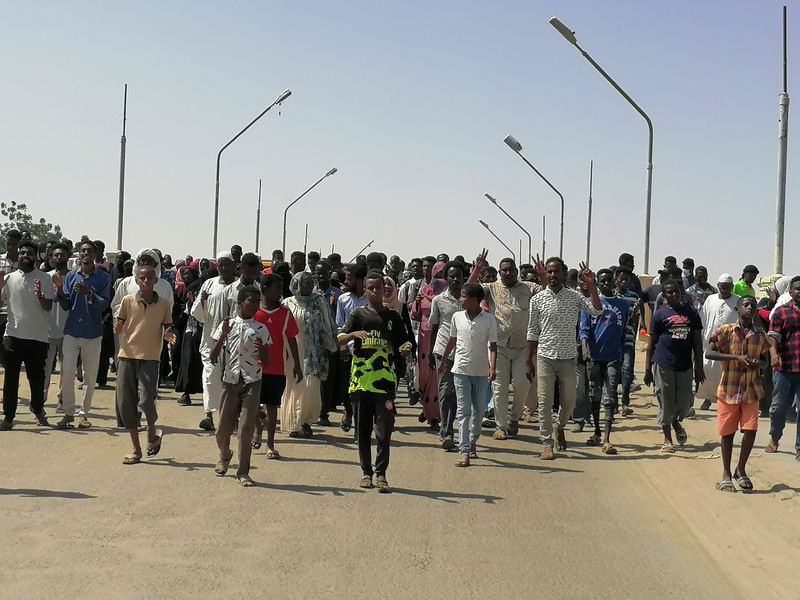


FILE PHOTO: Anti-military protests in northeastern Sudan

By Khalid Abdelaziz and Doina Chiacu

KHARTOUM/WASHINGTON (Reuters) -The United States and United Nations dialled up the pressure on Sudan’s new military junta on Thursday as confrontations between soldiers and anti-coup protesters took the death toll to at least 11.

After the 15-member U.N. Security Council called for the restoration of Sudan’s civilian-led government – toppled on Monday – U.S. President Joe Biden said his nation like others stood with the demonstrators.

“Together, our message to Sudan’s military authorities is overwhelming and clear: the Sudanese people must be allowed to protest peacefully and the civilian-led transitional government must be restored,” he said in a statement.

“The events of recent days are a grave setback, but the United States will continue to stand with the people of Sudan and their non-violent struggle,” said Biden, whose government has frozen aid.

With thousands taking to the streets to oppose the takeover led by General Abdel Fattah al-Burhan https://www.reuters.com/world/africa/general-who-led-sudanese-coup-2021-10-26, witnesses said live and rubber bullets were used on protesters in Bahri, across the river from the capital Khartoum as nightly protests picked up.

A doctors committee, which tracks the violence, said a “martyr” died in those clashes while two others were wounded and in critical condition. Earlier, a 22-year-old man died of gunshot wounds, a medical source said.

That took the total of fatalities in four days to at least 11, medical sources said.

DEFIANCE

The U.N. Security Council, along with other foreign powers, called for restraint, dialogue and freedom of detainees.

The latest of several recent coups in Africa ended a shaky transitional set-up in Sudan intended to lead to elections in 2023. Power was shared between civilians and the military following the fall of Omar al-Bashir, whom the army deposed after a popular uprising two years ago.

Officials at some ministries and agencies of government have defied the new junta, refusing to step down or hand over duties.

They have declared a general strike, along with unions in sectors from healthcare to aviation, although officials say they will continue to supply flour, gas and emergency medical care.

Khartoum’s main market, banks and filling stations were still closed on Thursday. Hospitals gave only emergency services. Smaller shops were open, with long queues for bread.

U.N. special representative to Sudan Volker Perthes has offered to facilitate dialogue between Burhan and ousted Prime Minister Abdalla Hamdok.

The former premier, initially held at Burhan’s residence, was allowed to return home under guard on Tuesday. A source close to him said he remains committed to a civilian democratic transition and the goals of the revolt that toppled Bashir.

A group of ministers from the toppled government attempted to visit Hamdok on Thursday but were turned away, said irrigation minister Yasir Abbas.

With authorities restricting internet and phone signals, protesters have been handing out fliers calling for a “march of millions” on Saturday under the same slogan – “Leave!” – from the protests that brought down Bashir.

POVERTY

Sudan is in the midst of a deep economic crisis with record inflation and shortages of basics. Improvement relies on aid that Western donors say will end unless the coup is reversed.

More than half the population is in poverty and child malnutrition stands at 38%, according to the United Nations.

Burhan’s move reasserted the army’s dominant role in Sudan since independence in 1956, after weeks of friction between the military and civilians over issues including whether to hand Bashir and others to The Hague to face charges of war crimes.

Burhan has said he acted to prevent civil war and has promised elections in July 2023.

Western envoys had warned Burhan that assistance, including a now frozen $700 million in U.S. aid and $2 billion from the World Bank, would cease if he took power. Sources said he ignored those warnings under pressure from inside the military and with a “green light” from Russia.

State broadcaster Sudan TV said on Thursday that the civilian-appointed heads of the state news agency SUNA and the state TV and radio corporation had been replaced. The offices of Al-Democrati, a paper that had been critical of the military of late, had been raided, the paper’s deputy chairperson said.

Biden said he admired the courage of Sudanese.

“We believe strongly in Sudan’s economic potential and the promise of its future — if the military and those who oppose change do not hold it back,” he said.

(Reporting by Khalid Abdelaziz in Khartoum, Doina Chiacu in Washington, Michelle Nichols in New York and Nafisa Eltahir in CairoWriting by Tom Perry and Andrew CawthorneEditing by Nick Macfie and Grant McCool)

CIA ‘plot’ shows US promises on Assange can’t be trusted, court told

By Latika Bourke
October 29, 2021 —

London: Lawyers for Julian Assange have told Britain’s High Court that the reported CIA plot to kill or kidnap the Australian shows that the US government’s pledge to safely extradite the WikiLeaks founder can’t be trusted.

Assange is wanted by the US over the theft by hacking of hundreds of thousands of classified US cables, which WikiLeaks published a decade ago.


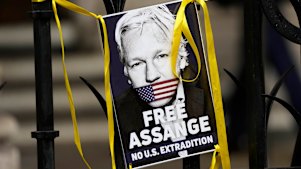
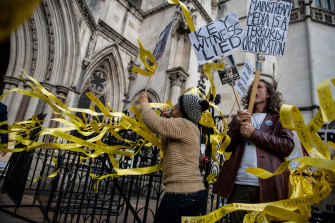
Protesters outside the Royal Courts of Justice in London demand that Julian Assange be freed.CREDIT:GETTY IMAGES

Assange’s lawyers said he was too unwell to attend the second and final day of his court hearing on Wednesday after taking a higher dosage of medication. Assange had intermittently appeared via video link from Belmarsh Prison on Tuesday, but the court was told this was only due to his mistaken belief that the court had ordered him to attend.

The US is appealing January’s ruling that barred his extradition on the basis that being held under extreme prison conditions there could lead to his suicide. The US has offered four binding assurances that Assange will not be sent to a “supermax” prison or held under extreme prison conditions, known as SAMs.

But Assange’s silk Mark Summers told the court that the US previously had every opportunity to provide such a statement but had deliberately kept the option on the table, and only taken it off “for tactical advantage when it lost”.

“It’s an impermissible attempt to recast the case,” Summers said. “They should not be permitted the ‘sea change’ they seek.”

He said that the CIA would exploit a caveat whereby the US had said Assange could still face the toughest prison conditions if he were deemed to have compromised US national security with future actions.


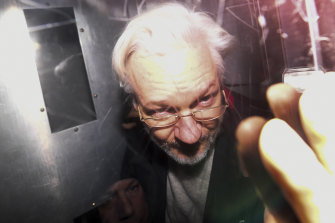
Julian Assange leaves in a prison van after appearing in a London court last year.CREDIT:AP

Summers pointed to last month’s report by Yahoo! News, which said the CIA had game planned killing or kidnapping Assange from the Ecuadorian embassy in London, where he spent seven years having sought asylum to avoid being extradited to Sweden to face possible sexual assault charges.

The US also gave a diplomatic assurance that Assange could apply to serve out any prison sentence in Australia, but Summers said there had been “no indication from Australia” that they would agree to this.

Edward Fitzgerald, QC, who is also acting for Assange, said that Assange was so severely “mentally disordered” that he would be driven to suicide regardless of which prison he was sent to.

”Your Lordship will know from the many inquests into deaths in custody that people find ways to commit suicide whether they’re clever or not clever but whether they’re driven,” he said.


Play video  1:18
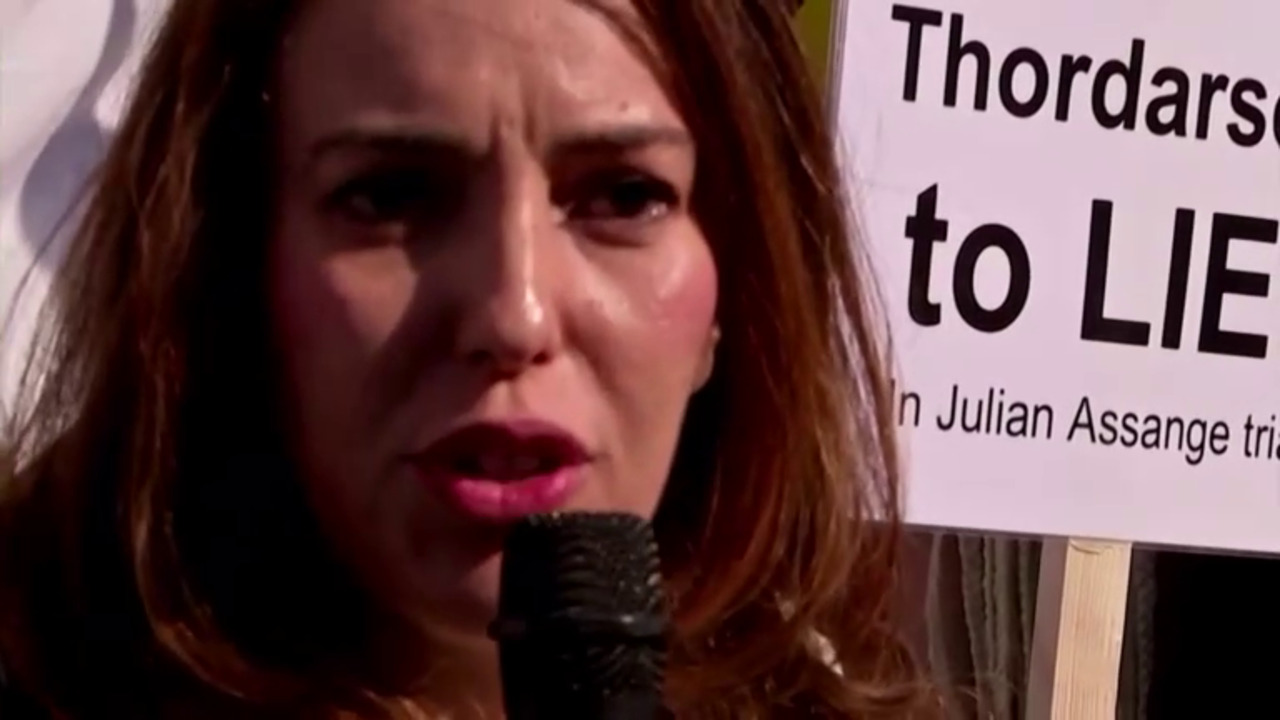
Assange's situation 'increasingly desperate' says partner


The WikiLeaks founder's partner, Stella Morris, said outside London's high court that Julian Assange faces an 'increasingly desperate' situation.

James Lewis, QC, responding for the US government, said Assange was shifting the ground and now arguing that the very act of extradition would trigger a suicide, something he said would set a dangerous precedent for all extradition cases.

“That is the trump card,” he said. “Anyone can defeat extradition.”


Assange saga
Unwell Julian Assange briefly attends court as US presses for extradition

He said that providing diplomatic assurances after the ruling was deliberately reactive, as they could only be provided after a judge had expressed concern.

“These are not dished out like smarties, and they are only dished out in the light of a strong finding that it is essential to facilitate extradition,” he said.

“An assurance will almost be responsive or reactive by their very nature, it’s not always possible to anticipate the area that the judge is particularly concerned about or how that might be properly addressed


He said that providing Assange with the “hope” of serving any sentence in Australia would reduce his suicidal ideology.

The two-day appeal concluded on Wednesday and Assange will remain behind bars while Lord Chief Justices Ian Burnett and Lord Justice Tim Holroyde make their decision, which is expected in four to six weeks.

Assange’s father John Shipton flew from Australia for the hearing and watched the court proceedings from the public gallery along with Stella Moris, the father of two of Assange’s five children, and Kristinn Hrafnsson from WikiLeaks.

Assange lawyer argues WikiLeaks founder still suicide risk


Issued on: 28/10/2021 - 

WikiLeaks founder Julian Assange remains a suicide risk if extradited to the United States, despite assurances he would not be held in isolation at a "supermax" prison there, his lawyer said Thursday. FRANCE 24's Bénédicte Paviot reports from London.


Column: Tesla's aggressiveness is endangering people, as well as the cause of good government

Michael Hiltzik
Wed, October 27, 2021

A Tesla SUV crashed into a barrier on U.S. Highway 101 in Mountain View, Calif., 
in 2018, killing the driver while Autopilot was engaged. (Associated Press)

With as many as 10 deaths under investigation by regulators, evidence of the hazards that Tesla drivers misusing their cars' self-driving systems continues to emerge.

But there's another, less-heralded danger posed by the Tesla-can-do-no-wrong fans. The victims here aren't innocents sharing the road with Tesla drivers, but the causes of good government and sound safety regulations.

The Tesla claque has been in full cry online against the planned appointment to a key federal oversight position of one of the most effective and incisive critics of the obviously premature rollout of autonomous driving systems in Tesla cars.


We're going to see more accidents happen. People are mentally checking out because they think the autonomy is more capable than it is.


Missy Cummings

She's Missy Cummings, an expert in autonomous technologies and artificial intelligence at Duke University. Cummings has been named senior adviser for safety at the National Highway Traffic Safety Administration.

Word of Cummings' appointment produced an uproar among Tesla fans on Twitter that was so obnoxious and obscenely misogynistic that Cummings had to delete her Twitter account. (Warning: Linked tweet is not safe for work — in fact, not all that safe even for mature adults.)

A petition on Change.org calling for Cummings' appointment to be reversed has accumulated more than 26,000 signatures. Transportation Secretary Pete Buttigieg felt compelled to defend the Cummings appointment at a press conference. But he stood by it.

Tesla CEO Elon Musk, whose every uttered thought is slavishly followed by his fan base, could have shut down this contemptible uproar. Instead, he fed it by referencing Cummings in a tweet, stating: "Objectively, her track record is extremely biased against Tesla."

A couple of points about that. First, Elon Musk is absolutely incapable of being objective about anything related to Tesla.


Elon Musk grouses about Missy Cummings' appointment as a federal transportation regulator. (Twitter)

Second, Cummings is perhaps our most articulate critic of self-driving hype. She has been uncompromising in her criticism of Tesla for its approach to self-driving technology and its exaggerations of its capabilities, but her criticism extends to promoters of autonomous driving technology generally.

"I've been on this one-man, Don Quixote-esque attempt to warn people about the real immaturity of artificial intelligence in self-driving systems," she told technology podcaster Ira Pastor in May.

As Cummings recounted, she and other experts in AI and human-machine interactions have been "trying to warn the self-driving and driver-assist communities for a while that these problems were going to be serious. We were all summarily ignored, and now people are starting to die."

The fundamental problem, she said, is that "people are mentally checking out because they think the autonomy is more capable than it is... Until we can get some industry agreed-upon self-generated standards, we should turn these systems off" or allow them to be used only in environments for which they have been specifically designed — limited-access thoroughfares such as freeways.

She's certainly right about that. For years, promoters of self-driving systems, including Musk, have defined the challenge of autonomous vehicles largely as one of developing sensor technologies that could discern obstacles, follow pavement and roadside markings, and avoid pedestrians. They've regarded the issue of human interaction with these systems as one of secondary importance, or even no importance at all.

To experts such as Cummings, however, it's paramount. That's not only because even in a "fully" autonomous vehicle — which doesn't really exist yet in real life — human passengers will be more than just cargo, but will have to participate in navigation at some level. It's also because until the nirvana of total autonomy arrives, humans will inevitably overestimate the systems' qualities.

"We're going to see more accidents happen," Cummings told Pastor.

The evidence of the mismatch between expectation and reality is brimming over online, where Tesla drivers have been posting blood-curdling videos of their cars' performance under the company's Autopilot and Full Self Driving, or FSD, systems. Teslas veer into incoming traffic, come within a hair of rear-ending parked cars, menace pedestrians crossing the street in front of them, barrel past stop signs.

These videos should strike all pedestrians or motorists seeing a Tesla coming down the road with terror. Musk has consistently maintained that Tesla's self-driving systems are safe, but a critical mass of data doesn't exist to validate that opinion. He also tweeted a threat that any Autopilot tester who isn't "super careful" would get "booted."

Instead, Tesla has effectively outsourced the testing of its self-driving systems to random Tesla drivers, who are airing them out on crowded city streets. This isn't like Apple or Microsoft rolling out beta versions of their software for early-adopting users to debug on their own time; a failure of that technology usually can only harm the user. A failure of Autopilot, however, can kill people.

Yet as my colleague Russ Mitchell has reported, "little action has been taken by federal safety officials and none at all by the California Department of Motor Vehicles, which has allowed Tesla to test its autonomous technology on public roads without requiring that it conform to the rules that dozens of other autonomous tech companies are following."

Most companies' self-driving or driver-assist systems are designed to verify that drivers are behind the wheel and engaged in the cars' operations — they use sensors to detect a body's weight on the driver's seat and hands on the wheel. Some use cameras to track drivers' eye movements to determine whether they're paying attention to the road.

Tesla's systems have been criticized as too easy to trick, as Consumer Reports documented earlier this year. Social media also feature not a few videos of Teslas carrying passengers in the rear seat and not a soul behind the wheel.

It should be obvious that the California DMV — in fact, all state DMVs — should shut down Tesla's implementation of self-driving technology on public streets and highways unless and until it reports results from controlled testing on closed roads.

The growing record of crashes involving Teslas with Autopilot engaged prompted NHTSA to launch an investigation in August. The agency said it had identified 11 crashes since January 2018 in which Autopiloted Teslas struck emergency vehicles parked at accident scenes. Seventeen persons were injured and one was killed, the agency said. Three of the incidents occurred in California.

The agency's investigative notice observed that Autopilot gives the driver primary responsibility for identifying road obstacles or maneuvers by nearby vehicles that could collide with a Tesla on Autopilot. But it said it would look into how Tesla's systems "monitor, assist, and enforce" drivers' control.

Tesla's promotion of its self-driving features as "Full Self Driving" has been a consistent concern of NHTSA and the National Transportation Safety Board, which Tesla has been stiff-arming over safety concerns for four years, as NTSB Chair Jennifer Homendy said on CNBC this week.

During that interview, a CNBC reporter noted that Tesla has explicitly informed drivers that they need to stay vigilant behind the wheel even when Autopilot is engaged.

"Are they not doing enough?" he asked Homendy.

She replied crisply, "No, that's not enough.... It's clear that if you're marketing something as full self-driving and it's not full self driving and people are misusing the vehicles and the technology, that you have a design flaw and you have to prevent that misuse." Part of the issue, she said, is "how you talk about that technology." Tesla's description of its technology as "full self-driving," she said, "is misleading."

The signs are rife that self-driving automotive technology is simply not ready for prime time — and in some environments, such as city or suburban streets, not ready for any time. Navigating on roads where any other moving vehicles are under human control presents so many complexities and unpredictable eventualities that it may never lend itself to machine intelligence.

That's an aspect that the champions of autonomous driving technologies have never fully come to grips with, despite the warnings of experts such as Missy Cummings. The public should be cheered that she's now going to be in place to devote her expertise to making policy and, it is hoped, enforcing it.

Cummings has had praise for some things that Musk and Tesla have accomplished, especially a business plan that circumvents auto dealers. But she knows where to draw the line on self-driving claims, and it's well short of where Musk draws it.

CNN host Michael Smerconish mentioned to Cummings during an interview this year, "Elon Musk has been quoted as saying that we're safer with machines than we are with humans... What's your answer?"

"I would say that's true for some machines, but not his machines," she replied. "There's still a huge gulf that we've got to get across before his machines are anything close to safer than a typical human driver."

This story originally appeared in Los Angeles Times.


Elon Musk 'didn't even tell his team' he was moving Tesla's HQ from the Bay Area to Texas, a top California official reportedly said

Grace Dean
Wed, October 27, 2021

Elon Musk himself moved to Texas last year. Patrick Pleul/Pool via Reuters

Elon Musk "didn't even tell his team" he was moving Tesla's HQ to Texas, a top California official said, per Bloomberg.


Tesla's California leadership didn't know until Musk announced it to shareholders, Dee Dee Myers reportedly said.


Tesla still plans to ramp up production in California despite moving its headquarters.

Tesla's California leadership team didn't find out the electric-vehicle giant was moving its headquarters to Texas until Elon Musk announced the move during an annual shareholder meeting, a California official said, according to a report by Bloomberg.

Musk said at the October 7 meeting that Tesla would move its headquarters from Palo Alto to Austin, Texas, citing house prices in the Bay Area, lengthy commutes for staff, and limits to scaling up business.

"Elon didn't even tell his team," Dee Dee Myers, the director of California Gov. Gavin Newsom's office of business and economic development, said during a press call, per Bloomberg.

"We later talked to the leadership in his offices in California, who did not know until he made that announcement," she reportedly said.

Myers made the comment when asked whether Musk had told state officials about the plan in advance.

Grace Gedye, a reporter for Cal Matters, also tweeted about Myers' comments in the press call.

Musk has been one of the driving forces behind the tech migration from Silicon Valley to the Lone Star State.

Musk moved to Texas last year and Tesla began building its Austin Gigafactory last summer. Musk's aerospace company SpaceX, his neurotechnology company Neuralink, and his infrastructure company The Boring Company all have operations in Texas, too, and Musk has said he plans to form a new city called Starbase at SpaceX's Texas launch facilities.

Musk said at the shareholder meeting that the company would continue to expand its activities in California, adding that Tesla aimed to ramp up production at its Fremont factory in the Bay Area by 50%.

"So this is not a matter of Tesla leaving California," Musk said.

Myers said at the press call that "I don't think anybody knows exactly what it means that he's moving his headquarters," per Bloomberg.

"From the perspective of California, they're not going anywhere," she said, per Bloomberg.

Musk has repeatedly clashed with California officials, including after coronavirus restrictions forced Tesla to temporarily close its Fremont factory. Musk threatened to move its headquarters to Nevada or Texas as a result.

Some have seen the tech exodus to Texas as a sign that Silicon Valley's days of dominating the industry are over.

But in an opinion piece for Mercury News, Myers said that: "Tesla hasn't succeeded in spite of California. It has succeeded because of California." She credited this to California's zero-emission vehicle policies and "well over" $1 billion in direct and indirect subsidies she said the state had given Tesla.
GOP legislators spoke at a QAnon convention chock full of conspiracies and hate

Jerod Macdonald-Evoy, Arizona Mirror
October 28, 2021

Republican legislators spoke at Patriot Double Down, a QAnon conference. L to R: Rep. Leo Biasiucci of Lake Havasu City, Rep. Mark Finchem of Oro Valley, Sen. Sonny Borrelli of Lake Havasu City and Sen. Wendy Rogers of Flagstaff.

Four Republican members of Arizona's state legislature attended a QAnon convention in Las Vegas over the weekend that included speakers from the fringe of the conspiracy world as well as antisemitic imagery.

One of the legislators, Rep. Leo Biasiucci of Lake Havasu City, bragged to the attendees of Patriot Double Down that he stood strong against people who tried to convince him not to attend a gathering so closely tied to a violent extremist belief system that calls for the death of political enemies. He recounted an exchange he had with an unnamed Arizona lobbyist whose client was concerned about being associated with Biasiucci.

“Have the CEO of that company give me a call directly and I'll explain to them why I'm going to this event," he said.

“And then I'll explain to them why nobody explains to me what I can or cannot do. 'Cause I don't bow down to anybody. No CEO, not the dictator in D.C. I bow down to God and I answer to you, my constituents," Biasiucci told the crowd, most of whom were not his constituents and had paid between $650 to $3,000 to attend.

And while Biasiucci seemed to revel in being linked to QAnon — the bio he submitted for the event included a reference to a QAnon conspiracy about convicted sex trafficker Jeffrey Epstein — Sen. Wendy Rogers played dumb about the event's overt links to the conspiracy. “What is a Q?" Rogers tweeted before the gathering.


In its simplest form, QAnon is a conspiracy theory that alleges that a cabal of Satan-worshiping pedophiles are running a global sex-trafficking ring, control world governments and are trying to bring down President Donald Trump — who is himself single-handedly dismantling the cabal.

Each member can adopt their own beliefs and are encouraged to do their own “research," and there are as a result a wide variety of QAnon beliefs. For example, some believe that the founder of QAnon, dubbed simply “Q," is actually JFK Jr., while others believe Q to be Trump himself. (JFK Jr. died in 1999 when the plane he was flying crashed into the Atlantic Ocean.)

Borrelli: COVID is a 'plandemic'


Biasiucci and Rogers spoke alongside Rep. Mark Finchem, who is running for secretary of state, and Sen. Sonny Borrelli on a panel discussing the Arizona Senate's partisan “audit" of the 2020 election. That self-styled audit was marred by controversy and conducted by conspiracy theorists who had no background in elections or knowledge of Arizona election law. It found no evidence of the fraud that the four GOP legislators and tens of millions of Republican voters nationwide say stole the election from Donald Trump.

Instead, the “audit" concluded that Joe Biden won Arizona.

The panel discussion opened up with a video by a company that makes QAnon memes and videos, many of which center on debunked conspiracies in them or antisemitic messaging. None of the legislators refuted any of the conspiratorial or antisemitic themes in the video.

Parts of that same video would later be shown during the opening of the second day of the convention.
(One video found by the Arizona Mirror that was created by the company used by Patriot Double Down stated that the Titanic disaster was a hoax, Hitler faked his death and babies blood is being harvested as part of a popular QAnon conspiracy about Hollywood elites. Another video also superimposed the Star of David among images of the 9/11 attacks.)

Other than Biasiucci's opening remarks recounting his conversation with the lobbyist, the Arizona legislators avoided talking about QAnon directly, but alluded to parts of the wide-ranging conspiracy theory.

For instance, Borrelli called the COVID-19 pandemic, which has taken the lives of over 21,000 Arizonans and 984 in Mohave County, where he lives, a “plandemic" and used a stack of masks as a prop to demonstrate the many “masks" of Democrats that were “coming off."

“CRT, another distraction, another distortion," Borrelli said, referring to critical race theory while throwing a mask in the air. Borrelli also claimed that disgraced Gen. Michael Flynn — who pleaded guilty to lying to FBI agents about his contacts with Russian officials — had been “framed."

The lawmakers urged those in attendance to get involved in local politics, urging them to become precinct committeemen — the foot soldiers of political parties who primarily do things like registering voters, canvassing neighborhoods for their party's candidates and other grassroots activities.

Finchem also spoke on a second panel of other QAnon-linked candidates who are running for secretary of state in their respective states.

The panel discussion mostly focused on similar debunked claims around the election, including ones around California's recent recall election. Finchem also praised a Colorado county clerk who is under federal investigation after allowing unauthorized individuals access to voting equipment.

“Tina Peters, god bless her, y'all need to pray for that woman 'cause she is under fire," Finchem said about the Mesa County Clerk who has been branded a hero by QAnon conspiracy theorists.

Later, Finchem compared the murder of six million people in Holocaust to “cancel culture."

“You know what happened in the 1940s, right? Six million Jews were exterminated because they were dehumanized. (Kurt Tucholsky) said, 'A country is not just what it does, it's what it tolerates.' We have become far too tolerant of those who would try to 'cancel culture' us, of those who would tell us to sit down and shut up," he said. “And Aristotle, another notable, said tolerance is the last virtue left of a failing society."


One other Arizona politician was in attendance: QAnon leader and congressional candidate Ron Watkins.

The event also featured a speech from actor Jim Caviezel, who fully embraced QAnon during a session that included a man whose fans claim he is JFK Jr.

Arizona Mirror is part of States Newsroom, a network of news bureaus supported by grants and a coalition of donors as a 501c(3) public charity. Arizona Mirror maintains editorial independence. Contact Editor Jim Small for questions: info@azmirror.com. Follow Arizona Mirror on Facebook and Twitter.
A sociologist explains how moral panics serve the right-wing agenda

Rod Graham
RAW STORY
October 28, 2021

Photo via Instagram

ProPublica detailed a pattern of suppressing cases of sexual assault at Liberty University, a private evangelical Christian school in Lynchburg, Virginia. After female students reported being assaulted, campus officials submitted them to victim-blaming, suggesting they violated campus policy against drinking and fraternizing with the opposite sex. Students told ProPublica that staff did not even report their cases to the Title IX office, a legal requirement. This has been going on for years. How?

How can an institution of this size and visibility carve out this immoral space and thrive in it for so long? What allows staff to feel justified in minimizing complaints of sexual assault? There are many explanations, including the obvious one that Liberty University was concerned about its image of producing good Christian women and men. But I want to offer an explanation that may not be obvious.

Moral panics are the taking of anecdotal instances and making them seem more prevalent than they actually are (the panic), then demonizing groups associated with these instances (the morality).

The moral panics engineered by a philosophically bereft and culturally out-of-step Republican Party allow pockets of America to continue patterns of behavior that most of society would deem problematic.

Let me explain.

Moral panics and immoral action

Social scientists and faculty administrators have been aware for some time that women endure all forms of sexual aggression on college campuses, from unwanted sexual advances to inappropriate touching to rape. It is a long-standing problem. It is well understood in progressive and academic spaces. A common statistic shared in these spaces is one in five women are sexually assaulted on campus.

The Harvey Weinstein case of 2017 and the subsequent #MeToo Movement was a watershed moment, inaugurating a wave of women coming forward about their experiences with sexual aggression. For many, it was simply making public what was already known.

But conservatives turned the #MeToo Movement into a moral panic, suggesting that hapless innocent men were in danger of being persecuted by liberal feminists. News organizations frequently ran stories saying the movement had "morphed into a career-destroying mob," "gone ridiculously too far" and that it was a "scary time for men."

Liberty University could then position itself as being against these feminists and what they support, and double down on practices we know are harmful. Administrators at Liberty University can operate under the assumption that they are a place free of progressive, pink-haired "feminazis." At the same time, they routinely dismiss legitimate claims of sexual assault from their students.

This is how moral panics sustain immoral practices.

The panics keep coming

I chose the Liberty example, because it is the most recent and one of the more disturbing. But also because the links between Liberty's practices and the moral panic that helped sustain it are not readily apparent. Other instances are much clearer.

Consider "cancel culture." The idea is that a hypersensitive irrational "woke mob" will call for the firing or the deplatforming of someone based solely on their ideas. A few cases where people have lost economic opportunities (rarely is someone actually canceled) are used to suggest a pervasive phenomenon. We now live in an oppressive society, they say, where people cannot speak their minds.

This narrative allows people to continue to disseminate damaging ideas without considering their impacts on vulnerable populations. They can say they are against "the wokies" and will not be silenced. So instead of operating in a moral space where people are mindful that speech is an action with consequences, people propagating racist, sexist and transphobic ideas can do so with no qualification or filter.

The panic around critical race theory (CRT) is even clearer, with candidates making the banning of it a significant part of their platform. Liberal, unionized public school teachers are the demonized group in this panic. Because scholars and K-12 teachers themselves have pointed out the ridiculousness of K-12 teachers discussing an esoteric set of ideas oriented towards law school students, anti-CRT advocates have stretched the idea of what CRT is. It now includes anything deviating from Martin Luther King Jr.'s phrase of judging one another based on the content of our character and not the color of our skin.

In response, citizens uncomfortable with talking about racial inequality can hide behind the anti-CRT banner, and legislators are now emboldened to narrow what children learn. In effect, they are upholding a white supremacist version of our history and reducing the ability of our young people to think with any depth about racism.

Let's do one more example, shall we?

Society continues to move forward on recognizing trans rights. It is inevitable that conservatives will generate moral panics giving people the cover needed to continue practicing their transphobia.

But this particular moral panic comes from an unusual space. Within the conservative media sphere, stories about trans women prisoners raping female inmates are becoming more numerous. While this does happen, and we need to find ways of preventing this, these instances are exaggerated (the panic) and they demonize trans persons (the morality). In an odd twist, conservatives have finally developed some sympathy for our incarcerated population only because it allows them to push back against what they see as "trans ideology."

The politics of panics

Moral panics have utility for people who want to resist change and continue operating in ways becoming increasingly inappropriate. People attracted to Liberty University do not want to accept a world in which women are not at the sexual disposal of men. Many white Americans are uncomfortable with a school system that critiques their ancestors and our nation's history. People are uncomfortable with the visibility of trans people and chafe at requests to treat them as equals.

Panics are tools for these people.

But they also serve a broader purpose.

The Republican Party of the 21st century is struggling with rapid change. It has always been the smaller party in terms of registered voters. Recent polling suggests it is getting smaller. Few policies Republicans can offer appeal to voters who are young, educated, less economically secure or of color. One of the ways they can maintain competitiveness is to make sure their voters are energized and vote.

My concern is that progressives legitimate these moral panics by participating in the discourse. By generating an argument against them, we operate on the battlefield conservatives chose. If these panics are at best distortions, at worst lies, maybe the most effective strategy is to double down on our own, more truthful narratives.

I have invested too much time discussing why CRT is not in our schools. Why did I do that? The anti-CRT folks and the political party supporting them were not invested in the truth. My engagement as a progressive academic only helped validate an anti-CRT opposition.

I will be doing that much less now.

Rod Graham is the Editorial Board's sociologist. A professor at Virginia's Old Dominion University, he researches and teaches courses in the areas of cyber-crime and racial inequality. His work can be found at roderickgraham.com. Follow him @roderickgraham.
WitchTok: the rise of the occult on social media has eerie parallels with the 16th century

October 28, 2021 

It’s 1.30am in the morning, and I’m about to watch a duel between magicians. One is a “demonolater”, a word I have never heard before, someone who claims they worship demons and can petition them in return for knowledge or power. The other describes themselves as a “Solomonic magician”, and claims to be able to command demons to do his bidding, as some Jewish and Islamic traditions have believed of King Solomon, who ruled Israel in the 10th century BC.

I first discovered this debate because, in the course of studying 16th century books of magic attributed to Solomon, I had found, to my astonishment, that “Solomonic magic” is still alive and well today, and growing in popularity. Twitter had suggested to me that I might be interested in an account called “Solomonic magic”, and a few clicks later I had found myself immersed in a vast online community of young occultists, tweeting and retweeting the latest theories and controversies, and using TikTok to share their craft.

To my further bemusement, it seemed that the tradition of Solomonic magic had recently faced accusations that its strict and authoritative approach to the command of demons amounted to a form of abuse, akin to domestic violence. As I had made a note in my diary of a public debate that I wanted to attend out of sheer curiosity, it seemed astonishing to be asking myself whether Solomonic magic, the same found in books of necromancy dating back hundreds of years, was on the brink of cancellation in 2021.

At 28, I’m slightly too old to be familiar with the platform Twitch, mostly used for live video streaming, but tonight I’ve managed to get it working for this particular debate. As an atheist, I’m very likely in the minority, though I’m not the only Brit to have turned up in spite of it being such an ungodly hour this side of the pond. The chat box is buzzing as occultists of various stripes arrive to hear the arguments.

My mum would hate this, I can’t help thinking to myself. She didn’t even let me read Harry Potter.

When people ask me what I do, it’s always fun to tell them, “I study magic at Cambridge University.” It’s technically true. I’m researching the representation of magic on the early modern stage, and am interested in the ways in which dangerous, forbidden or “occult” knowledge was theorised by Shakespeare and his contemporaries. My research combines my fascination with the mechanisms of belief with my love of storytelling and the stage. When I’m not researching plays, I’m writing them: I’m an award-winning playwright, whose work has been performed across the UK and abroad.

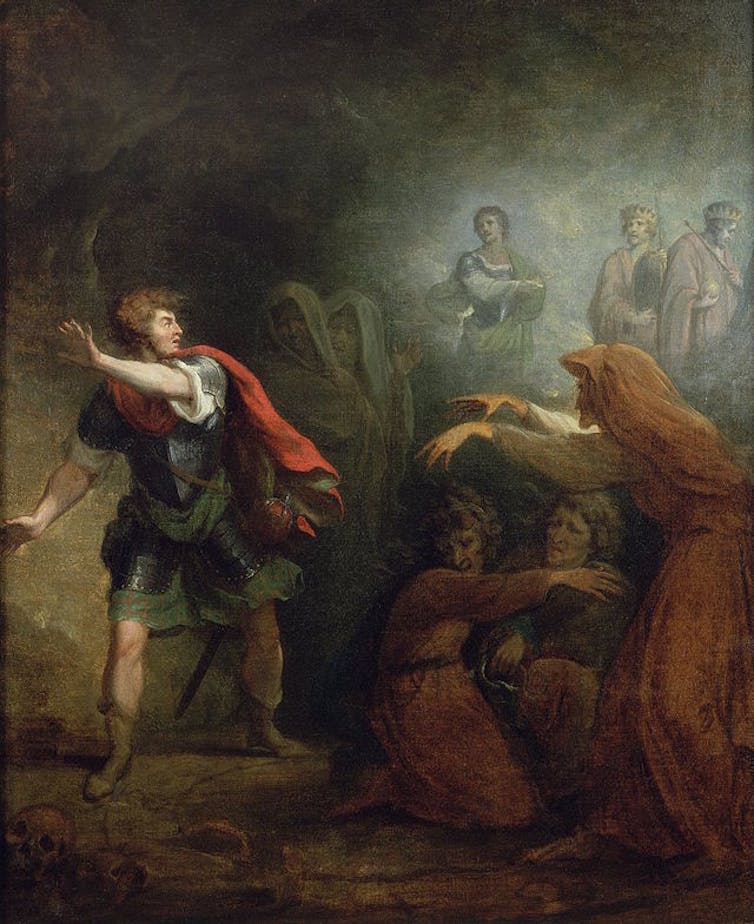
British painter George Romney was only one of many artists whose imagination was inspired by the three witches in Shakespeare’s Macbeth. Wikimedia Commons, CC BY

Suspending disbelief is my forte, but actually believing is something I’ve never been very good at. The history of magic fascinates me because it is a history of people – of human faults and foibles, vanities, hopes and needs – rather than because of any genuine investment in the esoteric. This is why I’m here to listen to articulate and likeable young people across the globe discussing theories of knowledge and the supernatural – beliefs to which I myself cannot subscribe.

Even more astonishingly, these Generation Z occultists, with their substantial followings on Twitter and TikTok, are about to debate a form of magic that lies at the heart of my research into Shakespeare’s England.


This story is part of Conversation Insights
The Insights team generates long-form journalism and is working with academics from different backgrounds who have been engaged in projects to tackle societal and scientific challenges.

The rise of WitchTok


While the most watched TikTok videos may appear asinine to anyone who doesn’t enjoy teenagers lip syncing to popular songs, some surprising subcultures have arisen since the platform’s inception in 2017. One of these is the “WitchTok” community. Videos labelled #WitchTok have so far clocked up an impressive 18.7 billion views.

I accidentally found WitchTok because I had – to my shame, I’ll admit – found it calming to watch compilations of Cottagecore TikTok videos in my breaks during PhD research. Cottagecore is a popular fashion and lifestyle aesthetic that evokes the bucolic idyll of country living. Cottagecore videos are saccharine and safe: jam is preserved, mushrooms are picked, and flowing dresses stream across ripe fields while a girlfriend holds the camera and gentle music plays.


Cottagecore TikToks are perfect means of escapism, featuring castles, fields, elf ears, and magic flutes, among other elements of wonder.

In short, it is pure escapism, and so is WitchTok; creators of WitchToks often also make Cottagecore videos. Yet, where Cottagecore offers hope for a good, green world that just might be baked and planted into existence, WitchTok audaciously skips past the bounds of possibility, and promises supernatural means of making life more bearable.

The abundance of magic on TikTok piqued my interest, representing as it does a new frontier in popular belief. It has also caught the attention of mainstream media. In April 2021, for example, the Financial Times consulted anthropologists and theologians who scrambled to interpret this strange turnout of events. Its author noted with astonishment that #WitchTok had surpassed #Biden by over 2 billion views and is now leading by around 6 billion and counting.

Practical magic

TikTok allows its users to make 15-second video clips, or a string of 15-second clips of no more than 60 seconds in total. This format lends itself to fast-paced, visually appealing content, and this has shaped the kind of magic found on WitchTok. Spells using candles, bottles, crystals and herbs make for snappy and succinct tutorials which can be readily imitated by the viewer.


Tarot reading has become a viral trend on WitchTok.

Interactive WitchToks are particularly popular, usually using tarot cards or pendulum boards, where a crystal is dangled over a set of words, supposedly swinging over the truth when asked a simple question. By urging the viewer to participate, to “think of a question you want an answer for”, creators are conspicuously gaming TikTok’s algorithm, keeping people watching and encouraging engagement, while claiming that it was supernatural power that drew them to a video.

Brevity is the soul of WitchTok, where complex tarot spreads are abandoned for a one or three card message told to an audience of millions in 30 seconds. Carving a magical symbol into a candle upstages convoluted and expensive ritual magic from more formal, structured esoteric systems, where a single spell can take a day or more.

What, then, are TikTok users looking for in their magical clips of 60 seconds or less? The most common functions of a spell seem to be love, money, healing or revenge, particularly vengeance on behalf of a loved one, whether wronged by a school bully or abusive husband. Magic appeals because life is unfair, and power is a pleasant fantasy. In this regard, WitchTok is no different from any other magical tradition.


Witchtok hunters

The occult subculture is a controversial one, and the witches of TikTok are a particularly powerful magnet for outrage and mockery. They have come under fire from three main types of enemies who appear in turn as caricatures in WitchTok videos.

The first one of these is an interloper who I’ll call “the angry Christian”. When pantomimed in a WitchTok, the angry Christian blazes with furious indignation, railing against the evils of magic, till they are silenced with a sassy retort or threat of a hex. The angry Christian believes in magic, in Satan and in the occult. They simply think you’ll risk your soul if you engage with it. The Christians I grew up with are cut from precisely this cloth.

Less common than the angry Christian but occupying a similarly villainous role is “the smarmy sceptic”, the unbeliever who has no interest in any kind of faith. WitchTok videos often dramatise fantasy conversations with them, imagining ominous retorts: “Don’t believe in curses? Sure! Just give me a lock of your hair then … no?” In some ways the smarmy sceptic is worse than the angry Christian, refusing point blank to be “spiritual” at all. I’m afraid this is probably the category into which I would be placed.

Intriguingly, however, a third opponent has arisen from within the occult community itself. This is what I am calling “the learned magician”, a practitioner who takes the occult seriously as a complex and scholarly pursuit, delighting in the theory, the complexity of rituals, and the broader philosophical implications of their beliefs.

Not quite so TikTok-friendly, they tend to make an occasional appearance when the trends of WitchTok deviate from the logic of a particular magical system, stepping in to correct the new “baby witches” and expressing exasperation with controversies that will sound familiar even to those with no interest in the occult. (Is it cultural appropriation to wear an evil eye
 pendant? Does calling for discipline in magical ritual equate to a form of fascism?)

Learned magicians sometimes take to TikTok to set the record straight for ‘baby witches’.

Some learned magicians are attempting to bridge the gap. Gen-Z occultist Georgina Rose or “Da’at Darling” – who has convened the debate between the demonolater and Solomonic mage to which I am about to listen – puts out a prolific array of content ranging from introductory YouTube lectures to witty tweets and TikToks.

Upset by the “rise of anti-intellectualism in Generation-Z heavy online occult spaces”, she responded, appropriately, with a successful TikTok hashtag: #DefendOccultBooks. Perhaps not an outright “enemy” of Witchtok, after all – as “Da’at Darling” puts it, “it is important to reach this platform, so new practitioners can have good information on the occult” – the learned magician is still, at best, tolerant of the trends of TikTok spirituality.

Here, then, is a new theatre of ideas where innovative technology has not quelled ancient magical practices but has advanced them, giving rise to new forms of faith and schism. If the unbelieving reader is asking themselves how a new age of occultism has arisen in a supposedly enlightened modern age, when surely the tech-literate young know better than to return to ancient superstition, they need look no further than a parallel series of events in Shakespeare’s England. This was a time when innovations in technology and culture served to reinvent and energise ancient magical beliefs.

The occult renaissance

In medieval England, getting your hands on a book of magic was a tricky business. Prior to the invention of the printing press, handwritten texts were passed around in manuscript form between those lucky enough to have been taught how to read. Costly and time-consuming, the production of a book was simply not worth the effort unless the contents truly mattered.

In spite of this, from the mid-13th century onwards, a series of treatises that dealt with occult knowledge were translated into Latin and various European languages, slipping covertly between the personal libraries of wealthy men. If the Renaissance can be characterised more widely as a period of translation of classical wisdom, so too was it an era when occult “wisdom” began to circulate more widely than before.

Grimoires, or ‘spellbooks’, had a great influence on science and religion. 
Wikimedia Commons, CC BY

Books of magic, or “grimoires”, a word which derives from the French grammaire, promised, like ordinary school grammars, to teach the reader the rudiments of a new language, though this was the language of spell-making and devil-raising. Grimoires were frequently attributed to famous men of esoteric learning, and the wise king Solomon in particular appealed to Christian readers. If Solomon had authored such a text, could not the wise Christian reader likewise practice the occult without endangering his soul?

Rumour of the grimoires and their grim rituals would circulate widely throughout the medieval era while the actual, often comparatively bland contents, remained obscure.

The occult reformation

The introduction of printing press technology to Europe in the 15th century revolutionised the speed and scale by which all texts could be produced. It was the printing press which facilitated the Protestant Reformation, and it was also the printing press which was responsible for the introduction of the occult grimoires to a larger audience than ever before.

Surprisingly, this occult reformation was enacted not by magicians themselves, but by a series of sceptics who believed that, by revealing in print the content of infamous esoteric manuscripts, they could expose them to the ridicule that they deserved.

Dutch scholar Johann Weyer’s Latin treatise De Praestigiis Daemonum or “On the Tricks of Demons” was published in 1563. It was one of the first great sceptical works debunking magic, criticising notorious witch hunting manuals like the Malleus Maleficarum and, indeed, successfully curbing some of the continental witch trials. Weyer’s work had a huge influence on one Englishman in particular, Reginald Scot, who borrowed from it in his own book, The Discovery of Witchcraft, first published in 1584.

The Malleus Maleficarum is a manual for hunting witches that would serve as guidance for 15th century witch trials. Wikimedia Commons, CC BY

Scot’s The Discovery is a thrilling exposé of both the folk magic practised by witches and the “learned” magic found in grimoires, particularly those attributed to Solomon. Weyer had included, as an appendix to De Praestigiis Daemonum, a direct translation of a Solomonic grimoire which listed the names and ranks of various demons, and how a magician might go about conjuring and commanding them as, supposedly, could Solomon.

Scot “Englished” much of this appendix for his book, concluding scathingly: “He that can be perswaded that these things are true … may soone be brought to beleeve that the moone is made of green cheese.”

Though by no means an atheist – nobody was, at least not openly, in the 1500s - Scot was certainly a smarmy sceptic, and The Discovery shares the exasperated horror of Richard Dawkin’s The God Delusion (2006) at the excesses of superstition and belief. Joined by George Gifford’s A discourse of the Subtill Practices of Deuilles by Vvitches and Sorcerers by which Men are and Haue Bin Greatly Deluded (1587) and Henry Howard’s A Defensatiue Against the Poyson of Supposed Prophesies (1583), Scot’s treatise seemed to ride the crest of a new wave of scepticism concerning the whole project of magic in general.

Surely the genie was out of the bottle (or demon out of the brazen bowl, as the Solomonic grimoires would describe it). Now that occult beliefs had been so thoroughly exposed and ridiculed, how could they possibly survive?

King James and the witches


In 1597, King James VI of Scotland, who would inherit the English throne in 1603, published an extraordinary treatise: Daemonologie. The book was not, as the name might suggest, a grimoire-like guide to the conjuration of demons, but rather a serious study of demonic power and the harm it could inflict. King James did not accept the suggestion that any man, even if he was as wise as Solomon, could seriously practise magic without risk to his soul. Nor did he believe, as the smarmy sceptics did, that there was no real threat whatsoever.

James was an angry Christian, a man who believed, sincerely, in the power of the occult and felt duty-bound to protect his people from it in all its forms. He had nothing but contempt for the likes of Scot, whom he regarded, in much the same way as a modern Christian fundamentalist might regard an unbeliever, as a dangerous mocker who did the Devil’s work for him by dismissing the real threat that magic posed.

Even worse, Scot and his fellows had inadvertently introduced into printed English, for the first time, the detail of dangerous grimoire magic which had formerly reached only limited circulation. While it is a myth that James ordered copies of The Discovery to be burned, extracts from the text were indeed consigned to the fire during the witch trials of the 17th century, when sections were found, freed from their original sceptical context, in the documents of those accused of witchcraft.
One devil too many

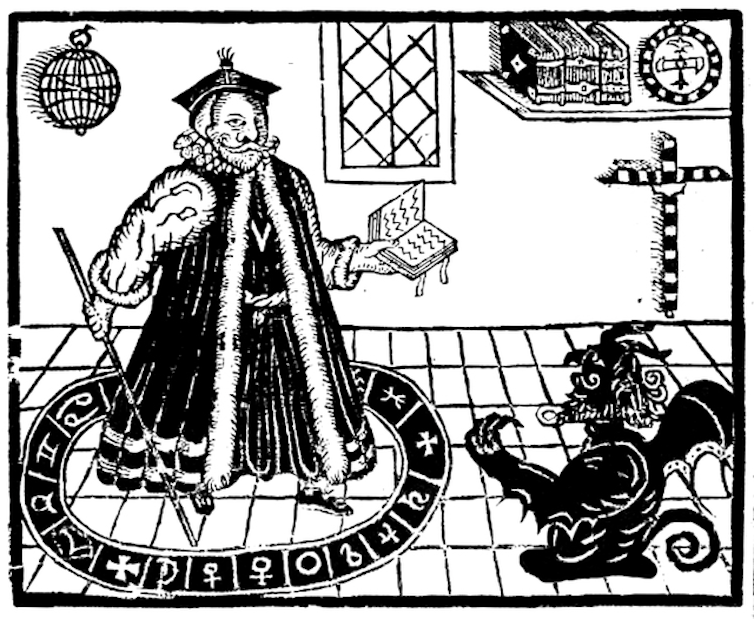
My PhD looks specifically at the fallout of this fascinating cultural clash in the work of the early modern dramatists, and I am particularly interested in the overlooked presence of Solomon in these debates. Most famously, it was Marlowe’s Doctor Faustus which sparked a vogue for plays that dealt with the question of the learned magician.

Doctor Faustus raised many objections due to its interplay with the demonic realm. Wikimedia Commons, CC BY

Written in around 1588, Doctor Faustus drew on Scot’s The Discovery in its representation of magic, yet discarded its dismissive tone. Faustus succeeds in summoning the demon Mephistopheles, and signs away his soul in a contract written with his own blood in return for 24 years of power. After wasting his time on petty vengeances, greed and lust, Faustus is finally sent to hell.

Rumour circulated that an extra devil had been seen on stage during the play, a fact which the Puritan William Prynne would gleefully repeat as proof of the evils of theatre in his Histriomastix, 1632. Magicians who both did and did not achieve their hoped-for Solomonic command of occult forces would populate the English stage for decades.

Scot and the sceptics had indeed laid bare the detail of occult belief, and their work was highly influential, but it had precisely the opposite of their desired effect. Advances in technology, accessible English translations and an entertainment industry hungry for a good story had conspired to democratise magic. The process they unwittingly began continues today on TikTok and elsewhere.

Solomon on trial


It’s a strange truth that grimoire magic is more widely available in 2021 than ever before, and that it is the internet which has popularised exactly the same material that was hidden in a handful of libraries for the first few hundred years of its presence in Europe.

With the debate about the ethics of Solomonic magic underway on Twitch, I hardly dare imagine Scot’s horror, much less King James’s, to hear phrases like “pro-demon rights” from a young person describing themselves as a “demonolater” and “magic is the scientific study of conversations with spiritual beings” from a self-professed “Solomonic mage”.

The latter has done a good job of persuading the Twitch stream that commanding demons is not inherently disrespectful, though a poorly-judged comparison between the authority of the magician and that of the policeman sparks momentary indignation in the chat.

Nevertheless, the debate is civil and ends with discussions of new online editions of the rare grimoires. It seems the magical incarnation of King Solomon will live to exorcise another day, and I can’t say I’m surprised. The historical inability of sceptical dismissals and technological advances to do anything other than encourage belief in magic has persuaded me that the fundamentalists are right in one respect: speak of the devil and he shall appear – and that goes for TikTok too.

Author
Rebekah King
PhD Candidate, Faculty of English, University of Cambridge


COMMENT

Ian Tully

masuk via Google

Superstition (folk religion) has always been there, and perhaps one of the reasons why there is such an outbreak of witch-hunting in the early modern period is that the superstition tolerated and incorporated in the Roman Catholic Church was challenged by the Protestant Reformation. There is something quite similar 500 years earlier when the Church, led by the reforming monk Bernard of Clairvaux, attacks pagan folk religion as Satanic.

One can also point to other periods of stress as in the late-18th century when alongside Enlightenment Rationalism there is a flourishing of Rosicrucian belief and the semi-serious Satanism of the Hellfire Club among others. Folklore and ‘Gothic tales are popular just as rational science is making its greatest strides. Again the same trends can be found at the Fin de Sciecle when there is a flourishing of Rosicurianism and other exotics, Satanism in France and Germany, and Spiritualism especially after the slaughter of the Great War, which marked the end of much male Church attendence and a radical decline in the safe magic of British Masonry. The attraction of magic to some Nazis is well-known and they were the products of this period.

There is really no difference between this and the Witchdoctor led beliefs of the non-Western world. They all draw on the same ideas and they can all point to some “proofs” because if people believe, and fear is a good basis for belief, they can experience psycho-physical effects. I knew of a Dyak soldier who was quite literally dying from a curse because he believed in it. The growth of fringe Christian sects, notably in the Third World which appeal emontionally and sometimes as with the Properity Churches economically too, meet a gap that reformed Religion (even the contemporary Roman Catholic one) does not address. Teenagers are particularly susceptible because they both feel powerless and have a desire for power which is often associated for them with sexual power, hence boys especially have been drawn to the Occult. This is rather different from the silly cartoon stuff although that can be an entry point, just as we have recently been reminded that the anti-rationalism of “New Age” thinking can lead to extremist Right-Wing political positions.


Africa to press climate finance demands at COP26: negotiator
Agence France-Presse
October 28, 2021

Vulnerable: Zimbabwean farmer Josephine Ganye struggling to grow corn in the drought that gripped the country last year 
Jekesai NJIKIZANA AFP

African countries will use next week's COP summit to demand rich nations honour and then deepen their pledges to fund the fight against climate change, a top negotiator said Thursday.

The UN meeting in Scotland hosts a two-day summit of world leaders from Monday, with organisers warning that the chances of averting runaway climate change are dwindling.

For wealthy economies, the big focus will be on cuts in carbon emissions to try to restrict global warming to 1.5 degrees Celsius (2.7 degrees Fahrenheit) above pre-industrial levels.

This is the safer of two goals set down by the UN Framework Convention on Climate Change (UNFCCC) for preventing worse drought, floods, storms and rising seas.

But for African countries, the biggest issue is money -- funds to help struggling economies curb their emissions and also adapt to the wrenching impact of climate change.

"We have been waiting for more than 10 years for the promise of $100 billion per year," Tanguy Gahouma-Bekale, chair of the African Group of countries at the climate talks, told AFP.

It was in 2009 that rich countries first pledged to muster $100 billion annually, from all sources, to help poorer nations, a target that would be achieved by 2020.

The promise was made to help stave off a fiasco at the 2009 Copenhagen climate summit and was enshrined in the 2015 Paris Agreement -- the negotiating basis for the coming talks in Glasgow.

But the 2020 goal was missed and Britain's COP president, Alok Sharma, has admitted it is unlikely to be achieved before 2023.

"The position of the African group is that we can come back on track and find a solution to close this gap," said Gahouma-Bekale, an adviser to the Gabon government.

"We need now to go to the target that we committed in the Paris agreement this year, not in two years."
Vulnerable Africa

Wealthier countries are grappling with how to revamp their energy systems to reduce fossil-fuel emissions, but African nations face different challenges, said Gahouma-Bekale.

"Africa is not going to accept to limit its economic development to accompany the fight against climate change -- that is why we are asking for support," he said.

"Africa is not at all responsible for the situation, but is one of the most vulnerable continents.

"We must also ensure the fight against poverty, we must ensure jobs for young people and we must ensure energy for all.

"The African continent has a population that is almost half disconnected from the electricity grid.

"So rather than looking for an energy transition, we need to look at how we are going to match our energy supply with demand," he added.

That would require much more funding than the $100 billion a year currently pledged, he warned.

"Now that promise has become obsolete, it's no longer relevant. We think that maybe we need 10 times more."

He also demanded better accounting of how the money was being delivered.

"Today we have no methodology, no table on how to track this money," he said.


Official figures show that between 70 and 80 percent of the $100 billion target had been delivered, "but a lot of countries didn't see the money on the ground", he claimed.

"So where goes this money?"

Many developing countries are also angry at the logistics of the conference in Glasgow, despite British government promises to offer free coronavirus vaccines to any delegates in need.

"The cost to find accommodation is very high, so African delegates may be one hour" from Glasgow, Gahouma-Bekale said.

"We have also a lot of challenges due to quarantine, to vaccines."

Given the scarcity of vaccines in Africa, many delegates will instead have to isolate on arrival and undergo costly tests.


"But we try to come here, we try to do all the visa, all the accommodation to travel to here because it's a fight for the future, for our children," he vowed.

"And we will be here until the end of this COP."

© 2021 AFP