Saturday, December 04, 2021

CHINCHILLA RESISTANCE FRONT
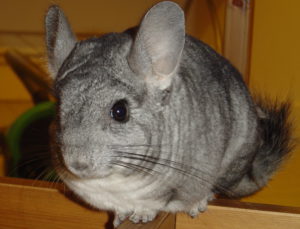
Chinchillas throw wrench in Gold Fields’ Chile mine expansion plan
Bloomberg News | December 1, 2021 | 

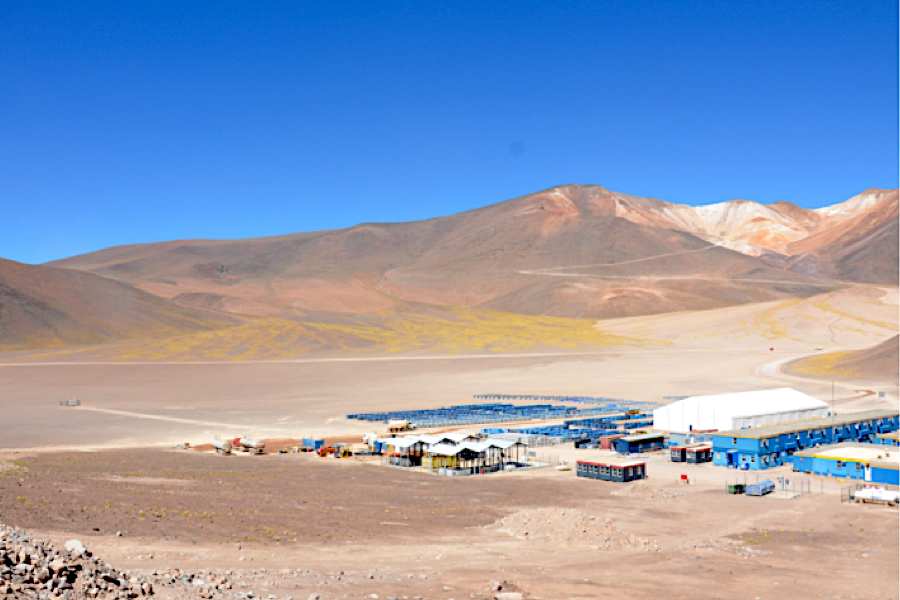
The Salares Norte gold project is located in the Atacama region of northern Chile. (Image courtesy of Gold Fields Chile.)

Gold Fields Ltd.’s flagship $860 million expansion project in Chile has stumbled over a large rodent, whose prized fur saw it hunted to the brink of extinction.


The Johannesburg-based gold miner must come up with a new plan to move more than 20 short-tailed chinchillas from its Salares Norte site after Chile’s environmental agency halted its original relocation program when two out of four animals died. The project in the country’s Atacama region is one of the last wild refuges of the bluish-grey furred rodent.


IN DEPTH: 25 chinchillas stand between Gold Fields and $7bn worth of Chilean gold

The plan, which will be submitted to the environmental authority, will involve relocating the chinchilla colony about 5 kilometers (3 miles) away from the mine to an area where another 100 of the rodents live, Gold Fields said.

Despite the challenges of relocating the endangered chinchillas, Gold Fields said it’s still on track to start producing gold at Salares Norte in early 2023. Output from the mine is key to helping Chief Executive Officer Chris Griffith meet a target of boosting annual output to about 2.8 million ounces.

(By Felix Njini)
Chile election favorite talks up state lithium firm, slams ‘error’ of privatization
Reuters | December 1, 2021 | 

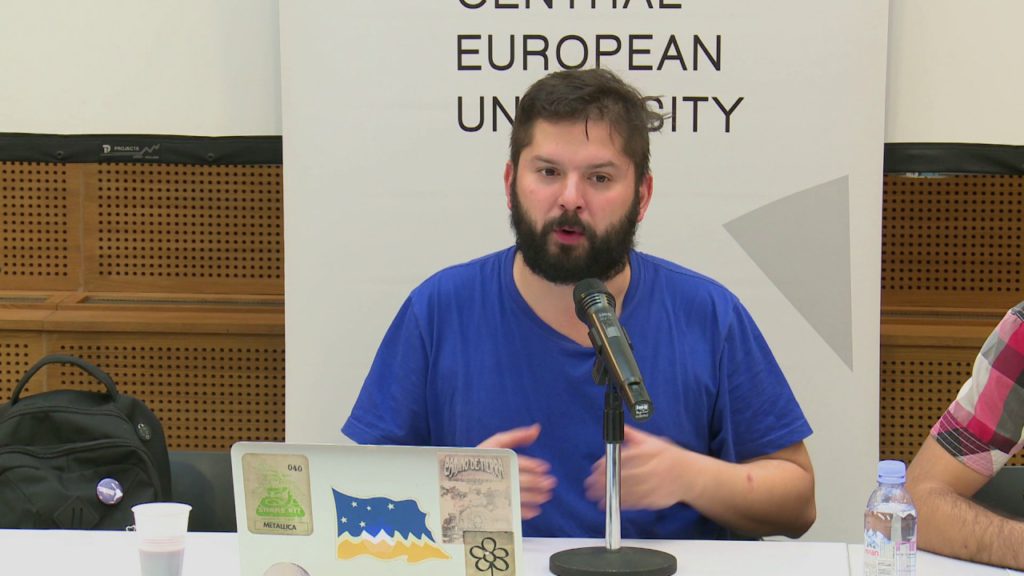
Gabriel Boric. Credit: Department of Public Policy at CEU

Chilean leftist presidential candidate Gabriel Boric, the front-runner in surveys ahead of a Dec. 19 run-off vote, talked up his plans for a state lithium firm on Wednesday and slammed the Andean country’s “historic error” of privatizing its resources.


Chile, which sits on South America’s ‘lithium triangle’, has the world’s largest reserves of the ultra-light battery metal, which is key to the booming development of electric vehicles. Prices are rising amid expectations of hot demand.

Chile, a regional bastion of market-friendly policies and privatization in recent decades, is also the second largest producer behind Australia. Its major mine operators include Albemarle Corp and local player SQM.

“Chile cannot once again make the historic mistake of privatizing resources, and for this we will create the National Lithium Company,” Boric tweeted.
READ ALSO: Chile elections may impact a third of the world’s copper supply

He said the move would help generate jobs and put a “Chilean seal” on the product.

“Lithium is the mineral of the future, used in millions of electronic devices.”

Boric has previously included plans for a state lithium firm in his campaign program, but kept relatively quiet on the topic in the run-up to the first round vote on Nov. 21, where he came a close second.

Boric will face off against far-right rival Jose Antonio Kast in the run-off, with surveys giving the leftist a big lead.

Chile is also the world’s largest producer of copper, and lawmakers are currently debating plans to raise royalty payments for mining firms to bolster state coffers and fund social spending needed to bounce back from the impact of the covid-19 pandemic.

Chile’s state-owned Codelco is the world’s largest producer of copper, though many other private firms also mine copper in Chile.

(By Fabian Cambero; Editing by Adam Jourdan and Kevin Liffey)
MINING IS ECOCIDE
Tailings pond collapse affects world’s highest human settlement

MINING.COM Staff Writer | December 3, 2021 | 

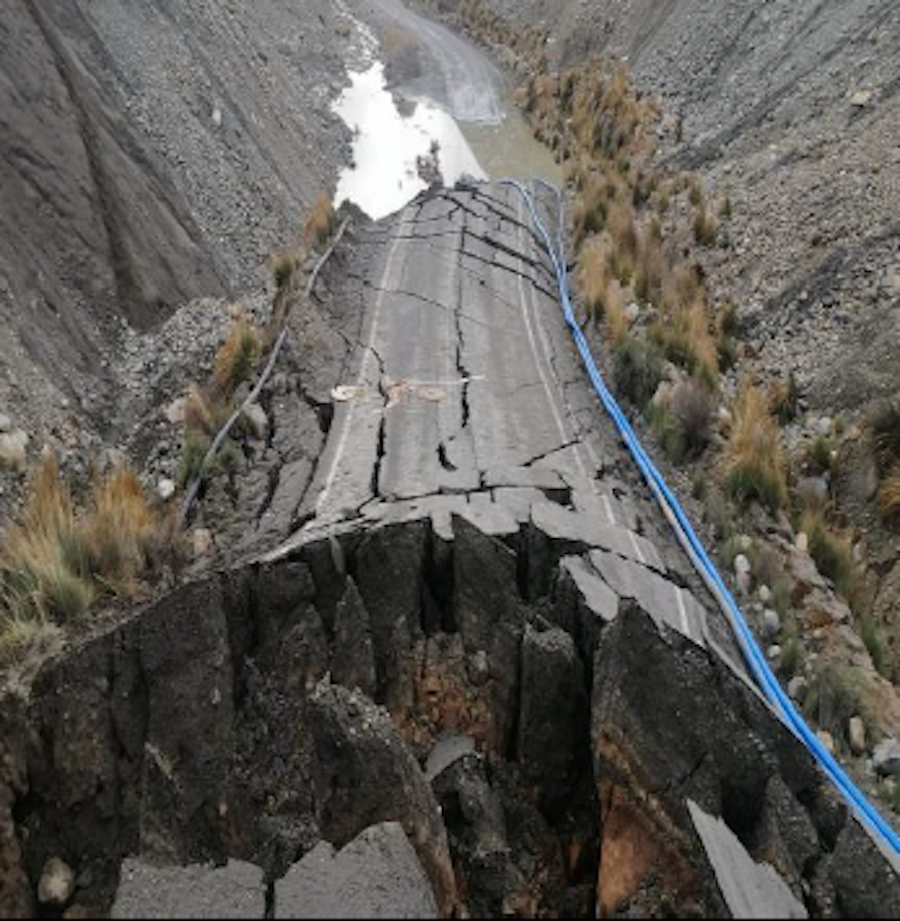
The tailings pond breach damaged the road that connects the districts of Ananea and La Rinconada. (Image by Peru’s National Emergency Operations Center, Twitter).

The collapse of a tailings facility in Peru’s Ananea district has destroyed a segment of the main road that connects the area with the neighbouring La Rinconada district, the highest human settlement in the world located in the southeastern Puno region.


According to local media, the San Antonio mining cooperatives are responsible for the maintenance of the tailings storage facility that collapsed on November 26.

As of Friday, emergency crews had identified 10 families who were affected by the breach and reported that 29 homes had sustained severe damages. Most of the houses in the area are made of corrugated tin sheets. Municipal clean-up crews are working around the clock to remove the slush from those houses and nearby roads.

In a press release, the Puno regional government and the Regional Office for Risk Management and Security said that following the collapse, a broad inspection was carried out and a number of tailings ponds that were built on the district’s highlands by the local mining cooperatives were identified. They said that such artificial lakes pose a great risk for the people of Ananea.

“To this emergency, we have to add the clogging of the Ananea riverbed and the damages caused to the drinking water catchment area. These situations combined pose imminent dangers to the population,” the statement reads. “We also noticed that mineral exploitation is taking place in a disorderly manner and we are documenting all of this in a report.”

Besides the clean-up crews, machinery from the gold mining cooperatives is being used to fix the road and rechannel the Ananea river.

“No deaths are reported but the damage is extensive and the release heavily contaminated with arsenic and cyanide,” Lindsay Newland Bowker, executive director of World Mine Tailings Failures, said in a media statement. “This is the 13th of 16 expected catastrophic failures for this decade 2015-2024.”

Newland Bowker pointed out that Peru is on WMTF’s high-risk profile list of nations along with Brazil, Angola, Kazakhstan, Kyrgyzstan, Congo, Philippines, PNG, Mexico, Myanmar, India, Poland and Serbia.

“All but two of 13 documented catastrophic failures since 2015 have been in these nations,” she said. “We expect that the overwhelming majority of catastrophic failures will also be in these nations with actuarially very high ratios of catastrophic failures to mineral production.”
MINING IS UNSUSTAINABLE
As Freeport converts mining trucks to green power, costs unclear

Reuters | December 2, 2021 |

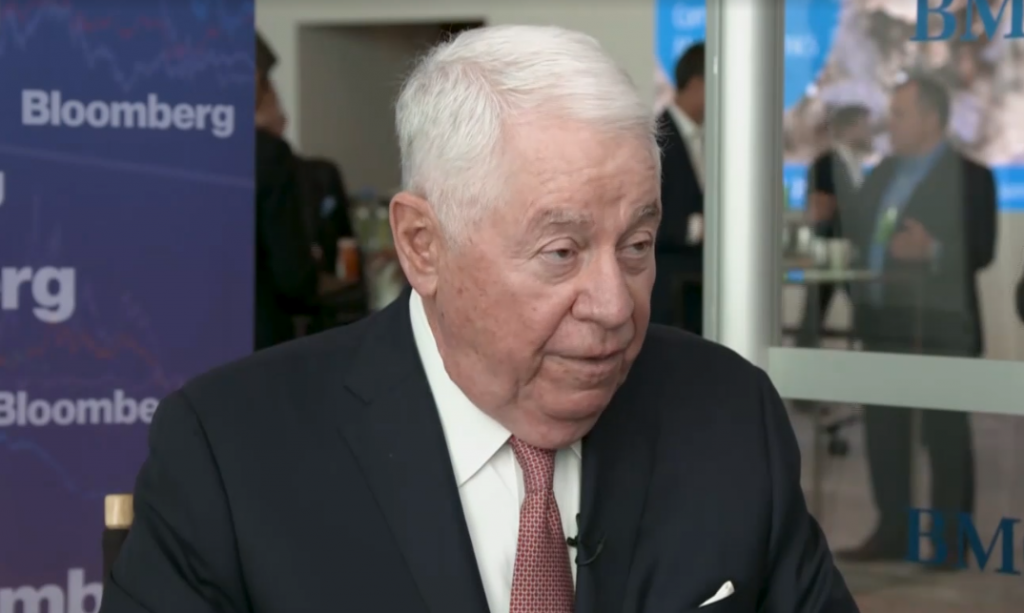
Freeport CEO Richard Adkerson (Image: Screenshot from Bloomberg TV Video)

Copper mining giant Freeport-McMoRan Inc is converting its fleet of diesel trucks and other machinery to electric or hydrogen power, a transition required to fight climate change even though the costs are not yet known, Chief Executive Richard Adkerson said in an interview at the Reuters Next conference.


The mining industry is grappling with its paradoxical role as supplier of copper, lithium and other building blocks for renewable technologies even as operations contribute to global warming.

Freeport, which operates mines in the Americas and Indonesia, has roughly 600 haul trucks – some of which move more than 400 tonnes (881,850 pounds) of dirt per load – and numerous other pieces of equipment.

To power those machines, Freeport bought 180 million gallons of diesel last year, according to regulatory filings, contributing to its so-called scope one (direct) emissions.

“We have to make investments to reduce carbon emissions,” Adkerson said in the interview released Wednesday. “We’re going to do that. It’s going to cost some money.”

The Phoenix, Arizona-based company is testing electric- and hydrogen-powered trucks and is studying other fuel sources for its coal-fired powered power plant in Indonesia, where it runs the world’s second-largest copper mine.
Joint efforts

Freeport is also participating in the Charge on Innovation Challenge with Rio Tinto Ltd, BHP Group Ltd and others to help better electrify mine sites.

It joined hydrogen fuel consortiums in South America and next year plans trial runs of diesel-electric trucks from Komatsu Ltd and Caterpillar Inc.

Energy accounts for roughly 20% of Freeport’s annual operational costs, though it is not clear yet how that could change once the entire fleet is converted, the company said.

“There will be an impact on supply as a result of converting all of this,” said Adkerson. “There are more questions than answers right now.”

But Adkerson, who has been CEO since 2003, said it was “absolutely necessary” for Freeport to curtail emissions. He cited extreme weather caused by global warming and the incongruity of copper mining creating emissions while the metal is needed for green energy solutions

“The world is going to need copper, and yet copper mining has emissions,” he said.
Net zero emissions by 2050

The International Council on Mining and Metals (ICMM), an industry trade group chaired by Adkerson, set a goal in October for all members – including Freeport – of net zero direct and indirect carbon emissions by 2050 or sooner, in part by retiring diesel-powered equipment.

Freeport is also studying ways to re-process waste rock at its mine sites to extract an estimated 10 billion pounds or more of copper. Adkerson said it is too soon to say how much copper could eventually be produced using this method, but added: “Our technical team is really excited about it.”

In Spain, Freeport is recycling electronic scrap waste at one of its smelters. The operation is not expected to become a major focus for the company, which prefers to focus on operating large mines, Adkerson said.

“That (copper) scrap will be needed because of what I believe is the coming real scarcity of copper,” he said. “We just don’t see (recycling) as a business opportunity for Freeport.”

(By Ernest Scheyder; Editing by Cynthia Osterman)

Braid: Major decisions on Kenney critics are looming for the UCP

At the legislature, MLAs understand that any criticism of Premier Jason Kenney or the government will freeze them out of committees and legislature debates or statements.

Article content

The usually rambunctious UCP has fallen oddly silent since the recent party convention in Calgary.

Advertiseme

But it doesn’t mean there’s a peace treaty.

At the legislature, MLAs understand that any criticism of Premier Jason Kenney or the government will freeze them out of committees and legislature debates or statements.

The most vocal recent critics, MLAs Leela Aheer from Chestermere-Strathmore and Airdrie-Cochrane member Peter Guthrie, seem to be biding their time, waiting to see what happens in the next few weeks.

Plenty is happening already.

There’s a fierce background battle over the UCP nomination in Fort McMurray-Lac La Biche, where former Wildrose Leader Brian Jean is up against Joshua Gogo, who has no critical word for Kenney.

The riding is open because UCP member Laila Goodridge resigned to run successfully for the federal Conservatives.

Advertisement

Article content

Laila Goodridge.
Laila Goodridge. File photo

Jean has said that he’ll return to the legislature to give Kenney’s opponents some spine. He wants the premier to resign.

Kenney says he will endorse Jean “100 per cent” if party members choose him as a candidate.

That’s easy to say, because Kenney’s supporters have no intention of letting Jean win this nomination.

Brian Jean as an official UCP candidate would be a huge symbolic defeat for Kenney. It would imply that UCP members who want him out have a wide base in the province.

There aren’t many Canadian premiers — certainly not this one — who would tolerate a former leadership competitor in their caucus as a declared member of an internal opposition party.

And so, Kenney’s people are striving to short-circuit Jean before he gets started. Some 370 new UCP members were signed up by Gogo’s backers and submitted by the final cutoff date.

Advertisemen

Jean’s campaigners feel they have majority backing based on his long record in federal and provincial politics and based on his support for the community.

This is the setup for tense in-person voting to be held Dec. 11 in Fort McMurray, and the next day in Lac La Biche.

Brian Jean, left, shakes hands with Jason Kenney after it was announced that Kenney was elected leader of the new United Conservative Party, October 28, 2017.
Brian Jean, left, shakes hands with Jason Kenney after it was announced that Kenney was elected leader of the new United Conservative Party, October 28, 2017. PHOTO BY GAVIN YOUNG/POSTMEDIA/FILE

Predictions in a situation like this are a mug’s game. But I would say, based on Kenney’s long record of winning backroom fights, that Jean has a less-than-even chance.

Even before that nomination vote, the party itself has a major decision to make.

Next week, probably on Dec. 6 or 7, the UCP board will rule on the 22 riding resolutions demanding a leadership vote by March 1. The party can’t simply ignore this and doesn’t intend to. Demanding a leadership vote with identical resolutions by 22 or more ridings is guaranteed in the party constitution.

Article con

“If they think they can just push this aside, they’re completely wrong,” said one participant who wants an early vote. “This would be far from over.”

The party has already agreed to a leadership review in early April as part of an annual general meeting advanced by several months.

For many dissidents, a bigger sticking point than the date is the manner of balloting.

They want a provincewide vote of all members that would have to be conducted virtually.

They also demand independent scrutiny of both the voting and the results by an outside accounting firm.

That demand is a legacy of the notorious 2017 UCP leadership contest that saw controversy over contributions, voting and the so-called kamikaze candidacy of Jeff Callaway. Mistrust lies heavy on the party to this day.

Advertisement

Article content

Former UCP leadership candidate Jeff Callaway in 2017.
Former UCP leadership candidate Jeff Callaway in 2017. PHOTO BY GAVIN YOUNG /Postmedia

For the party board, accepting the riding resolutions as legitimate appears to be a slam dunk — outright rejection would cause a revolt.

But the board will also say, most likely, that while the ridings can rightfully force a vote, only the elected board can set the date or the rules.

It’s possible the balloting might be moved into March as a concession, but this is no sure thing. The decisions haven’t yet been made.

Best guess of the outcome? Kenney wins a leadership review held with in-person voting and sails on to the next election.

At that point the UCP’s dissidents, with no formal options left, would have a choice: fade away or burst into an uprising that makes all the earlier ones look tame.

Don Braid’s column appears regularly in the Herald

Twitter: @DonBraid

Facebook: Don Braid Politics

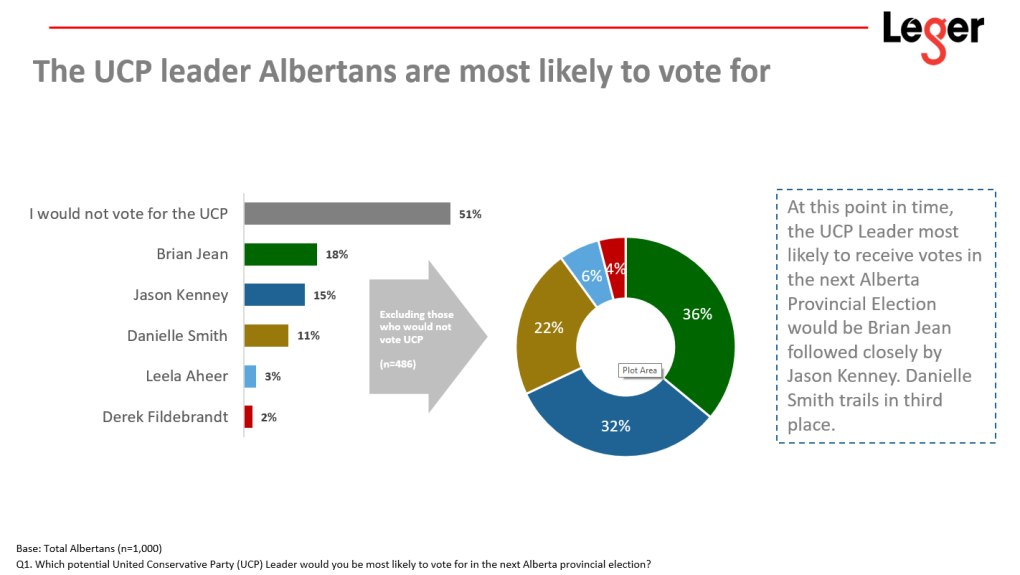
Brian Jean preferred as UCP leader over Jason Kenney, Danielle Smith: Leger poll

Brian Jean celebrates the yes vote during the Unity Vote at the Wildrose Special General Meeting in Red Deer Alta, on Saturday July 22, 2017. (Jason Franson/The Canadian Press)


Sean Amato
CTV News Edmonton
Published Dec. 3, 2021 

EDMONTON -

Albertans are more likely to vote for Brian Jean than Jason Kenney or Danielle Smith, a new Leger poll shows.

Jean has support from 18 per cent of Albertans, the premier is preferred by 15 per cent and former Wildrose leader Smith polled at 11 per cent.

A slight majority of Albertans, 51 per cent, said they would not vote for the UCP under any leader.

RELATED STORIES
Kenney says his confidence is high as UCP AGM wraps up
'This is my party': Jean insists UCP will be crushed by NDP unless Kenney is gone
Kenney suggests Jean will be allowed to run, questions his 'commitment and reliability'

"These poll results show that public mood in Alberta has shifted decisively against the United Conservative Party, most likely as a result of the way the governing party has handled the unprecedented COVID-19 crisis," said Remi Courcelles from Solstice Public Affairs, the company that commissioned the poll.

"A change in leadership won’t necessarily solve all of the UCP’s problems. That being said, it would appear that a UCP led by Brian Jean would improve the party’s electoral fortunes."

Regionally, Kenney was preferred in Calgary, he and Jean are tied in Edmonton but Jean was favoured 23 per cent to 15 per cent for Kenney outside of the big cities.

Kenney has struggled in polls throughout the pandemic, with an Angus Reid survey recently pegging his popularity at 22 per cent.

The UCP tossed two MLAs who criticized Kenney, roughly 25 per cent of its constituency associations are demanding an early leadership review and the governing party has finished second in some fundraising races to the NDP.

Jean – who lost a provincial election to Rachel Notley's NDP in 2015 as leader of the Wildrose Party – has publicly asked for Kenney's resignation and said he could do a better job of leading the UCP.

"If he doesn't leave we are going to have an NDP majority," Jean said in November.

"The UCP will not be in competition. It won't be competitive in the next election. That's very concerning to me."

Jean is attempting to win a UCP nomination and a by-election to become the MLA for Fort McMurray-Lac la Biche.

Kenney has publicly questioned Jean's reliability to finish his term and his commitment to the UCP.

Smith has expressed interest in the job as well, but has not launched a campaign.

Kenney will face a UCP leadership review in April 2022, if not sooner.

The online survey was conducted between Nov. 16-29. It had a sample size of 1,000 adult Albertans. The method of polling was a non-probablity sample, so no margin of error can be associated.


SORRY YOU SOLD THE CWB?
Many Saskatchewan farmers unable to fill grain contracts: industry survey


By Connor O’Donovan
Global News
December 2, 2021 

COLLECTIVE / COOPERATIVE HARVESTING 
ON THE PRAIRIES
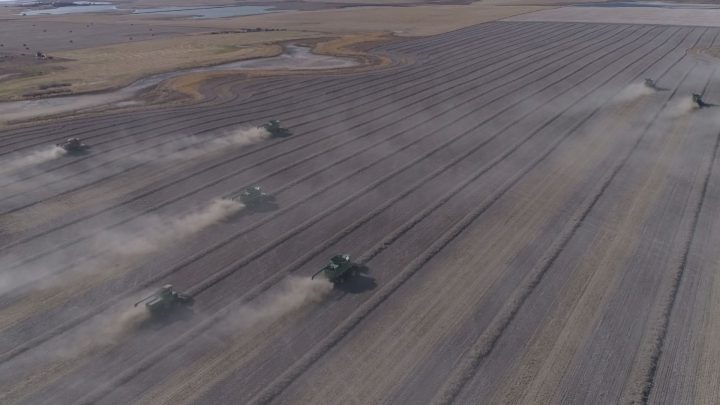
Combines harvest a canola crop just outside Colonsay, Sask in this supplied photo. 
Grant Sinclair / Supplied

An Agricultural Producers Association of Saskatchewan (APAS) survey is shedding light on just how significant an impact the 2021 drought has had on some farmers.


The optional survey has so far received more than 200 responses, 75 per cent of which reported being unable to fulfil their 2021 grain contracts.

“Some respondents included that they are facing bankruptcy due to drought and contract shortfalls,” reads an APAS news release on the subject.

It says “25% of respondents also said they had trouble contacting the grain buyers resolving issues arising from production shortfalls, and many of the respondents said they will not be working with the same grain company in the future or will not be signing a contract again.”

READ MORE: Crop insurance and drought relief boosting Saskatchewan deficit: finance minister

Speaking to Global News Tuesday, APAS President Todd Lewis acknowledged that the drought meant fulfilling contracts hasn’t been easy for “either side” and added producers will likely be more cautious with their plans moving forward.

“It’s tough on the grain companies as well. They don’t want to be in this position but unfortunately the dry weather has come, the contracts are signed and now it’s time to settle these contracts and it’s not fun for either side,” he said, adding that difficult years are part of the industry and need to be accommodated.

“I think producers are looking for a better contract to sign going into next year. It’s still dry. We’re a long way form being out of this drought.”

READ MORE: Prairie livestock producers facing shortage of feed, water as winter sets in

The APAS release also points out producers with low yields have had to pay “penalties and administrative fees between $20,000 and $300,000 to grain companies.”

“Many of the respondents also said the interest on their unpaid contracts was as high as 19%,” the release continues.


1:47 Contract concerns mount as harvest produces low yields for some – Sep 2, 2021

Western Grain Elevator Association (WGEA) spokesperson Wade Sobkowich, meanwhile, said its the organization’s belief that some farmers “over-contracted” and took on too much risk.

“When a grain company needs to set replacement value to a farmer who doesn’t have enough production, it’s not because the grain company is making money. Grain companies are scrambling to have enough grain to meet their own commitments,” he said.

“Grain companies are buying those tonnes from other farmers at very high prices right now, we know that there are producers in Western Canada who are benefitting from not having taken on so much risk and not having forward contracted as much.”

He added, though, that WGEA members will be “examining their processes” when it comes contracting producers.

“It would be unwise for anybody to come out of an unprecedented situation like we’ve just experienced without trying to learn from it. But it’s a competitive issue,” he said.


READ MORE: Saskatchewan farmers hoping for wet winter after drought-ravaged summer

Saskatchewan Agriculture Minister David Marit said Tuesday his ministry has reached out both to producers and grain buyers to discuss the issue.

“I think you’ll see people looking at the contracts in a little more detail. We have as a ministry reached out to all of the grain companies to have this very discussion about this and did see that they’re trying to work with producers in a number of cases,” he said.

“Some of the owners or CEOs told me they’ve offered deferrals or reduced admin fees.”

1:45 Crop insurance and drought relief boosting Saskatchewan deficit: finance minister

The province announced earlier this week that crop insurance payouts were the highest per acre in 2021 that they’ve ever been.

Asked about mitigating the impact of continued or future droughts, which research has suggested will become more frequent due to climate change, Marit said he thinks Saskatchewan’s existing risk management options are “adequate”.

“The farmers have built up the crop insurance reserve. The farmers have the resources to recover those costs,” he said, adding though that rates may increase depending on how quickly climate change predictions play out.

“That’ll all be reflective in the premiums and the coverage and things like that. That’s something governments as a whole are gonna have to look at both from a federal perspective and a provincial perspective across Canada.”

CWB

The Globe and Mail reports, "Until Ottawa ended its monopoly in 2012, the Canadian Wheat Board was the prairie farmer’s link to food companies around the world. Now the former giant has been taken over by a U.S. agrifood company and an investment fund owned by Saudi Arabia.

canadians.org/analysis/harper-sells-wheat-board-us-corporation-saudi-investment-f…


'An attack on government': Saskatchewan finance minister rebuffs farmers concerns

Mickey Djuric
Publishing date: Dec 02, 2021 • 

REGINA — Recent comments made by Saskatchewan’s finance minister have inflamed farmers who say the government is creating an urban-rural divide that is harmful.

On Monday, Donna Harpauer presented her mid-year financial report showing a record $2.7-billion deficit, which she largely attributed to crop insurance claims brought on by severe drought.

More than $2.4 billion of crop insurance was paid out, the most in Saskatchewan’s history, and $1.8 billion of that had not been budgeted for, which largely contributed to the deficit.

When presenting her report, Harpauer said “without the agriculture support (expense), we’d almost be balanced.”

Ian Boxall, vice-president of the Agricultural Producers Association of Saskatchewan, said Harpauer’s comments are misleading and farmers should not be blamed for the province’s accounting decisions.

“The government is throwing producers under the bus,” Boxall said Wednesday.

“When urban people hear there’s $2 billion payout to farmers through crop insurance, that’s probably worrisome. What they need to understand is we pay the premiums in, and the money is actually there.”

Boxall said he wants to make it clear the money wasn’t a bailout from the government. For years, producers, along with the federal and provincial governments, have been paying into the crop insurance fund to ensure money is there when it’s needed.

“We paid in, and this year we have to pay out,” Boxall said.

Boxall’s group addressed its concerns in a letter to the government. Harpauer called it a disingenuous letter which dismayed her and she accused the group of being misinformed.

“It’s an attack on our government,” Harpauer said in a followup interview.

She co-penned a letter with Agriculture Minister David Marit to respond to the concerns. They accused the producers’ group of having a limited understanding of accounting principles and asked that the letter be retracted.

Asked if farmers should bite their tongues, she said: “Before they speak to us, and get an understanding, and not give out false information, yes.”

Boxall said producers have worked for years to eliminate the division between rural and urban residents and try to get people living in cities to understand the issues farmers face.

“I don’t want to have a bigger divide between rural and urban. We’re a small province, based on population, and we need to have similar goals and outlook of what’s good for the province,” Boxall said.

He said the letter was an attempt to educate the government on that point.

“That’s their concern,” Harpauer retorted. “We all — urban and rural — is well aware there was a … catastrophic, challenging year in agriculture this year. I’m not sure what their issue is.”

Premier Scott Moe weighed in on Thursday. He said the letters from the producers and Harpauer “were both factual.”

He said the letters could have been avoided if Boxall’s group had just picked up the phone.

“If you have questions, make a phone call, and we can have a phone call about how public sector accounting works here,” Moe said before reiterating similar comments made by Harpauer.

“If we could disregard … the support required to pay out to producers because of the program we have in place, Saskatchewan would be very close to having a very balanced budget this year, and I think that’s a positive thing.”

Todd Lewis, president of the producers’ group, followed up Thursday with a second letter to the finance minister.

He wrote that farmers do not want to be blamed for the deficit.

“Having these discussions without being accused of being deceitful, ignorant, or misinformed would be appreciated.”

This report by The Canadian Press was first published Dec. 2, 2021.

Agricultural producers association, Sask. government go back and forth on crop insurance's role in deficit

Association was concerned with implication that crop

insurance payments caused provincial deficit

On Monday, Saskatchewan Finance Minister Donna Harpauer said the province's $2.7-billion projected deficit is largely due to $2.4 billion in crop insurance claims. (Kirk Fraser/CBC News

The Agricultural Producers Association of Saskatchewan (APAS) and the Saskatchewan government have been exchanging public words over how the province characterized the role of crop insurance payments in its recent mid-year budget update.

APAS says that many producers are worried about being considered a burden on the province's finances. 

On Monday, the government projected a $2.7 billion deficit in its mid-year update. Finance Minister Donna Harpauer said the shortfall is mainly because of an expected $2.4 billion in crop insurance claims. 

"If you backed out the expense of crop insurance — that $2.4 billion — as well as the livestock producer support, we would almost be balanced," Harpauer said during a news conference Monday. 

"That's how significant that support was for agriculture producers."

APAS took exception to the implication that crop insurance payments are causing the provincial deficit.

"In 2020, Saskatchewan Crop Insurance Corporation reported a $2.4-billion surplus accumulated over previous years, plus a sizeable surplus in the reinsurance fund," APAS vice president Ian Boxall was quoted as saying in a news release Wednesday. "It's not fair to blame producers for a provincial deficit in a drought year when that surplus gets used up."

The province responded with its own news release later Wednesday, in the form of an open letter to APAS president Todd Lewis, signed by Agriculture Minister David Marit and Finance Minister Donna Harpauer. 

"I will begin by pointing out that we disagree with the premise of the entire document," the government response said. "To suggest that the provincial government is somehow blaming our agricultural producers for the financial deficit reported in the financial update presented earlier this week is not only false, it is offensive."

The province's letter said Boxall's comments suggest he is unfamiliar with the concept of summary financial reporting. It asked APAS to retract its statement.

"It is disappointing, to say the least, that an organization such as APAS would, through either ignorance or deceit, willingly misinform its members with such callous disregard," the province said.

APAS president Lewis then put out another news release Thursday responding to the province's Wednesday release.

"Although it may not have been the intention of the government to leave that perception, many media reports made that link," Lewis wrote.

"Pointing out that producers are not responsible for a deficit situation when previous year's results are taken into account is our organization's job."

Lewis wrote that he had personally received calls from concerned producers, as had APAS's office and other representatives.

"Producers are concerned that the general public has a perception that farmers are receiving a 'break' or a 'bailout' when they receive a crop insurance cheque," Lewis wrote.

A general lack of understanding of the accounting principles behind crop insurance is the main issue at hand, according to Lewis.

"I stand to be corrected on the operational side of the finance ministry and the use of summary financial statements.," Lewis wrote. "However, having these discussions without being accused of being deceitful, ignorant, or misinformed would be appreciated."

In an interview, Lewis said the purpose of Thursday's letter was to convey that APAS meant no offence to anybody with its initial release. 

He said it was meant to let members of the public know that farmers aren't being bailed out by the government, but rather there is a partnership between the government and producers where they pay for coverage, but only receive payment when they are in a claim position. He said it's like any other insurance program and in some cases producers have paid premiums for decades but never made a claim. 

"We wanted to let the public know and ensure that there's no misconceptions around the funding of crop insurance and tying it to the deficit," he said. 

Premier Scott Moe said that when insurance money is given to the agricultural industry, it has to be recorded as a financial expense, an accounting principle he said all provinces and the federal government follow. 

"I think all of the letters in this case really could have been avoided had a couple of phone calls ultimately been made," he said.
US Energy Department funding experiments to fight methane with plasma, copper

Bloomberg News | December 2, 2021 | 

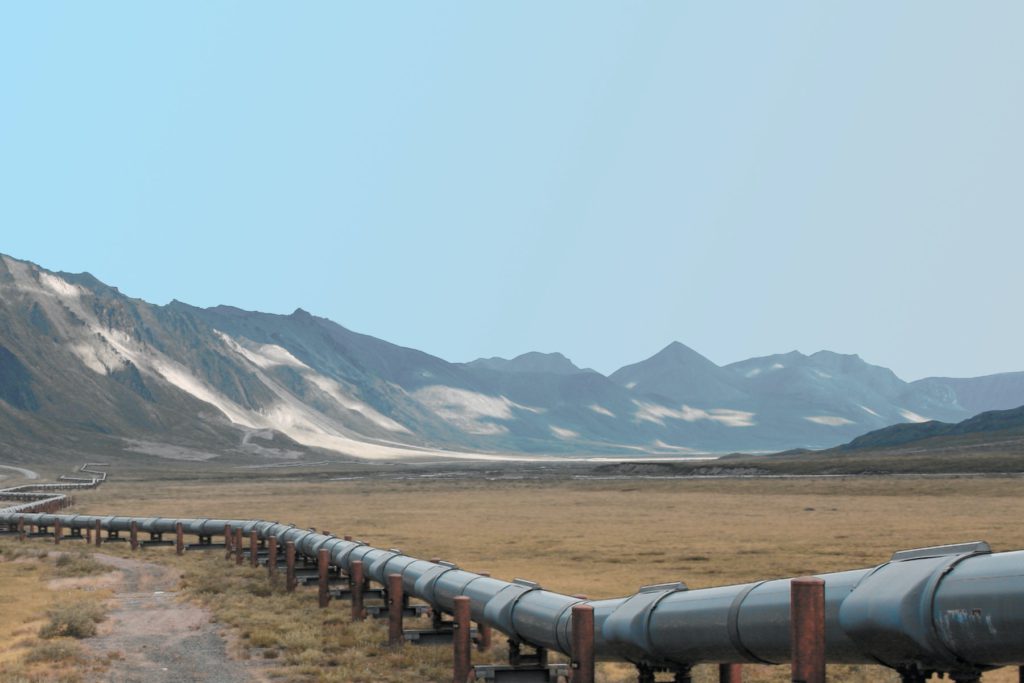
Credit: International Energy Agency

The Energy Department division that has doled out billions to projects including a squid-skin inspired shirt to regulate body temperature is training its sights on a new target: reducing the emission of a powerful greenhouse gas from the oil, gas and coal industries.


The Advanced Research Projects Agency-Energy, which funds experimental energy technology projects and is modeled after a military research arm, is awarding funds under a new program to reduce methane emissions. The chief component of natural gas, methane has more than 80 times the atmosphere-warming power of carbon dioxide in the first two decades after its release.

The funding, $35 million in total, is being awarded to 12 projects. Among them is nearly $3 million to Texas A&M University for a project that would use plasma to reduce the emission of methane from large engines used by pipeline companies. It is also awarding $3.3 million to Lancaster, Pennsylvania-based Advanced Cooling Technologies for a project involving a new 3D printing process to make combustors out of silicone carbine to make gas flares that destroy 99.5% of methane. Other projects include $2 million to the Massachusetts Institute of Technology for a copper-based catalyst that will be used to reduce methane emissions from coal mines.

“We must adopt technologies to dramatically reduce these emissions,”  Secretary of Energy Jennifer M. Granholm said in a statement. “By creating new technologies, we are working to mitigate climate change and minimize the cost of methane abatement.”

Granholm was poised to announce the funding during a visit Thursday to Precision Combustion, Inc., a North Haven, Connecticut-based manufacturer after a tour of the facility with state Governor Ned Lamont. The closely held manufacturer of emissions control equipment was slated to receive $3.7 million for technology designed to eliminate methane associated with coal production.

The funding is part of an assault on methane led by President Joe Biden, who has said reducing emissions of the heat-trapping gas is one of the most important steps that can be taken to curb global warming. The Biden administration last month announced a long-awaited EPA proposal stiffening requirements to plug leaks in oil and gas wells and an effort by the Agriculture Department to harness and sell methane.

(By Ari Natter, with assistance from Jennifer A. Dlouhy)
Landmark Demonstration Shows How Common Wind Turbine Can Provide Fundamental Grid Stability

NREL Uses Advanced Grid Research Environment for First-Ever Example ofType-3 Turbines Using Grid-Forming Controls


Photo by Zach Shahan, CleanTechnica.


ByU.S. Department of Energy

In a milestone for renewable energy integration, the National Renewable Energy Laboratory (NREL) and partner General Electric (GE) have operated a common class of wind turbines in grid-forming mode, which is when the generator can set grid voltage and frequency and, if necessary, operate without power from the electric grid.

The demonstration showed that the popular type-3 turbine technology can supply fundamental stability to the bulk power grid. GE’s grid-forming controls allow the turbine to make up for fewer conventional sources of stability on the grid, such as coal or natural-gas-fired generators, while also overcoming a well-known issue with electrical oscillations, in which voltage fluctuations are amplified and occasionally lead to power plant outages.

This real-device demonstration is the first of several in the Department of Energy Wind Energy Technologies Office project “Wind as a Virtual Synchronous Generator (WindVSG),” which aims to research wind and storage inverter controls that electronically imitate the stabilizing features of conventional generators. For the last three years, NREL has been working to achieve that goal by characterizing devices, designing controls, and simulating operation. The laboratory is now proving the grid-forming principles on real devices in a replica power grid environment.

“We have shown that a common variety of wind turbine can serve the same underlying voltage and frequency stability services that are often provided by fossil fuel power plants,” said NREL Chief Engineer Vahan Gevorgian. “This is another example of how inverter-based energy resources like wind and solar can fulfill a wider role in future power systems.”

As renewables make up a larger share of the power supply, they will also need to take a larger share of responsibility as stewards of grid stability. That responsibility includes the capacity to restart power following an outage, to restabilize following a transient electrical event, and to generally “form” the grid as baseline power resources. Large spinning generators have traditionally underpinned a steady grid frequency and voltage. Now, inverter-based resources like wind, solar, and batteries are being primed for that role in multiple DOE projects, including the Grid Forming Inverter Consortium, which will share findings and research objectives among industry and community partners.

In the WindVSG demonstration, an NREL–GE team created controls for a 1.5-MW type-3 wind turbine to provide primary frequency and voltage support and restabilize the surrounding grid by adjusting its power in response to momentary electrical anomalies. Type-3 turbines are an especially complex case for developing grid-forming controls. These turbines use a generator that is directly connected to the grid, with the turbines’ electricity output modulated by power electronics components. To fully understand this complexity, NREL developed a full-detail model of the turbine’s electrodynamics, aided by a custom toolkit developed by the NREL research team.


In grid-forming mode, type-3 turbines can suppress an oscillation mode that has proven detrimental in real power systems. In this simulation, the oscillation, which is caused by interaction with certain transmission lines, begins at 35 seconds and is shown to become unstable in grid-following mode (top), while it is muted in grid-forming mode (bottom).

NREL powered-on the grid-forming turbine using the Advanced Research on Integrated Energy Systems (ARIES) platform, which allows at-scale validation in a replica grid environment. A 5-MW research dynamometer served as prime mover in the mock power system, allowing the researchers to emulate different grid dynamics and observe the turbine’s performance. The team found that under “weak” grid conditions — when few conventional generators such as thermal power plants are present — the turbine is exceptional at adding stability. However, in “strong” grids with a greater number of conventional generators, the grid-forming turbine could develop unstable dynamics of its own. That is generally not the case for grid-following controls, which accompany most non-conventional energy devices like solar plants and battery storage systems and typically produce power that closely follows the grid frequency and voltage of the larger electric system.

“In this work, we have found that the grid-forming turbine serves underlying stability in cases where it’s needed: as a standalone power source in a small system, or in systems with many inverter-based resources and few conventional forms of stability,” Gevorgian said. “The ARIES platform makes this research possible — we are able to adjust the conditions that these turbines will experience on a live system, but within the safety of a controlled environment.”

The researchers also found that the grid-forming controls prevent a certain dangerous electrical oscillation that is severe enough to have caused real system blackouts. Results of this research show that the grid-forming mode effectively reduces that likelihood. This is an important outcome for wind power plants around the world that rely on type-3 turbines for a significant proportion of capacity.

Though a major step ahead for grid-forming renewable resources, this demonstration also indicates new directions for investigation. Within the WindVSG project, the research team will continue to study how the grid-forming turbine interacts with other devices on the power system, whether the grid-forming mode results in greater mechanical stress on the turbine, and how the turbine can ensure stability even in strong-grid scenarios. Further demonstrations will also validate the grid-forming turbine when disconnected from the power grid.

For wind turbine fleets and other resources like solar PV and battery storage, grid-forming controls could open a new market opportunity in the form of grid services; that is, grid stability as another value stream for renewable resources. With this demonstration, NREL has validated one more approach for renewable assets to provide advanced stability. And with the ARIES platform, NREL can help partners prove such renewably sourced stability on their own systems.

Learn more about wind-grid integration research at NREL.

Article courtesy of National Renewable Energy Laboratory.