Thursday, December 16, 2021

Wind power critics: What's the truth about their claims?

Wind power forms a crucial part of the transition to renewable energy. But it faces fierce criticism from some parts of society. Is it justified?
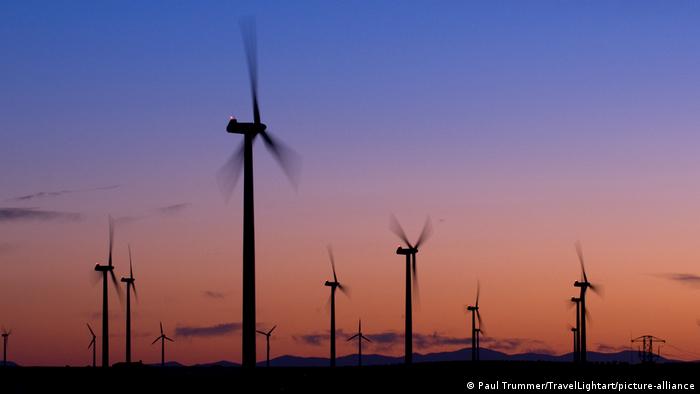

There are many misconceptions about wind farms

As electricity grids rely more and more heavily on wind power, criticisms have become louder.

There are claims that the infrasound they produce can damage your health. And many regard the towering giants to be a blight on the landscape. There are also questions about risks to wildlife and some see inequity in the distribution of profits.

In the face of such headwinds, here's a reality check:

Does wind power ruin the landscape?

Wind farms undoubtedly alter the landscape. The turbines have become ever taller and the blades now reach lengths of up to 250 meters (820 feet). In good weather, the bright grey structures are certainly visible, but that also applies to other methods of power generation. Coal mining can swallow entire villages and raze forests while high-voltage transmission lines crisscross landscapes, and smoke and steam from towering power plant chimneys and cooling stacks can spread many kilometers into the sky. By comparison wind turbines are clean and don't emit particulate matter, mercury or carbon dioxide.

Supersized wind turbines

Compared to the rest of the world, densely populated Germany has a well-developed wind power industry that meets almost a third of its domestic demand. And acceptance of wind energy is high, with 80% of the population saying further development of onshore wind farms is "somewhat important." Around 47% say having a wind farm in the neighborhood is either "somewhat good", or "very good."

By comparison, 62% of Germans are happy to live nea
r a solar farm. That contrasts with 6% for nuclear and 4% for coal power plants.

Does the noise from wind farms make you sick?

In high winds, wind farms do become louder. Under full load, noise levels can reach up to 105 decibels at the turbine hub, which is 100 meters high. That's about as loud as an excavator. Within a 250-meter radius, the noise level is around 45 decibels, which is about as loud as a rustling forest or a quiet apartment. And at a 500-meter radius, under a full load, the noise level sinks to 40 decibels, which could be compared to light rain.

Can noise cause depression?

The World Health Organization recommends maximum noise level exposure of 45 decibels from wind farms in residential areas. In Germany, the law allows for a maximum of 40 decibels at night, and 55 decibels during the day. That's roughly the same volume generated by regular street traffic. As a result, wind farms in Germany cannot be built too close to residential areas.

Additionally, wind farms emit a very low frequency sound below 20 hertz — known as infrasound. Human ears cannot hear such low frequencies. Such infrasound is also produced by waterfalls and ocean waves, or by machines such as vehicles, heaters, pumps and air conditioners.

Opponents claim that the infrasound generated by wind farms is damaging to human health. But studies show wind farms generate significantly less infrasound than car traffic. In line with the latest research, experts have therefore ruled out damage caused by wind farm infrasound.
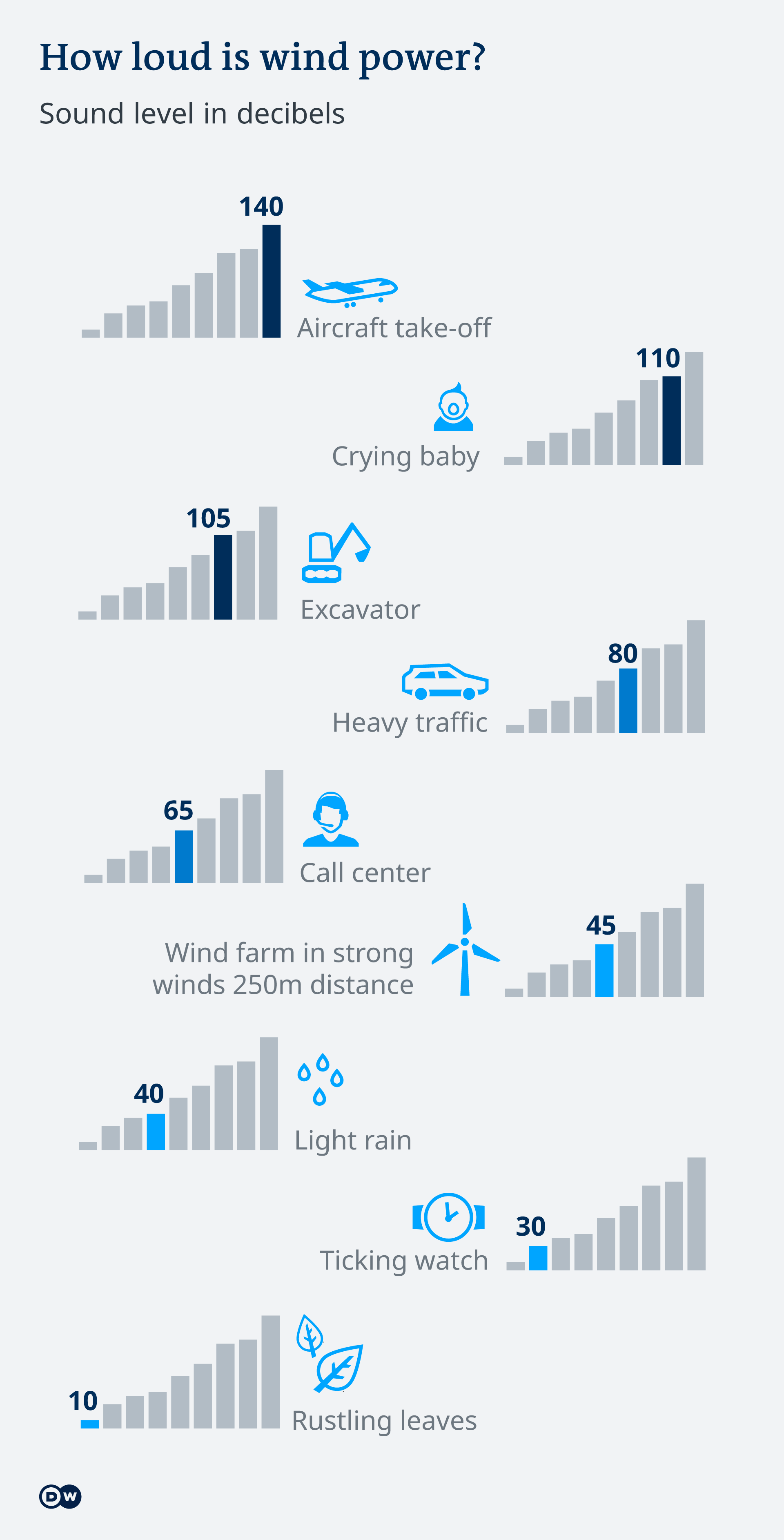


From 250 meters, wind farms are no louder than heavy traffic

Does wind power hurt birds and nature?


Wind farms, like roads and buildings, are an intrusion into nature in that they have concrete foundations dropped several meters into the ground. In addition, their blades can kill high-flying bats and birds — a reality opponents often use to argue against this form of renewable energy.

To fight the climate crisis, and to preserve biodiversity, environmentalist groups have called for the expansion of wind power. The transition to renewable energy is "also crucial for the long-term preservation of biodiversity," according to a joint position paper of German environmental groups.

Good planning should avoid environmental damage, as far as possible. For example, wind farms cannot be built in important nature preserves. Instead, suitable locations include previously polluted areas such as former coal-mining sites, intensively farmed land, or even monocultural coniferous forests.
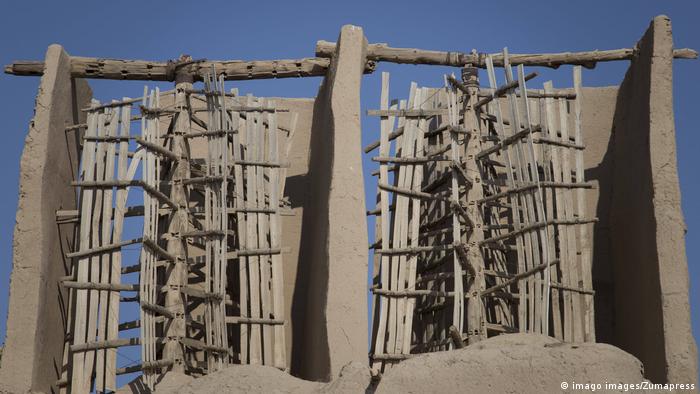

GLOBAL WIND DAY: THE POWER OF WIND
Ancient origins
These windmills in Nashtifan, northeastern Iran, are among the oldest in the world. Made of clay, straw and wood and standing up to 20 meters (65 feet) tall, they've been catching the area's strong winds to grind grains into flour for centuries. One of the few such windmills still in operation, they were registered as a national heritage site by Iran's Cultural Heritage Department in 2002.
1234567

Modern wind farms are less dangerous to bats and birds than previous designs. For one, they are much higher than before, and animals usually fly under the blades. Secondly, there are now new protective mechanisms, such as bat sensors that will halt the rotors if the animals fly too close.

Another technology uses intelligent cameras to recognize large birds of prey, such as high-flying eagles, shutting down the turbines to avoid collisions.

Germany's Nature and Biodiversity Conservation Union (NABU) estimates that wind farms kill more than 100,000 birds each year in Germany. But this is a relatively low figure compared to other hazards.

Glass-covered buildings kill about 1,000 times more birds (108 million) each year than wind farms. Around 700 times more (70 million) die in collisions with cars, trucks and trains, while 20 times more (2 million) lose their lives to power lines and 10 times more (1 million) are killed through hunting. And domestic cats alone are responsible for the deaths of some 60 million birds in Germany each year.

But by far the biggest threat to birds is industrial agriculture, according to NABU. Monocultures and the use of pesticides, has seen the number of insects decline massively, removing a major source of food for birds raising their young. In the past decades in Germany, 13 million breeding pairs of birds have disappeared (15%), leading to 170 million fewer young birds each year.
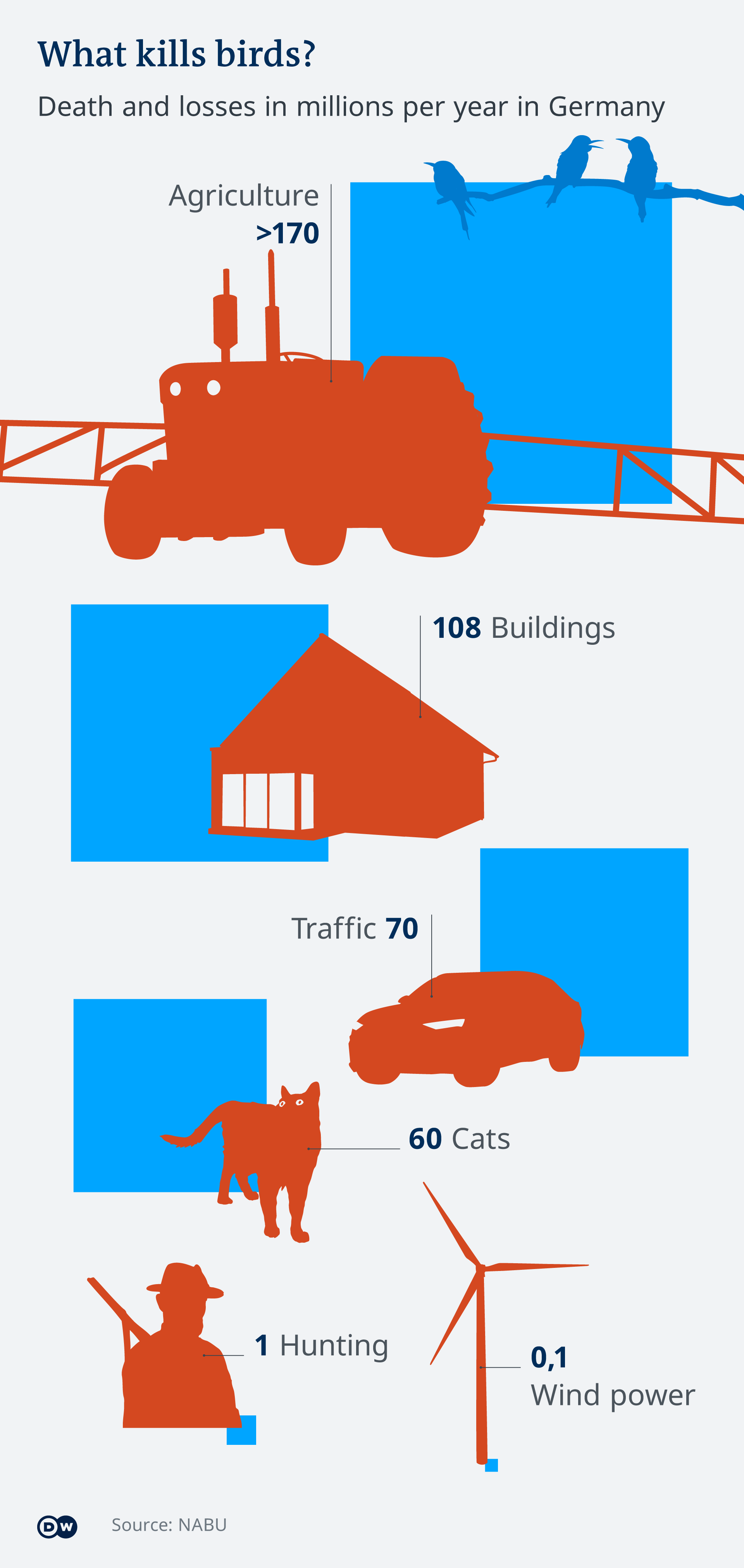


Wind farms do kill some birds, but the death pales in significance to other dangers

Is wind power unreliable?

Sometimes the wind simply doesn't blow, meaning the rotors remain idle and no power can be generated. A reliable power grid therefore requires additional forms of energy production and storage.

Norway and Costa Rica have already completely renewable power grids. Alongside wind, they rely on hydropower, geothermal energy, biomass and solar power.

These other renewables can also compliment wind power in other parts of the world. Depending on the location, a different mix of energy sources is possible. In some areas, this requires green hydrogen plants and large-scale batteries.

The battle for new wind farms

Do only the rich profit?


A large onshore wind farm (6 MW) costs between €8 million and €12 million ($9-$13.5 million) to build, and produces electricity for 4 to 8 cents per kilowatt hour.

The earning potential for wind farms is enticing, with returns of more than 10% possible. Large corporations profit from this, but so do municipal utilities and local cooperatives. However, wind farms can lead to resentment if the local population don't see these profits themselves. Therefore, projects launched by outside investors often fail.

There is a higher acceptance rate when local citizens can invest in the project themselves and have a share in the profits. Such projects can be financed with individual shares as low as a few hundred euros. Another route to success is for a municipality to invest taxes from wind farms into local projects such as kindergartens.

Wind farms with citizen participation exist in many parts of the world, but there are an especially high number in the north of Germany. Rural communities see wind power as a chance to secure new jobs and prosperity.

This article was translated from the original German.
How a less-than six-month-old fund shook the nuclear fuel market
Bloomberg News | December 12, 2021 | 

Nuclear power plant. (Reference image by Bru-nO, Pixabay).

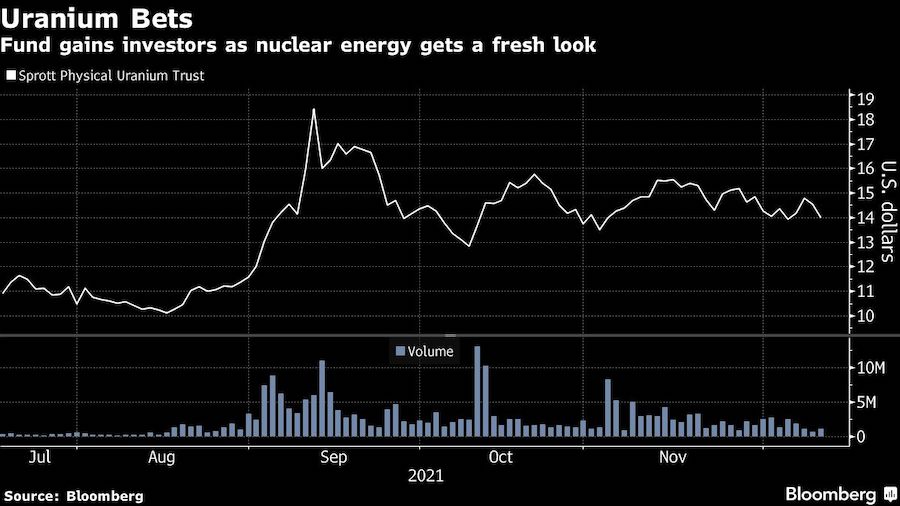
Six months ago, the Sprott Physical Uranium Trust didn’t exist. Now it holds almost a third of the world’s annual supply — and it’s getting bigger.


The fund’s arrival and explosive growth are sending waves through the market for nuclear fuels and have helped spur a 50% rally in uranium this year. Sprott reports that its assets have swelled to $1.9 billion, forcing the product to almost double its financing limit two weeks ago to $3.5 billion — the second time it’s had to raise it in two months.

Behind the surge is a race to bet on a nuclear future, with everyone from hedge funds to day traders jumping on board. The Canadian-listed trust, which launched in July, is the only publicly listed fund in North America that invests in physical uranium.


“I don’t know how many regular people would know how to even make a uranium play,” said Bloomberg Intelligence’s Eric Balchunas. “It sort of democratizes the trade.”


There’s growing awareness around the globe that nuclear energy may need to play a larger role as governments move to limit global warming. While uranium’s use has drawn opposition from environmentalists, who worry about reactor meltdowns and the hazards from radioactive waste, proponents say the carbon-free electrical power provided by nuclear energy largely outweighs these concerns.

Sprott, betting on nuclear’s future, has scooped up roughly 41 million pounds of uranium since the summer, which is roughly 30% of annual production.

Traders say the fund is reshaping the uranium market and allowing for more transparent prices.

Historically, the uranium spot market lacked daily price discovery, as a large amount of the buyers — electrical utilities — purchased the raw material through long-term purchasing agreements.

“The Sprott vehicle allows for price discovery from speculators on a consistent basis. And it’s that consistency of having a potential willing buyer of uranium that flushes out what the real price,” said Michael Alkin, chief investment officer and founder of Sachem Cove Partners.
Price jumps 50%

When the Sprott trust launched in July, the price of uranium was around $30. Now, the radioactive metal has jumped 50% to $45, according to data from UxC LLC, a leading nuclear fuel market research firm.

“They weren’t the only buyers during that time, but their activity was the main aspect to the market move,” said Jonathan Hinze, president of UxC LLC.

Whether Sprott’s latest financing limit will be able to push up uranium prices even further remains to be seen. The trust’s discount to net asset value is sensitive to uranium prices and steepens when uranium prices fall.

As long as Sprott keeps raising money in capital markets, it will be a persistent buyer of uranium, said Hinze. And he said the trust’s announcement that it would raise its financing limit to $3.5 billion indicates that there’s an appetite for uranium in the financial world.

“Another billion would have been more what we would have expected. Going to $3.5 billion — over $2 billion more — so quickly, that was a bit of a surprise,” he said.

The trust is a closed-end fund. If it were an exchange-traded fund, it would be in the top 5% of Canadian ETFs by asset value, according to BI’s Balchunas.

He anticipates a physical uranium fund will eventually launch in the U.S. given how Sprott has grown and how U.S.-listed uranium equity ETFs, like the Global X Uranium ETF (ticker URA) and NorthShore Global Uranium Mining ETF (URNM), have rallied in 2021.

“What’s been a big market in terms of asset inflows can be exponentially bigger,” Balchunas said.

(By Emily Graffeo, with assistance from Yvonne Yue Li and Sam Potter)

British Columbia

21-day Trans Mountain pipeline shutdown shows vulnerability of fuel supply to climate change disasters

TMX repairs done but full capacity not expected until January

A worker assesses damage to the Trans Mountain pipeline after severe flooding near the Coldwater River in B.C.'s Interior. (Trans Mountain Corp.)

After the longest shutdown in its 70-year history, the Trans Mountain pipeline restarted Sunday, but won't be at full capacity or pressure until January, according to engineers.

Trans Mountain Corp. (TMX) chief operations officer Michael Davies says the fact the 1,150-kilometre pipeline withstood unprecedented flooding, as a series of atmospheric rivers deluged the province, is a testament to the line's resilience but also serves as a warning about B.C.'s tenuous energy supply.

Critics of the pipeline expansion say flooding exposed the vulnerability of fossil fuel infrastructure and the need to shift to solar or other alternatives.

"It's been the longest shutdown of the pipeline since its inception," said Davies who grew up in Coquitlam before his engineering career moved him to Calgary in 2005.

Part of the Trans Mountain pipeline in the Coldwater Valley was exposed after the Coldwater River surged to high levels, destroying roads, bridges and washing away homes. (Trans Mountain Corp.)

Twinned pipeline offers more resilient supply: TMX

Davies argues that the flooding makes it all the more urgent to upgrade infrastructure put in place in the early 1950s and complete the expansion or twinning of the artery that delivers fuel to B.C. from Alberta.

"We all aspire to change the energy mix ... but fossil fuels for motor fuel are still something we need every day," said Davies.

While the TMX expansion is primarily aimed at exporting fuel to Asian markets, Davies believes twinning the pipeline would also make the system more resilient by offering a second option, if one line is damaged.

Heavy flooding exposed about 14 sections of the Trans Mountain pipeline after unprecedented rainfall beginning on Nov. 14, 2021, hits parts of B.C. Here rushing waters from the Coldwater River scoured out a section of the pipeline that runs from Alberta to B.C. (Trans Mountain Corp.)

The 21-day shutdown prevented delivery of an estimated six million barrels of fuel to the Lower Mainland. Davies says the TMX is the largest source of motor fuel to the region delivering an average of 300,000 barrels per day.

The shutdown sparked concerns about fuel shortages and an order from the province on Nov.19 limiting drivers from filling their gas tanks more than 30 litres per visit to the pumps. Public Safety Minister Mike Farnworth says that the order will lifted by Tuesday, now that shortages are less of a concern.

Long-time critics of the TMX project say it's time to stop expanding pipeline capacity and develop other sources of energy as climate change events hit hard.

Davies agrees that the unprecedented surge of the Coldwater River was a challenge that may have been driven in part by wildfire damage earlier this year. He said the water surge tested the 24-inch pipeline like never before.

A section of the Trans Mountain pipeline submerged in flood water before crews worked to divert the flooded Coldwater River to assess and repair the pipeline in late November 2021. (Trans Mountian Corp.)

The power of the floodwaters washed out roads, scoured and battered the pipeline with rocks and washed away homes downriver.

The pipeline was shut off Nov. 14, by about 5 p.m. out of caution, but some oil remained inside the line the day after the shutdown which Davies described as an "eyeopener."

He said road closures and damage meant "significant" work was needed to get access to just assess the line.

TMX engineers used drones, helicopters and built a bridge to get access to the pipe, and then worked to redirect overflowing rivers that had carved new paths.

At the same time, he says, they helped clear roads, deliver food by helicopter and shelter people fleeing the floods, in their Merritt construction camp.

Davies said flooding south of Kamloops to Hope washed out roads and bridges. The worst of the Coldwater River flooding exposed about 14 sections of the line along about a 30-kilometre section east of the Coquihalla south of Merritt, B.C., near Kingsvale.

"In some cases the river had diverted and was flowing over top of the pipeline." 

In one spot where a tributary crossed the Coldwater River, he said that the pipe needed repairs after.the water scoured it out and battered it with rocks and boulders.

"There were some scratches and dents — which we've since repaired. I'm very proud of how the pipeline stood up," said Davies.

Cranes are used to shift and support the TMX pipeline as it's assessed for flood damage. (Trans Mountain Corp.)

Despite Davies's assertion that the flooding caused no leaks from the pipeline, critics say it remains vulnerable.

"I feel like it is absolutely a miracle that there wasn't more extensive damage. It could have been even worse," said Eugene Kung with West Coast Environmental Law.

Critics are urging federal authorities to restrict pipeline creek crossings in future.

"It doesn't take much imagination to envision what could have happened if a large tree or rock had come tumbling down."

Kung says the TMX expansion project is aimed at export and suggests better options for climate-resilient energy sources, like solar.

He's against building more fossil fuel infrastructure and says he believes flooding of the worksites will now cause more delays and add expenses to the $12-billion project that is about 40 per cent complete.

CBC reached out to Canada's Energy Regulator for comment.

A 30-kilometre section of the Trans Mountain pipeline was hit hardest by flooding the week of Nov. 14, 2021. (TMX)
ITS NOT GREEN EXCEPT FOR THE GLOW
Shunned after Fukushima, nuclear industry hopes smaller reactors can play role in energy transition

Proponents say small reactors are safer, but skeptics say the risks outweigh the benefits

Author of the article: Gabriel Friedman

Publishing date:Dec 15, 2021 
An artist's rendering of USNC-Power's small nuclear reactor
. PHOTO BY COURTESY USNC-POWER


At the Ultra Safe Nuclear Corporation, a large part of Ken Darlington’s job involves convincing the public that the latest generation of nuclear technology is safe — so safe, in fact, that it can be mass produced.

The USNC-Power, as the U.S.-based company is known in Canada, is developing the smallest nuclear reactors around — designed to produce enough power to provide electricity for about 5,000 homes, or roughly five megawatts. If all goes according to Darlington’s plans, as vice president of corporate development in Canada, there could be around 100 reactors around the country in two decades.

That’s a huge jump: Canada has roughly 19 large reactors, each around 900 megawatts, at six plants. As efforts to reduce emissions gather momentum, Darlington and others are advocating for nuclear power as a less carbon-intensive alternative to fossil fuels. But the high cost of nuclear power, as well as the catastrophic safety record, as seen in the 2011 Fukushima disaster in Japan as well as the Chernobyl meltdown in 1986 and others, has stopped the industry’s expansion.


“I think it’s going to come down to the perception of the safety issue,” Darlington told the Financial Post. “That’s where a lot of the work needs to happen.”

It’s been about a decade since a tsunami off the coast of Japan triggered the Fukushima nuclear power plant meltdown — the latest in a string of nuclear disasters stretching back to Chernobyl in 1986 — which resulted in hydrogen-chemical explosions, the release of radiation, the evacuation of more than 140,000 people, and which is still being cleaned up.

Workers walk near No. 2 and No. 3 reactor buildings at the tsunami-crippled Fukushima Daiichi nuclear power plant in March. 
PHOTO BY SAKURA MURAKAMI/REUTERS

There are also issues around nuclear waste: for more than a decade, Canada has been searching for a permanent underground repository where it can leave the radioactive waste, a byproduct of nuclear power generation, to decay — a process that is estimated to take hundreds of thousands of years. For now, nuclear waste remains stored nearby where it is produced.

Despite these issues, Darlington is helping lead an effort to revive nuclear power in Canada, through small modular reactors. The idea is to gain a licence for a design, and then deploy the model to outposts that are not connected to the electrical grid — to mines, oil projects and remote communities dependent on diesel.

“Anytime you have a new reactor design it needs to go through licensing,” Darlington said. “The whole idea is to have a consistent design, so you’re producing the same thing, every time.”

In 2020, his company’s Canadian subsidiary and Ontario Power Generation struck a joint venture to acquire Global First Power Limited, which aims to develop a micro modular nuclear reactor: it’s about the size of a tanker truck turned on its side, vertically, Darlington said.

It is planning to install a commercial demonstration project at Canadian Nuclear Laboratories’ Chalk River site, outside Ottawa, that will take up approximately two football fields, and consist of one plant that generates 15 megawatts of thermal heat, and an adjacent plant that converts the heat into five megawatts of electricity.

The Canadian Nuclear Safety Commission is currently reviewing a licence application for the reactor, and Canadian Nuclear Labs is conducting a process to site the micro modular reactor on its property. The power would be deployed into the grid.

An aerial view of the Chalk River site on the shores of the Ottawa River. 
PHOTO BY CANADIAN NUCLEAR LABORATORIES

Meanwhile, separately, Ontario Power Generation, announced a deal earlier this month, in which General Electric and Hitachi would build a small nuclear capable of generating enough power to produce 300 megawatts of electricity — at its Darlington plant.

Proponents such as Darlington say that small reactors rely on new technology that reduces the possibility of the runaway chain reactions and other failures that led to disasters in the past.

Nuclear fission works by splitting atoms through a process that generates enormous amounts of heat, which in turn is used generate electricity. For instance, the heat can create steam to power a turbine.

An artist’s rendering of USNC-Power’s small nuclear reactor. 
PHOTO BY COURTESY USNC-POWER

But containing the heat creates risks: in Japan, floods from the tsunami knocked out the emergency diesel generators that were powering the cooling process, which led to a meltdown of the reactor.

Darlington says Global First Power is safer than past nuclear projects of larger scale: it uses passive, cooling systems, which make runaway meltdowns impossible, he said. Plus, it uses small pellets as fuel, which Darlington said are safer than the rods used at larger reactors.

Also, it’s cheaper, he said, because the reactors are designed to be produced at scale, whereas in the past all nuclear projects have been one-of-a-kind, subject to cost overruns and construction delays. He projected a reactor would cost about $200 million.

There are many skeptics.


M.V. Ramana, a professor of public policy at the University of British Columbia’s School of Public Policy and Global Affairs, said nuclear power is inherently expensive, and past projects were designed to be larger in order to reduce costs by capturing economies of scale.

He also said past projects have tried to use passive cooling systems, but nuclear fission is inherently dangerous and it’s difficult to judge the safety of reactors that haven’t been licensed or produced yet.

“What we know about nuclear accidents is just about every one of them is unique in the way it happened,” said Ramana. “There are many ways of having an accident.”

For that reason, he said the risks outweigh the benefits: even if 100 small modular reactors were deployed, it would constitute just a small portion of the country’s electricity supply, but each reactor would generate radioactive waste and pose the threat of an accident.


What we know about nuclear accidents is just about every one of them is unique in the way it happened
M.V. RAMANA

Neil Beveridge, an analyst at research firm Sanford C. Bernstein & Co, LLC, wrote that small modular nuclear reactors are attracting a lot of attention amid a flood of investment into decarbonization technology.

“While nuclear has many problems, including safety and cost competitiveness, the one big advantage is that it offers baseload clean energy supply, which is hard to replicate,” Beveridge wrote in a note to investors earlier this month.

Given the variable nature of wind and solar power, dependent on weather, there is growing interest in whether nuclear can be harnessed as a clean baseload power source, he wrote, adding that the promise of cost-competitiveness and safety remain untested.

Darlington said USNC was founded in 2011 by a family office in Seattle, and its technology spun out of U.S. National Laboratories. So far, he said, the company has raised $100 million from U.S., but the company’s investors and balance sheet remains private.

Given the history of nuclear disasters, in which radioactive material has leaked into the environment, he said persuading the public on the safety of new small modular reactors will be a critical factor in adoption. Still, Darlington declined to disclose information about his company’s founders or investors.

Similarly, Ontario Power Generation, structured as a corporation but owned by the province, declined to disclose the terms of its deal with USNC-Power to acquire Global First Power in 2020, including the price of the acquisition or other details about the proposed Chalk commercial demonstration reactor at the Chalk River Lab.

Robin Manley, vice president of new nuclear at OPG, said the aim is to use small modular nuclear reactors for industrial purposes, whether powering a remote mine and then maybe use the excess power generated during off-peak periods to produce hydrogen — another clean fuel.

But he acknowledged the technology remains a future option. Even at Chalk River, OPG is targeting 2026 as a start date for the 5 MW micro modular reactors, while the GE Hitachi small modular reactor, of around 300 MW capacity, will not be ready until 2028.

‘It’s going to be cost-competitive or cheaper than diesel,” he said, but added, “When you haven’t actually built a project yet, you don’t yet know the full cost.”


 Thunder Bay·In Depth

Small northwestern Ontario town considers if it's willing to house nuclear waste from across Canada

Decision on whether Ignace will have nuclear waste repository will come in the next year

Janet Griffiths, William Marsh, Brad Pareis and Sheila Krahn, left to right, have mixed feelings about a plan to store nuclear waste in northwestern Ontario. (Jeff Walters/CBC News )

A small town in northwestern Ontario is facing a big question: How to determine whether people in the community want to host a site that would store nearly 5.5 million spent nuclear fuel bundles from across Canada. 

The issue's been ongoing for years in Ignace, with a population of about 1,300, 250 kilometres northwest of Thunder Bay.

But now, it's one of two communities left in the search by Canada's Nuclear Waste Management Organization (NWMO) to find a host community for its proposed deep geological repository.

Canada's nuclear electricity producers created the non-profit in 2002. It's responsible for coming up with a long-term management plan for Canada's used nuclear fuel. 

The fuel bundles are about the size of a fire log, and each bundle holds about 20 kilograms of uranium. The final two sites for the proposed storage facility are in Ignace and South Bruce, about 100 kilometres from Kitchener. 

A spokesperson for the NWMO said that unless the community is willing to host the site, the project won't go ahead. Organization officials have repeatedly said they welcome public discourse and debate, while promising a safe solution in line with international best practices. 

Right now, a consultant is in the process of determining what criteria need to be met to prove the community does, in fact, support the project. 

The entire process to gauge whether Ignace could be the site of the facility started a decade ago. 

Within the last few years, drilling has taken place at six sites surrounding the community, some of which are halfway between Dryden, the closest major centre, about 100 kilometres away, and Ignace.

For many, the saga has dragged on, but it is nearing the finish line. A final decision is expected in about a year.

In the meantime, CBC News visited Ignace and nearby Dryden to talk to residents about the project and what they're looking to see from officials going forward. 

An 'informed and willing host'? 

"Ignace is the community that said, 'We want to be involved, we want to be an informed and willing host,'" said Brad Greaves, chair of the Ignace Community Nuclear Liaison Committee.

"But the actual engagement outside of our community is the [nuclear waste management organization's] responsibility."

The community liaison committee was established by the Township of Ignace as a go-between for townspeople and the local government. It's made up of people who live in the community and has representatives from nearby Wabigoon and Dryden. 

Greaves said his committee will determine if the community is willing to have the town affiliated with the nuclear waste site.

He said the site is an opportunity for a community with little industry and a shrinking population. 

"Anything, whether it be a mine or forestry, when industry comes to a town, a real spark of life come back," he said. "Socioeconomics is a big part of this project too. It's not just the fact that there's going to be nuclear fuel put underground for long-term storage. And, it's not just Ignace — it'll be the whole area."

But Greaves's opinion on the project is far from the consensus needed. The decision to bury nuclear waste is contentious, and he said it is probably the biggest decision ever made by the township.

Marsh, outside his home in Ignace, is concerned the Nuclear Waste Management Organization (NWMO) is taking advantage of a small community, with a struggling economy, by offering to create jobs in exchange for burying nuclear waste. (Jeff Walters/CBC)

William Marsh has lived in Ignace off and on for a number of years, and feels moving the waste to a small town in northwestern Ontario would be an out-of-sight, out-of-mind decision for the nuclear waste organization. 

"Why should they have to put it here?" he asked. "Because we're in the middle of nowhere? Right?" 

Why should they have to put it here? Because we're in the middle of nowhere? Right? - William Marsh, Ignace, Ont., resident 

He said he doesn't trust the information coming from the NWMO and does not support the project. 

"Just because they say it's not going to leak, doesn't mean it's not going to leak."  

Marsh, like others who have worries about the project, is concerned about a potential leak or spill and what could happen to ground and surface water, despite assurances the proposal is safe. 

"We believe in this project. We believe in the safety of this project, and that's why we're here," said Alexander Blyth, a section manager with the NWMO.

"We need to show and demonstrate the quality of this rock and our understanding of the area to demonstrate to the community and to our regulators, because the site will have to go to an impact assessment, and we'll have to prove how good this site is."

Blyth, a hydro geologist, said he's heard the concerns people have about their fears of groundwater contamination.

"From a technical standpoint, ultimately, the water issue is a really important one, and it ties into the safety assessments that are done, it ties into the engineering work that is going to be done underground, so it is all about the water."

Pareis, who lives in Dryden about 45 kilometres from the proposed nuclear storage facility, says he thinks his community should have just as much of a say about the site as Ignace, which is only five kilometres closer to the proposed deep geological repository. (Jeff Walters/CBC)

The debate has spread from Ignace to Dryden, about 100 kilometres away.

People in Dryden, which has nearly 8,000 residents, are concerned about the proposed site too, and want a greater say on the matter. 

"We have a river here in town, the Wabigoon that's been rendered basically a dead river by industrial waste already, so it surprises me that people aren't taking the example of that and extrapolating," said Brad Pareis, who lives in Dryden.

Pareis said he's only learned in the last few months how close the proposed site is to his home community.

"We're told by our council that this isn't our [Dryden's] decision to make, and that seems a little ironic," he said. "We are a neighbouring community, we have about eight times the population of Ignace, so I think it should be partially our decision. It should be a provincial decision, because it's going on Crown land."

Pareis said he is uncomfortable with the way the NWMO is able to easily distribute its information without challenge. He said his children were taken on a field trip a couple of years ago to one of the borehole sites and were given information by the NWMO, but not opposing environmental groups. 

"Politically speaking, it really is a hot topic. Nobody really wants this in their backyard."

Mark Zimmerman, who owns a camp about 15 kilometres north of the proposed repository site, said he's heard nothing from the nuclear waste organization regarding the proposal. He said he wasn't even told when the organization was drilling a test hole about five kilometres from his doorstep.

"Why are we even thinking of bringing this nuclear waste up here? It's got nothing to do with northwestern Ontario. Keep it down there where it belongs."

Krahn, who is opposed to the idea of burying nuclear fuel near Ignace, stands on the deck of her home, complete with signs opposing the the NWMO site. (Jeff Walters/CBC)

Back in Ignace, Sheila Krahn, who has lived in the community for more than 30 years, said she's totally opposed to the concept. 

"Ignace should ask, 'What are they going to get?' I don't see anything coming to Ignace from this," Krahn said. Her concerns are environmental and worries about what will happen to water in the area if there is a spill or accident.

Ignace should ask, "What are they going to get?" I don't see anything coming to Ignace from this- Sheila Krahn, Ignace resident 

The opinion in the community is mixed, she said, with some for, some against, and some indifferent to the project.

Just down the street from Krahn, Naomi Peters sees the site as an economic boom, and it's an opportunity too good to pass up. 

"It's the economic stability that this project will add to this area that's been economically depressed for years. It's important for Ignace not to be a one-horse town," Peters said.

Still, she too has worries about the project, and wants the township to hire an independent nuclear expert to ensure all questions regarding safety can be answered. 

Naomi Peters relaxes along with her three dogs at her home in Ignace. She believes the NWMO project brings opportunity to the community. (Jeff Walters/CBC)

"The foundation of the project is informed consent," Peters said. "That word informed is important. It means that the vocal minority needs to sit down and take nuclear 101. They need to go through all of the training, all of that, and understand what, how and where this whole project entails."

Janet Griffiths, who has lived in Ignace for decades, is more indifferent to the idea of burying nuclear fuel. She remembers the so-called "good times" in the community, when a nearby gold mine employed hundreds and the township was booming.

Griffiths, who has lived in Ignace for decades, says she believes economic opportunities will come from the proposed NWMO nuclear site. (Jeff Walters/CBC)

"It needs to be moved from the shores of Lake Ontario, and needs to be put into an area that is bedrock and is secure. We have that here," Griffiths said.

If the plan proceeds in Ignace, "It's not going to happen in my lifetime," she figures, as it would take a decade for all the licensing and environmental approvals to the completed, plus another decade for construction of the repository itself.

"But the actual movement of that stuff, I'm going to be long gone," Griffiths said.


PUTIN'S POLLUTION
Russian ships traversing the Arctic leave marine trash in their wake: report

Amount of marine trash from all nations transiting Bering Strait is climbing as shipping increases 58 per cent in three years

Reuters
Yereth Rosen and Timothy Gardner
Publishing date: Dec 15, 2021
An increasing number of tankers are sailing through the Bering Sea, 
carelessly or intentionally leaving detritus as they go.
 
PHOTO BY GETTY IMAGES

Following another year of stark climate impacts in the Arctic, scientists warned Tuesday of a new scourge hitting the region: marine trash.

With the region warming twice as fast as the rest of the world, sea ice that has long blanketed the Arctic Ocean is disappearing, opening new routes to shipping. Scientists began noticing the trash bobbing in the icy water or piling up on beaches in the Bering Strait area last year.

“That’s a direct result of increased human maritime activities,” said climate scientist Rick Thoman of the Alaska Center for Climate Assessment and Policy, one of the lead editors of the 2021 Arctic Report Card released by the National Oceanic and Atmospheric Administration (NOAA).

The garbage shows “what climate change is allowing people to do in the region,” he said. Russian was the most common language on debris found in the Bering Strait on items where language could be identified, NOAA has said.

A direct result of increased human maritime activities

NOAA REPORT

Between 2016 and 2019, voyages by fishing, cargo and military ships jumped 58 per cent along the region’s busiest lane along the Siberian coast, and experts say the traffic will rise further as global temperatures continue to climb.

With the shipping traffic also comes noise . Underwater soundscapes in the Arctic have also become busier, with the rumble of ships passing, a problem for marine mammals who rely on sound to navigate and socialize, Thoman said.

The annual report, released at the conference of the American Geophysical Union, noted a new springtime sea ice record low in 2021, among other signs that climate change is fast transforming the region.

This year also saw the first rainfall on record over Greenland’s highest elevation. And earlier Tuesday, the World Meteorological Organization confirmed a new record high temperature for the Arctic in June 2020, when the Siberian town of Verkhoyansk hit a sweltering 38 Celsius.

“People who are living in the Arctic are already experiencing major challenges,” said report co-author Anna Liljedahl, a climate scientist with the Woodwell Climate Research Center.

By most annual metrics, 2021 was not an extraordinary year for Arctic warming. But it fit squarely with the trend of warming well beyond the rate of the global average. Average air temperatures were the seventh warmest on record over the past year, but hit a record high for fall 2020, the report said.

Along with other passages, melting sea ice is allowing for an increasingly straight shipping route from Europe’s largest port, Rotterdam, through the Bering Strait (at top) and into the Pacific Ocean. 
PHOTO BY COURTESY SCOTT STEPHENSON/UCLA)

And while the annual sea ice minimum in September was the 12th lowest on record, scientists noted that all 15 of the lowest minimums have occurred in the past 15 years.

“The loss of the great white cap that once covered the top of the world is one of the most iconic indicators of climate change,” said Rick Spinrad, the NOAA administrator.

Meanwhile, thawing permafrost and melting glaciers are undermining infrastructure and damaging livelihoods, the report warned. Especially worrying are landslides from once-frozen coastal cliffsides or mountains that now threaten to trigger tsunamis, as happened in 2017 in western Greenland, where a landslide-triggered tsunami at Karrat Fjord killed four people.

Arctic willow growing on the Kamchatka Peninsula in Russia’s far east region that borders the Bering Sea. 
PHOTO BY GETTY IMAGES

The last two summers also displayed exceptional “greenness” on the Arctic tundra — a measure of plant productivity. The greenness measure for the summer of 2020 was the highest on record, and preliminary data suggest 2021 had the second-highest greenness, according to the report.

The five highest tundra greening years on record have all occurred in the past 10 years.

That greening comes with consequences, not least the appearance of more beavers whose dam-building results creates ponds that result in even more thawing, the report said.

“Almost anytime you pool water on the tundra, put a new pond in place, you’re going to begin to rapidly thaw the permafrost surrounding it,” said Ken Tape, one of the report’s authors. It’s still unclear how much beaver activity might contribute to the release of carbon dioxide and methane from the once-frozen ground.