Monday, January 24, 2022

Tucker Carlson is pushing Vladimir Putin's expansionist dreams on US airwaves

John Stoehr
January 24, 2022

I had just finished an interview with Kimberly St. Julian-Varnon when I saw a clip of last night’s Tucker Carlson show. The segment was about Ukraine at the center of tensions between the US, NATO and Russia.

He said:
What is NATO and what is the purpose of NATO since the fall of the Soviet Union 30 years ago that NATO was designed to be a bulwark against. Well, no one can answer that question. Not one person. And yet the same people who cooked up the Iraq War are now insisting that Ukraine must join NATO anyway. That would mean putting American military hardware right on Russia’s border. Russia doesn’t want that anymore than we would want Russian missiles in Tijuana.

MSNBC talking head Malcolm Nance said it was a master class in “How to openly Broadcast for America’s enemies.” He said Carlson is playing the part of a Fifth Column – or as Merriam-Webster says, “a group of secret sympathizers or supporters of an enemy that engage in espionage or sabotage within defense lines or national borders.”
 
“It is really bizarre, but unsurprising to hear Tucker Carlson repeating Russian state talking points that are over a decade old, St. Julian-Varnon said after I asked for a response to the Carlson clip.

“I've written about the connections between the alt-right and Russia. There is an echo chamber between the two that is terrifying,” she said.

She added: “The 180 turn from Republican views during the Cold War to accommodating Russian views on NATO is something to behold.”

St. Julian-Varnon is a PhD student and presidential fellow in the Department of History at Penn. Among other things, she studies African and African Diasporic racial identity in the former Soviet Union. I wanted to know more about the stakes of Ukrainian tensions.

She said the US and NATO allies could have responded more strongly after Russia, led by Vladimir Putin, took the Crimean peninsula.

They didn’t. And here we are now.

What's the status now with US-Russian relations over Ukraine?

Right now, the status is probably as tense as it has been since the 2014 Russian invasion of Crimea. Russia is seeking promises that the United States and NATO cannot and do not intend on making. Particularly, NATO not expanding to include Ukraine.

This has been a Russian point of contention throughout Putin's multiple presidencies. He sees NATO as an anti-Russian military alliance, and its expansion into Ukraine is, for him, a threat.

Why does Putin see it as a threat?

NATO was created as an anti-Soviet military alliance. Arguably, since Russia was not allowed to join NATO following the collapse of the USSR, it appears to Putin that it is an anti-Russian alliance.

The level of "threat" that NATO expansion means to Russia depends on Russia's goals. If the goal is to force Ukraine to remain in Russia's political, military and economic orbit, then it is a threat.

However, NATO expansion is not an existential nor military threat to Russia. Putin is using it to rationalize his behavior.

What would he have to gain by invading?

This is the question I've been thinking about the most.

Putin, if the Russian military can take and hold it, gains probably most of Eastern Ukraine, i.e., the Ukrainian territory east of Kyiv. He has stated multiple times that this is Novorossiya or Malorossiya, the names for Ukrainian territory during Imperial Russian history.

So, if we take Putin at his word, he seeks to recreate the greater Russian imperial territory on the western border of Russia by adding the Ukrainian east.

Putin does not recognize Ukraine as a sovereign state nor Ukrainians as non-Russian people. That’s clear from his public statements.

I also think Putin would see invasion, depending on the NATO and American responses, as a clear illustration of Russia's position as a global power (rather than a regional power, as western media and policy officials like to describe it).

More worrisome is if the west fails to support Ukraine in case of an invasion, there is a devastating lesson to be learned by smaller post-Soviet states. It is better to work with Russia than suffer like Ukraine.

Let's assume there is an invasion and there is a response from the US and its allies. What would that response look like?

I'm not sure, and it seems like American and western European leaders are not sure either.

Biden's "minor incursions" gaffe in his most recent speech about the tension in Ukraine showed no consensus on what to do, but it appears there are or will be levels of response based on Russia's actions.

I don't see American or NATO troops on the ground in Ukraine.

Most likely severe sanctions on Russia yet again. More targeted sanctions like those against four Ukrainian MPs with ties to Russia. Perhaps material and weapons support and aid. Maybe support for the Ukrainian domestic fighters against the invading Russian forces.

But I remember watching the crises in Crimea and Donetsk in real-time in 2014, and my hopes for a strong US response were dashed.

So a stronger response would be better?

I think so. The 2014 response did not prevent what we’re seeing now.

But I do not think Russia anticipates nor wants a full-on war, especially with any western forces. It doesn't make sense.

Constant destabilization of Ukraine makes it less likely Ukraine will be a viable candidate to join the EU or NATO.

Can you help us understand Russian politics?

I think it depends on what you see as defining Russian politics.

I'd argue that very little that Putin does is reflective of regular Russians who are still reeling from sanctions and rampant covid infections.

Putin has consolidated power such that the Duma wields little influence on major policy. Influence and money go hand-in-hand in Russian politics, but what is more damaging is the tight hold that Putin has on the media.

Russian state-controlled media serves as a microphone for the Kremlin, and it is incredibly difficult for any Russian independent media sources to remain open.

Meduza (though based in Latvia) has been deemed a foreign agent, Memorial has been shut down (it was an incredibly important archive that preserved the life histories of Soviet people, among other things).

Moreover, the Russian Orthodox Church works as an instrument of the Kremlin. So you don't necessarily have an independent religious impulse in the largest church in the country.

And finally, elections, especially national elections, are a sham.

Opposition figures are constantly harassed and imprisoned, their offices raided. There is no open, functioning democracy in Russia.

Can you explain Putin's vision?

I think Putin's vision is to make Russia a world power again, in similar strength and influence to the Soviet Union at the height of the Cold War.

The issues with his vision of Ukraine stems from an imperialist view on Ukraine as forever a part of and linked to Russia. This predates the Soviet Union and ties back to Imperial Russia.

But the vision isn't neo-Soviet per se. We don't see Putin trying to destabilize the Baltic states, but he has maintained close ties and influence with former Soviet states in Central Asia (Russian 'peacekeepers' in Kazakhstan during the protests for example).

Putin also wants to maintain absolute control over Russia. I think the portrayal of Putin as some omniscient, mastermind of evil is overblown. What Putin does understand and has understood for a long time, is realpolitik. Money, influence, hard power. Those influence his thinking and his behavior.

In a way, Putin's behavior in Ukraine is forcing the US, European Union, and NATO to publicly show how they think about and what they will do for the states of the former Soviet Union and Eastern Bloc that want to become part of Europe.

Will the west allow Ukraine to join the EU or NATO? Will it use military support, if necessary in an invasion?

I think these are key issues for Putin because they have real meaning on the ground.

I do want Americans and western Europeans to understand that there are millions of lives at stake here in Ukraine. No invasion will be a minor incursion, it will cost lives and destroy communities.

For the sake of Ukraine, I hope the west understands this.

John Stoehr is a fellow at the Yale Journalism Initiative; a contributing writer for the Washington Monthly; a contributing editor for Religion Dispatches; and senior editor at Alternet. Follow him @johnastoehr.
Black Texas farmers were finally on track to get federal aid. The state’s agriculture commissioner is helping stop that.

Texas Tribune
January 24, 2022

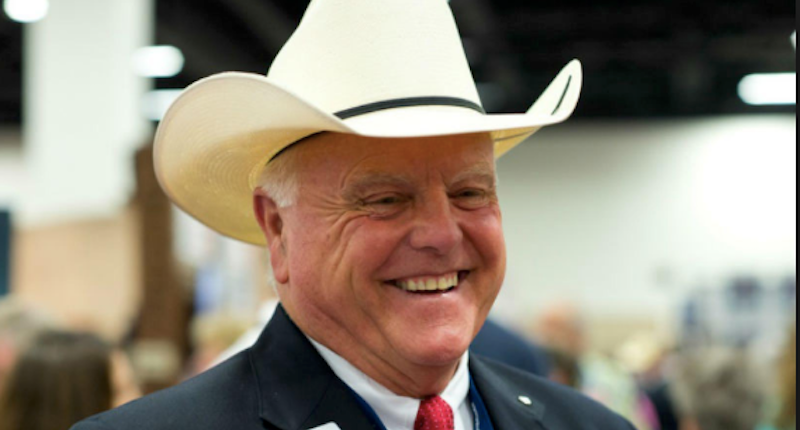
Texas Agricultural commissioner Sid Miller.

Igalious “Ike” Mills grew up working his family’s farm in the Piney Woods town of Nacogdoches. His siblings still keep it running, relying on a lot of the same equipment used by their father and grandfather.

Mills, who is Black, spends much of his energy trying to connect a dwindling number of Black farmers with state and federal programs that can help them keep their operations running. So it was welcome news last year when Congress passed a law intended to help cover the debts of thousands of “socially disadvantaged farmers and ranchers” and correct the U.S. Department of Agriculture’s historic discrimination, long recognized by the agency itself.

But Texas Agriculture Commissioner Sid Miller stepped in. He is among the many white litigants challenging the law, which a federal judge temporarily blocked as court cases play out. And even though Miller filed the suit in April as a private citizen, Mills says his perch as the state’s agriculture commissioner is stoking frustration from farmers of color who already distrust the government.

“They’re disappointed, number one,” said Mills, who is director of the Texas Agriforestry Small Farmers and Ranchers. “And like some of them are saying, ‘Oh, here we go again.’ That pushes us back even further in terms of trying to engage Black landowners to participate in USDA programs.”

Nationally, Black farmers have lost more than 12 million acres of farmland over the past century, according to the Washington Post, due to biased government policies and discriminatory business practices. In 1920, there were over 925,000 Black farmers in the United States, according to the U.S. Department of Agriculture. But by 1997, their numbers had fallen to just under 18,500.

Recent data suggest the USDA continues to disproportionately reject Black farmers for loans. According to a CNN analysis, 42% of Black farmers were rejected for direct USDA loans in 2021, more than any other demographic group

Last March, Congress passed a sweeping debt relief program for farmers of color. The culmination of 20 years of advocacy, the law would have provided $4 billion worth of debt relief for loans many of them had taken on to stay afloat while being passed over for financial programs and assistance their white counterparts had an easier time obtaining. Black farmers made up about a quarter of those targeted in the bill.

Texas Agricultural Commissioner Sid Miller spoke to people protesting mask mandates at the Governor’s Mansion in Austin in 2020. Credit: Jordan Vonderhaar for The Texas Tribune


As agriculture commissioner, Miller leads an agency tasked with “advocat[ing] for policies at the federal, state, and local level” beneficial to Texas’s agriculture sector and “provid[ing] financial assistance to farmers and ranchers,” among other duties. In a statement to The Texas Tribune, Miller called the debt relief program “facially illegal and constitutionally impermissible.”

“Such a course will lead only to disunity and discord,” Miller said. “Shame on the Biden Administration for authorizing a program it knows was unambiguously illegal, instead of enacting a proper relief bill that complies with the laws and constitution of the United States.”

But advocates of the program saw it as an attempt to make Black farmers whole after years of USDA discrimination.

USDA press secretary Kate Waters told the Tribune that she couldn’t comment on ongoing litigation. She added the agency is establishing an equity commission of about 30 non-USDA employees to help identify how the USDA can eliminate structural barriers to various programs.

“There is a long history of racism at USDA. It’s a lot to unpack,” Waters said. “We’re on the case and we’re here to regain trust.”

But Mills said Miller’s lawsuit is undermining existing efforts to build trust. A federal judge’s halt to the program, thanks in part to Miller’s challenge, paused the USDA’s plans to start paying the loans in June, with eligible farmers and ranchers expected to receive an additional 20% loan to cover the tax burden associated with the relief.

The lawsuit is “like a slap in the face for Black farmers. That just elevates another level of mistrust that we shouldn’t have to deal with,” he said. “They have to understand what we’re trying to develop here. That’s counterproductive.”

Roy Mills, right, drives a tractor loaded with hay around a pasture as his brother Ike walks behind him, distributing the hay in clumps. Credit: Meridith Kohut for The Texas Tribune

History of discrimination, mistrust

A red clay road lined with pine and oak trees leads to Mills’ family farm in Nacogdoches. While much of the equipment his brother uses to keep the farm going is old and needs replacing, the Mills family instead shares equipment with other Black farmers.

Born in 1953, Mills recalls shopping at a white-owned feed store that allowed his family to buy goods on credit until his dad got the money, oftentimes through selling bales of cotton, the farm’s primary export. The store essentially served as the family’s bank, Mills said, because access to financial institutions was “totally unheard of.”

“We had to do what we had to do to survive,” Mills said. It’s a perspective that Black farmers and ranchers share today, Mills added.

Mills also remembers milking cows and making butter with a churn as a child. Mills’ family also grew corn and raised cattle, largely for themselves. While the farm was largely self-sustaining, the family also sold cotton in the market, where Mills said buyers offered his dad lower prices than they would white farmers.

“You kind of expected that because of the Jim Crow attitude and how you’d been treated as a Black farmer and rancher,” Mills said.

And by then, Mills said, the American government had long given Black people little reason to trust it. From its earliest days, America used labor from enslaved people to build up its economy — and the generational wealth of white enslavers.

Mills pointed out how federal troops arrived in Galveston on June 19, 1865, to ensure people still being forced into labor knew their enslavement was no longer legal — over two and a half years after the Emancipation Proclamation.

“We’ve always been denied access,” Mills said. “Even when they made laws to give former slaves 40 acres and a mule and then they took that back.”

Between 1937 and 1961, Congress changed eligibility for USDA loans from farm tenants, laborers and sharecroppers to family farm owner-operators with farming training or experience. This change, the Federation of Southern Cooperatives/Land Assistance Fund wrote in a court filing, made it easier for county committees, which help deliver federal programs at the local level, to deny loans to Black applicants.

The federation is a nonprofit organization that provides resources to limited-resource Black farmers and landowners. It tried to intervene as a party in Miller’s lawsuit against Secretary of Agriculture Tom Vilsack. But a judge last month denied that attempt.

The history of discriminatory practices, the federation argues, saddled many Black farmers with substantial debt, driving hundreds of thousands out of agriculture altogether.

Ike and Roy Mills distribute hay around the pasture on their farm. Ike and Roy are, respectively, director and program coordinator of Nacogdoches-based Texas Agriforestry Small Farmers and Ranchers, an organization that helps connect Black farmers with state and federal programs. 
Credit: Meridith Kohut for The Texas Tribune

Census data show that the number of Black farmers in the United States decreased by 90.6% between 1920 and 1969.

Miller’s motion to block the law for excluding white farmers would only increase existing debts and worsen these trends, the federation wrote in its October motion to intervene. Farmers who made plans and purchases with the understanding they were eligible for the new federal assistance would face “severe, life-changing disadvantage” without the relief, the federation added.

If the law continues to be blocked, the federation said its members will face “irreparable harm.”

“Many Black farmers will lose their land and farming equipment to foreclosures,” the federation wrote.

Previous attempts at redress

The government acknowledged its history of discrimination in two lawsuits settled in 1999 and 2010, which jointly made thousands of Black farmers eligible for over $2 billion collectively.

The first case was known as Pigford I, named after the farmer Timothy Pigford, who filed the case alongside 400 other plaintiffs. It resulted in a settlement worth more than $1 billion. Over 13,000 farmers, able to prove they faced discrimination in USDA loan programs, were eligible for $50,000 payouts.

After the USDA denied thousands of those claims for missing deadlines, the second case came. Pigford II resulted in a $1.25 billion settlement.

But the $2.25 billion total doesn’t begin to account for the economic damages incurred by Black landowners, according to Thomas Mitchell. Nor does the $4 billion in debt relief included for farmers of color in the COVID-19 relief package signed into law this spring.

Mitchell is the co-director of Texas A&M’s Real Estate and Community Development Law program and a member of the Land Loss and Reparations Project, a research team analyzing the impact of land loss on Black wealth. The group’s preliminary analysis suggests the millions of acres lost by Black landowners over the last 100 years, known as “the great dispossession,” has resulted in over $300 billion lost.

“There’s no way that the [American Rescue Plan] represents anything approaching the level that it would take to make farmers whole,” Mitchell said. “It’s a lot more substantial than anything the federal government had done previously to try to remedy this incredible, horrible record of discrimination that’s been ongoing for 100 years.”
Fostering connections

A sweeping 1997 report by the Civil Rights Action Team — a group charged by then-Secretary of Agriculture Dan Glickman with developing recommendations to address institutional problems — found that improved department outreach would increase program participation among farmers of color, a failure the agency noted had increased mistrust.

“Underrepresentation of minorities on county committees and on county staffs means minority and female producers hear less about programs and have a more difficult time participating in USDA programs because they lack specific information on available services,” according to the report. “USDA does not place a priority on serving the needs of small and limited-resource farmers and has not supported any coordinated effort to address this problem.”

Today, people like Mills and Clarence Bunch of Prairie View A&M University are working to fill information gaps.

Ike and Roy Mills feed the cows at their East Texas farm, which has been in their family for three generations. Credit: Meridith Kohut for The Texas Tribune

The Agriculture and Natural Resources unit of Prairie View A&M’s Cooperative Extension Program provides knowledge to agricultural producers to help small farmers and ranchers sustain their practices and become profitable. After the American Rescue Plan passed, Bunch helped organize an educational meeting in June between USDA leaders and Texas producers.

Earlier this month, Vilsack met with the Federation of Southern Cooperatives to renew efforts to increase the number of Black and underserved southern landowners.

Similarly, the Texas agriforestry group Mills runs provides outreach to farmers who would benefit from state and federal programs but lack the necessary information to participate.

Mills is focused on getting socially disadvantaged farmers access to the kind of capital denied by slaveholders in the 19th century and then again through discriminatory loan practices in the 20th century.

“You can’t get things to put back into your farm unless you have capital,” Mills said. “The people who’re getting hurt is the ones that got the small operation and can’t get access to capital, trying to make it and trying to survive on their land.”
Black farming’s present and future

Brandon Smith, 43, has been ranching his entire life, a practice that goes back at least four generations in his family.

He learned to ranch from his grandfather, who once owned 100 acres. By the time his grandparents died, the land had been reduced to 12 acres, he said, because they could not secure loans from the USDA.

Smith’s experience was detailed in the Federation of Southern Cooperatives/Land Assistance Fund’s unsuccessful motion to intervene in Miller’s lawsuits.

“It’s common knowledge that white ranchers have access to credit that Black ranchers don’t have,” he said in a declaration submitted to the court. “That’s the way it’s always been.”

The debt relief program “was a lifesaver for my sons and me,” Smith said in the declaration. But the holdup, he said, has left them vulnerable to further land loss.

With the continuous land loss, Mills said many Black farmers and ranchers worry about future Black farmers’ prospects.

“You got to make it better for the next generations coming in,” Mills said. “We got to do something to help preserve that."

Ike Mills disperses clumps of hay for his cows and does his best to ensure that each cow gets an equal share. Credit: Meridith Kohut for The Texas Tribune

Miller v. Vilsack

To successfully uphold the new law, Chase Cooper said the defendants need to outline how USDA practices caused Black and other socially disadvantaged farmers to financially suffer. Cooper — a partner with Winston & Strawn, who submitted the federation’s motion to join the suit — said the organization is better poised to fulfill that task than the USDA.

“Frankly, one should not expect the USDA to give the most robust portrayal of discrimination within itself,” Cooper said. “It’s very important for the people who stand to gain or lose from this litigation to be directly heard and to be a part of the lawsuit.”

While U.S. District Judge Reed O’Connor denied their motion in December, Cooper said the group is appealing that decision. O’Connor’s past rulings against a key Obamacare provision and transgender children’s right to use the bathroom of their identity have made his court a favorite among Texas conservatives.

Some big conservative names have gotten behind Miller’s lawsuit. The effort has been sponsored by America First Legal, a group founded by Stephen Miller and other Trump-era officials as a conservative version of the ACLU.

With the courts blocking the relief, the Biden administration sought to pass a new program through the Build Back Better Act. The proposed changes would grant debt relief eligibility based on economic insecurity rather than race. But Reuters reported in December that such changes would exclude thousands of the program’s originally intended recipients.

The lawsuit has overshadowed the work done by community-based organizations to provide assistance, Mills said, which hurts existing trust-building efforts. But when it comes to ensuring the health of Black agriculture and building trust, Mills said a big piece of that puzzle will be sustained commitment from government officials.

“People, they’ve seen a lot of talk,” Mills said. “They’re going to have to see some results.”
UK court rules Julian Assange can appeal extradition to the US
Julian Assange. Jack Taylor/Getty Images


A British court ruled that Assange can appeal the December decision that he can be extradited to the US.

The WikiLeaks founder faces hacking and espionage charges in the US.

Assange can now bring his case to the UK Supreme Court.

The WikiLeaks founder Julian Assange has been allowed to appeal the decision that he can be extradited to the US, a British court ruled Monday.

The High Court in London said that Assange can appeal a December ruling that he can be extradited to the US, where he faces multiple charges. It means his case can now go to the UK Supreme Court.

The court had in December reversed an earlier court ruling that said Assange could not be extradited to the US because he was at risk of suicide and self-harm in the US.

The summary of that decision said the US had assured the UK that Assange would "receive appropriate clinical and psychological treatment" in the US. The US also said it would let Assange serve his sentence in Australia, his home country, if he asks to do so.

Assange faces 18 charges in the US. The country accused him of conspiring to hack government computers and breaching the Espionage Act when WikiLeaks published a trove of confidential military and diplomatic documents in 2010.

Assange had for years lived in Ecuador's embassy in London as an asylum seeker. He was brought to a UK prison when Ecuador withdrew its protection over him in in April 2019, and the police dragged him out.

The US then requested to extradite him.

Human-rights groups say Assange should not be criminalized for sharing information in the public interest, and that he would not be safe in the US.


UK: High Court grants Julian Assange right to appeal extradition case to the Supreme Court


RSF_en

Reporters Without Borders (RSF) welcomes the High Court’s decision to allow Wikileaks publisher Julian Assange to appeal to the Supreme Court, seeking review of his extradition case, but limited to one narrow ground. The Supreme Court will be asked to consider matters related to the US government’s provision of diplomatic assurances regarding Assange’s treatment if extradited.

On 24 January, the High Court granted Julian Assange the right to appeal to the Supreme Court, seeking review of the decision that could allow for his extradition to the US. Assange’s legal team now has 14 days to file an application with the Supreme Court, which could take several months to decide whether it will accept the case for review.

If accepted, the Supreme Court would consider matters related to the US government’s provision of diplomatic assurances regarding Assange’s treatment, which were filed only prior to the appeal stage of proceedings, meaning the assurances were not scrutinised in the evidentiary portion of the extradition hearing. The High Court granted permission for Assange to file an application on this ground due to the lateness of the US government’s provision of these diplomatic assurances.

“We welcome the High Court’s decision to allow Julian Assange the right to appeal his extradition case to the Supreme Court. This case will have enormous implications for journalism and press freedom around the world, and could be hugely precedent-setting. It deserves consideration by the highest court in the land. We very much hope that the Supreme Court will indeed accept the case for review,” said RSF’s Director of International Campaigns Rebecca Vincent, who was present in court for the hearing.

This decision follows the High Court’s ruling of 10 December 2021 by the same judges, overturning the District Judge’s decision of 4 January 2021 barring extradition on mental health grounds. The High Court had ruled in favour of the US government’s appeal, on the basis of the diplomatic assurances provided regarding Assange’s treatment if extradited.

RSF believes that Assange has been targeted for his contributions to journalism, as Wikileaks’ publication of hundreds of thousands of leaked classified documents in 2010 informed extensive public interest reporting around the world, exposing war crimes and human rights violations that have never been prosecuted. If he faces trial in the US, Assange would not be able to argue a public interest defence, as the Espionage Act lacks such a provision. Assange’s prosecution would set a dangerous precedent that would have lasting implications for journalism and press freedom around the world.

RSF is also gravely concerned by the state of Assange’s mental and physical health, which remain at great risk in conditions of prolonged detention in London’s high-security Belmarsh prison – risks that would be severely exacerbated if the US succeeds in securing his extradition. In December it was revealed that he had suffered a mini-stroke in prison during the appellate hearing, and in January it was reported that Covid infections were again on the rise in Belmarsh prison.

The UK and US are respectively ranked 33rd and 44th out of 180 countries in RSF’s 2021 World Press Freedom Index.


WAGE SLAVERY 
With tips, restaurants can pay workers as little as $2 an hour. 

It's why no one's coming back to work.

insider@insider.com (Paul Constant) 
© Provided by Business Insider Tipped service workers in more than 40 states are only guaranteed $2.13 an hour from their employers. Noam Galai/Getty Images

Paul Constant is a writer at Civic Ventures and the cohost of the "Pitchfork Economics" podcast.
He spoke with Saru Jayaraman of UC Berkeley's Food Labor Research Center about tipped workers.
Some workers earn only $2.13 an hour and are leaving the industry as a result, Jayaraman said.

"Prior to the pandemic, the restaurant industry was the largest and fastest-growing private sector employer in the US," Saru Jayaraman, director of the Food Labor Research Center at the University of California Berkeley, said on the latest episode of "Pitchfork Economics." But restaurants have also always been one of the lowest-paying sectors of the economy.

We frequently refer to the federal minimum wage as $7.25 per hour, but the truth is that $7.25 isn't the lowest an employer can legally get away with paying their workers. The actual lowest wage an American worker can legally be paid is what we call the subminimum wage, which currently still stands at $2.13 per hour for tipped employees.

Tipped workers in more than 40 states around the nation take home less than the $7.25 minimum wage from their employers, with customer tips making up the rest of their paychecks. Jayaraman, the author most recently of "One Fair Wage: Ending Subminimum Pay in America," said this has to change.

The subminimum wage for tipped workers is a racist practice, Jayaraman said, which dates back to the time of the Emancipation Proclamation "when the restaurant lobby first demanded the right to hire newly freed slaves, not pay them anything at all, and have them live entirely on this newfangled concept that had come from Europe at the time called tipping."

Essentially, the subminimum wage allows restaurant owners to outsource their payroll expenses to customers. And the tipping system isn't some libertarian's ideal free-market system in which the most efficient workers are tipped exactly what they're worth. Women and people of color who work for tips always earn significantly "less than white, male tipped workers," Jayaraman said, "because of the biases we all carry as customers. That got even worse during the pandemic."

Employer justifications for the subminimum wage tend to fall apart under the slightest examination. The restaurant industry clearly doesn't need to pay less than the minimum wage to survive because seven states around the country have eliminated the tipped minimum wage, requiring restaurant owners to pay their employees at least the state's full minimum wage. These states still have a wide variety of restaurants of all kinds.

This isn't a partisan issue or a matter of more or less prosperous states, either: States with no tipped minimum wage include progressive hotbeds with large wealthy urban areas like California and Washington and red states with relatively low populations and huge rural expanses like Montana and Alaska.

Restaurant workers in these seven states have for years taken home more than the federal tipped minimum wage per hour with no negative effects on the restaurant industry. In fact, Denny's CFO Robert Verostek told shareholders last year that the chain's diners in California — which at the time had a $14 minimum wage and no tipped wage — "outperformed the system" with "six consecutive years of positive guest traffic — not just positive sales, but positive guest traffic — as the minimum wage was going up."

The pandemic has worsened conditions for restaurant workers, and many of them have decided that the subminimum wage isn't worth the hassle. Jayaraman serves as president for the nonprofit One Fair Wage, which last year surveyed 3,000 restaurant workers who left their jobs during the Great Resignation and found that 54% of respondents said they were abandoning the industry entirely.

Of those leaving restaurant work, "nearly eight in 10 say the only thing that would make them stay or come back is a full livable wage with tips on top," Jayaraman said. Two bucks and a sprinkling of pocket change per hour isn't enough to convince them to navigate the racism and sexual harassment that servers routinely face, in addition to all the problems that come with working a public-facing job during a pandemic.

"They are not having it. They're not putting up with it anymore," Jayaraman said.
Former SpaceX colleagues join forces to build autonomous freight train cars, which aim to boost efficiency and ease supply-chain pressures

ztayeb@businessinsider.com (Zahra Tayeb) 1 day ago
© Getty Freight train hauls shipping containers. jopstock/Getty

Former SpaceX engineers are building self-driving, electric freight train cars, CNBC reported.

The LA-based startup, Parallel Systems, raised $50 million in a Series A funding round.
The system is made up of autonomous, electric rail cars that work to transport shipping containers.

Three former SpaceX engineers are teaming up to build autonomous and battery-electric freight train cars.

CNBC and other outlets reported on the news.

The trio consists of CEO Matt Soule and co-founders Ben Stabler and John Howard. They have named their new Los Angeles-based startup Parallel Systems and it has raised $50 million in a Series A funding round, according to Fast Company.

In an interview with CNBC, Soule highlighted the energy efficiency of freight trains in comparison with trucks. He told the outlet that rail does have "operational and economic limits," because of "the way that it is architected." But, he added, "if you can break through those barriers and allow rail to serve more of these markets — that's the opportunity."

In an interview with Design Boom, Soule said: "Our business model is to give railroads the tools to convert some of the $700 billion US trucking industry to rail. The parallel system can also help alleviate the supply chain crisis by enabling low cost and regular movement of freight in and out of ports."

The system is made up of self-driving electric rail cars, which work in pairs to transport standard shipping containers, according to the company's website.

Each unit can also join up with others or split off to their destination alone, which offers a key advantage in reducing waiting times that are linked to loading long freight trains, per Design Boom.

Parallel Systems isn't the only company recently created by former SpaceX engineers. Benson Tsai, who worked at Elon Musk's company for five years, said in an interview with Insider that he launched a pizza-making robot startup, Stellar Pizza, with two former colleagues.
Mayor of London announces ambitious plans to tackle poor air quality and carbon emission

A new report commissioned by the Mayor of London, which is being called a stark wake-up call for the UK government, outlines the scale of the action required to move London towards a greener future.


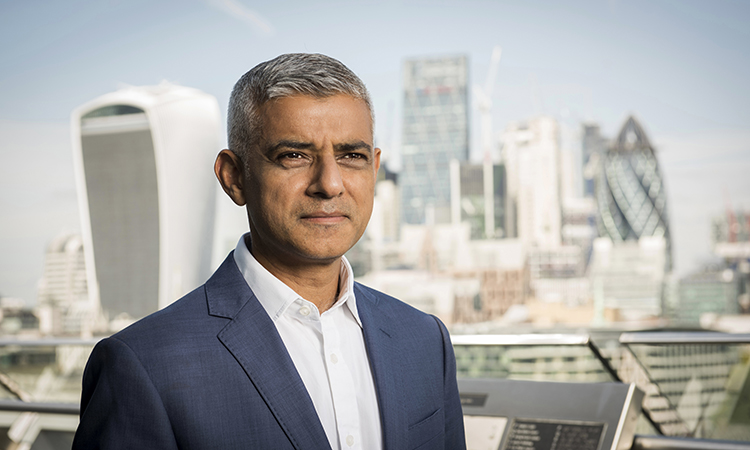
A new report published on 18 January 2021 by Element Energy, commissioned by the Mayor of London, Sadiq Khan, sets out the scale of the action required to move London towards a greener future and net-zero carbon emissions by 2030.

The new analysis shows that more action will be required by City Hall, particularly around reducing vehicle use in London, but that the Mayor does not have the funding or powers to deliver everything that’s required alone. Khan is calling the report a stark wake-up call for the UK government on the need to provide much greater support to help London to reach net-zero by 2030 and to help the UK to reach its national target, which was announced before COP26.

Combatting transport emissions in London

Between 2000 and 2018, London achieved a 57 per cent reduction in workplace greenhouse gas emissions and a 40 per cent reduction in emissions from homes, but just a seven per cent reduction in emissions from transport.

In order to reduce transport emissions by anywhere close to the amount that will be required to clean up London’s air, achieve net-zero by 2030 and cut congestion, the capital will have to see a significant shift away from petrol and diesel vehicle use and towards walking and cycling, greater public transport use and cleaner vehicles. At the moment, just two per cent of vehicles on the roads in London are electric.

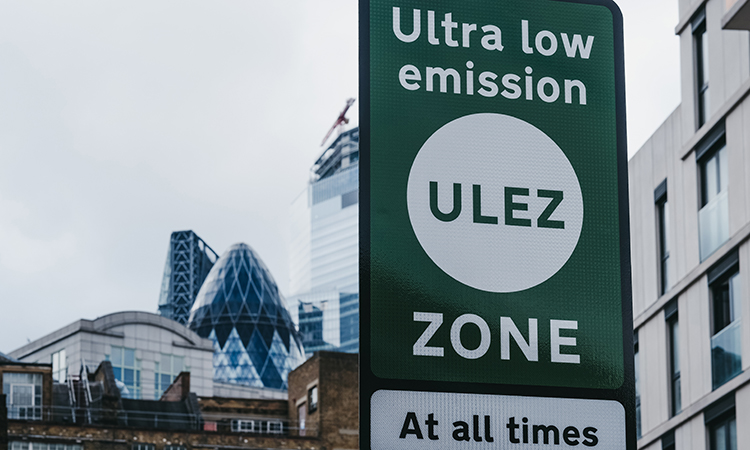
The Mayor has already taken ground breaking action to tackle toxic air, carbon emissions and congestion in the capital by introducing and then expanding the Ultra Low Emission Zone (ULEZ) and tightening Low Emission Zone (LEZ) standards – which is expected to lead to a five per cent fall in CO2 emissions from cars and vans in the zone and a 30 per cent cut in toxic nitrogen oxide emissions from road transport. But the new report shows how much more action is required.

The cost of inaction

The Mayor has said that the cost of inaction – to the economy, livelihoods, the environment and the health of Londoners – would be far greater than the cost of taking the necessary action to transition to net-zero and reduce air pollution.

In 2021, London saw the impact of the climate emergency first-hand with soaring temperatures and flash floods in the capital. City Hall analysis has shown that, if extreme temperatures and flooding get worse, a quarter of London’s rail stations, one in five schools, nearly half of London’s hospitals and hundreds of thousands of homes and workplaces will be at risk of flooding in the future.

The capital has seen a shift to driving during the pandemic, with the cost of congestion rising to over £5 billion in 2021, leading to gridlocked roads and toxic air pollution. The number of miles being driven in the capital has increased in recent years, despite statistics showing that more than a third of car trips in London could be made in under 25 minutes by walking, and that two-thirds could be cycled in less than 20 minutes.

The toxic air pollution being caused by London traffic is leading to nearly 4,000 premature deaths a year and children growing up with stunted lungs. The action already committed by the Mayor will reduce the number of air quality-related hospital admissions by one million by 2050, helping to save the NHS and social care system approximately £5 billion. However, if no additional action is taken to reduce air pollution beyond the existing polices, around 550,000 Londoners would develop diseases attributable to air pollution over the next 30 years and the cumulative cost to the NHS and the social care system is estimated to be £10.4 billion.

The Mayor believes that this is also a matter of social justice – with air pollution hitting the poorest communities the hardest. Londoners on lower incomes are more likely to live in areas of the city most badly affected by air pollution and least likely to own a car. Nearly half of Londoners don’t own a car, but they are disproportionally feeling the damaging consequences that polluting vehicles are causing.


Potential sustainable initiatives

The report sets out that, to achieve anywhere near a 27 per cent reduction in car vehicle kilometres, London will need a new kind of road user charging system implemented by the end of the decade, at the very latest. Such a system could abolish all existing road user charges – such as the Congestion Charge and ULEZ – and replace them with a simple and fair scheme where drivers pay per mile, with different rates depending on how polluting vehicles are, the level of congestion in the area and access to public transport. Subject to consultation, it is likely that there would be exemptions and discounts for those on low incomes and with disabilities, as well as consideration around support for charities and small businesses.

The Mayor recognises that London could benefit from more sophisticated types of technology to introduce this kind of simple, fair road user charging scheme and has therefore asked Transport for London (TfL) to start exploring how it could be developed. However, it’s clear that the technology to implement such a scheme is still years away from being ready.

Given the urgency of the climate crisis and the damaging impact of toxic air pollution, the Mayor believes that bold action must be taken now. As a result, the Mayor has announced that he is considering a number of policies that could be ready within the next few years to encourage Londoners and those who drive within London to shift from polluting cars to electric vehicles, public transport and sustainable active travel, such as walking and cycling.

The potential approaches under consideration are:

Extending the Ultra Low Emission Zone (ULEZ) even further to tackle more of the dirtiest vehicles: extending the current zone beyond the north and south circular roads to cover the whole of Greater London, using the current charge level and emissions standards

Modifying the ULEZ to make it even more impactful in reducing emissions: building on the existing scheme by extending it to cover the whole of Greater London and adding a small clean air charge for all but the cleanest vehicles

A small clean air charge: a low-level daily charge across all of Greater London for all but the cleanest vehicles to nudge behaviour and reduce the number of short journeys by car
Introducing a Greater London boundary charge, which would charge a small fee to non-London registered vehicles entering Greater London, responding to the increase in cars from outside London travelling into the city seen in recent years.

The Mayor and TfL will now begin a period of consultation with Londoners, local government and businesses about the way forward to achieving the clean, green and healthy future that London and the world desperately needs.

All options under consideration would be subject to full equality impact assessments, with mitigations and exemptions put in place for Londoners on low incomes and with disabilities being a key focus of any scheme development. The Mayor is determined to deliver a just transition to net-zero in London by not only making sure that those on lower incomes are always protected, but by ensuring that the wider benefits of moving to a green economy – including more jobs, lower fuel bills and better health outcomes – are felt by everyone, particularly the poorest and most disadvantaged in London.

Subject to consultation and feasibility, the chosen scheme would be implemented by May 2024.

A statement from the Mayor of London


Credit: Greater London Authority

The Mayor of London, Sadiq Khan, said: “This new report must act as a stark wake-up call for the government on the need to provide much greater support to reduce carbon emissions in London. It’s clear that the scale of the challenge means that we can’t do everything alone.

“But I’m not willing to stand by and wait when there’s more that we can do in London that could make a big difference. We simply don’t have time to waste. The climate emergency means that we only have a small window of opportunity left to reduce carbon emissions to help to save the planet and, despite the world-leading progress that we have made over the last few years, there is still far too much toxic air pollution permanently damaging the lungs of young Londoners.

“This is also a matter of social justice – with air pollution hitting the poorest communities the hardest. Londoners on lower incomes are more likely to live in areas of the city most badly affected by air pollution and least likely to own a car. Nearly half of Londoners don’t own a car, but they are disproportionally feeling the damaging consequences polluting vehicles are causing.

“We have too often seen measures to tackle air pollution and the climate emergency delayed around the world because it’s viewed as being too hard or politically inconvenient, but I’m not willing to put off action that we have the ability to implement here in London. I’m determined that we continue to be doers, not delayers – not only to protect Londoners’ health right now, but for the sake of future generations to come.

“It’s clear that the cost of inaction – to our economy, to livelihoods, to the environment and to the health of Londoners – would be far greater than the cost of transitioning to net-zero and reducing toxic air pollution. That’s why I’m today beginning a conversation with Londoners, local government and businesses about the best way forward to create the green, sustainable city we all want to see.”
Tent city residents promised shelter at a B.C. hotel evicted for not paying rent

Some homeless residents who were offered shelter at one of B.C.’s single-occupancy hotels in Vancouver have been told they have as little as 24 hours to pay rent or vacate.
© Provided by Vancouver Sun Fawn Auger, a resident of the Patricia Hotel in Vancouver, packs her belongings Friday, January 21, 2022 after being given an eviction notice.

Fawn Auger, a tenant of B.C. Housing’s program at the Patricia Hotel was scrambling to pack up her belongings Friday after an eviction notice was slipped under her room’s doorway the previous day.

She held up the notice that stated she owed $3,562.50 in unpaid rent. “You have 24 hours to pack all your belongings and leave,” states the handout from Atira Property Management, the company B.C. commissions to operate the hotel.

“I don’t have anywhere to go,” said Auger, who initially relocated to the city from Edmonton in 2016 to attend college for visual art. “I’ll have to go back to sleeping in a tent. haven’t been able to apply for Income Assistance, I don’t have ID.”

The 30-year-old is one of nearly 300 people the province said it assisted to move indoors from Strathcona Park, where they relocated after the Vancouver Port Authority won a court injunction forcing tenters to leave CRAB Park in April.

Auger, along with others offered supportive housing, say they were told by B.C. Housing outreach workers enlisted to help them that the cost of the hotel would be covered for the first six months of the program.

“Given the urgent need to quickly and safely house people sheltering at Strathcona Park, outreach workers offered indoor spaces to everyone at the park even if they were not receiving government assistance,” B.C. Housing said in an email Friday.

“Once everyone was housed, non-profit staff worked to connect individuals to the appropriate income assistance and rental payment programs.”

However, a wave of evictions continues to sweep tenants of the Downtown Eastside hotel, purchased by the province for $63.8-million in April, back out onto the streets.

“I feel like I was led into a trap,” said tenant Inga Trotskaia, who was ordered to vacate the Patricia on Aug. 8.

Nearly four months after she settled into her room, the 32-year-old was started by an eviction notice taped to her door. Its words gave her a 10-day ultimatum: pay rent or vacate.

“I ended up signing another repayment plan with Atira, which now has me paying $500 a month for 20 months,” she said.

B.C. Housing maintains that, at this time, Atira is not evicting tenants from the Patricia due to non-payment of rent.

However, eviction notices at the hotel seen by Postmedia gave nonpayment of rent as the reason.

Downtown Eastside housing advocates have been vocal about the rent mix-up.

“It seems to be quite a pattern,” said Fiona York. “People were told by outreach workers when they moved into the hotel from the park that they didn’t have to pay for six months but then they got presented with bills for back rent.”

Some tenants who had been handed 24-hour eviction notices have refused to leave the hotel, choosing to instead barricade themselves in their rooms with their belongings.

“I built a community here, I can’t leave,” said one of them, Sasha, who asked that his last name not be used, fearing retaliation.

In an email statement, B.C.’s Housing Ministry told Postmedia the hotel has a rental rate of $375 a month, which is “provided directly through government assistance and residents do not incur a direct cost.”

Of the 297 people housed from the homeless encampment in Strathcona Park, 37 have been evicted so far for reasons the ministry said it couldn’t disclose due to privacy concerns.

Sarah Grochowski 1 day ago
sgrochowski@postmedia.com
New Sask. trespassing legislation infringes on treaty rights, says Treaty Land Sharing Network

Laura Sciarpelletti 
© Erik White/CBC Changes to trespassing legislation came into effect on Jan. 1. The changes moved the onus of responsibility from WHITE rural landowners to people seeking to access their property.

A group of landholders and Indigenous land users is voicing its opposition to new provincial trespassing legislation in Saskatchewan, saying it infringes on treaty rights.

The Trespass to Property Amendment Act says that as of Jan. 1, anyone who wants to access a rural landowner's (WHITE FARMER) property for recreational purposes needs written, electronic or oral consent from the owner.

That affects people who use private rural property for activities like hunting, fishing, hiking or snowmobiling.

The legislation is opposed by the Treaty Land Sharing Network — a group of farmers, ranchers and other landholders who aim to provide a safe space for Indigenous people to use the land for their own practices. The network currently includes more than 4,000 acres (about 1,600 hectares) of land across Saskatchewan.

The group says its aim is to work together with Indigenous peoples to share land in the way that the treaties envisioned — but the new trespassing legislation runs in opposition to that work.

"The Trespass to Property Amendment Act further criminalizes Indigenous people practising their way of life and exercising their treaty and inherent rights by requiring them to obtain permission from each landholder prior to accessing land," the network said in a press release Thursday.


Without permission from the landowner, Indigenous people accessing land may be subject to penalties including fines up to $25,000, or jail time up to six months.


Last month, Justice Minister and Attorney General Gordon Wyant said his government "worked hard to balance the rights of landowners in rural Saskatchewan with those of recreational land users."

But the network says "by undermining access to land, the amendment threatens Indigenous food sovereignty, language revitalization, and Indigenous relationships and responsibilities to the land."


The inherent right of Indigenous people to move freely through their territories "was affirmed during the signing of the numbered treaties, and is fundamental to other inherent and treaty rights including hunting, fishing, trapping, gathering, and practising ceremony and culture," the network says.

CBC News reached out to the province on Friday for a response to the Treaty Land Sharing Network's criticism.

Joellen Haywahe, a network member from the Carry the Kettle First Nation, told CBC the legislation impedes on her treaty rights.

The new legislation was meant to address criminal concerns, she says, but ignores the traditional needs of Indigenous peoples such as "hunting, fishing, trapping, gathering, and then our own ceremony practices or language training ... taking the kids out onto the land."

"The Treaty Land Sharing Network hopes it helps people see that not everybody wants to go and steal. On our own lands, our medicines are running short ... our game is running short," said Haywahe.

Haywahe said she understand that people want to protect their property from theft.

"I get everybody is a little bit weary of their property being stolen on because we're the same way out here. We have outfitters coming out here to our own lands and they're going and killing game. Now that's taking away from our food sovereignty too."
Barrier to relationship building

Joel Mowchenko, a network member who farms near Mossbank, southwest of Regina, told CBC that the new legislation is a barrier that stands in the way of farmers like himself building relationships with Indigenous land users.

"It stands in the way of trust being built between the two groups," said Mowchenko.

He said he hopes that by speaking out against the trespassing legislation, the Treaty Land Sharing Network can help people think about the rights of Indigenous people and learn about treaties.

But he said the legislation won't stop the work that the Treaty Land Sharing Network does.

"We are going to continue building relationships. We're going to continue exploring ways to share the land. But it makes it harder to build those relationships. I really feel it sends the wrong message. And it's a step in the wrong direction."

Mowchenko said that land sharing is a win-win situation.

"Some Indigenous land users come and harvest some sage from our native prairie. And then in the process, I've been able to learn about the different types of sage and the different practices of Indigenous peoples," Mowchenko said.

"They've also pointed out different features of the land that we farm and different things that would have been used in different ways by Indigenous people in the history. So we're both coming out ahead in that and it's been a fantastic experience."
Municipal leaders question Alberta government push to fund provincial police force

Lisa Johnson 1 day ago
Edmonton Journal 
© Provided by Edmonton Journal Stock photo of Royal Canadian Mounted Police (RCMP) logo at K-Division headquarters in Edmonton.

Alberta municipal leaders say rather than investing hundreds of millions of dollars into a provincial police force, the government should focus on increasing funding to address the major drivers of crime.


Alberta Municipalities, formerly the Alberta Urban Municipalities Association, held a virtual summit Wednesday night on the future of policing in the province, with more than 400 local government officials, including mayors, councillors and chief administrative officers.

President Cathy Heron said in an interview Friday with Postmedia locally elected officials agreed tackling mental health, addictions, and homelessness would help solve a lot of issues related to crime.

“That could happen under an RCMP model as well. So, the question should not be ‘Who is delivering policing in Alberta?’ The question should be, ‘What does that look like? And how is it delivered?’ ” said Heron.

A PriceWaterhouseCoopers (PwC) report commissioned by the government concluded that dumping the RCMP in favour of a provincial service would cost Alberta approximately $200 million more annually and come with a $366-million price tag at least for the transition, but could provide better service, more officers on the ground, dedicated mental health nurses and social workers.

However, Heron noted that social work and health care is a provincial responsibility, which raises concerns for municipal leaders, many of whom fear costs will be downloaded onto their cities and towns.

Premier Jason Kenney has repeatedly promised the province, not municipalities, would pay any extra costs.

“We should at least look at the possible benefits of rural Alberta experiencing the same kind of local community policing as Edmonton and Calgary and some of the mid-sized cities in Alberta,” Kenney said at the November convention of the Rural Municipalities of Alberta.

The idea of creating a provincial police force was one of the Fair Deal Panel’s 25 recommendations, despite the panel finding that only 35 per cent of Albertans supported the idea.

Heron said municipal leaders had a long list of unanswered logistical questions on top of their financial concerns, including how police commissions would be appointed, and what authority local councils and commissions would have.

Alberta’s government plans to hold 70 meetings with law enforcement organizations, municipal and Indigenous governments, and public safety organizations such as victim services and rural crime watch groups.

The National Police Federation, the union representing RCMP members, is also making a public push across the province with its consultation efforts. Heron said she’s encouraging her colleagues to attend both.

“When we did our analysis of the PwC report, we just ended up with more questions. So, we’re going to enter these engagement sessions hoping to get answers. That’s the transparency we’re calling for,” said Heron.

In March, Alberta Municipalities is expected to ratify the associations’ position for or against a potential provincial police service at a leaders caucus meeting.

Heron said she would push for a referendum on the issue, and for all Albertans who have a stake to get a vote, including those in cities like Calgary and Edmonton.

The Justice Ministry did not provide a response to Alberta Municipalities’ statements as of press time Friday.

lijohnson@postmedia.com
twitter.com/reportrix

KENNEY LIED I AM SHOCKED
Braid: Details of Madu phone call were known to premier's closest staff in March 2021

Don Braid, Calgary Herald 1 day ago

The burning new question about Justice Minister Kaycee Madu’s phone call to a police chief is who knew about it, and when.

© Provided by Calgary Herald Premier Jason Kenney and Justice Minister Kaycee Madu.

In government, the answer is no mystery.


Key people in Premier Jason Kenney’s inner circle, those right at the centre of power, knew what had happened within a couple of days of the minister’s call to Chief Dale McFee of the Edmonton Police Service.

They were very worried about repercussions. And they did their best to keep it quiet.

The Portable Heater That Has Taken The World By StormSEE MORESponsored by ALPHA HEATER

Kenney said Thursday: “I do recall at some point last year hearing that minister Madu had gotten a ticket, had paid for it.”

He added that he wasn’t fully briefed on “the call and the details” until this past Monday, after the CBC’s Elise von Scheel and Janice Johnston broke the story.

Madu was issued the $300 ticket for distracted driving in a school zone on March 10, 2021. Shortly afterward he called the chief.

That much is publicly acknowledged now, including Madu’s continuing denial that he deserved to get a ticket. He said his cellphone was in his pocket.

(Interestingly, all ministers have three cellphones: one ministerial, another for constituency matters and a personal phone.)

Very quickly after the call between Madu and McFee, staff were trying to figure out how to handle this.

Environment and Parks Minister Jason Nixon, a key political adviser to the premier, discussed the matter with Pam Livingston, then Kenney’s deputy chief of staff, now the chief.

Nixon also talked to Municipal Affairs Minister Ric McIver.

Other key people were told directly what had happened, apparently with details of the chief’s reaction to the call.

They included Larry Kaumeyer, who at that point was Kenney’s chief of staff, and Matt Wolf, his issues manager. After learning the details, they both talked to Madu.

Both Kaumeyer and Wolf have since left the government.

Word also spread quickly across the Edmonton Police Service. Lobbyists who deal with the government were asking staff about it.

Some reporters got wind of the call but weren’t able to confirm facts until the CBC finally nailed it, 10 months later.

Was Kenney briefed in this period right after Madu called the chief?

I haven’t spoken to any source who can say definitely that he was.

But at the same time, they say he should have been told about a matter so sensitive and potentially damaging. Most find his explanation vague in the extreme.

The call became a joking matter as word spread around the government, but there was always a recognition that it was serious business.

A justice minister who calls a police chief about a penalty issued to him personally is way over the red line that is supposed to protect police from political interference.

Madu’s other issues — racial profiling, even his suggestion that he was being improperly watched — are very important subjects in another forum, including the legislature or during a policy review.

But not when the minister has just received a ticket; even if, as Madu says, he did not ask for it to be rescinded.

In the end, it appears that Madu was told to pay the ticket. The government would then let it ride, hoping the call to McFee would never become public.

There was another way, of course. Kenney could have announced immediately that the minister made a big mistake and fire him; or, as now, suspend him while investigating .

Kenney would at least have earned credit for dealing with it quickly and openly.

That kind of open approach is essential to every successful government. But it doesn’t seem to be in this outfit’s DNA.

Don Braid’s column appears regularly in the Calgary Herald.

Twitter: @DonBraid

Facebook: Don Braid Politics