Saturday, June 18, 2022

Opinion: How an arrogant and pathological America could lose the new cold war

The U.S. says it’s fighting for values such as democracy and honor, but America needs to live by those words at home if it wants anyone to stand with it
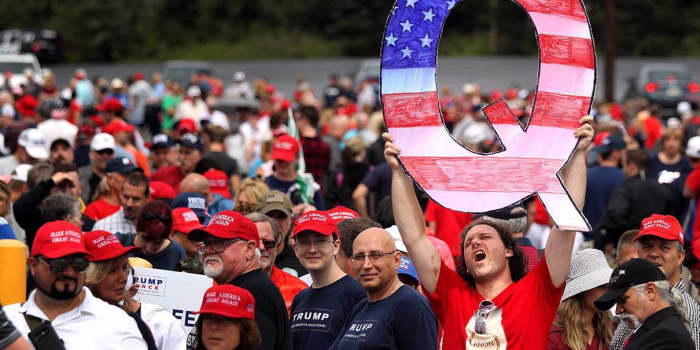


America’s deranged political system is hardly the envy of the world. 
GETTY IMAGES

Last Updated: June 18, 2022 
By Joseph E. Stiglitz

NEW YORK (Project Syndicate) — The United States appears to have entered a new cold war with both China and Russia. And U.S. leaders’ portrayal of the confrontation as one between democracy and authoritarianism fails the smell test, especially at a time when the same leaders are actively courting a systematic human-rights abuser like Saudi Arabia.

Such hypocrisy suggests that it is at least partly global hegemony, not values, that is really at stake.

For nearly two decades after the fall of the Iron Curtain, the U.S. was clearly No. 1. But then came disastrously misguided wars in the Middle East, the 2008 financial crash, rising inequality, the opioid epidemic and other crises that seemed to cast doubt on the superiority of America’s economic model.

Cold wars ultimately are won with the soft power of attraction and persuasion. To come out on top, we must convince the rest of the world to buy not just our products, but also the social, political and economic system we’re selling.

Deeply pathological

Moreover, between Donald Trump’s election; the attempted coup at the U.S. Capitol; numerous mass shootings; a Republican Party bent on voter suppression; and the rise of conspiracy cults, such as QAnon, there is more than enough evidence to suggest that some aspects of American political and social life have become deeply pathological.

Of course, America does not want to be dethroned. But it is simply inevitable that China will outstrip the U.S. economically, regardless of what official indicator one uses. Not only is its population four times larger than America’s; its economy also has been growing three times faster for many years (indeed, it already surpassed the U.S. in purchasing-power-parity terms back in 2015).

The West must once again make our economic, social and political systems the envy of the world.

While China has not done anything to declare itself as a strategic threat to America, the writing is on the wall. In Washington, there is a bipartisan consensus that China could pose a strategic threat, and that the least the U.S. should do to mitigate the risk is to stop helping the Chinese economy grow. According to this view, pre-emptive action is warranted, even if it means violating the World Trade Organization rules that the U.S. itself did so much to write and promote.

This front in the new cold war opened well before Russia invaded Ukraine. And senior U.S. officials have since warned that the Ukraine war must not divert attention from the real long-term threat: China. Given that Russia’s economy is around the same size as Spain’s, its “no limits” partnership with China hardly seems to matter economically (though its willingness to engage in disruptive activities around the world could prove useful to its larger southern neighbor).
Winning hearts and minds

But a country at “war” needs a strategy, and the U.S. cannot win a new great-power contest by itself; it needs friends. Its natural allies are Europe and the other developed democracies around the world. But Trump did everything he could to alienate those countries, and the Republicans — still wholly beholden to him — have provided ample reason to question whether the U.S. is a reliable partner.

Moreover, the U.S. also must win the hearts and minds of billions of people in the world’s developing countries and emerging markets — not just to have numbers on its side, but also to secure access to critical resources.

In seeking the world’s favor, the U.S. will have to make up a lot of lost ground. Its long history of exploiting other countries does not help, and nor does its deeply embedded racism — a force that Trump expertly and cynically channels. Most recently, U.S. policy makers contributed to global “vaccine apartheid,” whereby rich countries got all the shots they needed while people in poorer countries were left to their fates. Meanwhile, America’s new cold war opponents have made their vaccines readily available to abroad at or below cost, while also helping countries develop their own vaccine-production facilities.


Credibility gap


The credibility gap is even wider when it comes to climate change, which disproportionately affects those in the Global South who have the least ability to cope. While major emerging markets have become the leading sources of greenhouse-gas emissions today, U.S. cumulative emissions are still the largest by far. Developed countries continue to add to them, and, worse, have not even delivered on their meager promises to help poor countries manage the effects of the climate crisis that the rich world caused.

Instead, U.S. banks contribute to looming debt crises in many countries, often revealing a depraved indifference to the suffering that results.

Do what I say, not what I do


Europe and America excel at lecturing others on what is morally right and economically sensible. But the message that usually comes through—as the persistence of U.S. and European agricultural subsidies makes clear—is “do what I say, not what I do.”

Especially after the Trump years, America no longer holds any claim to the moral high ground, nor does it have the credibility to dispense advice. Neoliberalism and trickle-down economics were never widely embraced in the Global South, and now they are going out of fashion everywhere.

At the same time, China has excelled not at delivering lectures but at furnishing poor countries with hard infrastructure. Yes, these countries are often left deeply in debt; but, given Western banks’ own behavior as creditors in the developing world, the U.S. and others are hardly in a position to point the finger.

I could go on, but the point should be clear: If the U.S. is going to embark on a new cold war, it had better understand what it will take to win. Cold wars ultimately are won with the soft power of attraction and persuasion. To come out on top, we must convince the rest of the world to buy not just our products, but also the social, political, and economic system we’re selling.

The U.S. might know how to make the world’s best bombers and missile systems, but they will not help us here. Instead, we must offer concrete help to developing and emerging-market countries, starting with a waiver on all COVID-related intellectual property so that they can produce vaccines and treatments for themselves.

Equally important, the West must once again make our economic, social, and political systems the envy of the world. In the U.S., that starts with reducing gun violence, improving environmental regulations, combating inequality and racism, and protecting women’s reproductive rights. Until we have proven ourselves worthy to lead, we cannot expect others to march to our drum.

This commentary was published with permission of Project Syndicate: How the U.S. Could Lose the New Cold War


Joseph E. Stiglitz, a Nobel laureate in economics and University Professor at Columbia University, is a former chief economist of the World Bank (1997-2000), chair of the president’s Council of Economic Advisers, and co-chair of the High-Level Commission on Carbon Prices. He is a member of the Independent Commission for the Reform of International Corporate Taxation and was lead author of the 1995 IPCC Climate Assessment.
UN envoy's farewell: My heart breaks for Afghan girls, women


FILE - Finland's Foreign Minister Pekka Haavisto, right, and Special Representative of the Secretary General of the United Nations for Afghanistan, Deborah Lyons, left, wear protective masks prior to the plenary session of the 2020 Afghanistan Conference at the United Nations in Geneva, Switzerland, Tuesday, Nov. 24, 2020. Lyons is leaving her post as the U.N. chief’s special representative and gave a farewell statement released to the media on Thursday, June 16, 2022. She said the Afghanistan today is a very different country from the one she encountered two years ago.
(Denis Balibouse/Pool Photo via AP, File) 

RAHIM FAIEZ
Thu, June 16, 2022

ISLAMABAD (AP) — The U.N. representative in Afghanistan lamented in her farewell statement Thursday the harsh edicts that the Taliban have imposed on girls and women since they seized power in the country, denying them the right to education and work and forcing millions to stay at home.

Deborah Lyons, who is leaving her post as the U.N. chief's special representative, said that the Afghanistan today is a very different country from the one she encountered two years ago. Her comments came in a statement that was released to the media; her successor has not yet been named.

“I could not have imagined, when I accepted this job, the Afghanistan that I am now leaving," she said. “My heart breaks in particular for the millions of Afghan girls who are denied their right to education, and the many Afghan women full of talent who are being told to stay at home.”

The Taliban overran the Afghan capital of Kabul in mid-August as the United States and NATO were in the final weeks of their withdrawal from the country. Afghanistan's new rulers quickly started enforcing a sharply tougher line, harking back to similar radical measures when the Taliban last ruled the country, from 1996 to 2001.

They issued edicts requiring women to cover their faces except for their eyes in public, including women presenters on TV, and banned girls from attending school past the sixth grade.

At the same time, Afghanistan has seen persistent bombings and other attacks on civilians, often targeting the mainly Shiite Muslim ethnic Hazara minority. Most of the attacks have been claimed by the Islamic State group’s affiliate in the country, a bitter rival of the Taliban.

“It is an irony that now that there is space for everyone to help rebuild the country half of the population is confined and prevented from doing so,” said Lyons, who was appointed head of U.N. mission to Afghanistan in March 2020.

“It is that much more painful as a woman to leave my Afghan sisters in the condition they are in," she said and added that she is convinced that a “system that excludes women, minorities, and talented people will not endure."

She pledged, however, that the United Nations would not abandon the Afghan people.

Lyons assumed her post as the coronavirus pandemic gripped the world. In Afghanistan, she faced the effects of the agreement with the Taliban, signed on Feb. 29, 2020 in Qatar, for U.S. troops to leave the country and for the insurgents to guarantee that Afghan territory would not be used for terrorist attacks against America.

Then came the decision by the Biden administration in April 2021 to withdraw all foreign troops by the end of August that same year, in accordance with the agreement.

Still, the international community remained stunned by the Taliban takeover as the Western-backed government and Afghan forces crumbled. Concerns escalated with the harsh measures imposed by the Taliban as Afghanistan's economy plunged into a downward spiral.

Last month, the U.N. Security Council called on the Taliban to “swiftly reverse” restrictions limiting girls’ access to education and women’s employment, freedom of movement and “full, equal and meaningful participation in public life.”

During the previous Taliban rule in Afghanistan, they subjected women to overwhelming restrictions, banning them from education and participation in public life and requiring them to wear the all-encompassing burqa.
Experts Question Why Uvalde Chief Not Placed on Leave Amid Multiple Probes

Mark Keierleber
Fri, June 17, 2022, 


Police and school security experts are questioning why the Uvalde, Texas, school police chief remains on the job nearly a month after a gunman killed 19 children and two teachers at the local elementary school.

While Chief Pete Arrendondo’s fiercest critics have demanded he be fired following reports that officers under his command waited more than an hour before confronting the shooter, school safety and police accountability experts criticized education leaders for failing to remove him from leadership of the six-member school police force, even temporarily.

Placing cops on “paid administrative leave or in a no-contact assignment” after an officer-involved shooting is standard procedure, according to the world’s largest professional trade group for police chiefs. Those standards, experts told The 74, are critical to the public’s confidence in the ensuing investigations, the school community’s safety and even the chief’s well-being.

“It’s just baffling that you would have this conversation days after the incident, much less weeks or a month out,” said school safety consultant Kenneth Trump, president of National School Safety and Security Services. Trump said the standards for officer-involved shootings should apply to Arredondo, a nearly 30-year law enforcement veteran whose response to the Robb Elementary School mass shooting is the subject of investigations by the local district attorney’s office, state law enforcement officials and the U.S. Department of Justice that will likely take months.

Investigators will scrutinize why officers waited outside a classroom door for more than an hour despite frantic 911 calls from the children inside begging for police to save them and reports that there were others trapped with the gunman who were injured but still alive. Eventually, Border Patrol agents and other law enforcement stormed in and killed the shooter. Arredondo, who was identified as the incident commander on the scene, reportedly made the call not to go in immediately, but to wait for shields that would protect the officers and locate the key to the locked classroom door.

“If there indeed is something found where he made some fatal errors in his decision making, then you don’t want that person still there making decisions on that or other situations,” Trump said. Arredondo witnessed one of the deadliest mass school shootings in U.S. history, a traumatic event that Trump said could cloud the chief’s decisions. “Why would you put somebody under that duress — whether they’re consciously aware of it now or at a later point in time — in a position where they could encounter another stressful or life-threatening situation?”

Related: Campus Cops Scrutinized After Tragic Missteps in Uvalde Shooting Response

Arredondo’s role at the helm of the police department remains uncertain as he avoids public appearances and Uvalde district officials refuse to detail his employment status. But evidence suggests he’s taken on additional responsibilities since the May 24 shooting, with his attorney telling The Texas Tribune that the chief has picked up extra shifts to cover for grieving officers. The Texas Rangers had asked Arredondo to participate in an interview for their investigation into the immediate police response, attorney George Hyde told the news outlet, but he was too busy filling in for his officers. Arrendondo also made time to go to City Hall and be sworn in as a newly elected Uvalde city councilmember a week after the mass shooting.

A few days later, during the Uvalde school board’s first meeting since the armed assault, the board considered whether to reassign or fire Arredondo, but after a closed-door discussion chose not to take immediate action. Board members and a district spokesperson didn’t respond to requests for comment.

The law firm representing Arredondo said he declined to comment for this article, but the 50-year-old police chief defended the police response in his extensive June 9 interview with The Texas Tribune. Arrendondo pushed back against statements that he was the incident commander, saying he did not consider himself to be in charge of the scene and did not give orders to other responding officers, including holding off cops who were impatient to breach the door.

“Not a single responding officer ever hesitated, even for a moment, to put themselves at risk to save the children,” Arredondo told the nonprofit news outlet, though his comments appear to contradict video evidence obtained by The New York Times. “We responded to the information that we had and had to adjust to whatever we faced. Our objective was to save as many lives as we could.”

‘He really failed’


Kenneth Trump

Since the horrific shooting, Trump and other school security experts have been highly critical of officers’ decision to wait in the hallway. For decades, law enforcement has been trained to confront the gunman — even at the cost of their own lives.

Such standards grew out of the 1999 mass school shooting at Columbine High School in suburban Denver, with a realization that every second counts during a mass shooting, most of which are carried out in a matter of minutes. A more aggressive response at Uvalde, experts argue, could have saved lives, perhaps including one teacher who reportedly died in an ambulance and three children who passed away at nearby hospitals.

Public information about Arredondo’s actions that day — and his own admissions that he ran into the school without his police radio or quick access to the desperately needed key — raise significant questions about his ability to perform his job, said Samuel Walker, a national expert on police misconduct and professor emeritus of criminal justice at the University of Nebraska at Omaha. Those questions, he said, necessitate action as investigators examine his conduct.

Related: How Columbine Went Viral

“It appears that his actions were not appropriate and it’s entirely appropriate that he be on leave,” Walker said. “Unless some new evidence comes to light, it looks like he really failed in his responsibility and I think that disqualifies him from working any job in that school district.”

Sheldon Greenberg, an education professor at Johns Hopkins University and a former police officer, said that disciplinary procedures for cops vary greatly across the country and officers often benefit from policies and labor contracts that protect them from facing repercussions for failures on the job.

Several factors complicate this particular situation, Greenberg said. For one, as chief, Arredondo would typically make disciplinary decisions for officers in his department. In the case of the chief, that responsibility would fall to the district superintendent and the school board, who may have little to no experience in police disciplinary matters, Greenberg said. Additionally, he said it’s notably difficult to hold an officer accountable for failures to perform job duties.

“There’s a difference between a police officer who commits an act,” like the Minneapolis police officer who murdered George Floyd “where the officer had his knee on his neck and was forcing compression on his neck for nine minutes,” Greenberg said. With Arredondo, “what he did you might categorize as omission, which is very different.”


Getty Images

Officers at the 4,100-student Uvalde school district, including Arredondo, had been trained as recently as last year on how to respond to an active shooting, and materials by the Texas Commission on Law Enforcement urge cops to “Display uncommon acts of courage to save the innocent.”

“As first responders we must recognize that innocent life must be defended,” according to the state training materials. “A first responder unwilling to place the lives of the innocent above their own safety should consider another career field.”

Related: They Ran for their Lives: Panic at DC March Inflames the Trauma of Parkland

Despite the hardline language in the training materials, Greenberg said an officer isn’t helpful during an emergency if they get killed.

“You can’t do much if you’re dead or disabled,” he said. “You still go in with reasonable caution, just don’t go barging into a room unless you’re sure you have a genuine opportunity to stop the gunman.”

Trump, the school safety consultant, said that placing Arredondo or any officer on administrative leave shouldn’t necessarily be framed as a disciplinary measure. While Arredondo’s continued role in the department could raise concerns about obstruction in the active investigations and about his capacity to keep the community safe, he said that any officer who responded to the elementary school should have a chance to go on leave to recover from the traumatic event.

In many police departments, he said the move is routine procedure, yet it’s unclear what policies are in place for the school district’s six-person police force. A policy manual for the Uvalde school board notes that the police chief “shall be accountable to the superintendent,” but a review of the rules did not yield any insight on leave of absences. Arredondo and any other officers who are placed on leave should continue to receive a paycheck, Trump said.

“They shouldn’t have to worry about income for their family, but they should have that paid leave for them to debrief, to decompress, to process, to not be exposed to continual trauma,” Trump said. While any police-involved shooting can cause distress for the officers involved, the Uvalde shooting resulted in the deaths of 19 children. “They’ve been exposed to major trauma and stress of the worst kind.”

Trump was less sympathetic to Arredondo’s assertion that he’s been too busy to participate in interviews with investigators. Making himself available for questioning, he said, should be the chief’s number one priority. In fact, it’s another reason to put Arredondo on leave: To ensure he has the time and flexibility to cooperate. Meanwhile, officers from outside police departments across the state responded to Uvalde to help.

“I can’t think of anything that anybody should or could be doing that would make them too busy to participate in an investigation into a major school shooting like this,” Trump said. “It’s among the biggest and the worst [mass shootings] that we’ve ever had. That answer certainly doesn’t carry water with most anybody, including the school community.”

Getty Images

‘Coward of Broward’

Arredondo is not the first school-based police officer to face scorn for his performance during a deadly crisis. School resource officer Scot Peterson was placed on administrative leave in 2018 for failing to confront the gunman at Marjory Stoneman Douglas High School in Parkland, Florida.

Peterson ultimately chose to retire and was subsequently charged with seven criminal counts of child neglect. Prosecutors said he took cover behind a wall while the gunman killed 17 people. Those actions earned him the nickname the “Coward of Broward” by ardent critics in his Florida county. Even his boss, then-Sheriff Scott Israel, said at the time that Peterson’s actions made him “sick to my stomach.”

Related: A Former School-Based Police Officer Was Charged With Negligence in Connection With the Parkland Massacre. Experts Call the Move Extremely Rare. But What Are the Broader Implications for School Safety?

But Peterson has framed the steps taken against him as a “political lynching.” His attorney, Mark Eiglarsh, told The 74 this week that with both his client and the Uvalde school police chief, “The court of public opinion is unfortunately so quick to condemn responding officers and the incident commander without knowing all the facts.”

“Unfortunately, due to the unprecedented and irresponsible decision” by prosecutors to charge Peterson, he said in an email, he fears that other officers, including Arredondo, “may also be stripped of their liberty and face decades in prison solely because a finding is made after the fact that things could have been handled differently.”

The case against Peterson is expected to head to trial in September.


Steven C. McCraw, Director and Colonel of the Texas Department of Public Safety, speaks during a press conference about the shooting on May 27. (Getty Images)

Despite the numerous investigations into the Uvalde shooting, the accountability that many in this small Texas community are demanding may never come, according to legal experts. Qualified immunity, which protects cops from liability for their mistakes on the job, could challenge civil lawsuits. Meanwhile, charges against police officers — like the ones against Peterson — are extremely rare. But Walker, the police misconduct expert, expects the federal investigation to uncover failures in Uvalde that could help districts nationwide respond to similar attacks moving forward.

“It looks like he failed, and if you fail and cause the death of a number of children, then it’s pretty serious,” Walker said. Yet such shortcomings likely extend beyond Arredondo, he said, and it’s important that the chief doesn’t become the scapegoat. “Clearly there’s what we would call systemic failure, and the school board probably failed in some respects” if it lacked sufficient policies to respond to such a lethal event.
Top economist Mohamed El-Erian says the everything bubble is over. It’s a paradigm shift away from a ‘silly’ artificial economic world

Colin Lodewick
Fri, June 17, 2022

Hollie Adams—Bloomberg/Getty Images


Wednesday’s decision by the Federal Reserve to hike interest rates by 75 basis points was its biggest hike since 1994, and economists are starting to digest what a paradigm change it is.

One of the world’s most prominent Fed watchers, Mohamed El-Erian, chief economic adviser of financial services firm Allianz and president of Queens’ College at Cambridge, says it’s part of a “great awakening” for central banks, as several others took action this week.

For instance, the Swiss National Bank imposed a 50 bps increase, its first since 2007, and the Bank of England initiated a more modest hike of 25 bps. The European Central Bank (ECB) recently announced at an emergency monetary policy meeting that it would initiate its first rate hike in over a decade next month and continue with another in September.

Before this spate of dramatic hikes, central banks had been significantly leading investors astray, he said on CNBC’s Squawk Box on Thursday.

“It’s about time we exit this artificial world of predictable massive liquidity injections, where everybody gets used to zero interest rates, where we do silly things where there is investing in parts of the market we shouldn’t be investing in, or investing in the economy in ways that don’t make sense,” he said. “We are exiting that regime, and it’s going to be bumpy.”

El-Erian is referring to the fact that for most of the past 14 years, monetary policy in the U.S. and internationally has been consistently loose, with the Fed and other central banks setting interest rates low and letting money flow to commercial banks by buying up assets and stocks. (Some critics argue that the 1990s were also extraordinarily loose.) That spurred economic growth in the face of several economic crises but also led to multiple economic bubbles—from housing to crypto to VC-backed subsidies for things like cheap Uber prices—existing at once. Now, all those bubbles are poised to dissipate as banks tighten their policies and stop the free flow of cash.

The impetus for the shift was obvious. Last Friday, the Bureau of Labor Statistics revealed that the inflation rate for all consumer goods increased in May to 8.6%, after a slight decrease to 8.3% in April, following a peak of 8.5% in March.

“8.6% is a day of reckoning,” said El-Erian. “You cannot ignore 8.6% inflation.” Wednesday’s 75 bps hike followed two previous increases this year, a 25 bps hike in March and a 50 bps hike in May.

Thursday’s comments are not the first the economist has made about inflation this week. On Sunday, he appeared on CBS’s Face the Nation to explain that expert predictions had been too optimistic with regard to inflation. “And I fear that it’s still going to get worse,” he said. “We may well get to 9% at this rate.”

On Squawk Box,” El-Erian said the Swiss National Bank’s interest rate hike was actually more significant than the Fed’s. “The Swiss National Bank always fights a strong currency,” he said. “For it to get ahead of the ECB and hike not 25, but 50, shows you that we are in the midst of a secular change.”

In terms of the U.S. specifically, El-Erian said there are three tests to determine whether the Fed has gotten control of inflation. The first is to ask if financial conditions have tightened, which El-Erian said they have. The second is to ask whether they’ve tightened in an orderly way; El-Erian said it’s been slightly disorderly.

The third is to ask whether the bank has been leading or lagging with regard to its approach to inflation. “As long as the Fed lags the process, it’s going to be problematic for markets,” he said.

This story was originally featured on Fortune.com
U.S. Companies Awarded Record $1.93 Billion in Annual Contracts with the UN


New research released by the Better World Campaign today found that U.S. businesses won over $1.93 billion in procurement contracts with the United Nations in 2020, by far the most of any country around the world.


WASHINGTON, June 16, 2022 /PRNewswire-PRWeb/ -- New research released by the Better World Campaign today found that U.S. businesses won over $1.93 billion in procurement contracts with the United Nations in 2020, by far the most of any country around the world.

In order to carry out its global operations, the UN purchases an array of goods and services from private vendors, including telecommunications equipment, financial services, construction, food production, medical care, office equipment, and armored vehicles.

"This data demonstrates that the UN is not only a critical forum where the U.S. engages with the world — it is also a good business partner," said Peter Yeo, President of the Better World Campaign.

New York, New Jersey, Maine, Virginia, Georgia and California all received significant UN contracts in 2020. Cisco, Merck, Procter & Gamble all won significant contracts, with the largest procurement contract won by Pfizer, headquartered in New York City, worth $254.6 million.


"It is no surprise that the largest share of contracts are located in areas that surround the UN's headquarters. But transactions are also happening in Ohio, Texas, Rhode Island and North Carolina, demonstrating the many connections the UN has across the country in a wide variety of sectors," Yeo added.

Considering all global suppliers, the largest procurement sectors included Health ($5.5 billion); Construction, Engineering, and Science ($3.01 billion); Food and Farming ($2.5 billion); Transportation and Storage ($2.3 billion) — all of which saw increases from 2019.

Ninety-four Senators and 227 members of the House of Representatives have at least one company headquartered in their district or state that are directly benefiting from doing business with the UN.

The $1.93 billion procured in 2020 is an 11 percent increase from 2019 ($1.74 billion), due in part to the World Health Organization's procurement of goods and services to battle COVID-19.

For more on how each state fared, click here.

About the Better World Campaign

The Better World Campaign, an initiative of the Better World Fund, works to strengthen the relationship between the United States and the United Nations. It encourages U.S. leadership to enhance the UN's ability to carry out its invaluable international work on behalf of peace, progress, freedom, and justice. For more information, visit http://www.betterworldcampaign.org.

###

Media Contact

Kelli Meyer, Better World Campaign, kmeyer@unfoundation.org

SOURCE Better World Campaign


Haiti’s chaos can become a regional security issue. U.N. hears opposing views on fixing it


Johnny Fils-Aimé/Special to the Herald

Jacqueline Charles
MIAMI HERALD
Thu, June 16, 2022,


When it comes to the deteriorating situation in Haiti, there is no dispute among members of the United Nations Security Council: Gangs are increasingly running the capital. An increasing number of Haitians are fleeing to escape an alarming rise in kidnappings and homicides and nearly half of the population is facing deepening hunger.

But how the international community should respond is where they differ. On Thursday, as diplomats met to discuss the situation in Haiti and the future presence of U.N. operations in the volatile country, the central question was whether the United Nations Integrated Office, known by its French acronym, BINUH, should be renewed and if so, what should it look like going forward.

United Nations Secretary-General António Guterres is recommending a 12-month extension when the mandate expires on July 15, and a beefed-up mission. The specialized political mission, Guterres said, should be strengthened and its responsibilities expanded to help Haiti get out of its current crisis. Among other changes, he is proposing that the mission scale up its police advisory role to help the Haiti National Police. His recommendations are based on an assessment of the mission, whose usefulness has been questioned by China and others on the council, as well as some Haitians.


Helen La Lime, Guterres’ special representative in Haiti and head of the small political mission, told council members that amid the rapidly deteriorating security situation in Haiti, gangs have tightened their grip on large swaths of the country, and kidnappings and homicides have risen 36% and 17%, respectively, compared with the last five months of 2021.

“The horrific violence that unfurled over the suburbs of Cité Soleil, Croix-des-Bouquets and Tabarre in late April and early May, during which women and girls were particularly exposed to sexual violence, is but an example of the state of terror in which Haiti’s political and economic heart is plunged,” she said. “The pervasive and deepening sense of insecurity, exacerbated by the HNP’s seeming inability to address the situation and the manifest impunity with which criminal acts are being committed, is dangerously fraying the rule of law in the country.”

La Lime also noted that to date the multiple initiatives and proposals to get Haitians to agree on a way out of the crisis have “yielded few concrete results.” The country’s political forces remain deadlocked in a protracted stalemate, she said. This has made the formation of a new Provisional Electoral Council “frustratingly still a distant prospect,” La Lime added, while noting that “it is highly unlikely that elections which would usher a return to democratic governance will take place this year.”

That reality led the United States’ ambassador to the U.N., Linda Thomas-Greenfield, to reiterate: “It is long past time for Haiti’s stakeholders to set aside their differences, and to finally put Haiti and Haitians first.”

The time, Thomas-Greenfield said, is long past for Haiti’s various competing coalitions to find their way to consensus, and the interim government of Haiti must start the technical work needed to enable free and fair elections when conditions permit.


But the thorny issue on the council remains the future of the U.N. operations, and how to address Haiti’s raging crime problem.

Haiti Foreign Minister Jean Victor Géneus told the council that what the country needs is more international support for its beleaguered security forces, not foreign forces coming to boot them out of their role.

“We do not want the international community or foreign forces to replace the Haitian National Police and to come in and to do our work for us,” he said. “What the Haitian government does want is to see the renewal and the capacity of BINUH bolstered to provide effective training for the Haitian National Police.”

Géneus acknowledged that the security situation in Haiti has worsened and that kidnappings “have become commonplace and even foreign diplomats and members of the United Nations are not spared.”

“The Haitian National Police is the force the government has to respond to this phenomenon, but it cannot go it alone in current circumstances. Despite the courage and the determination they have shown so far within their limited means,” he said. “The difficulties faced by the Haitian administration to acquire armored vehicles and lethal weapons continue to put the Haitian National Police at a disadvantage vis-a-vis the gangs who are able to acquire such weapons through smuggling.

“It is urgent for the Haitian National Police to receive in the coming days, not in the coming weeks or the coming months, robust support from our partners and the international community so that we can put an immediate end to this very unacceptable situation,” Géneus added.

However, the Dominican Republic, which shares the island of Hispaniola with Haiti, begged to differ. Ambassador José Blanco Conde, its representative, told the council that Haiti has no institutional mechanism to deal with its security crisis and a new peacekeeping mission was the only answer.

“Although one of [the last peacekeeping mission’s] goals was to guarantee the restructuring of the police force, the Secretary-General’s report indicates that this is still an unresolved issue,” Blanco said. “It is clear that the Haitian National Police has not yet developed the capacity to maintain order and to control the many armed gangs that terrorize the population.”

He reminded council members that three years ago, the Dominican Republic, which isn’t a member of the council but is Haiti’s closest neighbor, had warned of the negative consequences of scaling back the United Nations peacekeeping mission.

“Today, we are reaping the results of that disastrous decision,” added Blanco. “Immediate peacekeeping is the only way to fight the violence and chaos because there is a threat of a major bloodbath caused by a potential intensification of clashes between criminal gangs and possible crowds of people raiding properties in search of food.”

Other ambassadors acknowledged that the situation is dire in Haiti, and that the country needs to hold elections to return to constitutional order. Ambassador Ronaldo Costa Filho, Brazil’s permanent representative to the U.N., said his nation, which will assume the presidency of the council next month, had hoped to organize a visit to Haiti next month ahead of the vote.

“But security conditions in Haiti and BINUH’s insufficient resources to guarantee the safety of the mission may just postpone the idea,” he said.

He added: “Let me be clear, there is an urgent need to change our approach before the situation spirals out of control and becomes a possible threat to regional security.”
TRUST ME, WINK WINK
Vatican discloses uses of pope's fund, hoping to shore up trust


Thu, June 16, 2022
By Philip Pullella

VATICAN CITY (Reuters) - The Vatican, in an apparent attempt to boost the confidence of the faithful in how their charitable contributions to the pope are used, on Thursday issued the first detailed disclosure of his main fund.

The Peter's Pence fund, whose aim is to help the pope run the Church, is made up of income from a collection taken up in Roman Catholic dioceses around the world once a year, individual contributions and inheritances and bequests.

According to the "Annual Disclosure" for 2021, contributions amounted to 46.9 million euros. Compared to previously released figures, this was up slightly by about 2.8 million euros over 2020. But 2020 was down 18% over 2019. That followed a 23% reduction between 2015 and 2019.

The Vatican's economy minister, Father Antonio Guerrero, has said the slump in 2020-2021 was due at least in part to the COVID-19 pandemic, when many churches were closed.

Many Catholics, however, say they have stopped contributing because of Vatican financial scandals such as one surrounding the purchase of a building in London. That investment is at the centre of an ongoing corruption trial.

When the Vatican released some of its most detailed overall figures ever in 2020, Guerrero said the finances of the Vatican had to be a "glass house", adding the faithful have a "right to know how we use resources".

Disbursements from the fund totalled 65.3 million euros, leaving a deficit of 18.4 million euros which was covered by other Vatican income.

Significantly, the disclosure for the first time detailed how the money was spent. About 55.5 million euros was used to help defray the costs of running Vatican departments, its embassies around the world, its communications structure and to help local churches.

About 10 million euros from Peter's Pence went to 157 direct assistance projects, including those to help the poor, children, elderly and victims of natural disasters and war.

Most of the projects were in Africa and Asia. The disclosure gave details of some of the direct assistance projects, such as one constructing a building for young people in Haiti and another to end online sexual exploitation and trafficking of children in the Philippines.

The changes in transparency regarding Peter's Pence stemmed from a decree by Pope Francis in December 2020.

(Corrects paragraph 3 to show contributions rose in 2021 over 2020, not down 15%; Repeats for wider distribution, no changes to text)

(Reporting by Philip Pullella; Editing by Alison Williams)
Biden Administration Appeals $230 Million Ruling Against Military Following Texas Mass Shooting


Drew F. Lawrence, Konstantin Toropin
Thu, June 16, 2022

The Department of Justice filed an appeal last week in an effort to overturn a judgment that found the Air Force 60% responsible for the events surrounding a 2017 church shooting in which a service veteran killed 26 people and injured dozens of others. It was the deadliest mass shooting in Texas history.

The ruling ordered that the federal government pay victims and their families $230 million in compensation for not flagging the shooter to the National Instant Criminal Background Check System (NICS) after he made threats of violence to his Air Force superiors, assaulted his wife and child, attempted to smuggle firearms onto Holloman Air Force Base in New Mexico, and escaped from a behavioral health facility while awaiting court-martial in 2012.

The judge in the trial, Judge Xavier Rodriguez, wrote in a July 2021 ruling that "had the Government done its job and properly reported [the shooter's] information into the background check system -- it is more likely than not that [the shooter] would have been deterred from carrying out the Church shooting."

The shooter purchased weapons between 2014 and 2017, according to CNN, two years after he was court-martialed for the assault.

Shortly after the shooting, the Air Force also acknowledged that "had his information been in the database, it should have prevented gun sales to [the shooter]."

Now, in the wake of the Uvalde shooting that killed 21 at a school, 19 of whom were elementary-age children, the DOJ is fighting the ruling that found the government culpable for the 2017 shooting that took place at the Sutherland Springs church, according to court documents, though it is unclear whether the appeal is aimed at reducing the compensation or disputing the government's overall culpability.

Some of the survivors of the shooting continue to struggle through medical consequences today. Military.com reached out to one of the victims' parents, Chancie McMahan. McMahan is the mother of Ryland Ward, who was severely wounded during the shooting.

McMahan could not speak at length with Military.com because she was with her 10-year-old as he prepared for surgery to attempt to fix injuries sustained during the shooting.

Ward, who was five years old at the time of the shooting, sustained four gunshot wounds, with one wound causing severe blood loss. Among other severe injuries, his femur was fractured in several places, an injury that required extensive surgery.

"Even after extensive physical therapy, [Ward] cannot make full use of his left arm or leg," Rodriguez's ruling said, "because the injuries to his hip and femur destroyed his growth plate, [Ward's] leg will not grow from the hip."

Last week's legal filings gave no indication as to what argument the Department of Justice planned to make in its appeal or what issue it had with the way the case was initially tried. However, coverage of the trial from November 2021 -- before the judge's ruling was issued -- suggests that the government's lawyers were balking at the possibility of having to pay the $400 million the families felt they were owed. Instead, they offered about $31 million.

A Justice Department spokesperson, Dena Iverson, confirmed that the department filed the appeal, adding "by filing this notice, the government continues its close review of the legal issues presented."

"The Department is dedicated to doing everything in its power to prevent senseless gun violence that continues to take countless innocent lives," she told Military.com via email. She also noted that the DOJ will work with courts to reach a resolution, "including possible mediation or settlement."

The February ruling issued by Rodriguez allocated a collective $230 million to victims and their families after the shooting and said that "the Court concluded that the Government failed to exercise reasonable care in its undertaking to submit [the shooter's] criminal history to the FBI," adding that the government was 60% responsible for the incident.

Then-Secretary of the Air Force Heather Wilson acknowledged the service's failings in response to the shooter's threats and domestic violence while he was still in the service.

In a hearing at the Senate Judiciary Committee in 2017, she said, "It was clear very early that [the shooter's] criminal history was not reported. And it should have been," adding that the failure to report these crimes was not an anomaly for the Air Force. Wilson also referenced a 2015 Department of Defense Inspector General report that found that between 2010 and 2012 hundreds of fingerprints were missing from the Air Force and Navy's convicted offenders list meant to be shared with the FBI. The IG could not determine the Army's compliance due to "data validation limitations."

The shooter received a "bad-conduct" discharge, was jailed for one year, and reduced to the rank of E-1 after assaulting his wife and child in 2012.

The FBI states that, under the NICS program, firearms cannot be sold to "a person convicted in any court of a misdemeanor crime which includes the use or attempted use of physical force or threatened use of a deadly weapon and the defendant was the spouse … by a person with whom the victim shares a child in common." Other prohibitive categories include, in part, being "involuntarily committed to a mental institution" or the subject of a protective order against a spouse or child.

The shooter died from a self-inflicted gunshot wound after the attack.

Rodriguez awarded more than $10 million to Ward for "disfigurement," as well as physical and mental anguish sustained during the shooting, accounting for any pain he may feel in the future.

McMahan told San Antonio's KSAT television station that the cost of medical bills and time needed to take off work to care for the 10-year-old during his extensive recovery was taking a financial toll on the family.

"You know I'm panicking because I don't know what I'm going to do because I'm not getting any help," McMahan said.

-- Drew F. Lawrence can be reached at drew.lawrence@military.com. Follow him on Twitter @df_lawrence.

-- Konstantin Toropin can be reached at konstantin.toropin@military.com. Follow him on Twitter @ktoropin.

Related: Air Force Ordered to Pay More Than $230M in Church Shooting
Attack on Sikh temple in Afghanistan's capital of Kabul kills two


oA view shows smoke rising from a building in Kabul

Mohammad Yunus Yawar
Fri, June 17, 2022, 
By Mohammad Yunus Yawar

KABUL (Reuters) -An attack on a Sikh temple in the Afghan capital of Kabul killed at least two people and injured seven on Saturday, following a blast in a car loaded with explosives, officials said, but there was no immediate claim of responsibility.

Grey smoke billowed over the area in images aired by domestic broadcaster Tolo. A Taliban interior spokesman said attackers had laden a car with explosives but it had detonated before reaching its target.

Taliban authorities were securing the site, he added.

"There were around 30 people inside the temple," said a temple official, Gornam Singh. "We don't know how many of them are alive or how many dead."


Temple authorities did not know what to do, as the Taliban were not allowing them inside, Singh told Reuters.

A spokesman for Kabul's commander said his forces had taken control of the area and cleared it of attackers. One Sikh worshipper had been killed in the attack and one Taliban fighter killed during the clearing operation, he added.

Since taking power in August, the Taliban say they have secured Afghanistan, although international officials and analysts say the risk of a resurgence in militancy remains.

Some attacks in recent months have been claimed by the Islamic State militant group.

Sikhs are a tiny religious minority in largely Muslim Afghanistan, comprising about 300 families before the country fell to the Taliban. But many left afterwards, say members of the community and media.

Like other religious minorities, Sikhs have been a continual target of violence in Afghanistan. An attack at another temple in Kabul in 2020 that killed 25 was claimed by Islamic State.

India's foreign ministry expressed concern over reports of the attack. "We are closely monitoring the situation and waiting for further details," foreign ministry spokesman Arindam Bagchi said in a statement.

Saturday's explosion follows a blast at a mosque in the northern city of Kunduz the previous day that killed one person and injured two, according to authorities.

(Reporting by Mohammad Yunus Yawar; Editing by William Mallard and Clarence Fernandez)


At least 1 killed in attack on Sikh temple in Afghan capital


Taliban fighters stand guard at the site of an explosion in front of a Sikh temple in Kabul, Afghanistan, Saturday, June 18, 2022. Several explosions and gunfire ripped through the temple in Afghanistan's capital. 
(AP Photo/Ebrahim Noroozi)

RAHIM FAIEZ
Fri, June 17, 2022, 

ISLAMABAD (AP) — Several explosions and gunfire ripped through a Sikh temple in Afghanistan’s capital Saturday killing one person and wounding seven others, a Taliban official said. There was no immediate claim of responsibility for the attack.

Gunmen attacked the Sikh house of worship, known as a gurdwara, in Kabul and a gunbattle between the attackers and Taliban fighters ensued, said Abdul Nafi Takor, a Taliban-appointed spokesperson for the Interior Ministry.

He said a vehicle full of explosives was detonated outside of the temple but that resulted in no casualties. “First the gunmen threw a hand grenade which caused a fire near the gate,” he said.

Khalid Zadran, a spokesman for the Kabul police chief, said the police operation ended after the last attacker was killed several hours later. He did not say how many attackers were involved.

Zadran said one Sikh was killed and seven others were wounded in the attack and a Taliban security force was also killed during the rescue operation.

“The security forces were able to act quickly to control the attack and eliminate the attackers in a short period of time to prevent further casualties,” he said.

Videos posted on social media show plumes of black smoke rising from the temple in Kabul's Bagh-e Bala neighborhood and gunfire can be heard.

A regional affiliate of the Islamic State group known as the Islamic State in Khorasan Province has lately increased attacks on mosques and minorities across the country.

The IS affiliate, which has been operating in Afghanistan since 2014, is seen as the greatest security challenge facing the country’s Taliban rulers. Since seizing power in Kabul and elsewhere in the country last August, the Taliban have launched a sweeping crackdown against the IS in eastern Afghanistan.


In March 2020, a lone Islamic State gunman rampaged through a Sikh temple in Kabul, killing 25 worshippers, including a child, and wounding eight others. As many as 80 worshippers were trapped inside the gurdwara as the gunman lobbed grenades and fired an automatic rifle into the crowd.

There were less than 700 Sikhs and Hindus in Afghanistan at the time of the 2020 attack. Since then, dozens of families have left but many cannot financially afford to move and have remained in Afghanistan, mainly in Kabul, Jalalabad and Ghazni.
 

CRIMINAL CAPITALI$M
Porsche to pay $80 million to resolve fuel economy claims on U.S. vehicles


The logo of German carmaker Porsche AG is seen before the company's annual news conference in Stuttgart

Thu, June 16, 2022
By David Shepardson

(Reuters) -Volkswagen AG and its Porsche AG unit have agreed to a class-action settlement worth at least $80 million to resolve claims it skewed emissions and fuel economy data on 500,000 Porsche vehicles in the United States, court documents show.

The settlement, filed in U.S. District Court in San Francisco, must be approved by a federal judge. It covers 2005 through 2020 model year Porsche vehicles after owners accused the automaker of physically altering test vehicles that affected emissions and fuel economy results.

Owners of eligible vehicles will receive payments of $250 to $1,109 per vehicle.

Porsche confirmed the settlement in a statement but said it has "not acknowledged the allegations in these proceedings. The agreement serves to end the issue. The comparison applies only to vehicles sold in the United States."

Scrutiny of Volkswagen's vehicles grew after the German automaker in 2015 disclosed it had used sophisticated software to evade emissions requirements in nearly 11 million diesel vehicles worldwide.

VW settled U.S. criminal and civil actions prompted by the cheating scandal for more than $20 billion. The automaker pleaded guilty in 2017 to fraud, obstruction of justice and falsifying statements.

Lawyers for the Porsche owners said the automaker physically altered the hardware - gears connecting the drive shaft and rear axle - and manipulated the software of testing vehicles. The test vehicles emitted fewer pollutants and were more fuel efficient than the production vehicles consumers bought or leased.

Settlement documents say testing showed fuel economy may have been 1-2 miles per gallon lower than listed on vehicle labels.

VW also will pay $250 to owners of Porsche vehicles with "Sport+" driving mode that exceeded emissions limits when driven in that mode. They will receive the payment when they complete emissions compliant repair software updates that will reduce vehicles' emissions.

The lawsuits were prompted after a whistleblower at Porsche reported at least one suspected defeat device in certain gasoline vehicles through an internal reporting system, which prompted Porsche to report these findings to German and U.S. regulators, the lawsuit said.

The suit said in late 2015, Porsche management commissioned a systematic review that soon determined Porsche’s gas fleet was violating emissions test rules but was not immediately disclosed to U.S. regulators.

(Reporting by David Shepardson; additional reporting by Jan Schwartz Editing by Richard Chang and David Gregorio)