Thursday, September 08, 2022

OPINION / VIEWPOINT
For Europe, energy shortage is the last straw which will break the camel's back: George Galloway

By Global Times
Published: Sep 07, 2022
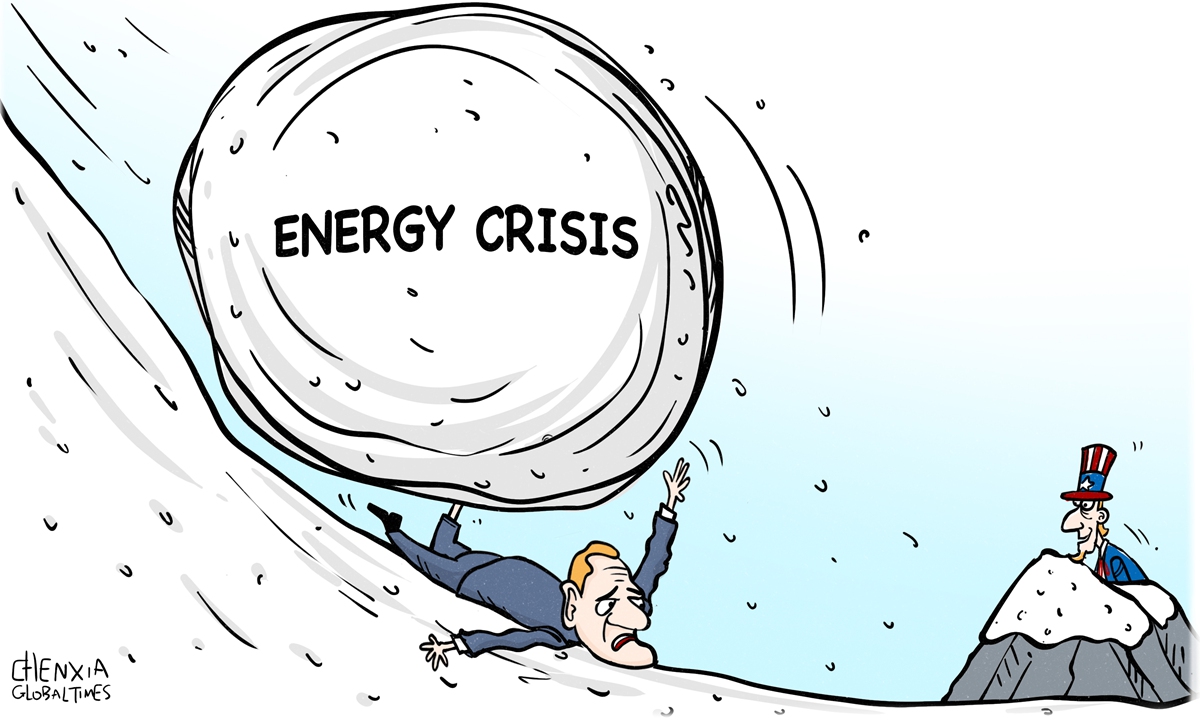

Illustration: Chen Xia/GT

Editor's Note:

The ongoing energy crisis, which could spiral out of control this winter, is gravely hitting Europe. As energy's share of household spending reaches record highs, protests and demonstrations are spreading across European countries. Is this stimulating a political and social crisis? What could be the way out? George Galloway (Galloway), a six-term British parliamentarian, shared his insights with the Global Times (GT) reporters Li Aixin and Xia Wenxin.


GT: More and more protests against soaring energy prices broke out in a growing number of European countries. Do you think the energy shortage is stimulating, or will stimulate, a political and social crisis within Europe?

Galloway: I think it is the last straw that broke the camel's back. It's definitely now seriously breaking backs. Even in Wenceslas Square in Prague, one of the advanced guards of the liberal, progressive counter-revolutions that occurred at the end of the 1980s, between 70,000 and 100,000 people at the weekend protested in the streets, demanding the resignation of the government by the 25th of this month.

In Britain, the government of the new prime minister, elected by a tiny handful of people, begins on very rocky foundations. They are telling us that they are going to pump up the economy with 130 billion pounds of public money. But public money from where? Which magic money tree is this money going to be pulled from?

The French government has already moved mountains to try and subdue the always incipient and rebellious nature of the French. The German people - I think Germany is the one to watch - also rose up over the weekend with the demonstrations in different regions of Germany against Olaf Scholz, the minority Chancellor in the German parliament.

The Italian government has already gone. The Bulgarian government has already gone, but of all the big EU countries, I think that Germany will be the first and most important domino to fall. And that will be a very big domino indeed.

GT: Will divisions within Europe continue to increase as a result?

Galloway: The very last thing we are is a "United Kingdom." We've never been more divided. But the US, equally, is very far from united. It is also polarized in a way never seen before, even at the height of the McCarthyite hysteria and Cold War hysteria in the 1950s.

The demands of the people are very clear. In both the Czech Republic and Germany over the weekend, the demands were for an end to their country's participation, by all means other than overt military means, in the war in Ukraine. The demands are for ending sanctions and arms trafficking to Ukraine, and for a negotiated settlement to the war in Ukraine.

People know that a settlement is being blocked by the US, by President Joe Biden. It's important that people in China realize the magnitude of the situation that we are facing: Those gas and electricity bills that were hundreds are now thousands. Those, including small businesses whose bills were thousands, are now paying tens of thousands. Those that were tens of thousands are now hundreds of thousands and for big companies, millions to be paid, just to switch the light on, heat the workforce or the customers who come, shop or eat in your place of business.

Mass unemployment is staring us right in the face. The average old age pensioners in Britain will, by the end of this year, be paying half of their total income in gas and electricity prices. Poor families will be paying by April three-quarters of their entire income on gas and electricity. These are literally unpayable bills. They cannot be paid, and therefore, people will not pay them.

I was one of those who refused to pay Mrs. Thatcher's poll tax. It was a mass revolt against an unjust tax, vastly smaller than this new burden of gas and electricity prices. And it brought Margaret Thatcher's government down. It forced her resignation. It culminated in the Trafalgar Square riots. I was there with my then young daughter, now a mother of five, standing on the statue of Nelson's Column as a full-scale riot broke out all around me, and buildings in Trafalgar Square were on fire. That's the kind of long hot winter we are now looking at in Britain.

GT: As New York Times put it, many in Europe have begun to worry that as the economic cost of support for Ukraine grows, popular support could turn against governments that support Ukraine. So, do you think that is happening?

Galloway: It's already happening in a big way. Everybody knows now that it is us that provoked this war, it is us that are preventing an end to this war, and the sanctions we introduced have turned out to be the proverbial giant stone that we struggled to lift only to drop on our own feet.

That is a catastrophic set of circumstances for Western governments, which is why they are beginning to go down and why they are imagining up sums of money to throw at the problem. The pound and the euro have both crashed against the dollar in concrete form. This is what the Chinese Ministry of Foreign Affairs spokesman quoted me about last week - this is the US being willing to fight to the last drop of Ukrainian blood and being ready to fight to the last European, to the last European economy, to the last European government.

GT: Do you think more and more Europeans are wakening up to the role Washington plays in Europe's crisis?

Galloway: If they are listening to my shows - and millions do - then more and more of them are very clear about the role that Washington is playing.

We've been mugged. We've been fooled, by a fool. Being fooled by John F. Kennedy, Bill Clinton or Barack Obama is one thing; being fooled by a fool like Biden is really quite another. This is an affront to the ancient civilizations of Europe that we are being led by the nose by a fool, which has taken us probably now over the brink, over the cliff, and headed for the rocks below.

And for what? This war need never have happened. If the Minsk II Agreement had been implemented as both Germany and France guaranteed that it would have been, there would have been no war in Ukraine. The fact is that not only was it not implemented, but that NATO has been building up the Ukrainian military ever since 2014. As a matter of fact, it started even before that. They clearly were long preparing for a confrontation with Russia.

GT: Will European politicians respond to the crisis and the will of people, like making tunings to their stance and policies?

Galloway: They will respond or they will fall.

This is the clear dichotomy. There are no other choices. Chancellor Scholz launched a 65 billion euro package to mitigate this energy price crisis. Reports are saying Truss is going to launch a package twice as large. Bear it in mind that the pound is slightly more valuable than the euro. She's going to announce a packet of 130 billion pounds. Whether it will be sufficient is another matter.

They have set their face against taking the energy companies back into public ownership. All these energy companies were owned by the state in Britain only 30 years ago. So they've set their face against that. The only possibility, therefore, is to throw public money that they don't have at the problem. And yet they have to. Democracy isn't working marvelously.


George Galloway Photo: Sun Wei/


GTGT: Will the crisis be eased or fixed by the new British prime minister and her new plan?

Galloway: If you thought Boris Johnson was bad, wait till you see Liz Truss. This is the dullest, and I'm sorry to say, the stupidest prime minister we have ever had, and we've had some pretty stupid prime ministers. We've had incompetent prime ministers. We've had uninspiring prime ministers. But this prime minister is all of those things rolled into one. And it's all going to be on show to the world. So can she fix it? No, she can't. She has neither the intellectual capacity nor the political strength. She only got 57 percent of the vote of her own members against the weakest possible candidate that she could possibly have faced.

You have gotten to know that the Conservative Party thinks Britain should be ruling India. Not that an Indian should be ruling Britain. The idea that the Conservative Party would vote for Rishi Sunak of Indian origin to be the next prime minister was totally fanciful if you know the Conservative Party's membership as unfortunately as I do. Up against the weakest possible challenger, Liz Truss only got over 80,000 people to vote for her against 60,000 for her rival, not much of a mandate. Chinese people will be blinking at these tiny numbers. That's what I say - Democracy isn't marvelous.

GT: During her campaign, Truss has strongly hinted that China will be designated a "threat" to national security. Meanwhile, it is widely known that cooperation with China can play a positive role in addressing the energy crisis. Against this backdrop, what will Truss mean for Britain's relations with China?

Galloway: Again, it's an indication of the self-harming nature of the Western response to the current economic, political, and military crisis in Europe. They are doubling down on a set of responses, which are not just manifestly failing. The ruble is the best-performing currency in the entire world in 2022. The pound and the euro have crashed below the value of the dollar. The dollar is being artificially pumped up by the expenditure of nonexistent money for entirely political purposes.

So the self-harming nature, better referred to as suicidal, is exemplified in what you've just said. How is China a threat to Britain's national security? Are Chinese warships steaming up the River Thames? But there are British warships steaming through the Taiwan Straits. We are the ones who formed the AUKUS. Have China and Russia sent flotilla toward us? Have they constructed an alliance that threatens us? Is China's technology stealing our secrets, like every single one of the big tech Western platforms is stealing our secrets? No, we're doing all of that ourselves. Is China imprisoning Julian Assange? We are doing it.

So, our response to the fact that the sun is indisputably rising in China is not to get close to China and enjoy some of the warmth. Instead, it is like King Canute standing on the beach and ordering the waves to go back. The sun didn't need to set in the West just because it rose in the East. We could have mutually benefited from the rise of Eurasia. But we decided instead to try and sink the sun. You can no more sink the sun than you can order the waves to cease.

GT: Is there a way out of the energy crisis in Europe? And what will be the way out?

Galloway: End the arms trafficking to Ukraine, allow the Ukrainian regime to negotiate with Russia, offer a political settlement to the world, and lift all sanctions against Russia. These are the things that can solve this crisis. If they are not done, we are in for the mother of all winters. And I don't just mean the seasonal winter. I mean an economic winter, a political winter, a military winter. We are in for a bitter, bitter period in the history of our peoples.
ALL CAPITALI$M IS STATE CAPITALI$M
Warning of 'energy-industry Lehman Brothers' moment as gas crisis brings on cash crunch

European governments scramble to support utilities buckling under the weight of growing margin calls


Bloomberg News
Archie Hunter
Publishing date:Sep 06, 2022 

The aid effort is a response to what is a rapidly worsening situation, particularly after Russia cut off gas supplies through the key Nord Stream pipeline. 
PHOTO BY NIKOLAY DOYCHINOV/AFP VIA GETTY IMAGES
Article content

European governments are patching together emergency measures to support utilities amid fears that companies will buckle under the weight of growing margin calls, worsening an energy crisis that’s sent prices soaring and left the continent short of gas.

Recent days have seen a flurry of news — from Sweden to Switzerland to the UK — as companies and governments try to get to grips with the situation. Norway’s Equinor ASA has said that European energy trading risks collapsing under the weight of margin calls amounting to at least US$1.5 trillion

On Tuesday morning, Finnish utility Fortum Oyj got 2.35 billion euros (US$2.3 billion) of bridge funding to ensure adequate liquidity. Switzerland granted Axpo a credit line of up to 4 billion francs (US$4.1 billion). The company, which produces and trades renewable energy, asked for the credit line but hasn’t used it yet.

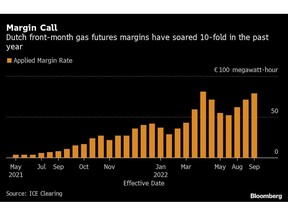
Along with such actions have come dire warnings as wild price moves increase the amount of collateral companies need to maintain hedges. Finland is warning of an “energy-industry Lehman Brothers” moment, with companies facing sudden cash shortages. It and Sweden announced a US$33 billion emergency liquidity facility Sunday to backstop utilities through loans and credit guarantees.

In the UK, Centrica Plc is in talks with banks on the potential extension of credit lines, according to a person familiar with the matter. Centrica declined to comment.


The aid effort is a response to what is a rapidly worsening situation, particularly after Russia cut off gas supplies through the key Nord Stream pipeline. Power providers and energy traders faced huge margin calls last winter when gas prices jumped to what were then record highs. Now as those levels are dwarfed after months of price surges, governments are beginning to heed industry warnings that policy support may be needed with prices expected to stay higher for longer.

“Companies have been bleeding cash for a long time because of the margin calls and collateral requirements,” said Kristian Ruby, secretary general of power industry group Eurelectric. “This triggers the question — ‘What if things get worse?’ Governments need to be ready to handle such a situation and back up companies with direct credit, otherwise there’s a risk of one falling and dragging down others.”

The European Commission is also examining measures to help with liquidity. These could include credit lines from the European Central Bank, new products as margin collateral, and temporary suspensions of derivatives markets, according to a policy background paper seen by Bloomberg News.

“We now have to do everything we can to secure our power supply,” Swiss Energy Minister Simonetta Sommaruga said Tuesday. “We need to avoid that because of a temporary liquidity bottleneck a company gets into a tailspin and pulls others with it.”

As wholesale buyers of power and energy, utilities tend to hold majority short hedging positions against their physical contracts, leaving them vulnerable if prices rise sharply and turn those positions loss making. When this happens, a company’s broker, bank or exchange may request cash to act as collateral against the position.

Late last month, Fortum said its collateral requirement rose by 1 billion euros to 5 billion euros in the space of a week. Analysts at Citigroup Inc. said last week that soaring power and gas prices forced utilities to put up more than 100 billion euros of additional collateral to cover margin calls.

“This is just capital that is dead and tied up in margin calls,” Helge Haugane, Equinor’s senior vice president for gas and power, said in an interview. “If the companies need to put up that much money, that means liquidity in the market dries up.”

One measure popular among lobby groups is to allow utility companies, but not financial participants in derivatives markets, to post products other than cash as collateral against trades, such as bank guarantees or carbon credits. That would free up utility balance sheets to use capital for other “meaningful purposes,” Eurelectric’s Ruby said.

As for credit , so far Germany has introduced Europe’s biggest scheme to backstop companies affected by the fallout of the war in Ukraine, setting aside 7 billion euros in loans to be made available to companies facing liquidity issues on top of a 100 billion-euro aid package. German energy giant Uniper SE last week sought an extra 4 billion euros after fully using a 9 billion-euro existing facility.

Vienna’s municipal power utility also secured 2 billion euros from the Austrian government to cover trading positions.

“European governments need someone to take the price and commodity risk right now,” said Steven Kelly, Senior Research Associate at the Yale Program on Financial Stability. “And if the banks aren’t able to play the intermediary role you’re going to have to go to the source and see sovereigns pick it up if they don’t want a liquidity crisis to turn into a balance-sheet crisis.”
Bloomberg.com

Sweden, Finland step in to avert Lehman-like situation for power companies


Swedish Finance Minister Mikael Damberg attends a press conference to propose relief for households affected by high electricity prices, in Rosenbad

Sun, September 4, 2022 
By Supantha Mukherjee and Essi Lehto

STOCKHOLM/HELSINKI (Reuters) -Finland and Sweden on Sunday announced plans to offer billions of dollars in liquidity guarantees to power companies in their countries after Russia's Gazprom shut the Nord Stream 1 gas pipeline, deepening Europe's energy crisis.

Finland is aiming to offer 10 billion euros ($9.95 billion) and Sweden plans to offer 250 billion Swedish crowns ($23.2 billion) in liquidity guarantees.

"This has had the ingredients for a kind of a Lehman Brothers of energy industry," Finnish Economic Affairs Minister Mika Lintila said on Sunday.

When Lehman Brothers, the fourth-largest U.S. investment bank at the time, filed for bankruptcy in September 2008 with more than $600 billion in debt, it triggered the worst parts of the U.S. financial crisis.

"The government's programme is a last-resort financing option for companies that would otherwise be threatened with insolvency," Finland's Prime Minister Sanna Marin told a news conference.

State-controlled Finnish power company Fortum, which last week had urged Nordic regulators to take immediate action to avert defaults even among smaller players, praised the proposals made by Helsinki and Stockholm.

"We appreciate Finnish and Swedish governments taking swift action to stabilise the Nordic derivatives market and support Nordic energy companies in time of crisis," the company tweeted.

"It's crucial to keep companies operational. Our discussions with the Finnish government are ongoing," it said.

The guarantees aim to prevent ballooning collateral requirements from toppling energy companies that trade electricity on the Nasdaq Commodities exchange, an event that could in turn spread to the financial industry, the governments said.

Lower gas flows from Russia both before and after its February invasion of Ukraine have pushed up European prices and driven up electricity costs.

The rapid rise in electricity prices has resulted in paper losses on electricity futures contracts of power companies, forcing them to find funds to post additional collateral with the exchanges.

The collateral requirement on Nasdaq clearing recently hit 180 billion Swedish crowns, up from around 25 billion in normal times due to the surge in power prices, which have risen some 1,100%, Sweden's debt office said on Saturday.

The government feared that the Nord Stream 1 shutdown would lead to a further surge.

Finland's Marin said there needed to be measures at the European Union level to stabilize the functioning of both the derivatives market and the energy market as a whole.

Nasdaq clearing is a Swedish company supervised by Swedish authorities, which is the main reason Sweden was the first country to step in to tackle the potential crisis.

Swedish Finance Minister Mikael Damberg said on Sunday that the guarantees would last until March next year in Sweden and would also cover all Nordic and Baltic nations for the next two weeks only.

Without government guarantees, electricity producers could have ended up in "technical bankruptcy" on Monday, Damberg said.

($1 = 10.7633 Swedish crowns)

($1 = 1.0049 euros)

(Reporting by Supantha Mukherjee in Stockholm and Essi Lehto in HelsinkiEditing by Terje Solsvik, Hugh Lawson and Frances Kerry)

Nordic Utilities Get €33 Billion Backstops as Power Markets Fray


Nordic Utilities Get €33 Billion Backstops as Power Markets Fray

Niclas Rolander, Leo Laikola and Kati Pohjanpalo
Sun, September 4, 2022 
(Bloomberg) -- The governments of Sweden and Finland decided to create emergency backstops to help utilities struggling to trade on power markets gripped by unprecedented turbulence.

They’re setting up liquidity facilities made up of loans and credit guarantees, worth $33 billion in total, to avoid some power companies going into technical defaults as soon as Monday over surging collateral requirements. The aim is to prevent Russia’s energy curbs from sparking a financial crisis.

“This has, in a way, the ingredients for an energy-industry Lehman Brothers” moment, Finnish Economy Minister Mika Lintila said at a news conference in Helsinki, referring to the US investment bank whose name has become synonymous with systemic risk after its collapse set off the global financial crisis in 2008.

Earlier on Sunday, Sweden’s Finance Minister Mikael Damberg had warned that failing to act “could have contagion effects on the rest of the financial market,” even as the “issue is currently isolated to energy producers.” Sweden is home to Nasdaq Clearing AB, which sits at the heart of the Nordic power market.

Russia has been limiting supply of its gas to the European Union, contributing to a surge in prices and concerns about shortages during the colder winter months ahead. Already at four times the level of a year ago, natural-gas prices are set to jump on Monday after Russia’s announcement its Nord Stream 1 gas pipeline to Germany would stay shut. That’s piling more pressure on industries and households -- and on policy makers to act.

“This winter, Russia is preparing for a decisive energy attack on all Europeans,” Ukraine’s President Volodymyr Zelenskiy said on Saturday. “It wants to weaken and intimidate the entire Europe, every state. Where Russia cannot do it by force of conventional weapons, it does so by force of energy weapons.”

Sweden is extending as much as 250 billion kronor ($23 billion) in credit guarantees, while Finland’s program worth as much as 10 billion euros ($10 billion) includes loans and guarantees. Both countries’ parliaments are set to begin processing the motions on Monday.

Norway’s government said in a separate statement it is closely monitoring developments in the financial power market but currently sees no need for measures of its own.

“Norwegian hydropower producers have high profitability and are not known to have challenges in securing market funding,” it said.

The skyrocketing price of energy in Europe has made it more expensive for utilities to buy and sell electricity, because of the collateral required to guarantee trades. Fortum Oyj said Aug. 29 its collateral rose by 1 billion euros in a week to 5 billion euros, excluding funds posted by its German subsidiary Uniper SE.

The utility welcomed the government action, and said its discussions on liquidity support continue with the Finnish state, its majority owner.

“It’s good that the Finnish and Swedish governments seek to quickly stabilize the Nordic power markets and come to the energy companies’ aid at this difficult time,” the Espoo, Finland-based company said in a statement on Sunday.

Fortum had turned to the Finnish state for assistance to secure its liquidity needs until its hedged power contracts go to delivery and collaterals are released. Uniper, which has also sought further liquidity help, is not eligible for funds under the Finnish plan. The German company was bailed out just weeks ago after a massive shortfall in deliveries of natural gas from Russia led to huge losses.

The European Energy Exchange AG has also asked for more government support to traders to guarantee their buying and selling as billions of euros put up as collateral for trades are sapping liquidity and making prices even more volatile.

While the Finnish program has no set limits per company, the European Commission may impose such restrictions, the government said.

The Swedish guarantees will be provided by the National Debt Office, and are primarily aimed at Swedish companies, though entities based in other Nordic and Baltic countries can access them during the initial two weeks, or until their governments provide support. The move comes a week ahead of Sweden’s election, in which a constellation of conservative and liberal parties are seeking to unseat the Social Democratic minority cabinet, led by Prime Minister Magdalena Andersson.

The European Union is also preparing to step into the energy market to dampen soaring power costs. The bloc aims to limit prices in the short term and in the longer term change the way energy is priced by severing the link between gas and electricity, blunting the weapon Russia is wielding.


Watch out, Liz Truss: this energy crisis may spark a climate revolution we can all get behind

A freeze on bills is a sticking plaster (BANDAID) that won’t be able to prevent the emergence of greener policies

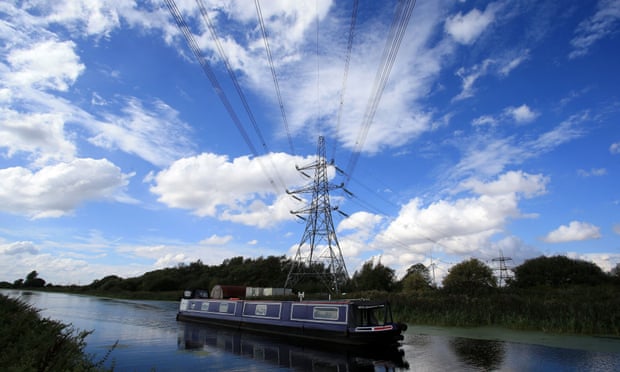
‘It should be easy to split the energy market into clean power and fossil power.’ 
Photograph: Lindsey Parnaby/AFP/Getty Images

THE GUARDIAN
Wed 7 Sep 2022 

It’s not looking great for the climate, our change of prime minister: Liz Truss, who has about as much expertise in British geomorphology as she does in cheese, seems to think we can frack our way out of the energy crisis by Christmas, and that nuclear power is a similarly quick answer.

Her newly appointed chief economic adviser, Matthew Sinclair, wrote a book entitled Let Them Eat Carbon in 2011, in which he argued that “the temperatures we face today may not be the ideal conditions for humanity to live and flourish”. Let warming go wild, in other words. It might be fun. Sure, it was over a decade ago and don’t let’s cancel him for ever over a tiny little book – all he did was mindlessly risk the end of the species.

However, beneath these morbid symptoms the global energy crisis has sparked conversations that are real, perhaps for the first time – certainly, it’s the first time that so many nations have been having them simultaneously.

It seems likely that the prime minister’s first move will be to tear up everything she campaigned on and roll over to the opposition’s suggestion that energy bills be frozen at April 2022’s levels. Partly because of her inelegant flip-flopping, partly due to harsh economic realities, it is obvious that this sticking plaster, while necessary, is insufficient. The competing alternative narratives are red (sequester North Sea gas and let wholesalers take their rampant profiteering elsewhere) and green (ramp up renewables until fossil fuel supply is no longer relevant – 45% of UK electricity is already from renewables).

Crucially, these narratives don’t compete with each other. You don’t need to gate off the conversation about the pros and cons of retaking gas at source before you can start talking about expanding renewables. It would be reasonable to split the energy market into clean power and fossil power, so that the price of gas was not setting the price of solar and wind, and the incentive to lean heavily on the latter and reduce consumption of the former became universal. Ideas that seemed unthinkably radical a year ago now look much less extreme than the reality we’re facing this winter.

We’ve now spent 12 years living this cognitive dissonance, where we have longstanding net-zero ambitions enshrined in law, a climate crisis unfolding with alarming speed, and successive Conservative prime ministers making asinine remarks about “green crap”, then throwing the environmental agenda to the wind whenever they needed to assuage their sociopathically short-termist party members.

Any progress we’ve made has been despite our own government, and so much of our collective mental energy has been lost to denial: denying that we’re not moving fast enough, denying that the heatwave was of our own making, denying that we’ve probably already left it too late to save the things we love – whether that’s beaches or biodiversity .

We needed Vladimir Putin’s energy war to get serious about how stark our situation is. This is not to predict any sudden conversion to sense from Truss, but rather to point out that the brass-necked irrationality of Tory arguments – that somehow net zero targets were pushing everyone’s bills up, and woke warriors had started it all by cancelling Nigel Lawson – will no longer fly. Having given the opposition a lead in the polls, the Conservatives have also given it an electorate sick of rhetoric and inaction, ready for bold ideas.

Even with an energy bill freeze, the cost of living crisis has already moved the dial. The idea that hardship is mainly down to personal inadequacy has become fanciful. The notion that people can scrimp their way to solvency, which is given in justification for so many harmful policy decisions, has been comprehensively overturned. There are the green shoots of a new solidarity across all nine bottom deciles. For goodness sake, this woeful party has radicalised centrist dad Martin Lewis, and they don’t even seem to understand how serious that is, what it means for their prospects.

Putin, meanwhile, has overplayed his hand: his threat of disruption to energy supply has historically been enough to keep his neighbours docile, and maintain the scratchy equilibrium between democratic states and his increasingly authoritarian one. Actually disrupting the energy supply, conversely, will force us and the EU towards renewable alternatives, and once that gains momentum, the link between geopolitics and carbon resources will ultimately be severed. Good luck with strongman politics when there’s nothing underpinning them but bot farms tweeting mean things.

No one would ever wish to have been brought to a place where there are no alternatives. It would be better if Russia had not invaded Ukraine, if inflation were under control, if energy bills weren’t spiralling into impossibility. It would be better if the UK’s situation weren’t so particularly, idiosyncratically, bad. This is what a country looks like after 12 years of people who don’t believe in government, being in government. It turns out if you focus all your energy and resource on cronyism and getting re-elected, you can make life much harder for millions of people in a relatively short space of time.

But, for the want of alternatives, we will emerge from the next election with not only a new government but a radical and uncompromising plan for energy that will transform the way we live. We’ll look back on this as the inflection point that got us to net zero.

Zoe Williams is a Guardian columnist

Out of thin air: new solar-powered invention creates hydrogen fuel from the atmosphere


Researchers say their prototype produces hydrogen with greater than 99% purity and works in air as dry as 4% relative humidity

University of Melbourne researchers say their new solar-powered
 device can convert moisture in the air into 99% pure hydrogen gas. 
Photograph: Getty Images

Donna Lu
THE GUARDIAN
Tue 6 Sep 2022 

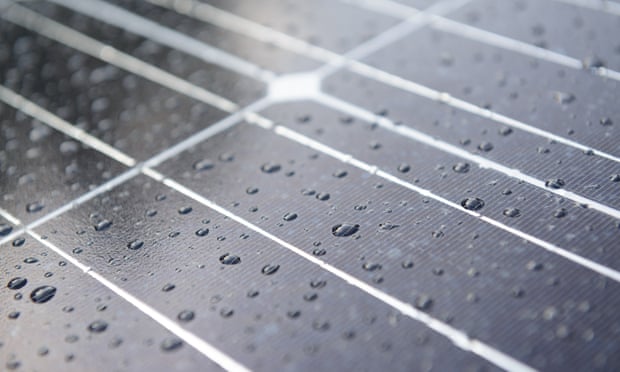
Researchers have created a solar-powered device that produces hydrogen fuel directly from moisture in the air.

According to its inventors, the prototype produces hydrogen with greater than 99% purity and can work in air that is as dry as 4% relative humidity. The device would allow hydrogen to be produced without carbon emissions even in regions where water on land is scarce, they say.

Hydrogen is a zero-carbon fuel that yields only water as a byproduct when combusted. However, pure hydrogen is not abundant in nature and producing it requires energy input. Large-scale production commonly involves fossil fuels that generate carbon emissions.

What is hydrogen energy? And what's the difference between blue and green hydrogen? | News glossary

The study’s lead author and a senior lecturer in chemical engineering at the University of Melbourne, Dr Gang Kevin Li, said the hydrogen-producing device could be powered by solar or wind energy.


A prototype produced hydrogen for more than 12 consecutive days in a monitored trial. “[For] one of them, we left it to run by itself for eight months,” Li said.

The device is comprised of spongy material with a hygroscopic liquid – fluid that absorbs moisture from the air, similar in function to silica gel sachets. The absorbed water molecules are then split at electrodes into hydrogen and oxygen gasses, a process known as electrolysis.

Our Australian morning briefing email breaks down the key national and international stories of the day and why they matter

Privacy Notice: Newsletters may contain info about charities, online ads, and content funded by outside parties. For more information see our Privacy Policy. We use Google reCaptcha to protect our website and the Google Privacy Policy and Terms of Service apply.


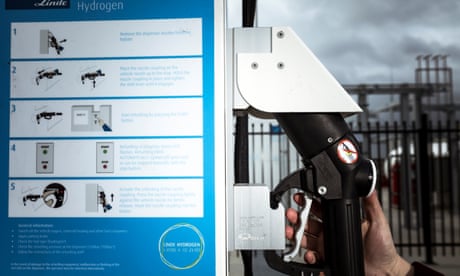
Hydrogen fuel stations to be built between Sydney and Melbourne under $20m plan

The device is estimated to produce up to 93 litres of hydrogen a square metre an hour. “If you have 10 sq metres of this unit, you can power a whole house … to replace your consumption of natural gas at home for cooking and heating,” Li said.

The prototypes are still only small in size, and the team has plans to create 1 sq metre and 10 sq metres units in the coming year.

The researchers envisage the device could be a useful tool in regions where liquid water is not readily available for producing hydrogen. “Large parts of the world have water scarcity problems,” Li said. “When you have lots of renewable energy – wind or solar – you [often] don’t have much fresh water for this type of hydrogen production.”

Dr Kim Beasy of Swinburne University’s Victorian Hydrogen Hub, who was not involved in the research, said hydrogen fuel, while important, was not a silver bullet for reaching net zero. “We’re coming to understand that hydrogen is going to be one piece of the puzzle,” she said.


Queensland airline Skytrans unveils plans for Australia’s first hydrogen-fuelled plane

“It’s going to provide us with direction out of some pretty hard-to-mitigate industries such as transport. We have no alternative to diesel at the moment … hydrogen is a really good option.”

The required economies of scale were “probably not going to be reached with clean hydrogen straight away”, Beasy said, citing the expensive price of conventional hydrogen electrolysers. “What we really need is more government support and subsidies in bringing down the cost of getting this technology on the ground.”

The study was published in the journal Nature Communications.
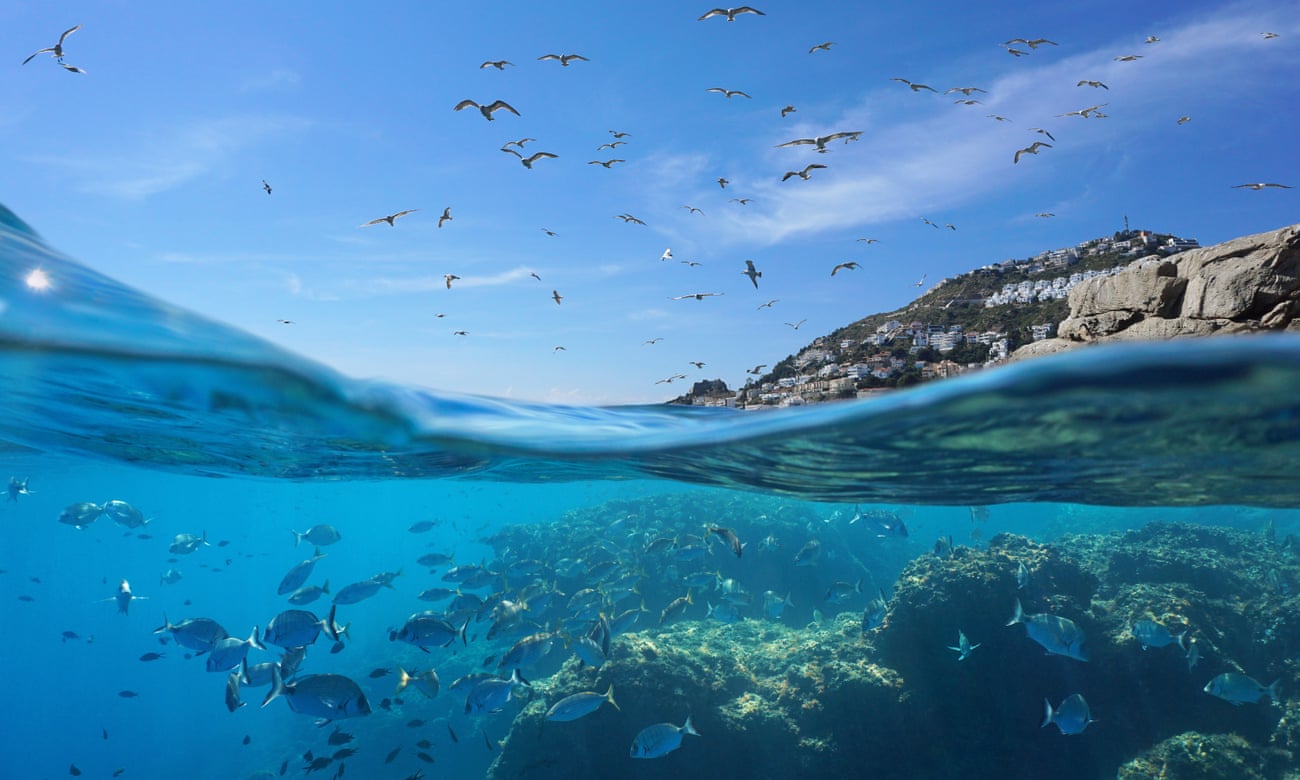
Dark matter and lithium water: 15 big issues poised to affect oceans and coastlines

As ocean fishing increases, mid-depth species are increasingly being harvested. 
Photograph: Damocean/Getty Images/iStockPhoto

Global experts consider the impact of emerging trends on marine and coastal biodiversity


Mary Hoff for Ensia
Tue 6 Sep 2022 07.00 BST

In the spirit of the annual University of Cambridge–led horizon scan of emerging conservation issues, 30 experts from around the world last year put their heads together to brainstorm and assess the potential impacts to ocean and coastal ecosystems over the next decade of a spectrum of human activities.

Their analysis, published in July in Nature Ecology and Evolution, focuses on 15 big issues.

Fire fallout

A helicopter releases water on to a wildfire in Rethimno, 
Greece, that was rekindled by strong winds. 
Photograph: Nikos Chalkiadakis/EPA

The increased frequency and severity of fires on land can have cascading impacts as wind and rain carry soot, nutrients, metals and other byproducts of burns to coasts and oceans.

In some cases these substances can boost the productivity of ocean plants. But the disruptions they cause can also shift the balance of life, making it difficult for some species such as corals to survive.

Dark matter

Exposed arctic permafrost at the edge of tundra cliffside 
as it erodes into Kotzebue Sound, Alaska. 
Photograph: Peace Portal Photo/Alamy

More severe storms caused by climate change, along with development, dredging, thawing permafrost and other factors, are increasing the amount of sediment and nutrients in ocean waters and increasing algae growth. This can reduce the ability of sunlight to penetrate into deep waters and alter water chemistry.

The changes can have some benefits, such as reducing coral bleaching. But they also alter species mix and potentially reduce the ability of organisms to soak up carbon.

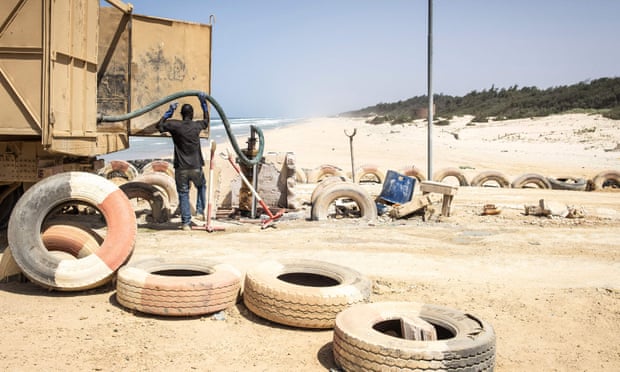
Acidification meets metals

A man pumps acid waste into the sea along a stretch of beach
 near the village of Mboro Kandio in Senegal. 
Photograph: John Wessels/AFP/Getty Images

Toxic metals enter the ocean from industrial waste and disturbance of previously polluted sediments by storms and human activities. As carbon dioxide concentrations increase in the atmosphere, the ocean absorbs more of the gas and its water acidifies. The acidity in turn can increase the ability of marine organisms to take up the metals.

In some places where metals are a limiting factor, such as the deep ocean, this can increase phytoplankton growth. In other places, the metals can be toxic to ocean organisms and contaminate bivalves we harvest and eat, potentially causing human health problems as well.

Pole shift

A brown moray eel. The species lives in the eastern Atlantic Ocean
 and Mediterranean. 
Photograph: BennyMarty/Getty Images/iStockPhoto

Warming ocean waters are causing ocean organisms to move poleward in search of cooler conditions, with shifts happening five times as fast as those occurring on land.

In some cases, other species that better tolerate the heat can move in to fill the void. But in some places at the equator, ocean biodiversity is actually decreasing, with fewer plants and animals around to keep the ecosystem healthy, resilient and able to meet human needs for food.


Fatty acid famine

A diver swims along the Caddebostan shore of the Marmara Sea
 to inspect mucilage caused by the excessive proliferation of phytoplankton. 
Photograph: Yasin Akgül/AFP/Getty Images

Fish – particularly slow-growing species that inhabit cold water – are a big source of essential fatty acids (EFAs), an important component of the human diet. The fish in turn obtain EFAs from phytoplankton.

As climate changes cause ocean waters to warm, phytoplankton are likely to make fewer EFAs and fish ranges could shift in ways that reduce their ability to ingest these compounds. This might have adverse impacts not only for human diets but for other ocean lifeforms that depend on phytoplankton and phytoplankton-eating fish for sustenance.

Protein potential

A blue shark in Santa Maria, Azores. Sharks are rich in collagen. 
Photograph: Nuno Sa/NPL/Alamy

A protein called collagen is used to make cosmetics and other consumer goods. It is currently harvested mainly from livestock but as demand grows, manufacturers may turn to collagen-rich ocean animals such as sponges, jellyfish and sharks.

On a positive note, the trend could boost sponge farming, reduce the impact of undesirable jellyfish and provide a use for parts of harvested fish that otherwise would be thrown away. But, concerns revolve around reduced incentives to avoid catching non-target species in commercial ocean fishing.

Swim bladder demand

The harvest of fish could have an impact on non-target species such as turtles. 
Photograph: Steve Parsons/PA

The market for dried swim bladders, a luxury item in some cultures, is growing. Harvest of fish aimed at meeting the demand already has contributed to the endangerment of at least three species.

As populations decline, pressure could shift to related species, creating a “cascading effect” that puts those species at risk as well. And increased demand not only threatens the target species but also non-target sharks, turtles and other marine organisms that are accidentally caught along with them.

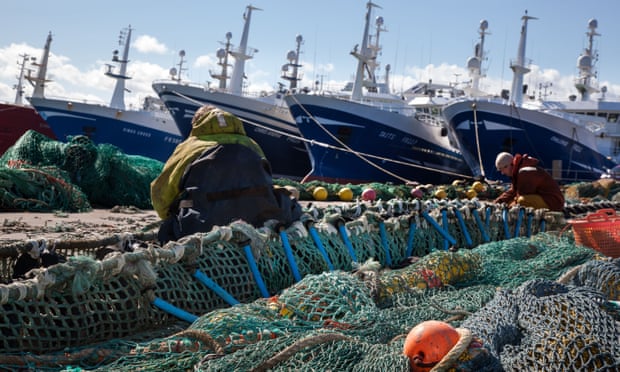
Carbon mover removal

Pelagic ships at Fraserburgh harbour, Scotland. 
Photograph: Media World Images/Alamy

As fishing pressure on the ocean increases, mid-depth species are increasingly being harvested. The problem is these are also the species that help move carbon in the organisms they eat into the deep sea where it can be sequestered for long times. Removing these fish could disrupt the downward movement of carbon, reducing the ocean’s ability to counteract climate change.

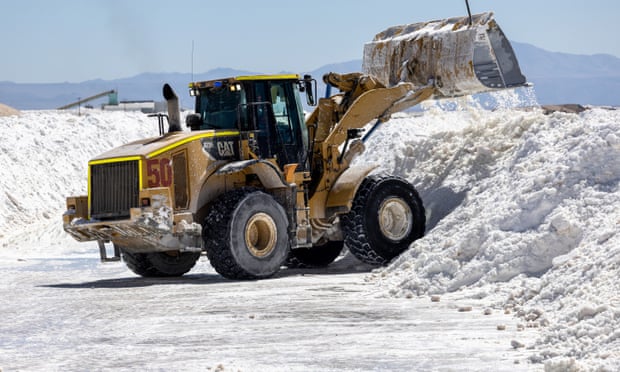
Lithium water

A worker moves salt byproduct at a lithium mine in the 
Atacama desert in South America. 
Photograph: John Moore/Getty Images

A boom in demand for lithium for batteries, such as those used in electric vehicles, has mining interests turning to deep ocean waters that contain significant quantities of the valuable metal. With emerging lithium-concentrating technologies, extraction is a looming reality – potentially threatening species living in rare and extreme environments.

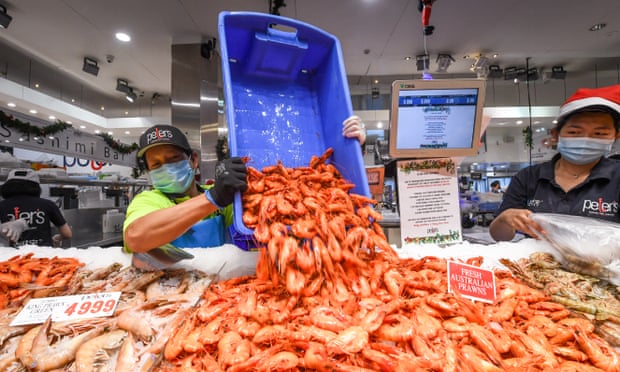
More the merrier?

Vendors at Sydney fish market, Australia. 
Photograph: James D Morgan/Getty Images for Sydney Fish Market

As humans increasingly turn to the oceans for food, energy and more, opportunity arises to cluster enterprises. This can create economies of scale and reduce habitat disruption.

The researchers note that we need ways to evaluate the relative costs and benefits of colocation to minimise habitat disruption and threats to biodiversity, and to avoid sub-optimisation, such as expecting the ocean area beneath a floating wind turbine to be an ideal aquaculture site.


Cities at sea

Hydroponic plant-growing in Indonesia. Floating cities could 
aid this practice while boosting marine life such as anemones. 
Photograph: Robertus Pudyanto/Getty Images

Talk of building towns in the ocean has increased in recent years. Benefits to humanity would be new energy sources, abundant water for hydroponic agriculture and more, but governance challenges would be likely.

It is a mixed bag for ocean life, too: floating cities could help anemones, sea urchins and other marine organisms that live at least part of their life cycle on rocky intertidal surfaces migrate to safer places in the face of climate change. But they also could facilitate the spread of biodiversity-threatening invasive species.

‘Green’ pollutants

Cobalt mining in the Democratic Republic of the Congo. 
Photograph: Sebastian Meyer/Corbis/Getty Images


Growth in electric vehicles and other “green” technologies that require batteries is increasing the use of cobalt, nickel and other trace elements. These elements pose a contamination risk to near-shore ocean sediments as they leach from production sites and landfills, with potential implications for sea life.

Tracking technologies

A singing ocellaris clownfish shelters among the venomous tentacles of sea anemone. Photograph: Hans Gert Broeder/Alamy

It is hard to track the movements of marine organisms because radio signals transmit poorly through water. Now, new technology known as underwater backscatter localisation (UBL) has potential to dramatically expand our ability to study undersea life.

UBL could benefit conservation by enhancing the ability to understand distribution and behaviour of ocean animals. But it also will be important to consider how the presence of the devices might adversely affect them.

Robotic research

The humanoid diving robot OceanOne during its presentation in Marseille, France. 
Photograph: Jean-Paul Pélissier/Reuters

The use of robots that mimic life forms for ocean research is growing. Because so-called soft robots are not limited by the need for pressurisation like rigid robotics, this may boost deep sea exploration.

At the same time, it could disrupt previously unaffected environments and harm marine life by using novel organisms as fuel or being ingested by indiscriminating animals.

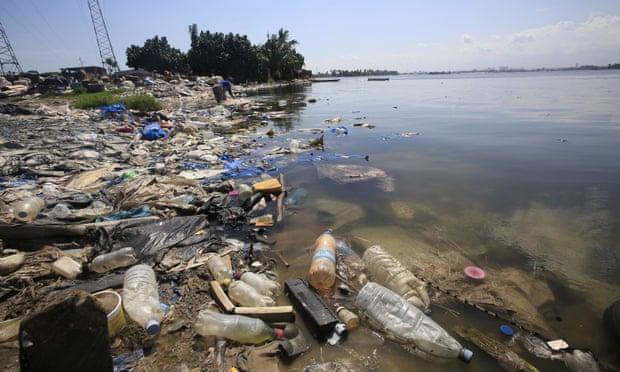
Biodegrading into what?

Plastic debris along the Ébrié lagoon in Abidjan, Ivory Coast. 
Photograph: Legnan Koula/EPA

Biodegradable plastics are beneficial because they can prevent the buildup of rubbish in the ocean environment. But what about the components the materials degrade into?

The speed with which such materials are entering the market due to consumer demand has in some cases limited testing of the impacts of degradation of the products, opening the door to potential problems with toxicity within the marine environment.

This article was originally published on Ensia
Delta places huge order for sustainable aviation fuel made with 839MW of green hydrogen

The SAF will be made by combining cellulosic biomass and renewable H2 using Fischer-Tropsch method


Delta aircraftPhoto: Chris Sweigart/Delta

American airline Delta is to buy 385 million gallons of green hydrogen-derived sustainable aviation fuel (SAFs), the largest deal of its kind made by a US airline and a major step forward for producers looking to make green biofuels with renewable H2.

Fuel for the deal will be made using a version of the Fischer-Tropsch (FT) process, which chemically pairs carbon monoxide and hydrogen to produce synthetic hydrocarbons.

Supply will come from a new FT plant planned by US producer DG Fuels in Louisiana, furnished with an 839MW electrolyser to supply the hydrogen. Construction on the plant is due to begin in 2023, with first SAF production in the second half of 2026.

The largest hydrogen electrolyser installed globally to date is a 150MW machine in central China, while a bigger 260MW unit is currently under construction in northwest China.

Power for DG Fuels’ 839MW electrolyser will be sourced from solar plants and verified by Renewable Energy Certificates, DG Fuels CEO Michael Darcy, tells Recharge. The scheme will apply for hydrogen tax credits under the Inflation Reduction Act (IRA), but the Delta deal was already agreed before the IRA was announced, he adds.

Delta will buy 55 million gallons of the fuel per year for seven years from 2027, pushing the company further towards its goal of procuring more than 400 million gallons of SAF annually by 2030 — the equivalent of 10% of its yearly fuel consumption.
Article continues below the advert

As of 2021, Delta had secured more than 40% of that goal through offtake agreements. The DG Fuels deal — assuming it has not already been counted — would take that to around 54%.


SPECIAL REPORT | Can renewables make airlines carbon-free by 2050?
Read more
Fischer-Tropsch

DG Fuels’ FT process utilises a carbon monoxide-heavy syngas made by processing cellulosic biomass —organic material such as plant or tree waste — at high temperatures and without oxygen to produce carbon monoxide and other gases, water and tar, and a small amount of hydrogen.

This syngas is then mixed with renewable hydrogen produced from the 839MW electrolyser and passed through a metal catalyst causing “polymerisation”, where the carbon monoxide and hydrogen molecules join together to form synthetic hydrocarbons. Further refinements then burnish them into SAFs.

According to Darcy, the process represents a departure from other FT processes for SAF, which typically source all the hydrogen from the organic material used to make the syngas, which would usually be a balance of carbon monoxide and hydrogen at a ratio of roughly 2:1.


ANALYSIS | Why the US climate bill may be the single most important moment in the history of green hydrogen
Read more

By tweaking gasification so the syngas is richer in carbon monoxide and then adding hydrogen from an electrolyser, DG Fuels can optimise its SAF output by a factor of almost four, with 97% of the carbon from the biomass ending up in the fuel, the company claims.

Waste water from the FT process is then used in the electrolyser, which will be supplied by Norway’s HydrogenPro.

Currently the aviation biofuel market is dominated by waste-oil-derived biofuels such as HEFA-SPK (hydroprocessed esters and fatty acids synthetic paraffinic kerosene) — in fact, more than 95% of biofuel flights to date have used HEFA-SPK fuel.

But FT technologies are catching up. In May this year, Fulcrum Bioenergy began operations at its FT-based transport fuel plant in Nevada, which uses municipal waste as a feedstock.

So far, the largest SAF commitment from an airline was made by United Airlines last year when it agreed to buy 1.5 billion gallons over 20 years from Alder Fuels, which is developing technology with US manufacturer Honeywell to make SAFs from waste forestry products via pyrolysis.

NDP leader says party will 'force' government to move on dental care, housing

Jagmeet Singh on federal budget, NDP-Liberal deal

The Canadian Press
Published Sept. 7, 2022 1:38 p.m. MDT

HALIFAX -

Federal NDP Leader Jagmeet Singh says he will use the upcoming sitting of Parliament to push the Liberals to move on dental care and housing, as laid out in the deal between the two parties.

Singh told reporters today ahead of a caucus retreat in downtown Halifax that he intends to force the government to "deliver for people."

In March, the New Democrats struck a deal with the Liberals to keep the minority government in power until 2025 as long as there is action on NDP priorities, such as dental care and housing support.

Under the agreement, the Liberals have promised to create a dental care program by the end of the year for children under the age of 12.

Singh says he's very confident the plan will be in place before 2023, but he says there will be "repercussions" if it isn't.

The NDP leader says when the House of Commons resumes sitting in mid-September his party will focus on pushing the government to address affordability issues amid the rising cost of living.

This report by The Canadian Press was first published Sept. 7, 2022.

---
This story was produced with the financial assistance of the Meta and Canadian Press News Fellowship.
\


Surrounded by Party members, New Democratic Party leader Jagmeet Singh speaks to reporters while opening the NDP caucus retreat in Halifax on Wednesday, September 7, 2022. 
THE CANADIAN PRESS/Darren Calabrese
Breakenridge: Kenney has ended the era of the sneaky back door tax increase
Author of the article:Rob Breakenridge • for the Calgary Herald
Publishing date:Sep 06, 2022 • 1 day ago • 3 minute read • 14 Comments
Premier Jason Kenney at the McDougall Centre in Calgary on April 12, 2022. 
PHOTO BY DARREN MAKOWICHUK /Postmedia Archive

In what could be the final major decision of consequence from outgoing Premier Jason Kenney, his government is reversing one of its very first major decisions.

In 2019, the Kenney government introduced the very “bracket creep” that Kenney had once railed against as a federal member of Parliament. Specifically, the government deindexed taxes from inflation, meaning that many taxpayers found themselves pushed into higher tax brackets despite their purchasing power remaining more or less the same.


That may sound much more mundane than an actual increase in tax rates, but the effect has been the same: Albertans paid more in tax as a result.

In a video posted to social media last week just ahead of the province’s fiscal update, Kenney announced that because Alberta’s fiscal position has improved so significantly, “we are now able to restore full indexation of Alberta’s provincial personal income tax system.”

The decision will be retroactive to the start of this fiscal year, so Albertans will likely see an additional refund in the spring (just before the next provincial election, oddly enough).

The government surely deserves some credit for reversing a bad policy, but it doesn’t absolve them of responsibility for having made the choice in the first place. And while it may seem like a case of kicking a politician when he’s already down, it’s important to call attention to the flaws of this approach and to ensure that future governments are not tempted to go down this path.

There’s no doubt that Kenney inherited a very challenging fiscal situation in 2019 and his party had made a clear commitment to try to get Alberta’s books in order. However, Kenney had also made a clear promise that there would be no change to personal income tax rates under a UCP government.

And while arguably both promises were kept, the manoeuvring to keep the latter promise while at the same time increasing tax revenues is what led to the reliance on bracket creep — a rather “pernicious tax grab,” as Kenney once said.

If the premier believed that additional tax revenues were necessary to balance the budget, then the honest and transparent — and more efficient — approach would have been to raise tax rates. Of course, that would have been a much harder sell, and so we get the sneaky back door tax increase.

According to a study published in July by Gillian Petit and Lindsay Tedds at the University of Calgary’s School of Public Policy, Alberta’s brief flirtation with bracket creep has come at significant cost to Alberta taxpayers.

They estimate that between 2020 and 2022, the Alberta government brought in an additional $646 million in tax revenues.


With this announcement of reindexation being retroactive through 2022, the final revenue haul for the Alberta government will likely be less than $646 million. At this point, though, it’s unclear by how much. At the end of the day, Alberta taxpayers will still be out of pocket as a result of deindexation, not to mention all the additional costs we’ve had to bear as a result of this year’s pace of inflation.


Again, it could be argued that given the magnitude of the fiscal problems facing Alberta in 2019 (to say nothing of the challenges that followed), a temporary tax increase would be a necessary sacrifice to maintain program spending while helping to shrink the deficit.

But, of course, that’s not a case you’d ever hear the UCP make. When the blue ribbon panel on Alberta’s finances delivered its report in September 2019, the Alberta government made a point of highlighting this line in the report’s summary: “Raising taxes is not the answer.” It was the following month that the budget was tabled, ushering in the bracket creep tax increase.

The rhetoric we heard did not match the actions of the government. Albertans deserve better.

“Afternoons with Rob Breakenridge” airs weekdays 12:30-3 p.m. on 770CHQR and 2-3 p.m. on 630CHED rob.breakenridge@corusent.com Twitter: @RobBreakenridge


Braid: Kenney lifts the lid on bitter dispute with AHS during height of COVID

The premier, remarkably, accused the AHS executive of regularly misinforming his COVID cabinet committee about crucial surge capacity

Author of the article:Don Braid • Calgary Herald
Publishing date:Sep 07, 2022 • 
Former Alberta Health Services CEO Verna Yiu
 and Premier Jason Kenney. Postmedia file photos

The UCP is turning its sights on Alberta Health Services. 

Leadership candidate Danielle Smith wants to fire the whole appointed board.

Premier Jason Kenney, remarkably, accused the AHS executive Wednesday of regularly misinforming his COVID cabinet committee about crucial surge capacity before and during the height of the pandemic. In April, CEO Verna Yiu was dismissed with a year still left on her contract.

The crisis blew up almost exactly one year ago, when the Delta wave of COVID was surging after the government had declared the pandemic over and launched the Open for Summer campaign.


Kenney and his cabinet committee faced a dire choice. They could impose extremely severe restrictions, thereby infuriating large parts of their rural base and admitting that Open for Summer was a disastrous mistake. Or they could seek a middle ground by also ramping up ICU capacity.


The internal debates over this were emotional. Bitterness and tension grew between AHS and the government. Chief Medical Officer of Health Dr. Deena Hinshaw was caught in the middle as the official who had endorsed Open for Summer and then faced AHS demands to bring in severe restrictions.


On Wednesday, as he announced more publicly funded surgical capacity in private clinics, Kenney essentially scapegoated AHS as the source of the problem with ICU capacity.

Premier Jason Kenney announces more publicly funded surgical capacity in private clinics on Wednesday. Chris Schwarz/Government of Alberta

“We did not have adequate information because at the beginning of the pandemic in March of 2020, we were told that surge capacity maximum, surgical capacity for intensive care, could be up to 1,060 hospital beds.

“That number went down to 470 in November of 2020 . . . and we were informed exactly a year ago, a year ago this week, as we were approaching the height of the Delta wave, that maximum surge capacity was, I think, 230 ICU beds — so, one quarter.”

The “September surprise,” he said, was that “the best the system could do was stretch from 173 to 230.

“There were complex reasons for that, but it was in my view unacceptable to have decision-makers surprised by that radical reduction in surge capacity at the last minute, in a critical moment.

“I don’t think that would be acceptable in any institution. And so we had to look at every possible means to increasing that surge capacity — eventually we established a total of 380, capped out at about 335.

“All politics aside, decision-makers need clear and timely information when dealing with a crisis like this. And we simply did not receive that.”

But was the AHS information wrong at a given moment? Any estimate of ICU capacity over 1,000 would surely have come with a caution that to achieve it, virtually all elective procedures would have to be postponed provincewide, and a good many urgent ones as well.

Early in the pandemic, when systems in countries such as Italy were overwhelmed and virtually paralyzed, health officials made calculations based on the worst possible scenarios. Canadian health authorities — including Alberta’s — came up with capacity estimates based on what would have to be sacrificed to ramp up ICU levels.

It seems likely, then, that the varying ICU counts supplied by AHS considered different factors in each case. Kenney acknowledged Wednesday that such factors were understood.

Whatever one thinks of AHS, it’s highly unlikely they could miscount surge capacity in their own hospitals by a factor of four. If Kenney’s committee members simply didn’t grasp the complexity, that’s on them, not AHS.

The outgoing premier may be engaging in some legacy-shaping here. But, mercifully, he is not falling for all the calls from some leadership candidates to reorganize the whole system.

That’s been tried several times since the 1990s and the problems persist, Kenney said. The government should focus on “actual outcomes, as opposed to replaying the endless cycles of structural changes.”

Yes to that, anyway.


Don Braid’s column appears regularly in the Herald
Twitter: @DonBraid

New Alberta legislation forces owners to pay contractors on time

Prompt Payment and Construction Lien Act comes into

effect after years of advocacy

A new housing development is pictured in Brampton, Ont., on July 12, 2022. Alberta has brought in new legislation to help those in construction get paid more quickly. (Evan Mitsui/CBC)

After years of advocacy by the construction industry, Alberta now has legislation in effect to help contractors and subcontractors get paid on time.

The province's new Prompt Payment and Construction Lien Act is intended to address ballooning wait times for payment on construction contracts, said Service Alberta Minister Nate Glubish. 

Over the years, Glubish said the average time frame for payment on a contract has grown from 40 days to 75 days. At times, contractors and subcontractors have had to wait more than three months to get paid for their work, Glubish said. 

"What we've had here in Alberta up until now was the Wild West," Glubish told CBC Calgary. "Now that we have a clear set of rules, everyone's going to play by the same rules, and I'm cautiously optimistic that we will be in a very good position going forward."

The new legislation, which was formerly known as the Builders' Lien Act, requires owners to pay contractors within 28 days of receiving an invoice. 

Once paid, contractors in turn have seven days to pay their subcontractors. 

If things go sideways, the act also outlines an adjudication process for those in the industry as a more accessible and less expensive alternative to going to court. 

Terry Milot, chair of the Alberta Trade Contractors Council, sees the changes as a good step. His group has been pushing for prompt payment legislation since 2014. 

"When contractors know that they're going to get paid on time, then they can truly plan their company, their work," said Milot. "They can hire more individuals, they can start apprenticeships, if they know they've got the stability of when they're going to get paid."

'Don't have cash reserves' to forgo payment

Bill Black, the chair of the Calgary Construction Association board, says trade contractors sometimes wait months to get paid for their work. He thinks the legislation is a good step. (Mike Symington/CBC)

Calgary Construction Association president Bill Black also applauded the new rules. Black said sluggish payments are a major problem for trade contractors who, despite working on large projects, are often quite small businesses themselves. 

"They don't have huge cash reserves … they don't necessarily have an in-house department that can go and pursue unpaid bills, and they certainly may not have the resources to resort to legal means if things got really bad," said Black, who is also the association's chief operations officer. 

While Black believes the new act will help, he said it isn't a "silver bullet." Both he and Milot pointed out the province's legislation doesn't apply to provincial government projects.

"I think that is a tremendous gap and a bit of a contradiction," said Black. 

Glubish said provincial contracts are all already covered under the Public Works Act.

In a statement, a spokesperson for the minister of infrastructure said the province has a proven track record when it comes to paying invoices within 30 days. 

"We continue to work to make sure Albertans receive compensation for their work quickly and efficiently," the spokesperson said. 

The Prompt Payment and Construction Lien Act applies to all private construction contracts in Alberta that were created on or after Aug. 29, 2022.

Existing projects that will continue for more than two years have until Aug. 29, 2024, to become compliant with the new rules.