Tuesday, September 27, 2022

Alberta's oil and gas industry struggling for entry-level workers during boom

Article content

At times this summer, CWC Energy Services has had 100 open jobs.

Company president and CEO Duncan Au says the Calgary-based oilfield servicing operation has been struggling with months of hiring challenges, and it’s far from the only one.

CWC has specifically been short on front-line labour — field crews who lay down pipe on service rigs that pump oil or natural gas, and then work onsite during the well’s lifespan before ultimately helping to decommission it. It’s the kind of entry-level work that’s long been a backbone of Alberta’s oil and gas industry — the potential for six-figure earnings with few formal qualifications has a history of attracting workers from across the country.

Au says there isn’t necessarily a lack of applicants for open jobs, but there have been other pitfalls in the hiring process. From no-shows to interviews to new hires that disappear after orientation to people who decide after a few shifts that long days of physical labour aren’t for them, keeping positions filled hasn’t been easy.

“It’s that bottom-level, entry-level position where we have difficulty filling, as does pretty much every one of my competitors in our industry,” Au said.

“What’s happening right now is that if you are desperate enough, you’re just going to go steal hands from your competitor by giving them more money. We saw that happen this past winter — guys were paying $7 an hour higher than what we were paying.”

Alberta’s oil and gas industry is no stranger to boom and bust cycles, and that’s always affected the labour force, too. But the past two years have been a different kind of roller coaster, from negative prices for a barrel of oil in April 2020 to the current surge in demand that’s seen prices march back up.

For companies like Au’s, cutting the workforce down to a fraction of normal at the start of the COVID-19 pandemic has them now struggling to return to full strength. As of May 1, CWC bumped the total compensation for a five-person service rig crew by 17 per cent.

“We’re hopeful that is going to help attract new people back into the industry again and help solve some of our labour challenges,” Au said.

Alberta unemployment rate spends summer at record low

Adverti

Article content

Alberta’s unemployment rate is low, most recently dropping to 4.9 per cent in June and July before jumping to 5.4 per cent in August, according to the latest Statistics Canada Labour Force survey. The July rate was the province’s lowest since 2015, but it has yet to officially drop below the 4.5 per cent threshold that Alberta uses to define a labour shortage.

University of Alberta economist Joseph Marchand says the story of Alberta labour shortages is industry-specific. According to the June statistics in the province’s economic dashboard, the unemployment rate for the mining, quarrying and oil and gas industry is just 1.6 per cent — the lowest across any of the industries tracked.

Unemployment in Alberta’s information, culture and recreation sector sits just slightly above that number, at 1.7 per cent, and the jobless rate in health care and social assistance is at two per cent.

Advertisement 5

Article content

There’s not necessarily a huge difference in how those numbers are playing out across the province, especially in Calgary and Edmonton. The need for more nurses and paramedics, for example, has been widely felt, but those problems have long been more acute in rural communities. Major tourist destinations like Banff have also borne the brunt of hotel staff shortages.

COVID-19 has had a severe impact in all those industries in different ways, and Marchand says there’s likely an element of “COVID hangover” that’s still at play.

Marchand has specifically studied how energy booms and busts have affected labour markets in Western Canada. But while signs point to another boom, it doesn’t quite look the same as in the past — and that affects the decisions workers are making, too.

Advertisement 

“Think of any other times that it’s heated up — the papers would be hit with an announcement of this project and that project. I’ve seen one or two over the last two years, but really, you’re not seeing the big capital expenditure.”

Open positions higher than ever for parts of energy sector

According to Petroleum Services Association of Canada (PSAC) president and CEO Gurpreet Lail, an informal survey of PSAC’s members in the spring showed more than 2,000 vacant jobs.

“We’re higher than we’ve ever been before with open positions and not enough bodies,” she said.

She and others in the industry point to the high-profile conversation about climate change and the need for an energy transition as another factor in the struggle for workers.

Advertisement 7

Article content

“A lot of our young people were hearing there is no future for them (in oil and gas). And that’s not the case. We’re going to need oil and gas to evolve into new forms of energy, and we need people to come back into the sector.”

There’s also a long history of Alberta oil companies hiring workers from the Maritime provinces, and Au and others say the flow of labour into the West hasn’t returned to normal.

The “Atlantic bubble” in place during heightened parts of the pandemic prompted some workers who were away from home to go back East and stay there, and many haven’t returned. Whether the time away made them decide the fly-in, fly-out life was no longer for them or the prospect of dealing with beleaguered air travel just isn’t worth it, economic mobility in Canada has changed.

Advertisement 8

Article content

“We haven’t had a big recruiting effort into the east coast, as we’ve had, say, pre-recession years,” Au said.

“We continue to try and attract there, but we have heard from other competitors that their recruiting efforts there have gotten nada — they haven’t been successful.”

In July, Au said the company made strides to closing its employee gap, but they’re still trying to get more workers to stay once they’re through the door. Word of mouth is yielding some success, as well as referral bonuses for employees who bring in new hires.

“They have to believe that if they’re going to come back into this industry, that it’s going to be a multi-year run,” Au said.

“I think it’s going to be a longer run, and it’s a little different this time around because our oil and gas companies are much more disciplined than in past boom and bust cycles.”

Advertisement 9

The Calgary skyline was photographed on Thursday, January 27, 2022.
The Calgary skyline was photographed on Thurs


Other job shortages across Alberta

Nurses: Alberta is expecting a shortage of registered nurses and registered psychiatric nurses over the next two years, according to the province’s job market forecast. Advocates have raised issues with nurses’ working conditions and pay across Canada for years, but COVID-19 exacerbated the issue, driving burnout that’s leading some nurses to retire earlier than planned or switch careers entirely.

Hotel staff: Hospitality was among the hardest-hit industries during the height of public-health restrictions to drive down COVID numbers. Business trips and leisure travel ground to a total halt, and hotels had to resort to mass layoffs. Some were rehired only to be laid off again during another COVID wave, and Alberta Hotel and Lodging Association president and CEO Dave Kaiser says as a result, the industry permanently lost a large portion of the workforce.

Advertisement 

Article content

“Some folks just gave up with the perception of precarious employment, and they found jobs in other sectors as the economy was reopening,” he said. “And so now there’s a hole to fill.”

What other employers are saying about hiring challenges

Scott Tetz, president and founder of Sherwood Park-based Truck Part Solutions:

“It’s a really tough market for programmers. We have an IT position that’s been open for about a year … (We’ve changed) the wording of our job ads, kind of highlighting that impact that they could have in our company, and we’ve changed the way our interview process works as well. Obviously, with inflation, the wages are different, too.”

Step Energy Services president and COO Steve Glanville:

“We have a lot of heavy tractor-trailer units, trucks driving up and down the road. So the biggest holdup for us has been finding qualified Class 1 drivers. … We’ve been quite creative during this time and are looking at changing work schedules. In the past, it’s been kind of working for two weeks and having one week off. We’re looking at a bit more flexible schedules to get more time for a work-life balance perspective, as well as starting to recruit out in the East Coast.”

Sam Jenkins, managing partner at Edmonton-based software development company Punchcard Systems:

“We’ve been trying to hire development team leads for months. … I’m very, very grateful that we can hire from everywhere. That does make it a little bit easier for us. But I think that the actual truth behind all of this is that fundamentally, there are more jobs to be done than people who are in the industry, and this is a global talent shortage when it comes to the technical space.”


masmith@postmedia.com

@meksmith

Braid:  Brian Jean says 'incredible turmoil' of Smith's past foretells future if she's premier

'I cleaned up Danielle's mess last time. People are forgetting that, I think,' says Jean

Author of the article: Don Braid • Calgary Herald
Publishing date: Sep 26, 2022 • 
UCP leadership candidate Brian Jean. 
PHOTO BY GREG SOUTHAM /Postmedia

He’s, of course, talking about Danielle Smith, who seems to be leading the leadership race to be premier, although nobody can be really sure until votes are counted Oct. 6.

After Smith led eight Wildrose MLAs across the floor to join the Progressive Conservatives in December 2014 (two had already defected), Jean stepped up and won the Wildrose leadership she abandoned

“The turmoil she left was incredible,” Jeans says, “and the best predictor of the future is the record of the past.”

He feels Smith’s current support, especially over the Sovereignty Act, is driven by party members “who want to talk about blowing things up. They want things to happen even if they’re chaotic, even if they don’t work. That’s what worries me about what’s happening in this vote.”

Jean argues that his plan for dealing with Ottawa — forcing national talks by invoking Section 46 of the Constitution — is not only legal but far more effective.

“Section 46 is clear. We’ve got everything we need to do that. If I’m premier, it will happen on Day 1.

“This will be the most aggressive and realistic approach ever taken by any Alberta premier, by any Alberta leader.”

He calls Smith’s proposal a “gimmick.”

RECOMMENDED FROM EDITORIAL


'Fairy tales:' UCP leadership hopefuls show united front against Smith's Sovereignty Act


Braid: Poll shows a tight leadership race, not a Danielle Smith runaway


Back in 2014, “her entire caucus was falling apart” because of her lack of leadership, he says. “People were already leaving. That never happened to me.”

Wildrose was supposed to disappear with the floor-crossing, according to Smith herself. She even sent a letter to the party advising it to wind itself up and rush to the PCs.

Smith seemed to have no earthly idea of the explosion she would detonate. Thousands of loyalists who donated money, worked in campaigns, ran for nominations — anything to beat the PCs they’d come to loathe — were enraged. They saw nothing less than betrayal.

After Jean took over, the party with only five leftover MLAs won 21 seats in the 2015 election.

Wildrose was stronger than ever. But the PCs were decimated — and the NDP was in government.

Smith has since acknowledged that the deal with the PCs was “very, very naive,” and blamed the then-PC premier, the late Jim Prentice.

Premier Jim Prentice and Danielle Smith speak at a press conference on Jan. 24, 2015.
 Postmedia archive photo

But the NDP victory was in many ways down to her. She destabilized the conservative movement only months before an election.

Jean had retired from federal politics after years as an MP in the Stephen Harper government. He was so incensed at Smith’s action that he threw himself into the rushed Wildrose contest to replace interim leader Heather Forsyth.

Forsyth and four other Wildrose MLAs had refused to cross. She did not intend to run again.

The very evening Jean won the leadership in March 2015, Smith faced a vote for the PC nomination in her Highwood riding.

She lost. People at the Jean event cheered louder for news of Smith’s defeat than Jean’s victory.

The raw emotions of that time are indelible to anyone familiar with what happened, either as a participant or a close observer.

It seems incredible, as former Wildrose and UCP staffer James Johnson has pointed out, that many of the very people who were furious at Smith then are supporting her now.

It happened more than seven years ago. Memories fade, views change. Smith herself has been masterful at rebottling the anger once aimed at her.

“Danielle Smith never lets a good grievance go to waste,” as Johnson noted in a CBC piece.

Jean says many party members still haven’t voted. In the end, he feels, “people know me and I think they will vote for me. They know they can trust me.

“I do think I’m the only person who can stop Danielle.”

Smith has never been a very successful politician. Many still blame her for the 2012 Wildrose loss to the PC party led by Alison Redford.

But she just might erase all that on Oct. 6. Predicability is not one of her qualities.

Don Braid’s column appears regularly in the Calgary Herald.
'Workload is huge, pay is low': Ontario education workers voting whether to strike

Brent Lale
CTV News London Videographer
Follow | Contact
Published Sept. 26, 2022 

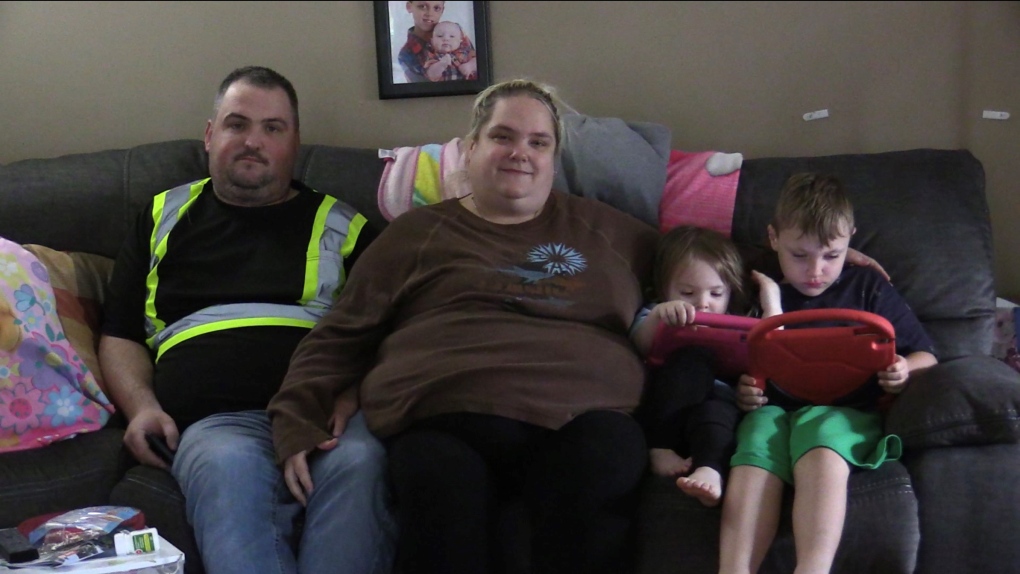
Parent Stacy Loos fears what will happen in Ontario if education workers go on strike.

“If his EA [educational assistant] is not with him, his whole day just kind of goes down the drain,” says Loos, referring to her son Emmett, 9, who has autism.

“She [his educational assistant] does a lot of his stuff for him. She learns to follow his routines with her and without her, and a lot of the other staff in the school, there is no doubt my son would be home during that strike,” she adds. “He would have meltdowns and he would probably end up disrupting all the rest of the kids.”

Ontario education workers including librarians, custodians and administrative staff have started voting on whether to strike — and their union is recommending they vote yes.

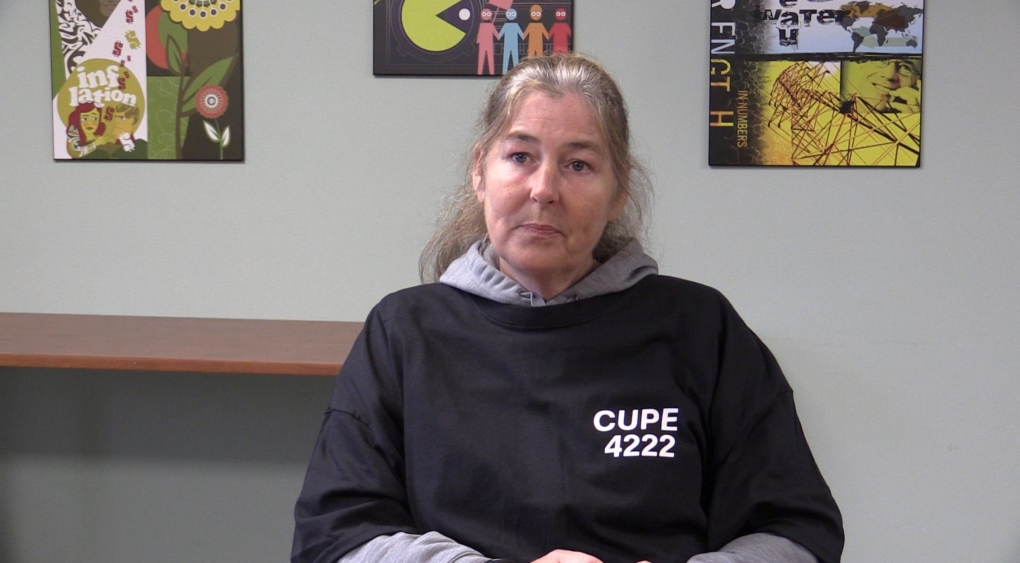
Mary Henry, a high school secretary and president of CUPE local 4222 speaks to CTV News London on September 26, 2022. (Brent Lale/CTV News London)

The Canadian Union of Public Employees has called Ontario's initial contract offer, which it made public, insulting.

The government has offered raises of two per cent a year for workers making less than $40,000 and 1.25 per cent for all other workers, while CUPE is looking for annual increases of 11.7 per cent.

“The workload is huge, and the pay is low,” says Mary Henry, a high school secretary in London, Ont. and president of CUPE local 4222.

“We are the lowest paid sector, and we feel that we deserve a fair raise. We're asking for a $3.25 per hour raise, which will still bring us slightly above poverty but around still around that area and a lot of us have several jobs on the side,” she adds.

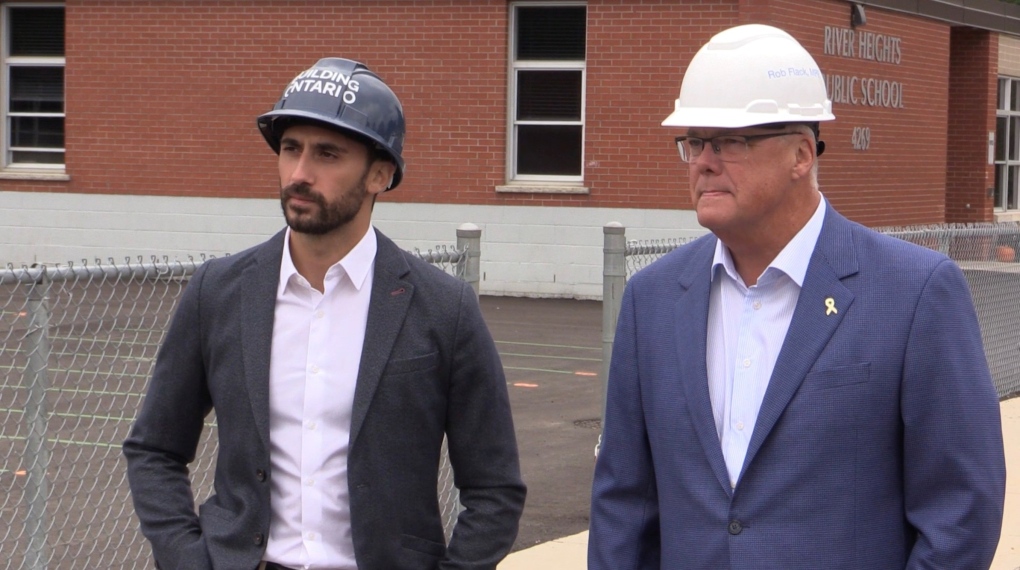
While touring the site of a future childcare centre in Dorchester, Ont. Monday, Education Minister Stephen Lecce addressed the union’s demands.

"We just want a reasonable offer,” says Lecce. “50 per cent demanded by the union, or else they will strike if they don't get their way is not a fair request on the taxpayer. It’s a $20 billion demand.

Ontario Education Minister Stephen Lecce (L) and Elgin-Middlesex London MPP Rob Flack tour a new childcare centre in Dorchester, Ont. on September 26, 2022. 
(Brent Lale/ CTV News London)

Lecce says the province has added 5,000 additional workers this fall as students return from remote learning to in-person.

“We all have to make a commitment that we're not going to walk away from the table and strike,” says Lecce.

He adds, “After two extraordinary years, these kids deserve to have all of us at the table with one mission, which is keep them in school learning, reading, writing and math getting back to basics.”

The Loos family believes it will suffer with Emmett likely having to stay home from school if there is a strike. She understands both sides of the debate, but sympathizes with school staff.

“They need more help,” says Loos.

“They can't just be expected to take care of all these kids without being compensated for it and having the time for it. I know how struggling my son can be, and when you put three or four of them with one EA that makes it even worse,” she adds.

CUPE's 55,000 education worker members are set to vote until Oct. 2 on whether to strike.


CUPE workers including librarians, educational assistants and administrative assistants are being encouraged to vote in favour of a strike before October 2, 2022.
(Source: File)


The Loos Family, Victor, Stacy, Lyla and Emmett say they would suffer if Ontario education workers go on strike. Emmett, 9, requires an educational assistant.
 (Brent Lale/CTV News London)


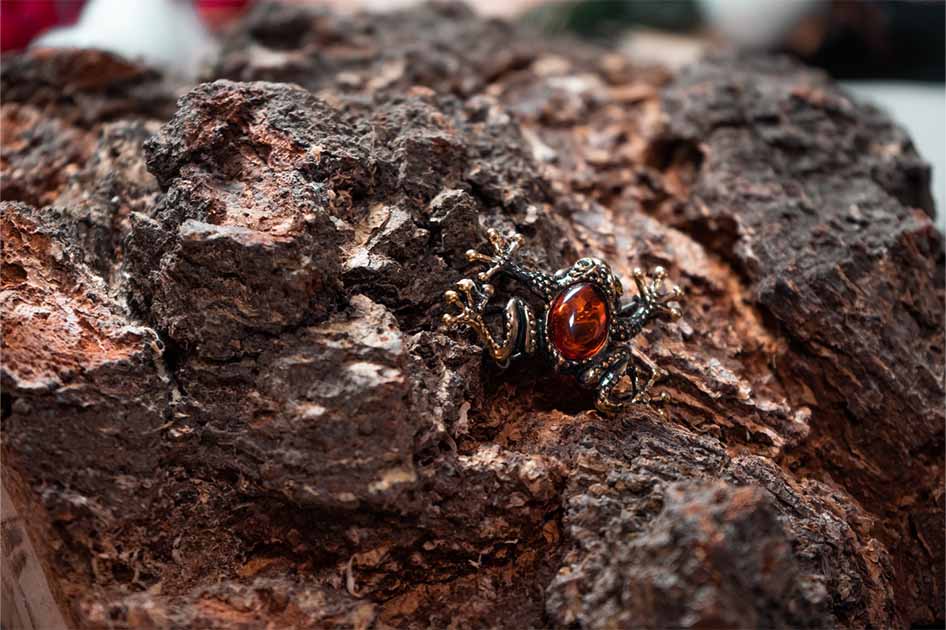
Frog brooch of amber and bronze on a rock, representative of living fossils.	Source: ISliM / Adobe Stock

Mysterious Cases of Living Fossils, Suspended Animation, and Hibernation

UPDATED 19 SEPTEMBER, 2022 -  KELLY BELL

We all know that fossils, by their very nature, are dead. Of course, nothing can survive the conditions of pressure, depth and time required to petrify wood, see saplings mature into massive trees, transmogrify vegetation into coal or metamorphose mud into solid rock. Still, living creatures seemingly from remotest antiquity keep turning up encased in stone from far beneath Earth's surface, embedded inside solid tree trunks and in other situations defying both reason and the gospel of the Great God Science.

Meta-Study Shows Ancient Maya were at High Risk of Mercury Poisoning

Living Fossils Story #1: Ancient Wormhole Mine

One such case occurred April 22, 1881, when miner Joe Molino was working deep in the Wide West Mine outside Ruby Hill, Nevada. When he wedged loose a protruding hunk of stone from the tunnel wall it landed on his foot. Enraged, he grabbed a sledgehammer and smashed it to bits. Molino was stunned to see his hammer blow had exposed a baseball-sized cavity in the rock. It was half full of motionless white  worms.

As a crowd of quizzical miners gathered to view the unusual artifacts the worms began to move. Within an hour they were crawling around on the floor of the  tunnel

Mine operators sent the worms (whose species apparently was never determined) and their solid stone sarcophagus to the U.S. Bureau of Mines. Several weeks later the bureau sent the mine operators a letter declaring they must have been mistaken. Since it clearly is impossible for creatures to have survived under the circumstances described, as far as the bureau was concerned there was no way the incident could have happened.

In 1892 an ore nugget found in an Arizona mine was found to contain a dead beetle from which emerged a live beetle: is that a living fossil or what? (wectorcolor / Adobe Stock)

In 1892 an ore nugget found in an Arizona mine was found to contain a dead beetle from which emerged a live beetle: is that a living fossil or what? ( wectorcolor / Adobe Stock)

Living Fossils Story #2: Beetle Awe

Yet more scientific mystery was brewing in the American West when, sometime in 1892, a large beetle was found encased in a chunk of iron ore in the Longfellow Mine outside Clifton, Arizona. The ore nugget and its dead inhabitant were turned over to El Paso geologist Z. T. White, who placed the insect in a specimen case. Several days later he was shocked to see the creature move. Watching through a magnifying glass White saw a small  beetle emerge from the body of the larger, dead one. He placed the small beetle in a jar where it lived for several months. When it died, he presented it, the larger beetle and the lump of ore to the  Smithsonian Institution , where they may remain to this day.

Living Fossils Story #3: A Load of Bullfrog

Since the vast majority of  fossils are buried, it is predictable that mines are the main source of mysterious zoological artifacts. In 1873, miners at the Black Diamond Coal Mine outside San Francisco found a large frog encased in  limestone.

This common (but venerable) bullfrog was apparently blind, and able to slowly move just one leg. After several hours on the surface, it died. The frog and its entombing stone were given to the San Francisco Academy of Sciences, where its survival of what would seem an impossible stretch of time continues to defy understanding.

Yet not all living fossils are found in stone or ore.

Once in 1893 in Ontario, Canada a live toad emerged from deep inside a tree trunk! (Volodymyr Shevchuk / Adobe Stock)

Once in 1893 in Ontario, Canada a live toad emerged from deep inside a tree trunk! ( Volodymyr Shevchuk  / Adobe Stock)

Living Fossils Story #4: Would you believe it?

In October 1893 workmen at the Brown and Hall Sawmill in Ontario, Canada were using a circular saw to cut a large  tree trunk  into planks when the blade sliced through a cavity containing (and almost cut in two) a live toad imprisoned squarely in the middle of the tree trunk. The tree was about 200 years old, and the spherical, perfectly smooth hole in which the amphibian was entombed was about 60 feet (18 meters) above the ground. The  toad tumbled from its wooden prison and hopped away, seemingly none the worse for its long confinement.

Another report of a live toad in a hole comes from England. In 1829 huge  granite blocks  that had formed a submerged footing under the docks of Liverpool's George's Basin were being cut into small chunks to be made into steps. During one of the cuts, the stone saw revealed a little hole in the middle of a block, and a toad within it.

Workers gently enlarged the hole to free its occupant, and the  amphibian made several futile attempts to get to its feet. Several hours later, after trying one last time to assume its normal crouching position, the toad sank to the pavement and died. Several scientists who later examined the small corpse confessed they were at a loss to explain how the animal could have been found alive under such airless, foodless and waterless conditions. One of these learned men took the dead animal home with him, and it was never seen again. It was not the first or last impossible fossil yielded by Britain

Living Fossils Story #5: Newt News

In 1818 professional geologist Dr. E.D. Clark, who taught at Caius College in Cambridge, Scotland, was present at the digging of a pit on a friend's property when the workmen hit a layer of animated fossils. As one of the workers was breaking up a large chunk of chalk stone into smaller pieces so they could be removed from the hole he found three newts embedded in the rock. Clarke placed them in the bright  sunlight and was stupefied when they began to move. Two of them died later in the day, and for years he exhibited them to his students during his lectures on prehistory. He placed the third newt in a nearby brook, and it "skipped and twisted about as though it had never been torpid," and escaped, he later said. Clarke was never able to identify the species to which the newts belonged.

Upon Clarke's retirement he donated the preserved newts to the university's biology department, where, for decades, other professors displayed them during lectures. During the chaos of the 1940 Nazi bombing blitz these pickled specimens turned up missing. Unless they were blown to atoms by a Luftwaffe bomb, they may remain somewhere within Cambridge University, forgotten and still unexplained.

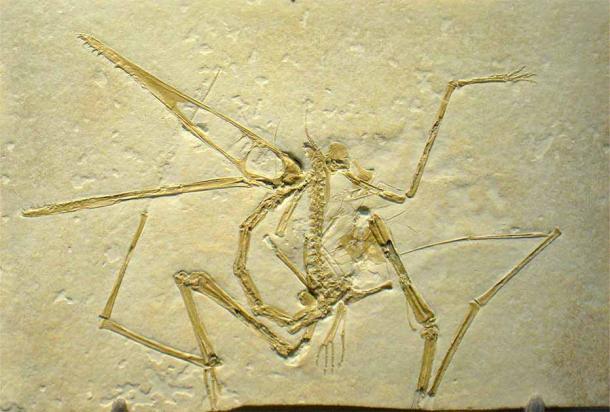
This is a fossil of a flying dinosaur, a Pterodactylus antiquus, and a close cousin of this species was apparently still alive in France in the 1850s according to newspaper reports at the time. (Daderot / Public domain)

This is a fossil of a flying dinosaur, a Pterodactylus antiquus, and a close cousin of this species was apparently still alive in France in the 1850s according to newspaper reports at the time. (Daderot /  Public domain )

Living Fossils Story #6: Shades of the Jurassic

The most incredible find of a living fossil is that reported by the  Illustrated London Times  of February 9, 1856. The incident occurred in France during the construction of a railway tunnel between the towns of Nancy and St. Dizier. According to the article, workers were breaking up a huge boulder when a goose-sized monster staggered from a freshly exposed cavity and screeched hoarsely before falling dead. It had a long beak, sharp teeth, four legs joined by membranes, and feet with long hooked talons. Its flesh was oily and glossy black.

The mysterious carcass was taken to a paleontologist who instantly recognized the animal as a  Pterodactylus anas,  a denizen of the  Jurassic Period , which ended 135 million years ago. There is no record of whether the body was preserved and still exists.

Possibilities

Certain animals' ability to live long stretches without sustenance is possible via hibernation to escape the lean, hostile conditions of winter. Because their metabolisms are conditioned to arouse them upon the advent of the warmth and renewed food supplies of springtime, they are seldom in suspended animation for more than four or five months. What might happen if spring never arrived? What if their hibernation dens were to be buried by glaciers and/or metamorphose into rock?

Southern Methodist University professor of biology Dr. John Ubelaker, Ph.D. points out that many organisms possess the ability to lower their metabolisms, and that this function is often triggered by environmental conditions. This permits survival through difficult times.

"This is a common phenomenon among many free-living  nematodes that have the ability to form a resting stage--dauer larvae--in order to survive a stressful situation," he says. "In these nematodes the ability to control water and water loss is critical, and several metabolic-biochemical processes operate."

Nematodes that have come to life are perhaps the most incredible living fossils. A colorized electron micrograph of a soybean cyst nematode and egg. (Agricultural Research Service / Public domain)

Nematodes that have come to life are perhaps the most incredible living fossils. A colorized electron micrograph of a soybean cyst nematode and egg. (Agricultural Research Service /  Public domain )

In his 1863 book  History of the Supernatural  noted British author and scientist William Hewitt recounted a midsummer incident he had personally witnessed several years earlier in which workmen in Nottinghamshire, England were digging a ditch and unearthed what he called "a regular stratum of frogs." The creatures were not only alive, but so animated they all hopped away.

He described the layer of mud that had held the frogs as "stiff as butter," and based on the time of year and his examination of the ground where they were buried, he estimated they had been there at least six months. As he asked his readers, "If these frogs could live six months in this nearly solid casing of viscous mud, why not six or any number of years?"

Ubelaker expands upon this premise:

"An interesting fact of life is that an organism's structure and composition can remain virtually the same even though it continuously takes in nutrients and produces wastes. Often defined as a dynamic equilibrium, life allows concentrations of the mixture of the materials in an organism to remain constant even though individual molecules are constantly shifting back and forth, increasing or decreasing in a short time scale," he says. "Remember that an organism at equilibrium is dead. A common classroom comparison is often made with a river and the steady state condition of organisms--the river maintains the same level and shape even though water is constantly flowing through it. Rivers rise and change course, drop to low levels depending on the available water, but at any one point it (and its concentration of materials) remains quite constant. In organisms the structure, proteins, nucleic acid, lipids stay relatively constant even though no one molecule remains in any pool for long."

The erratic and odd sides of the natural world remind us of how much we still have to learn about Mother Earth and the processes that govern her and her multitude of children. There are doubtless many more living relics of the primordial past awaiting exhumation. When they do come to light, they should be studied meticulously in order to ascertain how they survived such extremes of time, temperature and deprivation. The possibility of harmlessly subjecting human beings to suspended animation could solve problems of surviving extended space travel, awaiting the return of loved ones from the stars, outlasting terminal illnesses until cures are discovered, or simply staying alive long enough to meet one's great-great-great-grandchildren. Before we can even start on such grand aspirations, however, we must admit this potentially priceless process exists.

Top image: Frog brooch of amber and bronze on a rock, representative of living fossils.    Source:  ISliM / Adobe Stock

By Kelly Bell