Wednesday, December 28, 2022

First Recorded Pink Iguana Hatchlings Found on Galápagos Island

After a ten-month effort, researchers discovered the young endangered reptiles on a remote volcano


Jacquelyne Germain
Staff contributor
December 23, 2022
One of the first-ever photos of a young pink iguana 
Galápagos Conservancy / Galápagos National Park Directorate

With seven expeditions over the past ten months, scientists in the Galápagos Islands have been studying the last surviving population of critically endangered pink iguanas. Made up of an estimated 200 to 300 adults, the population has been declining and aging over the last decade, leading to concern about the species going extinct.

Now, scientists have made a major discovery: They’ve revealed the first-ever documented nesting sites of the reptile and the first recorded pink iguana hatchlings.

The find represents the first time that baby or juvenile pink iguanas have been found since the species was identified in 2009. Previously, only older pink iguanas were seen in the region.

“This discovery marks a significant step forward, which allows us to identify a path going forward to save the pink iguana,” Danny Rueda, the director of the Galápagos National Park, says in a statement, per Reuters.

The global population of pink iguanas is confined to Isabela Island’s Wolf Volcano, the tallest volcano in the Galápagos. Dozens of cameras hidden throughout the volcano by conservationists helped document the pink iguanas’ nesting activities.

The cameras also helped identify the main predator killing young iguanas: non-native feral cats. The cats congregate near the nesting sites and kill the hatchlings, which are easy prey for the felines. Scientists suspect predation by cats has prevented young iguanas from living long enough to reproduce for the last decade. ​​Rats observed near pink iguana nesting sites may also be a threat to the species, reports USA Today’s Saleen Martin.
A researcher with an adult pink iguana 
Galápagos Conservancy / Galápagos National Park Directorate

Though national park rangers first discovered the reptile in 1986, scientists took decades to identify the pink iguana as its own species. Despite their name, baby pink iguanas are anything but pink. The young reptiles have a neon yellow-green color with characteristic dark striping. It’s not until the reptiles get older that they develop their rosy hue. The iguanas can grow up to 18.5 inches in length, reports Reuters.


“The discovery of the first-ever nest and young pink iguanas together with evidence of the critical threats to their survival has also given us the first hope for saving this enigmatic species from extinction.” Paul Salaman, president of Galápagos Conservancy, says in a statement. “Now, our work begins to save the pink iguana.”

The search for the endangered reptiles was part of Iniciativa Galápagos, a partnership between the Galápagos National Park Directorate and Galápagos Conservancy to preserve and restore the Ecuadorean islands.

Since finding the nesting sites and hatchlings, Iniciativa Galápagos researchers are now focused on protecting and monitoring the nesting locations. To aid in these conservation efforts, the Galápagos Conservancy funded the establishment of a field station with a 360-degree view of Wolf Volcano to defend against poaching and animal trafficking activity. “This remote base will facilitate conservation and monitoring work on the volcano, helping guarantee the conservation and restoration of the Pink Iguana population,” Rueda says in the statement.

Alongside the pink iguanas, the Galápagos are home to various other species that only exist in the region, such as the giant Galápagos tortoise, the Galápagos penguin and the marine iguana.

Jacquelyne Germain is a reporter and former intern for Smithsonian magazine.


Army of islanders to protect gecko the size of a paperclip
  • PublishedShare
IMAGE SOURCE,COURTESY ROXANNE FROGET
Image caption,
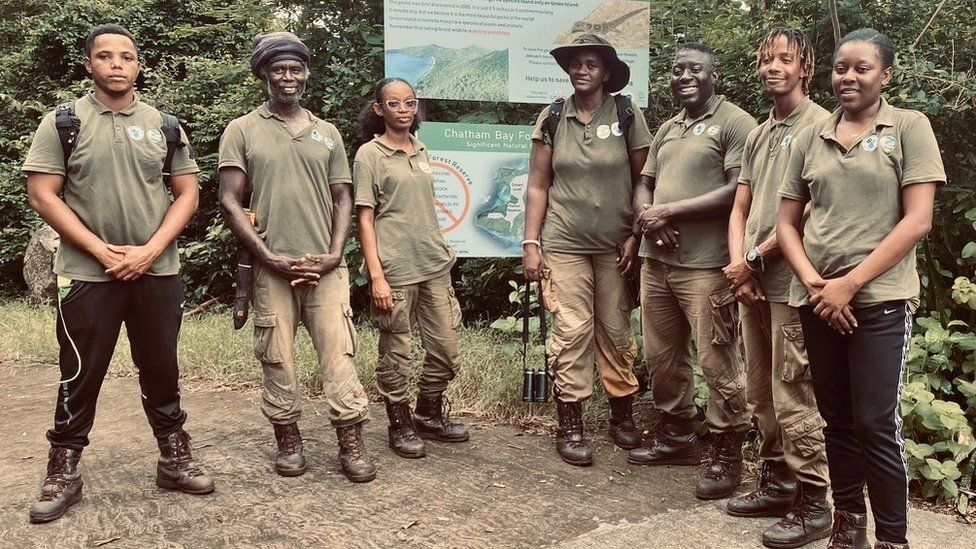
Union Island wardens are trained to protect the area's fauna and flora

Dressed in camouflage and combats and with self-defence training under their belts, the Union Island wardens look prepped for battle.

They are in fact on a mission to protect one of the world's tiniest species - one so rare it exists in just 50 hectares (123 acres) in a remote corner of one of the smallest islands in the Caribbean.

The Union Island gecko is the size of a paperclip, critically endangered and facing an insidious enemy - poachers.

Following its official discovery in 2005, the unique creature quickly became a coveted curio by collectors enthralled by its gem-like markings, earning it the dubious distinction of the most trafficked reptile in the Eastern Caribbean.
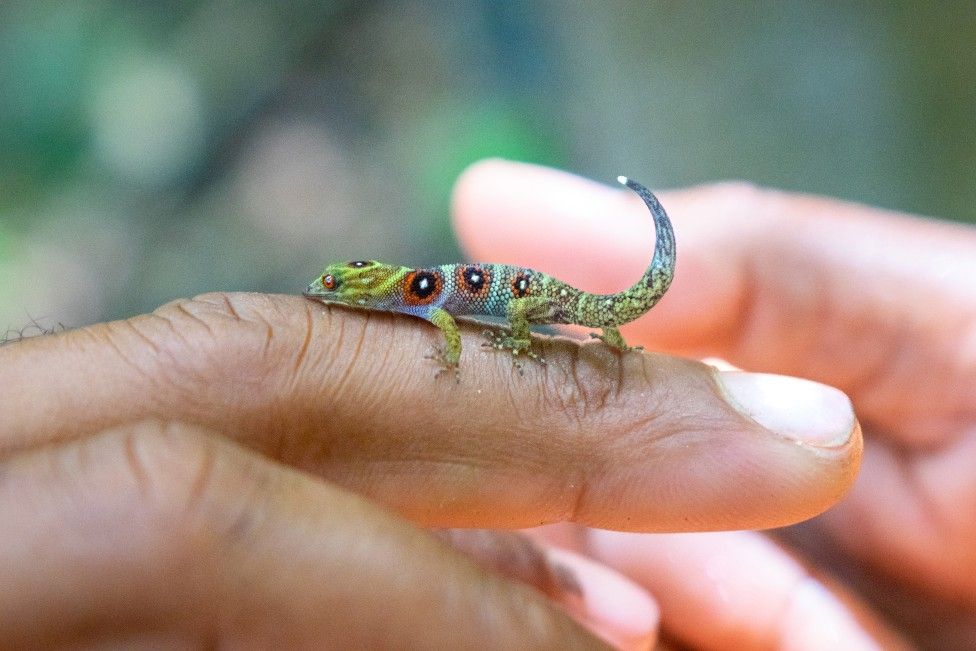
IMAGE SOURCE,FFI/J BOCK
Image caption,
The tiny Union Island gecko is threatened by poachers, but wardens are on patrol to protect it

That is at least until Union islanders got involved. Since 2017, local residents trained as wardens have been patrolling the dense virgin forest of this location in St Vincent and the Grenadines, on call 24/7 in the event of an intruder.

Their work, carried out in sync with the government's forestry department and international conservationists including Fauna and Flora International (FFI), has been credited with an 80% increase in population. A recent survey indicated numbers of the gecko soared from 10,000 in 2018 to around 18,000 now - outnumbering the island's human population six-fold.

Community involvement has been key, says Glenroy Gaymes, the government's chief wildlife officer.

"A lot of people didn't even know the gecko existed," Mr Gaymes says. "We went house to house, held roadside meetings and school programmes to sensitise people. We had to go to the forest to capture one and bring it to the consultations so people knew what it was. Everyone was wowed - they were expecting something much bigger.

"It's just an inch-and-a-half long, and so pretty people were in awe."

Biodiversity haven

Roxanne Froget became Union Island's first female warden in February 2018.
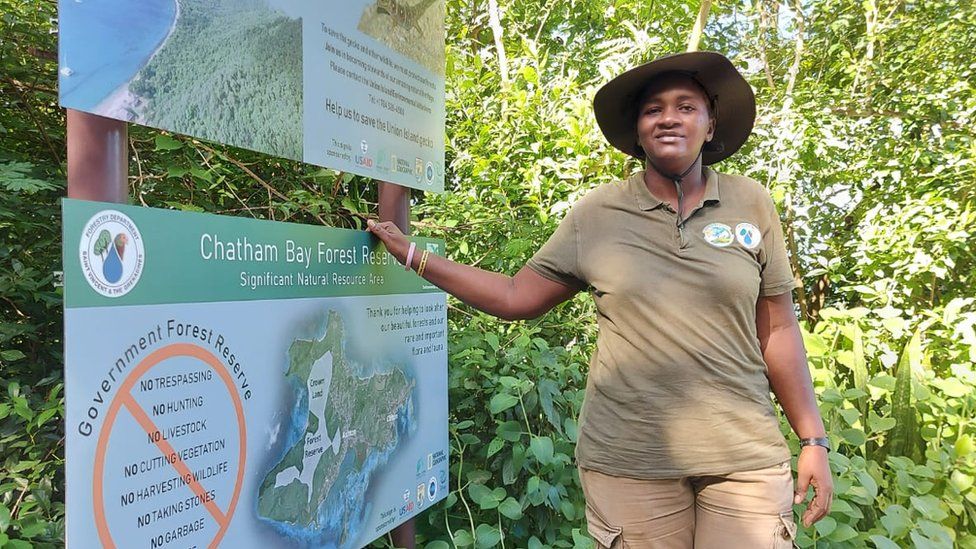
IMAGE SOURCE,COURTESY ROXANNE FROGET
Image caption,
Roxanne Froget has been a warden for more than four years

"When I heard about the gecko only being found on Union Island it was a wow for me. It was amazing to see it for the first time with all its colours," she recalls.

The geckos slowly change hue when brought into the light from dark brown to multi-coloured.

A nature lover, Ms Froget was keen to get involved with the project.

"We patrol the forest on a daily basis and are on call around the clock. We are protecting everything - the fauna, the flora, even the stones which people used to use for construction as they are part of the geckos' habitat. The area has to be totally untouched," she explains.

"I love being in nature, listening to the sounds of the birds. I look forward to going to work every day," the mother-of-two smiles.
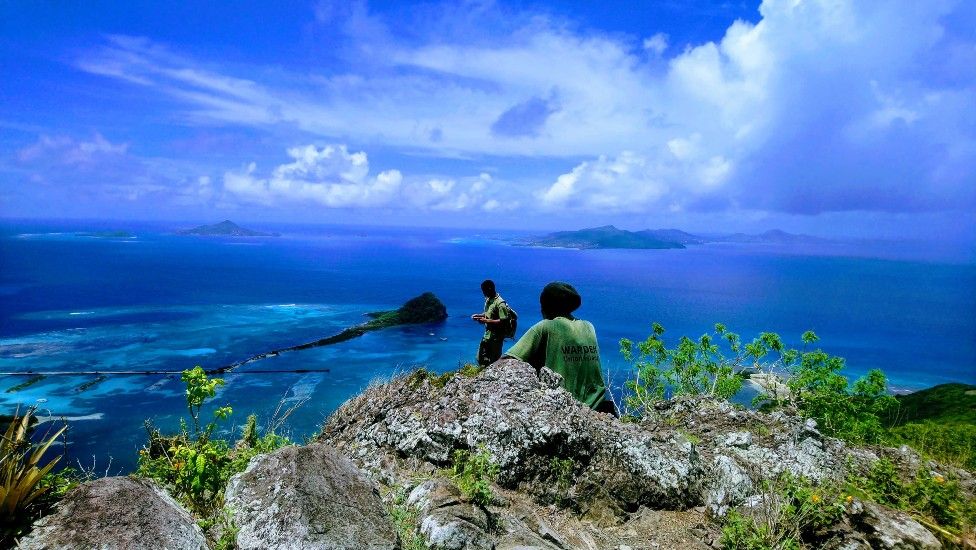
IMAGE SOURCE,FFI/ROSEMAN
Image caption,
The wardens patrol Mount Taboi and its surroundings

"My nine-year-old son loves the forest too. I tell him all about the gecko and how I help protect it. I feel so proud to be part of this work - and it's all happening on my island, my home."

In addition to active patrol training and self-defence skills - courtesy of Mr Gaymes who is a fourth degree black belt in taekwondo - wardens are taught about the many intriguing species that call the forest home and the traditional uses for medicinal plants so that they can pass their knowledge on to local schoolchildren and visitors.

What Union Island lacks in monetary wealth it makes up for in rich biodiversity. Since the gecko project began, the team has extended its work to protect a number of other endemic creatures too, like the "pink rhino" iguana, also under threat from poachers.

Both reptiles' rarity and striking colours have been their downfall.
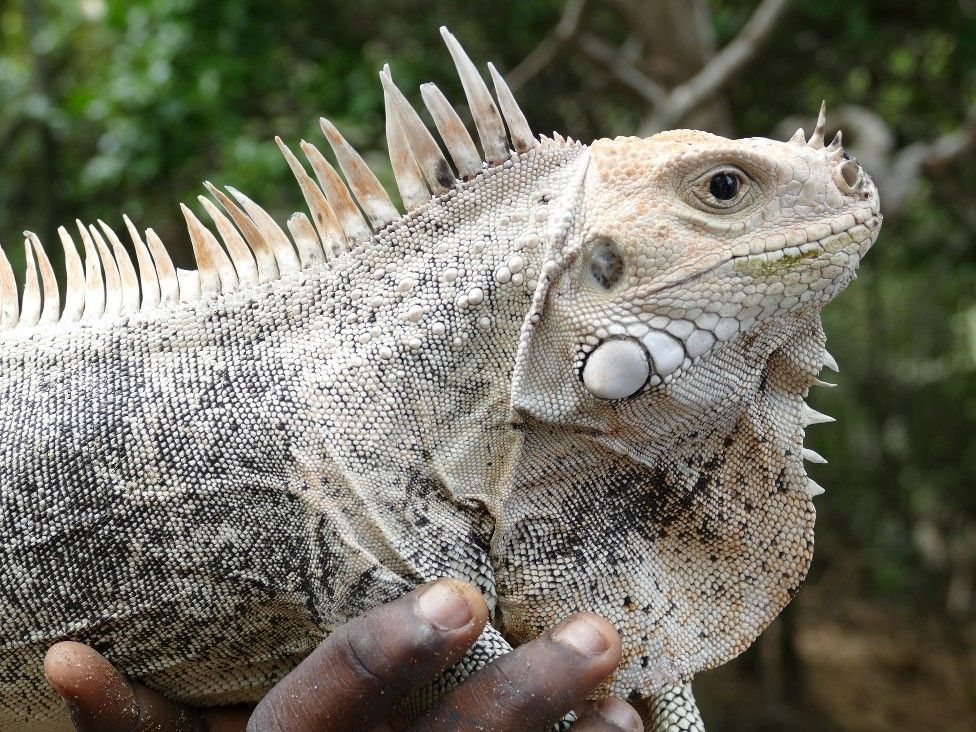
IMAGE SOURCE,FFI/J DALTRY
Image caption,
The pink rhino iguana is also under threat from poachers
IMAGE SOURCE,FFI/J HOLDEN
Image caption,
The Union Island gecko changes colour when brought into the light

"Most of the collectors are naturalists; they want the geckos because they are different. They want to learn how to breed them and be the first to learn about them so they can show off to their peers," explains FFI's Caribbean programme manager Isabel Vique.

Ms Vique's collectors come from as far as the US and Europe and some arrive by yacht.

IMAGE SOURCE,FFI/J BOCK
Image caption,
Union Island is home to fewer than 3,000 people

"But since we've been on the ground, there has been an 80% reduction in the number [of geckos] advertised online."

Poachers previously took advantage of Union islanders' friendly nature to locate the geckos' habitat.

"They would come to the island pretending to be tourists and go around asking the locals where they can see them," Ms Vique says, adding: "We have been raising awareness so now people won't tell you where to find the gecko, they will point you to the police station instead."

The gecko has been protected by international treaty CITES since 2019, thanks to the government's efforts, affording it the highest level of protection. Poachers face a hefty fine and a possible prison sentence if caught.

As one of the world's last remaining tropical dry forests, the geckos' Chatham Bay home is a "kind of living laboratory for West Indies wildlife", says FFI's project manager James Crockett.

"Caribbean dry forest is one of the most endangered habitats on the planet. Very few are undisturbed like Chatham Bay," he tells the BBC.
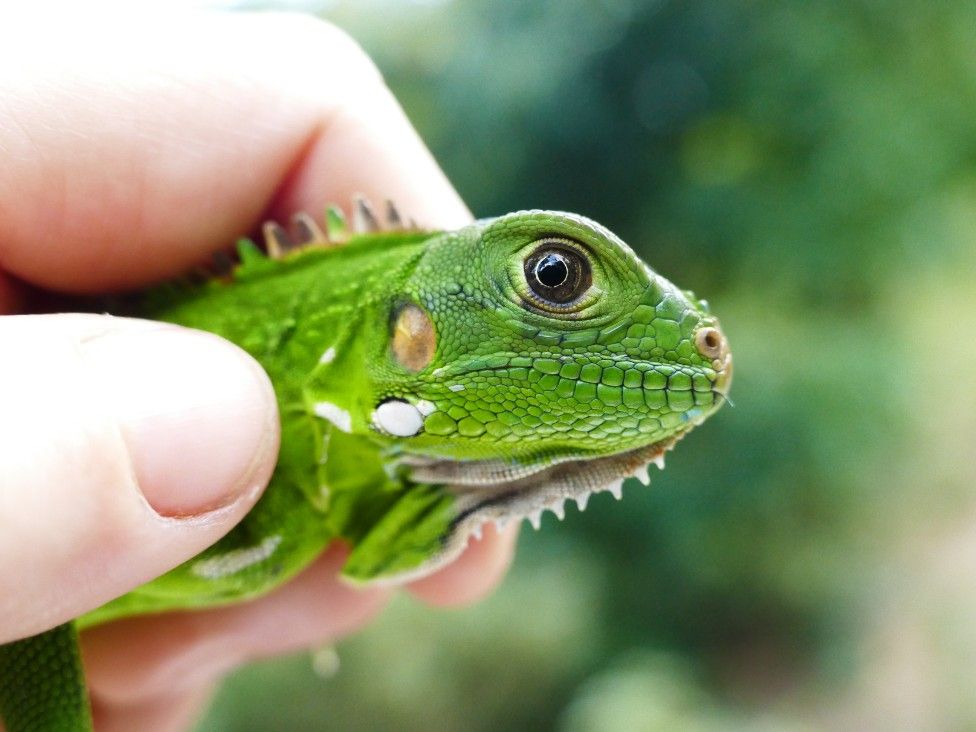
IMAGE SOURCE,FFI/J DALTRY
Image caption,
The area is home to pink iguanas like this juvenile

And that makes the project all the more valuable.

"I believe the Union Island gecko is the perfect representative mascot for the island to be known by in the wider world - it's small, perfect and beautiful," Mr Crockett adds.

Roseman Adams, co-founder of local NGO the Union Island Environmental Alliance which has been at the forefront of the gecko conservation endeavours, agrees.

"Some in government still believe the area is good for a major tourism development. We have been trying to communicate the value of having this healthy, undisturbed dry forest in which we are finding more and more species new to the world," he says.

"If we lose that opportunity to find and preserve them, they will be lost forever."

For Mr Adams, the gecko has a special symbolism.

"The fact that the gecko has survived for thousands of years means it's very resilient. When it raises its tail it looks proud," he says.

"This species represents us as Unionites - we may be small but we are proud and resilient."

Study: Conservatives are less intelligent

Story by Refresh News • Yesterday 


The 2021 federal election not only ended the era of former Chancellor Angela Merkel, but also that of the CDU/CSU as the strongest force. In the end, the SPD narrowly prevailed with 25.7 percent and, as is well known, entered into the traffic light coalition with the FDP and the Greens. While supporters yearn for a political upheaval and hope for a more future-oriented coalition with the CDU. Politics critics fear that the interests of the three governing parties will differ too much and that decisions will be made slowly. Other voters, however, fear, particularly with regard to the Greens, that the increased interest of the three Climate course could cost jobs and damage the German economy.
Smart kids choose green or liberal

Various studies have been trying for a long time to find out which group of voters – conservative or liberal, for example – is „smartest“ on average. Mostly measured by the so-called intelligence quotient. In long-term studies in particular, the results are the same – regardless of the countries in which the studies were conducted. In America, for example, it was found that young people who described themselves as „very conservative“ had an average IQ of 95 – five points below the average 100. By contrast, their peers who described themselves as „very liberal“ had an average IQ of 106. According to psychologist Satoshi Kanazawa, writing in the journal Social Psychology Quartlery, this is mainly due to the fact that more intelligent people find it easier to behave differently than evolution has imposed.

The results are consistent with two other British long-term studieswhich were evaluated by a group of Canadian scientists from Brock University in Ontario. The intelligence of around 9,000 children aged ten to eleven was determined. More than twenty years later, the test subjects were surveyed again.

It was found that participants tended to hold right-wing views because it gave them a sense of „order“ or „preserving the status quo.“

Overall, it could be concluded that smart young people tend to vote Green or Liberal, whereas rigid mindsets that entail a desire for order tend to vote for more tradition-oriented parties.

„The differences are not large, but they can’t be explained by coincidence either,“ explains Detlef Rost, an intelligence researcher at the University of Marburg, to the SZ. „To be progressive, people need cognitive performance. If you always stay in the known, you don’t have to think much.“

Criticism of the intelligence quotient

However, it must be mentioned that all studies refer to average values. Although these show certain differences, they do not allow any conclusions to be drawn about individual people. To say that someone is dumber or smarter because he or she votes for party XY would be anything but scientific. Moreover, the use of intelligence quotient as a synonym for intelligence is controversial. It is true that studies show that people have an easier time in life with Problems The higher their IQ, the better they are able to cope, but the corresponding tests completely ignore components such as emotional intelligence.


Photo from George Milton frompexels

The Role Of The US Government In Regulating AI And Cybersecurity – OpEd

By 

Artificial intelligence (AI) and cybersecurity are two rapidly evolving areas that have significant implications for society and the global economy. As such, governments worldwide have begun to regulate these fields to ensure their safe and responsible development. In the United States, the government has played a significant role in regulating AI and cybersecurity, but the approach it has taken has been piecemeal and ad hoc.

One of the keyways in which the US government has sought to regulate AI is through the establishment of agencies and committees dedicated to overseeing its development. In June 2018, the White House Office created a Subcommittee on Machine Learning and Artificial Intelligence, which is tasked with coordinating the federal government’s efforts in these areas. Additionally, the National Institute of Standards and Technology (NIST) has a number of initiatives focused on advancing AI, including the NIST AI Center of Excellence and the NIST AI Research Program.

Another way the US government sought to regulate AI is by developing guidelines and best practices. NIST has developed a set of guidelines for the ethical development of AI, which includes recommendations on issues such as transparency, accountability, and fairness. These guidelines are voluntary and are intended to provide guidance for developers and users of AI.

In the realm of cybersecurity, the US government has taken a number of steps to regulate the industry. One of the key ways in which it has done this is through the establishment of agencies and committees dedicated to cybersecurity. The Department of Homeland Security has a number of initiatives focused on cybersecurity, including the Cybersecurity and Infrastructure Security Agency (CISA) and the National Cybersecurity and Communications Integration Center (NCCIC).

In addition to these agencies, the US government has also developed a number of guidelines and best practices for cybersecurity. The National Institute of Standards and Technology (NIST) has developed a framework for improving cybersecurity, which includes a set of core functions and categories that organizations can use to assess and improve their cybersecurity posture.

While the US government has taken a number of steps to regulate AI and cybersecurity, its approach has been somewhat piecemeal and ad hoc. This has led to concerns about the effectiveness of these efforts, as well as the potential for overlap and duplication. Additionally, some have argued that the US government has not done enough to regulate these industries, particularly in comparison to other countries that have taken a more proactive approach.

Overall, it is clear that the US government has played a significant role in regulating AI and cybersecurity, but there is still much work to be done to ensure that these industries are developed and used in a responsible and ethical manner. Going forward, it will be important for the government to continue to engage with industry, academia, and other stakeholders to ensure that the appropriate regulatory frameworks are in place to support the safe and responsible development of these technologies.

Arfa Khan MPhil scholar in American Studies and International Relations at Quaid-I-Azam University, Islamabad.

Hunger-Striking Senegal Journalist Taken to Hospital, Attorney Says

December 25, 2022 
Agence France-Presse
 Senegalese journalists hold banners and shout slogans during the march for the release of their colleague Pape Ale Niang in Dakar, Nov. 18, 2022.

Pape Ale Niang, a prominent Senegalese journalist and government critic who has been on a hunger strike to protest charges against him, has been moved to a hospital, his attorney told AFP on Sunday.

Niang was taken to a hospital in Dakar on Saturday evening after his health deteriorated as a result of his latest hunger strike, said Moussa Sarr, one of his lawyers.

In a case that has sparked international concern, Niang was arrested on November 6 and charged with "divulging information likely to harm national defense."

He went on a hunger strike on December 2 and was later admitted to a clinic after his health deteriorated. He was given provisional release, but arrested again on December 20, when he started another hunger protest.

Niang, the head of the Dakar Matin online news site, is widely followed in Senegal for his regular columns on current affairs.

The case against him arose after he wrote about rape charges being faced by the country's main opposition leader, Ousmane Sonko.

He is accused of describing confidential messages about security arrangements for Sonko's interview with investigators on November 3, according to trade unions.

His detention sparked a wave of criticism from the press, civil society groups and Senegal's opposition, many of whom called for his release.

Senegal has a strong reputation for openness and press freedom in troubled West Africa, but this status is in decline, according to Reporters Without Borders (RSF).

Its 2022 Press Freedom Index ranked Senegal 73rd out of 180 countries -- a fall of 24 places compared with the 2021 assessment.
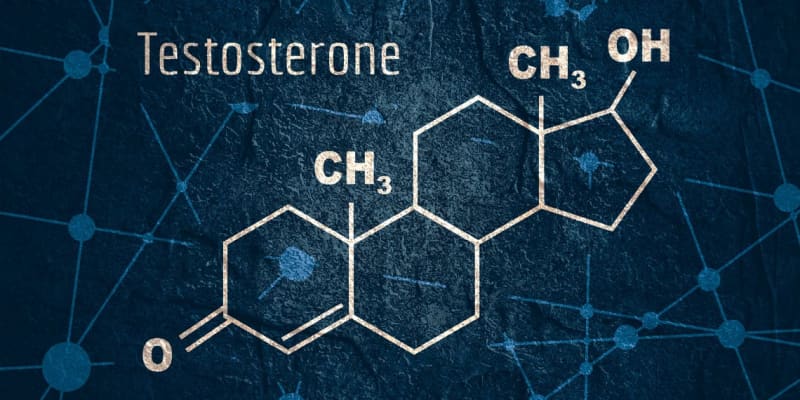
Narcissistic tendencies moderate the association between testosterone levels and generosity in men

2022/12/23


New research provides evidence that narcissism moderates the relationship between testosterone and generosity in men. The study, published in Hormones and Behavior, found that the most generous men tended to be low in endogenous testosterone and simultaneously low in narcissism. Unexpectedly, however, the researchers also found that heightened testosterone levels in combination with heightened narcissism was a significant positive predictor of generosity.

“Physiological changes constantly occurring in living organisms are interconnected with behavioral outcomes in many intricate and fascinating ways,” said co-author Magdalena Ziemiańska, a PhD student at the Polish Academy of Sciences. “We were curious to examine how a normal (i.e. baseline) level of testosterone is linked to social behavior.”

“A simple economic game was applied, in which the participants’ task was to divide points between themselves and a stranger,” Ziemiańska explained. “We wanted to check if a popular belief, derived from animal studies, that high testosterone level is connected with competitive, antisocial behaviors is true in humans.”

“We also wanted to find out how narcissism interacts with testosterone levels and how these interactions are linked to behavior,” added first author Anna Z. Czarna, an associate professor at Jagiellonian University. “Narcissism and testosterone are associated with similar behavioral outcomes, such as aggression, competitiveness and striving for status, to the extent that narcissism is considered a stereotypically masculine trait.”

“This similarity was likely the reason why some scholars (such as Nicholas Holtzman and Michael Strube) speculated that high male narcissists might simply have higher baseline testosterone levels,” Czarna said. “This idea has not been consistently backed up by research so far. Instead, more complex relations between narcissism and testosterone emerged. We aimed to contribute to further explanation of these mysteries.”

The researchers conducted two studies with 151 male participants from Poland. The participants first completed a validated measure of narcissistic personality traits. They also completed a scientific assessment known as the Triple Dominance Measure, which is used to assess “the weight people assign to their own versus others’ outcomes in interdependent situations.”

In the Triple Dominance Measure, participants are asked to imagine that they have been randomly paired with another person, who is a stranger. They are then presented with a series of nine resource allocation decisions.

Based on their responses, “each participant can be classified as prosocial, competitive, or individualist. Prosocials maximize outcomes for both themselves and others (i. e., cooperation) and minimize differences between outcomes for themselves and others (i.e., equality); individualists maximize their own outcomes with little or no regard for others’ outcomes; and competitors maximize their own outcomes relative to others’ outcomes, seeking relative advantage over others,” the researchers explained.

Next, the participants visited the laboratory and provided two saliva samples — spaced 20 minutes apart — which were used to measure testosterone levels.

As expected, the researchers found that narcissism moderated the association between testosterone and resource allocation decisions. The findings indicate that “high vs. low narcissism affects the relationship between testosterone level and generosity in men,” Ziemiańska explained.

However, not all the findings were in line with their hypotheses. The researchers had predicted that higher testosterone would be negatively associated with the amount of resources shared with others, and that this association would be amplified by heightened narcissistic tendencies. But a more complicated relationship emerged.

“In low narcissists, testosterone was linked to less prosocial behavior,” Ziemiańska told PsyPost. But “in high narcissists, testosterone was linked to more prosocial choices.”

“Altogether, the pattern of results was a bit counterintuitive,” she said. “The two different factors i.e. psychological trait narcissism and the level of hormone testosterone influenced social behavior in a rather unexpected fashion. As mentioned before, popular beliefs are that high testosterone levels, as well as high narcissism, are linked to competitive, antisocial behavior (even explicit aggression).”

“This is why we were surprised to discover that, contrary to these popular beliefs, endogenous testosterone was associated with lower generosity among less narcissistic — thus more trustful, less cynical, more habitually generous, and less selfish — men,” Ziemiańska explained.

The findings might also have some practical implications.

“One (perhaps somewhat funny) takeaway message from our study would be: if you are choosing a date, beware of highly narcissistic men who are simultaneously low on baseline testosterone – in our studies, they were the least generous (and most selfish) in their decisions,” Czarna added. “They shared the least resources with others. So, when going on a date with one of them – prepare to pick up the bill. Meanwhile, men who were low on both narcissism and testosterone were highly generous.”

“Looking at our results from yet another perspective, high baseline testosterone worked a bit like an equalizer,” the researcher explained. “Men with high testosterone behaved similarly, they split their resources in similar and moderately generous ways, regardless of their narcissism levels. Men low on baseline testosterone differed highly in their behavior, depending on their personalities: those highly narcissistic were significantly less generous than those with low narcissism levels.”

The findings shed new light on how testosterone might interact with personality to influence behavior. But the researchers noted that scientists are still in the early stages of untangling the complex relationships between psychological traits and biological processes.

“Our study was one of the few first studies that looked at the interplay between personality and hormonal levels,” Czarna explained. “There is still a lot to do. These relationships are usually complex, not straightforward. Multiple other personality traits as well as multiple other situational factors still await investigation in the context of their interactions with hormones.”

“Future studies involving larger groups of participants could measure implicit motives and situational factors (i.e., opportunities to increase status or challenges and threats to social standing) and assess their interactive influence on testosterone reactivity and behavioral outcomes,” Czarna said. “Such studies promise to disentangle the effects of motives, situations, traits (i.e., narcissism), and testosterone.”

The study, “Narcissism moderates the association between basal testosterone and generosity in men“, was authored by Anna Z. Czarna, Magdalena Ziemiańska, Piotr Pawlicki, Justin M. Carre, and Constantine Sedikides
WHITE MALES
New study identifies two main factors that predispose someone to incel membership

2022/12/24


New research has attempted to discover the origin of membership in the “incel” community. Reviewing over 8000 posts in two online incel groups, common themes that led to membership were revealed. Incel membership is related to a shared sense of perceived injustice and a method for increasing self-esteem through group membership.

The study was published in the journal Deviant Behavior.

The term “incel” blends the words involuntary and celibate, and is used as a personal identifier. Individuals identifying as incels have come together on the internet and developed theories about the origin of their incel status. These include the role women, minorities, and democracy may play in preventing their emergence into a world of non-incel individuals.

The authors of the new study, Roberta O’Malley and Brenna Helm, describe incel groups as “a popular subculture of men nestled within the online misogynist and male supremacist ecosystem.”

In ages past, the term celibate was associated with the religiously devout, children, widows, and those who had suffered catastrophic accidents. Today, some men who have failed to consummate any relationship, even after decades of trying, have turned to violent actions and beliefs as an outlet for their frustration. Incels have been connected to at least three mass shootings and have been identified as a male supremacist hate group by the Southern Poverty Law Center.

O’Malley and Helm recognized that reducing membership in incel groups may include understanding what motivates a man to get involved. The research team chose two incel forums, one from a large social media website and the second from an independent forum with 11,000 members. Posts from the summer of 2018 to January 2019 were sampled from these two forums.

Over 8,000 posts were mined from the two sites and analyzed. Posts were systematically coded to identify repeat ideas or statements. Those were then funneled into larger conceptual ideas like hopelessness or disconnection.

Through this analysis, O’Malley and Helm uncovered two significant themes, perceived injustice and a need to build self-esteem. First, analyzing the posts for evidence of the origin of these feelings of injustice, the researchers found “perceived injustices are rooted in ideals of gender inequality.” Incel members may feel on the outside of manhood while at the same time desiring male supremacy.

Second, those in an incel group may experience a boost to self-esteem if they perceive the group to be “knowledgeable, free-thinking, and not easily duped by modern society, which may feel positive in the face of overwhelming self-loathing.” The research team notes that these two factors did not operate independently as pathways to incel groups; they seem to both be necessary factors for incel membership.

Some limitations to the study were identified. First, the evolving nature of online communities may not reflect current membership factors. Second, posters are anonymous, and any individual post may not reflect the beliefs of the poster. Finally, researchers cannot speak to those participating in the forums, so some factors that predispose someone to membership may be absent from the data.

Despite these limitations, O’Malley and Helm feel any clues to the path to incel membership is important to the prevention of future violence, stating, “Although only a small subsection of incels may go on to perpetrate physical violence, the forum operates to solidify and interpret the world through a gender-extremist lens that is highly concerning. Specifically, incel forums encourage and promote violence to combat the injustices they perceive. Thus, incel forums are not innocuous spaces.”

The study, “The role of perceived injustice and need for esteem on incel membership online”, was authored by Roberta O’Malley and Brenna Helm.

© PsyPost