Thursday, January 12, 2023

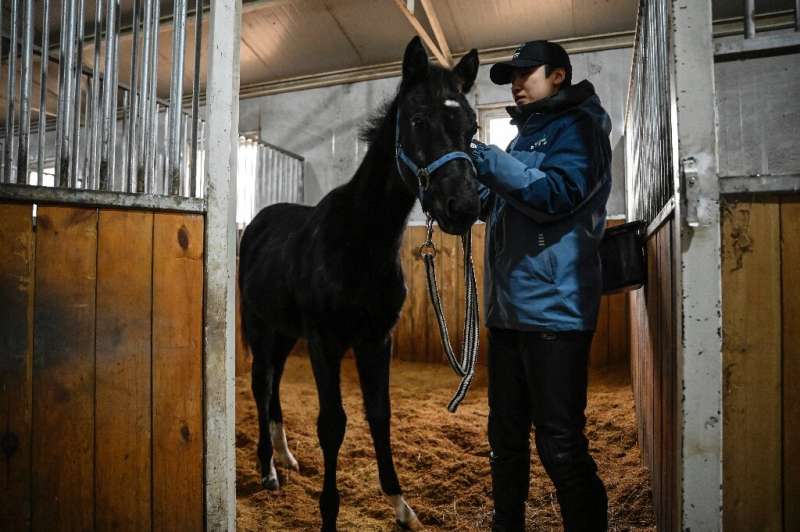
Cloned horse raises hopes for equestrian sports in China

"Zhuang Zhuang", a cloned horse bred by the Chinese company Sinogene, is presented after being approved by the China H
"Zhuang Zhuang", a cloned horse bred by the Chinese company Sinogene, is presented
 after being approved by the China Horse Industry Association. It is hoped cloning will help
 reduce the cost of breeding and raising horses.

A Chinese company presented a cloned horse to the public on Thursday that is the first of its kind born in the country and approved for equestrian sport

The cloning of competition and thoroughbred horses has been practiced in several countries since the early 2000s, particularly for genetic improvements.

Born last June from a , "Zhuang Zhuang" was produced by the Beijing laboratory Sinogene and is a clone of a horse imported from Germany.

The black animal is the first from the "warmblood" group of breeds to be born in China and to be officially approved by the China Horse Industry Association.

"Warmbloods" are generally light horses with a lively temperament.

Equestrian sports, especially show jumping, have been making strides in China in recent years.

But a shortage of high-performance horses and a lag in breeding technologies are limiting growth.

"I spoke with (Chinese) riders who participate in the Olympics. All of them have more than one horse, usually two or three. Each horse costs from a few million to 10 million yuan ($1.5 million)," Mi Jidong, CEO of Sinogene, told AFP.

"Cloning can help reduce the price of breeding and raising horses."

Producing competitive horses in China by cloning should make it less dependent on costly imported animals to supply Chinese equestrian sports.

The world's first cloned horse was born in Italy in 2003.

Chinese animal cloning companies have made significant progress in recent years, with technologies now relatively mature for sheep, cows, pigs, dogs and cats.

© 2023 AFP


Shaping the sport of kings: Key genes linked to successful racehorses identified by international team
IMPERIALISM NEVER APOLOGISES
Macron says won't apologise to Algeria for colonisation


Issued on: 12/01/2023 - 

Paris (AFP) – President Emmanuel Macron has said he will not "ask forgiveness" from Algeria for French colonisation but hopes to continue working towards reconciliation with his counterpart Abdelmajid Tebboune.

"It's not up to me to ask forgiveness, that's not what this is about, that word would break all of our ties," he said in an interview for Le Point magazine published late Wednesday.

"The worst thing would be to decide: 'we apologise and each go our own way'," Macron said.

"Work on memory and history isn't a settling of all accounts," he added.

But in the interview, he also expressed hope that Tebboune "will be able to come to France in 2023", to return Macron's own trip to Algiers last year and continue their "unprecedented work of friendship".

France's 100-year colonisation of Algeria and the viciously fought 1954-62 war for independence have left deep scars on both sides, which Macron has by turns prodded and soothed over his political career.

In 2017, then-presidential candidate Macron dubbed the French occupation a "crime against humanity".

A report he commissioned from historian Benjamin Stora recommended in 2020 further moves to reconcile the two countries, while ruling out "repentance" and "apologies".

Macron has also questioned whether Algeria existed as a nation before being colonised by France, drawing an angry response from Algiers.

"These moments of tension teach us," Macron told the Algerian writer Kamel Daoud in the interview.

"You have to be able to reach out your hand again and engage, which President Tebboune and I have been able to do," he added.

He backed a suggestion for Tebboune to visit the graves of Algerian 19th-century anti-colonial hero Abdelkader and his entourage, who are buried in Amboise in central France.

"That would make sense for the history of the Algerian people. For the French people, it would be an opportunity to understand realities that are often hidden," Macron said.

Algeria and France maintain enduring ties through immigration, involvement in the independence conflict and post-war repatriations of French settlers, touching more than 10 million people living in France today.

© 2023 AFP

Church of England sets up fund to address 'shameful' slavery links

Issued on: 12/01/2023 

01:35

More than 15 million men, women and children were victims of one of the darkest chapters of human history - the transatlantic slave trade. Last year the Church of England apologised for its role as an early investor in the unethical business and this week, it announced that it would spend around 105 million euros in communities affected by historic slavery in an attempt to reconcile for its sins.
Turkey summons Swedish envoy over Kurdish group's tweet
THEY DID NOT SHOW HIM SWINGING BY HIS NECK

Issued on: 12/01/2023

Istanbul (AFP) – Turkey on Thursday summoned Sweden's ambassador to lodge an angry protest over a video posted by a Kurdish group in Stockholm that depicted President Recep Tayyip Erdogan swinging by his legs from a rope.


A tweet by the Rojava Committee of Sweden on Wednesday compared Erdogan to Italy's Fascist dictator Benito Mussolini, who was hung upside down after his execution in the closing days of World War II.

"History shows how dictators end up," the group wrote above a video showing pictures of Mussolini's 1945 execution and then a dummy painted to look like Erdogan swinging on a rope.

"It is time for Erdogan to resign. Take this chance and quit so that you don't end up hanging upside down on (Istanbul's) Taksim Square."

The Rojava Committee tweet came as NATO member Turkey piles pressure on Sweden and Finland to clamp down on Kurdish groups it views as "terrorists".

The Nordic neighbours still need Turkey to approve their NATO membership bids, which came in response to Russia's invasion of Ukraine.

Sweden, with its larger Kurdish diaspora, has particularly angered Turkey.

Ankara has dug in its heels during protracted negotiations that hinge on the extent to which Sweden is ready to meet Turkey's demand to extradite Kurdish suspects and prosecute groups such as the Rojava Committee.

It lashed out furiously Thursday at both the Rojava Committee and what it deemed as Stockholm's soft response to the tweet.


'Open debate'


Erdogan's chief spokesman said Turkey condemned the Kurdish group's tweet "in the strongest possible terms.

"We urge the Swedish authorities to take necessary steps against terrorist groups without further delay," spokesman Fahrettin Altun tweeted.

His message came in direct response to a tweeted statement from Sweden's Foreign Minister Tobias Billstrom condemning the video.

Stockholm supports "an open debate about politics" but "distances itself from threats and hatred against political representatives", Billstrom wrote.

"Portraying a popularly elected president as being executed outside city hall is abhorrent," the Swedish diplomat wrote.

Billstrom's response did little to appease Ankara.

The Turkish foreign ministry summoned the Swedish ambassador for a dressing down, accusing Stockholm of going back on its past pledges and demanding that "the perpetrators of this action are found".

The angry exchange over a tweet came less than a month after Billstrom paid a cordial visit to Ankara in an effort to get the NATO membership bid over the line.

The Swedish government has since signalled that it has reached the limit of what it can do to meet Ankara's demands, particularly concerning the extradition of suspects.

Turkey has been battling a decades-long insurgency against the outlawed Kurdistan Workers' Party (PKK), which has claimed tens of thousands of lives.

But it has also used its fight against the PKK to justify prosecuting Kurdish politicians and support groups.

Turkey's top court is now weighing whether to ban the country's main Kurdish-backed party ahead of elections expected before June.

© 2023 AFP


Sweden rejects four extradition requests from Turkey - report


Swedish Supreme court stops extradition of Turkish man accused of coup attempt

Thu, January 12, 2023 at 10:46 AM MST·1 min read

STOCKHOLM (Reuters) - The Swedish government will not extradite four people sought by Turkey, which says they are connected to a U.S.-based cleric it accuses of being behind a coup attempt in 2016, news agency TT reported on Thursday, without citing sources.

The extradition requests were made in 2019 and 2020, before Sweden and Finland signed a three-way agreement with Turkey aimed at overcoming Ankara's objections to the two Nordic countries joining the NATO military alliance.

Sweden's High Court decided last summer the four could not be extradited, TT said, leaving the government no choice but to follow its decision.

Sweden's Foreign Ministry could not comment immediately on the report.

Turkey called a separate decision by the High Court in December to block the extradition of Turkish journalist Bulent Kenes a "very negative" development.

Turkish President Tayyip Erdogan had singled out Kenes as a person Ankara wanted extradited from Sweden as a condition for Ankara's approval for Stockholm to join NATO.

Finland and Sweden both asked to join NATO in May 2022 in the wake of Russia's invasion of Ukraine, but their bids require the approval of all 30 NATO member states, including Turkey.

(Reporting by Simon Johnson; Editing by Mark Potted)


UK
Fresh 'partygate' details imperil Johnson comeback

2023-01-12


A copy of The Sun newspaper featuring former UK prime minister Boris Johnson is pictured outside 10 Downing Street on October 21, 2022. File photo: AFPFormer UK prime minister Boris Johnson has made no secret of his hopes of a dramatic political comeback – but the enduring "partygate" scandal threatens that, as graphic new revelations emerge.


Contradicting his later denials that any lockdown rules were broken, Johnson allegedly joked at a boozy 10 Downing Street event in November 2020 that it was "the most unsocially distanced party in the UK".

Staff shredded documents when civil service and police investigations loomed, and some had sex at one riotous party the night before Prince Philip's funeral, according to aides interviewed for an ITV podcast.

"As the disgraced former prime minister plots his comeback, he reminds us all yet again why he's totally unfit for office," Angela Rayner, the opposition Labour party's deputy leader, responded.

"While people were unable to say goodbye to loved ones or mourn with their families, he was breaking his own rules with reckless abandon and then lying to the British people."

The ITV podcast came out this week just as a parliamentary committee is due to open an investigation that could see Johnson suspended or even expelled from the House of Commons.

The "privileges" committee is looking into whether he lied to the Commons, starting in December 2021 after one damning video emerged, when he told MPs that "the rules were followed at all times".

"We all watched it live and we were just gobsmacked," one Downing Street source who attended parties told ITV.

"We were all just shocked that he would even deny it. He was there. We were there. We were all there together."

Johnson – along with his eventual successor Rishi Sunak – was fined by London police for another Downing Street event in June 2020 that violated his own government's rules on social distancing.

Sunak's spokesman said on Thursday: "At all time staff were given clear guidance to retain any relevant information and cooperate with the investigation." (AFP)


Germany pushes to end gay blood donor discrimination

01/10/2023

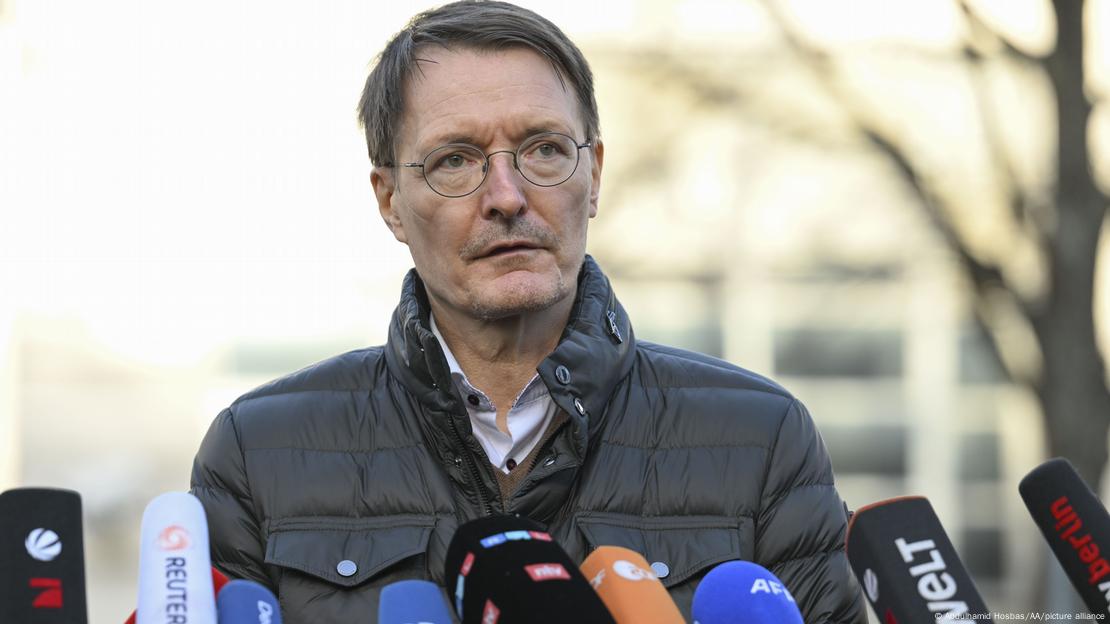
German Health Minister Karl Lauterbach said gay donors will be assessed on their individual risk behavior, rather than sexual orientation. Germany currently differentiates between gay and heterosexual men on the issue.

https://p.dw.com/p/4LyW5


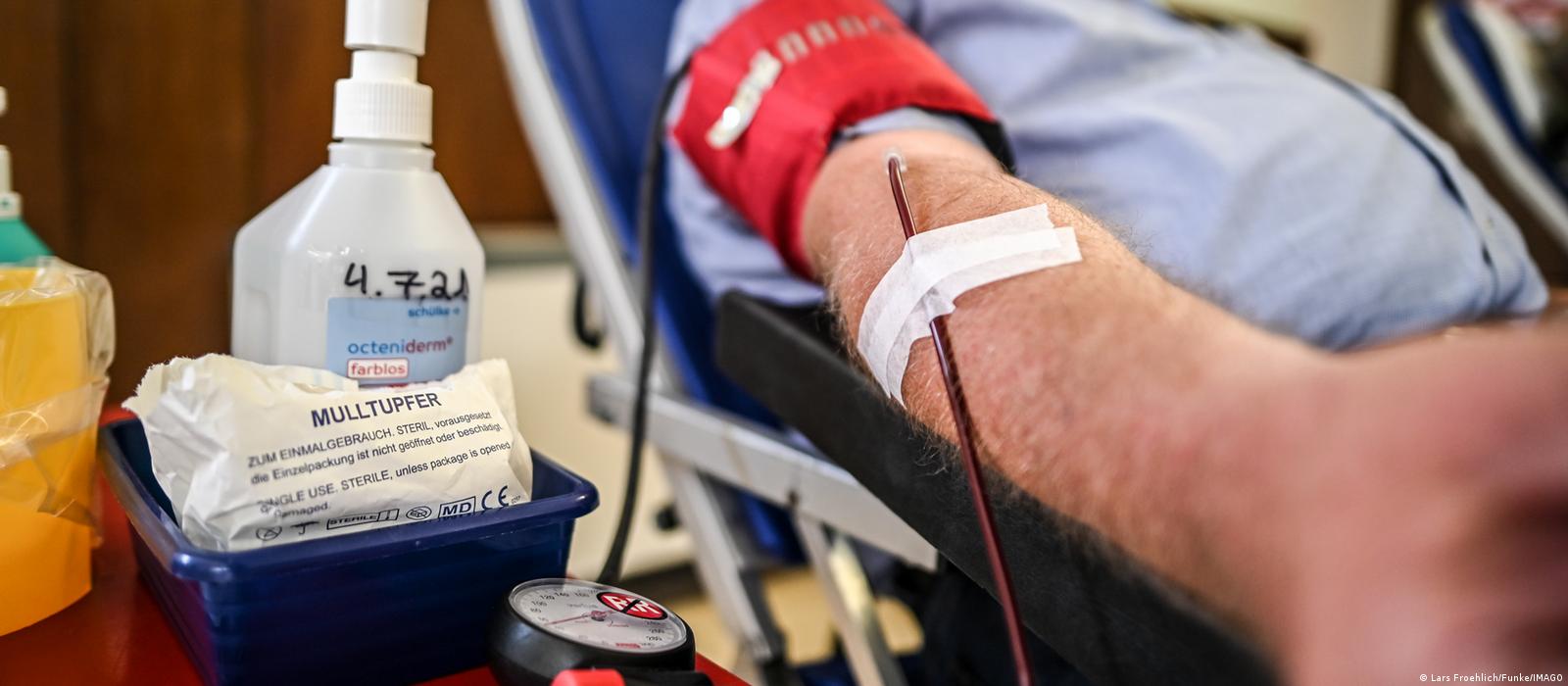
The German government on Tuesday pledged to end discrimination against men or trans women who have sex with men and who wish to donate blood.

German Health Minister Karl Lauterbach said that in the future gay blood donors would be assessed only on their individual risk behavior.
Lauterbach: 'Hidden discrimination' must be avoided

"Whether one can be a blood donor is a question of risk behavior rather than sexual orientation," Lauterbach said. "There must be no hidden discrimination on this issue either.

"We have far too few blood donors. Blood is scarce and it saves lives," Lauterbach, himself a medical doctor, said.

Lauterbach unveiled changes to the law that would force the German Medical Association (BÄK) to alter its blood donation criteria.


Currently, gay men cannot donate blood for a period of four months if they either had a new sexual partner or more than one sexual partner in that time.

The four-month abstention period only applies to heterosexual men who admit they have "regularly changing partners."

Lauterbach's health policy decisions have made him a polarizing figure for some in Germany
Abdulhamid Hosbas/AA/picture alliance

The BÄK rules were designed in a bid to minimize the spread of infectious diseases through blood donations; the current guidelines date back to the beginning of the HIV/AIDS epidemic in the 1980s when fears about the potential scope of spread were rife and knowledge about the disease was patchy.

Lauterbach's amendment to the law would enter into force on April 1. The BÄK would then be required to alter its blood donation guidelines shortly therafter.
What were the reactions to the decision?

Some German politicians and organizations celebrated the decision.

Michael Roth, a member of Lauterbach's center-left Social Democratic Party (SPD) in the German parliament or Bundestag, tweeted: "Equality and respect even when donating blood. Finally!"

Sven Lehmann, a member of the environmentalist Green Party, also praised the move. The Greens are currently in a coalition government with Lauterbach's SPD and the business-focused Free Democratic Party (FDP).

"Very good," Lehmann tweeted while adding that blood donor discrimination in regards to gay and bisexual men and trans people will soon end. "The BÄK had long enough time. Now a law is coming."


Bundestag Member Andrew Ullmann of the FDP tweeted his praise of the decision: "We are no longer medically in the 1990s."


The Lesbian and Gay Federation in Germany welcomed Lauterbach's decision to alter existing law regarding blood transfusions but called the move "long overdue."

"The abolition of this discrimination a long journey and a difficult struggle — and is now the long-awaited fulfillment of a promise to the queer community: It is getting better!"

wd/msh (AFP, dpa)
Vatican opens probe into teen missing for 40 years

Published January 10, 2023 

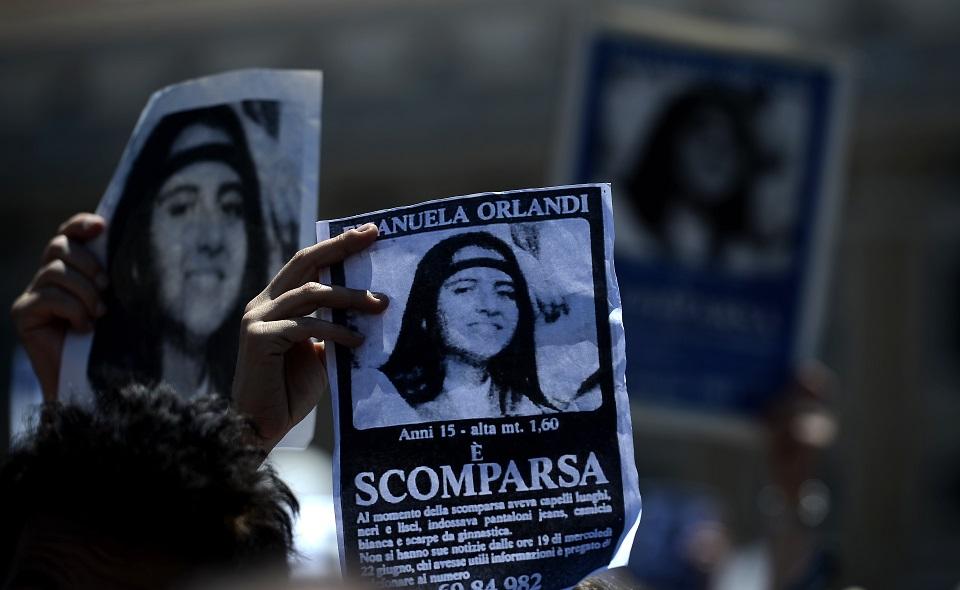
In this file photo taken on May 27, 2012 a demonstrator holds a poster of Emanuela Orlandi reading "Missing" during Pope Benedict XVI's Regina Coeli noon prayer in St. Peter's square, at the Vatican. Filippo Monteforte/AFP

VATICAN CITY, Holy See — The Vatican announced on Tuesday it was opening an inquiry into the disappearance of a teenager 40 years ago, a case which has sparked countless theories and a hit Netflix series.

Emanuela Orlandi, the 15-year-old daughter of a Vatican employee, was last seen leaving a music class in Rome on June 22, 1983.

Decades of speculation followed over what happened to her, ranging from mobsters to a Vatican conspiracy, and the case was the subject of hit Netflix series "Vatican Girl" in 2022.

The Vatican's chief prosecutor, Alessandro Diddi, "has opened a file, based in part on the basis of requests made by the family," a spokesman said.

However, it was not exactly clear what specifically had triggered the inquiry, with the Orlandi family saying they were still waiting for details.

"We don't know what the Vatican will do... which papers they want to review, the papers of the investigation by the Rome prosecutors or if they have a file to share," family lawyer Laura Sgro told AFP.

"The Vatican has never done anything up until now," she said, adding: "I have been asking to be heard by top figures in the Vatican for years... but unfortunately some people are already dead."

Orlandi's family has fought tirelessly to find out what happened to the teenager.

According to one theory widely circulated in Italian media, she was snatched by mobsters to put pressure on the Vatican to recover a loan.

Enrico De Pedis, head of the Magliana gang, was suspected of involvement in her kidnapping and some speculated the youngster might be buried alongside him under a church—but DNA tests on boxes of bones in his tomb failed to find a match.

Another claim often repeated in the press was that she was taken to force the release from prison of Mehmet Ali Agca, the Turk who attempted to assassinate Pope John Paul II in 1981.

In 2017, conspiracy specialists were driven into a frenzy by a leaked—but apparently falsified—document, purportedly written by a cardinal and pointing to a Vatican cover-up.

In 2019, the Vatican dug up two burial chambers in the search for Orlandi but said no recent bones were found. — Agence France-Presse
KRIMINAL KAPITALI$M

Is it corruption? German finance minister under scrutiny

Sabine Kinkartz
January 10, 2023

After it emerged that Germany's finance minister got a generous line of credit from a bank shortly after speaking at its event, questions are being raised about whether the country's corruption laws are too lenient.

Did Christian Lindner get a private loan worth millions only — or even in part — because he promoted a certain bank as Germany's finance minister? That would be a clear case of corruption for the leader of the business-oriented, neoliberal Free Democrats (FDP), the smallest party in the center-left coalition government with the Social Democrats (SPD) and the Greens.

The incident has not gone unnoticed by Berlin public prosecutors.

Though the Karlsruhe-based BBBank is a rather small institution, Lindner managed to procure a massive loan from the bank to facilitate the purchase of a villa in Berlin's leafy Nikolassee district.

Despite having a private business relationship, Lindner agreed to give an opening speech at the bank's centenary celebrations in his capacity as federal minister of finance in the spring of 2022. The taped speech, broadcast to a large representatives' meeting in Karlsruhe, praised the bank by saying, amongst other things: "To me, BBBank is fundamentally appealing."

At the time, Lindner had already taken out a loan of €2.35 million ($2.5 million) from BBBank. A few weeks after the speech, the bank granted Lindner a further loan of €450,000 ($483,000). What prompted the bank to approve a credit line that was more than 1 million euros higher than the cost of the property?

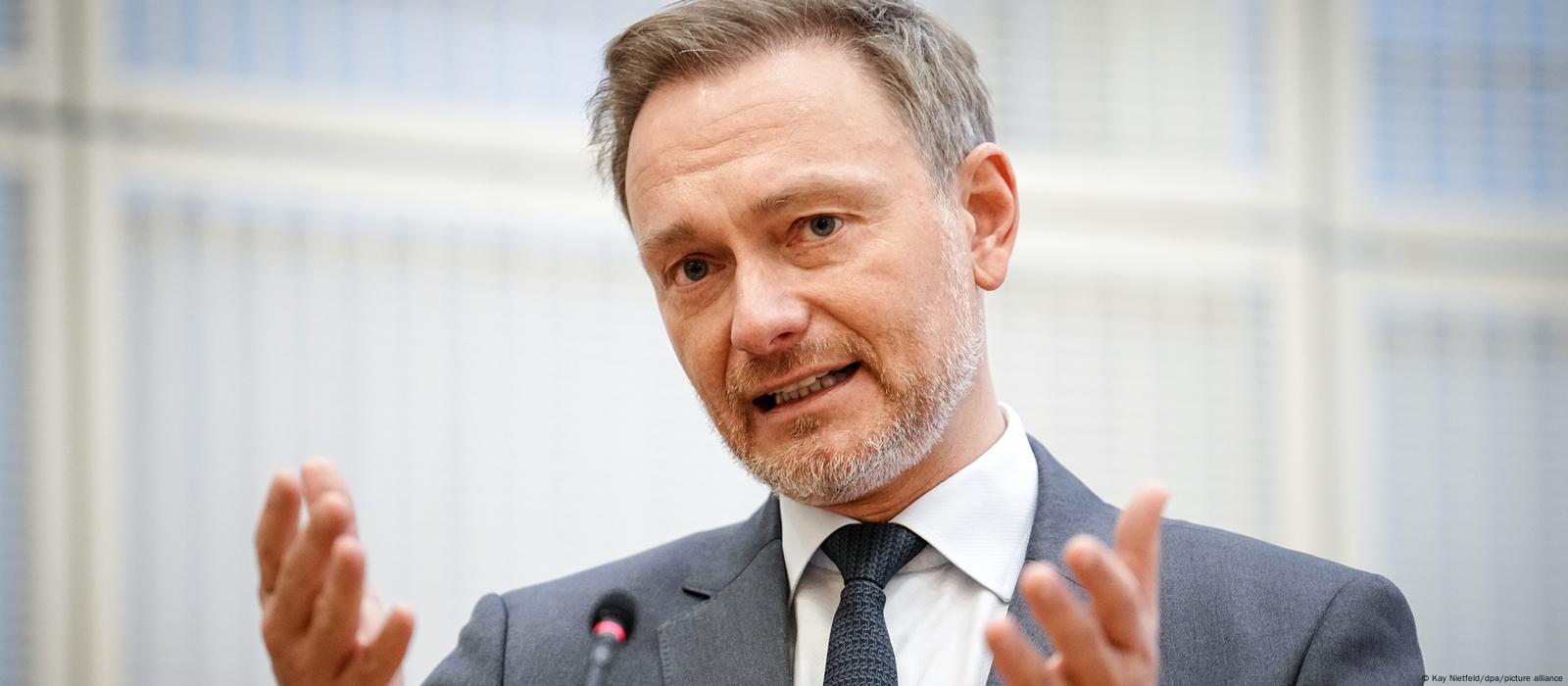
Christian Lindner has heaped praise on a bank which also gave him two loansImage: Revierfoto/picture allliance/dpa

Longstanding business relationship


Lindner has had a close relationship with BBBank for many years. In 2014, when he was not a sitting lawmaker because the FDP had failed to clear the 5% hurdle to enter the Bundestag, he gave testimonials in advertisements for the bank.

At the same time, Linder was giving talks across the country at events organized by the bank. The fees he procured from these talks are listed on his official website and can range from €7,000 to €15,000 per lecture.

In Germany is not against the law for politicians to be in advertisements, and until 2021 members of the Bundestag were also allowed to give as many paid talks as they wanted. According to a study by the metal trade union's Otto Brenner Foundation, just over a third of lawmakers in the legislative period of 2017 to 2021 received additional income on top of their generous salaries, totaling some €53 million. Of these, Lindner is known to be one of the top earners.
Under review by Berlin prosecutors

Still, Lindner's 2022 speech may have crossed a line. A federal finance minister publicly praising a bank and then being given a generous line of credit afterward raises numerous legal questions.
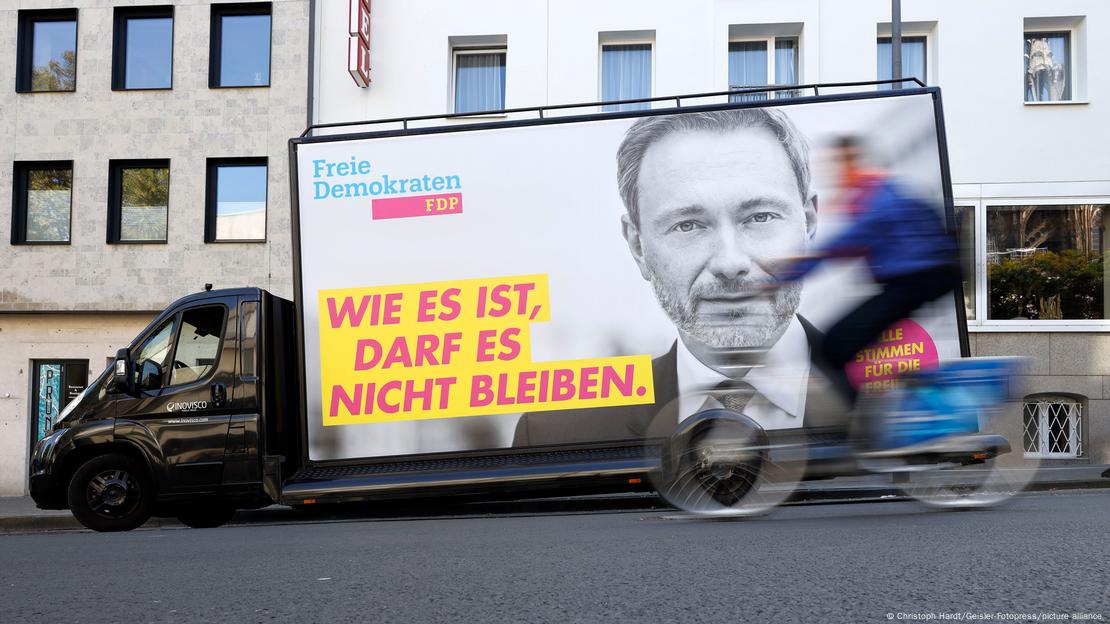
Christian Lindner was the star and sole focus of the FDP's election campaign in 2021Image: Christoph Hardt/Geisler-Fotopress/picture alliance

A spokeswoman for the Federal Ministry of Finance emphasized that such speeches are "by no means unusual." She did not, however, address the question of whether Lindner had been fully transparent about his private business relationship and cleared his new loan with officials at the ministry.

These are precisely the issues that the anti-corruption team at the Berlin Attorney General's Office is now probing. If the bank extended Lindner an unusually large amount of credit in return for his services, that would constitute a crime. The office is currently determining whether they should launch an official corruption investigation. There is one major hurdle to this though — they would have to apply to the Bundestag to life Lindner's parliamentary immunity.

Linder denies wrongdoing

Some opposition members in the Bundestag have already called for Lindner's resignation. The deputy leader of the post-communist Left Party Lorenz Gösta Beutin told Der Spiegel magazine that there are indications that Lindner "may not be able to clearly distinguish" between his job as minister and his private interests. "Should the suspicion be substantiated and criminal proceedings ensue, the finance minister's resignation would be inevitable," he said.

For his part, Lindner has rejected the accusations. Through his lawyer, he has said that his private real estate financing with BBBank began long before he became a Cabinet minister and that any apparent irregularities in amounts of credit are to do with the massive fluctuations of the real estate market. He has also said that it is not a crime for a sitting minister to record a video greeting for a bank meeting.
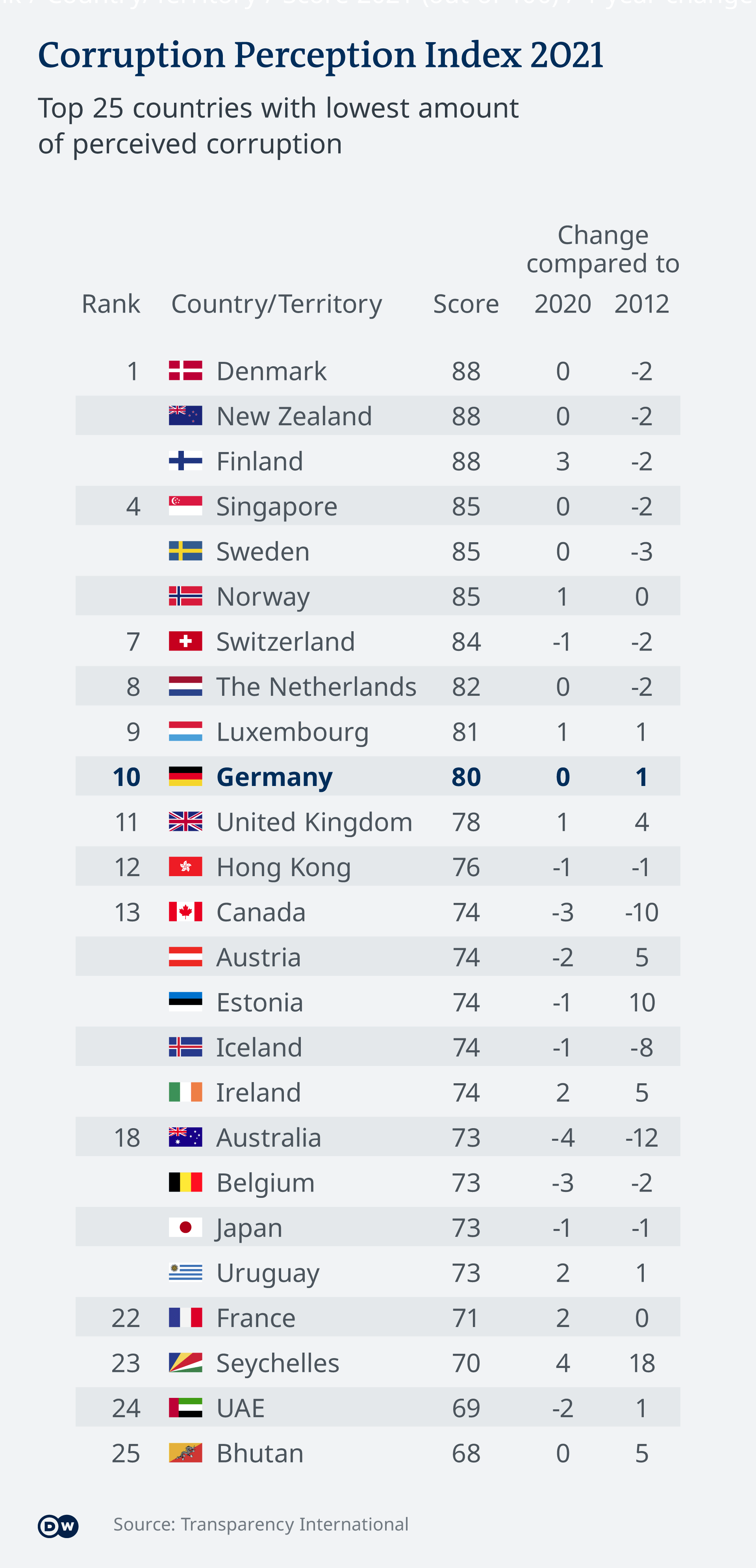
Germany ranks in tenth spot in the corruption perception index


Loopholes in corruption laws

The term "corruption" is not actually found in the German Criminal Code. The law makes a distinction between two crimes: "accepting an advantage" in the course of carrying out official duties, and bribery. For the latter, even expressing the willingness to accept a bribe is a crime.

Anti-corruption organization Transparency Germany welcomed the news that prosecutors were reviewing the accusations. "The rule of law must also apply, and indeed, in an especially critical way, to a federal minister," the group's lawyer Wolfgang Jäckle told the Funke media group.

Germany currently ranks 10th in the Corruption Perceptions Index, a ranking of 180 countries worldwide published annually by Transparency International since 1995. The top countries in the current ranking are Denmark, Finland, and New Zealand. Bringing up the rear are Somalia, Syria, and South Sudan.

The 10th-place ranking may look good, but this ranking has not improved for six years. This is perhaps due to the fact that Germany's anti-corruption legislation contained major loopholes until recently, such as with the case of collecting unlimited speaking fees.

As for gifts, every public servant — from school teachers to the German president — may not accept gifts worth more than €10. Indeed, when in 2006 police officers accepted a carton of grapes from a truck driver they had pulled over at a traffic stop, they were convicted of "accepting an advantage."

02:31

Judge urges Bundestag to tighten laws


In 2012, it emerged that Germany's then-President Christian Wulff had gone on several vacations paid for by wealthy friends and acquaintances. Wulff was later acquitted, but he had already resigned from his post over the accusations and his political career never recovered.

There are also special rules that apply to members of the Bundestag, like Lindner. These rules came into particularly sharp focus in 2020. At the time, several high-profile members of the Christian Democrats (CDU), at the time ruling in coalition with the SPD, were accused of cronyism after journalists discovered that contracts to produce medical masks to combat the COVID-19 pandemic had been given to relatives and other close contacts.

In the most egregious case, an entrepreneur paid some €10 million to two CSU lawmakers to facilitate the sale of masks to the federal government that he had purchased for cheap in Asia. When a judge reviewed the case, he found that the lawmakers had accepted an advantage, but not met Germany's legal definition of bribery. He urged the federal government to tighten loopholes in the legislation.

The current coalition in Berlin has promised to do exactly that. However, no draft law has yet been presented.

This article was originally written in German.
HE HAD WON WHEN TULSI GABBARD VISITED HIM

Welcome back, Bashar Assad: Has the Syrian dictator won?

Cathrin Schaer
DW/AFP
01/10/2023

Recent comments by Turkish and Arab leaders indicate that Bashar Assad and the Syrian regime are being rehabilitated. Despite accusations of war crimes and torture, barriers to international acceptance are falling.

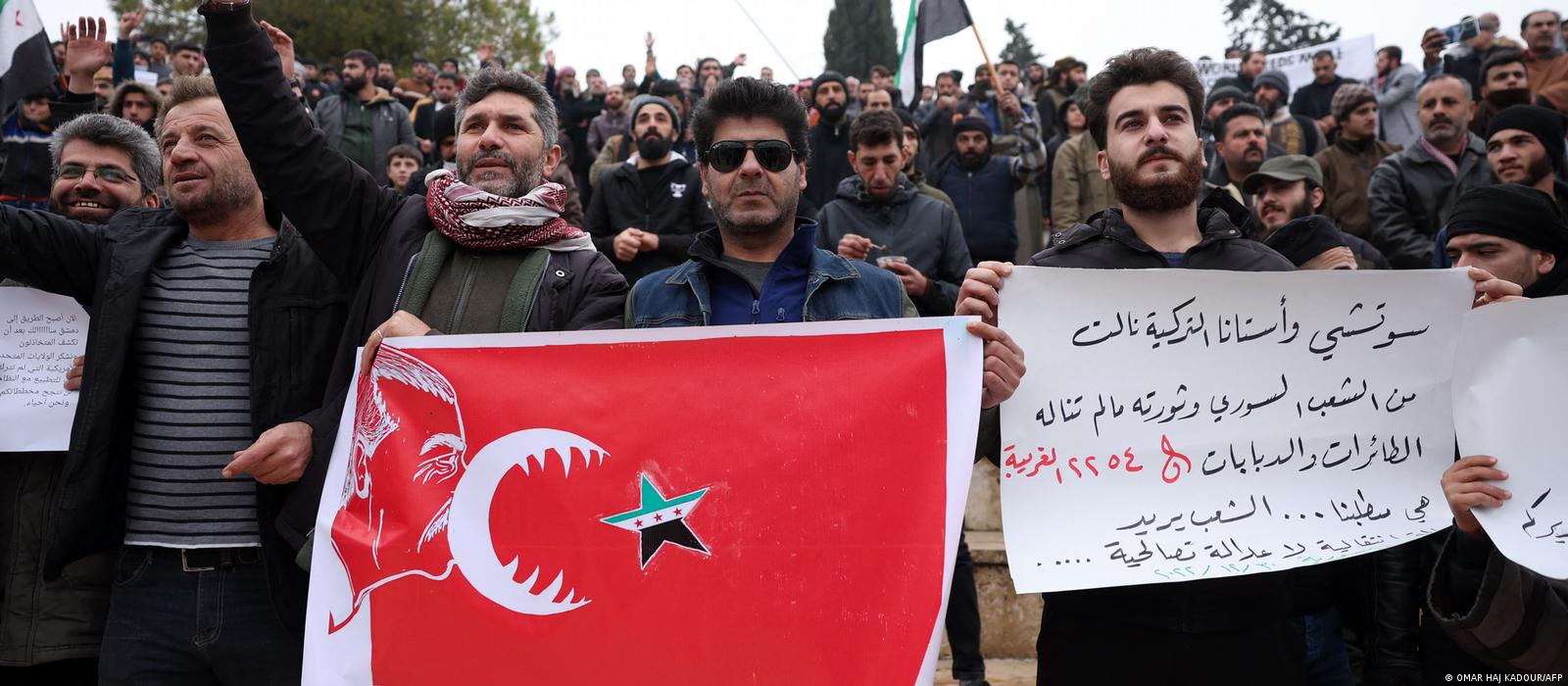
Thousands of Syrians in the north of their country protested about it. Syrian activists and human rights organizations are staunchly opposed to it. Yet, despite the outcry and ongoing protests, Syria's authoritarian leader, Bashar Assad, is slowly being groomed for rehabilitation on the regional, if not the global, stage.

Shortly after the beginning of the revolution in Syria in 2011 and the Assad government's brutal repression of peaceful anti-government protests, most Arab nations cut ties with Assad. But just over a decade later, the tide appears to be changing as regional leaders reconsider ties to Damascus with a view toward migration as well as as their own security and economic affairs.

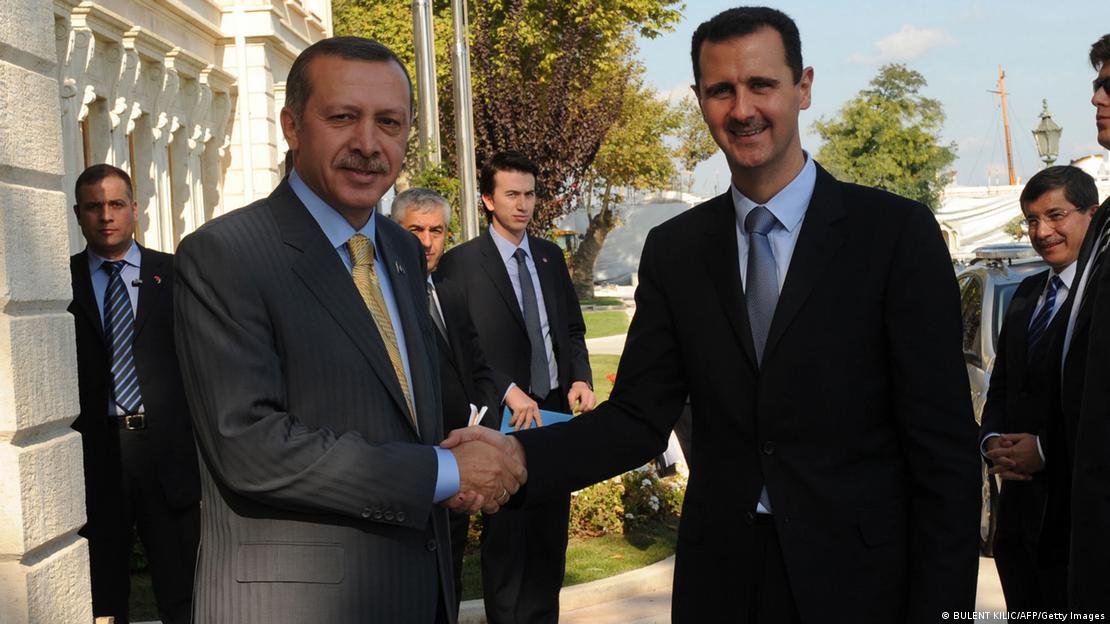
Last week, the United Arab Emirates foreign minister, Abdullah bin Zayed Al Nahyan, was in Damascus to meet with Assad. Also last week, Turkish President Recep Tayyip Erdogan — known as a longtime Assad foe — said he too might soon meet with the Syrian ruler and his Russian allies.

Favorable regional reception


For years, Syria has enjoyed support from the UAE. In late December 2018, the UAE and Bahrain reopened their embassies in Damascus, after both were closed in 2011. Since late 2018, support for Assad's government, which is accused of a wide variety of war crimes and crimes against humanity, has been gradually building.

Before the Syrian civil war, Assad (right) and Erdogan (left) met frequently and were known to have had a friendly relationship
BULENT KILIC/AFP/Getty Images

Among various milestones: In September 2021, energy ministers from Jordan, Syria, Lebanon and Egypt agreed that Lebanon would import Egyptian gas and Jordanian electricity via Syria.

In October 2021, the Jordanian king, the first Arab leader to call for Assad to step down, telephoned the Syrian leader. It was the first such conversation between the two in a decade and came after several months of Syrian-Jordanian cooperation on security and trade.

Several countries, including Iraq, Lebanon, Oman and Algeria, have also called for Syria to be welcomed back into the Arab League, which has 22 members and fosters regional ties. Syria was suspended from the body in 2011.


Barriers to reconciliation


But, as Christopher Phillips, a professor of international relations at the Queen Mary University of London, wrote in a Washington Post analysis in 2019, following a flurry of pro-Assad gestures in the Arab world, "Assad's road to full rehabilitation remains blocked by three significant obstacles: the United States, the European Union and NATO-ally Turkey."

However, this month, as Turkey's Erdogan speculated about a high-level meeting, Phillips' final point looked as though it might not be a barrier much longer.

Erdogan's comments about meeting Assad came after senior Turkish and Syrian officials had already met in Moscow. Russia, an important Syrian ally, has been heavily involved in its civil war and pushing for better relations between Turkey and Syria. The three countries' foreign ministers will likely meet later this month.

But one should be careful about seeing Erdogan's overtures as a genuine reconciliation, Phillips told DW.

"There's a big difference between security ministers and foreign ministers agreeing to see each other and a full reconciliation," he explained. "There are huge obstacles to that, most notably in Idlib and northern Syria, the areas that Turkey is currently controlling."

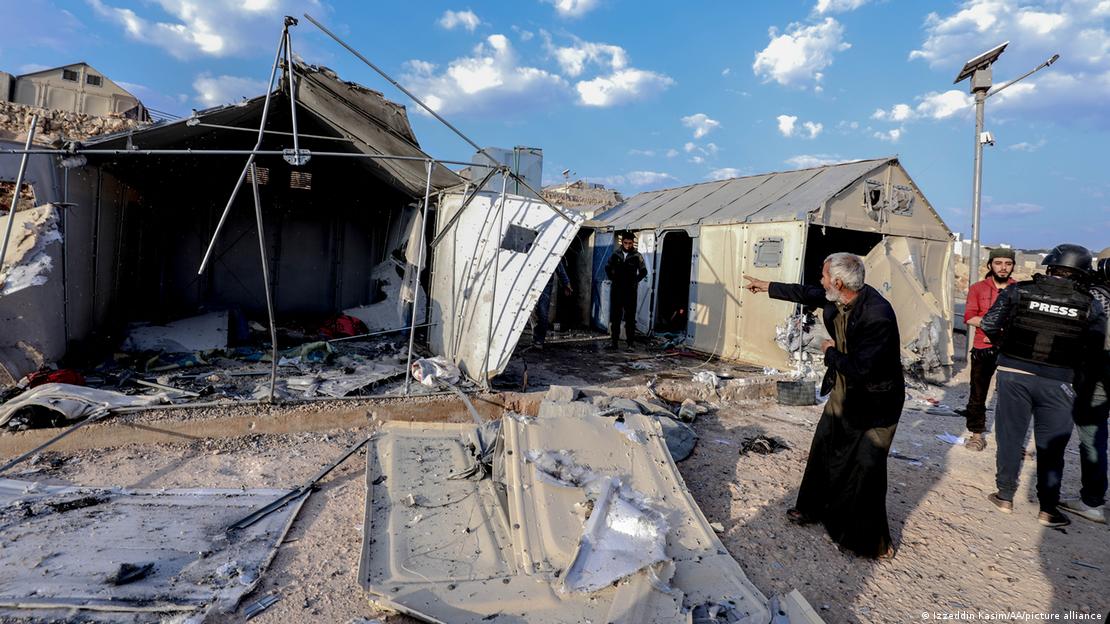
The Assad regime continues to bomb civilians in opposition-held Idlib
Izzeddin Kasim/AA/picture alliance

Turkey has continuously supported the Syrian opposition during the conflict, and Idlib, the last rebel-held territory in Syria, is protected by Turkey as are other, smaller areas in northern Syria. Turkey is unlikely to want to withdraw from these parts of Syria anytime soon.
Turkey's domestic politics

Observers have suggested Erdogan wants to use this aspect of foreign policy to bolster his popularity with voters in upcoming elections, due to be held in June. Turkish foreign policy points out that some parts of Syria are controlled by Syrian-Kurdish groups that Turkey considers enemies of the state.

"Especially when it comes to Kurdish issues, I don't see how [Syria and Turkey] can actually come to an agreement," confirmed Bente Scheller, head of the Middle East and North Africa division at Germany's Heinrich Böll Foundation in Berlin.

Erdogan's statements also have to do with over 3 million Syrian refugees in Turkey.

"Erdogan is now in campaign mode and, of course, he sees great potential in advertising that the millions of Syrian refugees in Turkey could finally go back to Syria, or that he could deport them," Scheller added.

Despite doubts about how genuine Erdogan is, and, therefore, the potential for the Syrian regime's complete diplomatic rehabilitation, there is no question among experts that, in many ways, Assad has already succeeded.

"He's already won, in the sense that the war was primarily about whether he was in charge," Phillips said. "And he is still in charge of most of Syria. In military terms, the opposition is no longer a viable alternative. But, obviously, it's a bit of a Pyrrhic victory because much of the country has been destroyed."

This "victory" also resulted in the increasingly pragmatic approach by regional neighbors.

There's historical precedent for this, Phillips said, noting that Sudan and Egypt were both isolated by their Arab neighbors before eventually being embraced again. Sudan was ostracized in the 1990s for its support of Islamist terror organizations, and Egypt was suspended from the Arab League for a decade from 1979 because it signed a peace treaty with Israel.

The estimated 3.5 million Syrian refugees in Turkey have caused domestic controversy
Image: Drew Angerer/Getty Images

"It wouldn't be unusual for Assad to be welcomed back into the regional fold," Phillips argued. "But I think it's far harder for Western governments to reconcile with Assad unless they get something big in return."
Impact of Ukraine war on Russia's ally

But major concessions from the Assad regime to the West are unlikely, meaning the two other major obstacles to Assad's rehabilitation look likely to remain.

At one time, it seemed that some European Union member states might be divided on whether to continue to isolate Syria. For countries like Greece, Romania, Bulgaria and even Italy and Spain, there are historical ties across the Mediterranean, Phillips explained, as well as issues like irregular migration, humanitarian aid, regional stability and gas exploration in the eastern Mediterranean to consider.

However, the Ukraine war changed that, Phillips said. "Prior to [Russia's invasion of Ukraine] there was a realistic chance that some southern European states would have considered quiet normalization with Assad. But the Ukraine war has united Europeans more firmly in opposition to Russia," he argued. Nobody currently wants to reconcile with Assad, one of Russia's staunchest allies.

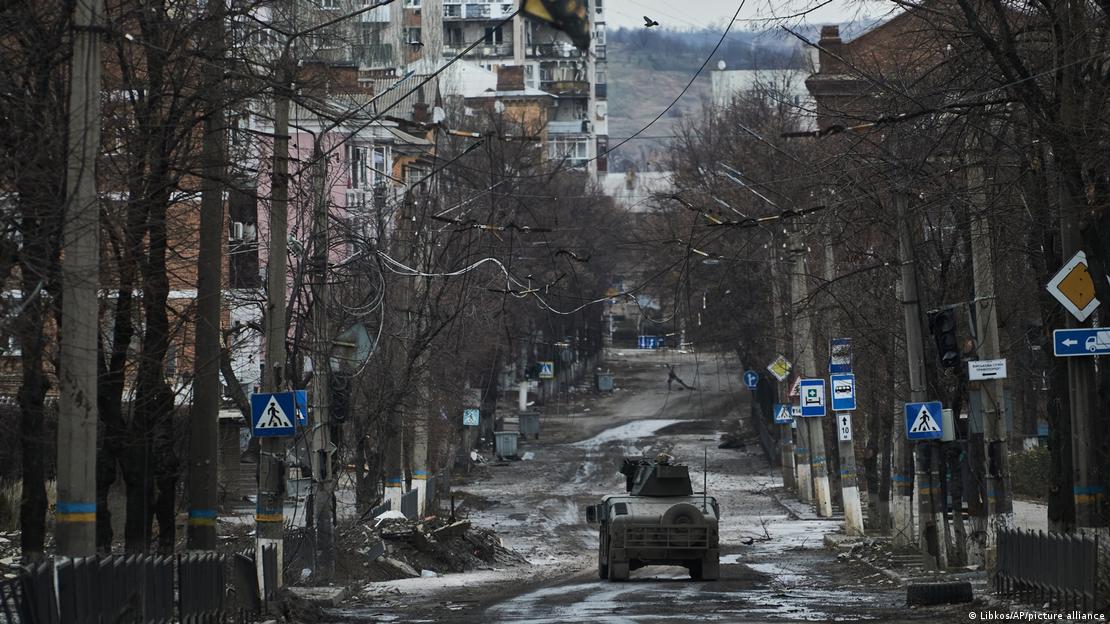
Russia's invasion of Ukraine has united Europeans against rapprochment with a Russian ally
Image: Libkos/AP/picture alliance

The United States is even less likely to relax its position on Syria. "We will not normalize and we do not support other countries normalizing relations with the Assad regime," US State Department spokesperson Ned Price said at a January 5 press briefing when asked to comment on a potential meeting between Erdogan and Assad.
'Stand with Syrians'

Syria expert Phillips suspects the only thing that might change the status quo is if Syrian support was suddenly needed on the international stage. For example, in the early 1990s, after years of Washington viewing Syria with suspicion because of the country's anti-Israel stand, Syria became part of a US-led coalition fighting Iraqi forces in Kuwait following the invasion by Saddam Hussein.

Meanwhile, Syrian activist organizations remain angry about the prospect, no matter how pragmatically other nations may see it. And with good reason, said Laila Kiki, director of UK-based advocacy organization The Syria Campaign.

"Normalizing the regime sends a message to millions of Syrians, who were subject to its atrocities, that their suffering is neglected," she told DW. "This is a regime that has shot dead peaceful protesters and indiscriminately bombed tens of thousands of its own people. It is vital that leaders across the international community, and in particular the EU, stand with Syrians calling for freedom and democracy by speaking out against normalization," Kiki concluded.

With additional reporting by Kersten Knipp.

Edited by: Sean Sinico


Calls grow to curb finance industry's 'buy now, pay later'

Timothy Rooks
DW/AFP
January 10, 2023

Companies like Klarna and Affirm offer short-term credit for shoppers. What does this mean for retailers and how is it impacting buying habits and buyers' credit in the long run? Regulators are getting more interested.

If you haven't heard about online "buy now, pay later" options you will soon. Buying on credit is nothing new. In-house charge programs took care of customers long before credit cards became the norm. Layaway gave shoppers the possibility to leave a deposit and pick up merchandise when it was paid in full.

Recently more online shopping has led to a massive uptake in buy now, pay later (BNPL) options offered by companies like Affirm, Afterpay, Klarna, PayPal, Sezzle and Zip. They can be used to buy goods and services. Anything from clothing to airline tickets. Increasingly people are using them for necessities like groceries and car fuel.
Growth brings scrutiny from regulators

Buy now, pay later services are short-term loans. Many shoppers see them as an alternative to credit cards at checkout. They are a way to stretch out payment.

The system is based on an old trick: Just four easy payments. "This has been a long, time-tested method for increasing sales," said Rohit Chopra, director of the Consumer Financial Protection Bureau. "While major providers don't currently rely on charging interest, they make money through fees charged both to sellers and to consumers who don't pay on time."

His remarks accompanied a market monitoring report put out by the Washington, DC-based government agency that tried to better understand the financial product and start to formulate regulatory guidelines.

The agency looked at five companies that gave out 180 million pay-in-four loans in the US totaling over $24.2 billion (€22.8 billion) in 2021, a nearly tenfold increase from the 16.8 million loans they handed out in 2019. The average purchase was $135.

The report highlighted uneven oversight and pointed to other problems with the services like a lack of consumer protection, good dispute resolution and data protection. Returned products, which make up a large part of goods bought online, were also often hard to process.

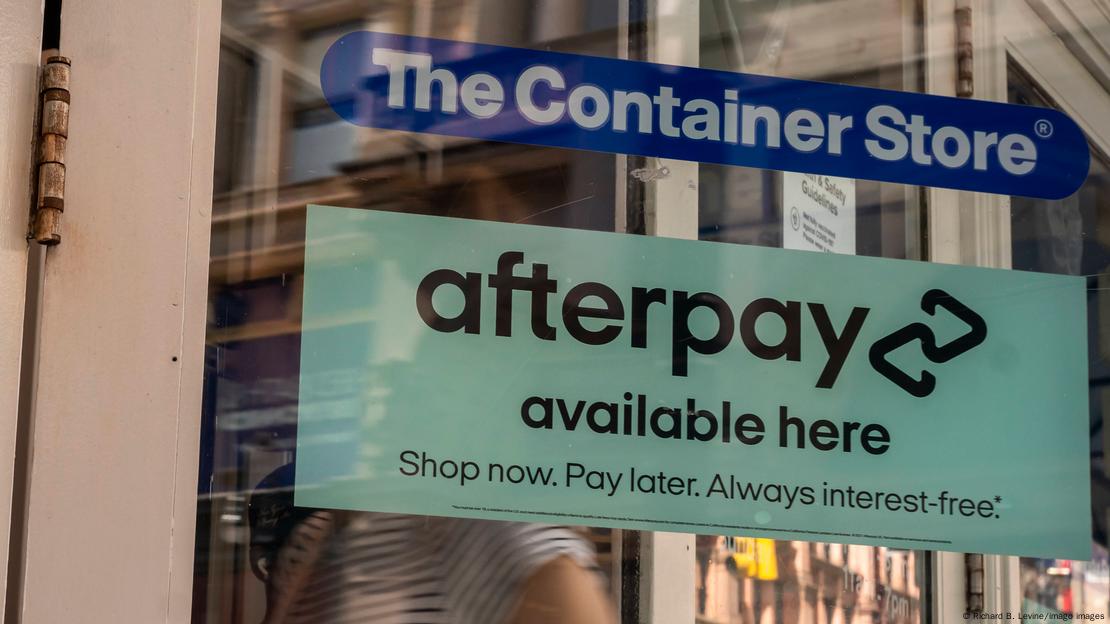
Buy now, pay later options are showing up everywhereImage: Richard B. Levine/imago images


Paying in four installments

The most common BNPL offer is a "pay-in-four" option, meaning 25% down at purchase then three equal payments due every two weeks. Approval is usually fast and without a credit check.

There are no extra costs for borrowers unless they miss a payment. A few companies don't even charge late fees. The lenders make most of their money through fees they charge retailers, which are higher than traditional credit card processing surcharges, anywhere between 2% to 8%.

Some companies like Klarna offer a "pay-in-30 plan" without fees where full payment is due within 30 days. Klarna and PayPal also offer financing plans for up to 36 months for larger purchases. Some systems only work online within a network of merchants. Others can be used nearly anywhere through mobile apps.

Buyers beware of overextension


The biggest complaint about BNPL is that the entire system encourages people to buy more. When the price of something is divided by four it seems much cheaper. And users can take out multiple loans at the same time from different sources. Called "loan stacking," borrowers can quickly lose an overview of what they owe.

Rohit Chopra from the Consumer Financial Protection Bureau also scrutinized the BNPL mobile apps because they bring together lots of detailed information about users in ways that traditional banks or retailers don't.

"Many of these firms have created their own gateways and digital, app-driven marketplaces, powered by personalized behavioral data, to lure their users into buying more products financed through a buy now, pay later loan," he said.

A growing number of people around the world are gravitating toward buy now, pay later apps

A survey released in June by the Federal Reserve Bank of Philadelphia looked at the demographics of buy now, pay later users in the United States. It found an even split between men and women. But an overwhelming majority of users are white, while just over 23% are nonwhite. Overall, it found that all age groups are adopting it and 61% of users were currently employed.

One thing particularly surprised experts at the bank: "Contrary to the assumptions of most observers, buy now, pay later users did not cite lack of credit access as a primary reason for choosing buy now, pay later as a payment option."
Watch your credit score

With BNPL's fast growth and wide reach, consumer advocates like the Consumer Financial Protection Bureau are calling for more regulation. They think these companies should be treated like credit card operators.

Currently, they don't need to report to credit agencies since they are not banks or technically considered lenders. This works two ways: They don't know who they are giving credit to and the borrowers don't get to use these loans to build up their credit history.

How Bitcoins get stolen and how you can keep yours safe
03:32


Penny Lee, CEO of the Financial Technology Association, an industry group that represents several pay-later providers, has a rosier outlook. "Consumers and merchants alike benefit from buy now, pay later. Consumers turn to it as a flexible, zero-to-low-interest alternative to legacy credit products, and merchants of all sizes use buy now, pay later to reach new customers," wrote Lee in a statement to DW. "Buy now, pay later is regulated, with key US federal and state consumer protection laws safeguarding consumers who use the service."

Yet the US is not at the forefront of this e-commerce trend. In 2021, Northwestern Europe was the champion of pay-later transactions. In Sweden they accounted for 25% of domestic online sales, in Germany 20%, Norway 18%, Finland 13% followed by Denmark, the Netherlands, Australia, New Zealand, Belgium, the UK, France and Singapore.

Overall, buy now, pay later accounted for only 3% of e-commerce payments in 2021, which leaves room for growth. But any increased popularity will bring rules. The United States may not be at the forefront of BNPL, but its regulatory decisions will have a big impact on how these companies work around the world.

Edited by: Uwe Hessler