U.S. to simplify offshore wind regulations to meet climate goals
Jan 12 (Reuters) - The U.S. Department of the Interior will reform its regulations for the development of wind energy facilities on the country's outer continental shelf to help meet crucial climate goals, it said in a statement on Thursday.
The proposed rule changes would save developers a projected $1 billion over a 20-year period by streamlining burdensome processes, clarifying ambiguous provisions, and lowering compliance costs, , the statement said.
"Updating these regulations will facilitate the safe and efficient development of offshore wind energy resources, provide certainty to developers and help ensure a fair return to the U.S. taxpayers," U.S. Interior Secretary Deb Haaland said in the release.
The reforms come days after the department named Elizabeth Klein, a lawyer who worked in the Obama and Clinton administrations, to head its Bureau of Ocean Energy Management (BOEM), overseeing offshore oil, gas and wind development.
As part of its offshore clean energy program, the BOEM has over the past two years approved the first two commercial scale offshore wind projects in the United States, held three lease auctions including the first-ever sale off the coast of California, and explored extending offshore wind to other areas like the Gulf of Mexico.
The department expects to hold as many as four more auctions and review at least 16 new commercial facilities by 2025, adding more than 22 gigawatts (GW) of renewable energy.
In September last year, President Joe Biden's administration set a goal of having 15 GW of floating offshore wind capacity by 2035 to accelerate development of next-generation floating wind farms in line with its target of permitting 30 GW of offshore wind by 2030. (Reporting by Deep Vakil in Bengaluru; Editing by David Gregorio)
Thursday, January 12, 2023

Explainer-Peru protests: What is behind the violence?
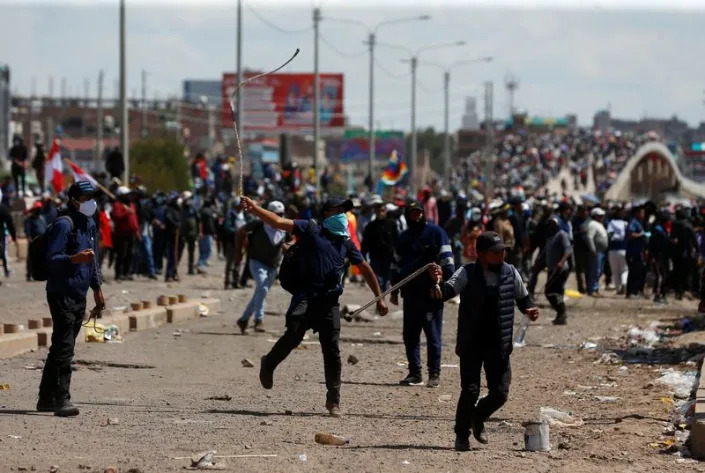
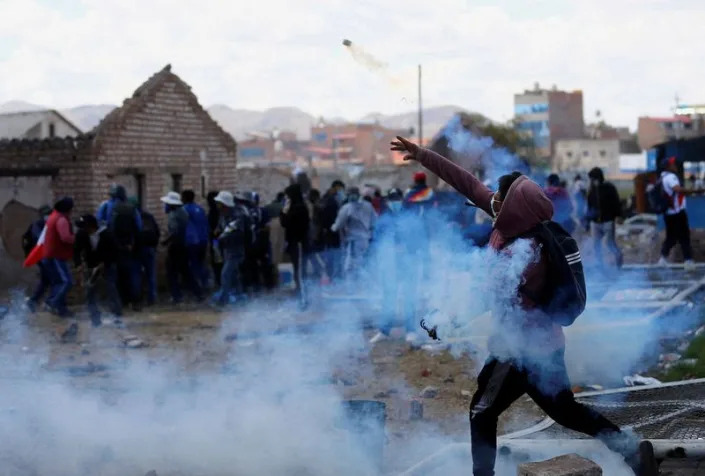
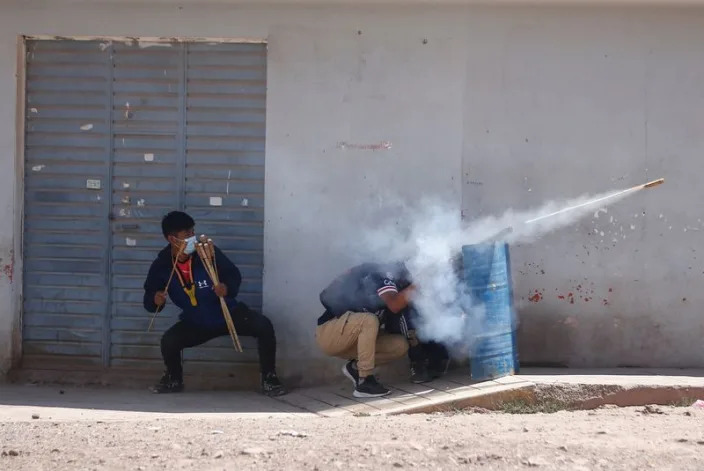
Demonstrators clash with security forces in Juliaca
Thu, January 12, 2023
By Brendan O'Boyle
(Reuters) - At least 40 people have died in clashes between Peruvian security forces and protesters in the Andean country's worst outbreak of violence in over 20 years, as demonstrators call for systemic political changes and accountability for the deaths.
WHAT SPARKED THE PROTESTS?
Protests began after Congress removed President Pedro Castillo on Dec. 7, who was arrested and sentenced to 18 months of pre-trial detention on rebellion charges.
Castillo, 53, was embroiled in multiple corruption investigations and tried to illegally dissolve Congress ahead of a planned impeachment vote.
His removal was the latest blow in a years-long clash between Peru's executive and legislature. Castillo's vice president, Dina Boluarte, ascended to the job as Peru's sixth president in five years.
WHAT IS FUELING THE PROTESTS?
Protesters are demanding Boluarte's resignation, Congress' closure, a new constitution and Castillo's release. There have also been marches calling for an end to the unrest.
Allegations of undue force against protesters have fueled anger against Boluarte's government. Human rights groups have accused authorities of using firearms on protesters and dropping smoke bombs from helicopters. The army says protesters have used weapons and homemade explosives.
Peru's top prosecutor's office on Jan. 10 said it launched an inquiry into Boluarte and members of her cabinet on charges of "genocide, qualified homicide and serious injuries" amid the protests.
WHAT IS HAPPENING AT PROTESTS?
Protesters have blockaded highways, set buildings on fire, and invaded airports, causing tens of millions of dollars in damage and lost revenue. Blockades have disrupted trade, grounded flights and stranded tourists.
Security forces have responded with violence. Victims have included civilians who were not protesting.
The Inter-American Commission on Human Rights has condemned violence by both security forces and protesters and called for dialogue. Protesters have so far refused to start talks with Boluarte.
WHO IS PEDRO CASTILLO?
Voters elected Castillo, a socialist, from a crowded field of candidates in 2021, following years of political crises and during a pandemic that hit Peru harder than most countries.
A little-known teacher and union leader from a poor Andean village, Castillo had no experience in elected office or ties to the Lima establishment.
Castillo's supporters had high hopes he could bring better representation to poor, rural and indigenous Peruvians while standing up to elites.
Once in office, however, his support tumbled amid corruption scandals, party infighting, and congressional opposition. Castillo struggled to govern, naming five prime ministers and more than 80 ministers during his short presidency.
Still, Castillo retained supporters, who see him as a victim of political elites and a Congress that is widely unpopular and considered corrupt. Castillo's 27% approval rating in a November IPSOS poll was still higher than Congress' 18%.
WHERE ARE THE PROTESTS?
Protests have occurred nationwide, but Peru's long marginalized, left-leaning south has been their epicenter and the site of the worst violence.
The largely indigenous region has for centuries been at odds with the more mestizo and whiter capital, which long dominated national politics. Castillo was just the second president born outside of Lima to be elected since 1956.
Although poverty fell in recent decades, a gap in living standards persists between the region and the capital. Despite local copper and gas wealth in the south, indicators including life expectancy and infant mortality lag those in Lima.
Peru's south is also home to economically and culturally important tourist destinations such as Cusco and the nearby Inca citadel of Machu Picchu, from where over 2,000 tourists had to be evacuated in early January due to protests.
(Reporting by Brendan O'Boyle and Marco Aquino; Editing by Lincoln Feast.)
Peru families mourn protest dead after worst violence in decades
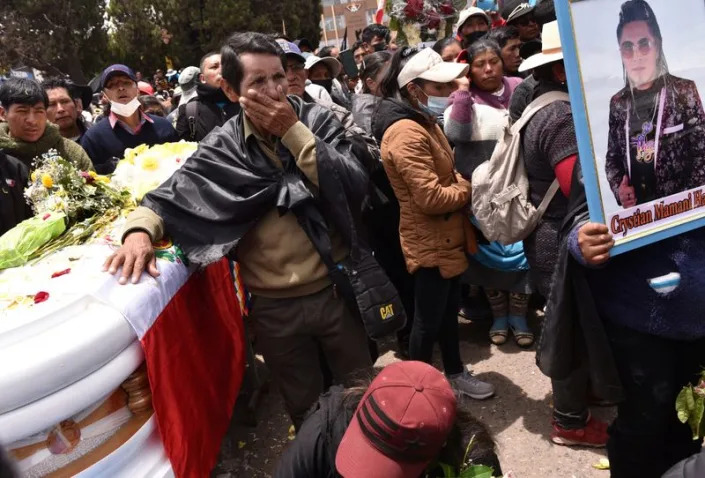
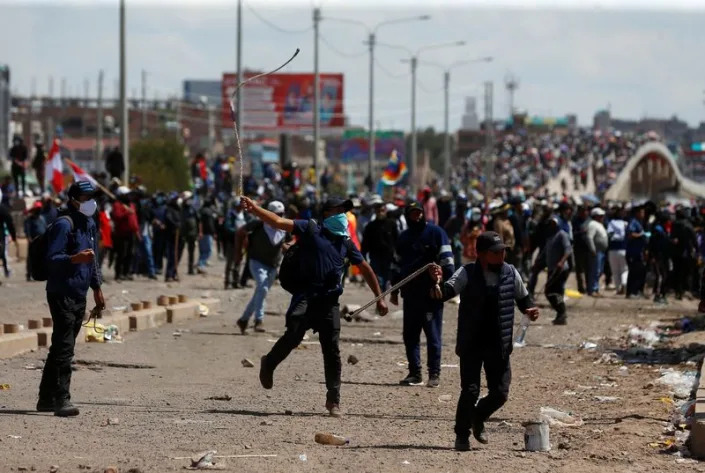
Demonstrators clash with security forces in Juliaca
Marco Aquino
Wed, January 11, 2023
By Marco Aquino
LIMA (Reuters) -Peruvians in the southern region of Puno carried coffins through the streets on Wednesday of the 17 civilians who died in protests in the area earlier this week, the worst outbreak of violence the Andean country has seen in over 20 years.
Even as families mourned their dead, the country's ombudsman reported another death in clashes in the Andean city of Cusco, that of local community leader Remo Candia Guevara.
"We demand an immediate investigation to find those responsible for the death and proceed to the respective sanctions," it said in a statement.
The country has been roiled by protests since the abrupt ouster of leftist President Pedro Castillo in early December, with a total of 41 people killed, almost half of them in the city of Juliaca on Monday, including one police officer.
Thousands of people in Juliaca paid tribute to the dead by carrying coffins through the streets before their burial along with photos of the faces of the victims, flowers, Peruvian flags, and banners blaming the new government for the violence.
"The bloodshed will never be forgotten," some shouted while carrying black flags at a march in the region that borders Bolivia and was the focus of the most recent protests.
The violence, a severe test for Peru's democracy, is the worst conflict since the late 1990s when the country was gripped by violence between rebel group Shining Path and the state, which left 69,000 people dead or missing over two decades.
Protests in 2009 saw 33 Peruvians killed after indigenous groups in the northern jungle region clashed with police during the government of former President Alan García.
Protesters are calling for the resignation of new President Dina Boluarte, quick general elections, a new Constitution and the release of Castillo, who was ousted and arrested for "rebellion" after trying to illegally shutter Congress.
'LISTENING TO ALL VOICES'
On Wednesday a mission from the Inter-American Commission on Human Rights (IACHR) met Boluarte, whose Cabinet survived a confidence vote by Congress on Tuesday, to assess the crisis.
"We will be verifying the human rights situation, the idea is to hear from the broadest possible range of all voices," IACHR representative Edgar Stuardo Ralón told reporters.
Boluarte, facing a preliminary investigation by state prosecutors over the deaths, said in a statement after the meeting that the government would give the commission all the support needed to find out what had happened.
Peruvian police and armed forces have been accused by human rights groups of using deadly firearms and launching tear gas canisters from helicopters. The army says, for its part, that the demonstrators have used weapons and homemade explosives.
(Reporting by Marco Aquino; Editing by Sandra Maler)
Peru protests: New President Boluarte faces genocide inquiry
Tue, January 10, 2023

Dina Boluarte was sworn in as Peru's new president shortly after Pedro Castillo was ousted
Peru's top prosecutor has launched an inquiry into President Dina Boluarte and key ministers over weeks of clashes that have left dozens of people dead.
The officials are being investigated on charges of "genocide, qualified homicide and serious injuries".
Violence erupted after ex-President Pedro Castillo was arrested in December for trying to dissolve Congress.
On Monday, 17 people died in clashes between Castillo supporters and security forces in south-eastern Peru.
Dozens more were injured in the city of Juliaca in what was the worst day of violence so far. Many of the victims had gunshot wounds.
The authorities accused the protesters of trying to overrun Juliaca's airport and a local police station. An overnight curfew is now in place in the region.
Fresh Peru clashes leave many dead
On Tuesday, the attorney general's office announced its decision to investigate Ms Boluarte, as well as Prime Minister Alberto Otárola along with the defence and interior ministers.
The president and her ministers have not publicly commented on the issue.
Castillo supporters - many of whom are poor indigenous Peruvians - say President Boluarte must resign, snap elections be held and the former president released.
Mr Castillo, a left-winger, tweeted from his prison cell, saying those defending Peru from what he called the coup dictatorship would never be forgotten.
In a separate development on Tuesday, Mr Otárola's government comfortably won a vote of confidence in Congress.
The South American nation has been through years of political turmoil, with the latest crisis coming to a head when Mr Castillo announced he was dissolving Congress and introducing a state of emergency in December.
But Congress proceeded to vote overwhelmingly to impeach him.
The former president is being investigated on charges of rebellion and conspiracy. He denies all the accusations, insisting that he is still the country's legitimate president.
Demonstrators clash with security forces in Juliaca
Thu, January 12, 2023
By Brendan O'Boyle
(Reuters) - At least 40 people have died in clashes between Peruvian security forces and protesters in the Andean country's worst outbreak of violence in over 20 years, as demonstrators call for systemic political changes and accountability for the deaths.
WHAT SPARKED THE PROTESTS?
Protests began after Congress removed President Pedro Castillo on Dec. 7, who was arrested and sentenced to 18 months of pre-trial detention on rebellion charges.
Castillo, 53, was embroiled in multiple corruption investigations and tried to illegally dissolve Congress ahead of a planned impeachment vote.
His removal was the latest blow in a years-long clash between Peru's executive and legislature. Castillo's vice president, Dina Boluarte, ascended to the job as Peru's sixth president in five years.
WHAT IS FUELING THE PROTESTS?
Protesters are demanding Boluarte's resignation, Congress' closure, a new constitution and Castillo's release. There have also been marches calling for an end to the unrest.
Allegations of undue force against protesters have fueled anger against Boluarte's government. Human rights groups have accused authorities of using firearms on protesters and dropping smoke bombs from helicopters. The army says protesters have used weapons and homemade explosives.
Peru's top prosecutor's office on Jan. 10 said it launched an inquiry into Boluarte and members of her cabinet on charges of "genocide, qualified homicide and serious injuries" amid the protests.
WHAT IS HAPPENING AT PROTESTS?
Protesters have blockaded highways, set buildings on fire, and invaded airports, causing tens of millions of dollars in damage and lost revenue. Blockades have disrupted trade, grounded flights and stranded tourists.
Security forces have responded with violence. Victims have included civilians who were not protesting.
The Inter-American Commission on Human Rights has condemned violence by both security forces and protesters and called for dialogue. Protesters have so far refused to start talks with Boluarte.
WHO IS PEDRO CASTILLO?
Voters elected Castillo, a socialist, from a crowded field of candidates in 2021, following years of political crises and during a pandemic that hit Peru harder than most countries.
A little-known teacher and union leader from a poor Andean village, Castillo had no experience in elected office or ties to the Lima establishment.
Castillo's supporters had high hopes he could bring better representation to poor, rural and indigenous Peruvians while standing up to elites.
Once in office, however, his support tumbled amid corruption scandals, party infighting, and congressional opposition. Castillo struggled to govern, naming five prime ministers and more than 80 ministers during his short presidency.
Still, Castillo retained supporters, who see him as a victim of political elites and a Congress that is widely unpopular and considered corrupt. Castillo's 27% approval rating in a November IPSOS poll was still higher than Congress' 18%.
WHERE ARE THE PROTESTS?
Protests have occurred nationwide, but Peru's long marginalized, left-leaning south has been their epicenter and the site of the worst violence.
The largely indigenous region has for centuries been at odds with the more mestizo and whiter capital, which long dominated national politics. Castillo was just the second president born outside of Lima to be elected since 1956.
Although poverty fell in recent decades, a gap in living standards persists between the region and the capital. Despite local copper and gas wealth in the south, indicators including life expectancy and infant mortality lag those in Lima.
Peru's south is also home to economically and culturally important tourist destinations such as Cusco and the nearby Inca citadel of Machu Picchu, from where over 2,000 tourists had to be evacuated in early January due to protests.
(Reporting by Brendan O'Boyle and Marco Aquino; Editing by Lincoln Feast.)
Peru families mourn protest dead after worst violence in decades
Demonstrators clash with security forces in Juliaca
Marco Aquino
Wed, January 11, 2023
By Marco Aquino
LIMA (Reuters) -Peruvians in the southern region of Puno carried coffins through the streets on Wednesday of the 17 civilians who died in protests in the area earlier this week, the worst outbreak of violence the Andean country has seen in over 20 years.
Even as families mourned their dead, the country's ombudsman reported another death in clashes in the Andean city of Cusco, that of local community leader Remo Candia Guevara.
"We demand an immediate investigation to find those responsible for the death and proceed to the respective sanctions," it said in a statement.
The country has been roiled by protests since the abrupt ouster of leftist President Pedro Castillo in early December, with a total of 41 people killed, almost half of them in the city of Juliaca on Monday, including one police officer.
Thousands of people in Juliaca paid tribute to the dead by carrying coffins through the streets before their burial along with photos of the faces of the victims, flowers, Peruvian flags, and banners blaming the new government for the violence.
"The bloodshed will never be forgotten," some shouted while carrying black flags at a march in the region that borders Bolivia and was the focus of the most recent protests.
The violence, a severe test for Peru's democracy, is the worst conflict since the late 1990s when the country was gripped by violence between rebel group Shining Path and the state, which left 69,000 people dead or missing over two decades.
Protests in 2009 saw 33 Peruvians killed after indigenous groups in the northern jungle region clashed with police during the government of former President Alan García.
Protesters are calling for the resignation of new President Dina Boluarte, quick general elections, a new Constitution and the release of Castillo, who was ousted and arrested for "rebellion" after trying to illegally shutter Congress.
'LISTENING TO ALL VOICES'
On Wednesday a mission from the Inter-American Commission on Human Rights (IACHR) met Boluarte, whose Cabinet survived a confidence vote by Congress on Tuesday, to assess the crisis.
"We will be verifying the human rights situation, the idea is to hear from the broadest possible range of all voices," IACHR representative Edgar Stuardo Ralón told reporters.
Boluarte, facing a preliminary investigation by state prosecutors over the deaths, said in a statement after the meeting that the government would give the commission all the support needed to find out what had happened.
Peruvian police and armed forces have been accused by human rights groups of using deadly firearms and launching tear gas canisters from helicopters. The army says, for its part, that the demonstrators have used weapons and homemade explosives.
(Reporting by Marco Aquino; Editing by Sandra Maler)
Peru protests: New President Boluarte faces genocide inquiry
Tue, January 10, 2023
Dina Boluarte was sworn in as Peru's new president shortly after Pedro Castillo was ousted
Peru's top prosecutor has launched an inquiry into President Dina Boluarte and key ministers over weeks of clashes that have left dozens of people dead.
The officials are being investigated on charges of "genocide, qualified homicide and serious injuries".
Violence erupted after ex-President Pedro Castillo was arrested in December for trying to dissolve Congress.
On Monday, 17 people died in clashes between Castillo supporters and security forces in south-eastern Peru.
Dozens more were injured in the city of Juliaca in what was the worst day of violence so far. Many of the victims had gunshot wounds.
The authorities accused the protesters of trying to overrun Juliaca's airport and a local police station. An overnight curfew is now in place in the region.
Fresh Peru clashes leave many dead
On Tuesday, the attorney general's office announced its decision to investigate Ms Boluarte, as well as Prime Minister Alberto Otárola along with the defence and interior ministers.
The president and her ministers have not publicly commented on the issue.
Castillo supporters - many of whom are poor indigenous Peruvians - say President Boluarte must resign, snap elections be held and the former president released.
Mr Castillo, a left-winger, tweeted from his prison cell, saying those defending Peru from what he called the coup dictatorship would never be forgotten.
In a separate development on Tuesday, Mr Otárola's government comfortably won a vote of confidence in Congress.
The South American nation has been through years of political turmoil, with the latest crisis coming to a head when Mr Castillo announced he was dissolving Congress and introducing a state of emergency in December.
But Congress proceeded to vote overwhelmingly to impeach him.
The former president is being investigated on charges of rebellion and conspiracy. He denies all the accusations, insisting that he is still the country's legitimate president.
SE Peru: 'Traditionally the region has been very close to the leftwing political process' in Bolivia
Issued on: 12/01/2023 -
04:58 Video by:Tom Burges WATSON
Protests against Peruvian President Dina Boluarte’s government that have left 48 people dead since they began a month ago spread through the south of the Andean country on Wednesday with new clashes reported in the tourist city of Cusco. For more on the deadly clashes, FRANCE 24 is joined by Dr. Amalendu Misra, Senior Lecturer and Professor of International Politics at Lancaster University.
Issued on: 12/01/2023 -
04:58 Video by:Tom Burges WATSON
Protests against Peruvian President Dina Boluarte’s government that have left 48 people dead since they began a month ago spread through the south of the Andean country on Wednesday with new clashes reported in the tourist city of Cusco. For more on the deadly clashes, FRANCE 24 is joined by Dr. Amalendu Misra, Senior Lecturer and Professor of International Politics at Lancaster University.
Peru families mourn protest dead after worst violence in decades
mmj/kb 12.01.2023, 09:03
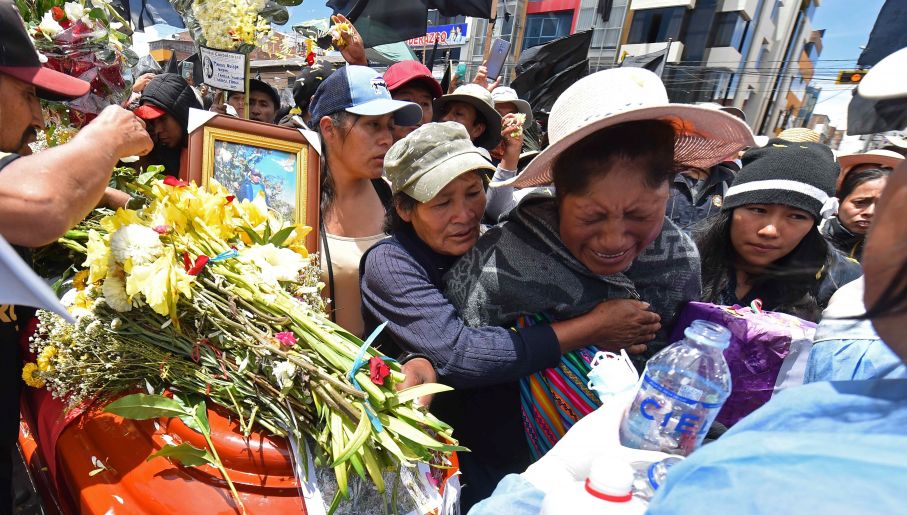
Dozens of people attend a large mass for those who died this week during the protests, in the Plaza de Armas in Juliaca, Peru, 11 January 2023. Photo: EPA/Stringer
A funeral procession marched through the streets of Juliaca, Puno region, on Wednesday with Peruvians carrying coffins of the 17 civilians who died in protests in the area earlier this week, the worst outbreak of violence the Andean country has seen in over two decades.
The violence continued as families mourned their dead, with the country's ombudsman reporting another casualty in clashes in the Andean city of Cusco, that of local community leader Remo Candia Guevara.
“We demand an immediate investigation to find those responsible for the death and proceed to the respective sanctions,” it said in a statement.
Protests have been rattling the country since the abrupt ouster of leftist President Pedro Castillo in early December, with a total of 41 people killed, almost half of them in the city of Juliaca on Monday, including one police officer.
Thousands of people in Juliaca paid tribute to the dead. Coffins were carried through the streets before their burial along with photographs of the faces of the victims, flowers were laid, Peruvian flags waved, and banners displayed blaming the new government for the violence.
“The bloodshed will never be forgotten,” was on the lips of some who cried out their anger while carrying black flags at a march in the region that borders Bolivia and was the focus of the most recent protests.
The violence was a harsh litmus test for Peru's democracy. So far, the test has been hardly passed as the unrest transmogrified into the country’s worst conflict since the late 1990s when Peru was torn by violence between the Shining Path rebel group and the state. As many as 69,000 were killed, died or went missing over two decades amidst the conflict.
In 2009, protests saw 33 Peruvians killed after indigenous groups in the northern jungle region clashed with police during the government of former President Alan García.
The protesters’ demands are the resignation of new President Dina Boluarte, snap general elections, a new Constitution and the release of Castillo, who was ousted and arrested for “rebellion” after trying to illegally shutter Congress.
Boluarte seem cooperative
Wednesday saw a meeting between a mission from the Inter-American Commission on Human Rights (IACHR) and Boluarte, whose Cabinet survived a confidence vote by Congress on Tuesday, to assess the crisis.
“We will be verifying the human rights situation, the idea is to hear from the broadest possible range of all voices,” IACHR representative Edgar Stuardo Ralón told reporters.
Facing a preliminary investigation by state prosecutors over the deaths, Boluarte seemed inclined to cooperate, saying in a statement after the meeting that the government would give the commission all the support needed to find out what had happened.
Peruvian police and armed forces have been accused by human rights groups of using deadly firearms and launching tear gas canisters from helicopters. But as the army claims, the demonstrators have not gone the peaceful path of protest, instead resorted to using weapons and homemade explosives.
source: REUTERS, TVP WORLD
mmj/kb 12.01.2023, 09:03
Dozens of people attend a large mass for those who died this week during the protests, in the Plaza de Armas in Juliaca, Peru, 11 January 2023. Photo: EPA/Stringer
A funeral procession marched through the streets of Juliaca, Puno region, on Wednesday with Peruvians carrying coffins of the 17 civilians who died in protests in the area earlier this week, the worst outbreak of violence the Andean country has seen in over two decades.
The violence continued as families mourned their dead, with the country's ombudsman reporting another casualty in clashes in the Andean city of Cusco, that of local community leader Remo Candia Guevara.
“We demand an immediate investigation to find those responsible for the death and proceed to the respective sanctions,” it said in a statement.
Protests have been rattling the country since the abrupt ouster of leftist President Pedro Castillo in early December, with a total of 41 people killed, almost half of them in the city of Juliaca on Monday, including one police officer.
Thousands of people in Juliaca paid tribute to the dead. Coffins were carried through the streets before their burial along with photographs of the faces of the victims, flowers were laid, Peruvian flags waved, and banners displayed blaming the new government for the violence.
“The bloodshed will never be forgotten,” was on the lips of some who cried out their anger while carrying black flags at a march in the region that borders Bolivia and was the focus of the most recent protests.
The violence was a harsh litmus test for Peru's democracy. So far, the test has been hardly passed as the unrest transmogrified into the country’s worst conflict since the late 1990s when Peru was torn by violence between the Shining Path rebel group and the state. As many as 69,000 were killed, died or went missing over two decades amidst the conflict.
In 2009, protests saw 33 Peruvians killed after indigenous groups in the northern jungle region clashed with police during the government of former President Alan García.
The protesters’ demands are the resignation of new President Dina Boluarte, snap general elections, a new Constitution and the release of Castillo, who was ousted and arrested for “rebellion” after trying to illegally shutter Congress.
Boluarte seem cooperative
Wednesday saw a meeting between a mission from the Inter-American Commission on Human Rights (IACHR) and Boluarte, whose Cabinet survived a confidence vote by Congress on Tuesday, to assess the crisis.
“We will be verifying the human rights situation, the idea is to hear from the broadest possible range of all voices,” IACHR representative Edgar Stuardo Ralón told reporters.
Facing a preliminary investigation by state prosecutors over the deaths, Boluarte seemed inclined to cooperate, saying in a statement after the meeting that the government would give the commission all the support needed to find out what had happened.
Peruvian police and armed forces have been accused by human rights groups of using deadly firearms and launching tear gas canisters from helicopters. But as the army claims, the demonstrators have not gone the peaceful path of protest, instead resorted to using weapons and homemade explosives.
source: REUTERS, TVP WORLD
Peru protesters mourn their dead as clashes continue
Issued on: 12/01/2023 -

Juliaca (Peru) (AFP) – Demonstrators in Peru blocked roads and held mass funerals on Wednesday for those killed in violent anti-government protests that have gripped the country for weeks, as the United States called for "restraint" on both sides.
The deadly clashes have spread to the tourist city of Cusco, the ancient capital of the Inca Empire, where one protester was killed and more than 20 people, including six police officers, were wounded.
In total, at least 40 people have died in more than a month of demonstrations demanding the resignation of President Dina Boluarte, who took over after the ouster and arrest of her predecessor Pedro Castillo on December 7.
The violence has drawn a rebuke from the United Nations, and a delegation from the Inter-American Commission on Human Rights (IACHR) arrived in the country Wednesday to investigate the protests and accusations of political repression.
On Tuesday, Peru's prosecutor's office said it was opening a genocide investigation against Boluarte and other top officials as a result of the deaths.
The epicenter of the protests has been in the Aymara region of Puno, on the border with Bolivia, where thousands of residents walked the streets of Juliaca with the coffins of 17 civilians who were killed earlier this week.
Each coffin bore a photograph and was draped in a Peruvian flag.
"Dina killed me with bullets," read the white coffin of Edgar Huaranca, carried on the shoulders of six family members.
The government has imposed a three-day curfew on the Andean region in a bid to calm the tensions.
On Wednesday, a road blockade extended to eight of the country's 25 regions, officials said.
In Cusco, demonstrators tried to reach the city's airport after mobilizing to demand the president's ouster.
The ombudsman's office said one protester had been killed, identifying him on Twitter as the president of the community of Anansaya Urinsaya Ccollana de Anta, Remo Candia Guevara.
"We demand an immediate investigation to find those responsible for the death and proceed to the respective sanction," it added.
Among the more than 20 wounded in Cusco were six police officers, the health ministry reported.
In Arequipa, Peru's second city, hundreds also marched against the government, while in Tacna, on the border with Chile, an indefinite strike began, marked by episodes of vandalism.
Human rights probe launched
The regional governments of Puno and Cusco are demanding Boluarte step down as a first step to resolving the crisis.
Puno began an indefinite strike a week ago to demand the resignation of Boluarte, immediate presidential and legislative elections and the convening of a Constituent Assembly.
The IACHR commissioners were received by Boluarte at the Government Palace, the seat of the Peruvian executive.
"We are going to verify the human rights situation. We regret the loss of human life during the demonstrations," said head of mission Edgar Stuardo Ralon, whose delegation will remain in Peru until January 13.
They will meet with authorities, victims and their relatives in Lima, Ica and Arequipa.
The United States on Wednesday urged restraint and the minimal use of force, and backed an investigation into the dozens of deaths.
"We recognize the right for peaceful protest and expressing grievances through democratic channels, and call for calm, dialogue and for all parties to exercise restraint and non-violence," a State Department spokesperson said.
© 2023 AFP
Issued on: 12/01/2023 -

In total, at least 40 people have died in more than a month of demonstrations demanding the resignation of President Dina Boluarte © Juan Carlos CISNEROS / AFP
Juliaca (Peru) (AFP) – Demonstrators in Peru blocked roads and held mass funerals on Wednesday for those killed in violent anti-government protests that have gripped the country for weeks, as the United States called for "restraint" on both sides.
The deadly clashes have spread to the tourist city of Cusco, the ancient capital of the Inca Empire, where one protester was killed and more than 20 people, including six police officers, were wounded.
In total, at least 40 people have died in more than a month of demonstrations demanding the resignation of President Dina Boluarte, who took over after the ouster and arrest of her predecessor Pedro Castillo on December 7.
The violence has drawn a rebuke from the United Nations, and a delegation from the Inter-American Commission on Human Rights (IACHR) arrived in the country Wednesday to investigate the protests and accusations of political repression.
On Tuesday, Peru's prosecutor's office said it was opening a genocide investigation against Boluarte and other top officials as a result of the deaths.
The epicenter of the protests has been in the Aymara region of Puno, on the border with Bolivia, where thousands of residents walked the streets of Juliaca with the coffins of 17 civilians who were killed earlier this week.
Each coffin bore a photograph and was draped in a Peruvian flag.
"Dina killed me with bullets," read the white coffin of Edgar Huaranca, carried on the shoulders of six family members.
The government has imposed a three-day curfew on the Andean region in a bid to calm the tensions.
On Wednesday, a road blockade extended to eight of the country's 25 regions, officials said.
In Cusco, demonstrators tried to reach the city's airport after mobilizing to demand the president's ouster.
The ombudsman's office said one protester had been killed, identifying him on Twitter as the president of the community of Anansaya Urinsaya Ccollana de Anta, Remo Candia Guevara.
"We demand an immediate investigation to find those responsible for the death and proceed to the respective sanction," it added.
Among the more than 20 wounded in Cusco were six police officers, the health ministry reported.
In Arequipa, Peru's second city, hundreds also marched against the government, while in Tacna, on the border with Chile, an indefinite strike began, marked by episodes of vandalism.
Human rights probe launched
The regional governments of Puno and Cusco are demanding Boluarte step down as a first step to resolving the crisis.
Puno began an indefinite strike a week ago to demand the resignation of Boluarte, immediate presidential and legislative elections and the convening of a Constituent Assembly.
The IACHR commissioners were received by Boluarte at the Government Palace, the seat of the Peruvian executive.
"We are going to verify the human rights situation. We regret the loss of human life during the demonstrations," said head of mission Edgar Stuardo Ralon, whose delegation will remain in Peru until January 13.
They will meet with authorities, victims and their relatives in Lima, Ica and Arequipa.
The United States on Wednesday urged restraint and the minimal use of force, and backed an investigation into the dozens of deaths.
"We recognize the right for peaceful protest and expressing grievances through democratic channels, and call for calm, dialogue and for all parties to exercise restraint and non-violence," a State Department spokesperson said.
© 2023 AFP
FREDRICK DOUGLAS BANNED
Arkansas Gov. Sarah Huckabee Sanders bans critical race theory in schools
Arkansas Gov. Sarah Huckabee Sanders bans critical race theory in schools
KULTURKAMPF

Chris Pandolfo
Wed, January 11, 2023
Arkansas Gov. Sarah Huckabee Sanders issued a flurry of executive orders on her first day in office Tuesday, including an immediate statewide freeze on government hiring and a ban on teaching critical race theory in schools.
Sanders, who was sworn in as the first female governor of Arkansas on Tuesday, vowed to make education reform the hallmark of her administration. In her inaugural address, she said schools need to "get back to teaching, reading, writing, math, and science," and that "the identity that truly matters is the one we all share an identity as children of God and citizens of the United States of America."
To that end, one of the orders she signed in her first act as governor prohibits "indoctrination and critical race theory in schools." Critical race theory, or CRT, is a school of legal thought that analyzes how power structures and institutions have negatively impacted racial minorities in America. Concepts that are derivative from CRT, such as "white privilege," "systemic racism,' and "implicit bias," have appeared in classroom lessons around the nation and received fierce pushback from parents and conservative lawmakers.
"As long as I am governor, our schools will focus on the skills our children need to get ahead in the modern world, not brainwashing our children with a left-wing political agenda," Sanders said, vowing to be "Arkansas' education governor."
The Placentia Yorba Linda School Board in California discusses a proposed resolution to ban teaching critical race theory in schools, Nov. 16, 2021.
"We will improve literacy for our youngest students. We will reward our teachers with higher pay. And we will empower parents with more choices so that no child is ever trapped in a failing school or sentenced to a lifetime in poverty," she promised.
Sanders also ordered an immediate freeze on hiring and promotions for all state government jobs.
SARAH HUCKABEE SANDERS MAKES HISTORY AS ARKANSAS' FIRST FEMALE GOVERNOR
"We are limiting the growth of government before government limits the growth of individual liberty," the newly sworn-in governor said.
Additionally, Sanders signed executive orders seeking a review of waste and fraud in unemployment benefits, ordering a report on cybersecurity in state government, instructing that state departments get approval from the governor before issuing new rule-making procedures to the Arkansas Legislature, requiring state offices, departments, and agencies to drop the word "Latinx" from official documents, and ordering an inspector general review of all previously issued executive orders to identify potential conflicts and limit government overreach.
Chris Pandolfo
Wed, January 11, 2023
Arkansas Gov. Sarah Huckabee Sanders issued a flurry of executive orders on her first day in office Tuesday, including an immediate statewide freeze on government hiring and a ban on teaching critical race theory in schools.
Sanders, who was sworn in as the first female governor of Arkansas on Tuesday, vowed to make education reform the hallmark of her administration. In her inaugural address, she said schools need to "get back to teaching, reading, writing, math, and science," and that "the identity that truly matters is the one we all share an identity as children of God and citizens of the United States of America."
To that end, one of the orders she signed in her first act as governor prohibits "indoctrination and critical race theory in schools." Critical race theory, or CRT, is a school of legal thought that analyzes how power structures and institutions have negatively impacted racial minorities in America. Concepts that are derivative from CRT, such as "white privilege," "systemic racism,' and "implicit bias," have appeared in classroom lessons around the nation and received fierce pushback from parents and conservative lawmakers.
"As long as I am governor, our schools will focus on the skills our children need to get ahead in the modern world, not brainwashing our children with a left-wing political agenda," Sanders said, vowing to be "Arkansas' education governor."
The Placentia Yorba Linda School Board in California discusses a proposed resolution to ban teaching critical race theory in schools, Nov. 16, 2021.
"We will improve literacy for our youngest students. We will reward our teachers with higher pay. And we will empower parents with more choices so that no child is ever trapped in a failing school or sentenced to a lifetime in poverty," she promised.
Sanders also ordered an immediate freeze on hiring and promotions for all state government jobs.
SARAH HUCKABEE SANDERS MAKES HISTORY AS ARKANSAS' FIRST FEMALE GOVERNOR
"We are limiting the growth of government before government limits the growth of individual liberty," the newly sworn-in governor said.
Additionally, Sanders signed executive orders seeking a review of waste and fraud in unemployment benefits, ordering a report on cybersecurity in state government, instructing that state departments get approval from the governor before issuing new rule-making procedures to the Arkansas Legislature, requiring state offices, departments, and agencies to drop the word "Latinx" from official documents, and ordering an inspector general review of all previously issued executive orders to identify potential conflicts and limit government overreach.
Poll shows Lula with 51% approval after storming of Brasilia
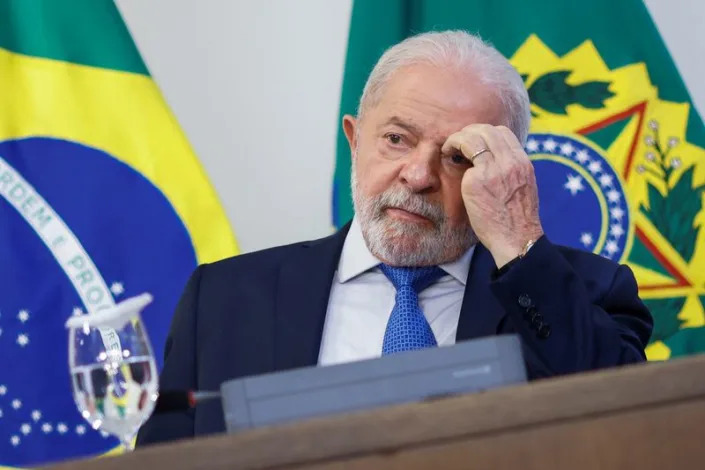
Brazil's President Luiz Inacio Lula da Silva attends a meeting with parliamentarians at Planalto Palace in Brasilia
Wed, January 11, 2023
SAO PAULO (Reuters) -Brazilian President Luiz Inacio Lula da Silva's approval rate was 51% in a survey by pollster AtlasIntel released on Wednesday, in line with his share of valid votes in the October election were he defeated rival Jair Bolsonaro.
Lula's 11-day-old administration is still dealing with the fallout of Bolsonaro supporters rampaging through the capital on Sunday in an attempt to overthrow his government. Organizers are calling for fresh anti-government protests on Wednesday evening.
Disapproval of Lula was at 42% in the Atlasintel poll, the first major opinion survey in the wake of Sunday's political violence.
His government was considered "good" or "great" by 41.3% of those surveyed, while 38.4% saw it as "bad" or "terrible." The survey was conducted online with 2,200 people between Jan. 10-11. It has a margin of error of two percentage points up or down.
(Reporting by Flavia Marreiro; Writing by Peter Frontini; Editing by Brad Haynes, Chizu Nomiyama, William Maclean)
Brazil's Lula predicts policies in place within 100 days, reassures markets
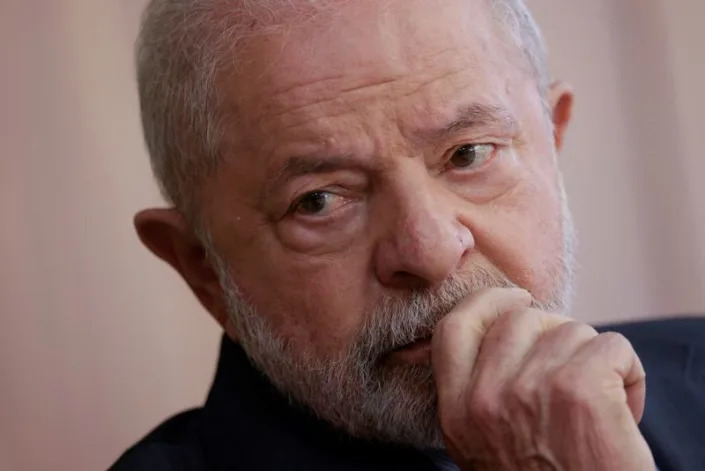
Brazil's President Luiz Inacio Lula da Silva attends a breakfast with journalists at Planalto Palace in Brasilia
Thu, January 12, 2023 at 9:31 AM MST·1 min read
BRASILIA (Reuters) - Brazil's leftist President Luiz Inacio Lula da Silva said on Thursday that he plans to have policies ready within 100 days so the country "runs at normal speed" again and told financial markets they should not worry about his Workers Party government.
Addressing Sunday's storming of government building in Brasilia by supporters of former President Jair Bolsonaro, Lula told reporters that "what happened was a huge warning, we won the election but fanatic Bolsonaro supporters are very dangerous."
"Going forward we will be tougher and even more cautious," he said. "We must find out who is funding these acts, that is what puts democracy at risk.
Supporters of right-wing Bolsonaro ransacked Brazil's Congress, Supreme Court and presidential palace on Sunday, calling for a military coup to overturn the October election won by Lula.
Despite the events, Lula said Defense Minister Jose Mucio will remain in office, saying "I trust him."
"If I had to fire a minister every time they made a mistake, the turnaround would be enormous," Lula said.
The 77-year-old President also said that markets should not worry about his Workers Party government.
"I always oversaw primary surpluses", said Lula, who was also President of Brazil between 2003 and 2010.
(Reporting by Lisandra Paraguassu; Writing by Steven Grattan; Editing by Alistair Bell)
Lula to purge Bolsonaro loyalists from Brazilian security forces after rampage
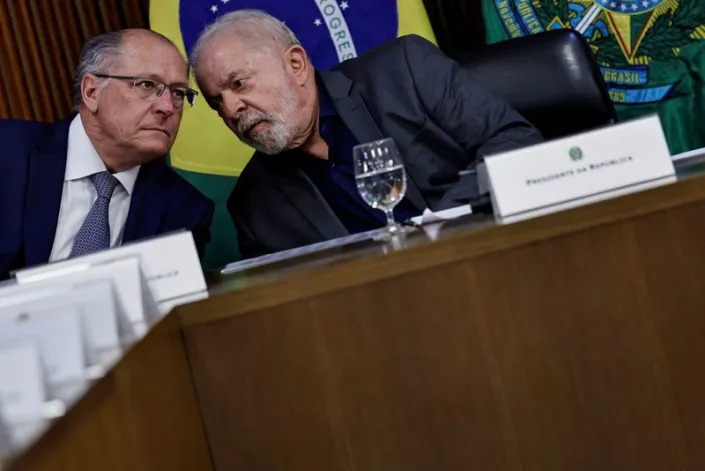
Brazil's President Luiz Inacio Lula da Silva attends a meeting with governors in Brasilia
Thu, January 12, 2023
By Lisandra Paraguassu and Adriano Machado
BRASILIA (Reuters) - Brazilian President Luiz Inacio Lula da Silva said on Thursday that security force members were complicit in letting an anti-government mob ransack the seat of power in Brasilia, and promised to weed out hardcore supporters of his predecessor.
The task of screening out those actors will be complex, his senior aides said, but investigations have begun to see who was responsible for letting backers of former President Jair Bolsonaro storm and vandalize the presidential palace.
"There were a lot of people who were complicit in this among the military police. There were many people from the armed forces who were complicit," Lula told journalists. "I am convinced that the door to the palace was opened to allow these people in, because I did not see that the door was broken."
Lula has also stepped up criticism of the army for not doing anything to discourage the two-month-old encampment of Bolsonaro supporters outside its headquarters, where they have been clamoring for the military to overturn the result of the October elections.
The Brazilian army did not respond to requests for comment.
Thousands of demonstrators calling for a military coup to oust Lula and restore Bolsonaro to power stormed the Supreme Court, Congress and the presidential palace on Sunday, leaving a trail of smashed windows, furniture, computers and artwork.
The police force responsible for public security in Brazil's capital did not stop the mob advancing on the building, and some were seen in social media images taking selfies and chatting with demonstrators.
Riot police dispersed the crowd with tear gas and arrested some 1,800 protesters only after Lula ordered the federal government to intervene in local security.
Brasilia Governor Ibaneis Rocha, a Bolsonaro ally, was among the first blamed for security lapses. He was suspended from office on Sunday by Supreme Court Justice Alexandre de Moraes, who also ordered the arrest of his security chief and head of police.
The battalion of troops assigned to guard the presidential palace did not respond either until rioters had entered and trashed the palace, according to a Reuters witness.
Four on-duty staffers from the National Security Adviser's office (GSI) were quickly overwhelmed inside the presidential palace and their office ransacked. They looked on as protesters kicked at the reinforced door to Lula's office but failed to break in.
A presidential spokesman told Reuters that computers were taken from the National Security Adviser's office and hard drives containing confidential information had disappeared. Boxes of taser guns were emptied, said spokesman Guto Guterres.
Presidential Chief of Staff Rui Costa said the government now faces the challenge of undertaking a "decontamination" of the security forces and holding those responsible accountable.
"We have several institutions that have been contaminated with Bolsonarista hatred by far-right coup-mongers," said Institutional Relations Minister Alexandre Padilha.
Government officials said it remained unclear how soldiers or policemen who sympathize with demonstrators' calls for a military coup would be identified or removed.
One idea proposed by Lula's aides, aimed at discouraging the politicization of security forces, would be to limit military and police officers from running for elected office.
Brazil's Congress has a growing number of retired and even active-duty officers who tout their military or police credentials as part of their law-and-order appeal.
"This excessive participation of the military and military police in politics is progressively leading to ideological contamination of the forces," Costa said.
On Wednesday, Lula vetoed part of a bill passed by Congress under Bolsonaro that would guarantee the right of police officers to take part in political demonstrations.
(Reporting by Lisandra Paraguassu and Adriano Machado; Additional reporting and writing by Anthony Boadle; Editing by Brad Haynes and Deepa Babington)
Brazil's President Luiz Inacio Lula da Silva attends a meeting with parliamentarians at Planalto Palace in Brasilia
Wed, January 11, 2023
SAO PAULO (Reuters) -Brazilian President Luiz Inacio Lula da Silva's approval rate was 51% in a survey by pollster AtlasIntel released on Wednesday, in line with his share of valid votes in the October election were he defeated rival Jair Bolsonaro.
Lula's 11-day-old administration is still dealing with the fallout of Bolsonaro supporters rampaging through the capital on Sunday in an attempt to overthrow his government. Organizers are calling for fresh anti-government protests on Wednesday evening.
Disapproval of Lula was at 42% in the Atlasintel poll, the first major opinion survey in the wake of Sunday's political violence.
His government was considered "good" or "great" by 41.3% of those surveyed, while 38.4% saw it as "bad" or "terrible." The survey was conducted online with 2,200 people between Jan. 10-11. It has a margin of error of two percentage points up or down.
(Reporting by Flavia Marreiro; Writing by Peter Frontini; Editing by Brad Haynes, Chizu Nomiyama, William Maclean)
Brazil's Lula predicts policies in place within 100 days, reassures markets
Brazil's President Luiz Inacio Lula da Silva attends a breakfast with journalists at Planalto Palace in Brasilia
Thu, January 12, 2023 at 9:31 AM MST·1 min read
BRASILIA (Reuters) - Brazil's leftist President Luiz Inacio Lula da Silva said on Thursday that he plans to have policies ready within 100 days so the country "runs at normal speed" again and told financial markets they should not worry about his Workers Party government.
Addressing Sunday's storming of government building in Brasilia by supporters of former President Jair Bolsonaro, Lula told reporters that "what happened was a huge warning, we won the election but fanatic Bolsonaro supporters are very dangerous."
"Going forward we will be tougher and even more cautious," he said. "We must find out who is funding these acts, that is what puts democracy at risk.
Supporters of right-wing Bolsonaro ransacked Brazil's Congress, Supreme Court and presidential palace on Sunday, calling for a military coup to overturn the October election won by Lula.
Despite the events, Lula said Defense Minister Jose Mucio will remain in office, saying "I trust him."
"If I had to fire a minister every time they made a mistake, the turnaround would be enormous," Lula said.
The 77-year-old President also said that markets should not worry about his Workers Party government.
"I always oversaw primary surpluses", said Lula, who was also President of Brazil between 2003 and 2010.
(Reporting by Lisandra Paraguassu; Writing by Steven Grattan; Editing by Alistair Bell)
Lula to purge Bolsonaro loyalists from Brazilian security forces after rampage
Brazil's President Luiz Inacio Lula da Silva attends a meeting with governors in Brasilia
Thu, January 12, 2023
By Lisandra Paraguassu and Adriano Machado
BRASILIA (Reuters) - Brazilian President Luiz Inacio Lula da Silva said on Thursday that security force members were complicit in letting an anti-government mob ransack the seat of power in Brasilia, and promised to weed out hardcore supporters of his predecessor.
The task of screening out those actors will be complex, his senior aides said, but investigations have begun to see who was responsible for letting backers of former President Jair Bolsonaro storm and vandalize the presidential palace.
"There were a lot of people who were complicit in this among the military police. There were many people from the armed forces who were complicit," Lula told journalists. "I am convinced that the door to the palace was opened to allow these people in, because I did not see that the door was broken."
Lula has also stepped up criticism of the army for not doing anything to discourage the two-month-old encampment of Bolsonaro supporters outside its headquarters, where they have been clamoring for the military to overturn the result of the October elections.
The Brazilian army did not respond to requests for comment.
Thousands of demonstrators calling for a military coup to oust Lula and restore Bolsonaro to power stormed the Supreme Court, Congress and the presidential palace on Sunday, leaving a trail of smashed windows, furniture, computers and artwork.
The police force responsible for public security in Brazil's capital did not stop the mob advancing on the building, and some were seen in social media images taking selfies and chatting with demonstrators.
Riot police dispersed the crowd with tear gas and arrested some 1,800 protesters only after Lula ordered the federal government to intervene in local security.
Brasilia Governor Ibaneis Rocha, a Bolsonaro ally, was among the first blamed for security lapses. He was suspended from office on Sunday by Supreme Court Justice Alexandre de Moraes, who also ordered the arrest of his security chief and head of police.
The battalion of troops assigned to guard the presidential palace did not respond either until rioters had entered and trashed the palace, according to a Reuters witness.
Four on-duty staffers from the National Security Adviser's office (GSI) were quickly overwhelmed inside the presidential palace and their office ransacked. They looked on as protesters kicked at the reinforced door to Lula's office but failed to break in.
A presidential spokesman told Reuters that computers were taken from the National Security Adviser's office and hard drives containing confidential information had disappeared. Boxes of taser guns were emptied, said spokesman Guto Guterres.
Presidential Chief of Staff Rui Costa said the government now faces the challenge of undertaking a "decontamination" of the security forces and holding those responsible accountable.
"We have several institutions that have been contaminated with Bolsonarista hatred by far-right coup-mongers," said Institutional Relations Minister Alexandre Padilha.
Government officials said it remained unclear how soldiers or policemen who sympathize with demonstrators' calls for a military coup would be identified or removed.
One idea proposed by Lula's aides, aimed at discouraging the politicization of security forces, would be to limit military and police officers from running for elected office.
Brazil's Congress has a growing number of retired and even active-duty officers who tout their military or police credentials as part of their law-and-order appeal.
"This excessive participation of the military and military police in politics is progressively leading to ideological contamination of the forces," Costa said.
On Wednesday, Lula vetoed part of a bill passed by Congress under Bolsonaro that would guarantee the right of police officers to take part in political demonstrations.
(Reporting by Lisandra Paraguassu and Adriano Machado; Additional reporting and writing by Anthony Boadle; Editing by Brad Haynes and Deepa Babington)
La Salle residents told to shelter in place after possible explosion at Illinois chemical plant
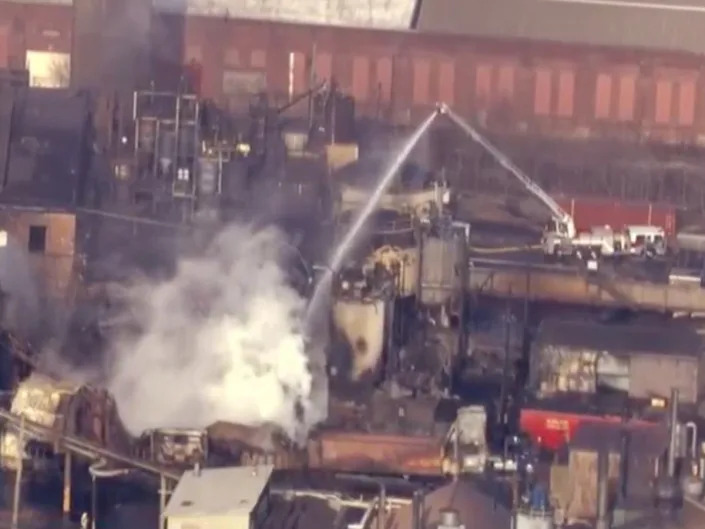
A possible explosion has taken place at a chemical plant in LaSalle in Northern Illinois. A shelter-in-place order has been issued for residents in the area.
Firefighters arrived at the scene after a fire prompted a plume of smoke to rise above the plant, which has been evacuated, WGN9 reported.
The fire started shortly after 9am on Wednesday at Carus Chemical. The authorities sent an emergency alert to those in La Salle’s third and fourth wards to shelter in place.
The blaze has been classified as a 4-alarm fire, according to NBC Chicago.
La Salle police said an “explosion” took place in a shipping container at the plant, which is about 80 miles southwest of the windy city.
Carus, a family-owned business started in 1915, produces “supplies products and services for municipal water treatment, wastewater and air purification and soil remediation,” the company site states.
“There was a fire at the Carus Chemical Building. Residents living nearby are asked to please shelter in place,” the city authorities said in a statement.
Police followed up by urging residents to avoid a green substance that had been released after the incident.
“Attention LaSalle residents of the 3rd and 4th Wards, due to recent events, an oxidizer (which appears green in color) has been released in the area. Do NOT touch this substance. If you see this substance near or on your residence it can be deactivated,” the alert said. “In order to deactivate it, you will need a 1:1:1 mixture of: 1 gallon of water, 1 gallon of peroxide, 1 gallon of vinegar.”
The LaSalle - Peru Township High School District 120 said in a Facebook post that “as you may be aware, there was an explosion at the Carus Chemical plant on the east side of LaSalle this morning. Our school campus is safe”.
“We have been in communication with local emergency services to determine the best course of action to maintain the safety and well-being of our students and staff. We have been advised that it is safe to continue school as usual at this time. School administrators will continue to monitor the situation. In the event anything changes, we will inform families as soon as possible,” the district said.
Fire chief Jerry Janick said during a press conference on Wednesday that “at this time, the fire appears to be contained. We had no injuries and everyone from the building was accounted for. Right now, the city also has a Shelter In Place order for all residents to the north and west of the incident for precautionary reasons. We'll assess that shortly”.
“And right now, we're still bringing additional equipment in to assist in the final extinguishment and investigation,” he added.
While the chief said there was significant damage to the structure, he was unable to confirm that an explosion had occurred.
Fire rages at Illinois chemical plant, residents ordered to shelter
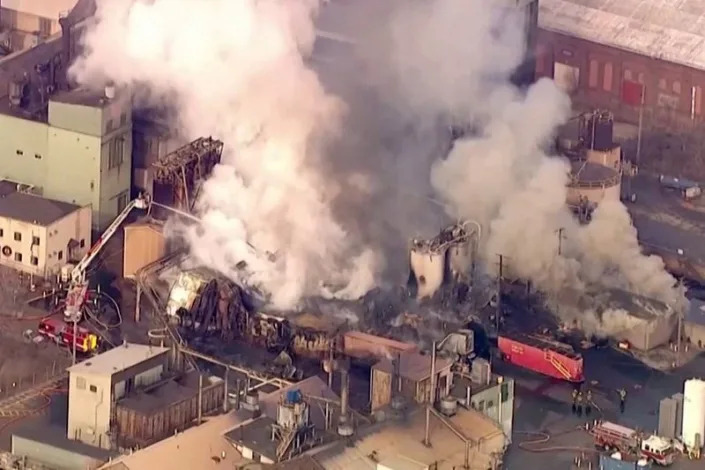
Firefighters tackle a large blaze at the Carus Chemical Plant in LaSalle
Tyler Clifford
Wed, January 11, 2023
Wed, January 11, 2023
(Reuters) -A chemical plant in northern Illinois went up in flames on Wednesday morning, sending up plumes of black smoke and prompting officials to advise nearby residents to shelter in place as emergency crews responded to the blaze.
The fire broke out at the Carus Chemical Company complex in LaSalle, a city of less than 10,000 residents located about 100 miles southwest of Chicago.
Fire crews were called to the scene at 9 a.m. after an explosion at the plant, and the ensuing blaze caused significant damage before it was contained, LaSalle Fire Chief Jerry Janick said at a news conference. Additional equipment was ordered to fully extinguish the fire and start an investigation.
Video on social media showed thick black smoke billowing from the structure. Multiple structures in the complex were damaged or destroyed, footage showed.
LaSalle police alerted the public that a green-colored oxidizer was released in the area and warned residents against touching the substance.
"Hats off to the fire department because I think a good portion of this blaze was knocked down within a good hour," LaSalle Police Chief Mike Smudzinski said.
All workers were evacuated and accounted for with no injuries, according to a spokesperson for the family-owned company.
Carus produces an oxidant used to treat drinking and waste water, phosphates for corrosion control, and carbon capture products used for air purification, according to its website.
A shelter order remained in place for residents north and west of the incident, Janick said.
(Reporting by Tyler Clifford; Editing by Leslie Adler and Bill Berkrot)
Turkish court convicts doctor of terrorism propaganda, releases her from jail-rights groups
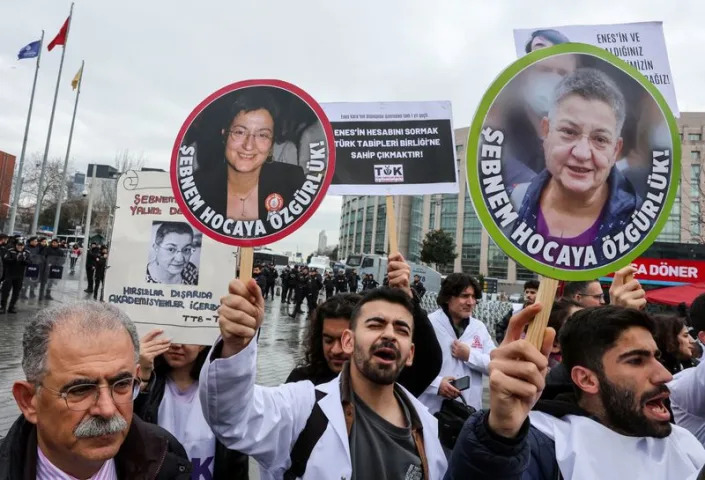
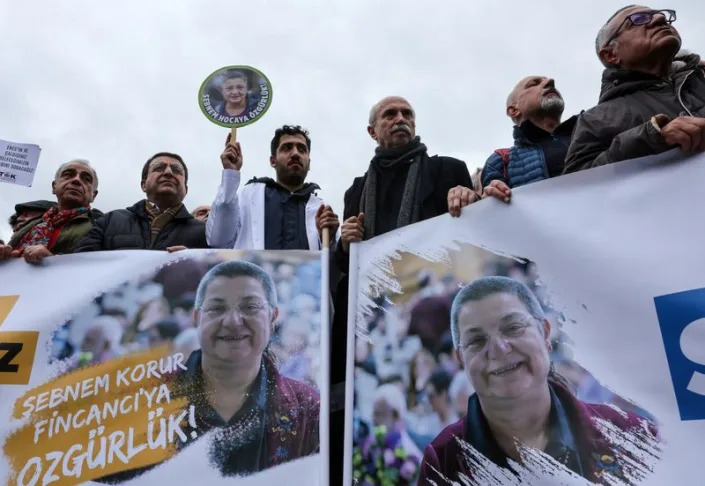
Turkish court holds a hearing in trial of Turkish Medical Association head Sebnem Korur Fincanci on "terrorist propaganda" charge in Istanbul
Wed, January 11, 2023
ISTANBUL (Reuters) - A Turkish court sentenced the head of the Turkish Medical Association (TTB) to more than two years in prison for terrorism propaganda on Wednesday but ruled she should be released after being in detention since October, human rights activists said.
Sebnem Korur Fincanci, a prominent rights defender, was arrested on charges of spreading terrorist group propaganda in October after she said in an interview that claims that Turkey's military used chemical weapons against Kurdish militants in northern Iraq should be investigated.
President Tayyip Erdogan at the time denied the accusations that were made on media close to the Kurdistan Workers Party (PKK) militant group in October, and said legal action would be taken against anyone making such allegations.
Fincanci's lawyer was not immediately available to comment on her sentence of two years and eight months in jail.
Rights groups have said Fincanci's detention was political and aimed to silence her. Milena Buyum, Turkey campaigner for Amnesty International, said her being found guilty was "an affront to all who uphold human rights."
"With our central committee head Dr. Sebnem Korur Fincanci, who is returning among us, we will play our role in the pivotal period before our country and will not allow the TTB or our country to surrender to the darkness," the TTB said in a tweet.
Turkey is due to hold parliamentary and presidential elections by June, which are expected to see a strong opposition challenge to Erdogan.
International Physicians for the Prevention of Nuclear War (IPPNW), which represents doctors and campaigns to prevent armed violence, published a report in October seeking independent investigation of possible violations of the 1997 Chemical Weapons Convention by the Turkish military.
The PKK launched an insurgency against the Turkish state in 1984 and more than 40,000 people have been killed in the conflict. Fighting in recent years has increasingly focused on northern Iraq, where the PKK has bases.
It is designated a terrorist group by Turkey, the European Union and United States.
(Reporting by Daren Butler and Ali Kucukgocmen; Editing by Alexandra Hudson)
Turkish court holds a hearing in trial of Turkish Medical Association head Sebnem Korur Fincanci on "terrorist propaganda" charge in Istanbul
Wed, January 11, 2023
ISTANBUL (Reuters) - A Turkish court sentenced the head of the Turkish Medical Association (TTB) to more than two years in prison for terrorism propaganda on Wednesday but ruled she should be released after being in detention since October, human rights activists said.
Sebnem Korur Fincanci, a prominent rights defender, was arrested on charges of spreading terrorist group propaganda in October after she said in an interview that claims that Turkey's military used chemical weapons against Kurdish militants in northern Iraq should be investigated.
President Tayyip Erdogan at the time denied the accusations that were made on media close to the Kurdistan Workers Party (PKK) militant group in October, and said legal action would be taken against anyone making such allegations.
Fincanci's lawyer was not immediately available to comment on her sentence of two years and eight months in jail.
Rights groups have said Fincanci's detention was political and aimed to silence her. Milena Buyum, Turkey campaigner for Amnesty International, said her being found guilty was "an affront to all who uphold human rights."
"With our central committee head Dr. Sebnem Korur Fincanci, who is returning among us, we will play our role in the pivotal period before our country and will not allow the TTB or our country to surrender to the darkness," the TTB said in a tweet.
Turkey is due to hold parliamentary and presidential elections by June, which are expected to see a strong opposition challenge to Erdogan.
International Physicians for the Prevention of Nuclear War (IPPNW), which represents doctors and campaigns to prevent armed violence, published a report in October seeking independent investigation of possible violations of the 1997 Chemical Weapons Convention by the Turkish military.
The PKK launched an insurgency against the Turkish state in 1984 and more than 40,000 people have been killed in the conflict. Fighting in recent years has increasingly focused on northern Iraq, where the PKK has bases.
It is designated a terrorist group by Turkey, the European Union and United States.
(Reporting by Daren Butler and Ali Kucukgocmen; Editing by Alexandra Hudson)
FILE PHOTO: Thousands protest in Turkey over Istanbul mayor's conviction in Istanbul
Wed, January 11, 2023
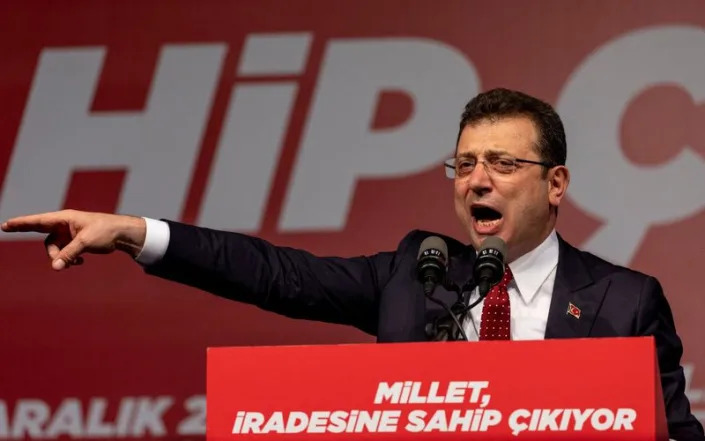
ISTANBUL (Reuters) - Turkish authorities have filed a lawsuit against Istanbul Mayor Ekrem Imamoglu, a potential challenger to President Tayyip Erdogan, accusing him of rigging a public tender while he was a mayor of the city's Beylikduzu district, the broadcaster Haberturk reported on Wednesday.
The charge carries a possible jail sentence of up to seven years, Haberturk said, adding that a hearing was scheduled for June 15.
The case was opened after an Interior Ministry investigation into a tender for recruitment services that was held in 2015, Haberturk also said.
Imamoglu called the lawsuit "an attempt to fabricate a bogus criminal offence," saying the tender process had been investigated at the time with no findings of wrongdoing.
"I do not even have my signature on tender documents. Besides, Interior Ministry and the Council of State had not detected anything problematic in their examinations at the time," Imamoglu said on Twitter.
Imamoglu was sentenced last December to two years and seven months in prison and banned from politics for insulting public officials in 2019, when he criticised a decision to cancel the first round of municipal elections, in which he beat Erdogan's AK Party, which had held power for 25 years.
He has appealed that verdict but his conviction has rallied the opposition bloc around what it sees as a fight for democracy, the rule of law and justice.
Critics say Turkey's judiciary has been bent to Erdogan's will to punish his critics. The government says the judges are independent.
(Writing by Ezgi Erkoyun; Additional reporting by Huseyin Hayatsever; Editing by Josie Kao)
PRO PALESTINE
Harvard school in row over fellowship for human rights advocate
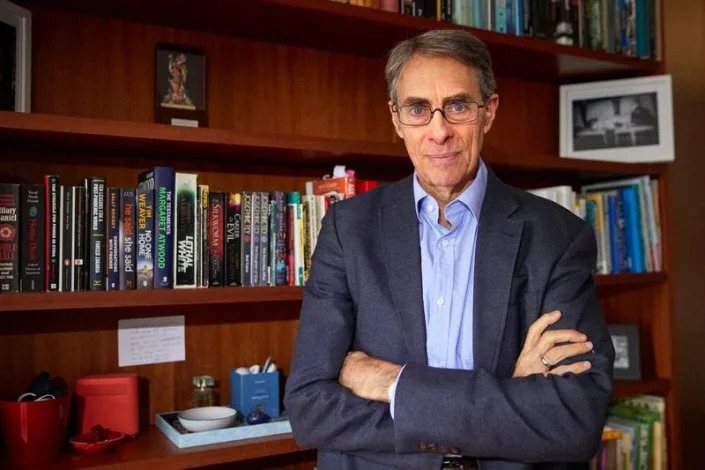
FILE PHOTO: Roth poses after an interview with Reuters in Geneva
Simon Lewis
Tue, January 10, 2023 at 3:21 PM MST·2 min read
(Reuters) - The prestigious Kennedy School at Harvard University is under fire over a decision not to award a fellowship to the former head of Human Rights Watch, which one academic said was due to the campaigner's criticism of Israel's treatment of Palestinians.
The school's Carr Center for Human Rights Policy last year approached Kenneth Roth, who served as HRW's executive director from 1993 to 2022, and agreed on the terms of a fellowship, according to both Roth and the Carr Center. The fellowship was subject to approval by Kennedy School Dean Douglas Elmendorf.
Kathryn Sikkink, a human rights academic at the Kennedy School, told The Nation magazine that Elmendorf told her he rejected the appointment because of what he called HRW's "anti-Israel bias."
The decision, reported by The Nation last week, drew criticism from some alumni, the American Civil Liberties Union and HRW itself. Freedom of expression advocacy group PEN America said the decision "raises serious questions about the credibility of the Harvard program itself."
Roth told Reuters by phone on Tuesday he believes the decision was made to avoid upsetting wealthy donors to the school who support Israel, and called on the Kennedy School to "reaffirm its commitment to academic freedom."
Harvard Kennedy School spokesperson James Smith said by email that Elmendorf decided not to appoint Roth "based on an evaluation of the candidate’s potential contributions to the Kennedy School," adding that the school does not discuss such deliberations.
The school practices "transparent engagement and funding" in order to avoid "actual or perceived conflicts of interest," according to its website. It publishes annual lists of donors, including some who are anonymous.
Some pro-Israel groups, including prominent Jewish organizations in the United States like the American Jewish Committee, have said HRW and other rights groups have shown bias against Israel in their reporting, in particular by labeling the treatment of Palestinians as "apartheid," as HRW did in 2021.
(Reporting by Simon Lewis in Lyndhurst, England, editing by Deepa Babington)
Harvard school in row over fellowship for human rights advocate
FILE PHOTO: Roth poses after an interview with Reuters in Geneva
Simon Lewis
Tue, January 10, 2023 at 3:21 PM MST·2 min read
(Reuters) - The prestigious Kennedy School at Harvard University is under fire over a decision not to award a fellowship to the former head of Human Rights Watch, which one academic said was due to the campaigner's criticism of Israel's treatment of Palestinians.
The school's Carr Center for Human Rights Policy last year approached Kenneth Roth, who served as HRW's executive director from 1993 to 2022, and agreed on the terms of a fellowship, according to both Roth and the Carr Center. The fellowship was subject to approval by Kennedy School Dean Douglas Elmendorf.
Kathryn Sikkink, a human rights academic at the Kennedy School, told The Nation magazine that Elmendorf told her he rejected the appointment because of what he called HRW's "anti-Israel bias."
The decision, reported by The Nation last week, drew criticism from some alumni, the American Civil Liberties Union and HRW itself. Freedom of expression advocacy group PEN America said the decision "raises serious questions about the credibility of the Harvard program itself."
Roth told Reuters by phone on Tuesday he believes the decision was made to avoid upsetting wealthy donors to the school who support Israel, and called on the Kennedy School to "reaffirm its commitment to academic freedom."
Harvard Kennedy School spokesperson James Smith said by email that Elmendorf decided not to appoint Roth "based on an evaluation of the candidate’s potential contributions to the Kennedy School," adding that the school does not discuss such deliberations.
The school practices "transparent engagement and funding" in order to avoid "actual or perceived conflicts of interest," according to its website. It publishes annual lists of donors, including some who are anonymous.
Some pro-Israel groups, including prominent Jewish organizations in the United States like the American Jewish Committee, have said HRW and other rights groups have shown bias against Israel in their reporting, in particular by labeling the treatment of Palestinians as "apartheid," as HRW did in 2021.
(Reporting by Simon Lewis in Lyndhurst, England, editing by Deepa Babington)
NO CRT NO WEB DUBOIS
Florida Professors Are Trying to Stop Gov. DeSantis From Reviving The "Stop W.O.K.E." ActAmira Castilla
Thu, January 12, 2023

Photo: Daniel A. Varela/Miami Herald via AP, File (AP)
Governor Ron DeSantis is working overtime to stop free speech for educators in his governing state of Florida.
DeSantis has ordered Florida state universities to send their spending data for critical race theory and diversity, equity, and inclusion programs as a part of the agenda he is pushing, the “Stop W.O.K.E.” Act.
The “Stop W.O.K.E.” Act stands for Stop the Wrongs to Our Kids and Employees, and it is a censoring law. It prohibits teaching environments and business settings from saying that persons of a particular ethnic group are racist and that they should feel guilty for the past actions of groups they identify. It also stops teaching that a person’s race or gender determines how much privilege they do or do not have and discrimination cannot happen for the sake of diversity.
The law was temporarily blocked in November 2022 by the Tallahassee US. District Judge Mark Walker and ordering the spending data is one way he is trying to work around the blocking. He is requesting the data by Friday, January 12. The American Civil Liberties Union and Legal Defense Fund are representing college professors asking for the data request to get blocked, claiming that the data request is going against the “Stop Woke” Act block.
When DeSantis first introduced “Stop W.O.K.E.” in 2021 he wanted Floridians to think that they would be doing a good thing by stopping education about race and the structures put in place to discriminate groups of people. However, the Act is a way to only oppress those minority groups more by not teaching historical context that would expose the wrongs done against them over time. When students and employees don’t know history, they are set up to continue and create dangerous agendas.
De Santis requesting the data is a part of his plan to stop funding the contributions to the teaching saying in a news release, “We won’t allow Florida tax dollars to be spent teaching kids to hate our country or to hate each other. We also have a responsibility to ensure that parents have the means to vindicate their rights when it comes to enforcing state standards. Finally, we must protect Florida workers against the hostile work environment that is created when large corporations force their employees to endure CRT-inspired ‘training’ and indoctrination.”
The Root
Florida teachers move to block DeSantis questions on CRT
Wed, January 11, 2023
TALLAHASSEE, Fla. (AP) — A group of Florida college professors on Wednesday asked a federal judge to block Gov. Ron DeSantis from requesting spending data on diversity, equity and inclusion and critical race theory programs in state universities.
The filing comes as part of a lawsuit against the so-called “Stop WOKE” Act, which restricts certain race-based conversations and analysis in colleges. Tallahassee U.S. District Judge Mark Walker has blocked the law, though DeSantis' office is appealing the decision.
The Republican governor in late December requested that state colleges submit spending data and other information on programs related to diversity, equity and inclusion and critical race theory, which examines systemic racism. The schools were asked to submit the data by Friday.
The college educators, who are represented by the American Civil Liberties Union and Legal Defense Fund, argue the governor's request violates the court order blocking the “Stop WOKE” Act.
“This is just another step towards enforcing this unconstitutional law and is clearly intended to continue to chill the speech of instructors and students in Florida. We cannot allow these threats against free speech to continue,” Jerry Edwards, staff attorney of the ACLU of Florida, said in a statement.
DeSantis' office did not immediately return an email seeking comment.
The law prohibits teaching or business practices that contend members of one ethnic group are inherently racist and should feel guilt for past actions committed by others. It also bars the notion that a person’s status as privileged or oppressed is necessarily determined by their race or gender, or that discrimination is acceptable to achieve diversity.
The governor began pushing for the law late last year and the Republican-controlled Legislature passed it during the 2022 legislative session.
Critical race theory was developed during the 1970s and 1980s in response to what scholars viewed as a lack of racial progress following the civil rights legislation of the 1960s. It centers on the idea that racism is systemic in the nation’s institutions and that they function to maintain the dominance of white people in society.
Conservatives have rejected critical race theory, arguing the philosophy racially divides American society and aims to rewrite history to make white people believe they are inherently racist.
Wed, January 11, 2023
TALLAHASSEE, Fla. (AP) — A group of Florida college professors on Wednesday asked a federal judge to block Gov. Ron DeSantis from requesting spending data on diversity, equity and inclusion and critical race theory programs in state universities.
The filing comes as part of a lawsuit against the so-called “Stop WOKE” Act, which restricts certain race-based conversations and analysis in colleges. Tallahassee U.S. District Judge Mark Walker has blocked the law, though DeSantis' office is appealing the decision.
The Republican governor in late December requested that state colleges submit spending data and other information on programs related to diversity, equity and inclusion and critical race theory, which examines systemic racism. The schools were asked to submit the data by Friday.
The college educators, who are represented by the American Civil Liberties Union and Legal Defense Fund, argue the governor's request violates the court order blocking the “Stop WOKE” Act.
“This is just another step towards enforcing this unconstitutional law and is clearly intended to continue to chill the speech of instructors and students in Florida. We cannot allow these threats against free speech to continue,” Jerry Edwards, staff attorney of the ACLU of Florida, said in a statement.
DeSantis' office did not immediately return an email seeking comment.
The law prohibits teaching or business practices that contend members of one ethnic group are inherently racist and should feel guilt for past actions committed by others. It also bars the notion that a person’s status as privileged or oppressed is necessarily determined by their race or gender, or that discrimination is acceptable to achieve diversity.
The governor began pushing for the law late last year and the Republican-controlled Legislature passed it during the 2022 legislative session.
Critical race theory was developed during the 1970s and 1980s in response to what scholars viewed as a lack of racial progress following the civil rights legislation of the 1960s. It centers on the idea that racism is systemic in the nation’s institutions and that they function to maintain the dominance of white people in society.
Conservatives have rejected critical race theory, arguing the philosophy racially divides American society and aims to rewrite history to make white people believe they are inherently racist.
This is why New Yorkers must move toward climate-resilient housing | Opinion
Lea Webb and Anna Kelles
Lea Webb and Anna Kelles
The Ithaca Journal
Thu, January 12, 2023
Shira and Ari Evergreen were in a bind. Their fuel oil tank sprung a leak so they couldn’t buy heating oil for the coming winter unless they invested $2,000 in a new tank. Eager to get off of oil to a less expensive, less polluting heating system, the couple started to explore their options. The Evergreen family of four qualified for a $10,000 grant from the EmPower NY program, which, along with utility incentives, would cover the cost of a new energy efficient heat pump system for their small home in rural upstate New York. But, due to water damage in their ceiling, they were not approved for the grant.
With only a couple of space heaters to keep them warm, the Evergreens felt stuck and worried for their two young children. There were no programs that covered the cost of roof and ceiling repairs, although eventually, the Evergreen family was able to get the needed repairs done. They then secured grants that paid for a heat pump system and a heat pump water heater to be installed. Later, they purchased an induction stove and are now happily living in a healthy, cozy, all-electric home.
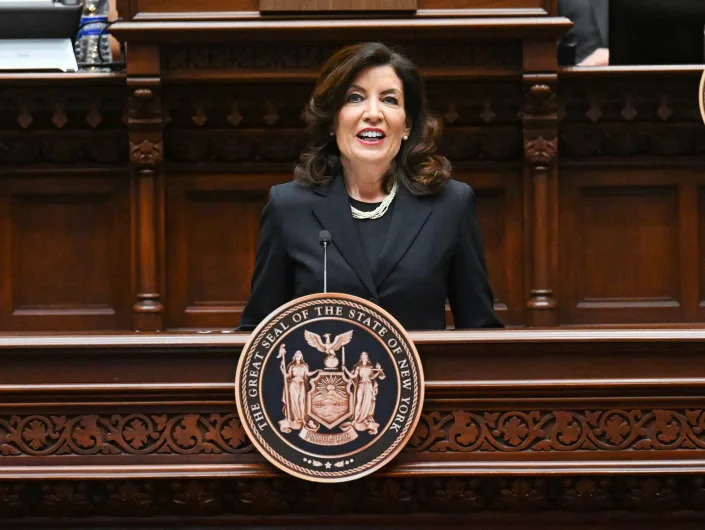
New York Gov. Kathy Hochul delivers her State of the State address in the Assembly Chamber at the state Capitol, Tuesday, Jan. 10, 2023, in Albany, N.Y.
But the Evergreens’ story is the exception, not the rule. Many of our constituents fall through the cracks.
Earlier this week, Gov. Kathy Hochul gave an inspiring State of the State address that made unprecedented commitments to three crucial issues: housing, climate change and energy affordability, demonstrating that she understands how they go hand in hand. Further, Hochul laid out a bold policy agenda to spur housing growth, to modernize new construction and reduce existing buildings’ greenhouse gas emissions in line with the state’s Climate Act. She also pledged critical funding to ensure energy affordability for low income households. The EmPower program that helped the Evergreens solve their heating problem for example, will now be expanded to serve more families along with an energy affordability guarantee.
Now these commitments must be codified into law. The best way to accomplish this is for the governor to include the All Electric Building Act, the NY HEAT Act, formerly Gas Transition and Affordable Energy Act and the Energy Efficiency, Equity and Jobs Act, along with a Green Affordable Pre-Electrification Fund to cover home repairs and remediation. These bills are carefully detailed road maps that will effectively guide the state in reaching the Governor’s stated 2023 goals.
Across New York, there are tens of thousands of low- and moderate-income households like the Evergreens living precariously in old poorly insulated buildings with insufficient heating and appliances. They’re often unable to take advantage of grant programs designed to help them because of deferred maintenance — mold, lead, asbestos, knob-and-tube wiring and structural issues. These issues are even more confounding for renters, who fear that asking for improvements to their buildings could lead to higher rents, eviction, and neighborhood gentrification. By passing these bills, the state legislature and Hochul can make clean and affordable energy within reach for every New Yorker.
The housing and energy crises in our state are already crippling and they are inextricably linked to the extreme weather events as we just witnessed in Buffalo. New York’s housing crisis, reported to be the 4th worst in the US, is exacerbated by the poor condition of the state’s oldest in the nation building inventory. Energy burden — the percentage of household income spent on energy bills — is already sky high, and heating fuel prices are projected to get even more expensive this winter. According to the Public Utility Law Project, the average energy burden of low-to-moderate income households in the Southern Tier is over 12% — double what is considered affordable. The worst impacts of this crisis are and will be borne hardest by the most marginalized New Yorkers: low-income families, the elderly, and people of color.
Hochul has laid out an ambitious progressive agenda to tackle emissions from buildings, our state’s largest source of greenhouse gasses. We stand ready to work together with the governor to fulfill the need for a healthful, affordable and climate resilient home for every New Yorker.
State Sen. Lea Webb represents Senate District 52 and Assemblymember Anna Kelles represents Assembly District 125, both touching on the Southern Tier and Finger Lakes regions.
This article originally appeared on Ithaca Journal: This is why New Yorkers must move toward climate-resilient housing
Thu, January 12, 2023
Shira and Ari Evergreen were in a bind. Their fuel oil tank sprung a leak so they couldn’t buy heating oil for the coming winter unless they invested $2,000 in a new tank. Eager to get off of oil to a less expensive, less polluting heating system, the couple started to explore their options. The Evergreen family of four qualified for a $10,000 grant from the EmPower NY program, which, along with utility incentives, would cover the cost of a new energy efficient heat pump system for their small home in rural upstate New York. But, due to water damage in their ceiling, they were not approved for the grant.
With only a couple of space heaters to keep them warm, the Evergreens felt stuck and worried for their two young children. There were no programs that covered the cost of roof and ceiling repairs, although eventually, the Evergreen family was able to get the needed repairs done. They then secured grants that paid for a heat pump system and a heat pump water heater to be installed. Later, they purchased an induction stove and are now happily living in a healthy, cozy, all-electric home.
New York Gov. Kathy Hochul delivers her State of the State address in the Assembly Chamber at the state Capitol, Tuesday, Jan. 10, 2023, in Albany, N.Y.
But the Evergreens’ story is the exception, not the rule. Many of our constituents fall through the cracks.
Earlier this week, Gov. Kathy Hochul gave an inspiring State of the State address that made unprecedented commitments to three crucial issues: housing, climate change and energy affordability, demonstrating that she understands how they go hand in hand. Further, Hochul laid out a bold policy agenda to spur housing growth, to modernize new construction and reduce existing buildings’ greenhouse gas emissions in line with the state’s Climate Act. She also pledged critical funding to ensure energy affordability for low income households. The EmPower program that helped the Evergreens solve their heating problem for example, will now be expanded to serve more families along with an energy affordability guarantee.
Now these commitments must be codified into law. The best way to accomplish this is for the governor to include the All Electric Building Act, the NY HEAT Act, formerly Gas Transition and Affordable Energy Act and the Energy Efficiency, Equity and Jobs Act, along with a Green Affordable Pre-Electrification Fund to cover home repairs and remediation. These bills are carefully detailed road maps that will effectively guide the state in reaching the Governor’s stated 2023 goals.
Across New York, there are tens of thousands of low- and moderate-income households like the Evergreens living precariously in old poorly insulated buildings with insufficient heating and appliances. They’re often unable to take advantage of grant programs designed to help them because of deferred maintenance — mold, lead, asbestos, knob-and-tube wiring and structural issues. These issues are even more confounding for renters, who fear that asking for improvements to their buildings could lead to higher rents, eviction, and neighborhood gentrification. By passing these bills, the state legislature and Hochul can make clean and affordable energy within reach for every New Yorker.
The housing and energy crises in our state are already crippling and they are inextricably linked to the extreme weather events as we just witnessed in Buffalo. New York’s housing crisis, reported to be the 4th worst in the US, is exacerbated by the poor condition of the state’s oldest in the nation building inventory. Energy burden — the percentage of household income spent on energy bills — is already sky high, and heating fuel prices are projected to get even more expensive this winter. According to the Public Utility Law Project, the average energy burden of low-to-moderate income households in the Southern Tier is over 12% — double what is considered affordable. The worst impacts of this crisis are and will be borne hardest by the most marginalized New Yorkers: low-income families, the elderly, and people of color.
Hochul has laid out an ambitious progressive agenda to tackle emissions from buildings, our state’s largest source of greenhouse gasses. We stand ready to work together with the governor to fulfill the need for a healthful, affordable and climate resilient home for every New Yorker.
State Sen. Lea Webb represents Senate District 52 and Assemblymember Anna Kelles represents Assembly District 125, both touching on the Southern Tier and Finger Lakes regions.
This article originally appeared on Ithaca Journal: This is why New Yorkers must move toward climate-resilient housing
Subscribe to:
Posts (Atom)