It’s possible that I shall make an ass of myself. But in that case one can always get out of it with a little dialectic. I have, of course, so worded my proposition as to be right either way (K.Marx, Letter to F.Engels on the Indian Mutiny)
Saturday, January 14, 2023
U$ Health insurance drives medical advances, claims new study
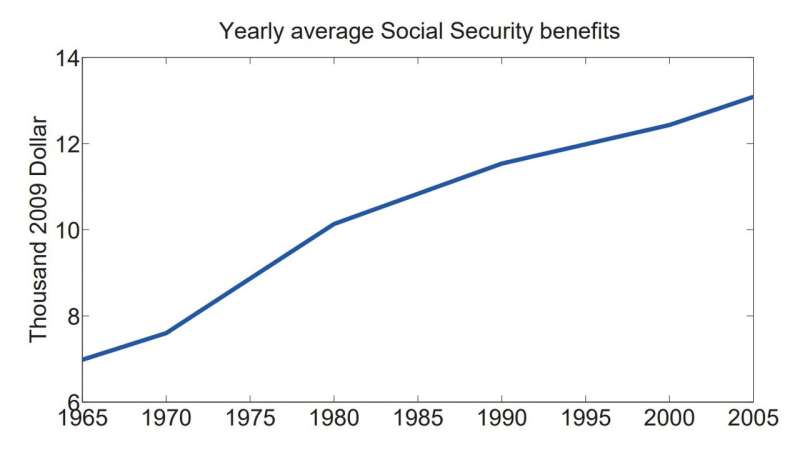
Yearly average Social Security benefits from 1965 to 2005 in 2009 US Dollars. Credit: Journal of Health Economics (2023). DOI: 10.1016/j.jhealeco.2022.102717
A new study argues that expanding health insurance coverage can drive medical progress, support well-being, and even extend lifespan in the United States.
There is a long-standing debate on whether rolling out health insurance toward high levels of coverage is desirable. For countries with non-existent or only patchy coverage, expanding health insurance would certainly be beneficial. However, in high-income settings where basic coverage is already granted the question remains open.
In a collaborative effort, IIASA Economic Frontiers Program Director, Michael Kuhn, and Ivan Frankovic, now an economist at the Deutsche Bundesbank, analyzed the macroeconomic impact of health insurance expansion in the United States between 1965 and 2005. The study, which has been published in the Journal of Health Economics, used an overlapping generations model of an economy looking at three sectors: final goods production, health care, and medical research and development (R&D).
"This work is the first to tackle the link between health insurance expansion, medical progress, and well-being in a coherent and rigorous analytical model for the United States," says Kuhn. "Our model allows for a thorough integrated assessment of the underlying mechanisms and, as the first of its kind, an assessment of the implications for well-being when individuals do not only care about consumption, but also about their health and longevity."
The authors found that the expansion of health insurance explains about 63% of the increase in health care expenditure and that it was also responsible for a 57% boost to the growth rate of medical patent registrations. Moreover, the expansion of health insurance increased life expectancy by an extra 1.2 years in 2005, mainly due to the stimulation of medical progress.
"The knock-on effects of health insurance on medical progress are relevant both in terms of magnitude and their significant positive impact on well-being," explains Frankovic. "Such effects should be taken into account during policymaking, for example, in the form of an extended cost-benefit analysis."
A side effect of health insurance expansion is that generous health insurance coverage may stimulate the excessive consumption of health care beyond what is really needed, especially by the elderly generation to the detriment of the younger, working-age generation. However, the researchers found that these losses were compensated by the gains in life expectancy and productivity in the younger generations.
"Our analysis demonstrates the importance of taking a broader well-being-oriented and systemic stance when evaluating health care policies," says Kuhn. "One needs to look beyond what might be short-term losses due to excessive consumption and consider the stimulus a high demand for medical care creates for R&D, resulting in new medical treatments."
More information: Ivan Frankovic et al, Health insurance, endogenous medical progress, health expenditure growth, and welfare, Journal of Health Economics (2023). DOI: 10.1016/j.jhealeco.2022.102717
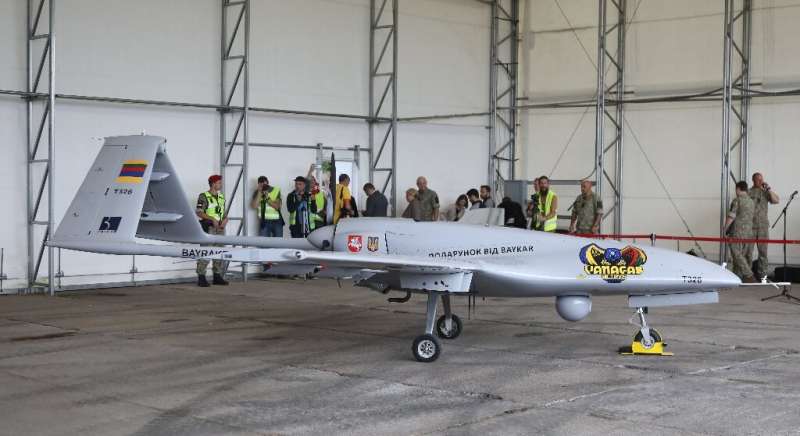
A Turkish-made Bayraktar -- a type of drone used extensively by Ukrainian forces.
Deployed on a scale never seen before to carry out both surveillance and strikes, drones ranging from small commercially-available models to larger aircraft have become a defining feature of the Ukraine conflict.
Drones have been a part of warfare for years, employed extensively by the United States during the "War on Terror," and they have played important roles in conflicts including in Iraq and in the Nagorno-Karabakh region.
But the degree to which they are being used by both sides in Ukraine—and the benefits they bring, as well as the threats they pose—highlights the importance for militaries to be ready to employ and to counter drones in future conflicts.
"The size and the scale of drone use in Ukraine supersedes all the previous conflicts," said Samuel Bendett, a researcher in uncrewed military systems who is an analyst with the CNA Russia Studies Program.
Bendett stressed the "absolutely unprecedented use of commercial-type drones" for both surveillance and combat in Ukraine, and said the war has shown that "small... tactical drones are absolutely essential—at every unit, every platoon level, every company level."
"Because these are basically expendable with a very short shelf life, they have to be provided to the forces in very large quantities," he said.
A drone approaches for an attack in Kyiv in October 2022.
'Accessible and cheap'
Drones have played key roles from the earliest days of the conflict, with Ukrainian forces using Turkish-made Bayraktars to carry out strikes on Moscow's troops as they unsuccessfully sought to seize Kyiv.
Both sides are using drones to locate and track enemy forces as well as to direct artillery fire, and both are also employing "loitering munitions"—uncrewed aircraft equipped with explosive charges that detonate on impact.
Lauren Kahn, a research fellow at the Council on Foreign Relations, said the Ukraine war came at a time when "a lot of these technologies are maturing and coming of age" and are "accessible and cheap."
This allows for more experimentation, she said.
"Because they're so affordable, they're being used in a way that they're treated (as) much less precious," said Kahn, who focuses on the impact of emerging technologies on international security.
And it poses a challenge for defenders when drones are less expensive than the means used to bring them down, she said, citing Russian strikes on Ukrainian energy infrastructure with waves of drones provided by Iran.
"Better and more effective ways of countering drones, I think, is going to be... the next phase and next focus of development," Khan said, adding that there "needs to be a more economically feasible solution" to match the "cheapness of the offensive technology."
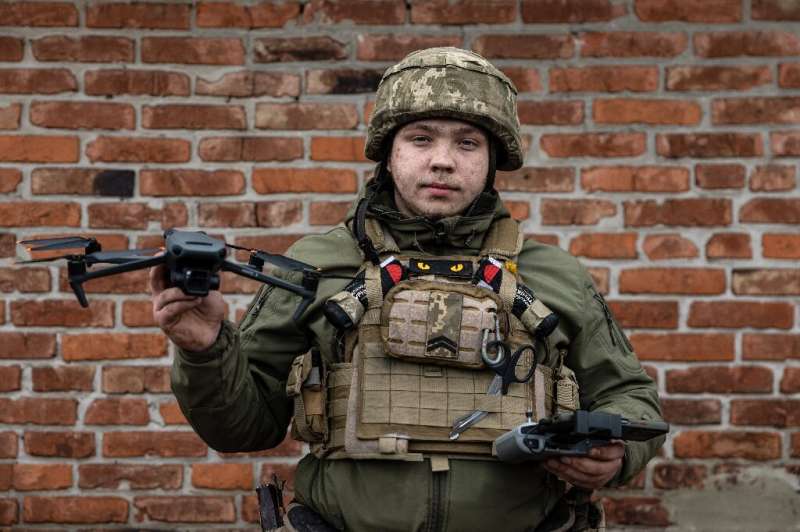
A Ukrainian serviceman poses with a drone on the outskirts of Bakhmut in December 2022.
'Absolutely paramount'
The war in Ukraine has served as a proving ground for counter-drone measures, and the United States has provided options to Kyiv ranging from machine guns to dedicated air defense systems.
Drones can be used in "creative and unique ways on the battlefield" and defending against them requires continued effort, Pentagon Press Secretary Brigadier General Pat Ryder said.
Bendett said electronic countermeasures are playing an important role for both sides in Ukraine.
"Both Russians and Ukrainians are now saying publicly that there are parts of the front where their military drones cannot operate, where their commercial drones can be jammed and rendered inoperable," he said.
While drones used to carry out strikes draw more popular attention, the surveillance capabilities of uncrewed aircraft can have a wider-reaching impact, making it more difficult for troops to escape notice by their enemies.
The conflict has shown that counter-drone "systems, technologies and training is absolutely paramount," Bendett said.
"Militaries have to adapt," he said. "They have to adapt to the fact that any belligerent right now and... in future wars may be equipped with the types of drones that we're seeing in Ukraine."
In the future, the energy needed to run the powerful computers on board a global fleet of autonomous vehicles could generate as many greenhouse gas emissions as all the data centers in the world today.
That is one key finding of a new study from MIT researchers that explored the potential energy consumption and related carbon emissions if autonomous vehicles are widely adopted.
The data centers that house the physical computing infrastructure used for running applications are widely known for their large carbon footprint: They currently account for about 0.3 percent of global greenhouse gas emissions, or about as much carbon as the country of Argentina produces annually, according to the International Energy Agency. Realizing that less attention has been paid to the potential footprint of autonomous vehicles, the MIT researchers built a statistical model to study the problem. They determined that 1 billion autonomous vehicles, each driving for one hour per day with a computer consuming 840 watts, would consume enough energy to generate about the same amount of emissions as data centers currently do.
The researchers also found that in over 90 percent of modeled scenarios, to keep autonomous vehicle emissions from zooming past current data center emissions, each vehicle must use less than 1.2 kilowatts of power for computing, which would require more efficient hardware. In one scenario—where 95 percent of the global fleet of vehicles is autonomous in 2050, computational workloads double every three years, and the world continues to decarbonize at the current rate—they found that hardware efficiency would need to double faster than every 1.1 years to keep emissions under those levels.
"If we just keep the business-as-usual trends in decarbonization and the current rate of hardware efficiency improvements, it doesn't seem like it is going to be enough to constrain the emissions from computing onboard autonomous vehicles. This has the potential to become an enormous problem. But if we get ahead of it, we could design more efficient autonomous vehicles that have a smaller carbon footprint from the start," says first author Soumya Sudhakar, a graduate student in aeronautics and astronautics.
Sudhakar wrote the paper with her co-advisors Vivienne Sze, associate professor in the Department of Electrical Engineering and Computer Science (EECS) and a member of the Research Laboratory of Electronics (RLE); and Sertac Karaman, associate professor of aeronautics and astronautics and director of the Laboratory for Information and Decision Systems (LIDS). The research appears in the January-February issue of IEEE Micro.
Modeling emissions
The researchers built a framework to explore the operational emissions from computers on board a global fleet of electric vehicles that are fully autonomous, meaning they don't require a back-up human driver.
The model is a function of the number of vehicles in the global fleet, the power of each computer on each vehicle, the hours driven by each vehicle, and the carbon intensity of the electricity powering each computer.
"On its own, that looks like a deceptively simple equation. But each of those variables contains a lot of uncertainty because we are considering an emerging application that is not here yet," Sudhakar says.
For instance, some research suggests that the amount of time driven in autonomous vehicles might increase because people can multitask while driving and the young and the elderly could drive more. But other research suggests that time spent driving might decrease because algorithms could find optimal routes that get people to their destinations faster.
In addition to considering these uncertainties, the researchers also needed to model advanced computing hardware and software that doesn't exist yet.
To accomplish that, they modeled the workload of a popular algorithm for autonomous vehicles, known as a multitask deep neural network because it can perform many tasks at once. They explored how much energy this deep neural network would consume if it were processing many high-resolution inputs from many cameras with high frame rates, simultaneously.
When they used the probabilistic model to explore different scenarios, Sudhakar was surprised by how quickly the algorithms' workload added up.
For example, if an autonomous vehicle has 10 deep neural networks processing images from 10 cameras, and that vehicle drives for one hour a day, it will make 21.6 million inferences each day. One billion vehicles would make 21.6 quadrillion inferences. To put that into perspective, all of Facebook's data centers worldwide make a few trillion inferences each day (1 quadrillion is 1,000 trillion).
"After seeing the results, this makes a lot of sense, but it is not something that is on a lot of people's radar. These vehicles could actually be using a ton of computer power. They have a 360-degree view of the world, so while we have two eyes, they may have 20 eyes, looking all over the place and trying to understand all the things that are happening at the same time," Karaman says.
Autonomous vehicles would be used for moving goods, as well as people, so there could be a massive amount of computing power distributed along global supply chains, he says. And their model only considers computing—it doesn't take into account the energy consumed by vehicle sensors or the emissions generated during manufacturing.
Keeping emissions in check
To keep emissions from spiraling out of control, the researchers found that each autonomous vehicle needs to consume less than 1.2 kilowatts of energy for computing. For that to be possible, computing hardware must become more efficient at a significantly faster pace, doubling in efficiency about every 1.1 years.
One way to boost that efficiency could be to use more specialized hardware, which is designed to run specific driving algorithms. Because researchers know the navigation and perception tasks required for autonomous driving, it could be easier to design specialized hardware for those tasks, Sudhakar says. But vehicles tend to have 10- or 20-year lifespans, so one challenge in developing specialized hardware would be to "future-proof" it so it can run new algorithms.
In the future, researchers could also make the algorithms more efficient, so they would need less computing power. However, this is also challenging because trading off some accuracy for more efficiency could hamper vehicle safety.
Now that they have demonstrated this framework, the researchers want to continue exploring hardware efficiency and algorithm improvements. In addition, they say their model can be enhanced by characterizing embodied carbon from autonomous vehicles—the carbon emissions generated when a car is manufactured—and emissions from a vehicle's sensors.
While there are still many scenarios to explore, the researchers hope that this work sheds light on a potential problem people may not have considered.
"We are hoping that people will think of emissions and carbon efficiency as important metrics to consider in their designs. The energy consumption of an autonomous vehicle is really critical, not just for extending the battery life, but also for sustainability," says Sze.
More information: Soumya Sudhakar et al, Data Centers on Wheels: Emissions From Computing Onboard Autonomous Vehicles, IEEE Micro (2022). DOI: 10.1109/MM.2022.3219803
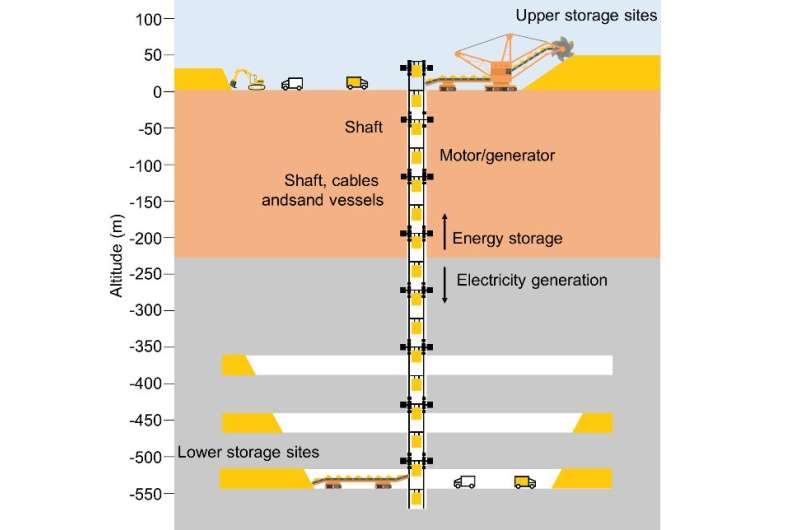
Underground Gravity Energy Storage system: a schematic of different system sections. Credit: Hunt et al.
A novel technique called Underground Gravity Energy Storage turns decommissioned mines into long-term energy storage solutions, thereby supporting the sustainable energy transition.
Renewable energy sources are central to the energy transition toward a more sustainable future. However, as sources like sunshine and wind are inherently variable and inconsistent, finding ways to store energy in an accessible and efficient way is crucial. While there are many effective solutions for daily energy storage, the most common being batteries, a cost-effective long-term solution is still lacking.
In a new International Institute for Applied Systems Analysis (IIASA)-led study, an international team of researchers has developed a novel way to store energy by transporting sand into abandoned underground mines. The new technique, called Underground Gravity Energy Storage (UGES), proposes an effective long-term energy storage solution while also making use of now-defunct mining sites, which likely number in the millions globally.
The work is published in the journal Energies.
UGES generates electricity when the price is high by lowering sand into an underground mine and converting the potential energy of the sand into electricity via regenerative braking, and then lifting the sand from the mine to an upper reservoir using electric motors to store energy when electricity is cheap. The main components of UGES are the shaft, motor/generator, upper and lower storage sites, and mining equipment. The deeper and broader the mineshaft, the more power can be extracted from the plant, and the larger the mine, the higher the plant's energy storage capacity.
"When a mine closes, it lays off thousands of workers. This devastates communities that rely only on the mine for their economic output. UGES would create a few vacancies as the mine would provide energy storage services after it stops operations," says Julian Hunt, a researcher in the IIASA Energy, Climate, and Environment Program and the lead author of the study. "Mines already have the basic infrastructure and are connected to the power grid, which significantly reduces the cost and facilitates the implementation of UGES plants."
Other energy storage methods, like batteries, lose energy via self-discharge over long periods. The energy storage medium of UGES is sand, meaning that there is no energy lost to self-discharge, enabling ultra-long time energy storage ranging from weeks to several years.
The investment costs of UGES are about 1 to 10 USD/kWh and power capacity costs are about 2 USD/kW. The technology is estimated to have a global potential of 7 to 70 TWh, with most of this potential concentrated in China, India, Russia, and the U.S.
"To decarbonize the economy, we need to rethink the energy system based on innovative solutions using existing resources. Turning abandoned mines into energy storage is one example of many solutions that exist around us, and we only need to change the way we deploy them," concludes Behnam Zakeri, study co-author and a researcher in the IIASA Energy, Climate, and Environment Program.
More information: Julian David Hunt et al, Underground Gravity Energy Storage: A Solution for Long-Term Energy Storage, Energies (2023). DOI: 10.3390/en16020825
State-of-the-art methods of information security are likely to be compromised by emerging technologies such as quantum computers. One of the reasons they are vulnerable is that both encrypted messages and the keys to decrypt them must be sent from sender to receiver.
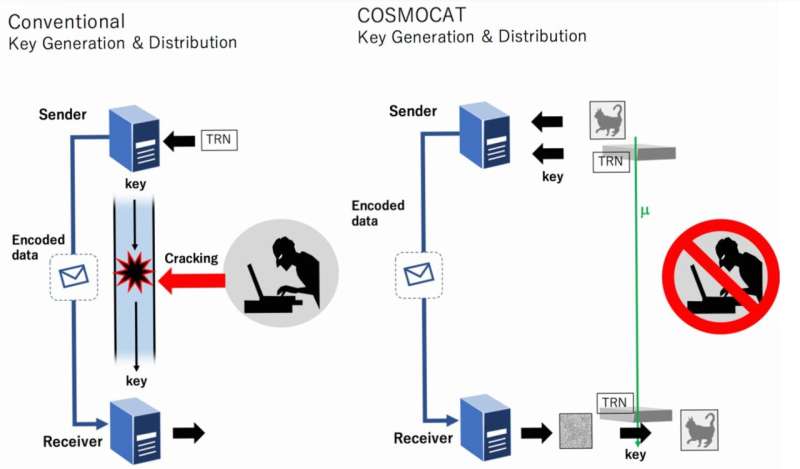
A new method—called COSMOCAT—is proposed and demonstrated, which removes the need to send a decryption key since cosmic rays transport it for us, meaning that even if messages are intercepted, they could not be read using any theorized approach. COSMOCAT could be useful in localized various bandwidth applications, as there are limitations to the effective distance between sender and receiver.
In the field of information communication technology, there is a perpetual arms race to find ever more secure ways to transfer data, and ever more sophisticated ways to break them. Even the first modern computers were essentially code-breaking machines used by the U.S. and European Allies during World War II. And this race is about to enter a new regime with the advent of quantum computers, capable of breaking current forms of security with ease. Even security methods which use quantum computers themselves might be susceptible to other quantum attacks.
"Basically, the problem with our current security paradigm is that it relies on encrypted information and keys to decrypt it both being sent along a network from sender to receiver," said Professor Hiroyuki Tanaka from Muographix at the University of Tokyo.
"Regardless of the way messages are encrypted, in theory someone eavesdropping could use the keys to decode the secure messages eventually. Quantum computers just make this process faster. If we dispense with this idea of sharing keys and could instead find some way of using unpredictable random numbers to encrypt information, then it should lead to a system immune to interception. And I happen to work often with a source capable of generating truly random unpredictable numbers: cosmic rays from outer space."
Various random number generators have been tried over time, but the problem is how to share these random numbers while avoiding interception. Cosmic rays may hold the answer, as one of their byproducts, muons, are statistically random in their arrival times at the ground. Muons also travel close to the speed of light and penetrate solid matter easily.
This means that as long as we know the distance between the sender's detector and the receiver's detector, the time required for muons to travel from the sender to the receiver can be precisely calculated. And providing that a pair of devices are sufficiently synchronized, the muons' arrival time could serve as a secret key for both encoding and decoding a packet of data. But this key never has to leave the sender's device, as the receiving machine should automatically have it as well. This would plug the security hole presented by sending shared keys.
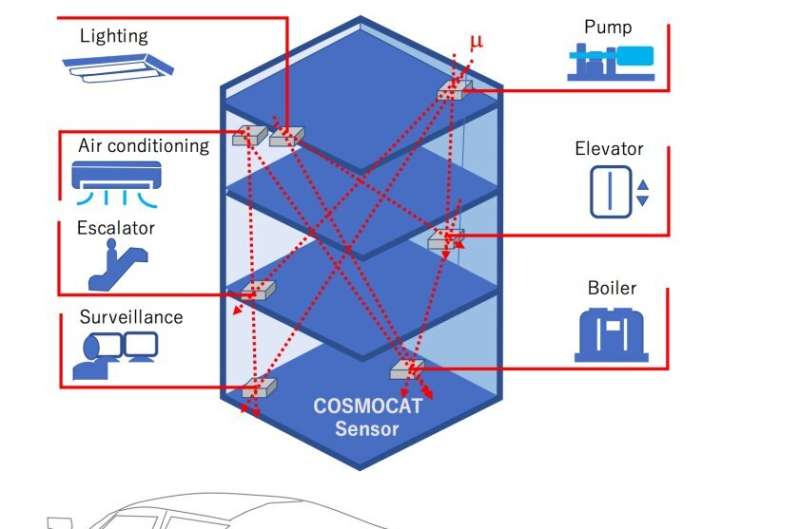
"I call the system Cosmic Coding and Transfer, or COSMOCAT," said Tanaka. "It could be used alongside or in place of current wireless communications technologies such as Wi-Fi, Bluetooth, near-field communication (NFC), and more. And it can exceed speeds possible with current encrypted Bluetooth standards. However, the distance it can be used at is limited; hence, it's ideally kept to small local networks, for example, within a building. I believe COSMOCAT is ready to be adopted by commercial applications."
At present, the muon-detecting apparatus are relatively large and require more power than other local wireless communication components. But as technology improves and the size of this apparatus can be reduced, it might soon be possible to install COSMOCAT in high-security offices, data centers and other local area networks
The work is published in the journal iScience.
More information: Hiroyuki K.M. Tanaka, Cosmic Coding and Transfer (COSMOCAT) for Ultra High Security Near-Field Communications, iScience (2023). DOI: 10.1016/j.isci.2022.105897
Journal information: iScience
Provided by University of Tokyo
Explore further
Measurement-device-independent quantum communication without encryption
Using artificial intelligence, Cornell engineers have simplified and reinforced models that accurately calculate the fine particulate matter (PM2.5)—the soot, dust and exhaust emitted by trucks and cars that get into human lungs—contained in urban air pollution.
Now, city planners and government health officials can obtain a more precise accounting about the well-being of urban dwellers and the air they breathe, from new research published December 2022 in Transportation Research Part D.
"Infrastructure determines our living environment, our exposure," said senior author Oliver Gao, the Howard Simpson Professor of Civil and Environmental Engineering in the College of Engineering. "Air pollution impact due to transportation—put out as exhaust from the cars and trucks that drive on our streets—is very complicated. Our infrastructure, transportation and energy policies are going to impact air pollution and hence public health."
Previous methods to gauge air pollution were cumbersome and reliant on extraordinary amounts of data points. "Older models to calculate particulate matter were computationally and mechanically consuming and complex," said Gao, a faculty fellow at the Cornell Atkinson Center for Sustainability. "But if you develop an easily accessible data model, with the help of artificial intelligence filling in some of the blanks, you can have an accurate model at a local scale."
Lead author Salil Desai '20, M.Eng. '21 and visiting scientist Mohammad Tayarani, together with Gao, published "Developing Machine Learning Models for Hyperlocal Traffic Related Particulate Matter Concentration Mapping," to offer a leaner, less data-intensive method for making accurate models.
Ambient air pollution is a leading cause of premature death around the world. Globally, more than 4.2 million annual fatalities—in the form of cardiovascular disease, ischemic heart disease, stroke and lung cancer—were attributed to air pollution in 2015, according to a Lancet study cited in the Cornell research.
In this work, the group developed four machine learning models for traffic-related particulate matter concentrations in data gathered in New York City's five boroughs, which have a combined population of 8.2 million people and a daily-vehicle miles traveled of 55 million miles.
The equations use few inputs such as traffic data, topology and meteorology in an AI algorithm to learn simulations for a wide range of traffic-related, air-pollution concentration scenarios.
Their best performing model was the Convolutional Long Short-term Memory, or ConvLSTM, which trained the algorithm to predict many spatially correlated observations.
"Our data-driven approach—mainly based on vehicle emission data—requires considerably fewer modeling steps," Desai said. Instead of focusing on stationary locations, the method provides a high-resolution estimation of the city street pollution surface. Higher resolution can help transportation and epidemiology studies assess health, environmental justice and air quality impacts.
More information: Salil Desai et al, Developing Machine learning models for hyperlocal traffic related particulate matter concentration mapping, Transportation Research Part D: Transport and Environment (2022). DOI: 10.1016/j.trd.2022.103505
A new nanogenerator that harnesses the renewable energy of open ocean waves could power observation platforms and more in the middle of the ocean. Credit: Sara Levine | Pacific Northwest National Laboratory
Tsunamis, hurricanes, and maritime weather are monitored using sensors and other devices on platforms in the ocean to help keep coastal communities safe—until the batteries on these platforms run out of juice. Without power, ocean sensors can't collect critical wave and weather data, which results in safety concerns for coastal communities that rely on accurate maritime weather information. Replacing batteries at sea is also expensive. What if this could all be avoided by powering devices indefinitely from the energy in ocean waves?
Pacific Northwest National Laboratory (PNNL) researchers are working to make this a reality with the development of a new cylindrical triboelectric nanogenerator (TENG)—a small powerhouse that converts wave energy into electricity to power devices at sea. Larger versions of this generator could be used to power ocean observation and communications systems, including acoustic and satellite telemetry.
"TENGs are low cost, lightweight, and can efficiently convert slow, uniform or random waves into power—making them particularly well-suited to powering devices in the open ocean where monitoring and access are challenging and costly," explained Daniel Deng, a PNNL laboratory fellow and co-developer of the new TENG device.
Deng and his team took a novel approach to advance cylindrical TENGs for use on the open ocean. Their patent-pending frequency-multiplied cylindrical triboelectric nanogenerator (FMC-TENG) uses carefully placed magnets to convert energy more efficiently than other cylindrical TENGs and to better transform slow, uniform waves into electricity. So far, the prototype FMC-TENG has been able to produce enough electricity to power an acoustic transmitter—a type of sensor often included on ocean observing platforms that can be used for communications. This is about the same amount of electricity it takes to power an LED lightbulb.
"We're developing the FMC-TENG to power everything from ocean observing platforms with multiple sensors to satellite communications, all using the power of the ocean," said Deng.
A new nanogenerator, the FMC-TENG, harnesses the renewable energy of open ocean waves to generate power. Credit: Sara Levine / Pacific Northwest National Laboratory
Artificial fur, magnets, and waves for power
If you've ever been shocked by static electricity, then you've personally experienced the triboelectric effect—the same effect researchers leverage in the FMC-TENG to produce power. A cylindrical TENG is made up of two nested cylinders with the inner cylinder rotating freely. Between the two cylinders are strips of artificial fur, aluminum electrodes, and a material similar to Teflon called fluorinated ethylene propylene (FEP). As the TENG rolls along the surface of an ocean wave, the artificial fur and aluminum electrodes on one cylinder rub against the FEP material on the other cylinder, creating static electricity that can be converted into power.
The more a cylindrical TENG moves, the more energy it generates. That's why fast, frequent waves can generate more energy than the slower, more uniform waves of the open ocean. To come up with a TENG that could power electronics in the open ocean, Deng and his team set out to increase the amount of wave energy converted into electricity in the FMC-TENG. As it turned out, the key was to temporarily stop the FMC-TENG's inner cylinder from moving.
In the FMC-TENG, the team positioned magnets to stop the inner cylinder in the device from rotating until it reached the crest of a wave, allowing it to build up more and more potential energy. Nearing the crest of the wave, the magnets released and the internal cylinder started rolling down the wave very quickly. The faster movement produced electricity more efficiently, generating more energy from a slower wave.
A wave energy converter for the open ocean
Currently, the FMC-TENG prototype can produce enough power to run small electronics, like temperature sensors and acoustic transmitters. As the team iterates on their design for commercial use, the FMC-TENG is expected to produce enough power to run an entire open ocean monitoring platform including multiple sensors and satellite communications. Plus, the FMC-TENG is lightweight and can be used in both free-floating devices and moored platforms.
"The FMC-TENG is unique because there are very few wave energy converters that are efficient and able to generate significant power from low-frequency ocean waves," said Deng. "This type of generator could potentially power integrated buoys with sensor arrays to track open ocean water, wind, and climate data entirely using renewable ocean energy."
The study is published in the journal Nano Energy.
More information: Hyunjun Jung et al, Frequency-multiplied cylindrical triboelectric nanogenerator for harvesting low frequency wave energy to power ocean observation system, Nano Energy (2022). DOI: 10.1016/j.nanoen.2022.107365
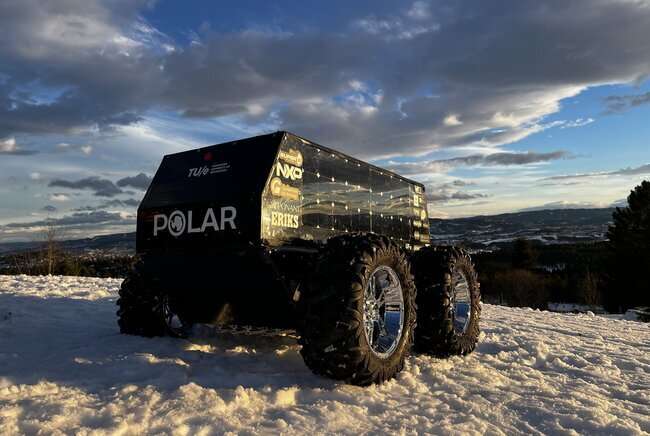
Team POLAR's rover Ice Cube in the Norwegian snow. Credit: Laurenz Edelmann, team POLAR
Team Polar, a student team at Eindhoven University of Technology (TU/e), took their first rover to perform research in the Norwegian snow in the first week of January. The team is dedicated to developing an independent rover that can perform Antarctic research. This is their first working prototype and the team is eager to set a benchmark for future developments. They will present their findings and the rover itself at the reveal event, January 20, 2023.
The Earth is facing its biggest problem in centuries: climate change. To fight climate change, we need to understand better the factors behind it. However, understanding it requires gathering information about our planet in places where nature is still pristine and more or less unaffected by climate change, as well as places where the consequences of global warming and climate change can be observed first-hand. Circumstances like that are usually found in extremely cold and remote environments like the Arctics, Antarctica, and the oldest glaciers. At the moment, research is often carried out inefficiently and in very expensive and unsustainable ways.
Team Polar wants to create an alternative way to do extensive environmental research in the coldest places on our planet by developing an unmanned rover. This rover will eventually operate and perform research all by itself—similar to how the Martian rovers operate on the surface of Mars—and collect invaluable data about the effects of climate change. The team started its mission in 2018 and now presents its first working prototype: the rover "Ice Cube."
Research in the snow
Development of the rover took place at the Eindhoven University of Technology in the Netherlands, a country notoriously devoid of deep snow most winters these days. That's why the team took their rover to Trondheim in Norway, to see how their first rover "Ice Cube" performs in the snow. "We can test a lot of things in our lab, but not how the rover drives in the snow, how the solar panels handle the snow and temperatures, and how cold it will get inside the rover and how quickly it becomes very cold," explains team manager Laurenz Edelmann.
"We have built our first rover with off-the-shelf components. That may or may not present some challenges for us. And, we may find that certain components will need to be custom-made and designed for future rover models. That's why this rover will be a benchmark for us and for future teams." The rover will be remote controlled for now, allowing the team to hand-pick the locations they want to study on this trip. This allowed the team to gather essential insights that can help the team to ensure that their next rover will be fit for a mission to Antarctica.
Inspiring other teams
The team was in Norway to run their experiments from January 4 until January 8. There, they saw their rover drive through the snow naturally. They also determined which components worked fine, and discovered a handful of items that broke and needed replacing. "Overall, we were super impressed with the way Ice Cube tackled the snow and handled itself," says Edelmann. "We gathered valuable data, and great footage to present at our event." There was also time set aside on the return journey to the Netherlands to visit other universities. "We love to maintain good relations with other student teams at technical universities in Europe. That's why we made sure to present our rover at the universities of Trondheim (NTNU), Kopenhagen (DTU), and Braunschweig (NFF)," explains Edelmann.
"We hope to inspire and inform local student teams how to tackle an ambitious goal, such as building an Antarctic research rover successfully. And, of course, to forge new alliances and collaborations with our colleagues at other institutions."