Sunday, January 15, 2023

21ST CENTURY ALCHEMY
Superdeep diamond reveals new info on earth’s geological processes

Staff Writer | January 12, 2023 | 
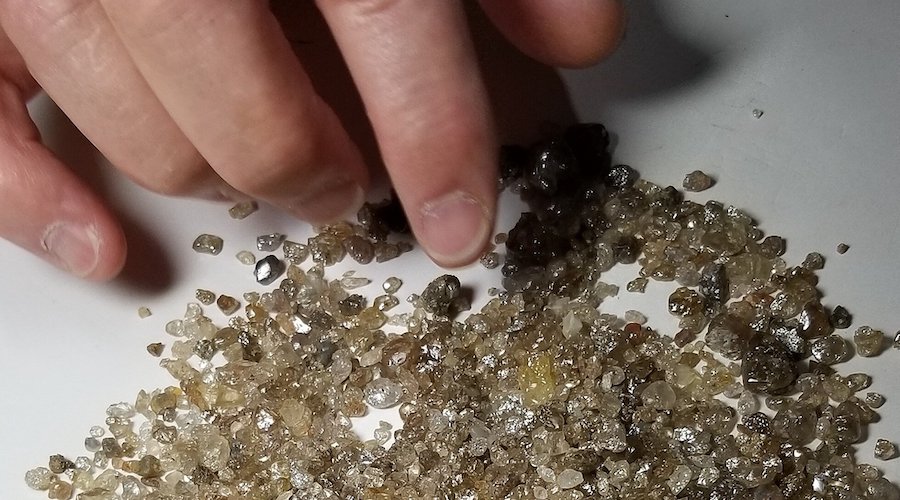
Superdeep diamonds that originate hundreds of kilometers beneath earth’s surface are like time capsules revealing how they were formed. (Image courtesy of the University of Alberta).

A recent paper published in the journal Nature points to a “superdeep” diamond recovered in Kankan, Guinea, as the messenger of new information on plate tectonics, the geological processes that give rise to mountains, oceans and continents.


One of the inclusions found in the diamond was a very pure example of the mineral olivine, a variety of which is more commonly known as the gemstone peridot. Most olivine found on our planet has some iron in it, so the purity of this olivine speaks to the unique conditions under which it was formed.

The olivine’s purity, as well as some of the other minerals that were inclusions in the precious rock, indicate a far deeper origin than usual for a diamond, between what is called the transition zone and the lower mantle zone—420 kilometres to 660 kilometres beneath earth’s surface. It also shows that the environment between these zones has an extremely variable oxygen content.

“To make this extreme composition [of olivine] and the overall mineral assemblage that we’ve got, the only way of doing that is to have a very deeply subducted oceanic plate or slab that goes down into the mantle, so you’re essentially pushing material from the surface of the earth into the depths of the earth,” Graham Pearson, study co-author and director of the Diamond Exploration and Research Training School at the University of Alberta, said in a media statement.

“You get huge gradients in oxygen activity when you do that, and these big gradients are very conducive to driving extreme variations in the composition of minerals,” he noted.

An understanding of these oxygen gradients helps explain how plate tectonics bring volatile elements back up into the mantle, and can also offer clues to how superdeep diamonds are formed—knowledge that can’t be gained any other way.

“You can see oceanic slabs descending into the earth in seismic images, but you don’t have any idea of the detailed structures they develop, or the mechanisms and chemistry going on in those slabs,” Pearson said. “These diamonds provide a unique trace of that detailed chemical evolution as the slab’s going down.”

As researchers gain more insight into the movement of those slabs into the mantle, called subduction, they can better understand plate tectonics.

“Subduction drives the whole of plate tectonics. If you don’t understand the details of subduction, that limits your understanding of how plate tectonics work,” the scientist said

Superdeep diamonds, which originate from depths of more than 300 kilometres below earth’s surface, are a treasure trove of scientific information because diamonds are uniquely able to preserve information about where they’re formed, including many of the physical and chemical processes that occurred during their formation.

Most other minerals lose much of that information by the time they make their way to the surface but, as Pearson explained, diamonds act almost as time capsules.

“There are many things at the surface of the earth that can only be explained by processes happening at deep depths,” he pointed out. “If you want to explain things you see at the surface—whether it’s economic mineralization, surface uplift or subsidence phenomena related to oil-bearing basins—you need an understanding of the structure, mechanics and properties of the deep earth. Diamond is uniquely able to bolster that understanding.”
Japanese delegation to visit Canada to meet with battery, mining companies

Reuters | January 12, 2023 |

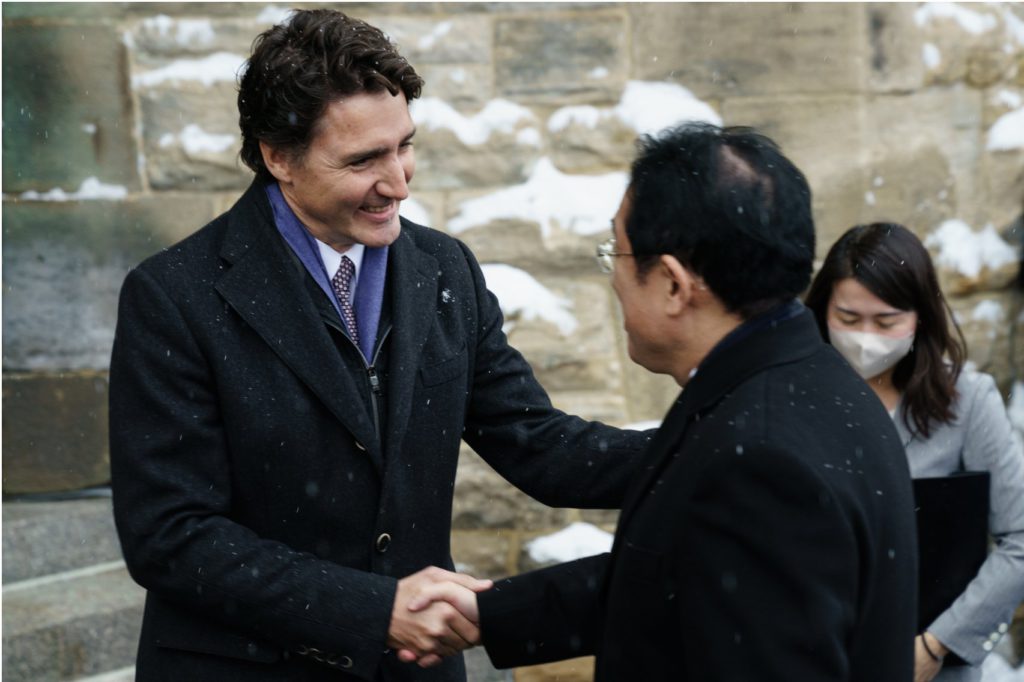
Canadian Prime Minister Justin Trudeau meeting with Japanese Prime Minister Kishida Fumio on Thursday. Credit: The Canadian government’s Twitter page

Japan will send a delegation to meet with Canadian battery and mining companies early this year, while Canada is planning a trade mission to Japan later in October, the leaders of both countries announced on Thursday after meeting in Ottawa.


As this year’s host of the Group of Seven (G7), Japanese Prime Minister Fumio Kishida came to Canada to meet Canadian Prime Minister Justin Trudeau before continuing onto Washington, where he will sit down with US President Joe Biden on Friday.

“This spring, we’re… looking forward to hosting an important business delegation from Japan,” Trudeau said. “They’re planning to be meeting with Canadian battery and mining companies and potential partners.”

The two leaders hosted a lunch meeting with Canadian business leaders where “they highlighted the growing and exciting business potential between the two countries,” according to a statement from Trudeau’s office.

Canada has been seeking to woo foreign investment the electric vehicle (EV) supply chain, in particular in mining and processing its abundant critical minerals used in EV batteries, especially for countries who want to reduce their dependence on China for those materials.

Earlier in the day, Kishida said that Japan is looking to Canada to “play a major role, as a resource-rich country” on energy.

Japan’s Mitsubishi Corp, through a subsidiary, owns a 15% stake in the LNG Canada joint venture led by Shell, which Trudeau said was the “largest private investment in Canada.” The liquefied natural gas terminal is being built in British Columbia to supply Canadian natural gas to Asia.

The two leaders agreed that “China is a central challenge,” Kishida said during the news conference, and both reiterated their support for the dismantling of North Korea’s nuclear weapons program.

To counter China’s influence in the region and increase its own strategic sway, Canada launched an Indo-Pacific strategy in November.

Kishida welcomed Canada’s diplomatic pivot toward Asia and its efforts to deepen ties with a fast-growing Indo-Pacific region of 40 countries accounting for almost C$47 trillion ($35.2 trillion) in economic activity.

“The two leaders discussed their concerns about China’s actions in the region and agreed on the importance of a coordinated approach to security in the Indo-Pacific,” Trudeau’s office said in a statement.

($1 = 1.3360 Canadian dollars)

(By Steve Scherer and Ismail Shakil; Editing by Chris Reese and David Gregorio)

ECOCIDE
Teck fined $1.6 million for acid spill into Columbia River at Trail smelter operations
Jeremy Hainsworth | January 12, 2023 |

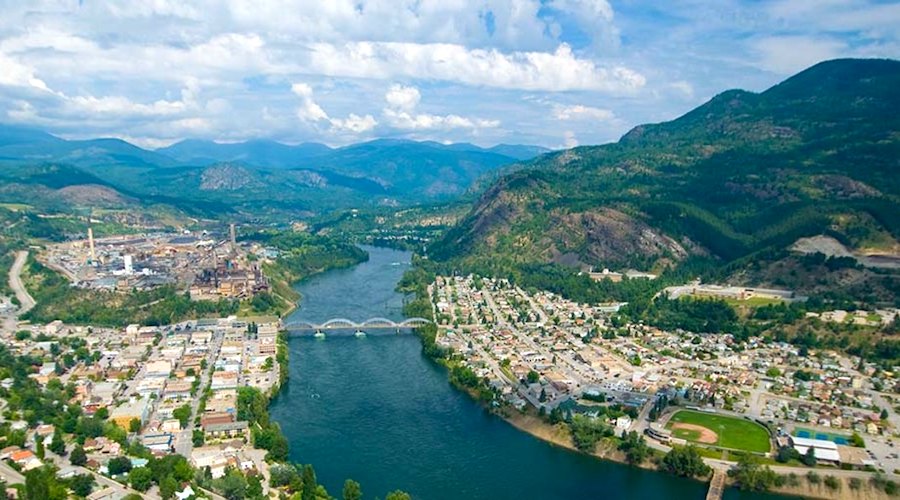
Trail Operations is one of the world’s largest fully integrated zinc and lead smelting and refining complexes. (Image courtesy of Teck Resources.)

Vancouver-based Teck Resources was ordered January 10 to pay C$2.2 million ($1.65m) for an acid spill into the Columbia River at the company’s Trail smelter operations.


A Rossland provincial court judge made the order after the company pleaded guilty to two charges laid under the federal Fisheries Act and one charge laid under the provincial Environmental Management Act. The charges resulted from an effluent release in February 2019.

Teck employees reported a spill of low pH effluent to Environment and Climate Change Canada (ECC) and Emergency Management BC.

ECCC enforcement officers investigated and determined the discharge of approximately 2.5 million litres of effluent into the river just north of the US border resulted from numerous operational errors.

The river contains mountain whitefish, rainbow trout, walleye, brook trout, bull trout, cutthroat trout, white sturgeon, sculpin, redside shiner, and other fish species.

An ECCC news release said the company’s failure to exert due diligence contributed to the duration and extent of the spill.

The investigation found the effluent was caused by a leak of an acidic solution from the company’s fertilizer operations in Warfield, BC, just above the Trail metals smelter.

Much of the discharged effluent was below pH 4, which is deleterious, or harmful to fish.

The C$2 million federal fine will be directed to the Government of Canada’s Environmental Damages Fund.

The remaining C$200,000 is a provincial fine for Teck under the Environmental Management Act for failing to comply with their permit, which specifies acceptable pH levels for discharges and prohibits acutely lethal effluent discharges.

The company’s name will be added to the Environmental Offenders Registry, which lists information on convictions of corporations registered for offences committed under certain federal environmental laws.

In 2021, the company’s Teck Coal Ltd. subsidiary was fined a record C$60 million for discharges from its East Kootenay coal operations into the Fording River and a pond.

(This article first appeared in Business in Vancouver)
Rio Tinto trials renewable diesel at US operations

Reuters | January 13, 2023 |

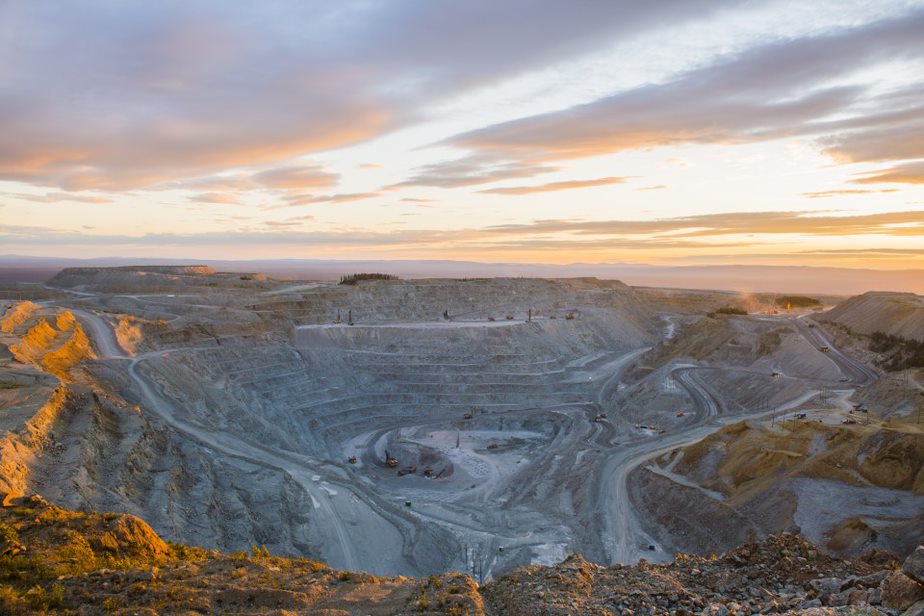
Kennecott copper operations in Salt Lake City, Utah. Credit: Rio Tinto

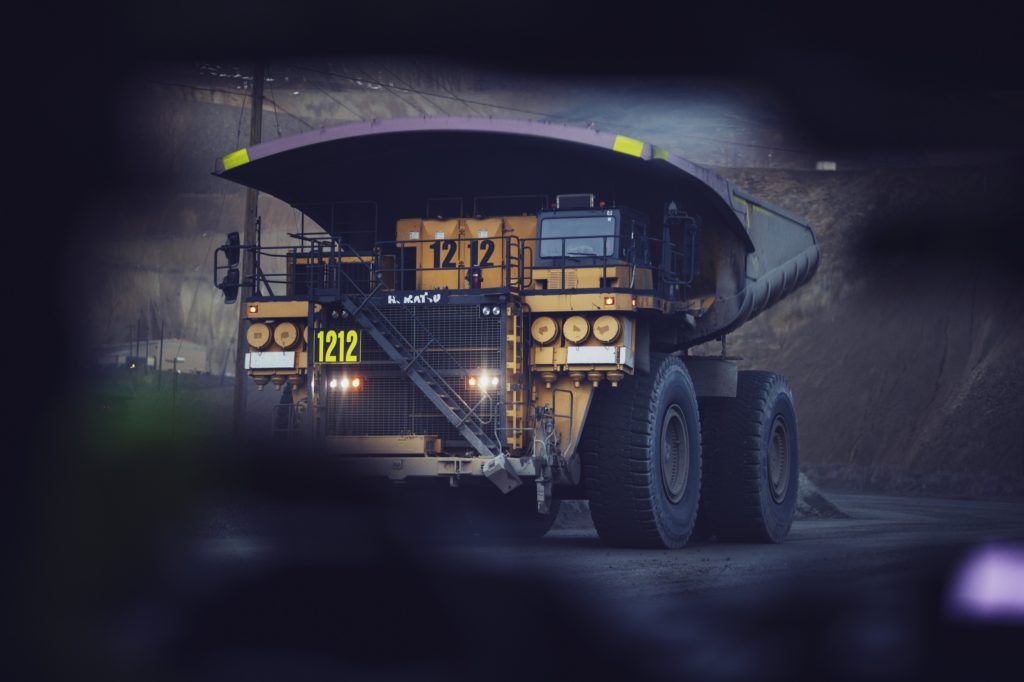
Rio Tinto said on Friday it is conducting trials at its Kennecott copper operations in Salt Lake City, Utah, to determine the suitability of renewable diesel for open pit haulage.


The global miner said the trials come after it completed a renewable diesel trial at its Borax mine in California as it seeks to swap conventional diesel for renewable fuel in haul trucks at its operations in the United States.

(By Muhammed Husain; Editing by Shailesh Kuber)
Taseko gets $25 million loan to build processing plant at Florence Copper

Staff Writer | January 13, 2023

Credit: Taseko Mines

Taseko Mines (TSX, LSE: TKO) has received an additional commitment of $25 million from Bank of America Leasing & Capital LLC to fund the costs associated with the solvent extraction and electrowinning (SX/EW) plant for its Florence Copper commercial production facility in Arizona.


The latest funding follows an initial investment of $50 million made recently by Japan’s Mitsui for the construction of the copper project. As part of the financing arrangement with Mitsui, the parties entered into an offtake contract for 81% of the copper cathode produced at Florence during its early years.

“Following the recently announced strategic partnership with Mitsui & Co. (USA) Inc. for our Florence Copper project, this additional source of funds will further strengthen our balance sheet and provide financing flexibility as we prepare for construction of the project in 2023,” Taseko CEO Stuart McDonald said in a news release.

The $25 million funding will be available for drawdown upon Florence Copper receiving the final underground injection control permit from the EPA. In August 2022, the project was granted a draft permit despite concerns over its potential environmental impact.

The Bank of America loan will be secured by specific treatment and processing equipment in the SX/EW plant with an initial term of five years.

“In addition to Florence Copper’s strong economics, the project has many environmental attributes, including low carbon emissions and a low footprint operation, which are attractive to financial partners,” McDonald said.

“The financing commitment from Bank of America is a customized solution developed for Taseko, leveraging the equipment security of our SX/EW plant, since conventional mining equipment like shovels and haul trucks will not be used at Florence Copper,” he explained.

According to Taseko, Florence has one of the least capital-intensive copper production facilities in the world, and when fully ramped up, will produce 40,000 tonnes of high-quality cathode copper annually for the US domestic market.

The company said it expects the project to have the lowest energy and greenhouse gas intensity of any copper producer in North America.
LME data entry error showed copper price down 77% in latest glitch

Bloomberg News | January 13, 2023

Stock image.

London Metal Exchange trading data briefly showed a 77% drop in the global benchmark price for copper after its system transmitted incorrect pricing, in the latest technical setback at the embattled exchange.


The error came at the close of trading in the LME’s second open-outcry pricing session, which sets the global benchmark price for the physical metals industry. The mistake was a result of a data-entry error, according to a person familiar with the matter.


While the final price in the trading ring was set at $9,130 a ton, the LME’s external data feed showed a price of $2,130 a ton. In a subsequent notice, the LME asked data vendors to update their pricing feeds accordingly, and apologized for any inconvenience caused.

The glitch had no follow-on impact on prices or trading and was quickly resolved by the LME. Still, the episode marks the latest in a string of technical setbacks at the exchange, including several complications that arose when it resumed trading in the wake of the last year’s historic nickel squeeze. In the runup to the crisis last year, its clearinghouse also generated a “high number” of erroneous margin calls that for some brokers totaled hundreds of millions of dollars.

At the start of last year, the exchange also experienced a five-hour outage impacting its electronic trading platform, where roughly a third of trading takes place. The remainder takes place in a telephone-based interoffice market, in addition to a small volume of trades that take place in the Ring.

While Friday’s pricing issue was quickly addressed, the latest glitch comes at a time when the LME continues to deal with the fallout from the nickel crisis last March, which thrust the exchange into the global spotlight and raised questions about its future at the center of global metals markets.

Copper was trading at $9,183.50 a ton as of 3:14 p.m on the LME, little changed on the day.

(By Mark Burton, with assistance from Kenneth Hughes)
Brazil should work with other countries to curb illegal gold trade, says mining lobby

Reuters | January 13, 2023 | 

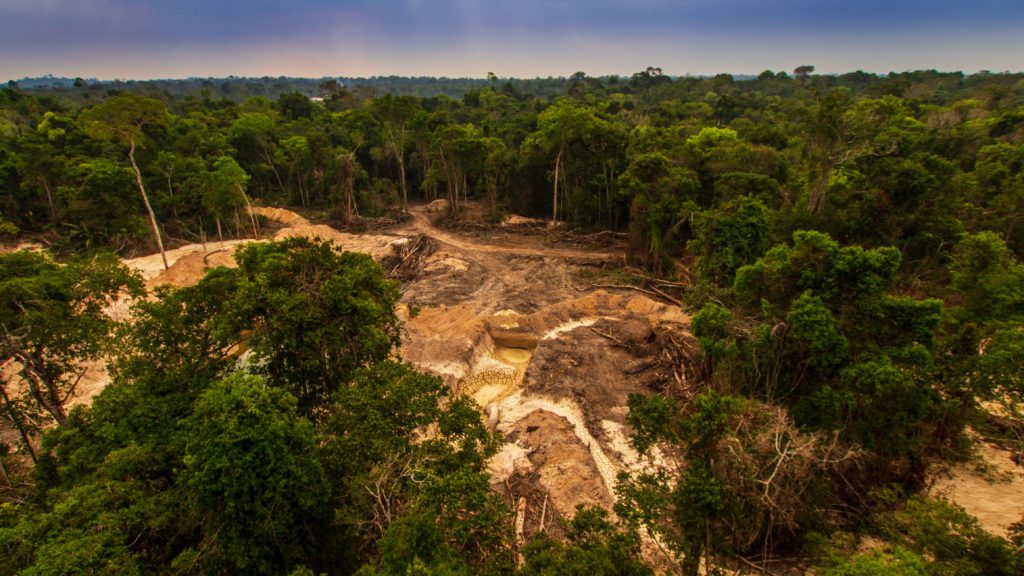
Illegal mining causes deforestation and river pollution in the Amazon rainforest. Credit: Adobe Stock

Brazil’s mining lobby group asked the country’s foreign ministry to work with other governments to improve tactics used to combat the illegal gold trade, it said on Friday.


“The trade of illegal gold feeds a criminal alliance in Brazil, which is responsible for part of the devastation we see in the Amazon rainforest, something the world is watching,” said Raul Jungmann, president of the Ibram trade association, in a statement.


Unregulated mining, which surged under right-wing former President Jair Bolsonaro, has destroyed rainforest land and polluted rivers with deadly mercury, while illegal miners have clashed violently with indigenous groups protecting their land.

But even legal mining is at an industrial scale spurring deforestation as once-impenetrable forest is cleared for access roads and mines for gold, iron and coal.

Ibram represents mining giants such as Vale, Rio Tinto, BHP as well as gold miners such as South Africa’s AngloGold Ashanti and Canada’s Yamana Gold.

The lobby group called for the ministry to work with countries that buy illegally mined Brazilian gold, such as Switzerland, to “reduce the space” for illicit operators.

Ibram asked the ministry to help an August conference on “bioeconomy” in the Amazon, which is set to be a forum to formulate long-term plans for sustainable development.

“It would be a strategy to signal to Brazil and the world that concrete actions are being taken to recover this important biome and outline a future based on good sustainability practices”, said Jungmann.

The new administration of President Luiz Inacio Lula da Silva has revoked some of Bolsonaro’s policies that eased off environmental protections. It has pledged to stop deforestation in the Amazon, a vital biome whose health is considered vital in the fight against climate change.

(By Marta Nogueira; Editing by David Gregorio)

Read more: Most Brazil gold mined near Amazon may be illegal, study shows

World to face ongoing potash price crunch as Brazil Potash propels Autazes toward production

World to face ongoing, high potash prices as Brazil Potash propels Autazes toward productionFertilizer in a farmer's hand. Credit: Brazil Potash.

Protectionism from some countries has been a wakeup call to the global community, spurring it to work towards ensuring food security needs are met amid a tightening of fertilizer supplies, says CEO Matt Simpson in an interview with The Northern Miner.

Compounded by Russia’s invasion of Ukraine, market trends have seen about 42% of the global potash market have been impacted.

“While potash from Russia is quietly making its way out to markets, only about 30% of prior volumes are making its way out of landlocked Belarus. When the war started, potash prices for delivery in Brazil – one of the world’s most important agricultural export markets – quadrupled to the US$1,200 per tonne level,” Simpson says.

While prices have come down to about US$500 per tonne today, Simpson says 2023 will not likely bring relief to a growing global food shortage, as many expect food inflation and rising prices to continue to put our food security at risk. He also notes that given the ongoing turmoil in Russia impacting neighbouring Belarus, more than 15 million tonnes of expected new production would probably not come online since those projects won’t likely secure funding because of the heightened risk.

“This sets up the market to remain tighter for longer,” the CEO says.

The future of global food security is uncertain, but potash producers will play an essential role in helping to ensure that everyone has access to nutritious food. With the Autazes potash project, Brazil Potash is paving the way to a more secure and sustainable agricultural future for Brazil, Simpson says.

Brazil Potash’s Autazes project is near Manaus, in the northern Amazonas State. The project is expected to produce potash using an environmentally friendly method of extracting the crop nutrient potassium chloride from the ground while doubling twice the current Brazilian production and changing the domestic potash market in Brazil.

That market will soon have to contend with the fact that the country’s only potash mine, Mosaic’s (Nasdaq: MOS) Taquari-Vassouras mine in eastern Sergipe State is at the end of its lifetime.

“Countries like Brazil are the perfect example of how boosting domestic potash production could lead to benefits across the entire agriculture sector and beyond,” Simpson says.

Brazil’s agricultural industry is one of the country’s largest employers, and the potash industry is a major contributor to the nation’s economy. However, right now, Brazil is a net importer, raising costs for the industry and creating risks to supply chains.

In 2022 there had been plenty of discussion about the importance of fertilizers to the country.

The administration also released the National Fertilizer Plan in 2022, highlighting the importance of potash in the country’s fertilizer mix. The plan broadly entails reducing Brazil’s reliance on importing about 85% of its fertilizer needs, of which potash accounts for 98% of imports.

The Brazilian government has given the project its support.

According to Simpson, the goal is to reduce this number to about 45% by 2050.

As it stands, the company is nearing a construction decision on the Autazes project. “We’ve obtained 76 of the 78 items required to get the installation licence that allows us to start construction. And we submitted the 77th item, which is our Indigenous consultation study. We expect a response in the coming months,” Simpson says.

Construction ready

Meanwhile, Brazil Potash recently completed an updated technical report on Autazes. The last comprehensive study was completed in 2016. As of the 2022 assessment, the company noted that an upward shift in potash sales prices and a favourable exchange rate mostly offset an escalation in costs for construction capital and general operating expenses.

The construction cost is about US$2.5 billion, with a four-year construction timeline.

The economic metrics also look good, with the NPV (at 10% discount) calculated at US$1.6 billion on an after-tax basis, and an IRR of about 17%. “In terms of those numbers, we think we can improve upon them quite a bit because, in parallel, we completed some work with the Saskatchewan Research Council on a revised flow sheet,” Simpson says.

He added the company is also evaluating incorporating hot leaching into the flotation flow sheet, which could translate to a higher-quality product, reduced capex of about US$400 million, and it drops the operating cost from about US$87 per tonne to US$65 per tonne. It helps push the IRR into the mid to high 20%.

Simpson notes that at a price level of about US$240 per tonne, most producers today are not making money, while the exact price would translate to making almost a 200% profit, Simpson says.

The executive notes management has started to focus on securing offtake agreements for Autazes, resulting in a take-or-pay contract with soybean producer Amaggi for production from Phase I of the Autazes mine. Under the offtake agreement, Brazil Potash will supply 2.4 million tonnes of potash annually over 15-17 years.

In addition, Amaggi’s logistics arm will also have the rights to market Brazil Potash’s remaining 1.9 million tonnes of annual production from the mine to other potential buyers as part of the marketing agreement. Under the barge transportation agreement, Brazil Potash will deliver the initial planned production of 2.4 million tonnes of potash a year to inland ports located near major farming regions within Brazil.

“The offtake agreement allows us to initiate talks with potential lenders as we prepare the finance package for the mine build,” says Simpson.

Congo picks Symbion to tap methane-filled lake

Bloomberg News | January 14, 2023 |

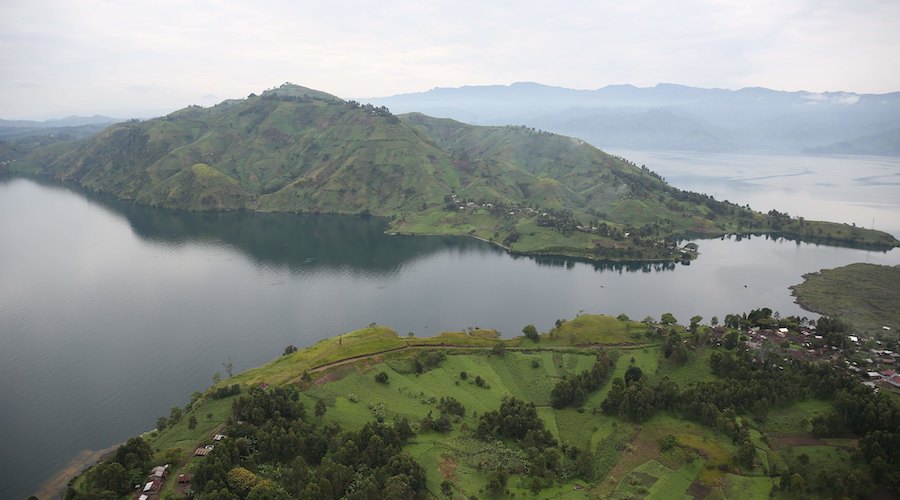
Lake Kivu. (Image by MONUSCO / Abel Kavanagh, Flickr.)

New York’s Symbion Power won a bid to produce electricity from methane trapped in a lake in the eastern Democratic Republic of Congo, the country’s oil minister Didier Budimbu Ntubuanga told Bloomberg.


Symbion’s Chief Executive Officer Paul Hinks confirmed the company won the Makelele methane gas block on Lake Kivu with its partner Renewable Energy Developments. The company proposed a 60-megawatt gas-to-electricity project, in one of the world’s least-electrified nations.

“This is a large investment with a price tag of at least $300 million,” Hinks said by email. “We are also considering investing in our own private transmission network so we can wheel the power we produce across the region.”

Lake Kivu is shared by Congo and Rwanda and contains enough methane to produce an estimated 700 megawatts of electricity over more than 50 years. The methane, produced in part by microorganisms in the lake, is dissolved in its deep waters.

The development of electricity production from the lake is part of Congo’s plan to expand energy access from about 10% of the population to 32% by 2030.

Symbion has developed two projects on the Rwandan side of the lake, which it sold in 2019. The electricity from its Makelele concession will go to the trading hub of Goma and the North and South Kivu provinces, Hinks said.

A Canadian company and another US company won bids for two other gas blocks on the lake, Budimbu said, without naming them.

(Reporting by Michael J. Kavanagh).
ECOCIDE
The Metals Company calls video of mining waste dumped into the sea misinformation as stock sinks

Bruno Venditti | January 12, 2023 |

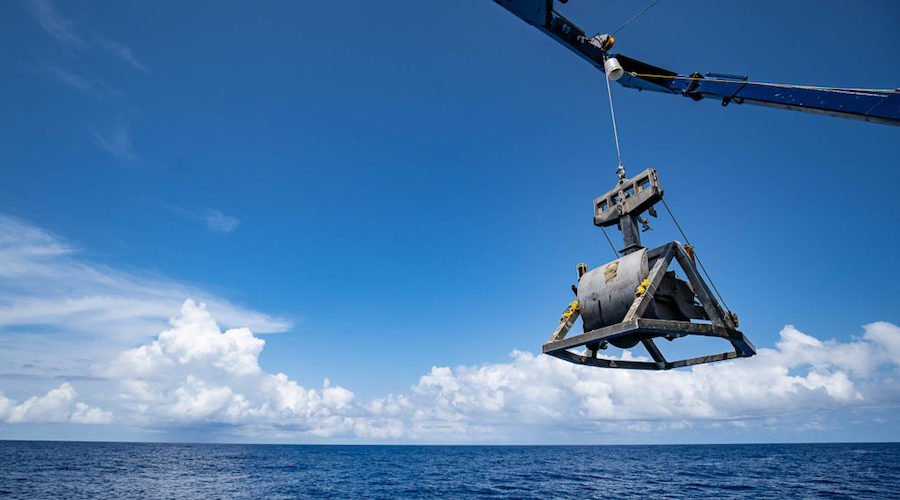
Image from The Metals Company

The Metals Company (NASDAQ: TMC), formerly Deep Green Metals, an explorer of lower-impact battery metals from seafloor polymetallic nodules, responded Thursday to videos of what appears to be mining waste dumped into the sea shared by environmental groups on Tuesday, saying they were taken out of context.


The videos, released by MiningWatch Canada, Greenpeace International, and the Deep Sea Mining Campaign, were captured in October by scientists aboard ships owned by the company as it trialed its deep-sea mining technology in the Clarion Clipperton Zone (CCZ) in the Eastern Pacific Ocean, between Hawaii and Mexico. The zone has been ranked by Mining Intelligence as the biggest nickel project in world in both 2021 and 2022.


Mining international waters is in the spotlight as companies and countries are looking at minerals concentrated on the ocean floor that can be used in batteries for smart phones and electric vehicles. The resource is now estimated at four megatons (Mt) measured, 341Mt indicated and 11Mt inferred mineral resources.

The two videos released Monday show deep-sea sediment overflowing into the ocean from the deck of the company’s 228-meter-long former drill ship, Hidden Gem.

In a technology description on its website, the company said sediment is expected to be discharged back onto the seafloor within a few hundred meters.

The company described the incident as “a minor overflow,” and said some sediment and fragments of nodules poured out of the separator and over the deck of the ship intermittently during a seven-to eight-hour test run.

“Due to the dynamic behavior of the airlift riser when first switched on, there was a surge in the volume of water flow which briefly exceeded the buffer capacity of the cyclone separator at the top of the riser,” the Metals Company said in a statement. “As a result, the cyclone experienced a minor overflow of water containing a small amount of sediment and nodule fragments.”

This footage from the ship was provided by The Metals Company:

“When safe to do so the test run was stopped in a controlled manner,” the company said. It added that an assessment was carried out to see if the incident could harm the marine environment but found it “did not have the potential to cause harm and was, therefore, not a reportable incident.”

“Testing was conducted and the implemented modifications to the cyclone separator proved effective. There were no further overflows during subsequent test runs,” the company said.

Catherine Coumans, MiningWatch Canada’s Asia-Pacific Program Coordinator, disagreed.

“That’s not supposed to be happening,” Coumans said in a statement. “Clearly, something went wrong here.”

Coumans said the scientists who filmed the video aboard the ship and later leaked it to the three advocacy groups were paid by The Metals Company to monitor the company’s deep sea metal-harvesting technology’s environmental footprint.

On Twitter, Greenpeace Global Project Leader Louisa Casson called the incident the latest in a “long list of reasons why we need to stop deep sea mining before it starts in 2023.”
“Unfortunately, we are used to these attacks by activists who take things out of context and try to create a sense of armageddon,” The Metals Company’s head of communications and brand Dan Porras told MINING.COM.

Mining in the deep sea is still under study but metals are abundant on the seafloor. Reserves are estimated to be worth anywhere from $8 trillion to more than $16 trillion.

Most of the metals are found in potato-sized rock-like polymetallic nodules. Millions of years old, the nodules grow by absorbing metals from the seawater, expanding slowly around the core of a shell, bone, or rock.

It is estimated that 21 billion tonnes of polymetallic nodules are resting on the ocean floor in the CCZ. Almost 20 international mining companies have contracts to explore the region which spans over 5,000 kilometers and is considered the most prolific area for ocean mining.

The Metals Company’s stock sunk nearly 12% by 3pm EST Thursday on the Nasdaq, capitalizing it at $207 million.