Friday, February 17, 2023

Scientists warn of many dangerous climate feedback loops

Current plans to mitigate climate change may be inadequate

Peer-Reviewed Publication

CONSERVATION BIOLOGY INSTITUTE

Wildfire feedback loop diagram 

IMAGE: THE WILDFIRE-CLIMATE CHANGE FEEDBACK LOOP. view more 

CREDIT: CHRIS WOLF, WILLIAM RIPPLE BACKGROUND PHOTO BY PETER BUSCHMANN

    A new report written by an international team of researchers, including scientists from Oregon State University (OSU), warns of many risky climate feedback loops and the need for action in both research and policy. Published in the scientific journal One Earth today, the report states that partly due to amplifying climate feedbacks, “a very rapid drawdown in emissions will be required to limit future warming.”

    Researchers from the United States and Europe listed and described 41 climate feedback loops that have major implications for the outlook on climate change. Climate feedback loops are processes that can either amplify or diminish the effects of our greenhouse gas emissions, initiating a cyclical chain reaction that keeps repeating again and again. There are many large amplifying feedbacks that accentuate warming. In total, the researchers identified 27 amplifying feedbacks, 7 dampening feedbacks, and 7 uncertain feedbacks.

    The lead authors, Christopher Wolf, a postdoctoral researcher at OSU, and William Ripple, a distinguished professor of ecology at OSU, were joined by several US and international scientists who are credited as co-authors on the report. Ripple is also an affiliate scientist with the Conservation Biology Institute.

    The authors highlight several particularly troubling feedback loops such as the permafrost feedback wherein rising temperatures lead to permafrost thawing, which results in more carbon dioxide and methane emissions, leading to further warming. Other potentially dangerous feedbacks include drying or smoldering peatlands and forest dieback. Because these feedbacks may not yet be fully incorporated into climate models, current emissions drawdown plans could fail to adequately limit future warming. In addition, “some climate feedback loops are associated with tipping points, which will make it difficult to reverse their effects,” said coauthor Jillian Gregg, a scientist at Terrestrial Ecosystems Research Associates.

    Motivated by the many amplifying climate feedbacks, the authors make two recommendations. With regard to climate research, a rapid transition toward integrated Earth system science is needed in order to fully account for biological, social, and other interactions that may influence the climate. In terms of climate policy, more ambitious plans for emissions drawdown should be pursued given both ongoing climate disasters and long-term catastrophic risks. Such plans could include employing nature-based solutions to sequester more carbon from the atmosphere. “The strategic establishment of large natural carbon sinks such as forests is a critical step toward reaching carbon neutrality,” said Ripple.

    The authors concluded by issuing a call for transformative change to address the climate crisis and dangers posed by feedback loops. According to Wolf, “policies are needed to facilitate transformative and socially just changes across many sectors, including energy and food production.”

    The paper is accompanied by the launch of a feedback loops website with animated feedback loops inspired by the study.

    In addition to Wolf, Ripple, and Gregg, five other scientists are co-authors of the paper:

    Timothy M. Lenton of University of Exeter, Susan M. Natali and Philip B. Duffy of the Woodwell Climate Research Center, Johan Rockström and Hans Joachim Schellnhuber of the Potsdam Institute for Climate Impact Research.

    Permafrost

    CREDIT

    Brandt Meixell, USGS

    Sea ice

    CREDIT

    Patrick Kelley, U.S. Coast Guard

    Evolution: Miniproteins appeared “from nowhere”

    Peer-Reviewed Publication

    MAX DELBRÜCK CENTER FOR MOLECULAR MEDICINE IN THE HELMHOLTZ ASSOCIATION

    An evolutionarily young protein that arose de novo in Old World monkeys: 

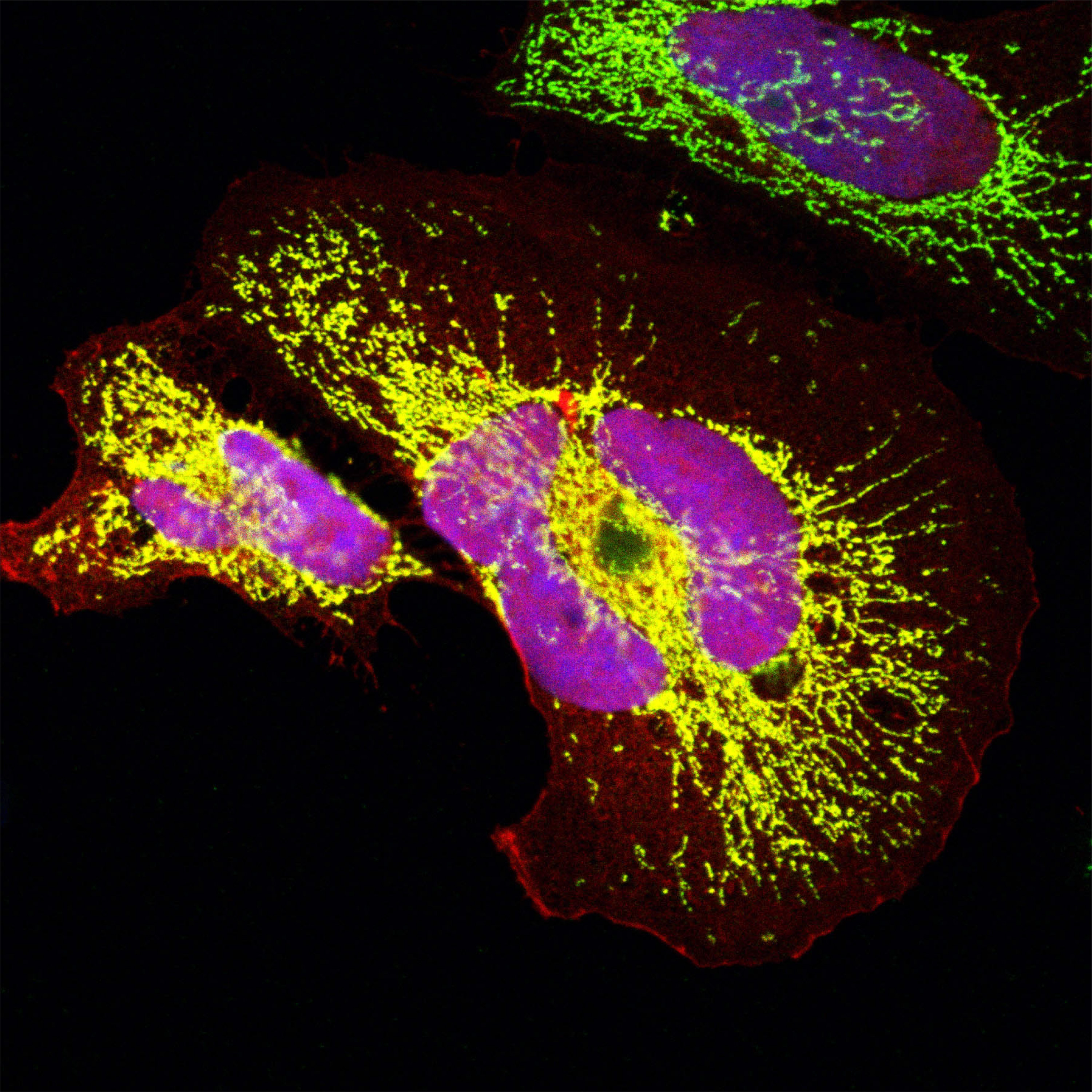
    IMAGE: THE MICROPROTEIN IN THE MITOCHONDRIA (GREEN) AND IN THE NUCLEUS (BLUE) WAS OVEREXPRESSED IN HUMAN CELLS. THE YELLOW AND PINK AREAS SHOW THAT THE SIGNAL OF THE MICROPROTEIN OVERLAPS WITH THE MITOCHONDRIAL AND NUCLEAR SIGNALS. view more 

    CREDIT: CLARA SANDMANN, MAX DELBRÜCK CENTER

    Every biologist knows that small structures can sometimes have a big impact: Millions of signaling molecules, hormones, and other biomolecules are bustling around in our cells and tissues, playing a leading role in many of the key processes occurring in our bodies. Yet despite this knowledge, biologists and physicians long ignored a particular class of proteins – their assumption being that because the proteins were so small and only found in primates, they were insignificant and functionless. The discoveries made by Professor Norbert Hübner at the Max Delbrück Center and Dr. Sebastiaan van Heesch at the Princess Máxima Center for Pediatric Oncology in the Netherlands changed this view a few years ago: “We were the first to prove the existence of thousands of new microproteins in human organs,” says Hübner.

    In a new paper published in Molecular Cell, the team led by Hübner and van Heesch now describe how they systematically studied these miniproteins, and what they learned from them: “We were able to show which genome sequences the proteins are encoded in, and when DNA mutations occurred in their evolution,” explains Dr. Jorge Ruiz-Orera, an evolutionary biologist in Hübner’s lab and one of the paper’s three lead authors, who work at the Max Delbrück Center and the German Center for Cardiovascular Research (DZHK). Ruiz-Orera’s bioinformatic gene analyses revealed that most human microproteins developed millions of years later in the evolutionary process than the larger proteins currently known to scientists.

    Yet the huge age gap doesn’t appear to prevent the proteins from “talking” to each other. “Our lab experiments showed that the young and old proteins can bind to each other – and in doing so possibly influence each other,” says lead author Dr. Jana Schulz, a researcher in Hübner’s team and at the DZHK. She therefore suspects that, contrary to long-held assumptions, the microproteins play a key role in a variety of cellular functions. The young proteins might also be heavily involved in evolutionary development thanks to comparatively rapid “innovations and adaptations.” “It’s possible that evolution is more dynamic than previously thought,” says van Heesch.

    Proteins only found in humans

    The researchers were surprised to find that the vastly younger microproteins could interact with the much older generation. This observation came from experiments performed using a biotechnical screening method developed at the Max Delbrück Center in 2017. In collaboration with Dr. Philipp Mertins and the Proteomics Platform, which the Max Delbrück Center operates jointly with the Berlin Institute of Health at Charité (BIH), the miniproteins were synthesized on a membrane and then incubated with a solution containing most of the proteins known to exist in a human cell. Sophisticated experimental and computer-aided analyses then allowed the researchers to identify individual binding pairs. “If a microprotein binds to another protein, it doesn’t necessarily mean that it will influence the workings of the other protein or the processes that the protein is involved in,” says Schulz. However, the ability to bind does suggest the proteins might influence each other’s functioning. Initial cellular experiments conducted at the Max Delbrück Center in collaboration with Professors Michael Gotthardt and Thomas Willnow confirm this assumption. This leads Ruiz-Orera to suspect that the microproteins “could influence cellular processes that are millions of years older than they are, because some old proteins were present in the very earliest life forms.”

    Unlike the known, old proteins that are encoded in our genome, most microproteins emerged more or less “out of nowhere – in other words, out of DNA regions that weren’t previously tasked with producing proteins,” says Ruiz-Orera. Microproteins therefore didn’t take the “conventional” and much easier route of being copied and derived from existing versions. And because these small proteins only emerged during human evolution, they are missing from the cells of most other animals, such as mice, fish and birds. These animals, however, have been found to possess their own collection of young, small proteins.

    The smallest proteins so far

    During their work, the researchers also discovered the smallest human proteins identified to date: “We found over 200 super-small proteins, all of which are smaller than 16 amino acids,” says Dr. Clara Sandmann, the study’s third lead author. Amino acids are the sole building blocks of proteins. Sandmann says this raises the question of how small a protein can be – or rather, how big it must be to be able to function. Usually, proteins consist of several hundred amino acids.

    The small proteins that were already known to scientists are known as peptides and function as hormones or signal molecules. They are formed when they split off from larger precursor proteins. “Our work now shows that peptides of a similar size can develop in a different way,” says Sandmann. These smallest-of-the-small proteins can also bind very specifically to larger proteins – but it remains unclear whether they can become hormones or similar: “We don’t yet know what most of these microproteins do in our body,” says Sandmann.

    Yet the study does provide an inkling of what the molecules are capable of: “These initial findings open up numerous new research opportunities,” says van Heesch. Clearly, the microproteins are much too important for researchers to keep ignoring them. Van Heesch says the biomolecular and medical research communities are very enthusiastic about these new findings. One conceivable scenario would be “that these microproteins are involved in cardiovascular disease and cancer, and could therefore be used as new targets for diagnostics and therapies,” says Hübner. Several U.S. biotech companies are already doing research in this direction. And the team behind the current paper also has big plans: Their study investigated 281 microproteins, but the aim now is to expand the experiments to include many more of the 7,000 recently cataloged microproteins – in the hope that this will reveal many as-yet-undiscovered functions.


    Further information

    Unchartered territory in the human genome

    Unknown miniproteins in the heart

    Hübner Lab

    Van Heesch Lab


    Literature

    Clara-L. Sandmann, Jana F. Schulz, Jorge Ruiz-Orera, et al. (2023): “Evolutionary origins and interactomes of human, young microproteins and small peptides translated from short open reading frames,” Molecular Cell, DOI: 10.1016/j.molcel.2023.01.023
     

    Downloads

    An evolutionarily young protein that arose de novo in Old World monkeys: The microprotein in the mitochondria (green) and in the nucleus (blue) was overexpressed in human cells. The yellow and pink areas show that the signal of the microprotein overlaps with the mitochondrial and nuclear signals. Photo: Clara Sandmann, MDC


    Max Delbrück Center

    The Max Delbrück Center for Molecular Medicine in the Helmholtz Association (Max Delbrück Center) is one of the world’s leading biomedical research institutions. Max Delbrück, a Berlin native, was a Nobel laureate and one of the founders of molecular biology. At the Center’s locations in Berlin-Buch and Mitte, researchers from some 70 countries analyze the human system – investigating the biological foundations of life from its most elementary building blocks to systems-wide mechanisms. By understanding what regulates or disrupts the dynamic equilibrium in a cell, an organ, or the entire body, we can prevent diseases, diagnose them earlier, and stop their progression with tailored therapies. Patients should benefit as soon as possible from basic research discoveries. The Max Delbrück Center therefore supports spin-off creation and participates in collaborative networks. It works in close partnership with Charité – Universitätsmedizin Berlin in the jointly run Experimental and Clinical Research Center (ECRC), as well as with the Berlin Institute of Health (BIH) at Charité and the German Center for Cardiovascular Research (DZHK). Founded in 1992, the Max Delbrück Center today employs 1,800 people and is funded 90 percent by the German federal government and 10 percent by the State of Berlin. www.mdc-berlin.de

    Serial dependance bias: Does it affect higher- or lower-order processing of perception?

    Guessing coins value quickly demonstrates bias mechanism in cognition

    Peer-Reviewed Publication

    OSAKA METROPOLITAN UNIVERSITY

    5, 10, 50, 100! Does serial dependence bias act on high- or low-order cognitive processing? 

    IMAGE: STUDY PARTICIPANTS WERE ASKED TO GUESS THE NUMBER, OR THE VALUE OF COINS DISPLAYED ON SCREEN FOR HALF A SECOND. BECAUSE GUESSING THE VALUE OF THE COINS REQUIRED SOME COGNITIVE PROCESSING, RESEARCHERS WERE ABLE TO TEST THE EFFECTS OF SERIAL DEPENDENCE BIAS FOR PERCEPTUAL AND COGNITIVE PROCESSING SEPARATELY. view more 

    CREDIT: OSAKA METROPOLITAN UNIVERSITY

    Osaka, Japan – Serial dependence is a bias affecting perceptual experience, in which what you currently perceive tends to be biased toward what you have perceived immediately before. This phenomenon has been observed in tasks using different stimuli, including tilt perception, number perception, and motion perception, but it was not known if this bias occurred during sensory perception or cognition.

    A research team, led by Professor Shogo Makioka from the Osaka Metropolitan University Graduate School of Sustainable System Sciences, conducted experiments on the serial dependence of number perception using coins, to see if serial perception bias occurred in lower-order perceptual or higher-order perceptual and cognitive processing.

    Experiments were conducted in which between 8 to 32 Japanese coins of three types—silver one yen, gold five yen, and copper ten yen—were displayed on screen for half a second. In the first experiment, the 24 participants guessed the total number of coins that appeared on the screen 250 times; in the second experiment, participants saw coins appear on the screen, but guessed the total value of the money displayed 250 times. Serial dependence was confirmed for both tasks: it was found that a participant’s last guess, not the coins that they had just seen for half a second, had the greatest effect on how they answered. These results indicate that higher-order cognitive processing has a greater influence on the occurrence of serial dependence. Their findings were published in Scientific Reports.

     “The results of this study show that our perceptual experiences and our decisions themselves influence our next decisions, which may be useful in capturing the tendency to misjudge and misunderstand in our daily lives,” explained Professor Makioka. “We believe that research advances on biases—such as the serial dependence bias—should be applied to how information is presented and can be used to create an environment that minimizes human error.”

    ###

    About OMU

    Osaka Metropolitan University is a new public university established by a merger between Osaka City University and Osaka Prefecture University in April 2022. For more science news, see https://www.omu.ac.jp/en/ or follow @OsakaMetUniv_en and #OMUScience.

     Tadpole Playing Around Black Hole

    Peer-Reviewed Publication

    NATIONAL INSTITUTES OF NATURAL SCIENCES

    Artist’s Impression 

    IMAGE: ARTIST’S IMPRESSION OF THE “TADPOLE” MOLECULAR CLOUD AND THE BLACK HOLE AT THE GRAVITATIONAL CENTER OF ITS ORBIT. view more 

    CREDIT: KEIO UNIVERSITY

    A peculiar cloud of gas, nicknamed the Tadpole due to its shape, appears to be revolving around a space devoid of any bright objects. This suggests that the Tadpole is orbiting a dark object, most likely a black hole 100,000 times more massive than the Sun. Future observations will help determine what is responsible for the shape and motion of the Tadpole.

    A team of Japanese researchers led by Miyuki Kaneko at Keio University used data from the James Clerk Maxwell Telescope, operated by the East Asian Observatory, and NAOJ’s Nobeyama 45-m Radio Telescope to identify an unusual cloud of gas about 27,000 light-years away in the constellation Sagittarius. The curved “Tadpole” shape of the molecular gas cloud strongly suggests that it is being stretched as it orbits around a massive compact object. The only problem is, at the center of the Tadpole’s orbit, there are no bright objects which could be massive enough to gravitationally hold the Tadpole. The best candidate for this massive compact invisible object is a black hole.

    Because black holes don’t emit light, the only way to detect them is when they interact with other objects. This leaves astronomers in the dark about just how many black holes, and with what range of masses, might be lurking in the Milky Way.

    Now the team plans to use ALMA (Atacama Large Millimeter/submillimeter Array) to search for faint signs of a black hole, or other object, at the gravitational center of the Tadpole’s orbit.

    These results appeared as Kaneko et al. “Discovery of the Tadpole Molecular Cloud near the Galactic Nucleus” in The Astrophysical Journal on January 10, 2023.

    Newly discovered virus can kill resistant bacteria

    Peer-Reviewed Publication

    UNIVERSITY OF SOUTHERN DENMARK

    - We have found five new species that we believe are unknown to science, said associate professor Clare Kirkpatrick, who studies bacterial stress-response at the Department of Biochemistry and Molecular Biology at University of Southern Denmark.

    The somewhat surprising discovery was made during the coronavirus pandemic, when some of Kirkpatrick's students could not carry out their normal microbe studies in the laboratory and  therefore went on field trips to local creeks to see if they had any interesting microbes to offer. 

    The fact that viruses exist in nature is not surprising, as they are the world's most widespread organism. They are everywhere and part of all kinds of microbial cycles and ecosystems, but the fact that five potentially new species have appeared in local creeks, did surprise Clare Kirkpatrick. 

    While four of the five have not yet had their genome mapped in a genome sequencing, one species has now been fully sequenced, scientifically described, named and published in Microbiology Resource Announcements. The name is Fyn8. 

    Many viruses are so-called bacteriophages (or phages), meaning that they kill bacteria, and Fyn8 is no exception. It can attack and kill the bacteria Pseudomonas aeruginosa

    Pseudomonas aeruginosa is a bacterium found naturally in soil and water. It is normally harmless towards healthy people, but like many other bacteria it has developed resistance to antibiotics and is found in hospitals. 

    For example, patients with wounds (like burn patients) and ventilator patients are at risk of getting an infection that cannot be fought with antibiotics. 

    The researchers have no doubt that Fyn8 can effectively kill Pseudomonas aeruginosa

    - We could see it with the naked eye: Clear holes appeared in the layer of Pseudomonas aeruginosa bacteria in our petri dishes, where Fyn8 had infected the bacterial cells, killed them, multiplied and proceeded to attack the next. 

    Considering that the world is facing a resistance crisis, where more people will die from an infection with resistant bacteria than from cancer, the new finding is of course interesting and raises the question; Can phages help us in the fight against resistant bacteria? 

    Research in this field has been uncommon until recently, both in academic research institutions and in pharmaceutical companies. In the past and in other parts of the world however, there has been some research, and phages have also been used to treat infections in Eastern European countries in particular. 

    The phages were discovered at the beginning of the 20th century by researchers who had their bacterial cultures destroyed by virus infections.

    The benefits of that discovery were obvious, but antibiotics, not phages, became the most widespread cure against bacterial infections. 

    One reason was perhaps that antibiotics were easy to produce and easy to use, while the phages were difficult to isolate and give to patients.  

    Another reason was probably also that an antibiotic dose could kill many different bacteria, while a phage only matches with a single bacterial species. 

    - But today it is relatively easy to make precision medicine for the individual patient. First you find out what exact bacteria a patient is infected with - and then you can treat the patient with exactly the phage that will kill the bacteria, explained Clare Kirkpatrick.  

    She adds that this strategy works even on bacteria which are resistant to all known antibiotics.  

    Time will tell whether there are more new virus species in the local creeks near University of Southern Denmark campus, but it is quite probable, Clare Kirkpatrick believes: 

    - Many, many more are waiting to be discovered. 


    Bacteria killing viruses in nature: Viruses that infect and kill bacteria are called bacteriophages. An estimated 10,000,000,000,000,000,000,000,000,000,000 (1031) of them exist in nature. That is roughly one trillion bacteriophages for every grain of sand in the world.  

    Can the Kunming-Montreal Global Biodiversity Framework fulfil its transformative potential?

    Peer-Reviewed Publication

    FUTURE EARTH

    SDG GBF Targets 

    IMAGE: FIGURE 1. THE TWENTY THREE TARGETS OF THE GLOBAL BIODIVERSITY FRAMEWORK ARE SPREAD ACROSS MOST DOMAINS ACROSS THE SUSTAINABLE DEVELOPMENT GOALS. THESE INCLUDE CONSERVATION ACTIONS THAT ADDRESS DIRECT DRIVERS OF BIODIVERSITY LOSS (BOTTOM LAYER, ‘NATURE’), AND ACTIONS THAT ADDRESS INDIRECT DRIVERS OF BIODIVERSITY LOSS, INCLUDING ON ECONOMIC GOALS (SECOND LAYER, ‘ECONOMY’), SOCIAL GOALS (THIRD LAYER, ‘SOCIETY’) AND THE MEANS TO ACHIEVE SUCCESS (TOP LAYER, ’MEANS OF IMPLEMENTATION’). view more 

    CREDIT: N/A

    MOMBASA, Kenya – With the goals and targets of the Kunming-Montreal global biodiversity framework now set, attention turns to its potential for implementation and achieving its 2050 vision of living in harmony with nature.

    In a peer-reviewed commentary published in the journal One Earth on 17 February 2023, marine and sustainability scientist Dr. David Obura of CORDIO East Africa and the Earth Commission dissects the scope of the agreement, and its potential to mark a turning point in international policy. The commentary argues that the agreement contains all the ingredients for success, i.e. to halt and reverse biodiversity loss and achieve sustainability for all, but to do this countries and actors will need to overcome some particularly challenging and entrenched North-South divides. Without accountability for historic and current trends, nor full commitments to close the funding gap for proposed actions, the agreement could risk the same failed fate as the Aichi Targets of 2010-2020.

    The commentary reflects on experiences surrounding the adoption of the framework at COP 15, and in the preceding 3.5 years of layered negotiations. Obura concludes that in the coming years the global community needs to transform and fully adopt equity principles that remedy centuries of extraction and capital accumulation by imperialist-colonial-capitalist economies. Dr. Obura identifies three persisting challenges that if not addressed will undermine success of the new framework:

    • The drivers of biodiversity decline must be brought within planetary boundaries as a prerequisite for success;
    • Actors must fully finance the framework. This means transforming away from the imperial-colonial-capitalist tradition that dominates today and externalizes most biodiversity impacts, to circular sustainability-oriented principles that fully internalize all impacts into the costs of doing business.
    • Putting relationships between Global North and Global South countries on a fully equitable footing, and acting to assure the rights and agency of Indigenous Peoples and Local Communities in conservation.

    “Far from this being a radical take on the Kunming-Montreal Global Biodiversity Framework, all the elements needed to overcome these challenges are contained within its text,” said the author, Dr. David Obura, “so the test will be if countries and leading actors fully adopt these and transform, or pay lip service to them and stay within their comfort zones, just with a bit more money on the table, and with strings attached."

    “It boils down to the Global North acknowledging the just needs of the Global South and at the same time realizing the funding required is not aid or charity, it is unpaid dues for unjust historic appropriation of biodiversity, resulting from their economic growth to date. The answers for the future are to specifically account for damage from the past.”

    Food quality matters for southern resident killer whales, UBC study states

    For southern resident killer whales, the fattier the prey the better.

    Peer-Reviewed Publication

    UNIVERSITY OF BRITISH COLUMBIA

    Low lipid Chinook are a problem for SRKW 

    IMAGE: LOW LIPID CHINOOK ARE A PROBLEM FOR SRKW view more 

    CREDIT: INFOGRAPHIC © AYODELE OLOKO AND BENIA NOWAK

    Not all Chinook salmon are created equal, and this has a major impact on the energetics for southern resident killer whales. A recent study quantified the lipid content in Fraser River Chinook salmon – the southern resident’s preferred meal – and found that spring-run Chinook salmon, the earliest to arrive to the Salish Sea are lipid-rich and energy dense; a critical factor for the killer whales who prey on them. Fraser River Chinook salmon that come later in the season have lower energy density.

    “This research helps us quantify the energetic requirements of the southern residents,” said Jacob Lerner, lead author of the study and a doctoral student in the Pelagic Ecosystems Lab at the Institute for the Oceans and Fisheries. “For example, if the southern residents ate just low-lipid salmon, they would have to eat around 80,000 more Chinook salmon every year than if they just ate high-lipid salmon.”

    Southern resident killer whales are an iconic species in British Columbia’s Salish Sea and down the northeastern Pacific coast. With black and white markings, these marine mammals can weigh up to 12,000 pounds and be up to 26 feet long. They are fierce, social creatures that live and hunt in family group pods. And, sadly, there are only 73 left in the world.

    Critically endangered by a number of anthropogenic factors, including noise pollution and high levels of water contaminants, their decline is mostly based on the limited availability of their preferred prey – Chinook salmon. However, there are many distinct populations of Chinook salmon available throughout the year, some with stock-specific differences in energy density, and not all in decline.

    “We began with an initial hypothesis that these salmon were all created equal, that they all have the same value to resident killer whales. And we quickly realized that this is not true at all,” said Lerner. “They all have different levels of lipid content.”

    Quantifying that lipid content is important as it directly relates to the caloric value of a salmon, assigning its value as prey. Specific estimates of lipid content for Chinook populations with different distributions, or run-timings, could be used to inform trends in killer whale populations, properly time fisheries closures, or even decide which hatcheries to augment to increase high quality food availability for southern residents, Lerner said.

    This is particularly important as southern resident killer whales are a migratory species and often spend their winter months elsewhere. When they return to the Salish Sea for the spring and summer, their arrival often coincides with the arrival of the spring-run Fraser River Chinook salmon.

    “Southern resident killer whales used to come here earlier in the spring season when they could eat early migrating Chinook salmon,” said Brian Hunt, associate professor in the Institute for the Oceans and Fisheries. “Those early Chinook were very energy dense as they need to fuel their long freshwater migration back to their spawning grounds, but those stocks have been declining. With the whales coming later, they mainly have access to Chinook from the lower Fraser. These fish don’t migrate very far, and have lower energy density.”

    As a major source of prey for southern residents, estimates of lipid content from Fraser bound Chinook salmon may be one of the keys to helping both threatened species. “We identified a spectrum of high, medium and low-lipid Chinook populations from the Fraser that can be used to better inform energetics models and manage both species,” Lerner stated, “We also identified life history parameters for the salmon to predict where on this spectrum they may fall.”

    Though the study has quantified lipid content in Fraser River Chinook, and shown new light on its life history drivers, there is still little information on how ocean conditions influence this energy accumulation.

    “We plan to keep monitoring Fraser Chinook salmon fat content,” said Hunt. “And one of questions we want to answer is how changing ocean conditions might be affecting their energy accumulation. Our concern is that ocean warming and food web shifts in the North Pacific Ocean are leading to lower energy accumulation in Chinook salmon. This will have implications for both the Chinook themselves – will they have enough energy for return migration and spawning? – and the killers whales that depend on them.”

    Seasonal variation in the lipid content of Fraser River Chinook Salmon (Oncorhynchus tshawytscha) and its implications for Southern Resident Killer Whale (Orcinus orca) prey quality‘ was published in Scientific Reports.