Friday, March 31, 2023

CRIMINAL CAPITALI$M
US: Credit Suisse violates deal on rich clients' tax evasion

JAMEY KEATEN and COURTNEY BONNELL Associated Press
Mar 29, 2023 U

Swiss bank UBS announced plans to acquire its smaller rival Credit Suisse in a deal for $3.25 billion dollars.


GENEVA — Credit Suisse violated a plea agreement with U.S. authorities by failing to report secret offshore accounts that wealthy Americans used to avoid paying taxes, U.S. lawmakers said Wednesday, releasing a two-year investigation that detailed the role employees at the embattled Swiss bank had in aiding tax evasion by clients.

The U.S. Senate Finance Committee pointed to an ongoing, possibly criminal conspiracy tied to nearly $100 million in accounts belonging to a family of American taxpayers that the bank did not disclose. It also said Credit Suisse helped a U.S. businessman hide more than $220 million in offshore accounts from the IRS.

Credit Suisse revealed that it had found 23 accounts each worth more than $20 million that were not declared to tax authorities, many of them unveiled just days before the report was released, according to the committee. It said its findings show that more than $700 million was concealed in violation of the bank's 9-year-old plea deal with the U.S. Justice Department.

“Credit Suisse got a discount on the penalty it faced in 2014 for enabling tax evasion because bank executives swore up and down they’d get out of the business of defrauding the United States,” said Sen. Ron Wyden, the Democratic chairman of the committee.

“This investigation shows Credit Suisse did not make good on that promise, and the bank’s pending acquisition does not wipe the slate clean,” he said.

The Swiss government pressed for a $3.25 billion takeover of long-troubled Credit Suisse by rival bank UBS this month amid turmoil in the global financial system. The collapse of two U.S. banks ignited wider fears that sent shares of Switzerland’s second-largest bank tumbling as customers withdrew their money.

The Senate findings pose new problems for UBS as it tries to absorb Credit Suisse and create a single Swiss megabank, coming the same day that UBS named a new CEO to help push through the takeover. It's also Credit Suisse's latest run-in with U.S. authorities, following settlements worth hundreds of millions of dollars over mortgage-backed securities that were behind the 2008 financial crisis.

Credit Suisse, whose yearslong troubles range from hedge fund losses to fines for failing to prevent money laundering by a Bulgarian cocaine ring, said it “does not tolerate tax evasion” and insisted that the Senate report described “legacy issues” — some dating to a decade ago — that have been addressed since

“We have implemented extensive enhancements since then to root out individuals who seek to conceal assets from tax authorities,” the Zurich-based bank said.

“Our clear policy is to close undeclared accounts when identified and to discipline any employee who fails to comply with bank policy or falls short of Credit Suisse’s standards of conduct,” it said.

UBS said it has assessed outstanding lawsuits and investigations as part of the Credit Suisse acquisition and expects the deal to be beneficial for shareholders. It's working to close the sale and get approval from regulators in the coming weeks or months.

The Senate report noted Credit Suisse’s cooperation with the investigation, including having appointed new leadership.

The Swiss lender paid a discounted fine of $1.3 billion to the U.S. Justice Department after pleading guilty in 2014 to conspiracy to aid and assist U.S. taxpayers in filing false income tax returns and other documents with the IRS.

The bank acknowledged “knowingly and willfully” helping thousands of Americans open accounts that weren't declared to tax authorities and concealing offshore assets. It avoided criminal charges in exchange for agreeing to report undeclared accounts and provide other information to U.S. officials.

The Senate committee said secret offshore accounts belonging to a family of dual U.S.-Latin American citizens and worth nearly $100 million were closed in 2013 but the money was transferred to other banks without telling U.S. authorities.

With that maneuver, "Credit Suisse enabled what appears to be potentially criminal tax evasion by a client to go undetected for almost a decade," the report says.

The committee said former senior bankers helped manage that family's accounts. In addition, Credit Suisse employees helped a U.S. businessman hide $220 million from U.S. authorities despite long knowing he was an American, according to the report, which said whistleblowers flagged the scheme after the plea deal.

Credit Suisse workers were incentivized to help accounts hide U.S. ties because their bonuses depend on the amount of money being managed, the report said. To that end, employees who had clients with assets above $20 million or $30 million may have given those accounts special consideration because it would mean they got larger bonuses, the committee said.

Investigators say bankers figured out how to code accounts for Americans who possess dual citizenship. Those bankers would use the non-U.S. passport of wealthy individuals to evade internal systems designed to look for identifying marks in U.S. passports.

FOX BACK IN HEN HOUSE
Sergio Ermotti back as UBS chief for Credit Suisse takeover


By AFP
March 29, 2023

Banking giant UBS is bringing back Sergio Ermotti as CEO
 - Copyright Metro Nashville Police Department/AFP Handout

Nathalie OLOF-ORS

Sergio Ermotti will return as CEO of Swiss banking giant UBS to pilot the controversial acquisition of troubled rival Credit Suisse, its board announced Wednesday.

Ermotti spent nine years restoring UBS’s reputation after its bailout by the Swiss government and the central bank during the 2008 global financial crisis, as well as the $2.3 billion in losses racked up by a rogue trader in 2011.

He is due to take over on April 5 from current boss Ralph Hamers, who has agreed to step down but will remain at his side during a transition period.

“The task at hand is an urgent and challenging one. In order to do it in a sustainable and successful way, and in the interest of all stakeholders involved, we need to thoughtfully and systematically assess all options,” Ermotti said in a statement from the board.

The marriage of UBS and Credit Suisse was hastily arranged by the government to prevent a global financial meltdown following fears of contagion from the collapse of three US regional banks.

The central bank has since admitted that the size of the resulting megabank could cause domestic problems in Switzerland.

UBS was already the biggest bank in the country — and will now become even larger after swallowing up the second-most important bank in the wealthy Alpine nation.

Switzerland, whose vibrant banking scene is a key part of the country’s culture, has been shocked to the core by the enforced merger.

A recent poll showed a majority of Swiss people reject the deal and blame Credit Suisse’s leadership for the outcome.

Swiss financial regulator FINMA is probing how to hold Credit Suisse bosses to account.

The Swiss parliament is planning a special session on Credit Suisse in April. It is also exploring whether to create an investigative committee to determine who was responsible for the debacle.

– Checkered past –

Credit Suisse was already embroiled in a series of scandals when its shares crashed on March 15 after the chairman of Saudi National Bank, its main shareholder, said his group would not up its stake in the Swiss lender.

A $54-billion lifeline from the central bank was not enough to stop the panic and the government brokered the weekend deal with UBS on March 19.

UBS and Credit Suisse were both among the 30 banks around the world deemed too big to fail and therefore considered Global Systemically Important Banks.

Credit Suisse was undergoing major restructuring before the takeover to repair trust after the implosion of the US fund Archegos in 2021, which cost the lender more than $5 billion.

That same year, its asset management branch was rocked by the bankruptcy of British financial firm Greensill, in which some $10 billion had been committed through four funds.



Russia is using old oil tankers to bypass export sanctions, risking spills

WASHINGTON POST
March 17, 2023 


An oil tanker is moored in Novorossiysk, Russia. Russia earned record oil revenue of about $325 billion in 2022 after the war in Ukraine sent oil prices sharply higher, to more than $120 per barrel.
(AP)


Russia is using a fleet of older, poorly insured tankers to sidestep Western sanctions on its fossil fuels, raising fears of a potentially catastrophic accident or oil spill as the Kremlin works to finance its invasion of Ukraine, policymakers and environmental advocates said.

The worries have been especially acute among countries on the Baltic Sea, a shallow body of water that is a northern route for Russian oil shipments. Navigation there can be a challenge, especially for crews unaccustomed to its icy winter conditions. After restrictions on Russian oil exports were imposed in December, old oil tankers with no record of previously sailing through that route started appearing in the narrow Gulf of Finland that leads to St. Petersburg, Finnish officials said.

The safety concerns were alarming enough for Finnish authorities to increase drills and training for an emergency response to an oil spill or other environmental catastrophe, said Commander Mikko Hirvi, the deputy head of the Finnish Coast Guard district that includes the Gulf of Finland.

“We have enhanced our readiness,” Hirvi said, saying that the Coast Guard also has gathered the necessary equipment to address a disaster, such as floating spill containment booms and ships capable of gathering oil spilled into the sea.

Oil and gas exports are the lifeblood of the Russian economy, and for much of last year, Russian fossil fuel revenue was robust, because the invasion of Ukraine drove up prices. That’s why the United States, the European Union, Britain, Japan and a handful of other countries agreed to impose a price cap on Russian crude oil exports last year. Many countries have also imposed outright bans on Russian oil imports.

The restrictions have led to a dramatic shift in the ships willing to load oil in Primorsk and other Russian ports on the Gulf of Finland. Now decades-old tankers that would otherwise have faced the scrap heap are coming through the Baltic Sea, staffed by crews officials fear have little experience with the crowded, shallow and icy conditions of the waterway. The tankers are also increasingly inadequately insured, experts say, raising the prospect that in the event of an oil spill or collision, there wouldn’t be enough resources to mount a rescue effort.

Though there have not been any environmental incidents reported, even a small problem could be disastrous in the Gulf of Finland, whose shallow depth and fjordlike coastline would make cleanup extremely difficult.

“When we see new vessels which haven’t been operating here before, we really don’t know the crew competence in ice navigation skills,” Hirvi said. “The potential risks are there, and they are higher than before.”

The aged vessels sailing through the Gulf of Finland are part of a broader reconfiguration of ships that serve Russia’s fossil fuel exports. A growing fleet of tankers with shadowy ownership — shell companies in the Middle East or Asia that don’t appear to have previous shipping experience — is helping Russia legally move its oil exports to India and China, which haven’t imposed any sanctions on Russia.

And a “dark fleet” of tankers — ones that sometimes shut off their transponders to obscure their movements — has shifted its market from long-sanctioned Venezuelan and Iranian oil to oil from Russia, in an illegal effort to sneak the fuel past restrictions. Russia itself doesn’t own sufficient tankers to meet its needs, and Russian-owned ships could face more sanctions than ones whose ownership is less clear.

Russia’s efforts have yielded mixed results, with its oil export revenue down 42 percent in February compared with a year ago, according to figures released Wednesday by the International Energy Agency.

The Blue Sun drifts off


The older ships sometimes run into trouble — as Spanish authorities found out on March 4, when the crew of the Blue Sun, a 19-year-old tanker, sent out a signal declaring the ship’s engine had failed and they were drifting near the Strait of Gibraltar.

The ship, old enough to be in a scrapyard, had been purchased by a Vietnamese company just days earlier and registered its destination as Russia’s Baltic Sea port of Primorsk, which doesn’t appear in records of its previous travels. Vietnam’s close ties to Russia date back to the Soviet era, and the country has not imposed any sanctions on the Kremlin.

Around 11:45 a.m., the Spanish coast guard deployed a bright red tugboat after receiving a distress call from the Blue Sun, whose engine had shuddered to a halt when its sailors were switching fuels.

When the rescue ship arrived, there was more smoke than usual coming out of its smokestacks, said Pedro Echeverría Ibáñez, a spokesman for SASEMAR, the Spanish maritime search-and-rescue agency.

The ship — which in recent photos sported “NO SMOKING — PROTECT THE ENVIRONMENT” in giant red and blue letters across its bridge — was drifting slowly to the southeast, open-source ship tracking data compiled by FleetMon, a tracking service, shows.

After about 2½ hours, the crew fixed the problem and the ship resumed its course to the Gulf of Finland, where it sat for days in a narrow band of international waters 30 miles southeast of Helsinki. On Wednesday it sailed to Primorsk, one of Russia’s biggest oil exporting ports, according to the tracking data.

Navigating the Gulf of Finland


In the tighter area of the Gulf of Finland, an engine failure such as the one the Blue Sun experienced off the coast of Spain could be riskier, experts said, although they also said such problems are routine and typically manageable.

The Gulf of Finland, which forms the easternmost tongue of the Baltic Sea, is just 30 miles wide in some areas, with traffic to and from Russia confined to an even tighter band of water pinched between Finnish waters to the north and Estonian ones to the south. The gulf is crowded with ships and, close to Russia, ice — a navigational obstacle course at this time of year.


“We have very little sunlight from November to February. We have five, six hours of daylight and the rest is dark,” said Veli-Pekka Tynkkynen, a professor who focuses on Russian energy and environmental policy at the University of Helsinki.

And since the water averages just 125 feet deep in the area, a spill would be like letting a large amount of oil into a small bathtub, environmentalists say.

“What is a concern is local knowledge,” said Captain Johan-Elias Seljamaa, the deputy commander of the Estonian navy. “The Baltic Sea and especially the Gulf of Finland is really confined. If you don’t have experience navigating in these waters, it’s a higher risk.”

The Blue Sun appears typical of the kind of ship that has been appearing in Russian ports after the export restrictions hit. Until the end of February, it was owned by Sea World Management, a Monaco-based company, according to public record. Now it is registered to Hung Phat Maritime Trading, a Vietnam-based tanker company. Last month, Spanish authorities detained a different ship that Hung Phat owns, the Elephant, after linking that tanker to a transfer of oil they believed violated European sanctions.

Hung Phat could not be reached for comment. A person who picked up the phone at Sea World Management declined to comment.

More tankers covered by “unknown” insurers

Following the Blue Sun’s sale, the status of its insurance is no longer clear in public registries. A growing number of tankers appear to be inadequately insured, a separate and mounting risk, experts say. That means there might not be the resources to pay for the massive cleanup of an oil spill.

Transporting Russian oil through international waters to countries such as India and China that have not imposed sanctions is not illegal. But oil shipments priced higher than the cap can no longer be covered by the handful of major insurers with enough resources to pay for emergency efforts following an environmental catastrophe, since those insurers are based in countries that have signed on to the restrictions.

No one else “has deep enough pockets to cover against a major oil spill,” said Lauri Myllyvirta, the lead analyst at the Center for Research on Energy and Clean Air, a Finland-based environmental research group that has been tracking Russian energy exports.

The month before the invasion started, 19 percent of tankers leaving Russian ports were registered as being covered by “unknown” insurers, typically a sign of inadequate or nonexistent insurance, according to data from Myllyvirta’s group. So far this month, the share has risen to 45 percent, and it will probably rise further as policies lapse and cannot be renewed, he said.

The risks are increasing, he said.


“It’s an incredibly vulnerable body of water simply because of the tiny volume of water compared with other seas or oceans in the world,” he said. “That just means that a major oil spill could be an even more serious catastrophe or incident.”
Burkina Faso to resume diplomatic relations with North Korea

Chae Hui Chol has been approved as ambassador to West African country

Aurore Bonny |30.03.2023 -


DOUALA, Cameroon

Burkina Faso plans to resume diplomatic relations with North Korea, the country’s Foreign Ministry announced Wednesday.

The decision will allow the two countries "to maintain exemplary bilateral cooperation in several areas," Foreign Affairs Minister Olivia Rouamba said at the end of a Council of Ministers meeting.

The West African nation suspended relations with North Korea in 2017 to conform to UN Security Council sanctions over Pyongyang’s nuclear weapons program.

Rouamba said the governments of Burkina Faso and North Korea will reportedly be focusing on military equipment, mining, healthcare, agriculture and research

The Burkinabe government has also approved the appointment of a North Korean ambassador to Burkina Faso.

Chae Hui Chol, has been approved as Ambassador Extraordinary and Plenipotentiary of the Democratic People's Republic of Korea (DPRK) to Burkina Faso, with residence in Dakar, Senegal, according to a statement from the Ministerial Council.

In the past, Burkina Faso has maintained "very good relations with this country, which was a privileged partner during the period of the August 1983 Revolution," said Rouamba.

The government officially cut off relations in 2017 using a provision recommended by the United Nations to all its member states in its sanctions resolution against Pyongyang.

Faced with a security crisis fueled since 2015 by terrorist attacks, Burkina Faso, under the leadership of Capt. Ibrahim Traore, the leader of the ruling junta, decided to diversify its partnerships to strengthen the fight against terrorism. In January, the transitional authorities broke a military agreement with France, its former colonist.

This is "a way of asserting its authority by contracting diplomatic relations with countries unconsidered by France," Regis Hounkpe, a pan-African expert in geostrategy, told Anadolu.​​​​​​​

The fight against terrorism and the need to face it by its own means or military cooperation is only an additional element of the distancing from France, he said.

Antarctic ocean currents heading for collapse - report

  • Published
    IMAGE SOURCE,NASA

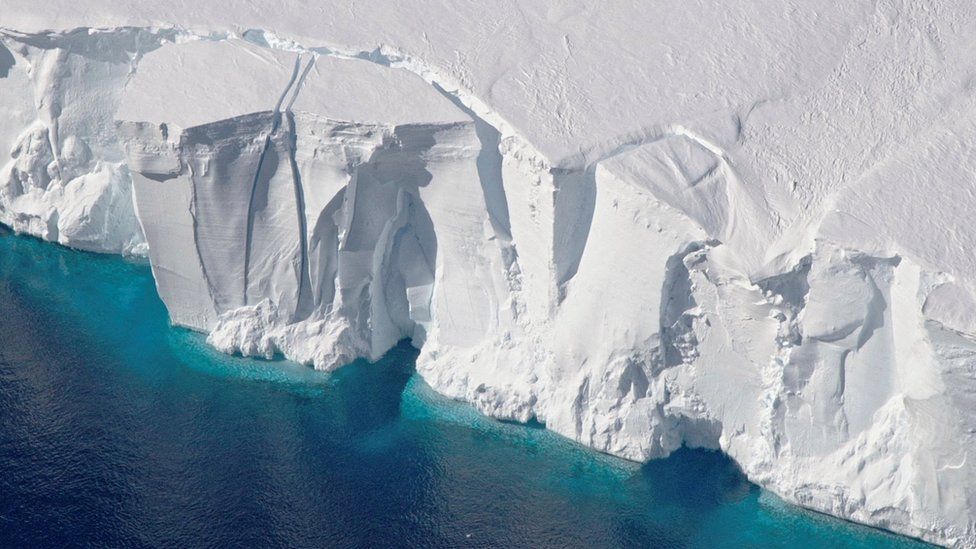
    Rapidly melting Antarctic ice is causing a dramatic slowdown in deep ocean currents and could have a disastrous effect on the climate, a new report warns.

    The deep-water flows which drive ocean currents could decline by 40% by 2050, a team of Australian scientists says.

    The currents carry vital heat, oxygen, carbon and nutrients around the globe.

    Previous research suggests a slowdown in the North Atlantic current could cause Europe to become colder.

    The study, published in the journal Nature, also warns the slowdown could reduce ocean's ability to absorb carbon dioxide from the atmosphere.

    The report outlines how the Earth's network of ocean currents are part driven by the downwards movement of cold, dense saltwater towards the sea bed near Antarctica.

    But as fresh water from the ice cap melts, sea water becomes less salty and dense, and the downwards movement slows.

    These deep ocean currents, or "overturnings", in the northern and southern hemispheres have been relatively stable for thousands of years, scientists say, but they are now being disrupted by the warming climate.

    "Our modelling shows that if global carbon emissions continue at the current rate, then the Antarctic overturning will slow by more than 40 per cent in the next 30 years - and on a trajectory that looks headed towards collapse," study lead Professor Matthew England said.

    The 2018 Atlas Study found the Atlantic Ocean circulation system was weaker than it had been for more than 1,000 years, and had changed significantly in the past 150.

    It suggested changes to the conveyor-belt-like Atlantic Meridional Overturning Circulation (Amoc) could cool the ocean and north-west Europe, and affect deep-sea ecosystems.

    A sensationalised depiction of the Amoc shutting down was shown in the 2004 climate disaster film The Day After Tomorrow.

    The report also highlighted how the slowdown would affect the ocean's ability to absorb carbon dioxide from the atmosphere.

    Dr Adele Morrison, who contributed to the report, explained that as ocean circulation slows down, water on the surface quickly reaches its carbon-absorbing capacity and is not then replaced by non carbon-saturated water drawn to the surface from greater depths.

    "If the oceans had lungs, this would be one of them," Prof England, an oceanographer at Sydney's University of New South Wales, told a news briefing.

    Dr Morrison also warned that said a slowdown of the southern overturning could have an impact on marine ecosystems and Antarctica itself.

    "Overturning brings up nutrients that have sunk down to the bottom when organisms die… to resupply nutrients for the global ecosystem and fisheries," she told the BBC.

    "The other larger implication that it could have is a feedback on how much of Antarctica melts in the future. It opens a pathway for warmer waters which could cause increased melt, which would be a further feedback, putting more meltwater into the ocean and slowing down circulation even more," she added.

    Scientists spent 35 million computing hours over two years to produce their models, which assumed that emissions of greenhouse gases continue their current path. If they fall, this could lessen the amount of ice melting, and slow the decline in the ocean current.

    However, results suggest deep water circulation in the Antarctic could slow at twice the rate of decline in the North Atlantic.

    "[It's] stunning to see that happen so quickly," said climatologist Alan Mix from Oregon State University, a co-author of the latest Intergovernmental Panel on Climate Change (IPCC) assessment.

    "It appears to be kicking into gear right now. That's headline news," he told Reuters.

    The effect of Antarctic meltwater on ocean currents has not yet been factored in to IPCC models on climate change, but it is going to be "considerable", Prof England said.


    The first Passover Haggadah in Ukrainian marks a community’s break with Russia

    Holiday text undergoes complex translation as Ukraine’s Jews continue to forge a separate identity, a process hastened by Russia’s invasion


    Zoya Cherkassky-Nnadi provided the illustrations for “For Our Freedom,” the first Ukrainian-language 
    version of the Passover Hagaddah. (Courtesy/Project Kesher via JTA)

    JTA — For Michal Stamova, the challenge of translating Passover’s core text into Ukrainian started with the title.

    The Haggadah — the book containing the Passover story — starts with an “h” sound in both Hebrew, its original language, and English. In Russian, the primary language of organized Jewish life in Ukraine until recently, there is no such sound, so the book has long been known there as an “agada.”

    Ukrainian does have an “h” sound. But the character representing that sound conveys a different sound in Russian: a “G.” So for many Ukrainian Jews, the cover of Stamova’s translation will read as “Gagada.”

    The journey of that single sound reflects the complexity of the task Stamova took on to aid Ukrainian Jews in celebrating Passover a year into their country’s war with Russia. A musicologist from western Ukraine who fled to Israel shortly after Russia’s invasion, Stamova was recruited to create a Ukrainian-language Haggadah, a powerful sign of the community’s rupture with its Russophone past.

    Stamova knew she wanted to base her translation not on the preexisting Russian translation, but on the original Hebrew and Aramaic. That proved challenging because much of the text of the Haggadah is lifted from other sources in the Jewish canon, but Jewish translations of those texts to Ukrainian are only underway now for the first time.

    “At first, it was very difficult to start, because we don’t have the sources in Ukrainian,” Stamova said. “We don’t have Torah in Ukrainian. We don’t have Tanakh in Ukrainian. It was very difficult to know what words to find.”

    Stamova’s text, titled “For Our Freedom,” was released online earlier this month in advance of the Passover holiday that starts April 5. It is one of a growing number of efforts to translate Jewish texts into Ukrainian. Translators affiliated with the Chabad-Lubavitch movement have produced a book of psalms and are working on a daily prayer book, with their sights set on a full translation of the Torah. An effort is also underway now to translate a chapter of a newer text associated with Yom Hashoah, the Holocaust memorial day, in advance of its commemoration this year on April 18.

    A sample page of text from the new Ukrainain Haggadah. (Courtesy/Project Kesher via JTA)

    The absence of those texts until now, despite Ukraine’s significant Jewish population, reflects the particular linguistic history of Ukrainian Jews. Under the Russian empire, Jews living in what is now Ukraine in the 19th century tended to adopt Russian rather than Ukrainian, usually in addition to Yiddish, because Ukrainian was perceived as the language of the peasantry and conferred few benefits. That tilt became more pronounced after World War II and the Holocaust, when Yiddish declined as a Jewish vernacular and Russian became the main language of the Soviet Union. The history helps explain why, even as the number of Ukrainians speaking Russian at home fell sharply over the last decade, Jews remained largely Russian-speaking. (Russian and Ukrainian are related linguistically, though their speakers cannot understand each other.)

    Over the past 30 years, the vast majority of printed material used by Ukrainian Jewish communities, including Haggadahs for Passover, were created in Russian by groups such as Chabad, which is the main Jewish presence in both countries. But after Russia’s invasion, those materials became a liability at a time when being perceived as having ties to the enemy could be dangerous.

    Indeed, Russia’s invasion of Ukraine last year prompted many Russian-speaking Ukrainians to switch languages as a marker of national solidarity — and sparked a push to translate Ukraine’s Jewish life into the Ukrainian language.

    “Ukrainian Jews always spoke Russian. That really was the norm. With the advent of the escalation of the war, that has shifted, and Ukrainian Jews who are in the country are shifting as fast as they can over to Ukrainian,” said Karyn Gershon, the executive director of Project Kesher, the global Jewish feminist nonprofit that commissioned the new Haggadah.

    Heavily damaged building seen after a Russian attack in Sloviansk, Donetsk region, Ukraine, March 27, 2023. (Libkos/AP)

    Gershon said the Haggadah offers an opportunity to elevate a Ukrainian Jewish identity in other ways, such as by including tidbits about famous Jewish writers from the area that comprises modern Ukraine who in the past might have been characterized only as “Russian.”

    “In most of the Jewish world, the things that make a Haggadah unique are the special readings,” Gershon said. The new Ukrainian Haggadah includes alongside the traditional text, she said, “prayers for the defenders of Ukraine, prayers for peace in Ukraine, but also [passages] reclaiming writers who were always categorized as Russian, but because they came from places like Kyiv, Odesa and Berdichev, are more accurately Ukrainian.”

    For example, the Haggadah includes passages from the 1925 book “Passover Nights,” by Hava Shapiro, a Kyiv-born Jew and journalist who authored one of the first Hebrew-language diaries known to have been written by a woman.

    The additions offer an element of pride for some of the Ukrainian Jews who plan to use the new Haggadah.

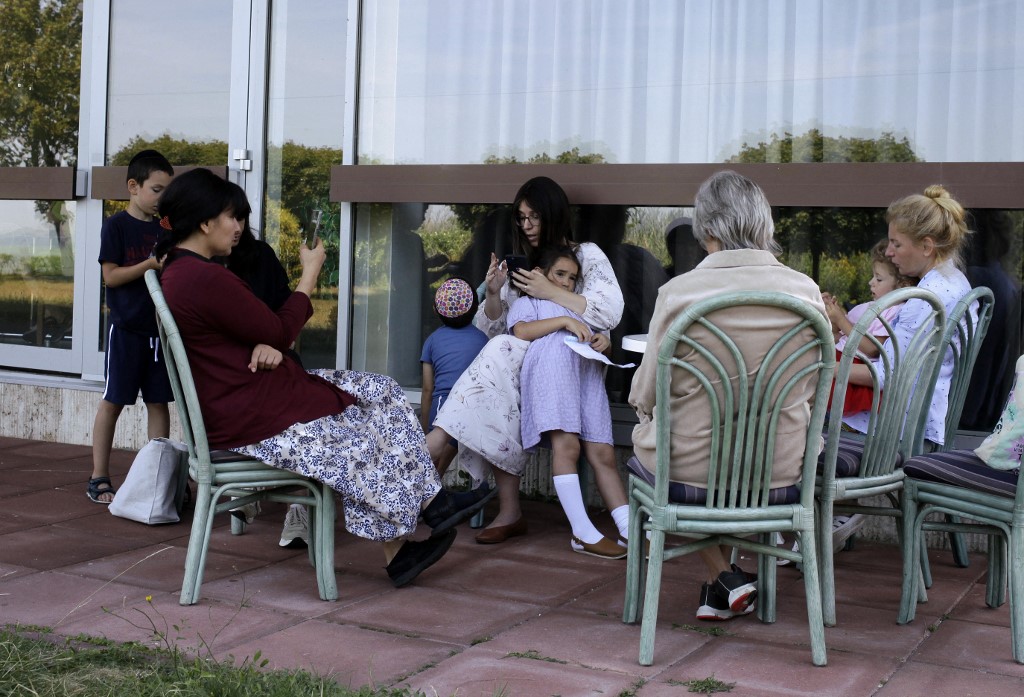
    Illustrative: Ukrainian Jewish refugees are seen in a newly opened kosher camp on the southern shore of Lake Balaton in Balatonoszod, Hungary, on July 29, 2022. (Peter Kohalmi/AFP)

    “It is bringing you to the roots of those Jews who were living here before the Holocaust,” said Lena Pysina, who lives in Cherkasy, southeast of Kyiv. “It’s about rebuilding the Jewish communities in Ukraine as ‘Ukrainian Jews.’”

    Pysina said the switch to Ukrainian and the embrace of Ukrainian Jewish history in some ways echoed the themes of the Passover story, which describes the Israelites fleeing slavery in Egypt.

    “It’s like an exodus for us. It is not comfortable, because we get used to what we get used to. But we have to be proactive, we have to find our identity,” she said. “It took us 70 years of Soviet times to… celebrate the Jewish holidays and Jewish traditions. And it took us 30 years to understand that we have to build Ukrainian Jewish communities, too.”

    Those communities are very much in flux a year into the war, with millions of Ukrainians internally displaced or having relocated overseas. Stamova undertook the Haggadah project from Israel, where she is one of an estimated 15,000 Ukrainians who have arrived since February 2022.

    An image from the new Ukrainian version of the Passover Hagaddah. (Courtesy/Project Kesher via JTA)

    Stamova grew up in western Ukraine, where the use of the Ukrainian language is more common than in the east. Like most other Ukrainian Jews, she still grew up speaking Russian at home, but her school, university and most of her life outside the home was conducted in Ukrainian. That made her a natural fit for the translation project, along with her background in Jewish liturgy, which she had studied at a Conservative yeshiva in Jerusalem.

    The challenges went beyond phonetics. One frequent question was whether to use Russianisms that are widely known in Ukrainian and would be more easily understandable to a Jewish audience, or to use uniquely Ukrainian words.

    The most difficult section of the text, she said, was Hallel, the penultimate step of the Passover seder. Hallel is a lengthy song of divine praise heavy with poetry and allegorical language — making for challenging translation work in any language.

    Stamova said she sought to stick to the traditional understanding of the text while also making some adjustments for the contemporary seder attendee. For example, the section of the Haggadah about the “four sons” with varying relationships to Judaism is rendered gender-neutral and changed to the “four children” in Stamova’s translation — an adjustment that has been made in other languages, too.

    Most of all, Stamova said, she hopes the Haggadah offers some solace to Ukrainian Jews whose entire lives have been turned upside down.

    “The Jewish tradition of Pesach is that we every year have to remember that we escaped from Egypt, from slavery. It’s very therapeutic,” Stamova said, using the Hebrew word for Passover. “How is it like therapy? Yes, we every year remember this difficult story, but then we have a plan for the future, we say ‘next year in Jerusalem.’ So we have to have a plan. We have to see the future.”

    ZIONISTS AND LABOUR RIGHT WING CELEBRATE PURGE

    SIR Keir Starmer praises guests at CST dinner for helping him get ‘to where we did’ on Corbyn

    The Labour leader speaks of 'strong and deep' ties to Jewish community

    Keir Starmer at CST dinner
    Keir Starmer at CST dinner

    Keir Starmer has issued his first public remarks on the move to formally block Jeremy Corbyn from standing for Labour at the next election, as he lavished praise on attendees at the Community Security Trust dinner.

    In a well-received speech, ahead of making the toast to King Charles, the Labour leader said on Wednesday night:” I want to take this opportunity, humbly, to say to many people in this room,’Thank you for giving me the time and the space to address antisemitism in my party’.

    “Without your help, without you giving me that space, we would not have got to where we did yesterday.”

    Starmer, who attended the dinner with his wife Victoria, told the guests:”I can assure you, we will be forever vigilant, the fight against antisemitism is never over.

    “Nor is the fight to reconnect with the Jewish community, and recognise the enormous contribution in education, care and to the economy.

    “And to build on our shared values of tolerance and social justice.”

    Keir Starmer, Chief Rabbi Mirvis and Jonathan Goldstein at the CST dinner

    Starmer also revealed that his wife had known Gail and Gerald Ronson “since she was 11 years old through their daughter Hayley”.

    He added:”This is a long, long association, and I’m really grateful for all the ties we have with the Jewish community. They are strong and they are deep.”

    Heaping praise on the “vital work of the CST in keeping the Jewish community safe” Starmer also praised their work to protect other communities “safe from hate.”

    He added:”We all know this getting tougher. The rise of hate troubles me.”

    Danny Stone MBE and Keir Starmer

    Starmer then said; “If I am privileged enough to get into government at the next election I will work with CST and others to tackle it (hate) head on, with all of you.”

    The dinner, which took place at a central London hotel was also attended by Ed Ball and wife Yvette Cooper,  Dayan Gelley, Lord John Mann, Luciana Berger, and JLC chair Keith Black.


    More deadly supercells could spawn as climate warms, new study says

     Mar 29, 2023  

    Storms like the one that tore through Mississippi last week, killing several dozen people, could become more common due to climate change, according to a new study. Atmospheric scientist Dr. Walker Ashley, a professor at Northern Illinois University, and one of the study's lead authors, joins CBS News' John Dickerson on "Prime Time" about what these findings could mean.