Thursday, June 01, 2023

West Africa: Trafficking in the Sahel - Killer Cough Syrup and Fake Medicine

Facebook

27 MAY 2023

In the summer of 2022, 70 Gambian babies and young children died from kidney failure after ingesting cough syrup spooned out by their caregivers. The World Health Organization (WHO) issued a global alert that four tainted paediatric products had originated in India, as local health authorities continue to investigate how this tragedy unfolded.

This feature, which focuses on the illegal trade in substandard and fake medicines, is part of a UN News series exploring the fight against trafficking in the Sahel.

From ineffective hand sanitizer to fake antimalarial pills, an illicit trade that grew during the COVID-19 pandemic in 2020 is being meticulously dismantled by the UN and partner countries in Africa's Sahel region.

Substandard or fake medicines, like contraband baby cough syrup, are killing almost half a million sub-Saharan Africans every year, according to a threat assessment report from the UN Office on Drugs and Crime (UNODC).

The report explains how nations in the Sahel, a 6,000-kilometre-wide swath stretching from the Red Sea to the Atlantic, which is home to 300 million people, are joining forces to stop fake medicines at their borders and hold the perpetrators accountable.

This fight is taking place as Sahelians face unprecedented strife: more than 2.9 million people have been displaced by conflict and violence, with armed groups launching attacks that have already shuttered 11,000 schools and 7,000 health centres.

Deadly supply meets desperate demand

Health care is scarce in the region, which has among the world's highest incidence of malaria and where infectious diseases are one of the leading causes of death.

"This disparity between the supply of and demand for medical care is at least partly filled by medicines supplied from the illegal market to treat self-diagnosed diseases or symptoms," the report says, explaining that street markets and unauthorized sellers, especially in rural or conflict-affected areas, are sometimes the only sources of medicines and pharmaceutical products.

Fake treatments with fatal results

The study shows that the cost of the illegal medicine trade is high, in terms of health care and human lives.

Fake or substandard antimalarial medicines kill as many as 267,000 sub-Saharan Africans every year. Nearly 170,000 sub-Saharan African children die every year from unauthorized antibiotics used to treat severe pneumonia.

Caring for people who have used falsified or substandard medical products for malaria treatment in sub-Saharan Africa costs up to $44.7 million every year, according to World Health Organization (WHO) estimates.

Motley trafficking

Corruption is one of the main reasons that the trade is allowed to flourish.

About 40 per cent of substandard and falsified medical products reported in Sahelian countries between 2013 and 2021 land in the regulated supply chain, the report showed. Products diverted from the legal supply chain typically come from such exporting nations as Belgium, China, France, and India. Some end up on pharmacy shelves.

The perpetrators are employees of pharmaceutical companies, public officials, law enforcement officers, health agency workers and street vendors, all motivated by potential financial gain, the report found.

Traffickers are finding ever more sophisticated routes, from working with pharmacists to taking their crimes online, according to a UNODC research brief on the issue.

While terrorist groups and non-State armed groups are commonly associated with trafficking in medical products in the Sahel, this mainly revolves around consuming medicines or levying "taxes" on shipments in areas under their control.

Snip supply, meet demand

Efforts are under way to adopt a regional approach to the problem, involving every nation in the region. For example, all Sahel countries except Mauritania have ratified a treaty to establish an African medicines agency, and the African Medicines Regulatory Harmonization initiative, launched by the African Union in 2009, aims at improving access to safe, affordable medicine.

All the Sahel countries have legal provisions in place relating to trafficking in medical products, but some laws are outdated, UNODC findings showed. The agency recommended, among other things, revised legislation alongside enhanced coordination among stakeholders.

States taking action

Law enforcement and judicial efforts that safeguard the legal supply chain should be a priority, said UNODC, pointing to the seizure of some 605 tonnes of fake medicines between 2017 to 2021 by authorities in the region.

Operation Pangea, for example, coordinated by UN partner INTERPOL in 90 countries, targeted online sales of pharmaceutical products. Results saw seizures of unauthorized antivirals rise by 18 per cent and unauthorized chloroquine, to treat malaria, by 100 per cent.

"Transnational organized crime groups take advantage of gaps in national regulation and oversight to peddle substandard and falsified medical products," UNODC Executive Director Ghada Waly said. "We need to help countries increase cooperation to close gaps, build law enforcement and criminal justice capacity, and drive public awareness to keep people safe."

UN in action

Tunisia: Over Three Million Tunisians Face Food Insecurity Threat

Faceboo


Tunis — Over 3 million Tunisians are faced with the threat of food insecurity, said President of the Tunisian Centre for Global Security Studies (French: CTESG) Ezzedine Zayani.

This includes 1.5 million who will have to deal with this, Zayani further said referring to the Food and Agriculture Organisation (FAO) State of Food Security and Nutrition in the World 2022.

Speaking at a conference held Saturday in Tunis under the theme of "Food Security and Sovereignty and the Right to Food in Tunisia," Zayani warned against the current food situation worldwide and especially in Tunisia "which is at considerable risk."

To this end, the official called for taking necessary measures to address this real threat. The " simplest dishes are very expensive these days due to inflation and the worsening purchase power."

He likewise called on stakeholders to urgently consider new solutions and "renew with the foundations of Tunisia's agricultural policy dating back to the early years of independence".

In this respect, he reminded of the changes in the agricultural situation due to climate change which has resulted in a major water shortage. Seawater desalination is recommended along with the need to support farmers to encourage them to keep up their activities so as to avoid "food poverty."

"We are now witnessing the emergence of a new world, following the Russia-Ukraine war, in which countries suffering from food insecurity have to align their policies with those of major wheat-producing powers," he added. .

To avoid such pressures, Zayani called for focusing on agriculture in Tunisia.

Marcos says banning Filipino migrant workers from Kuwait ‘overreaction’

Published: 27 May 2023 - 


The Peninsula Online

Doha, Qatar: Ferdinand "Bongbong" Marcos Jr., President of the Philippines, is not in favor of banning the deployment of Filipino migrant workers to Kuwait, reported the Philippine Star.

Kuwait had suspended visa grants to Filipinos over issues related to labor agreement signed between the two countries in 2018.

Marcos was quoted by the Philippine Star as having said that he does not want to “burn bridges” and that the ban might have been an “overreaction” that “is not right.”

Inquirer, another Philippines news site, reported that the chair of the House committee on foreign affairs had earlier proposed a total deployment ban to Kuwait due to “ugly offenses” against overseas Filipino workers.

Earlier this year, the Philippines stopped deploying domestic workers to Kuwait after the death of Jullebee Ranara, an overseas Filipina worker, in January.

Ranara’s death was what had prompted revisions to the aforementioned 2018 agreement.

Earlier this month, Gulf media reported that an official source in the Kuwaiti Public Authority of Manpower said that the Philippines would resume sending its workers to Kuwait beginning of next June after procedures are finalized and an official delegation visit to the country concludes at the end of this month.

The source confirmed that the Philippine delegation, in coordination with the Ministry of Foreign Affairs, prepared special procedures related to the file of Filipino domestic workers and specialized workers.

Brands embracing pride month confront a volatile political climate in US

ByJordyn Holman and Julie Creswell
May 28, 2023 —

For years in the US, Pride Month, the annual celebration for LGBTQ Americans in June, has afforded companies a marketing opportunity to tap into the buying power of a group with growing financial, political and social clout.

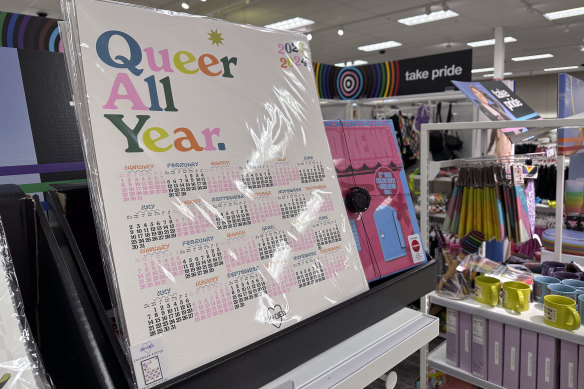
Yet, while these efforts have always faced some opposition, brands and marketers say the country’s current political environment – especially around transgender issues – has made this year’s campaigns more complicated. Last week, Target became the latest company to rethink its approach after facing criticism for its Pride collection, which included clothes and books for children that drew outrage from some on the right.


Companies have long embraced Pride month as a marketing opportunity.
CREDIT:IDOHO STATESMAN

The retailer moved its Pride displays – including rainbow-striped collared shirts, yellow hoodies reading “Not a Phase” and baby clothing and accessories – from the entrances of some Target stores around the country and placed them in the back.

Target said it was concerned “about threats impacting our team members’ sense of safety and well-being while at work” after some customers had screamed at employees and thrown the Pride-themed merchandise on the floor.

Among the items angering some customers was a one-piece bathing suit that has extra material for the crotch area for individuals who want to conceal their genitalia. Some critics erroneously claimed that the swimsuit was being sold to children; Target said it was available only in adult sizes. The collection also includes children’s books about transgender issues and gender fluidity.

One woman recorded a TikTok video in a Target store last Monday in which she became angry at seeing a greeting card that read “So Glad You Came Out” and a yellow onesie that said “¡Bien Proud!”

Pride month merchandise at Target. The retailer is removing certain items from sale.
CREDIT:AP

“If that doesn’t give you a reason to boycott Target, I don’t know what does,” she said.

In a statement, a company spokesperson said, “Given these volatile circumstances, we are making adjustments to our plans, including removing items that have been at the centre of the most significant confrontational behaviour.” She added that the company, which has been selling Pride Month merchandise for a decade, remained committed to the LGBTQ community “and standing with them as we celebrate Pride Month and throughout the year”.

While Target said its decision had been made in the interest of employee safety, many said its actions – along with a conservative backlash against Bud Light after it worked with a transgender influencer – might alienate the community it was seeking to support. And those who criticised Target and Bud Light in the first place may now feel further emboldened to attack inclusive initiatives by other companies.

“We’re in a new space here with safety and employee safety being threatened by policy and purpose,” said Vanitha Swaminathan, professor of marketing at the University of Pittsburgh. “I can’t say that you can disregard employee safety. That’s very core to what a company has to do. At the same time, Target can still, from a policy standpoint, be supportive of their initial stance. It’s sad to see that we’ve reached this point in our culture wars.”


Employee safety is prompting the removal of some Pride items from Targe
t shelves.
CREDIT:AP

Marketing campaigns around Pride Month in June have become routine for many companies, with opposition cropping up at times. Last year, for instance, Pizza Hut faced calls for a boycott after it recommended Big Wig, a book featuring drag performers, as part of its children’s summer reading program.

Yet companies and marketers say the political climate makes this year different – primarily because a number of Republican-led states have introduced and passed legislation restricting transition care for transgender minors and adults, and transgender rights has become a galvanising issue for many conservative


GLAAD, the LGBTQ advocacy group that works with more than 160 companies, is considering having communications professionals in its GLAAD Media Institute work with brands that are planning Pride Month celebrations so they can better respond to criticism.

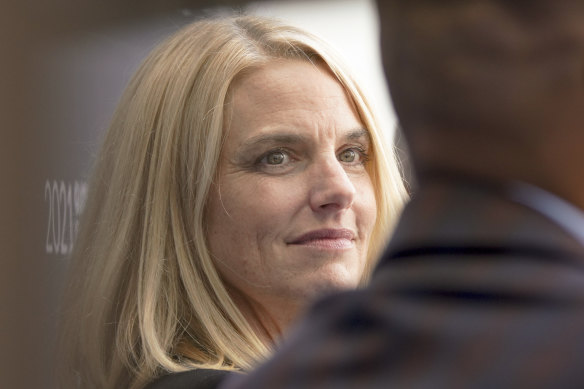
“We do feel like we’re at a moment where, with the politicisation of trans and gender-nonconforming folks, that we probably need to assemble a Pride war room for brands so that we can push back,” Sarah Kate Ellis, the group’s chief executive, said in an interview.


Sarah Kate Ellis, president and chief executive officer of GLAAD.
CREDIT:BLOOMBERG

On Thursday, GLAAD and six other advocacy groups called on Target to return to its stores and its website any Pride merchandise it had removed and to release a statement “in the next 24 hours reaffirming their commitment” to the LGBTQ community.

When faced with criticism and social media calls for boycotts in the past, most companies learned that the declarations of outrage soon faded away.


Then Bud Light happened. Owned by the beer giant Anheuser-Busch, Bud Light continues to struggle with the fallout from a social media campaign in mid-March with transgender influencer Dylan Mulvaney. After calls for a boycott of the beer, sales in the four weeks ending in mid-May dropped more than 23 per cent from a year earlier, according to data from the research firm NIQ and Bump Williams Consulting, which works with the alcoholic beverage industry.

Bud Light sales have not recovered from the backlash to a social media campaign with Dylan Mulvaney.


In some markets in the South, such as Jacksonville, Florida, and New Orleans, Bud Light’s sales were down 40 per cent in those four weeks.

Anheuser-Busch, which in recent years has released rainbow-hued bottles and cans of Bud Light for Pride Month, did not respond to a question about its plans for this year.

Some marketing and communications consultants said the negative reaction to Bud Light’s campaign with Mulvaney was a product of the beer’s generally more politically conservative customer base. Companies like Nike or Starbucks can more easily create products or campaigns around gay and transgender issues or Pride Month because their consumers tend to be younger and more progressive, said David Johnson, chief executive of Strategic Vision PR Group in Atlanta. “When they embrace the gay or transgender community, it’s not out of line with their core beliefs,” he said.

A number of companies are moving forward with their Pride Month plans. In June, the Coors Light Denver Pride Parade will weave its way through the city. Advertisements for a one-piece Adidas swimsuit created by South African queer designer Rich Mnisi feature a transgender man as the model. Levi’s has a campaign showing a half-dozen gay and transgender people talking about how they show up while wearing the company’s denim and tops.

But a number of other companies are being much less forthcoming about specific Pride Month plans. And some LGBTQ advocates criticised Target for seeming to cave to pressure. (The company’s decision did come as employees in the retail industry have faced increasingly aggressive behaviour from customers since the start of the pandemic.)

Target also removed a Pride line from Abprallen, an LGBTQ fashion and accessories company based in London, some of whose designs have been criticised for depicting satanic symbols like pentagrams and a shirt that reads “Satan respects pronouns”. Abprallen did not respond to a request for comment.

“We’ll find out in the next week which companies are continuing to make a push and do Pride Month campaigns,” said Matt Skallerud, the president of Pink Media, which specialises in LGBTQ online marketing. “If companies we know have been supportive of Pride Month don’t show up this year, their absence will be noticed, and I’d be concerned that could harm them.”

Advocacy groups are wary that all of this could create a chilling effect, especially when it comes to attaining a broader representation of LGBTQ people in advertising.

“White gay men are the one segment that are most likely represented on our screens, whether it’s programing or ads,” said Lisette Arsuaga, co-founder of the Alliance for Inclusive and Multicultural Marketing. “We now started moving forward with a greater representation of all of the letters within the LGBTQ.”

The overall consumer sentiment for seeing trans representation on TV and in advertising hasn’t changed, according to recent GLAAD research. In a survey that was conducted in February, GLAAD said 75 per cent of people who did not identify as LGBTQ were comfortable seeing those people represented in marketing campaigns. 

That figure held  steady from 2020.

“You can absolutely roll out an ad campaign and include LGBTQ folks in it,” Ellis of GLAAD said. “And at the same time, there is this political right-wing arm that you have to be aware of when you’re doing it and just be prepared for.”

This article originally appeared in The New York Times.


Germany recruits care aides from Latin America


Oliver Pieper
DW
May 27, 2023

Germany aims to recruit care workers from Latin America. Labor Minister Hubertus Heil and Foreign Minister Annalena Baerbock will fly to Brazil and Mexico in June as part of the effort.

What's it like for health care workers in Germany? What do I need to know before trying to get a job? And how good does my German need to be? These are the questions that keep popping up on Facebook, Instagram and especially an ever-expanding WhatsApp group.

Thaiza Maria Silva Farias can answer these questions from fellow Brazilians in her sleep. As a trained nurse from Rio de Janeiro, who came to Germany in October of 2016, she's a bit of a pioneer in that respect.

Soon after her arrival, she started working in the operating room at a clinic in Darmstadt. After seeing the lack of staff in German hospitals and its daily impact on patients, she decided last year to use her experience to start the Nursewelt, or Nurse World, recruitment agency that aims to entice care workers in Brazil to come to Germany.

"I can provide Brazilian applicants with professional help. Beyond that, I know very well who would be useful in German clinics," Silvia Farias told DW.
More and more people need caring for in Germany

Nursewelt seems to have the potential to be a success story because Silva Farias and her company help fill a gap in the market that gets bigger every year.

Thaiza Maria Silva Farias helps foreign nursing staff find their feet in Germany
Image: privat

There were almost 2 million people in Germany who needed caring for in 1999, according to the Federal Statistical Office. By 2055, experts estimate that number will rise to 6.8 million.

At the same time, the number of people providing care has shrunk. Last year 53,300 people in Germany began training to be specialized nurses. That's 4,000 trainees fewer than in 2021 and represents a decline of 7%, the Federal Statistics Office said.
'Hand pick the work you want'

For each unemployed care worker in Germany, there are currently three open positions. Or, as Germany's Federal Employment Office put it, "There's a clear lack of nurses."

"You can pick what job you'd want to have as a nurse in Germany. You can look and decide where you would most like to work. When you're unemployed, it only takes one or two days until you've got another offer," Silva Farias said.

In Brazil, it's much more difficult to get a position, she added.

"The competition there is enormous. There are people that studied for five years and sometimes have master's or even doctoral degrees who still can't find jobs due to a lack of work," Silva Farias said.


Who wins and who loses?


According to German Labor Minister Hubertus Heil, Germany and Brazil seem to be a perfect match when it comes to nursing and care work. He will travel to Brazil with Foreign Minister Annalena Baerbock in June.

The trip is part of a recruitment strategy that stretches to other countries, including Mexico and Indonesia.

"We'll be very sensitive in our approach, so we do not take workers from countries where they're needed," Heil told the daily Neue Osnabrücker Zeitung.


Heil added that the appeal to care workers could be mutually beneficial. "We benefit, the countries of origin benefit from us engaging in training there, and the people who come to us benefit by having a well-paying job and maybe even the chance to provide financial support to their family members at home."

A win-win situation for everyone? Patient advocates have doubts about filling the care-worker gap with nurses from other countries and that Germany's lack of nurses can be solved by hiring from foreign countries. In 2022, there were 656 foreign nurses hired in Germany, primarily from the Philippines, according to the Federal Employment Agency.
'A domestic German problem'

"At its core, the lack of nursing staff is a domestic German problem, and . the few hundred Brazilian nurses won't fix it," Foundation for Patient Rights head Eugen Brysch told the dpa news agency.

And what about countries like Brazil and Mexico? Are there really just winners, or is it the case that Germany is relying on brain drain in Latin America to take away qualified workers from countries that might eventually need them in the future?
Germany's care worker problems are bigger than a few hundred extra nurses, patient advocates said
Image: Jens Büttner/dpa/picture alliance

Mexican surgeon Xavier Tello, a leading Latin American health care expert, took a pragmatic view of people's decision to look for employment abroad.

"This brain drain is completely normal in a globalized world," he told DW. "If I'm very well trained, and this is appreciated more in a foreign country than at home where working conditions are often bad and the wages are low, than it makes sense to take this step."Tello added, however, that few people in the region are aware of foreign efforts to recruit them.

"But when people are exposed to it, their approach is more like, 'Well, at least in foreign countries our nurses get the appreciation they don't get at home."

Silva Farias knows why nurses in Latin America decide to try their luck in Germany: The quality of life is better and they have more security; pay can be six times higher than at home while working for just one employer instead of for two or three hospitals in Brazil.

Still, Tello said he is not afraid countries like Mexico would soon struggle with a lack of nurses.

"Mexicans are very connected to their home," he said. "Emigrating to Germany and learning a new, difficult language would be quite the culture shock, so for them it's really the last option. Interestingly, people here do not regard it as a big career opportunity with a good salary."


Room for improvement on integration

Silvia Farias said the nurses sending her questions regarding a move to Europe as just one phase in their life and career plans rather than a professional endgame.

If Heil and Baerbock want to attract more workers from Latin America, Farias said there are changes they should make in Germany as well.

"Hospitals have to be better prepared for their new employees," she said. "Staff often has no patience when people don't speak German well. [Foreign nurses] should get a year to get a handle on the language. Germany needs to work on integrating foreign care workers."

This article was originally published in German.
Capitalists Prey on Syria and Turkey Following February Earthquakes

These humanitarian tragedies have become opportunities for rapid growth and high profits for corporate predators.

By Daniel Falcone
Published April 21, 2023    

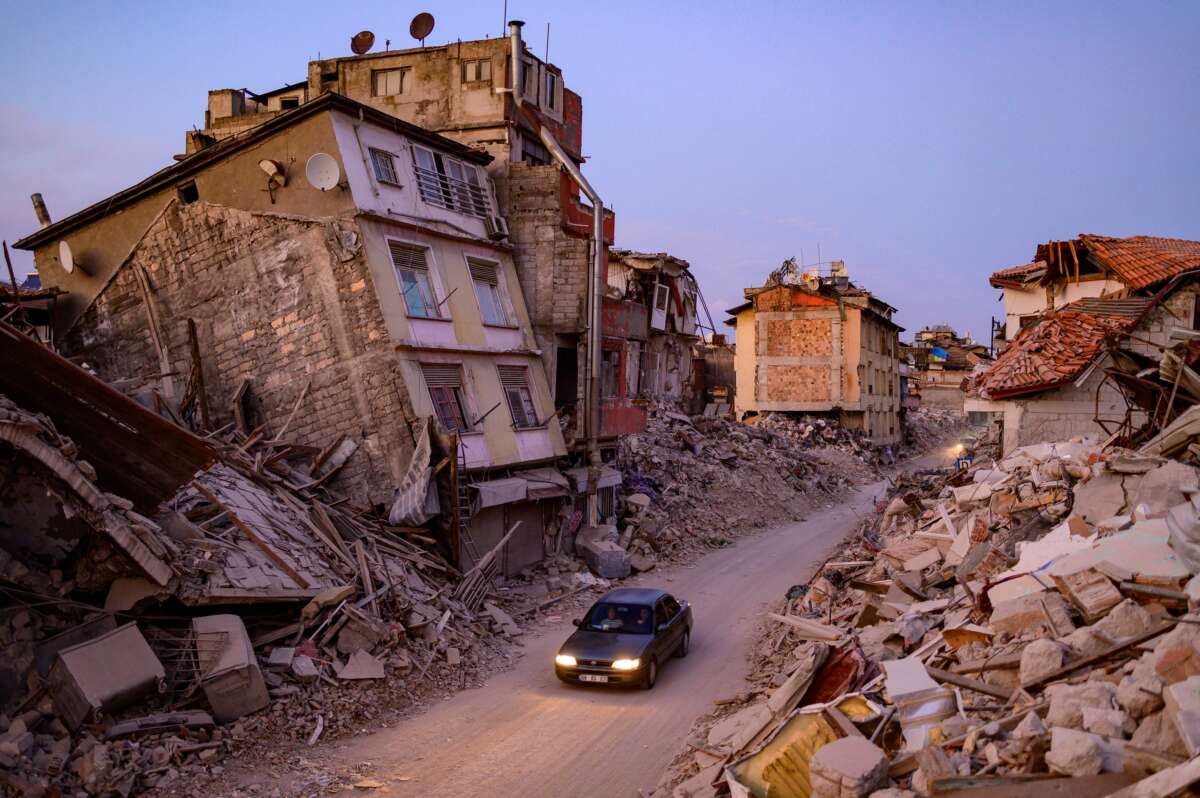
A car drives past collapsed buildings in Antakya, Turkey, on February 20, 2023.
YASIN AKGUL / AFP VIA GETTY IMAGES


Honest, paywall-free news is rare. Please support our boldly independent journalism with a donation of any size.

In early February, Turkey and Syria were both rocked by devastating earthquakes. Since then, the two nations have dealt with a series of destructive aftershocks, serious economic woes, currency challenges, and increasing poverty and unemployment. Underscoring a further relevant human rights dilemma was Turkey’s demand for cooperation from Sweden and Finland with respect to control of Kurdish exile activity in exchange for supporting NATO membership, a concern somewhat lessened by Turkish willingness to end its opposition to Finland joining NATO.

In this exclusive interview for Truthout, international relations expert Richard Falk discusses both the importance of institutional responses as well as the instances of poor infrastructure built in the pursuit of profit. Falk emphasizes the political and international dimensions of the changing circumstances in Syria and Turkey, as well as the pertinence of the Russo-Ukrainian War and the major global players related to the ongoing crisis, especially Iran and Russia.

Daniel Falcone: Some of the recent research and reporting has referred to the recent tragic events in Turkey and Syria in terms of a reshaping of politics between the two nations. Can you comment on what this means for both countries in the short and long terms?

Richard Falk: Both Turkey and Syria are facing difficult internal challenges as of late, accentuated by the massive earthquake devastations of February 6, 2023, and the ensuing days of damaging aftershocks, but reflecting long-existing conditions centering on economic decline, expressed by way of severe inflation, sharply falling foreign currency exchange rates, and the hardships resulting from unemployment and poverty, especially being experienced at the lower end of class structures.

Both countries face crises in leadership and are governed autocratically. Both societies are polarized, and the opposition regards them as tyrants. Turkey retains the rituals of procedural democracy, up to now maintaining surprisingly free elections and high expectations that a peaceful transfer of power will occur should the opposition prevail — as it well might if current polls are indicative — in the forthcoming elections scheduled to take place on May 14.

RELATED STORY

Syria and Turkey’s Earthquake Reminds Us That Disasters Are Inherently Political
There is no natural disaster untouched by politics, capitalism and racism.
By Shireen Akram-Boshar 
,
February 18, 2023

Syria makes no pretense of being a democratic society, and its legitimacy is a major persisting grievance of opposition forces that fought for control of the governing process for a decade after 2011. Syria is internally preoccupied with a difficult recovery from this prolonged intense civil strife and it still lacks control in some portions of its national territory — a continuing combat zone either governed by Kurdish forces as a separate political entity or Turkish forces in some borderland areas. During the years of combat some four million Syrians sought and found refuge in Turkey. Major foreign interventions were undisguised on both sides, on behalf of the insurgent opposition by the U.S., Turkey, Saudi Arabia and UAE, and on behalf of the government by Iran and Russia. Israel remains concerned with the extension of Iranian influence and military presence in Syria and continues to carry out frequent air attacks directed at targets allegedly associated with the Iranian military presence.

Turkey and Syria had developed a positive relationship before the Arab Spring in 2010-11, so much so that it became the poster child of Ahmet Davutoglu’s “zero problems with neighbors,” while he acted as Turkey’s foreign minister. However, when Damascus harshly repressed anti-regime protests and implemented no concessions to popular demands for greater freedom, relations quickly deteriorated. Syria accused Turkey of backing an Islamic Brotherhood Syrian political organization of Sunni orientation, which had long been seeking to replace the Shi’ite dynastic rule headed by the al-Assad family. Politically, and to some extent militarily, both Turkey and the U.S. supported the opposition throughout the decade of civil strife, partly on counterterrorist grounds and partly, in Turkey’s case, due to concerns about a radical Kurdish minority that was operating from Syria, and in the U.S. case, concerns about the spread of Iranian and Russian influence. The opposition, including Turkey, underestimated the capabilities and loyalty of the Syrian armed forces to engage effectively with the opposition, misled by the apparent ease of achieving regime change in Libya in 2011. The Syrian internal struggle is a long controversial story in which both sides miscalculated at various stages the outcome of the challenge to the Bashar al-Assad government.

At this point the atmosphere in the region is changing in some dramatic ways that seem to be weakening the U.S. role as guarantor of regional stability. Both Turkey and Syria have strong incentives to end their hostility and to address cooperatively some common interests, including on recovery from the devastation resulting from the earthquake. Turkey, especially in its present stressed condition, would benefit from the return to Syria of a large portion of the four million refugees, especially as economic conditions are creating conditions of intensifying competition between Turkish workers and Syrian refugees in some sectors of the Turkish economy, contributing to the lowering of wages being paid workers in Turkey. In recent months, Syria has been actively seeking regional stability and normalization so that it can recover from the conflict and extend national sovereignty to the whole of its territory. Turkey has an interest in expelling the armed and revolutionary Turkish Kurdish presence from Syria, which would also contribute to regaining territorial sovereignty by Damascus, as would the withdrawal of all Turkish forces. Additionally, Turkey in recent months has exhibited diplomatic flexibility to the extent of abandoning its hostile relations with Israel and Egypt, which suggests that Ankara is likely to have little hesitation about initiating a new phase of normalization, if not friendship, with Syria if the latter shows a reciprocal willingness to do so, especially if coupled with Syrian acceptance of the repatriation of refugees. On the eve of the Turkish elections such a peace process would seem to strengthen [Recep Tayyip] ErdoÄŸan’s currently troubled quest for an election victory.

How can the institutions and organizations within the global community along with neighboring countries and other outside nations help to monitor and improve the situation on the ground for civilians and those impacted by the domestic and international tensions?

If the question is posed considering the situation now confronting the plight of civilians in Turkey and Syria, and not the entire region, my response is quite simple. Reduce tensions by taking several obvious steps to normalize relations within the region and with the external actors. In this regard, China’s role in facilitating the revival of diplomatic relations between Iran and Saudi Arabia may be a breakthrough with respect to a recognition that diplomacy rather than projection of force and threat diplomacy is the better path from the perspective of national interests, and certainly with regard to international law. More specifically, the coercive isolation of Iran, the military interventions of Saudi Arabia in Yemen, Syria, as well as the regional military provocations of Iran are perpetuating conflict and raising risks of disastrous warfare of the sort previewed by the proxy war interventions by both countries in the extended internationalized civil war that took place in Syria between 2011-2021. Such developments exhibit also a loss of confidence in the American role in the Middle East, and a willingness to turn toward Asia in the search for security and political independence.

Such a learning experience may also take away some lessons from the attention being given to the 20th anniversary of the U.S./U.K. unprovoked attack upon Iraq, the devastation, chaos and political fallout resulting from the ensuing war, with a political outcome quite opposite from the war goals set by the invading and occupying countries other than regime change. The core irony of the Iraq War was the contradiction between the justification and the outcome. The war was undertaken in large part to contain Iran, but it had as a principal effect the extension of Iranian regional influence, including even in Baghdad. A secondary disappointment was the rationale of the war was increasingly expressed as one of “democracy promotion” and yet, the persisting result was one of chaos and strife. In other words, the goals of this aggressive war backfired despite the two decades of expensive endeavor and defiance of international law. Iraq today is governed by Shi’ite leadership that is far more responsive than it was under Saddam Hussein to the wishes of Tehran than Washington, and the “democracy promotion” part of the mission now seems like nothing more consequential than a long bad dream.

Whether such an outcome inhibits future engagement in “forever wars” by the U.S. remains uncertain at this point, but the character of the American response to the war on Ukraine — in which it has insisted on meeting force with force while stubbornly opposing a ceasefire followed by the search for an elusive yet attainable political compromise between Russia and Ukraine — does not augur well for the global future, including the Middle East. Another uncertainty is whether Turkey’s effort at diplomatic normalization will curb the belligerence of Israel — given Israel’s ongoing internal struggles posing some temporary strains in its “strategic partnership” with the U.S. — and a resulting lessening of Israel’s belligerence toward some of its regional neighbors, especially Iran. It is possible, yet by no means assured, that Israel’s normalization moves with Arab neighbors, subsidized and vigorously promoted by the Trump presidency, will over time have a stabilizing impact on the region. The reverse is also possible if anti-Western recently dormant masses rise again as they did in 2010-2011. Turkey’s outreach to former regional adversaries is another sign pointing in the direction of nonintervention, and reduced reliance on the practice of coercive diplomacy throughout the Middle East. If China succeeds in even partially superseding the U.S. role as an external hegemonic presence, these tendencies to replace conflict with diplomacy have an improving prospect.

I have emphasized the political dimensions of changing circumstances of Syria and Turkey, and taken for granted the opportunities in both national settings for the UN, EU and the U.S. to support generous humanitarian policies, including the bestowal of substantial aid in rebuilding from the damage wrought by the February earthquakes, and resettling of Syrian refugees, most of whom are in Turkey (currently estimated as reduced to 3.6 million) and Lebanon (over 1 million). The richer OECD [Organisation for Economic Co-operation and Development] countries have their own serious economic troubles, making significant engagement in humanitarian undertakings in the Middle East unlikely, especially given the drain on governmental revenues resulting from the policy priority accorded to the war on Ukraine.

Can you discuss the politics of neoliberalism and disaster capitalism and how both are featured within the crisis following the earthquake and aftershocks?

Neoliberalism contributed to the magnitude of the disaster as particularly evident in the way the Turkish government privileged the economic growth and the profits of the construction industry during the last 20 years or so, even granting an amnesty to builders who failed to observe requirements set forth in building codes in the earthquake-prone regions devastated in recent months. A feature of neoliberalism in practice is to give almost unconditional priority to minimally regulated capitalism often at the expense of safety, health and environmental conditions. The Turkish government seems to be deservedly blamed by the citizenry for these failures to uphold building codes and for the magnitude of the disaster according to public polls, although the outcome of the May elections will confirm whether such public expectations of accountability is a temporary phenomenon or will prove robust enough to add decisive weight to the popularity of the coalition of opposition forces intent on the defeat of ErdoÄŸan and his Justice and Development Party (AKP) that has been in power since 2002.

As Naomi Klein pointed out, opportunities for corporate profitability are generated by the disasters that capitalism creates through irresponsible behavior that reflects biases toward growth and profits. As suggested, the Turkish case is a perfect example, adding the irresponsible behavior of the government and private sector to the damages wrought by a natural disaster, thereby greatly increasing cleanup and reconstruction costs. This is particularly true in relation to the sort of disaster that has inflicted widespread damage on both residential and commercial property located within Turkish cities and towns, long understood to be highly vulnerable to earthquake activity. The prospects for a reconstruction boom, often subsidized by a government eager to erase memories of its own complicity in creating urbanization in a form negligently more vulnerable than necessary to natural disasters. The Turkish and Syrian earthquakes were humanitarian tragedies for people while ironically providing occasions for rapid growth and high profits for corporate predators all too ready to reap economic benefits from such a natural disaster. This has led the harshest critics to describe the phenomenon more graphically as “vulture capitalism.”

The center of foreign policy discussion usually reverts to the war on Ukraine. This of course includes the U.S., Iran and Israel. Can you talk about its relevance to this area of foreign policy concern?

Turkey has done its best to avoid taking sides during the war on Ukraine, seeking to avoid negative spillover effects, while offering sanctuary to both Russians and Ukrainians fleeing their countries and crossing borders into Turkey. Turkey has profited to some extent by offering a haven to Russian oligarchs, and even anchorage to their “super-yachts.” At an early stage in the war Turkey tried to play a pacifying role as an intermediary between Russia and Ukraine, and this seemed appreciated except by NATO countries, particularly the U.S. and Poland. Turkey also antagonized NATO by insisting that it would not give support for Swedish and Finnish membership in the alliance without a firm commitment to cooperate with Turkey in preventing their territory from being used to promote Kurdish activism, especially in the form of aiding the PKK, an unlawful Turkish political formation accused of insurgent activities and separatist ambitions. Although these efforts failed, they illustrated Turkey’s potential importance as a country that stands aside from the main agenda of geopolitical tension, which allows it in some situations to serve as a peacemaker, especially in the Middle East and parts of Central Asia. Turkey seems determined to balance its precarious membership in NATO with its effort to play an independent and intermediary role as well as its anti-Kurdish policies. Turkey seems comfortable, at least for now, with China’s dramatic recent active role in regional diplomacy.

At the same time, Turkey has been heavily engaged in diplomatic fence-mending with such notable countries as Egypt, Saudi Arabia, and even Israel. This approach has contributed to Turkey restoring relations with Saudi Arabia, which served as prelude to remarkable breakthroughs achieved by creative Chinese diplomacy in bringing Iran and Saudi Arabia into a normalizing process considering the bilateral hostility of recent years. These developments are best understood at one level as a loss of confidence and belief in the depth, capacity, wisdom, and overall character of the U.S. commitment to security in the Middle East and the related need to seek alternatives. It comes at a time when a new Israeli government is brutally repressing Palestinians living under its control, behavior that threatens the stability of Arab governments that had previously embarked on paths leading to normalization of relations with Israel without any solution to the Palestinian ordeal, epitomized by the failure to achieve basic rights, above all the right to self-determination. With populations, unlike the governments, in the region remaining supportive of the Palestinian struggle, many countries in the region seem more vulnerable to domestic uprisings if they fail to act in solidarity with their ethnic and religious brothers who have suffered so long from Israel’s apartheid policies with no end in sight.

Can you elaborate on how the politics of Turkey has remained consistent or has changed considering these catastrophic events?

My impression is that Turkey’s foreign policy has not been very much affected by the earthquakes. To some extent, there has been a tendency to extend the policy of smoothing the prior bumps in the foreign policy road, as illustrated by Turkey finally withdrawing its objections to Finnish membership in NATO and recently reopening diplomatic relations with Egypt. In this process, Turkey has downplayed, although not altogether abandoned, its support for the Palestinian struggle and objections to Israel’s oppressive behavior, but this is being tested by Israel’s recent provocative behavior, especially its violent interference with worship in Muslim holy places, including the sacred site of the Al-Aqsa Mosque, which lead to a new less harmonious phase of Israel-Turkish relations. If the secular-oriented opposition wins the Turkish election in May, it will likely try to overcome the international frictions of recent years, especially with the U.S. and NATO, although it would likely avoid any kind of political closeness to Israel given the unacceptable recent behavior of the Netanyahu government since the start of 2023. If ErdoÄŸan should again win another term as president, policies are likely to be more along the lines drawn in the last five years of seeking to foster independence in relation to U.S. global priorities without repudiating its NATO membership. Whichever tendency prevails in the Turkish election it will face some difficult choices in how to position itself in relation to the war on Ukraine, likely now to continue for several months into the future.

Truthout is widely read among people with lower ­incomes and among young people who are mired in debt. Our site is read at public libraries, among people without internet access of their own. People print out our articles and send them to family members in prison — we receive letters from behind bars regularly thanking us for our coverage. Our stories are emailed and shared around communities, sparking grassroots mobilization.

We’re committed to keeping all Truthout articles free and available to the public. But in order to do that, we need those who can afford to contribute to our work to do so.

We’ll never require you to give, but we can ask you from the bottom of our hearts: Will you donate what you can, so we can continue providing journalism in the service of justice and truth?


DANIEL FALCONE is a writer, activist and teacher in New York City and studies in the Ph.D. program in World History at St. John’s University in Queens, New York. Follow him on Twitter: @DanielFalcone7.


SEE

https://libcom.org/article/murdering-dead-amadeo-bordiga-capitalism-and-other-disasters-antagonism

Murdering the dead: Amadeo Bordiga on capitalism and other disasters - Antagonism ... Antagonism's introduction to a collection of articles by Amadeo Bordiga, ...