Friday, June 30, 2023

These people face 20 years in jail for saving others from drowning in the Mediterranean
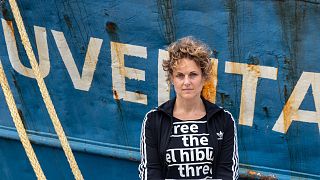
Kathrin Schmidt, a member of Iuventa, is among four from the group charged with aiding and abetting illegal migration in Italy. She could face up to 20 years in jail.
By Giulia Carbonaro

Even as outrage simmers over the hundreds of migrants dying at sea every year off Europe's coast, rescuers are still being persecuted for helping save lives.

Kathrin Schmidt helped save some 14,000 people who made the perilous journey across the Mediterranean to seek safety and a better future in Europe between 2016 and 2017. 

Now, she faces charges that could see her behind bars for as long as 20 years.

Schmidt was head of operations aboard Iuventa, a rescue ship helping migrants in distress in the Med, when the vessel was seized by Italian authorities and her life-saving work abruptly interrupted.

Together with several of her colleagues, she was accused of “aiding and abetting illegal immigration” - a charge that carries a 20-year prison sentence. 

At least 20 people, including NGO workers from other groups and four Iuventa crew members, are still involved in an ongoing trial in Italy.

A ‘politically motivated’ trial

Talking to Euronews, Schmidt is frustrated that, years later, she’s still stuck in a trial that’s moving forward slowly, but in a direction she finds “hard to buy into.”

“The whole trial is insane,” she said.

“They’re accusing us of cooperating with smugglers, of working clandestinely with underground organisations, saying that the people we rescued didn’t need rescuing.”

“They said that there was no need to rescue them because those were arranged handovers of people - but what we’re talking about were flimsy, overcrowded, tiny rubber boats or wooden boats that had hundreds of people on them, with a few people in critical medical conditions and no water or food,” she added.

According to Schmidt, the trial against her and the other rescuers is “very politically motivated." 

"There’s a political agenda behind the criminal law and the proceedings," she claimed. 

The Italian government has defended its harsh policies on illegal migration, and those helping migrants off its coasts, saying that the country is subjected to unbearable pressure from the surging number of people arriving on its shores, with little to no help from other EU countries.

Another EU country which reports a high number of migrants arriving in its territory every year is Greece, where the current government has also taken a harsh, criminalising stance on migrations.

On 14 June, an overcrowded fishing boat carrying an estimated 750 people capsized off the coast of Greece in one of the biggest tragedies in the Mediterranean in years. 

Officials retrieved the 82 bodies, while hundreds are still considered missing. Only 104 people aboard survived.

Greek authorities, taking a strict approach to illegal migration, have been harshly criticised and accused of not acting quickly enough to help the clearly struggling vessel. Testimonies from survivors said the Greek Coast Guard had tied up the vessel and tried to pull it before it capsized -- a move that’s highly unusual in these cases and which witnesses said caused the boat to sway.

Greek authorities denied this happened and defended the actions of the Coast Guard. Talking to state broadcaster ERT, Hellenic Coast Guard spokesman Nikos Alexiou said that.,“There was no effort to tug the boat.”

He added: “You cannot carry out a violent diversion on such a vessel with so many people on board, without them wanting to, without any sort of cooperation.”

Tiring rescuers down

Schmidt, who before boarding the Iuventa had done work with NGOs helping migrants in Lesbos and the Aegean Sea, wanted to rescue people travelling across the Mediterranean Sea to “do justice to her privilege.”

“You’re in a position where you have the agency to act and to help others - a position of power and privilege that comes with a responsibility,” she said. 

Now, she feels like the seizing of the Iuventa and the trial against her took away her freedom of choosing where to work and what to do.

“You could say it has turned my life upside down a little bit, because it has taken the decision away from me of where I want to work or what I want to spend my time doing,” she said.

“The impact of this trial is tremendous, and I find it very important to say that this trial is just one little bit in a context of strategic and systematic criminalisation of people on the move,” she continued.

According to Picum, a network of organisations providing assistance to and advocating for the rights of undocumented migrants in Europe, "the criminalisation of solidarity with migrants remains a widespread phenomenon across the EU."

The group said that at least 89 people were criminalised in the EU between January 2021 and March 2022 for helping migrants in distress at sea, with most of them being charged with facilitation of entry, transit or stay, or migrant smuggling.

Migrants too have also increasingly been criminalised in countries like Italy and Greece, where they're seen as a threat to national security rather than asylum seekers in need of assistance.

For Schmidt, getting the charges against her and her colleagues dropped is “not about protecting myself from going to prison,” but to secure a political win that will let people know rescuing migrants at sea is the right thing to do.

“We are living through extremely difficult times in Europe and we are heading into a disaster on all sorts of levels,” she said, adding that persecuting rescuers is a political strategy aimed at exhausting NGOs wanting to help. 

The trial has been “draining” and tiring, she confirmed. 

“It’s taking resources, time and money and it’s weakening all political structures. [The trial] is a systematic tool that states use to oppress resistance movements, to shut people up and to shut people down.”

Border protection over saving lives

In May, defence lawyers for Schmidt and other rescuers from Doctors Without Borders and Save the Children pushed forward a request to consider the crime of aiding and abetting migration illegal, since this would contradict fundamental rights stated in the Italian Constitution and the EU Charter of Fundamental Rights.

At a hearing last week, an Italian court in Trapani, Sicily, ruled that border protection prevails over human rights, rejecting the defence lawyers’ request.
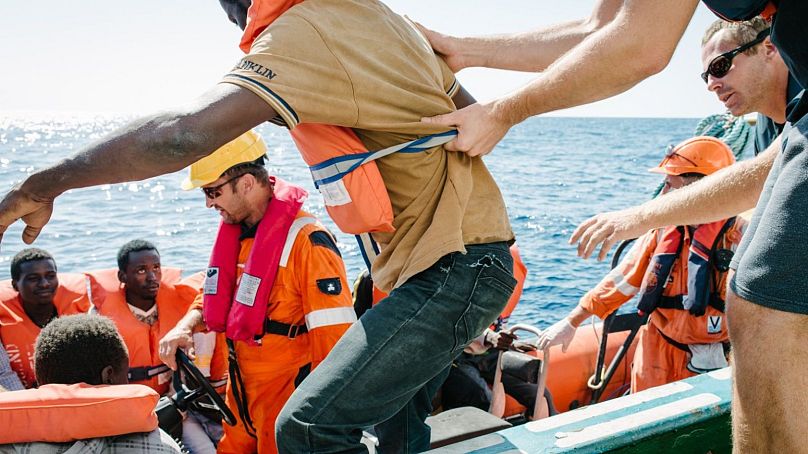

Crew on the Iuventa ship rescued a total of 14,000 migrants in the Mediterranean Sea between 2016 and 2017.Iuventa

“We wanted the High Courts to decide once and for all on the balance between border protection and the protection of human beings,” said Francesca Cancellaro, Iuventa’s lawyer.

“But the judge denied Iuventa and everyone this possibility. The decision is unsatisfactory as much for the outcome as for the arguments that support it. But we will certainly not stop here.”

“With so many people desperate enough to risk their lives to access protection and safety in Europe, it is urgent that a reform of the offence of ‘facilitation of irregular migration’ takes place,” Elisa De Pieri, researcher at the Europe regional office of Amnesty International, said commenting on the Italian court’s decision.

There needs to be an "immediate end to its harmful and abusive application to people saving lives,” she added. 

But the battle to defend solidarity over border protection continues.

Schmidt doesn’t think she will actually be forced to go to jail for 20 years. “I just don’t see that,” she said with confidence.

The Iuventa ship, meanwhile, has remained blocked in an Italian port for six years now. More than 10,000 people are estimated to have died in the Mediterranean off the coast of Italy between 2018 and 2023.

A total of 959 migrants have drowned off the coast of the country or is still considered missing in the months between January and May 2023 alone.

UK
HSBC Quitting Canary Wharf for the City Rocks Docklands District

Jack Sidders
Mon, June 26, 2023


(Bloomberg) -- HSBC Holdings Plc’s decision to quit the 1.1 million square foot skyscraper that bears its name in Canary Wharf in favour of a smaller office in the City of London is the latest blow to the east London financial district that’s becoming a less popular choice for businesses navigating a world reshaped by the pandemic.

The desire by firms to lure staff back to the office is playing out in the shifting fortunes of London’s major office districts and is landing firmly in favor of London’s buzziest areas. In the changing office landscape, Canary Wharf is increasingly losing out to the City of London and the West End.

With the planned departure of one of its biggest tenants, questions about the future appeal of Canary Wharf are emerging even though it remains a cheaper option. While HSBC will occupy about half the amount of space in its new headquarters, rents for the best buildings in the City of London are about 50% higher than those in Canary Wharf, limiting the savings the bank will achieve from reducing its footprint.

“The appeal to employees seems now to be prevailing over the low rent,” Green Street analyst Marie Dormeuil said. “HSBC follows Clifford Chance vacating to go to the City, question marks remain for others.”

Cheaper rents and the ability to build large, highly specified modern office towers helped bring Canary Wharf to life at a time when the ancient City of London district was expensive and highly restricted. But in the three decades that have followed, wages have become a far larger cost for businesses than rent, which has scarcely changed in real terms.

The West End, home to London’s best restaurants and stores, has a vacancy rate of about 6.6%, while 9.6% of the City of London’s offices are empty, according to broker Savills Plc. By comparison, the vacancy rate in Canary Wharf is about 15%, according to Green Street.

A representative for Canary Wharf Group, which is jointly owned by Qatar and Brookfield, declined to comment.

HSBC has been looking for alternatives to its docklands skyscraper as it looks for a more flexible workspace and adapts to the post-Covid cityscape, according to a memo sent last year by the bank’s chief operating officer, John Hinshaw. HSBC said in a memo on Monday its preferred option is BT Group Plc’s former head office near St Paul’s Cathedral.

It means that the bank is moving to a building half the size that’s in the heart of the Square Mile and will feature a publicly accessible rooftop restaurant, wildflower meadow, landscaped terraces and a swimming pool. The project is scheduled for completion at the end of next year, allowing time for HSBC to fit out the offices ahead of its Canary Wharf lease expiring in 2027.

Clifford Chance LLP, the Magic Circle law firm which moved its headquarters to Canary Wharf in 2003, is swapping the docklands for the City when its lease expires in 2028. Citigroup Inc. is shrinking from two buildings to one. The future of Credit Suisse’s Canary Wharf headquarters also remains uncertain following its takeover by UBS Group AG.

“The exit by HSBC from Canary Wharf could herald further significant departures raising longer term questions about the suitability of the estate for an office-led community,” said Sue Munden, senior analyst at Bloomberg Intelligence.

Canary Wharf grew out of an initiative to revitalize the docklands industrial district on the Isle of Dogs that had fallen into decline. Prime Minister Margaret Thatcher’s government created the Docklands Development Corporation in 1981 and eventually teamed up with Canadian property tycoon Paul Reichmann to create a new financial center. Construction began in 1988 and the first banks arrived in 1991.

“In the 1990s, Canary Wharf was billed as: It will feel like Venice and work like New York, as City of London spill-over space just 5 kilometers east,” Jefferies’ analyst Mike Prew said. “It is now optimistically branded as a summer destination,” he added, citing recent advertisements for the district which owners Qatar and Brookfield are attempting to reposition.

The district has long been attempting to pivot away from banks as its dominant source of income, the peril of which was highlighted in the global financial crisis as major occupiers including Bear Stearns and Lehman Brothers disappeared. By the time the Brexit vote delivered another shock to London’s status as a financial hub in 2016 it had reduced the proportion of its rent that came from banks to less than 50%, a figure that has since fallen further.

In their place it is building rental apartments that have proved popular with overseas students and young professionals keen for high-quality buildings that are professionally managed and in a large privately owned and run estate. It is also attempting to lure life sciences companies to the area, with plans for a vast new research hub.

With the coronavirus pandemic ushering in widespread hybrid working even among financial firms, demand for offices is also evolving. Businesses are now placing more emphasis on amenities and lifestyle and less on cost, with higher rents offset by less overall square footage. That’s encouraged a series of long-term tenants to move back to more central parts of London that are easier for staff to access and offer more entertainment and eating options.

--With assistance from Harry Wilson and Tom Metcalf.


HSBC to move out of Canary Wharf headquarters due to hybrid working

The bank, which aims to move to the former head office of BT, says it wants to reduce its global office space by 40%


Mark Sweney
@marksweney
THE GUARDIAN
Mon 26 Jun 2023 

HSBC is to move out of its global headquarters in Canary Wharf after more than two decades to considerably smaller offices in the City of London, in response to post-pandemic hybrid working arrangements and a cost-cutting drive.

The financial services giant, which had up to 8,000 staff at the 45-floor tower at Canada Square during peak times before the pandemic, is to move to the former head office of telecoms company BT near St Paul’s cathedral.

HSBC, which has been based in Canary Wharf since 2002, has been examining its options since launching a review in September and will relocate before its existing lease expires in early 2027.

“We have a preferred option – Panorama St Paul’s, in the City of London,” said HSBC, in an email to staff on Monday. “We will now begin more detailed discussions on a potential lease, with the intention to move in late 2026.

“Panorama offers a modern office environment in the City, well-connected to major transport links and amenities. The building is being designed to promote wellbeing and constructed to best-in-class sustainability standards, using predominantly repurposed materials.”

In 2021, HSBC announced its intention to reduce its office space around the world by nearly 40% post-pandemic to cut costs and respond to increased hybrid working. The lender has more than 60 offices in the UK, with at least 10 in London, according to its annual report.

The new office, which is about half the size of HSBC’s east London base, was vacated by BT in 2019 as part of a multibillion-pound cost saving plan that involved shutting 20 of its 50 offices across the UK.

“HSBC’s decision to return here to the heart of the City of London is a huge vote of confidence for the City,” said Chris Hayward, the policy chair at the City of London Corporation. “This move further solidifies the City’s reputation as a prime destination for financial services firms, offering them unparalleled opportunities.”

HSBC had previously been headquartered in Poultry in the City of London, in offices dubbed the “palace of finance”, which was built in 1930.

The move by the bank, which last September announced it was reducing the space occupied in Canary Wharf by a quarter to reduce costs and cut energy use, leaves the tower’s owners with a major task to replace the long-term tenant in straitened financial conditions.

HSBC tower is owned by the Qatar Investment Authority (QIA) separately from Canary Wharf Group (CWG), which in turn is co-owned by the QIA and Canadian private equity firm Brookfield. Last month, Brookfield put the UK holiday village chain Center Parcs up for sale with a price tag of £4bn to £5bn.skip past newsletter promotion

CWG has attempted to make the area a more attractive evening destination – hosting arts, music and theatre events – after the pandemic, when great numbers of commuters opted for hybrid working hitting footfall. The group also hopes to attract new tenants to build a life sciences cluster.


HSBC temporarily withdraws mortgage deals for new borrowers

“HSBC is showing foresight by using the move to hybrid working to allow it to have a smaller, greener, more flexible headquarters that is more convenient for employees,” said Andrew Mawson, managing director of workplace consultancy AWA, whose clients include the government’s Cabinet Office and accountancy firm BDO.

“The world will become divided between enlightened employers embracing new ways of working to be more efficient and ditch expensive real estate, and the old command and control bosses mandating staff to be in the office the majority of the time whether it makes sense for them or not.”


India might witness rise in domestic violence against women due to climate change: Study

New Delhi, India
Edited By: Nishtha Badgamia
Updated: Jun 30, 2023,

This comes as India witnessed deadly heatwaves, earlier this year, with temperatures up to 45 degrees Celsius in certain parts of the country.
(Representative Image) Photograph:(Reuters)


According to the study, one degree Celsius rise in average annual temperature was linked to an increase of more than 6.3 per cent in incidents of physical and sexual domestic violence across India, Pakistan and Nepal.

A study published in the journal JAMA Psychiatry, on Wednesday (June 28) found that an increase in temperatures leads to a substantial rise in domestic violence against women.

The South Asia-based study looks at three countries, India, Pakistan, and Nepal between 2010 and 2018, where thousands of girls and women spoke about their experience of emotional, physical and sexual violence.

It also noted that without any steps taken to limit emissions which contribute to global warming and climate change, in the 2090s, India might experience the highest rate of violence against women among the three countries studied.
What did the study find?

According to the study, one degree Celsius rise in average annual temperature was linked to an increase of more than 6.3 per cent in incidents of physical and sexual domestic violence across the three countries.

ALSO READ | Temperature rising in Europe, 15,700 deaths due to heatwave in 2022, says UN

The researchers tracked 194,871 girls and women aged between 15 and 49 to study the prevalence of intimate partner violence (IPV) and its types which include physical, sexual, and emotional violence across India, Pakistan and Nepal.

“A significant association was found between high ambient temperature and the prevalence of IPV against women,” said the study, adding that with every one degree Celsius increase in the annual mean temperature, they noted a total of 4.49 per cent IPV prevalence.

The research also projected that IPV prevalence would increase by as much as 21 per cent by the end of this century under the “unlimited emissions scenarios.” However, if steps are taken to curb emissions contributing to climate change and global warming, the IPV prevalence would “moderately increase,” said the researchers.

ALSO READ | In Germany, a third of men find violence against women ‘acceptable': study

In its projected increase in violence, the study also found that physical (28.3 per cent) and sexual violence (26.1 per cent) were significantly higher than emotional (8.9 per cent).

Speaking about the findings of the research, Michelle Bell, a professor of environmental health at Yale University and a co-author of the study, said there were “many potential pathways, both physiological and sociological, through which higher temperature could affect risk of violence”.

Extreme heat sets off a chain reaction of socio-economic effects like crop failures, and effects on income, and forces people to stay at home without any means to earn a daily wage, which puts a lot of pressure on households and gives rise to violence against women.

The study also found that IPV is significantly more prevalent in lower-income and rural households when compared to heat-related increases in violence in higher-income groups. The research was conducted across all income groups.

ALSO READ | Data Lab | India feels the heat: What happens if the current heatwave trend continues?

“There is growing evidence that extreme heat can affect stress, lower inhibitions, increase aggression, and exacerbate mental illness,” said Bell, as quoted by the United Kingdom-based media outlet.
Heatwave in India and its relation with rise in domestic violence

According to the study, India is projected to witness the highest IPV prevalence in the 2090s among the three countries with 23.5 per cent when compared to Nepal (14.8 per cent) and Pakistan (5.9 per cent). This comes as India witnessed several heat-related deaths, earlier this year, with temperatures up to 45 degree Celsius in certain parts of the country.

ALSO READ | Heatwave in India: Nearly 100 dead in UP & Bihar, authorities urge people to stay indoors

A former employee of the Indian state of Uttar Pradesh’s Commission for Women and activist, Suniti Gargi, said that heatwaves in the country are common during summer and she believes that climate change is making them worse, said a report by the Guardian, adding that she also drew the connection between a rise in temperatures and levels of domestic violence.

“I’ve been seeing unusually high temperatures becoming more common,” said Gargi, as per the British media report. She added, “They cause tremendous economic stress in families. If a man can migrate to another state to get work, it can help keep the home fires burning but when he cannot for whatever reason, his wife is at the receiving end of his anger and feelings of uselessness.”
Texas Department of Public Safety must release documents related to Uvalde school shooting, judge rules

By Elizabeth Wolfe and Andy Rose, CNN
Published  June 29, 2023

CNN —

The Texas Department of Public Safety must release records related to last year’s deadly Uvalde elementary school shooting, a district court judge in Austin ruled Thursday.

District court judge Daniella Deseta Lyttle ruled in favor of a coalition of media outlets – including CNN – that sued the state department last year, arguing that the department violated state law by broadly refusing to release records related to the May 2022 massacre of 19 children and two teachers at Robb Elementary School.

The suit was brought by more than a dozen major news outlets seeking transparency and insight into the botched response of law enforcement who arrived at the scene and waited for more than an hour before confronting and killing the gunman, who had holed up inside a pair of connected classrooms with the victims.


A year since 19 children and 2 teachers were massacred at a Texas elementary school, these questions remain unanswered


The public safety department had disclosed some information, but dismissed requests for other records on the grounds that a local district attorney says she is conducting an ongoing investigation.

The department has been asked to produce dashcam videos from police vehicles, recordings and transcripts of 911 calls, records of the training public safety department officers received and numerous other documents.

The department can redact some information from the records before releasing them as allowed by law, and must provide a list of proposed redactions to the court by August 31, the judge said. A hearing is expected to be held in September to discuss the department’s proposal.

In the wake of the massacre, families and public officials slammed the Texas Department of Public Safety for its reluctance to share information and shifting narratives on authorities’ actions that day.

“The Texas Department of Public Safety has offered inconsistent accounts of how law enforcement responded to the Uvalde tragedy, and its lack of transparency has stirred suspicion and frustration in a community that is still struggling with grief and shock,” Laura Lee Prather, a First Amendment lawyer who represents the plaintiffs, said when the suit was filed.


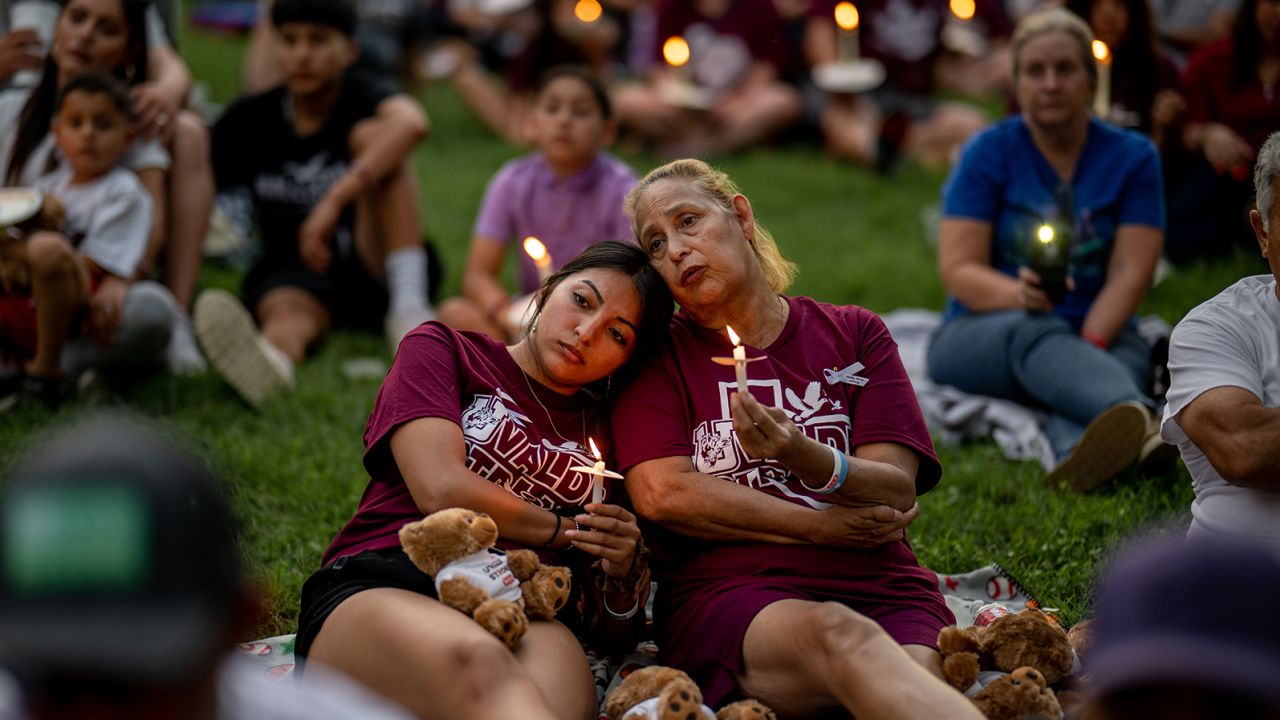
Families participate in a candlelight vigil in Uvalde dedicated to the victims on May 24, 2023, one year after the massacre.
Brandon Bell/Getty Images/File

The other news organizations participating in the suit are ABC, CBS, NBC, The New York Times, Wall Street Journal owner Dow Jones, The Washington Post, ProPublica, and local TV and media companies Gannett, Graham Media, Scripps and TEGNA.


5 key takeaways from the Uvalde shooting report and video revealing failures in law enforcement response


A Texas House investigative committee tasked with examining the circumstances surrounding the shooting found “systemic failures and egregious poor decision making” by law enforcement and other entities, according to a preliminary report the panel released in July 2022.

The report outlined a series of failures by several law enforcement agencies and described “an overall lackadaisical approach” by authorities on the scene.

The report said that first responders “lost critical momentum” by treating the situation as a “barricaded subject” scenario instead of an active shooter situation.

Law enforcement experts have said a more immediate confrontation with the shooter could have allowed victims to receive critical medial care, possibly saving some lives.
British royal family spent $27 million over budget in 2022-23; critics say it was far more


2023/06/29

The British royal family’s annual Sovereign Grant spending report was released Thursday, showing that the royals spent around $27 million more than they received from April 2022 through March 2023.

Royal spending increased by 5% from 2021-22, as The Firm dealt with massive transitions, including Queen Elizabeth II’s death and King Charles III’s rise to the throne.

The royals received $109 million from the taxpayer-funded Sovereign Grant and earned an additional $12 million, according to the report. However, they spent a whopping $148 million on official appearances and work, leading to the deficit.

A rainy-day fund, known as the Sovereign Grant Reserve, was used to make up the $27 million gap.

Critics of the royals have long argued that the Sovereign Grant report does not account for the true cost of the royal family, as it does not cover their security arrangements. For example, the report lists the cost of Queen Elizabeth’s funeral at $2 million. However, Britain’s treasury department said last month the funeral cost $204 million.

“The royals have long hidden their true cost, which we have worked out to be at least £345 million,” said Graham Smith, leader of the anti-monarchy group Republic. “Our figure of £345 million is far more accurate than the official report, when we factor in costs to local councils, local police forces, the revenue of the two Duchies and security.”

Smith was referring to the Duchies of Lancaster and Cornwall, which provide private income to the monarch and their heir, in the present case King Charles and Prince William.

Britons have long debated whether the monarchy is a net positive or negative for British taxpayers. Pro-monarchy groups argue the royals boost tourism and trade by tens of millions of pounds.

The royals’ biggest expense in 2022-23 was the ongoing restoration of Buckingham Palace, which is expected to take 10 years. The structure of the Sovereign Grant was changed in 2017 to cover the cost of the project.

© New York Daily News
Netherlands: King may apologize for slavery, but then what?

Ella Joyner in Brussels

King Willem-Alexander is expected to make a formal apology to mark 160 years since the Netherlands abolished slavery. Could this nudge European leaders closer to reparations?


Before Prime Minister Rutte did so, a number of Dutch cities including Amsterdam apologized for slavery

For the second time in six months, Amsterdam district counselor Vayhishta Miskin is braced for a historic occasion that may long have seemed unthinkable to many people of Surinamese descent like her.

After Dutch Prime Minister Mark Rutte apologized for the tiny country's slave-trading past and pledged €200 million ($216 million) for educational initiatives in December, King Willem-Alexander is widely expected to follow suit on Saturday, July 1, according to local media.

"What people told me is that they felt emotional about the prime minister's apology, because these were words people were waiting for since 1863," Miskin told DW's Christine Mhundwa in the Dutch capital this week, referring to the date when the Netherlands abolished slavery by law. "It's a first step in order for us to move forward and heal as a society."

July 1 marks 150 years since the de facto end, and 160 years since official abolition, of Dutch-organized slavery in the Caribbean. The occasion is known as Keti Koti, or Broken Chains day, in former colony of Suriname.

Willem-Alexander has not given any indications of exactly what he will say. But in Miskin's neighborhood of Amsterdam South-East, where many locals have roots in former colonies like Suriname and the Dutch Antilles, the bigger question for many is what comes after.

In fact, the community has held meetings to discuss precisely that question. "What people told us is that they need the wrongs and the injustice that they experienced in the past and still continue in the present day to be nullified," Miskin said.

"Even if we receive an apology from the king, what does it mean?" she added. "What people really need is for their children to have a professional education, their children to get a job,” she said, pointing to ongoing inequality in one of the world's richest countries.

A dark chapter remembered


At the height of its colonial era, the Netherlands presided over a huge global trade network as one of the world's major imperial powers. Over centuries, the Dutch were responsible for about 5% of the overall transatlantic slave trade, buying and shipping close to 600,000 enslaved people from Africa to Caribbean colonies as well as other European colonies across the Americas.

Enslaved Africans were also forcibly moved to Dutch colonies in the Indian Ocean, like present-day Indonesia, and enslaved Balinese or Javanese were transported to modern-day South Africa.

Overall, 15% of those taken from Africa to the Americas in the transatlantic trade did not survive the abysmal ship conditions of the crossing, not to mention the many, many more who died before they had even left Africa.

The survivors and their descendants faced a brutal plantation life of hard labor and often violent punishment for perceived insubordination. The Dutch were one of the last European nations to end slavery in colonial territories.

To commemorate this dark chapter, a ceremony involving the king and marking the start of a memorial year is planned in Amsterdam's Oosterpark. The Keti Koti festival celebrating Surinamese emancipation, anticipated to be larger than usual this year, will be held at Amsterdam's Museumplein.

Sorry seems to be the hardest word

One person who will be watching the exact wording of Willem-Alexander's speech closely is Wouter Veraart, a professor of legal philosophy at the Free University of Amsterdam.

"[Prime Minister] Rutte's speech was well received, but when you look more closely… he seems only to say that in light of the present values, it has been a crime against humanity," the academic told DW.

This is different from saying it was a crime at the time, he pointed out. "There is this idea of the colonial space as a place in which the civilized laws do not really apply."

While pressure on Europe's former colonial powers to atone for past wrongs has mounted in recent years, Willem-Alexander's royal counterparts in Belgium and the United Kingdom stopped short of offering outright apologies when addressing similar legacies.

Last year, Belgium's King Philippe offered his "deep regrets" over atrocities committed in the Democratic Republic of the Congo. In April, Britain's Charles III spoke of his "personal sorrow" over slavery.

Leaders seem to carefully craft such statements to minimize the risk potential of repercussions, Veraart said. "There is this this whole language game within the apology about what exactly is stated [and] what is the legal meaning of the statements, which could or could not have consequences for liability."

In reality, chances for claims for compensation for crimes against humanity in either Dutch or international courts are extremely low, according to the scholar. "You can go to court, but the chance of winning is still really, really slim."

"You must prove in court that you have a direct interest in the injustice of the past. There are statutes of limitation," he elaborated. "Then there is this problem of causality. Is there proof of a direct relation between the history of colonial slavery and the problems that you have right now?"
From apology to reparations?

What Willem-Alexander says will be closely watched on a political level, not just for descendant communities in the Netherlands, but in the Caribbean and far beyond.

For Mia McMorris, a research fellow at University of the West Indies' Center for Reparations Research, it is very clear what a proper apology for slavery should look like, and where it should lead.

"An apology should have three dimensions, the first being taking responsibility, which hopefully means that you understand what you've done wrong and admit fault," the researcher said. Second comes dealing with the present-day legacy – "continuing colonial narratives, racial profiling, anything that promotes a racial inequality," McMorris highlighted – and, third and finally, making amends.

"In Jamaica, we had the largest figure of persons brought to Jamaica. Something like 1 million. And at the end of slavery, there were only about 300,000 enslaved persons on the island," she stressed. " When you understand those figures and the historical implications, how can you deny that an apology is necessary, that reparation is necessary?"

Founded in 2013 by Caribbean heads of government, the Caricom Reparations Commission drew up a 10-point plan. The first step is an apology. Other demands include funding for public history and to tackle massive health and education problems, as well as the right to development through knowledge transfer and debt cancellation. To date, only the Dutch have given a partial response to reparations demands, McMorris said.

Scant precedent for compensation


As Veraart points out, there are very few real-world examples of reparations. A key one would be 1952 negotiations between the post-Nazi Western German state, Israel and the Claims Conference (a Jewish diaspora umbrella body) in the wake of the Holocaust. "The reparations offered and negotiated between West Germany and Israel were not based on counting how much profit was made or all the losses, but on what was needed in Israel at that moment," he explained.

Last year, Germany officially acknowledged its early 20th century genocide in Namibia and promised around €1 billion in development aid as a form of reparation.

"If you really want to face this history and no longer ignore it, then why shouldn't you enter into a dialogue with Suriname, for example, about what reparations could mean?" Veraart said.

Willem-Alexander's expected speech on Saturday may well be relatively ambitious, at least compared to Belgium's Philippe, and could even spur on others, the scholar said.

Researcher McMorris sees a lot to be done, but also grounds for optimism. "We're in a changing world right now," she said, pointing to a number of recent moves by non-state institutions to investigate their own links to slavery, like the British newspaper The Guardian.

"People are rebelling," she said. "They're saying this isn't right. And that's the heart of the reparation movement, understanding that these things are not right, and we need to repair that injustice."

Edited by: Emily Schultheis
Nepal activists hail interim ruling allowing same-sex marriage

'Big and historic' Supreme Court order set to spur registrations
Participants take part in an annual LGBTQ+ Pride parade in Kathmandu on June 10. 
 © Reuters

June 30, 2023 

KATHMANDU (Reuters) -- Same-sex couples in Nepal said on Friday they were preparing to register their marriages after the Supreme Court issued a temporary order clearing the way for gay marriage for the first time in the largely conservative country.

The Supreme Court has been considering a petition on the issue filed by gay right activists and on Wednesday it issued an interim order allowing for same-sex couples to register their marriages pending a final verdict.

"This is a very big and historic decision," said Pinky Gurung, chairperson of the Blue Diamond Society gay rights organization.

Gurung said about 200 same-sex couples were expected "to come out openly and register their marriages".

Majority-Hindu Nepal has become increasingly progressive since a decade-long Maoist rebellion ended in 2006. Two years later, political parties voted to abolish the 239-year-old Hindu monarchy, a key demand of the Maoists.

In Asia, Taiwan is the only place that recognizes gay marriage, though pressure is building for reform in Japan, Thailand and South Korea.

In 2007, Nepal's Supreme Court ordered the government to end discrimination against LGBT people and put in place measures to guarantee equal rights.

Since then, some same-sex couples have held unofficial weddings and gay pride parades have been held in the capital, Kathmandu.

But activists say there is still no clear legislation and people can face abuse from their families and communities and discrimination in education, government offices and hospitals.

Maya Gurung, another member of the LGBT community, said that being able to officially register a marriage would help overcome a range of difficulties.

"We will now approach the authorities to formally register our marriage," Gurung said, referring to her partner of nearly a decade, Surendra Pandey.

"It may take some time for this, though.”
‘Get used to us’: South Korean drag queens fight for LGBTQ rights

By AFP
Published June 29, 2023

South Korean drag queen Hurricane Kimchi is also known as Heezy Yang, an LGBTQ activist and artist 
- Copyright AFP Jung Yeon-je

Emo TOURE

Drag queen Hurricane Kimchi has torn through Seoul’s nightlife scene like their meteorological namesake for a decade, part of a burgeoning LGBTQ community fighting for their rights in socially conservative South Korea.

It’s not the K-pop image that South Korea usually projects to the world.

Gay marriage is banned in the country, social pressure keeps many in the closet, and the annual Pride celebration attracts vicious Christian-led opposition.

But change is coming. Hurricane Kimchi told AFP when they first went to Seoul Pride more than a decade ago only a few hundred people were there.

More than 150,000 are expected this Saturday, according to organisers, despite a growing official backlash.

This year’s celebration, one of Asia’s largest, was denied permission to use the capital’s central plaza for the main event on Saturday, with a Christian group snagging the prime spot instead.

Seoul authorities officially blamed a scheduling clash, but the city’s conservative mayor Oh Se-hoon said in June he “personally can’t agree with homosexuality”.

A similar event in the southern city of Daegu in June descended into police clashes after officials attempted to block Pride celebrations.

Nearly a quarter of South Korea’s population is Christian and around 40 percent of its lawmakers are Protestant, church figures show.

Many evangelicals oppose gay rights, and few politicians are willing to challenge the religious lobby.

Hurricane Kimchi, also known as activist and artist Heezy Yang, said South Korea needs to get used to the idea that LGBTQ people are part of society.

“We are everywhere, so there should be LGBTQ events everywhere and we should be visible everywhere,” Yang told AFP.

South Korea has to get “used to having us everywhere and seeing us everywhere”, they said.


– K-pop vs. reality –

South Korea’s K-pop scene has brought a whole host of highly groomed, makeup-wearing, jewellery-sporting male stars — not least the seven members of mega-group BTS — to the global stage.

The country’s booming television industry has also featured gay characters in popular K-dramas and last year premiered an LGBTQ reality dating show.

But what’s happening in mainstream media doesn’t always reflect reality, Yang said, with same-sex marriage still illegal and discrimination based on sexual orientation still widespread and not officially banned.

“I see LGBTQ people, including drag, are more included on TV, K-pop music videos and some TV shows, but they are a very tiny part of the production,” Yang said.

“When Korean media and Korean people in general talk about drag… they tend to just describe drag as an art form, as a performance genre, (ignoring) its history and what it means.”

Tiago Canario, a visual culture studies scholar at Korea University, agreed that drag culture was only selectively consumed.

Drag aesthetics have been “proven to be profitable, so more people are engaged with them,” he told AFP, but “that does not mean the marginalised ones who created them are celebrated”.

Drag queens such as Serena, who is part of the Neon Milk collective, which has 100,000 followers on their YouTube channel, have turned to social media to connect with young LGBTQ South Koreans.

“Online presence is important, especially in Korea’s conservative society” as a way to show young people, especially in rural areas, that “people like me — trans women doing drag — exist”, the 37-year-old said.


– Drag queens are fighters –


Queer festivals have often been targeted by religious groups, who have thrown water bottles and verbally abused Pride marchers and tried to block their route by lying down in the street.

Yang Sun-woo, head of the organising committee for the Seoul Queer Culture Festival, said not allowing this year’s Pride to book Seoul’s city plaza was a shockingly discriminatory administrative decision.

“In democracies, there have never been queer festivals subjected to such levels of oppression,” Yang Sun-woo said.

Heezy Yang said the first Seoul Pride in 2000 had only about 50 attendees.

“It’s really good to see Korea go from having no (drag) community or scene to having something that is small but meaningful and tight and well connected,” they said.

Drag kings and queens have “existed in history everywhere, and when these people get more visible, when they get on stage or go to a protest, then they are making a statement: that they are fighting”.


Russian sexologists to target homosexuality, other 'disorders' under new rules

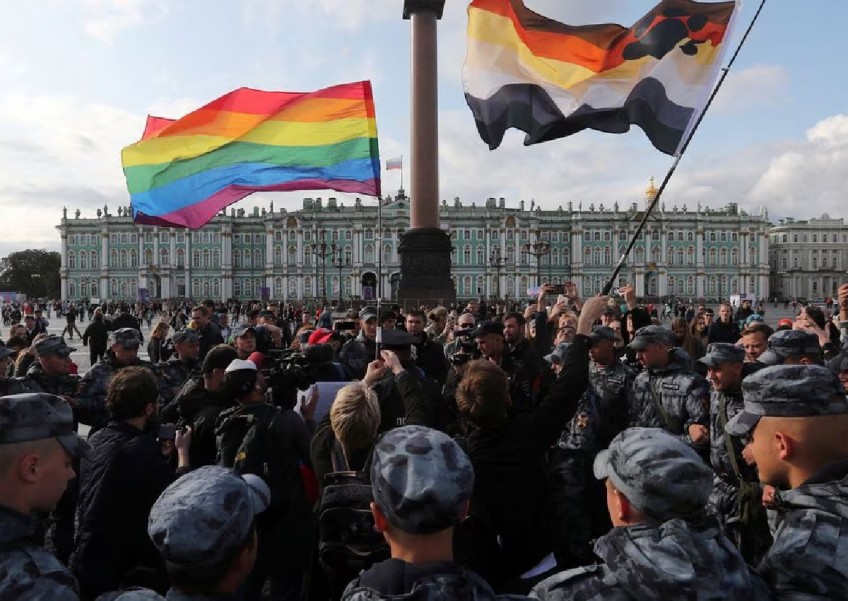
Law enforcement officers block participants of the LGBT community rally "X St.Petersburg Pride" in central Saint Petersburg, Russia on Aug 3, 2019.
PHOTO: Reuters

PUBLISHED ONJUNE 29, 2023 

Russian clinics will soon be staffed with sexologists to help patients "overcome" homosexuality and various sexual "mental disorders", a health ministry order said, in the latest Kremlin attack on what it calls "non-traditional lifestyles."

The order, which takes effect on July 1, comes amid a clampdown on Lesbian, Gay, Bisexual, and Transgender (LGBT) rights, which President Vladimir Putin has sought to portray as evidence of moral decay in Western countries and from which Russia must be protected.

"The help of such specialists is necessary if a person wants to recover from frigidity, impotence, or such violations of sexual behaviour as fetishism, masochism and sadism," the official newspaper of Russia's parliament said.


Under the order, signed by Putin, the specialists will also help patients deal with "non-standard preferences such as autoeroticism, homosexuality, bestiality", it said.

The World Health Organisation removed homosexuality from its list of mental disorders in 1990. Russia did so in 1999.

Last December, however, Putin signed a law expanding restrictions on the promotion of what it calls "LGBT propaganda", effectively outlawing any public expression of the behaviour or lifestyle of lesbians, gay men, bisexuals or transgender people in Russia.

Authorities have already used this and older laws to stop gay pride marches and detain gay rights activists.


This week, the director of the LGBT support group Vykhod ("Coming Out") was fined 150,000 roubles (S$2,341) by a regional court after the group failed to identify itself in a social media post as a "foreign agent" as required under the new law, the Novaya Gazeta Europe newspaper reported.

In a similar vein, an online cinema service was fined 3.7 million roubles on Thursday (June 29) for failing to provide warning of LGBT content in films it aired.

Earlier this month, Russia's lower house of parliament, the State Duma, gave its initial backing to legislation that would ban gender reassignment surgery.

Under the health ministry's new order, medical staff will also help married couples "achieve sexual harmony" and advise parents on how to educate their children about sex, the parliamentary paper said.