U.S. Depleted Uranium to Make Ukraine War Dirtier
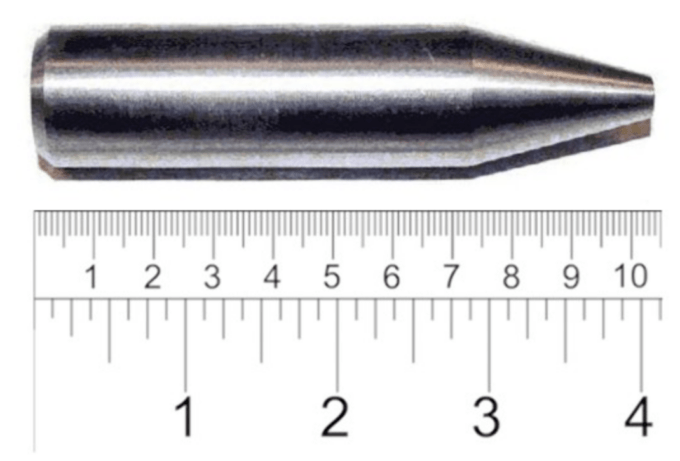
The Biden administration is expected to supply Ukraine with highly controversial depleted-uranium munitions which are to be fired from the Abrams battle tanks the U.S. is sending to Kyiv, the Wall St. Journal reported June 13.
Any delivery of U.S. depleted uranium (DU) weapons to Ukraine would be in addition to the State Department’s Dec. 22, 2022 approval of the sale to Poland of as many as 112,000 heavy 120-millimeter DU shells, which was announced by the Pentagon’s Defense Security Cooperation Agency.
The British Ministry of Defense announced last March 20 that it too would send depleted uranium munitions to Ukraine along with its Challenger battle tanks. Russian Foreign Minister Sergei Lavrov responded at the time charging that sending DU into Ukraine would mean the U.K. was “ready to violate international humanitarian law as in 1999 in Yugoslavia.” (https://www.bbc.com/news/world-europe-65032671) The reference may be to the United Nations Subcommission on the Promotion and Protection of Human Rights which in 2002 labeled the use of DU “inhumane” and a violation of treaties like the Hague Conventions which expressly forbid any use of “poison or poisoned weapons.”
The Wall St. Journal’s understated sub-headline on June 13 warned: “The armor-piercing ammunition has raised concerns over health and environmental effects.” Indeed, between 1997 and 2004, USA Today, the Associated Press, New York Daily News, Life magazine, CNN, and others reported that studies were finding a significantly increased rate of birth abnormalities among children of U.S. Gulf War veterans and among Iraqi children born after 1991. (“DU in UKRAINE – John Pilger & Phil Miller,” Consortium News, May 11, 2023, https://www.youtube.com/watch?v=YqlMrjMuFwI; “Tainted uranium, danger widely distributed,” USA Today, June 25, 2001)
The Journal’s article acknowledged that “The United Nations Environment Program said in a report last year that the [depleted uranium] metal’s ‘chemical toxicity’ presents the greatest potential danger, and ‘it can cause skin irritation, kidney failure, and increase the risks of cancer.’”
However, the paper “balanced” this U.N. warning by quoting John Kirby, a National Security Council coordinator, who reportedly dared to say last March that “studies indicate it isn’t a radioactive threat.” In fact, the most damning reports about the harmful health and environmental effects of exposure to DU contamination come from the U.S. military itself. (See below.)
If the shells are used in the Ukraine war, the soil, water, crops, and livestock of the territory being contested will likely be contaminated with uranium and the other radioactive materials that are in the armor-piercing munitions. This is because when DU smashes through tank armor, it becomes an aerosol of dust or gas-like particles that can be inhaled and carried long distances on the wind.
In 2003, experts at the Pentagon and the United Nations estimated that between 1,000 and 2,000 tonnes of DU were used by U.S.-led forces during their attack on Iraq in March and April that year. That same year, the British Royal Society, declared that hundreds of tons of DU used by Britain and the U.S. against Iraq should be removed to protect the civilian population, contradicting Pentagon claims it was not necessary. (“Scientists Urge Shell Clear-Up to Protect Civilians, Royal Society spells out dangers of depleted uranium,” Guardian, April 17, 2003)
After NATO’s use of DU weapons in Kosovo in 1999, the Council of Europe called for a world-wide ban on the production, testing, use, and sale of DU weapons, asserting that DU pollution would have “long term effects on health and quality of life in South-East Europe, affecting future generations.” The call went unheeded.
Background
Depleted uranium is uranium hexafluoride or uranium-238, a waste material left from reactor fuel and nuclear warhead production. It is radioactive and a toxic heavy metal, and there are between 560,000 and 700,000 metric tons of this waste stored in the United States. On March 25, 1997 the New York Times reported the volume as 1.25 billion pounds. The military calls DU munitions “armor piercing cartridges” avoiding the taint of the word “uranium.”
In 1991, between 300 and 800 tons of DU munitions were blasted into Iraq, Saudi Arabia, and Kuwait by U.S. forces. The Pentagon says the U.S. military fired about 10,800 DU rounds — about three tons — into Bosnia in 1994 and 1995. Over 31,000 DU rounds — about ten tons — were shot into Kosovo in 1999 according to NATO. In Iraq, in the number of birth abnormalities skyrocketed following the massive use of DU in the Persian Gulf War. (“EU begins inquiry of veterans’ cancer,” Knight Ridder Newspapers, Jan.4, 2001) In Plutonium: Deadly Gold of the Nuclear Age (International Physicians Press, 1992), the authors say, “… plutonium is probably the most carcinogenic substance known.”
The U.S. Department of Energy admitted in January 2000 that the metal in DU shells is often contaminated with plutonium, neptunium, and americium, long-lived, highly radioactive isotopes, much more hazardous than DU, or uranium-238. (“Pentagon admits plutonium exposure: NATO shells used radioactive metals,” London, AP, The Capital Times, Feb. 3, 2001; New York Times, Feb. 14, 2001)
While the U.S. military repeatedly declares that its uranium weapons contain uranium-238, and that its DU shells “are less radioactive than natural uranium,” the United Nations Environment Program and others demonstrated that uranium shells used by the U.S. and the U.K. were contaminated with fission products including plutonium. (“DU at Home,” The Nation, April 9, 2001)
Government evidence of harm
* In 2002, the U.S. Armed Forces Radiobiology Research Institute found in a preliminary report that DU produces one-million times as much chromosome damage as would be predicted from its radioactivity alone, and that it causes a form of long-term “delayed reproductive death” of cells. The AFRR institute then canceled the funding of this research.
* In 1997, the Armed Forces Radiobiology Research Institute reportedly found that, “In animal studies, embedded DU, unlike most metals, dissolves and spreads throughout the body depositing in organs like the spleen and the brain, and a pregnant female rat will pass DU along to a developing fetus.” The Army’s Office of the Surgeon General’s 1993 manual “Depleted Uranium Safety Training” says the expected effects of DU exposure include a possible increase of cancer (lung and bone) and kidney damage. It recommends that the Army “… convene a working group … to identify countermeasures against DU exposure.”
* In 1995, the U.S. Army Environmental Policy Institute reported, “The radiation dose to critical organs depends upon the amount of time that depleted uranium resides in the organs. When this value is known or estimated, cancer and hereditary risk estimates can be determined.” Depleted uranium has the potential to generate “significant medical consequences” if it enters the body, the AEPI found.
* In 1990, the Army’s Armaments, Munitions and Chemical Command radiological task group said that depleted uranium is a “low level alpha radiation emitter … linked to cancer when exposures are internal, [and] chemical toxicity causing kidney damage.” The group’s report said that “long term effects of low doses [of DU] have been implicated in cancer … there is no dose so low that the probability of effect is zero.”
* In 1984, the Federal Aviation Administration warned its investigators, “If particles are inhaled or ingested, they can be chemically toxic and cause a significant and long-lasting irradiation of internal tissue.”
* In 1979, the U.S. Army Mobility Equipment, Research & Development Command warned, “Not only the people in the immediate vicinity (emergency and fire-fighting personnel) but also people at distances downwind from the fire are faced with potential over exposure to airborne uranium dust.”
Any threatened or actual use of poisonous, gene-busting depleted uranium munitions in Ukraine cannot be considered lawful or ethical and must be condemned unreservedly by civil society on all sides of the Ukraine war.