Wednesday, August 30, 2023

Late Putinism: Mafia State


Spectacular violence is now at the heart of Russian politics.

By Edward Lucas
August 27, 2023

Vladimir Putin rose to power amid mass murder (apartment block bombings) and war (Chechnya). His regime habitually assassinates rivals, critics, and defectors at home and abroad. Yet the killing of Yevgeny Prigozhin—whose private jet blew up in mid-air last week—is different. Unlike other victims, the Wagner Group founder was not a has-been or a wannabe. He was the quintessential insider, exemplifying modern Russia’s fusion of business, government, propaganda, and thuggishness. 

Prigozhin, like his business empire, was Putin’s creation. The ex-chef’s job was to serve his master, not to challenge him. After the grave miscalculation of the June mutiny, his end — death or imprisonment — should, therefore, have been swift and tidy, not hesitant and then messy. The two-month delay, followed by the plane crash, suggests that the Russian leader miscalculated, changed his mind, and then resorted to theatrical tricks to recover his prestige. 

The malaise goes beyond Prigozhin. The sacking of General Sergei Surovikin as commander of the aerospace forces is part of a wider purge within the military of people who may have sympathized or collaborated with the failed coup. Also in Putin’s firing line are the putschists’ cheerleaders, the ultra-patriots who believe the Kremlin has waged war too feebly. The loudmouth ex-FSB officer, Igor “Strelkov” Girkin, was arrested and charged with “extremism” last month. This crackdown creates a perfect environment for score-settling and blame-shifting. It is a severe distraction from the war in Ukraine. And it corrodes the roots of Putin’s power.

The Russian leader’s greatest achievement is the combination of modest personal freedoms and predictability. Russians may not like the rules, but they know what they are. Play along, and today will be much like yesterday, tomorrow the same, and you can get on with your life. That may seem humdrum by the standards of other countries. In Russia, with its history of absolutism and arbitrariness, this ordinariness is rare and cherished. Indeed, the past 25 years have been the longest period of “normality”—defined, I stress, by Russia’s bleak standards—in the country’s history. Violent upheavals fray that legacy. 

They also damage the perceptions of omniscience and omnipotence that underpin Putin’s authority. Once these illusions puncture, power in Russia is up for grabs. Putin now looks erratic and out of touch.

The crunch will come in the 2024 presidential election, when Putin will need an unlikely 80% of the vote to match his previous triumphs. This should be a formality. Now, it looks beset with pitfalls. The deadline also raises the stakes in political maneuvering before then. If you think the boss is looking increasingly wobbly, it becomes dangerous to wait. Nobody likes a loser, so place your bets on other, likelier winners. That means more paranoia, more plotting, more private armies. 

Killing Prigozhin, in short, was a tactical success for Putin but a strategic defeat. The Russian leader has shown that he can still wield power ruthlessly. But he has done so in a way that damages the system of rules, penalties, and relationships that sustain his rule. Violence was once political currency on the fringes of Russian power; now, it is at the center.

Welcome, therefore, to the next and perhaps final phase of Putinism. This started with the promise of stability and modernization, only later evolving into overt anti-Westernism, militarism, and neo-Soviet imperialism. The carrots were many, and the sticks fewer. The threat of violence was more effective than its use. In this new phase, the bombast is empty, the economy stagnant, victory is out of sight, and friends (notably China) are impatient and skeptical. Force is the ailing leader’s last and perhaps only resort.

Europe’s Edge is CEPA’s online journal covering critical topics on the foreign policy docket across Europe and North America. All opinions are those of the author and do not necessarily represent the position or views of the institutions they represent or the Center for European Policy Analysis.

Why Do Russians Scorn Ukrainian Independence?

By Oleksandr Shulga
August 29, 2023

The question matters because — worryingly — it is a predictor of future Russian invasions.

Until 2014, when Russia first invaded Ukraine, a citizen living a contented and peaceful life in the village of Robotyne in the western Zaporizhzhia region, for example, would have cared nothing about the average Russian’s view of his country. 

Now, dead or exiled as the Kremlin’s forces raze his or her community to the ground, the matter is very personal indeed. And given that Russian social attitudes move ahead of future military aggression, it’s not only sociologists and politicians who need to worry about what these views might portend for neighboring states. 

On the one hand, the Russian opposition seeks to portray Russian society as detached from the war, placing the blame on Putin personally, or his regime. That is why opposition leaders and representatives avoid discussion about the roots of acceptance of the war against Ukraine. It is an outlook very helpful to those thinking about a post-war settlement and post-Putin coexistence with Ukraine. This might be termed the one-man’s-war theory.  

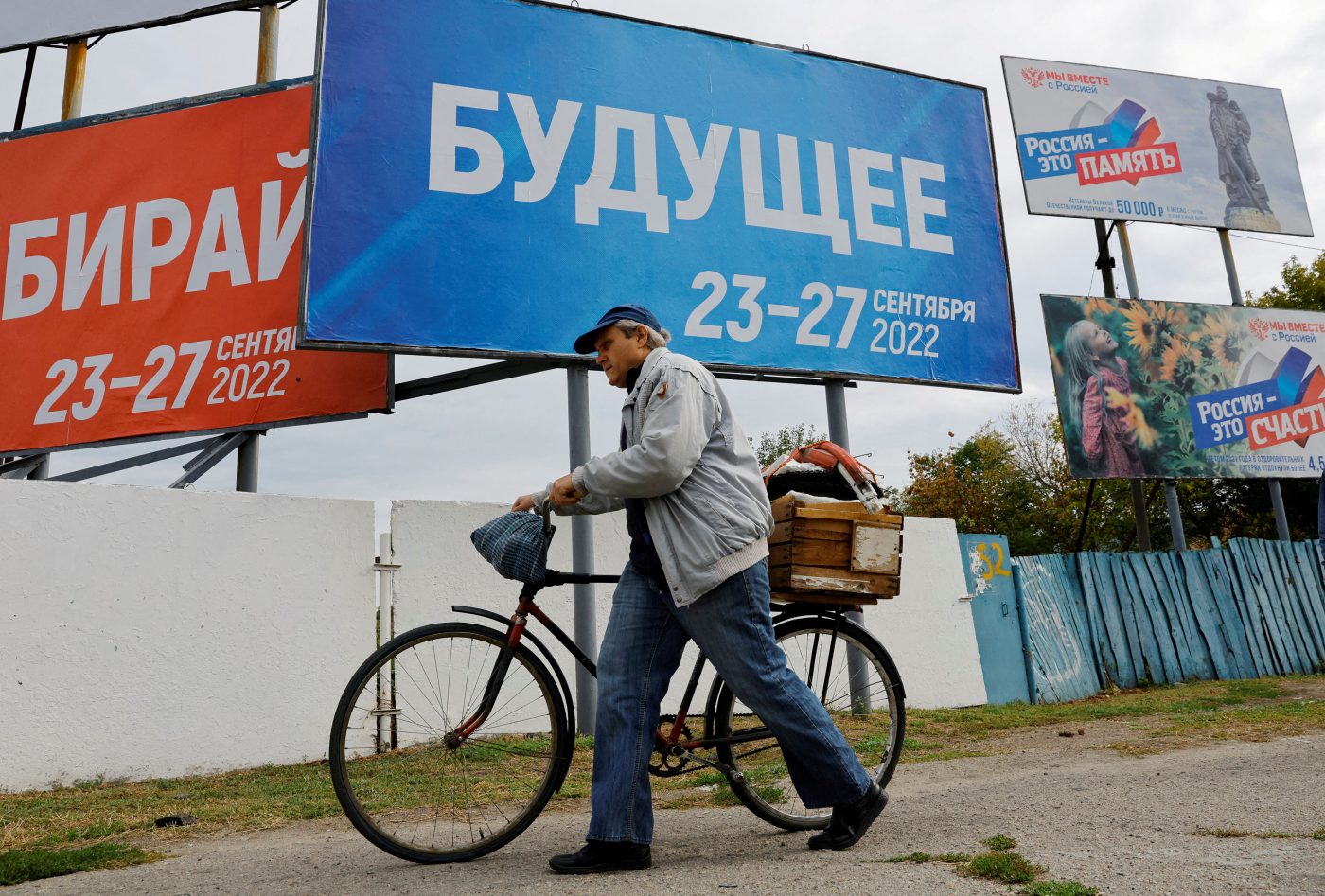
But there are much broader issues. Because surveys make it crystal clear that ordinary Russians do not recognize Ukrainian independence, and that this is not just one man’s war. 

This results from a widely accepted idea within the Russian Federation regarding now-independent former Soviet states. It can be called a subordination-domination model, rather than one based on cooperation. As a result, the objective in relation to Ukraine is assimilation and absorption rather than mutual exchange and coexistence.  

This is not a mere assertion; there is significant data to support it.  

After more than a year of a full-scale war against Ukraine, with tens of thousands of Ukrainians killed and wounded and hundreds of settlements destroyed, the majority of Russians (65%) say their attitude towards Ukrainians has not changed. 

Furthermore, over half of the respondents (54%) still believe that Russians and Ukrainians are one nation, while an additional 12% believe that both nations are very similar to each other. Only 8% state that Russians and Ukrainians are completely different people. 

These figures may appear puzzling: after so many deaths on both sides, including among Russians (latest US estimates suggest Russian military casualties are now around 300,000), how can its citizens’ outlook have remained the same?  

The absorption-assimilation model helps to explain this. The majority of Russian society perceives the invasion of Ukraine as an internal Russian matter, akin to the “imposition of constitutional order” in the Chechen Republic during the 1990s and early 2000s. If Russians and Ukrainians are essentially indistinguishable and belong to the same people, then the invasion is not seen as aggression against a sovereign state, and the act itself is not considered an attack but rather the re-establishment of order.  

The second key characteristic, that results from the above, is a lack of empathy among the majority of Russians toward Ukraine and its citizens. This is deeply ingrained in the Russian public consciousness, characterized by a model of subordination-domination. 

When asked about their support for Russian military missile strikes on Ukraine’s energy infrastructure, most Russians (63%) responded positively. It is important to consider the context in which this poll was conducted — the question was asked in December, during the peak of attacks on Ukraine’s civilian critical infrastructure. Russian federal television and other media outlets, both state-controlled and opposition, were actively reporting on these developments. 

Despite the clear understanding that missile attacks were inflicting suffering on Ukrainian civilians ( who Russians say are “just like us”), most supported such actions. The refusal of Ukrainian society to accept the Russian model led to their dehumanization; in Russian eyes, those who resist are Nazis. 

The key lies in the conscious or unconscious perception that Ukraine must be absorbed and cannot be treated as a sovereign equal. This is deeply ingrained in the everyday consciousness and life of the Russian public.  

It will not change simply by removing Putin and his regime, whatever the claims of the country’s opposition. 

Dr. Oleksandr Shulga is the head of the Institute for Conflict Studies and Analysis of Russia (IKAR), the only institution in Ukraine conducting monthly sociological monitoring in Russia. He possesses 16 years of advanced experience in the field of quantitative and qualitative sociological research. During these years, Dr. Shulga was engaged as a supervisor, consultant, or expert to carry out various studies, including areas of the potential risk of escalating tensions and instability.  

Europe’s Edge is CEPA’s online journal covering critical topics on the foreign policy docket across Europe and North America. All opinions are those of the author and do not necessarily represent the position or views of the institutions they represent or the Center for European Policy Analysis.
Russian Nuclear Weapons In Belarus: How To Restore Balance In Nuclear Deterrence And Ensure  Ukraine’s Security – OpEd

Nuclear weapons sent by Russia to Belarus will target Europe.
 Source: YouTube Kanal 13 Global

August 30, 2023 
By Oleksandr Musiienko

At the end of July, the Defence Intelligence Agency (DIA) reported that they have “no reason to doubt” Russian President Vladimir Putin’s claim that Russia has moved a first batch of tactical nuclear weapons to Belarus.

In turn, back in October 2022, the President of Poland, Andrzej Duda, stated that the issue of placing American nuclear weapons on Polish territory, within the framework of the Nuclear Sharing mechanism, is open.

Certainly, such a reaction from the Polish President is justified and is a search for an adequate response to Russia’s decision to move nuclear weapons to Belarus.

Next, I will explain why the concept of nuclear deterrence by Russia needs to be expanded to include Ukraine.

But first, a bit of history to understand why exactly the Russian Federation is responsible for escalating aggression, particularly in the matter of nuclear weapons.”

“Russia against NATO expansion. How many times have we heard such statements from representatives of the Russian government over the years? Moreover, before the full-scale aggressive invasion of Russian troops into Ukraine, President Putin referred to Ukraine as a threat to Russia’s existence. Ukraine, which lacks nuclear weapons, never had any plans to initiate aggressive war against Russia. And, agreed, consciously acting as an aggressor against a nuclear state is sheer madness. Of course, there were no plans to invade Russia, Ukraine, or anywhere else. Just as there were no such plans in the West or NATO.

Why then, after the war, did the United States significantly reduce its military presence, and funding for armies, defense, and security in Europe was substantially diminished? Even in the early 2000s, Russia had more cooperation and exchange programs with NATO than Ukraine did with the Alliance. The Russian Federation was integrated into the European economic space and was a major supplier of gas, oil, and other resources and goods. At the same time, the West actively invested in the Russian economy. There were no permanent NATO bases on the Eastern flank of NATO; there were only small troop contingents on a rotational basis.

It’s worth noting that there were no guarantees that Ukraine was being rapidly prepared for NATO membership. There are none now either. Furthermore, Russia attacked Ukraine in 2014, illegally annexing a part of Ukrainian territory – Crimea. By the way, back then, Ukraine had a formal neutral status, declared by the pro-Russian President Viktor Yanukovych.

Therefore, the possible expansion of NATO and the Kremlin’s exaggerated threats are purely manipulations and attempts to find excuses for their own aggressive actions that violate international norms. The true reasons for Russia’s aggression against Ukraine lie in Moscow’s neo-imperial course. Even a former aide to President Putin stated that Russia needs to live by the idea of expansion because as soon as the Russian government starts addressing its many internal problems, the concept of Russian statehood will be lost.”

Russian President Putin, along with the ruling elites, denies the Ukrainian people’s right to identification and self-determination. The attempts to commit genocide and suppress other nations have been characteristic of Russia for centuries. The reasons behind this Russian aggression against Ukraine have a distinctly genocidal nature, rather than countering any feigned threats from NATO or Ukraine. This also demonstrates the mindset of the current Russian leadership, which operates under the principles of 19th-century absolutism. It’s worth mentioning the frequent references by the Russian Foreign Minister Sergei Lavrov to Alexander Gorchakov.

But let’s return to nuclear deterrence. As is known, Ukraine voluntarily relinquished its nuclear weapons. Instead, the United States, the United Kingdom, and Russia guaranteed the preservation of Ukraine’s territorial integrity, independence, and sovereignty. France and China later supported the memorandum. I emphasize that the basis for Ukraine’s accession to the Treaty on the Non-Proliferation of Nuclear Weapons was the Budapest Memorandum. Therefore, one can conclude that there has been a breach of the Treaty on the Non-Proliferation of Nuclear Weapons.

It’s already evident that the decision made by Ukraine and the US at that time to voluntarily relinquish nuclear weapons was a grave mistake. As John J. Mearsheimer rightfully warned back in 1993, Ukraine possessing nuclear weapons would have provided a guarantee of nuclear deterrence for Russia and as a consequence, prevented a war in Europe. The error of Ukraine’s decision was also acknowledged by the 42nd President of the US, Bill Clinton. Russia’s aggression against Ukraine with nuclear weapons would have been impossible. Just consider the example of India and Pakistan, where the presence of nuclear weapons in Pakistan became a restraining factor, putting an end to the confrontation between the two countries. In the case of Ukraine retaining nuclear weapons, the entire Eurasian region would have benefited, ensuring stable trade routes and better and faster logistics.

Therefore, in response to the constant threats and nuclear blackmail from the Kremlin, along with the placement of nuclear weapons in Belarus, the deployment of American nuclear weapons in Poland and Ukraine should indeed be considered. This deployment would have full control and the potential for application only by Washington. It would send a powerful signal to Russia that irresponsible threats of nuclear weapon use are unacceptable. This would undoubtedly be a factor that could halt Russian aggression and a large-scale war in Europe, while providing genuine security guarantees to Ukraine and Eastern Europe. Historical examples demonstrate the effectiveness of such strategies.

The US should take leadership in this matter and rectify the mistakes made three decades ago. The lack of resolve has already led to North Korea now posing a nuclear threat. Ukraine, driven by overly idealistic aspirations, made a significant contribution to global security by giving up its nuclear arsenals and is now suffering from Russian unprovoked and illegal aggression. Now it’s the West’s turn to contribute to global security. Otherwise, motivations for nuclear programs in various countries will increase, potentially leading to chaos on our planet. Stopping Russia and restoring balance to bring about peace is possible, and this path involves assisting Ukraine in its victory in the war and in nuclear deterrence against Russia.


Oleksandr Musiienko is a military and legal analyst, and head of NGO "Center for Military and Legal Studies"
Ripples From Putin’s Invasion Reach the Arctic

By Benjamin Valentino Martin and Krista Viksnins
August 30, 2023

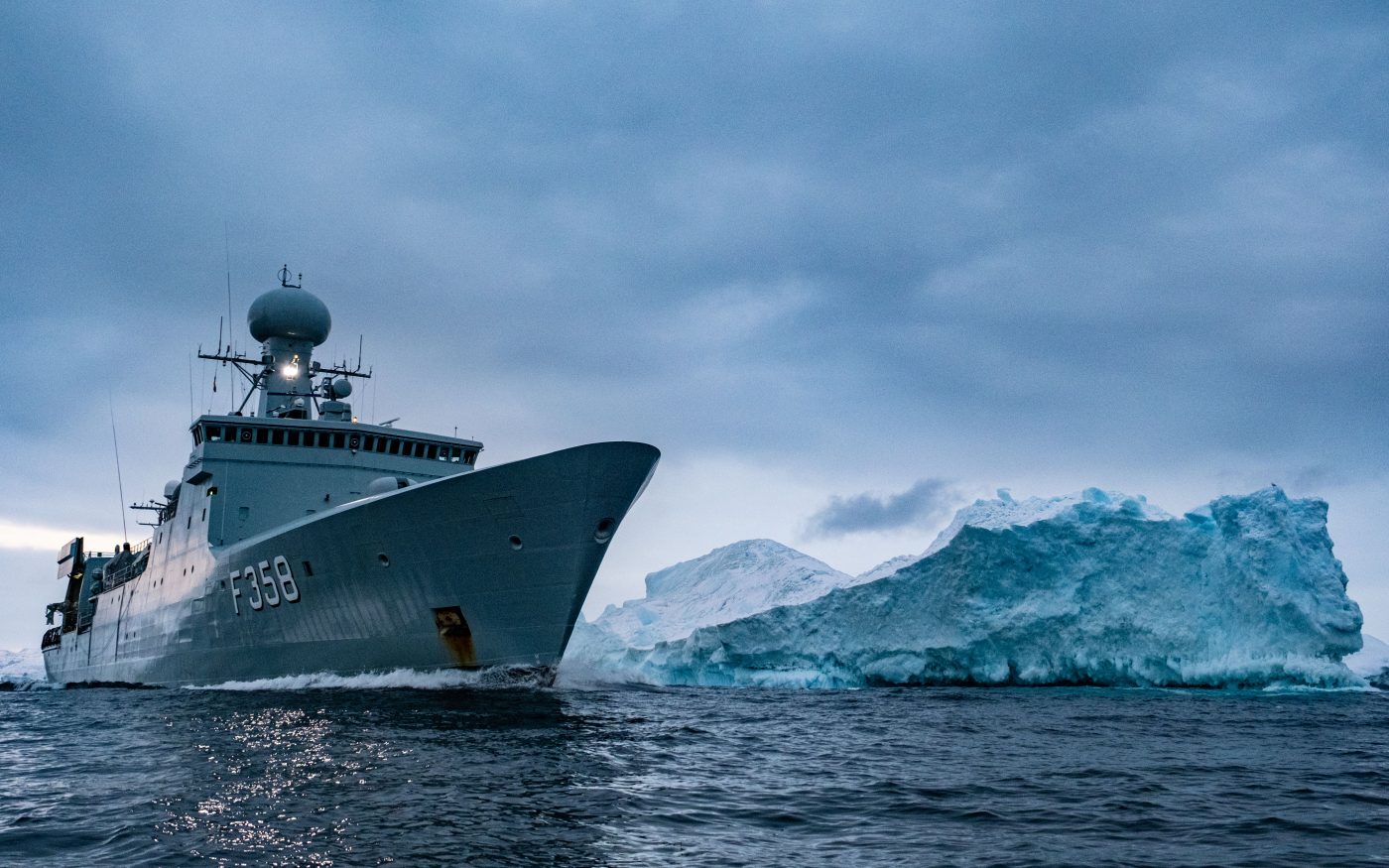
Russia’s invasion of Ukraine has left scars far beyond Europe including the High North
.


The damage done by Russia’s full-scale invasion of Ukraine is hard to quantify. To stalled grain shipments, world hunger, soaring energy prices, and rampant inflation must be added the baleful effects for one of the most remote and uninhabitable regions of the world, the Arctic. The war has essentially frozen the region’s preeminent governing body, the Arctic Council.

For decades, the Council has been a shining star of light-touch, collaborative governance. Driven by its mandate of sustainable development and environmental protection, its work has informed some of the most significant legally binding international agreements and treaties like the International Maritime Organization’s Polar Code and the Arctic section of the annual Intergovernmental Panel on Climate Change report.

This work ground to a halt in March 2022, as the other seven Arctic States — the United States, Canada, Denmark, Norway, Sweden, Finland, and Iceland — “paused” their cooperation with Russia. In a joint statement in June, the “Arctic 7” announced a “limited resumption of our work in the Arctic Council, in projects that do not involve the participation of the Russian Federation.” However, without data from Russia’s roughly 45% share of the Arctic, the Council’s working groups cannot possibly function at full capacity.

“One thing is clear — the Arctic Council will not return to ‘normal,’” says CEPA Fellow Mathieu Boulègue. Having forsaken its traditional “leave politics at the door” policy by excluding Russia, the Council must now evolve to compensate for today’s realities. The Arctic has changed significantly since the Council’s inception in 1996 and according to Boulègue, the traditional “High North — low tension” paradigm in the region has been replaced by a “high-octane” environment of geopolitical competition and crisis.

The climate crisis has arrived and is hitting the Arctic especially hard, Interest in new shipping lanes and potential natural resource extraction has sparked competition between non-Arctic states, and the rapid militarization of the region by both Russia and NATO has raised tensions.

The changing geopolitics of the Arctic are by no means sudden. Russia’s invasions of Georgia in 2008 and of Eastern Ukraine in 2014 were warning signs that the Council’s largest geographical member could no longer be trusted as a good-faith international partner. It took the full-scale invasion of Ukraine to break the veneer of Arctic exceptionalism. The Arctic 7 must now pursue a strategy that deters Russia but also avoids escalation, as any boiling over of tensions in the Arctic would have catastrophic global implications.

In a recent trip to Canada’s North, NATO Secretary General Jens Stoltenberg spoke on this very challenge, referring to Russia’s High North military build-up as a “strategic challenge for the Alliance” requiring NATO to increase its “presence and vigilance across the Alliance, including in the High North.”

The question now is how to preserve the Council’s importance in the fight against climate change, the sustainable development for indigenous communities in the circumpolar region, and the preservation of fragile Arctic ecosystems, while adapting it to today’s geopolitical realities. Unsurprisingly, opinions differ greatly over what the future of the Council should be.

Employing doom-filled phrases like “the Arctic Council is dead,” some Arctic experts have suggested that the events of 2022 indicate there’s no chance of a revival. In this view, the Arctic 7 (soon to be a NATO 7) should focus its attention on other mechanisms of High North governance and security like the Barents Euro-Arctic Council, the Arctic Security Forces Roundtable, and the Northern Group. This perspective eschews the importance of the political function of the Council to the Arctic’s roughly 4 million inhabitants, who are some of the most vulnerable to climate change and environmental degradation. It does not resolve the significance of the work done by the Council’s six active Working Groups in shaping global Arctic policies, nor does it address the importance of the Council as a forum for discussion on the future of the Arctic with non-Arctic states.

Another approach is to push for the full resumption of Arctic Council operations. According to Dr. Elizabeth Buchanan, an expert on the region: “Morality of state actions aside, the collective benefit of a functioning Arctic Council ought to be protected.” From this perspective, the benefits of the Arctic Council’s style of apolitical, collaborative governance are worth preserving. The challenge is to keep the process alive in the hope of a future, less aggressive Russia. It is of course impossible while the Kremlin occupies large swaths of Ukraine.

This could be achieved by the preservation of the Arctic Council’s scientific working groups and limited political functions like the Indigenous Peoples’ Secretariat which are indispensable in the minds of many Arctic experts, diplomats, and inhabitants.

The Arctic 7 must make some tough decisions. There are plausible answers for the years ahead where Russia continues to lock itself out of cooperative forums and indeed, there must be. The loss of a key forum for circumpolar dialogue could have catastrophic ramifications for the future of the Arctic and its inhabitants.

Benjamin Valentino Martin attends Science Po Paris and the London School of Economics and is currently an intern with the External Affairs team at the Center for European Policy Analysis (CEPA). 

Krista Viksnins is a Program Officer with the Transatlantic Defense and Security Program at the Center for European Policy Analysis (CEPA). Her interests include Nordic-Baltic security, cyberwarfare, the rule of law, and congressional relations. Krista received her J.D. from the University of St. Thomas School of Law and her B.A. in Political Science and Spanish from St. Olaf College. She is also a licensed attorney.   
Amnesty Decries Israel’s ‘Punitive’ Demolition of Palestinian Child Detainee’s Home

August 30, 2023


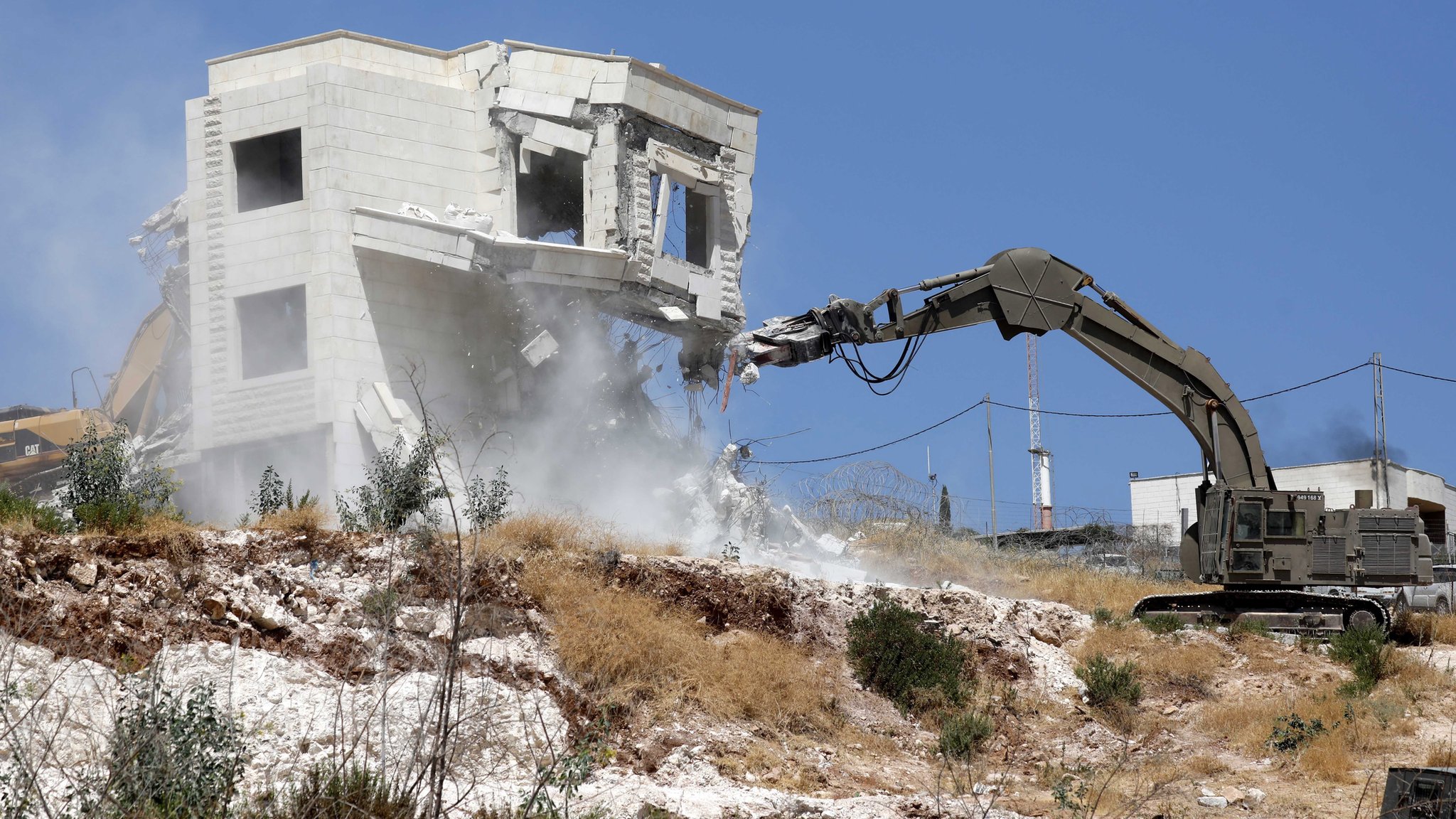
Amnesty International condemned on Wednesday, 30 August 2023 Israeli occupation “punitive” demolition of a Palestinian child detainee’s home.

In a report issued on Friday, Amnesty stated that the Israeli occupation Supreme Court had approved “the punitive demolition of the family home of a 13-year-old Palestinian boy who has spent the past six months in pre-trial detention on unfair charges”, stressing he is being punished for a fault he did not commit.

Read More: Israeli Occupation Deprives 100s of Palestinian Children of Joining New School Year

“In February 2023, Mohammed Zalabani stabbed an Israeli border police officer on a bus at a checkpoint in the Shu’afat refugee camp in occupied East Jerusalem. He was overpowered, but moments later a private Israeli security guard accidentally shot the officer dead.”

 The autopsy proved that the Israeli officer was not killed by the Palestinian child, who was charged with his murder, and is now awaiting trial in a juvenile facility, Amnesty added.

In response, the Israeli military approved “the punitive demolition of the third-floor apartment in Shu’afat where Mohammed Zalabani’s parents and three siblings – one of whom is just a toddler – live.”

Israeli human rights organization HaMoked filed a petition against the order, but the Supreme Court rejected it, Amnesty noted.

Demolishing the homes of Palestinians for allegedly carrying out attacks on Israelis is a long-held practice of the Israeli regime.

Thousands of Palestinians have lost their homes to demolitions in what human rights groups say is a policy by the Israeli occupation of collective punishment that may amount to war crimes.

“International humanitarian law, including the Hague Regulations of 1907 and the Fourth Geneva Convention, prohibits collective punishment, including deliberately harming the relatives of those accused of committing crimes, in all circumstances,” Human Rights Watch said in February.

“Courts around the world have treated collective punishment as a war crime,” the rights group said.

Since the beginning of 2023, Israeli occupation forces demolished 673 Palestinian homes, displacing 14,260 Palestinians including women and children, according to the United Nations Office for the Coordination of Humanitarian Affairs (OCHA).


Study finds that Black legislators who deploy rhetorical symbolism in discussions of race are persuasive

Study finds that Black legislators who deploy rhetorical symbolism is discussions of race are persuasive
U.S. Sen. Raphael Warnock, a Democrat from Georgia, is known for incorporating powerful
 symbolism in his speeches. Credit: Shutterstock

Black legislators talk more about race and civil rights than their white colleagues—and they often rely on powerful symbolism to connect with constituents and drive home their messages, according to new research from Washington University in St. Louis.

In an analysis of more than 790,654 U.S. House of Representatives floor speeches given between 1996 and 2014, researchers found that African Americans in Congress talk about  over 15 times more often than white representatives. Black legislators also were more than twice as likely to invoke issue-based symbolism when discussing civil rights.

What's more, both Black and white representatives who use symbolism in their speeches reap electoral rewards. Researchers found that symbolism is linked to an increase in Black voter turnout as well as more favorable evaluations of both Black and white members of Congress.

These findings are detailed in a forthcoming paper in the October issue of The Journal of Politics by Matthew Hayes, an associate professor of political science in Arts & Sciences at Washington University, and Bryce J. Dietrich, an associate professor of political science at Purdue University.

"Our research adds to the chorus of scholars who find that Black legislators engage in legislative behavior significantly different from their white counterparts when it comes to representing their Black constituents' interests," Hayes said.

Researchers were not able to access speech transcripts after 2014 because Capitol Words, a project of the Sunshine Foundation that had recorded all U.S. House floor speeches, was discontinued.

A powerful rhetorical tool

According to the authors, symbolism is important in politics because it helps speakers convey complex ideas in a way that is easier for listeners to understand and reinforces emotional attachments the audience has with the symbol.

Common examples of issue-based symbols include Martin Luther King Jr. or Rosa Parks and the Civil Rights Movement and the Stonewall uprising with LGBTQ rights. On the other side of the political aisle, critical race theory has become symbolic in recent years with conservatives' push back against social liberalism in education, Hayes said.

"Issue-based symbols are especially important to marginalized groups. When used appropriately, symbolic speech goes beyond empathy and conveys that the speaker is connected with the group and invested in their interests," Hayes said.

According to Hayes, representatives use floor speeches to build name recognition and garner media coverage. They're especially important for representatives seeking reelection and serve as a means to connect with constituents and potential voters back home. As such, Hayes said he expects politicians to engage in symbolic behavior even more often when talking with constituents on the campaign trail.

How symbolic speech influences voters' perception, behavior

In addition to analyzing 18 years of U.S. House floor speeches to understand how Black and white politicians' use of symbolic speech differs, Hayes and Dietrich also conducted an experiment to study how constituents respond to its use. Study participants received a purported screenshot from a floor speech broadcast along with the speech transcript. They randomly varied the symbolic content, the issue—civil rights or energy—and the race of the speaker. Of the 1,031 people who participated in the study, 50% self-identified as white and 50% self-identified as African American.

The data show that Black constituents report more positive evaluations of members of Congress, Black or white, when issue-based symbols are invoked.

So why don't more politicians use symbolic speech more often to address the Black community? One reason, the research found, could be because white politicians who misuse a symbol—such as Martin Luther King Jr. in a speech about the climate crisis—risk backlash from their Black constituents. However, the researchers found that Black representatives are not uniformly punished for misusing these symbols.

"There seems to be a degree of trust between voters and representatives that affords Black representatives the leeway to push the boundaries of what a symbol actually means," Hayes explained.

The researchers also studied whether symbolic  influences Black voters' behaviors. Hayes and Dietrich turned to data from the Cooperative Election Study, a national stratified sample survey of more than 50,000 people administered by YouGov.

Indeed, they found evidence that Black voter turnout is higher in districts where members of Congress regularly invoke issue-based symbols. They also found that Black respondents are significantly more likely to vote for a white member of Congress who appropriately used symbolism when talking about civil rights in the months before an election.

Finally, they found that white politicians are more likely to use symbolic references if a significant portion of their constituents are Black. Black representatives, however, appear to use symbolism at similarly high rates regardless of their district demographics.

From civil rights to Black Lives Matter

While the study's data ended in 2014, Hayes said he would expect the results to be even stronger today, given the movements that arose after the deaths of Michael Brown and George Floyd.

"All of our data were from before the peak of the Black Lives Matter movement, and mostly before the Shelby v. Holder decision that opened the door to states adding restrictions to voting access," Hayes said. "As a result, I actually think we would see Black members of Congress even more active in speaking about civil rights in the contemporary U.S. Congress.

"Taken together, our research demonstrates the power of symbolism as a rhetorical tool for representatives of marginalized groups to communicate to their constituents that their concerns can and will be given a voice," he said.

More information: Bryce J. Dietrich et al, Symbols of the Struggle: Descriptive Representation and Issue-Based Symbolism in US House Speeches, The Journal of Politics (2023). DOI: 10.1086/723966


Journal information: Journal of Politics 


Provided by Washington University in St. Louis The Voting Rights Act's impact on Black representation in local government


Debunking another myth surrounding low-income housing tax credits

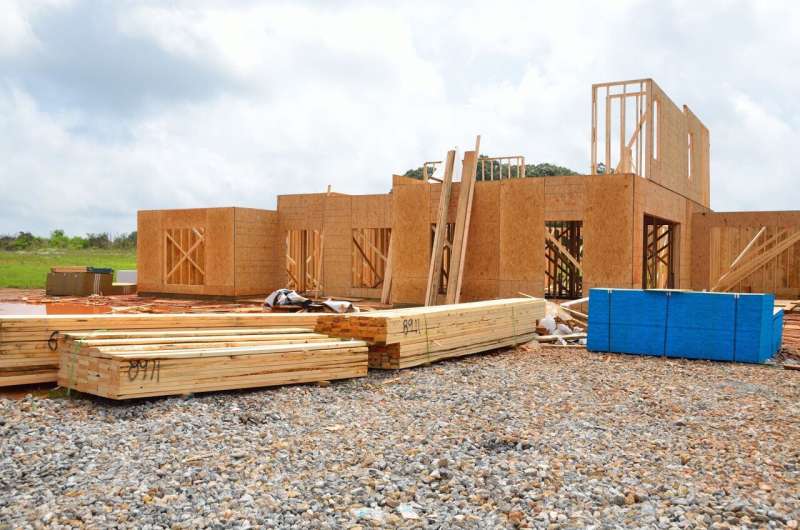
new construction
Credit: Pixabay/CC0 Public Domain

A new study from Georgia Tech's School of Public Policy debunks a common belief about the impact of affordable housing on neighborhood property values. The researchers, led by Assistant Professor Brian Y. An, found that developments funded by the Low-Income Housing Tax Credit (LIHTC) do not cause hidden harm to the value of some surrounding properties.

The study, titled "Factors Affecting Spillover Impacts of Low-Income Housing Tax Credit Developments: An Analysis of Los Angeles," was recently published in the U.S. Department of Housing and Urban Development (HUD) publication Cityscape. It contradicts a widely held assumption among critics of the subsidy that widely documented increases in nearby  accompanying LIHTC projects mask damage to other properties. The researchers found no such effect.

"This research is significant as it challenges the stigma often associated with affordable housing," said An. "This pernicious fear of property value decline has been a major source of opposition to affordable housing projects in many communities."

The federal tax credit is designed to encourage  to develop affordable housing for low-income households. To better understand its impacts, researchers consulted HUD data on LIHTC properties in Los Angeles, as well as proprietary data on home sales.

They analyzed property values in neighborhoods before and after the introduction of affordable housing developments and compared the changes to those in similar neighborhoods without low-income housing development. Their results showed no significant decrease in property values following the establishment of these developments, regardless of the characteristics of the neighborhood or LIHTC project.

In fact, the research confirms previous studies showing that developments supported by the tax credit broadly increase nearby property values. After completion of mixed developments including both market-rate and subsidized units, surrounding property values rose by 5.4% compared to comparable neighborhoods without tax-subsidized development. Fully subsidized developments boosted property values by 3.2%, the researchers found.

"From a policy perspective, the key takeaway is that LIHTC developments, in addition to creating and preserving badly needed  that is affordable to low-income households, consistently have positive effects on surrounding property values," the authors wrote in the paper. "A 'bad' place for such properties to be developed does not exist, nor does a 'bad' type of LIHTC development exist. Regardless of the development's size or neighborhood in which it is placed into service, a LIHTC property is likely to have a positive spillover effect on its neighborhood."

The authors noted that some of the conclusions could be specific to Los Angeles, which suffers from an extreme lack of . They also noted that rising property values can be beneficial for homeowners, but often can push rental rates out of reach for many existing residents. The researchers are examining these issues in a follow-up study.

More information: Factors Affecting Spillover Impacts of Low-Income Housing Tax Credit Developments: An Analysis of Los Angeles. www.huduser.gov/portal/periodi … 5num2/article13.html

Building subsidized low-income housing actually lifts property values in a neighborhood


Researcher studies how hate speech becomes acts of terror

Researcher studies how hate speech becomes acts of terror
The study was conducted by Charles Darwin University (CDU) Linguistics Lecturer 
Dr Awni Etaywe. Credit: Adnan Reza/Charles Darwin University

A new Charles Darwin University (CDU) study on the writings of two of the world's most infamous terrorists could help authorities to identify how topics, schemas and strategies of hate speech are used to incite violence.

The role of (de)bonding in the legitimation of  in extremists' public threatening communication, published in Systemic Functional Linguistics Theory and Application in Global Contexts: Papers from the First International Online Systemic Functional Linguistics Interest Group Conference, uses , which is the use of linguistic techniques to investigate crimes, to examine terrorist  used to mobilize support and legitimize harm.

The study by Charles Darwin University (CDU) Linguistics Lecturer Dr. Awni Etaywe analyzed inciting texts and messages by Osama bin Laden and Christchurch Mosque gunman Brenton Tarrant.

The analysis revealed both individuals used bonds—relationships between people or groups based on shared experiences and feelings— to construct a "We/They" division, in which the "We" is used to legitimize violence and delegitimize the opposing actions and beliefs of the "They."

Dr. Etaywe said both individuals used rhetorical strategies and in particular ethos and logos, the appeal to values and authority and the appeal to reason respectively, to persuade the actions and beliefs of the "They" as a threat to the land, resources and ideology of the "We."

"The two terrorists shared a similar style of persuasion, which can be linked to the purpose of their texts, as well as to their violent beliefs and agendas. Both terrorists wanted to bring about social and political change through violence.

"Each terrorist often viewed the world and relationships between different groups in black-and-white terms, and constantly criticized and saw other groups in a negative light while praising their own group and its actions.

"Establishing connections between shared beliefs and incited violence through ethical arguments serves to present the inciter as a more trustworthy person. It serves to position the addressed audiences to believe that the critique is coming from someone with strong ethics and competence who shares 'Our' values."

Dr. Etaywe said this breakdown of language supports the argument that language reveals a terrorist's ideological pattern of thought and behavior and could help authorities in terrorist threat assessments.

"This in-depth semantic analysis, which attends to shared bonds, critique and rhetorical strategies, offers forensic linguists a way to study extremist language that promotes hate and violence," Dr. Etaywe said.

"It helps us better understand the ideas behind encouraging hatred and violence and improves our ability to detect extremists' topics, schemas and linguistic methods leveraged in incitement."

More information: Awni Etaywe, The role of (de)bonding in the legitimation of violence in extremists' public threatening communication, Systemic Functional Linguistics Theory and Application in Global Contexts: Papers from the First International Online Systemic Functional Linguistics Interest Group Conference (2023). researchers.cdu.edu.au/en/publ … violence-in-extremis


Provided by Charles Darwin University Support for extremism among military veterans is similar to U.S. public

Bell Island mine harnesses deep groundwater for energy needs

Story by The Canadian Press •

Deep within Bell Island Mine No. 2 is a three- or four-foot-long water pump that is submerged in a pool of fresh groundwater.

The water flooded the shafts after mining halted and the owners stopped pumping efforts, creating a deep pool.

That water has become a source of heat, as well as air conditioning, for the museum more than 600 feet above it.

A second unit converts the water's energy into heat or air conditioning – whichever is needed.

Being so far below the ground on an island in Conception Bay, one may mistake the pool for seawater that has found its way into the island.

But it is precisely this freshwater that is a reusable resource for heating and cooling the museum.

Museum executive director Teresita McCarthy says that although the system requires electricity to run, it saves the museum thousands of dollars on its heat bill every year.

“We are saving exponentially by having this heat and AC source,” McCarthy says.

She's well aware of just how much — when it malfunctioned over the summer, there was a drastic increase in the museum's energy bill.

The heat pump has been unassumingly in place since the late 1990s, but you’d never know it was there if it wasn’t mentioned.