Wednesday, August 30, 2023

India's Chandrayaan-3 moon rover Pragyan snaps 1st photo of its lander near the lunar south pole
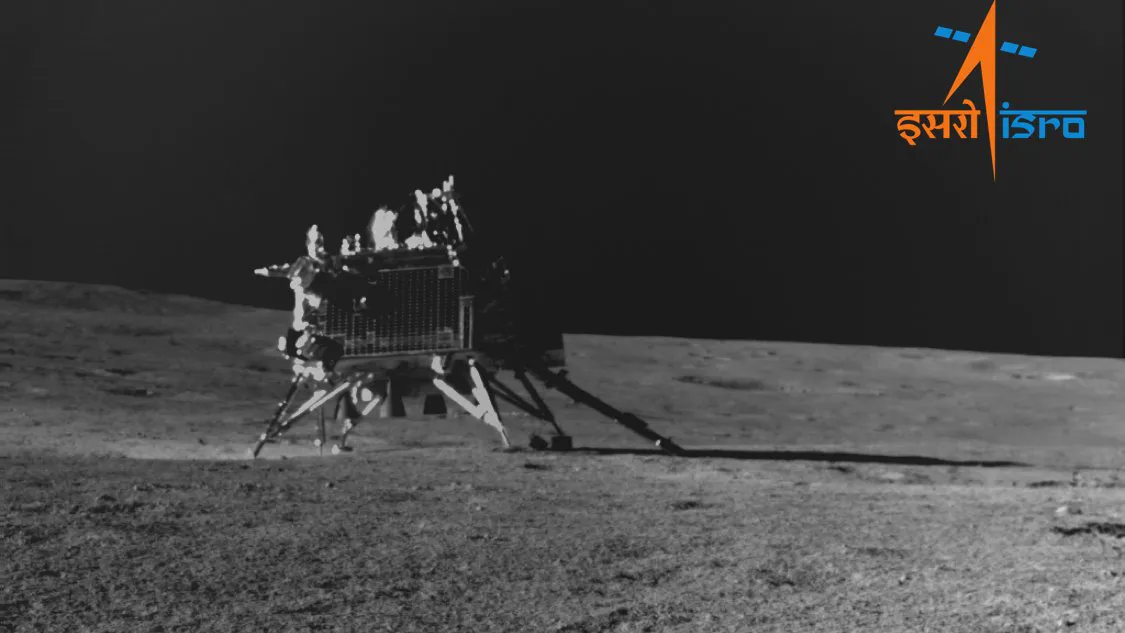
Chandrayaan 3 mission's Vikram lander photographed on the moon's surface by the Pragyan rover.
The first image of the Chandrayaan 3 mission's Vikram lunar lander on the moon's surface taken by the mission's Pragyan rover. (Image credit: ISRO)

India's Pragyan moon rover photographed its mothership, the Vikram lander, for the first time, as the two continue their ground-breaking exploration halfway through the Chandrayaan-3 mission. 

The Indian Space Research Organization (ISRO) released two black and white images of Vikram on Wednesday, Aug. 30, showing the Chandrayaan-3 mission's lander propped up on its legs against the dust-covered lunar surface. 


"Smile, please📸! Pragyan Rover clicked an image of Vikram Lander this morning," ISRO said in a post sharing the images on X, formerly Twitter. "The 'image of the mission' was taken by the Navigation Camera onboard the Rover (NavCam)."

According to the post, the image was taken on Wednesday (Aug. 30) at 7:35 a.m. 


Indian Standard Time (10:30 p.m. EDT on Tuesday, Aug. 29, or 0130 GMT on Wednesday). One of the images is annotated, showing two of Vikram's science sensors deployed on the moon's surface — the Chandra's Surface Thermophysical Experiment (ChaSTE) and the Instrument for Lunar Seismic Activity (ILSA). 

Related: Why Chandrayaan-3 landed near the moon's south pole — and why everyone else wants to get there too

The Chandrayaan-3 mission landed on the moon on Wednesday, Aug. 23. One day later, the Pragyan rover descended from the lander, and both spacecraft began their scientific explorations. In the week since the landing, the mission has sent home a series of images and videos of Pragyan roaming around on the lunar surface, leaving tracks in the lunar soil. The image released today is the first showing the lander through the rover's eyes. 

The mission's ChaSTE payload made headlines earlier this week when it took temperature measurements of the lunar surface, the first such measurements taken near the southern polar area by a sensor placed directly on the surface rather than from orbit. The instrument has a probe, which drilled 4 inches (10 centimeters) deep into the soft lunar regolith to understand how temperature of the soil changes with depth. 

The measurements revealed an incredibly steep thermal gradient in the surface layer: Just 3 inches (8 cm) below the surface, the soil is a freezing 14 degrees Fahrenheit (minus 10 degrees Celsius), while the surface is boiling at over 140 degrees F (60 degrees C). 

The moon's surface can get incredibly hot during the two-week lunar day because the body, unlike Earth, is not protected by a thick atmosphere that would absorb the sun's heat and balance out the differences between the times when sun rays reach the moon's surface and when they don't. 

The temperatures measured by Vikram are still rather mild. Previous measurements by spacecraft orbiting the moon showed that, especially around the moon's equator, temperatures can reach a hellish 260 degrees Fahrenheit (127 degrees Celsius) during the day and plummet to frigid minus 280 degrees Fahrenheit (-173 degrees Celsius) at night, according to NASA. For this reason, crewed missions to the moon have to take place during the lunar dawn when the moon warms up just enough for humans to be able to work but before it gets too hot. 

The first image of the Chandrayaan 3 mission's Vikram lunar lander on the moon's surface taken by the mission's Pragyan rover. (Image credit: ISRO)

In a separate announcement, ISRO said that Chandrayaan-3 found traces of sulfur in the lunar soil. Sulfur has previously been found in small quantities in samples brought to Earth by the 1970s Apollo missions, but scientists were unsure how common this mineral is on the moon. Scientists think that lunar sulfur comes from past tectonic activity and therefore learning more about its abundance could help them better understand the moon's past.

Chandrayaan-3 is now half-way through its planned lifetime as neither the rover nor the lander are expected to survive the upcoming two-week lunar night. The solar-powered vehicles' batteries are not powerful enough to keep their systems going when temperatures plummet and darkness covers the lunar surface.

The mission is India's first successful attempt to land on the moon and the world's first successful landing in the southern polar region. Previously, only the U.S., the former Soviet Union and China have managed to place their spacecraft on the lunar surface with a controlled descent. Earlier this year, a Japanese lander called Hakuto-R crashed when it hit a crater rim during its descent. Russia's Luna-25 mission met a similar fate just three days before Chandrayaan-3's success. India itself previously attempted a lunar landing with Chandrayaan-2 in 2019; although the Chandrayaan-2 lander crashed due to a software glitch, its orbiter still studies the moon from above.

The southern polar region that Chandrayaan-3 studies is of immense scientific interest as its permanently shadowed craters are believed to hold substantial amounts of frozen water. This water, scientists believe, could be extracted and used to make drinking water and oxygen for future human crews, which would bring down the cost of such missions. 

Astronomers are also eyeing the dark craters in the region. As temperatures inside these craters are very stable, scientists think they could provide an ideal environment for next-generation space telescopes that would enable rsearchers to peer deeper into the universe than is currently possible. 

Willie Walsh: Boss of airlines group says air traffic control firm NATS should pay for 'shocking' airport chaos

The head of the International Air Transport Association (IATA), which represents more than 300 of the world's carriers, said airlines should not have to foot the bill for the massive level of disruption this week.


By Daniel Binns, business reporter
Wednesday 30 August 2023 17:05, UK


The boss of airline industry body IATA has blasted National Air Traffic Services (NATS) for the recent chaos at Britain's airports - and demanded the company foots the bill for the disruption.

Willie Walsh, the head of the International Air Transport Association, which represents more than 300 of the world's carriers, also questioned whether the firm should continue to hold responsibility for handling the UK's flight traffic.

It comes after hundreds of flights were cancelled - and thousands of passengers left stranded - after a computer glitch on Bank Holiday Monday caused chaos at airports in the UK and abroad, with disruption expected to continue throughout the week.

NATS chief executive Martin Rolfe said "unreliable" flight data caused the disruption, although a full investigation into what went wrong is under way.

In a statement released on Tuesday, Mr Rolfe said: "I would like to apologise again for our technical failure yesterday.

"While we resolved the problem quickly, I am very conscious that the knock-on effects at such a busy time of year are still being felt by many people travelling in and out of the UK."

But Mr Walsh, the former chief executive of British Airways owner IAG, said carriers were facing a potential bill of up to £100m due to the failure.

In an interview with Sky News, he called on NATS to clearly explain what caused the problem and said questions needed to be asked about the resilience of air traffic control computer systems.

He said: "They [NATS] should be held to account and they should pay for the expenses that have occurred... airlines are a victim in this situation, they're not the cause of the problem."


Willie Walsh speaking to Sky News

Read more:
What happened and how a repeat can be avoided
Why you're not allowed off the plane if your flight is delayed
Am I entitled to compensation after air traffic control chaos?

Mr Walsh added: "At the moment, I have to say, my confidence in NATS has been badly shaken and until we can evaluate the cause, and the actions taken by NATS to address this, we're going to have doubts about whether they are the right party to continue to operate this system."

He is the latest air industry figure to speak out after Ryanair boss Michael O'Leary blasted the chaos as "not acceptable". Mr O'Leary said his airline was forced to cancel 250 flights on Monday and dozens more on Tuesday.

The Civil Aviation Authority has pledged to carry out an investigation, while NATS - a public private partnership part-owned by carriers - has insisted its staff had been working hard to ensure the fault never happened again.

But Mr Walsh told Sky News: "I'm surprised that Martin [Rolfe], the CEO at NATS, is so confident that the problem won't reoccur.

"We do need to see a lot more detail before we can be satisfied that we should have confidence in NATS going forward".

He added: "It's a shocking performance from NATS, it has led to massive disruption and clearly it's unacceptable that we get this level of disruption at a peak time of the year, - or indeed at any time of the year - and I think NATS have a lot of questions that need to be answered."

Former Catholic cardinal, age 93, is not competent to stand trial on teen sexual abuse charges


DEDHAM, Mass.
Steve Leblanc, The Associated Press

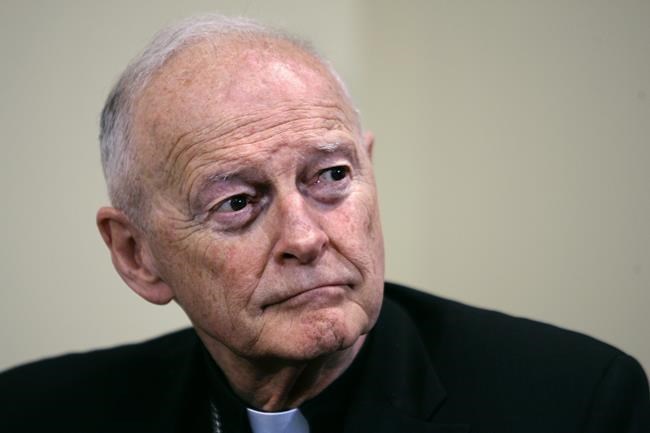
Former Washington Archbishop, Cardinal Theodore McCarrick listens during a news conference in Washington, May 16, 2006. A judge ruled Wednesday, Aug. 30, 2023, that McCarrick is not competent to stand trial and dismissed charges accusing the 93-year-old of sexually assaulting a teenage boy in Massachusetts decades ago. 
(AP Photo/J. Scott Applewhite, File)

DEDHAM, Mass. (AP) — A judge ruled Wednesday that a 93-year-old former Roman Catholic cardinal is not competent to stand trial after both prosecutors and defense attorneys determined he suffers from dementia, and dismissed charges he sexually assaulted a teenage boy in Massachusetts decades ago.

Theodore McCarrick, the ex-archbishop of Washington, D.C., was defrocked by Pope Francis in 2019 after an internal Vatican investigation determined he sexually molested adults as well as children. The case created a credibility crisis for the church, as the Vatican had reports from authoritative cardinals dating to 1999 that McCarrick’s behavior was problematic, yet he became an influential cardinal, kingmaker and emissary of the Holy See’s “soft diplomacy.”

During Wednesday's hearing, a psychologist hired by the prosecution said she found significant deficits in McCarrick’s memory during two interviews in June, and he was often unable to recall what they had discussed from one hour to the next. Dr. Kerry Nelligan said she administered a number of tests on two occasions in June. As with any form of dementia, she said there are no medications that could improve the symptoms.

“It’s not just that he currently has these deficits,” Nelligan said. “There is no way they are going to get better.”

Without being able to remember discussions, he could not participate with his lawyers in his defense, she said.

McCarrick appeared via a video link during the hearing. He was slightly slumped in his chair wearing a light green shirt and what appeared to be a grey sweater vest or sweater around his shoulders. He did not speak during the hearing.

The once-powerful American prelate faced charges that he abused the teenage boy at a wedding reception at Wellesley College in 1974.

McCarrick has maintained that he is innocent, and pleaded not guilty in September 2021. He was also charged in April with sexually assaulting an 18-year-old man in Wisconsin more than 45 years ago.

In February, McCarrick’s attorneys asked the court to dismiss the case, saying a professor of psychiatry and behavioral science at the Johns Hopkins University School of Medicine had examined him and concluded that he has dementia, likely Alzheimer’s disease.

At that time, lawyers said McCarrick had a “limited understanding” of the criminal proceedings against him.

McCarrick, who lives in Dittmer, Missouri, was charged with three counts of indecent assault and battery on a person over 14. He was not exempt from facing charges for abuse allegations that date back decades because the statute of limitations clock was paused once he left Massachusetts.

Mitchell Garabedian, a well-known lawyer for clergy sexual abuse victims who is representing the man accusing McCarrick, said in June that his client was discouraged by the prosecution expert’s findings.

“In spite of the criminal court’s decision today,” Garabedian said following Wednesday's hearing, “many clergy sexual abuse victims feel as though former Cardinal Theodore McCarrick is and will always be the permanent personification of evil within the Catholic Church.”

The Associated Press generally does not identify people who report sexual assault unless they agree to be named publicly, which the victim in this case has not done.

The accuser told authorities during a 2021 interview that McCarrick was close to the man’s family when he was growing up. Prosecutors say McCarrick would attend family gatherings and travel on vacations with them and that the victim referred to the priest as “Uncle Ted.”

Prosecutors say McCarrick abused him over several years including when the boy, who was then 16, was at his brother’s wedding reception at Wellesley College. The man said McCarrick also sexually assaulted him in a coat room after they returned to the reception.

Prosecutors say McCarrick told the boy to say the “Hail Mary” and “Our Father” prayers before leaving the room.

Steve Leblanc, The Associated Press


ChatGPT-maker OpenAI accused of string of data protection breaches in GDPR complaint filed by privacy researcher

Natasha Lomas@riptari 
August 30, 2023

Image Credits: Leon Neal / Getty Images

Questions about ChatGPT-maker OpenAI’s ability to comply with European privacy rules are in the frame again after a detailed complaint was filed with the Polish data protection authority yesterday.

The complaint, which TechCrunch has reviewed, alleges the US based AI giant is in breach of the bloc’s General Data Protection Regulation (GDPR) — across a sweep of dimensions: Lawful basis, transparency, fairness, data access rights, and privacy by design are all areas it argues OpenAI is infringing EU privacy rules. (Aka, Articles 5(1)(a), 12, 15, 16 and 25(1) of the GDPR).

Indeed, the complaint frames the novel generative AI technology and its maker’s approach to developing and operating the viral tool as essentially a systematic breach of the pan-EU regime. Another suggestion, therefore, is that OpenAI has overlooked another requirement in the GDPR to undertake prior consultation with regulators (Article 36) — since, if it had conducted a proactive assessment which identified high risks to people’s rights unless mitigating measures were applied it should have given pause for thought. Yet OpenAI apparently rolled ahead and launched ChatGPT in Europe without engaging with local regulators which could have ensured it avoided falling foul of the bloc’s privacy rulebook.

This is not the first GDPR concern lobbed in ChatGPT’s direction, of course. Italy’s privacy watchdog, the Garante, generated headlines earlier this year after it ordered OpenAI to stop processing data locally — directing the US-based company to tackle a preliminary list of problems it identified in areas including lawful basis, information disclosures, user controls and child safety.

ChatGPT was able to resume offering a service in Italy fairly quickly after it tweaked its presentation. But the Italian DPA’s investigation continues and it remains to be seen what compliance conclusions may emerge once that assessment has been completed. Other EU DPAs are also probing ChatGPT. While, in April, the bloc’s data protection authorities formed a task force to consider at how they should approach regulating the fast-developing tech.

That effort is ongoing — and it’s by no means certain a harmonized approach to oversight of ChatGPT and other AI chatbots will emerge — but, whatever happens there, the GDPR is still law and still in force. So anyone in the EU who feels their rights are being trampled by Big AI grabbing their data for training models that may spit out falsities about them can raise concerns with their local DPA and press for regulators to investigate, as is happening here.

OpenAI is not main established in any EU Member State for the purpose of GDPR oversight, which means it remains exposed to regulatory risk in this area across the bloc. So could face outreach from DPAs acting on complaints from individuals anywhere in the bloc.

Confirmed violations of the GDPR, meanwhile, can attract penalties as high as 4% of global annual turnover. DPAs’ corrective orders may also end up reworking how technologies function if they wish to continue operating inside the bloc.

Complaint of unlawful processing for AI training

The 17-page complaint filed yesterday with the Polish DPA is the work of Lukasz Olejnik, a security and privacy researcher, who is being represented for the complaint by Warsaw-based law firm, GP Partners.

Olejnik tells TechCrunch he became concerned after he used ChatGPT to generate a biography of himself and found it produced a text that contained some errors. He sought to contact OpenAI, towards the end of March, to point out the errors and ask for the inaccurate information about him to be corrected. He also asked it to provide him with a bundle of information that the GDPR empowers individuals to get from entities processing their data when the information has been obtained from somewhere other than themselves, as was the case here.

Per the complaint, a series of email exchanges took place between Olejnik and OpenAI between March and June of this year. And while OpenAI responded by providing some information in response to the Subject Access Request (SAR) Olejnik’s complaint argues it failed to produce all the information it must under the law — including, notably, omitting information about its processing of personal data for AI model training.

Under the GDPR, for personal data processing to be lawful the data controller needs a valid legal basis — which must be transparently communicated. So obfuscation is not a good compliance strategy. Also indeed because the regulation attaches the principle of fairness to the lawfulness of processing, which means anyone playing tricks to try to conceal the true extent of personal data processing is going to fall foul of the law too.

Olejnik’s complaint therefore asserts OpenAI breached Article 5(1)(a). Or, more simply, he argues the company processed his data “unlawfully, unfairly, and in a non-transparent manner”. “From the facts of the case, it appears that OpenAI systemically ignores the provisions of the GDPR regarding the processing of data for the purposes of training models within ChatGPT, a result of which, among other things, was that Mr. Łukasz Olejnik was not properly informed about the processing of his personal data,” the complaint notes.

It also accuses OpenAI of acting in an “untrustworthy, dishonest, and perhaps unconscientious manner” by failing to be able to comprehensively detail how it has processed people’s data.

“Although OpenAI indicates that the data used to train the [AI] models includes personal data, OpenAI does not actually provide any information about the processing operations involving this data. OpenAI thus violates a fundamental element of the right under Article 15 GDPR, i.e., the obligation to confirm that personal data is being processed,” runs another relevant chunk of the complaint (which has been translated into English from Polish using machine translation).

“Notably, OpenAI did not include the processing of personal data in connection with model training in the information on categories of personal data or categories of data recipients. Providing a copy of the data also did not include personal data processed for training language models. As it seems, the fact of processing personal data for model training OpenAI hides or at least camouflages intentionally. This is also apparent from OpenAI’s Privacy Policy, which omits in the substantive part the processes involved in processing personal data for training language models.

“OpenAI reports that it does not use so-called ‘training’ data to identify individuals or remember their information, and is working to reduce the amount of personal data processed in the ‘training’ dataset. Although these mechanisms positively affect the level of protection of personal data and comply with the principle of minimization (Article 5(1)(c) of the GDPR), their application does not change the fact that ‘training’ data are processed and include personal data. The provisions of GDPR apply to the processing operations of such data, including the obligation to grant the data subject access to the data and provide the information indicated in Article 15(1) of GDPR.”

It’s a matter of record that OpenAI did not ask individuals whose personal data it may have processed as training data when it was developing its AI chatbot for their permission to use their information for that — nor did it inform the likely millions (or even billions) of people whose information it ingested in order to develop a commercial generative AI tool — which likely explains its lack of transparency when asked to produce information about this aspect of its data processing operations via Olejnik’s SAR.

However, as noted above, the GDPR requires not only a lawful basis for processing people’s data but transparency and fairness vis-a-vis any such operations. So OpenAI appears to have got itself into a triple bind here. Although it remains to be seen how EU regulators will act on such complaints as they weigh how to respond to generative AI chatbots.

Right to correct personal data ignored

Another aspect of Olejnik’s beef with OpenAI fixes on errors ChatGPT generated about him when asked to produce a biography — and its apparent inability to rectify these inaccuracies when asked. Instead of correcting falsehoods its tool generated about him, he says OpenAI initially responded to his ask by blocking requests made to ChatGPT that referenced him — something he had not asked for.

Subsequently it told him it could not correct the errors. Yet the GDPR provides individuals with a right to rectification of their personal data.

“In the case of OpenAI and the processing of data to train models, this principle [rectification of personal data] is completely ignored in practice,” the complaint asserts. “This is evidenced by OpenAI’s response to Mr. Łukasz Olejnik’s request, according to which OpenAI was unable to correct the processed data. OpenAI’s systemic inability to correct data is assumed by OpenAI as part of ChatGPT’s operating model.”

Discussing disclosures related to this aspect of its operation contained in OpenAI’s privacy policy, the complaint goes on to argue: “Given the general and vague description of ChatGPT’s data validity mechanisms, it is highly likely that the inability to correct data is a systemic phenomenon in OpenAI’s data processing, and not just in limited cases.”

It further suggests there may be “reasonable doubts about the overall compliance with data protection regulations of a tool, an essential element of which is the systemic inaccuracy of the processed data”, adding: “These doubts are reinforced by the scale of ChatGPT’s processed data and the scale of potential recipients of personal data, which affect the risks to rights and freedoms associated with personal data inaccuracy.”

The complaint goes on to argue OpenAI “should develop and implement a data rectification mechanism based on an appropriate filter/module that would verify and correct content generated by ChatGPT (e.g., based on a database of corrected results)”, suggesting: “It is reasonable in the context of the scope of the obligation to ensure data accuracy to expect OpenAI to correct at least data reported or flagged by users as incorrect.”

“We believe that it is possible for OpenAI to develop adequate and GDPR-compliant mechanisms for correcting inaccurate data (it is already possible to block the generation of certain content as a result of a blockade imposed by OpenAI),” it adds. “However, if, in OpenAI’s opinion, it is not possible to develop such mechanisms — it would be necessary to consult the issue with the relevant supervisory authorities, including, for example, through the prior consultation procedure described in Article 36 of GDPR.”
Data protection incompatibility by design?

The complaint also seeks to spotlight what it views as a total violation of the GDPR’s principle of data protection by design and default.

“The way the ChatGPT tool was designed, taking into account also the violations described [earlier] in the complaint (in particular, the inability to exercise the right to rectify data, the omission of data processing operations for training GPT models) — contradicts all the indicated assumptions of the principle of data protection by design,” it argues. “In practice, in the case of data processing by OpenAI, there is testing of the ChatGPT tool using personal data, not in the design phase, but in the production environment (i.e., after the tool is made available to users).

“OpenAI seems to accept that the ChatGPT tool model that has been developed is simply incompatible with the provisions of GDPR, and it agrees to this state of affairs. This shows a complete disregard for the goals behind the principle of data protection by design.”

We’ve asked OpenAI to respond to the complaint’s claims that its AI chatbot violates the GDPR and also to confirm whether or not it produced a data protection impact assessment prior to launching ChatGPT.

Additionally, we’ve asked it to explain why it did not seek prior consultation with EU regulators to get help on how to develop such a high risk technology in a way that could have mitigated GDPR risks. At the time of writing it had not responded to our questions but we’ll update this report if we get a response.

We’ve also reached out to the Polish DPA about the complaint. However EU DPAs don’t often have much to say on open complaints.

Discussing their expectations for the complaint, Olejnik’s lawyer, Maciej Gawronski, suggests the length of time it could take the Polish regulator, the UODO, to investigate could be “anything from six months to two years”.

“Provided UODO confirms violation of the GDPR we would expect UODO to primarily order OpenAI to exercise Mr Olejnik’s rights,” he told us. “In addition, as we argue that some of OpenAI’s violations may be systemic, we hope the DPA will investigate the processing thoroughly and, if justified, order OpenAI to act in compliance with the GDPR so that data processing operations within ChatGPT are lawful in a more universal perspective.”

Gawronski also takes the view that OpenAI has failed to apply Article 36 of the GDPR — since it did not engage in a process of prior consultation with the UODO or any other European DPA before launching ChatGPT — adding: “We would expect UODO to force OpenAI into engaging into a similar process now.”

In another step, the complaint urges the Polish regulator to require OpenAI to submit a data protection impact assessment (DPIA) with details of its processing of personal data for purposes related to ChatGPT — describing this document, which is a standard feature of data protection compliance in Europe, as an “important element” for assessing whether the tool is compliant with the GDPR.

For his part, Olejnik says his hope in bringing the complaint against OpenAI and ChatGPT is that he will be able to properly exercise all the GDPR rights he has found himself unable to so far.

“During this journey I felt kind of like Josef K, in kafka’s The Trial,” he told us. “Fortunately, in Europe there’s a system in place to avoid such a feeling. I trust that the GDPR process does work!”
‘We don’t need heroes who marched on Moscow’: Kremlin and FSB decided to
bury Yevgeny Prigozhin secretly, without military honors

11:05 am, August 30, 2023
Source: Meduza

The decision to bury Wagner Group founder Yevgeny Prigozhin secretly, without either military honors or publicity, was made by Russia’s presidential administration and the state security service.

Citing two high-ranking Russian officials who spoke on condition of anonymity, The Moscow Times reported that several meetings took place between the Kremlin officials and the FSB to discuss the funeral protocol.

Vladimir Putin’s First Deputy Chief of Staff Sergey Kiriyenko was a key player in determining how to handle the sensitive event.

According to one of the insiders to the decision-making process, the task was to make sure that “when the casket with Prigozhin’s body was being lowered into the grave, there wouldn’t be any mass gathering of residents, mercenaries, and sympathizers.” Another aim was to prevent any live-streaming on social media or photos being taken, “starting from the entrance to the cemetery.”

Another speaker explained the prohibition on publicity in terms of Putin’s grudge for the insurrection attempted by Prigozhin and Wagner Group earlier this summer.

“With his demand for justice and his sharp, often truthful remarks, Prigozhin elicited an emotion from the Russians, not as a formal Hero of Russia but as a people’s hero. And do we need heroes who marched on Moscow?” asked one of the officials, rhetorically. “No, we don’t.”

As a result of these deliberations, the authorities resolved to create a “smoke screen” around the proceedings, to minimize publicity and excitement about Prigozhin’s last farewell, and even to keep its location secret until after the fact.

HOW THE AUTHORITIES MANAGED YEVGENY PRIGOZHIN’S FUNERAL

A 'special funeral operation' How St. Petersburg officials, police, and Wagner mercenaries kept the media's eyes off Yevgeny Prigozhin's funeral
19 hours ago


Kremlin says ‘deliberate wrongdoing’ is a possible cause of the plane crash that killed Prigozhin


By —Associated Press
 Aug 30, 2023

MOSCOW (AP) — “Deliberate wrongdoing” is among the possible causes of the plane crash that killed Russian mercenary leader Yevgeny Prigozhin last week, the Kremlin’s spokesperson said Wednesday.

Speaking to reporters during his daily conference call, presidential press secretary Dmitry Peskov said that “different versions” of what happened exist and “are being considered” by Russian investigators, including, “let’s put this way, deliberate wrongdoing.”

READ MORE: Private memorial service has been held for Wagner chief Yevgeny Prigozhin

A business jet carrying Prigozhin, the founder and leader of the private military force Wagner, and his top lieutenants crashed halfway between Moscow and St. Petersburg a week ago, killing all seven passengers and three crew members.

The Interstate Aviation Committee, the Moscow-headquartered body that oversees civil aviation in most former Soviet republics, said in an online statement Wednesday that it was not currently investigating the crash, although the agency has an accident investigation division.

Peskov said there can’t be an international investigation into why the plane plummeted from the sky and he urged reporters to wait for the Russian Investigative Committee to complete its review. The committee said last week that it opened a criminal case to look into possible flight safety violations, a standard procedure in Russia when there is no immediate reason to suspect foul play.

The crash occurred exactly two months after Prigozhin mounted a short-lived armed rebellion against Russia’s military leadership, posing the biggest challenge to President Vladimir Putin’s authority in his 23-year rule. The Kremlin has denied involvement in the crash.

Prigozhin, 62, was buried in St. Petersburg, his hometown, in a private ceremony that was shrouded in secrecy until Tuesday evening, when his spokespeople revealed the location of his grave.

Western officials and analysts expect the private Wagner army to continue operating, particularly in the Sahel region of Africa, where Russian mercenaries have provided security against extremist organizations like al-Qaida and the Islamic State group.

“I am sure they’ll find a replacement” for Prigozhin, European Union foreign policy chief Josep Borrell said Wednesday after chairing talks among EU defense ministers.

WATCH: A look at the man running mercenary Wagner Group in Russia’s war against Ukraine

“Wagner will continue to operate in the service of Putin in Africa, doing what they do, which is not contributing to peace in the Sahel or the defense of the rights of Saharan Africans,” Borrell said.
Africa is vitally important to Russia — economically and politically.

This summer, Wagner helped secure a national referendum in the Central African Republic that cemented presidential power; it is a key partner for Mali’s army in battling armed rebels; and it contacted the military junta in Niger that wants its services following a coup.

Expanding ties and undercutting Western influence in Africa is a top priority as the Kremlin seeks new allies during its war in Ukraine, where Wagner fighters helped Russia win a long and bloody battle for the city of Bakhmut.

Africa’s 54 nations are the largest voting bloc at the U.N., and Moscow has actively worked to rally their support for its invasion.


US Taiwan Policy Fails: Congress Moves Toward War With China – OpEd

August 30, 2023 

By William Dunkerley


War with China is no trivial matter. It will be far more dangerous to Americans than our present involvement in the Ukraine-Russia war.

This war will hit home squarely. Since imports from China greatly benefit us, the war will directly impact our lifestyles. That’s in addition to the threat to our security from Chinese military actions against us.

What does this all add up to? Right now we are being put in very great danger vis-a-vis China. It is rooted in a dysfunctional policy on Taiwan the U.S. has kept since the end of World War 2.

That policy is finally collapsing in plain sight. And America’s reaction? Congress is moving to tempt a catastrophic war with China.

What a sorry situation this is. Our constitution was established to, among other things, “promote the general welfare.” Unfortunately Congress is now taking steps that will endanger our welfare over Taiwan.

So first let me tell you about the failed policy. Then we can look at the dangerous course Congress is contemplating.

Since the end of WW2 the U.S. has maintained a view toward Taiwan that doesn’t match the facts. It involves the sovereignty of the island. We’ve allowed Taiwan’s status to be grossly misrepresented to the public. Frankly, we just ducked the issue in the face of false foreign claims.

The sovereignty details are way too complex to cover here. Currently I’m involved in a detailed study that will set the record straight. When completed it will be published under the title “Who Really Owns Taiwan.” It will present documented evidence that will make present claims indefensible.

After WW2 we got away with ignoring this sovereignty issue entirely at first. There wasn’t any apparent consequence.

That all changed when the Communists took over mainland China. They began asserting their claim of sovereignty over Taiwan.

There was no factual basis for the Communists’ claim. We didn’t challenge it, however — not in any real sense.

In my view our policy was, in effect, to “let sleeping dogs lie.” In U.S. governmental circles this was tagged with the euphemism, “strategic ambiguity.”

As it’s turned out this amounts to “strategic buffoonery,” if you ask me. Here’s why. If we had confronted the People’s Republic of China on her specious claim of sovereignty from the start we would have had a significant advantage. We would have been confronting a relatively weak and fledging nation. We would have been in a superior bargaining position.

Now the PRC is a strong world power. Its economy rivals ours. It possesses nuclear weaponry. And now it is hinting at a military invasion of Taiwan to remove the ambiguity about sovereignty.

“Strategic ambiguity” caused us to miss a practical opportunity to have reasonably settled the matter decades ago.

Incredibly, this hasn’t dawned on R. Nicholas Burns, our ambassador to China. According to The Diplomat, Burns observed during his confirmation hearings that strategic ambiguity is “time tested” and “the smartest and most effective way” to prevent a war across the Taiwan Strait.

Strategic buffoonery? That’s now an understatement.

When asked if U.S. forces would defend Taiwan if it’s invaded, President Biden answered “yes,” according to Reuters.

So how is our Congress handling this matter? A sane approach would be to support closed-door negotiations with the PRC to settle it. This will require give and take on both sides. Our negotiators would need to have something to give to the PRC in return for PRC’s compromise. And there would have to be a way to allow the PRC to save face. The U.S. would have to compromise and save face, too.

These would not be easy negotiations. But the alternative of war with China would seem to demand no less than a negotiated, peaceful solution.

So how is Congress presently dealing with this challenge? It is choosing to tempt war with China. This sounds like more buffoonery to me.

HR.554 is a bill under consideration in the House of Representatives. It is called the “Taiwan Conflict Deterrence Act of 2023.” It is described as, “A bill to deter Chinese aggression towards Taiwan by requiring the Secretary of the Treasury to publish a report on financial institutions and accounts connected to senior officials of the People’s Republic of China, to restrict financial services for certain immediate family of such officials, and for other purposes; to the Committee on Financial Services.”

To me this seems something like our approach to Russia since conflict first broke out in Ukraine in 2014. Sanctions, sanctions, sanctions. Now we see a bloody, horrific war going on non-stop over there. Certainly Russia is to blame for its decision to invade. But our policy of sanctions against Russia did nothing to avert that catastrophe or to curtail it. At worst it could have been an accelerant.

Why try this same fool’s game with China over Taiwan?

There also is S.1074 going on in the Senate. It is a bill “To require a strategy for countering the People’s Republic of China.” Among other things it seeks a plan “that describes a comprehensive sanctions strategy to advise policymakers on policies the United States and allies and partners of the United States could adopt with respect to the People’s Republic of China in response to any coercive action, including an invasion, by the People’s Republic of China that infringes upon the territorial sovereignty of Taiwan by preventing access to international waterways, airspace, or telecommunications networks.”

What’s more it wants to restrict China’s military of access to “oil, natural gas, munitions, and other supplies needed to conduct military operations against Taiwan,” and to “diminish the capacity of the industrial base of the People’s Republic of China to manufacture and deliver defense articles to replace those lost in operations of the People’s Liberation Army against Taiwan.”

The bill also wants to “identify industries, sectors, or goods and services with respect to which the United States, working with allies and partners of the United States, can take coordinated action through sanctions or other economic tools that will have a significant negative impact on the economy of the People’s Republic of China.”

If we’re planning all that, and planning it in public, isn’t China going to see it as a threat? How will she interpret it? What steps toward war will she initiate in response? And in turn, how will we interpret those steps taken by China.

Either we’re initiating a spiral of provocation or China initiated it with her own rhetoric. Frankly it doesn’t matter now who was the initiator. It still carries a great risk of spinning out of control as tensions rise.

And to make matters worse, aren’t we repeating a strategy that didn’t produce a desirable result with Ukraine? This all sounds absolutely crazy to me.

It’s not unwise to be contemplating what to do if China invades Taiwan. But to air our plans in public sounds foolish. To me it seems such plans should be kept as a hip-pocket document, only to be pulled out into the open if the need arises. But even so, these specific publically-disclosed plans seem nonsensical to me.

With Russia we’re still pursuing our ineffectual sanctions policies, and still getting nowhere. Now Congress wants to bring that same utter stupidity to bear on China.

Who is pushing those reckless and pointless actions in our Congress?


The Senate bill is sponsored by Marco Rubio, the Republican senator from Florida. It is co-sponsored by Gary C. Peters, the Democratic senator from Michigan.

Are they nuts? I think so and intend to let them know it. If you think similarly, you might do the same too.

On the House side the dangerous bill is sponsored by J. French Hill, a representative from Arkansas’ 2nd district. It has eight co-sponsors. They are:

Brad Sherman [D-CA-32]
Michael Lawler [R-NY-17]
Susie Lee [D-NV-3]
Patrick Ryan [D-NY-18]
Chris Pappas [D-NH-1]
Young Kim [R-CA-40]
Monica De La Cruz [R-TX-15]
Ann Wagner [R-MO-2]

Who are those senators and representatives kidding? We’re not gullible enough to fall for their dangerous approach. Are we?

Tell them all to stop playing paper war games at the risk of our public welfare, and to get serious: start thinking about serious negotiations. They won’t be easy. But the result will be far preferable to the devastation, and the loss of lives, and the global instability that unavoidably would come from a war with China.

But let’s keep the negotiations out of the hands of R. Nicholas Burns, our ambassador to China!


William Dunkerley is a media business analyst, international development and change strategist, and author of numerous books, monographs, and articles. He has been editor and publisher of media industry information, and has additional expertise in post-communist media business and content.


French minister's shocking remarks: Why women reporters aren't ‘topless’

Aug 30, 2023 10:44 PM IST

The leader of the opposition Socialists, Olivier Faure called Eric Dupond-Moretti's

 words "inappropriate remarks by an inappropriate minister".

French journalist groups condemned "sexist" remarks directed at women reporters by country's justice minister Eric Dupond-Moretti who made the comments after inspecting a courthouse in the central town of Aurillac. He said that it had been damaged during a protest against the prosecution of a woman for "sexual exhibitionism" after she walked topless in the street. During the demonstration, many bared their chests like the arrested woman who told police that she had removed her top because "it's super hot out" and "half the men" in the street had done the same.

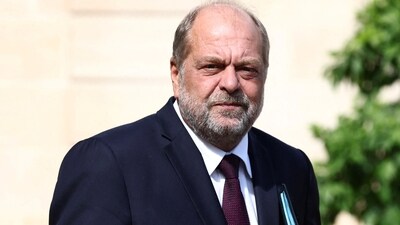
French justice minister Eric Dupond-Moretti leaves following the weekly cabinet meeting at the Elysee Palace in Paris, France.(Reuters)
French justice minister Eric Dupond-Moretti leaves following the weekly cabinet meeting at the Elysee Palace in Paris, France.(Reuter

The Societe des Journalistes (SDJ) claimed that Eric Dupond-Moretti told journalists that “I have noticed that none of the women journalists asking questions today were standing bare-breasted in front of me. Maybe it wasn't hot enough?” The SDJ said that he made the "inappropriate" remarks after a press briefing to several reporters, two of whom were women. The SDJ called the remarks "sexist" and "unacceptable" even "if they had been made jokingly".

Read more: Mahsa Amini's lawyer put on trial in Iran for speaking to foreign media

There was "no basis" to the complaints and that the minister was "completely" devoted to “the fight against all forms of sexual and sexist violence”, an official speaking for Eric Dupond-Moretti said. The minister's remarks had been taken out of context and that he had simply wanted to point out that women wearing tops were “proof that respect for the law is the norm”, he clarified.

The leader of the opposition Socialists, Olivier Faure called Eric Dupond-Moretti's words "inappropriate remarks by an inappropriate minister". The minister "should manage his libido elsewhere than in government", Olivier Faure said.

Eric Dupond-Moretti has earlier also made objectionable remarks. In March, he was scolded by France prime minister Elisabeth Borne for repeatedly using an offensive hand gesture known as the “bras d'honneur” towards an opposition lawmaker in parliament.


TEHRAN, Aug. 30 (MNA) – "We advise the American troops to return home and the American authorities to leave the region to the people of the region," the Iranian foreign minister said in Damascus on Wednesday.

Iran's Foreign Minister Hossein Amir-Abdollahian, who arrived in Damascus at the head of a delegation on Wednesday, attended a joint press conference with Syrian Foreign Minister Faisal al-Makdad held after their meeting.

"Today we held good talks with Al-Mekdad about bilateral, regional and international issues," Amir-Abdollahian said.

The Iranian foreign minister continued, "I would like to strongly condemn the brutal attacks by the fake Israeli regime on Aleppo airport and other civilian areas in Syria. In the region, no acts of aggression and crimes by the Zionist regime have gone unanswered and nor will it in the future."

"We have agreed that the Iran-Syria Joint High Commission will be held in Tehran in the near future and chaired by the First Vice President of Iran and the Prime Minister of Syria. Strengthening trade relations and economic cooperation as much as possible, especially between businessmen and tradesmen of the two countries, was of our serious attention," he added.

He expressed happiness the resumption of the pilgrimage and tourism trips of the people of Iran to Syria.

"We talked about the activities of terrorist groups and the Americans' attempts to organize terrorists and to continue their occupying presence in Syria under the guise of fighting ISIL," the Iranian minister also said.

In response to a question about the attempts by American troops to block the border between Syria and Iraq, the head of the Iranian diplomatic apparatus said, "Today, Iraq's borders with Syria and neighboring countries are friendship borders. America should stop bothering the people of the region."

"We advise the American soldiers to return home and we advise the American authorities to leave the region to the people of the region. No one is able to block the historical transportation routes in the region. These actions do not match with the claim on human rights on the part of Westerners and Americans," he noted.

Amir Abdullahian said: We advise the American soldiers to return home and we advise the American authorities to leave the region to the people of the region. No party is able to block the historical transportation routes of the region. These actions have no proportion with the claim of human rights of Westerners and Americans.

Amir-Abdollahain further said that Iran considers Syria's security as its own security, "We continue our strong support to the Syrian leaders, army, government and nation in order to achieve the goal of a safe, stable and developed region."

"We believe that friendly and brotherly relations between Syria and Turkey are in the interest of both countries and the region. We emphasize respecting the sovereignty and territorial integrity of countries, including Syria and Turkey," he further underscored.

"Iran will continue its efforts to resolve misunderstandings between Turkey and Syria and to establish peace and security on the common border between Syria and Turkey," the top Iranian diplomat added.

He added that they had discussed the Palestinian issue, once again condemning the desecration of holy Qur'an in Sweden and Denmark.

MNA

Amnesty highlights missing persons crisis in Lebanon, Syria, Iraq, and Yemen


A Nepalese man looks at photographs of disappeared persons displayed by human rights activists at an event to mark the International Day of the Disappeared in Kathmandu, Nepal, Wednesday, Aug. 30,
(File photo: AP)

AFP
Published: 30 August ,2023: 

Amnesty International called Wednesday on Lebanon, Syria, Iraq and Yemen to reveal the fate of people missing in decades of war and unrest, to mark International Day for the Disappeared.

The four Middle East states “have a very large population of missing and disappeared people,” Amnesty’s Aya Majzoub told AFP at an event with families of the missing in Beirut.


For the latest headlines, follow our Google News channel online or via the app.

Yet “respective governments have failed to take any action to ensure the rights of the families,” she added.

These are also “countries where the families themselves have organised and led on campaigns and advocacy demanding their rights,” Majzoub said.


In Iraq, the United Nations estimates that between 250,000 and one million people have been “disappeared” since 1968, “making it one of the countries with the highest number of disappearances in the world,” an Amnesty statement said.

Disappearances are still carried out today by government-affiliated militias, the rights group added.

Widad Shammari of the Iraqi Al Haq Foundation for Human Rights, whose son has been missing since 2006, said she was a lone protester “until I met many like me who shared my struggle.”

In Syria, tens of thousands are believed to be missing, or disappeared in jails run by various sides of the 12-year conflict -- chief among them the Syrian government.

“We had big dreams in 2011. But we paid a very heavy price,” said former regime detainee Fadwa Mahmoud of Families for Freedom.

In 2012, Syrian authorities arrested her husband Abdel Aziz Khayer, a dissident, and their son Maher Tahan. She has not heard from them since.

In June, the UN General Assembly created an independent body to “clarify” the fate of those missing in Syria since war broke out.

In Yemen, human rights groups have documented 1,547 cases of missing and disappeared persons since 2015.

The conflict there broke out in 2014 when Iran-backed Houthis seized the capital Sanaa, prompting a Arab-led coalition to intervene the following year to prop up the internationally recognized government.

“We have pledged to keep fighting until the last detainee is freed,” said Najla Fadel, an activist with the Abductees’ Mothers Association, despite group members enduring “threats and beatings” during protests.

Lebanon’s 1975-1990 civil war saw 17,415 people go missing, Amnesty said, citing official figures.

“We will not give up our rights,” Wadad Halwani, who heads the Committee of the Families of the Kidnapped and Missing, in Lebanon, told AFP.