Saturday, November 18, 2023

 OFFSHORE WIND TURBINES

Siemens Gamesa Suspends Plans for Offshore Wind Blade Plant in Virginia
Siemens
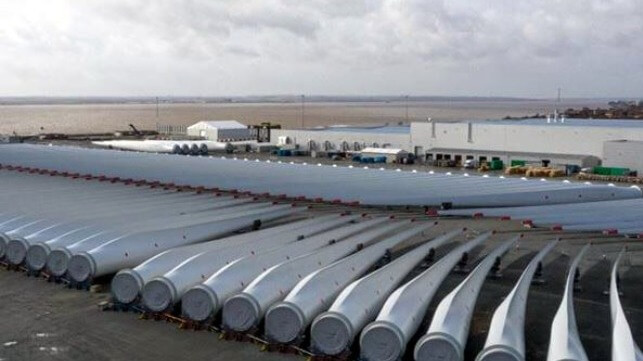
Blades at the Siemens Gamesa plant in Hull, UK (Siemens Gamesa file image)

PUBLISHED NOV 14, 2023 10:11 PM BY THE MARITIME EXECUTIVE


Siemens Gamesa, the European supplier that leads the global market for offshore wind turbines, has suspended plans to build a $200 million turbine blade factory at Virginia's Portsmouth Marine Terminal. 

Siemens Gamesa confirmed Friday that it would not be moving ahead with its plans for the 80-acre manufacturing site, citing problems meeting "development milestones." 

The cancellation is the latest in a series of setbacks for U.S. offshore wind, as well as for political ambitions to localize the industry's suppliers in the United States. When it was first announced in 2021, the Portsmouth site was the first investment by a major turbine manufacturer in the U.S. supply chain, and it was heralded as a landmark development. “Make no mistake: Virginia is building a new industry in renewable energy, with more new jobs to follow, and that’s good news for our country," said then-governor Ralph Northam at the time. 

But times have changed: Like other suppliers, Siemens Gamesa faces a challenging business environment in the U.S. market. Orsted has just canceled its Ocean Wind project off New Jersey (a GE-equipped project), and a slew of others are working to renegotiate their power-purchase agreements with utility customers. Costs have soared alongside interest rates and supply chain challenges, and offshore wind developers warn that the sales contracts they signed three years ago no longer make business sense. 

Siemens Gamesa's Portsmouth plant would have produced turbine blades for the massive Coastal Virginia Offshore Wind project (CVOW), a 2.6 gigawatt wind farm planned for a site about 25 nm off Virginia Beach. The blades for CVOW and other Siemens Gamesa-supplied wind projects in North America will now come from the supplier's factories in Europe, and the switch is not expected to have a material effect on the developer, Dominion Energy.

Siemens Gamesa was also in line to supply at least three other American projects, Revolution Wind, South Fork Wind and Sunrise Wind. Revolution Wind is under construction and on track for completion, according to developer Orsted. Likewise, South Fork has installed its first turbine and is moving ahead. Sunrise Wind's future is less certain: it recently applied for a subsidy increase with New York regulators, but was denied.

The upheaval in the U.S. market creates uncertainty for all suppliers in the near term, but Siemens Gamesa also faces its own internal challenges. A spate of quality issues with its legacy onshore wind turbines is expected to cost it $2.4 billion to fix, and unrelated manufacturing delays have affected its offshore wind portfolio. 

The Portsmouth plant was not its largest planned investment in the U.S. market. In February 2023, Siemens Gamesa announced plans to build a $500 million nacelle plant at Port of Coeymans in Upstate New York. It has not announced any changes to this initiative. “This proposed facility in New York is a major step forward in our desire to lead the massive U.S. offshore wind market. We’re excited by the opportunity presented by the State of New York to further develop our manufacturing footprint,” said Marc Becker, Siemens Gamesa's head of offshore, in a statement in February. 


Norway Gets Strong Interest in Offshore Wind with Seven Groups Applying
wind turbines
Norway is moving forward by qualifying companies for the country's first offshore wind auction

PUBLISHED NOV 15, 2023 5:22 PM BY THE MARITIME EXECUTIVE


Despite the emerging global concerns on the financial aspects of the development of the offshore wind energy industry, the Norwegian government reported today that it received strong interest in the first phase of the country’s first tender. In addition to expected proposals from the major companies in Europe, including from the Norwegian energy sector, a Chinese manufacturer is also seeking to prequalify for the bidding.

The Norwegian Ministry of Petroleum and Energy received seven applications to participate in the auction for the first project area for offshore wind known as Sørlige North Sea II. Norway announced its first two target areas in 2020 as part of a goal to reach 30 GW of offshore wind energy by 2040. The country has been working to define its industry and the process and in June agreed to provide an initial $2.13 billion for the support of the first project. 

“Despite large cost increases for the global offshore wind industry recently, there are several strong players applying to be able to participate in the auction round for Sørlige North Sea II,” announced Oil and Energy Minister Terje Aasland. “It is important for the government's offshore wind investment. We are now starting to assess the various applications.”

The deadline to file to pre-register was today, November 15. In the application, companies had to document that they meet the minimum criteria for sustainability and would contribute to broader positive effects. The companies also had to document the ability to complete the project.
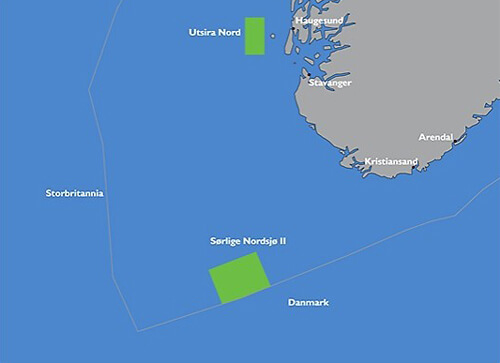
 

Norway is targeting two areas for its first offshore wind farm development (Norwegian Petroleum Directorate)


A total of seven applications were received, including partnerships between Equinor and RWE, Aker Offshore Wind, BP, and Statkraft, and Shell, Lyse, and Eviny. Others include the Hydroelectric Corporation, Belgium’s Parkwind in partnership with Ingka, and Norseman Wind, a company set up by Germany’s EnBW. China’s Mingyang Smart Energy, one of the large manufacturers of wind turbines, was a surprise entrant into the process.

The ministry said it will review the applications and expects to prequalify a minimum of six and a maximum of eight applicants. However, if fewer than six applicants can be prequalified, the ministry will assess whether the auction should be carried out. The tentative auction date is February 2024.

They said it was a positive step that several strong players are showing interest in the development of offshore wind on the Norwegian continental shelf. However, others including Ørsted, Vattenfall, and Eni, each of which is active elsewhere in the industry, declined to participate in the project. Earlier in the week, it was reported that Ørsted was withdrawing from a partnership in Norway as it reassesses its wind portfolio in the wake of major charges to abandon projects in the United States. Vattenfall has also reported financial challenges due to problems in the supply chain and cost increases in part due to inflation.

Sørlige Nordsjø II would be located south of Norway in the North Sea approximately 85 miles offshore. The water depth at the site is between approximately 175 feet and 230 feet with the anticipation that it will be the basis for a 1.5 GW fixed-bottom wind farm. 

The Norwegian Petroleum Directorate announced earlier this week that it has collected and prepared the first data sets for offshore wind on the Norwegian shelf. They conducted underwater surveys between 2022 and 2023 for Sørlige Nordsjø II and that data is now available for download. 

A survey on the second site, Utsira Nord, located to the west of Norway is currently underway and will be completed in the spring of 2024. That is expected to be a more challenging location that will require floating wind turbines.


BASF Chairman Claims Chinese Offshore Wind Turbines are "Better"
Goldwind
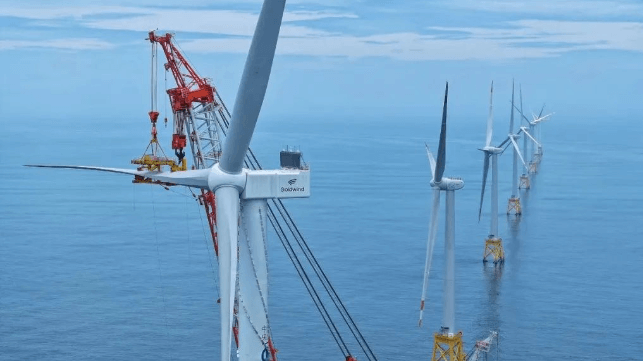
A Chinese-built offshore turbine off Fujian (Goldwind)

PUBLISHED NOV 15, 2023 8:38 PM BY THE MARITIME EXECUTIVE


The German industrial conglomerate BASF is a giant in the world of chemicals, and operates some of the largest and longest-running chemical parks in the world. It is so big that it can build utility-scale green power projects to power itself, and it has created an in-house subspecialty in wind farm development. The 1.5 GW Hollandse Kust Zuid offshore wind farm off the Netherlands will send half its output to BASF plants in Europe, and the 0.5 GW Zhanjiang wind farm off Guangdong will send all of its power directly to a new BASF chemical park. So when BASF chairman Martin Brudermüller told reporters that he prefers Chinese offshore wind turbines, he caught a good deal of attention - and criticism. 

“The Chinese are technically better than us, and they are also more cost-effective than us,” Brudermüller told Frankfurter Allgemein last week, speaking of turbine manufacturers in the EU and in China. "There is a political discussion that wind power should not be the next [EU] technology to go away. I would tend to say: It’s already gone.”

Chinese turbines are generally about 20 percent cheaper, according to industry insiders. Buyers benefit from China's lower manufacturing costs, government support, economies of scale and intense domestic price competition.

While market leading European turbine maker Siemens Gamesa is taking a $2.4 billion financial hit for quality issues this year, Chinese turbine firm Goldwind has seen its profits plummet for the opposite reason: Goldwind reports that it has put so much money into R&D and has cut its prices so deeply that it has left little for its own margins. Both companies are unprofitable, but Goldwind's customers are pocketing savings. 

According to Brudermüller, developers who buy wind equipment in China might also enjoy higher quality. “Take a really close look at it on site. They have simply become good with their products," he said of Chinese turbine builders. 

WindEurope, the industry body for EU equipment makers, pushed back on this notion in comments to Recharge. CEO Giles Dickson told the outlet that he was "very surprised" by the BASF chairman's remarks.

Siemens Energy CEO Christian Bruch, head of Siemens Gamesa's parent company, told analysts in an earnings call this week that Western companies like his do not generally have access to the Chinese offshore wind market. He suggested there should be controls on how much access Chinese competitors have to the EU market in order to create a level playing field.

"We can keep pace with the Chinese and even beat them on the international level if we have the right solutions available to us," he said. 

Yesterday, Siemens Energy secured $12 billion in bank guarantees to support completion of its backlog of customer orders, backed by $8 billion in guarantees from the German government. S&P has downgraded the company's debt to BBB-, one step above "junk bond" status, and the government support will ensure that it has access to financing for its production plans. 

UK Bows to Pressure, Hiking Auction Price of Offshore Wind
UK offshore wind
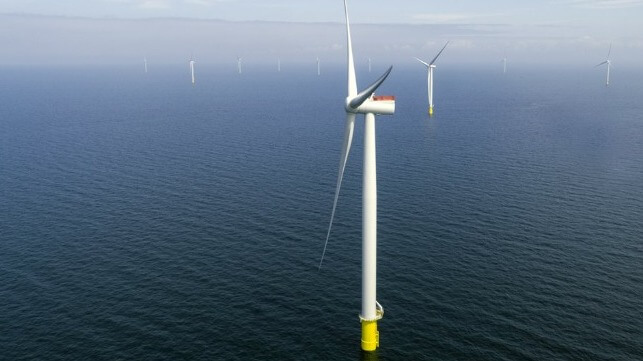
UK government dramatically increased the price guarantee for offshore wind to spur future development (file photo)

PUBLISHED NOV 16, 2023 6:26 PM BY THE MARITIME EXECUTIVE


The UK government is overhauling the pricing for energy generated from offshore wind as well as other changes to its programs as it looks to reinvigorate an industry slumping under rising costs and supply chain problems. Once the overall leader in offshore wind and renewable energy, the UK faltered in September 2023 when developers failed to bid in the latest round of auctions.

The government had promised to review the process and its approach to the industry in the face of the well-publicized challenges brought on by global inflation, supply chain problems, lack of capacity, and other challenges for offshore wind development. In addition to not receiving bids in the last auction, the UK like the U.S. has seen pending projects put on hold. Swedish company Vattenfall, which is one of the leaders in offshore wind, announced in July 2023 that it had shelved plans for a UK wind farm due to come online in 2027 providing 1.4 GW as the first phase in an area that might generate a total capacity of 3.6 GW. Ørsted also recently warned that it was reviewing planned UK projects after the company backed out of large projects in the U.S. over rising costs and diminished returns.

The UK government highlights that it has awarded contracts totaling around 30 GW of renewable capacity in the decade since 2014. Five of the world’s largest operational wind farms are in the UK with the country having gone from six percent of its electric energy from renewables in 2010 to 48 percent in the first quarter of this year.

“We recognize that there have been global challenges in this sector and our new annual auction allows us to reflect this,” said UK Energy Security Secretary Claire Coutinho. “Today we have started the process of our latest Contracts for Difference auction for renewables, opening in March next year.”

Following what the government called an extensive review of the industry, for the annual auction in 2024 the government is raising the maximum price offshore wind and other renewable energy projects can receive under the Contracts for Difference (CfD) scheme, a system that guarantees the price for electricity generated. Experts cite the program as having been a key contributor to the UK’s success in developing offshore wind and renewables and while the energy price to consumers will increase, they contend it is still the most economical source of electricity.

The UK is increasing the maximum price for offshore wind projects by two-thirds (66 percent) going from approximately $55 per MWh to nearly $91 per MWh on fixed-bottom projects. For floating wind projects, the pricing will be increased by 52 percent to nearly $220 per MWh. Under the CdF scheme, the government makes up the difference if energy prices fall below the set levels, while operators have to pay back consumers if energy prices go above the levels set out by the government.

According to the UK’s Department for Energy Security and Net Zero which announced the changes today, the dramatic price increases will ensure the projects are sustainably priced and economically viable to compete in the next round of auctions. Developers in the U.S. have been seeking similar allowances asking state regulators to permit them to renegotiate their power purchase agreements with local utilities. Massachusetts and New York, for example, both refused the applications from developers triggering a scenario where the developers have walked away from their projects preferring to pay cancelation penalties and let the projects be rebid as opposed to proceeding under the negotiated terms.

The UK government reports it is also dedicating a separate funding pot to offshore wind and renewables in anticipation of a high number of projects as a result of these changes. The ministers are contending that the move provides further clarity and confidence in the offshore wind sector. Dan McGrail, CEO of RenewableUK predicted that there would be record investment next year with at least 10 projects likely to be eligible able to power 8.5 million homes and reduce the UK’s need for gas by 39 percent.

“We very much welcome the government responding to the increased global competition and the economic challenges facing developers by showing more ambition and giving greater confidence to investors, which will help build a domestic green powerhouse that benefits our own economy and people,” said Emma Pinchbeck, Energy UK’s Chief Executive.

The government also in the announcement issued today, November 16, proposed additional changes to the system to further enhance development. They have already switched to an annual auction process to encourage developers. Starting with the 2025 auctions, it plans to add in additional criteria including the project’s ability to reduce carbon emissions in its supply chains. The government plans to look for additional elements beyond just a low price in choosing future projects. 


UN Opens Talks on Zero Draft Treaty on Plastic Pollution

File image

PUBLISHED NOV 12, 2023 11:29 PM BY THE MARITIME EXECUTIVE


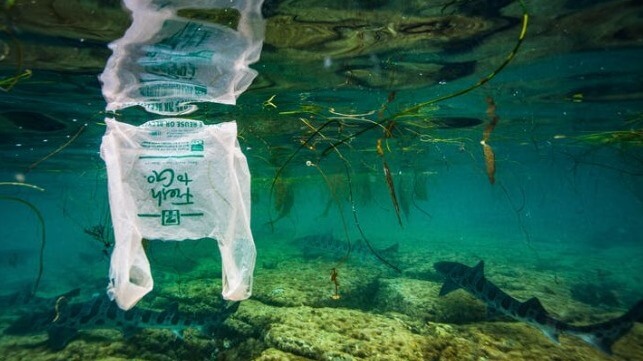
The push to end plastic pollution is gaining momentum as negotiators gather to discuss the initial draft of a treaty to end the growing menace, which is particularly pernicious in the marine environment. 

Negotiators have gathered in Nairobi, Kenya, to discuss the zero draft of a treaty, hoping to move towards consensus on a legally binding global instrument to end plastic pollution.

From November 13 to 19, the UN’s Intergovernmental Negotiating Committee (INC) will hold its third session with the main focus of talks on the zero draft, a 31-page document developed in September that marks the first tangible step towards the goal of an international plastics treaty. 

Jyoti Mathur-Filipp, the Executive Secretary of the INC Secretariat, said that the zero draft was drafted based on a comprehensive approach that addresses the full life cycle of plastics. The talks will form the basis of developing the next draft, which will be discussed in April next year in Canada. 

“The aim is to complete negotiations by the end of 2024 on an international legally binding global instrument on plastic pollution, including in the marine environment,” said Mathur-Filipp.

The menace of plastic pollution is worsening, according to the UN. Over 430 million tonnes of plastic is produced worldwide annually, two-thirds of which are short-lived products that soon become waste. Much of that ends up polluting land, sea and air while increasingly working its way into the human food chain. Every day, the equivalent of over 2,000 garbage trucks full of plastic is dumped into the world’s oceans, rivers and lakes.

The social, economic and environmental costs of plastic pollution range between $300 million to $600 billion per year. Still, plastic production is expected to double over the next 20 years if no action is taken. According to the UN, the world has the potential to save a staggering $4.5 trillion by 2040 by redesigning the production, use, recovery and disposal of plastics and products.

The negotiations in Nairobi come at a time when a new report by WWF shows that low-income nations are suffering more from plastic pollution despite producing and consuming less plastic.

The report contends that the true cost of plastic on the environment, health and economies is as much as 10 times higher for low-income countries, even though they consume almost three times less plastic per-capita, than in high-income ones. The total lifetime cost for a one-kilogram block of plastic waste in a high-income country for example, is $19 compared to eight times that for middle and lower-income countries at an average of $150 and 10 times that for lower-income countries at $200.

“The report signals the urgency of an immediate overhaul of the current plastic system,” said Alice Ruhweza, WWF International’s Senior Director of Policy, Influence and Engagement. She added that a global plastic pollution treaty offers the only chance to change the current reality by including binding and equitable global rules on production and consumption.

Top industrialized economies, including the U.S, Russia and China, together with oil producing countries and the fossil fuel industry, have emerged as the main obstacles for the treaty, which would impact the business of plastics manufacturing. The UN asserts that the world needs to reduce the amount of plastics produced and eliminate single-use and short-lived plastic products, which is critical in protecting the marine environment. 


Video: Russians Attempt to Pump Fuel from Tanker Grounded in Winter Storm

tanker aground in storm
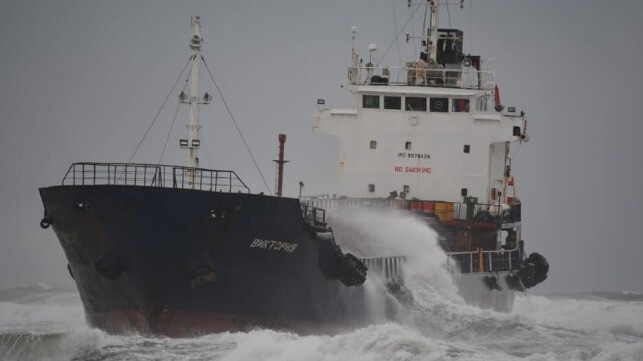
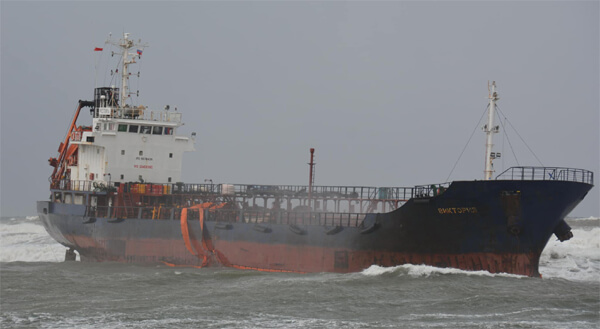
Victoria is aground off Sakhalin Island, Russia (photos and videos by Dmitry Lisitsyn/Facebook)

PUBLISHED NOV 14, 2023 4:15 PM BY THE MARITIME EXECUTIVE


Russia’s Marine Rescue Service is attempting to pump the fuel off a stranded product tanker that is aground off Sakhalin Island and caught in fierce winter storms. The efforts began today, Tuesday, November 14, and they are working to complete it before there is a significant oil leak and environmental situation.

According to the reports, the product tanker Victoria registered in Russia had departed Vladivostok and was transiting the Tatar Strait between the mainland of Russia and Sakhalin Island when the ship experienced problems with its main engine. The captain issued a distress call on November 10 reporting the main engine was not working and the steering control was damaged. 


The 2,800 dwt tanker, which is 276 feet long, was driven ashore in the high surf at a position approximately five miles to the south of the port of Nevlsk on the southwestern coast of Sakhalin. The vessel is reportedly stranded approximately 1,300 feet from shore near Cape Lopatino. The captain reported that there were 10 people aboard and that they were not in any immediate danger. 

Rescue attempts to reach the vessel were being hampered by a strong storm crossing the area. Waves were reported to be up to 15 feet and strong winds were blowing along with snow and rain. Pictures show the wash going over the deck of the vessel with reports the stern is stuck but the bow is shifting in the surf.


The tanker has 700 tons of diesel aboard as cargo and a further 60 tons of fuel in its tanks. Media reports are that there is no visible oil in the water, but residents are saying there is a strong smell of fuel onshore. 

The rescue vessel Otto Schmidt was able to reach the area but could not approach the Victoria due to the high waves. They had been hoping to attach a towline, but reports are that the rescue ship is holding at a distance away from the ship waiting for the seas to calm. The winds were too strong for a helicopter to approach the vessel.

The Marine Service reports they expect it will take approximately two days to pump the fuel from the Victoria to onshore fuel tanks. After that, they hope to attempt to refloat the tanker. 


We achieved gender parity in astronomy in just five years


… all while discovering how the Universe evolved, how galaxies form and where the elements come from.

Peer-Reviewed Publication

ARC CENTRE OF EXCELLENCE FOR ALL SKY ASTROPHYSICS IN 3D (ASTRO 3D)


Around the world, research agencies are struggling to achieve gender parity.

A paper published in Nature Astronomy today reports how a national Australian astronomy centre achieved equal numbers of women and men using science.

“We used research in sociology and psychology to develop evidence-based strategies, and to create a supportive and positive culture in our Centre,” says Professor Lisa Kewley, the founding director of ASTRO 3D, the Australian Research Council Centre for All Sky Astrophysics in 3 Dimensions, and the lead author on the paper. Professor Kewley now leads the Center for Astrophysics, Harvard & Smithsonian.

“Our success offers a model to other organisations, especially in the physical sciences where participation rates for women continue to be well behind the biological sciences, and where gender equality has remained stubbornly low,” says Professor Emma Ryan-Weber, the current Director of ASTRO 3D.

“Astronomy is a gateway science,” says Professor Ryan-Weber. “Students are fascinated by the question of what’s out there in space and how the elements that fused inside stars end up being the oxygen we breathe. I am proud that our centre is providing a diverse range of role models for the next generation—encouraging them to take up maths and physics, which opens up career opportunities not just in astronomy but across the physical sciences and a range of technical industries, such as data science.”

“Astronomy is regarded as leading in gender equity in the physical sciences. But when we established ASTRO 3D in 2017, I looked at the numbers and realised that on current trends it would take more than 60 years to reach gender parity,” says Professor Kewley.

Across Australia, women make up 30 to 35% of PhD astronomy students, and less than 20% at the highest professorial level. “And women are more than three times more likely to leave the profession. Sixty-two per cent of women and 17% of men leave astronomy at the junior postdoctoral levels. We had to do better,” Professor Kewley says.

“Our program was implemented between December 2017 and January 2023. In that time, ASTRO 3D went from 38% women to 50%,” she says.

The key steps included:

  • setting diversity targets with regular monitoring of progress
  • selecting a diverse set of team leaders
  • in-person diversity training for all organisation members
  • ensuring 50% women on postdoctoral selection committees
  • ensuring 50% women on postdoctoral short-lists.

“Diverse leadership is crucial for improving the diversity within teams,” says Professor Stuart Wyithe, Director of the Research School for Astronomy & Astrophysics, The Australian National University.

“Women-led teams recruited and retained more women postdoctoral researchers, attracted more women students, and worked with more women collaborators, while the converse was true for men-led teams,” he says.

“The ASTRO 3D program reached a tipping point when there were 40% women in the organisation as supervisors, mentors and role models for students. After that, student enrolments by women in the Centre accelerated. The gains were not made at the expense of men, as the membership grew over this period,” Professor Kewley says.

Recruiting women is one thing, but retaining them is just as important and ASTRO 3D introduced a range of policies to make sure their staff felt welcome and valued. These included a focus on leadership development, promotion of work-life balance, partner recruitment, as well as pathways for reporting misconduct.

In all categories, larger percentages of women were retained than men.

Among students, 55 to 58% women were retained compared with 37 to 48% men and a larger percentage of women postdoctoral researchers were retained in the Centre (67 to 70% women and 55 to 69% men).

“This suggests that the presence of women supervisors and role models is critical for attracting and retaining women.”

Professor Ryan-Weber says the paper clearly paves the way for other research centres to achieve similar results.

“Our researchers have made phenomenal discoveries in understanding how elements, stars, galaxies and the gas that surrounds them evolved from the early Universe to today. Their skills have translated to international success in academia and to solve real-world problems in industry.

“But the greatest legacy of ASTRO 3D may be as a role model for better diversity in research,” she says.

For more information and to coordinate interview with study authors

For ASTRO 3D: Tom Carruthers, tom@scienceinpublic.com.au, +61 404 404 026

For Harvard & Smithsonian: publicaffairs@cfa.harvard.edu

Read on for the abstract and third-party comments. Full media pack including high resolution images are available at https://www.scienceinpublic.com.au/media-releases/astro3d-kewley-natureastronomy

Supporting information

About ASTRO 3D

The ARC Centre of Excellence for All Sky Astrophysics in 3 Dimensions (ASTRO 3D) is a $40 million Research Centre of Excellence funded by the Australian Research Council (ARC) and nine collaborating Australian universities: The Australian National University, The University of Sydney, The University of Melbourne, Swinburne University of Technology, The University of Western Australia, Curtin University, Macquarie University, The University of New South Wales, and Monash University.

Paper details

Journal: Nature Astronomy: https://www.nature.com/articles/s41550-023-02079-6

https://doi.org/10.1038/s41550-023-02079-6

The achievement of gender parity in a large astrophysics research centre

Lisa J Kewley1,2,3, J. Stuart B. Wyithe1,2,4, Kim-Vy Tran2,3, Ingrid McCarthy1,2
1 Research School for Astronomy & Astrophysics, Australian National University, Canberra, Australian Capital Territory, Australia
2 ARC Centre of Excellence for All Sky Astrophysics in 3 Dimensions (ASTRO 3D), Canberra, Australian Capital Territory, Australia
3 Center for Astrophysics, Harvard & Smithsonian, Cambridge, MA, USA
University of Melbourne, Parkville, Victoria, Australia

Abstract

In Australian astronomy, women’s representation remains at historic lows, despite a decade of initiatives aimed at improving the representation and support of women in astronomy and academia more generally. Drawing from research in the fields of sociology and psychology, we designed a new evidence-based programme to increase the percentage of women recruited and retained in astronomy. We applied identical recruitment methods to 47 fixed-term postdoctoral positions across nine universities from 2017 to 2022 within the ARC Centre of Excellence for All Sky Astrophysics in 3 Dimensions (ASTRO 3D). Through this method, ASTRO 3D achieved 50% women personnel in five years, including 56% women postdocs and 52% women students recruited. A tipping point was reached at 40% women overall, after which women students enrolled in the centre in accelerating numbers. Evidence-based retention initiatives were highly successful, yielding greater retention of women than men. The percentage of women in teams correlated strongly with the team lead gender, highlighting the importance of diverse team leadership. This work presents a clear pathway for organizations to achieve and retain gender diversity within postdoctoral and student cohorts without quotas.


Georgetown Global Health Center launches first open-access wildlife disease database


Business Announcement

GEORGETOWN UNIVERSITY MEDICAL CENTER


WASHINGTON (November 15, 2023) – Georgetown University Medical Center’s Center for Global Health Science and Security (GHSS) today announces the launch of a first-of-its-kind wildlife disease database -- a system for collecting records of viruses, bacteria, fungi, parasites, etc. -- designed to support an early warning system for potential viral emergence. The Pathogen Harmonized Observatory, or PHAROS, is open to the global community and free to access.

Scientists in GHSS’ Verena program, a collaborative institute comprising a global team of scientists, designed PHAROS to advance research and education around viral emergence – the process of viruses jumping from animals to humans. Verena co-founder and director, Colin Carlson, PhD, says most platforms designed to track diseases in wild animals are very limited and are developed only in response to a major outbreak, such as birds dying off suddenly due to avian flu.

“Our goal is to build a data sharing system that lets us eventually predict pandemics like the weather,” Carlson says. “When we collect data on wildlife viruses, it gets published in journals and then lost forever, because it isn’t ever standardized or compiled. After Covid, there’s no excuse to keep working that way.”

Carlson says scientists from around the world are invited to share and manage their data in PHAROS, and that the platform is designed to allow attribution to its contributors and easy citation for users.

To complement the collection and organization of the data, the team collaborated with GHSS health intelligence researchers to develop a searchable database that can be queried.

“Easy access to these data is the first step to making ‘one health’ a data-driven field – and then making better policies that prevent outbreaks,” says Georgetown professor Ellie Graeden, PhD, an expert in creating and developing quantitative approaches for global-scale decision making.

The initial launch of PHAROS will include a small number of datasets already shared by about  a dozen beta testers, many of whom are on the Verena team, Carlson says.

“Open science is the core of our program,” Carslon explains. “We'll spend the next few months recruiting new users, and will be focusing our efforts on problems like the avian flu panzootic, where we think our database can do the most good.”

Pharos is made possible with support to Verena from the National Science Foundation, and with support to GHSS from Open Philanthropy. 

###

About Georgetown University Medical Center
As a top academic health and science center, Georgetown University Medical Center  provides, in a synergistic fashion, excellence in education — training physicians, nurses, health administrators and other health professionals, as well as biomedical scientists — and cutting-edge interdisciplinary research collaboration, enhancing our basic science and translational biomedical research capacity in order to improve human health. Patient care, clinical research and education is conducted with our academic health system partner, MedStar Health. GUMC’s mission is carried out with a strong emphasis on social justice and a dedication to the Catholic, Jesuit principle of cura personalis -- or “care of the whole person.” GUMC comprises the School of Medicine, the School of Nursing, School of Health, Biomedical Graduate Education, and the Lombardi Comprehensive Cancer Center. Designated by the Carnegie Foundation as a doctoral university with "very high research activity,” Georgetown is home to a Clinical and Translational Science Award from the National Institutes of Health, and a Comprehensive Cancer Center designation from the National Cancer Institute. Connect with GUMC on Facebook (Facebook.com/GUMCUpdate) and on Twitter (@gumedcenter).


Inequality hotspot map shows where women in agriculture are hit the hardest by the climate crisis


Researchers show where women working in agri-food systems in Africa and Asia face the highest climate risk

Peer-Reviewed Publication

FRONTIERS

Climate–agriculture–gender inequality hotspot LMICs across the globe 

IMAGE: 

CLIMATE–AGRICULTURE–GENDER INEQUALITY HOTSPOT LMICS ACROSS THE GLOBE

LEGEND: DARKER ORANGE-COLORED COUNTRIES HAVE RELATIVELY HIGH CLIMATE–AGRICULTURE–GENDER INEQUALITY HOTSPOT INDEX VALUES; THEREFORE FACE HIGHER RISK. LIGHTER ORANGE-COLORED COUNTRIES HAVE RELATIVELY LOW CLIMATE–AGRICULTURE–GENDER INEQUALITY HOTSPOT INDEX VALUES; THEREFORE FACE LOWER RISK. LMICS WITH A WHITE COLOR HAVE NOT BEEN RANKED DUE TO DATA LIMITATIONS.

view more 

CREDIT: COPYRIGHT: © 2023 LECOUTERE, MISHRA, SINGARAJU, KOO, AZZARRI, CHANANA, NICO AND PUSKUR


Threats posed by the climate crisis disproportionally affect certain communities and social groups that are more exposed. People living in low- and middle-income (LMIC) countries are at heightened risk. Within these countries, women typically face higher climate risk than men.

To show where women working in agri-food systems – systems that encompass production, but also post-harvest handling and distribution – are most threated by climate change, an international team of researchers has developed a hotspot map that identifies and ranks localities by threat level.

“We show that significant climate hazards, high exposure faced by women in agri-food systems, and high vulnerability faced by women due to systemic gender inequalities converge particularly in central, east, and southern Africa, as well as in west and south Asia,” said the study’s first author Dr Els Lecoutere, who is a researcher at the CGIAR GENDER Impact Platform in Kenya. “The maps are potentially impactful as they can inform decision- and policymaking around gender-responsive climate action and guide the allocation of scarce resources to populations at highest risk.” The results were published in Frontiers in Sustainable Food Systems.

Hotspots for different reasons

“The climate-agriculture-gender inequality hotspot risk index captures the convergence of climate hazards, exposure, and vulnerability because of gender inequalities faced by women in agri-food systems,” said Lecoutere. The team of researchers involved in the study calculated each country’s risk based on these indicators. “We plotted the resulting ‘hotness’ score for each LMIC country into a color-coded map, which makes it possible to compare and contrast risks in different countries.”

The researchers also applied their methodology within four LMIC countries: Bangladesh, Pakistan, Zambia, and Mali. In the global ranking, they took places two, four, 13, and 18, respectively. Multiple drivers of risk contributed to these rankings.

“For the two focus countries in Asia, high climate hazards and women farmers’ exposure drives climate risks, whereas in the two focus countries in Africa structural inequalities play a larger role,” Lecoutere explained.

In Mali and Zambia, secondary resources confirm that women are restricted by norms that hinder their access to land ownership, information, and economic empowerment – limitations that negatively affect their ability to adapt to climate hazards. In Pakistan and Bangladesh, women contribute significantly to agricultural activities, but do so mostly informally. Their work often remains unrecognized, unpaid, or underpaid, which leaves them dependent on agriculture, and vulnerable to the adverse aftereffects of ever more frequent and severe climate hazards.

Starting points for policymaking

The researchers pointed to certain limitations of their study, for example a lack of data that has made it impossible to calculate a ‘hotness’ score for some countries, including small island development states. Yet, it is often these locations that are the most poverty- or conflict-stricken, and therefore vulnerable, making it plausible that women in these environments face significant climate risks.

While the team pointed out that in some cases data might not be available or sufficiently recent to be effectively used for policy making, their findings offer insights for other localities. One possible starting point is reducing women’s sensitivity to harm from climate hazards by addressing systemic gender inequalities and supporting the adaptive capacities of all agri-food system actors in gender-responsive ways.

“Another key use for the results of our study is the upcoming COP28 and ongoing negotiations around a loss and damage fund, and other climate investments. The hotspot maps can help decisionmakers and investors target finance and investments to the areas where women are hardest hit from climate change risks,” Lecoutere pointed out.


Subnational level climate–agriculture–gender inequality hotspot map for perennial crops in Zambia

Legend: Darker orange-colored countries have relatively high climate–agriculture–gender inequality hotspot index values; therefore face higher risk. Lighter orange-colored countries have relatively low climate–agriculture–gender inequality hotspot index values; therefore face lower risk. Names of the provinces are Z01: Central; Z03: Eastern; Z04: Luapula; Z05: Lusaka; Z06: Northern; Z07: North-Western; Z08: Southern. (Missing data: Z02: Copperbelt; Z09: Western).

Subnational level climate– inequality hotspot map for cereals, leguminous crops and oilseeds in Pakistan

Legend: Darker orange-colored countries have relatively high climate–agriculture–gender inequality hotspot index values; therefore face higher risk. Lighter orange-colored countries have relatively low climate–agriculture–gender inequality hotspot index values; therefore face lower risk. Names of the regions are P01: Punjab; P02: Sindh; P03: Khyber Pakhtunkhwa (NW Frontier); P04: Balochistan; P05: Islamabad (ICT); P08: FATA. (Missing data P06: Gilgit Baltistan; P07: AJK)