Saturday, November 18, 2023


Fourth Barakah unit receives operating licence

17 November 2023


The United Arab Emirates' nuclear regulator has issued the licence to Nawah Energy Company, clearing the way for commissioning and commercial operation of the unit and marking a historic moment as the UAE realises its nuclear energy vision.

Hamad Al Kaabi (on the left) and Christer Viktorsson announced the issuance of Barakah 4's operating licence on 17 November (Image: FANR)

The Federal Authority for Nuclear Regulation (FANR) said it had reached its decision to issue the licence after conducting a thorough assessment of the application documentation, conducting robust regulatory oversight and inspections in the areas of safety, security and safeguards. It also assessed Nawah's organisational and manpower readiness, and ensured that Nawah was in compliance with all regulatory requirements.

Construction of the fourth Korean-designed APR-1400 unit at Barakah, in the Al Dhafra region of Abu Dhabi Emirate began in July 2015, three years after work began on the first Barakah unit. The first three units are now fully operational under FANR's regulatory oversight.

The UAE embarked on its plan to implement a nuclear energy programme in 2008 when its government made the decision to build and operate a nuclear power plant to provide 25% of the country's electricity needs, diversifying its energy sources and supporting its long-term energy vision and net zero goals. Construction of the first unit began in 2012, and Barakah 1 was connected to the grid in 2020.

"Today marks a historic moment for the UAE, where it realised its vision that started 15 years ago in developing the-first-in-the-region peaceful nuclear energy programme," Hamad Al Kaabi, the UAE's permanent representative to the International Atomic Energy Agency and deputy chairman of FANR's Board of Management said. "The success of the UAE Nuclear Energy Programme and the ability to deliver it within a record span of time, adhering to the best international nuclear safety, security and non-proliferation standards, made the country a role model for many nations who are embarking on developing a nuclear energy programmes."

Barakah 4 (Image: FANR)

FANR has certified 215 Reactor Operators and Senior Reactor Operators - including 78 who are Emiratis - who are qualified to operate the control rooms of the nuclear power plant, FANR Director General Christer Viktorsson said.

"The review of the operating licence application for Unit 4 was conducted by a team consisting of 90% Emirati nuclear experts. This indicates the success of FANR's strategy in building the capability and skills of Emiratis to regulate the nuclear sector and ensure its safe operation," he added.

Nawah can now begin the commissioning phase to prepare for commercial operation, during which FANR will carry out around-the-clock inspection at the plant to ensure the nuclear fuel load and testing processes are completed according to regulatory requirements, Viktorsson said. When the plant enters commercial operation the regulator will assume an oversight role.

The Barakah plant is owned by the Emirates Nuclear Energy Corporation (ENEC) and operated by Nawah. Barakah 4's operating


Philippines considers deploying USNC microreactors

16 November 2023


The Philippines' largest electric distribution utility, the Manila Electric Company (Meralco), has signed a cooperation agreement with Ultra Safe Nuclear Corporation (USNC) of the USA to study the potential deployment of one or more Micro-Modular Reactor (MMR) Energy Systems in the Philippines.

The signing of the agreement between USNC and Meralco (Image: USNC)

The agreement was signed by Meralco Chairman and CEO Manuel Pangilinan and USNC Founder and CEO Francesco Venneri on the sidelines of the 30th Asia-Pacific Economic Cooperation (APEC) Leaders' Summit in San Francisco. The signing was witnessed by Philippine President Ferdinand Marcos.

Under the agreement - which builds on the partnership between the two companies announced in August - USNC will conduct a pre-feasibility study that will run for four months to familiarise Meralco with MMR systems and how these can be effectively utilised in the Philippines. Depending on the results of the pre-feasibility study, Meralco has the option to conduct a more detailed feasibility study with a focus on the adoption and deployment of MMR energy systems.

USNC said the study will help Meralco in critical decisions and potential future activities on project-specific studies and project development plans at identified sites. The study will assess financial, technical, safety, and siting, among other considerations.

The MMR is a 45 MW thermal, 15 MW electrical high-temperature gas-cooled reactor, using TRISO (tristructural isotropic) fuel in prismatic graphite blocks. The graphite blocks contain stacks of ceramic FCM fuel pellets. The helium-cooled reactor can be flexibly fuelled with uranium enrichments from 9% to 19.75% and will have an initial licensed nuclear plant lifetime of 40-years.

"USNC is changing the nuclear safety and national energy security conversations in the Philippines with the MMR," Pangilinan said, adding: "This cooperative agreement moves us forward with a partner who understands these important issues alongside the essential nature of the cost and reliability of the electricity supply."

"This also signifies the commitment of the Philippines, through Meralco, to explore and utilise diverse energy sources for the benefit of Filipinos. We believe that nuclear technology will help balance the need to meet the growing demand of our country with the equally crucial need to transition towards a sustainable energy future," he said.

Venneri said: "Meralco is demonstrating real leadership in advancing the energy security and sustainability roadmap for the Philippines. Our MMR nuclear batteries can play a major role in delivering those benefits. The plans that will quickly follow this study place Meralco well on the way toward creating a reliable, low-carbon, equitable and secure future for Filipinos."

President Marcos welcomed the agreement, saying the "partnership is a significant step towards exploring clean and sustainable energy options for the Philippines". He added that the agreement "is aligned with our commitment to reduce greenhouse gas emissions and increase resilience to climate change".

In response to the 1973 oil crisis, the Philippines decided to build the two-unit Bataan plant. Construction of Bataan 1 - a 621 MWe Westinghouse PWR - began in 1976 and it was completed in 1984 at a cost of USD460 million. However, due to financial issues and safety concerns related to earthquakes, the plant was never loaded with fuel or operated. The plant has been maintained.

In March 2022, then President Rodrigo Duterte signed an executive order that outlined the government's position for the inclusion of nuclear energy in the Philippines' energy mix, taking into account economic, political, social and environmental objectives. President Marcos included new nuclear among his campaign pledges before winning the election in May last year.

123 Agreement concluded


Also on the sidelines of the APEC Leaders' Summit, US Vice President Kamala Harris met with President Marcos, where they discussed ongoing efforts to deepen security ties and expand commercial and economic cooperation between the two countries.

During the meeting, Harris and Marcos "welcomed the conclusion of a historic '123' civil nuclear cooperation agreement", according to a statement from the White House. It said the agreement "will deepen our partnership to build a global clean energy economy and strengthen our shared commitment to improving energy security and advancing the global non-proliferation regime".

Negotiations on the 123 Agreement were launched in November 2022 during a visit by Harris to the Philippines.

Formal cooperation agreements are required between countries that want to trade nuclear power goods and services, and those involving the USA are called 123 Agreements after the paragraph of the country's 1954 Atomic Energy Act which requires them.

"This agreement will provide the legal basis for US exports of nuclear equipment and material to the Philippines, which will support American workers and businesses," the White House said. 

Researched and written by World Nuclear News


IAEA team completes Romanian regulatory review

15 November 2023


Romania is committed to maintaining and strengthening its regulatory framework for nuclear and radiation safety, an International Atomic Energy Agency (IAEA) team of experts has concluded. However, the Integrated Regulatory Review Service (IRRS) mission team recommended improving the coordination among government agencies concerned with radiation source facilities and activities.

Romania's Cernavoda plant (Image: Ansaldo Nucleare)
IRRS missions are designed to strengthen the effectiveness of the national nuclear and radiation safety regulatory infrastructure, based on IAEA safety standards and international good practices, while recognising the responsibility of each country to ensure nuclear and radiation safety.

The IRRS team concluded a 12-day mission to Romania on 10 November. The mission, carried out at the request of the Romanian government and hosted by the National Commission for Nuclear Activities Control (CNCAN), marks the start of the third IRRS mission cycle to Romania after previous missions in 2006 and 2011.

The team - comprising 20 senior regulatory experts from 15 countries, as well as IAEA staff members and one observer from the European Commission, reviewed facilities and activities regulated by CNCAN.

The mission identified several good performances, including: the performance, during a CNCAN inspection, of an on-the-spot written test for the authorised staff dedicated to radiation safety and emergency preparedness; the development of a detailed cooperation protocol between CNCAN and the Romanian customs authority to ensure the safe inspection of radioactive packages; the prompt update of the regulation for reactors and installations with multiple modules, after the signature of a memorandum of understanding between CNCAN and NuScale Power, to evaluate small modular reactors (SMRs); and the systematic and holistic approach of CNCAN to address the interface of safety and security in its regulatory oversight programme for nuclear power plants.

"Romania has a comprehensive and mature regulatory infrastructure for nuclear safety," said IRRS team leader Peter Elder, vice-president of technical support with the Canadian Nuclear Safety Commission. "CNCAN's challenge will be to prepare itself for the expected expansion of Romania's nuclear power programme. We recommend that Romania further improves its radiation protection framework, especially in the medical sector."

The IRRS team identified several recommendations and suggestions, including: CNCAN should implement its systematic training programme including inspector qualification and enhance its inspection programme to be used in the planning and conduct of inspections, in accordance with a graded approach; and the Ministry of Health should revise and implement the regulatory requirements on radiation protection, including justification of practices, dose constraints for the public exposure and consumer products provision consistent with IAEA safety standards.

The final mission report will be provided to the government in about three months. Romania plans to make the report public.

"We would like to thank the IRRS team and Romanian counterparts for their intensive work during the last two weeks," said CNCAN President Cantemir Ciurea-Ercau. "The IRRS mission confirms our commitment for continuous improvement of nuclear and radiation safety. CNCAN will use the outcomes of the mission to update its action plan to strengthen the regulatory capabilities and national infrastructure for safety."

Romania operates two 720 MWe pressurised heavy water reactors (PHWRs) at the Cernavoda nuclear power plant. Fuel for the reactors is produced domestically. Preparations for constructing two more 720 MWe PHWRs at Cernavoda and a 462 MWe SMR power plant at Doicești are under way. Romania also operates a dual core TRIGA Mark II research reactor which produces radioisotopes for industrial applications and is used for research and training. The country operates one waste disposal facility and plans to build two more, including a deep geological repository.

Researched and written by World Nuclear News


UK 'should emulate South Korea' on new nuclear

17 November 2023


The All-Party Parliamentary Group on Nuclear Energy report, Made in Britain: The Pathway to a Nuclear Renaissance, says multiple small modular reactor (SMR) units should be ordered to justify firms' investment in UK production facilities - and calls for Wylfa in North Wales to be backed within the next year as the next large-scale plant. 
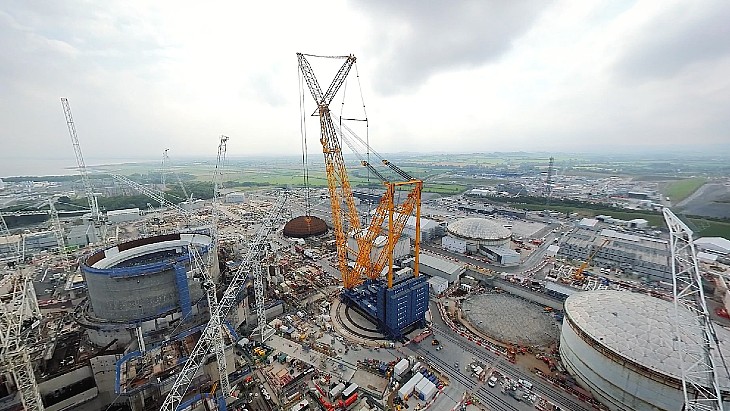
EDF says around 10,000 people are now working at Hinkley Point C (Image: EDF)

The report, by a group of members of the House of Commons and the House of Lords, says that the arms-length body set up to deliver the UK's nuclear expansion - Great British Nuclear (GBN) - should set contract conditions requiring the use of British supply chains. This would mean that even if foreign SMR designs are selected, they would be "effectively made by British industry". The report says the requirement to maximise UK content, should start "with the use of UK nuclear fuel, which is our most mature supply chain capability".

"The UK could once make reactor pressure vessels, coolant circulators, boilers and turbines for nuclear power stations. We cannot do any of that today, but we could again. Companies like Sheffield Forgemasters, for instance, now owned by the Ministry of Defence, could make reactor pressure vessels for civilian SMRs," the report says.

It says that by doing so, the UK can replicate the most successful aspects of the experience of South Korea, which had no nuclear power plants in the 1970s but which now has 24 GW capacity with 4 GW under construction and 5 GW exported. As well as ordering multiple units of each of the winning SMR designs in the current selection process, it says "GBN should standardise on the single most successful SMR design after the initial deployment phase. This will concentrate investment efficiently on the required capabilities, allowing swifter introduction of UK content and more competitive exports".

On the planning front, it suggests imposing a net-zero duty on all planning regulators and also designation of nuclear as a Critical National Priority. It says GBN should choose its SMR Technology Partners and agree co-funding agreements by Spring 2024, saying the government "must be willing to take equity shares in the first SMR projects and to order enough units in the first wave to get the programme off the ground". It says that at the same time a technology partner should be chosen to "deliver a major, multi-reactor, large-scale nuclear project at Wylfa before the Parliament is out", which it will be by December 2024 at the latest.

All-Party Parliamentary Groups are not formal Parliamentary committees and do not have legislative powers but are forums for parliamentarians to discuss an issue or topic - in this case civil nuclear energy - on a cross-party basis. This group says its aim is that "working with the civil nuclear industry, we can assist the UK Government in developing better legislation for nuclear power that will drive forward the UK's ambition to achieve net-zero and ensure a secure domestic energy supply for future generations".

The UK's energy strategy unveiled in April set the target for eight new reactors plus small modular reactors to produce 24 GWe capacity by 2050, meeting about 25% of the UK's projected electricity demand. The UK currently generates about 15% of its electricity from about 6.5 GW of nuclear capacity. The first new nuclear capacity in the UK for about 30 years is being built by EDF at Hinkley Point C - two EPRs producing 3.2 GW of electricity - with a final investment decision also expected on a similar sized project at Sizewell C within the next few months.

Last month GBN announced that EDF, GE Hitachi Nuclear Energy International LLC, Holtec Britain Limited, NuScale Power, Rolls Royce SMR and Westinghouse Electric Company UK Limited had been selected to bid for UK government contracts in the next stage of the SMR selection process which will provide support for up to four technologies to pursue a project through Final Investment Decision to construction and operation, with the support including "funding to support technology development site-specific design, a close partnership with Great British Nuclear which will be ready and able to provide developer capability" and support in accessing sites.

Ian Liddell-Grainger, Conservative MP for Bridgwater and West Somerset and and chairman of the all-party group, said: "Ramping up nuclear capacity to the levels needed for energy security and net-zero will require a monumental effort from government and industry. The steps outlined in this report shows how the UK can deliver on its commitment to nuclear and ensure we don’t fall behind the progress being made by other countries."

Charlotte Nichols Labour MP for Warrington North co-chair of the group, said: "Britain must show it is serious about its nuclear renaissance and by following these steps it can deliver on its ambition. The reward is huge: Building 20 GW more nuclear would sustain 250,000 jobs, adding around GBP20 billion (USD25 billion) to our new green economy each year, as well as providing a base of energy security for the rest of this century. We must act now to keep up momentum and deliver."

Researched and written by World Nuclear News


NuScale CEO remains upbeat after CFPP cancellation

16 November 2023


The termination of the project that had been expected to be the first operational NuScale SMR reactor was "very disappointing" but the company remains bullish about the future, according to the company's CEO.

NuScale's vision of an SMR plant (Image: NuScale)

Speaking in a special update to the 2023 ANS Winter Conference and Expo, hosted by the American Nuclear Society (ANS),  John Hopkins said the mutual decision to cancel the Carbon Free Power Project (CFPP) project at a site at Idaho National Laboratory was reached after it became clear that customer Utah Associated Municipal Power Systems (UAMPS) - a nonprofit made up of 50 municipalities from across seven states - would be unable to obtain the amount of subscriptions needed to move the project forward.

This was one of three conditions that had to be met for the project to continue to move forward, Hopkins said: "One is they had to obtain the amount of subscription from their customers and their members to move the project. Second, the US government needed to continue to fund, and third, we needed to come in with a price target on a per-megawatt-hour basis."

Hopkins' words reflected comments to NuScale's third-quarter earnings call of 8 November, when the CEO said recently completed estimates had shown that capital costs, when adjusted for inflation, had remained stable and the cost for NuScale's SMR technology had also remained steady. CFPP had targeted 80% subscription for the project by year-end but despite "significant efforts" by both parties it appeared unlikely that the project would have enough subscription to support deployment.

"UAMPS is very, very unfortunate," Hopkins told the ANS, adding that the project had received "so much support" from INL Director John Wagner and Rebecca Casper, the mayor of Idaho Falls. "But it just wasn't meant to be. And so why continue to spend money if you know by year-end that more than likely because of the subscription, the project would not go forward? So, we move on."

Moving forward


Doosan Enerbility is already producing forgings and materials needed to manufacture the first NuScale Power Modules. The company envisages transferring those modules to its next customer, Hopkins told the ANS.

NuScale's SMR technology is currently under consideration in countries across the world, with projects in the USA, Canada, Europe, the Middle East and Asia listed on the company's website. Romanian company RoPower Nuclear "has just approved the second round of funding for the FEL-2, which is very good for that project", Hopkins told the ANS. "That project in particular is extremely important for our United States government, our industry, and the Romanian government," he added.

In October, NuScale announced plans by US infrastructure company Standard Power to develop SMR facilities in Ohio and Pennsylvania using NuScale's reactor technology to power nearby data centres. In the quarterly results, Hopkins said the project envisaged 24 power modules across two plants, collectively producing nearly 2 GWe. This is progressing, he told the ANS: "Hopefully we'll have our master services agreement completed, if not this week, next."

Meanwhile, Polish copper and silver producer KGHM Polska MiedĹş SA, who earlier this year received a decision-in-principal from the country's Ministry of Climate and Environment approving a potential SMR, has  denied media reports alleging that its cooperation with NuScale has been terminated. KGHM said NuScale's technology was identified as a "preferred" technology in its application given the reactor's certification progress in the USA, but said it is one of several SMR technologies that "could be used in KGHM's planned investment".

Researched and written by World Nuclear News


Sweden plans 'massive' expansion of nuclear energy

17 November 2023


The Swedish government unveils a roadmap which envisages the construction of new nuclear generating capacity equivalent to at least two large-scale reactors by 2035, with up to ten new large-scale reactors coming online by 2045.

The roadmap was presented by (from left) Finance Minister Elisabeth Svantesson, Labour Market and Integration Minister Johan Pehrson, Energy and Business Minister Ebba Busch and the chairman of the Business Committee Tobias Andersson (Image: regeringen.se)

In October last year, Sweden's incoming centre-right coalition government adopted a positive stance towards nuclear energy, with the Christian Democrats, the Liberals, the Moderates and the Sweden Democrats releasing their written agreement on policies - referred to as the Tidö Agreement. With regards to energy, the agreement said the energy policy goal is "changed from 100% renewable to 100% fossil-free". In the Tidö Agreement, it is assumed electricity demand of at least 300 TWh in 2045, double the current demand.

The agreement also said necessary regulations should be developed to create the conditions for the construction and operation of small modular reactors (SMRs) in Sweden. In addition, the permitting process for nuclear power plants must be shortened.

In January this year, a formal proposal to amend Sweden's legislation on nuclear power was presented by Prime Minister Ulf Kristersson and Climate and Environment Minister Romina Pourmokhtari. It aims to remove the current law limiting to 10 the number of reactors in operation, as well as allowing reactors to be built on new sites, rather than just existing ones. The proposed legislative amendments were open for consultation for three months. The government made a final decision on 28 September to introduce the bill to parliament. The changes to the law are proposed to enter into force on 1 January 2024.

The government has now presented a roadmap for new nuclear power in Sweden, which it says "clarifies the government's target and provides long-term conditions for new nuclear power".

The roadmap includes an in-depth agreement on four points.

Firstly, it calls for the government to appoint a nuclear power coordinator who will support the work of removing obstacles, facilitating and promoting new nuclear power. In addition, the coordinator will identify the need for additional measures. An important role for the coordinator will be to gather all relevant parties to get a clear direction for effective expansion.

Secondly, the state's financial responsibility needs to be clarified through a risk-sharing model. The government has previously proposed that government credit guarantees for SEK400 billion (USD38 billion) be introduced for nuclear power. However, the government has assessed that these credit guarantees alone will not be enough to stimulate new production. In order to strengthen the conditions and provide additional incentives to invest in nuclear power, an investigator must propose a risk-sharing and financing model where the state shares the risk.

The government has instructed the National Debt Office to take preparatory measures to be able to issue government credit guarantees for investments in new nuclear power. The National Debt Office must assist the Ministry of Climate and Business in the work of designing the detailed regulations for the credit guarantees. As part of the assignment, the National Debt Office must make an assessment of how credit guarantees for investments in new nuclear power affect the risk in the combined guarantee portfolio.

Thirdly, the new policy will make it possible for new nuclear power with a total output of at least 2500 MWe to be brought online by 2035 at the latest.

Fourthly, it paves the way for a "massive expansion of new nuclear power by 2045". "Given the long-term needs for fossil-free electricity until 2045, an expansion is needed that could, for example, correspond to ten new large-scale reactors," the government said. It noted that the exact amount and type of reactors needed "depends on several things, including the need and rate of expansion in the electricity system, technological development, and where in the country new consumption and production are located".

"We are now delivering a pearl string of decisions to pave the way for new nuclear power," said Deputy Prime Minister and Minister for Energy, Business and Industry Ebba Busch. "Sweden is laying the foundations to become a leading nuclear power nation again and a power factor for the green transition in the West."

Finance Minister Elisabeth Svantesson added: "New nuclear power is necessary for a stable and reliable energy system, for both consumers and businesses. It is therefore natural that the state will have to take a large financial role in terms of the expansion. The last few years have shown how expensive it is not to build nuclear power."

Studsvik, Fortum study prospects for new nuclear at Nyköping

17 November 2023


Swedish nuclear technical services provider Studsvik has signed a memorandum of understanding (MoU) with Finnish utility Fortum to explore the conditions for new nuclear at the Studsvik industrial site near Nyköping in Sweden.

The Nyköping site (Image: Studsvik)

The MoU is part of Fortum's nuclear feasibility study launched in October 2022. During the two-year programme, Fortum will explore commercial, technological, and societal, including political, legal, and regulatory conditions both for small modular reactors (SMRs) and conventional large reactors in Finland and Sweden. The study also investigates new partnerships and business models.

The agreement with Studsvik initiates a process with the aim of assessing the potential to construct new nuclear at the Nyköping site. In the first phase, the goal is to identify potential business models and technical solutions for further development.

Studsvik has previously said its Nyköping site is in a strategic location and houses the company's broad expertise in nuclear technology, including fuel and materials technology, reactor analysis software and fuel optimisation, decommissioning and radiation protection services as well as technical solutions for handling, conditioning and volume reduction of radioactive waste.

"In the long-term, there is a possibility for new nuclear power on the Studsvik site, either in the form of commercial reactors, research reactors or a combination of both," Studsvik said. "In that case, Studsvik's role will be to make land available and contribute with its expertise in various areas - not to build or operate nuclear power plants on its own."

"Studsvik is positive to new nuclear as a part of the green transition, since it constitutes fossil-free, efficient, and plannable electricity production," said Studsvik President and CEO Camilla Hoflund. "We welcome Fortum as a partner to investigate the possibility of establishing new nuclear on the Studsvik site, which is a classic nuclear area with an infrastructure already adapted to nuclear operations."

Fortum said the agreement "supports its strategic priorities to deliver reliable and clean energy and to drive decarbonisation in industries by providing clean energy and CO2-free solutions to its customers".

"A lot of new electricity generation will be needed across the Nordics to meet future electricity demand in our societies and industries," said Laurent Leveugle, Vice President, New Nuclear at Fortum. "I am very satisfied as this agreement shows our ambition to support Sweden's green transition in the long-term."

The MoU between Studsvik and Fortum will run in parallel with earlier announced agreements with Kärnfull Next and Blykalla (formerly known as LeadCold).

In August, Studsvik signed an MoU with Swedish SMR project development company Kärnfull Next, which is investigating the possibility of constructing and operating SMRs at Nyköping. In March 2022, Kärnfull Next signed an MoU with GE Hitachi Nuclear Energy on the deployment of the BWRX-300 in Sweden.

Under an agreement signed in March, Swedish lead-cooled SMR technology developer Blykalla is to conduct a feasibility study on the construction and operation of a demonstration SEALER (Swedish Advanced Lead Reactor) with associated infrastructure for fuel fabrication in Nyköping.

In addition to the MoU with Studsvik, Fortum has signed cooperation agreements with Westinghouse, Korea Hydro & Nuclear Power, Rolls-Royce SMR, EDF, Kärnfull Next as well as Finland's Outokumpu and Helen Energy.

Researched and written by World Nuclear News


MSC and Italy’s State-Owned Railway Launch Intermodal Company

ALL CAPITALI$M IS STATE CAPITALI$M 

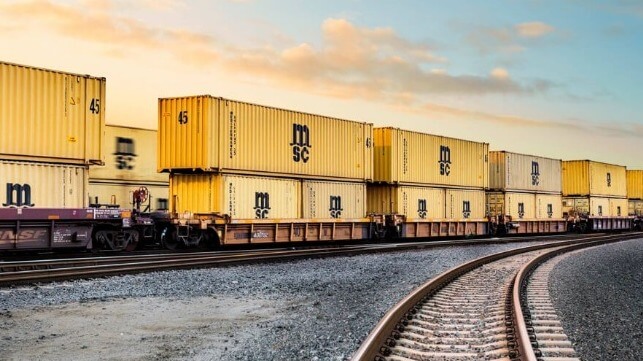
MSC containers on rail cars
MSC is starting a new intermodal cargo company with Italy's state-owned railway operator (MSC)

PUBLISHED NOV 16, 2023 8:48 PM BY THE MARITIME EXECUTIVE


MSC Mediterranean Shipping Company and Ferrovie dello Stato Italiane, Italy's state-owned national railway company, are launching a new business to develop intermodal sea and rail transport from Italy’s ports and connecting to Europe’s railway network. The two companies have been working together to study the possibility of launching a commercial and operational partnership for the development of intermodal transport linked to maritime operations.

“The memorandum signed today with a major international partner, confirms the FS Group’s commitment to becoming the European logistics player,” commented Sabrina De Filippis, CEO of Mercitalia Logistics. He said working together they will seek to build new terminals and create greater synergies to expand the freight transport logistics network. Critically, they also point out that the goal is to reduce the use of road transportation for cargo which will directly contribute to reducing emissions and improving the environment.

The agreement provides for the establishment of a new company jointly owned 51 percent by Mercitalia Logistics, FS Italiane Group’s Logistics Business Division. MSC through a subsidiary MEDLOG, which specializes in intermodal transport and logistics, will hold 49 percent of the new company.

The collaborative effort will create new terminal capacity based on the development of maritime intermodal traffic, to and from Italian ports. It will also seek to improve the quality of services and provide a competitive alternative to road transport as well as on the Italy-Northern Europe axis.

According to the companies, these initiatives are part of the joint mission of Ferrovie dello Stato Italiane and MSC Group to support the development of the Italian economy through greater use of rail mobility.

They will look to increase the volume of goods transported by train by creating more effective connections between Italy’s ports and terminals and the national network. They will also look to expand to European railway corridors, consolidating the integration of sea-rail-road transport systems.

This agreement is also seen as the next step in MSC’s strategy of building its terminal, intermodal, and rail investments. Last month, MSC acquired an approximately 50 percent stake in Italo - Nuovo Trasporto Viaggiatori, one of Europe’s leading private high-speed rail operators. Since its launch in 2012, Italo has grown to operate a fleet of 51 energy-efficient electric trains, connecting 51 cities across Italy and serving over 20 million passengers per year. FS and Italo combined account for most of Italy’s cargo and passenger transport by train.

Diego Aponte, Group President of MSC Mediterranean Shipping Company, speaking about the Italo acquisition reported that the company’s goal is to further develop sustainable modes of transport, for both passengers and cargo.

MSC acquired the shares in Italo from independent infrastructure investor Global Infrastructure Partners. They reported that GIP would hold the other approximately 50 percent interest in Italo along with co-investors which includes Allianz Group entities and funds managed by Allianz Capital Partners.


Caretakers of the Aquatic Planet

Acadia
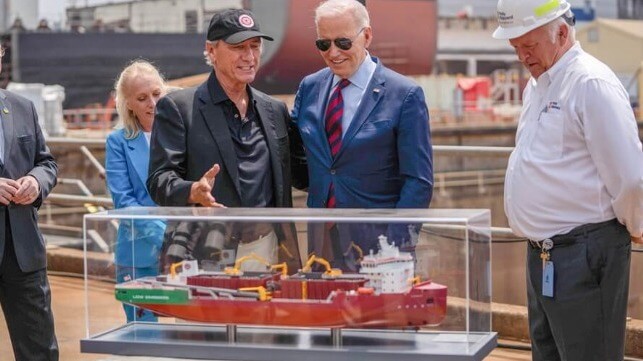
GLDD CEO Lasse Pettersen and President Joe Biden at the steel-cutting ceremony for the SRIV Acadia (GLDD)

PUBLISHED NOV 16, 2023 8:03 PM BY TONY MUNOZ


(Article originally published in Sept/Oct 2023 edition.)

Dredging companies do more than just deepen harbors and riverbeds to facilitate domestic and global trade. They also recycle and repurpose the dredged materials, restore eroded beaches and reclaim damaged wetlands.

The first job of any company is to make a profit, and when Lasse Petterson took the reins as CEO at Great Lakes Dredge & Dock (GLDD) in 2017 it was struggling. Finances were strained. The market was soft. It had too many idle vessels. It needed fixing. So the former oil and gas man quickly put together his team and came up with a strategy to right the ship and fix the ailing giant.

Today, six years later, the company is once again flourishing. Orders are up. The balance sheet is healthy, and the fleet is in the process of being “right-sized” for a changing market. In July, the company received the okay for the biggest project in its history – the deepening of the entrance channel at the port of Brownsville, Texas for NextDecade’s massive Rio Grande LNG facility – a sign of good things to come.

The project combines GLDD’s core competency with its ongoing involvement in clean energy. 

“We look forward to working with NextDecade and other stakeholders, including the U.S. Army Corps of Engineers and the Port of Brownsville, on this important improvement project that will benefit the navigation interests and allow for future development of the Port of Brownsville,” stated Petterson. “Our proven performance and safety culture allows us to support the growth of LNG exports in the U.S., which is a necessity in balancing affordability for energy and overall sustainability.”

It’s the latest in a long line of firsts.

Beginnings

Since its founding in 1890, GLDD has built a reputation of being the experts in dredging, construction and reclamation. Throughout its 133-year history, it’s worked on many important projects and employed generations of engineers, many of whom spent their entire careers employed on GLDD projects around the world.

In 1890, the company was named Lydon & Drews and early on was hired to work on the shoreline near the site of Chicago’s Columbian Exposition. It soon had satellite operations throughout the Great Lakes and in 1905 decided to rebrand itself as Great Lakes Dredge and Dock. At the time it had 13 dredges and ten tugboats.

It practically built the city of Chicago – or at least the shoreline portion along Lake Michigan. Projects included straightening the Chicago River and shoreline reclamation for the Adler Planetarium, Shedd Aquarium, Soldier Field, the Field Museum, Grant Park and Naval Station Great Lakes. Farther afield, it helped construct the Sabin Lock at Sault Ste. Marie, Michigan and U.S. Steel’s Gary, Indiana works.

In 1943, during World War II, the company constructed the MacArthur Lock, which is 800 feet long and 80 feet wide and drafts to about 30 feet. It dredged the Houston Ship Channel and helped expand oil industry infrastructure in the Gulf of Mexico.

Because of its reputation and many valuable assets, companies like ITEL Corporation, Blackstone Dredging Partners and Vectura Holdings (Citigroup) bought it at different times over the years. During the Madison Dearborn ownership, it merged the company with Aldabra Acquisition Corp. (a special acquisition company or SPAC) and took GLDD public in 2006. 

Madison sold the last of its stock in the company in 2009, and GLDD today is a publicly traded company
on Nasdaq.

Waterways Maintenance & Reclamation

The work done by GLDD is essential to domestic and international trade, and the company is widely recognized for its many contributions.

But dredging has always been essential to trade, waterfront development, a healthy economy and a healthy environment. The Sumerians in about 4000 BC, who lived in Mesopotamia, understood that healthy, navigable waterways created more trade and commerce. They built ships called “barques,” made of reeds and timber, to navigate the Tigris and Euphrates rivers, which were responsible for maritime commerce in the ancient world.

The Egyptians and Mesopotamians dredged commercial waterways as early as the third millennium BC as the Nile River flooded every year, but the ancients used rudimentary hand tools and baskets to remove the sediment from riverbeds. The Sumerians and later civilizations of the Babylonians and Assyrians faced similar challenges and regularly dredged to maintain open trade routes.

In medieval Europe, rivers were dredged with shovels, baskets and rakes to create suitable draft for ships and barges. In what is now Belgium, the construction of locks and canals was needed to control water levels, and regular dredging was essential for marine traffic. Colonial America, too, kept ports like Boston, New York, Philadelphia, Charleston and Savannah dredged and built commercial infrastructure to keep trade moving in the new world economy.

In today’s world, dredging and waterway maintenance are important environmental issues as well, right up there with decarbonization. As the dynamics of climate change continue to alter the aquatic landscape, companies like GLDD are essential.

At the Port of Long Beach, GLDD expanded Pier J by constructing a reclamation area and dredging a containment area at depths of more than 90 feet. This created a solid foundation and facilitated construction of the shipping container terminal through controlled rock placement and dike construction, enabling it to handle megaships like the behemoth Abraham Lincoln, which is over 1,000 feet long and 257 feet wide.

 In Chesapeake Bay, which provides deepwater access to the ports of Virginia and Baltimore, GLDD has removed tens of millions of cubic yards of material during port maintenance dredging projects in order to keep these waterways open. Maintaining channels to their authorized depths is not only critical for safe navigation into the ports but also vital for regional and national economies.

GLDD’s diverse fleet allows it to meet scheduling demands as well as provide beneficial re-use of much of the dredged material, which is placed at the Paul S. Sarbanes Ecosystem Restoration Project at Poplar Island, located on the eastern side of Chesapeake Bay.

The Houston-Galveston Navigational Channel is one of the busiest and most important commercial waterways in the U.S. and globally. In fact, GLDD relocated its corporate headquarters from Oak Brook, Illinois to Houston two years ago “to be closer to its clients,” said Petterson.

In 2018 and 2019, GLDD worked a major project in Bahrain, where it dredged and reclaimed shoreline and handled more than 120 million cubic meters of sediment. It had another challenging job in the North Sea, helping construct a roadway and rail connection between Denmark and Sweden, in which it handled more than 8.5 million cubic feet of reclaimed material in a highly sensitive environment.

Offshore Wind

Recently, GLDD made a big commitment in the U.S. offshore wind sector, investing $197 million in the first Jones Act-compliant subsea rock installation vessel – the SRIV Acadia.

Designed by Ulstein, the vessel uses modern ship technologies including environmental controls and automation approved by the American Bureau of Shipping (ABS). It will be awarded the ABS SUSTAIN-2 Notation, recognizing adherence to certain U.N. Sustainable Development Goals related to vessel design, outfitting and layout, and is currently being constructed at Philly Shipyard, which was featured this year in our July-August 2023 edition.

The vessel can transport up to 20,000 metric tons of rock, which are used as a foundation and protective layer for turbine towers, cable lines and other subsea structures. The Acadia measures 461 feet in length, 102 feet in width and can accommodate a crew of forty-five.

It’s scheduled for delivery in 2025 and will work with Van Oord on the Empire I and Empire II offshore wind farms along the Eastern Seaboard. These farms are expected to produce about two gigawatts of renewable energy for the state of New York.

A Winning Strategy

“We are executing on our strategy to enter the fast-growing U.S. offshore wind market,” noted Petterson in the company’s second quarter earnings release. “We continue to be proactive on cost reductions and fleet adjustments including cold stacking of vessels,” he added, “and we have adjusted our general and administrative, overhead cost structures and dredging fleet to reflect the changed market conditions coming into 2023.”

He further noted that cold-stacked vessels can easily be reactivated as the market continues to improve: “These initiatives have led to substantially reduced costs in 2023 which has allowed us to navigate impacts from a delayed 2022 bid market and continue our fleet renewal program, which remains on budget with our mid-size hopper dredge, the Galveston Island, expected to be operational in the second half 2023 and her sistership, the Amelia Island, has expected delivery in 2025.” 

A bright future indeed. And with a record backlog of over $1.1 billion, GLDD should have smooth sailing ahead.

Tony Munoz is Founder, Publisher & Editor-in-Chief of The Maritime Executive.

The opinions expressed herein are the author's and not necessarily those of The Maritime Executive.