Saturday, December 23, 2023


 DECEMBER 22, 2023

Anti-genocide protest in Guatemala. Photo: Center for Justice and Accountability.

It was on the streets of Guatemala City in 1987 when I began awakening to Israel’s partnership with the USA in facilitating genocide.

Today we are “seeing genocide”–a decades-long cumulative “genocidal condition”–being played out, as Israeli Modern Culture and Media Professor, Ariella Aisha Azoulay argues. We see it in the US/Israeli onslaught against Gaza. My memories and knowledge return to reflect on Israel’s connection to genocidal practice, not only in Gaza but also in Guatemala.

In Guatemala of the 1980s, a counterinsurgency by U.S.-backed military governments slaughtered Maya indigenous and tens of thousands of other dissidents and suspects. There was no social media to cover it. Most American citizens knew nothing of it. The killing of this period in Guatemala has been recognized as “genocide” by official analysts and by a thorough 12-volume investigative report (CEH, 1999). This latter study made clear the appropriateness of the phrase “acts of genocide” to name the crimes of Guatemala’s military against the Maya, in spite of the military’s claim that they lacked “intent” to commit genocide, that it was only motivated by economic, political or military concerns (CEH, 1999, ch. 2, vol.3). As with Israel in Gaza of Palestine, so with Guatemalan elites relative to the indigenous Maya, it is the historical record of decades of accumulative killing, occupation, forced removal and dehumanization, which establish the acts and conditions as those of genocide.

The studies of Guatemala’s genocide, as I will show, reveal also the special role of Israel in that slaughter under the aegis of US imperial interests.

I was first in Guatemala in 1987 to interview educators and activists who were important for my research about the role of religious beliefs among Maya indigenous peoples as they waged resistance to their ongoing repression. 1987 was a date when Guatemala’s latest series of military governments had just passed the worst of mass violence against Maya communities, the worst occurring between 1981 and 1983 (see historian Grandin and anthropologist Schirmer). The period is often called a “hidden/silent holocaust,” the “Guatemala holocaust” or the “Maya holocaust.” And this is only one site of Israel’s involvement with massive state violence and terrorism throughout Latin America. I had been working with Guatemalans and others in the US to seek an end to U.S. military aid to Guatemala.

Simultaneous to my research, I was also in Guatemala to set up a program for students, one that I ran at Princeton Theological Seminary for almost 15 years. It placed our students in Central America, usually in Guatemala, for 8-weeks of summer learning programs–not for missions, building projects, but primarily for accompaniment, listening, and mutual understanding. Setting up this program through consultations with many Guatemalans, and then guiding students through this program remains one of the most valuable of my experiences over 40-plus years of teaching at Princeton.

One day in 1987, as the dust and smog of a Guatemala City street swirled about me, I walked in conversation with an activist friend and mentor. We were interrupted, startled by a loud order given by an authoritative command, projected by a deep vibrating loudspeaker. Call it a Darth Vader like sound-only sharper, slightly higher pitched, more threatening at high volume.

“What?” I gasped with irritation.

“Oh yeah,” clarified my colleague, “Witness our new police vehicles, courtesy of the Israeli Government.”

“Israel in Guatemala?” This disturbed me and started a line of thinking that persisted in my research and writing for decades. The Israeli state’s destruction of over 400-500 villages in Palestine of 1947/1948 would for subsequent decades be linked in my mind with the destruction of a similar number of villages destroyed in Guatemala in the early 1980s. My thinking on this part of the tangled web of world genocidal outcomes became a life-long concern in my research and publications (and here).

I knew something of Israel’s history of war and repression in Palestine, but I did not know then, in 1987, of its connections to supplying police and military equipment as well as advisors in technology and surveillance to Guatemala. The nation’s police institutions were networked with military and surveillance agencies. These armed agents of state became fearsome threats to its citizens and brutal actors, especially after the 1954 CIA orchestrated coup against Guatemala’s last democratically-elected government.

The worst of the massacres in Maya villages were part of large military “sweeps” through Guatemala’s northern and western highlands. U.S. Colonel George Maynes told journalist Allan Nairn that he had worked with Guatemalan General Benedicto Lucas Garcia to develop this sweep tactic. During the presidency of Pentecostal general Efraín Ríos Montt, this sweep tactic was developed in March 1982 into a systematic strategy against the Maya who were seen as the major “internal enemy” to the Guatemalan state. Nairn also reports that U.S. Green Beret, Captain Jesse Garcia was even more specific about how he “was training Guatemalan troops in the technique of how to ‘destroy towns’.” Maya indigenous suffered over 625 massacres and also, by the government’s own admission, the near total destruction of more than 600 villages in Guatemala’s rural highlands. 100,000 fled to Mexico, over a million displaced within Guatemala.

It was not just the Maya indigenous who suffered such atrocity. Urban, non-indigenous dissidents or suspects were also rounded up and often interrogated, tortured, disappeared. Over a million pages of reports from Guatemalan police archives–yes, over a million pages now retrieved–confirm this. Overall, more than 200,000 people were killed or disappeared in this war in Guatemala between 1960 and 1996.

In a later visit with seminary students in 1988 and accompanied by my family and my two young children, I visited the forensics unit of Grupo de Apoyo Mutuo (Mutual Support Group) in a small building in Guatemala City run by the country’s las madres de los desaparecidos (“mothers of the disappeared”). The next morning, we saw in the newspapers that the building had been firebombed by police forces. Families looking for their disappeared loved ones (and doing so with the support of international delegations of which I was a part), all seeking forensic information that might expose those culpable for the disappeared–this was a crime in Guatemala in these years. The pervasiveness of violence in Guatemala, and the U.S. role in sustaining it, was dramatically marked for me by this encounter.

Israel’s connection to all this has been extensively researched.

Israel became heavily involved with Guatemala’s military government, especially when US President Jimmy Carter in 1977 cut off most of US military aid to Guatemala due to its notorious record of human rights abuses. Investigative journalist George Black, writing for NACLA, reported that Israel eagerly stepped in for the US, becoming “Guatemala’s principal supplier. In 1980, the Army was fully re-equipped with Galil rifles [Israeli manufactured] at a cost of $6 million.” In later years, Guatemalan military elites were proud that they had quelled the insurgency largely without US aid. Israel had played a much-valued proxy role for US military suppliers.

In an infamous massacre, one of many, the Israeli connection was clearly present. At the village of Dos Erres on December 6, 1982. Israeli-trained commandos left the village completely burned down, after shooting, torturing and/or raping over 200 villagers. A UN investigative team reported: “All the ballistic evidence recovered corresponded to bullet fragments from firearms and pods of Galil rifles made in Israel” (Trans. of Spanish report, volume 6, appendix 1, p. 410). This was just in the one village of Dos Erres. The same 12-volume investigation reports that Israeli made Galil rifles were used throughout the highlands, while US-made helicopters ferried troops into the highlands for what the report argues were “acts of genocide” (report, volume 2, 314-423).

Alas, it took me too long to learn how many were the other ways that Israel had been involved in Guatemala’s massive state violence. Harvard-trained political scientist Bishara Bahbah in his book, Israel, and Latin America: The Military Connection (1986) termed Israeli military aid to Guatemala “A Special Case” within a larger set of Israel’s armament sales to Latin America over the decades. Other works make similar points, such as the study by Milton Jamail and Margo Gutierrez, It’s No Secret: Israel’s Military Involvement in Central America. 

Scholars continue to study Israel’s military contribution to militarizing today’s global order. Israel is adept at marketing itself as provider of technology for the “pacification” of the global order’s trouble spots. Israeli anthropologist, Jeff Halper, documents this at length in his book, War Against the People: Israel, The Palestinians, and Gl0bal Pacification (2015). Halper notes that in Guatemala, Israel’s military aid and training were instrumental in setting up forced-settlement, “re-adjustment” communities, or “model villages” designed to monitor massacre survivors. This was even referred to by Guatemalan military officers as a “Palestinization” of Guatemala’s post-massacre Maya lands, where shock and awe and scorched earth campaigns left a devastated people (Halper, 154-155). Guatemala-born journalist, Victor Perera described the result “a distorted replica of rural Israel.” Ian Almond, who recounted Perera’s description stated that Israeli trained, Guatemalan Colonel Eduardo Wohlers, in charge of the Plan of Assistance to Conflict Areas admitted “The model of the kibbutz and moshav is planted firmly in our minds” (Bahbah, 164).

Here are just a few further notes on Israel’s Guatemala connection:

As early as 1978, joint discussions taking place in Israel, between Israeli and Guatemalan defense ministers, focused on “the supply of weapons, munitions, military communications equipment (including a computer system, tanks and armored cars, field kitchens, other security items and even the possible supply of the advanced fighter aircraft, the Kfir. They also talked about sending Israeli personnel . . . to train and advise the Guatemalan army and the internal security police (known as G-2) in counterinsurgency tactics” (Rubenberg, n.33).

As the Guatemalan sweeps against the Maya were beginning, in November of 1981, the United States and Israel signed the Memorandum of Understanding Concerning Strategic Cooperation. It focused on their joint efforts “outside the east Mediterranean zone.”

Israel started delivering its Arava STOL utility planes in 1977, purportedly only for transporting non-military supplies, but as advertised by Israelis the planes are “quickly convertible” to other purposes, even into being “a substitute for the helicopter.” They were used for counterinsurgency activity in the Guatemala highlands (Bahbah, 71,96, 100, 145-7).

General Benedicto Lucas Garcia, Chief of Staff of the Guatemalan military and who implemented the genocidal sweeps, expressed appreciation for ” ‘the advice and transfer of electronic technology’ from Israel: when he was speaking at a special ceremony for opening the Guatemalan Army School of Transmission and Electronics (Bahbah, 163, citing Lucas Garcia as quoted in the Manchester Guardian, January 1982).

According to one comprehensive summary of Israel’s role in “Guatemala’s Dirty War,” journalist Gabriel Schivone wrote in The Electronic Intifada about how Israel pursued this proxy role for the U.S. One Israeli minister of economy, Yaakov Meridor stated: “We will say to the Americans: Don’t compete with us in Taiwan; don’t compete with us in South Africa; don’t compete with us in the Caribbean or in other places where you cannot sell arms directly. Let us do it . . . Israel will be your intermediary.”

Consider Israeli General Mattityalu Peled, who was a trained fighter for Israel with the early elite Zionist paramilitary Haganah, a military administrator over occupied Gaza in the late 1950s, and also a general during the 1967 war. Peled gave an honest explanation of Israel’s role in the global arms market: “Israel has given its soldiers practical training in the art of oppression and in methods of collective punishment. It is no wonder, then, that after their release from the army, some of those officers choose to make use of their knowledge in the service of dictators and that those dictators are pleased to take in the Israeli experts” (Rubenberg n.6).

President Ríos Montt’s 1982 coup, as he himself explained to ABC News, carried the day because “many of our soldiers were trained by the Israelis.” Israeli trainers and advisors for both military and police actions were reported to be at 150-200 in number, some reports stating 300 (Bahbah, 161). As the killing in the highlands was at its height, Ríos Montt’s chief of staff, General Hector Lopez Fuentes admitted, “Israel is our principal supplier of arms and the number one friend of Guatemala in the world” (Rubenberg, n.61).

One Israeli advisor who worked extensively in Guatemala, Lieutenant Colonel Amatzia Shuali, had clearly taken the Israeli government’s message to heart. Shuali mentioned to a fellow Israeli, “I don’t care what the Gentiles do with the arms. The main thing is that the Jews profit.” The interviewer added, “Shuali was too polite to make such a remark to a non-Israeli.” (Shuali quoted from interview by the Cockburns in Dangerous Liaisonp. 221, 381.n10). Shuali’s attitude was similar to that coming from the lips of a former head of the Knesset foreign relations committee. About Israel’s relationship to Guatemala, the Knesset member explained: “Israel is a pariah state, we cannot afford to ask questions about ideology. The only type of regime that Israel would not aid would be one that is anti-American” (Rubenberg, n.1).

Another key Israeli strategist, Pesakh Ben Or, “perhaps the most prominent Israeli in Guatemala” in the 1980s, was an agent for Israel Military Industries and for Tadiran (an Israeli telecom group that serviced the military and surveillance offices at the Guatemalan National Palace). He managed also to maintain “a villa near Ramlah in Israel, complete with Guatemalan servants, pool and stabling for seven racehorses” (Dangerous Liaison221 from interviews Oct 31, 1988 and from Aluf Ben, writing in Ha’ir, Sept 1987).

Much of Israel’s military aid is part of an assistance mesh that includes agricultural aid. A NACLA report by investigative journalist George Black summarized from Guatemala: “. . . there is an interlocking mosaic of assistance programs–weapons to help the Guatemalan Army crush the opposition and lay waste to the countryside, security and intelligence advice to control the local population, and agrarian development models to construct on the ashes of the highlands.”

According to the Stockholm International Peace Research Institute, as Bahbah summarizes, “With Israeli help, Guatemala even built a munitions plant to manufacture bullets for M-16, and Galil assault rifles.” This plant was opened in the Guatemala town of Coban, a place in which I and my students had visited to interview activists and church leaders. (Bahbah, 162).

Fifteen years of research and consultation with scholars more expert than me on Guatemala have kept me attuned to the US/Israel/Guatemala military connections. There is more research on the connections during the years of genocide in Guatemala than I can summarize here. I have found the similar patterns of Israeli/US partnership when making visits to other sites of US military interventions, overt and covert (in Peru, Colombia, Honduras, El Salvador, Nicaragua and Chiapas, Mexico)These countries, too–but especially and always Guatemala–gave me a first window out onto the US and Israel as partners in genocide. Now, especially within the U.S. I as a citizen have to reckon with my share of responsibility in all this, given the $3.8 billion dollars per year in military aid that the US sends to Israel to preserve these ways of violence against Palestinians and Guatemalans.

Our pro-Palestinian movements must rise to challenge, once and for all, this US/Israel partnership in the genocidal condition.

Mark Lewis Taylor is Maxwell Upson Professor of Theology and Culture, Princeton Theological Seminary.


The Anatomy of Zionist Genocide


DECEMBER 22, 2023
Facebook

Image by Taylor Brandon.

On October 7, Hamas fighters breached the Gaza prison fence, launching a coordinated attack on at least seven Israeli military installations and more than 20 surrounding residential communities. Over 1000 Israeli citizens, both civilian and military, as well as dozens of foreign nationals, were killed in the attack. Some 240 others were taken captive. Caught off guard and in disarray, the Israeli military responded to the attack in a frenzy, firing indiscriminately on breached localities, slaying Israeli captives alongside Hamas fighters in the process. It took the Israeli forces nearly a day to recapture all lost territory and secure the Gaza perimeter.

Following Hamas’s unprecedented incursion, Israel’s public relations apparatus launched a misinformation campaign aimed at inciting fear and fury and began to spread unverified atrocity propaganda. The campaign, involving tales of babies being “beheaded en masse”, “burned” and “hung on a clothesline”, helped transform the Israeli public’s shock into genocidal tribalism and diverted attention from Israel’s political, intelligence and military blunders that paved the way for the attack in the first place. The campaign also helped the government garner crucial public support for mass mobilisation of reserve units which made the consequent full-scale ground invasion of the Gaza Strip possible.

After securing unconditional military, political and diplomatic backing of its imperial sponsors in the West, most notably in Washington,  and under the pretext of countering Hamas and rescuing captives, Israel then initiated what has since been accurately described as an AI-guided “mass assassination campaign” in Gaza.

Ten weeks on, most of Gaza is now destroyed, nearly 20,000 Palestinians are dead with many more still under the rubble, and the world continues to watch a genocide unfold in real time. Examining these events through a behavioural-neuroscientific lens could offer insights into the Zionist settler colonialist dynamic in general and the particular motivations behind Israel’s current genocidal acts in Gaza, as well as potential paths forward.

The pillars of Zionist propaganda

In response to historical trauma, Jewish people have a deep fear of anti-Semitism. In the late 19th and early 20th centuries, this fear, along with disdain for oppressors, led to the formation of autonomous Jewish self-defence groups in various geographies.

Zionism, a European colonial movement, recognised the potential of this dynamic. It syncretised Jewish longing for safety and self-defence with white supremacist, messianic and fascistic ideologies. This synthesis birthed a new, nationalist Jewish identity that equates Jewish safety with the construction of an exclusivist homeland in Palestine through the displacement of the region’s Indigenous populations.

Settler colonial endeavours typically depend on depicting the targeted territory as “uninhabited”, and its existing inhabitants as inhuman barbarians unworthy of any land.

This portrayal allowed Zionists to displace the Indigenous population of Palestine without moral qualms, portraying the establishment of Israel not as the destruction of a people but as the construction of a “villa in the jungle”.

Within the Israeli society grounded in land and resource theft, offensive aggression under the guise of “self-defence” (as in “Israel Defence Force”) has been rewarded and reinforced from the very beginning and consequently became a routine part of life. By reinstating fear and hijacking trauma associated with past and present negative experiences of Jewish people, Zionist leaders ensured the settler population’s continued support for aggressive, expansionist, hegemonic, genocidal policies and shielded their corruption and other criminal endeavours from public scrutiny.

To maintain Israel’s violently oppressive status quo and expand the territory of the settler colony, Zionists opportunistically conflated their colonial ideology with Judaism.

Citing divine dispensation, radical, far-right settlers have been encouraged to seize hilltops on Palestinian land, expel those living there, and form illegal outposts. These outposts are later fortified by the Israeli military and eventually “legalised” by the Zionist state.

Beyond justifying violent land theft, the conflation of Zionism and Judaism serves to delegitimise Indigenous resistance by equating any criticism of Zionism or Israel’s policies towards the Palestinians as an attack on Jews. Further, it hinders anticolonial resistance by portraying a political struggle over land and resources between occupying settlers backed by imperial forces and an Indigenous-occupied people as a supposed ancient religious “conflict” between equals.

This conflation encourages Zionist appropriation and exceptionalisation of Jewish victimhood. Israeli hasbara presents the Holocaust as an unparalleled genocide, granting Jews special victim status. This narrative justifies privileges, discounts and allowances for Israel as the “Jewish state” constructed to ensure the safety of Jews, at the expense of Indigenous Palestinians. Notably, Zionist revisionism often neglects and downplays Nazi crimes against other oppressed groups, including communists, socialists, Roma, disabled individuals, LGBTQI and African Germans.

The liberal wing of Zionism serves to whitewash the reactionary core of the movement and conceal its true objectives – expansionism and apartheid. Misleadingly, Liberal Zionists portray Zionism as an ideology aligned with democratic, progressive values and human rights, falsely projecting a genuine commitment to peace, justice and full integration into the Middle East.

Fear and genocidal fervour

Until October 7, Israel upheld its founding aspiration, enforcing a doctrine of endless occupation while oscillating between implicit and explicit forms of genocide, the latter often described as “mowing the lawn” in reference to Israel’s periodical attacks on Gaza since its 2005 “withdrawal” from the besieged Palestinian enclave.  During this time, Israeli Zionists reaped the benefits of Palestinian land and its resources in a modern, affluent, supposedly democratic consumer paradise, fostering robust connections and identification with white US and Europe and oil/cash-rich Gulf monarchies, rather than its immediate neighbours.

On October 7, intense fear and shock gripped Israeli society, presenting Benjamin Netanyahu’s far-right government with a golden opportunity to quash rising dissent against corruption, and please his coalition membe rs with a genocidal land grab.

Fear in Israel is sustained through militarisation, anti-Palestinian narratives, reframing resistance as “terrorism,” remembering past atrocities, focusing on perceived threats and promoting segregation, ie, apartheid. Chronic fear induces symptoms akin to Post-Traumatic Stress Disorder (PTSD), making the Israeli population prone to aggression masked as “self-defence”.

The toxic mix of fear, dehumanising propaganda, rewards for aggression and intense apartheid has bred a lack of empathy in Israelis toward Palestinians. Despite claiming the Gaza conflict as “self-defence”, Israeli leaders openly blame Palestinian society as a whole, essentially sanctioning collective punishment of civilians. Daily, Israeli institutional leaders mock Palestinian culture and cheerlead the torture, displacement and annihilation of Palestinians, revealing a disturbing genocidal mindset.

The path forward

On October 7, the carefully constructed Zionist facade of incremental genocide within a liberal/democratic framework collapsed, exposing Israel’s genocidal and fascistic core. Zionists in Israel and beyond did not mourn the end of this charade, and instead celebrated their newfound freedom to kill and destroy Palestinians without any restraint or pretence. This development not only poses a threat of elimination to the Palestinian people but since the Occupied Territories are used as a laboratory for the development and testing of new military technology and strategies, it could also set the stage for similar violent escalations against oppressed communities in the Global South as well as against BIPOC and immigrant communities within the Global North.

Israel’s genocidal behaviour in Gaza and elsewhere in historic Palestine resonates with patterns seen in the Stanford prison experiment and the Milgram obedience study. In the latter, individuals, swayed by authority, had administered potentially lethal shocks to other participants.

For Israelis to break their addiction to aggression, they would need to go through a process of deprogramming and decolonisation. This would require them to embrace the truth about the history and nature of their country, commit to sincere accountability, recognise the humanity of Palestinians, and empathise with their suffering and plight. Once the oppressive structure, Zionism, is disassembled, it can be effectively dismantled, paving the way for a process of rehumanisation and reconciliation through the use of empathy. Liberation, reconciliation and an end to Israel’s genocidal violence can only be achieved within a steadfast and unwavering anti-Zionist framework that aligns with wider leftist, antiracist, anticolonial values.

Dedicated to the late Palestinian poet Refaat Alareer.

This piece first appeared on AlJazeera.

Yoav Litvin is a Doctor of Psychology/ Behavioral Neuroscience. For more info, please visit yoavlitvin.com/about/  

Israeli response to Oct 7th 'equivalent to a weapon of mass destruction over civilian population'


Issued on: 23/12/2023 - 

Israel's war to destroy Hamas has killed more than 20,000 Palestinians, health officials in Gaza said Friday, as Israel expanded its offensive and ordered tens of thousands more people to leave their homes. The deaths in Gaza amount to nearly 1% of the territory’s prewar population — the latest indication of the 11-week-old conflict's staggering human toll. Israel’s aerial and ground offensive has been one of the most devastating military campaigns in recent history, displacing nearly 85% of Gaza’s 2.3 million people and leveling wide swaths of the tiny coastal enclave. More than half a million people in Gaza — a quarter of the population — are starving, according to a report Thursday from the United Nations and other agencies. Israel declared war after Hamas militants stormed across the border on Oct. 7, killing some 1,200 people and taking some 240 hostages. Israel has vowed to keep up the fight until Hamas is destroyed and removed from power in Gaza and all the hostages are freed. After many delays, the U.N. Security Council adopted a watered-down resolution Friday calling for immediately speeding up aid deliveries to desperate civilians in Gaza. The United States won the removal of a tougher call for an “urgent suspension of hostilities” between Israel and Hamas. It abstained in the vote, as did Russia, which wanted the stronger language. The resolution was the first in the war to make it through the council after the U.S. vetoed two earlier ones that called for humanitarian pauses and a full cease-fire. For in-depth analysis and a deeper insight on the harrowing plight of civilians in war-torn Gaza, FRANCE 24 is joined by Dr. Gilbert Achcar, Author, Researcher and Professor of Development Studies and International Relations at SOAS University of London.

08:39

Hamas Leader in Lebanon Calls for Democratic Palestinian Elections When War Ends

In an interview with Mondoweiss, Hamas official Osama Hamdan outlined the group’s vision for the future.
December 22, 2023
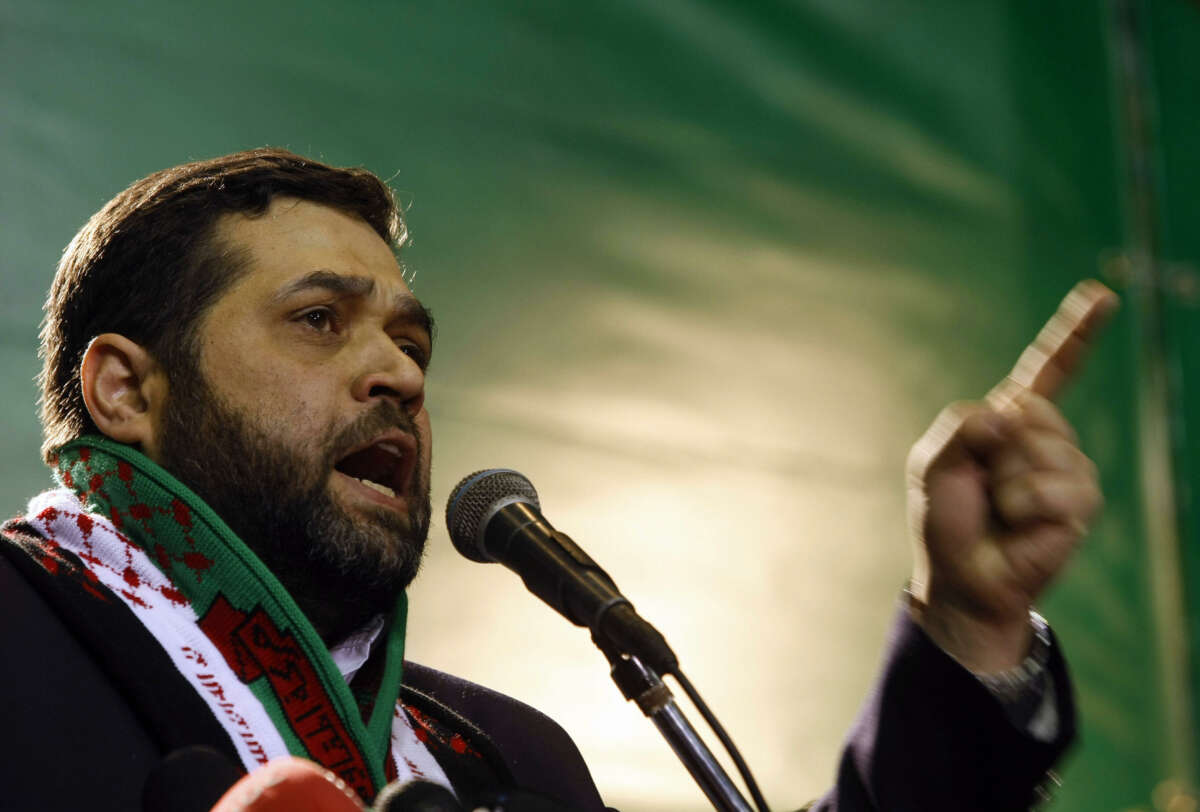
Hamas leader in Lebanon Osama Hamdan speaks during a rally at a stadium in Beirut, Lebanon
JOSEPH BARRAK / AFP VIA GETTY IMAGES


While the U.S. and other Western governments are discussing the prospect of installing an alternative administration over the Gaza Strip in the aftermath of the current Israeli assault, possibly with the Palestinian Authority at its helm, Hamas is now launching its own alternative vision regarding Gaza’s postwar reality.

This vision includes holding democratic Palestinian elections the day after the war and was shared in a wide-ranging interview with Osama Hamdan, the senior representative of Hamas in Lebanon. Speaking to Mondoweiss, Hamdan emphasized the importance of Palestinian self-determination in the aftermath of the current assault on Gaza, in addition to several other topics, including Hamas’s demands before reentering negotiations on a prisoner exchange, the resistance group’s motivation for Operation “Al Aqsa Flood,” and how regional politics have been reshaped in the wake of the October 7 attack.

Democratic Elections for Palestinian Leadership

Following the fighting in Gaza, Hamdan says that efforts must be made to “rebuild the internal Palestinian house.”

“Given the sacrifices of the Palestinian people, they deserve a leadership committed to resistance and the ultimate goal of liberating Palestine and returning the refugees,” Hamdan told Mondoweiss. “With a variety of tools at our disposal, the ideal scenario involves one in which the Palestinian people elect their own leaders. We trust our people to consistently choose resistance. The ideal next-day scenario for Hamas is a national Palestinian election.”

RELATED STORY
NEWS |
A quarter of the population, or about 570,000 people, are facing famine, the report says.
By Sharon Zhang , TRUTHOUT December 21, 2023

This call for democratic elections marks the first clear statement calling for an intra-Palestinian political process since the start of the war, calling for the breakup of the status quo of indefinite rule by a single party.

“Every party aspiring to lead must be held accountable,” Hamdan continued. “If they are successful, they will be validated by the people’s vote; if they fail, they will face judgment at the polls. It is not certain that Hamas will always win. The election of any party by the people, in a fair and democratic process, should be respected by all as the will of the Palestinian people.”

For years, Israel has asserted that the lack of a unified and legitimate Palestinian leadership has been a major barrier to reaching a political solution — meaning that Israel has always had a vested interest in perpetuating Palestinian disunity. In this way, Hamas’s proposal can be seen as a way of putting political pressure on Israel while asserting Hamas’s continued political presence in the Palestinian arena.

“The prospect for Palestinian unity is now promising,” Hamdan said. “First, the resistance is actively confronting the occupation, reinforcing the idea that resistance is the sole viable solution. Meanwhile, the occupation disregards the PA, treating it as non-existent, and is directly engaged in Gaza. Thus, all parties are in conflict with the occupation, providing common ground for unity.”

“Second, the sacrifices made by the Palestinian people place a duty on everyone,” Hamdan continued. “Those lacking national responsibility will overlook this bloodshed, but those with national interests will acknowledge these massacres and work to end Palestinian division. Third, the strategy of supporting Israel to dominate Palestinians’ realities is losing ground. Currently, there’s a shift in discourse towards a Palestinian state, albeit on a portion of our historical land, which we believe wholly belongs to us.”

Most notable in Hamdan’s position is the emphasis on the need for a Palestinian state on a portion of historic Palestine, even if it does not mean the total liberation of all of Palestine. Yet his political rhetoric seems to reflect a willingness to accept such a political entity, whether within the framework of a long-term truce or as a temporary arrangement.

“Achieving this requires Palestinian unity, an opportunity we must grasp to resolve our division. We firmly believe this is a genuine chance for unity. We hope those who long favored compromise will now adopt this logic.”

However, Hamdan also emphasized that “we don’t discuss [the issue of] unity with the PA, but with the broader Palestinian political forces and factions. The PA is an institution that emerged under specific conditions, distinct from the factions that represent segments of the Palestinian populace. It’s undeniable that every active Palestinian faction has its supporters; otherwise, it would have vanished from our political landscape.”

In doing so, Hamdan recognized the political legitimacy of the ruling Fatah party in the West Bank, as well as the other Palestinian political factions and forces.
No Negotiations Until Aggression Ends, Siege Lifted

After over ten weeks of Israel’s onslaught against the people of Gaza and the Palestinian factions in the beleaguered enclave, Hamas continues to firmly reject Israel’s latest offer of another temporary humanitarian truce in return for the release of a number of Israeli prisoners. This rejection is consistent with Palestinian demands since hostilities resumed after the end of the first temporary ceasefire, as has been voiced by several Hamas and Palestinian Islamic Jihad (PIJ) senior leaders.

Talking with Mondoweiss, Hamdan made clear that any talk of the release of Israeli prisoners will not resume before the end of the Israeli war on Gaza.

“It is premature to discuss resuming negotiations,” Hamdan said. “Discussing the details of prisoner negotiations is currently too early. The initial step requires an end to the Israeli aggression on Gaza, lifting the siege, and beginning the reconstruction process. Only then can we consider our next steps.”

Hamdan’s statement marks the first instance of the explicit demand for an end to the siege and the initiation of the reconstruction of Gaza as a precondition for restarting talks.


Motivations for October 7, Reactions to International Response

Hamdan also asserted the reason for the “Al-Aqsa Flood” Operation was to reinsert Palestinians into the regional discourse over the future of Palestine.

Hamdan articulated that the October 7 attacks by Hamas were not isolated incidents but a response to broader geopolitical dynamics. He emphasized that the European and U.S. alignment with Israeli actions contributed to a sense of abandonment among Palestinians, exacerbating their plight under occupation and oppression. This feeling was intensified by the muted international reaction to the policies of the extreme right-wing Israeli government towards Palestinians in Gaza, the West Bank, and Jerusalem. According to Hamdan, these factors collectively contributed to a lack of political prospects for Palestinians and were key reasons behind Hamas’s decision to carry out the attack.

“Some people believe that the attacks were carried out mainly to cripple the normalization efforts between Saudi Arabia and the Israeli government, and this is an exaggeration,” Hamdan explained. “The reason was the rise of an extreme right-wing religious Zionist government that has effectively tried to end the Palestinian issue by implementing a comprehensive plan that erases every aspect of the cause of the Palestinian people.”

“This development was met with silence and even support from the United States and Europe,” Hamdan elaborated. “Consequently, there was a necessity for significant action, not only to bring the Palestinian issue back to the spotlight but to reestablish it as a struggle of a people seeking their own liberation and self-determination at its core. This was the reason for the extensive nature of the action, aiming to reposition the Palestinian cause to its rightful and natural place in the discourse.”

“The attempt to represent it as hostility…towards Saudi Arabia is a misrepresentation as if it is a conflict within the region’s own people,” Hamdan asserted. “The peril of normalization lies in the effort to sidestep the Palestinian issue, and reinstating this issue…will significantly affect related projects. However, it is an overstatement to claim that the resistance initiated the operation solely to halt normalization.”

Moreover, Hamdan asserted that if October 7 undermined normalization, “it indicates that normalization was not the appropriate course of action.” In other words, normalization, in Hamdan’s view, “represents an unnatural behavior, highlighting that the occupation is unstable and unreliable.”

While Hamdan welcomed the protests across Europe, the movement remains realistic about their impact, acknowledging that such demonstrations, while shaping public opinion, likely will not prompt strategic changes in government policies toward Israel. Nonetheless, Hamdan believes these protests could play a role in shaping how governments approach and manage the conflict. This is evidenced by how some European governments have revised their stances with respect to a ceasefire, which could be attributed to the public outcry against Israeli actions in Gaza.

Regional Dynamics

In addressing the region’s dynamics, the Hamas movement has noted a complex evolution in the official Arab response, influenced by many factors that have continued to shift positions. Hamdan points out that initially, some states were swayed by the U.S. narrative of the events of October 7, but that the severity of Israeli actions and the discussion of the potential expulsion of Palestinians from Gaza acted as critical catalysts for change.

Hamdan believes that the “change in the Arab world’s official stance was primarily driven by the resilience of the resistance and, secondly, by the haunting memories of the Palestinian expulsion in 1948 — a historical event that led to the start of the armed struggle.”

“Such memories resonate deeply with neighboring countries, who no longer wish to face similar situations,” Hamdan clarifies. “The possibility of policies that might lead to another expulsion of Palestinians is a red line for these nations. We appreciate that their governments have resisted any efforts that would facilitate such expulsions.”

He further observes a positive shift in the Arab stance, which he regards as a welcome change from “the explicit opposition of some states to the resistance during the 2014 Israeli incursion into Gaza.” This reflects an increasingly evolving and nuanced response of different regional actors to the situation in Gaza.

Discussing the relationship between the movement and Hezbollah, Osama Hamdan affirmed the strategic connection between the two groups, recognizing Hezbollah’s significant support in southern Lebanon for the Gaza front.

“While some expected more from Hezbollah, and we appreciate such high expectations placed on the party, we understand that they operate within specific circumstances,” Hamdan noted. “Nevertheless, Hezbollah has managed to create a sense of uncertainty for the U.S. and Israeli governments, implying that escalation could occur at any moment. The Israeli army faces the apprehension of potential conflicts erupting in the north while engaging in Gaza.”

“Another critical aspect was the infiltration into occupied Palestine by Palestinians from Hamas and Islamic Jihad based in Lebanon,” Hamdan added. “Though the impact was minimal, it sent a powerful message: the resistance in Lebanon is actively committed to upholding the right of refugees to return to their homeland and to work toward this goal. This is a significant message, and while its current impact might be limited, I believe it will substantially influence the future trajectory of the conflict.”

Hamdan also commended Qatar’s role in mediating the conflict, praising Qatar’s professionalism and impartiality. He emphasized Qatar’s effectiveness in conveying positions and facilitating dialogue, highlighting their resistance to external influences. Specifically, he appreciated how Qatari mediators, along with their Egyptian counterparts, addressed Israeli violations during ceasefires and understood Hamas’s stance, especially when Hamas rejected certain Israeli proposals. Hamdan noted that the Qatari mediators did not exert undue pressure on Hamas and maintained a balanced approach, focusing on dialogue and future prospects without yielding to Israeli or American preferences.

Palestinian Self-Determination

In the ongoing war in Gaza, the Israeli government is likely to transition to a strategy characterized by “surgical,” low-intensity combat operations. Amid these tactical shifts, a significant question remains regarding Gaza’s future, a question that Hamas, unlike Israel and the U.S., seems prepared to answer with a definitive approach: advocating for democratic elections. This proposal happens to align with the universally recognized principles of Palestinian self-determination.

More importantly, Hamas’s rhetoric now shows a clear push for restarting the Palestinian national movement within the framework of elections and national unity, which it clearly views as important for maximizing the political outcomes of the war.


AMENA AL-ASHKAR is a Palestinian journalist and refugee living in Lebanon.
Meta Is Systematically Censoring Pro-Palestine Posts, Human Rights Watch Finds

The company has implemented “sweeping bans” on content supporting Palestinian rights, the group’s report found.
December 21, 2023
A close-up of a finger is pointing to the Facebook mobile app on a smartphone screen, which is displayed alongside other apps including Instagram, WhatsApp, Telegram, TikTok, Tinder, YouTube, and Messenger, on November 30, 2023.
JONATHAN RAA / NURPHOTO VIA GETTY IMAGES

2024 is going to be the most important year yet for fearless, trustworthy journalism. Will you make a tax-deductible, end-of-year donation to support our work? Any amount you give will be matched!

Meta, the company that owns Facebook and Instagram, has been censoring posts from pro-Palestine voices, a new analysis from Human Rights Watch finds, lending evidence to what many advocates for Palestinian rights have suspected since Israel’s current assault began.

Human Rights Watch analyzed posts on Facebook and Instagram from over 60 countries and found that the platforms have been taking down posts in support of Palestine for erroneous reasons. This censorship is “systemic and global,” Human Rights Watch writes in its 51-page report.

The report finds several underlying reasons driving the censorship: inconsistent enforcement of Meta’s content policies, automated content removal, granting requests from governments to remove certain content, and “sweeping bans” on so-called “terrorist” activity — seemingly using definitions that liken all support of Palestinian rights to “terrorism,” a dangerous conflation that has been increasingly common in the past months.

The group found 1,050 cases of censorship on Instagram and Facebook, with 1,049 of the posts supporting Palestine and one post being taken down in support of Israel. Even Human Rights Watch’s post calling for evidence of censorship appeared to be suppressed, the report finds, with dozens of users reporting being unable to interact with the post.

Censorship took several forms, the report found. Researchers documented over 100 cases each of posts being taken down, accounts being suspended or disabled, account activity being restricted in various ways, like being unable to “like” posts or follow accounts, and “shadow banning,” in which the reach of an account is severely limited without the user being formally notified.

RELATED STORY
Corporate media outlets have treated Palestinian suffering as a nonstory for many decades.
By Andy Lee Roth & Mickey Huff , TRUTHOUTDecember 2, 2023

“Meta’s censorship of content in support of Palestine adds insult to injury at a time of unspeakable atrocities and repression already stifling Palestinians’ expression,” Deborah Brown, acting associate technology and human rights director for Human Rights Watch, said in a statement. “Social media is an essential platform for people to bear witness and speak out against abuses while Meta’s censorship is furthering the erasure of Palestinians’ suffering.”

The findings represent a small sample of the number of instances of censorship, the group said, with Human Rights Watch receiving hundreds more reports from users after the report was finalized. The report isn’t a representative sample, the report said, meaning that it can’t be extrapolated to make conclusions about Meta’s censorship practices across their entire platforms.

It is a show, however, that the company is taking steps to suppress information about Israel’s genocidal assault on Gaza in a time when many institutions are working to silence people who speak up in favor of Palestine. On top of the recurring communications blackouts in Gaza and the near-constant flow of disinformation on Israel’s massacre, these institutions and companies have worked to muddy the waters of the assault, in which over 20,000 Palestinians have been killed and people in Gaza are staring down the barrel of issues of rapidly worsening hunger and disease across the region.

This has long been a practice within Meta, Human Rights Watch researchers have found. A similar report done by the group in 2021 found that Facebook was removing content by Palestinians and pro-Palestinian voices. Meta commissioned an independent report probing the issue in response to the report, but despite recommendations that the company change its policies to avoid censoring content supporting Palestinian rights, the company has still not made sufficient changes, the group said.

This article is licensed under Creative Commons (CC BY-NC-ND 4.0), and you are free to share and republish under the terms of the license.


SHARON ZHANG  is a news writer at Truthout covering politics, climate and labor. Before coming to Truthout, Sharon had written stories for Pacific Standard, The New Republic, and more. She has a master’s degree in environmental studies. She can be found on Twitter: @zhang_sharon.


Human Rights Watch reports content in support of Palestine on Meta being censored

Human Rights Watch released a new report on the patterns of censoring pro-Palestinian content on Meta, specifically Instagram and Facebook. Their report came after reviewing over 1,000 cases and finding more than 30% of the content or action taken was without appeal. The censorship consisted of removal of content, suspension of accounts, restrictions on features like Instagram and Facebook Live, and shadow banning. Human Rights Watch is sending a clear message to Meta: 'Stop silencing support for Palestine.

December 23, 2023 
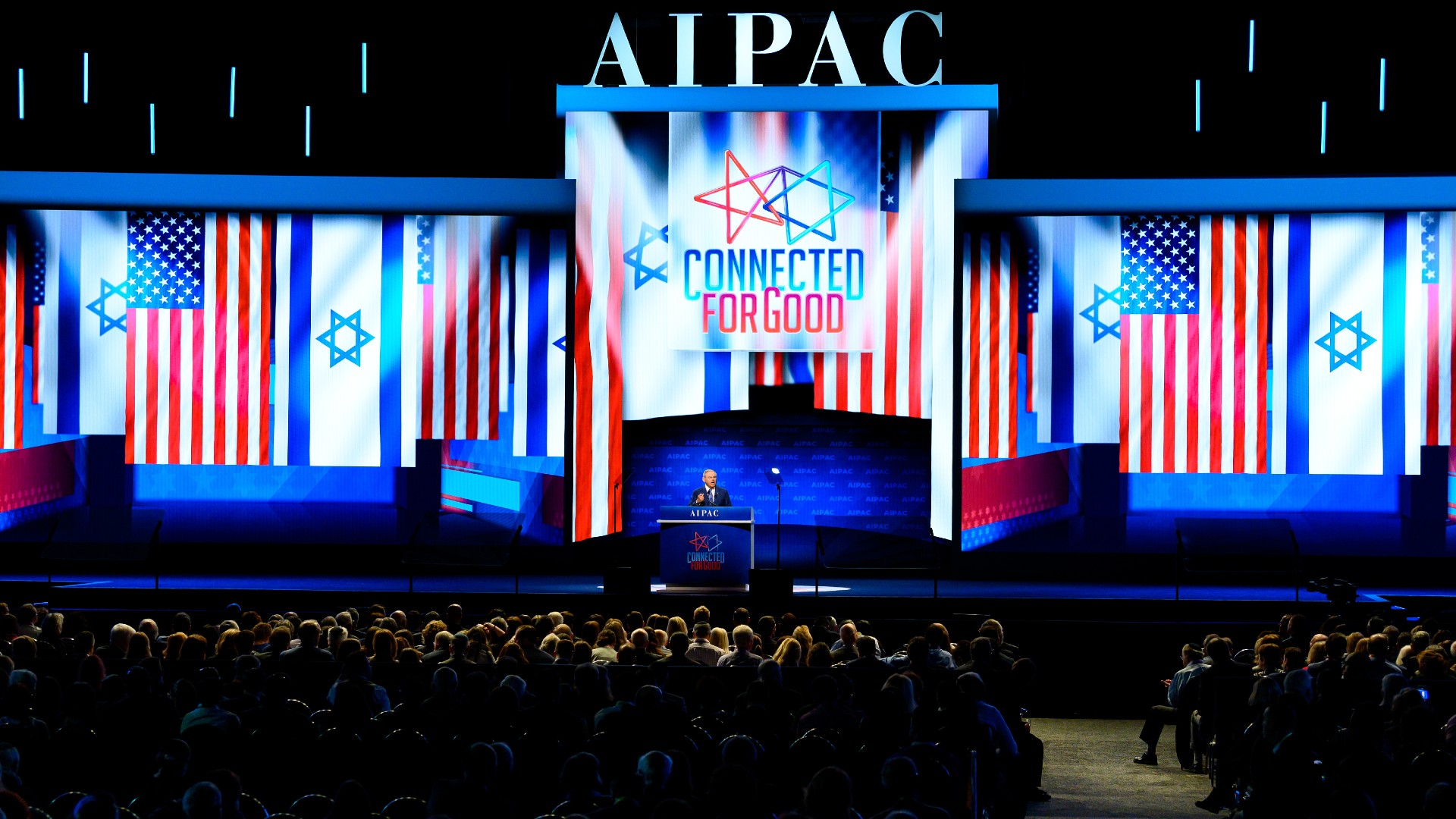
US labour unions lead protest at AIPAC's New York office

Brooke Anderson
Washington, D.C.
23 December, 2023

American labour unions led a protest this week in front of the New York office of AIPAC, amid growing global discontent over US military support for Israel.

US labour leaders demonstrated for a ceasefire in Gaza in front of the AIPAC office in New York. [Getty]

Some of the largest American labour unions led a protest this week in front of the New York office of the American Israel Public Affairs Committee (AIPAC) to call for a ceasefire on Thursday, amid growing global discontent over US military support for Israel's war on Gaza.

Protesters held signs with the names of top federally-elected New York state politicians along with the amount that they have received from the Israel lobby group.

The demonstrators highlighted AIPAC funding to senators Kristin Gillibrand and Chuck Schumer, as well as Representative Hakeem Jeffries, who have received hundreds of thousands of dollars from AIPAC. Other signs read "Workers Demand Ceasefire Now" and "Free Palestine" as they chanted in front of AIPAC's downtown New York City office.

The unions leading the demonstration were the United Auto Workers, the American Postal Workers Union, as well as the United Electrical, Radio, and Machine Workers. They were joined by Adalah Justice Project, American Muslims for Palestine NY/NJ Jewish Voice for Peace-NY, New York Communities for Change, the New York Working Families Party, and the New York City Democratic Socialists of America.

"For many years, we've stayed out of the conflict or unquestionably supported the state of Israel. Now, with people dying in this war, it's time to reconsider that," Brandon Mancilla, Region 9A director for the UAW, which includes New York, New England and Puerto Rico, told The New Arab.

He emphasised that as a labour movement, they should be standing with all vulnerable groups, including Palestinians. He also noted that many auto union workers are Arabs from Michigan, an important swing state for the presidential election, and that the UAW hasn't yet endorsed a candidate for US president. He said, "Biden really fumbled his response to the war."


UAW and American Postal Workers Union Members Lead NYC March for Gaza

The march came a week after leaders of several major unions joined progressive lawmakers to demand a ceasefire.
December 22, 2023
Protesters participate in a Global Strike for Gaza on December 18, 2023, in New York City.
MICHAEL M. SANTIAGO / GETTY IMAGES

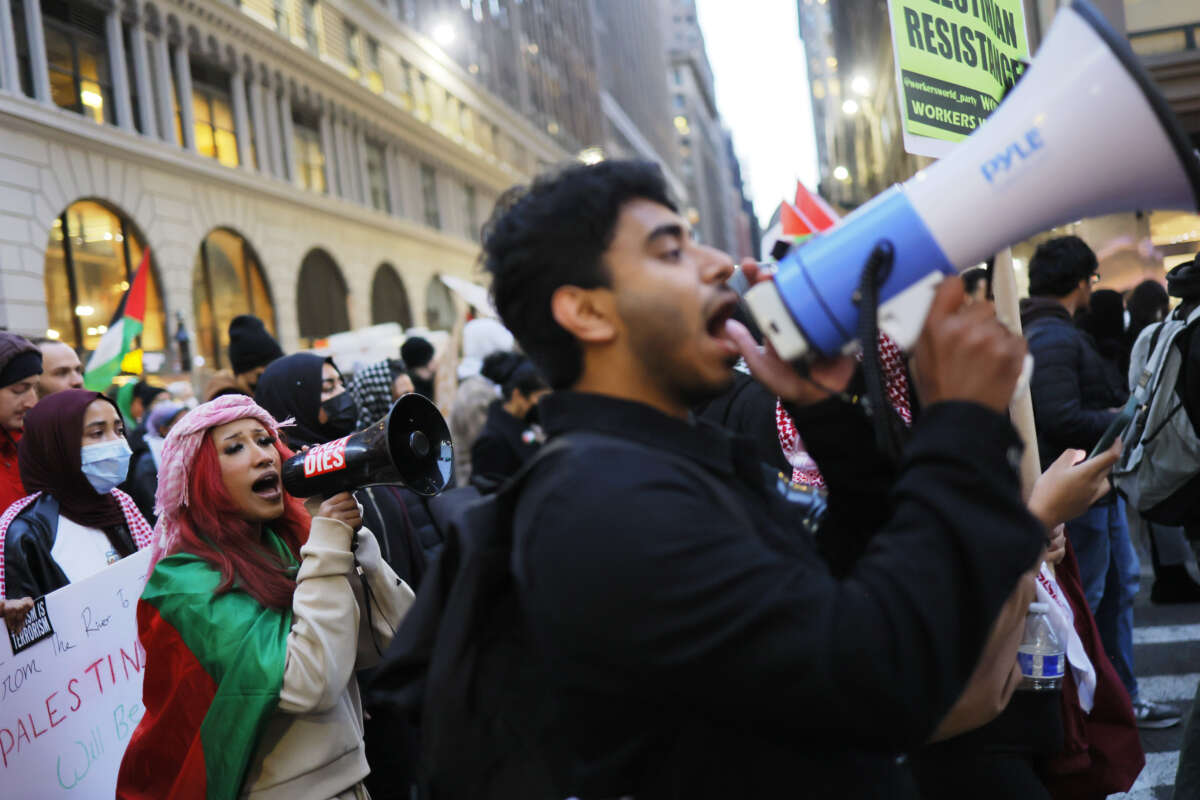
Unions, Jewish groups, and other organizations led a march in New York City Thursday night to demand a cease-fire in the U.S.-backed Israeli war on Gaza and pressure their members of Congress to stop taking campaign cash from pro-Israel lobbyists.

Members of the United Auto Workers (UAW) Region 9A; American Postal Workers Union (APWU); United Electrical, Radio, and Machine Workers (UE) Eastern Region; New York City’s arm of Democratic Socialists of America (NYC-DSA); Adalah Justice Project, American Muslims for Palestine N.Y./N.J.; Jewish Voice for Peace-N.Y.; New York Communities for Change; the New York Working Families Party; and more took to the streets to call for “peace and justice for Palestine.”

They carried signs stressing U.S. worker demands for a cease-fire in the conflict that has killed more than 20,000 Palestinians in Gaza, including over 8,000 children. The signs also highlighted how much money Senate Majority Leader Chuck Schumer, Sen. Kirsten Gillibrand, and House Minority Leader Hakeem Jeffries — all New York Democrats — have taken from the American Israel Public Affairs Committee (AIPAC).

AIPAC is reportedly planning to spend at least $100 million in 2024 Democratic primaries, aiming to unseat cease-fire supporters, particularly “Squad” members — Reps. Jamaal Bowman (D-N.Y.), Cori Bush (D-Mo.), Summer Lee (D-Pa.), Alexandria Ocasio-Cortez (D-N.Y.), Ilhan Omar (D-Minn.), Ayanna Pressley (D-Mass.), and Rashida Tlaib (D-Mich.).

“For two months, the whole world has watched as the Israeli military launched its assault on Gaza,” said organizers of Thursday’s march, who rallied behind a clear message: “Stop the Bombs! Cease-fire now!”

Biden and Democrats are looking to resurrect — and in some cases expand — the Trump administration’s worst policies.
By Thomas Kennedy & Corey Hill , TRUTHOUT  December 21, 2023

“Disease, hunger, and thirst are spreading rapidly,” they continued. “Two million Palestinians have been displaced and thousands imprisoned by the Israeli state.”

The United States gives Israel $3.8 billion in annual military aid and U.S. President Joe Biden has asked Congress for another $14.3 billion for the war effort. As the march organizers put it: “This horror has unfolded with the full support of the U.S. government. Our out-of-touch representatives, instead of siding with their constituents are siding with AIPAC, a racist right-wing lobby group.”

“But we will not let them ignore this growing working-class movement. Hundreds of thousands of regular people have taken to the streets, jammed the phone lines and inboxes of their representatives, stopped traffic, staged sit-ins, and more, to demand peace and justice,” they added. “We demand our N.Y. senators call for an immediate and lasting cease-fire, vote NO on the $14 billion aid bill, and refuse far-right AIPAC contributions! And we will continue to march, protest, disrupt, and fight until we end this genocide.”

The NYC march came a week after leaders of unions such as the UAW, APWU, and UE held a press conference with Democrats including Bush, Ocasio-Cortez, Omar, and Tlaib at the U.S. Capitol in Washington, D.C. to demand a cease-fire.

Noting UAW president Shawn Fain’s participation, John Nichols wrote for The Nation:

For Tlaib, the only Palestinian American member of Congress and an outspoken advocate for a cease-fire, it was an especially poignant moment. She noted, “I’m a proud daughter of a UAW worker, and I know my Yaba [father], if he was here, he would be so proud. The UAW taught him he deserved human dignity, even though he only had a fourth-grade education, even though he was Palestinian, even though he was Muslim. On that assembly line, he was equal to every single human being on that line. Who did that for him? The United Auto Workers did that for him.”

Fain, for his part, delivered a clear call for a change in U.S. policy.

“The only path forward to peace and social justice is a cease-fire,” said the UAW leader.

Thursday’s demonstration coincided with intense debates over a cease-fire resolution at the United Nations Security Council in New York City. The United States, one of five nations with veto power, has delayed multiple expected votes on the measure this week.

This piece was reprinted by Truthout with permission or license. It may not be reproduced in any form without permission or license from the source.

JESSICA CORBETT is a staff writer with Common Dreams.
How Oil Money Turned Louisiana Into the Prison Capital of the World


A series of events in the 1970s led to the state’s penal system becoming intertwined with the swings of its oil economy.
December 22, 2023
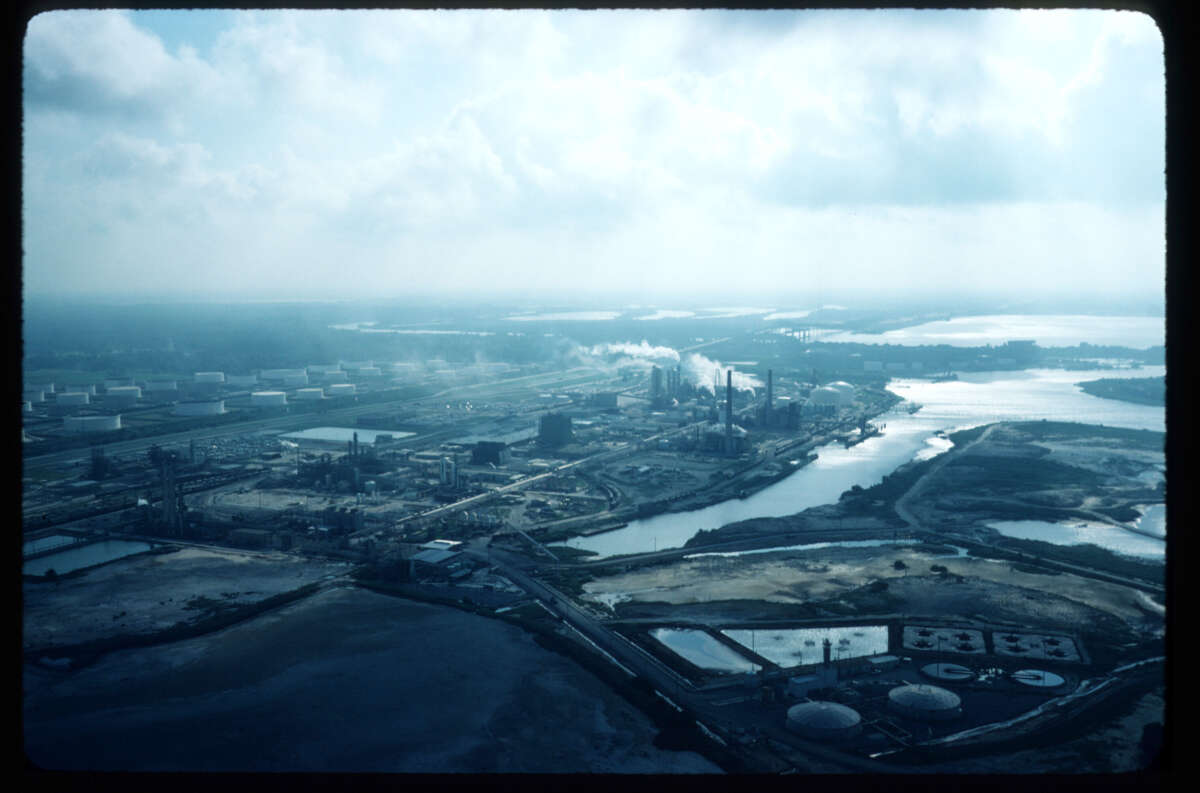
Part of the Strategic Petroleum Reserve, a gulf coast refinery covers acres of low-lying marshland in Louisiana, on June 1, 1980.
ROBERT NICKELSBERG / LIAISON VIA GETTY IMAGES


On October 14, 2023, Louisiana elected far right candidate Jeff Landry to the governor’s mansion. As the state’s current attorney general, Landry (a former police officer and sheriff’s deputy) has made headlines for his creation of an anti-crime policing task force for New Orleans, suing the state to block clemency appeals by those on death row, and advocating to make public the criminal records of juveniles in predominately Black areas of the state. Landry’s dedication to “law and order” has been matched by his commitment to extractive industries. As a climate change denier, he has pushed for more aggressive off-shore drilling in the Gulf of Mexico and sued the Environmental Protection Agency for overreach. As governor, he is poised to roll back the moderate criminal legal system reforms enacted under Gov. John Bel Edwards in 2017, and further deregulate the oil and gas industries. These political moves will further tie Louisiana to the destructive prison and petrochemical sectors — limiting and cutting short the lives of countless residents.

This political coupling of mass incarceration and petrocapitalism is nothing new for the state. In 1901, Louisiana purchased the notorious Angola plantation to serve as the Louisiana State Penitentiary, and oil was struck in the state for the first time. Yet, as documented in my book, Prison Capital: Mass Incarceration and Struggles for Abolition Democracy in Louisiana, not until the 1970s did the growth of Louisiana’s penal system become intertwined with the swings of the state’s oil economy. This is not to reduce Louisiana’s standing as an epicenter of mass incarceration to a “resource curse.” Political power blocs and struggles, not natural resources, shape policy makers’ decisions. With that said, one cannot understand Louisiana officials’ unprecedented expansion of the state’s punishment regime without understanding the seesaw of petrocapitalism.

Over the course of the 20th century, Louisiana developed its political economy on oil extraction and refinement. Amid the black gold rush of the 1920s, Gov. Huey Long rose to power on a populist platform that promised the people of Louisiana state investments in social welfare through increasing taxes on oil companies. Long’s petro populism was modest insofar as he never called for the public ownership of the state’s natural resources, and the taxes he championed were relatively limited. However, this petro populism still ushered in the beginning of Louisiana’s fiscal dependency on oil revenues. As Jason Theriot documents in his book American Energy, Imperiled Coast, generation after generation of state leaders incentivized new rounds of oil extraction to fill state coffers and enrich oil capitalists at the expense of a diversified political economy and the erosion of coastal wetlands. By the 1970s, Louisiana had become economically dependent on the volatile commodity of oil.

The 1970s also marked a new era for the Louisiana penal system. The legitimacy of Angola had reached a breaking point. Four Black prisoners — Arthur Mitchell, Hayes Williams, Lazarus Joseph and Lee Stevenson — filed an extensive lawsuit against Angola in 1971 for issues including medical neglect, unsafe facilities, religious discrimination against Muslims, racial segregation and the violence of solitary confinement. In 1975, federal Judge Elmer Gordon West ruled in favor of the plaintiffs and declared the prison to be in a state of “extreme public emergency.” Sweeping changes were ordered in the name of restoring imprisoned people’s constitutional rights and population limits were placed on Angola.

At first, liberal reformers running the Louisiana Department of Corrections (DOC) responded by pushing for a slew of reforms they believed would make Angola a more orderly, safe and modern prison: ending the trusty guard system, racially integrating prison dormitories and work assignments, and investing in repairs and security technologies. At the heart of their reforms was a push for their “decentralization plan” to shrink or even shutter Angola and replace the plantation penitentiary with smaller regional urban prisons.

RELATED STORY
The state spends up to $150,000 on each incarcerated child, which could fund education rather than locking up kids.
September 19, 2023


Louisiana’s budget was so flush with oil surpluses that for three straight years, prison construction costs were covered with cash on hand instead of the more typical debt financing.

While the federal court agreed this was one possible avenue out of the crisis, Judge West mandated that Angola be downsized or decommissioned in two years’ time. Otherwise, officials would need to expand the prison. The short timeline given by the courts and local opposition to new prisons by urban residents in their cities made the decentralization plan unfeasible. Instead, Louisiana sought to resolve the crisis by enlarging the prison system in rural areas. As the 1978 Governor’s Office Long Range Prison Study shows, officials added 1,400 new beds to Angola and built three new state prisons within five years of the federal court rulings. This expansion of the Louisiana carceral state was framed by government officials — from Judge West to the governor of Louisiana — as a form of “humanitarian” reform, without any concern given to the state’s increased power to cage more Louisianians.

But such penal expansion is never cheap.

The Rise — and Fall — of Petrochemical Revenues

In Louisiana, the state’s petrochemical revenues allowed the state to take on substantial prison construction years earlier than other states under similar federal court orders. As noted by scholars, such as Timothy Mitchell and Judith Stein, the 1970s were a dramatic period for the global oil economy. In 1973, the Organization of the Petroleum Exporting Countries (OPEC) raised the tax rate on oil production while Arab oil states placed an embargo on the U.S. in response to President Richard Nixon’s support for Israel in the Yom Kippur War. In response, U.S. oil prices shot up fourfold, creating strains on the U.S. economy. Coupled with the devaluation of the U.S. dollar, this produced the 1973-1975 U.S. recession. However, for Louisiana, the increase in oil prices led to more oil taxes for the state. The OPEC oil crisis produced not a budgetary shortage but an unexpected windfall of revenue and buffered Louisiana from the national recession As state executive budgets document at length, Louisiana officials were able to funnel $100 million to new carceral construction, increasing the DOC’s operating budget from $17.3 million in 1972 to $45 million in 1977 in the name of liberal reforms. In fact, Louisiana’s budget was so flush with oil surpluses that for three straight years, prison construction costs were covered with cash on hand instead of the more typical debt financing. By 1980, the state’s prison capacity was double what it was in 1970.

However, when oil prices dropped following the global oil glut in the 1980s, Louisiana found itself in a tailspin. New Right Gov. David Treen leveraged the fiscal crisis to institute law and order austerity — cutting social programs alongside bulking up investments in prisons, jails and policing. For the first time in years, the state’s budget projections outpaced revenues. With the state scrambling for resources, Treen cut $270 million from across the state budget in 1982, which included a 25 percent cut to the Department of Labor. During this time, unemployment rates skyrocketed to the point that the Louisiana unemployment program went broke when unemployment claims wildly outpaced reserves. The following year proved even more dire. Treen pushed not to raise taxes or to marshal resources to cushion the devastation the recession was having on people’s lives; instead, Treen cut another $120 million from critical state services in 1983. These policy measures transitioned what had begun as a fiscal crisis into a manufactured economic one.

This expansion of the Louisiana carceral state was framed by government officials as a form of “humanitarian” reform, without any concern given to the state’s increased power to cage more Louisianians.

While incarcerated people at Angola hoped this economic crisis would compel the state to abandon its intensified punishment regime, this was not to be so. Although the state could not cut certain baselines due to the mandates of the federal court orders, Treen went above and beyond in funneling dwindling state funds into the already bloated DOC budget. Unlike every other sector of the state, the DOC did not experience cuts but rather a 23 percent budgetary gain during the first years of the early 1980s recession. When the interest rates for prison construction were too expensive, Treen implemented double-bunking — or doubling the number of people in prison cells and dormitories. When the federal courts berated Treen for this move, Treen reallocated funds from public works into jail construction while the state legislature allocated an additional $34 million to building prisons.

While these policies immiserated Louisianians across race, gender and geography, they particularly eviscerated urban Black communities. Treen matched his investments in prisons with a slew of new “tough on crime” initiatives that targeted increasing numbers of people for longer and longer prison sentences. This came as Black Louisianians experienced some of the highest unemployment rates in the nation — upwards of 20 percent — during the oil bust years, according to archived reports of the Bureau of Labor Statistics. Under law-and-order austerity — the coupling of state disinvestments in the social wage alongside investments in mass incarceration — Black Louisianians were disproportionately laid off with a shrinking safety net to soften the blow. At the same time, “law and order” law-making, policing and prosecution targeted urban Black communities who had been structurally abandoned by the labor market. This dual crisis ballooned the prison population. According to incarcerated journalists at The Angolite, the Angola news magazine, between 1975 and 1985 the state’s prison population jumped from 4,000 to 12,500 people.

During the 1970s and 1980s, both liberal reformers and law-and-order politicians invested in expanding the Louisiana carceral state. Yet in both cases, it was petrochemical tax dollars that made such expansions materially possible. Policy makers’ development of the Louisiana political economy on the volatile industries of oil and gas has ensured cyclical economic crises that have normalized precarity and provided cover for politicians who claim that the only legitimate sectors to invest in are prisons and police. All the while, the extraction and refinement of oil and gas destroy wetlands and increase carbon emissions — together exacerbating Louisiana’s vulnerability to climate change.

Yet, Louisiana is not destined to forever be a place built on the extractions of petrochemicals and prisons. As organizers with Taproot Earth remind us in their Gulf to Appalachia Climate Action Strategy, building just climate futures requires disinvestments from carceral infrastructures as part and parcel of the urgent reworking of our political economy.

Even with Jeff Landry as governor, abolitionists and environmental justice activists will continue to fight for a state invested in the care of its people. As a front line of these intertwined struggles, Louisiana reminds us of the life and death stakes of the new world we are fighting for.

Copyright © Truthout. 

LYDIA PELOT-HOBBS is an assistant professor of Geography and African American & Africana Studies at the University of Kentucky where she teaches and writes on mass incarceration, racial capitalism, and social movements.