Wednesday, February 21, 2024

AUSTRALIA

Since January, New South Wales has been gripped by concern over asbestos found in recycled mulch laid at public parks, supermarkets and schools.


Friable asbestos has only been found at one location, Harmony Park in Surry Hills. The rest has been bonded asbestos, which is less dangerous. 
(ABC News: Shaun Kingma)© Provided by ABC News (Sydney)


More than 40 sites have tested positive for asbestos as authorities investigate how the banned mineral was mixed with the mainstream gardening material.

At both manufacture and investigation, identifying the presence of asbestos in mulch relies largely on an extraordinary but commonplace piece of equipment — the human eye.

Staff at The Mulch Centre near Geelong are trained in identifying asbestos and other contaminants when receiving loads of green and timber waste.

"We have staff on site that put eyes on every load that's tipped out," managing director Russell Norton said.

"Our plan on trying to keep the loads as clean as possible is to apply a financial penalty to the people that tip the waste at our site, and if it's contaminated, they get charged a contamination fee."

Loads with rocks, plastic and takeaway wrappers have been stopped by Mr Norton's staff, but he said he had not heard of a situation like the one currently happening in Sydney, during his career.

"To get that many sites, I feel there's been a major let-down in their processes to end up in that situation," he said.

EPA still investigating

The NSW Environment Protection Authority (EPA) has identified one supplier as common across all contaminated sites — Greenlife Resource Recovery Facility (GRRF) — but is investigating the "complex supply chains involved".

"We are still investigating all lines of enquiry and have not ruled in or out any one cause for this contamination," an EPA spokeswoman said in a statement to 7.30.

"It is a criminal offence to have any asbestos in mulch and the EPA will not hesitate to take regulatory action against anyone who has impacted the product."

GRRF strenuously denies that the company is to blame.

"GRRF takes its responsibilities extremely seriously in processing eco-friendly mulch made from locally sourced timber products," a spokeswoman said in a statement.

"The recycled mulch is independently tested by a National Authorities Testing Australia (NATA)-approved laboratory … the independent testing shows GRRF's mulch did not and does not contain asbestos."
'Like looking for a black sock in a bucket of black socks'

At another NATA-accredited facility in western Sydney, occupational hygienist Linda Apthorpe showed 7.30 the arduous process involved in testing mulch for asbestos contamination.

Bags of mulch are labelled, dried and combed through in small batches, then put through a mechanical sieve and examined again, including under a microscope.

A keen eye is crucial.

"It's kind of like looking for a black sock in your family washing bucket of black socks," Ms Apthorpe said.

"We're looking for a different colour or shape, we're looking for even vinyl flooring materials that could be present in here — anything that could have accidentally got through the process."

All but one of NSW's contaminated sites has contained non-friable or bonded asbestos, a less dangerous form of the material.

"A fragment of bonded asbestos-containing material is not immediately going to pose a risk to health," Ms Apthorpe said.

"And so that's important to put that into perspective: just because it's there, it doesn't immediately pose a risk to health."

Professor Bernard Stewart, an expert in environmental causes of cancer, told 7.30 the risk posed by contaminated mulch was "astonishingly low".

"It's not to be confused with the risk to schoolchildren posed by road safety or posed by children taking to smoking or vaping," Professor Stewart said.

"It's something beyond that sort of risk."

But Professor Stewart said he backed the EPA's clean-up approach: "Other causes of cancer don't have a definitive link with a particular tumour type … so the EPA has no alternative but to address the possibility of exposure by every means at their disposal because of community anxiety, and because of the possibility later down the track of litigation based on the premise that not enough was done."

Concern over mulch has spread to at least two other jurisdictions. Queensland's Environment, Science and Innovation Department confirmed to 7.30 it was conducting "precautionary, targeted" asbestos sampling at mulch suppliers, while the ACT has announced the same potentially contaminated asbestos from NSW had been sold in and near Canberra.

Mr Norton, from The Mulch Centre, stressed well-made mulch was a safe and necessary garden product.

"We've got some of the poorest soils in the world, and we need to do everything we can to reduce the amount of water usage we've got in our gardens and give it our best go, and mulch is critical for that," he said.

"No one should be scared of mulch."

Productivity surge helps explain US economy's surprising resilience

Across the United States, chronic worker shortages have led many companies to invest in machines to do some of the work they can’t find people to do

ByPAUL WISEMAN
 AP economics writer
February 20, 2024, 


WASHINGTON -- Trying to keep up with customer demand, Batesville Tool & Die began seeking 70 people to hire last year. It wasn't easy. Attracting factory workers to a community of 7,300 in the Indiana countryside was a tough sell, especially having to compete with big-name manufacturers nearby like Honda and Cummins Engine.

Job seekers were scarce.

“You could count on one hand how many people in the town were unemployed," said Jody Fledderman, the CEO. “It was just crazy.’’

Batesville Tool & Die managed to fill just 40 of its vacancies.

Enter the robots. The company invested in machines that could mimic human workers and in vision systems, which helped its robots “see” what they were doing.

The Batesville experience has been replicated countlessly across the United States the past couple of years. Worker shortages have led many companies to invest in machines. They’ve also been training the workers they do have to use advanced technology so they can produce more with less.

The result has been an unexpected productivity boom, which helps explain a great economic mystery: How has the world’s largest economy stayed so healthy, with brisk growth and low unemployment, despite brutally high interest rates that are intended to tame inflation but that typically cause a recession?

To economists, strong productivity growth provides an almost magical elixir. When companies roll out more efficient technology, their workers can become more productive: They increase their output per hour. A result is that companies can often boost profits and raise pay without having to jack up prices. Inflation can remain in check.

The Fed's aggressive streak of rate hikes — 11 of them starting in March 2022 — managed to bring inflation from a four-decade high of 9.1% to 3.1%. But, to the surprise to the economists who'd forecast a recession, the higher borrowing costs have caused little economic hardship.

Perhaps the likeliest explanation is the greater efficiencies that companies like Batesville Tool & Die have managed to achieve. Before productivity began its resurgent growth last year, a rule of thumb was that average hourly pay could rise no more than 3.5% annually for inflation to stay within the Fed’s 2% target. That would mean that today's roughly 4% average annual pay growth would have to shrink. Higher productivity means there's now more leeway for wage growth to stay elevated without igniting inflation.

The productivity boom marks a shift from the pre-pandemic years, when annual productivity growth averaged a tepid 1.5%. Everything changed as the economy rocketed out of the 2020 pandemic recession with unexpected vigor, and businesses struggled to re-hire the many workers they had shed.

The resulting worker shortage sent wages surging. Inflation jumped, too, as factories and ports buckled under the strain of rising consumer orders.

Desperate, many companies turned to automation. The efficiency payoff began to arrive almost a year ago. Labor productivity rose at a 3.6% annual pace from last April through June, 4.9% from July through September and 3.2% from October through December.

At Reata Engineering & Machine Works, “efficiency was kind of forced on us,’’ CEO Grady Cope said. With the job market roaring, the company, based in Englewood, Colorado, couldn’t hire fast enough. Meantime, its customers were starting to balk at paying higher prices.

So Reata installed robots and other technology. Software allowed it to automate the delivery of price quotes to customers. That process used to require two weeks. Now, it can be done in 24 hours.

Many economists and business people say they're hopeful that the productivity boom can continue. Artificial intelligence, they note, is only beginning to penetrate factory floors, warehouses, stores and offices and could accelerate efficiency gains.

Automation raises fears that machines will replace human workers, killing jobs. Some workers supplanted by robots do often struggle to find new work and end up settling for lower pay.

Yet history suggests that in the long run, technological improvements actually create more jobs than they destroy. People are needed to build, upgrade, repair and operate sophisticated machines. Some displaced workers are trained to shift into such jobs. And that transition is likely to be eased this time by the retirement of the vast baby boom generation, which is causing labor shortages.

Some of today's productivity gains may be coming not just from advanced technology but also from more satisfied workers. The tight labor markets of the past three years allowed Americans to change jobs and find others that pay better and make them happier and more productive.

Justin Thompson, of Kalamazoo, Michigan, felt burned out by his job as a police officer, with its 16-hour workdays .“I was literally running myself into the ground,’’ he said.

Thompson's wife saw a job posting for operations manager at a charter airline. Even without airline experience, his wife felt he could use skills he gains as a Marine Corps infantryman — handling logistics for missions — during tours in Iraq and Afghanistan.

She was right. Omni Air International hired him in 2019.

Thompson, 43, loves the new job, which allows him to work from home when he’s not traveling. And his Marine experience — which included developing ways to improve efficiency — has proved invaluable.

Other workers have switched from low-skill jobs to those that allow them to be more productive.

At Reata Engineering, staffers were trained to use new sophisticated equipment.

“The whole point is not to lay people off,’’ said Cope, the CEO of Reata Engineering. “The point is to make people do jobs that are more interesting’’ — and pay better, too.


UK
The Gaza vote danger for Keir Starmer, explained

Story by Chloe Chaplain • TODAY

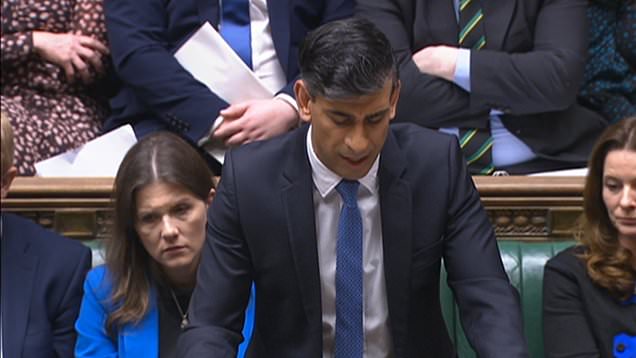
MPs will today debate and vote on whether to call for an immediate ceasefire between Israel and Hamas amid mounting concern at the humanitarian crisis in Gaza.

Global leaders have ramped up demands for action in the region, with Prince William and Foreign Secretary David Cameron the latest to warn too many lives have been lost in the region.

But today’s vote is as much about domestic politics as it is about the international situation.

The Commons has been pushed into the vote by the Scottish National Party (SNP), which has used a rare opposition day to table a motion demanding an immediate ceasefire.

It represents a political challenge for Labour leader Sir Keir Starmer, who until now has resisted calls for an immediate ceasefire and suffered a Commons rebellion for doing so.

Now, Labour has shifted its stance and backed a ceasefire but with significant conditions that outline the need for fighting to stop on both sides.

It is an attempt from the party leadership to avoid another Commons rebellion and push for a ceasefire that, they argue, the whole House could unite behind.
The ceasefire amendments

The SNP motion states the House “calls for an immediate ceasefire in Gaza and Israel”. It goes on to set out concerns about the death toll in the region and “condemns any military assault on what is now the largest refugee camp in the world”.

Whilst the motion does demand “the immediate release of all hostages taken by Hamas and an end to the collective punishment of the Palestinian people” it does not set out detailed conditions for the ceasefire.

Related video: Labour eventually calls for immediate humanitarian ceasefire in Gaza (Daily Mail)   Duration 1:23   View on Watch


Daily Mail  PM supports fighting 'pause' as Tories plan to vote no on ceasefire
2600:00


Daily Mail   Keir Starmer calls for an immediate ceasefire in Gaza
1:51


The Independent  Keir Starmer calls for ‘permanent’ Gaza ceasefire in speech at Scottish Labour conference
1:15


Labour’s amendment does, however, add more detailed specifications.

It calls for “an immediate humanitarian ceasefire, which means an immediate stop to the fighting and a ceasefire that lasts and is observed by all sides”. This is the first time the party has used such strong language.

The amendment also specifies that “Israel cannot be expected to cease fighting if Hamas continues with violence and that Israelis have the right to the assurance that the horror of 7 October 2023 cannot happen again” and sets out support for efforts to achieve a lasting ceasefire.

Another Government-led amendment to the motion does not call for a ceasefire right away but “an immediate humanitarian pause” with the aim of leading to a ceasefire at a later point.

It sets out support for “Israel’s right to self-defence, in compliance with international humanitarian law, against the terror attacks perpetrated by Hamas”.

And it “urges negotiations to agree an immediate humanitarian pause as the best way to stop the fighting and to get aid in and hostages out” as well as “moves towards a permanent sustainable ceasefire”.

What is the significance?


The distinction here is that the SNP are demanding an immediate ceasefire and the Conservative Government are arguing for a “pause” which could lead to a ceasefire later down the line.

Labour are taking a compromise position, which marks the first the party has significantly diverged from the Government stance.

The party has made the point that its position is in line with allies Australia, Canada and New Zealand’s – indicating it is reflective of a wider international position and not the Labour party going out on a limb.

But Sir Keir is also hoping that his amendment will avoid another rebellion which would see Labour MPs going against the party stance to vote for the SNP motion.

Differences over whether to call for an immediate ceasefire in Gaza have previously caused problems for the Labour Party, and Wednesday’s vote could reopen those divisions once again.

A similar motion tabled by the SNP in November saw 10 shadow ministers and parliamentary aides rebel to back an immediate ceasefire, with 56 Labour members defying a three-line whip and backing an amendment to the King’s Speech.
Which amendment was selected?

It was not guaranteed that Speaker, Sir Lindsay Hoyle, would select Labour’s amendment which would have left Sir Keir facing a difficult challenge of deciding whether to order MPs not to vote for the SNP motion. This would have left him facing a significant rebellion.

To the relief of the Labour leadership, Sir Lindsay announced he was calling both the Labour and Government amendments – with the Labour amendment to be voted on first.

Sir Lindsay Hoyle explained that he wanted MPs to have the “widest possible range” of options in the Gaza ceasefire debate because of its importance.

The Commons Speaker said: “This is a highly sensitive subject on which feelings are running high, in the House, in the nation, and throughout the world. I think it is important on this occasion that the House is able to consider the widest possible range of options.”

A Liberal Democrat amendment calls for an “immediate bilateral ceasefire”, the release of hostages and a two-state solution with Hamas not in power, was not selected by the Speaker.

The SNP and Government are angry about the decision of the Speaker to allow a vote on the Labour amendment first. This is because, if it is passed, the motion in its original form will not be put to a vote.

Why Starmer could still face revolt

Labour MPs have privately said many want to vote for a ceasefire regardless of the specifics of the amendments. While they support Sir Keir’s alternative amendment, they would vote for the SNP motion with or without it, some said.

It is not yet clear whether the Government will whip MPs to vote against the Labour amendment or allow them to abstain.

If Tory MPs are asked to vote against the Labour amendment, it could fail. This would then mean Labour are forced to vote on the SNP amendment in its current form – without the conditions applying to a ceasefire.

This would leave Labour MPs with the choice between voting for or against a ceasefire, or abstaining. Given the strength of feeling in the party it is expected that a large number of Labour MPs would vote for a ceasefire regardless of what the leadership instructs.

As a result Sir Keir could face a rebellion of the size, or larger, than seen in November.
Economic self-reliance is a dangerous delusion


Opinion & Analysis
Global Europe
Sourced from our Editorial Partner Project Syndicate - Jan 18, 24

Following the pandemic and globally disruptive conflicts like Russia’s war against Ukraine, it is understandable that many countries would pursue policies to strengthen domestic economic resilience. But self-reliance strategies tend to lead to systemic instability and fuel international tensions – or worse.

CAMBRIDGE – Over the past three years, COVID-19 and the war in Ukraine exposed the vulnerabilities stemming from deep global economic integration. Now, governments and companies around the world have given high priority to shortening supply chains, rebuilding domestic production capacity, and diversifying suppliers. But these responses are motivated not only by pragmatic risk-management considerations but also by the goal of economic self-reliance, an aspiration that threatens to derail any stable restructuring of the global economy.

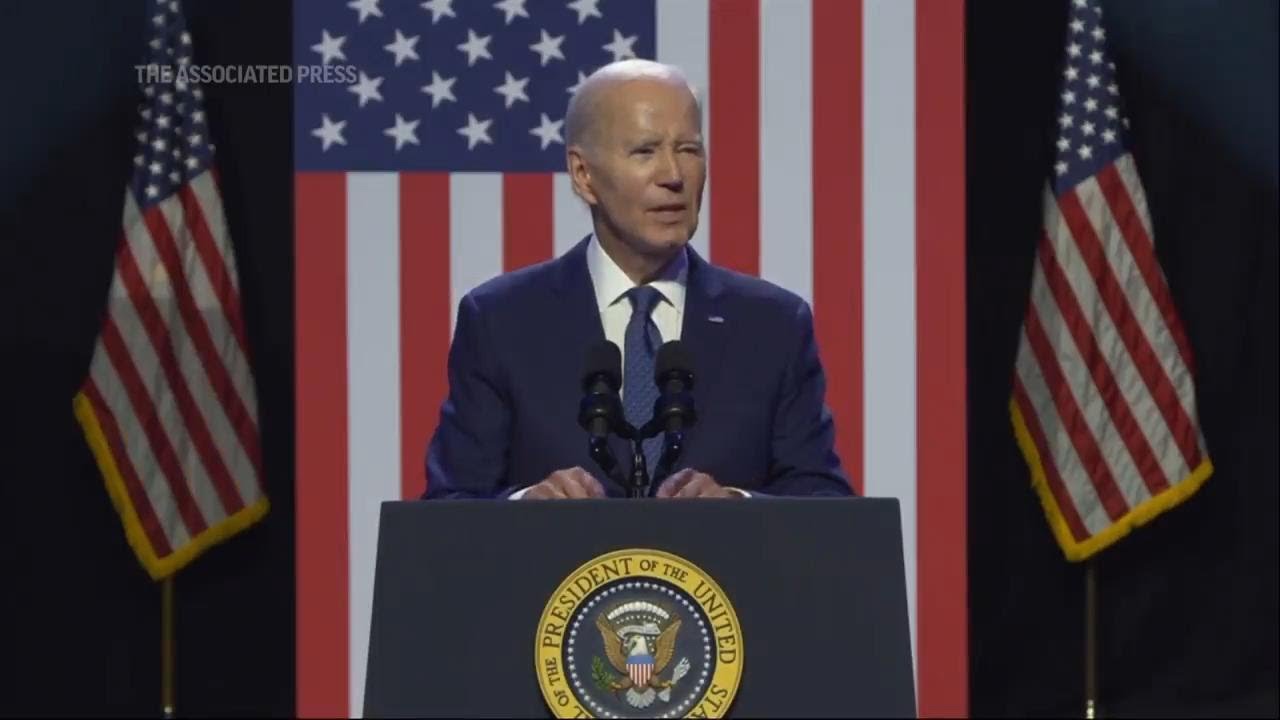
In his 2022 State of the Union address, US President Joe Biden promised to create an economy in which “everything from the deck of an aircraft carrier to the steel on highway guardrails is made in America from beginning to end. All of it.” These commitments were then crystallized in the CHIPS and Science Act and the Inflation Reduction Act, which offered sweeping subsidies and tax breaks to incentivize domestic manufacturing. The Biden administration has also seized on the concept of “friend-shoring,” which represents a kind of regional self-reliance based on national-security and normative arguments.

In response, French President Emmanuel Macron has proposed that the European Union pursue its own “Made in Europe” strategy. But inward-looking shifts in production have not been confined to advanced economies. Indian Prime Minister Narendra Modi has also vowed to create a “self-reliant India,” and even before the pandemic broke out, China’s quest for self-reliance was well underway, with President Xi Jinping reviving in 2018 Mao Zedong’s slogan of “regeneration through one’s own efforts.”

Self-reliance is different from protectionism. The nominal goal is not to protect specific firms or sectors, or to undercut others, but to build domestic resilience in a less secure world. As an inward-looking strategy of preservation, rather than an outward-looking program of punishment, it appears benign, even sensible. But this is an illusion. Even if self-reliance is an understandable response to a world that is moving away from economic openness, it risks fueling even greater systemic instability.

Today’s autarkic tendencies are a symptom of the fading Pax Americana. The intensifying US-China rivalry and the widening divide between democratic and authoritarian regimes have increasingly impaired America’s ability to keep the global market economy open.

According to one theory of international relations, a trusted and committed hegemon that enforces global rules and provides global public goods is a prerequisite to keeping international markets open. When the predominant power no longer has the means or will to play this role, markets suddenly become inaccessible. The hegemon will use protectionism to contain rising challengers and preserve its own global status while reducing its international commitments. In response, new challengers, like China today, will undermine the international system by challenging its legitimacy.

Signs of America’s diminished commitment to the global liberal order have been multiplying. During Donald Trump’s presidency, the United States openly rejected the principles and sense of purpose that had animated its international engagement for the preceding seven decades. And though Biden declared early in his presidency that “America is back,” his administration has only marginally repaired the damage that was done over the preceding four years. The US is still using trade as a weapon against China and pursuing an exclusionary industrial policy. At the same time, China, along with other emerging economies, has been building a parallel international system centered around its own institutions and partnerships.

The world thus finds itself in an increasingly unstable equilibrium. While the international economic order still exists in a formal sense, it no longer delivers stability in practice. Countries are left with no choice but to build up their own domestic capabilities and regional groupings. As the world divides along democratic and authoritarian lines, international exchange will be based more on political discrimination than on comparative advantage.

Historically, leading intellectual exponents of self-sufficiency – from Englebert Kaempfer, Jean-Jacques Rousseau, and Johann Fichte to Mohandas Gandhi and John Maynard Keynes – mistakenly assumed that such strategies contributed to international peace by insulating countries from foreign influences that encouraged war. But the inward-looking nature of self-reliance inevitably clashes with the desire for larger economic areas or unavailable goods.

More than a century ago, European empires tried to achieve exclusive control over economically valuable regions, contributing to the great-power tensions that fueled wars throughout the nineteenth century, before erupting decisively in Sarajevo in 1914. Similarly, during the interwar years, Imperial Japan tried to reduce its dependence on the US for key commodities by expanding its footprint in Asia; but that duly brought it into direct confrontation with Western powers in the region. Today, tensions over the status of Taiwan, a critical link in the global semiconductor supply chain, epitomize this risk.

If the fragmentation of the global economy continues, great-power tensions will likely intensify, increasing the likelihood of a clash. Alternatively, the US could come to terms with the erosion of its hegemonic position. While it still exercises substantial influence, it could take the lead in restructuring global governance to make it more inclusive and consensual. That is what the world needs to re-establish trust among countries and encourage economic openness.

Mutual reliance among countries should be the goal. To prevent the global economy’s costly fragmentation into separate blocs, we need less authoritarian-versus-democratic rhetoric, greater efforts to separate economic issues from concerns about values, and a renewed diplomatic focus on the global commons.

Self-reliance strategies invariably lead to systemic chaos, as key goods and markets become inaccessible. Attempts to build domestic capabilities in exclusionary ways have never brought the national resilience or international peace that advocates of self-reliance promised. On the contrary, such policies have usually been harbingers of conflict.


About the author
Edoardo Campanella, Senior Fellow at the Mossavar-Rahmani Center for Business and Government at the Harvard Kennedy School, is co-author (with Marta Dassù) of Anglo Nostalgia: The Politics of Emotion in a Fractured West (Oxford University Press, 2019).
Colombia's leftist ELN rebels suspend peace talks with government

Colombia's leftist ELN rebels pulled out of peace talks with the government on Tuesday, accusing it of violating ground rules set up when the negotiations began in 2022.


Issued on: 21/02/2024 
A rebel of the National Liberation Army (ELN) stands guard near the Baudo river in Choco province, Colombia on October 26, 2023. 
© Daniel Muñoz, AFP

By: NEWS WIRES

The National Liberation Army said in a statement that these sixth-round talks being held in Cuba were "frozen" until the government of leftist President Gustavo Petro keeps its promises.

The ELN complained that while the talks are supposed to be at the national level, the government of southeast Narino department has announced its own separate talks with ELN fighters there next month.

The ELN has a centralised command but its units have a degree of autonomy, which makes negotiating with the guerrilla army difficult.

The ELN statement said that because of these regional talks "the process has gone into crisis."

Since his election in 2022, Petro has sought to put an end to six decades of conflict between the country's security forces, guerrillas, right-wing paramilitaries and drug gangs. One of the guerrilla groups consists of renegade forces from the FARC rebel army that rejected a peace accord reached in 2016.

However, the president's "total peace" process has faced multiple setbacks with the guerrillas, who are linked to drug trafficking and are accused by rights groups of taking advantage of various ceasefires to expand their influence, seize more territory and recruit new members.

The ELN boasts an estimated 5,800 fighters and has been fighting the Colombian state since the guerrilla army was founded in 1964 in the wake of the Cuban revolution.

The ELN is active in western Colombia along its Pacific coast and in the northeast along the border with Venezuela.

Successive rounds of talks have been held in Venezuela, Mexico and Cuba, which are acting as guarantors of the peace process along with Brazil, Chile and Norway.

(AFP)

Hundreds march in Colombia to demand justice for murdered social leaders

Bogota, Feb 20 (EFE).- Hundreds of people demonstrated on Tuesday in several cities across Colombia to demand justice for the social leaders and signatories of the 2016 peace agreement who have been killed in recent years in the country.

“Every death deserves to be mourned and every life deserves to be lived, we cannot remain silent,” Gloria Arias, spokesperson for the Defendamos la Paz movement, which organized the protests, said at the beginning of the event in Bogota.

In Bogota’s Plaza de Bolívar, hundreds of people carrying carnations searched for the name of their husband, father, son or brother in the boxes scattered on the floor with the names of the victims.

The participants walked down the aisles with a bouquet of flowers and placed one in each drawer they saw empty.

“We want to draw the attention of Colombian society as a collective protest and mourning for the murdered social leaders and peace signatories,” Arias said.

Since the signing of the peace agreement between the government and the FARC rebel group on Nov. 24, 2016, at least 1,608 social leaders and 420 signatories of the pact have been killed in Colombia.

According to the Ombudsman’s Office, 181 social leaders and human rights defenders were murdered in the country in 2023 alone, a figure that is, nonetheless, 16 percent lower than in 2022.

“The numbers are not decreasing, they remain almost the same as during the government of Iván Duque (2018-2022),” former FARC leader Rodrigo Granda told EFE.

“The president (Gustavo Petro) has tried to put a stop to it, but (the situation) has got out of control, we need much more forceful actions from the security forces and the communities,” Granda said.

The former FARC members, who are now a part of the Comunes political party, hope that the government will move towards the “total peace” as promised by Petro, although Granda stressed that more was needed.

“In these negotiations, we are targeted and killed,” he said.

Rallies and demonstrations also took place in other parts of Colombia including Medellín, where some 200 peace signatories marched to the Plazoleta de la Alpujarra.

“We are complying with the agreement and they are killing us. In this sit-in we also mourn and call for the lives of social leaders,” Marcos Urbano said at the Medellín march. EFE

pc/pd

Two eight-year-olds set records beating chess grandmasters


21 February 2024 -
BY SHIFA JAHAN

Ashwath Kaushik broke the record set a month earlier by Leonid Ivanovic. File photo.
Image: Alexander Mils on Unsplash


An eight-year-old became the youngest player to defeat a grandmaster in classical chess on Sunday when Ashwath Kaushik beat Poland's Jacek Stopa at the Burgdorfer Stadthaus Open in Switzerland.

Indian-born Ashwath, who lives in Singapore, defeated 37-year-old Stopa to break the record set a month earlier by Leonid Ivanovic from Serbia when he beat grandmaster Milko Popchev, according to the Chess.com website.


Ivanovic is also aged eight but was born five months before Ashwath.

“It felt really exciting and amazing, and I felt proud of my game and how I played, specially since I was worse at one point but managed to come back from that,” Ashwath told Chess.com.

Ashwath learned to play the game at the age of four and became a World Under-Eight Rapid Champion in 2022, the website said.

“He picked it up on his own, playing with his grandparents,” said his father, Kaushik Sriram.

“It's surreal as there isn't really any sports tradition in our families. Every day is a new discovery, and we sometimes stumble in search of the right pathway for him.”

Ashwath finished the tournament in 12th place after losing to International Master Harry Grieve.

Reuters


 MONOPOLY CAPITALI$M

Capital One’s takeover of Discover reshuffles US credit card sector

    Capital One’s proposed merger with the US credit card specialist Discover has reshuffled the deck in a fast-growing sector in the United States, where cash is gradually disappearing from the landscape.

The all-stock deal is worth around $35.3 billion, and is expected to close in late 2024 or early 2025. The deal, which will be subject to antitrust scrutiny, values Discover’s shares at a 27 percent premium, and would create a US banking behemoth. 

Under the terms of the agreement, around 60 percent of the new company will be owned by Capital One’s shareholders, with the remainder going to those of the financial services company.

Discover shareholders will receive 1.0192 Capital One shares for each Discover share, representing a premium of 26.6 percent on Discover’s closing share price on 16 February of just over $110. 

Although the merger still has to be approved by the US regulatory authorities, Capital One’s founder and chief executive Richard Fairbank sounded optimistic in a conference call on Tuesday, telling investors that the two companies “are well positioned for approval.” 

“Discover adds $218 billion in annual spend and $102 billion in loans to Capital One’s credit card franchise, increasing our scale where it matters,” he said. 

“These additional revenue synergies have not been included in our deal model,” he added. 

Discover’s chief executive Michael Rhodes said the deal gave his firm “the opportunity to scale at a very rapid pace, and much more so than we could certainly do on organic basis.”

“And if I look at the organizations that have the most synergistic impact, with Discover, it is Capital One,” he added. 

Capital One saw a relatively modest market reaction after the deal was announced: at noon local time (1700 GMT), shares were up 0.7 percent. By contrast, Discover shares surged almost 15 percent on the news. 

– Competitors and partners –

Originally a financial subsidiary of the Sears retail chain, Discover developed in the early 1990s as a credit card network, before being acquired in 1997 by Morgan Stanley, which made it an independent company again in 2005.

Discover is the fourth largest credit card network, behind the three other American groups: Visa, Mastercard and American Express. 

Based mainly in the US, it is present in over 200 countries, and its cards are accepted in 70 million points of sale.

“They show up in nearly every physical point of sale across the United States and on nearly every online checkout page,” Fairbank from Capital One said Tuesday. 

“We intend to preserve the Discover brand,” he continued, adding that Capital One “would lean in to build and strengthen the network brand.”

The company made a name for itself by being the first in the United States to develop the principle of “cashback,” which enables credit card users to recoup a fraction of the money they spend, and gives banks and credit card networks valuable data on customers’ spending habits.

The acquisition will result in a number of Capital One’s credit cards being transferred to Discover’s network, while the bank is expected to continue working with Visa and Mastercard — particularly given their much more extensive networks abroad.

In effect, the company would be both a partner and competing with Visa and MasterCard at the same time, Fairbank acknowledged.

“We’ve had a strong relationship with both of them since we started; it’s not unusual for companies to be both competitors and customers of each other,” he added. 

“We’re talking about taking a network that is way, way smaller than those, and giving it a chance to get more threshold scale pick up momentum.”

by Becca MILFELD

US faulted at WTO for not fixing Spanish olive tariffs as ordered

AMERIKAN EXCEPTIONALISM:NOT PLAYING BY THE RULES

    The United States has failed to implement an order to bring its duties on Spanish olives in line with international trade rules, a World Trade Organization compliance panel said Tuesday.

Former US president Donald Trump’s administration slapped extra tariffs on Spain’s iconic agricultural export in 2018, considering their olives were subsidised and being dumped on the US market at prices below their real value.

After the European Union complained, a panel of experts appointed by the WTO’s Dispute Settlement Body (DSB) ruled in 2021 that the steep import duties violated international trade laws and demanded that the United States rectify the situation.

Washington did not appeal against that ruling, and later maintained that it had made the required changes.

But the EU disagreed and called for a WTO compliance panel to evaluate the situation.

In its ruling published Tuesday, that panel found that the EU had demonstrated that “the United States has failed to bring its measures into conformity with the adopted DSB recommendations and rulings”.

“To the extent that the United States has failed to comply with the adopted recommendations and rulings of the DSB in the original dispute, those adopted recommendations and rulings remain operative,” it said.

It urged Washington to “bring its measures into conformity with its obligations” under international trade law.


Directors should ‘control’ tech, not fear it: Scorsese

    US cinema legend Martin Scorsese said Tuesday directors should harness technology to serve their “voice” rather than fearing it will kill their industry.

Scorsese, nominated for a record 10th time for a best director Oscar for “Killers of the Flower Moon”, was speaking at the Berlin film festival where he is collecting an Honorary Golden Bear for lifetime achievement.

He told a packed press conference that he was upbeat about the future of big-screen entertainment, even with small-screen diversions on the march.

“I don’t think it’s dying at all — no, I think it’s transforming,” he said when asked about the future of film. “It never was meant to be one thing.” 

Scorsese, 81, said the movie-going of his youth had given way to a world of new possibilities that didn’t have to be threatening.

“If you wanted to see a movie, you went to a theatre — a good theatre or bad theatre but it was a theatre, it was always a communal experience,” he said.

Scorsese said with entertainment technology now changing “so exhaustively and rapidly”, “the only thing they (filmmakers) could really hold onto is the individual voice”.

The “Taxi Driver” director, whose playful videos with his daughter Francesca have made him a social media star for a new generation, said the medium was far less important than the spark of imagination.

“The individual voice can express itself on TikTok or express itself in a four-hour film or two-hour miniseries,” he said.

“What I’m getting at is that I don’t think we should let the technology scare us. I think you don’t become a slave to the technology,” he said. 

“Let us control the technology and put it in the right direction — the right direction being from the individual voice rather than something which is just consumed and tossed away.”

– ‘Like Beethoven symphonies’ –

Scorsese, one of the most prolific film preservationists in the industry, recommended returning again and again to great works.

“Maybe if you see the film 30 years later, the film has changed and in actuality, the film’s the same but you’ve changed,” he said. 

“And so somehow you might be able to grow with the films like listening to Beethoven symphonies — they change every time, they really do.”

Asked about his favourite recent movies, Scorsese singled out fellow Oscar nominees “Past Lives” by Celine Song and Wim Wenders’s “Perfect Days”. 

Scorsese said as soon as the campaign for next month’s Academy Awards winds down he will focus on an upcoming project which returns one of his recurring themes: his Catholic faith.

He said he had met Pope Francis on a few occasions and discussed with him “fresher ways of thinking about the essentials of Christianity”.

Scorsese said he hoped the film would turn out to be “unique and different” as well as “thought-provoking but also entertaining”.

The Berlin film festival runs until Sunday. 

by Deborah COLE