Monday, December 02, 2024

UK

Assisted dying bill brings critical state of palliative care into government’s focus


Aletha Adu 
Political correspondent
THE GUARDIAN
Sun 1 December 2024 

The health secretary, Wes Streeting, exasperated many colleagues with his public explanation for voting against the bill. Photograph: Ian Vogler/Reuters


During last Friday’s debate in the Commons on assisted dying, Wes Streeting was seen ferociously nodding as MPs raised the need for better end-of-life care.

While the health secretary is yet to share his official view on draft proposals for a commission on palliative care, some of those behind it have taken comfort from his apparent gesture of support.

Streeting exasperated many of his cabinet colleagues, including Keir Starmer, with his public explanations for voting against the bill, but many Labour figures believe he was right to share his disapproval at the state of end-of-life care.


“They believe it’s fair enough for us to repeatedly blame the former government for the fiscal mess they left behind, so why can’t they highlight how much of a mess the palliative care system is for so many people?” one MP said.

They hope Downing Street will feel some obligation to support the independent commission’s work, given the prime minister has silently backed Kim Leadbeater’s private member’s bill so far.

Many supporters of assisted dying say legislation, which passed its first Commons hurdle on Friday, should go hand in hand with greater investment in palliative care.

About 300,000 people were cared for in the country’s 200-plus hospices in 2022-23, according to Hospice UK.

They cost £1.6bn a year to run, with only £500m coming from the government. The remaining £1.1bn is raised through donations, legacies, charity shops and other fundraising activities.

For some Labour figures, the timing of discussions around palliative care is in danger of overshadowing Starmer’s attempts to refocus his premiership this Thursday after a bumpy first few months.

One of them said: “His approval ratings are embarrassingly low, and we’ve had a rough ride already. Surely we can revisit this discussion in the near future?”

A backbencher signalled that Starmer appeared to have “shot himself in the foot”, claiming that if MPs had had more time to discuss the assisted dying bill, the prime minister could have had more space for his reset.

Morgan McSweeney, Starmer’s chief of staff, is understood to be among No 10 figures who feared that allowing assisted dying legislation to go ahead could prove a distraction from the government’s priority of rebuilding the NHS. That group could take the same view of reforming palliative care.

However well Starmer’s reset lands, discussions around the state of care for terminally unwell patients in England and Wales dominated much of the debate last week, to the extent that some MPs who backed it are now considering changing their minds.

“I’ve spend the weekend trying to convince myself I made the right decision for my constituents with the time I had. I didn’t vote yes just because it felt like that was the way the wind was blowing within parliament, but because I thought I had read enough,” one new Labour MP said.

“But having listened to some colleagues make their arguments, I do think we really need to consider whether funding that could help people in palliative care could end up going to doctors who are needed to ensure assisted dying can go ahead for people who do need it.

“I just want the commission to be able to get on with it as quickly as possible, and I can’t imagine I’ll be the only one.”

 Opinion

After watching my mother die of pancreatic cancer, I had to vote for the assisted dying bill

It seemed extraordinary at the time that there was no way to end her suffering once and for all

So, the Ayes won it: 330 MPs voted to take forward Kim Leadbeater’s Bill, The Terminally Ill Adults (End of Life) Bill 2025-25, securing a majority of 55. It was an unusually large number of MPs for a Friday, but this was an unusually emotive and difficult second reading of a private members’ bill.

I supported the bill, driven by my own personal experience. Watching my mother die of pancreatic cancer was awful. She was well looked after. The NHS attended her at home, and a morphine driver helped with the pain. Indeed, it is possible that increasing the dose to overcome her pain hurried her passing. But her suffering was unnecessary. With absolute certainty of her imminent demise, it seemed extraordinary at the time that there was no way to end her suffering once and for all.

But against that was the story of my colleague Harriett Baldwin. Her family was told her father was just days away from death, but he went on to recover and live for a further 22 years. Personal experience, of family and constituents, dominated the debate.

But also debated was the process, the dangers of mission creep, of people being urged into a decision they might not have wanted to take, of doctors not emotionally or professionally qualified to make these decisions, of exclusion of family from knowledge that a loved one is taking the ultimate decision. All incredibly important points. Similarly, there was much talk of the parliamentary process, of how a private members’ bill is not the best way to take these things forward, and how it will be difficult to find time for the process to be sufficiently long to allow proper scrutiny of the issues.

The vote on Friday was to allow this bill to progress to the next stage. Kim Leadbeater MP has already said she is keen that the next stage – the committee stage – has time to take written and oral evidence. The bill will be scrutinised line by line and all the points raised (and more) will be debated. Then the bill returns to the main chamber for report stage, when all MPs can again make their points and amend the bill. And if it all passes through the Commons, the same process happens in the Lords. It is only when everyone has collectively agreed that this may become law, in around nine months time.

Make no mistake, this is a very big deal. But so have other private members’ bills been in their day. Legalising gay sex, legalising abortion – both were incredibly controversial at the time. Arguments of those changes being the thin end of the wedge have been tested. In the case of gay relationships, it could be argued that things have moved along a lot. But 11 years after same sex marriage was made legal, do we ever think of this as anything other than normal? Similarly, with abortion. From time to time, we debate the pros and cons of the foetal age limit and where it should be set. But do we ever, as a society, regret the important point that women should have a choice with what happens to their own bodies?

In a world where medical advances are achieving what might have been impossible just a few decades ago, should we not be debating, properly, and with a probability of a significant change in how we view end of life, the issue of how we finally end our days?

Of course this needs to be debated in the next stages, and I will be looking out for reasons to be proved I am wrong. But my instinct is that in the interests of those of us who suffer painful, miserable and horrible deaths, we should find a way to ensure the future suffering of such people is ended if that is what they choose.

Mark Garnier is the Conservative MP for Wyre Forest and Shadow Economic Secretary to the Treasury

UK

Former world snooker champion Griffiths dies aged 77

SNOOKER IS 8 BALL IN THE U$A


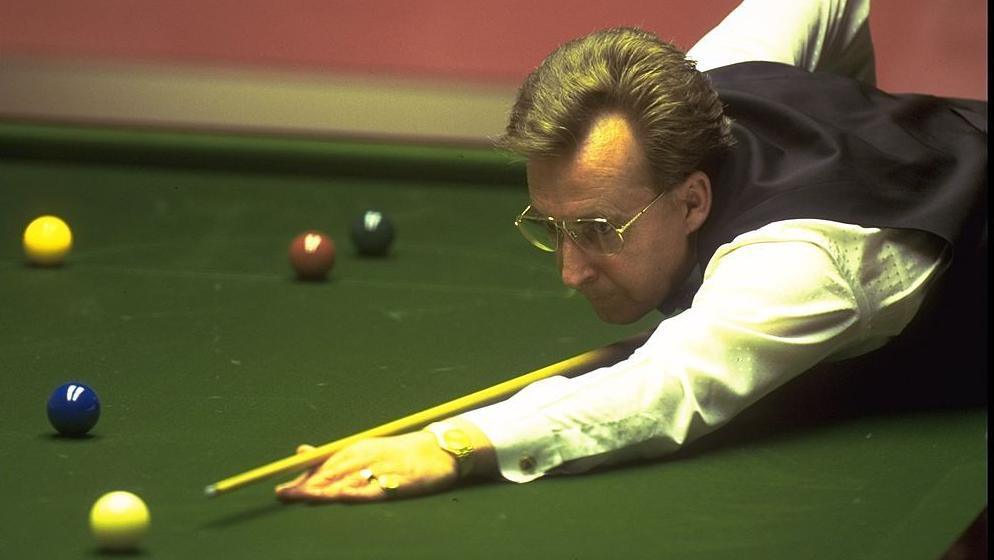
Terry Griffiths won the World Championship in 1979, the Masters in 1980 and the UK Championship in 1982

Former world snooker champion Terry Griffiths has died aged 77, after a long battle with dementia, his family has confirmed.

The Welshman became the first qualifier to win the world championship, beating Dennis Taylor 24-16 in the 1979 final.

Griffiths also won the Masters in 1980 and the UK Championship in 1982 to complete snooker's 'Triple Crown'.

He also reached a career-high third in the world rankings, and in 2007 was made an OBE for his services to the sport.


His son Wayne wrote on Facebook: "To our friends and snooker followers in general, we are deeply saddened to share the news of our loss.

"Terry Griffiths OBE passed away peacefully on 1st December, after a lengthy battle with dementia. He was surrounded by his family in his beloved hometown in South Wales.

"A proud Welshman, Terry was born in Llanelli, brought pride to Llanelli and now he has found peace in Llanelli. He would not have had it any other way."

A message on World Snooker Tour's official X account added: "We are deeply saddened tonight to hear that Terry Griffiths, a former world champion and all-time snooker great, has passed away at the age of 77.

"Our sincere condolences to Terry's family and many friends. He was loved and respected by everyone in the sport."


From postman to world champion - the life of snooker great Griffiths


Terry Griffiths: 40 years at the Crucible


Terry Griffiths, who has died aged 77, enjoyed success as a player, a coach and a commentator.

A former postman and bus conductor, Griffiths turned professional in 1978 and became world champion at the first attempt, beating Dennis Taylor in the 1979 World Championship final.

"From being a miner at 15 years of age in Pontarddulais, then I was a bus conductor and a postman and then went on to work in insurance," Griffiths once recalled.

"Next thing I was champion of the world.

"It was a great thing for me - the pinnacle of my career."

The Welshman also won the Masters in 1980 and the UK Championship in 1982.

After retiring, Griffiths became a successful coach and much-loved television pundit and commentator.

His Llanelli accent - delivered in soft, hushed tones - and dry wit made him instantly recognisable among viewers.

And while many will remember Griffiths for his on-air quips and, earlier, his cautious style of play, he also achieved notable success as a coach after retiring in 1997.

He tutored several leading players, including world champions such as Stephen Hendry, Ronnie O'Sullivan, Mark Williams, Ken Doherty and John Parrott.

Born in Llanelli in 1947, Griffiths worked as a postman, insurance salesman, miner and bus conductor during a long and successful amateur career.

He won the Welsh Amateur Championship in 1975 and the English Amateur Championship in 1977 and 1978 before turning professional in 1978.

Griffiths had to qualify for his first World Championship in 1979 and, after doing so, he beat Perrie Mans in the first round and the great Alex Higgins in the quarter-finals.

After overcoming Eddie Charlton in an epic semi-final, Griffiths declared in a post-match interview which has been replayed many times since: "I'm in the final now, you know!"

Griffiths then defeated 1985 champion Taylor 24-16 in the final to win the coveted world title at his first attempt.

Later in 1979, he was part of the Welsh team, alongside Ray Reardon and Doug Mountjoy, that won the inaugural World Cup of snooker, beating England 14-3.

Griffiths' victories at the 1980 Masters and 1982 UK Championship mean he is one of only 11 players to have completed snooker's Triple Crown.

Although those were his last ranking titles, Griffiths reached a second World Championship final in 1988, where he was beaten by his old rival and six-time world champion Steve Davis.

Griffiths never beat Davis in seven Crucible encounters, but the two players were prominent characters in a golden era for snooker.

The 1980s made players household names as they appeared on primetime television shows such as Pot Black, which Griffiths won in 1984.

The 1990s were relatively lean for Griffiths but he retired on his terms, still ranked 23rd in the world.

His final match was the first round of the 1997 World Championship, where he was beaten in a final-frame decider by his fellow Welshman and a player he would eventually coach to a world title, Mark Williams.

UK

Nursing and midwifery register grows but pace of international nurse recruitment slows

Published on 02 December 2024

Read our latest mid-year data report

The register of all nursing and midwifery professionals who can practise in the UK has reached a record 841,367, but a pillar of recent growth – international recruitment – has slowed in pace, according to new data from the Nursing and Midwifery Council (NMC).

The register now comprises 778,340 nurses (+1.7 percent since April), 45,198 midwives (+2.4 percent), 11,551 nursing associates (+6.2 percent) and 6,278 dual registrants (those registered as both a nurse and midwife; -1.3 percent).

For the first time there are more than 200,000 internationally educated professionals on the register – 23.8 percent of the total available UK nursing and midwifery workforce. Of these registered professionals, 67,576 were educated in India (+8.3 percent since April) and 50,180 were educated in the Philippines (+2.2 percent).

However, 16.6 percent fewer international professionals joined the register (12,534) and 33 percent more left (2,573) in the six months to 30 September, than in the same period last year. These 2,573 leavers account for 1.4 percent of all international professionals on the register, compared to 1.2 percent who left between April and September 2023.

The total number of professionals – whether UK or internationally educated – who joined the register for the first time between April and September fell by 9.2 percent to 27,313 (compared to 30,085 in the six months to September 2023).

Total leavers rose by 6.3 percent to 14,142 (compared to 13,305 leavers in the six months to September 2023). However, the number of leavers given as a proportion of the growing register is unchanged at 1.7 percent.

As the total number of leavers increases, so too does the segment of professionals leaving after five years or less on the register: 1,799 in the six months to September, compared to 1,211 in the same period last year. That is an increase of 48.6 percent for the period but is unchanged when viewed as a proportion of the register (0.2 percent).

Kuljit Dhillon, NMC Interim Executive Director of Strategy and Insight, said:

“Nursing and midwifery are among the UK’s most trusted professions, so as we head into another tough winter, we hope there is small comfort in the growth of our register to a record 841,000.

“At the same time, there are notes of caution in our data around international recruitment, which has been a pillar of workforce growth in recent years. We’ve seen a fall in internationally educated joiners and an even higher proportional rise in leavers, although it’s important to view leavers’ data through the lens of a growing register.

“We hope our data and insights will support workforce planning and research in the UK, ensuring the most effective delivery of services that people and communities across the country rely on for their health and wellbeing.”

Read the full UK report, four country specific reports, and data tables 

'People want nothing to do with him': How Ireland turned away from Conor McGregor

Aoife Walsh
BBC News
Sun 1 December 2024 
Getty Images
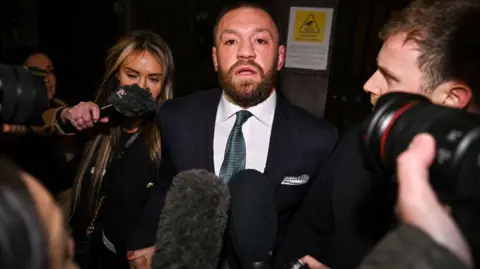
Conor McGregor leaving court after a civil jury found him guilty of sexual assault


“The fight game awaits!” Conor McGregor proclaimed to his millions of social media followers on Tuesday, while retailers pulled products linked to him from shelves, murals of him were erased and brands announced they had cut ties.

It followed a 12-person jury in Dublin finding McGregor guilty of sexual assault in a civil case brought by Nikita Hand, who accused him of raping her at a Dublin hotel in December 2018. She was awarded nearly €250,000 (£208,000) in damages. In a social media post, McGregor said he would appeal the decision.

Ms Hand’s case was one of several legal issues and controversies that McGregor, one of Ireland’s most famous athletes, has faced over the past few years.

In 2018, he was arrested in New York for throwing a metal dolly at the window of a bus which had a group of Ultimate Fighting Championship (UFC) staff and athletes on board. A year later, he was convicted and fined €1,000 (£850) for punching a man who rejected his offer of a drink in a Dublin pub.

Some commentators argue that support for McGregor within Ireland, where he had been thought of as a trailblazer, has been dwindling for some time - but the shift after Ms Hand’s civil case was seismic.

Within a week, hundreds of supermarkets in both the UK and Ireland removed brands associated with him. Proximo Spirits, the company that bought McGregor’s Proper No Twelve whiskey brand in 2021, said it did not plan to use his name or likeness in its marketing going forward.
Woman wins civil rape case against Conor McGregor
Advertisement


IO Interactive, the creators of the Hitman video game, said it would cease its collaboration with McGregor in light of the court ruling. Ireland’s National Wax Museum also said it removed its figure of McGregor two weeks ago.

He built his brand on his patriotism and brash persona. But the controversies surrounding him have turned some former supporters against him and become an increasing distraction from his career.

Petesy Carroll, a mixed martial arts (MMA) journalist, credits McGregor and his team for bringing MMA to Ireland, but says they have "also destroyed it as a sport here".

Now, after the civil case, it’s unclear what comes next.

A divisive figure

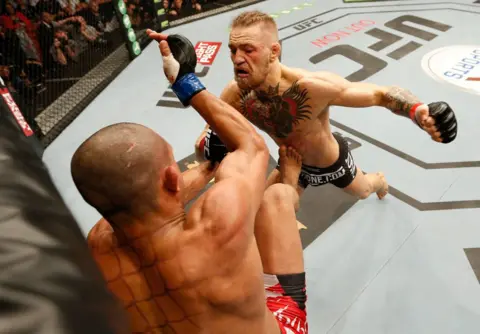
McGregor made his UFC debut in 2013

McGregor’s rise to sporting stardom has often been described as a rags-to-riches tale. As a teenager, living in Lucan, Dublin, he quit his job as an apprentice plumber to pursue a career in a sport that was relatively unknown in Ireland.

“The Irish mentality is when you’re finished school, if you’re not going to college or anything you need to get a job straight away. There’s no chasing your dreams,” he said in a 2013 interview with RTÉ’s Late Late Show, where he was 24 years old and almost unrecognisable.

The brash, confident, boisterous traits his "notorious" brand is now synonymous with with were untraceable.

“I thought I could do something with my life. I knew I had the ability to make it in this game,” he said.

Carroll, who has been covering McGregor since the beginning of his career, says McGregor burst on to the mainstream at a time when Ireland was grappling with the impact of the 2008 recession.

“There are no opportunities, everybody’s leaving for Australia or Canada, and here’s this guy saying ‘No, be proud to be Irish. It’s cool to be Irish,'” Carroll says.

"I used to think this guy, it’s great, he’s the same age as me, I’m a college graduate, I’ve walked out of college into a country that cannot afford me any opportunity, and here’s this guy blazing a trail."

McGregor made his UFC debut in Stockholm in 2013, aged 25, defeating Marcus Brimage and winning a knockout of the night award, which came with a $60,000 bonus. In a press conference after the event, McGregor said it was the best moment of his career yet.

“I didn’t have money before this,” he said, “I was collecting €188-a-week off the social welfare, and now here I am with a 60 G’s bonus and then my own pay.”

Carroll says money changed McGregor’s life “to the point that everyone stopped treating him like a human”.

“Everyone panders to him,” he adds.

Getty Images
McGregor, pictured here in a 2014 bout in Dublin, did not lose a fight in his first few years in the UFC

In 2015, McGregor beat Chad Mendes in the interim featherweight championship. The bout attracted a sold-out crowd of more than 16,000 at an arena in Las Vegas.

“People don’t give him credit,” Luke Keeler, a professional boxer from Dublin, says of the win. “It was a huge impact that he made. He was dedicated and had great belief at the time.”

By then, it was clear his fame - and bank account - was reaching new heights.

One of the biggest moments in his career came later that year, when he defeated José Aldo to win the featherweight title. His first loss was against Nate Diaz in 2016. A rematch a few months later, which McGregor won, sold a record-breaking 1.6 million pay-per-view buys.

That year, on the US chat show Jimmy Kimmel Live, McGregor was asked at what age he realised he was good at fighting. “I’m Irish, we’re all good at fighting,” he told Kimmel. “Where I come from, where I grew up, you had to be aware, you had to be able to defend yourself, so that’s how I got into it.”

Back on home soil, McGregor was named Sportsperson of the Year at the RTÉ Sport Awards. Sinéad O’Carroll, an Irish journalist and editor who covered the recent trial, says this was seen as a “remarkable feat” as it happened in the same year as the Olympics and Ireland’s Euro 2016 victory over Italy.

“It was divisive though," she adds. “Some people thought that he wasn’t so much a sportsperson, that he was more a celebrity and people looked up to him because of his attitude and his fame.

“He’s never been a very clear-cut, popular figure in Ireland, but he would have been part of that establishment, winning that award, being invited onto the Late Late Show and would have been highly regarded for his feats in the cage, if nothing else,” she says.

Carroll, the MMA journalist, says it was around this time McGregor "started showing everyone who he was".

"It was kind of like one of those moments when you're like, 'oh, he is what we think he is'."

'Lost the run of himself'


His next bout was with Eddie Alvarez, beating him to become the first fighter in MMA history to hold belts in two weight divisions simultaneously.

McGregor stepped away from the UFC in 2017, spending much of that year campaigning for a boxing match with Floyd Mayweather. He fought Mayweather in August of that year, having faced accusations of racism during the promotional tour, which McGregor rejected. Mayweather stopped him in the 10th round.

Reuters
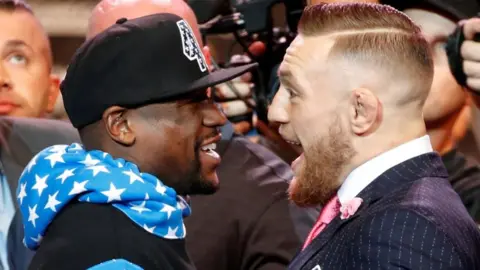
McGregor's fight with Mayweather was a massive sporting event watched around the world

Ms Carroll says some people did not like the antics in the lead up to the fight or the mixing of genres from MMA to boxing.

“But he still would have had a huge support base, and I remember that fight. It was in the middle of the night, but huge numbers of people would have gotten up in the morning to watch it and it would have been headline news,” she adds.

Carroll says the Mayweather fight marked a change in McGregor's behaviour.

"He became an icon and he earned so much money, I don't think he had to be as invested," he says. "He became a spectacle".

McGregor returned to the Octagon in October 2018 - two months before the night when a jury found he had assaulted Ms Hand - and lost to Khabib Nurmagomedov.

He has not fought since 2021, but in a statement on Tuesday, he indicated that he was preparing his return.

"It was amazing what he’d done [in sport]," says Keeler, the boxer.

"But he lost the run of himself... I don’t think he had any role models or anyone he was willing to listen to. I think that was his downfall. No one could actually tell him to cop on.”

BBC News has approached McGregor for comment for this story.

'Relief' over verdict

Ms Hand, a 35-year-old hair colourist, made a statement to Irish police in early 2019 alleging McGregor had raped her. After an investigation into the claim, police referred the case to Ireland's Director of Public Prosecutions (DPP).

Irish media reported on the allegations without naming McGregor, but news reports revealing him as the suspect emerged in the US a few months later. The DPP decided not to criminally prosecute McGregor due to insufficient evidence.

Ms Hand then took civil action against McGregor, suing him for damages for assault. Her lawsuit also alleged that McGregor’s friend, James Lawrence, assaulted her by having sex with her without her consent.

The jury found she had been assaulted by McGregor, but not by Mr Lawrence.

McEntee commends Nikita Hand over McGregor case


Rape helpline calls almost doubled after McGregor case


Dr Daniel Kane, a gynaecologist and forensic examiner, told the court how he had to use forceps to remove a tampon Ms Hand said she had been wearing on the night of the assault, which had been “wedged inside”. A paramedic who examined Ms Hand on the day after the alleged attacks said she had not seen a patient as bruised as Ms Hand was in a long time.

McGregor said he and Ms Hand had athletic but consensual sex.

The Dublin Rape Crisis Centre (DRCC) said calls over the six hours after the verdict was delivered surged by 150%.

PA Media
Speaking outside court, Ms Hand encouraged sexual assault victims to "keep on fighting for justice"

Rachel Morrogh, DRCC’s chief executive, said that given the case involved McGregor, an international celebrity, interest was high and news reporting within Ireland was “slightly different”.

“There was rolling news coverage, live updates from the court, and it was the most read news items in many of our national media platforms,” she says.

“It meant that the survivors and victims of sexual violence couldn’t really avoid this news - it was everywhere.

"That includes across social media as well, and on social media people were giving their own views and interpretations of what was happening in court. That was difficult for people that we work with.”

Many people were calling to congratulate Ms Hand, she says, adding: “Many of them were just expressing relief at the verdict, and others were calling because they were either considering taking a legal case or were in the middle of one themselves.”

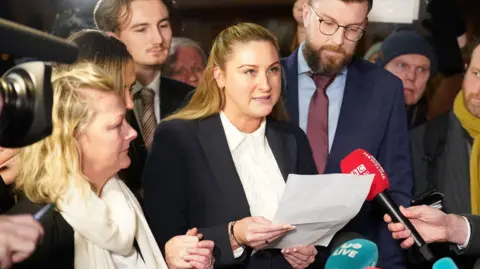
After the trial concluded, journalists swarmed around Ms Hand as she made a statement outside the courthouse. She fought back tears as she spoke, but her voice grew stronger as she told journalists she hoped her story would encourage all sexual assault victims to speak up, “no matter how afraid you might be”.

“You have a voice, keep on fighting for justice,” she said.

Ms Hand's case has challenged perceptions in Ireland around how sexual assault victims should behave, Carroll says.

"We're having much more nuanced conversations, I feel, in Ireland about this. It honestly feels like a cultural milestone."

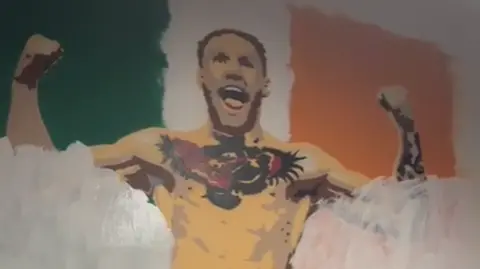
Now, a gym in Corrandulla, Galway, paints over a mural imprinted on its walls since 2016 depicting McGregor, the Irish tricolour behind him, with his fists punching the air.


Gary Scully
A gym in Galway painted over a mural of McGregor


“With the court ruling last week, I was actually in the car driving and it came on the radio and I straight away just rang a couple of my staff and was like ‘okay, we have to take that down,’" Gary Scully, the owner of Scully Fitness, says.

A video of Mr Scully’s staff brushing white paint over the artwork went viral. He says the response has mostly been positive, but some disagreed with the move.

“Some of them are like, ‘Typical Irish, build someone up and the second they have a wobble, knock them down.' But I think the case and the ruling was a bit more than a wobble,” he says.

He says McGregor is “no longer a role model to the general public” after the ruling.

“People want nothing to do with him, they don’t want to see him, they don’t want anything to do with putting money his way. The way he’s behaved is just absolutely terrible,” Mr Scully says.

“He feels like he’s above the law, and now it’s proved he isn’t.”
UK

Shared parental leave ‘failing working families’


Kristian Johnson
BBC Reporter
Sun 1 December 2024 
BBC
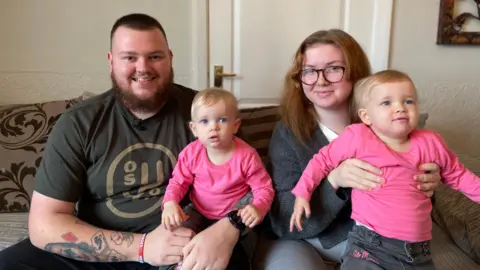
Josh Wiborg says the two weeks he had off work after his twin girls were born "isn't enough time"

A decade on from the introduction of a landmark scheme aimed at helping new parents share childcare, campaigners say shared parental leave is failing the working families it was designed to help.

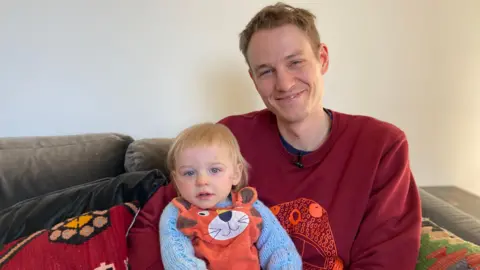
As the sole earner in his young family, 21-year-old Josh Wiborg couldn't take shared parental leave when his twin girls were born.

Like so many dads, he was entitled to only two weeks off work, at reduced pay.

He says it left him "feeling like a stranger" to his twin girls, Autumn and Winter, in the first few weeks of fatherhood.

“It was awful," he says. “My partner was struggling and I was struggling as well. It just wasn’t enough time.”

Introduced 10 years ago by the previous Conservative government, shared parental leave is a state-funded scheme that allows parents to share up to 50 weeks of leave and up to 37 weeks of pay after the birth or adoption of a child.

It was hoped this would allow dads to play a more prominent role in fatherhood.

But new analysis, seen exclusively by BBC News, shows it might not benefit all dads equally.

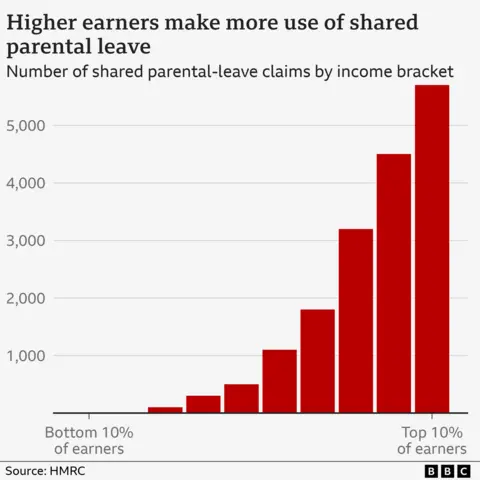
The uptake is heavily skewed towards higher earners, predominantly based in London and south-east England.


More than 5,000 high earners used shared parental leave last year


The figures, from a Freedom of Information request submitted by campaign group The Dad Shift, show the top 20% of earners make up 60% of those to use shared parental leave.

Just 5% of those who took up shared parental leave came from the bottom 50% of earners.

And since its introduction in 2014, the government has paid £40m in shared parental leave payments to families in London - almost 10 times more than in the north-east of England.

"In terms of working families, it has completely failed," says George Gabriel, co-founder of the campaign group.

"There's a big awareness gap, there's a complexity problem and there's a challenge about most men feeling uncomfortable taking leave off the mother of their child."

Fewer than 5% of all eligible fathers use shared parental leave.

Those who have used the scheme are positive about its benefits, though.

Pete says he had some "really magical times" with his son, Jay, on shared parental leave

Pete Target, from London, took nine weeks off work to look after his son, Jay, when the little boy was nine months old.

"It was everything I’d hoped for," says Pete, 36.

"We’re closer than we could have possibly otherwise been."

But he admits it was a "difficult financial decision".

Because his section of shared parental leave fell outside the 37-week window for government support, he wasn't paid for the time he took off with his son.

He says "something has to improve" to ensure more dads can benefit.

"I feel so lucky that we could afford the financial hit, [but] it needs to be practically possible for most men to do it.

"We need men to feel like they can take it."

A government review from 2023 suggests almost half (45%) of all dads weren't even aware of the option.

As his wife wasn't working, Josh wasn’t entitled to shared parental leave and instead took statutory paternity leave, the government-funded scheme that allows dads or secondary care providers to take two weeks off after their baby is born.

Those eligible receive £184.03 a week or 90% of their average earnings, whichever is lower.

It meant Josh's earnings dipped immediately after his twin girls were born.

"I had to go back to work [after two weeks] and leave my partner on her own," he says.

"I don’t know how we got through it."

The government has committed to reviewing parental leave during its first year in office.

It says it wants statutory paternity leave to be a day-one right for all employees. Currently, it applies to dads who have been employed for 26 weeks or more.

But even with these proposed changes, campaigners say the UK's parental leave system is one of the worst in Europe.

Blair McDougall, a father of two, is one of a number of Labour MPs backing The Dad Shift's campaign for more generous parental leave.

While he says the government is right to "keep one eye on the economic reality", he is in discussions with a group of fellow backbench Labour MPs to discuss whether future changes can go even further than those already outlined.

"Society has moved on but the rules around paternity haven't," he says.

"We need to bring those up to date to help fathers be the type of dads that most of us want to be."

Some businesses pay out of their own pocket to offer enhanced paternity leave and shared parental-leave packages.

This can include more time off and pay that is boosted to full earnings or a higher rate than the statutory offer.

But The Dad Shift says taxpayers should be funding "more substantial" parental-leave packages, to take the burden off businesses and ensure every parent can benefit.


Paul Bowen says most small businesses can't afford to give employees enhanced parental leave

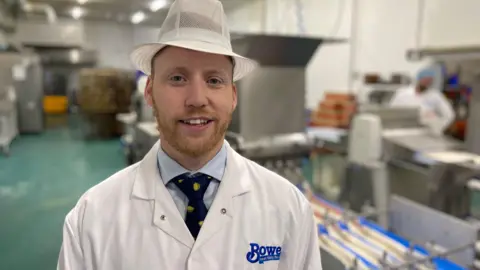
Paul Bowen, who employs roughly 30 people at his pie factory and shop in Chorley, Lancashire, says the rise in National Insurance contributions is the latest in a long line of budgetary squeezes for small businesses like his.

"I'd love to give our employees extra time off, but we simply can't afford it," he says.

"If we can have help from the government, that's where it needs to come from."

'I understand the struggles of other dads'


Josh is now heavily involved in bringing up his twin girls but he still remembers how "tricky" those first few weeks were.

"The situation needs to be changed completely," he says.

When he was struggling in the early days of fatherhood, he approached North East Young Dads and Lads (NEYDL) for help.

He now works for the charity as a "peer enabler", offering the same advice and support from which he benefited.

"I understand the struggles of other dads," he says.

"I know it's stressful, so if I can just help one person it is so worth it."
UK

'We need more support for people made homeless'

Jo Thewlis
BBC Political Reporter, Norfolk
Sun 1 December 2024 
Martin Giles/BBC
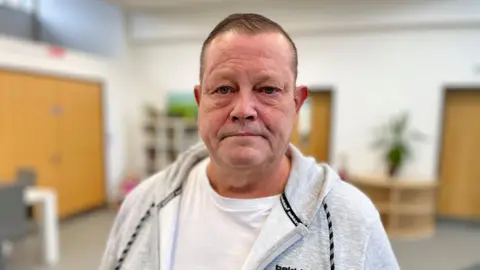
Gary James said there were many more people needing help


A man who struggled with depression when he was made homeless is calling for more support for people in need.

Gary James, 55, had to leave his home when his marriage broke down earlier this year.

Now living at Elm House, a temporary accommodation unit in Norfolk, he said others also needed help.

“To get people into accommodation like this would be a good idea,” he said.

Martin Giles/BBC
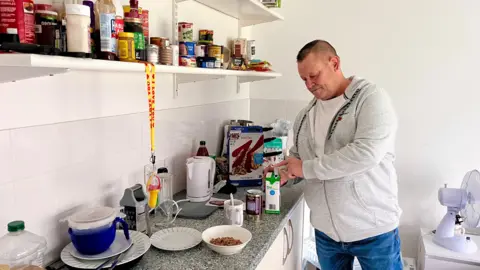
Gary James is living in temporary accommodation in Thetford after being made homeless

Mr James is just one of a growing number of people who need emergency shelter.

“My anxiety levels went through the roof because I thought I was going to be in a tent on the common,” he said.

“Anxiety and depression is something that most people deal with. But knowing you're homeless and having this place takes a lot of the pressure off."

Elm House, which can host up to 35 people, is owned by Breckland Council to provide accommodation for people who are homeless or at risk of losing their homes.

Local authorities have a duty to provide emergency shelter for homeless households while assessing their cases or finding them more permanent accommodation.

But demand for these places often far outstrips supply.

Martin Giles/BBC
Elm House in Thetford offers temporary accommodation for up to 35 people


Breckland Council supports about 130 households every night in emergency shelter.

About 50 of these are housed in properties owned by the council while 80 are in bed and breakfast accommodation.

The average cost of B&B accommodation costs the authority about £75 a night, or £525 per week.

Sarah Suggitt is the council's cabinet member for housing and planning.

"Unfortunately, there's a massive need at the moment for places like this," she said.

"We just don't have enough spaces like this to go round. But we need to try to do better and we need to try to do more.”

The authority has just agreed to buy 10 more properties to provide emergency accommodation in the district.

It was able to do this thanks to £1.24m of money from the government through the Local Authority Housing Fund.

But Suggitt said it still would not be enough.

"The support we get just doesn't go far enough," she said. "It hasn't kept up with the demand and unfortunately people are living in really chaotic lifestyles at the moment.

"Funding is always going to be what every council and every department within the council needs just because the demand is so high."


Martin Giles/BBC
Sarah Suggitt said government funding had not kept up with demand


Breckland Council is not alone in struggling to cope with growing demands to house people who are homeless.

A recent survey by the District Councils' Network showed member authorities reported an average increase of 42% in the number of households in temporary accommodation compared with a year earlier.

It is now calling far greater investment in council housing as well as other types of affordable housing.

The government said the Deputy Prime Minister was developing a long-term strategy to tackle homelessness through a regular cross-government group.

A spokesman for the Ministry of Housing, Communities and Local Government said: "We have inherited record levels of homelessness, including in the East of England, which is having a devastating impact on peoples’ lives and putting pressure on council budgets.

"To tackle this we are giving £17.4m to councils in the East to help them provide better quality temporary accommodation.”
UK

‘Child poverty has got a lot worse’: outgoing charity boss lambasts Tory failures and social media giants

Shanti Das
BBC
Sun 1 December 2024 

‘Childhood, to me, is not risk free. It’s about enjoying life with guardrails’: Peter Wanless, outgoing CEO of the NSPCC, on online safety.
Photograph: Karen Robinson/the Observer


The boss of the UK’s leading children’s charity has attacked the Conservatives for their failure to improve outcomes for children, saying that, while they were in power, “pretty much every indicator” went in the wrong direction.

In a frank interview days before he steps down, NSPCC chief executive Peter Wanless said ministers had “good intentions”, citing a review of children’s social care and online safety reforms – but that in the end, “you’ve got to be judged by the actions”.

“Child poverty has got a whole lot worse. Spending on children has gone up, but increasing amounts of it has gone into the price of failure rather than early intervention and prevention,” he said. Resources to support early intervention are down 44% since 2010 as the number of children taken into care has risen by 28%.


Speaking to the Observer after 11 years at the charity’s helm, Wanless also attacked social media giants for prioritising profits over people, condemned the “morally repugnant” failure of successive governments to ban smacking in England – as it is in 67 countries – and weighed in on calls to block children from using social media, as Australia plans to do.

In response to some campaigners arguing for a social media ban, he said that while he wasn’t “indifferent” to dangers online, banning social media could do more harm than good – and argued that blanket restrictions on digital access were a “blunt instrument” that risked creating a “huge cliff edge” later in life.

“It’s an easy option for adults to shut them off and say: ‘This isn’t for you’,” Wanless said. “But childhood, to me, is not risk free. It’s about enjoying life with guardrails. So I think we’ve got to get the guardrails right for the online world, which doesn’t mean kicking kids off it.”

There was no guarantee that restricting access would make children safer anyway, Wanless said, “because they’re resourceful and they’ll find ways of accessing all this stuff in another way”.

Meanwhile, the potential consequences were severe. “There are so many connections, friendships and learning opportunities now accessible online,” he said. “To deny the opportunity to benefit from all that would probably set back education and child ­development considerably for the price of potentially making children safer but potentially not.”

Wanless was also highly critical of social media giant Meta, which he accused of being “in denial” after the self-harm death of a 14-year-old girl who had viewed graphic content on Instagram, claiming that it and other tech firms prioritised profits over people. After Molly Russell’s death in 2017, the company was “terrible”, he said. “They were in denial all the way through, wriggling and refusing to share information and refusing to share their research.

“I remember having a meeting with Instagram when they came over in the wake of Molly Russell dying. And nothing was too much trouble, and everything was going to improve.”

Over his time in charge of the NSPCC, he said he had countless meetings with the company and other social media giants in which they promised changes. “I’ve lost count over the last 10 years of the number of times I’ve sat in conversations with the companies, and they’ve patted me on the head and said: ‘Thank you very much. You’re doing such important work, and we’re really keen to achieve the same as you.’”

Eventually, Meta introduced some improved design features and now “things aren’t as terrible as they were. But children are still coming across all sorts of material that they shouldn’t.”

Meta says it has launched 50-plus tools to improve child safety, including teen accounts and “research-backed” messages when someone searches terms linked to self-harm or suicide. But a damning study reported by the Observer this weekend casts doubt on Meta’s claim to have significantly improved its moderation, finding that Instagram is still failing to remove graphic self-harm content, with processes described by researchers as “extremely inadequate”.

Wanless also singled out Snapchat, which offers a disappearing messages feature and came out top of a list of the worst platforms for child grooming in recent research by the NSPCC. Snapchat says it offers a range of safety tools and that even though content on the app disappears, it preserves illegal and harmful material in case police get in touch with a legal request.

But in the year to March 2024, of the 1,824 grooming offences reported to police where the platform was identified, Snapchat accounted for almost half (48%). Asked whether the platform’s bosses had been receptive to engaging with the NSPCC, Wanless said they had been “up to a point” – but that it seemed “very reactive”.

Wanless added that it felt as though social media firms had been “slow on the uptake. And that’s about misplaced priorities. It’s not that they’re deliberately setting out to be dangerous to children, but they’ve got other imperatives, like innovating to be the cutting edge of the latest service, and making some money, and ensuring that people stay on their platforms and their products for longer and longer so they can sell more advertising, or whatever it might be.”

Rather than legislating to ban social media, he said he’d like to see proper enforcement of the new online safety laws – and platforms complying with their own terms and conditions. They currently prohibit under-13s, but Wanless said this wasn’t well policed. By contrast, kicking older children off social media “takes the onus off the companies to design with legal enforcement, the duty of care, the guardrails, which they themselves say that they are really keen to do”, he said.

Wanless, who was previously a civil servant and worked as private secretary to former PM John Major and Tory MP Michael Portillo, leaves the NSPCC on 7 December and will be replaced by outgoing RSPCA boss Chris Sherwood.

He said he was “proud of the strategy and where we’ve positioned ourselves”, but during his time at the charity he’d realised how most people in Britain have “no bloody clue” about the reality of life for many children – “growing up, seven or eight, in a high-rise flat with not enough food” – and that there were still “so many things which could be better”.

Related: Instagram actively helping spread of self-harm among teenagers, study finds

Among the priorities for the new government should be banning smacking in England. While it’s illegal for a parent to hit a child in many other countries, including Scotland and Wales, in England there’s still an exception for “reasonable punishment” – a fact Wanless described as “morally repugnant”.

He said it was “encouraging” that the Department for Education was considering a ban. “I think there’s still some politicians who get a bit anxious about it – you know: ‘I was [smacked] when I was a kid. It never did me any harm.’ But the Sara Sharif case, I think, has reminded people this is intolerable,” he said.

Wanless added that while he was hopeful that improvements under the new government, he was “also quite cynical”. After Labour was elected, there was a “big reception at Downing Street, which was a kind of love-in”, he said. “But if the indicators still go in the wrong direction … we’ve got a problem. So the jury’s out.”
PAKISTAN

Spoiling the youth potential

Muhammad Amir Rana 
December 1, 2024
DAWN


POLITICAL parties in Pakistan generally do not have a plan to engage the youth in constructive activities to capitalise on their potential. The exception is the PTI, which has mobilised a large segment of the youth to fuel an agitation movement in the country. Nevertheless, the party’s approach stems from its focus on its leader Imran Khan’s personality, rather than a deep connection between the youth and democratic values, rights, freedom, and hope.

In their comparison of PTI-led activism with the recent student movement in Bangladesh, which led to the ouster of Sheikh Hasina Wajed, political commentators overlooked several vital points. First, the student movement was centred on the pursuit of rights and freedoms, which Sheikh Ha­­sina’s government had curbed. The movement was not sudden but the result of a continuing dialogue and debate about the situation in Bangladesh, which primarily took place on university campuses, with Dhaka University as the main point. Social media platforms amplified the impact of these discussions, but they were essentially underpinned by robust intellectual discourse.

It was Gen Z — all too often stereotyped as self-centred — which actually came up with compelling arguments for change and successfully executed plans and strategies, drawing strength from marginalised segments. By contrast, PTI-led youth activism lacks the organisation and strong intellectual discourse of the student movement in Bangladesh. In fact, it is mainly jobless youth from KP that constitute the bulk of the party’s street power. Moreover, the PTI lacks strong organisational roots on campuses, which has limited its ability to foster sustained youth engagement.

A more fitting comparison for the student movement in Bangladesh might be drawn with the Jammu and Kashmir Joint Awami Action Com­mittee and the Awami Action Committee of Gilgit-Baltistan, which effectively mobilised the public against the government’s efforts to eliminate subsidies. Moreover, political and ideological parallels could be drawn with movements like the Haq Do Tehreek in Gwadar and the Baloch Yakjheti Committee, led by Mehrang Baloch, which have galvanised marginalised segments around the issue of rights and the missing persons.


Imran Khan’s political agenda does not address the structural challenges the youth face.

What unites the youth around Imran Khan is his consistent narrative and political rhetoric, coupled with his populist leadership style. For many, he represents a heroic figure, a symbol of resistance against the establishment, and a beacon of hope in a political landscape where mainstream parties have compromised mainly with the establishment. Most importantly, he serves as a symbol of change for the growing middle class of Pakistan, a demographic burdened by the demands of the country’s 59 per cent youth bulge.

However, the PTI is similar to other political parties in the country, many of which have transformed into political dynasties. Power and leadership within the PTI are increasingly concentrated around Imran Khan and his family, with crucial decisions made only with his consent. Despite widespread public support, the party needs a solid organisational structure and an effective secondary leadership capable of uniting its cadre when the top leadership is absent.

The PTI often displays overconfidence, as evident in its ‘solo flight’ approach when it holds protests. It prefers this to building consensus with rival political parties. Its agitation revolves around Imran Khan’s release from jail, instead of broader democratic principles. Even its stance on judicial independence has been selective as evidenced by its approach to the 26th Amendment to the Constitution.

While Pakistan does have potential for a vibrant student movement to evolve, there are three major constraints in the way. First, the PTI is channelling youth energy into populist ideas and cultish loyalty, which erodes the potential for open dialogue among the youth. Second, the establishment has taken control of university campuses, and has managed to restrict spaces meant for intellectual debate and activism. Religious activities — spearheaded by groups such as the Tableeghi Jamaat, the Tehreek-i-Labbaik Pakistan, and even some banned ones — are given prominence. Unfortu­nately, this has also impacted faculty members, who have either come under these groups’ influe­nce or surrendered their independence to the es­­tablishment. Even a mid-level official of the establishment can effectively control a university, with the teaching staff and administrators unable to challenge his authority.

The powers that be along with other state insti­t­u­­­­­tions and political parties have undermined Pak­istani youth’s potential. Two key factors should be mentioned: their fear of a youth-led movement for change and their lack of vision regarding the constructive harnessing and channelling of the you­th’s potential. In brief, the power elites are fo­­c­used only on safeguarding their own interests. They send their children abroad for education or enrol them in one of the handful of exclusive elite institutions in the country, with little to no concern for the broader quality of education, the fut­ure of the youth, or the development of a knowledge-based economy. Their primary focus remains on controlling the youth rather than empowering them.

Those who call the shots in Pakistan follow a template similar to Sheikh Hasina’s in Bangladesh. In her case, she first subdued the media through severe censorship, then eliminated political opponents, brought the judiciary under her control, and forged alliances with the military. While their may some differences in sequence, the overall process here is strikingly similar, with the ruling parties reinforcing such practices.

But despite such parallels with Bangladesh, the power elites here do not perceive the emergence of a similar nationwide movement, given their tight grip on university campuses, the fragmentation of rights movements on ethnic and nationalist lines, and the limited potential for a unified uprising. The PTI, perhaps unintentionally, plays into the strategy of those who wield actual power by keeping the youth engaged in futile political activities and diverting their energy from constructive efforts. Even if Imran Khan achieves his aims, including his release, through youth support, it is unlikely to inspire any long-term optimism in the younger generation. His political agenda does not offer any real hope, nor does it address the structural challenges the youth face.

Additionally, the links between the extremists and the power wielders are still there, which ensures that the latter can rely on these religiously inspired elements for support in times of crisis, further consolidating their control.

The writer is a security analyst.

Published in Dawn, December 1st, 2024
PAKISTAN

THE ROOTS OF KURRAM’S CYCLES OF BLOODSHED

But rather than simply sectarian divides, the reasons for the discord are far more complex.


Zia Ur Rehman Published December 1, 2024 Updated about 11 hours ago


The November 21 ambush on civilian passenger convoys going from Parachinar in Khyber-Pakhtunkhwa’s (KP) Kurram district to Peshawar shocked the country. The death toll from the heavy firing on the vehicles soon climbed to 49. Its repercussion was another round of retaliatory attacks and bloodletting, with the combined total of those who lost their lives to this latest sectarian conflagration reaching over a hundred.

Kurram, with its towering peaks, ancient maple groves and fertile fields, has long presented a serene façade to the outside world. But, beneath this picturesque surface, deep-rooted tensions simmer between the Sunni and Shia tribes. This borderland, nestled against Afghanistan’s frontier, has known little peace — at least for the past several months.

When I arrived in Kurram in early September, the valley seemed deceptively calm — a brief lull following a brutal week-long violence in late July between the two communities that had killed 50 people and injured hundreds of others. Though the region seemed to be breathing easily again, the echoes of recent rocket fire and gunshots haunted the air.

“It’s just a lull. Peace never lasts here,” a trader told me in Parachinar, the Shia-majority town at Kurram’s heart. Like nearly everyone I met, he knew the calm was temporary.

The signs of the conflict’s return were everywhere. On my drive back, I witnessed firsthand how quickly Kurram’s uneasy calm could unravel. WhatsApp messages buzzed across phones, warning Shia residents to avoid the Thal-Parachinar road, the main highway that connects Parachinar with the rest of the country, now blockaded by Sunni tribes near Sadda — a Sunni-majority town — due to fears of potential attacks.


Recent violent sectarian clashes in Khyber-Pakhtunkhwa’s former tribal area have once again left the entire area on edge, with tensions between the district’s Shia and Sunni tribes escalating rapidly. But rather than simply sectarian divides, the reasons for the discord are far more complex

My driver, himself Shia, took an alternate route — the treacherous 14 kilometre “Defence Road”, a rugged mountain pass that Shia tribes had constructed on their communal land years ago to connect Shia-populated villages to Parachinar when Sunni tribes had cut off road access following the violence of 2007. Our journey stretched from 30 minutes to nearly two-and-a-half hours as we navigated potholes and loose rocks, threading a precarious line along the Afghanistan border.

Then, on September 21, Kurram’s deceptive peace shattered. Gunfire and rocket attacks rang out, killing 45 people and injuring dozens more. By October 12, another wave of violence erupted, after a vehicle carrying passengers came under attack, killing 16 people.


With escalating attacks, most of Kurram’s 800,000 residents were cut off from essential supplies for over three weeks, trapped by a blockade that isolated entire communities. Paramilitary convoys attempting to guard passengers were ambushed. Families inside Kurram found themselves trapped, unable to escape — those outside were stranded, with no safe way home.

In early November, thousands of residents marched for peace from Parachinar, demanding the reopening of the Thal-Parachinar road, which had been closed for 22 days. Their 15km procession ended at Sameer village with a temporary victory, when authorities promised to provide government-protected convoys three times a week. However, the latest ambushes on November 21, near Sunni-majority villages, have dashed those hopes, leaving the community in despair.

To outsiders, Kurram’s troubles might appear to stem from age-old grudges or deeply ingrained sectarian divides. In reality, however, the roots are far more complex.


Boshehra, a village in Upper Kurram, where Shia and Sunni communities reside in close proximity, has become a focal point of a bitter land dispute that has escalated since 2023. This decades-long conflict has led to repeated clashes, armed skirmishes and numerous casualties. Despite attempts at resolution through tribal jirgas [traditional councils], the dispute remains unresolved.

WHERE IS KURRAM AND WHO LIVES THERE?

Kurram is one of the seven former tribal districts of Pakistan that border Afghanistan. It has a unique demographic composition, with a significant Shia population. Although Pakistan’s census does not track sectarian affiliation, government reports estimate that the population is roughly 58 percent Sunni (primarily Deobandi) and 42 percent Shia.

The Turi, notable as the only Pakhtun tribe that is almost wholly Shia, is the largest tribal group in Kurram. The Bangash tribe, meanwhile, is divided between Sunni and Shia affiliations. Other tribes in the region, including the Muqbal, Parachamkani, Mangal and Mosazai, are primarily Sunni.

Kurram, designated as a district following the 2018 merger of former tribal areas into the mainstream administrative framework, is divided into three regions: Upper Kurram, Lower Kurram and Central Kurram. Upper Kurram, where Parachinar — the district’s main town — is located, is predominantly inhabited by the Shia-majority Turi tribe, with some Sunni villages nearby. Lower Kurram, centered around Sadda, has a Sunni-majority population, though it also includes a significant Shia population in Alizai. Central Kurram, which was incorporated into the district in more recent years, is overwhelmingly Sunni, except for one small Shia village.

Kurram, often referred to as the “Parrot’s Beak” due to its deep projection into Afghanistan, shares borders with the Afghan provinces of Khost, Paktika, and Nangarhar. The town of Parachinar is located just 100km from Kabul, Afghanistan’s capital, underscoring Kurram’s strategic significance.

LAND DISPUTES

Boshehra, a village in Upper Kurram, where Shia and Sunni communities reside in close proximity, has become a focal point of a bitter land dispute that has escalated since 2023. This decades-long conflict, centred on a 100-kanal [50,586 sq metres] plot of land, has led to repeated clashes, armed skirmishes and numerous casualties. Despite attempts at resolution through tribal jirgas [traditional councils], the dispute remains unresolved.


Sibth Ul Hassan Turi, a researcher studying land disputes in Kurram for his PhD, has documented the increasing sectarian violence in several villages where Shia and Sunni communities live nearby. Turi highlights that “disputes over land, forests, water sources, and mountainous terrain often exacerbate tensions more significantly than religious provocations, such as incidents during religious processions or blasphemy accusations.” District authorities reported that at least eight major violent land disputes are currently ongoing between the two communities in the region.

“Sectarian clashes are particularly intense when land is involved, triggering a vicious cycle of retaliation,” Turi adds. An attack on the Shia minority in a Sunni-majority area would provoke a response in Shia-majority areas, with Sunnis becoming the next target. Tribal elders from both communities are aware of this cycle, understanding that any attack on a member of the opposing sect would lead to reciprocal violence, causing harm to their own community members in return.

Turi also notes that warring tribes on both sides have exploited sectarian divisions to rally unity in their respective land disputes, fostering an environment where they believe victory is unattainable without collective support.

Experts and local elders point to deeper issues underlying the disputes, particularly the complexities of land ownership in the region. Since the Taliban took control of Afghanistan in 2021, the scale and violence of land disputes in Kurram have intensified, fuelled by the influx of advanced American weapons left behind by retreating Afghan forces.

In former tribal areas, land is often communally held, with little or no formal documentation. However, land in Upper Kurram and Lower Kurram was measured and demarcated during British colonial rule. But efforts to resolve disputes have been slow. The Murree Agreement, signed in 2011, highlighted the issue of abandoned properties, because of violence-induced displacement and contested land. However, authorities failed to resolve the core issues.

The KP government’s Boundary Commission, established in August 2023, has worked alongside tribal elders to resolve the land disputes. However, the commission’s findings remain unpublished, and its recommendations have yet to be fully implemented.

To fully comprehend the complexities of Kurram’s conflict, it is crucial to consider the historical context, including the impact of events in Afghanistan and Iran, the rise of the Afghan Taliban and Pakistani militants, and regional conflicts in the Middle East.


A mourner stands beside the dead bodies of victims who were killed in sectarian attacks in Kurram district on November 21: the region is in desperate need of a long-term strategy that addresses the underlying causes of violence and fosters meaningful reconciliation | AFP


THE HISTORICAL BACKGROUND

By 1850, the Turi tribe was paying taxes to the Afghan state through a governor appointed by Kabul to oversee the region. According to the late French scholar Mariam Abou Zahab, during the Second Anglo-Afghan War in 1877, the Turi allowed British Gen Roberts to pass through their territory into Afghanistan. In return, they requested that the British take control of the region’s administration, fearing potential aggression from neighbouring Sunni tribes, particularly the Mangals.

The Treaty of Gandamak in 1879 resulted in Afghanistan renouncing its claim over Kurram, following repeated failed attempts to exert influence there. Zahab writes in her paper, published in Pakistan: A Kaleidoscope of Islam, that the Turis were regarded by the British as alag [distinct or different] from their neighbours due to their Turkish or Mongol origins — likely from Persia — and their Shia sect. With the creation of the Kurram Agency in 1892 and the subsequent establishment of the Durand Line in 1893, the Turi found themselves on the British side of the border.

For almost a century, Sunni and Shia communities in Kurram co-existed harmoniously, with occasional disputes over land, forests, water resources and religious events. However, according to local elders and experts, the dynamics of this co-existence began to shift profoundly in 1979 — a pivotal year in regional and global geopolitics.

In 1979, the Soviet Union sent its forces into Afghanistan to support its communist government against anti-communist Muslim insurgents. Simultaneously, a popular uprising ousted the Pahlavi monarchy in Iran and established a Shia theocratic state. Experts say that these events had profound repercussions for Kurram, whose unique location along the Afghan border and significant Shia population made it particularly vulnerable to the resulting ideological and demographic changes.

According to Dr Noreen Naseer, a political science teacher at the University of Peshawar, “The events in Iran and Afghanistan in 1979 marked a turning point for Kurram, triggering significant demographic and ideological shifts.”

She says that Kurram’s demographic and sectarian balance changed drastically during the 1980s, with the influx of Sunni Afghan refugees and the establishment of anti-Soviet Mujahideen groups supported by Pakistan and the United States. “Afghan Mujahideen brought with them a militant form of Sunni Islam,” she added, “while Kurram’s Shia population was deeply influenced by Iran’s revolutionary ideals after 1979 onwards.”

Niyaz Ahmed Karbalai, a community elder from Parachinar who is now in his 60s, has seen the transformation of the conflict. Many Afghan refugees — all Sunni and arriving from Logar, Paktika and Khost — settled on communal land owned by Kurram’s Shia population and began cultivating their land as hamsaya [peasants]. “At that time, there was no clearly defined border, only a single checkpost at Kharlachi,” Karbalai says.

The arrival of these refugees coincided with the establishment of several anti-Soviet Mujahideen groups, heavily supported by Pakistan and the United States. Among the most prominent was Gulbuddin Hekmatyar’s Hizb-i-Islami. The adjacent Afghan district of Jaji (or Zazai) in Paktia Province became a stronghold for Osama bin Laden and his cadre of Arab volunteer fighters during the 1980s. In 1984, Soviet forces bombed Sunni villages in Kurram, including Teri Mangal, in retaliation for their providing refuge to Mujahideen fighters.

In 1982, sectarian violence erupted in the Sunni-majority town of Sadda, displacing over some 60 Shia families to Parachinar. Although a tribal council agreed in 1990 to facilitate their return, the decision was never implemented, tribal elders said.

Clashes between the Shia population and Afghan Mujahideen fighters began in 1986, when the former barred the latter from crossing their land to enter Afghanistan. The resulting conflict led to hundreds of deaths on both sides and forced further displacement of Shia families from Sadda to Parachinar.

BASTION OF SHIA ACTIVISM

Driving through Kurram, one encounters a striking visual tapestry: images of assassinated cleric Allama Arif Hussain Al-Hussaini displayed prominently on billboards alongside portraits of former Iranian Supreme Leader Ayatollah Khomeini, now-assassinated Lebanese Hezbollah leader Hassan Nasrallah, and assassinated Iranian Gen Qasem Soleimani. These figures symbolise the region’s deep connection to global Shia movements and its pivotal role in Shia activism within Pakistan.

Al-Hussaini, a native of Pewar village near Parachinar, rose to prominence as a transformative figure in Pakistan’s Shia politics in the aftermath of the Iranian Revolution. Trained in the esteemed religious seminaries of Najaf and Qom, he became Ayatollah Khomeini’s clerical representative in Pakistan in 1985, solidifying his position as a key link between Iranian Shia ideology and Pakistan’s Shia community.

Scholar Zahab wrote that, under Al-Hussaini’s leadership, “a kind of ‘Qomisation’ of Pakistan took place.” This included aligning rituals with Iranian practices, politicising majlis gatherings through participation by Iranian diplomats, and disseminating Iranian books and cassettes outside Imambargahs.

Historically, Kurram’s Shia population had limited involvement in broader Shia politics in Pakistan. However, under Al-Hussaini’s leadership, they emerged as active participants, engaging through political platforms such as the Imamia Students Organisation (ISO), across the country.

The turning point came in 1980, when Shia protests erupted in Islamabad, demanding exemption from the government’s mandatory Zakat deductions. Most of those participating were from Kurram. In response, the government allegedly incited Afghan Mujahideen to launch attacks on Al-Hussaini’s hometown. According to local elders, Al-Hussaini organised an armed self-defence movement to protect the community.


Security officials asses the damage at the site of an explosion in Parachinar carried out by the TTP on January 21, 2017: the arrival of the newly formed TTP in early 2008 marked a turning point in the region | AFP


THE RISE AND FALL OF THE TALIBAN IN AFGHANISTAN

Following the Soviet withdrawal, Afghanistan descended into chaos, as Mujahideen groups fought for power. Amid this turmoil, the Taliban emerged in the mid-1990s, capturing most of the country and establishing a government. This ascent reverberated beyond Afghanistan, particularly destabilising Pakistan’s Kurram district, already marked by sectarian tensions.

The Taliban, bolstered by its Haqqani Network faction, and the presence of al-Qaeda, strengthened alliances with Sunni tribes in Upper Kurram, particularly in Boshehra and Mata Sangar, where Sunnis had long been besieged by Shia tribes. This alignment shifted the local balance of power. The sectarian violence peaked in 1996, when tensions ignited into a deadly confrontation, leaving over 200 people dead.

The 2001 US invasion of Afghanistan prompted further upheaval. Fleeing Taliban and al-Qaeda fighters sought refuge in Kurram, but the region’s Shia population largely refused to harbour them. When Pakistan began expelling Afghan refugees from Kurram in 2005, Sunnis feared that the shift could restore Shia dominance. At the same time, Shia groups called for the resettlement of families displaced from Sadda during the 1982 violence, reigniting old grievances.

“When Afghan refugees vacated Turi land, Sunni tribesmen began occupying it,” explains Dr Noreen Naseer. “The Turis are defending their own land, not encroaching on others’ territories.”

For example, a camp for Afghan refugees was established in Margai China in Balishkhel, a Shia-majority area in Lower Kurram, in the 1980s. When it was vacated in 2006, nearby Parachamkani, a Sunni tribe, tried to occupy the land. However, Shia tribes resisted it.

Following the expulsion of Shias from Sadda during the violence of 1982, Shia tribes collectively resolved not to sell their land to Sunni tribes. This decision was part of a broader strategy to safeguard their ownership and prevent Sunnis from asserting claims over their ancestral territory.

THE ARRIVAL OF TTP

Kurram witnessed unprecedented sectarian violence starting in early 2007, a crisis exacerbated by the growing involvement of the Tehreek-i-Taliban Pakistan (TTP). The conflict initially erupted in April 2007, claiming over 200 lives, causing widespread destruction, and leading to the expulsion of Sunnis from Parachinar.

The situation deteriorated further in November 2007, with both communities accusing each other of targeting places of worship, including grenade attacks on mosques and rocket strikes on Shia properties in Parachinar.

Since 2005, a local Taliban faction led by Fazal Saeed, a resident of Uchat Killay village, had been active in the region. However, the arrival of the newly formed TTP in early 2008 marked a turning point. Established in December 2007, the TTP unified several Pakistani Taliban factions under a central command. Hakeemullah Mehsud, a senior TTP commander, was tasked with overseeing operations in Kurram and Orakzai, while Saeed continued as the local commander.

Shia leaders alleged that the TTP aimed to seize control of Parachinar, pointing to their refusal to allow militants to use the region as a base for attacks on US forces in Afghanistan.

“The TTP’s brutalities united the Shia tribesmen, enabling them to mount organised resistance,” says Mukhtar Hussain, a driver from Parachinar. Reflecting on the intense fighting in 2007, he adds, “We had about 200 fighters, rotating them in four-hour shifts. It was relentless. During the first 27 days, I only came down from my hilltop position twice for a bath.”

The TTP’s entry into Lower Kurram, combined with the lack of the writ of state forces and ineffective government mediation, dramatically shifted local power dynamics. The group imposed a social boycott of Shias in mixed areas, while Sunnis who opposed the boycott faced punitive measures from TTP-linked militants.

Khaliq Dad, a Sunni activist from Kurram, describes the atrocities committed by both sides: “Unspeakable acts of violence occurred during this time, including the desecration of corpses and beheadings. These horrors deeply polarised the tribes, making reconciliation nearly impossible.”

ROAD BLOCKADES

The road blockades in Kurram, which began in 2007 and persist as part of an ongoing conflict, have had devastating consequences for the region.

After the TTP’s withdrawal in 2007, driven by a lack of local support, Sunni tribes in Sadda and other majority areas obstructed the primary road connecting Parachinar to the rest of Pakistan. Critical for Parachinar’s residents, this route served as their main link to Peshawar and other major cities.

Initially, Shia residents relied on government-escorted convoys to travel and transport essential goods. However, frequent ambushes on these convoys forced them to take an arduous alternative: travelling through Afghanistan. This detour, via Paktia, Gardez, Kabul and Torkham, transformed a typical five-hour journey into a gruelling 20-hour ordeal. The alternative route was fraught with dangers as well, including attacks and killings by various militant groups, such as the Afghan Taliban, the TTP and Mangal Bagh’s Lashkar-i-Islam, as well as harassment from Afghan and Pakistani border officials.

In response to the blockade, the community constructed the ‘Defence Road’ on communal land, connecting Shia villages near Alizai and other areas in Lower Kurram to Parachinar.

Efforts to resolve the conflict led to peace agreements, such as the Murree Agreement in October 2008 and a landmark peace deal in February 2011. While these initiatives brought relative stability and partially reopened roads, sporadic violence continued, leaving the region in a state of lingering insecurity.

RETURN OF LOCAL FIGHTERS FROM SYRIA

An Urdu-translated book from a Persian booklet, titled Hum Teray Abbas Ya Zainab, eulogises Wajid Ali, a 16-year-old madrassah student from Parachinar, who died in 2017 in Albu Kamal, Syria, while fighting against the Islamic State (IS).

Ali, inspired by a religious edict urging Shia Muslims to defend sacred shrines, such as the revered site of Hazrat Zainab, Prophet Muhammad’s (PBUH) granddaughter, left his education to join the Zainabiyoun Brigade, a group allegedly linked to Shia fighters, supporting Syrian President Bashar al-Assad. Ali’s father said Ali’s mother supported his decision, seeing it as a religious duty.

While the Shia community in Kurram denies participation in the Syrian conflict, local elders and publications acknowledge that some young men fought and died in Syria. Many who returned are hailed as heroes of a religious struggle. However, this participation has fuelled sectarian tensions.

Law enforcement agencies and Sunni tribes have criticised Shia involvement in foreign conflicts, further intensifying the longstanding rivalry in Kurram. In April of this year, Pakistan officially banned the Zainabiyoun Brigade. Meanwhile, Shia elders have accused the Taliban from neighbouring Afghan provinces of aiding Sunni tribes during the clashes, by supplying manpower and arms, exacerbating the already fragile situation in the region.

There were also repercussions. The formation of the Islamic State Khorasan Province (ISKP) — the IS’s local chapter — by disgruntled TTP members from Kurram and neighbouring Orakzai in 2015 has amplified violence against Shias in the region. Five suicide attacks in Parachinar in 2017 alone forced residents to demand a military checkpoint to prevent outsiders from entering the town without a resident guarantee. An anti-Shia militant group claimed responsibility for one attack, saying it was intended to “punish the Shia for supporting Assad’s forces in Syria.”

Attacks spread beyond Kurram. For example, the ISKP claimed responsibility for suicide bombing a Shia mosque in Peshawar in 2022, where Kurram’s Shia population often visits to pray, killing over 60 people. The nearby Park Hotel, frequented by Kurram’s Shias, was also bombed in 2014.

THE PRESENT AND BEYOND

The recent tragic events in Kurram raise a larger, more daunting question: how can Kurram’s entrenched sectarian conflicts — fuelled by historical grievances, land disputes and distrust — ever be resolved? Without a comprehensive, long-term strategy that addresses the underlying causes of violence and fosters meaningful reconciliation, the cycle of bloodshed seems destined to repeat itself.

As Tahmeed Jan, an Islamabad-based researcher on inter-sect harmony, points out, sectarian tensions in Kurram rank among the most severe in Pakistan. Decades of weak governance under tribal laws and the notorious British-era Frontier Crimes Regulation have exacerbated these divisions. Socio-economic disparities further inflame tensions, with Shia-majority areas often better developed than Sunni-majority regions, which struggle with inadequate infrastructure and lower literacy rates.

Land disputes remain a central flashpoint. While recovering abandoned properties destroyed during past conflicts seems plausible on paper, illegal land grabs and the absence of enforceable agreements fuel fear and insecurity. The Murree Agreement explicitly called for warring tribes to vacate occupied lands, but without comprehensive enforcement, these disputes are bound to reignite violence.

However, there are glimmers of hope in Kurram’s political landscape. Journalist Hidayat Pasdar describes the February 2024 elections as a historic turning point. Hameed Hussain, a Shia candidate supported by Pakistan Tehreek-i-Insaf (PTI), secured substantial Sunni backing from Lower Kurram, winning the new National Assembly constituency of Upper and Lower Kurram. Pasdar notes that, while much of this support stemmed from Imran Khan’s popularity, the election highlighted “the potential of political engagement to bridge divides and foster trust.”

Still, new challenges are emerging. Elders in the region have voiced concerns over the rise of emotional youth exploiting social media platforms such as TikTok to provoke rivals and gain popularity. During clashes, young people record and live-stream violent incidents, including rocket launches and gunfire, widely sharing these videos to inflame sectarian tensions. One afternoon, an elder from Parachinar’s central Imambargah was seen advising the youth to stop these emotion-driven actions.

The path to peace in Kurram is long and fraught with many obstacles, but not impossible. A sustainable resolution requires a multi-faceted approach: robust government intervention to curb arms flows, the enforcement of peace agreements like the Murree Agreement, and sustained inter-sectarian dialogue. Addressing socio-economic disparities and fostering community-led reconciliation efforts are equally critical.

Published in Dawn, EOS, December 1st, 2024

The writer is a journalist and researcher, who writes for The New York Times and Nikkei Asia, among other publications. He also assesses democratic and conflict development in Pakistan for various policy institutes. He tweets @zalmayzia
UK

Hoard of Roman coins found during building work

Worcestershire Heritage, Art & Museums
The treasure consists of 1,368 Iron Age and Roman coins

A hoard of gold and silver Roman coins dating back to the reign of Emperor Nero have been found during building works in Worcestershire.

The treasure, consisting of 1,368 Iron Age and Roman coins, includes the largest collection from the emperor's reign ever found.

Worcestershire Heritage, Art & Museums said the hoard was discovered in the Leigh and Bransford area, west of Worcester, in late 2023.

It is expected to be valued at more than £100,000.

Experts from the charity said the find was "one of the most important archaeological discoveries in Worcestershire in the last 100 years".

Most of the coins are silver denarii, minted in Rome and dating from the time of the Roman Republic in 157 BC up to Nero's reign between AD 54–68.

The sole gold coin is an Iron Age stater, which was minted for the local British tribe, the Dobunni, who were in the area now known as Worcestershire and neighbouring counties to the south and west in AD 20–45.


Dr Murray Andrews, lecturer in British archaeology at University College London, said the discovery was "miraculous"

Dr Murray Andrews, lecturer in British archaeology at University College London, said the discovery was "remarkable".

"It's the most miraculous thing I've seen over the last 100 years," he said.

"It's an important piece of archaeology.

"It tells us about what was happening here 2000 years ago, when the Malvern hills were maybe the boundary of the Roman Empire."

One expert theory is that the hoard represents the savings of a wealthy local farmer, who made his money by supplying the Roman army with grain and livestock.

The sheer number of coins meant that the hoard would have represented a "very considerable sum of cash" at the time it was buried, the expert said.

It is likely that the pot containing the coins was made at one of the pottery kilns based at the foot of the Malvern Hills.

Worcestershire Heritage, Art & Museums
Some of the coins date back from the time of the Roman Republic in 157 BC

After the hoard was declared as treasure by a Worcestershire coroner in June 2024, Worcestershire Heritage, Art & Museums said it was aiming to help raise funds to buy the hoard so that it can go on public display.

It aims to raise £6,000, and hopes the remainder of the cost will be met through grant-funding applications.

If the money cannot be raised, the hoard will be returned to its finders or the landowner and may not ever go on pubic display.

Worcestershire Heritage, Art & Museums
The hoard is the third to have been found in the area in the past 25 years.

Chair of Worcestershire County Council's joint museums committee, Karen May, said: “What a fantastic find and so important for anyone wishing to understand more about the county’s heritage.

"This is real Worcestershire treasure, and it needs to be seen and enjoyed by Worcestershire residents for generations to come.”

The hoard is the third to have been found in the area in the past 25 years.

In 1999, 434 silver coins and 38 shards of pottery were found near Chaddesley Corbett.

In a much larger find, two detectorists from Redditch found a clay pot full of 3,784 coins on Bredon Hill in 2011.