Friday, December 13, 2024

Pope Francis makes Jubilee year appeal to end hunger, debt woes and death penalty

(RNS) — The pope’s appeal was made for the World Day of Peace, coinciding with the launch of the 2025 Jubilee year.
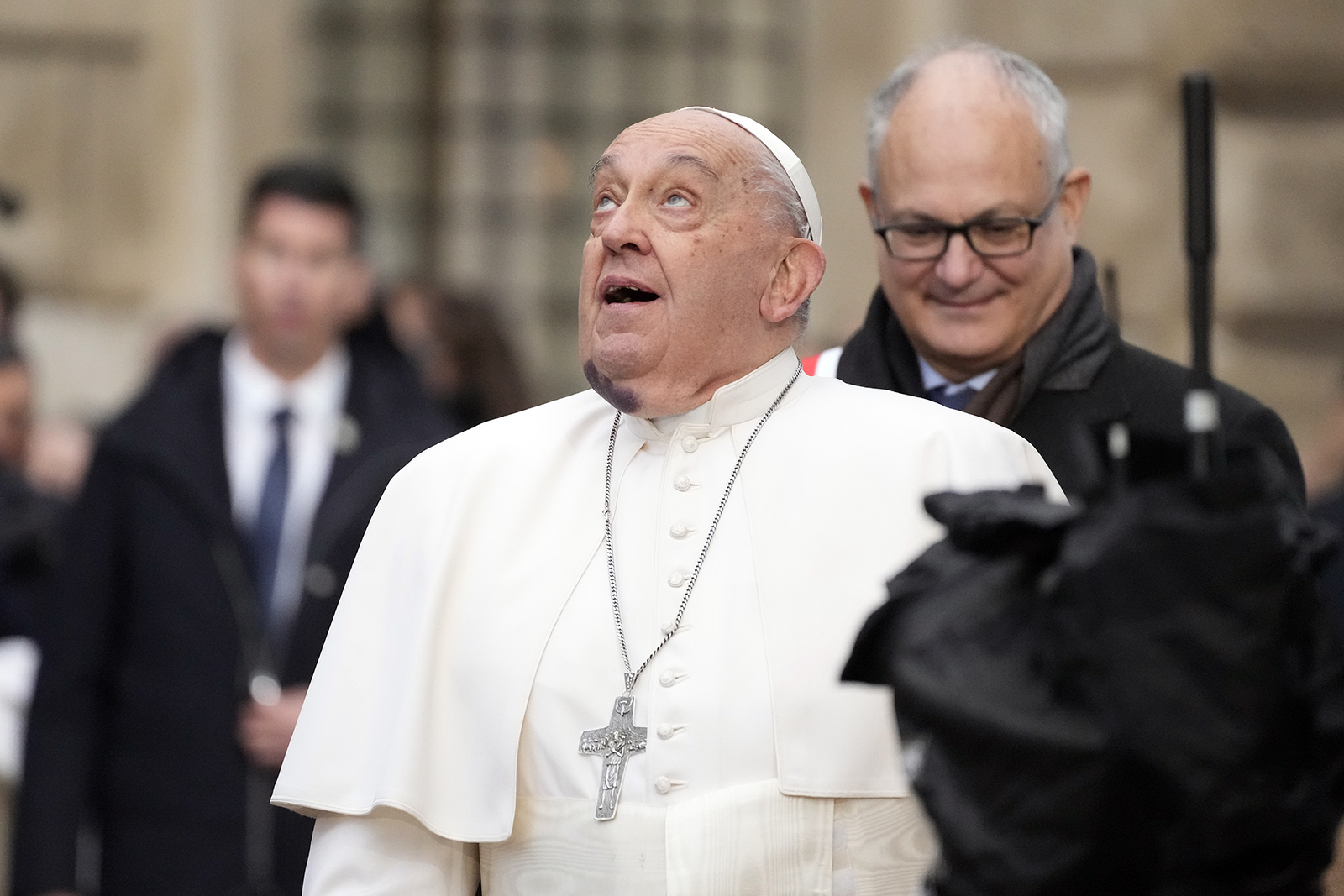

Pope Francis arrives to pray in front of the Marian monument of the Column of the Immaculate Conception in downtown Rome on the day the Catholic Church celebrates the Holy Mary, Dec. 8, 2024. (AP Photo/Gregorio Borgia)


Claire Giangravé
December 12, 2024


VATICAN CITY (RNS) — In the year 2000, then-Pope John Paul II appealed to leaders of wealthy nations, asking them to forgive the debt of poorer countries in the spirit of the Catholic Church’s Jubilee year — a time the church sets aside for forgiveness of sins and debt. Meeting prisoners in Rome, John Paul asked that the death penalty, which he called “an unwor­thy pun­ish­ment still used in some coun­tries, be abol­ished through­out the world.”

Twenty-five years later, the church is preparing to celebrate another Jubilee in 2025, but the goals laid out by John Paul continue to seem as distant as ever — nearly 30,000 people are currently on death row around the world, and according to the International Monetary Fund, at least half of developing countries are facing a debt crisis or are on the verge.

Anticipating the World Day of Peace on Jan. 1, Pope Francis renewed John Paul’s appeals earlier this month, asking for the forgiveness of foreign debt, elimination of the death penalty and creation of a fund aimed at eradicating world hunger using money allocated for armaments.

“I urge the international community to work towards forgiving foreign debt in recognition of the ecological debt existing between the North and the South of this world,” Pope Francis wrote in a Dec. 8 statement. “This is an appeal for solidarity, but above all for justice.”

The pope said the death penalty “not only compromises the inviolability of life but eliminates every human hope of forgiveness and rehabilitation.” He said a global fund drawn from money currently allocated for armaments could “eradicate hunger and facilitate in the poorer countries educational activities aimed at promoting sustainable development and combating climate change.”

Francis has often called attention to weapons manufacturers as the chief example of an industry that values profit over human lives. The global arms trade amounted to an estimated $138 billion in 2022, according to the Stockholm International Peace Research Institute.

Jubilee years, patterned on an ancient Jewish custom, were introduced into the church in 1300 by Pope Boniface VIII, and today occur every quarter-century. The 2025 celebration, which officially begins Christmas Eve 2024, is expected to bring over 30 million pilgrims to the Vatican in search of spiritual replenishment or forgiveness of sins.


FILE – Cardinal Michael Czerny meets the journalists at the Vatican press hall, in Rome, on March 30, 2023. (AP Photo/Gregorio Borgia, File)

The pope’s appeal, titled “Forgive us our trespasses: Grant us peace,” is directed especially to those who don’t have hope for the future. “We need to work at eliminating every pretext that encourages young people to regard their future as hopeless or dominated by the thirst to avenge the blood of their dear ones,” Francis said.

Speaking at a Vatican news conference presenting the pope’s message on Thursday (Dec. 12), Cardinal Michael Czerny, who heads the Vatican’s Dicastery for Integral Human Development, said he hopes people will heed Francis’ message to “disarm our hearts.”

In the pope’s message, he said that abolishing international debt would require the creation of a global financial charter founded on justice and fraternity. Czerny recognized that with a growing portion of the debt in private hands, the issue is more complex today than it was 25 years ago.

Francis has spoken out against the death penalty on several occasion, most recently during his Sunday prayer in St. Peter’s Square on Dec. 8, when he directed his pleas to the United States. “I feel compelled to ask all of you to pray for the inmates on death row in the United States,” the pope said. “Let us pray that their sentences may be commuted or changed.”



This Oct. 9, 2014, file photo shows the gurney in the the execution chamber at the Oklahoma State Penitentiary in McAlester, Okla. (AP Photo/Sue Ogrocki, File)

Catholic Mobilizing Network, which works for fairness in U.S. legal and justice systems, has asked President Joe Biden, a Catholic, to commute the sentences of 40 federal death row inmates before the end of his term in January.

“Pope Francis asks for our firm commitment to respect the dignity of human life, namely the elimination of the death penalty in all nations,” said Krisanne Vaillancourt Murphy, the group’s executive director, at the news conference to present the pope’s message. She described capital punishment as a “structural sin” on the books in 55 nations. In the United States, 27 of the 50 states still have the death penalty.

Vaillancourt Murphy said that accepting the pope’s call would amount to “an act of profound hope in our day.”

RELATED: Faith leaders, activists, the pope urge Biden to empty federal death row before Trump term

Also appearing at the news conference was Vito Alfieri Fontana, who ran a company that makes land mines before he experienced a personal conversion in the mid-1990s and joined the global fight against the arms trade and land mines especially. “Those who work in the arms sector strive to offer clients quick and efficient solutions for war,” Fontana said. “Instead, wars quickly drown in the mud of trenches and last for years. Perhaps there lies the trick, to continue an endless supply and multiply sales, lest ‘the front collapses.’”

Fontana, who spent decades removing his former company’s land mines from the former Yugoslavia and Bosnia-Herzegovina, criticized the decision to introduce land mines in the Middle East and in Ukraine. In November, the U.S. authorized the supply of antipersonnel land mines to Ukraine.

“It’s a useless and stupid homicide, a weapon of vengeance,” Fontana said. “We shall remove all the ones they place,” he said, adding “the important thing is to end this damn war!”
Biden administration releases strategy for fighting Islamophobia

The Council on American-Islamic Relations issued a press release Thursday saying the strategy was “too little, too late.”


(RNS) — The 67-page strategy was released one month before Biden leaves office and amid heightened tensions with the Muslim American community over the administration's steadfast support for Israel in its war in Gaza.


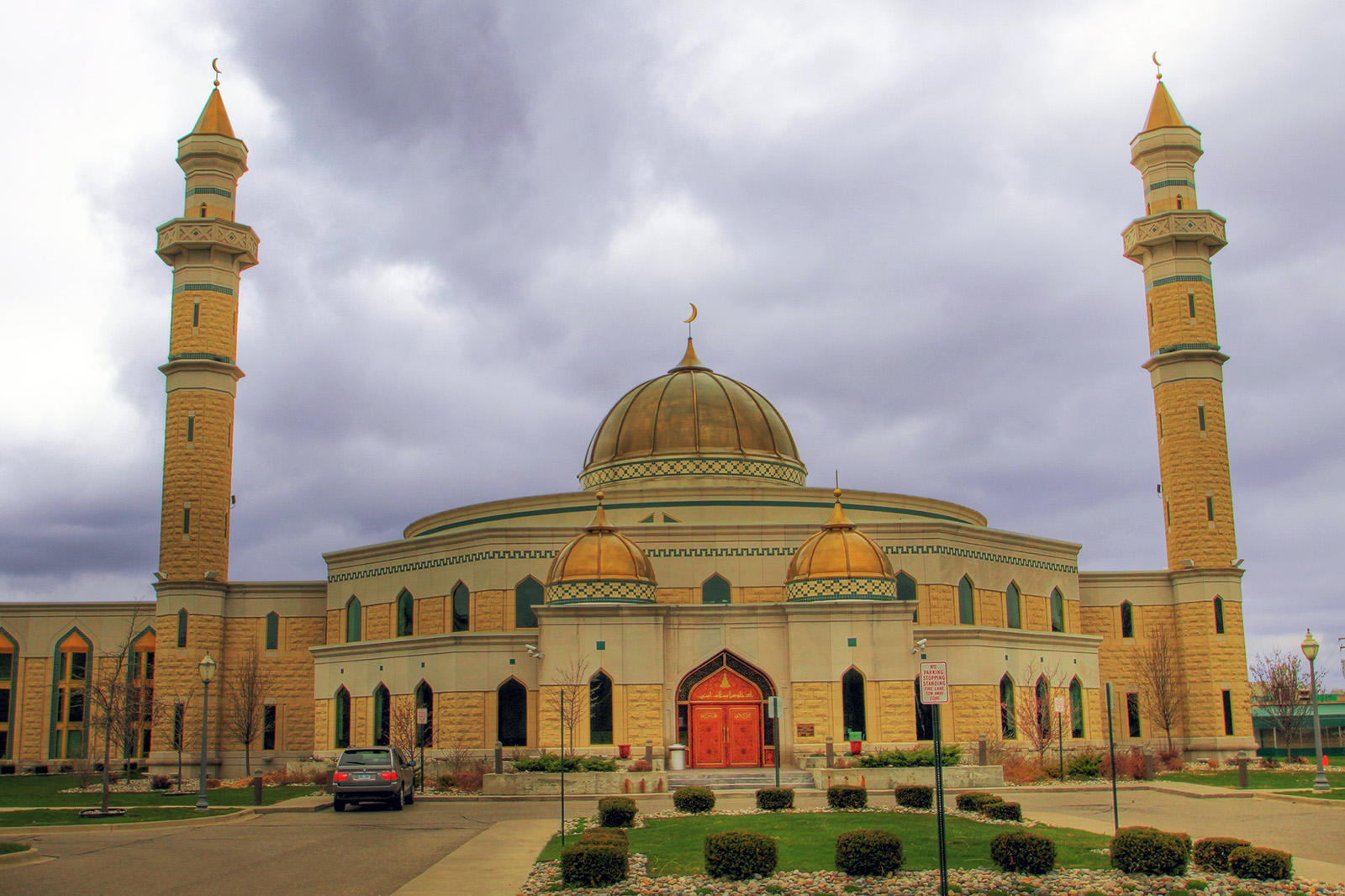
Islamic Center Of America in Dearborn, Mich. 
(Photo courtesy of Flickr/Creative Commons)

Yonat Shimron
December 12, 2024


(RNS) — With one month left in office, the Biden administration has released a 67-page strategy to fight Islamophobia and counter discrimination against Muslims and Arabs.

The policy, released on Thursday (Dec. 12), is modeled on a similar strategy to counter antisemitism that was released in May 2023. But unlike that strategy, it comes amid heightened tensions with the Muslim American community over the administration’s steadfast support for Israel in its war in Gaza.

The first-of-its kind strategy includes four area priorities: increasing awareness of hatred against Muslims and Arabs, improving safety and security, tackling discrimination and building cross-community solidarity. Among its recommendations are tools to combat “doxing,” or sharing people’s home addresses online; “swatting,” or reporting a false incident to send emergency personnel to a home; and other hoax threats against Muslims and Arabs.

The strategy also seeks increased training on nondiscrimination and religious freedom at all levels of government.

It opens by invoking the death of a 6-year-old Chicago-area boy who was stabbed to death one year ago, allegedly because his mother is Palestinian. The death of Wadee Alfayoumi, on the heels of the Oct. 7, 2023, Hamas attack on Israel, made combating violence against Arabs a national priority.

RELATED: How an anti-terror bill could strip Muslim social justice NGOs of nonprofit status

The document also cites the shooting of three students of Palestinian descent in Burlington, Vermont, and the stabbing of a young woman near a college campus in Texas.

Recognizing that the strategy may not be implemented fully, Biden wrote: “And although we may not immediately achieve all the change we seek, this Strategy is a critical step in identifying the challenges we face and identifying solutions that civil society and state, local, and national governments can implement over time.”

The Biden administration’s support for Israel’s war in Gaza, which has included $22 billion in military aid to date, has soured his relations with many Muslims and with Palestinians living in the U.S. Many have expressed despair at the destruction of Gaza and the deaths of more than 44,000 of its residents, according to the Gaza Health Ministry, and said that Biden could have done more to rein in the violence. They were also disappointed in Kamala Harris after no Palestinian was allowed to address the Democratic National Convention in August, a sentiment reflected in mass defections from the Democratic Party in November’s election.

“Although American Muslims, from an Islamophobia perspective, welcomed this,” said Haris Tarin, vice president of policy and programming at the Muslim Public Affairs Council, “there was definitely a hesitation from the American Muslim community to work on the strategy very closely.”

The Council on American-Islamic Relations issued a press release Thursday saying the strategy was “too little, too late.”

“ … if President Biden truly cared about the safety of Muslims or reducing the threat of Islamophobia, he would make major changes to federal programs that perpetuate anti-Muslim discrimination, like the federal watchlist, and immediately stopping enabling the biggest driver of Islamophobia: the US-enabled Israeli genocide in Gaza,” the CAIR statement said.

Work on the strategy began with a White House interagency policy committee created in December 2022 that focused on countering antisemitism, Islamophobia and related types of discrimination.

Tarin, who worked for the Department of Homeland Security before joining the Muslim Public Affairs Council, said he was consulted about the strategy there.

He said it was particularly important to tackle Islamophobia within the various departments and agencies of the U.S. government.

“Since 9/11, the government has actually been complicit in advancing Islamophobic policies, especially in the national security sector,” Tarin said. So while he thought the strategy was imperfect, he said it was a welcome first step and one that he hoped departments such as Homeland Security, Justice and the Treasury would take seriously.

“We will be calling on the Trump administration to adopt the strategy,” Tarin said.

The strategy notes that the majority of Arab Americans are not Muslim, and the vast majority of Muslim Americans are not Arab. The strategy contains more than 100 executive branch actions and more than 100 calls to action.
U$A
Why Christians should demand the establishment of the ERA now

(RNS) — Safety and dignity are fundamental to Christianity, and Christians must answer the call.


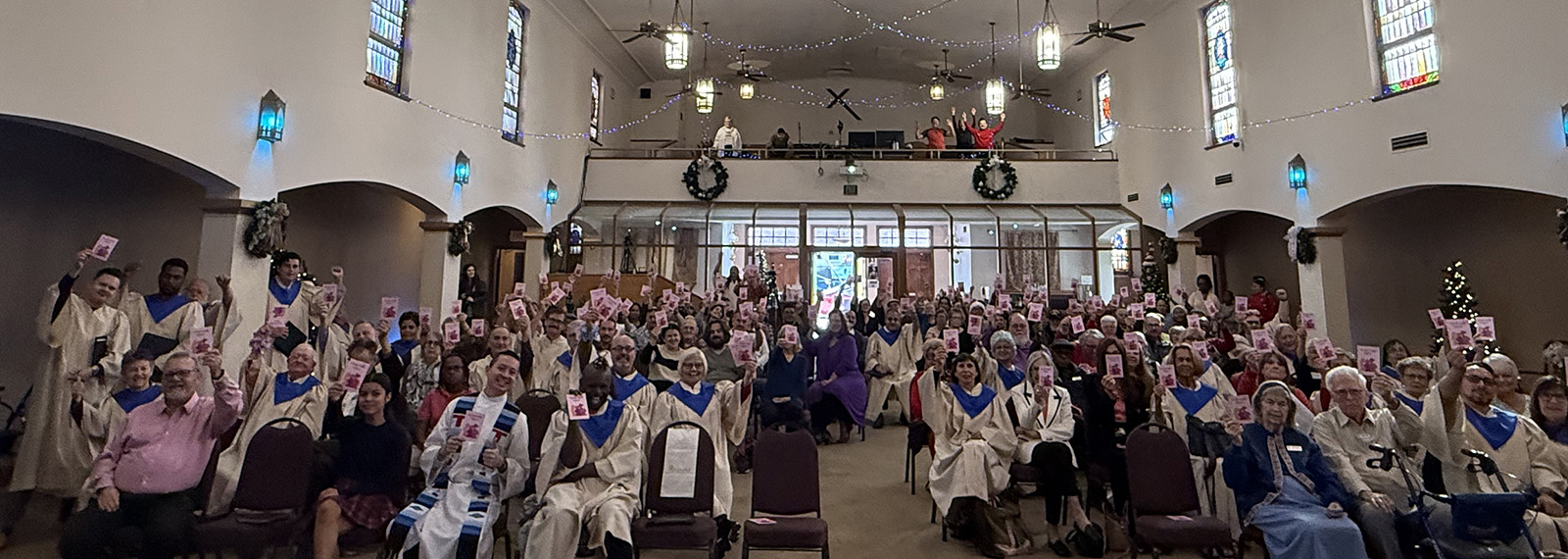
University Christian Church in San Diego celebrated Advent last Sunday, Dec. 8, 2024, with its congregation writing postcards to President Joe Biden, calling on him to make the Equal Rights Amendment the 28th Amendment to the Constitution. (Photo courtesy of University Christian Church)
Mark Sandlin and Caleb Lines
December 12, 2024

(RNS) — The United States Constitution rightly secures protections for Americans whatever their race, religion and ethnicity. But not gender.

Any rights and protections based on gender — equal pay for men and women, equality in marriage, freedom from workplace discrimination and sexual harassment and from gender-based violence — are rooted in laws that may be repealed or modified by legislatures according to political winds and whims. There is no guaranteed enforcement of gender rights.

The Equal Rights Amendment can change that. President Joe Biden has the authority to make the ERA the 28th Amendment to the U.S. Constitution before he leaves office. The ERA was approved by Congress in 1972 and reached its ratification requirement with Virginia in 2020. Indeed, in the opinion of the American Bar Association, “the ERA has satisfied all constitutional requirements to become the 28th Amendment to the U.S. Constitution.”

Protecting human rights, safety and dignity is fundamental to Christianity and aligned with how Jesus lived and what he taught. The ERA would provide much-needed foundational protections against discrimination and violence. Christians can answer the call by demanding that the president push the ERA across the finish line.
RELATED: On women deacons, the Catholic Church has to remember its own history

Importantly, the amendment will also protect against some of the most radical elements of Project 2025, a proposed agenda for the incoming Trump administration put together by some of President-elect Donald Trump’s advisers. Items on this agenda include restrictions on contraception, a national abortion ban, overturning marriage equality, gutting assistance programs, denying health care and other measures that would put women and families at risk and strip LGBT people of their dignity and humanity.

Jesus’ words made clear he deeply valued all people, including women for their strength, wisdom and leadership. They played a central role in his ministry. Women were by Jesus’ side when he preached, as he suffered on the cross and when he was resurrected. In the Gospel of John, he chooses the woman at the well as an evangelist, and the only example we have of Jesus learning from someone comes in the Gospel of Matthew, when a mother desperately seeking healing for her daughter reminded Jesus to live out the lessons he was teaching — namely, to treat everyone equally. He obliged.

Women also helped lead the early church. The New Testament names Phoebe, the deaconess, and Chloe, Nympha and Apphia. Paul was impressed with Junia; Priscilla was a church planter. In the Book of Acts, Tabitha leads a ministry and Philip’s four daughters each became prophets. The gifts of the Spirit — wisdom, knowledge, faith, healing, miracles, prophecy, discerning of spirits, speaking in tongues and interpretation of tongues — are all poured out to men and women equally. Paul put women in ministry roles, and Galatians makes it clear all are equal and worthy.

The Bible is also filled to the brim with patriarchy, reflecting ancient times when women were often seen as not much more than possessions. But these are no longer ancient times. Today, gender equality is included in 168 countries’ constitutions, but not the United States’. For its part, the United States tied with Syria in 2018 on a list of the most dangerous countries in the world for women, where women were at greatest risk of sexual violence, harassment and coercion into sex. The U.S. ranked sixth that year for domestic abuse.

Still, women continue to lead. Allyson McKinney Timm is a human rights lawyer, scholar and faith leader who founded Justice Revival. She’s been mobilizing Christians to support the ERA for many years. According to longtime human rights lawyer and ERA activist Kate Kelly, “I think that women are realizing that nothing that we have is permanent. Nothing is too sacred to be rolled back, and things that we have taken for granted in the past are now up for grabs.”

The bar for any new constitutional amendment is rightly high. It must pass both houses of Congress with a two-thirds majority, and three-quarters of the states (38 states) must ratify it. One mom was determined to see that happen. Kati Hornung, who credits her kids for “reigniting her passion for equality and fairness in our Constitution,” led the successful effort to make Virginia the 38th state to ratify the ERA.

That was in 2020 and — no surprise — politics got in the way. Hornung is now executive director of VoteEquality and is working alongside an ambitious alliance created in the wake of the ugly misogyny that surfaced during this recent election. Renewed vigor around the ERA has also attracted numerous faith-based organizations.

The goal is clear: Get the ERA onto Biden’s desk. Given the grave uncertainties around the corner, Biden has not just the authority but the moral obligation to act before he leaves office.

RELATED: ‘A Well-Trained Wife’ unpacks life in Christian patriarchy

And that is why he needs to hear from you.

We need the faith voice — especially the Christian voice — to help flood the White House with postcards and letters calling on Biden to make the ERA the 28th Amendment. (There are also petitions, protests and plenty of online actions — lots of ways to engage can be found here.) But there’s nothing like finding a personal note in your mailbox. So Take Back Christianity invites you to pull out those magic markers and get creative. Get your church involved. We did! Biden needs to hear from you because 170 million women and girls who deserve better are waiting to hear from him.

(The Rev. Mark Sandlin is a Presbyterian Church (USA) minister in Greensboro, N.C., and the Rev. Caleb Lines, affiliated with United Church of Christ and the Christian Church/Disciples of Christ, serves in San Diego. They are the founders of Take Back Christianity. The views expressed in this commentary do not necessarily reflect those of RNS.)
For feast of the Virgin of Guadalupe, activist devotees adorn Mary with Palestinian symbols

(RNS) — The image of Our Lady of Guadalupe, whose feast day falls on Dec. 12, has emerged as a symbol among Latino activists and artists in the U.S. and Mexico of their support for Palestinians in Gaza.


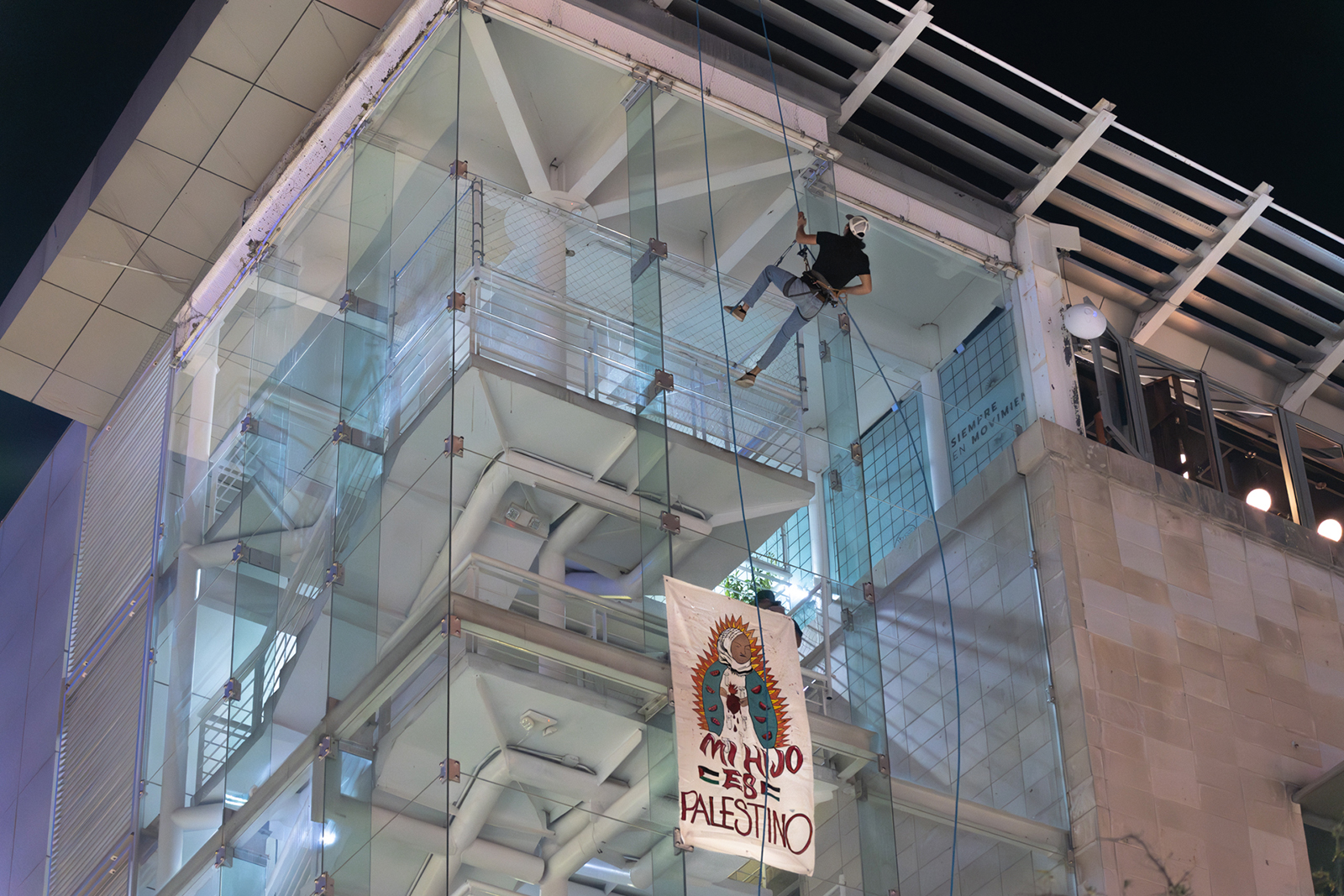
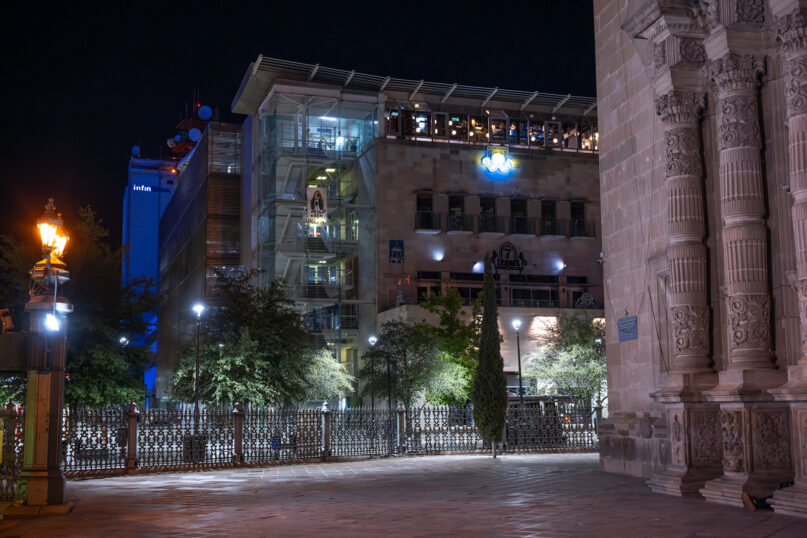
An individual scales a building after hanging a banner depicting the Virgin of Guadalupe with a sign reading “My son is Palestinian” in Spanish, on a parking garage facing the Catholic Metropolitan Cathedral of Chihuahua, Mexico.
 (Photo by Raúl F. Pérez Lira/Raíchali)

Alejandra Molina
December 11, 2024

LOS ANGELES (RNS) — In mid-October, the day before the one-year anniversary of Hamas’ attack on southern Israel, activists in Chihuahua, Mexico, strung a banner bearing a pro-Palestinian message from a parking garage to the Catholic Metropolitan Cathedral of Chihuahua.

In Spanish, the words “My son is Palestinian” were emblazoned in bold red letters below a depiction of the Virgin of Guadalupe, the brown-skinned virgin and patron saint of Mexico, wearing a black-and-white kaffiyeh and a cloak decorated with tiny watermelons, both symbols of Palestinian resistance.

To one of the persons who created the banner, who asked to remain anonymous, there was no better way to evoke reaction than by communicating through the Virgin of Guadalupe. “We wanted to reach people’s hearts. The Virgin is a figure of authority. It’s as if she’s saying, ‘My children, don’t be indifferent,’” said the activist.

As Israel’s war in Gaza continues, the image of Our Lady of Guadalupe, whose feast day falls on Dec. 12, has emerged as a symbol of Palestinian support among Latino activists and artists in the U.S. and Mexico. More than 44,000 Palestinians have been killed so far in the war that began after Hamas militants killed some 1,200 people and abducted around 250 others on Oct.7, 2023.


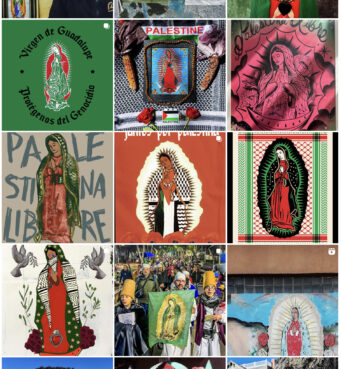
A variety of Palestinian-themed Virgin of Guadalupe artwork on the “Where’s Lupita?” Instagram. (Screen grab)

The art features traditional and interpretative images of the Virgin of Guadalupe fused with watermelons and kaffiyehs, symbols that represent Palestinian identity and resistance. Many of the illustrations are featured on the Instagram known as “Where’s Lupita?,” which tracks global Virgin Mary iconography.

Some illustrations appeared on Instagram as fundraising efforts for UNRWA USA, a nonprofit that raises funds and supports the work of the United Nations Relief and Works Agency for Palestine Refugees.

Gustavo Martinez Contreras, creator of Where’s Lupita?, said artists using Guadalupe’s image in support of Palestinians are continuing a tradition of Chicanos who harnessed the Virgin as a symbol “in defiance against the system.” To Martinez Contreras, these depictions symbolize Guadalupe as “caring for the marginalized.”

Daisy Vargas, a professor at the University of Arizona who specializes in Catholicism in the Americas, sees this artwork as “important interpretations for this particular political and cultural moment,” noting that artists are drawing parallels between the current violence in Gaza and the biblical narratives of Mary as the Palestinian mother of Jesus “who is experiencing the violence of empire in an occupied land.”

Vargas also sees a connection to the story of the apparition in Mexico. “These are symbols that are important within the context of people who have experienced a history of colonial and imperial violence and displacement from their own homelands,” Vargas said.

The feast of Our Lady of Guadalupe marks the Catholic Church teaching that the Virgin Mary appeared to St. Juan Diego, an Indigenous Mexican, on a Tepeyac hill in present-day Mexico City in 1531. The Virgin Mary took the form of a mixed-race woman who spoke Nahuatl, the language of the people that had been recently colonized by Spain, writes art history professor Judith Huacuja.


Daisy Vargas. (Photo courtesy of University of Arizona)

In the 19th century the Virgin was invoked during the Mexican independence movement, when images of the Virgin were emblazoned on banners protesting the Spanish occupation. Today, the Virgin has been used as a symbol of resistance against housing displacement and as a protector of migrants.

“Artists are using the symbol of the Virgin because it’s a powerful symbol of Latinidad,” said Vargas, using a Spanish word referring to Latin identity. “It’s a powerful symbol of Christianity. It’s a powerful symbol of maternal love. … It really asks people to consider what is happening in Gaza, and how it (connects) to their own identity and their own faith traditions.”

“Virgencita Palestine,” by Ernesto Yerena, an artist and printmaker in Los Angeles, juxtaposes the iconic image of the Virgin of Guadalupe against a kaffiyeh-patterned backdrop in red and green, the colors that appear on both the Mexican and Palestinian flags. Yerena sold the prints in January to raise money to fund and distribute “Free Palestine” posters at pro-Palestinian rallies.

“I would say a lot of people who identify as Latinos, Latinas, they would dig this image. They would feel it’s representative of the way we feel,” said Yerena.

Though he grew up Catholic, Yerena said he isn’t religious and he rebukes what he sees as a disparity between the Catholic Church’s wealth and charity work. The Virgin of Guadalupe, however, “has a warm place in my heart because of my grandmothers, my mom. They love the Virgen,” he said.

“I’ll always feel connected to it even though I don’t identify as Catholic,” said Yerena, who identifies as Chicano and Indigenous. Among his great-grandparents, he said, were Yaqui, and Indigenous Mexican people, and a Sephardic Jew.

Yerena learned about “oppressed peoples” solidarity movements with Palestine in his 20s, he said, and soon after began creating art in solidarity with Palestinian people, drawing inspiration from political posters of the Organization in Solidarity with the People of Africa, Asia, and Latin America. He said he has been called antisemitic for his work, which he finds ironic, given his family history. “I’m proud of my Jewish heritage,” he said.


A banner depicting the Virgin of Guadalupe with the words “My son is Palestinian” in Spanish hangs from a parking garage facing the Catholic Metropolitan Cathedral of Chihuahua, Mexico. (Photo by Raúl F. Pérez Lira/Raíchali)

Catholic Church leaders have been criticized for allowing a Nativity scene featuring a Christ child in a kaffiyah — since removed — in the Vatican’s Christmas display in St. Peter’s Square, and other antisemitism watchdog groups have objected to efforts to merge Palestinian and Christian imagery. (Martinez Contreras, founder of Where’s Lupita?, was fired from his job in 2021 for writing a misogynistic and antisemitic caption that he said was accidentally published by the newspaper he was working for.)

Lizett Carmona, an artist based in Chicago, created a Virgin of Guadalupe draped in a black and white kaffiyeh, with the words “juntos por palestina” (together for Palestine) displayed above the Virgin’s image. With her piece, she’s petitioning for protection of Palestinians.

“I wanted to show solidarity and find some interconnectedness … between me, someone of Mexican descent, and someone from Palestine,” said Carmona.

Her work touches on themes of migration and liberation and features images of police cars on fire and of children selling candy at the border.
RELATED: Chronicling Los Angeles’ iconic Virgin of Guadalupe street art

Carmona, an agnostic who considers Catholicism integral with her culture, thinks of Guadalupe as “the product of colonialism.” “But then I think a lot of our identity, we are byproducts of colonialism. It’s just not easy to make those rigid lines,” she said.

Her response for critics who accuse her of using Catholic symbols to promote her ideology?

“Of course, that’s what I’m doing,” Carmona said. “This is propaganda. I’m a propagandist. I want you to reflect. I want you to question.

“Not only do I think of (the Virgin of Guadalupe) as a symbol of Catholicism, I think about it as going outside seeing her on tienditas (convenience stores), on graffiti, or on a tattoo of a person. It’s just an image that pertains to so much more of our culture than the religion itself,” Carmona said.


Indigenous dance and mariachi: New York celebrates Our Lady of Guadalupe

NEW YORK (RNS) — The events highlighted the cultural, as well as the religious, importance of Our Lady of Guadalupe among the city’s diverse Latin American communities.


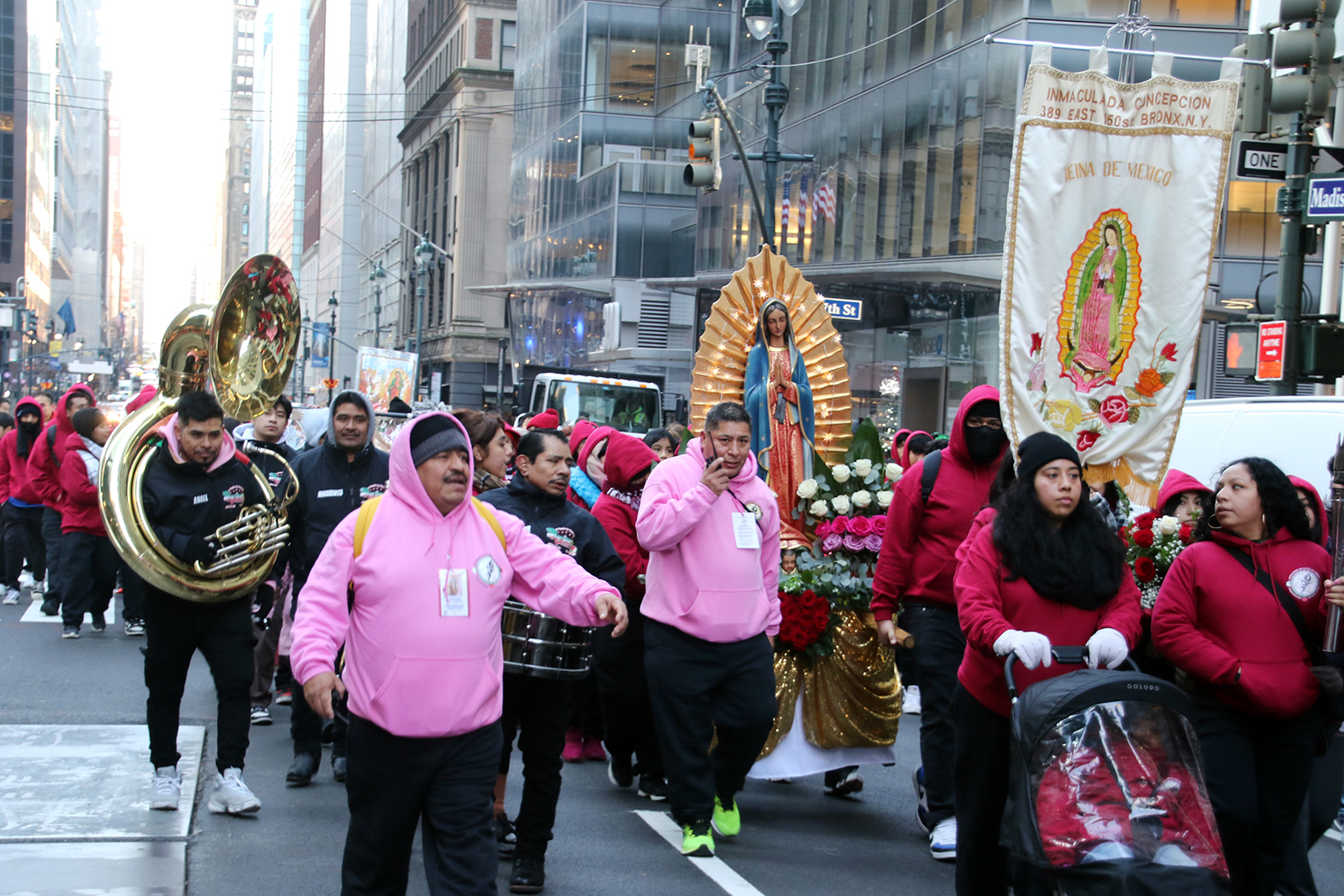
People process with a statue of Our Lady of Guadalupe from St. Bernard Church to St. Patrick's Cathedral during Feast of Our Lady of Guadalupe festivities in New York City, early Thursday, Dec. 12, 2024. (RNS photo/Fiona Murphy)
Fiona Murphy
December 12, 202

(RNS) — Thousands gathered in New York City over the past two days to honor Our Lady of Guadalupe, the beloved patron saint of Mexico and a powerful symbol of unity and Catholic faith across Mexico and Central America.

The festivities began Wednesday evening (Dec. 11) with mariachi music and traditional Mexican folk dance, followed the next morning by a miles-long procession, or “carrera,” and a Spanish-language Mass at St. Patrick’s Cathedral.

The events highlighted the cultural, as well as the religious, importance of Our Lady of Guadalupe among the city’s diverse Latin American communities. People of Mexican descent make up one of the largest subgroups of Latino residents in New York City, according to 2022 data from the CUNY Center for Latin American Studies

Our Lady of Guadeloupe “is a symbol of our faith,” said the Rev. Jesus Ledezma, pastor of Our Lady of Guadalupe in San Bernardo Church in Lower Manhattan. “Even if you are not Catholic, you can still be considered ‘Guadalupano.’”


Procession Photos

By Fiona Murphy · December 12, 2024


In December 1531, the Virgin Mary is said to have appeared to Juan Diego, an Indigenous man, on the Tepeyac Hill, now in Mexico City. The shimmering figure, often described as having dark brown skin, revealed herself as a compassionate mother and left a miraculous image on Diego’s tilma, a cloak made of cactus fibers.

“At the time, Mexicans were waiting for the arrival of the fifth sun god, but when Lady Guadalupe came, she told them this is the true God,” said Rodolfo Nestor, a procession volunteer and student studying the history of the Lady of Guadalupe at St. Ignatius Church in Manhattan. “It was the beginning of the new world.”

The image on Juan Diego’s tilma incorporates Indigenous colors, and the flowers on her dress, the stars on her mantle and her position atop the moon blend Aztec iconography with Catholic motifs.

“The image is written in a code Indigenous people could understand,” Nestor said.

People pray at The Church of Our Lady of Guadalupe and St. Bernard prior to a Feast of Our Lady of Guadalupe procession to St. Patrick’s Cathedral in New York City, early Thursday, Dec. 12, 2024. (RNS photo/Fiona Murphy)

On Thursday morning, people gathered at the Church of Our Lady of Guadalupe and St. Bernard on 14th street in Manhattan to participate in the procession, emulating their Indigenous ancestors who, according to tradition, “ran” to the hill where Juan Diego saw Mary.

“The procession is growing every year,” said Ledezma, who has led the church since 2020. “We had 1,700 people come last year and now more than 2,100 from 19 different parishes including from the Bronx, Yonkers, Mount Vernon and more upstate. It’s very exciting.”

Nearly every participant wore clothing adorned with a symbol of the Virgin Mary and a rotating group carried a large devotional statue of Our Lady of Guadalupe. With a mariachi band leading the way, the procession started off for St. Patrick’s, on 51st Street.

“My legs are tired,” a woman carrying a bouquet of roses exclaimed as she climbed the stairs of the church around 10 a.m.

At St. Patrick’s, Archbishop of New York Timothy Dolan and the Auxiliary Bishop Francisco Figueroa Cervantes, who flew in from Mexico specifically for the day’s festivities, celebrated a Mass.


“Traditional Mañanitas” Photos

By Fiona Murphy · December 12, 2024


The cathedral floor was still strewn with rose petals left from the previous evening’s “traditional Mañanitas,” a high-energy celebration of Mexican culture and devotion. Despite the December cold and persistent rain outside the cathedral, about 400 people gathered to enjoy mariachi music and traditional dance representing various regions of Mexico.

The first high trumpet note rang out from Mariachi Tapatío de Álvaro Paulino, a band of 10 musicians based in New York. The crowd quickly pulled out their phones, and Brenda Nunez, joined by her sister Elvira, began singing along to the music. The Academia de Mariachi Nuevo Amanecer also performed mariachi tunes.

AdChoicesSponsored


“My sister wanted me to wear a more traditional Mexican dress like hers,” Brenda said, motioning to her sister’s white cotton dress embroidered with pink and orange designs. “I have one in red, but I am just coming from work so I didn’t want to wear it.” Brenda said some of her family would be walking in the procession on Thursday morning, but she would be home watching the children. “It’s very early,” Brenda said.

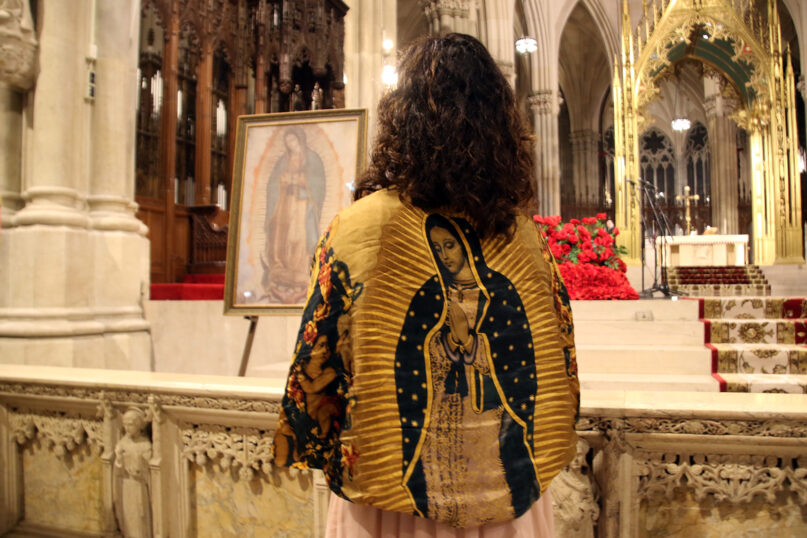
Rosalía León Oviedo, a singer from Mexico City, sat in the front row of the choir with her friend Rosa Maria Tellez, both in shawls embroidered with the image of Our Lady of Guadalupe. “This is my first time here,” León said. “It’s an expensive flight, but my friend (Rosa) lives in the city and invited me, and I couldn’t refuse.”

Rosalía León Oviedo wears an Our Lady of Guadalupe shawl while attending “traditional Mañanitas” at St. Patrick’s Cathedral in New York City, Dec. 11, 2024.
 (RNS photo/Fiona Murphy)

Traditional folk dances were performed by the Ballet Folklórico Mexicano de Nueva York, along with the Tecuanes Quetzalcoatl, which showcased a young boy dressed as a fierce jaguar sauntering down the cathedral’s long central aisle and snapping a bullwhip, symbolizing the Indigenous tradition of jaguar hunting.

The evening concluded with the entire congregation singing “Las Mañanitas,” a popular Mexican song, and participants offering personal dedications to the image of Our Lady of Guadalupe, which sat atop the altar, surrounded by blood-red roses.

SANCTUARY VIOLATED

Faith leaders express dismay amid report Trump will allow immigration raids at churches

(RNS) — ‘I have 30 kids in a Sunday school class — I don’t know who is documented and undocumented,’ said one Latino pastor.


In this July 8, 2019, file photo, U.S. Immigration and Customs Enforcement officers detain a man during an operation in Escondido, Calif. 
(AP Photo/Gregory Bull)

Jack Jenkins and Yonat Shimron
December 12, 2024

(RNS) — Faith leaders are reacting with concern to a report that President-elect Donald Trump plans to rescind a long-standing policy that discourages immigration officials from conducting raids at churches, schools and hospitals.

According to a report from NBC News on Wednesday (Dec. 11), the incoming Trump administration plans to do away with a policy outlined in an internal 2011 U.S. Immigrations and Customs Enforcement memo by then-ICE director John Morton. The policy discourages government agents from making arrests at or near “sensitive locations,” such as houses of worship.

The news comes amid Trump’s campaign pledge to enact the “largest deportation” in U.S. history, which he has said could begin soon after he assumes office, and suggested in an interview over the weekend that U.S. citizens could be deported with undocumented family members.

The Trump transition team did not respond to a request to confirm the president-elect’s intent to change the policy, but the Rev. Gabriel Salguero, president of the National Latino Evangelical Coalition, said in a statement that news of the policy change was “sending a deep chill down the spine of the Latino evangelical church.”


The Rev. Gabriel Salguero. (Photo courtesy of The Gathering)

In a separate interview, Salguero noted he recently completed a “know your rights” training with 82 Hispanic evangelical bishops, many of whom have immigrants — undocumented and otherwise — in their congregations. He called the proposed change “a fear-based policy” and voiced concern about whether it will respect religious liberty.

“How are they going to execute these raids? In ways that respect religious liberty and in ways that do not strike fear into children who are worshipping in Sunday school? I have 30 kids in a Sunday school class — I don’t know who is documented and undocumented,” Salguero said.

The Rev. Samuel Rodriguez, head of the National Hispanic Christian Leadership Conference and one of Trump’s evangelical advisers, maintained in an email that the policy change is more narrow in intent and that he is “convinced the incoming Trump administration will focus on criminal illegal immigrants.” He insisted the policy “serves as a warning” to undocumented immigrants who engage in criminal activity, such as “sex, human, and drug traffickers” or “rapist, gang members.”

“I do not foresee in any way, the administration targeting or going into schools or churches, pursuing God-fearing law abiding immigrants who have been here for 15 years or more, and whose children were born or raised here,” Rodriguez said.

But other faith leaders are not as sure, such as those who participate in the New Sanctuary Movement, a faith-based effort that began under President Barack Obama’s administration and expanded greatly during Trump’s first term. Participants in the movement, which includes members of many faiths, allow undocumented immigrants at risk of deportation to take up residence in houses of worship, hoping to pressure immigration officials into dropping their deportation orders. Some immigrants have lived in churches for years, until eventually leaving after deportation orders were rescinded or changed.

Umstead Park United Church of Christ in Raleigh was one of a half dozen North Carolina churches that sheltered undocumented immigrants during the first Trump administration. The Rev. Doug Long, former pastor of Umstead, now retired, suggested he wasn’t entirely surprised by the proposed change, which activists feared would occur during Trump’s first term.

“If they are making that announcement, I think it brings some clarity because we assumed it was already gonna happen,” Long said.

When former North Carolina-based sanctuary leaders met last month, he added, the activists concluded that churches wanting to help undocumented immigrants would need to pursue new avenues.


Doug Long, left, former pastor of Umstead Park United Church of Christ in Raleigh, N.C., in 2017, with Eliseo Jimenez, who took sanctuary at the church. (RNS photo by Yonat Shimron)

“It’s a very different situation than it was five, six years ago,” Long said.

Still, liberal-leaning church leaders said they did not expect to retreat from their commitment to protecting undocumented people, a position they said is grounded in the scriptural call to love the stranger.

“When Jesus told us to love our neighbors, he didn’t also tell us to make sure that they were documented,” said the Rev. Isaac Villegas, a Mennonite, whose church, the Chapel Hill Mennonite Fellowship, gave sanctuary to an undocumented immigrant during the first Trump administration. “He just said love and care for your neighbors. Full stop. Not, oh, check their documentation status while you’re at it.”

Longtime immigrant rights advocate the Rev. Noel Andersen, a United Church of Christ minister and national field director at Church World Service, a group that helps resettle refugees, expressed outrage over reports of the policy change.

“The right for all people to find safety, refuge and rest in houses of worship is fundamental to our nation’s history of religious freedom and our longstanding values,” he said in a statement. “No one should face fear of deportation when going to houses of worship, seeking medical care, social services, at public demonstrations or taking their kids to school. Regardless of what policy the Trump administration rescinds or puts forth, faith communities will continue to look to our sacred texts and centuries of tradition to live out our faith by welcoming immigrants and protecting the most vulnerable among us.”

Andersen added: “We must lead with compassion and love instead of cruelty or fear to keep families together and to ensure that all people are treated with their God given dignity.”

Other religious groups appear to be taking a wait-and-see approach to the news.

Chieko Noguchi, spokesperson for the U.S. Conference of Catholic Bishops, said in a statement the group of prelates is “aware of the various proposals being discussed with regards to immigration, and are preparing to deal with a range of policies, and will engage appropriately when public policies are put forth by the office holders.”

Representatives for the Evangelical Lutheran Church in America, a denomination that declared itself a “sanctuary church body” at its 2019 Churchwide Assembly and whose members taped “9.5 theses” expressing their concern for immigrants to the door of an ICE building in Milwaukee, declined to comment.

The New Sanctuary Movement is an extension of an earlier effort that occurred in the 1980s, when churches along the U.S.-Mexico border opened their doors to an uptick in migrants, especially those fleeing El Salvador and Guatemala, whom the government largely denied requests for asylum. The ICE memo did not exist at the time, and in 1986, the FBI infiltrated the movement and indicted 16 activists before ultimately convicting nine. The movement is credited with pressuring President Ronald Reagan’s administration to do more to help Guatemalans and Salvadorans.

Religious activists associated with the movement also pushed San Francisco to pass a “city of refuge” ordinance in 1989 that ended local cooperation with federal immigration officials. The law change was the first example of a “sanctuary city,” a movement that expanded during Trump’s first term — and that he has repeatedly condemned.

As for reports of Trump ending the “sensitive locations” policy, Salguero said he was especially troubled that the news came amid the Christian season of Advent, the lead-up to Christmas. Jesus Christ, he said, was a “refugee fleeing violence.”

“During the highest of our holy days, now we have to talk to our families about this,” Salguero said.

Even so, he remained steadfast in his desire to aid immigrants.

“For us, this is not a political thing,” he said. “This is not a partisan thing. We have to do what Christ has called us to do.”

Donald Trump Supports ILA Leadership in Fight Over Port Automation

REAL 'UNION BOSSES' 
WITH 'DA BOSS'

Trump and ILA Daggetts
Trump issued a statement support the leadership of the ILA in its fight over port automation (Trump/Truth Social)

Published Dec 12, 2024 7:03 PM by The Maritime Executive


President-elect Donald Trump has joined with the leadership of the International Longshoremen’s Association in support of the union’s fight against automation in U.S. ports. The incoming president issued a statement backing union leadership in its contract negotiations with the international shipping lines and terminal operators and the current stalemate over automation.

With a month to go till the new deadline established by extending the contract as part of the settlement of the October strike, the debate over automation and its role in ports on the U.S. East Coast and Gulf Coast continues to heat up. The ILA has taken a firm stance against automation or semi-automation and blamed the U.S. Maritime Alliance’s looking to expand the use of semi-automated rail-mounted gantry cranes (RMSs) for causing the negotiations for the master contract to break down.

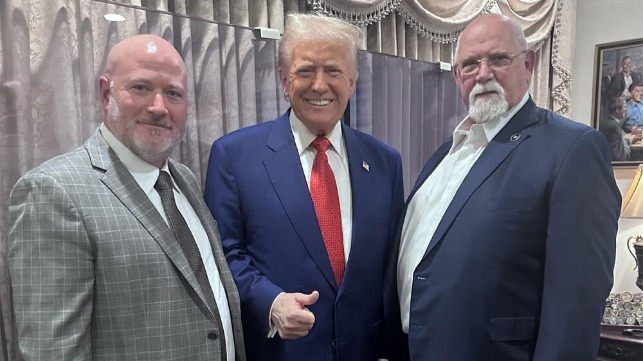
Trump in a posting on his Truth Social media site wrote, ”I’ve studied automation, and know just about everything there is to know about it. The amount of money saved is nowhere near the distress, hurt, and harm it causes for American Workers, in this case, our Longshoremen.” He wrote this after meeting with ILA President, Harold Daggett, and Executive VP, Dennis Daggett, and released a photo with the union leaders.


Trump concludes by saying of the USMX and the shipping companies, “I hope that they will understand how important an issue this is for me.”

The union has reiterated its intent to go on strike for the second time if there is no agreement before the January 15, 2025 expiration of the contract. It would come just five days before Trump’s inauguration and threaten to impact the planned agenda of the new president who ran on improving the U.S. economy.

USMX quickly responded to Trump’s posting saying it looks forward to working with the new president and his administration. USMX was also pressured by the Biden administration during the October strike with President Joe Biden, Acting Labor Secretary Julie Su, and Transportation Secretary Pete Buttigieg all pressing for significant wage increases for the longshoremen. The ILA and USMX agreed to a 61 percent wage increase for the new six-year contract but left automation to be resolved.

“This contract goes beyond our ports – it is about supporting American consumers and giving American businesses access to the global marketplace – from farmers to manufacturers, to small businesses and innovative start-ups looking for new markets to sell their products,” USMX said in a statement tonight responding to Trump and the ILA. “To achieve this, we need modern technology that is proven to improve worker safety, boost port efficiency, increase port capacity, and strengthen our supply chains. ILA members’ compensation increases with the more goods they move – the greater capacity our ports have and goods that are moved means more money in their pockets.”

Earlier this week, the ILA’s Dennis Dagget called the media reporting on automation and port efficiency “inaccurate and irresponsible.” In a long message posted online, he contends U.S. ports are among the most efficient in the world noting they handle one of the highest volumes of cargo. He criticizes the World Bank and S&P Global Market Intelligence Survey for comparing U.S. full-service ports with transshipment ports. 

“The scale and complexity of these operations far exceed the operations of most transshipment ports,” writes Daggett. He says the World Bank uses criteria such as turnaround time which does not consider the challenges of clearance, moving containers between ships and other modes of transport, and safety and security protocols mandated by U.S. law.  “Ignoring these facts distorts the efficiency ratings,” contends Daggett.

“The ILA and its members are ready and willing to be part of this progress, particularly when it comes to adopting technology that promotes efficiency without replacing the critical role of a human performing that task. However, we will not stand for reckless mischaracterizations of our industry and our work,” wrote Daggett.

He also raises the impact of outdated infrastructure on U.S. ports. He says of things such as highways, bridges, rail systems, and dredging operations, “these critical connections to the ports are decades behind the needs of modern commerce.”

USMX and the ILA are at a stalemate over automation and semi-automation which the union says threatens to cause another coastwide strike. Harold Daggett calls it a fight for survival while the USMX says progress is needed to increase efficiency and advance safety while expanding the capacity of U.S. ports to keep up with global demand.
 

HAPPY FRIDAY THE 13TH


Thursday, December 12, 2024

PALEONTOLOGY

New insights into the evolution and paleoecology of mosasaurs: most comprehensive study to date


Iconic extinct marine lizards continue to surprise us


Utrecht University

Sarabosaurus dahli life reconstruction 

image: 

Sarabosaurus dahli life reconstruction

view more 

Credit: Andrey Atuchin


Mosasaurs are extinct marine lizards, spectacular examples of which were first discovered in 1766 near Maastricht in the Netherlands, fueling the rise of the field of vertebrate palaeontology (the study of fossil remains of animals with backbones). Palaeontologist Michael Polcyn presented the most comprehensive study to date on the early evolution and ecology of these extinct marine reptiles. On 16 December, Polcyn will receive his PhD from Utrecht University for his research into the evolution of the mosasaurs. "Mosasaurs are a textbook example of macroevolution, the emergence of new and distinct groups of animals, above the level of species. Although they have been studied for centuries, new discoveries, novel research approaches, and the application of technology, are still teaching us about their relationships and behaviors, some of which continues to surprise us. For example, through the use of detailed comparative anatomy aided by micro-CT scanning technology, we have gained a much better understanding of what group of lizards mosasaurs likely evolved from.”

Additionally, use of these advanced imaging technologies has allowed him to study the internal structures of the braincases of mosasaurs, and sort out the early evolutionary relationships of some previously problematic fossil taxa. “This study not only addressed the early evolution of the group, but also explored small- and large-scale aspects of their feeding biology,” Polcyn continued. “One spectacular example was a specimen I discovered in Angola, that had the remains of three other mosasaurs in its stomach, one of which was the same taxon as the predator, and documented the first occurrence of cannibalism in mosasaurs."

To the sea

Mosasaurs belong to a group of lizards that took to the sea about 100 million years ago (just like the ancestors of the whales later did). Throughout their 34-million-year history, they evolved into well-adapted marine animals that occupied a wide variety of niches and habitats. Together with a large number of other species, they became extinct 66 million years ago, in the aftermath of the meteorite impact that also wiped out the dinosaurs. "A relatively large number of fossils are known from the second half of the evolutionary history of mosasaurs, allowing a good understanding of the relationships among those species, which have been classified into four major groups," says Polcyn. “Much less is known about their early evolutionary history, and how those major groups are related to one another, their origins, and the origin of mosasaurs as a whole.” To address these gaps, Polcyn has focused on bringing new discoveries to light and restudying historical specimens with advanced imaging technologies, providing significant new anatomical information that is used to infer phylogenetic relationships. Polcyn’s work helps resolve a long-running scientific debate, concluding mosasaurs are not very closely related to snakes, but supporting the idea that their closest relatives are near the monitor lizards.

You are what you eat

Not much was previously known about the feeding habits of mosasaurs either, but a small, yet no less remarkable gap in that knowledge was filled with the discovery, by Polcyn in Angola, of a fossilized mosasaur with three other mosasaurs in its stomach, one being the same species as the predator. "Whether that mosasaur was a scavenger or actively hunted its prey cannot be said with certainty; however, we do have the first documented example of cannibalism in mosasaurs. Additionally, we gained insights into how mosasaurs processed their prey, and relative body size of prey and predator." Also included in his dissertation is a large-scale study of the feeding behaviour of mosasaurs, looking at how mosasaurs divided their foraging areas through the evolutionary history of the group. Polcyn integrated previously published data, along with a new, very large sample that covered a period from 92 to 66 million years ago and included finds from all over the world. The result of that study illuminate patterns of foraging area segregation, and feeding diversity in mosasaurs.

About

Polcyn's entry into palaeontology followed a non-traditional academic path. After serving in the U.S. submarine service and a career in technology and engineering, he devoted himself to research on extinct vertebrates, with a focus on marine reptiles. He is currently a Senior Research Fellow at ISEM at Southern Methodist University in Dallas, Texas.


Sleepers made from recycled plastic could make railways even more eco-friendly


Railway sleepers produced from selected recycled plastics are just as strong and could save thousands of tons of emissions and, shows study


Frontiers


Railways, the most climate-friendly mode of transport bar long-distance buses, are bound to play an important role in the fight for net zero. The total emissions of railway travel are currently 31 grams of CO2 equivalents (CO2e) per passenger kilometer, half the amount as for the most economical electrical vehicles.

But the carbon emissions of railway traffic can be further reduced, shows a new study in Frontiers in Sustainability by authors in Finland. This is because typical construction materials such as steel and concrete are energetically costly to produce, transport, handle, and maintain. Even on the busiest train lines, these costs amount to 30% of total emissions, and this percentage increases sharply as the traffic volume decreases.

“Here we show that recycled plastics could be used as the material for railway sleepers and that overall emissions would be reduced. A smaller carbon footprint is achieved when currently incinerated waste streams are used as material,” said Dr Heikki Luomala, the study’s first author and a project manager at Tampere University.

“We estimate that the CO2 reduction by repulping the available waste stream in Finland could amount to the heating emissions of 1,200 households, that is 3,610 tCO2e (tons of CO2 equivalents) per year.”

Two types of plastic tested

Luomala and colleagues studied the feasibility and GHG emission savings resulting from gradually phasing out the wooden and concrete railway sleepers in Finland and replacing them with recycled plastic. The lifespan of a sleeper is between 10 to 60 years and decreases with increasing traffic intensity, due to mechanical damage.

An important source of plastic waste is the packaging sector, which uses up approximately 40% of the total plastic production. Within this industry, so-called liquid packaging board (LPB) – a mix of polyethylene, polypropylene, ethylene vinyl alcohol, and polyethylene terephthalate – is the fastest growing product. Another important source of plastic waste is electronic and electrical equipment, accounting for approximately 6% of total plastic usage. Its main plastic component is acrylonitrile butadiene styrene (ABS).

In the past, plastic waste was often exported from Finland to the Far East, but in recent years the ‘ALL-IN for Plastics Recycling’ (PLASTin) initiative was launched to make Finland a leader in plastic recycling.

Luomala et al. produced specimens of railway sleepers (0.15m thick, 0.25m wide, and 2.6m long) made from LPB and ABS and subjected these to a battery of mechanical tests. Their intent was to test if the prototypes confirmed to international standards for the plastic and railway industries.

Implementation in the real world is on track

Specimens made from both types of plastic passed the strength and bending tests. But only recycled ABS was able to withstand the maximum tested temperature of 55°C without significant softening during hot summers.

“Recycled ABS is much more suitable as railway sleeper material than recycled LPB: the strength and stiffness properties of ABS are approximately three times higher and closer to that of wooden sleepers,” said Luomala.

Plastic railway sleepers offer several advantages, for example easy formability, low cost, light weight, and resistance to environmental conditions. The use of recycled plastic also allows greater design flexibility for sleeper shape.

The Finnish Transport Infrastructure Agency has already shown interest in the study’s findings.

“When it comes to the implementation of recycled ABS for use as railway sleepers, further tests should first be conducted at full scale. Their long-term behavior, for example in terms like UV resistance, should also be tested,” warned Luomala.