Tuesday, December 17, 2024

 Ireland Returns Mummy and Ancient Artifacts to Egypt

Artifacts from ancient Egypt held in Ireland have been returned following President Abdel Fattah El Sisi's visit to Dublin.
Artifacts from ancient Egypt held in Ireland have been returned following President Abdel Fattah El Sisi’s visit to Dublin. Credits: Egyptian Ministry of Tourism and Antiquities, Denis Mortell Photography
Ancient Egyptian artifacts, including mummified remains and a sarcophagus, have been returned to Egypt following the visit of President Abdel Fattah El Sisi to Dublin.
 

This comes as part of Egypt’s efforts to recover artifacts around the world that embody the nation’s rich history. The return of the artifacts from Ireland is the culmination of more than a year and a half of ambitious persistence on Egypt’s end.

The artifacts were being held at the University of Cork, and the university displayed incredible support and cooperation throughout the reclamation process.

Ancient artifacts returned to their rightful home in Egypt

The Egyptian Minister of Tourism, Sharif Fathi, applauded efforts between all parties involved in the return of these precious items. Fathi cited the efforts of the Egyptian Ministry of Foreign Affairs, the Egyptian embassy in Dublin, the Embassy of the State of Ireland in Cairo, and the University of Cork.

“My sincere thanks in advance for this kind gesture, which is an important step in strengthening the growing cultural and scientific relations between the two countries,” said Fathi in a post published on Facebook by the Egyptian Ministry of Tourism and Antiquities.

Dr. Mohamed Ismail, the Egyptian Secretary-General of the Supreme Council of Antiquities, said that the University of Cork had acquired the relics in the 1920s. He noted that the returned artifacts included a painted wooden sarcophagus containing mummified remains and a collection of limestone canopic jars, known to hold the embalmed viscera of the deceased in preparation for the afterlife.

Also returned were five pieces of painted cartonnage from the ancient Greek and Roman periods. Cartonnages were large sheets of linen or papyrus used for a variety of funerary purposes. They were utilized to produce masks that covered the head and shoulders of mummies or even the entirety of the sarcophagus. The material was flexible and sturdy enough to be wrapped tightly around the body, allowing the ancients to paint on them.

According to Ismail, the recovered items will be taken to the Egyptian Museum in Tahir Square for restoration purposes. The end goal will be to display them in the museum for a limited time in an exhibition of reclaimed ancient Egyptian artifacts.

Shaaban Abdel Jawad, the director-general of the General Department for Artifact Repatriation and supervisor of the Central Administration of Archeological Ports, said that the canopic jars belonged to an ancient priest from the 22nd dynasty known as Pa-Wer. This man was revered in ancient Egypt and was referred to as the “Father of the god” and “Guardian of the Fields of the god.”

India’s second-largest clean energy company ReNew plans to go private

India’s second-largest clean energy company ReNew plans to go private
/ Pexels - Wind Turbine Landscape Photography

By bno - Mumbai Office
 December 13, 2024

Key investors in ReNew Energy Global, India’s second-largest clean energy producer, have proposed to take the company private in a deal valued at $2.82bn, Reuters reported December 11 citing filings with the US Securities and Exchange Commission (SEC). The move comes as the company’s stock struggles, having dropped nearly 18% in value this year.

The consortium of major shareholders, including Canada Pension Plan Investment Board, UAE-based Masdar, chairman Sumant Sinha and a unit of the Abu Dhabi Investment Authority, collectively holding 64% voting rights, has offered to acquire shares at $7.07 each. This price represents an 11.5% premium over the December 10 closing price of $6.34 on Nasdaq.

In a letter attached to the SEC filing, the consortium described the offer as a way to provide shareholders with "immediate liquidity not available in the public markets."

If the board approves the offer, Japan’s leading utility JERA, which owned 11.7% of the company’s Class A shares as of July, would exit its stake. It remains unclear whether JERA still holds its full shareholding, Reuters reported.

Masdar stated that the proposal would offer fresh capital to bolster India’s energy transition. The consortium has assured that the deal will proceed without financing or disbursement conditions.

ReNew Energy Global operates a diverse portfolio of solar, wind, hydro and hybrid projects with a combined capacity of 10.3 GW across India. The company went public in 2021, with Goldman Sachs, an early investor, exiting its stake at the time.

Advanced economies have lower out-of-pocket healthcare spending

Advanced economies have lower out-of-pocket healthcare spending
Canada has the best healthcare service in the world, The US is the only developed market that doesn't have universal healthcare. In between, the poorer the country, the more the population have to pay for healthcare. / bne IntelliNews
By Florian Zandt for Statista December 16, 2024

According to the Global Health Expenditure Database by the World Health Organization (WHO), the global average out-of-pocket expenses related to health across 192 countries made up 30% of all health expenditures per capita in 2022, Statista reports.

This type of spending includes over-the-counter medicine, health aids or, as is the case for the US healthcare system, deductibles or co-pays. While most high and upper-middle-income countries have a lower share of out-of-pocket spending due to non-profit schemes, government transfers and comprehensive social health insurance, this type of spending makes up two-thirds or more of all health spending in thirteen countries and territories.

Among this group are Turkmenistan, Armenia, Afghanistan and Nigeria, each exhibiting an out-of-pocket spending share of more than 75%. The United States, which is the only advanced economy with no robust universal health coverage, has a share of eleven%. Looking at absolute instead of relative numbers, overall out-of-pocket spending grew to $471bn or around $1,400 per capita according to the NHE fact sheet published by the Centers for Medicaid & Medicare Services. Private health insurance spending in the United States constituted 29% of national health expenditure, amounting to $1.3 trillion.

A comparison between the United States and other leading economies reveals that the US has the same relative level of out-of-pocket spending as Germany and Japan, as well as 2% less than the United Kingdom and 2% more than France. China, the second-biggest economy after the United States, exhibits an out-of-pocket spending share of 34%, despite almost universal healthcare coverage. This is likely due to a lower level of benefits, necessitating covering larger health expenses with personal money.

 You will find more infographics at Statista

Amnesty accuses Serbia of spying on journalists and activists

Amnesty accuses Serbia of spying on journalists and activists
The phone of Serbian independent investigative journalist SlaviĊĦa Milanov infected with spyware, according to Amnesty International's report. / Amnesty International
By bne IntelliNews December 16, 2024

Amnesty International has accused Serbian authorities of conducting covert surveillance on journalists, activists and civil society members through advanced spyware and digital forensic tools, according to a report released on December 16.

The report, titled “A Digital Prison: Surveillance and the Suppression of Civil Society in Serbia”, alleges that Serbian police and the Security Information Agency (BIA) used a bespoke Android spyware system known as NoviSpy to infect the phones of dozens of targets. Amnesty claims that the spyware was covertly installed during police detentions and interviews, often using tools developed by Israeli company Cellebrite to bypass device security.

Amnesty presented digital forensic evidence linking Cellebrite’s UFED technology to the infection of activists’ and journalists’ devices with NoviSpy. The Cellebrite UFED suite, used by law enforcement worldwide, can extract data from mobile devices, including the latest Android and iPhone models, even without access to passcodes.

In one case, investigative journalist Slavisa Milanov was arrested in February 2024 under the pretext of a drunk-driving test. While in detention, Milanov’s phone was confiscated. Forensic analysis by Amnesty revealed that Cellebrite’s tools had been used to unlock his phone, enabling the installation of NoviSpy.

Another case involved environmental activist Nikola Ristic, whose phone was similarly compromised. Amnesty also documented spyware installation during an interview between BIA officials and an activist from the Krokodil organisation, which promotes reconciliation in the Western Balkans.

The NoviSpy spyware captured extensive personal data, including screenshots of email accounts, encrypted messaging apps like Signal and WhatsApp and social media activity. Amnesty disclosed its findings to Google and Android security researchers, prompting measures to remove the spyware from affected devices and alert potential targets with warnings.

Amnesty International’s deputy regional director for Europe, Dinushika Dissanayake, condemned the actions as tools of repression.

“Our investigation reveals how Serbian authorities have deployed surveillance technology and digital repression tactics as instruments of wider state control and repression directed against civil society,” she said.

The BIA has dismissed Amnesty’s claims, stating that the report contained “nonsensical statements” and asserting that its operations comply with local law.

Despite the denial, Amnesty’s findings reveal the extent of state surveillance in Serbia, and raise broader questions about freedom of speech and the press in Serbia. Activists have expressed fear and trauma from the surveillance, leading them to self-censor.

Amnesty said it had shared the report with the Serbian government before publication but received no response.

Cellebrite, the Israeli company whose tools were allegedly used in the operations, stated that it is committed to respecting human rights and reviews credible allegations of misuse. The company did not confirm whether Serbian authorities are among its customers.

The revelations are likely to intensify scrutiny of Serbia’s human rights record, particularly as arrests and interrogations of political activists continue amid widespread anti-government protests.


China’s leftover “gutter” cooking oil becomes bio-sustainable aviation fuel wonder

China’s leftover “gutter” cooking oil becomes bio-sustainable aviation fuel wonder
China's used cooking oil used to be poured into the gutter and was an environmental hazard clogging up sewers. But after it was discovered that it could be processed into a bio-aviation fuel that produces 85% less emissions than traditional fuel, its fate was transformed. / bne IntelliNews
By bne IntelliNews December 16, 2024

China’s notorious “gutter oil” was once a source of food safety scandals, but has undergone a green revolution that has made it worth more than kerosene.

The waste cooking oil that was used in every household to make food used to be poured into the sewers, where it caused pollution and was the subject of complaints. The oil would accumulate in sewers and was also used illicitly in food production. Now it is one of China’s most sought-after commodities, as it can easily be turned into sustainable bio-aviation fuel.

The price of recycled gutter oil has surged as a result, and where there was a surplus there is now a deficit. The price of bio-aviation fuel has surpassed that of new palm oil and soybean oil, thanks to its status as a key ingredient in sustainable aviation fuel (SAF).

Aviation biofuel has sparked the newfound demand. Produced from used cooking oil, SAF can reduce carbon emissions by up to 85% compared to traditional jet fuel multiplying its appeal for airlines desperate to go green. Price of gutter oil has soared to over CNY8,000 ($1,100) per tonne – making it more valuable than many premium store-bought extra virgin olive oil ​.

China has become a leading player in the global SAF supply chain, exporting approximately 1.82mn tonnes per year (tpy) of used cooking oil. The US alone imported over 1.36mn tonnes from China last year, as SAF adoption accelerates in the aviation industry​​.

International interest is so intense that Chinese industry players are advocating for export restrictions to ensure sufficient domestic supplies. Domestic demand for SAF now far exceeds production capacity, forcing a reassessment of export priorities. Some exchanges are even exploring futures contracts for used cooking oil, highlighting its growing importance as a commodity​.

Ironically, the shift in value has flipped concerns about product integrity. “Producers are now accused of ‘contaminating’ gutter oil with cheaper pure palm oil to improve margins,” China-watcher Arnaud Bertrand joked in a social media post, contrasting this with the past, when the gutter oil was seen as rubbish and something to get rid of.

This transformation of gutter oil from a problem into a solution is a successful case of sustainable problem-solving – putting waste to service for the betterment of the environment. Once a health hazard, it is now a strategic resource supporting global decarbonisation efforts.

China’s transition from managing gutter oil as a public health risk to exporting it as a high-value feedstock for aviation biofuel demonstrates how aligning economic incentives with sustainability goals and innovation can drive transformative change. As demand continues to grow, the humble gutter oil could play an even larger role in reducing aviation’s carbon footprint, provided the Chinese can be persuaded to eat more fried food.


TikTok seeks Supreme Court intervention to block US ban
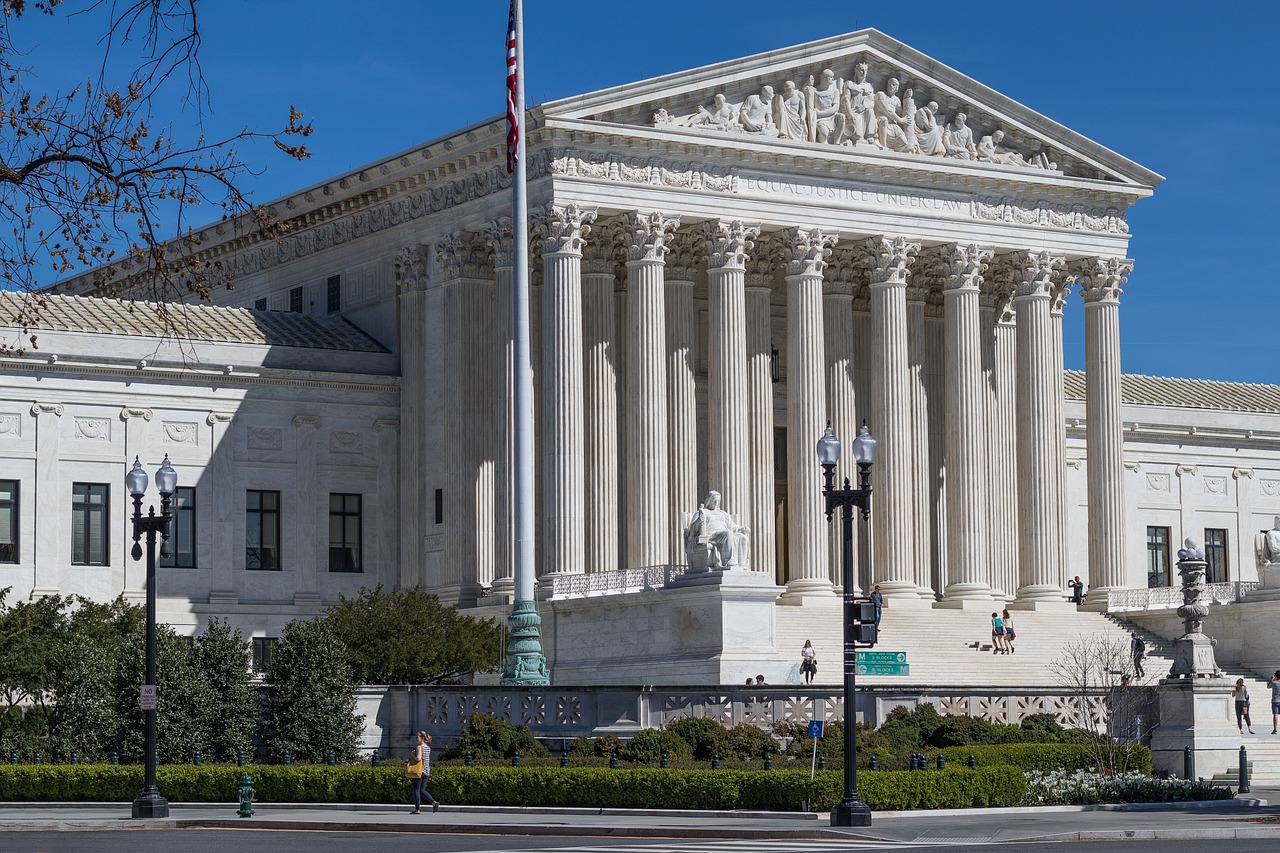
TikTok filed an emergency petition to the US Supreme Court on Monday seeking to block a federal law that could force the shutdown of its platform next month.

The petition challenges the constitutionality of legislation signed in April requiring TikTok to sever ties with its Chinese parent company ByteDance or cease US operations by January 19. The Protecting Americans from Foreign Adversary Controlled Applications Act, signed into law in April 2024 as part of a broader appropriations package, prohibits ByteDance and TikTok Inc. from operating TikTok in the United States unless they execute a “qualified divestiture” that separates the platform from foreign adversary control. The law requires TikTok to break ties with its Chinese parent company ByteDance by January 19, 2025, with a possible 90-day extension, or face a nationwide ban enforced through restrictions on app stores and internet hosting services.

TikTok’s Supreme Court appeal follows last week’s unanimous ruling by the US Court of Appeals for the DC Circuit upholding the law.

In their filing, TikTok and ByteDance argue the ban would violate First Amendment protections and cause irreparable harm to their business. The companies contend Congress failed to consider less restrictive alternatives and lacks evidence of actual national security threats.

If it moves forward as planned, the ban would take effect one day before the presidential inauguration of Donald Trump, who unsuccessfully attempted to ban TikTok during his first term, but who has recently indicated opposition to restrictions on the platform.

TikTok requested a ruling by January 6 to allow time for implementation if the petition is denied.

The Supreme Court’s response could determine whether one of America’s most popular social media platforms — which boasts some 170 million US users — continues operating in its current form.

UK lawmakers continue calling for immediate halt of arms exports to Israel

On Sept. 2, British government announced that it was suspending 30 out of 350 arms export licenses to Israel


Burak Bir |17.12.2024 - TRT/AA


LONDON

A group of British MPs on Monday reiterated their call for an immediate stop to arms exports licenses to Israel amid the crippling situation in the Gaza Strip.

Cross-party MPs gathered outside the parliament behind a banner saying: "Stop Arming Israel."

The display came ahead of today's debate on a petition with over 100,000 signatures calling for an immediate revocation of all arms export licenses to Israel.

As of Monday evening, 107,316 people have signed the petition.

On Sept. 2, the British government announced that it was suspending 30 out of 350 arms export licenses to Israel after a review, warning there is a clear risk that certain UK arms exports to Israel might be used to commit or facilitate a serious violation of international humanitarian law.

The 30 licenses cover components for military aircraft, helicopters, drones, and items that facilitate ground targeting, excluding UK components for the F-35 fighter jet program.

The issue has gained ground as activists move to target the countries whose weapons and support make possible Israel’s genocidal war on Gaza, which has killed over 45,000 people, most of them women and children.

Israel has continued a genocidal war on the Gaza Strip since a Hamas attack on Oct. 7, 2023, despite a UN Security Council resolution calling for an immediate cease-fire.

The second year of genocide in Gaza has drawn growing international condemnation, with officials and institutions denouncing the attacks and blocking of aid deliveries as a deliberate attempt to destroy a population.

Last month, the International Criminal Court (ICC) issued arrest warrants for Israeli Prime Minister Benjamin Netanyahu and former Defense Minister Yoav Gallant for war crimes and crimes against humanity in Gaza.

Israel also faces a genocide case at the International Court of Justice for its deadly war on Gaza.

Geothermal energy poised for major global expansion, says IEA chief Fatih Birol

FRACKING BY ANY OTHER NAME

Geothermal energy poised for major global expansion, says IEA chief Fatih Birol
New technology means geothermal could potentially produce 800 GW of power a year – enough to power the US – according to a groundbreaking report from the IEA. / bne IntelliNews
By Ben Aris in Berlin December 15, 2024

"Geothermal energy could see transformative global growth thanks to advancements in technology and expertise from the oil and gas sector," the International Energy Agency (IEA) said in a report groundbreaking report entitled “the Future of Geothermal Energy” released in December. The IEA has decupled its estimate of the potential power generation capacity of geothermal to 800 GW – almost enough to power the entire EU or US economies.

According to Fatih Birol, Executive Director of the IEA, there is huge untapped potential in geothermal energy to provide clean and secure energy worldwide that also solves the most basic of the problems associated with renewable energy: providing a base load power supply when the sun is not shining or the wind is now blowing. Geothermal's greatest advantage is that the supply of power is constant and neither dependent on the weather nor the diurnal cycle.

With electricity consumption expected to surge due to the rising use of air conditioning, electric vehicles and data centres, geothermal energy offers a reliable alternative. “With electricity use set to grow strongly to run air conditioners, EVs and data centres, geothermal offers clean power round-the-clock,” Birol said.

800 GW potential

The potential of geothermal energy is massive. The IEA has upgraded its assessment of the total power available from the earth ten-fold to 800 GW – a bit less than the circa 1,000 GW the US or Europe generated last year – up from the 16.3 GW produced globally in 2023.

Geothermal will never replace solar and wind from amongst the renewables, which will remain cheaper to produce and easier to install, but the IEA says that it will make up 15% of the growth of new generating capacity to 2050 and nearly all that new capacity will be from investment into renewables. Geothermal’s anticipated rapid growth will be driven by the major advantages it enjoys over the other renewables.

First, it is entirely emission free, as it simply draws heat from the earth’s core that is caused by the residual heat from the planet’s formation, gravitational compression and radioactive decay of isotopes inside the core. By the same token, this energy is limitless.

Secondly, the energy produced is continuous and neither dependent on the weather nor the diurnal cycle. That makes geothermal the missing piece in the renewables puzzle; it can be the source of the baseload power supply that is missing from solar at night and wind when the weather is calm.

But to realise the IEA’s projected 800 GW of geothermal power governments and private investors will have to invest some $1 trillion over the next decade. Birol forecasted that “market opportunities for next-generation geothermal energy could attract investment totalling $1 trillion by 2035 and create over a million new jobs,” adding that geothermal could not only meet growing electricity demands but also provide industrial and building heating solutions across the globe.

Birol says that this is not as big a number as it first appears and is the same that has already been invested into wind power in the last seven year and solar power in only the last three years.

“This scale-up of geothermal can easily be done and it can then play a significant role in meeting the rising electricity demand we are expecting from things like the mushrooming AI data centres and improving lives of emerging middle classes around the world,” says Birol.

However, Birol admitted that it is not clear whether geothermal will take off. “Government needs to act with funding and with slashing the bureaucracy of permitting to make it easier to start projects and bring down costs,” says Birol.

Drilling deep

The IEA’s research shows that if geothermal wells drilled to 2,000 metres there are few sites in the world that produce much heat, but the situation changes dramatically if wells are drilled to 5,000 metres, when most of the countries in the world would produce enough heat to be a viable source of energy. And at 7,000 metres virtually the whole world becomes a viable source of geothermal power and heat.

“And 5,000m deep wells are routine for oil companies,” says Birol. “There is a direct cross-over from the oil and gas business to geothermal.”

Industry professionals are more sceptical, as more technological development needs to be done.

“5,000m deep is the cutting edge of the geothermal business,” one industry participant said who wished to remain anonymous, as they are in ongoing government negotiations. “I don’t know of anyone who has dug a well that deep in Europe. Most wells are between 2,000m and 4,000m.”

The expert also pointed out that 7,000m is an extreme, as the temperatures at that depth rise to between 250C and 400C, which would melt steel pipes.

“There are alternatives like making pipes out of carbon fibre, but this is all still in the future,” the expert said.

Currently, most geothermal projects simply drill deep into the earth, pipe down water to extract the heat and bring it to the surface to use either as raw heat or run an electric generation turbine.

However, advances in oil extraction, such as horizontal drilling, offer new opportunities of more sophisticated methods. One option is a “closed loop” geothermal well, where a pipe is sunk and a series of horizonal pipes are drilled to second pipe that can lift superheated water back to the surface – similar to an upside-down radiator.

“Advances in technology are opening new horizons for geothermal, promising to make it an attractive option for countries and companies all around the world. These techniques include horizontal drilling and hydraulic fracturing honed through oil and gas developments in North America. If geothermal can follow in the footsteps of innovation success stories such as solar PV, wind, EVs and batteries, it can become a cornerstone of tomorrow’s electricity and heat systems as a dispatchable and clean source of energy,” the report says.

However, experts say this idea remains on the drawing board and no one has yet attempted to build a closed loop system, although a lot of money is being invested into the research.

The IEA report proposes 7,000m deep wells, but industry professionals bne IntelliNews talked to said much shallower wells are as attractive, which lift heated water at between 100C and 130C. Half of the gas burnt in the Netherlands goes to heating houses and heat brought to the surface can be used for simple tasks like heating greenhouses in the winter, cutting the demand for other fuels like gas.

Lower temperatures can be used to power turbines if the water is replaced by alcohol with lower boiling temperatures that can also drive turbines. But of course superheated water from the deeper wells will produce far more energy if the goal is to provide the baseload power for the national grid.

Falling costs

“The EU is the home of geothermal technology and the first commercial geothermal project in the world,” Brent Wanner, head of the IEA’s power sector unit, said during the press conference. “Now we can drill deeper it is possible to increase the output and meet rising demand many times over. There is a huge and open opportunity in Europe.”

The world’s first commercial geothermal power plant was developed in Larderello, Tuscany, Italy, in 1904, by scientist Prince Piero Ginori Conti. Natural steam from a hot spring was used to power a small generator that eventually powered local industries. Today the Larderello geothermal field is a major contributor to Italy’s energy mix, producing 800 MW of power a year, enough to light 1mn homes.

The EU also been a global leader in promoting decarbonisation with its Green Deal that is supposed to see carbon-zero by 2050, and it is technologically advanced.

Currently, thanks to the drilling costs, producing geothermal power is expensive: just under $250 per kilowatt hour. But Birol says that geothermal power should follow the same path as solar power, where the costs have fallen dramatically in the last years as countries around the world have scaled up their solar power generation; solar power has become the cheapest source of power at $50 per kWh, leading to an acceleration in the roll out of new capacity, led by China, the global green energy champion. The IEA forecasts that geothermal costs will also fall to $50 per kWh by 2035 if governments and investors around the world throw themselves into the business – a fall of 80%.

“We are expecting to see costs of producing geothermal to fall by three quarters in the coming years thanks to the spillover effects from the oil technology,” says Birol.

But there are still many hurdles to overcome. Birol began his presentation by calling on governments to expediate issuing permits, which currently can take over a decade to obtain. One industry professional told bne IntelliNews that the Netherlands has recently tried to simplify the permitting process, but all that happened was each part of a project now requires a separate permit so they have to submit applications for two, whereas before both parts of the project were covered by a single permit, and this change has introduced delays of eight months to the process.

“It means you have to take a portfolio approach; the uncertainties this sort of thing introduces means that a project can be derailed or delayed and that causes problems with funding. So you need multiple projects in case one goes wrong,” the expert said.


World Bank must wake up to Rogun mega dam “nightmare” in Tajikistan, say activists ahead of financing vote

By bne IntelliNews December 16, 2024

The World Bank has to realise that the Rogun mega project “dream of the biggest dam [in the world] will turn into a nightmare for the people and nature in Tajikistan and beyond” and that it “still has an opportunity to pause the proposed investments and demand a new impact assessment, including for alternative proposals”.

So argue environmental activists Eugene Simonov and Manana Kochladze in an article published by Al Jazeera prior to a December 17 World Bank vote on financing the completion of the dam investment on the Vakhsh River, a major tributary to the Amu Darya River which flows onwards to Afghanistan, Turkmenistan and Uzbekistan.

“Now it is the time for the bank to reflect on past mistakes, listen to civil society, and shift investments to smaller-scale projects where possible harms can be adequately mitigated,” the activists write.

They add: “The Tajik regime’s argument that this is a ‘life and death’ situation does not stand. There are alternatives to the current project that can provide the needed electricity and that would not have the same environmental and human impacts.

“Decreasing the height of the dam could massively reduce the number of [more than 60,000] people that risk being displaced, and the funds saved by downscaling the project could be used to build more efficient solar farms, thus diversifying the Tajik energy sector and avoiding overreliance on hydropower in a region prone to droughts worsened by climate change. A smaller project could also prevent some of the worst environmental impacts.

“In the 1990s, the World Bank itself spearheaded the establishment of the World Commission on Dams. In 2000, the commission released a damning report clearly demonstrating how mega dams can severely harm people and the environment, and why alternatives to any large dam proposal should be seriously considered from the start.

“Yet, with the recent push for a fossil fuel phaseout, large dams have managed to get renewed support. Despite the fact that some of them emit more greenhouse gases than fossil fuel power plants, dams are being promoted as climate-friendly projects and development banks are again heavily investing in them.”

The Rogun project, expected to cost at least $6.5bn, has been in development since the mid-1970s. It would solve Tajikistan’s perennial difficulties with power outages and provide substantial volumes of electricity for regional export.

Simonov, a coordinator of the Rivers without Boundaries International Coalition (RwB), and Kochladze, who works on democratisation and human rights at the CEE Bankwatch Network—an NGO that monitors the impacts of international financial institutions (IFIs) in Central and Eastern Europe, the Caucasus and Central Asia—observe how a recent report, “Financing Repression”, co-published by the Coalition for Human Rights in Development, the Early Warning System and International Accountability Project, emphasises how concerns of the affected communities in Tajikistan risk remaining unheard because people fear protesting against the repressive regime.

Within Tajikistan, they add, the Rogun dam would impact critically endangered endemic sturgeons and unique floodplain ecosystems downstream, including the Tugay Forests of the Tigrovaya Balka, a World Heritage Site in the Vakhsh River floodplain. It would also adversely affect nature reserves downstream, in Turkmenistan and Uzbekistan, they say.

“The operation of the Rogun hydropower dam will further affect seasonal patterns of water inflow and its volume supporting the related ecosystems, their biodiversity, and the livelihoods of the already struggling riparian communities of Lower Amu Darya and its delta. Water redistribution shortages may fuel protests and transboundary tensions in a region already prone to conflicts,” Simonov and Kochladze contend.

Sarcophagus of St. Nicholas — inspiration for 'Santa Claus' — may have been found: report

Sarah K. Burris
December 16, 2024 
RAW STORY

Santa Claus (Shutterstock)


The coffin of St. Nicholas — considered the primary inspiration for Santa Claus due to his generosity — may have been discovered at an archeological dig site.

A sarcophagus was discovered in a two-story annex of the Church of St. Nicholas in Turkey, Fox News reported. Experts have long believed it is the famous bishop's original burial site, where the church initially stood. About 200 years after the bishop's death, another church was built on the ruins of his original church.

The church has a tomb on display that is considered the burial location for St. Nicholas, but there has long been debate about whether it matches the history following the theft of the bones. That account is that those who stole the bones broke into it from the top. But the tomb on display in Turkey was destroyed from the side.

ALSO READ: Buddha, Abraham, Jesus and Muhammed: Larger-than-life historic figures or largely legends?

So, archeologists have continued to search for other possible tombs of the patron saint of children and charities.

"While drilling inside the structure, we encountered a surprise sarcophagus," associate Professor Ebru Fatma Findik said. The excavation has been ongoing through Findik's Department of Art History at Hatay Mustafa Kemal University.

"We are working inside the 20-meter-long, two-story structure that borders the church courtyard from the south. This work, among the undecorated sarcophagus group, is made of local stone and has a slightly high barrel roof," Findik said.

"After Myra fell to the Seljuk Turks in 1071, Adriatic rivals Bari and Venice were in competition to bring the relics of Saint Nicholas to their cities. The Bari expedition, with three ships, sixty-two sailors and two priests, beat out the Venetians and the relics arrived in Bari on May 9, 1087," said the St. Nicholas Center.

In 1099, during the Middle Ages, crusaders were said to have raided the church, breaking into the floor, stealing the remains of St. Nichols, and taking them to Italy. At the end of the First Crusade, there was a debate about whether to house the relics in Bari or Venice, as a monastery dedicated to St. Nicholas already existed in Venice.

The remains in Bari were studied and photographed in 1953 and 1957 and compared to the bones that remained, the St. Nicholas Center said on its website. In 1992, an anatomy professor was invited to look at the bones in Venice at the monastery.

The two sets of bones were discovered to have one complementary skeleton.

A pelvis fragment is also at the Shrine of All Saints in Morton Grove, Illinois. It's the only scientifically tested bone fragment, and the University of Oxford radiocarbon dated it in 2017. The results confirmed that it was from the time of St. Nicholas.

Findik said the sarcophagus has a lid and handle, approximately 2 meters long and 1.5-2 meters high.