Thursday, December 19, 2024

The story of one Mississippi county shows how private schools are exacerbating segregation


Photo by Emma Fabbri on Unsplash
December 19, 2024

Reporting Highlights

Widespread Divisions: A new ProPublica analysis shows how much private schools segregate students by race. Across the South, many of these schools are segregation academies.

Huge Chasms in Mississippi: In Amite County, Mississippi, the divide is especially stark. Just 16% of public school students are white, but 96% of students at local segregation academies are white.

White Leaders at Black Schools: Although 82% of Amite public school students are Black, their schools are largely controlled by white leaders who didn’t send their children to the local public schools.

These highlights were written by the reporters and editors who worked on this story.


The scoreboard glowed with the promise of another Friday night football game in Liberty, Mississippi, a small town near the Louisiana border. The Trojans, in black and gold, sprinted onto the field to hollers from friends and families who filled barely half the bleachers.

The fans were almost all Black, as is the student body at the county’s lone public high school. Scanning the field and the stands would give you little indication that more than half the county’s residents are white.

In some swaths of the South, a big event like high school football unites people. But not in Amite County.

Just beyond the Trojans’ scoreboard, past a stand of trees, another scoreboard lit up. At Amite School Center, a small Christian private school, cars and pickup trucks crammed every inch of space on the front lawn and in its parking lots. A charter bus for the visiting team, another private school, rumbled near the entrance to the field.

A good 500 people, nearly all of them white, filled the bleachers and flowed across the hill overlooking the field. They cheered from lawn chairs and waggled cowbells as cheerleaders in red-and-white uniforms performed a daring pyramid routine.

A child waved a handmade white poster that read, “Go Rebels.”

Amite School Center, like many private schools across the Deep South, opened during desegregation to serve families fleeing the arrival of Black children at the once all-white public schools. ProPublica has been examining how these schools, called “segregation academies,” often continue to act as divisive forces in their communities even now, five decades later.

In Amite County, about 900 children attend the local public schools — which, as of 2021, were 16% white. More than 600 children attend two private schools — which were 96% white. Other, mostly white students go to a larger segregation academy in a neighboring county.

“It’s staggering,” said Warren Eyster, principal of Amite County High until this school year. “It does create a divide.”

The difference between those figures, 80 percentage points, is one way to understand the segregating effect of private schools — it shows how much more racially isolated students are when they attend these schools.

Considerable research has examined public school segregation. Academics have found that everything from school attendance zones to the presence of charter schools can worsen segregation in local public schools.

But the ways in which private schools exacerbate segregation are tough to measure. Unlike their public brethren, they don’t have to release much information about themselves. That means few people on the outside know many details about these schools, including the racial makeup of their student bodies — at a time when legislatures across the South are rapidly expanding voucher-style programs that will send private schools hundreds of millions more taxpayer dollars.

But a new ProPublica analysis shows the extent to which private schools segregate students. We dug into decades of private and public school data kept by the U.S. Department of Education, including a survey of the nation’s private schools conducted every other year by its National Center for Education Statistics. Outside of academia, few people know about this data.

The surveys are imperfect measures. Schools self-report their information, and about 1 in 4 didn’t respond to the most recent round in 2021. But the surveys are the only national measure of this kind. ProPublica used them to determine how often students attended schools with peers of the same race in tens of thousands of private schools nationwide and compared that to public schools.

A stark pattern emerged across states in the Deep South — Louisiana, Mississippi, Alabama, Georgia, South Carolina and North Carolina — where about 200 majority-Black school districts educate 1.3 million students. Alongside those districts, a separate web of schools operates: private academies filled almost entirely with white students. Across the majority-Black districts in those states, private schools are 72% white and public schools are 19% white.

Many of those districts are home to segregation academies, which siphon off large numbers of white students. In many areas, particularly rural ones, these academies are the reason that public school districts scarcely resemble their communities — and the reason that public schools are more Black than the population of children in the surrounding county.

Which county has the largest chasm? Amite.

Along the two-lane country roads through Amite County, fear still mingles with the red clay. Civil rights violence scarred the place just a few generations ago. At least 14 lynchings and other terrifying acts of racist violence took place here, including one of the nation’s most infamous unsolved civil rights murders. In neighboring Pike County, the town of McComb became known as the “bombing capital of the world” for its violent resistance to civil rights.

“You can’t forget things like that,” said Jackie Robinson, chair of the Amite County Democratic Committee. A Black woman, she remembers going to the neighborhood store with her grandmother and being called a racial slur. Her mother told stories of crosses burning.

Robinson said she encounters Black residents who won’t put campaign signs for Black candidates in their yards. They fear that white residents, who own most of the local businesses, might shut them out if they do.

White adults outnumber Black ones, and white elected officials control the school district that educates mostly Black children.

Only one school trustee is Black. She sent her children to the local public schools, but few, if any, of the white trustees did. One longtime white board member, whose children attended Amite School Center, has as his Facebook profile picture a photo of the private school’s football team. ProPublica reached out to all of the school board members multiple times, but none responded.

That school board hired a superintendent who is white. It selected high school and middle school principals who are white. And all of the people collecting $7 cash from each spectator at the football game appeared to be white.

Janice Jackson-Lyons, a Black woman, ran for a school board seat in 2020 against the white incumbent with the private school Facebook photo. She described her campaign message as: “I’m reaching for all children. I’d love to see all the kids go to school together because all the kids in Amite County are going to compete for jobs with people from all over the world.” She lost by 60 votes.

Woran Griffin, who volunteers with Amite County High School’s football team, ran for a board seat in November. He and another Black resident, an educator in a neighboring school district, both lost to white candidates. “There are too many whites running kids they don’t know nothing about,” he said.

They are among the Black residents who wonder: Why do white people who never sent their kids to the public schools keep challenging Black candidates who have? Many Black residents figure it comes down to control — over property tax rates, district spending contracts and hiring.

“I call that a plantation-style school,” said local resident Bettie Patterson, a Black woman who served on the school board years ago.

Amite County has one of the lowest property tax rates for funding schools in Mississippi. And when the board consolidated schools in 2010, it shuttered the elementary school in Gloster, a mostly Black town in the county, and moved all students to Liberty, a mostly white one. The only school left in Gloster is a Head Start for preschoolers.

Superintendent Don Cuevas wouldn’t comment on the racial dynamic of the board. “We have a good school system,” he said. “We have a safe school system. Everybody’s treated equal.”

Several Amite public school teachers and parents described watching the PTA, the booster club and a parent liaison position disappear. They said they don’t feel their input is welcome. But Cuevas said the district wants to be selective about when it asks for money from its families, many of whom have very low incomes, when the district doesn’t need it.

“Financially, we’re set,” Cuevas said. “We handle money very well.” He pointed to renovations at the elementary school, including improvements to the parking lot and plumbing, a new iron fence around the entire property and a guard shack. The superintendent said it was to ensure safety and order, but Griffin said the fence felt “like a prison wall.”

Multiple Black educators told ProPublica that the district had passed over qualified Black teachers with local roots for jobs and promotions.

Jeffery Gibson, who grew up in Gloster, was a PE teacher and Amite County High School’s head football and a track coach last year when, he said, he applied for two open administrative positions. Given he had coached multiple state championship teams, received his administrator license and worked as a lead teacher, he figured he’d be a strong candidate.

“I know the kids,” Gibson said. “I can motivate them. I can get them to do what I ask. I can get them to reach their full potential. I’m from there.” But he said the district didn’t respond to his applications, so he took a job as the athletic director of a larger district.

ProPublica identified 155 counties across the Deep South with private schools that likely opened as segregation academies. Roughly three dozen of those schools are in Mississippi. One in Amite County has never — over nearly 30 years of responding to a federal survey — reported enrolling more than one Black student at a time.

The other, Amite School Center, began reporting enrollment of Black students in the past decade, but not enough to come close to reflecting the population of children in Amite County, where almost half of school-age kids are Black. In the 2021 federal survey, Amite School Center reported student enrollment was 3.5% Black. It employs no Black teachers.

When asked if his school still creates divisions in the community, ASC’s Head of School Jay Watts said no: “I haven’t seen it here.” The school has a policy that says it doesn’t discriminate based on race.

The nonprofit Christian academy, home of the Rebels, opened hastily in 1970 “in the wake of court ordered all-out racial desegregation of the Amite County Schools,” a local Enterprise-Journal story said a few months beforehand.

Back then, A.R. Lee Jr., a doctor and congressional candidate from Liberty, was president of the nonprofit Amite School Corp. As violence erupted in other Southern towns, Lee told a Mississippi newspaper reporter, “The fact that we have a private school here is the reason everything is calm. If we didn’t have it, it wouldn’t be calm in Amite County.”

In the front office of the modest one-story school, which educates just over 300 students across all grade levels, a Confederate flag with “ASC” emblazoned in the center is tacked to a cabinet. Down a hallway, Watts sat at a desk beneath an impressive deer mount, a wooden paddle perched against the office’s doorframe. He welcomed questions from a reporter who showed up without an appointment.

Watts seemed eager to share what his school offers: a Christian-based education that eschews government interference.

“We are charged with educating academically, physically, spiritually, emotionally,” Watts said. “I’m not sure that that’s the mission of the public schools. They’re there to educate academically. I think our mission is broader.”

Because ASC is private, it can operate without the government dictating whether teachers can lead prayer, what tests they administer — and whether or not that paddle gets used. Watts said many of its families think the broader culture is changing in ways they don’t agree with.

“We don’t have to let a girl go to the boys’ bathroom or a boy go to the girls’ bathroom,” he said.

Josh Bass, the school’s athletic director and basketball coach, worked at public schools earlier in his career, then came to ASC from a larger academy in neighboring Pike County. He said he and his wife enrolled their three children at ASC primarily due to their Christian faith: “If it’s not biblical leadership, then I don’t want it for my child.”

He insisted that racial segregation isn’t the school’s goal today. “That might have been at one time, 100 years ago, and some people hang on to that,” Bass said. “We want all to have an opportunity to go to these schools and be a part of what we’re trying to lead them to be.”

The men also recognized that even though ASC’s tuition is relatively low compared to many other private schools — under $6,000 a year per child — disparities in resources still create barriers. The median white household income in Amite County is $54,688, compared to $21,680 for a Black household, the U.S. Census Bureau estimates.

ASC has received $459,000 in donations over the past three years through a state tax credit program for certain educational charities, including private schools. But Watts said the school still lacks the money to offer financial aid.

Across the tree line at the public school’s district office, Cuevas said in terse tones that he had no comment about anything related to the private schools or the parents who choose them. He knew nothing about what ASC offers and therefore could not — and would not — compare the public schools to it.

“I don’t even know those answers,” Cuevas said. “I don’t know anything about the private schools. I don’t ask.”

He said he didn’t go out into the community to promote the schools he leads. Instead, he opened the schools’ doors and tried to educate whoever walked in. He’s unclear why so many white students don’t come.

“We don’t know why. We offer a good education,” Cuevas said.

Gibson, the public school’s former football coach, turned his pickup truck onto ASC’s jam-packed campus and found a slip of empty grass on the front lawn where he could park amid the football crowd. He had never set foot on this property even though he had worked and attended the nearby public schools.

Halftime approached as he headed toward the football field. A peal of parents’ yells — “Way to go!” and “Keep pushing!” — burst from the entrance. Once inside, Gibson scanned a sea of white people who filled the bleachers and packed together in lawn chairs, most of them strangers to him except for a few who worked at the public school district. The public schools pay more and offer better benefits.

Gibson had come to see one of his favorite players, a gifted senior who was on his team last year — and who was now the only Black player he saw on ASC’s team. It wasn’t hard to find the teen’s father. Nobody said anything unfriendly to him, but Gibson felt hundreds of eyes watching as he strolled over to the man, who stood front and center against the fence.

The player he came to see had transferred to ASC after Gibson left the public high school. Gibson had barely said hello to the teen’s father before the player scored a touchdown. Cheers cascaded from the crowd, and Gibson joined them.

But it felt strange standing there with so many white people at the “white school.” Back when he was growing up, he couldn’t have imagined such a thing. In college and after, while coaching in Oklahoma, Gibson made good friends who are white. As he cheered with the crowd at ASC, he wondered how many white friends he might have made here in Amite had the local kids all gone to school together.

He found an empty seat in the front row of the metal bleachers and took in the manicured field before him. It was so close to the one where he’d been a student and coach. Yet it felt like stepping into another world.
'Prone to crises': Trump’s 'sweeping policy changes' could make economy dangerously unstable


New York City's financial district in 2012 (Wikimedia Commons)

December 18, 2024
ALTERNET

During his 2024 presidential campaign, Donald Trump repeatedly blamed President Joe Biden and Vice President Kamala Harris for inflation in the United States. His messaging worked: Trump pulled off a narrow victory, defeating Harris in both the electoral and popular votes.

Trump didn't win by a "landslide," as "War Room" host Steve Bannon, Rep. Rick Scott (R-Florida) and other far-right Trump supporters have been claiming. The president-elect, according to the Cook Political Report, won the popular vote by roughly 1.5 percent. But he successfully used voters' anxiety over inflation to his advantage.

Nonetheless, the U.S. has had low unemployment rates under Biden's presidency. According to the U.S. Bureau of Labor Statistics (BLS), unemployment was only 4.2 percent in November.

READ MORE:'Not going to cooperate': Border state sheriffs vow to defy Trump’s mass deportations plan

In an article published on December 18, the New York Times' Ben Casselman emphasizes that Trump is inheriting a "stable" economy from Biden/Harris — and addresses fears that the stability coud disappear.

"After five years of uncertainty and turmoil," Casselman explains, "the U.S. economy is ending 2024 in arguably its most stable condition since the start of the coronavirus pandemic. Inflation has cooled. Unemployment is low. The Federal Reserve is cutting interest rates. The recession that many forecasters once warned was inevitable hasn’t materialized."

The Times reporter continues, "Yet the economic outlook for 2025 is as murky as ever, for one major reason: President-elect Donald J. Trump. On the campaign trail and in the weeks since his election, Mr. Trump has proposed sweeping policy changes that could have profound — and complicated — implications for the economy."

Possible Causes for concern, according to Casselman, include new tariffs, mass deportations, and regulation changes that could "make the financial system more prone to crises over the long run."

Michael Gapen, chief U.S. economist for Morgan Stanley, told the Times, "It is a very uncertain outlook, and most of that uncertainty comes from potential changes in policy…. There's a wide range of potential outcomes, and a base-line outlook isn't quite as useful as it is in normal times."

Economist Michael Strain of the American Enterprise Institute warns that changes in "trade and immigration policy could be extremely disruptive to the economy" and lead to slow growth combined with high inflation.

Strain told the Times, "In this scenario, the price of imported goods, the price of groceries, the price of restaurant meals, the price of homes all shoot up dramatically."


Read Ben Casselman's full New York Times article at this link (subscription required).


Robert Reich: The last tariff increase 'ended up worsening the Great Depression'

November 27, 2024
ALTERNET

Former Labor Secretary Robert Reich on Tuesday explained the impact Donald Trump's new tariff plan could have on American families, predicting the countries that fall under the president-elect's tariff enforcements will likely retaliate.

Speaking with Reich on the latest episode of MSNBC's The ReidOut, host Joy Reid noted that some economists say under Trump's tariff plan, "The average American household is going to spend $2600 a year."

However, Reich corrected the MSNBC host, saying: "That $2600 family estimate was made in August, before we knew how large the tariffs are going to be." The ex-labor secretary added, "I think the actual per family estimated cost is probably closer now to $4000."

Reid then noted that America's largest trading partners include China, Canada, Mexico — all of which fall under the MAGA leader's tariff plan.

"If we slap a massive tariff, Robert, on those countries, what would they do? What might they do in return?" Reid asked.

"Well, they will do exactly what countries did in 1930," the ex-President Bill Clinton administration official replied. "1930 was the last time we had a big, across-the-board tariff increase, and that was from Herbert Hoover. Remember President Herbert Hoover?" he asked.

Reich continued, "That resulted in retaliatory tariffs — other countries retaliating against us for putting tariffs on their goods. And those retaliations — those tariff wars — ended up worsening the Great Depression."

Watch the video below or at this link.

Warning: YouTube populists are driving South Korea’s political instability


Photo by Bundo Kim on Unsplash

December 19, 2024

In the space of three weeks, South Korea has seen a brief declaration of martial law, its sudden repeal and the impeachment of its president, Yoon Suk Yeol.


One underappreciated driver of the recent drama is the rise of YouTube-based agitators, activists and influencers, who both benefit from and fuel a new brand of populism. The effects in South Korea are stark – but the trend is global.
An extremely online constituency

In South Korea’s 2022 election, Yoon trailed his opponent for much of the campaign. His aggressive populist politics drew some support, but he looked set to fail.

Then he found a new constituency – a group of active and partisan young men focused on abolishing the Ministry of Gender Equality and Family. These agitators used YouTube and other platforms to broadcast their message.

Along with traditional conservative voters, this crowd enabled Yoon to achieve a narrow win and control of South Korea’s most powerful political position. He then duly abolished the gender ministry, saying structural sexism was “a thing of the past”.

After gaining power, Yoon issued arrest orders for several of his perceived political opponents. Among these was Kim Eo-Jun, a critical and inflammatory YouTube journalist, and a polarising populist figure tied to liberal politics. Kim’s weekly videos broadcast news, guest interviews and caustic commentary to millions of active followers.

We have grown used to the idea that social media platforms influence democratic processes by spreading news and analysis and directing users’ attention by recommending particular content. However, the increasing political visibility of platform actors such as Kim suggests the influence is becoming more direct.
Platforms for populist news and views

Social media platforms provide access to a wide range of news and media producers, from legacy outlets to independent commentators at the furthest edges of the political spectrum. However, not all of the news gets equal attention.

Research shows, at least in South Korea, false news gets more likes and interactions than verifiable news. “Real news” tends to receive dislikes and derision.

More South Korean research shows citizens may use platforms to seek out conspiracy theories and pour scorn on disliked political groups or decisions. Users also notoriously direct hate towards issues such as women’s rights.

These problems are not limited to South Korea. Polarising and populist news and analysis is a global phenomenon.

Trust in traditional news media is declining, in part due to fears it is aligned with elite and powerful figures. These fears are often confirmed by social media influencers who are seeking to become the new opinion leaders.

Online influencers are great vehicles for populist politics. They have intimate connections with their viewers, tend to suggest simplistic solutions, and usually resist accountability and fact checking.

Platforms are often more likely to recommend polarising and even radicalising content to viewers, crowding out more balanced content.
Platforms for journalism?

However, these polarising figures are not alone in these spaces. Veteran journalists and newcomers are adjusting to platforms while still providing reliable information.

On YouTube, former mainstream journalists, such as Australia’s Michael West and the American Phil Edwards, have amassed followings while blending personal and casual content with more traditional journalism.

Non-journalists, such as Money & Macro and the English Tom Nicholas, have expanded their influence through adopting some core journalistic practices. They produce content that investigates, explores and explains current affairs news and analysis with the support of their many viewers.

These YouTube news influencers show journalistic content can contribute to the new news media ecosystem and attract large audiences without relying on populist and polarising content.

Newsfluencers” producing journalism on platforms, such as YouTube, tailor their content to the conventions of the platforms.
Newsfluencers and the future

Newsfluencers often film in informal settings rather than traditional sets, and build a casual rapport with their audience. They leverage “authenticity”, going out of their way to “avoid looking like polished corporate media”.

Their multiple revenue streams include ads, sponsors, merchandise and, most importantly, direct audience contributions. These contributions may come via memberships or via third-party platforms such as Patreon and Substack.

Even major news organisations such as Australia’s ABC have begun adopting YouTuber norms. While produced under the aegis of the national broadcaster, the current affairs podcast If You’re Listening, for example, significantly out-performs traditionally formatted content with its casual style and focus on giving the audience what it wants.

In South Korea, YouTube channels such as VoiceOfSeoul make similar moves, combining street coverage with informal talk-show panels and investigative journalism. OhMyTV weaves together YouTuber and breaking news styles, and carries hyperlinks for personal contributions and sponsorships.

At the same time, legacy media such as KBS maintains a strong following through TV and portal sites like Naver. However, KBS’s conventional format struggles to achieve comparable viewership on these increasingly dominant platforms where these unconventional journalists have managed to thrive.

There is a clear space for journalism on YouTube and similar platforms. However, it will need to adapt.

As the South Korean experience shows, the time may be coming when platform journalism is vital for democracy.

Timothy Koskie, Postdoctoral Researcher, School of Media and Communications, University of Sydney and Christopher James Hall, PhD Researcher, Centre for Media Transition, University of Technology Sydney

This article is republished from The Conversation under a Creative Commons license. Read the original article.


CRT

For enslaved people, the holiday season was a time for revelry – and a brief window to fight back


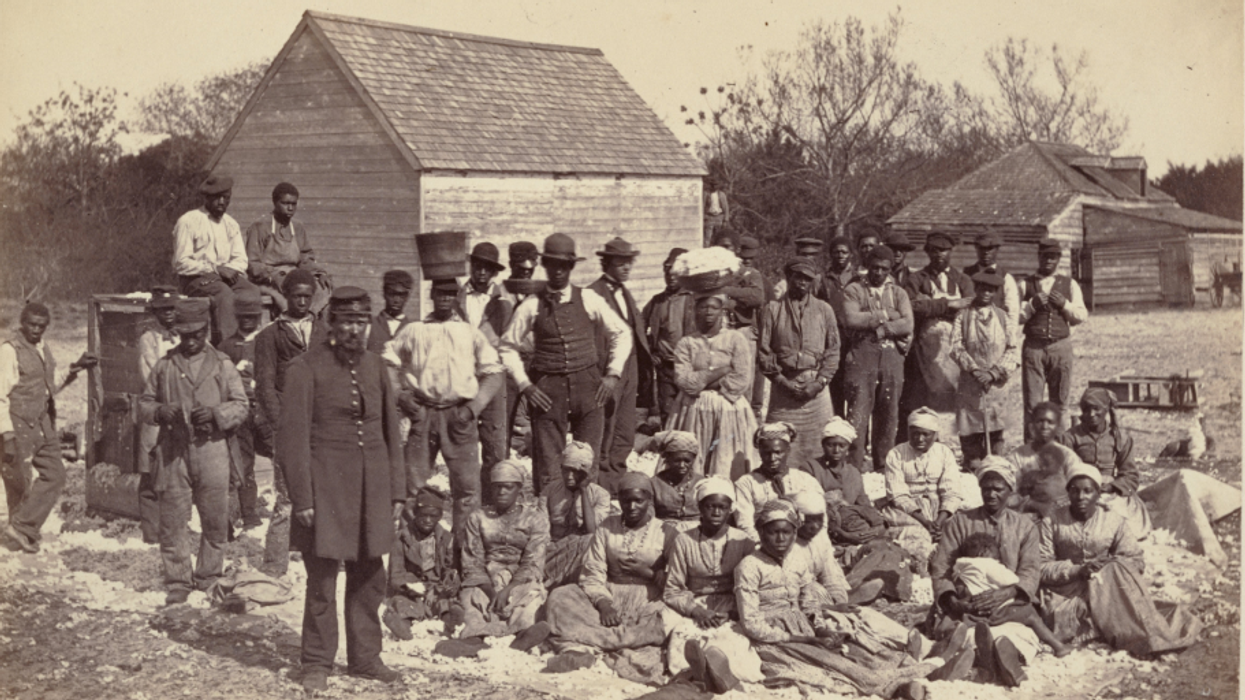
Slaves of General Thomas F. Drayton Henry P. Moore (American, 1835 - 1911) (1835 - 1911) – photographer (American)

December 19, 2024


During the era of slavery in the Americas, enslaved men, women and children also enjoyed the holidays. Slave owners usually gave them bigger portions of food, gifted them alcohol and provided extra days of rest.


Those gestures, however, were not made out of generosity.

As abolitionist, orator and diplomat Frederick Douglass explained, slave owners were trying to keep enslaved people under control by plying them with better meals and more downtime, in the hopes of preventing escapes and rebellions.

Most of the time, it worked.

But as I discuss in my recent book, “Humans in Shackles: An Atlantic History of Slavery,” many enslaved people were onto their owners and used this brief period of respite to plan escapes and start revolts.
Feasting, frolicking and fiddling

Most enslaved people in the Americas adhered to the Christian calendar – and celebrated Christmas – since either Catholicism or Protestantism predominated, from Birmingham, Alabama, to Brazil.

Consider the example of Solomon Northup, whose tragic story became widely known in the film “12 Years A Slave.” Northup was born free in the state of New York but was kidnapped and sold into slavery in Louisiana in 1841.

In his narrative, Northup explained that his owner and their neighbors gave their slaves between three and six days off during the holidays. He described this period as “carnival season with the children of bondage,” a time for “feasting, frolicking, and fiddling.”

According to Northup, each year a slave owner in central Louisiana’s Bayou Boeuf offered a Christmas dinner attended by as many as 500 enslaved people from neighboring plantations. After spending the entire year consuming meager meals, this marked a rare opportunity to indulge in several kinds of meats, vegetables, fruits, pies and tarts. 
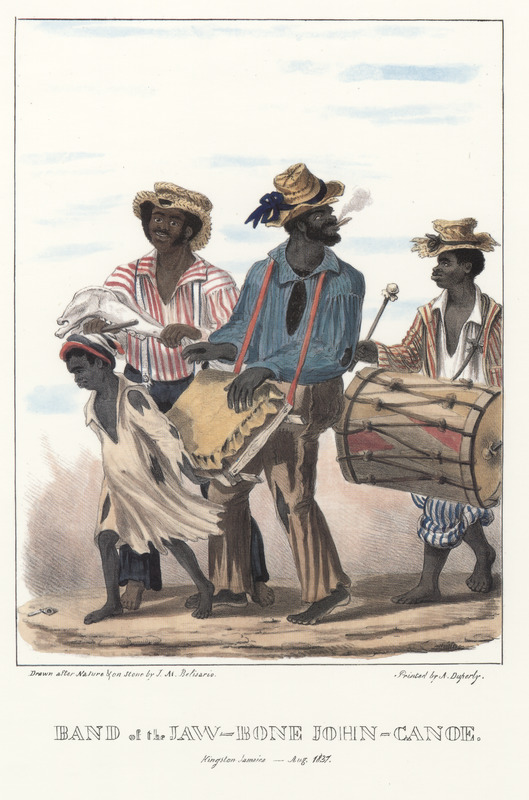
Isaac Mendes Belisario’s ‘Band of the Jaw-Bone John-Canoe’ (1837). Slavery Images

There’s evidence of holiday celebrations since the early days of slavery in the Americas. In the British colony of Jamaica, a Christmas masquerade called Jonkonnu has taken place since the 17th century. One 19th-century artist depicted the celebration, painting four enslaved men playing musical instruments, including a container covered with animal skin, along with an instrument made from an animal’s jawbone.

In the 1861 narrative of her life in slavery, abolitionist Harriet Jacobs described a similar masquerade in North Carolina.

“Every child rises early on Christmas morning to see the Johnkannaus,” she wrote. “Without them, Christmas would be shorn of its greatest attraction.”

On Christmas Day, she continued, nearly 100 enslaved men paraded through the plantation wearing colorful costumes with cows’ tails fastened to their backs and horns decorating their heads. They went door to door, asking for donations to buy food, drinks and gifts. They sang, danced and played musical instruments they had fashioned themselves – drums made of sheepskin, metal triangles and an instrument fashioned from the jawbone of a horse, mule or donkey.
It’s the most wonderful time to escape

Yet beneath the revelry, there was an undercurrent of angst during the holidays for enslaved men, women and children.

In the American South, enslavers often sold or hired out their slaves in the first days of the year to pay their debts. During the week between Christmas and New Year’s Day, many enslaved men, women and children were consumed with worry over the possibility of being separated from their loved ones.

At the same time, slave owners and their overseers were often distracted – if not drunk – during the holidays. It was a prime opportunity to plan an escape.

John Andrew Jackson was owned by a Quaker family of planters in South Carolina. After being separated from his wife and child, he planned to escape during the Christmas holiday of 1846. He managed to flee to Charleston. From there, he went north and eventually reached New Brunswick in Canada. Sadly, he was never able to reunite with his enslaved relatives.

Even Harriet Tubman took advantage of the holiday respite. Five years after she successfully escaped from the Maryland plantation where she was enslaved, she returned on Christmas Day in 1854 to save her three brothers from a life of bondage.
‘Tis the season for rebellion

Across the Americas, the holiday break also offered a good opportunity to plot rebellions.

In 1811, enslaved and free people of color planned a series of revolts in Cuba, in what became known as the Aponte Rebellion. The scheming and preparations took place between Christmas Day and the Day of Kings, a Jan. 6 Catholic holiday commemorating the three magi who visited the infant Jesus. Inspired by the Haitian Revolution, free people of color and enslaved people joined forces to try to end slavery on the island.

In April, the Cuban government eventually smashed the rebellion.

In Jamaica, enslaved people followed suit. Samuel Sharpe, an enslaved Baptist lay deacon, called a general strike on Christmas Day 1831 to demand wages and better working conditions for the enslaved population.

Two nights later, a group of enslaved people set fire to a trash house at an estate in Montego Bay. The fire spread, and what was supposed to be a strike instead snowballed into a violent insurrection. The Christmas Rebellion – or Baptist War, as it became known – was the largest slave revolt in Jamaica’s history. For nearly two months, thousands of slaves battled British forces until they were eventually subdued. Sharpe was hanged in Montego Bay on May 23, 1832.

After news of the Christmas Rebellion and its violent repression reached Britain, antislavery activists ramped up their calls to ban slavery. The following year, Parliament passed the Slavery Abolition Act, which prohibited slavery in the British Empire.

Yes, the week between Christmas Day and New Year’s Day offered a chance to feast or plot rebellions.

But more importantly, it served as a rare window of opportunity for enslaved men, women and children to reclaim their humanity.

Ana Lucia Araujo, Professor of History, Howard University

This article is republished from The Conversation under a Creative Commons license. Read the original article.

Infectious diseases killed Victorian children at alarming rates — their novels highlight the fragility of public health today


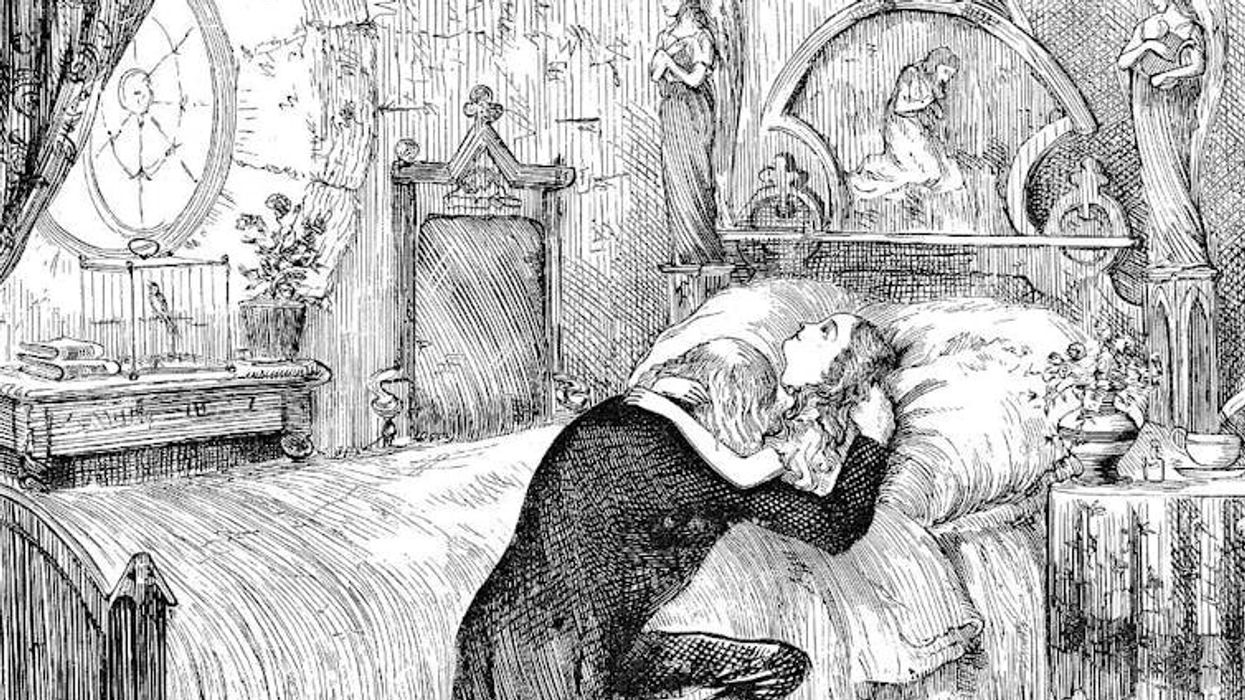
Worth’s 1872 illustration for the Household Edition of The Old Curiosity Shop highlights her grandfather’s grief at losing Little Nell.
December 19, 2024

Modern medicine has enabled citizens of wealthy, industrialized nations to forget that children once routinely died in shocking numbers. Teaching 19th-century English literature, I regularly encounter gutting depictions of losing a child, and I am reminded that not knowing the emotional cost of widespread child mortality is a luxury.


In the first half of the 19th century, between 40% and 50% of children in the U.S. didn’t live past the age of 5. While overall child mortality was somewhat lower in the U.K., the rate remained near 50% through the early 20th century for children living in the poorest slums.

Threats from disease were extensive. Tuberculosis killed an estimated 1 in 7 people in the U.S. and Europe, and it was the leading cause of death in the U.S. in the early decades of the 19th century. Smallpox killed 80% of the children it infected. The high fatality rate of diphtheria and the apparent randomness of its onset caused panic in the press when the disease emerged in the U.K. in the late 1850s.

Multiple technologies now prevent epidemic spread of these and other once-common childhood illnesses, including polio, tetanus, whooping cough, measles, scarlet fever and cholera.

Closed sewers protect drinking water from fecal contamination. Pasteurization kills tuberculosis, diphtheria, typhoid and other disease-causing organisms in milk. Federal regulations stopped purveyors from adulterating foods with the chalk, lead, alum, plaster and even arsenic once used to improve the color, texture or density of inferior products. Vaccines created herd immunity to slow disease spread, and antibiotics offer cures to many bacterial illnesses.

As a result of these sanitary, regulatory and medical advances, child mortality rates have sat below 1% in the U.S. and U.K. for the last 30 years.

Victorian novels chronicle the terrible grief of losing children. Depicting the cruelty of diseases largely unfamiliar today, they also warn against being lulled into thinking that child deaths can never be inevitable again.
Routine death meant relentless grief

Novels tapped into communal fears as they mourned fictional children.

Little Nell, the angelic figure at the center of Charles Dickens’ wildly popular “The Old Curiosity Shop,” fades away from an unnamed illness over the last few installments of this serialized novel. When the ship carrying the printed pages with the final part of the story pulled into New York, people apparently shouted from the docks, asking if she had survived. The public investment in, and grief over, her death reflects a shared experience of helplessness: No amount of love can save a child’s life.

Eleven-year-old Anne Shirley of “Green Gables” fame became a hero for pulling 3-year-old Minnie May through a dramatic battle with diphtheria. Readers knew this as a horrendous illness in which a membrane blocks the throat so effectively that a child will gasp to death.

Children were familiar with disease risks. While typhus runs rampant in “Jane Eyre,” killing nearly half the girls at their charity school, 13-year-old Helen Burns is struggling against tuberculosis. Ten-year-old Jane is filled with horror at the possible loss of the only person who has ever truly cared for her

. 
A.D. Webster, ‘young girl and her deceased sister; Anderson siblings,’ carte-de-visite, Constantine, Michigan: ca. 1860s-1870. 
Mark A. Anderson Collection of Post-Mortem Photography/William L. Clements Library, University of Michigan

An entire chapter deals frankly and emotionally with all this dying. Jane cannot bear separation from quarantined Helen and seeks her out one night, filled with “the dread of seeing a corpse.” In the chill of a Victorian bedroom, she slips under Helen’s blankets and tries to stifle her own sobs as Helen is overtaken with coughing. A teacher discovers them the next morning: “my face against Helen Burns’s shoulder, my arms round her neck. I was asleep, and Helen was – dead.”

The disconcerting image of a child nestled in sleep against another child’s corpse may seem unrealistic. But it is very like the mid-19th-century memento photographs taken of deceased children surrounded by their living siblings. The specter of death, such scenes remind us, lay at the center of Victorian childhood.
Fiction was not worse than fact

Victorian periodicals and personal writings remind us that death being common did not make it less tragic.

Darwin agonized at losing “the joy of the Household,” when his 10-year-old daughter Annie succumbed to tuberculosis in 1851.

The weekly magazine “Household Words” reported the 1853 death of a 3-year-old from typhoid fever in a London slum contaminated by an open cesspool. But better housing was no guarantee against waterborne infection. President Abraham Lincoln was “convulsed” and “unnerved,” his wife “inconsolable,” watching their son Willie, 11, die of typhoid in the White House

. 
This ‘Household Words’ report on the coroner’s inquest into the child’s death from typhoid fever gives a grim picture of the lack of sanitation in the neighborhood. Household Words, January 1853, p.10, CC BY-SA

In 1856, Archibald Tait, then headmaster of Rugby and later Archbishop of Canterbury, lost five of his seven children in just over a month to scarlet fever. At the time, according to historians of medicine, this was the most common pediatric infectious disease in the U.S. and Europe, killing 10,000 children per year in England and Wales alone.

Scarlet fever is now generally curable with a 10-day course of antibiotics. However, researchers warn that recent outbreaks demonstrate we cannot relax our vigilance against contagion.
Forgetting at our peril

Victorian fictions linger on child deathbeds. Modern readers, unused to earnest evocations of communal grief, may mock such sentimental scenes because it is easier to laugh at perceived exaggeration than to frankly confront the specter of a dying child.

“She was dead. Dear, gentle, patient, noble Nell was dead,” Dickens wrote in 1841, at a time when a quarter of all the children he knew might die before adulthood. For a reader whose own child could easily trade places with Little Nell, becoming “mute and motionless forever,” the sentence is an outpouring of parental anguish.

These Victorian stories commemorate a profound, culturally shared grief. To dismiss them as old-fashioned is to assume they are outdated because of the passage of time. But the collective pain of a high child mortality rate was eradicated not by time, but by effort. Rigorous sanitation reform, food and water safety standards, and widespread use of disease-fighting tools like vaccines, quarantine, hygiene and antibiotics are choices.

And the successes born of these choices can unravel if people begin choosing differently about health precautions.

While tipping points differ by illness, epidemiologists agree that even small drops in vaccine rates can compromise herd immunity. Infectious disease experts and public health officials are already warning of the dangerous uptick of diseases whose horrors 20th century advances helped wealthy societies forget.

People who want to dismantle a century of resolute public health measures, like vaccination, invite those horrors to return.

Article updated to clarify that child mortality rates have remained below 1% for the last 30 years, not since the 1930s.

Andrea Kaston Tange, Professor of English, Macalester College

This article is republished from The Conversation under a Creative Commons license. Read the original article.
Why Christian nationalists’ 'tradwife propaganda' is 'silly online fantasy'


The Duggar family in 2007 (Wikimedia Commons)


December 19, 2024
ALTERNET

Far-right Christian nationalists have been aggressively promoting the "tradwife" movement, claiming that U.S. women are rejecting feminism in huge numbers, enthusiastically leaving the workforce and focusing exclusively on being wives and mothers.

But Salon's Amanda Marcotte, in a biting article published on December 19, argues that "tradwives" are nowhere near as plentiful as Christian nationalists claim they are — and that far-right promoters of a "tradwife" lifestyle are engaging in "silly online fantasy."

Online "tradwife" content, according to Marcotte, is "often interwoven with fundamentalist Christianity." And those "pushing back against" their "propaganda" include "feminists" and "critics of Christian nationalism."

READ MORE: 'We want retribution': Atlantic staffer warns MAGA is even more disturbing in-person

"The ubiquity of this content, especially on TikTok, has created widespread anxiety that this is a real-life trend of everyday women rejecting feminism for 'happy housewife' fantasies," Marcotte explains. "In the real world, however, women are not turning their backs on decades of women's progress. The data shows the opposite."

Marcotte continues, "More women than ever are embracing financial independence, delaying motherhood, and choosing single life over unsatisfactory relationships. Tradwifes are a silly online fantasy, and in many cases, overt propaganda."

The Salon journalist notes that according to a 2023 study from Pew Research, wives make as much money as their husbands — or more — in 45 percent of marriages.

Citing data from the U.S. Census Bureau, Pew and others, Marcotte observes, "About half of women are unmarried, which is a record high. Single women are more likely than single men to own their home. Single women without children have as much wealth on average as their male counterparts."

READ MORE: MAGA Republicans ramp up plan to 'indoctrinate' public schools with Christian nationalism

Marcotte adds, "Young women complete college at higher rates than young men, with 47 percent of women ages 25 to 34 having a bachelor's degree, compared to 37 percent of men that age. The birth rate has hit a record low, largely driven by the collapse in teen pregnancy rates. There's no real-world tradwife trend. It's better understood as an online fantasy, which attracts so much attention precisely because it's so foreign to people's lived experiences."

Amanda Marcotte's full Salon article is available at this link.
California declares public health emergency as bird flu spreads in cows

By India Edwards, HealthDay News
Dec. 19, 2024 

California Gov. Gavin Newsom declared a public health emergency on Wednesday as bird flu continues to spread among the state's dairy cattle.
 Photo by Adobe Stock/HealthDay News

California Gov. Gavin Newsom declared a public health emergency on Wednesday as bird flu continues to spread among the state's dairy cattle.

"This proclamation is a targeted action to ensure government agencies have the resources and flexibility they need to respond quickly to this outbreak," Newsom explained in a news release announcing the move. "While the risk to the public remains low, we will continue to take all necessary steps to prevent the spread of this virus."

The move comes on the heels of a Louisiana resident being hospitalized with bird flu (H5N1), the first severe case confirmed in the United States.

The country's bird flu outbreak, which began in Texas earlier this year, has now spread to 16 states, with 865 infected herds identified as of Wednesday.

Related
CDC says first severe case of bird flu confirmed in Louisiana
USDA announces new milk testing order for H5N1 bird flu
Bird flu contamination prompts recall of California raw milk

California has been hit particularly hard, with 645 affected dairies, about half of which were reported in just the past 30 days.
Advertisement

While experts maintain that the virus cannot yet spread easily among people, each infection in animals increases the risk of the virus mutating into a form more transmissible between humans.

The U.S. Centers for Disease Control and Prevention has confirmed 61 human cases of H5N1 infection nationwide, with another seven cases deemed "probable."

Over half of the confirmed cases -- 32 -- are in California. While 37 of these infections have been traced to interactions with infected cattle, others are linked to diseased birds or other animals and several cases remain of unknown origin.

"All these infections in so many species around us is paving a bigger and bigger runway for the virus to potentially evolve to infect humans better and transmit between humans," Dr. Nahid Bhadelia, director of the Boston University Center on Emerging Infectious Diseases, told the New York Times.

Bird flu has been spreading in poultry since 2022, and cases in dairy cows began to crop up last March. The virus was discovered in a pig for the first time recently.

Earlier this month, Canadian officials announced that a teen in British Columbia had been hospitalized in critical condition with what is believed to be bird flu.

It's not clear how the teenager picked up the H5N1 virus because the patient is not known to have any contact with infected animals, officials noted. They added that this is the first human case of the virus reported in both the province and Canada.

"The positive test for H5 was performed at the BC Centre for Disease Control's Public-Health Laboratory," Dr. Bonnie Henry, provincial health officer of British Columbia, said in a statement.

Testing has been performed on about three dozen people who were in contact with the teen, but none show evidence of infection, Henry added.

"We should be very concerned at this point," Dr. James Lawler, co-director of the University of Nebraska's Global Center for Health Security, told the Times. "Nobody should be hitting the panic button yet, but we should really be devoting a lot of resources into figuring out what's going on."

More information

The CDC has more on bird flu.

Copyright © 2024 HealthDay. All rights reserved.


Wisconsin’s first human avian flu infection reported along with second poultry flock case


Photo by Haley Hamilton on Unsplash
seven chicken eggs

December 19, 2024

A farm worker in Barron County has tested positive for avian influenza after being exposed to a poultry flock infected with the virus, Wisconsin health officials said Wednesday. The woman is the first person identified with the infection in Wisconsin.

At the other end of the state, a case of the highly contagious disease has turned up in a Kenosha County poultry flock, according to the state agriculture department. The flock has been isolated and will be destroyed.

The risk of illness for the general public remains low, according to the Wisconsin Department of Health Services (DHS), while people working with infected animals or who might be otherwise exposed to them are at higher risk.

Also Wednesday, the federal government reported the first severe case of bird flu in a patient in Louisiana. That was believed to be associated with wild birds, not domestic poultry.

The infected woman in Barron County was identified through a test at the Wisconsin State Lab of Hygiene. The diagnosis is pending confirmation at federal Centers for Disease Control and Prevention (CDC).

She was exposed to the Barron County poultry flock where the state Department of Agriculture, Trade and Consumer Protection (DATCP) identified an infection with highly pathogenic avian influenza (HPAI H5N1) last week. The flock was destroyed.

After the infected flock was identified, DHS and Barron County Health and Human Services began monitoring farm workers who may have been exposed to the birds, said Thomas Haupt, a DHS research scientist and epidemiologist, in an online news conference Wednesday.

The woman who tested positive was one of two people tested.

“She had relatively mild symptoms but symptoms that would be consistent with influenza, including sore throat, slight fever, some fatigue, some eye discharge,” said Haupt. He said she was improving after being treated with an antiviral medication and was expected to make a full recovery.

Public health officials are monitoring another 19 people who were exposed, Haupt said.

State public health veterinarian Dr. Angie Maxted said when people are infected with a communicable disease, public health agencies contact family and other household members to test them for the illness and inform them about preventive measures.

The Kenosha flock where an H5N1 infection was reported Wednesday is a “backyard flock” — one that is raised for a family’s own use, with limited, local sales of eggs or other products, said Dr. Darlene Konkle, DATCP state veterinarian. The flock consisted of 88 chickens and five ducks.

Haupt said the Kenosha County residents who might have been exposed are being tested for the virus. There are no concerns that members of the general public were at risk, however. Maxted said that it appears only the flock’s owners were exposed to the birds.

According to DATCP, the birds from the flock where the infection was reported will not enter the food supply.

In addition, poultry within a 10 kilometer (6.2 mile) area of the Kenosha flock will be restricted from being moved on or off any premises, said DATCP, which establishes a control area around any premises where an infection is found.


DATCP has a mapping tool that poultry producers and owners can consult to learn whether their poultry are in an active control area or surveillance zone.

Concern about the virus has been heightened for the last three years, with reports of infections in both wild and domestic birds in North America since December 2021.

Konkle said DATCP has been sending information to dairy, poultry and other livestock producers all year, encouraging them to improve biosecurity measures to prevent the spread of disease and protect their birds and animals.

The H5N1 HPAI virus is highly contagious and can be fatal to domestic poultry. The severity of the illness varies depending on its strain and on which species of animal it affects, according to DATCP.


The virus spreads by contact with infected birds, commingling with wild birds or their droppings, and through clothing or equipment used by people working with infected birds or animals.

DHS has a web page with guidance for Protective Actions for People. The department can provide a limited amount of surplus personal protective equipment for farm workers, businesses and processors from the department’s medical stockpile through its Office of Preparedness and Emergency Health Care.

State law requires all Wisconsin livestock owners to register where their animals are kept, which helps health officials alert flock and herd owners.

Avian flu in domestic birds tends to increase late in the year, likely due to weather conditions and the flow of migrating birds through Wisconsin. “There’s more opportunity, when it’s circulating in these wild birds” for the virus to spread, Konkle said.

People who have contact with livestock and animals are at higher risk for exposure to the H5N1 avian flu virus and should avoid contact with sick or ill animals, said Maxted.

When they must be in contact, people should follow “common sense” precautions, washing their hands frequently and wearing protective clothing including gloves, respiratory protection and eye protection, she said, and clothing exposed to animals should be cleaned and disinfected.

Haupt said the DHS bureau of environmental and occupational health has been working with farmers and farm workers to inform them about the risks of avian influenza and precautions to protect themselves from the virus. The agency urges people who do get sick to take time off.

“If someone is sick, if you don’t have to work — don’t work,” Haupt said. “Stay home, give yourself time to heal.”


Wisconsin Examiner is part of States Newsroom, a nonprofit news network supported by grants and a coalition of donors as a 501c(3) public charity. Wisconsin Examiner maintains editorial independence. Contact Editor Ruth Conniff for questions: info@wisconsinexaminer.com.

First severe bird flu case in US sparks alarm


AFP
December 18, 2024

Rescued chickens gather in an aviary at Farm Sanctuary's Southern California Sanctuary in Acton, California 
- Copyright GETTY IMAGES NORTH AMERICA/AFP/File MARIO TAMA

Issam AHMED

An elderly patient in Louisiana is in a “critical condition” with severe avian influenza, US authorities announced Wednesday, the first serious human case in the country as fears grow of a possible bird flu pandemic.


The new case brings the total number of infections in the United States during the current 2024 outbreak to 61, with other patients experiencing mild symptoms they recovered from at home.

The severity of the Louisiana case has heightened alarm, echoing similar cases worldwide. Last month, a teenager in Canada was also hospitalized with a severe case of bird flu.

According to the US Centers for Disease Control and Prevention (CDC), the Louisiana patient was exposed to sick and dead birds in backyard flocks.

“The patient is experiencing severe respiratory illness related to H5N1 infection and is currently hospitalized in critical condition,” the Louisiana health department said in a statement to AFP, adding the person has underlying medical conditions and is over the age of 65.

“Over the 20-plus years of global experience with this virus, H5 infection has previously been associated with severe illness in other countries, including illnesses that resulted in death in up to 50 percent of cases,” Demetre Daskalakis, a senior CDC official told reporters on a call.

“The demonstrated potential for this virus to cause severe illness in people continues to highlight the importance of the joint… US federal response,” he added.

The case was confirmed last Friday, according to the CDC. Genetic sequencing revealed that the H5N1 virus in the patient belonged to the D1.1 genotype.

This genotype has recently been detected in wild birds and poultry in the United States, and in human cases reported in Washington state and in the Canadian case, in British Columbia province.

The D1.1 genotype differs from the B3.13 genotype, which has been identified in dairy cows, some poultry outbreaks, and human cases with mild symptoms such as conjunctivitis.

A handful of US cases have had no known animal source of infection, including a case in Delaware, the CDC reported on Wednesday.

Health authorities, however, say there is still not enough evidence to suggest human-to-human transmission is occurring and that the overall risk to the general public remains low.

– Mounting concern –

Still, concerns are mounting among scientists and public health experts that the cases being detected represent only a fraction of the true prevalence.

Meg Schaeffer, an epidemiologist at the US-based SAS Institute, told AFP recently there were now several factors suggesting that “avian flu is knocking on our door and could start a new pandemic any day.”

US cases have included a young child in California, reported last month.

The current US outbreak of the flu — technically the Highly Pathogenic Avian Influenza, or H5N1 bird flu — was first reported in March in dairy cows.

The rising frequency and diversity of mammalian infections in recent years have heightened concerns about the virus’ adaptability and its potential for cross-species transmission.

Compounding these concerns is the possible role of raw milk as a vector for transmission.

The US Department of Agriculture issued a new federal order requiring that raw milk samples be shared on request from any dairy farm and milk transporter.

The order also mandates that any samples testing positive for bird flu be reported to federal authorities.

Uncertainty looms over how the incoming administration of President-elect Donald Trump will address the outbreak.

Trump’s pick for health secretary, vaccine skeptic and conspiracy theorist Robert F. Kennedy Jr., is a known proponent of raw milk, raising questions about the administration’s stance on public health measures.
With spate of lawsuits, Trump goes after US media


By AFP
December 18, 2024

US President-elect Donald Trump has launched a slate of lawsuits that critics worry could push media to self-censor - Copyright AFP/File Patrick T. Fallon
Aurélia END

In his first post-election news conference, President-elect Donald Trump vowed to “straighten out” the “corrupt” US press.

Before he’s even taken office, he’s already made efforts to shape the media in his favor — tapping loyalists for publicly funded outlets and launching unprecedented lawsuits against newspapers and pollsters that observers worry are the signs of escalating intimidation and censorship tactics.

On Monday, the billionaire sued pollster Ann Selzer, the Des Moines Register newspaper and its parent company Gannett over a pre-election poll that — wrongly, come Election Day — saw him behind in the state.

That suit came after broadcaster ABC paid $15 million, plus legal fees, to settle a defamation suit after one of its reporters repeatedly said Trump had been found liable for “rape” — in fact, he had been liable for sexual abuse.

Several legal scholars argued the outlet would have likely prevailed in court against Trump.

ABC staffers have complained to US media that the channel is setting a precedent that media should buckle to Trump — a potentially distressing signal, since the broadcaster is hardly alone in being sued.

Also being targeted by Trump’s lawyers is famed reporter Bob Woodward, over publishing taped interviews with the president. Trump is arguing that Woodward was authorized to record them for journalistic purposes, but not to publish the audio.

Broadcaster CBS, meanwhile, has been sued after Trump claimed CBS favorably edited an interview with election rival Kamala Harris.

Trump called it “a brazen attempt to interfere in the 2024 US presidential election.”

Free speech expert Charles Tobin, speaking to CNN, called the suit “dangerous and frivolous.”

– Risk of self-censorship –

Even if Trump loses in court, his willingness to launch lawsuits “creates a chilling effect,” Melissa Camacho, a communications professor at San Francisco State University, told AFP.

“What happens is that outlets start engaging in a practice of self-censorship.”

Khadijah Costley White, an associate professor of journalism and media studies at Rutgers University, said the lawsuits could also push media coverage to be more favorable to the president.

“If he gains a concession like he did with the recent ABC News settlement, gets his perceived adversaries to back down, or scares the press into only giving him favorable coverage, those are all wins,” she said.

There are also procedural ways Trump — who ran on a lack of trust in mainstream media and government institutions — can fight the press.

During his first term, his administration once went more than 300 days without an official media briefing by the White House press secretary.

And if Trump’s White House does hold daily news conferences, he could get rid of seats reserved for mainstream outlets.

“Make it first come, first served. There is no reason these left-wing groups should be guaranteed a seat,” former White House press secretary Sean Spicer wrote in a recent opinion piece for the conservative Washington Times newspaper.

The “left-wing groups” in question? NBC, CBS, CNN, The New York Times and The Washington Post — mainstream outlets that are at times regarded as having a liberal bias but among the most reputable news outlets in the country.

The irony is that even if his White House shuts down traditional media, Trump himself, who has a penchant for chatting with journalists, might still talk to reporters more than outgoing President Joe Biden, who largely avoided interviews with national outlets.

– Voice of America –

Those outside the United States can also expect a change.

The incoming president has tapped hard-line loyalist and election denier Kari Lake to be the new director of Voice of America.

VOA has reach around the world, with programming in a slew of African, Asian and European languages.

It receives US funding but is generally considered a reliable, independent media operation, covering global and US news for international audiences.

During his first term, Michael Pack, Trump’s head of the US Agency for Global Media, which oversees VOA, raised concerns when he moved in 2020 to strip an internal firewall at the organization meant to insulate the newsroom from political interference.

According to Trump, Lake will help “ensure that the American values of Freedom and Liberty are broadcast around the World FAIRLY and ACCURATELY, unlike the lies spread by the Fake News Media.”

State officials accused of illegally issuing permits for massive gas plant

Anita Wadhwani,
 Tennessee Lookout
December 19, 2024 

TVA building in Knoxville, TN. (KLiK Photography/Shutterstock)

A conservation group has accused Tennessee environmental regulators of failing to follow the law by approving an air emission permit for a new Tennessee Valley Authority methane-fired plant in Kingston.

In an appeal filed Monday with the Tennessee Air Pollution Control Board, the nonprofit conservation group Appalachian Voices claimed state regulators are allowing TVA to “avoid installing commonsense pollution controls” needed to protect air quality and public health.

The group is seeking an immediate halt to approval of any more permits needed for the project by the Tennessee Department of Environment and Conservation, or TDEC — a request, if granted, that would effectively halt construction on the project. The appeal is administrative, meaning it will be heard outside a state courtroom.

A TDEC spokesperson on Tuesday said the agency “is in the process of reviewing the appeal and cannot comment on pending litigation.”

Federal appeals court to hear case over TVA’s Cumberland Pipeline

The appeal marks the latest in a series of legal disputes that have surrounded TVA’s multi-billion dollar makeover plans to convert a fleet of aging coal-fired power plants into natural, or methane gas, plants.

The plans have drawn pushback from environmental and community groups, who have criticized TVA for ignoring cleaner energy alternatives. The groups have also raised concerns about the impact on surrounding communities of the gas-generating plants and miles of new pipelines needed to supply them.

Appalachian Voices, represented in their appeal by the Southern Poverty Law Center, claimed state environmental regulators illegally allowed TVA to seek a “minor modification” of a longstanding air pollution permit tied to its now-defunct coal plant.

State air permits set limits for harmful emissions and require utilities and other companies to operate within the bounds of the federal Clean Air Act.

Environmental groups sue federal agency over Middle Tennessee pipeline approval

New permits present significantly higher hurdles than minor modifications of existing permits, including environmental analysis and more opportunities for public comment.

“By endorsing TVA’s characterization of its proposed methane-fired power plant as a modification to TVA’s soon-to-be-demolished coal plant—which itself lacks modern air pollution controls and never underwent an analysis of its impact on air quality—state regulators have enabled TVA to avoid its Clean Air Act requirements for decades into the future,” a statement from the Southern Environmental Law Center said.


A TVA spokesperson on Tuesday referred questions about the appeal to TDEC.
Report into American diets: Time to go plant based?


By Dr. Tim Sandle
DIGITAL JOURNAL
December 18, 2024


The contamination of fruits and vegetables produced in the European Union by the most toxic pesticides has substantially increased over the past decade, according to new research published Tuesday. Credit - Santeri Viinamäki (CC SA 4.0)

A scientific report – 2025 U.S. Dietary Guidelines – has been published by the U.S. Departments of Agriculture and Health and Human Services (USDA-HHS). The 421-page document is intended to inform new guidelines in 2025, although these will now fall within the scope of Trump Administration selected political appointees.

Updated every five years, the document guides everyone from dieticians to consumers, to food producers to food retailers, in the creation and facilitation of national nutrition programs and nutrition education.

Key recommendations in this report include:Reducing red and processed meats;
Replacing poultry, meat, and eggs with peas, beans, and lentils as sources of protein;
No limits on ultra-processed foods; and
Continued caps on saturated fats, to be replaced by vegetable (seed) oils.

According to HHS Secretary Xavier Becerra: “This report will help to ensure that the next edition of the Dietary Guidelines is based on current scientific evidence and medical knowledge, and that future guidelines factors in socioeconomic status, race, ethnicity, and culture. I want to thank the Committee for all their hard work, as well as the American people for sharing their voice with us in this process. Together, we can help Americans enjoy a healthy diet, and the health benefits that are possible as a result.”

The primary recommendation within the document is with eating more beans, peas and lentils, while reducing the intake of red and processed meats.

A healthy dietary pattern for people 2 years and older “is higher in vegetables, fruits, legumes (eg, beans, peas, lentils), nuts, whole grains, fish/seafood, and vegetable oils higher in unsaturated fat, and lower in red and processed meats, sugar-sweetened foods and beverages, refined grains, and saturated fat.”

The also report addresses other factors that shape health and welfare in the context of diet. Notably, this is manifest in terms of social class. In the section titled Eat Healthy Your Way, the report recognizes that healthy eating and nutrition-related chronic health conditions vary among individuals and between sociodemographic groups. Notably, the prevalence of obesity, hypertension, and Type 2 diabetes is higher among lower-income (working class) families.

Concerns have been expressed about what the incoming Administration will do with the findings, given that the essence of the soon-to-be-government’s approach to food policy is deregulation.

“This is a deregulatory agenda,” Marion Nestle, a professor of nutrition and food policy at New York University, has told The Guardian. “And what we know historically from deregulation is that it’s really bad for consumers, it’s bad for workers, it’s bad for the environment.”