Friday, January 03, 2025

Nigerian Woman Trafficked To Iraq, Brutalised And Forced Into 20-Hour Workdays  Without Pay, Set To Return Home On Friday After SaharaReporters’ Report


January 3, 2025

Odunayo was allegedly a victim of human trafficking perpetrated by one Alhaja Yusuf Shakira, notoriously known as Mama Uganda, who deceitfully transported her to Iraq with promises of a better life.

A28-year-old Nigerian woman, Odunayo Eniola Isaac, trafficked to Iraq, is expected to return to Nigeria today, Friday, January 3, 2025, following SaharaReporters’ story about her ordeal in the middle eastern country.

Odunayo’s expected return back in Nigeria followed the intervention of the officials of the Nigerian mission in Jordan, that oversees Iraq, who took action on her case after the report.

In December 2024, SaharaReporters exclusively reported that Odunayo, who hails from Osun State in the South-West region of Nigeria, issued a distressing and heart-wrenching plea for assistance to return to Nigeria.

Odunayo was allegedly a victim of human trafficking perpetrated by one Alhaja Yusuf Shakira, notoriously known as Mama Uganda, who deceitfully transported her to Iraq with promises of a better life.

Having endured almost two years of inhumane treatment, brutal physical torture, and degrading dehumanization at the hands of her Iraqi employer, Saba Akram, and his spouse, Odunayo's emotional and psychological well-being was severely compromised.

Overwhelmed with despair and desperation, she raised the alarm and implored the Nigerian authorities to facilitate her urgent return to Nigeria, lest she loses her life.

Odunayo conveyed the depth of her desperation, stating that if she remained in Iraq for even a short period longer, her very existence would be under threat.

Odunayo, who narrated her ordeal to SaharaReporters through a Nigerian-based human rights advocacy organization, Hopes Haven Foundation, narrated that she was trafficked by Alhaja Shakira to Iraq a year and 10 months earlier through an Iraqi agency identified as Blend Warani, with a promise of a job opportunity.

Odunayo, who was at the Iraqi immigration when she briefly spoke to SaharaReporters and confirmed that she was still alive, said at some point, her employer’s wife attempted to kill her with an iron rod and hot water but she narrowly escaped to a nearest police station.

According to her, she left Nigeria in February 2023 to work as a domestic help in Iraq.

Upon her arrival in Iraq, Odunayo was subjected to deplorable and inhumane working conditions, characterized by excessively long work hours of up to 20 hours daily.

The situation was further exacerbated by the constant and severe physical torture reportedly inflicted upon her by her employer, Saba Akram, and his wife.

The couple's brutal tactics allegedly included the use of tasers and metal rods to inflict physical harm and intimidate Odunayo into submission.

In addition to the physical abuse, Odunayo was also subjected to emotional and psychological torment. She said her employer seized her phone, effectively severing her connection with her family and friends.

This deliberate isolation prevented her from communicating her distress and pleas for help to anyone who could potentially intervene on her behalf.

According to her, in July 2023, her employer falsely accused her of running away, despite the fact that she was being held captive in the house and subjected to relentless torture and death threats.

However, NiDCOM Head of Media Unit, Abdulrahman Balogun, confirmed to SaharaReporters that Odunayo was on her way back to Nigeria.

He said Odunayo departed Baghdad via Egyptair for Cairo at 5pm on Thursday and was expected to arrive at Cairo by 6.10 am on Friday, from where she would head to Nigeria.

According to NiDCOM, Odunayo will depart Cairo for Abuja at 9 am on Friday and is expected to arrive in Abuja by 1.30pm via Egyptair.

Balogun said that another case of a Nigerian who went to work in Iraq as a carer and was killed in suspicious circumstances was also being investigated.

“The Nigerian government has demanded an autopsy as to the cause of death of the victim.

“NiDCOM hereby warns that unscrupulous agents are now wickedly luring young Nigerian women to Iraq with fake and evil promises, most of which portend danger to the mostly unsuspecting victims who get lured into slavery and prostitution when they get to the country,” Balogun.

Balogun added that NiDCOM has warned Nigerians about being hoodwinked by agents to Iraq and other countries.

A record number of migrants reached the Canary Islands by sea in 2024, Spain says

A boat with 57 migrants onboard arrives at La Restinga port on the Canary island of El Hierro, on September 14, 2024.

Antonio Sempere/AFP via Getty Images

SEVILLE, Spain — The Atlantic migration route that connects West African nations with the Spanish Canary Islands set a new record in 2024, with at least 46,843 arrivals to the Spanish archipelago, according to yearly figures released by Spain's Interior Ministry. The number surpassed last year's previous record, and represents a 17% increase.

The number, released Thursday in a report from Spain's Interior Ministry, comes despite continued efforts by the Spanish government and the European Union to address the migration crisis. Spain and the EU have sought to provide aid to countries of origin to help spur development and control the departure of migrants.

Migrants often travel more than 1,000 miles by sea to reach the Canary Islands. Senegal and Mauritania are two of the most common launching points for migrants, who come from a number of countries in the African continent to escape armed conflict, poverty, or lack of opportunity. In 2024, a small number of migrants from Southeast Asian countries also reached the Spanish archipelago, raising concerns that the deadly route, far from deterring them, could be attracting migrants from other continents.

A member of the emergency services carries a little child, part of a group of 175 migrant people who arrived on board a boat, at Restinga port on the Canary island of El Hierro on August 18, 2024.

Antonio Sempere/AFP via Getty Images

The Atlantic migration route is one of the deadliest in the world. The Spanish aid organization Caminando Fronteras (Walking Borders) assessed on a recent report that over 10,000 migrants died last year trying to reach the Canary Islands by sea.

Last year's increase in the number of migrants reaching the Canary Islands was highlighted by the arrival of nearly 2,000 migrants in the last days of 2024. The news of 69 migrants dying after a boat sank on Dec. 19, according to Malian authorities, was a reminder of the danger this migration route represents.

The number of migrant arrivals in the Canary Islands has overwhelmed the local government, and has sparked a national debate about the handling of the more than 5,500 minors who are currently held in government facilities. Negotiations over the relocation of these minors to the Spanish mainland have been ongoing, but national parties are in a gridlock over the passage of new legislation that will determine how minors are distributed across the 16 other autonomous regions of Spain.


Names of 425,000 suspected Nazi collaborators published

Reuters    2025-01-03       

A Dutch project called "War in Court" digitally released a list of names of nearly half a million suspected wartime Nazi collaborators on Thursday after the expiry of a law that had restricted public access to the archive.

The archive, consisting of 32 million pages, includes about 425,000 mostly Dutch people who were investigated for collaboration with German occupiers during World War Two. The law restricting public access expired on New Year's Day.

Only a fifth of those listed ever appeared before a court, and most cases concerned lesser offenses such as being a member of the Nationalist Socialist movement.

Although the European Union's General Data Protection Regulation protects personal data, it does not apply to those who have died – the vast majority of those listed in the archive.

Initially, scanned files from the archive were set to be made available online on Thursday, giving users access to dossiers of suspects, which also includes their victims and witnesses.

However, following a warning from the Dutch Data Protection Authority, the decision was made last month to postpone the full release and instead publish only the list of names.

No date has been set for publication of those dossiers but people with a research interest - including descendants, journalists, and historians - can request to consult them at the Dutch National Archives in The Hague.

Netherlands throws open archive of suspected Nazi collaborators

Dutch privacy laws shielded the names from public view until the end of 2024


Until Jan. 1, 2025, public access to the Central Archives of the Special Administration of Justice (CABR) was limited. (Wikimedia)

A massive trove of documents about suspected Nazi collaborators in the Netherlands is now open to the public for the first time.

For the past seven decades, only researchers and relatives of those accused of collaborating with the Nazis could access the information held by the Dutch Central Archives of the Special Administration of Justice. But two years ago, The War in Court, a Dutch consortium devoted to preserving history, announced that it would make the records available online when they were no longer shielded by the country’s privacy laws.

That went into effect this month, and visitors to the consortium’s website can now view a list of 425,000 people investigated for potential collaboration during the Holocaust. Dossiers about the people, including what investigators found, can be viewed in person at the Dutch National Archive in the Hague. About a quarter of the archive has been digitized so far.

Get The Jewish News Daily Edition by email and never miss our top storiesFree Sign Up

The impending availability of the material has been controversial in the Netherlands because relatively few of the people in the database were ever formally charged with crimes. Not all even faced formal investigations.

The Dutch government investigated 300,000 people for collaborating with the Nazis and more than 65,000 of them stood trial in a special court system in the years after World War II.

Collaboration enabled the Nazis to murder an estimated three quarters of Dutch Jews, including their most famous victim, Anne Frank, and her family. The identity of the person who exposed Frank’s hiding place has been a matter of debate.

It was not until 2020 that the Dutch government apologized for failing to protect Jews during the Holocaust, long after other European leaders and after local Jews had requested an apology.

More recently, some institutions in the Netherlands have sought to make amends for their role in the Holocaust locally. The Dutch public tram company GVB, for example, sought compensation after the war for having transported Jews to their deaths; earlier this year, it announced that it would place memorials at three deportation hubs, and the city of Amsterdam pledged 100,000 euros — and potentially more in the future — to local Jewish groups to divest itself of its revenue from collaborating with the Nazis.

The Netherlands also opened its first national Holocaust museum this year.

See Nepal's kung-fu nuns display their chops as monastery reopens five years after Covid pandemic

The group of kung fu nuns, aged from 17 to 30, are members of the 1,000 year-old Drukpa lineage, which gives nuns equal status as monks and is the only female order in the patriarchal Buddhist monastic system

Our Web Desk, Reuters Published 03.01.25


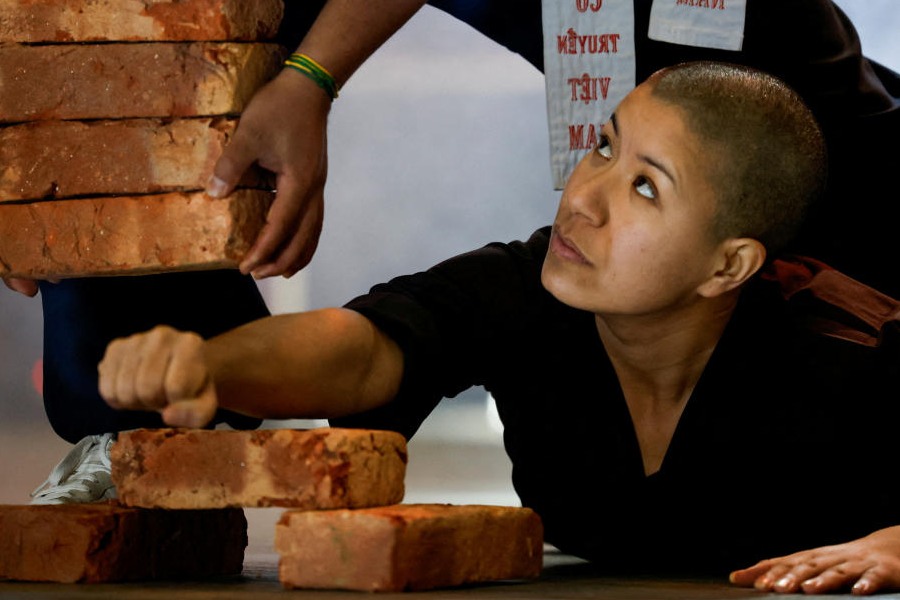
16A Kung Fu nun prepares to demonstrate her skills during the reopening of the nunnery for the first time since the COVID-19 closure at Druk Amitabha Mountain Nunnery in Kathmandu, Nepal December 30, 2024. (Reuters)

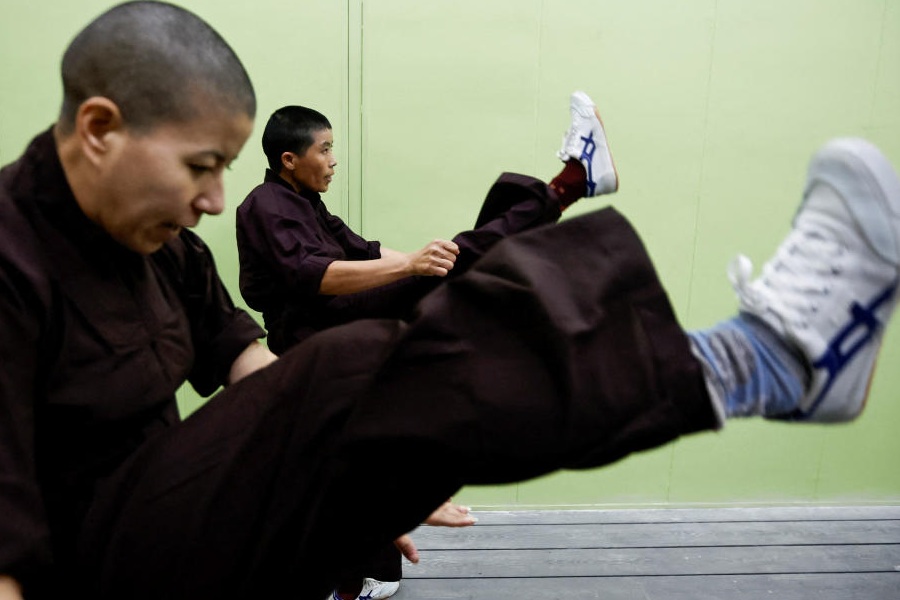
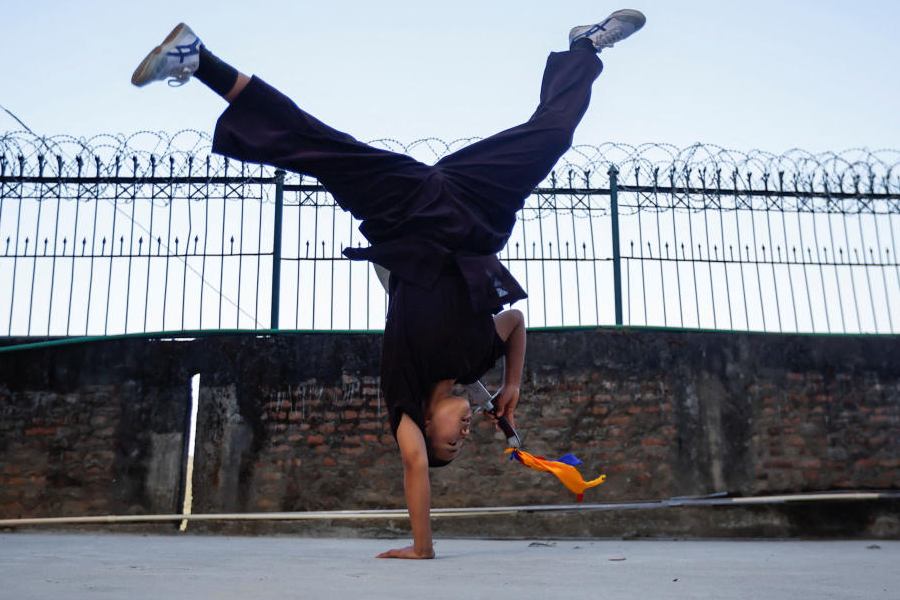
About a dozen nuns performed hand chops and high kicks, some of them wielding swords, as they showed off their martial art skills to hundreds of cheering wellwishers at the long-awaited reopening of their nunnery in Nepal.

The nuns of the hill-top Druk Amitabha Monastery, put on the show of strength to mark the institution's reopening five years after the COVID-19 pandemic forced it to close its doors to the public.


26A Kung Fu nun practises as she waits for her performance during the reopening of the nunnery for the first time since the COVID-19 closure at Druk Amitabha Mountain Nunnery in Kathmandu, Nepal December 30, 2024. (Reuters)

The group of kung fu nuns, aged from 17 to 30, are members of the 1,000 year-old Drukpa lineage, which gives nuns equal status as monks and is the only female order in the patriarchal Buddhist monastic system.

Usually, nuns are expected to cook and clean and are not allowed to practise any form of martial art. But Gyalwang Drukpa, among the most senior figures in the Tibetan Buddhist hierarchy, decided to train women in kung fu to improve their health and spiritual well-being.


36Kung Fu nuns, who practise the martial art for self-defence and meditation, get ready for their performance during the reopening of the nunnery for the first time since the COVID-19 closure at Druk Amitabha Mountain Nunnery in Kathmandu, Nepal December 30, 2024. (Reuters)


He opened the nunnery in 2009 and it now has 300 members aged between six and 54.


"We do kung fu to keep ourselves mentally and physically fit, and our aim is to promote women's empowerment and gender equality," said Jigme Jangchub Chosdon, 23, a nun who is originally from Ladakh in India.

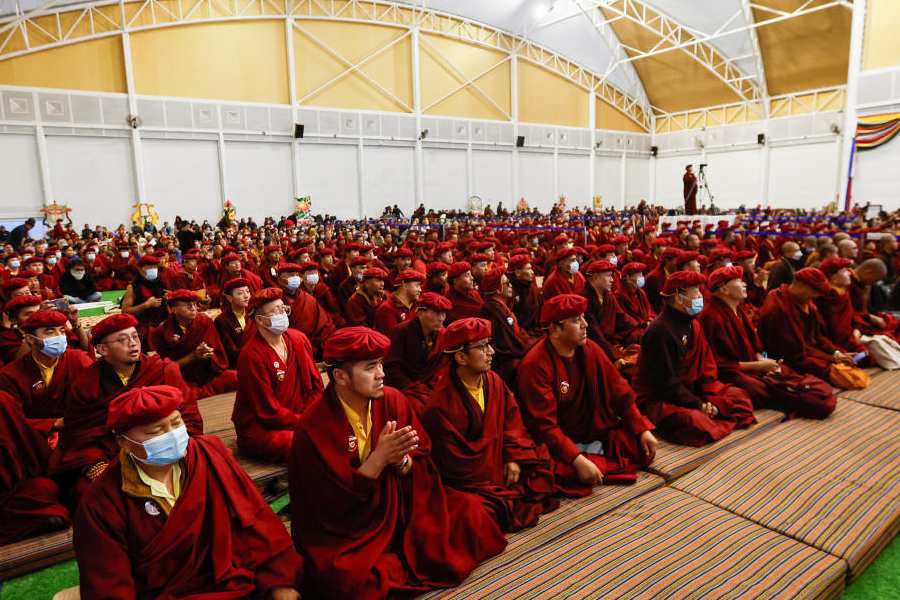
A group of monks, along with nuns and invitees, attend the reopening of the nunnery for the first time since the COVID-19 closure at Druk Amitabha Mountain Nunnery in Kathmandu, Nepal December 30, 2024. (Reuters)


The nuns come from Bhutan, India and Nepal and are all trained in kung fu, the Chinese martial art for self-defence and strength.


"With the confidence from kung fu, I really want to help the community, young girls to build their own strength," said 24-year-old Jigme Yangchen Gamo, a nun from Ramechhap in Nepal.

56A Kung Fu nun practises before her performance during the reopening of the nunnery for the first time since the COVID-19 closure at Druk Amitabha Mountain Nunnery in Kathmandu, Nepal December 30, 2024. (Reuters)


The nunnery's website says that the combination of gender equality, physical strength and respect for all living things represents the order's return to its "true spiritual roots".


In the past, the nuns have completed lengthy expeditions on foot and by bike in the Himalayas to raise money for disaster relief, as well as to promote environmentally friendly living.

66A Kung Fu nun demonstrates her skills during the reopening of the nunnery for the first time since the COVID-19 closure at Druk Amitabha Mountain Nunnery in Kathmandu, Nepal December 30, 2024. (Reuters)


Jigme Konchok Lhamo, 30, from India, said her main goal was to achieve enlightenment like Lord Buddha, who founded Buddhism 2,600 years ago.


"But for now as I am a normal person... I think I will be focusing more on helping others," she said. "Helping others is our religion."
Come home, Ghana told African diaspora. Now some Black Americans take its citizenship

Ghana recently granted citizenship to 524 people from the Black diaspora, and most were Black Americans

By ANNIE RISEMBERG 
Associated Press
January 3, 2025

ACCRA, Ghana -- Flipping through a family album, Keachia Bowers paused on a photo of her as a baby on her father’s lap as he held the 1978 album “Africa Stand Alone” by the Jamaican reggae band Culture.

“He joined the ancestors when I was 10 years old. I was supposed to come to Ghana with him,” she said.

Bowers and her husband, Damon Smith, are among the 524 diaspora members, mostly Black Americans, who were granted Ghanaian citizenship in a ceremony in November.

A day earlier, Bowers had marked 10 years since her father's death. Though he was a Pan-Africanist who dreamed of visiting Ghana, he never made it here.

Bowers and Smith moved to Ghana from Florida in 2023 after visiting the region several times between them since the ’90s. They now run a tour business that caters to Black people who want to visit Ghana or elsewhere in West Africa, or like them have come to consider a permanent move.

The November group was the largest one granted citizenship since Ghana launched the “Year of the Return” program, aimed at attracting the Black diaspora, in 2019. It marked 400 years since the first African slaves arrived in Virginia in 1619.

Ghana’s Tourism Authority and the Office of Diaspora Affairs have extended the program into “Beyond the Return,” which fosters the relationship with diasporans. Hundreds have been granted citizenship, including people from Canada, the U.K. and Jamaica.

Bowers said moving to Ghana gave her family a certain feeling of ease they didn’t have in the U.S.

“When we see Trayvon Martin, Sandra Bland, all these stories of people being murdered just in their home, living in their home and being murdered at the hands of police brutality, hearing about it creates trauma,” she said.

She also worried about her son Tsadik, 14.


Tsadik towers over loved ones in the way that lanky teenage boys often do. He is shy but opens up around his younger sister Tselah, 11, and the family’s dog, Apollo.

“In America, being a Black male with locs who’s very tall for his age, he is treated like a threat,” Bowers said.

Americans face few obstacles to living in Ghana, with most people paying an annual residency fee. But Bowers said getting citizenship signified more than simply living in Ghana.

“I didn’t need (citizenship) to tell me that I’m African. Anywhere that I go in the world and someone looks at me, I’m melanated,” she said.

“But my ancestors who wanted to return and come back home, those ancestors who never made it back," she said, “that passport, for me, is for them.”

Between 10 to 15 million people were forcibly taken from Africa to the Americas during the trans-Atlantic slave trade, the majority from West and Central Africa.

Ghana, then a British colony known as the Gold Coast, was a main point of departure.

As memorials to the slave trade become tourist destinations across West Africa, painful reminders of its brutality are easily accessible. From Ghana to Senegal to Benin, one can visit variations of the “Door of No Return," haunting doorways that open to the Atlantic Ocean where slaves left Africa, and their families, for the last time.

The joy that people feel in finding connections that were broken long ago is palpable. Videos of the recent citizenship ceremony show men and women of all ages waving Ghanaian flags and cheering.

Deijha Gordon, 33, was one of them.

“I first visited Ghana in 2015. From then on, I knew this is a place that I wanted to be and a place where I wanted to show other diasporans, African-Americans, that we have a place where we belong,” she said.

She moved from Brooklyn to Ghana in 2019 and opened a food truck, Deijha Vu’s Jerk Hut, selling Jamaican food.

Between bagging to-go orders and speaking to a Black American tourist couple, she explained how she built the business from scratch.

Gordon was giddy while recalling the moment she got citizenship.

“It just feels good to have a connection to an African country as an African-American, as a Black American. Because back in America we don’t have anything to trace our roots to but Africa. To have that connection here, I feel like I’ve done something right,” she said.

Like Bowers, Gordon has had a stream of people reaching out and asking about the citizenship process.

The path is not clearly defined. Citizenship must come from a concession from Ghana's presidency, a process made legal under the 2000 Citizenship Act. It's granted to those residing in Ghana who have told the Office of Diaspora Affairs that they are interested in citizenship.

Ghana's government in part describes the program as a benefit to the economy and focuses on investment opportunities for those wishing to relocate.

Festus Owooson with the local nonprofit Migration Advocacy Center said that though the government emphasizes the economic angle, the real benefits of citizenship are intangible.

“I don’t think (recipients) were crying because they have landed a gold mine, or they’ve found oil or some kind of business opportunity. But it’s something so relieving, which you cannot put value or a price on,” he said.

President Nana Akufo-Addo’s administration, which launched the “Year of the Return,” is on its way out. Ghana’s main opposition party won the presidential election on Dec. 7.

But Owooson said Black Americans and other diaspora citizens are likely to continue receiving citizenship by presidential concession.

Citizenship also can pass to the next generation. The children of Bowers and Smith received it automatically after their parents' ceremony.

Bowers’ father, like her husband and children, was a follower of the Rastafari faith. “Part of the Rastafarian tradition is to repatriate. We see repatriation as the ultimate experience that you can have on this earth,” she said.

She believes that her father is proud of her. “I really feel like he’s smiling, where he is. He wanted to experience this for himself, so he’s experiencing it through me.”

___

The Associated Press receives financial support for global health and development coverage in Africa from the Gates Foundation. The AP is solely responsible for all content. Find AP’s standards for working with philanthropies, a list of supporters and funded coverage areas at AP.org.


INDIA


Health insurance claim rejections rise 50%: Key reasons for denials

Documentation errors are the leading cause for claim rejections


By Mudit Dube
Jan 03, 2025


What's the story

A recent survey by LocalCircles has highlighted a worrying trend in India's health insurance sector.The study found that nearly 50% of policyholders who filed claims in the last three years experienced partial or complete claim rejections.Conducted between June and December 2024, the survey received responses from over one lakh policyholders across 327 districts in India.

Claim issues
Delays and rejections: A closer look at the data

The survey also shed light on the issue of claim delays.It was discovered that 60% of respondents had to wait between six and 48 hours after claim approval to be discharged from hospitals.Among the 28,700 responses specifically on claim settlements, one-third said their claims were only partially paid while another fifth faced outright rejection on 'invalid' grounds.

Regulatory findings
IRDAI reports on denied health insurance claims

The Insurance Regulatory and Development Authority of India (IRDAI) also recently revealed that 11% of health insurance claims were rejected in FY24, totaling ₹26,000 crore in repudiated claims.This marks a whopping 19% increase over the previous year.The reasons for these rejections vary and often include documentation or policy term-related issues.

Rejection reasons
Documentation errors: A leading cause for claim rejections

Discrepancies in policyholder's documentation emerged as a leading cause for claim rejections.Insurers often deny claims if the paperwork doesn't meet their standards, including errors in diagnosis codes, treatment dates, or basic policy details.Another common reason for denial is non-disclosure or misunderstanding of pre-existing conditions by the policyholder.Many health insurance policies exclude coverage for conditions that existed before the policy was purchased.

Additional factors
Policy lapses and waiting period violations

Policy lapses due to non-payment of premiums or delayed renewals also account for a major reason behind claim rejections.Many policyholders may not be aware of their policy's renewal status until it's too late.Further, violation of the waiting period clause in health insurance policies can also lead to claim denial. This clause usually applies to certain conditions and treatments like maternity, specific surgeries, and treatment for pre-existing illnesses.
China Takes Aim at Philippine Democracy

Jam Sta Rosa/Getty Images

Jan 3, 2025
PROJECT SYNDICATE

A stable, democratic Philippines is vital to US interests and regional security. America and its Indo-Pacific partners and allies must do more to help the country build resilience against Chinese aggression not only in its territorial waters, but also in its politics.

WASHINGTON, DC – In April 2024, a spokesperson for former Philippine President Rodrigo Duterte suggested that the Philippines and China had entered into an undisclosed “gentleman’s agreement” between 2016 and 2022. China would not challenge the status quo in the West Philippine Sea, and the Philippines would send only basic supplies to its personnel and facilities on the Ayungin Shoal. But now, the Philippines is emerging as an essential player in resisting China’s strategic ambitions in the region, with President Ferdinand Marcos, Jr.’s administration asserting Philippine maritime claims through naval confrontations and new legislation.


Guernica Is Always with Us
ANNIE COHEN-SOLAL laments the tragic developments of 2024, and wonders if humanity can come to its senses.


This comes at a time when the country is facing a quieter, but equally serious, threat at home. The recent, high-profile case of Alice Guo – a former mayor accused of graft, money laundering, and espionage – shows how domestic corruption leaves the Philippines vulnerable to Chinese infiltration and subterfuge. How the Philippines navigates this challenge could shape not only its future but also the broader stability of Southeast Asia.

In addition to conducting aggressive military maneuvers in the surrounding seas, China is also pursuing strategic investments and subtler forms of manipulation to push Philippine leaders (at all levels of government) into a more China-friendly stance. This is in keeping with its global strategy of building influence through investments targeting other countries’ elites, clandestine business alliances, and economic incentives. As the Philippines approaches critical elections in 2025 and 2028, China will try to befriend or otherwise gain sway over anyone who is open to its overtures.

Given these efforts, one cannot rule out a future Philippine government that adopts China’s own model of governance, state control, and mass surveillance. Such a government might not only consult China’s authoritarian playbook to quash dissent; he or she could also leverage China’s resources and international political support to evade scrutiny and accountability. Institutions meant to serve the Philippine people would become tools for monitoring and restricting opponents and critics, and China will have secured itself a valuable foothold in Southeast Asia.

Sign up for our weekly newsletter, PS Politics
Go beyond the headlines to understand the issues, forces, and trends shaping the US presidential election – and the likely implications of its outcome.

By signing up, you agree to our privacy policy and terms of service.


China has been stepping up its information operations globally, using the Philippines as a testing ground for tactics designed to propagate anti-American narratives and build pro-Chinese sentiment. Through platforms like Facebook and TikTok, which many Filipinos rely on for news, Chinese accounts amplify content that casts doubt on Philippine-US relations and erodes social trust within Philippine society.

By exploiting internal instability, Chinese influence operations aim to distract Philippine authorities from China’s own aggression in the surrounding seas. One potential source of disruption is the lead-up to the elections in the Bangsamoro Autonomous Region in Muslim Mindanao (BARMM). Should an ongoing peace process there falter, the region would inevitably demand much more of the national government’s attention and resources.

What can be done? Even if US investments do not match the scale of China’s
 infrastructure projects in the Philippines, Western strategic aid can help by presenting a clear alternative to China’s debt-driven model. Such a strategy would not only support Philippine sovereignty but also strengthen America’s network of alliances in the Indo-Pacific.

Specifically, to counter Chinese interference, the US and its allies should direct investments and support to advance five priorities. First, since corruption is a national-security threat, they should fund programs to ensure disclosures of “beneficial ownership” (who ultimately owns private businesses), debt transparency, and the integrity of public procurement and tendering processes. This would not only create a level playing field for all businesses; it would also help safeguard Philippine institutions and political processes from covert foreign manipulation.

Second, the integrity of elections must be strengthened. Long-term election monitoring can help expose and counter covert foreign influence efforts and misuses of resources, ensuring transparency beyond Election Day. If sufficiently supported, citizen-led observation efforts can reinforce the sense that the process is fair, making electoral institutions more resilient against external pressures.

Third, the Philippines’ allies need to protect the BARMM peace process, such as by funding initiatives that strengthen local governance and security institutions in the region. The peace process, and the country more broadly, would benefit from enhanced information security, including targeted support for local initiatives to improve the public’s digital news literacy.

Lastly, the Philippines needs help countering Chinese surveillance of its citizens and officials. US support for cybersecurity and programs to protect digital rights can frustrate Chinese influence tactics and provide more transparency on major digital platforms.

A stable, democratic Philippines is vital to US interests and regional security. America and its Indo-Pacific partners and allies must do more to help the country build resilience against Chinese aggression not only in its territorial waters, but also in its politics.


ADAM NELSON
Writing for PS since 2024
2 Commentaries
Adam Nelson is Senior Program Director for the Asia-Pacific at the National Democratic Institute.

MAY BUTOY
Writing for PS since 2025
1 Commentary
May Butoy is the Country Representative for the Philippines at the National Democratic Institute.
Wanted Vietnamese artist says police beat him

Le Quoc Anh said authorities have also been harassing his parents.

By RFA Vietnamese
2025.01.03

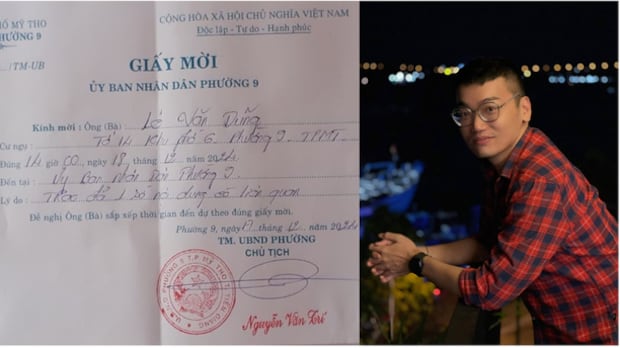
Le Quoc Anh and his father's police summons on Dec. 18, 2024 Le Quoc Anh/RFA (Le Quoc Anh/RFA)

Vietnamese artist Le Quoc Anh, who is wanted by police on charges of “propaganda against the state,” said the police beat him for several days while he was in custody, before going on the run.

He also said the police repeatedly harassed his parents, who live in Tien Giang province in southern Vietnam, in an attempt to force him to turn himself in.

Anh, 33, is a graphic artist at a printing company in My Tho city. He was detained by police for two weeks in March 2023. He was released on bail after the intervention of his lawyer, but went on the run in August 2023 and has been a wanted man ever since.

“I am extremely indignant that the … police detained and beat me for many days in addition to harassing my family even though I did not do anything against the State,” he told Radio Free Asia on Thursday. “Their illegal actions against me and my family show that Vietnam has no freedom of expression or freedom of creativity in the arts.”

During his detention, from March 8 to March 23, 2023, Anh said investigators accused him of being a member of the U.S-based dissident group Viet Tan, and receiving money from it to carry out acts of terrorism in Vietnam. The government has labelled Viet Tan a terrorist organization, which the group denies.

Anh said that since he left home, police have repeatedly questioned his parents about his whereabouts. Most recently, on Dec. 18 and 19, 2024, police forced his father to go to their station, confiscated his phone, questioned him about his son and accused him of colluding with many other people to spread malicious information.

Police also searched their home and seized phones and computers. They threatened to arrest Anh’s father for refusing to tell them where his son was and installed cameras outside the home to monitor him.

“The fact that my family has been harassed repeatedly for a long time is unacceptable, it shows the tyranny of the ruling apparatus, working arbitrarily and without order,” Anh said. “They use all means to achieve what they want during the investigation process such as kidnapping, threatening, violating privacy, robbing property ... seriously affecting the lives and spirits of me and my parents.”

RFA called the Investigation Security Department of the provincial police for comment on Anh’s accusations. The person who answered the call asked the reporter to go to the department’s headquarters to get a response from senior officers.

Anh told RFA that he himself is not politically active, only sharing articles from RFA, Voice of America and the BBC about Vietnam. He is also a member of several internet fan clubs and shares patriotic songs by overseas Vietnamese singers.

Translated by RFA Vietnamese. Edited by Mike Firn.
EXPLAINER

Frexit: Why Ivory Coast is joining African campaign to expel French troops

Ivory Coast is the sixth in a growing list of African nations cutting military ties with former colonial power France.

 3 Jan 2025
AL JAZEERA

French military troops who have been in Ivory Coast for decades will soon be leaving, Ivorian officials have said, signalling more diplomatic setbacks for France amid local resentment that has caused one-time allies in West and Central Africa to sever ties with Paris.

President Alassane Ouattara’s announcement on Tuesday puts Ivory Coast on a growing list of African countries cutting military ties with the once greatly influential former colonial power, as some former French allies also turn to Russian mercenaries for help fighting a swarm of armed groups in the region.

Within days of each other in November, Chad and Senegal expelled French troops, joining several Sahel countries that had earlier done the same, starting in 2021.

The wave of pushback has forced France to devise a new military strategy for the continent that officials say will be in line with the “needs” of partner countries. Temporary deployments, rather than permanent military presence, and more focus on training local forces, are some features of the new policy.

Here’s what to know about why Ivory Coast has joined the list and how France’s influence in the region is waning:

Why is Ivory Coast expelling French troops?

In his 2024 end-of-year address to the country on December 31, President Ouattara said the Ivorian government had decided to expel French troops because the Ivorian army is “now effective”. The president did not give any other reasons.

“We can be proud of our army, whose modernisation is now effective. It is within this context that we have decided on the concerted and organised withdrawal of French forces,” Ouattara said.

The 43rd Marine Infantry Battalion (BIMA), a French army base located in Port-Bouet in the economic capital, Abidjan, will be “handed over” to the Ivorian military starting from January 2025, he added. French soldiers have been helping the Ivorian army in the fight against armed groups operating in the Sahel and expanding into countries along the Gulf of Guinea, including Ivory Coast and Ghana. France also operated as part of a United Nations peacekeeping mission during the country’s long civil war from 2002 to 2011.

Ouattara’s announcement on Tuesday was unexpected. The president is seen by many as one of the African leaders most close to France. In a country in which anger against France is growing, that perception has bred deep resentment of the government. In August, French President Emmanuel Macron feted Ouattara in a private dinner at the Elysee.

Analysts say Ouattara’s decision to cut military ties could also be political, as Ivorians gear up for general elections slated for October. Ouattara, who has been in power since 2010, has not yet said whether he will seek a fourth term in the polls. His decision to run for president in 2020 following the sudden death of his successor and prime minister, Amadou Gon Coulibaly, provoked widespread outrage in opposition camps.

Why is France facing general pushback in Francophone Africa?

France has faced unprecedented, bitter criticism from citizens in its former colonies in West and Central Africa in recent years. From Mali to Ivory Coast, thousands of people have taken to the streets in mass protests, demanding that their governments cut ties with Paris for good.

Some of the resentment dates back to historical controversies linked to colonialism. The French direct rule during colonisation was perceived to have weakened traditional institutions, culture, and leadership while forcing European officials and customs on locals. French officials ruling the colonies were perceived as particularly harsh, both in their administration and attempts to increase France’s economic footholds.

After countries won their independence in the 1960s, Paris built a strong web of connections with African leaders and elites, termed “Francafrique” to protect France’s vast economic interests and to keep French troops on the ground. More than 200 French companies operate on the continent, including oil and gas giant Total, and Orano, which mines uranium to power France’s nuclear power plants. French troops too have operated across the region, providing training and assisting local militaries.

However, in the last five years, military-led governments in the Sahel region have pushed back at the perceived weakness of the French army. Despite the presence of thousands of French soldiers, armed group activity continued to turn the area into a hotspot of violence as groups like Jama’at Nusrat al-Islam wal-Muslimin (JNIM) wage war on security forces and officials across Mali, Burkina Faso, and Niger. Increasingly, armed groups have made incursions into the coastal Ivory Coast, Ghana, and Benin.

Which countries have expelled French troops and why?

By January 2025, six African countries – Mali, Burkina Faso, Niger, Chad, Senegal, and Ivory Coast – had cut military ties with France.

Mali: In August 2020, a group of soldiers from the Malian Armed Forces mutinied and seized power from the civilian government in Bamako, citing its inability to stop increasing levels of violence. After France denounced the coup, the military government played up populist narratives and blamed France for interfering in the country’s decision-making. Hundreds took to the streets, praising the military and calling for France to leave. The coup kicked off a series of takeovers in Burkina Faso, Niger, Guinea and Gabon.

In June 2021, Macron announced French forces would leave the Sahel in a phased-out manner. By December 2023, the exit was complete. Mali has since strengthened ties with Russia, and Russian mercenaries are currently operating in the region. Conflict has continued – more than 5,000 people died across the Sahel in the first half of 2024, and millions remain displaced, according to conflict tracker, ACLED.

Burkina Faso: The current military government seized power in January 2022 on the back of resentment against a civilian government seen as powerless against armed groups, and the French government believed to be backing it. In February 2023, the military government ordered French troops to leave Burkinabe soil within a month. Some 300 Russian troops were thought to have arrived in the country in January 2024.

Niger: As civilian governments fell in neighbouring countries, the military there too staged a coup in July 2023, overthrowing and detaining President Mohamed Bazoum. Many Nigeriens marched in favour of the military and called for French troops stationed in Niamey to leave. In December 2023, the military government expelled French soldiers.

Senegal: In November 2024, President Bassirou Diomaye Faye said that France “should” shut down its military bases from 2025 because French military presence was not in line with Senegal’s sovereignty. The declaration came as Senegal marked 80 years after a colonial-era massacre that saw French troops kill tens of West African soldiers angry at their treatment after fighting for Paris in World War II. There are 350 French troops stationed in the country.

Chad: Officials, also in November, announced that Chad was ending a military pact with France in place since the 1960s. The country was a key link in France’s military presence in Africa and its last foothold in the wider Sahel region. Foreign Minister Abderaman Koulamallah called France “an essential partner” but said it “must now also consider that Chad has grown up, matured and is a sovereign state that is very jealous of its sovereignty”. There are 1,000 French troops stationed in the country.
Does France still have any military presence in Africa?

Yes, France maintains a large military base in Djibouti, eastern Africa. The country, also a former colony of France, hosts close to 1,500 French troops and is one of France’s largest overseas military contingents.

In West and Central Africa, France continues to retain a small presence in Gabon where it has about 300 troops. Gabon’s army seized power in a coup in August 2023, ending five years of the Bongo family’s rule.

However, unlike other military-led countries in the region, Paris has maintained ties with Gabon’s military government, likely because of the resentment the ruling family drew, some analysts say.
Explosion targets German capital police building, injuring two officers

The officers were on a regular patrol near the police station when the blast occurred.


Police officers face injuries after explosion near Berlin police building. / Photo: Reuters


Two police officers were injured, one seriously, in an explosion on Thursday night outside a police building in Berlin, according to authorities in the German capital.

The officers were on a routine security patrol when an unidentified object exploded near the fence.

"This evening, at around 8:20 pm, a serious security incident occurred at the fence" around the police building in the Wittenau district of northern Berlin, police posted on social media platform X.

One officer suffered injuries to the face and eyes, while the other experienced "sound trauma". Both received medical treatment.

When questioned by AFP, a police spokesperson declined to provide further information about the incident.

The explosion comes after 30 German law enforcement officers were injured on New Year's Eve, including one seriously by an illegally manufactured firework.

Five people died across the country in incidents linked to the powerful fireworks Germans traditionally set off to celebrate the new year.