Sunday, January 05, 2025

SPACE/COSMOS


Jules Verne: The writer who inspired space exploration

Timothy Jones  
DW
January 3, 2025

French author Jules Verne gave us some astoundingly accurate predictions of future technological advances. His stories inspired many scientists and inventors to make his visions a reality.


Jules Verne's works have delighted both adults and children for more than 160 years


When French author Jules Verne died in 1905, powered air flight, which he put at the center of his 1886 book "Robur the Conqueror," had moved from fiction to reality. Just two years earlier, the Wright brothers had achieved the first manned air flight in human history.

Yet more of Verne's predictions of world-changing technologies were still far from being realized when he died. Being able to orbit the moon on a spaceship, as he depicted in his 1865 novel "From the Earth to the Moon," seemed like a distant fantasy. But it came true just 60 years later with NASA's Apollo 8 mission in 1968.

Verne's brilliance lay in the way he vividly imagined how existing technologies might be developed, then embedded his ideas in exciting adventure stories.

This fascinating combination of fact and fiction have made Verne's novels ideal for stimulating interest in science and technology, despite all the progress since they were written. That's why Verne’s stories have inspired countless scientists and inventors, and continue to do so today. Here are four such examples.

Simon Lake (1866-1945), submarine designer

Simon Lake was a US naval architect who designed some of the first submarines for the US Navy. He said he was indebted to Verne, in particular the novel "Twenty Thousand Leagues Under the Seas" (1869-1870), which he first read at the age of 10 or 11.

This book features the Nautilus, an undersea vessel far more advanced than the rudimentary submarines that existed when the book was written.

Lake was gripped with the ambition to build a submarine that matched or exceeded the Nautilus in its performance.

He made some progress, designing a submarine called the Argonaut. A successful 1,000-mile (1,600-kilometer) voyage of the Argonaut in 1898 earned Lake the delight of receiving a congratulatory telegram from Verne himself.
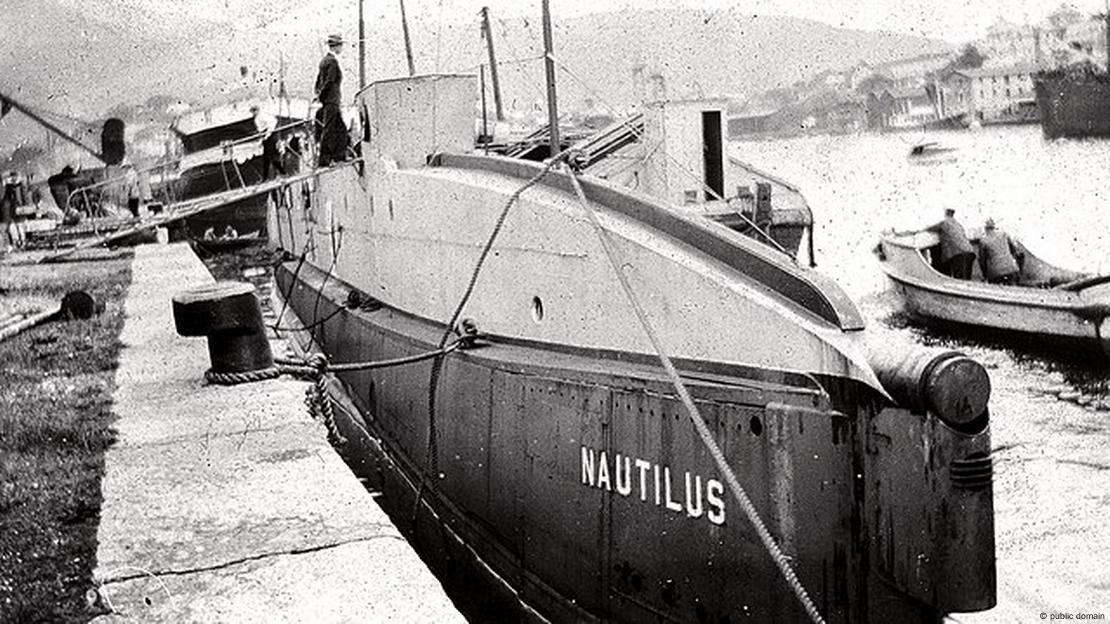
Lake's Nautilus bore the motto 'Mobilis in mobili' ('Moving in a moving element') — that of Verne's character Captain Nemo
Image: public domain

Later, Verne's grandson, Jean Jules Verne, was invited to be a "godparent" of one of Lake's later, more advanced submarines. The vessel was even rebaptized as the Nautilus ahead of an Arctic expedition in 1931, in honor of the French author.


Alberto Santos-Dumont (1873-1932), aeronaut and inventor


Brazilian inventor Alberto Santos-Dumont not only designed and built some of the first powered airships, but also flew them. Among his many trips, he circled the Eiffel Tower in Paris with his airship No. 6 in 1901, a performance which brought him great fame across the world at the time.

A flight by Santo-Dumont's 14-bis in October 1906 is considered the world's first officially registered motorized flight
Image: Jules Beau

Santos-Dumont went on to design, construct, and fly powered aircraft like gliders and ornithopters. He carried out a flight of 220 meters (241 yards) at a height of 6 meters (20 feet) in his 14-bis in November 1906.

In his book, "My Airships," Santos-Dumont mentioned several of Verne's works as inspirations for his curiosity about the world and technology, calling the French writer the "favorite author" of his youth.

Igor Sikorsky (1889-1972), aviation pioneer


Igor Sikorsky's mother, Mariya Stefanovna Sikorskaya, instilled a love for Verne's stories in the Russian-American aviation pioneer.

In particular, "Robur the Conqueror," with its vividly described aircraft, inspired Sikorsky to build the helicopters for which he became famous.

After several failed attempts early in the 20th century, Sikorsky succeed in designing and flying the Vought-Sikorsky VS-300, the first workable American helicopter, in 1939.


The Sikorsky 330 was the first workable helicopter in the US


The early form of a helicopter was modified to become the Sikorsky R-4, the first mass-produced helicopter in the world.

Sikorsky also designed numerous fixed-wing airplanes, mostly after he emigrated from Russia to the US in 1919 after the 1917 Russian Revolution.


Konstantin Tsiolkovsky (1857-1935), rocket scientist

Konstantin Eduardovich Tsiolkovsky, one of the pioneers of modern rocketry and astronautics, named Verne as the person who inspired his interest in space flight.

Tsiolkovsky also emulated Verne as a writer, publishing the novel "On the Moon" in 1893. He also wrote many philosophical and scientific works related to space travel and the human relationship with the cosmos.

Verne's fictional depictions of spaceships carrying lunar voyagers as a shell shot from a cannon could never succeed in reality. In contrast, Tsiolkovsky developed theories on many principles of rocket propulsion and space travel that are workable and still hold true today.

Like Verne, Tsiolkovsky was convinced humans would one day move out further into the solar system.

"Man will not always stay on Earth; the pursuit of light and space will lead him to penetrate the bounds of the atmosphere, timidly at first, but in the end to conquer the whole of solar space," reads the epitaph on his obelisk that Tsiolkovsky himself wrote.

Edited by: Fred Schwaller


India unveils plans for 10 missions in 2025 after successful space-docking launch

Jan. 3, 2025 


An Indian PSLV-C60 rocket carrying Space Docking Experiment, or SpaDeX, payloads is shown lifting off from Satish Dhawan Space Centre in Andhra Pradesh on Monday. SpaDeX is a pioneering mission to establish India's capability in orbital docking. 
\Photo courtesy Indian Space Research Organization


Jan. 3 (UPI) -- India's space agency says it is planning a record 10 orbital missions, as well as its first commercial effort, during 2025 after successfully launching a space-docking project this week.

Indian Space Research Organization chairman S. Somanath told reporters following Monday's launch of a PSLV-C60 rocket carrying Space Docking Experiment, or SpaDeX, payloads, that the nation has big plans for the coming year.

"ISRO set to launch the NVS-02 satellite in January 2025, with more missions planned for upcoming year," he said on Tuesday while marking the agency's 99th launch from the Satish Dhawan Space Centre in Andhra Pradesh, which carried two small spacecraft built to dock together in space, a mission deemed as essential for India's space ambitions.

"Through this mission, India is marching towards becoming the fourth country in the world to have space docking technology," the agency said in a statement.

Among the upcoming plans outlined by Somanath are 10 missions, including the NVS-02 navigation satellite. With that "milestone" 100th launch from Satish Dhawan Space Centre, ISRO will launch the second in the series of 2nd-generation navigation satellites and the ninth satellite in its Navigation with Indian Constellation.

Similar to its predecessor NVS-01, the NVS-02 will likely have both navigation and ranging payloads which are meant to serve both civilian and military geo-positioning needs, NDTV reported.

Four other geosynchronous satellite launch vehicle missions are on the agenda for 2025, as well as a manned LVM-3 launch for India's Gaganyaan human spaceflight program, three Polar Satellite Launch Vehicle missions and a launch of the SSLV solid rocket, Somanath said.


Bezos’s Blue Origin poised for first orbital launch next week

By AFP
January 4, 2025


File photo: The interior of the Blue Origin crew capsule. — Photo: © AFP/File
Gregg Newton with Issam Ahmed in Washington

Amazon founder Jeff Bezos’s company Blue Origin is poised to launch its first orbital rocket next week, marking a pivotal moment in the commercial space race currently dominated by Elon Musk’s SpaceX.

Named New Glenn, the rocket is scheduled to lift off from Cape Canaveral Space Force Station in Florida as soon as Wednesday 1:00 am (0600 GMT), with a backup window on Friday, according to a Federal Aviation Administration advisory.

While Blue Origin has not officially confirmed the launch date, excitement has been building since a successful “hotfire” test on December 27.

“Next stop launch,” Bezos declared on X, sharing a video of the towering rocket’s engines roaring to life.

The NG-1 mission will carry a prototype of Blue Ring, a Defense Department–funded spacecraft envisioned as a versatile satellite deployment platform, which will remain on board the rocket’s second stage for the duration of the six-hour test flight.

Jeff Bezos, pictured in November 2021, founded Blue Origin two years before Elon Musk started SpaceX — but the company has progressed at a far slower pace – Copyright POOL/AFP/File Paul ELLIS

It will mark Blue Origin’s long-awaited entry into the lucrative orbital launch market after years of suborbital flights with its smaller New Shepard rocket, which carries passengers and payloads on brief trips to the edge of space.

“The market is really orbital,” analyst Laura Forczyk, founder of Astralytical, told AFP. “Suborbital can only take you so far — there are only so many payloads and customers for a quick ride to space.”

– Space barons –


The milestone will also escalate the rivalry between Bezos, the world’s second-richest person, and Musk, the wealthiest, who has cemented SpaceX’s dominance and is now in President-elect Donald Trump’s inner circle.

SpaceX’s Falcon 9 rockets have become industry workhorses, serving clients from commercial satellite operators to the Pentagon and NASA, which relies on them to ferry astronauts to and from the International Space Station.

Like Falcon 9, New Glenn features a reusable first stage designed to land vertically on a ship at sea.

The vessel, playfully named “So You’re Telling Me There’s a Chance,” reflects the challenge of landing a reusable rocket on the first attempt, Blue Origin CEO Dave Limp said on X.

At 320 feet (98 meters), New Glenn dwarfs the 230-foot Falcon 9 and is designed to carry larger, heavier payloads. It slots between Falcon 9 and its larger sibling, Falcon Heavy, in cargo capacity while burning cleaner liquid natural gas rather than kerosene and relying on fewer engines.

“If I were still a senior executive at NASA, I’d be thrilled to finally have some competition to the Falcon 9,” G. Scott Hubbard, NASA’s former “Mars Czar” now at Stanford University, told AFP, adding that increased competition could help drive down launch costs.

– Politics at play –


For now, SpaceX maintains a commanding lead, capturing the lion’s share of the market while rivals like United Launch Alliance, Arianespace and Rocket Lab trail far behind.

Like Musk, Bezos has an enduring passion for space. But where Musk dreams of colonizing Mars, Bezos envisages populating the solar system with massive floating space colonies.

Bezos founded Blue Origin in 2000 — two years before Musk started SpaceX — but the company has progressed at a far slower pace, reflecting a more cautious approach.

“There’s been impatience within the space community over Blue Origin’s very deliberate approach,” Scott Pace, a space policy analyst at George Washington University and a former member of the National Space Council, told AFP.

If successful, New Glenn will offer the US government “dissimilar redundancy” — alternative systems that provide backups if one fails, said Pace.

This could prove vital as SpaceX plans to retire Falcon 9 by the end of the decade in favor of Starship, a prototype that relies on not fully proven technologies.

Musk’s closeness to Trump has raised concerns about potential conflicts of interest, especially with private astronaut Jared Isaacman — a business associate of Musk — slated to become the next NASA chief.

Bezos, however, has been making his own overtures, paying his respects to his former foe during a visit to the president-elect’s Mar-a-Lago residence, while Amazon has said it would donate $1 million to Trump’s inauguration committee.

COACHING IS ABUSE

Germany's gymnastics abuse scandal: What you need to know
DW
January 3, 2025

Female athletes have made serious allegations against coaches at the national training center — and Germany's gymnastics federation.


Tabea Alt has said she was a victim of 'systematic physical and mental abuse'
Image: Hansjürgen Britsch/Pressefoto Baumann/picture alliance


What accusations have been made?


On December 28, former elite gymnast Tabea Alt used her Instagram account to go public about abuse she said she experienced at the national gymnastics center in Stuttgart and "in German women's gymnastics in general." The 24-year-old wrote that she was even made to perform and compete in Stuttgart while suffering from broken bones.

"It is not an isolated case: eating disorders, punitive training, painkillers, threats and humiliation were the order of the day. Today I know it was systematic physical and mental abuse," she wrote.

Alt said she had detailed the allegations in a letter to the German Gymnastics Federation (DTB) three years earlier, but nothing had happened as a result. Alt won bronze on the balance beam at the 2017 World Championships in Montreal and ended her career in 2021.


Other gymnasts have echoed Alt's criticism. Former national team gymnast Michelle Timm wrote on Instagram of "catastrophic circumstances" at the national center in Stuttgart, saying she'd experienced "threats in all contexts" from coaches. Timm said had "trained for months with visible physical damage due to poor medical decisions," which ultimately led to stress fractures and the premature end of her career.

Lara Hinsberger, an active gymnast, has also spoken out, complaining about the psychological pressure exerted on her as a minor at the national center. She was "willfully broken at the age of 14 due to inconsiderate adults," the 20-year-old wrote on Instagram.

"In Stuttgart, I was treated like an object. I was used until I was so physically and mentally broken that I lost all value for the coaches [and at some point for myself too]."


How has the German Gymnastics Federation responded to allegations?

The DTB has denied ignoring Alt's 2021 letter, saying it reacted by, among other things, holding workshops with sports psychologists in Stuttgart.

Regarding the most recent accusations, however, the DTB said in a statement that "the meaningfulness and success of the measures introduced so far must be fundamentally put to the test in a self-critical manner." It said the federation continued to be guided by "the maxim that we strive for humane competitive sport and that performance must not negatively affect personal development."

Two coaches at the national training center in Stuttgart have been temporarily released from their duties, until January 19.


How have other gymnasts responded?


"I am on the side of all female athletes who had the courage to go public with their experiences," wrote Elisabeth Seitz, three-time Olympian and former European uneven bars champion, on Instagram.

Seitz, currently Germany's highest-profile gymnast, added that "the people who cause them [the alleged abuses] must be held accountable."

In an interview with Stern magazine, former elite gymnast Kim Bui, now a member of the International Olympic Committee, criticized a system that has "manipulated, humiliated and destroyed" female athletes for years.

"It affects the entire sport of gymnastics in Germany," she said, accusing many of the people behind the alleged abuses of having protected each other.

Athleten Deutschland, an independent organization representing the interests of German national team athletes established in 2017, has issued a statement demanding that the scandal "be swiftly investigated and dealt with — also in order to prevent continued misconduct and thus potentially ongoing suffering for other athletes."

The organization said it was confident that this would happen, as the DTB had become "a pioneer for safe and non-violent sport in the German [sporting] association landscape in recent years."

Are accusations against coaches in German gymnastics new?

No. As early as 2020, other female athletes at the national gymnastics center in Chemnitz made serious allegations against their coach, Gabriele Frehse. According to the athletes, she harassed the gymnasts in training and administered medication to them without a doctor's prescription. Frehse denied the allegations.

The DTB sacked Frehse, but she won a legal battle over her dismissal and has been working as an Austrian national team coach since 2023.
Have there been any comparable scandals in other countries?

Yes. In recent years, there have been reports of physical and mental abuse in gymnastics in several countries, including the Netherlands in 2020 and France and Switzerland in 2023.

The biggest scandal in gymnastics to date occurred in the United States. In 2017, long-time team doctor Larry Nassar was sentenced to life imprisonment for the sexual abuse of more than 250 girls and women, including Olympic champions such as superstar Simone Biles.

According to the US Center for SafeSport, almost 300 gymnastics coaches in the United States are currently banned or suspended for misconduct.

How important is gymnastics in Germany?

Germany is considered the cradle of organized gymnastics. At the end of the 18th and beginning of the 19th century, the world's first public gymnastics grounds with equipment were laid out in the eastern state of Thuringia and Berlin. The Hamburger Turnerschaft ("Hamburg gymnastics club"), established in 1818, is regarded as the world's oldest gymnastics club.

Gymnastics is still very popular in Germany. With around 5 million members, the DTB is the second-largest sports association in Germany after the German Football Association (7.7 million). It not only oversees artistic gymnastics, but also rhythmic gymnastics, trampolining and several smaller sports such as parcours, orienteering and fistball.

The last German Olympic champion in artistic gymnastics was Fabian Hambüchen on the horizontal bar in Rio de Janeiro in 2016. At the 2024 Games in Paris, Darja Varfolomeev won Germany's first Olympic gold in rhythmic gymnastics.


What does a national sports center do?


According to the German Interior Ministry, there are 193 national centers for Olympic sports and a further 12 in parasports. They are intended to ensure that top German athletes enjoy optimal conditions for regular training, including high-performance training groups and highly qualified coaches.

The centers are generally certified as such for four years — one Olympic cycle. The German government, the state in which any given center is located and the German Olympic Sports Confederation are jointly responsible for issuing such certifications.

There are 12 national centers of the Olympic sports of artistic gymnastics, rhythmic gymnastics and trampolining. One of these is the Kunst-Turn-Forum Stuttgart, which is currently in the headlines.

Each national center is linked to one of Germany's 13 Olympic training centers. This is where the best athletes go to train for an upcoming Olympic or Paralympic Games. This system is financed by the German government, the country's 16 states, local authorities, sports federations and corporate sponsors.

This article was originally written in German.


Stefan Nestler Reporter and editor


Why are Thailand, Cambodia clashing over Koh Kood island?


Tommy Walker in Bangkok
DW
3/1/2025

Parts of the popular island of Koh Kood are claimed by both Bangkok and Phnom Penh, but the real roots of the dispute run much deeper.


Koh Kood is popular with tourists, but its true wealth lies below the surface
Image: Peter Schickert/picture alliance

Hundreds of thousands of tourists travel to the island of Koh Kood, in the Gulf of Thailand, every year. Thailand's fourth-largest island might not be as popular among foreign visitors as Phuket or Koh Samui, but its relevance is rising — and not only because it's now in the center of an international dispute.

The island is believed to be sitting atop massive gas and oil reserves. Its exploitation has been on hold due to Cambodia claiming parts of the territory, but now, with the growing demand for energy in both Asian countries, the conflict has been pushed to forefront.

The roots of the row, however, reach well back into the colonial era.


Cambodia's claim 'controversial'


In the early 1900s, France ruled the area known as Indochina, comprised of several of its colonies that also included present-day Cambodia.

In 1904, Indochina ceded Koh Kood to Thailand, which was then called Siam. The border was subsequently settled with the Franco-Siamese Treaty of 1907.

By 1972, Indochina was defunct and Cambodia claimed its side of the maritime boundaries from the treaty included the southern part of the island. Thailand disagreed, and has said it controls all of Koh Kood.

The island is only some 32 kilometers (20 miles) away from Cambodian coast
Image: Heng Sinith/AP Photos/picture alliance

Tita Sanglee, an independent analyst in Thailand, said Cambodia's definition of the boundaries within the treaty is controversial.

"Cambodia's claim was rooted in a different interpretation of the said treaty. It should be noted the 1907 treaty, like other treaties of its time, intended to address land, not maritime, boundaries. This is why the Cambodian interpretation is controversial," she told DW.

In 2001, Thailand's government reached a memorandum of understanding on the overlapping claims, with then-Prime Minister Thaksin Shinawatra discussing profit sharing from Koh Kood's energy resources with Cambodia's Hun Sen.

Ruling families too close for comfort

This willingness to compromise sounded alarm bells among conservative politicians in Bangkok. Thai nationalists were angered by Thaksin's offer to Cambodia, insisting Thailand should not concede any land or resources to its neighbor.

"The dispute manifesting itself today is because the Thai and Cambodian governments, for the first time in forever, both expressed peak political will to resume maritime boundary talks. Both sides want to utilize untapped fuel fields as they face rising import costs for energy," said Tita.


Today, Thailand is governed by Paetongtarn Shinawatra, the daughter of Thaksin Shinawatra. Cambodia is led by Hun Manet, the son of Hun Sen. Personal ties between the ruling families seem to be strong, and for many Thai nationalists, this is a reason to be worried.

"What is concerning to many Thais is the closer personal ties between the current Thai and Cambodian leadership. This has led to skepticism about why the talks seem to be moving so quickly and whether conflicts of interests could be a factor," said Tita.

"There are many unaddressed questions, including the status of Koh Kood. By international standards, it belongs to Thailand."
No safety for activists

The two governments seem to be cooperating well in what their critics call transnational repression — activists and government critics fleeing across the border tend to find no sanctuary in either Cambodia and Thailand.

In November, Thailand deported six Cambodian activists, most of whom had been recognized as refugees under the United Nations High Commissioner for Refugees. They have been charged with treason for criticizing Cambodia's government.

Tricky balance in highly charged dispute

But the history of ties between the two countries is long and mixed, and Mark S. Cogan, associate professor of peace & conflict studies at Kansai Gaidai University in Japan, warned "the sovereignty question" is always at the center of conflicts between Bangkok and Phnom Penh.

"Territorial disputes have long memories with Thai nationalists," and it remains a highly charged issue "both outside of the government and within it," he added.

The Thai government has so far downplayed rifts with the Cambodian regime over Koh Kood, but both sides have questions that remain unanswered.

Tita believes there's a fine balance at play.

"It's a tricky situation," she said. "If the Cambodian government accepts that Koh Kood belongs to Thailand, it's going to have to deal with angry nationalists at home. But if any part of Koh Kood's sovereignty is compromised, Thais won't stay still. I personally foresee a deadlock."

Edited by: Darko Janjevic


Tommy Walker Reporter focusing on Southeast Asian politics, conflicts, economy and society.
Disinformation campaigns could push Syria back to civil war

DW
January 3, 2025

A deluge of false or misleading information about Syria has flooded social media. Local and international actors are exploiting preexisting divisions to advance their own aims, experts say.

Despite ongoing security concerns, this week thousands in Damascus celebrated the start of Syria's first year in over half a century without the Assad family in charge
Image: Leo Correa/AP/picture alliance

From Christmas trees being toppled by Syria's transitional government, to local women sold as slaves by terrorist "head choppers," to reports about a leading Syrian rebel leader being secretly Jewish: Misinformation and disinformation about Syria since the ousting of the authoritarian Assad regime has run from ridiculous to horrific, and there's more around than ever.

"It has markedly increased since the fall of the Assad regime," confirmed Zouhir Al-Shimale, a researcher and communications manager for Syrian fact-checking organization, Verify-Sy. "Years of revolution, then civil war, have left behind deeply entrenched grievances, and various factions — both local and international — are now leveraging disinformation to strengthen their positions, delegitimize rivals and further their own agendas," he told DW.


In early December, an offensive led by the Syrian rebel group Hayat Tahrir al-Sham, or HTS, toppled the brutal, dictatorial regime of the Assad family, which had controlled Syria for 54 years. HTS were previously affiliated with extremist organizations like al-Qaeda and the so-called "Islamic State," or IS, group — although over recent years, had tried to move away from these groups.

Still, many ordinary Syrians were concerned about how the HTS-led rebels would behave, whether they would seek revenge or try to impose their brand of Islamist politics on others in the country who have different beliefs.

In particular, groups seen to support the Assad regime — such as Syria's Alawites, the religious minority the Assad family belongs to — were worried Assad's opponents would now take revenge on them.

So far at least, even as security remains a significant concern for civilians, there seem to have been comparatively few verified cases of vigilante justice or religious persecution by those currently in power.

And, in fact, that number is dwarfed by alleged and unverified instances of abuse seen online, the majority of which are misleading or fake, various fact-checking organizations suggest.

For example, as fact-checking group Misbar reported, Christmas trees were not removed last week by the new Syrian government but by authorities in the Iraqi shrine city of Karbala in 2023. And posts about female slave markets in Syria came from a 2013 project by a Kurdish artist, Misbar found.

Who is responsible?

Partially or completely untrue social media posts likely originate from a variety of sources. There are so many interests with a stake in Syria and such a large amount of misinformation, it would be hard to easily trace anything back to one actor. This is also due to overlapping interests and unrelated bad actors amplifying one another's fake news.

Firstly, Syrians are likely publishing false posts on social media either accidentally because they believe them to be true and don't have tools to verify them, or to further their own personal agendas or concerns.

The Assad regime "enforced something akin to an information 'iron dome'," Al-Shimale from Verify-Sy explained. It "dominated the information landscape in Syria and has fed Syrians propaganda and fake news about the opposition since day one in 2011."

The end of the Assad regime has resulted in an information vacuum for those who may have considered Assad-controlled media outlets a trusted source, he added.

Additionally, as Rana Ali Adeeb, a scholar at Concordia University in Montreal, Canada who researches how emotion shapes perceptions of fake news, wrote in an op-ed last month, there's still a lot of uncertainty and fear in Syria. "The emotional contagion of fake news is especially dangerous in fragile times like these," she pointed out.

All this makes ordinary people "far more vulnerable to misinformation and disinformation, something Assad supporters, Iran and Russia know and are exploiting," Al-Shimale said.

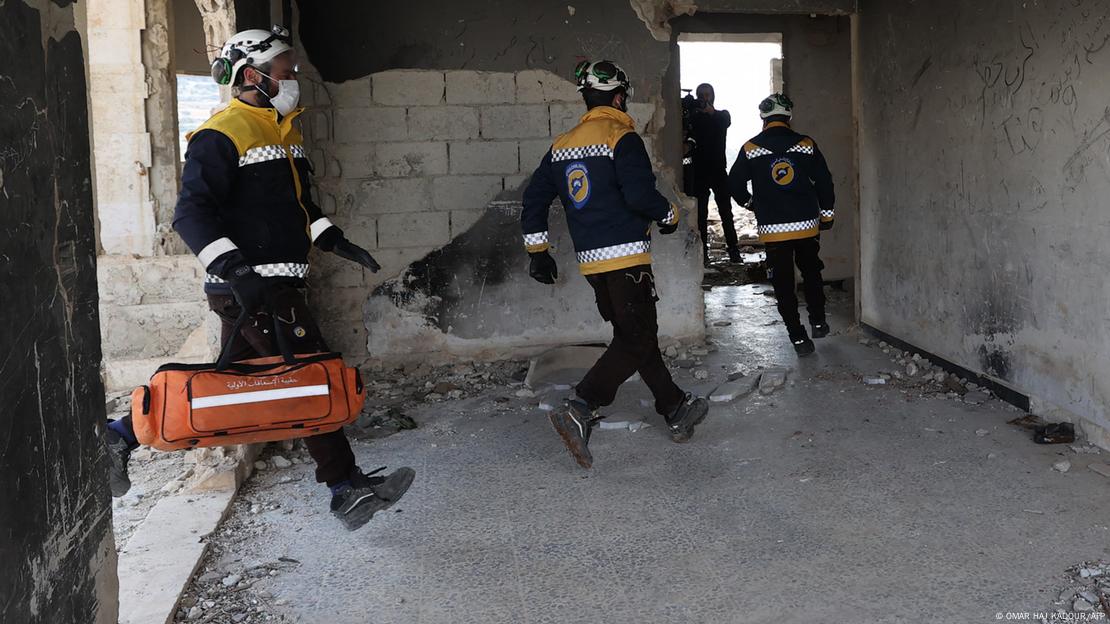
Russian disinformation campaigns tried to cast Syria's first responders, the White Helmets, as unreliable when they posted pictures of damage done by Russian and Syrian warplanes
Image: OMAR HAJ KADOUR/AFP


International interference

Over the 13 years of Syria's civil war, several other states have positioned themselves as for or against the Assad regime. Researchers already know that Assad's staunchest allies, Russia and Iran, supported or ran disinformation campaigns targeting the Syrian opposition. Now, they suggest, those international actors are again playing a similar role.

"The Russian and Iranian information manipulation apparats have been operating at full capacity," Marcos Sebares Jimenez-Blanco, a fellow at the German Marshall Fund, wrote in a mid-December briefing. "[They are] seeking to shape the narrative surrounding developments in Syria to compensate for their military, strategic and geopolitical defeats."

Verify-Sy's Al-Shimale previously pointed to a number of inauthentic Facebook pages launched in December with names that resemble groups monitoring human rights. However, the accounts focus mostly on the Alawite community. By posting disinformation and using mechanized, fake accounts or "bots" to amplify disinformation, these fake pages frighten Alawites, then advocate they take up armed resistance, he explained.


Dangerous alignment

What makes the current flood of disinformation about Syria all the more worrying is the convergence of different agendas and opinions.

Those who support the Syrian Kurdish groups in northern Syria and advocate for their independence are more likely to view HTS with suspicion and fear. So are locals who support a secular Syria, or are part of a Syrian minority.

Meanwhile, Islamophobic, anti-immigrant, right-wingers in the US and Europe also amplify posts that crudely identify HTS as "head choppers" and Syria as "Jihadistan." At the same time, conspiracy theorists outside Syria have speculated — incorrectly — that HTS is simply a puppet for the US or Israeli governments.

There are some outliers — for instance, Turkish nationalists agitating against Syrian Kurds. But most of the opinions that result from misleading social media reports tend to align against the Syrian rebels currently leading the transitional government.


Disturbing the peace


Disinformation has already had an impact inside Syria. For example, last week a video showing an apparent revenge act — the desecration of an Alawite shrine — caused thousands of people in Alawite-majority areas to protest. Later, fact checkers discovered the video was misleading.

Disinformation can also have an impact on how the international community sees and supports Syria, Al-Shimale suggested. "It could shape external perceptions of Syria as a nation incapable of stabilizing itself post-Assad," he said.

"This is a fragile moment for Syria, and for all of us witnessing its unfolding history," Ali Adeeb argued in her op-ed. "The stakes are extraordinarily high. As the situation in Syria evolves, every piece of information carries the potential to shape opinions, influence decisions and spark actions."


Edited by: Matt Pearson
Fact check: JD Vance is wrong about AfD, Nazis

Kathrin Wesolowski
DW
5/1/2025

Has the far-right AfD achieved its greatest electoral successes in the parts of Germany that previously resisted the Nazis? No, it hasn't — and here's why.

JD Vance (left) is set to be inaugurated as US vice president under Donald Trump later this month
Image: Joe Marino/UPI Photo/IMAGO


First Elon Musk, now JD Vance. Prominent members of the incoming US government have been lending their support to the German far-right party, Alternative for Germany (AfD).

Musk, the world's richest man, and Vance, the designated US vice president to Donald Trump, have both recently made highly polarizing statements.

Vance has criticized US media that described the AfD as being "Nazi-lite" because, he wrote on social media on January 2, "the AfD is most popular in the same areas of Germany that were most resistant to the Nazis."

But is that really true?

Claim: In a post on X (formerly Twitter) that has now been accessed more than 7.8 million times, Vance claimed the US media were slandering the AfD.


DW fact check: False. In fact, election results and other research indicates the opposite is true.

It is true that US media, including The New York Times and even Fox News, have on occasion linked the AfD with Germany's National Socialists, or Nazism. This partly has to do with the fact that some AfD politicians have themselves used Nazi slogans. In 2021, AfD member Björn Höcke, who formerly worked as a history teacher, was convicted of having publicly used Nazi dictator Adolf Hitler's slogan "Everything for Germany" ("Alles für Deutschland"), which is banned in Germany today.

Alice Weidel, the national party's co-chair, has said she sees May 8, the date on which Germany was freed from the Nazis, as the anniversary of the defeat of her country rather than its liberation. In addition, some state chapters of the AfD as well as its youth organization have been certified as right-wing extremist by a German intelligence service.
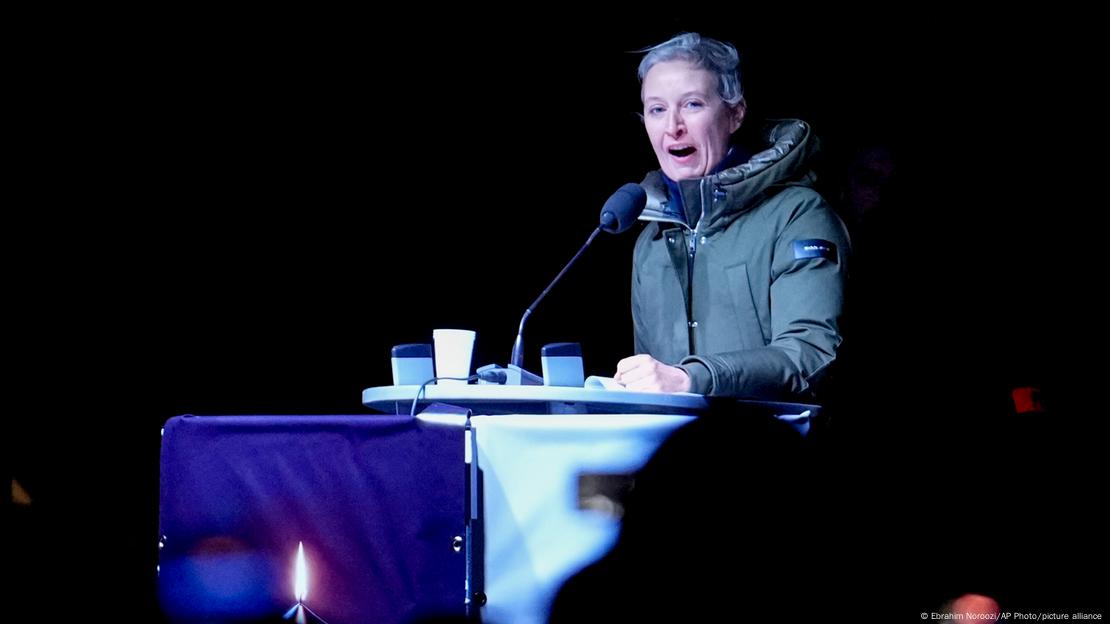
AfD co-chair Alice Weidel will be vying for the chancellorship in February
Image: Ebrahim Noroozi/AP Photo/picture alliance

Popular in former East Germany


Vance has maintained that the AfD is popular in regions that put up the most resistance to the Nazis.

The AfD is, indeed, most popular in states in what was formerly known as East Germany. At the last federal election in 2021, the AfD was victorious in getting locals' second vote in parts of the eastern states of Thuringia, Saxony-Anhalt and Saxony. Second votes are cast for a party, and determine how many seats each party receives in the German lower house, or Bundestag.

Altogether, the AfD was particularly strong in the so-called "new" German states — that is, states that were formerly part of East Germany — such as Mecklenburg-Western Pomerania, Brandenburg, Saxony-Anhalt, Saxony and Thuringia. Only in Berlin, also one of the "new" states, did it win fewer votes.

It's a similar picture when one looks at the German results of the European elections in June 2024. Here, too, the AfD was successful mostly in eastern regions. In Mecklenburg-Western Pomerania, Brandenburg, Saxony-Anhalt, Saxony and Thuringia, the AfD gleaned at least 27% of the vote, giving it the biggest share in those states. In all of Germany, the AfD received 15.9% of votes.

In the latest regional elections held in the above states, the AfD was particularly strong. In Berlin, the Greens were the strongest party at the 2024 European elections (19.6%), while the AfD received 11.6% of votes.

In terms of the upcoming 2025 federal election, the AfD is popular but it's hard to know exactly where, because polls tend to document all of Germany and don't look in detail at individual regions.

Why JD Vance is wrong


So where were the Nazis most popular? And where was most resistance to them — was it in eastern Germany?

The party of Adolf Hitler, the National Socialist German Workers' Party (NSDAP), came to power in 1933. In the last Reichstag election before he took power, on November 6, 1932, the NSDAP came out the strongest with 33.1% of the vote.

If we look at the election results from German regions in 1932, the NSDAP received the biggest share of the vote in almost all of Germany, including in eastern Germany, in the regions where many people vote for the AfD today.

At the Reichstag election in March 1933, the NSDAP was even stronger. However, this election is described by historians as not free because the NSDAP and its supporters intimidated voters, sometimes violently.

This is why Vance's claim is wrong. Hitler's NSDAP had Germany-wide support, including in those areas which favor the AfD today.

An as-yet unpublished study by researchers at Ludwig Maximilian University in Munich, from which some excerpts are already available, has confirmed this finding. The study analyzes connections between districts in which many vote for the AfD today and those that strongly supported the NSDAP in 1933.

There was high voter support in 1933 for the NSDAP in the districts in which the AfD receives strong support today, Felix Hagemeister, a co-author of the study, told DW.

"It would be wrong to speak of any causality in this regard," he said. According to Hagemeister, it's more about handing down right-wing tendencies from generation to generation. "There is research showing, for example, that children mostly tend to take on attitudes similar to those of their parents," he said.

In eastern Germany, this connection between regions in which the NSDAP was strongly supported in the past and the AfD today is particularly clear. But it also exists in Rhineland-Palatinate, a state in Germany's west.

However, it's important to exercise caution and not directly compare the voters of today with those alive almost a century ago, wrote Christian Booss for the Federal Agency for Civic Education (bpb).

He pointed out that an analysis from 2024 showed that the AfD's popularity is also partly determined by socioeconomic differences — that is,how people in certain regions live, and how this leads to cultural and ideological differences.

This article was originally written in German.


FASCIST FRIENDS OF A FEATHER

Austrian conservative leader open to talks with far right

The conservative Austrian People's Party's interim leader said he is willing to engage in coalition talks with the far-right Freedom Party. It comes as the Austrian president is to meet the Freedom Party's leader Kickl.


Herbert Kickl's Freedom Party topped the polls after the parliamentary election in late September
Image: Heinz-Peter Bader/AP/dpa/picture alliance


After the collapse of coalition talks between the conservative Austrian People's Party (ÖVP) and the Social Democrats (SPÖ), Austrian President Alexander Van der Bellen said on Sunday he would meet far-right Freedom Party (FPÖ) leader Herbert Kickl on Monday.

"Voices within the People's Party that rule out cooperation with an FPÖ under Herbert Kickl have become much quieter. This in turn means that a new path may be opening up that did not exist before," Van der Bellen said.

The FPÖ, a party of pro-Russian Eurosceptics, emerged from parliamentary elections in September as the largest party with 29%. But it has been unable to form a government since no other parties would enter a coalition with them.


Stocker signals shift in ÖVP stance

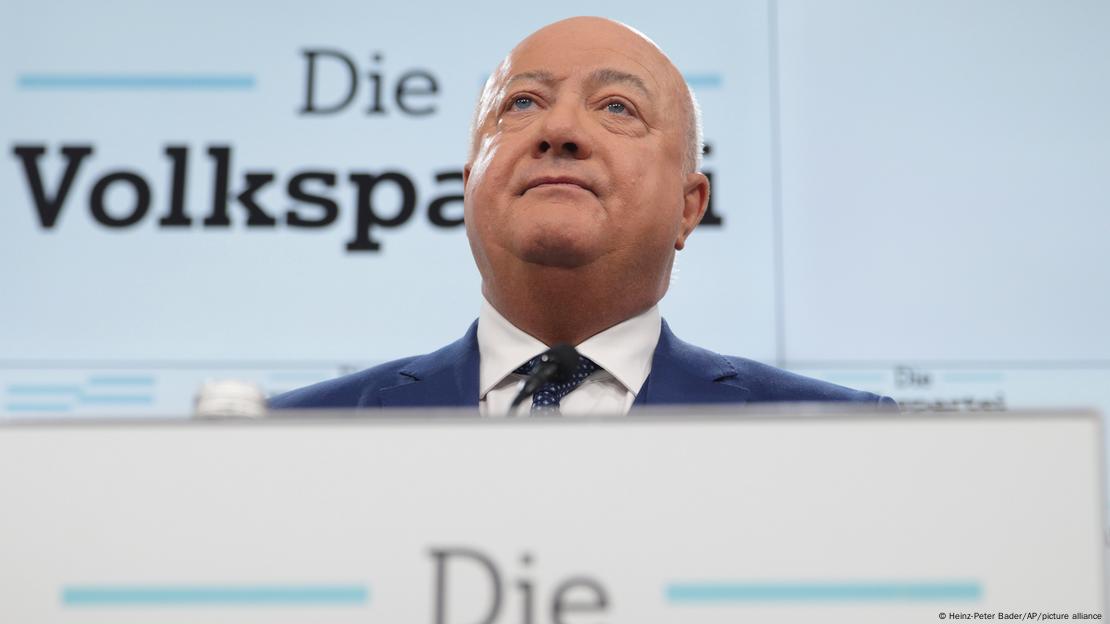
On Sunday, the ÖVP's newly appointed interim leader, Christian Stocker, however, said he was prepared to negotiate with the FPÖ after talks to form a centrist coalition fell apart.

Stocker told reporters, "the leader of the party with the most votes will be tasked with forming a future government."

"If we are invited to these [coalition] talks, we will accept this invitation," he said.

Stocker was chosen to lead Austria's ruling conservative ÖVP after Chancellor Karl Nehammer announced the end of coalition talks and his resignation on Saturday.

Stocker has criticized Kickl in the past calling him a "security risk" for the country
Image: Heinz-Peter Bader/AP/picture alliance

Even though Kickl's FPÖ topped the polls in the autumn's national election, the president tasked Nehammer with putting together a new government.

Nehammer had consistently ruled out working with Kickl and the FPÖ.

The collapse of coalition talks between the ÖVP and the SPÖ has put the FPÖ back in contention to form a new government.

Is a FPÖ and ÖVP coalition possible?

There are overlaps in the FPÖ and ÖVP policy platforms, for example, regarding economic policy and restrictions on immigration. Austria has also been governed by an ÖVP-FPÖ coalition before under then-Chancellor Sebastian Kurz.

An alternative to FPÖ-ÖVP negotiations is a new election, which pollsters believe the FPÖ would win even more convincingly.

Van der Bellen said Nehammer would remain in office until a new chancellor is appointed in the coming week to lead a caretaker government while a coalition is formed.

Whichever party leads the next Austrian government, it will face several challenges, including an economy in recession, rising unemployment and a budget deficit of 3.7% of GDP — above the European Union's limit of 3%.

The EU Commission has said that Vienna must save between €18 billion to €24 billion ($18.56 billion to $24.75 billion).

lo/sms (AP, dpa, Reuters)
Japan: Tuna 'as fat as a cow' sells for $1.3 million

A titanic 276-kilo bluefin tuna has sold for $1.3 million, the second-highest price on record.


The 276-kilogram fish was bought jointly by sushi restaurant operator Onodera Group and wholesaler Yamayuk
Image: Issei Kato/REUTERS


DW
5/1/2025

In Japan, an enormous bluefin tuna sold for around $1.3 million (€1.26 million) in the first auction of the season at Tokyo's famed fish market according to local media.

Michelin-starred sushi restaurateurs, the Onodera Group said they paid 207 million yen for the 276 kilogram (608 pound) fish.

'It was as fat as a cow,' said 73-year-old fisherman Masahiro Takeuchi 
Image: Kyodo/REUTERS


Second-highest selling tuna

Kyodo news agency reported that it was the second-highest amount to be achieved at auction on record.

In 2019, a bluefin tuna fetched the equivalent of $2.1 million — the highest price ever recorded since 1999 when records began.

"It was as fat as a cow," Kyodo quoted 73-year-old fisherman Masahiro Takeuchi as saying.

The COVID-19 pandemic saw new year tunas garner only a fraction of their typical selling prices amid restrictions and fewer people dining out.

The latest big sale has raised hopes Japan will continue to recover from the economic downturn.

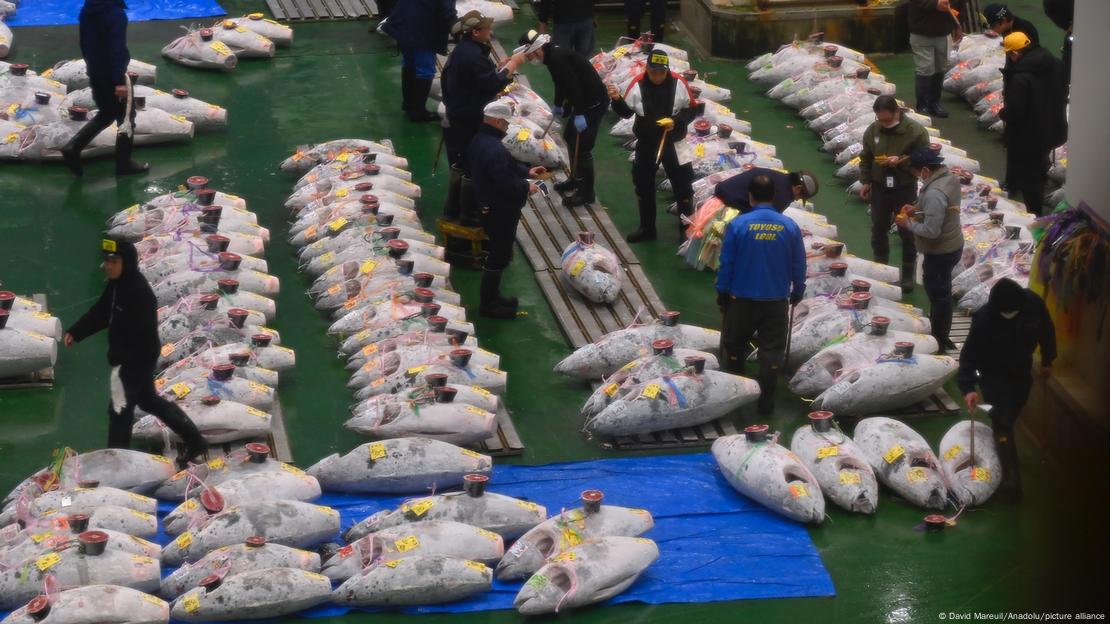
The first new year tuna auction of the year at Toyosu Market in Tokyo, Japan, on January 5, 2025
Image: David Mareuil/Anadolu/picture alliance

kb/wd (dpa, AFP)
Germany defunds 2 Israeli human rights groups
DW
5/1/2025


The German government has quietly cut funding for Zochrot and New Profile, following an earlier defunding of Palestinian NGOs. Some observers fear the move will shrink space for those critical of the Israeli government.

Over the course of several months last year, there was a back-and-forth between German officials and Kurve Wustrow. The German aid organization was staging a desperate attempt to save its ongoing projects with Zochrot and New Profile, two Israeli human rights organizations focused on anti-militarization and Palestinian rights.

The organization made phone calls and held personal meetings with officials. They sent emails responding to questions. They even sent statements from the Israeli organizations explaining their positions.

But nothing managed to dissuade the German authorities from cutting all official government funding for the organization. In mid-December, the decision was confirmed. The futile struggle left Kurve Wustrow's acting director, John Preuss, feeling "tired and frustrated. "

Kurve Wustrow has partners in several countries, including Sudan and Myanmar. But, Preuss said, this was the first time ever the German government had defunded any of their ongoing projects.

Preuss, who for days agonized over the decision of whether to speak up publicly, and his Israeli partners had to second-guess what exactly they were even attempting to defend themselves against.

The German authorities never gave the organization an official explanation as to why they had suddenly decided to rescind the funding for projects they had approved or renewed just the year before.

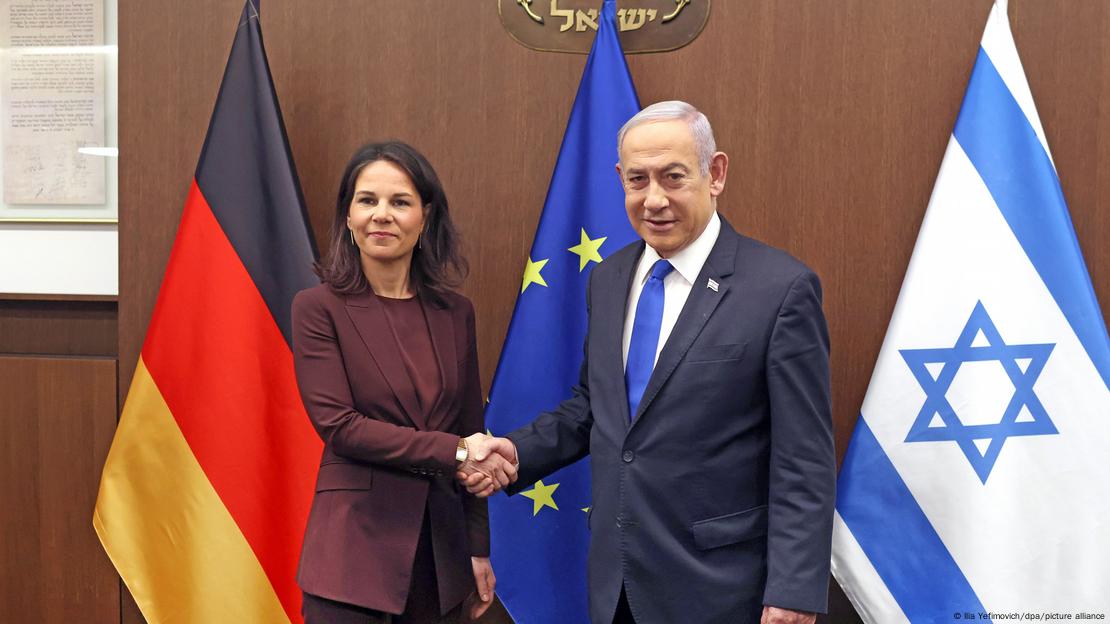
Since the Hamas terror attacks on October 7, 2023, politicians in Germany have repeatedly emphasized that Israel's security is of upmost importance
Image: Ilia Yefimovich/dpa/picture alliance


Part of a wider pattern of defunding human rights groups


DW's investigative unit has reviewed emails and classified documents, and spoken with dozens of sources from the development sector in Germany, Israel and the occupied West Bank. The findings indicate that the defunding of Zochrot and New Profile are part of a larger pattern of cutting federal funds for human rights organizations that have been critical of the Israeli government's policies and the ongoing war in Gaza.

Since the October 7, 2023 Hamas-led attacks on Israel, Germany has also stopped funding at least six Palestinian organizations. The sources DW spoke with all agreed that the move was political, an attempt to silence critical voices amid shrinking space for civil society in Israel. They also claimed Germany's decision was taken under Israeli pressure.

In a statement to DW, Germany's Foreign Affairs Ministry rejected this allegation as "inaccurate," saying it continues to fund "numerous NGOs in Israel and the Palestinian territories critical of the Israeli occupation policy."

Work of Zochrot, New Profile contentious in Israel


The work carried out by New Profile and Zochrot is contentious in Israel, particularly under a government that is politically further to the right than any other in the country's history.

Germany's funding cut terminated ongoing projects the groups had cleared in late 2023.

Zochrot, which means "Remembering" in Hebrew, advocates for accountability of the Nakba, a term many use to refer to the expulsion and displacement of Palestinians before and during the 1948 Arab-Israeli war. The organization also campaigns for the right of return for Palestinian refugees and their descendants, to which the current Israeli government is strongly opposed.

Its director, Rachel Beitarie, told DW that she met with German officials before the defunding was made final. "The German past, the Nazi regime was brought up again and again in these conversations," she said. German officials, she added, told her it was important for Germany to support Israel because of Germany's history.

That's why Zochrot wrote a statement to the German government, in which it addressed the issue of whether it questioned "the existence of Israel," saying it categorically did not.

Beitarie said Zochrot lost about €100,000 (roughly $103,000) — about a quarter of its budget. The defunding "definitely hurts us, but it will not stop us from doing this work," she said.

New Profile, a volunteer-based movement, offers support to conscientious objectors who risk imprisonment in Israel, where military service is mandatory both for men and women. The organization said it has lost about half of its total funding.

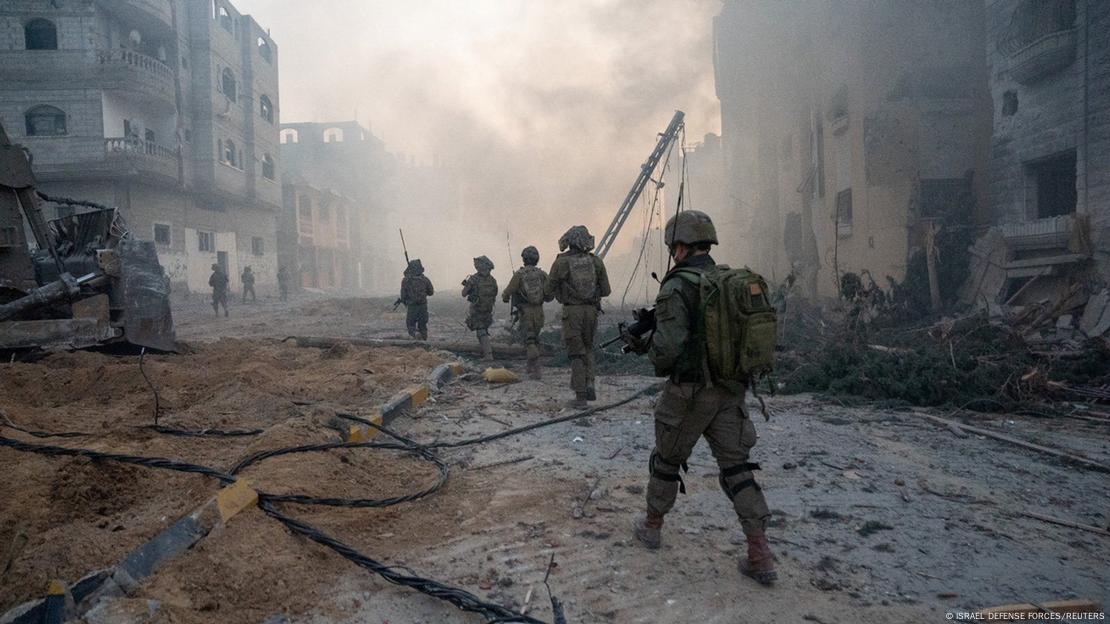
New Profile said it has seen an increase in requests for support from people wanting to get out of Israeli army service since October 7, 2023
Image: ISRAEL DEFENSE FORCES/REUTERS

In a long statement to the German government, New Profile explained that its work with those refusing to serve in Israel's army was "strictly in accordance with Israeli law."

Sergeiy Sandler, the organization's treasurer, said the defunding was timed "to deliver the most possible damage to our work." It left the organization scrambling to find alternative funding at a time when Israeli soldiers were being sent to fight in Gaza and, until recently, Lebanon.

Both organizations had been receiving development aid through various German partners for roughly two decades. Until now, sources told DW, their work had seemingly never raised concerns among German authorities.

German funding environment becoming increasingly restrictive

Beitarie, Zochrot's director, believes "pressure from the Israeli government" likely led to the German authorities' decision to defund them and other groups.

It's standard procedure for Germany to regularly review the safeguard of federal funds destined for development cooperation and humanitarian aid, especially in regions immersed in armed conflict and political turmoil. But when it comes to Israel and the Palestinian territories, there's an added layer of complexity.

The German parliament passed a resolution in November which had been drawn up behind firmly closed doors, linking public grants on adherence to a controversial definition of antisemitism. Its critics see the resolution as conflating any criticism of the Israeli government as antisemitic, as it lists broad terms such as "drawing comparisons of contemporary Israeli policy to that of the Nazis" or "claiming that the existence of a State of Israel is a racist endeavor" as examples of antisemitism.

This comes to practice in what the German Ministry for Economic Cooperation and Development in a December 2023 statement called a "close scrutiny" of partners in the region, a procedure that ensures Germany's partner organizations don't have links to terror groups, nor make antisemitic statements or actions that make it "undesirable" to support them. This means organizations shouldn't support the Boycott, Divestment and Sanctions (BDS) movement, incite to violence against Israel or deny Israel's right to exist.

Dozens of sources from civil society organizations told DW that the German government has become ever more restrictive when it comes to funding since October 7, 2023 when Hamas and other Palestinian militants launched a series of brutal attacks, killing some 1,200 Israelis and taking 254 hostage. In response, the Israeli government has unleashed attacks on first Gaza and then Lebanon. Tens of thousands of Palestinians have been killed in the Israeli offensive, according to the local authorities.

Aid workers have compiled a list of at least 15 organizations, including Zochrot and New Profile, that have lost their German government funding in recent months. Most are Palestinian, and many had long-standing partnerships with German development organizations.

While the Foreign Ministry did not confirm that 15 had been defunded, DW was able to verify at least eight groups whose funds were recently cut.

Israelis honor Oct. 7 victims, cling to peace through grief


02:46

Germany makes funding policy U-turn

One decision, many NGO sources agreed, is particularly symptomatic of Germany's increasingly restrictive stance: the move by Berlin to quietly cut funding to six Palestinian organizations after the Hamas attacks in late 2023.

Israel had deemed them connected with terrorists already back in 2021, even though many countries, including France and originally Germany, said those claims were baseless.

One of the organizations, Al-Haq, gained prominence in 2014 for providing testimony against Israel to the International Criminal Court, which in November 2024 issued an arrest warrant for Prime Minister Benjamin Netanyahu, citing allegations of war crimes and crimes against humanity. Many civil society sources said it was likely due to this 2014 testimony that Al-Haq made Israel's terror list.

The 2021 move by the Israeli government to designate the six Palestinian NGOs as terrorists was a political one, "100%," the European Union representative to the West Bank and Gaza at the time, Sven Kühn von Burgsdorff, told DW.

"None of the audits and financial controls came to the conclusion that any of these six NGOs have contravened or violated our financing agreements or contractual obligations," he said.

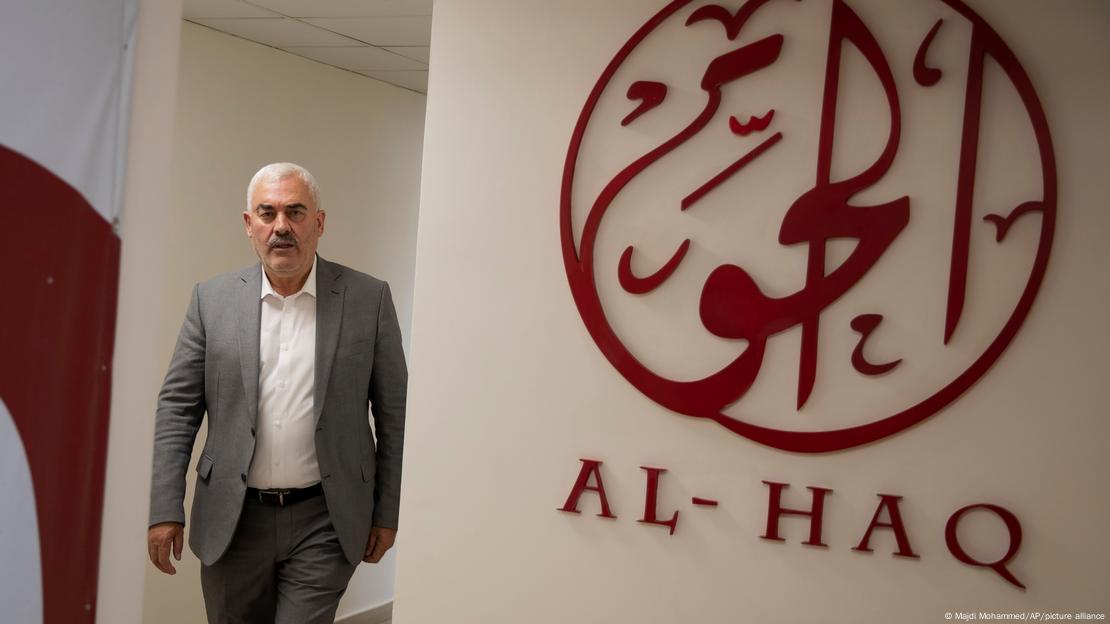
Al-Haq had provided documentation to the ICC into potential war crimes committed by Israeli officials in Gaza in 2014
Image: Majdi Mohammed/AP/picture alliance

Nine European foreign ministries reached a similar conclusion. They wrote in a joint statement in July 2022 that "no substantial information was received from Israel that would justify reviewing our policy towards the six Palestinian NGOs." One of the signatories was Germany.

The funding continued but then, in December 2023, the German government quietly performed a complete policy reversal and terminated all federal funding. It was a few days before Christmas, one source explained, when most aid workers were already on holiday.

DW has a copy of an internal, classified report by the German Ministry for Economic Cooperation and Development, which states that no new cooperation with the six agencies were to be authorized. Here, too, no reasons were given. The decision has still never been publicly communicated.

When asked what prompted the sudden shift, a Foreign Office spokesperson told DW in a written statement that the government reviewed and continues to review any information concerning the six NGOs.

German gov't 'participating in oppression': Zochrot

Taken together, the defunding of eight Israeli and Palestinian organizations seems to indicate Germany's decision to side with the current Israeli government, sources in the development sector agreed.

It comes at a time when the space for critical civil society and media in Israel is shrinking, said Israeli lawyer Michael Sfard, who defends and advises Palestinian and Israeli NGOs, including Al-Haq. He believes that restricting funding for human rights organizations is part of a deliberate strategy of the Israeli government to stifle dissent.

"It's a trend that began a decade and a half ago, but came to its peak with the current government, and especially after October 7," he said. It was, he explained, "unbelievable how difficult it is in today's Israel to criticize the policy of the government."


The Israeli Embassy in Berlin did not respond to questions about the wider crackdown on civil society in Israel.

The German government "is participating in oppression," said Beitarie, director of Zochrot.

Sergeiy Sandler from New Profile agreed. He lives in Be'er Sheva, a town in southern Israel sandwiched between two military airports. The soundtrack of the war in Gaza, which is taking place a mere 40 kilometers (25 miles) from his house, is the incessant roar of planes heading to or returning from the Gaza Strip.

It's a constant reminder that the war is so close to his home. "And [New Profile's] work at least helps some people not take direct part in the atrocities," he said, adding that New Profile is getting more and more requests from people wanting to abstain from military service.

"I can understand why the Israeli government wants to suppress us," he said.

But what, he asked, angrily, "is the German government's business imposing the ideological demands of the Israeli government on Israeli citizens?"

What, he added, "is the German government's business trying to silence dissent?"

In a written statement to DW, the Foreign Office rejected all accusations of Germany following Israel's lead to silence voices critical of Netanyahu's government as "inaccurate."

Additional reporting by Tania Krämer in Be'er Sheva and Tel Aviv

Edited by: Mathias Bölinger, Carolyn Thompson, Sarah Hofmann

Fact-checking: Carolyn Thompson

Legal advice: Florian Wagenknecht

Naomi Conrad Investigative reporter@NaomiConrad

Birgitta Schülke Investigative reporter focusing on human rights abuses and migration in Asia and the Middle East@BirSchuelke
The largely unsung role of US former president Carter in southern Africa

Former US president Jimmy Carter, who died on Sunday aged 100, was well known for his diplomatic skills and commitment to respecting human rights – much less so for his African legacy. And yet he was the first US president to visit sub-Saharan Africa and during his short term in office from 1977 to 1981 he worked hard to enable the transformation of racist Rhodesia into an independent Zimbabwe.


US President Jimmy Carter and President William Tolbert Jr. of Liberia salute the crowd in Monrovia, Liberia on 3 April, 1978, when Carter became the first American president in office to visit sub-Saharan Africa. © AP

By:RFI
30/12/2024 - 

Carter signed the Camp David Accords in 1978, establishing the framework for a peace treaty between Israel and Egypt.

It's seen as one of his major political achievements.

Yet looking back on his term of office, in 2002, he told history professor Nancy Mitchell: “I spent more effort and worry on Rhodesia than I did on the Middle East."

Mitchell – author of Jimmy Carter in Africa, Race and the Cold War – said reams of documents detailing his commitment to end white rule in Rhodesia and help bring about its independence as Zimbabwe backed up the former president's claim.

Carter's involvement in Rhodesia during his four-year stint in office was based largely on realpolitik.

Southern Africa had become a theatre for Cold War politics – Fidel Castro had sent Cuban troops to Angola in 1976 to protect the leftist MPLA from a US-backed invasion by apartheid South Africa, and Mozambique had fallen to left-leaning Frelimo. South Africa faced the prospect of being surrounded by hostile black-ruled states.

Meanwhile in Rhodesia, an insurgency – led by the leftist Patriotic Front against the white minority government – was gaining ground.

The Patriotic Front was backed was Cuba and the USSR. Washington knew that if the conflict did not end, Cuban troops risked crossing the continent to help the rebels.

According to Mitchell, the Carter administration's emphasis on human rights meant it was unthinkable to intervene in Rhodesia to support Ian Smith's racist government. But equally, the US could not stand by and allow another Soviet-backed Cuban victory in Africa.

In a memorandum on southern Africa signed just a week after taking office, the Carter administration stated that in terms of urgency the Rhodesian problem was "highest priority".

The Americans spearheaded negotiations that led to the 1979 Lancaster House Agreement in London, resulting in the first free elections in 1980 and black majority rule in an independent state of Zimbabwe led by Robert Mugabe.

Despite this, Mitchell insists Carter has not received “the credit his administration deserves” for the Zimbabwe settlement.
Jimmy Carter sent former heavyweight champ Muhammad Ali (centre) on a tour of Africa in 1980 to drum up support for a boycott of the Moscow Olympics. He is seen here with Kenyan President Daniel Arap Moi in Nairobi on 5 February 1980. Kenya and around 60 other countries heeded the US-led boycott. 
ASSOCIATED PRESS - Anonymous


First American president in sub-Saharan Africa

Having grown up in the segregated southern state of Georgia in the 1920s and 1930s, Carter also had personal reasons for getting involved in the African continent.

While Mitchell says he “didn’t question the racist strictures of the Jim Crow South” as a youngster, his world view was broadened by his time in the US Navy and as an elected governor of Georgia.

He was also influenced by Andrew Young, a former close aide to Martin Luther King, and came to see parallels between the struggles of the African continent and those of the US civil rights movement that helped liberate the South from its segregationist past.

“I felt a sense of responsibility and some degree of guilt that we had spent an entire century after the Civil War still persecuting blacks, and to me the situation in Africa was inseparable from the fact of deprivation or persecution or oppression of Black people in the South,” Mitchell quotes him as saying.

Is Martin Luther King a hero in Africa?

In 1978, Carter became the first US president to set foot on sub-Saharan soil when he visited Liberia – a country colonised in 1822 by the American Colonization Society.

During the war in the Horn of Africa, he resisted strong pressure to offer the Somali government full US support in its war of aggression against leftist Ethiopia. The Carter administration condemned apartheid in South Africa and also tried, and failed, to negotiate a settlement in Namibia.

The late president's Africa policy was at its weakest in Angola, according to historian Piero Gleijese, whose ground-breaking research has laid bear the US' conflicting missions in Cuba and Africa. Notably, Mitchell points to US insistence that full relations with Angola could only be restored once Cuban troops had left, even though they’d been invited by the Angolan government.

In later years, Carter returned to Liberia and toured other African countries as part of the Carter Center foundation that monitors elections and works in the fields of human rights and health around the world.

The Center has facilitated the almost total eradication of Guinea worm, saving an estimated 80 million Africans from the disease. "Eradicating Guinea worm will be my most gratifying experience," Carter said in 2016.

Former US president Jimmy Carter, in Ghana with his foundation, tries to comfort 6-year-old Ruhama Issah at Savelugu Hospital. The Carter Center/L. Gubb