Sunday, January 05, 2025


Canada Sells Vandalized Coast Guard Ship for Scrap
vandalized coast guard vessel submerged
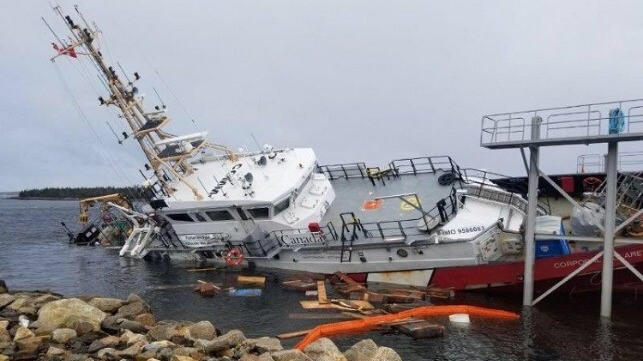
Shipyard workers discovered the vessel partially submerged in an incident later ruled to be vandalism (Canadian Coast Guard)

Published Jan 3, 2025 4:01 PM by The Maritime Executive


The Canadian Coast Guard has finally contracted with a metal recycler to dispose of its patrol ship CCGS Corporal McLaren six years after vandals damaged the ship. The Financial Post newspaper located the awarding of the contract on the government’s website bringing to a close a strange interlude in the history of the service.

The notice spotted by the newspaper reports the contract was awarded under an amendment to a contract first awarded to the Marine Recycling Corporation of Port Colborne, Ontario. Awarded in October 2024, the contract is valued at C$412,467.25 (US$285,525) stipulating a “requirement to recycle, through ship breaking, the CCGS Corporal McLaren M.M.V. The contractor will be required to prepare the vessel for transportation, transport the vessel to the approved site and subsequently break and recycle the vessel in an efficient and environmentally responsible manner.”

The vessel had laid at various Nova Scotia shipyards for the past six years while the Coast Guard worked to determine its fate and the Canadian government pursued a lawsuit related to the November 2018 incident in which the ship was damaged. 

Built in 2013, the vessel was commissioned as a patrol boat operating from Dartmouth, Nova Scotia. It was 140 feet (43 meters) in length and operated with a complement of nine with an endurance of up to two weeks to maintain Canada’s maritime border and maritime safety. Officially entering the fleet in June 2014, the government said the patrol would be used to support the Department of Fisheries and Oceans conservation and protection programs.

The vessel was sent to the Canadian Maritime Engineering shipyard in November 2018 for an overhaul. Workers arriving at the shipyard on November 18 found the vessel out of its cradle and lying partially submerged. An investigation into how it had become dislodged from the cradle quickly discovered guidelines appeared to be cut and the Halifax Police later declared it an act of vandalism.

The shipyard did not have a security fence and the closed-circuit cameras proved unreliable. Global News later reported that the police believed the vandals used power tools to cut the two main wires. According to the news outlet “the remaining anchors snapped, with power cables being torn from the vessel as it slid into the water.”

The police were unable to identify the perpetrators but believed vandals entered the yard and cut the cables. 

The vessel remained submerged for a week before it was salvaged. Subsequent reports set the estimated repair costs at C$11 million (US$7.6 million). The survey showed the electrical systems had all been damaged and would require replacement. A contract was initially set for the remediation of mold and contamination from oil on the interior of the vessel. 

After being patched up it was moved to different shipyards. However, in 2023 the National Post reported the Coast Guard had paid C$520,000 (approximately US$340,000) to the same Nova Scotia shipyard company it was now suing to store the “dead” ship. The determination was finally made in 2024 that the cost of the repairs was too high and the vessel should be disposed of by recycling.


 

Four Evacuated From Drifting Bulker After Engine Room Fire

Bulker adrift in waves
Courtesy Taiwan National Airborne Service Corps

Published Jan 5, 2025 4:25 PM by The Maritime Executive


Taiwan's coast guard has rescued four injured survivors from a bulker that caught fire off the coast of Kaohsiung, including one seafarer who needed treatment for serious burns.

At about 1700 hours on Saturday, Taiwan's Coast Guard Administration (CGA) received notice that the 50,000 dwt bulker Panoria had suffered an engine room fire off the coast of Pintung County. The crew managed to put it out, but three crewmembers sustained minor burn injuries and one more had serious burns. The master requested evacuation for all 21 personnel on board. 

The CGA dispatched five response vessels to the scene, but wave heights of more than 12 feet made it impractical to conduct a ship-to-ship transfer of personnel. A helicopter aircrew from the Ministry of National Defense also joined the response. At about 1700 hours, the aircrew safely hoisted all four men aboard and delivered them to Kaohsiung's airport, where they were transferred onward to a hospital. 

The 17 uninjured crewmembers had to remain aboard the vessel because of the risk of attempting further flight operations in the prevailing conditions. The tug Salvage Rigger got under way to take the bulker in tow, and as of Sunday the towing vessel was off Taiwan's coast, heading northwest at a slow bell. 

Panoria is a geared bulker built in 2008 and owned and operated in Greece. Her last two port state control inspections - in France and Indonesia, respectively - turned up a combined 19 deficiencies, including problems with fire pumps and availability of firefighting equipment.

Panoria was detained in Indonesia two months ago for firefighting system deficiencies, along with issues with her sewage treatment and oil filtering equipment. All were checked off as corrected in a followup inspection before her departure. 


Op-Ed: We Need to Turn the Central Arctic Ocean Into a Marine Reserve

Gannet colony at Hermaness Nature Reserve on Unst in the Shetlands. Sophie Bolesworth/90 North Foundation, CC BY-NC-ND

Published Jan 5, 2025 3:38 PM by The Conversation


[By Kirsten Freja Young and Brendan Godley]

At the most northerly tip of the UK, looking north from the island of Muckle Flugga, Shetland, the cold wind whips up the sea and gannets dive.

While biodiversity loss in the Arctic Ocean may seem like a distant issue, the Shetland Islands lie further north than the Arctic Ocean’s southernmost waters. The Arctic Circle is only 380 miles (610km) north of British waters – the same distance as London to Edinburgh by road.

Arctic wildlife is changing in ways that scientists like us don’t yet fully understand. Better protection for these species is urgently needed.

Establishing a new North Pole marine reserve where industrial activities such as shipping, oil and gas exploration and fishing are banned could provide an ocean sanctuary for wildlife.

Explorer-turned-conservationist Pen Hadow wants to create an internationally agreed marine reserve in the Central Arctic Ocean by 2037. He was the first person to trek solo from Canada to the geographic North Pole 21 years ago. The route he took in 2003 is no longer possible due to climate change.

In 2021, Hadow founded the 90 North Foundation, an environmental charity that is campaigning for a North Pole marine reserve to protect the Arctic’s peoples, its wildlife and its natural landscape.

Our team of marine researchers at the University of Exeter is collaborating with Hadow to explore how climate change will affect the ice and oceans in the Arctic and beyond.

Projected climate change poses great peril for wildlife such as polar bears and narwhals which are highly adapted to Arctic waters, relying on multi-year ice for foraging and breeding habitat.

So far, we have completed two ten-day surveys for whales and dolphins using both visual sightings and acoustic or sound monitoring underwater. We have also collected water samples to test for “environmental DNA” or eDNA. By filtering water and collecting small fragments of biological material, we can identity the presence of species by sequencing the trail they leave behind in the water in the form of fish scales, poo, skin or mucus, for example.

Once we have built a picture of where wildlife lives and how it moves about, changes in the Arctic ecosystem can be more easily monitored.

Arctic animals are also regularly spotted in British waters.

Ringed seals have been seen as far south as Cornwall. Beluga whales have been spotted off the coast of Shetland, and Atlantic white-sided and white-beaked dolphins frequently move between UK waters and the low Arctic. Bearded seals have been spotted in UK coastal waters, as have walrus and harp seals.

Brent geese, barnacle geese and pink-footed geese plus eider ducks, red knot, ringed plover and bar-tailed godwits all migrate between the Arctic and the UK. These birds breed in the Arctic and sub-Arctic, then overwinter in the UK and Ireland. These birds are particularly vulnerable because climate change is leading to wetter springs that can reduce their breeding success.

The wildlife living along UK’s shores is already changing as a result of climate change. Some species might expand their range northwards and this could further disrupt the Arctic ecosystem.

As well as monitoring wildlife, we are tracking the changing volume and routes of ships travelling through the Arctic Ocean. While our research is at an early stage, it’s already clear that industrial vessel activity in the Arctic Ocean is increasing as fishing vessels and cargo ships take advantage of the receding ice to make swifter routes across the globe.

The Arctic albedo

As the Arctic changes, the ramifications will be felt globally. The Earth’s northernmost white cap acts as a reflective shield against solar radiation. As the ice recedes, and the surface of the Earth darkens, so too does the planet’s in-built ability to reflect the sun’s warming rays.

Standing on a boat at the edge of the Arctic ice, we can see the powerful glow of sunlight reflecting from the icy surfaces. Any loss of this albedo (the ability of white ice to reflect sunlight and heat from the sun) triggers further warming, catalyzing a negative feedback loop with profound implications. Rising temperatures can only be tackled by reducing greenhouse gas emissions.

Alongside this, we must protect the unique wildlife that have made the Arctic their home. A broad and encompassing approach to conservation of northern ecosystems could help limit the effects of human activities and the changing climate across the Arctic region and beyond. A well-connected global network of marine reserves that includes the Arctic Ocean is urgently needed.

Kirsten Freja Young is a Senior Lecturer, Ecology, University of Exeter.

Brendan Godley as a Professor of Conservation Science, University of Exeter.

This article appears courtesy of The Conversation and may be found in its original form here

The opinions expressed herein are the author's and not necessarily those of The Maritime Executive.


ECOCIDE

Kerch Strait Fuel Oil Spill Reaches Crimea

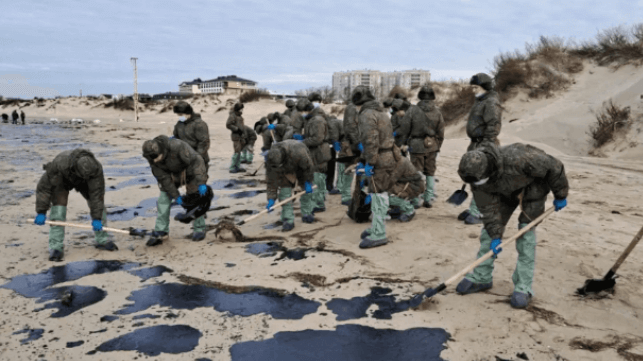
Military personnel help with cleanup efforts on the east side of Kerch Strait, December 2024 (Anapa City Hall)

Published Jan 5, 2025 7:22 PM by The Maritime Executive


Spilled bunker fuel from two Russian tankers that broke up last month is now washing ashore in Russian-occupied Crimea, and local authories have declared a state of emergency to deal with the cleanup. Russian-appointed mayor of Sevastopol, Mikhail Razvozhaev, described the problem as "traces of minor pollution." 

Last month, the aging river-sea tanker Volgoneft 212 sank in a severe storm about five nautical miles outside of the Kerch Strait. The tanker Volgoneft-239 went aground off Taman shortly after, and it gradually broke up and began leaking its cargo. Both vessels were more than 50 years old, and the head of Russia's maritime trade union told state outlet TASS that they were never designed for the rough conditions of the Kerch Strait in a winter storm. 

The two tankers were each carrying thousands of tonnes of mazut, a Russian grade of heavy fuel oil, and within days, the thick sludgy substance began polluted beaches around Anapa on the strait's eastern side. 

With a change in wind direction, the oil has been migrating southwest towards popular tourist beaches on the Crimean peninsula. "Fuel oil has already washed up on the beaches of Lyubymivka and Orlivka, which is the western coast of Sevastopol," independent news outlet Crimean Wind reported. 

Residents of affected communities have complained about the official cleanup response and the amount of help that local communities are getting from federal authorities. Around Anapa, hundreds of bags of cleaned-up sand and sludge were left on the beach in a storm, and split open to release their contents in heavy surf. 

Over 10,000 people have joined the cleanup effort, and more than 80,000 tonnes of sand-oil mix have been collected to date, according to Russia's emergencies ministry. 

Mazut (M100) solidifies at room temperature and often sinks to the bottom, where it rests until disturbed by currents or wave action. Russian cleanup experts have warned that it will be years before the last of the oil breaks down and stops washing ashore. 

'Neofascist' foreign leader reported to be 'secretly flying to Mar-a-Lago to meet Trump'

David McAfee
January 4, 2025 
RAW STORY


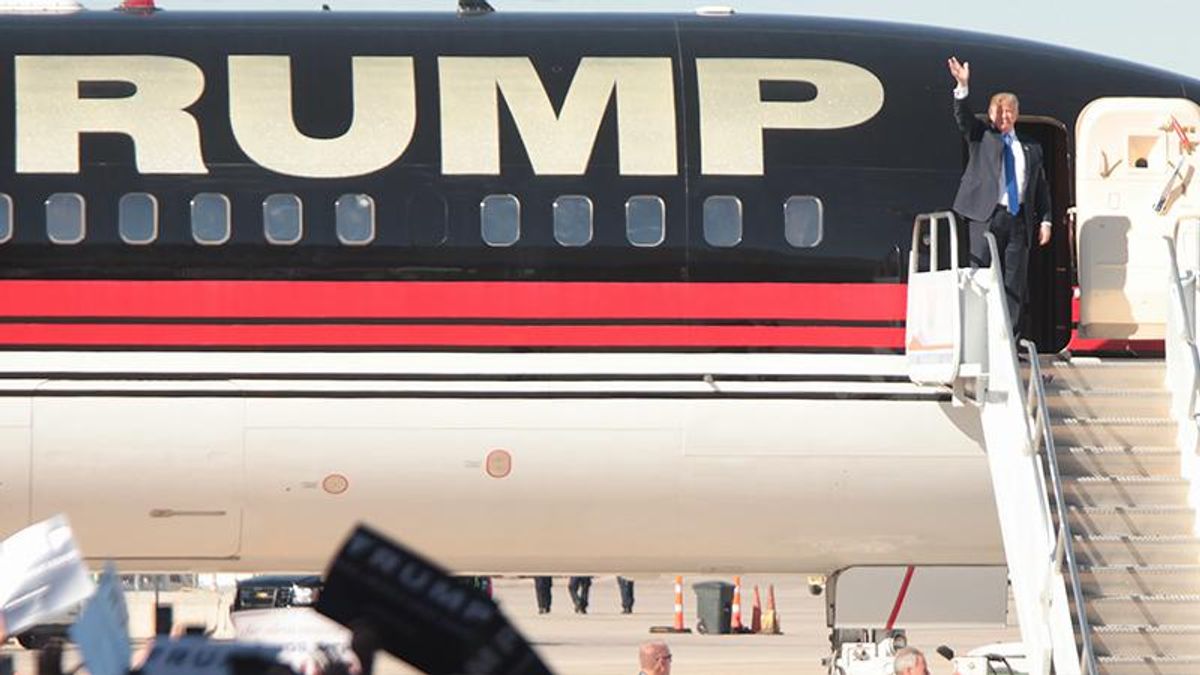
President Donald Trump at his plane (Photo: Gage Skidmore/Flickr)

A foreign leader who has been dubbed a "neofascist" is on a secret mission to meet Donald Trump, according to a report.

Italian Prime Minister Giorgia Meloni, who announced in 2023 she was separating from her partner, with whom she has a daughter, after he was recorded making sleazy comments, is reportedly "flying to the US Saturday to meet President-elect Donald Trump," according to Bloomberg, which cited people familiar with the plans.

The news was also picked up by Reuters, as well as by journalist Antonello Guerrera.

"According to reports, Italy's PM Giorgia Meloni is secretly flying to Mar-a-Lago to meet Donald Trump," Guerrera wrote. "Foreign minister Tajani was reportedly kept in the dark about her trip."

Guerrera also included a photo of an AI image of Trump, Elon Musk, and Meloni.


"But Elon Musk's man in Italy posted this before everyone else. So, unlike Tajani, he knew..." he wrote.

Historian and authoritarianism expert Ruth Ben-Ghiat responded to the news, writing, "Neofascist showing her colors once again."


BIDENOMICS

Data proves Trump 'inheriting an economy that is about as good as it ever gets': report
Alternet
January 5, 2025 


Two weeks ahead of the official start of his second presidency, Donald Trump is slamming the United States as a "disaster" on social media.

In a New York Times report published Sunday morning, White House correspondent Peter Baker lays out how current statistics defy the president-elect's claim.

"New data reported in the past few days indicate that murders are way down, illegal immigration at the southern border has fallen even below where it was when Mr. Trump left office and roaring stock markets finished their best two years in a quarter-century," Baker writes.

"Jobs are up, wages are rising and the economy is growing as fast as it did during Mr. Trump’s presidency," the Times correspondent continues. "Unemployment is as low as it was just before the Covid-19 pandemic and near its historic best. Domestic energy production is higher than it has ever been," Baker adds.

Furthermore, Baker reports "the America that Mr. Trump will inherit from President [Joe] Biden" beginning January 20 "is actually in better shape than that bequeathed to any newly elected president since George W. Bush came into office in 2001."

During his 2024 presidential campaign — and just weeks before his second term — Trump claimed "immigration, crime and inflation are out of control," Baker notes. However, he adds, the president-elect is moving back into the White House with an enviable hand to play, one that other presidents would have dearly loved on their opening day."

"President Ronald Reagan inherited double-digit inflation and an unemployment rate twice as high as today," the Times correspondent emphasizes. "President Barack Obama inherited two foreign wars and an epic financial crisis. Mr. Biden inherited a devastating pandemic and the resulting economic turmoil."

READ MORE: 'Feelings are not facts': Economists explain 'deeply partisan' nature of economic outlook

Moody's Analytics chief economist Mark Zandi told the Times that the MAGA leader "is inheriting an economy that is about as good as it ever gets."

Zandi emphasized, "The U.S. economy is the envy of the rest of the world, as it is the only significant economy that is growing more quickly post-pandemic than prepandemic."

Similarly, University of Virginia’s Miller Center's director William J. Antholis told Baker that regardless of Trump's claims, the incoming president is "stepping into an improving situation."


Bates adds, "After inheriting an economy in free-fall and skyrocketing violent crime, President Biden is proud to hand his successor the best-performing economy on earth, the lowest violent crime rates in over 50 years, and the lowest border crossings in over four years.

The Times' full report is available at this link (subscription required).
WAIT, WHAT?!

'Came through Canada': Trump official bizarrely defends lie about New Orleans killer

David Edwards
January 5, 2025 
RAW STORY


Fox News/screen grab

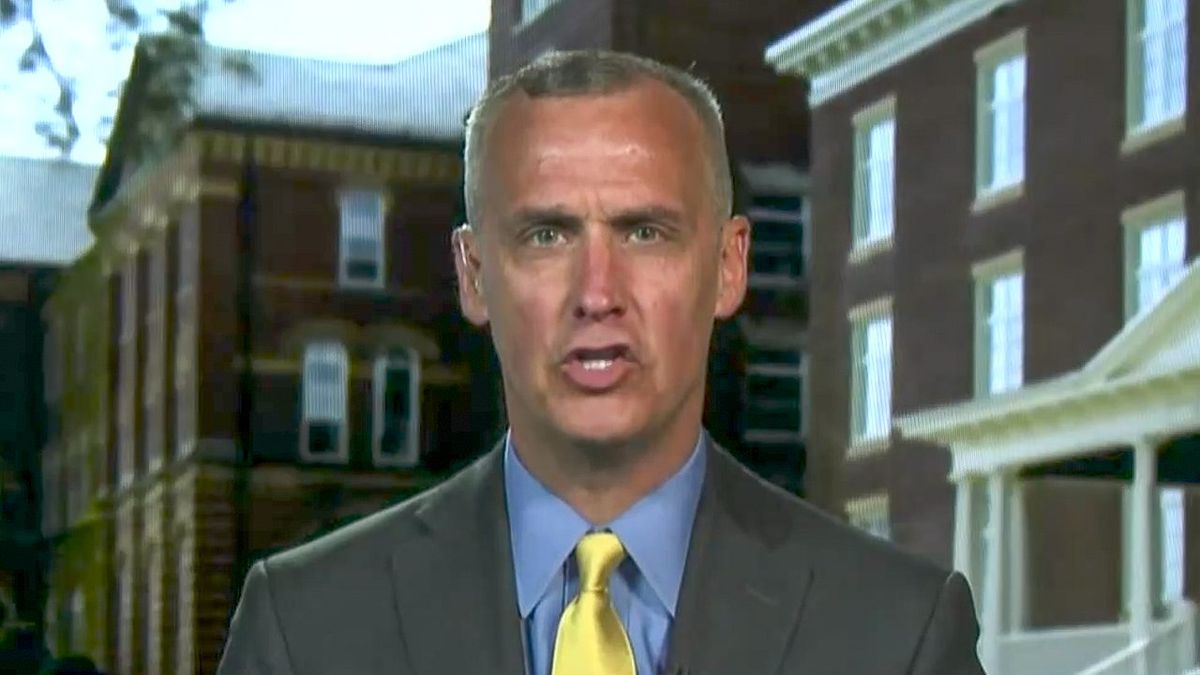
Trump 2024 campaign official Corey Lewandowski defended President-elect Donald Trump for falsely suggesting a man killed over a dozen people in New Orleans after crossing an open border into the United States.

During a Sunday interview on Fox News, host Howard Kurtz pressed Lewandowski on Trump's false claim.

"Why, the day after we all learned that the New Orleans mass murderer was an American citizen and had served in the Army, did Donald Trump put this up on Truth Social? 'This is what happens when you have open borders with weak, ineffective, and virtually non-existent leadership,'" Kurtz Wondered. "What has that got to do with the Bourbon Street killer?"

"Well, Howie, what we know or what we seem to have known about this individual was, yes, he served in the U.S. military, but he also went overseas, I think, to the Middle East, where many think he was radicalized over there and then came through Canada before he came back into the United States," Lewandowski replied deceptively.

"So, you know, we have to make sure that we are vigilant of checking everybody coming to this country and making sure we know where they're coming in from," he added. "Even American citizens, look, they have a right to travel. Of course, they do. But making sure that we understand that we're dealing with the mental health crisis that this person clearly had."

Also read: 'Bring it on': Defiant Raskin responds to GOP threats of retaliation for J6 investigation

While being deployed with the U.S. Army, Shamsud-Din Bahar Jabbar returned from Afghanistan in 2010 with an apparent layover in Canada.

Canada does not appear in the FBI's timeline of the New Orleans attack.

Kurtz did not challenge the Trump official on the suggestion that the killer had been radicalized while out of the country.

Watch the video below from Fox News or at the link..


'We are at war': Republicans said to be using New Orleans attack to boost Trump's agenda

David McAfee
January 5, 2025 
RAW STORY

Republican presidential nominee and former U.S. President Donald Trump makes a campaign speech at the Johnny Mercer Theatre Civic Center in Savannah, Georgia, U.S. September 24, 2024. REUTERS/Megan Varner

Donald Trump is getting an unearned boost for his own political agenda based on a recent terror attack, according to a report.

Shamsud-Din Jabbar was an American citizen and a U.S. Army veteran who rented a pick-up and rammed it into a group of people in New Orleans, killing more than a dozen of them.

Trump seized on an early false report, which was later retracted, that suggested Jabbar might have been an illegal immigrant. The president-elect made multiple posts about border security in the wake of the terrorist act, and never clarified those comments.

Now, Republicans are trying "to exploit New Orleans attack to push through Trump agenda," according to The Guardian, which added that Trump loyalists are making a "baseless link between attack and US border" in order to argue that "cabinet nominees must be urgently ratified."

"Republicans in the US Senate are attempting to exploit the New Year’s Day attack that killed 14 victims in New Orleans, while injuring dozens more, to push through Donald Trump’s most controversial cabinet nominations and rocket-charge the incoming president’s anti-immigration agenda – despite the fact that the attacker was a US citizen born and raised in east Texas," the article states. "Several Senate Republicans appeared on Sunday’s political shows to call for an urgent approval of the most contentious of Trump’s cabinet selections who are facing a tough confirmation process. They include Kash Patel, chosen by Trump for FBI director; Pete Hegseth for defense secretary; and Tulsi Gabbard for director of national intelligence."

The report goes on to claim GOP lawmakers are arguing that "any delay in confirmation of the controversial cabinet picks would damage US national security."

"Lindsey Graham, the Republican senator from South Carolina who is a leading Trump loyalist, said he would vote for all the president-elect’s nominees," the article states, quoting Graham as saying, "Do them now, do them quick, get them all done... We are under attack here – we are at war."

Read the full piece here.


Digital accessibility: Building an Internet for all should become a business imperative


By Dr. Tim Sandle
January 4, 2025
DIGITAL JOURNAL

A bill making its way through the California state legislature would mandate that internet giants pay news agencies monthly 'journalism usage fees' based on viewing of stories via their platforms. — © AFP SEBASTIEN BOZON

An unwelcomed business trend in the U.S. during 2024 has been with the number of ADA lawsuits and increasing consumer demand for inclusivity. This has led some market commentators to remark that digital accessibility is no longer just good practice, it has transitioned into something that is now essential for business survival.

To capture this dynamic, the Contentsquare Foundation has released the 2024 Digital Accessibility Barometer,. This is described as a global benchmark for analysing the digital accessibility landscape across the 100 most-visited websites in six countries, including the U.S.

The report used the Web Content Accessibility Guidelines (WCAG 2.2) to assess levels of compliance across 17 accessibility criteria. This enabled the barometer to evaluate a total of the 100 of the most visited websites across six countries – France, Germany, Italy, Spain, the UK and the US. The websites audited spanned various sectors, including public services, banking, media, and eCommerce.

Only 7 percent of websites scored 9/10 or higher, with 71 percent of those high scorers came from public sector organizations. Among 100 websites audited, only one banking site and one eCommerce site achieved top scores.

In terms of particular weaknesses, 56 percent of websites audited lack accessibility statements, highlighting a significant gap in transparency and accountability in digital accessibility. Notably, websites with accessibility statements achieve higher average scores (6.9/10) compared to those without (6.0/10).

It is estimated there is $13 trillion in global disposable income tied to individuals with disabilities. As a consequence, inaccessible websites risk alienating a significant customer base, losing revenue, and facing increasing legal scrutiny.

The report highlights challenges and areas for U.S. businesses to focus on in developing strategies.

Accessibility statements drive improvement

U.S. websites with accessibility statements outperformed those without them, scoring an average of 6.9/10 compared to 6.0/10, proving the importance of transparency and accountability.

The public vs. private sector gap

While U.S. public sector websites score only 11% higher than private ones, Europe’s public sector outpaces private sector performance by 44%, underscoring a need for stronger private sector accountability in the U.S.

Ecommerce and media challenges

These industries lag globally, with scores of 5.4/10 and 5.8/10, highlighting significant risks in customer experience and revenue retention.

Recommendations to address these challenges, taken from the report, include:

Media and moving content: Ensure videos and animations include captions and transcripts and provide controls to pause or stop autoplay content to support users with disabilities or sensitivities.

Colour and text adaptability: Improve colour contrast for better readability and offer options to adjust text size, spacing, and contrast to support users with visual impairments.

Images: Add descriptive alt-text to images so that screen reader users can access important visual information.

Keyboard navigation: Ensure all interactive elements, such as menus and forms, are fully operable using a keyboard to accommodate users without mouse control.

Ecuador presidential campaign opens amid drug war, internal power struggle


By AFP
January 5, 2025


Ecuadoran flags are draped from a railing at the government palace in the capital city of Quito on January 5, 2025
 - Copyright AFP Galo Paguay

Santiago PIEDRA SILVA

The monthlong campaign for general elections in Ecuador began Sunday as President Daniel Noboa faces a challenging war against drug gangs and a power struggle within his administration.

The campaign, with 16 presidential candidates including leftist Luisa Gonzalez and Indigenous leader Leonidas Iza, will end February 6, three days before the election.

The National Electoral Council (NEC) called on all candidates to conduct campaigns of “tolerance and mutual respect that promote reasoned debate (and) a culture of peace.”

Despite drug-related violence and a serious drought that led to prolonged blackouts, Noboa leads in early opinion polling, at 33 percent.

Gonzalez, a 47-year-old lawyer close to opposition leader and former president Rafael Correa, is not far behind, at 29 percent, according to a recent survey by the Comunicaliza firm.

“A united, brave and hopeful country is about to be reborn,” Gonzalez said on X before launching her campaign in capital Quito and the port city of Guayaquil, a city so hard-hit by drug-related crime that Noboa last year deployed army troops there.

Iza, who heads the country’s largest Indigenous organization — and who took part in uprisings that overthrew three presidents between 1997 and 2005 — placed a distant third in the polling at 3 percent.

– Political spat –

The pro-Noboa ADN political alliance is planning a caravan in Guayaquil, though it was unclear whether the president — locked in a spat with Vice President Veronica Abad — would take part.

The government accused her of being slow to take up a temporary foreign posting — which she said was designed to pressure her to resign.

In response, Noboa has designated Cynthia Gellibert as interim vice president.

If Noboa requests the traditional leave of absence to campaign ahead of the election, the vice president would normally fill in.

Abad has challenged the Gellibert appointment, saying on X: “I will assume the presidency… while President Daniel Noboa participates as a presidential candidate.”

The government, however, contends that Noboa is not required to take a leave of absence.

TURKISH IMPERIALISM MEETS RESISTANCE

Syria monitor: 101 killed in battles between pro-Turkey, Kurdish forces


By AFP
January 5, 2025


Children who fled ongoing battles between Turkish-backed groups and Syrian Kurdish forces in Syria's Aleppo province sit at a desk in the yard of a school in Hasakeh, where they and others took refuge - Copyright AFP Delil SOULEIMAN

More than 100 combatants were killed over the last two days in northern Syria in fighting between Turkish-backed groups and Syrian Kurdish forces, a war monitor said on Sunday.

Since Friday evening, clashes in several villages around the city of Manbij have left 101 dead, including 85 members of pro-Turkish groups and 16 from the Kurdish-dominated Syrian Democratic Forces (SDF), the Britain-based Syrian Observatory for Human Rights said.

The SDF said it had repelled “all the attacks from Turkey’s mercenaries supported by Turkish drones and aviation”.

The Turkish defence ministry said it had “neutralised” 32 Kurdish fighters in northern Syria, without providing further details.

Turkish-backed factions in northern Syria resumed their fight with the SDF at the same time as Islamist-led rebels were launching an offensive on November 27 that overthrew Syrian president Bashar al-Assad just 11 days later.

The pro-Ankara groups succeeded in capturing Kurdish-held Manbij and Tal Rifaat in northern Aleppo province, despite US-led efforts to establish a truce in the Manbij area.

The fighting has continued since, with mounting casualties.

During a visit to Damascus on Friday, German Foreign Minister Annalena Baerbock said security of the Kurds is “essential for a peaceful Syria.” She said this requires “an end to the fighting in the north and the integration of the Kurdish forces… in the Syrian security architecture.”

The SDF controls vast areas of Syria’s northeast, and parts of Deir Ezzor province in the east, where the Kurds created a semi-autonomous administration following the withdrawal of government forces during the civil war that began in 2011.

The group, which receives US backing, took control of additional territory after capturing it from the jihadists of the Islamic State group.

Ankara accuses the main component of the SDF, the People’s Protection Units (YPG), of affiliation with the Kurdistan Workers Party (PKK), which has fought a decades-long insurgency in southeastern Turkey and is banned as a terrorist organisation by the government.

The Turkish military regularly launches strikes against Kurdish fighters in Syria and neighbouring Iraq, accusing them of being PKK-linked.

Ahmed al-Sharaa, Syria’s new leader and the head of the Islamist group Hayat Tahrir al-Sham (HTS), told Al Arabiya TV in late December that local Kurdish-led forces should be integrated into the national army.

HTS led the coalition of rebel groups that overthrew Assad last month.

Red Cross says determining fate of Syria’s missing ‘huge challenge’


By AFP
January 5, 2025


Spoljaric said determining the fate of Syria's missing will likely take years
 - Copyright Palazzo Chigi press office/AFP Filippo ATTILI

Maher Al Mounes

Determining the fate of those who went missing during Syria’s civil war will be a massive task likely to take years, the president of the International Committee for the Red Cross said.

“Identifying the missing and informing the families about their fate is going to be a huge challenge,” ICRC president Mirjana Spoljaric told AFP in an interview.

The fate of tens of thousands of detainees and missing people remains one of the most harrowing legacies of the conflict that started in 2011 when president Bashar al-Assad’s forces brutally repressed anti-government protests.

Many are believed to have been buried in mass graves after being tortured in Syria’s jails during a war that has killed more than half a million people.

Thousands have been released since Islamist-led rebels ousted Assad last month, but many Syrians are still looking for traces of relatives and friends who went missing.

Spoljaric said the ICRC was working with the caretaker authorities, non-governmental organisations and the Syrian Red Crescent to collect data to give families answers as soon as possible.

But “the task is enormous,” she said in the interview late Saturday.

“It will take years to get clarity and to be able to inform everybody concerned. And there will be cases we will never (be able) to identify,” she added.

“Until recently, we’ve been following up on 35,000 cases, and since we established a new hotline in December, we are adding another 8,000 requests,” Spoljaric said.

“But that is just potentially a portion of the numbers.”

Spoljaric said the ICRC was offering the new authorities to “work with us to build the necessary institution and institutional capacities to manage the available data and to protect and gather what… needs to be collected”.

Human Rights Watch last month urged the new Syrian authorities to “secure, collect and safeguard evidence, including from mass grave sites and government records… that will be vital in future criminal trials”.

The rights group also called for cooperation with the ICRC, which could “provide critical expertise” to help safeguard the records and clarify the fate of missing people.

Spoljaric said: “We cannot exclude that data is going to be lost. But we need to work quickly to preserve what exists and to store it centrally to be able to follow up on the individual cases.”

More than half a century of brutal rule by the Assad family came to a sudden end in early December after a rapid rebel offensive swept across Syria and took the capital Damascus.

The Syrian Observatory for Human Rights, a Britain-based war monitor, says more than 100,000 people have died in detention from torture or dire health conditions across Syria since 2011.


Report: Russian Ships Heading to Syria to Move Equipment to Libya

Russian landing ship
Landing ship Ivan Gren is among those reported heading to Syria (Russian Ministry of Defense file photo)

Published Jan 3, 2025 2:43 PM by The Maritime Executive


The Russian evacuation of troops and equipment from Syria after the fall of the government is continuing. The Main Intelligence Directorate (GUR) of the Ministry of Defense of Ukraine reports a flotilla of Russian ships will be arriving in the Syrian port of Tartus in the coming days with some destined for Africa.

“On January 5, 2025, the Russian large landing ships Ivan Gren and Alexander Otrakovsky, as well as the dry cargo ship Sparta, are scheduled to arrive in the Syrian port. They are currently on their way to Tartus in the Mediterranean Sea,” GUR wrote in a posting on Telegram.

Among the personnel they believe are heading to Syria to oversee the next phase of the evacuation is the Russian Chief of Staff of the landing ships fleet. GUR reports Russia has been massing at Tartus its long-time outpost after withdrawing from forward positions to continue the evacuation that began shortly after Bashar al-Assad fled the country turning up in Moscow.

According to the tracking data from GUR, two other Russian vessels, a second cargo ship Sparta II, and the tanker Ivan Skobelev are set to transit the Strait of Gibraltar toward Syria. It expects those vessels will reach Tartus on January 8. The Russian frigate Admiral Golovko also plans to refuel GUR reports.

The Ukrainians assert that Russia will load military equipment and weapons aboard the two cargo ships Sparta and Sparta II which will then transport the equipment to Libya. It is part of a report that Russia is strengthening its ties to Libya after the fall of Syria. The Wall Street Journal previously reported that Russia will also be shipping modern air defense systems to Libya.

The other vessels are being prepared to remove military personnel or equipment, although Bloomberg has also reported that Russia continues to negotiate with the emerging Syrian regime. The report says Russia is seeking to maintain a base in Syria.

It has also been reported that Russia has an ongoing airlift evacuating troops and equipment. It was suggested as many as 25 more military transports would be required to complete the transfers. GUR reports armored personnel carriers have been seen arriving in the Vladimir region probably taking material from Syria.

The Sparta was spotted in December going to the rescue of the Russian cargo ship Ursula Major when it began sinking off Gibraltar on December 23. After the Ursa Major's sinking, Sparta resumed her eastward journey declaring her destination as Port Said, Egypt.