Monday, January 13, 2025


New study links home temperature to cognitive function in older adults


Links hotter temperature to increased cognitive risk


Hebrew SeniorLife Hinda and Arthur Marcus Institute for Aging Research


A groundbreaking study has identified a significant relationship between indoor temperatures and cognitive performance in older adults, shedding light on how climate change may pose an increased risk to cognitive health.

Conducted by scientists at the Hinda and Arthur Marcus Institute for Aging Research, the research arm of Hebrew SeniorLife, a nonprofit affiliate of Harvard Medical School, the study found that older adults reported the least difficulty maintaining attention when their home temperatures were within 68–75 ˚F (20–24 ˚C). Outside of this range, the likelihood of attention difficulties doubled with a 7 ˚F (4 ˚C) variation in either direction.

The longitudinal observational study, entitled “Home Ambient Temperature and Self-reported Attention in Community-Dwelling Older Adults,” monitored home temperatures and self-reported attention difficulties in 47 adults aged 65 and older over the course of a year. The findings, published in the Journal of Gerontology: Medical Sciences, suggest that even current climate conditions are placing older adults at risk, with many experiencing indoor temperatures that may impair their cognitive abilities. The implications are particularly concerning for low-income and underserved populations, who may have fewer resources to regulate their home environments.

"Our findings underscore the importance of understanding how environmental factors, like indoor temperature, impact cognitive health in aging populations," said Amir Baniassadi, PhD, lead author of the study, an Assistant Scientist II at the Marcus Institute and a leading expert in the study of the effects of climate change on seniors. "This research highlights the need for public health interventions and housing policies that prioritize climate resilience for older adults. As global temperatures rise, ensuring access to temperature-controlled environments will be crucial for protecting their cognitive well-being."

Following a 2023 study measuring how temperature affected how older adults slept and their cognitive ability, the study currently adds to growing evidence that the effects of climate change extend beyond physical health to encompass cognitive functioning, emphasizing the need for proactive measures. Potential solutions include integrating smart home technologies to optimize indoor temperatures, improving energy efficiency in housing, and expanding access to cooling resources.

Other researchers on the study, who all work at the Marcus Institute, included Wanting Yu, BSc, Project Director I; Thomas Travison, PhD, Senior Scientist; Ryan Day; Lewis Lipsitz, MD, Director, Marcus Institute and Chief Academic Officer, Irving and Edyth S. Usen and Family Chair in Medical Research, Hebrew SeniorLife; and Brad Manor, PhD, associate scientist.

The study was supported by a T32 fellowship through the U.S. National Institute on Aging (T32AG023480) and from the TMCITY foundation.

About Hebrew SeniorLife

Hebrew SeniorLife, an affiliate of Harvard Medical School, is a national senior services leader uniquely dedicated to rethinking, researching, and redefining the possibilities of aging. Hebrew SeniorLife cares for more than 4,500 seniors a day across seven campuses throughout Greater Boston. Locations include: Hebrew Rehabilitation Center-Boston and Hebrew Rehabilitation Center-NewBridge in DedhamNewBridge on the Charles, DedhamOrchard Cove, CantonSimon C. Fireman Community, RandolphCenter Communities of Brookline, BrooklineJack Satter House, Revere; and Leyland Community, Dorchester. Founded in 1903, Hebrew SeniorLife also conducts influential research into aging at the Hinda and Arthur Marcus Institute for Aging Research, which has a portfolio of more than $98 million, making it one of the largest gerontological research facilities in the U.S. in a clinical setting. It also trains more than 500 geriatric care providers each year. For more information about Hebrew SeniorLife, visit our website or follow us on our blogFacebookInstagramThreads, and LinkedIn.

About the Hinda and Arthur Marcus Institute for Aging Research
Scientists at the Marcus Institute seek to transform the human experience of aging by conducting research that will ensure a life of health, dignity, and productivity into advanced age. The Marcus Institute carries out rigorous studies that discover the mechanisms of age-related disease and disability; lead to the prevention, treatment, and cure of disease; advance the standard of care for older people; and inform public decision-making.


Study finds changes in opioid use outcomes after passage of medical marijuana laws


Columbia University's Mailman School of Public Health


January 13, 2025 --A new study at Columbia University Mailman School of Public Health found no changes in opioid outcomes among the general population with the states’ passage of medical and recreational marijuana laws. However, the findings also show decreases in opioid outcomes after medical marijuana laws existed among people reporting cannabis use but no changes in opioid outcomes when laws for both medical and recreational use were enacted. The results are published in the International Journal of Drug Policy.

By the end of 2019, 32 states had adopted medical marijuana laws (MCL) alone. All states that went on to adopt recreational marijuana laws (RCL) had previously adopted an MCL.

Using National Survey on Drug Use and Health (NSDUH) data from 2015-2019, the researchers estimated cannabis law associations with opioid (prescription opioid misuse and/or heroin use) misuse and use disorder.

The study adds to the literature for investigating effects of MCL alone and RCL+MCL on opioid misuse and DSM-IV opioid use disorder overall and by prior cannabis use history. The findings also build on several recent analyses of NSDUH data.

“Our study is the first to investigate the effects of cannabis laws on opioid outcomes among people that used cannabis in the past year and that initiated cannabis use prior to cannabis law adoption in their state,” noted Silvia Martins, MD, PhD, professor of Epidemiology at Columbia Mailman School. “Much has been speculated on whether the enactment of medical and recreational cannabis laws can have a role in decreasing prescriptions for opioid pain relievers, opioid use and misuse, opioid use disorder, and overdose in the U.S.”

Martins continues, “Comparing individuals in states with medical cannabis laws alone to those in states without such laws, we found an inconsistent pattern of decreased odds of opioid outcomes, which were more pronounced among people reporting cannabis use. The pattern did not hold for individuals in states with recreational cannabis laws, suggesting that MCLs may be associated with reductions in opioid use among people using cannabis but additional work to replicate and expand on these findings is needed.”

Overall, MCL and RCL adoption were not associated with changes in the odds of any opioid outcome. After restricting to respondents reporting past-year cannabis use, decreased odds of past year opioid misuse were observed among individuals in states with MCL compared to those in states without cannabis laws. RCLs were not associated with changes in the odds of any opioid outcome beyond MCL adoption.

From 2015 to 2019, approximately 282,768 respondents participated in the NSDUH study. The prevalence of past year and past month opioid misuse was reported by 4 percent and 1.3 percent of participants, respectively. Approximately 3 percent of the participants met criteria for past-year DSM-IV opioid use disorder (OUD) -- abuse and dependence. Prevalence of past year and past month opioid misuse, as well as opioid use disorder, were all higher among respondents reporting past year cannabis use (15 percent) compared to those reporting no use.

Reductions in some measures of opioid misuse and opioid use disorder were reported in states with MCLs alone, but only among individuals reporting past-year cannabis use who had initiated cannabis use prior to cannabis law adoption in their state. However, the same relationships did not hold for combined RCLs and MCLs. “Our findings shed light on the potential beneficial effects of MCLs alone and future studies should continue to monitor changes in opioid-related harm outcomes, as the cannabis legalization landscape evolves,” said Emilie Bruzelius, PhD, post-doctoral fellow in the Department of Epidemiology at Columbia Mailman School and co-author of the study.

“Our findings generally support the premise that state adoption of RCLs+MCLs has few benefits in terms of reducing substance misuse and indicates that continued monitoring of RCL+MCL-related trends is warranted,” said Martins. “One important issue to consider is that compared to MCLs, relatively fewer states have adopted RCLs+MCLs, and most laws have been adopted within the past decade. Therefore, the impact of RCLs+MCLs may become clearer as more states adopt these laws and as post-law observation time accumulates. More studies are needed to examine opioid use among individuals who receive cannabis from medical and recreational dispensaries.”

Co-authors are Christine Mauro, and Kara Rudolph, Columbia Mailman School; Julian Santaella-Tenorio, Katherine Wheeler-Martin, and Magdalena Cerda, NYU Grossman School of Medicine; Anne Boustead, University of Arizona, Hillary Samples and Stephen Crystal, Rutgers University; Deborah Hasin, Columbia Mailman School and Columbia Department of Psychiatry; David FinkNew York State Psychiatric Institute; Corey Davis, NYU Grossman School of Medicine and Network for Public Health Law, MN.

The study was supported by NIH-NIDA grants R01DA045872, T32DA031099, K01DA049950, and K99DA055724.

Columbia University Mailman School of Public Health

Founded in 1922, the Columbia University Mailman School of Public Health pursues an agenda of research, education, and service to address the critical and complex public health issues affecting New Yorkers, the nation and the world. The Columbia Mailman School is the third largest recipient of NIH grants among schools of public health. Its nearly 300 multi-disciplinary faculty members work in more than 100 countries around the world, addressing such issues as preventing infectious and chronic diseases, environmental health, maternal and child health, health policy, climate change and health, and public health preparedness. It is a leader in public health education with more than 1,300 graduate students from 55 nations pursuing a variety of master’s and doctoral degree programs. The Columbia Mailman School is also home to numerous world-renowned research centers, including ICAP and the Center for Infection and Immunity. For more information, please visit www.mailman.columbia.edu.


Team makes sustainable aviation fuel additive from recycled polystyrene


Additive overcomes a major hurdle to converting to sustainable jet fuels


University of Illinois at Urbana-Champaign, News Bureau

Hong Lu in the laboratory 

image: 

Illinois Sustainable Technology Center research scientist Hong Lu and his colleagues developed a method for converting waste polystyrene into a sustainable jet fuel additive, ethylbenzene. Their work overcomes a key obstacle to the wider use of sustainable aviation fuels.  

view more 

Credit: Photo by Fred Zwicky


CHAMPAIGN, Ill. — A new study overcomes a key challenge to switching commercial aircraft in the U.S. from their near-total reliance on fossil fuels to more sustainable aviation fuels. The study details a cost-effective method for producing ethylbenzene — an additive that improves the functional characteristics of sustainable aviation fuels — from polystyrene, a hard plastic used in many consumer goods.

The findings are reported in the journal ACS Sustainable Chemistry and Engineering

Fuels derived from waste fat, oil, grease, plant biomass or other nonpetroleum sources lack sufficient levels of aromatic hydrocarbons, which help keep fuel systems operational by lubricating mechanical parts and swelling the seals that protect from leaks during normal operations, said Hong Lu, a research scientist at the Illinois Sustainable Technology Center who led the new research. ISTC is a division of the Prairie Research Institute at the University of Illinois Urbana-Champaign.

While ethylbenzene is an aromatic hydrocarbon and can be derived from fossil fuels, finding a sustainable way to produce it would aid the aviation industry’s conversion to sustainable jet fuels.

The U.S. Department of Energy, the U.S. Department of Transportation, the U.S. Department of Agriculture and other government agencies created a roadmap for addressing the climate-related impacts of fossil-fuel-derived aviation fuels. The Sustainable Aviation Fuel Grand Challenge sets ambitious goals for the production of domestic sustainable aviation fuels to 3 billion gallons per year by 2030, and 100% of projected aviation jet fuel use, or 35 billion gallons per year, by 2050.

Present standards require a minimum of 8.4% aromatic hydrocarbons be included in any blend of sustainable aviation fuels and fossil-derived fuels “to maintain compatibility with existing aircraft and related infrastructure,” the researchers report. While this rule increases the safety and efficacy of the overall fuel mix, it severely limits the use of sustainable fuels, which currently contain only about 0.5% aromatic hydrocarbons, Lu said.

“Currently, they use a blend of 20% to 30% sustainable aviation fuels and 70% to 80% conventional jet fuel,” he said. This lag in conversion to sustainable fuels stems from several factors, one of which is the need for enough aromatic hydrocarbons in the mix. Other important factors involve qualities like the blend’s volatility, acidity, moisture content and freeze point.

Lu and his colleagues chose to develop ethylbenzene because it has a lower tendency to form soot upon burning than other highly aromatic compounds. And they chose to start with polystyrene because it is rich in hydrocarbons and is abundantly available in the waste stream.

“We produce in the U.S. about 2.5 million metric tons of polystyrene every year, and almost all of it is disposed of in landfills,” Lu said.

To convert the polystyrene to ethylbenzene, the team used thermal pyrolysis, heating it to break the polymer down into a styrene-rich liquid. A second step, hydrogenation, converted it into a crude ethylbenzene, and distillation yielded a product that was 90% pure.

When mixed with a sustainable aviation fuel, the polystyrene-derived ethylbenzene performed “almost as well as ethylbenzene derived from fossil fuels,” Lu said. Further purification would improve its performance.

“We did a preliminary cost analysis, and we found that the ethylbenzene produced from waste polystyrene is cheaper than that produced from crude oil. And a lifecycle analysis of our ethylbenzene found it reduced carbon emissions by 50% to 60% compared with the ethylbenzene made from crude oil.”

Lu and his colleagues hope to further develop this additive to help expand the use of sustainable fuels in aviation.

The U.S. Department of Energy’s Small Business Innovation Research and Office of Energy Efficiency and Renewable Energy supported this study.


Editor’s notes

The paper “Production of a sustainable aviation fuel additive from waste polystyrene” is available online or from the U. of I. News Bureau.

DOI: 10.1021/acssuschemeng.4c06748


Polystyrene is used in a variety of consumer products, most of which end up in landfills. Researchers found a new life for this waste product that will aid efforts to convert the nation’s airplanes from fossil fuels to sustainable aviation fuels.

Credit

Photo by Fred Zwicky


“The biggest challenge is lacking public acceptance of wind turbines”


ETH Zurich


In brief

  • In their overview study, the team of researchers led by Russell McKenna identified 14 key impact categories of wind energy.
  • They provide possible solutions for the identified impacts and suggest research priorities. More than 400 studies were included in the analysis.
  • The review paper, recently published in the journal Joule, provides guidance for future studies and policy decisions.


What is the study about, and what is its core message?
Russell McKenna: The study looks at the impacts of wind energy on the systems in which it is embedded; whether environmental and climate systems, socio-economic, techno-economic, or political-legal systems. We looked at the current state of research and tried to distinguish where the picture is relatively clear and where challenges (still) need to be overcome. We defined a total of 14 impacts to show where research priorities should lie to overcome some of these challenges.

What specific impacts are there? Can you give us some examples?
In the area of environment and climate, for example, the effects of wind farms on the local climate or the end-of-life scenario of rotor blades that cannot be recycled are considered. In the socio-economic systems, we have identified, among other factors, the local costs and benefits related to wind turbines. In the political-legal system, one example of a question is what happens if the supply chain is interrupted for geopolitical reasons.

How did you go about identifying these 14 impacts of wind energy?
Some background: we are 24 co-authors from different institutions, mostly involved in a three-year project funded by the European Commission called WIMBY, which stands for “Wind In My Backyard”. As part of this project, we wanted to conduct a holistic analysis of wind energy and create an inventory of the various impacts of wind energy on different systems. We conducted a comprehensive literature review of over 400 studies and were thus able to identify the current state of the art and the priority research topics.

Which result surprised you the most?
There were some results that we found to be contrary to popular belief. One example is infrasound, low-frequency noise that is often mentioned as a problem by the public because it can cause irritation and even make objects in houses vibrate. However, research has produced only one study we know, examining a specific wind turbine. It was done about three decades ago when the first prototypes were just being built. No correlation with low-frequency noise can be demonstrated with today's turbines – but this has not yet become common knowledge.

Speaking of wind turbines: almost 60,000 installations will need to be replaced by 2030, and their rotor blades cannot be recycled. What approaches are there to avoid this problem in the next generation?
The fibre binder poses a problem when recycling the rotor blades. Indeed, thermoset plastics such as epoxy or polyester cannot melt, making glass fibre recovery nearly impossible. As a result, most blades are currently crushed and landfilled or deposited in unofficial “interim storage” sites. Technologies such as pyrolysis (thermochemical treatment without oxygen) can help recover the blades’ fibres. Still, the resulting quality of the recovered material and the very low market price of the virgin counterpart make it an economically unattractive option. However, recently made blades have better prospects, as major manufacturers now use a resin that can be dissolved at the end of life, making it easier to free the fibres 20 years from now. A combination of approaches is thus being taken to recirculate as much material as possible. Finally, such burdens always need to be balanced against the co-benefits of wind energy expansion – one of them being the phasing out of fossil-based energy.

Where do you see the greatest need for action?
Clearly, the population's acceptance of wind turbines is key, as they do influence the landscape. We have had a similar situation with the existing grid infrastructure for decades. People want electricity to come out of the socket and rely on it daily. The electric grid is suspended from pylons across the landscape, which are sometimes not locally accepted. In other words, people want the (energy) service, but the “problem” of the impact should be somewhere else. It is similar for wind turbines: there is generally high acceptance in the population, for example, 60% of the Swiss population support wind in the future electricity mix, but local opposition is common. Evidence shows that people might be more willing to accept wind turbines if the community benefits, for example, through a financial stake in the project or if jobs are created for the local economy. These jobs are not just technical ones – believe it or not, wind farms can also be attractive locations for tourism. In general, a lot still needs to be done to educate the population about the relative advantages and disadvantages of wind power. A compromise is always required with all energy technologies, and it is unreasonable to focus on the disadvantages of one technology without considering the alternatives.

Which topics of the study are particularly relevant for Switzerland?
Almost all the topics identified are relevant to Switzerland, although we can probably exclude offshore wind farms. For example, in the techno-economic category, we look at how wind energy integrates into the energy system with storage, flexibility, grid enhancement and sector coupling measures. Switzerland has the advantage that its system has historically been heavily geared towards renewable energies; hydropower accounts for almost two thirds of the electricity supply. You can build on that experience and expertise with large amounts of non-dispatchable electricity generation. We also need integrated energy systems, which Switzerland already has with some of its neighbouring countries. However, tighter market integration will depend on the pending agreements with the EU.

Another point to highlight is the supply chains’ resilience to geopolitical developments. As far as I know, there are no Swiss manufacturers of wind turbines, which is a risk because we have to import the technologies. So, whilst we achieve more energy independence through domestic renewable energy supply, we increase the dependency on technology imports.

What is your personal highlight or something positive that you would like to emphasise?
I am proud of the table in the study. It distils more than 400 scientific studies and provides a comprehensive and concise overview. We have identified research priorities and highlighted possible solutions in a few key points. The table can also serve as a base for policymakers to address key challenges in accelerating wind developments. In addition, the table shows whether the impact depends strongly on the wind turbines’ location. If the dependency is high, the impact of wind energy differs a lot depending on location; other impacts are spatially rather homogenous.

What are the next steps?
We can look ahead now that we have been working on this study for almost two years. Ongoing work in WIMBY will help to address a lot of the challenges. For example, we are developing a Europe-wide map of landscape quality in the form of so-called “scenicness”. Based on crowd-sourced data from Great Britain, we have developed a machine-learning model to connect this parameter to other spatial characteristics such as remoteness, level of human impact and land use categories. This means we can estimate such indicators for regions where data is lacking. The result is imperfect, but it helps measure the quality of landscapes at the European scale, allowing us to consider such factors in wind farm planning. One main output from WIMBY will be interactive maps, where users can explore all sorts of data for any location in Europe and analyse the feasibility and impact of potential wind turbine farms.

Any final comments?
I want to emphasise that I am not in any way advocating for wind energy over any other technology. But I am a scientist conducting interdisciplinary research on energy technologies and systems. This research shows that these technologies all have advantages and disadvantages across a wide range of impact categories. Unfortunately, the discussion around the energy transition tends to focus on specific pros or cons and blend out the others. This and other studies have uncovered some of the “myths” around wind energy, by distinguishing them from real impacts and research challenges. It is crucial that all stakeholders, including the public, have the “full picture” in mind when trading off between diverse energy technologies.


About Russell McKenna

Russell McKenna is Professor of Energy Systems Analysis at ETH Zurich and Head of the Laboratory for Energy Systems Analysis at the Paul Scherrer Institute (PSI). His current research topics include the holistic assessment of energy technologies and systems, including resource assessments for low-carbon technologies, the development and application of energy system models at building up to global scales. Additional research interests relate to the socio-economic characteristics of energy consumption, scale effects in decentralised energy systems and energy system integration across sectors and applications.


From microplastics to macro-impact: KTU expert explains plastic recycling challenges


The use of plastic in Europe has skyrocketed over the past decade. Recent statistics reveal that in 2021, each person in the European Union (EU) generated an average of 36 kg of plastic packaging waste


Kaunas University of Technology

ArtÅ«ras Torkelis, a PhD student at Kaunas University of Technology (KTU) 

image: 

Artūras Torkelis, a PhD student at Kaunas University of Technology (KTU)

view more 

Credit: KTU


“Microplastic particles are currently found almost everywhere – in water, food, fish, and even breast milk,” says ArtÅ«ras Torkelis, a PhD student at Kaunas University of Technology (KTU). He emphasises that proper waste management is essential for reducing these risks.

The use of plastic in Europe has skyrocketed over the past decade. Recent statistics reveal that in 2021, each person in the European Union (EU) generated an average of 36 kg of plastic packaging waste. Of the more than 16 million tonnes of plastic packaging generated that year, only 6.5 million tonnes were recycled. Plastic recycling remains a serious problem. Inadequate recycling not only increases the amount of waste left in landfills, incineration plants and nature but also contributes to the formation of microplastics, which threaten both ecosystems and human health.

According to Torkelis, to improve the situation, the waste management process cannot be addressed from only one side. It is a multidimensional problem, and therefore, the approach to it must be broad and systemic.

“Focusing solely on improving recycling technologies or finding new methods without considering economic, environment and legal aspects would be a mistake. This approach won’t just fail to solve the problem, it could also lead to shortfalls when considering other aspects,” says Torkelis.

To better understand how external factors influence plastic packaging recycling, KTU researchers conducted a macro-environmental analysis that examined six key areas: political, economical, social, technological, ecological, and legal factors.

Challenge #1: Outdated waste management regulations

Political and legal factors include a range of legislation and policies to regulate the management of plastic packaging waste. They help to control producers, waste managers, and recyclers but are often insufficient to ensure smooth and efficient waste management.

For example, for a long time, the EU’s plastic packaging waste system was governed by the Packaging and Packaging Waste Directive, adopted 30 years ago, which left it up to the countries to decide how to meet the targets set. “As a result, these goals were often difficult to meet, as countries implemented them in different ways,” explains Torkelis, a PhD student at KTU Institute of Environmental Engineering.

It was not until 2024 that a new regulation was adopted, which will soon come into force and will be equally applicable to all countries. This will ensure clearer and more efficient recycling of plastic packaging.

Challenge #2: Lower quality recycled plastics

Discussing economic aspects, Torkelis highlights that current recycling technologies often fail to produce high-quality recycled plastics in a cost-effective manner. Consequently, recycled plastics are sold at prices that are 2-3 times lower than virgin plastics in global markets.

Additionally, oversupply from China, other Asian countries, and North America further reduces the competitiveness of recycled plastics. Because virgin plastics are often more adaptable and cost-effective, they remain the preferred choice for manufacturers.

Challenge #3: Public attitudes towards recycling vary

Even though primary sorting, where waste is immediately separated by type in the home environment, is more efficient than secondary sorting, where mixed waste is sorted only at sorting centres, motivating people to do so remains a challenge.

A common myth is that sorted waste ultimately ends up in landfills or is incinerated, undermining public motivation to recycle. “That’s why educational initiatives that show the journey of waste from collection to recycling are so important,” says Torkelis.

In Lithuania, the KTU expert highlights the example of Alytus, where successful prevention measures have helped to increase the involvement of the population and ensure better waste sorting. However, attitudes and behaviour vary in other Lithuanian cities.

“In Kaunas, for instance, it is noticeable that waste collected from private houses is usually cleaner than waste from public containers in apartment blocks,” he says. This shows that individual responsibility and social norms influence the quality of sorting.

Challenge #4: Recycling composite packaging is challenging

According to Torkelis, although the technologies of plastic packaging waste recycling are sufficiently developed and continuously improved, recycling composite packaging still presents challenges.

KTU specialist says that current solutions are often inefficient – not just technologically, but also economically and environmentally, which is why more and more attention is being paid to eco-design: “The focus is not only on whether packaging can be recycled but also on its initial design, ensuring it is easy to recycle or reuse”.

He believes that the use of combined packaging should be limited to cases where it is essential, such as pharmaceuticals, while it should be discouraged in other areas where it is often chosen for aesthetic reasons.

Challenge #5: Plastic waste is still leaking into the natural environment

Addressing environmental concerns, Torkelis mentions microplastics and the damage they cause to the environment and living organisms. Microplastics in the environment are the result of improperly managed plastic waste, so it is essential to ensure that there is no uncontrolled release of waste into the natural environment throughout the plastic packaging cycle.

Although reducing plastic waste remains a primary goal, recycling is essential to manage the plastic already in circulation. The EU’s target of recycling 50 per cent of plastics by 2025 has not been achieved. Now the goal is to recycle 55 per cent by 2030.

The article The Factors Influencing the Recycling of Plastic and Composite Packaging Waste was published in Sustainability Journal, and can be accessed here.


Global prevalence of sexual violence against children


JAMA Network


About The Study: 

The findings of this systematic review and meta-analysis highlight the burden of sexual violence against children worldwide based on current available evidence. There is a pressing need to enhance data collection efforts globally, especially in under-researched regions and for boys.

LA REVUE GAUCHE - Left Comment: Search results for BOY BRIDES


Corresponding Author: To contact the corresponding author, Antonio Piolanti, PhD, email antonio.piolanti@aau.at.

To access the embargoed study: Visit our For The Media website at this link https://media.jamanetwork.com/

(doi:10.1001/jamapediatrics.2024.5326)

Editor’s Note: Please see the article for additional information, including other authors, author contributions and affiliations, conflict of interest and financial disclosures, and funding and support.

Embed this link to provide your readers free access to the full-text article This link will be live at the embargo time https://jamanetwork.com/journals/jamapediatrics/fullarticle/10.1001/jamapediatrics.2024.5326?guestAccessKey=527bb5d2-dc51-4f70-9c96-0a082d30d84f&utm_source=for_the_media&utm_medium=referral&utm_campaign=ftm_links&utm_content=tfl&utm_term=011325


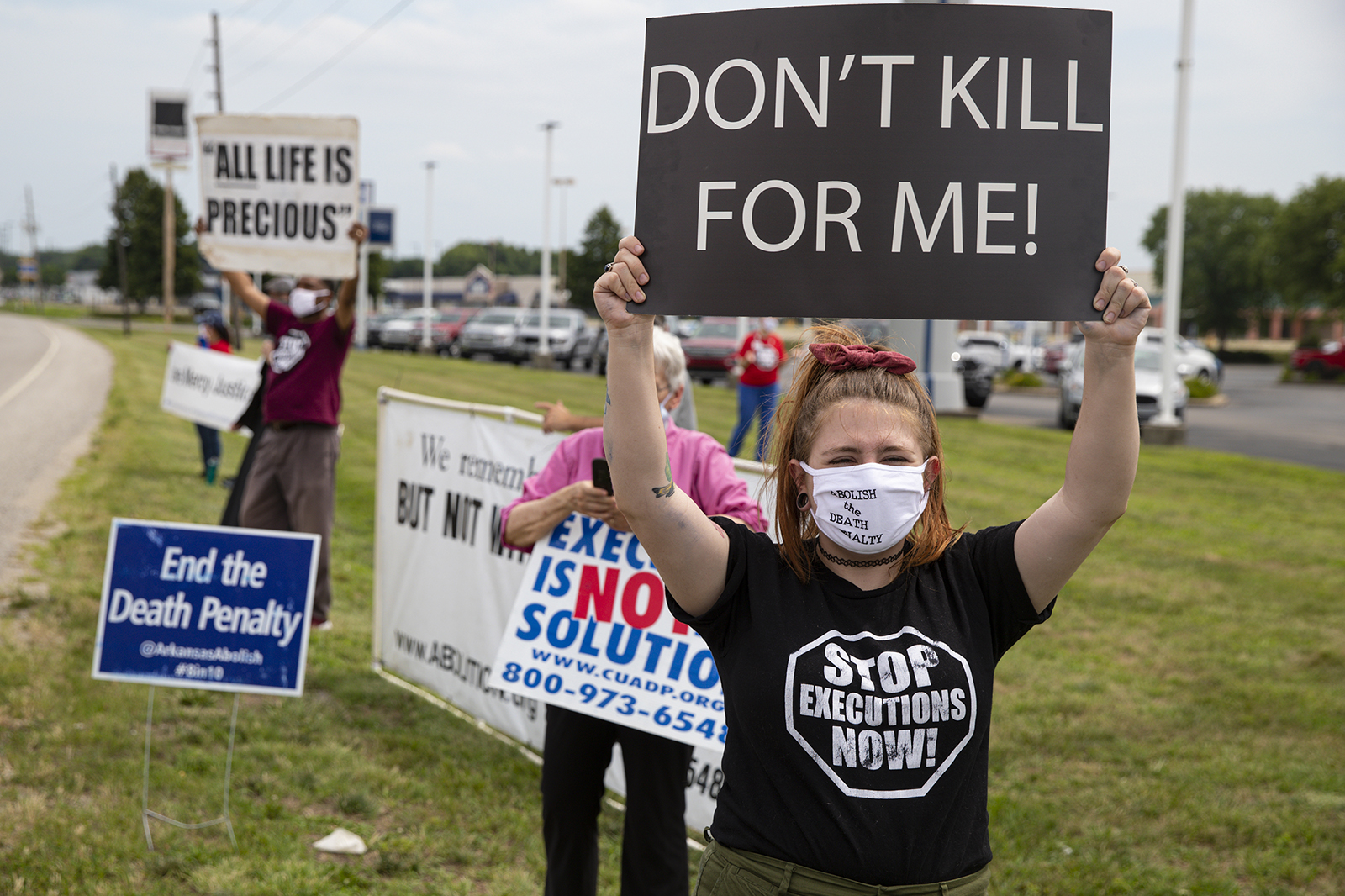
The death penalty: Vengeance, justice or mercy?
(RNS) — It is hard to believe Jesus would execute anyone.


Protesters against the death penalty gather in Terre Haute, Ind., July 15, 2020. (AP Photo/Michael Conroy)
Thomas Reese
January 2, 2025

(RNS) — In the final hours of 2024, North Carolina’s outgoing governor, Roy Cooper, commuted 15 death sentences, reducing by 10% the fifth-largest death row in the country — 121 of the state’s prisoners still await execution.

Days earlier, just before Christmas, outgoing President Joe Biden commuted the executions of 37 prisoners, responding to pleas from Pope Francis and other death penalty opponents. Three infamous murderers did not have their executions commuted: the bomber who killed three and injured a dozen more at the 2013 Boston Marathon; the gunman who killed 11 worshippers at the Tree of Life Synagogue in Pittsburgh in 2018; and the white supremacist who killed nine parishioners in 2015 at a Black church in Charleston, South Carolina.

Since some people hope to become famous through shocking crimes, I purposefully do not name the murderers. Those whose death sentences were commuted in North Carolina and on federal death row will spend the rest of their lives in prison with no possibility of parole.

Supporters of the commutations included religious and civil rights leaders, family members and friends of those killed, as well as some police and those who have worked on death row.

Other family members and law enforcement officials objected.

The Catholic view of capital punishment has evolved over time. For centuries, the hierarchy and theologians defended it. There were numerous executions in the territory governed by popes prior to the unification of Italy. The Vatican City State did not abolish the death penalty until 1969.

The first edition of the Catechism of the Catholic Church in 1992 discouraged the use of the death penalty but permitted it. John Paul II, however, turned against it, calling it “both cruel and unnecessary.” In 1997, the second edition of the Catechism said legitimate cases for executions “are very rare, if not practically non-existent.” In 2011, Pope Benedict XVI called on world leaders “to make every effort to eliminate the death penalty.”


This Oct. 9, 2014, file photo shows the gurney in the the execution chamber at the Oklahoma State Penitentiary in McAlester, Okla. (AP Photo/Sue Ogrocki, File)

Pope Francis in 2013 affirmed his opposition to the death penalty in a speech to the International Commission against the Death Penalty. He told the commission that “The death penalty is always inadmissible because it offends the inviolability and dignity of the person.”

Popes are always concerned about contradicting earlier church teaching, so John Paul and Benedict argued that they were not changing church teaching but that the circumstances had changed so executions are no longer necessary.

Francis seemed to have thrown caution to the wind by saying, “The death penalty is always inadmissible.” However, in a 2017 speech to the Pontifical Council for Promoting the New Evangelization, the word “always” disappeared, as it did in the 2018 version of The Catechism of the Catholic Church, which reads: “The Church teaches, in the light of the Gospel, that ‘the death penalty is inadmissible because it is an attack on the inviolability and dignity of the person.’”

Even this language was found objectionable by some as contradicting traditional church teaching.

My own views of the death penalty are mixed.

As a Catholic, I support the pope. I also agree with all the pragmatic arguments against capital punishment: We have executed people who were wrongly convicted; if we permanently imprison someone, we do not need to kill them to protect society.

Both faith and reason support abolishing capital punishment.

On the other hand, I am also a child of American culture in which the killing of criminals is celebrated. I grew up on “Dirty Harry” and “Death Wish.” Vengeance films are still popular today; the only difference is women now get to take vengeance as well.

I always laugh when conservatives accuse Hollywood of being liberal and woke. Over the years, films about vengeance and taking the law into your own hands have made billions for Hollywood because we Americans love them. Hollywood worships guns.

I was not surprised when the CEO of a health insurance company was murdered in cold blood. Everyone in America considers themselves a victim and wants vengeance. Hollywood has shown us how to do it; the gun lobby has made sure that we have the weapons to do it.


RELATED: Christ the king and the apocalypse

I have my own list of people who should be executed by the state but not by vigilantes: bankers who caused the Great Recession; pharmaceutical executives who enriched themselves on the opioid crisis; lawyers and accountants who help organized crime hide and launder ill-gotten gains; oil executives who knew about global warming but prioritized their own profits; politicians who took us to war on the flimsiest of excuses, waged war badly and refused to pull us out when we were losing.

All of these were responsible for widespread suffering or even mass killings but were never punished. All were college-educated whose crimes were calculated, not crimes of passion or desperation like those committed by most of the people who are prosecuted.

But my faith tells me that we should not take vengeance. “Vengeance is mine, says the Lord.” While the Old Testament clearly allows executions, it is hard to believe that Jesus would execute anyone. Instead, he taught us, “Love your enemies and pray for those who persecute you.” Jesus’ message was one of compassion and mercy, even as he hung on the cross.

As a result, although my emotions want vengeance, faith and reason tell me that it is wrong.

President Biden did the right thing in commuting the death sentences of 37 federal prisoners. He should have done it for the remaining three, but I understand why he did not. But there are still over 2,000 prisoners on death row in state prisons. These sentences need to be commuted to life in prison.

We have to stop thirsting for blood as individuals and as a society. We have to stop cheering the avengers. Responding to violence with violence simply perpetuates the cycle. Christmas reminds us that God’s desire for us is peace, reconciliation and mercy.

 RNS: God is not in the fires


To mitigate impact of wildfires on communities’ water, report fills gaps in guidance to public drinking water system staff


Purdue University
Wildfires and water systems expert Andrew Whelton 

image: 

Andrew Whelton, Purdue University professor of civil engineering and environmental and ecological engineering, has built a network of community leaders and experts who have dealt with the environmental aftermath of wildfires on water systems.

view more 

Credit: Purdue University photo/John Underwood


Wildfires increasingly threaten public drinking water systems, but guidance on how to address damage to these systems from a wildfire has been insufficient, conflicting or inaccurate. 


A new publication offers the first comprehensive guidance for public drinking water system staff, outlining the decision-making process for testing and recovering water distribution systems after a wildfire. This guidance was authored by Purdue University engineers and published by The Water Research Foundation. Four water utilities in California also sponsored the publication.


Andrew Whelton, a Purdue professor of civil engineering and environmental and ecological engineering, led the development of this guidance. Whelton has traveled numerous times to the sites of wildfires in recent years and advised on how to respond to drinking water contamination.


The research papers Whelton and his team have published based on his testing of water samples at the sites of wildfires have become go-to resources for various groups handling the restoration of water distribution systems. The Water Research Foundation publication consolidates those key findings and lessons learned from previous wildfires.


“This new guidance shares frontline lessons from drinking water system professionals who have responded to wildfire disasters,” Whelton said.


Recent wildfires have caused damage to water distribution networks, even when the sources and treatment facilities remained unaffected.


The information that drinking water system staff typically receive from supporting agencies during a wildfire emergency has led to issues such as failing to detect the full extent of chemical contamination and damage, delayed customer notifications regarding potential health risks from contaminated drinking water, postponed actions to restore pressure and remove contaminated water from the system, and struggles with communicating postfire drinking water safety issues to customers and support organizations.


Damage to infrastructure and buildings can lead to water leaks, lower pressure and affect water availability for residential, commercial and industrial users. Additionally, wildfire damage to pipes and tanks may become secondary sources of pollution that contaminate drinking water. Above-ground and below-ground components can sustain damage, and identifying contaminated infrastructure may take weeks or even years.


Repairing and restoring the affected infrastructure to ensure the delivery of safe drinking water may take a similar or longer timeframe. In such cases, restrictions on water use may need to remain in place for extended periods to protect customers from contaminated water.


This guidance could also assist other groups who help public water system staff respond to wildfires, such as public works managers, emergency management professionals, and agencies on the state and federal levels.


This publication is part of an overall project on postwildfire distribution water quality impacts and responses funded by The Water Research Foundation and led by Whelton. This guidance is expected to be updated in the future as new information becomes available. The complete foundation report, containing all studies and data, will be released in the coming months.


Amisha Shah, a Purdue associate professor of civil engineering and environmental and ecological engineering, co-led the development of this publication with Whelton. Kristofer Isaacson, a Purdue alumnus who had been a graduate student in the Whelton and Shah labs, also contributed to the publication.


Whelton leads the Center for Plumbing Safety at Purdue, which offers additional resources on disaster response for water infrastructure.