Thursday, January 16, 2025


The material revolution: How USA’s commodity appetite evolved from 1900 to present

National consumption shifts since 1900: from asphalt and zinc to chickens and gallium: Apparent inflection point for American materialization: 1970 (1st Earth Day)

Peer-Reviewed Publication

Programme for the Human Environment, The Rockefeller University

Absolute demand (ABS) for nine commodities in the United States normalized to 1970. 

image: 

The new paper from The Rockefeller University charts transformative changes since the start of the 20th century in both absolute commodity demand (ABS) and demand compared to economic activity, called intensity of use (IOU)

view more 

Credit: The Rockefeller University PHE

A new study documents the dramatic change in America’s material diet from 1900 to 2020 – ongoing shifts in US commodity consumption patterns with profound environmental, economic, and geopolitical implications.

Published by Iddo K. Wernick of The Rockefeller University’s Program for the Human Environment in the Elsevier journal Resources Policy, the paper details the consumption of 100 key commodities used to build cities, power cars, produce everyday products, and connect people. It charts transformative changes since the start of the 20th century in both absolute commodity demand (ABS) and demand compared to economic activity, called intensity of use (IOU).

And it concludes that, for much of the 20th Century, ABS for nearly all 100 materials grew steadily as did IOU for many of them. But the decoupling trend began around 1970 – coincidentally, the year in which Americans observed the first Earth Day.

Comparing ABS and IOU from 1970 to 2020, clear differences emerge: For many metals and minerals, the intensity of U.S. commodity use dropped.  While some of this decline may owe to production shifting to other countries, the inclusion of 100 commodities demonstrates broader factors at play as well.

For 51 materials, consumption grew but more slowly than the economy, with per-person use of many basic materials staying about the same. For a small group of 8 materials, including three high-tech “vitamins” (rhenium, indium, gallium), consumption grew faster than the economy from 1970 to 2020.

By looking at a wide range of materials over time, the work creates a way to better understand whether industrial societies are using relatively fewer physical materials to support their economies.

And, while this study focuses on the United States, it points the way for all countries to understand the materials their economies rely on and what this means for the environment, economic strength, and security.

“For much of the 20th century, America's appetite for materials seemed insatiable,” says Dr. Wernick. “From the steel that built skyscrapers to the petroleum fueling the automobile revolution, demand for key commodities outpaced economic growth.”

Post-World War II industrial expansion saw aluminum, plastic, and other modern materials supplant traditional ones like iron and timber, enabling lighter, more efficient products, he notes.

“Constant change is here to stay, and the 1970s were pivotal, after many decades of unchecked growth in commodity demand. Slowdown accompanied maturation of infrastructure, growing environmental awareness and efficiency, and the shift from an economy based on extractive industries and manufacturing to one increasingly dominated by services.

America’s changing appetite for commodities

The study divides commodities into three groups based on consumption trends between 1970 and 2020. In the first group, only 8 commodities saw demand rise faster than economic growth. In addition to the trio of metals important for superalloys already mentioned, this group includes the high-tech metal titanium, essential for aerospace and military applications.  It also includes the high-tech protein, chicken, whose production soared thanks to efficiencies in poultry farming and dietary shifts.

The second group, 51 in all, consists of commodities that grew more slowly than the economy but still increased in absolute terms, such as petroleum and nitrogen fertilizers. These commodities offer an example of material use decoupled from economic growth, a phenomenon called "relative dematerialization," and may auger that the USA is passing peak oil, peak paper, and peak beef.  

Then there are 41 commodities like iron ore, cadmium, and sodium sulfate whose demand declined in both absolute and relative terms. Some, like cadmium, mercury, arsenic, and asbestos fell out of favor due to environmental and health regulations, while others, like sodium sulfate, suffered from industry shifts such as the decline of glass container manufacturing. Astonishingly, the data show that the USA has passed peak water withdrawal. 

“The decline in demand for some commodities underscores how technological and societal changes reshape material consumption,” says Dr. Wernick. “Demand for iron ore, for example, once the backbone of the U.S. steel industry, plummeted as electric arc furnace technology made it easier to recycle scrap metal, reducing reliance on mined ore and metallurgical coal.”

Similarly, the fall in sodium sulfate—used in detergents and glassmaking—illustrates the impact of shifts in consumer behavior and industrial priorities. Plastic bottles, for instance, largely displaced glass as the preferred beverage container, while energy-intensive production processes faced mounting pressure from rising costs and environmental regulations.

Data on the industrial consumption of lithium and rare earth elements in the United States show steady, surprising decline.  As for several other commodities, Americans now consume the vast majority of their lithium and rare earth elements in imported products they consume, for instance as batteries or magnets.  These commodities exemplify the offshoring of US heavy industry and the globalization of supply chains.  In contrast, enormous US exports of agricultural products exemplify the opposite: the USA effectively exports cropland, water, and fertilizers and yet cropland and water are in Group 3 (ABS & IOU fell) and nitrogen and potash in Group 2 (ABS rose but IOU fell).
Dematerialization

Is America truly using relatively fewer materials? The study reveals a nuanced picture.

For many high-volume commodities like coal and iron ore, absolute demand has indeed fallen. For others, demand has decoupled from economic growth, growing more slowly than GDP. 

Along with the shift of the American economy towards services, the decoupling suggests increasing efficiency in how materials are used. Advances in manufacturing, recycling, and technology have allowed us to do more with less. The study cautions against over-optimism, however, as the "Jevons paradox" looms large: increased efficiency can rebound through affordability and abundance in greater overall consumption, offsetting environmental gains. 

 The paper also emphasizes that the growing complexity of manufactured products raises the costs associated with isolating and recovering materials from used products.  And, “Market success of renewable energy, electric vehicles, and batteries would redraw the global map of material demand,” says Dr. Wernick.

The study points to American successes in reducing consumption, like the 55% drop in coal use between 2007 and 2021, driven by the switch to cleaner natural gas, as proof that large-scale change is possible.  It also highlights the potential of increasing the share of nuclear energy to reduce material consumption in the US and even dematerialize hydrogen production, a favorite of futurists and technological purists alike. Increases in agricultural productivity through precision agriculture also promise future material reductions.

Says Dr. Wernick: “As the 21st century unfolds, the question isn’t just how much material we consume but what we use and how wisely we use it.”

“Technological leapfrogging is widely predicted but only time will tell whether developing nations will be able to avoid the USA’s –  and now China’s – material-intensive growth pattern.”

Concludes Jesse Ausubel, Director of the Programme for the Human Environment at The Rockefeller University: “Dematerialization has been a focus of our Programme’s research for decades and the scope of this paper – 100 commodities, in many cases over 100 years – offers extraordinary insight into the past and future of what we like to call ‘demandite’ the stuff of modern life.”

“Anyone ordering goods online knows that we need Ozempic not just for the human body but for the human economy.  Wernick’s paper shows the USA may finally be finding ways to become lean and why it’s hard to stay that way.”

100 commodities classified by group based on comparison of values for ABS 2020/1970 and IOU 2020/1970. 


JENIN IS A CITY

Jenin goes on strike after Israel targets Palestinians


January 15, 2025
MEMO

Hundreds attend the funeral ceremony held for 6 Palestinians killed in an Israeli attack on Jenin refugee camp in Jenin, West Bank on January 15, 2025 [Issam Rimawi – Anadolu Agency]

A general strike took place in the occupied West Bank city of Jenin today in mourning for the martyrs who fell in the massacre committed by the Israeli occupation forces yesterday in the Jenin refugee camp, the Palestinian Information Centre reported. The streets of Jenin were empty, with shops closed in condemnation of Israel’s latest crimes.

Six Palestinians were killed last night in an Israeli air strike on Jenin camp.

Hamas said Israel’s strike came just hours after the launch of the national initiative to end the Palestinian Authority’s security campaign against the Jenin camp and its resistance, “and the PA’s failure to respond to it, along with the gunfire and the prevention of ambulances from entering the camp.”

It added that the PA is “responsible for its partnership in the Zionist crime and its refusal of national calls to halt its aggression against the camp.”


Trump administration to lift sanctions on Israeli settlers

January 16, 2025
MEMO

Senator Marco Rubio on 15 January, 2025 in Washington, DC [Jabin Botsford/The Washington Post via Getty Images]


President-elect Donald Trump’s incoming administration plans to lift sanctions imposed by the Biden administration last year on violent Israeli settlers, according to slid, Trump’s nominee for secretary of state.

As much of the world’s attention has focused on the war on Gaza, growing violence by Israeli settlers against Palestinians in the West Bank and land grabs in the occupied territory have raised concern among some of Israel’s Western allies.

Washington and others have imposed asset freezes and banking restrictions on violent settlers, outposts and groups and urged Israel to do more to stop attacks that they say undermine efforts to end the conflict.

During a Senate Foreign Relations Committee confirmation hearing, Rubio pledged to reverse the policy, emphasising the administration’s pro-Israel stance, reported the Times of Israel. However, he did not specify when the sanctions would be lifted.

“Yes. Without speaking out of turn, I’m confident in saying that President Trump’s administration will continue to be perhaps the most pro-Israel administration in American history,” Rubio stated, confirming plans to roll back sanctions on settlers.

Rubio also said he supported revoking the visas of anyone supporting Hamas and to expand the Trump-era Abraham Accords.

The sanctions were imposed under an executive order on West Bank violence that President Joe Biden signed in February. It has been used to impose sanctions on a Palestinian resistance group as well as Jewish settlers and those supporting them.

The executive order, being a presidential measure, can be reversed by a future administration. Incoming President Donald Trump, who takes office on 20 January, has indicated a more favourable stance on the illegal West Bank settlements, similar to his policy during his first term.

Israeli settler violence against Palestinians in the occupied West Bank, including East Jerusalem, escalated to unprecedented levels in 2024, the United Nations Office for the Coordination of Humanitarian Affairs (OCHA) has said.
KNOWN IN THE HOOD AS; 'LITTLE MARCO'
Trump's Secretary of State pick criticises ICC arrest warrants for Netanyahu, Gallant, during Senate confirmation

January 15, 2025
MEMO

Israeli Prime Minister Benjamin Netanyahu (C), and Israeli Defense Minister Yoav Gallant (L), from the operations center in Jerusalem on 20 July 2024 [Israeli Prime Minister’s Office/Anadolu Agency]

Sen. Marco Rubio, President-elect Donald Trump’s nominee for Secretary of State, accused the International Criminal Court (ICC) of severely damaging its credibility and warned that its actions could pose a threat to the US, Anadolu Agency reports.

“I think the ICC has done tremendous damage to its global credibility,” Rubio said, referring to the Court’s arrest warrants for Israeli Prime Minister, Benjamin Netanyahu, and his former Defence Minister, Yoav Gallant, on charges of war crimes and crimes against humanity.

Rubio argued at his Senate confirmation hearing that the ICC’s decision to pursue Netanyahu and Gallant set a “dangerous precedent” for sovereign nations, including the US.

“This is a trial run to see if they can go after a head of state from a non-member nation. If successful with Israel, they will apply the same standard to the United States at some point,” he said.

Rubio emphasized past threats made by the ICC to investigate US service members, labelling the efforts as “deeply concerning”.

READ: Jared Kushner advises from afar as Ivanka Trump opts out of role in father’s second term

“If they don’t drop this, (the ICC) will find its credibility globally, badly damaged. And I think the United States should be very concerned, because I believe this is a test run for applying it to American service members and American leaders in the future,” he added.

Rubio later accused Hamas of deliberately targeting Israeli civilians during the 7 October, 2023, attack, while claiming that Israel did not intentionally target civilians during its ongoing military operations spanning over a year.

“It’s a terrible thing about war, and it’s why we should try to prevent it at almost every almost every any cost is that innocent people are caught up in it, and that’s true of every conflict on the planet,” he stated, downplaying the killing of over 46,000 Palestinians, primarily women and children, as a result of Israel’s assault on Gaza.

Rubio also said the US should revoke visas of individuals who support Hamas.

“If you applied for a visa to come into the United States, and … it comes to light that you’re a supporter of Hamas, we wouldn’t let you in,” he said.

“So now that you got the visa, and then you’re inside the US, and now we realise you’re supportive of Hamas, we should remove your visa. If you could not come in because you’re a supporter of Hamas, you should not be able to stay”.

In November 2024, the International Criminal Court issued arrest warrants for Israeli Prime Minister, Benjamin Netanyahu, and former Defence Minister, Yoav Gallant, over war crimes and crimes against humanity in Gaza.

Israel also faces a genocide case at the International Court of Justice for its war on the enclave.
Gazans shed tears of joy, disbelief at news of ceasefire deal

January 15, 2025 
MEMO


Palestinians celebrate after US President-elect Donald Trump’s announcement of hostage deal between Israel and Hamas , in the southern Gaza city of Khan Yunis, Gaza on January 15, 2025 [Abed Rahim Khatib/Anadolu Agency]


Palestinians burst into celebration across the Gaza Strip on Wednesday at news of a ceasefire between Israel and Hamas, with some shedding tears of joy and others whistling, clapping and chanting “Allahu akbar” (God is greatest), Reuters reports.

“I am happy, yes, I am crying, but those are tears of joy,” said Ghada, a mother of five displaced from her home in Gaza City during the 15-month-old conflict.

“We are being reborn, with every hour of delay Israel conducted a new massacre, I hope it is all getting over now,” she told Reuters via a chat app from a shelter in Deir Al-Balah town in central Gaza.

Youths beat tambourines, blew horns and danced in the street in Khan Yunis in the southern part of the enclave minutes after hearing news of the agreement struck in the Qatari capital, Doha.

The deal, not yet formally announced, outlines a six-week initial ceasefire phase and includes the gradual withdrawal of Israeli forces from Gaza.

The accord also provides for the release of hostages held by Hamas in exchange for Palestinian detainees held by Israel, an official briefed on the negotiations told Reuters.

READ: FACTBOX – War-ravaged Gaza faces multi-billion dollar reconstruction challenge

For some, delight was mingled with sorrow.

Ahmed Dahman, 25, said the first thing he would do when the deal goes into effect is to recover the body of his father, who was killed in an air strike on the family’s house last year, and “give him a proper burial.”

‘A day of happiness and sadness’

“I feel a mixture of happiness because lives are being saved and blood is being stopped,” said Dahman, who like Ghada was displaced from Gaza City and lives in Deir Al-Balah.

“But I am also worried about the post-war shock of what we will see in the streets, our destroyed homes, my father whose body is still under the rubble.”

His mother, Bushra, said that while the ceasefire wouldn’t bring her husband back, “at least it may save other lives.”

“I will cry, like never before. This brutal war didn’t give us time to cry,” said the tearful mother, speaking to Reuters by a chat app.

Iman Al-Qouqa, who lives with her family in a nearby tent, was still in disbelief.

“This is a day of happiness, and sadness, a shock and joy, but certainly it is a day we all must cry and cry long because of what we all lost. We did not lose friends, relatives, and homes only, we lost our city, Israel sent us back in history because of its brutal war,” she told Reuters.

“It is time the world comes back into Gaza, focuses on Gaza, and rebuilds it,” said Qouqa.

Israeli troops invaded Gaza after Hamas-led gunmen broke through security barriers and burst into Israeli communities on 7 October, 2023, killing 1,200 soldiers and civilians and abducting more than 250 foreign and Israeli hostages.

However, since then, it has been revealed by Haaretz that helicopters and tanks of the Israeli army had, in fact, killed many of the 1,139 soldiers and civilians claimed by Israel to have been killed by the Palestinian Resistance.

Israel’s campaign in Gaza has killed more than 46,000 people, according to Gaza Health Ministry figures, and left the coastal enclave a wasteland, with many thousands living in makeshift shelters.


Hamas: Ceasefire is a turning point in the fight against Israel


January 16, 2025 
MEMO

Palestinians gathered in the garden of Al-Aqsa Martyrs Hospital in Gaza to celebrate after US President-elect Donald Trump’s announcement of hostage deal, on January 15, 2025 in Deir al-Balah, Gaza [Ashraf Amra – Anadolu Agency]


Hamas described the ceasefire agreement in the Gaza Strip, which is expected to come into effect on Sunday, as a “turning point in the fight against the Israeli occupation.”

The movement said in a statement: “The ceasefire agreement is the fruit of the legendary steadfastness of our great Palestinian people and our valiant resistance in the Gaza Strip, over more than 15 months.”

“The agreement to stop the aggression on Gaza is an achievement for our people, our resistance, our nation, and the free people of the world, and it is a turning point in our fight against the enemy, on the path to achieving our people’s goals of liberation and return,” it added.

Hamas noted that “this agreement comes as part of our responsibility towards our patient steadfast people in the honourable Gaza Strip, to stop the Zionist aggression against them, and put an end to the bloodshed, massacres and genocidal war to which they are being subjected.”

Yesterday evening, Qatari Prime Minister and Foreign Minister Mohammed Bin Abdulrahman Al Thani announced that the mediators had reached a ceasefire agreement in the Gaza Strip, noting that it would begin to be implemented on Sunday.

The first phase of the agreement will last 42 days and includes the release of 33 Israeli captives in exchange for an unspecified number of Palestinian prisoners.

The deal comes 467 days after Israel launched its genocidal war on the Gaza Strip, during which it has killed or maimed over 157,000 Palestinians, most of them children and women. Some 11,000 others are missing, presumed dead under the rubble.


Lack of security after Gaza truce could make aid surge difficult, UN says

MEMO
January 15, 2025 

A group of demonstrators carries banners, posters, and placards as they gather to demand a ceasefire in Gaza and a hostage swap deal, while calling for the resignation of Prime Minister Benjamin Netanyahu’s government on December 27, 2024, in West Jerusalem. [Mostafa Alkharouf – Anadolu Agency]


A short-term surge of aid deliveries into Gaza after a ceasefire between Israel and Palestinian Hamas will be difficult if the deal does not cover security arrangements in the enclave, a senior UN official said on Wednesday, Reuters reports.

Negotiators reached a deal on Wednesday for a ceasefire, an official briefed on the negotiations told Reuters, after 15 months of conflict. It would include a significant increase in humanitarian aid into the Gaza Strip, but it was unclear if any agreement would cover security arrangements.

“Security is not (the responsibility of) the humanitarians. And it’s a very chaotic environment. The risk is that with a vacuum it gets even more chaotic,” a senior UN official, speaking on condition of anonymity, told Reuters. “Short of any arrangement, it will be very difficult to surge deliveries in the short term.”

The United Nations has long described its humanitarian operation as opportunistic – facing problems with Israel’s military operation, access restrictions by Israel into and throughout Gaza and, more recently, looting by armed gangs.

“The UN is committed to delivering humanitarian assistance during the ceasefire, just as we were during the period of active hostilities,” said Eri Kaneko, spokesperson for the UN Office for the Coordination of Humanitarian Affairs.

READ: 62 Palestinians killed by Israel in Gaza in 24 hours

“The removal of the various impediments the UN has been facing during the last year – which include restrictions on the entry of goods; the lack of safety and security; the breakdown of law and order and the lack of fuel – is a must,” she said.

The UN has been working with partners to develop a coordinated plan to scale up operations, Kaneko said.
600 trucks a day

The ceasefire deal – according to the official briefed on talks – requires 600 truckloads of aid to be allowed into Gaza every day of the initial six-week ceasefire, including 50 carrying fuel. Half of the 600 aid trucks would be delivered to Gaza’s north, where experts have warned famine is imminent.

“We are well-prepared, and you can count on us to continue to be ambitious and creative,” said the UN official, speaking shortly before the deal was agreed. “But the issue is and will be the operating environment inside Gaza.”

For more than a year, the UN has warned that famine looms over Gaza. Israel says there is no aid shortage – citing more than a million tons of deliveries. It accuses Hamas of stealing aid, which Hamas denies, instead blaming Israel for shortages.

“If the deal doesn’t provide any agreement on security arrangements, it will be very difficult to surge assistance,” said the official, adding that there would also be a risk that law and order would further deteriorate in the short term.

The United Nations said in June that it was Israel’s responsibility – as the occupying power in the Gaza Strip – to restore public order and safety in the Palestinian Territory so aid can be delivered.

Hamas came to power in Gaza in 2006 after Israeli soldiers and settlers withdrew in 2005, but the enclave is still deemed as Israeli-occupied territory by the United Nations. Israel controls access to Gaza.

The current war was triggered on 7 October, 2023, when Hamas killed 1,200 people in southern Israel, and took some 250 hostages, according to Israeli tallies.

However, since then, it has been revealed by Haaretz that helicopters and tanks of the Israeli army had, in fact, killed many of the 1,139 soldiers and civilians claimed by Israel to have been killed by the Palestinian Resistance.

Since then, more than 46,000 Palestinians have been killed, Israel has laid much of Gaza to waste and the enclave’s pre-war population of 2.3 million people has been displaced multiple times, aid agencies say.

Despite growing consensus, many Jewish and Christian groups loath to admit genocide in Gaza

(RNS) — Christian and Jewish groups that do call out genocide often find resistance for even bringing it up.


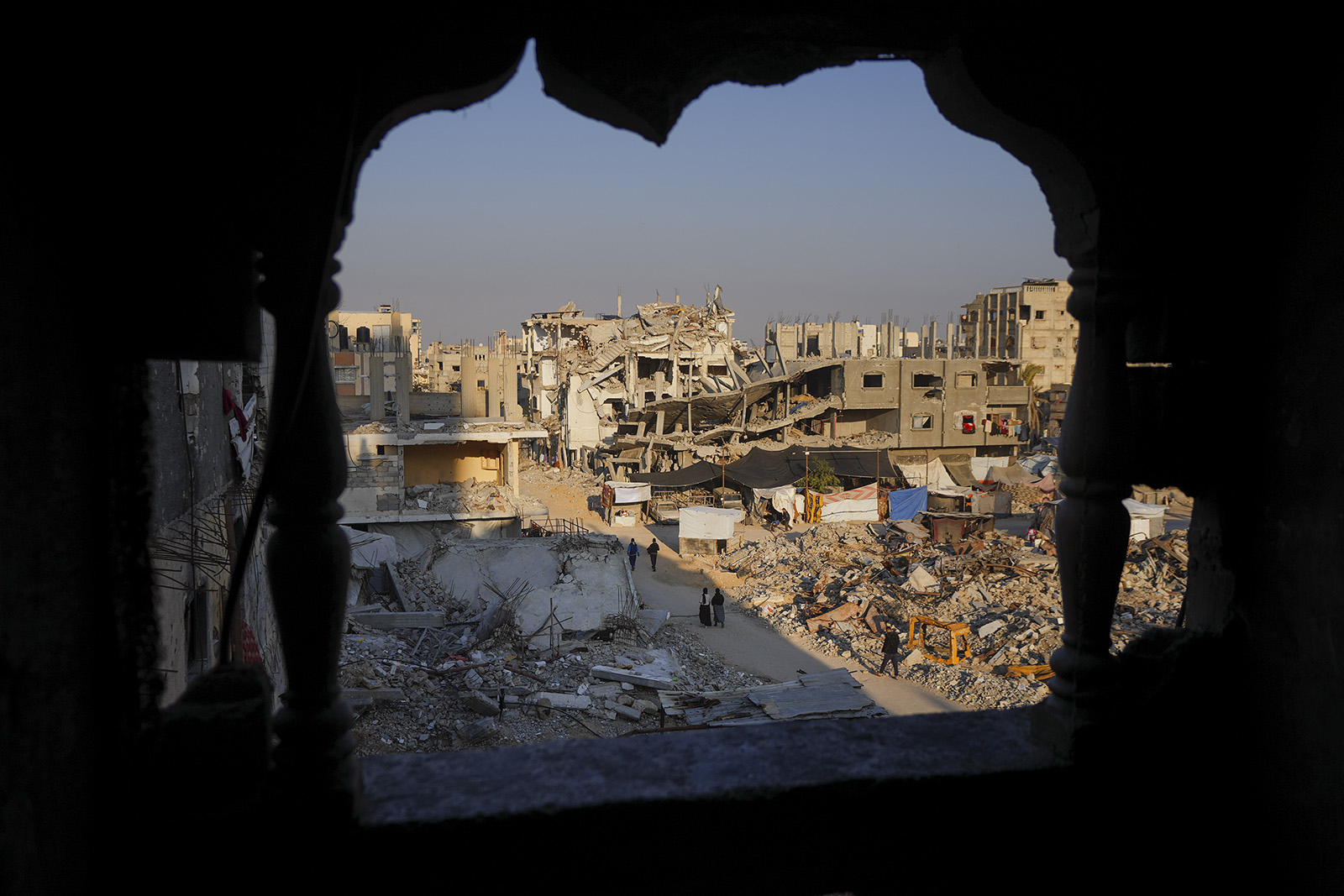
Palestinians walk through the destruction in the wake of an Israeli air and ground offensive in Khan Younis, southern Gaza Strip, Tuesday, Jan. 7, 2025. (AP Photo/Abdel Kareem Hana)


Yonat Shimron
January 13, 2025

(RNS) — In the past four years, the United States has recognized the Uyghur genocide in China and the Rohingya genocide in Myanmar. Just this past week (Jan. 7), the U.S. accused a Sudanese paramilitary group and its proxies of committing genocide.

But when it comes to Israel’s war in Gaza, which has killed more than 46,000 Palestinians, injured thousands more and flattened the coastal strip, making it largely uninhabitable, the U.S. government is nowhere near arriving at that conclusion. The same is true for many U.S. religious groups, including Jews and Christians who have, with some exceptions, remained silent despite growing recognition of the crime.

In a lengthly New York Times interview earlier this month, Secretary of State Antony Blinken denied there was a genocide. And in a sign that the incoming Trump administration would likely take the same position, the U.S. Congress last week passed legislation that would impose sanctions on officials at the International Criminal Court for seeking to charge Israeli leaders with war crimes. Forty-five Democrats joined Republicans to approve the measure, which has a good chance of passing in the new Republican-led Senate.

Increasingly, a growing list of international organizations, including the United Nations and various human rights groups such as Amnesty International, Human Rights Watch and Doctors Without Borders, have concluded that Israel is committing genocide. So, too, have dozens of Holocaust scholars.

Last week, members of the American Historical Association, the country’s largest group of professional historians, overwhelmingly approved a resolution that said the destruction of most of Gaza’s education infrastructure amounted to “scholasticide.”

“Scholars of genocide very much recognize that the destruction of Gaza fits our understanding of what constitutes a genocide, whether it’s the fairly narrow definition of the 1948 U.N. Convention or the more expansive understandings that different scholars employ in their research,” said Barry Trachtenberg who holds an endowed chair in Jewish History at Wake Forest University in Winston-Salem, North Carolina. He voted in favor of the scholasticide resolution and agrees Israel is committing genocide.

Yet aside from many, if not most, American Muslims, U.S. religious groups, including American Jewish organizations and a wide swath of Christians, particularly evangelicals, have been loath to argue for genocide despite the pleas of Palestinian Christians in Jerusalem and the occupied West Bank.

“Israel is not committing genocide,” was the bold headline issued in a statement by the American Jewish Committee last month. The AJC said Israel is acting in self-defense against Hamas, a terror group that killed 1,200 Israelis on Oct. 7, 2023.

Among evangelical groups, Luke Moon, head of the Philos Project, a nonprofit based in the U.S. that “seeks to promote positive Christian engagement in the Near East,” recently wrote, “For lasting peace, Hamas must be destroyed. Diplomatic agreements are a part of the history of war, but lasting diplomacy only exists in the aftermath of a decisive victory.”

Christian and Jewish groups that do label Israel’s actions in Gaza as genocide and who advocate for an end to the war often find stiff resistance for saying so.

Last week, The New York Times rejected a digital ad from a Quaker group that referred to Israel’s actions in Gaza as genocide.


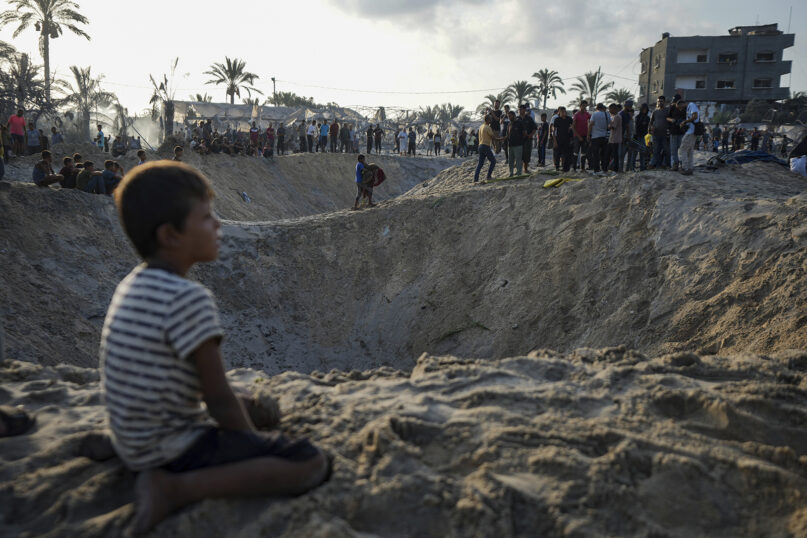
Palestinians look at the destruction after an Israeli airstrike on a crowded tent camp housing Palestinians displaced by the war in Muwasi, Gaza Strip, Tuesday, Sept. 10, 2024. (AP Photo/Abdel Kareem Hana)

The American Friends Service Committee, which works for peace and justice around the world, has worked on humanitarian relief in Gaza for more than 70 years.

It found a donor willing to pay for a digital ad said: “Tell Congress to stop arming Israel’s genocide in Gaza now. As a Quaker organization, we work for peace. Join us. Tell the President and Congress to stop the killing and starvation in Gaza.”

The New York Times ad department, however, asked that the word “genocide” be replaced with “war.” The AFSC refused.

“We consider it an attempt on their part to silence us and to police our narrative,” said Joyce Ajlouny, general secretary of the AFSC and a Palestinian from Ramallah.

The New York Times, in a statement, said the Quaker ad did not meet their “acceptability guidelines.” It did not specify what those guidelines were.

Part of the problem of accepting the genocide designation for Israel’s attack on Gaza is that by funding Israel’s military offensive with billions of dollars in aid, the United States is complicit in the genocide, said Raz Segal, an Israeli-American scholar and associate professor of Holocaust and genocide studies at Stockton University in Galloway, New Jersey.

“This is a joint Israeli-U.S. genocide because it’s just a matter of fact that without U.S. support, Israel would not be able to perpetrate this genocide,” said Segal.

Segal,too, paid a high price for his willingness to speak out. In June, he was offered a job to lead the University of Minnesota’s Center for Holocaust and Genocide Studies, but that offer was rescinded after the Jewish Community Relations Council of Minnesota and the Dakotas mounted a campaign against him because of his assessment that Israel was committing genocide.

For Jews, it is hard to admit genocide because Jews have suffered genocide themselves.

“Our understanding of the Jewish people historically has always been one of victims of horrific violence, and so I think it’s really hard for many of us to conceive that Jews working collectively, at least through the state of Israel, have the capacity to commit genocide,” said Trachtenberg, the Wake Forest scholar.

One religious leader who has spoken about genocide is Pope Francis. In November the pontiff called for an investigation to determine if Israel’s attacks in Gaza constitute genocide, according to excerpts from an upcoming new book.

Since then, Francis has repeatedly criticized the bombings, loss of life and starvation in Gaza.

The Conference of Presidents of Major American Jewish Organizations promptly criticized Francis in a public letter, calling the pope’s comments “incendiary.”

Jonathan Kuttab, a human rights lawyer who is Palestinian and now directs Friends of Sabeel North America, a Christian group that advocates for justice and peace on behalf of Palestinians, said he sees similar denials among evangelicals.

“The church correctly critiques itself for its silence during the Holocaust,” said Kuttab. “The church was reluctant and quiet and timid and complicit. But right now they are failing again even though the facts are much clearer and much more obvious. It’s an issue of the moral cowardice and unwillingness to deal with the political consequences of recognizing that the genocide is taking place.”


Steady Progress Toward a War Against China

In December 2024, the US and Japan established a classified joint operation plan about a Taiwan contingency. The preparations for a war against China are going steadily.

 Posted on

In March 2020, United States Marine Corps Commandant General David H. Berger introduced Force Design 2030, now known as “Force Design,” an ongoing force restructuring plan to reshape its combat power for future adversary conflicts. The Marine Corps transformation is to align with the National Defense Strategy, mainly focusing on great power competition in the Indo-Pacific: to prevail against China. The 2018 National Defense Strategy Summary reads, “Challenges to the US military advantage represent another shift in the global security environment. For decades, the United States has enjoyed uncontested or dominant superiority in every operating domain. We could generally deploy our forces when we wanted, assemble them where we wanted, and operate how we wanted. Today, every domain is contested – air, land, sea, space, and cyberspace.”

The key concept of the Force Design 2030 initiative is Expeditionary Advanced Base Operations (EABO), relating to the Navy’s strategy of Distributed Maritime Operations (DMO).

Distributed Maritime Operations (DMO) is the operating concept of the Department of the Navy (or DON, which includes the Navy and Marine Corps) for using US naval (i.e., Navy and Marine Corps) forces in combat operations against an adversary, particularly China.

According to the Navigation Plan 2024, “Distributed Maritime Operations means dispersing the fleet while concentrating effects. The approach demands distributing, integrating, and maneuvering people, platforms, munitions, and data across time, spectrum, and space. Supporting that fight requires new ways of operating, from sustaining the fleet in contested environments, to an understanding that our installations and Maritime Operations Centers are themselves warfighting platforms. Information dominance is the key enabler in this new form of maneuver warfare, by which we confound the adversary’s ability to find, fix, and attack our forces.”

According to the Tentative Manual For Expeditionary Advanced Base Operations (TMEABO), an authoritative source, “EABO are a form of expeditionary warfare that involve the employment of mobile, low signature, persistent, and relatively easy to maintain and sustain naval expeditionary forces from a series of austere, temporary locations ashore or inshore within a contested or potentially contested maritime area in order to conduct sea denial, support sea control, or enable fleet sustainment.” Also, “Forces conducting EABO combine various forms of operations to persist within the reach of adversary lethal and nonlethal effects, changing their risk calculations.”

As part of the redesign, the Marines plan to establish at least three Marine Littoral Regiments (MLRs) to accomplish missions within contested maritime spaces. According to a 2022 Marine Corps Association article, “Missions, MAGTFs, Force Design & Change,” by Colonel Michael R. Kennedy, USMC (Retired), MLRs are intended to “Deploy to islands, coastlines, and observation posts along chokepoints where their networked sensors and weapons can surveil the air and surface (and, potentially subsurface) waterways. The timing of their insertion is implied to be in the ‘competition’ phase before hostilities start. The duration of their stay is less clear.”

To conduct these strategies, the US needs many ground missile sites, harbors, and airports, which the US can use freely. In Japan, for example, the US military can build its installations wherever they want because of Article 2 paragraph 1 (a) of the US-Japan Status of Forces Agreement (SOFA). It prescribes that “Agreements as to specific facilities and areas shall be concluded by the two Governments through the Joint Committee.”

The US-Japan Joint Committee is a consultative organization composed of the high US forces officers and Japanese high bureaucrats held once every two weeks. However, its minutes are only made public if the two countries agree, and Japan substantially has no right to decline the US force’s requests. The leaked classified document titled “Thinking Method of the US-Japan Status of Forces Agreement Enlarged Edition” reveals that there is an assumption that if the US needs a base and requires it, Japan will also consider the base necessary. The Japanese government’s role is to persuade the locals and legislate related domestic laws.

In December 2024, the US and Japan established a classified joint operation plan about a Taiwan contingency. Reportedly, the US forces’ missile units will deploy in the Philippines and the Japanese Nansei Islands, a chain of islands extending from southwestern Kyushu to northern Taiwan.

Gyo Ishii, a senior staff writer for the Kyodo News, reported in March 2022 about the original plan that 40 of approximately 200 islands, which consist of the Nansei, would be candidates for the US temporary military bases. Most of which are inhabited, and the US selected them because they could be self-sufficient in water.

The Japan Self-Defense Forces (JSDF) had told the US forces that it could not establish the joint plan immediately but would be able to do so in the future. However, the US forces side strongly reprimanded and pressured the JSDF side to draw up the plan urgently, such as “Do you understand that a war between the US and China is impending?” and so on. The US forces took advantage of the Japanese fear of being abandoned.

Based on Article 2 Paragraph 4(b) of SOFA, the US forces can use JSDF facilities and areas if the US requests it at the Joint Committee. Furthermore, both countries promote simplifying the formalities. The JSDF has established its bases in the Nansei islands, which are in Mageshima, Tanegashima, Amami-Oshima, Oshima, the main island of Okinawa, Miyakojima, Ishigakijima, and Yonagunijima. The US forces can deploy its troops in these bases.

The Japanese government finished constructing the JSDF bases in Yonagunijima Island in 2016, Miyakojima Island and Amami-Oshima Island in 2019, and Ishigakijima Island in 2023. The military installations on Mageshima Island are now under construction. The original plan for the bases in Yonagunijima was only for Coast Observation Units, but JSDF now plans to deploy its missile units. Regarding bases in Ishigakijima, Toyko explained that its missile was only for defense. However, in December 2022, Tokyo decided to have “counterstrike capabilities,” which means Enemy Base Attack Ability, to attack bases in mainland China. The Japanese government deceives Okinawans.

Besides the bases, the Japanese government is designating civilian ports and airports in the Nansei Islands and around them for JDSF and Coast Guard use. It plans to improve the ports and airports for warships and fighter aircraft and to maintain roads around them.

The US Marines will attack the Chinese forces moving from one island to another to avoid counterattacks. Of course, the locals will be in danger. The TMEABO document reads, “the littoral force conducting EABO will be at a disadvantage in numbers of personnel and weapons, and proximity to interior lines,” and also, “living among, or near, the local population increases vulnerability to irregular threats from malign actors and adversary proxy forces.”

Being aware of the danger, Okinawans established a group to “oppose turning the islands of Okinawa into a battlefield again.” However, Tokyo plans to evacuate the inhabitants of Okinawa. According to the plan, 120 thousand people from the Sakishima Islands, which are Miyako, Yaeyama, and Yonaguni, will escape to Kyushu and Yamaguchi in six days. The plan’s feasibility is unknown, and inhabitants of mainland Okinawa, where the US bases are concentrated, will remain on the island, evacuating indoors.

In order to stick to an exclusively defensive national security policy, Japan had only allowed itself to shoot down missiles launched into Japanese territory; however, Tokyo now has so-called “counterstrike capabilities.” National Security Strategy document reads, “In cases where armed attack against Japan has occurred, and as part of that attack ballistic missiles and other means have been used, counterstrike capabilities enable Japan to mount effective counterstrikes against the opponent’s territory.”

Tokyo contends that a preemptive strike against the enemy is not permitted. However, it stated that Japan judges it is attacked when the enemy sets about launching a missile, even though it is hard to identify when that occurs. The counterstrike might be a preemptive attack. Also, the Ex-Prime Minister of Japan, Shinzo Abe, changed the interpretation of the Japanese Constitution in 2015; therefore, the JSDF can exercise the right of collective defense.

Japan asserts that Counterstrikes are done per the Three New Conditions for Use of Force: the enemy attacks Japan or another country with a close relationship with Japan, there are no other means, and it is limited to minimum necessary measures. Abe contended in 2021 that “A Taiwan contingency is a Japan contingency. That is to say, that is US-Japan alliance contingency.”

Therefore, if Japan regards China set about launching a missile toward the US assets in East Asia, Japan will attack the mainland of China.

President Trump’s second term will not change the policy, given that new cabinet members. The preparations for a war against China are going steadily.

Reiho Takeuchi is a Japanese writer focusing on geopolitical issues in the Asia-Pacific region. He has written on substack.

ANTIWAR.COM

In New York, faith organizations brace for Trump’s immigration crackdown

(RNS) — An interfaith event hosted Thursday by Union Theological Seminary aims to provide faith leaders with spiritual and legal resources to continue their work.


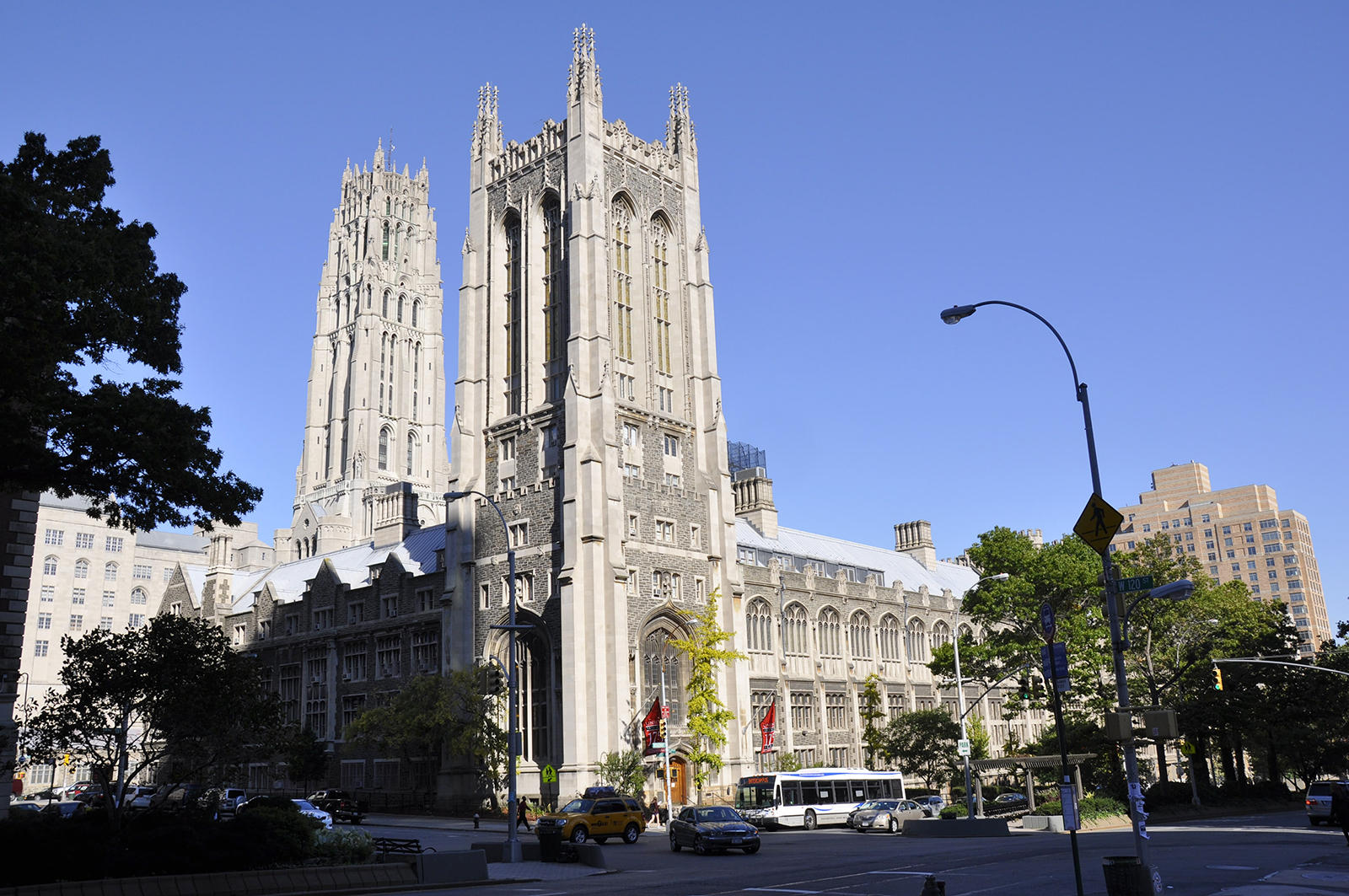
Union Theological Seminary in Morningside Heights, Manhattan.
 (Photo courtesy of UTS)

Fiona André
January 15, 2025

(RNS) — On Thursday (Jan. 16), Union Theological Seminary will host a “Know Your Rights, Find Your Voice” interfaith event that will convene faith leaders, immigration advocates and legal experts. Organized in collaboration with Columbia University’s Office of Religious Life and New York’s Episcopal Diocese, the event aims to provide spiritual and legal resources for faith communities as they prepare for the incoming Trump administration’s promised immigration crackdown.

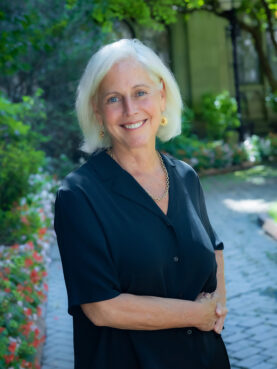
“There’s no greater issue at this moment in time that calls out for response from religious communities,” said the Rev. Serene Jones, Union Theological Seminary’s president, adding that it’s crucial for different faith communities to organize and rally together.

President-elect Donald Trump announced he would rescind a policy preventing ICE agents from arresting undocumented immigrants in sensitive places, undermining the sanctuary movement, a growing list of houses of worship that offer shelter to immigrants facing deportation. Trump also announced he will orchestrate the “largest deportation operation in American history.”

Since the immigration crisis peaked in 2022, more than 200,000 asylum-seekers have settled in New York, and the city’s religious organizations have been a source of critical support for them. Days before the Trump administration takes office, many fear his proposed policies will hinder that work, especially as New York City Mayor Eric Adams said he would work closely with Trump’s incoming “border czar,” Tom Homan, on immigration.

RELATED: Churches consider what sanctuary might look like in Trump’s second term


The Rev. Frederick Davie. (Photo courtesy of UTS)

In addition to Union Theological Seminary, Thursday’s event is co-sponsored by New York’s Interfaith Center, the Jewish Theological Seminary, and Riverside Church and will feature Imam Musa Kabba of the Bronx’s Masjid-ur-Rahmah mosque and New York’s Episcopal bishop, the Rt. Rev. Matthew Heyd. The day’s first panels will offer Abrahamic perspectives on the work done by faith organizations and will also be an occasion to reflect on these groups’ past achievements.

“We would not be faithful to our various faith traditions if we were not doing this. It would actually be an act of unfaithfulness to see this hugely vulnerable population beset by the state and authorities and to turn away from it,” said the Rev. Frederick Davie, vice president for public theology and civic engagement at Union Theological Seminary.

Adama Bah, who will participate in this discussion, said it was crucial to protect faith-based organizations’ unique status as shelters for migrants. Houses of worship inspire trust and are often the first stop for migrants arriving in the city, she explained. Bah runs Afrikana, an organization that provides legal help, shelter and benefit assistance to Black, Arab and Muslim migrants in Harlem and the Bronx.

Many Black and African migrants come to her organization knowing they will be able to connect with members of their community and speak their languages.


RELATED: As New York’s migrant crisis grinds on, some faith-based organizations go it alone

“When you arrive, you go to what you recognize and who you recognize. These folks recognize a mosque, they recognize a church, they recognize a synagogue. So they are comfortable going to those places and saying, ‘I need help,’” she said.


Bah said she’s worried the new administration won’t make efforts to ensure documents addressing migrants are available in all languages. Afrikana serves individuals who mostly speak Wolof, French and Creole, and finding documents in adequate languages is crucial to the asylum and visa application process. “This administration doesn’t want people to understand their rights, and that’s what I’m more afraid of,” she said.

As a Black Muslim woman running an organization that serves many Muslim migrants, Bah also fears Islamophobia and that organizations like hers will be stigmatized. The support of other faith leaders, especially from different traditions, will help face this, she said.

“We really are in this together. So if you are Muslim, if you are Jewish, if you are Catholic, you know that if they go after one thing, they’re going to go after all of them,” she said.

The event will also focus on educating faith communities on the legal framework they’re working in. The day’s second panel will evoke the rules and laws affecting their work to ensure faith groups know what they can and can’t do. Since Trump announced his intent to rescind sanctuary, speakers will ensure organizations that might overstep the law know what they are facing.

“If faith organizations bump against the law and decide they want to step over it, because their tradition, in some ways, demands it, we want them to be clear about what that means as well,” said Davie.

This panel will feature professor Alina Das, who co-directs NYU School of Law’s Immigrant Rights Clinic. Das is the author of “No Justice in the Shadows: How America Criminalizes Immigrants” (2020), a book in which she highlights how Trump’s immigration strategies revolve around criminalizing immigrants.


The Rev. Serene Jones. (Photo courtesy of UTS)

“As an immigrant rights lawyer, I’ve seen the difference that faith leaders and congregations have made when they connect immigrants with legal and social services, support them in court proceedings, and open hearts and minds to the importance of protecting immigrants’ rights,” wrote Das in an email to RNS.

The event will also offer a networking session dedicated to connecting faith organizations to other groups working in their neighborhoods.

Jones said that despite the difficult times ahead, faith groups remain committed to providing shelter and assistance to migrants.

“It’s near and dear to our hearts and our hands and feet, and how we move into the world, that we don’t shy away from this moment,” she said.

This article was updated to correct in paragraph 5 that Union Theological Seminary is also a sponsor of the event.’

In Newark, Catholic bishops host interfaith leaders to oppose mass deportation

(RNS) — On Monday, the Archdiocese of Newark, New Jersey, and the multifaith community organizing group Faith in Action held a day of prayer and dialogue with immigrant families at St. Lucy’s Catholic Church.


Faith leaders representing various religions from across the U.S. gather to pray with immigrants at an interfaith gathering presented by the Archdiocese of Newark and Faith in Action at St. Lucy’s Church in Newark, N.J., on Jan. 13, 2025. (Photo by Archdiocese of Newark/Sean Quinn)

Aleja Hertzler-McCain
January 14, 2025

(RNS) — Back in November, just a week after Donald Trump was elected to a second term as U.S. president, Bishop Mark Seitz of El Paso, Texas, chair of the U.S. Catholic bishops’ committee on migration, said the bishops would be cautious not to overreact to Trump’s immigration promises, as “the reality is different from the rhetoric.”

Now, one week ahead of Trump’s inauguration, after the administration has said it will cast aside a restriction on Immigration and Customs Enforcement raids on sensitive spaces, including houses of worship, and after Customs and Border Patrol conducted a large-scale raid near Bakersfield, California, Seitz is taking a more urgent tone.

“We are at risk of losing part of our soul as a nation, so this is a time of great concern,” Seitz told RNS, saying immigration policy must acknowledge the importance of fundamental human dignity and inalienable rights.

Seitz, like many immigration observers, believes the Bakersfield area raid foreshadows the types of raids that might take place under the Trump administration, which made mass deportations a cornerstone of Trump’s campaign promises.

RELATED: Catholic bishops say they will defend migrants if Trump violates rights

On Monday (Jan. 13), Seitz traveled to Newark, New Jersey, to join Cardinal Joseph Tobin, his archdiocese and Faith in Action, a multifaith community organizing group, at St. Lucy’s Catholic Church for a day of prayer and dialogue with immigrant families. After the event, Seitz went to visit the Statue of Liberty, which has “great meaning” for him, especially now, he told RNS en route.


Bishop Mark Seitz, center with microphone, with Cardinal Joseph Tobin, left, and Pastor Omar Coronado, right, during an interfaith gathering presented by the Archdiocese of Newark and Faith in Action at St. Lucy’s Catholic Church, Jan. 13, 2025, in Newark, N.J. (Photos by Archdiocese of Newark/Sean Quinn and Maria Margiotta)

Bishop Dwayne Royster, a United Church of Christ minister and the executive director of Faith in Action, said that beyond the Catholic bishops, there were faith leaders from the United Church of Christ, as well as Jewish and Muslim leaders. In addition to Tobin and Seitz representing Catholic prelates, auxiliary bishops from Newark, and New Jersey bishops from Camden, Metuchen and Paterson were all present.

The Faith in Action leader said the presence of many different faith leaders together was meant to send a strong message against mass deportations, that “we’re going to do everything within our power to prevent this from happening.”

Royster said the leaders also meant to convey to the decision-makers in government who are pushing mass deportation policies: “If you’re a person of faith, you are operating contrary to the will of God.”

The Rev. Stephen Ray Jr., former president of Chicago Theological Seminary and senior minister at United Church on the Green in New Haven, Connecticut, who spoke at the event, told RNS he felt it was important to engage in interfaith action because “an entire part of the way that this is being weaponized against people who are very vulnerable is presented as if deportations, etc., are somehow some sort of Christian response.”

“It’s important to show a picture of people of goodwill across religious traditions, that we stand together for the best society,” Ray said.

Seitz told RNS that a critical element of the event was listening to immigrants themselves, and he, Royster and Ray all said they were moved by the testimonies of immigrants who are now fearing deportation under the Trump administration’s proposed policies.


Republican presidential nominee former President Donald Trump speaks at a campaign rally at the Gaylord Rockies Resort and Convention Center, Oct. 11, 2024, in Aurora, Colo. (AP Photo/David Zalubowski)

“One of the things that makes one most fearful is being alone in times of trial,” said Seitz. “That’s one of the things the church certainly can do is to be present to people who might otherwise feel forgotten.”

In his speech at the event, Tobin said: “We’re deeply concerned about the potential impact of mass deportation on children and families. Within the Catholic tradition and other faith expressions represented here today, we’re able to see the humanity in everyone.”

RELATED: On US-Mexico border, Catholic leaders prepare for return of Trump anti-migrant regime

Tobin said faith communities could show their love to immigrants through four actions: encounter, a Catholic term involving listening, accompaniment, prayer and advocacy.

Royster, who also leads a religious order called the Society for Faith and Justice, highlighted that not only houses of worship, but also schools and hospitals, which had previously had some protection from ICE raids, often have ties to religious traditions.

“The interruption of the government is actually invading religious liberty when they invade those spaces,” Royster told RNS of the proposed change in ICE raid policy. “We ought to be able to minister to those who are sick, those that need education, those who are seeking to have deeper connection.”

In his prepared remarks, Seitz also spoke to the importance of those spaces. “It is to sanctuaries like this one, to churches and temples and holy places like this one that the community comes to be formed into a people,” he said in a speech that warned against the division created by fear and unjust laws.

“When the law is used to divide, to instill fear, to separate, this is not good law. This is not humane law. This is not just law. To elected officials I say, mass deportations are not good law,” he said.

Seitz added a caveat that has been part of his rhetoric, especially in recent months. “We do not oppose legitimate law enforcement actions against those who would threaten the safety and security of our families and our communities with violence,” he said.

But, he made clear, “in the face of tactics of intimidation and division, the Catholic Church will work to protect our families, to witness to human dignity, to defend our religious liberty, to oppose the shutting down of our borders and our hearts, to march and work for immigration reform and good laws, to pour cool water on embers of hate, to preach the good news.”


Faith-based immigrant rights activist faces threat of deportation

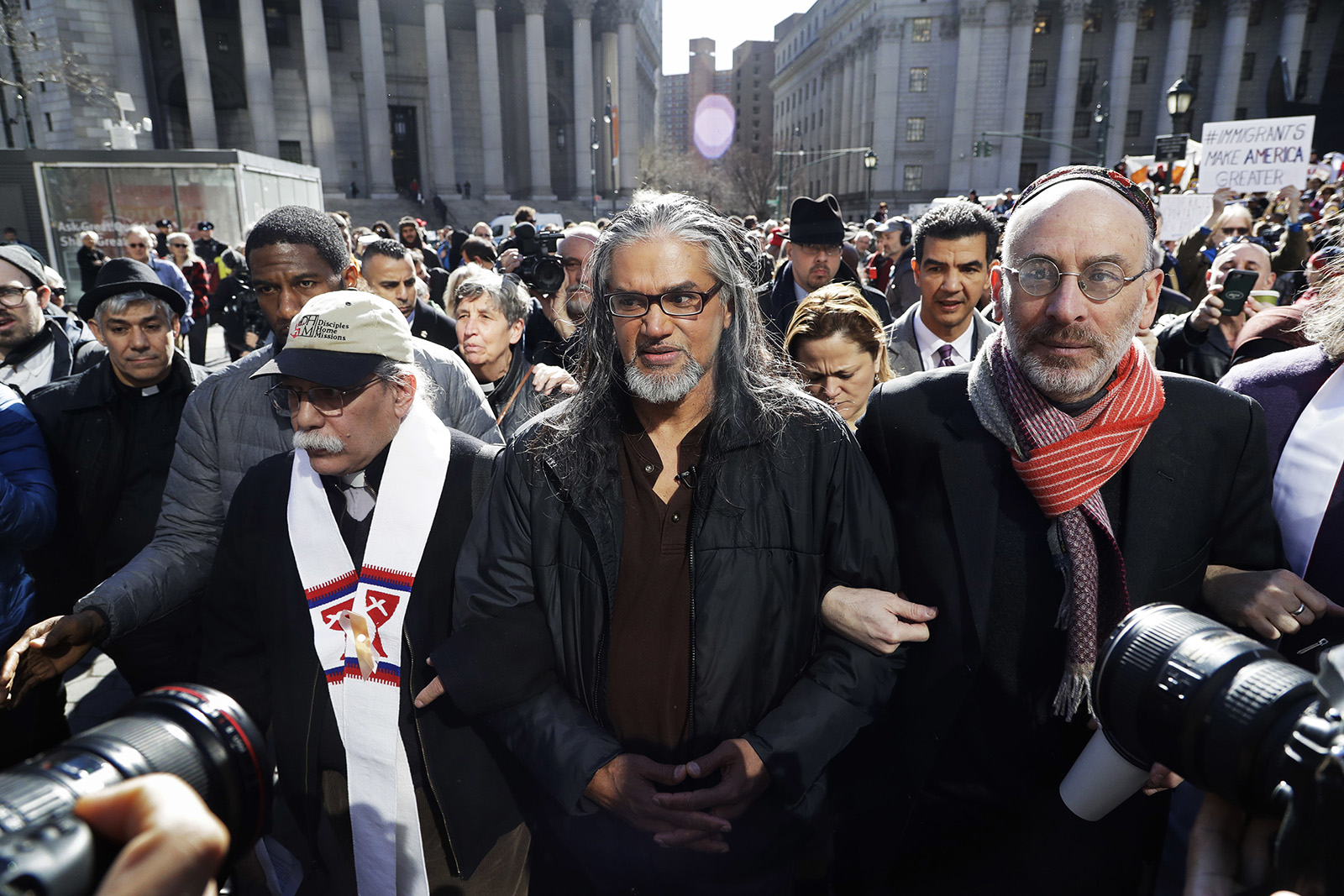
(RNS) — Ravi Ragbir has helped thousands of immigrants as the co-founder of New Sanctuary Coalition. Now he faces the threat of deportation.

In this March 9, 2017, file photo, Ravi Ragbir, center, executive director of the New Sanctuary Coalition, a Trinidad-born immigrant who works to protect New York's immigrant families from detention and deportation, walks with supporters as he arrives for his annual check-in with Immigration and Customs Enforcement in New York. (AP Photo/Mark Lennihan, File)
Greta Gaffin
January 14, 2025

Ravi Ragbir has accompanied thousands of immigrants in New York City at their check-ins with U.S. Immigration and Customs Enforcement, the federal agency known as ICE that oversees undocumented immigration.

Soon he must face his own fateful appointment with ICE.

“The stress and anxiety of not knowing my future will not abate, and I know that I will only get through this with the support of my community, and particularly of the faith leaders who have walked with me for so many years, and have committed to do so throughout this long journey,” Ragbir said.

Ragbir came to the U.S. from Trinidad and Tobago in 1991 in his 20s and became a lawful permanent resident in 1994. After Ragbir was convicted for mortgage fraud and served a 30-month sentence, an immigration judge ordered that he be deported in 2006 without a hearing. Ragbir has been seeking ever since to vacate his felony conviction.

Ragbir spent two years in immigration detention after his time in prison. The experiences, which he describes as “harsh,” led him to work for Families for Freedom, which fights deportation orders.

In 2007, Ragbir co-founded the New Sanctuary Coalition, which partners with Judson Memorial Church in Manhattan’s Greenwich Village to pair Americans with immigrants who are afraid to go to their ICE check-ins alone. He has since testified for the New York City Council and met with congressional representatives about immigrants’ needs.

Not everyone facing a deportation order will have to leave the country, but they also never know when they may have to leave. Daily life becomes uncertain. When Ragbir needed a new office computer, he decided not to buy one until after his check-in with ICE officials. He didn’t know if he’d be allowed to stay.

It’s especially tough for an immigration activist who has frequently criticized ICE. In 2017, ICE banned New Sanctuary Coalition volunteers from accompanying immigrants to their check-ins.

Then in 2018, Ragbir was arrested and detained at his own check-in. After much public outcry, he was released and not deported. He successfully argued his arrest was in retaliation for his anti-ICE comments and that the agency violated the First Amendment by arresting him. Ragbir won a three-year stay of the deportation order, which ended on Dec. 16, 2024.

His next ICE check-in was initially scheduled for Monday (Jan. 13), but he was granted an extension until March. ICE did not respond to a reporter’s email seeking comment for this story.

“This reprieve allows me to breathe a bit easier, at least for the moment,” Ragbir said. “It also gives me more time to continue fighting to stay here with my community and my family, and to continue fighting for other people living with the same level of uncertainty.”

Ragbir’s activism led him to his now wife, Amy Gottlieb, who is the U.S. migration director of the American Friends Service Committee. Their honeymoon was in the Rockaways, a part of Queens, because Ragbir’s parole required him at that time to stay within New York City limits. He also has an American daughter in the U.S. from a previous relationship.

“We have created a life together, and the idea of living that life without my husband is devastating,” Gottlieb said in a statement.

Before 1996, when the most recent immigration legislation passed, immigration officials had more discretion to consider an immigrant’s situation — like marriage to a U.S. citizen — and assign green cards. But Ragbir’s marriage has not been considered for his case.

“A lot of the safety valves were taken away” in 1996, said one of Ragbir’s lawyers, Alina Das, who is the co-director of the Immigrants Rights Clinic at the New York University School of Law. “Now the only safety valve left is a presidential pardon.”

It’s unlikely President Joe Biden will pardon Ragbir before President-elect Donald Trump assumes office Jan. 20.

Ragbir asked for his case to be reconsidered after his marriage to Gottlieb, but the federal government declined to hear his appeal. His supporters are worried that because he faced retaliation for his activism during the first Trump administration, he will face similar retaliation during the second one. Trump has said the first mass deportations should prioritize criminals, without specifying which crimes.

Ragbir’s lawyers have been trying to secure him a pardon since 2016. Last year, they appealed directly to the White House instead of the Department of Justice.

“We’re hoping that since the president has done some really important pardons, that he doesn’t forget about Ravi before he leaves office on the 20th,” said the Rev. Cece Jones-Davis, a Disciples of Christ minister and activist who has been involved with his case.

Ragbir’s work has been closely tied to his faith.

He was awarded the Bishop’s Cross by the Rt. Rev. Lawrence Provenzano, the Episcopal bishop of Long Island, in 2018 for his service to the community. Provenzano also made Ragbir an honorary canon of the Diocese of Long Island, which makes him an honorary member of the cathedral chapter that advises the bishop.

“Through his sanctuary work as Ecumenical Canon for Immigration, he has helped thousands and forged a vital connection between the immigrant rights movement and our mission to preach the Gospel,” Provenzano said in a statement. “His ministry is a living testament to our Baptismal Covenant: to seek Christ in all, love our neighbors, and strive for justice and dignity for every human being.”

Judge William Bassler, who sentenced Ragbir to prison, wrote to the Office of the Pardon Attorney, who assists the president in writing pardons, that Ragbir “has fully paid the price for his actions, and deserves not only to do invaluable work, but to care for his wife and daughter, free from the threat of deportation.”

Ragbir has also received support from 16 members of Congress, retired Presiding Bishop of the Episcopal Church Michael Curry, the Rev. Al Sharpton and the Rev. William Barber.