Thursday, January 16, 2025

Despite Israel’s threatening presence, Syrians in Golan refuse to leave ‘in exchange for peace’

As Damascus celebrated the fall of Bashar al-Assad, Syrians living in the Quneitra governorate in the Golan Heights looked on as Israeli troops suddenly drove into their villages. The near-daily Israeli raids are scaring the population, who say they now live in constant fear that Israel’s “temporary” occupation of the 50-year-old demilitarised zone will one day become permanent.


Issued on: 15/01/2025
By: Assiya HAMZA
An Israeli military vehicle drives on the Syrian side of the ceasefire line, as seen from Majdal Shams in the Israeli-occupied Golan Heights, January 6, 2025. 
© Shir Torem, Reuters


A mound made up of dirt and rocks blocks the end of the main street. A few hundred metres further down, an even larger man-made black mound stands out against the horizon. The sound coming from the excavators digging nearby is loud and constant.

"They’re digging a trench that is three metres wide and six metres deep," Ahmed Ali Tahar, mayor of the tiny village of Al-Hurriyah, in the governorate of Quneitra in the Syrian Golan, explains. “They started four months ago, as if they knew that Bashar (al-Assad) was going to fall.”

The Israeli army has built mounds of dirt and rocks to prevent passage to the new Golan buffer zone. Al-Hurriyah, on January 12, 2025.
 © Assiya Hamza, FRANCE 24

The construction project is enormous. Al-Hurriyah’s last house on the Syrian Golan Heights is now located just 500 metres from the Israeli border. Before, it was two kilometres away.

Israel announced in October, 2023, that, in a bid to prevent terrorist attacks like the one that Hamas had just unleashed from Gaza, it planned to fortify the so-called Alpha Line that separates the Israeli-occupied Golan from Syria.

‘Israel has spoiled our joy’

But on December 8, 2024, everything changed for the 1,000 residents living in Al-Hurriyah. “We were so happy about the fall of Bashar, but Israel spoiled our joy,” the mayor says. “Two days later they arrived with their tanks and their bulldozers.”

Just hours after Hayat Tahrir al-Sham (HTS, formerly linked to al Qaeda) had seized power in Damascus, Israel’s Prime Minister Binyamin Netanyahu ordered the army to “take control” of the demilitarised buffer zone in the strategic and water-rich Golan Heights, which overlooks northern Israel, Syria and Lebanon.

The 80-kilometre stretch was demarcated through a ceasefire deal between Israel and Syria in 1974, and has since been patrolled by the United Nations Disengagement Observer Force (UNDOF). Israel has long occupied large parts of Golan, which it annexed in 1981, but has – with the exception of Israel’s main ally the United States – never been recognised by the international community.

From this mosque, the village imam was ordered by Israeli soldiers to call on inhabitants to leave Al-Hurriyah. On January 12, 2025. © Assiya Hamza France 24

“The soldiers arrived and asked the imam to make a call (using the microphone he normally uses to call for prayer, editor’s note) to tell everyone to leave. They gave us until 3pm,” the village councillor recalls, noting it was the first time he had ever seen Israelis there since his arrival in 1978. “We made the women and children leave, but the men stayed.”

Maha* says she will never forget that day. “We didn’t even get enough time to get our things, barely enough time to bring clothes to wear,” she says, holding back the tears. “I stayed in Khan Arnabah for five days with the children before going back.”

Maha, who is in her 60s and worried that she and her family could be subject to reprisals if they don’t obey the orders, explains that in 25 years she has never seen Israeli soldiers in the village either. “How would you feel if you were told to leave your home overnight?” she asks, adding that she is afraid the army will come back and tell the villagers to leave their homes once again.

Ahmed Ali Tahar, mayor of Al- Hurriyeh, in the Quneitra governate, in Syria, on January 12, 2025. © Assiya Hamza, FRANCE 24


Almost half of villagers displaced

In just a few short hours, Al-Hurriyah was totally emptied of its women and children. Still, it was not until 10am the next day – long after the evacuation deadline had passed – that Israeli soldiers came knocking on the mayor’s door.

“They asked me why we hadn’t left with the imam. I told them I didn’t want to, and that I had nowhere to go. Then they threatened me, pointing a gun at me: ‘Next time, we’ll blow your head off!’,” Ahmed recalls as he counts the wooden beads of his misbaha, (prayer beads).

“We told them we were only shepherds and farmers, that they could search our houses and that we had no weapons to hide. They only searched my house and that of a bread seller.” Ahmed then did what he was told and left the village. Three days later, he received a phonecall and was told to return to Al-Hurriyah. “When I got home, there were around 20 armed soldiers there. They told me to bring everyone back [to the village], but they didn’t say why.” Some 600 villagers have since returned, but another 400 remain displaced in nearby towns like Khan Arnabah.

This is the same town where Bilal* goes to work every day. He is in his 60s and lives in Jubata al-Khashab, a village where the green military fatigues have become a daily sight since December 8. Only those who live there are allowed to enter. “The soldiers constantly come and go in the village,” he says, once again asking for reassurance that his testimony will remain anonymous.

“I’m afraid they’ll take my house. I don’t trust ‘the enemy’,” he says, adding there is now an obligation to return home early in the evening because “it’s dangerous”. Just like Maha, Bilal is also terrified of reprisals. He keeps touching his hands, most likely to stop them from shaking. “I don’t speak to them. I don’t know how they would react. I could be arrested,” he says of the Israeli troops, and reiterates that they “scare the villagers”.
‘Temporary’ Israeli occupation to ‘secure the borders’

In the past month, Israel has conducted hundreds of strikes aimed at destroying the Syrian military arsenal for fear it could otherwise fall into “hostile” hands. It has also conducted raids in large parts of the Quneitra province, searching for arms that the fleeing Syrian army might have left behind.


“They say we have weapons, but we don’t. There’s no armed group here,” Bilal says, adding that the Israeli troops “prevent people from moving around freely”.

Fatima Mansour poses for a photograph in her shop in Khan Arnabah, in Syria, on January 12, 2025. 
© Assiya Hamza, FRANCE 24

This is the reason why Fatima Mansour decided not to return to Jubata al-Khashab. “I’ve been living in Khan Arnabah for 12 days now because I was afraid I wouldn’t be able to come and open up my shop every day,” she explains from behind the counter of her clothing boutique. “They’re only a kilometre from my house.”

Although Netanyahu has insisted that the presence of Israeli troops in Syrian Golan is temporary, most Quneitra residents believe it could in fact become permanent. Some 30,000 Israelis and 23,000 Druze with Israeli residency permits now live in the Israeli-annexed part of Golan. On December 15, 2023, Netanyahu’s government approved a project to double the Israeli population there for a total of NIS 40 million (€10.6 million).


In the town of Baath, named after the now suspended political party, the road leading to the village of Al-Hamadiyah has been blocked by the Israeli army. 
 © Assiya Hamza, FRANCE 24

“We think they want to take our land, but we won’t let them. We’ll stay in our homes,” Fatima says. Bilal agrees. “They want to expand, take as much land as possible from Lebanon, Palestine and Syria,” he says. “I’m afraid, but I want the world to know the true face of our enemy. They pretend to be the victims, but they’re the aggressors.”

As Syria tries to rebuild itself, the country’s new strongman Ahmed al-Sharaa, better known by his nom de guerre Abu Mohammed al-Jolani, has said that after years of civil war, Syria is “exhausted” and that the country is not in the state “to enter into new conflicts”. In Syrian Golan, these types of statements are enough to send shivers down Quneitra residents’ spines. “Inshallah, (if God wills) that the new government will discuss keeping our land within the 1973 limits,” Maha says. “I don’t want to leave my land in exchange for peace."

This article has been translated from the original in French by Louise Nordstrom.


Cuba to release more than 550 prisoners after being cleared from US terror list

After outgoing US President Joe Biden cleared Cuba from Washington's list of state sponsors of terrorism on Tuesday, the US-sanctioned country announced a deal negotiated alongside the Catholic Church that would free 553 prisoners – including jailed protesters and other "political prisoners".


Issued on: 15/01/2025
By: NEWS WIRES
Cubans walk in a street of Havana on January 14, 2025. 
© Yamil Lage, AFP

Cuba said Tuesday it would release 553 prisoners in response to Washington removing the communist country from its list of terror sponsors in a deal hailed by relatives of jailed protesters.

The White House said President Joe Biden was removing Cuba from the list of state sponsors of terrorism in one of his last official acts before Donald Trump is sworn in next Monday.

The move will likely be overturned by Trump, who reinstated Cuba's terror designation in the final days of his first term of office in 2021.

"An assessment has been completed, and we do not have information that supports Cuba's designation as being a state sponsor of terrorism," a senior Biden administration official told reporters.


The deal was negotiated with the help of the Catholic Church for the release of "political prisoners in Cuba and those who have been detained unjustly," the official added.

Family members of jailed protesters hailed the announcement, including Liset Fonseca, mother of 41-year-old Roberto Perez, sentenced to 10 years' imprisonment.

He had taken part in anti-government protests with thousands of other Cubans in July 2021, fueled by power blackouts and soaring food prices.

"All the mothers of prisoners want our children to be free and out of that suffering, out of that hell that is the prisons in Cuba. They should never have been in prison," Fonseca told AFP.

One person was killed and dozens injured in the protests, which Havana accused Washington of orchestrating.

According to official Cuban figures, some 500 people were given sentences of up to 25 years in prison for participating, but rights groups and the US embassy say the figure is closer to 1,000.

Some have already been freed after serving their sentences.
'Diverse crimes'

Cuba welcomed Washington's announcement Tuesday as a step in the "right direction," but lamented it was still under US sanctions in place since 1962.

The foreign ministry later announced that 553 people imprisoned for "diverse crimes" will be released.

Cuba blames the US blockade for its worst economic crisis in decades, marked by shortages of fuel, food, medicines and electricity.

Trump's first presidential term from 2017 to 2021 saw a tightening of sanctions against Cuba that had been loosened during a period of detente under his predecessor Barack Obama.

Before assuming office, Biden had promised changes in US policy towards the island, but postponed these after Havana's crackdown on the 2021 protests.

Analysts say the Covid-19 pandemic, which tanked tourism, and economic mismanagement by the government have contributed greatly to the poor state of the economy.

But Cuba's President Miguel Diaz-Canel has described US sanctions as "genocidal" and said his country was prepared for "more difficult circumstances" after Trump's election.

The incoming president's allies immediately criticized Biden over Tuesday's announcement, with Ted Cruz -- a Cuban-American member of the US Senate's Foreign Relations Committee -- calling it a "rank appeasement of the Cuban regime."

Trump has nominated Senator Marco Rubio, a Cuban-American highly critical of communism and the left at large, to serve as his secretary of state.

A White House statement said Biden would also waive part of the so-called Libertad Act underpinning the US embargo of Cuba.

Biden would also rescind a Trump-era policy called "National Security Presidential Memorandum 5," ending restrictions on financial transactions with certain Cuban entities.

Colombia's leftist President Gustavo Petro and a political party made up of the country's disarmed ex-FARC guerrilla group, welcomed the White House announcement.

Cuba had hosted the talks from 2012 to 2016 that saw the FARC agree to lay down arms.

(AFP)


Cuba begins release of jailed protesters under US terror list deal

Honoring a deal with US President Joe Biden's administration which saw it removed from the US list of state sponsors of terrorism, the Cuban government started releasing jailed protesters on Wednesday, despite the possibility of incoming US President Donald Trump reversing Biden's decision.


16/01/2025 - 
FRANCE24
By: NEWS WIRES
Liset Fonseca, whose son was sentenced to 10 years' imprisonment for his participation in anti-government protests, shown in San José de las Lajas, Mayabeque Province, Cuba, January 15, 2025. © Yamil Lage, AFP

Cuba began releasing people Wednesday who had been jailed for protesting against the regime under a deal that saw departing US President Joe Biden remove the communist island from a list of terrorism sponsors.

Biden's eleventh-hour outreach to Cuba is part of a series of actions designed to cement his legacy before handing power next Monday to Donald Trump.

The agreement brought joy to the families of Cubans held since 2021 for demonstrating over recurring power blackouts, food shortages and soaring prices.

A first group of around 20 prisoners were released on Wednesday, their families and NGOs told AFP.

The delisting paves the way for increased US investment in the Caribbean island, which has been under a US trade embargo for over six decades.

But in a sign that the thaw may be short-lived, Trump's pick for secretary of state, Marco Rubio, suggested he could reverse Biden's decision.
'Literally collapsing'

Rubio, the son of Cuban immigrants, who is vociferously opposed to Fidel Castro's 1959 revolution, said Trump's incoming administration was not bound by Biden's policies.

"Cuba is literally collapsing," Rubio told his US Senate confirmation hearing, calling it a "fourth-world country" run by "corrupt" and "inept" Marxists.

"There is zero doubt in my mind that they meet all the qualifications for being a state sponsor of terrorism," he said.

Cuban Foreign Minister Bruno Rodriguez admitted that Biden's decision to undo the terror designation levied by Trump during the last days of his first presidency could be reversed.

But he argued that the repeated addition and removal of Cuba to the list by successive US administrations had robbed it of its meaning, turning it into a "vulgar instrument of political coercion."


Families' joy

Under the deal brokered by the Vatican, Cuba promised to release 553 prisoners, which a senior US official said included "political prisoners" and others "detained unjustly."

Vatican number two Cardinal Pietro Parolin said it was "significant" that Havana had responded to an appeal by Pope Francis for clemency.

Social media in Cuba lit up on Wednesday morning with relatives and friends of prisoners confirming their loved ones had been released.

"We received a call yesterday evening to go to the prison today," Rosabel Loreto, daughter-in-law of prisoner Donaida Perez Paseiro, told AFP.

Perez Paseiro had been sentenced to eight years' imprisonment for participating with thousands of others in the 2021 protests -- the biggest in Cuba since the revolution, which Havana accused Washington of orchestrating.

In a video posted on social media, she vowed to continue to "fight for Cuba's freedom."

In Havana, a woman who asked to remain anonymous said her husband remained behind bars for demonstrating against the government, but her daughter -- who had been arrested on the same charges -- was freed Wednesday.

The Miami-based Cuban NGO Cubalex said it had confirmed the release of 20 people, all jailed.

According to official Cuban figures, some 500 protesters were given sentences of up to 25 years in prison, but rights groups and the US Embassy say the figure is closer to 1,000.
'Detained unjustly'

With authorities providing no list of those due for release, many prisoners' families were still anxiously waiting for news of their relatives.

Liset Fonseca, mother of 41-year-old Roberto Perez, who is serving a 10-year jail term for joining the 2021 protests, said she had no news of his possible release.

Havana on Tuesday had welcomed its removal from the terrorism sponsor listing as a step in the "right direction," but lamented that the trade embargo was still in place.

Cuba blames the blockade for its worst economic crisis in decades, which has seen hundreds of thousands of people emigrate to the United States in the last two years, either legally or illegally, according to US figures.

Trump's first presidential term from 2017 to 2021 saw a tightening of sanctions against Cuba that had been loosened during a period of detente under his predecessor Barack Obama.

Before assuming office, Biden had promised changes in US policy towards the island, but held off after Havana's 2021 crackdown.

(AFP)


'Far Too Little, Far Too Late,' Say Critics as Biden Finally Removes Cuba From Terror List

"Seriously? You wait until six days before leaving office to do what you promised to do during your 2020 campaign?" said one observer.


CodePink led a November 2, 2022 rally against the U.S. economic blockade of Cuba outside the White House in Washington, D.C.
(Photo: CodePink)


Brett Wilkins
Jan 14, 2025
COMMON DREAMS

In a move likely to be reversed by the incoming Trump administration, President Joe Biden on Tuesday notified Congress of his intent to remove Cuba from the U.S. State Sponsors of Terrorism list, a designation that critics have long condemned as politically motivated and meritless.

Noting that "the government of Cuba has not provided any support for international terrorism" and has "provided assurances" that it will not do so in the future, the White House said in a memo that the Biden administration is moving to rescind the first Trump administration's January 2021 addition of Cuba to the State Sponsors of Terrorism (SSOT) list and take other measures to ease some sanctions on the long-suffering island of 11 million inhabitants.

Cuba's SSOT designation was based mostly on the socialist nation's harboring of leftist Colombian rebels and several U.S. fugitives from justice for alleged crimes committed decades ago, even though no other country has been placed on the SSOT list for such a reason and despite right-wing Cuban exile terrorists enjoying citizenship—and even heroic status—in the United States.

"Despite its limited nature, it is a decision in the right direction and in line with the sustained and firm demand of the government and people of Cuba, and with the broad, emphatic, and repeated call of many governments, especially Latin America and the Caribbean, of Cubans living abroad, political, religious and social organizations, and numerous political figures from the United States and other countries," the Cuban Ministry of Foreign Affairs said in a statement.

"It is important to note that the economic blockade and much of the dozen coercive measures that have been put into effect since 2017 remain in force to strengthen it, with full extraterritorial effect and in violation of international law and human rights of all Cubans," the ministry added.


For 32 straight years, the United Nations General Assembly has overwhelmingly voted for resolutions condemning the U.S. blockade of Cuba. And for 32 years, the United States, usually along with a small handful of countries, has opposed the measures. Last year's vote was 187-2, with Israel joining the U.S. in voting against the resolution.

Cuba followed Biden's move by announcing it would "gradually" release 553 political prisoners following negotiations with the Catholic Church, The New York Timesreported.


Many progressives welcomed Biden's shift. Congresswoman Nydia Velázquez (D-N.Y.) said in a statement that Cuba's SSOT designation "has only worsened life for the Cuban people without advancing U.S. interests" and "has made it harder for Cubans to access humanitarian aid, banking services, and the ability to travel abroad."

"It has also deepened food and medicine shortages and worsened the island's energy crisis, especially after Hurricane Rafael," she added. "These hardships have driven an unprecedented wave of migration, leading to the largest exodus in Cuba's history."

Rep. Ilhan Omar (D-Minn.) called Biden's move "a long overdue action that will help normalize relations with our neighbor."

"This is a step toward ending decades of failed policy that has only hurt Cuban families and strained diplomatic ties," Omar added. "Removing this designation will help the people of Cuba and create new opportunities for trade and cooperation between our nations. I look forward to continuing the work to build bridges between our countries and supporting policies that benefit both the American and Cuban people."


David Adler, the co-general coordinator at Progressive International, called the delisting "far too little, far too late."

"POTUS removing Cuba's SSOT designation in the final days of his presidency only means one thing: He knew—from day one—that the designation was simply an excuse to punish the Cuban people," Adler added. "But he maintained it anyway. Sickening."

The peace group CodePink released a statement welcoming Biden's shift, but adding that "it is unacceptable that it took this administration four years to address these injustices."

"President Biden made the inhumane decision every single day to not alleviate the suffering of millions of Cubans by keeping this designation in place," the group added. "As we mark this overdue progress, we can only hope that the Trump administration does not reverse these crucial steps towards justice and diplomacy."

Trump's nominee for secretary of state, Sen. Marco Rubio (R-Fla.) is the son of Cuban immigrants and a fierce critic of Cuba's socialist government. In 2021, Rubio introduced legislation aimed at blocking Cuba's removal from the SSOT list. Trump has also tapped Mauricio Claver-Carone—a staunch supporter of sanctioning Cuba—as his special envoy for Latin America.

Alex Main, director of international policy at the Center for Economic and Policy Research, said Tuesday that "while this decision, which comes years after 80 members of Congress urged Biden to reverse Trump's 'total pressure' approach should have been made long ago, it is better late than never."

"Sixty years of failed policy should be more than enough, and hopefully the new administration will have the wisdom and the courage to pursue a new course, one that's in the best interest of both the U.S. and the Cuban people," Main added.

Cuba was first placed on the SSOT list by the Reagan administration in 1982 amid an ongoing, decadeslong campaign of U.S.-backed exile terrorismattempted subversionfailed assassination attemptseconomic warfare, and covert operations large and small in a futile effort to overthrow the revolutionary government of longtime leader Fidel Castro. Cuba says U.S.-backed terrorism has killed or wounded more than 5,000 Cubans and cost its economy billions of dollars.

In stark contrast, Cuba has not committed any terrorism against the United States.

Former President Barack Obama removed Cuba from the SSOT in 2015 during a promising but ultimately short-lived rapprochement between the two countries that abruptly ended when Trump took office for the first time in 2017.

"Cuba will continue to confront and denounce this policy of economic war, the interference programs, and the disinformation and discredit operations financed each year with tens of millions of dollars from the United States federal budget," the Cuban Foreign Ministry said Tuesday. "It will also remain ready to develop a relationship of respect with that country, based on dialogue and noninterference in the internal affairs of both, despite differences."

'Little Marco!' Protesters use Trump's slur to violently interrupt Rubio hearing


David Edwards
January 15, 2025 
 RAW STORY

Senate Foreign Relations Committee/screen grab


Protesters used a slur created by President-elect Donald Trump during the 2016 presidential campaign while interrupting a nomination hearing for his would-be secretary of state.

During Sen. Marco Rubio's (R-FL) Wednesday confirmation hearing before the Senate Foreign Relations Committee, Rubio spoke about the end of the Second World War when the outburst occurred.

"And we've had forever wars ever since!" a protester shouted. "Little Marco, keep your hands off our country!"

Several protesters were quickly escorted from the hearing room.

Trump first used the "Little Marco" slur while attacking Rubio in the 2016 Republican presidential primary.  


Albert Schweitzer and his controversial legacy
DW
January 14, 2025


The Nobel prize winner Albert Schweitzer is remembered as a great humanist who helped heal the sick and poor over decades in Africa. But the doctor is also shadowed by paternalist views.


https://p.dw.com/p/4p8YR


Albert Schweitzer (right) in his 'jungle hospital' in LambareneImage: AFP via Getty Images


Numerous German streets are named after him, as are hundreds of schools, universities and hospitals. Albert Schweitzer — scientist, doctor, philosopher, theologian, author, musician and Nobel Peace Prize winner — was long revered for his humanitarian work in Africa.

The clinic he set up in Lambarene in present-day Gabon in West Africa earned him the moniker, "jungle doctor."

But Schweitzer was also a product of his time. Born in 1875 in Alsace, then part of the German Empire, and today eastern France, he was influenced by the ongoing and brutal colonialization of large parts of Africa by European countries.
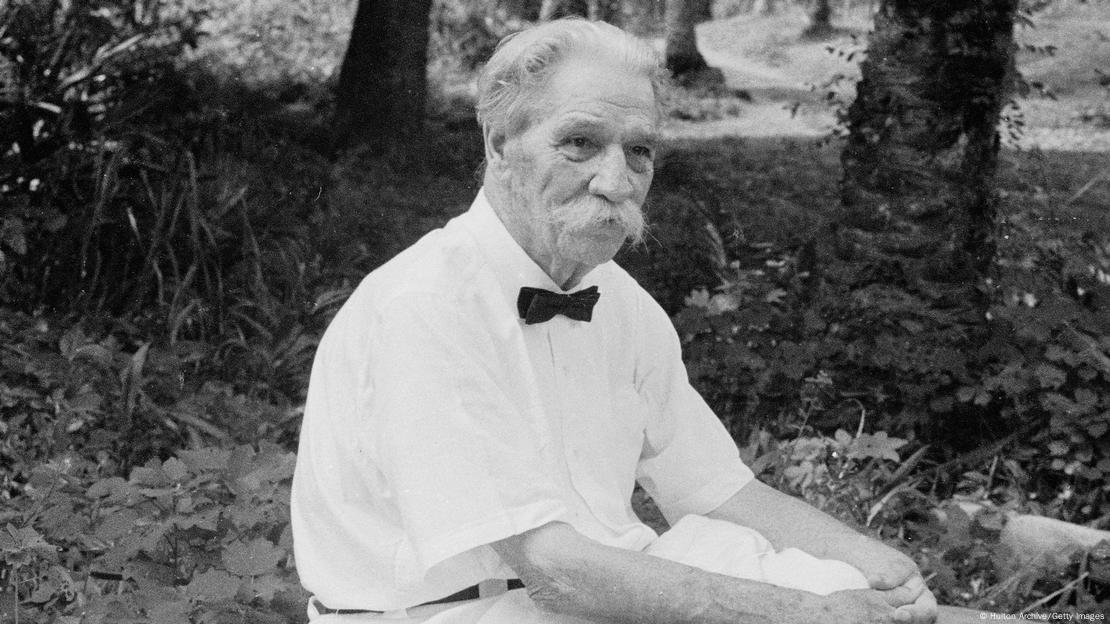
Albert Schweitzer sits in the grounds of the hospital he founded at Lambarene, Gabon, in the 1960s
Image: Hulton Archive/Getty Images

Schweitzer, marked by his flowing mustache and thick head of white hair, was a paternalist who saw himself as being on a kind of "civilizing mission" in Africa. He felt called upon to make the population — which he desc
ribed as "children without culture" — not only healthy but also "civilized."

Not a friend of the Nazis — but oddly silent about the Holocaust

The doctor's fame at home earned him the attention of the National Socialists — despite his early criticism of Hitler.

Later, an invitation sent to Gabon by Joseph Goebbels is said to have been politely declined by Schweitzer.

Having been in Africa almost continuously since 1924, Schweitzer maintained a distance from the horrors of the Holocaust and never condemned the Nazi atrocities, a stance that many researchers have criticized, according to journalist and author Caroline Fetscher.

Fetscher, who has written about Schweitzer's ambiguous place in German history, believes that the jungle doctor "was well aware of the persecution of the Jews," despite his isolation.

"However, he neither protested nor raised his voice in any way even after 1945, even if his contemporaries expected and demanded this of him," Fetscher told DW.

According to Fetscher's research, most of the doctors working in his hospital in Lambarene at the time of Nazi rule were Jewish. Most had been forced to leave Europe because of the Holocaust.

She explains that a doctor being considered as the future head of the hospital as the successor of the ageing Schweitzer had an Auschwitz number tattooed on his arm.

"Schweitzer knew his story and knew about the atrocities," said Fetscher.

In addition, Schweitzer's wife Helene was of Jewish descent and had only narrowly escaped the concentration camps.

Nonetheless, his silence represents "a huge gap in his life," something numerous biographers have noted, said Fletscher.

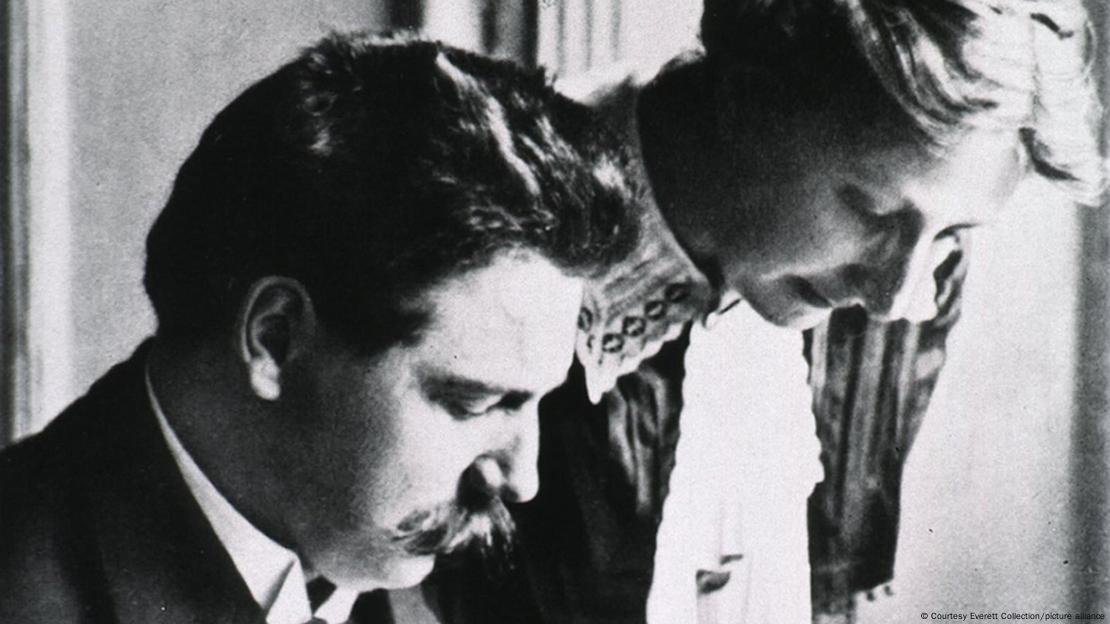
Albert Schweitzer, with his wife and medical partner, Helene Bresslau, in 1913, the year they established their first mission hospital at Lambarene, Gabon
Image: Courtesy Everett Collection/picture alliance


Still remembered for saving lives and peace activism


As Schweitzer and his team successfully fought disease and infant mortality in Gabon, this work could conveniently overshadow the crimes of the World War II, according to Caroline Fetscher.

It is therefore no great surprise that many children and young people in postwar Germany regarded Schweitzer as an idol.

Whole school classes wrote him letters, his likeness appeared on stamps, newspaper articles and books also built up his reputation as a heroic, healing philanthropist.

Schweitzer was keen to make amends for what other Europeans had done in the colonies.

"Ultimately, everything good we do for the peoples of the colonies is not charity, but atonement for all the suffering we whites have brought upon them from the day our ships found their way to their shores," he once said.

Yet Schweitzer did not encourage the emancipatory aspirations of colonized or exploited populations who wanted to build a functioning society or economy without the help of white people.

The polymath used to say to his fellow Africans: "I am your brother. But I am your big brother."

Despite this paternalistic legacy, Albert Schweitzer is being celebrated as a humanitarian and later a peace activist on the 150th anniversary of his birth.

The world knows him not only as a "jungle doctor," humanist and animal lover, but also as a tireless fighter against nuclear armament during the Cold War.

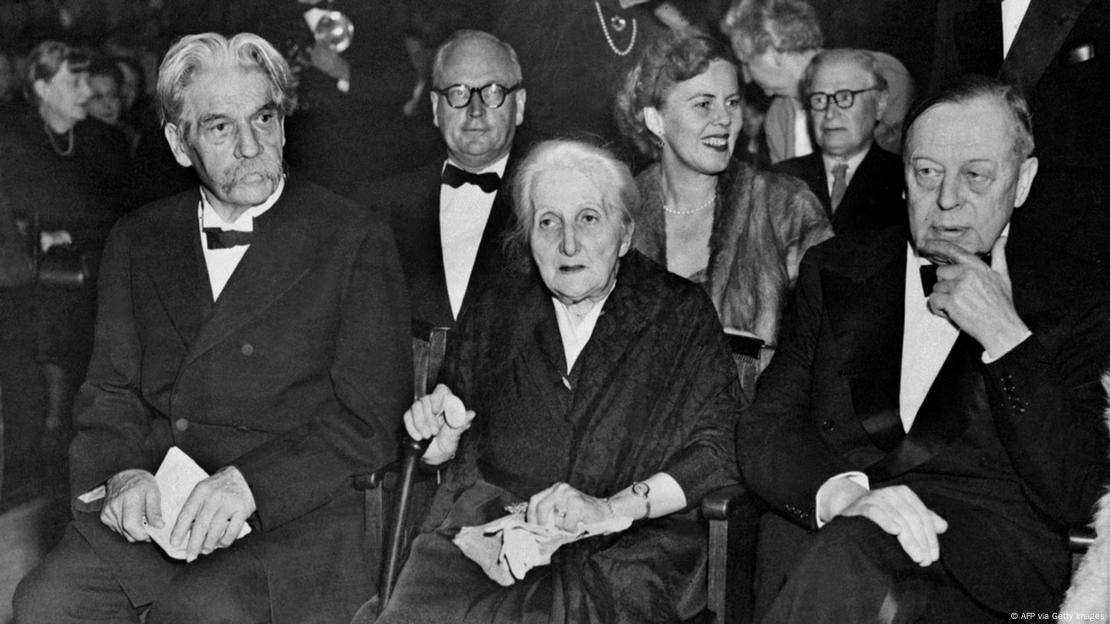
Albert Schweitzer (left) at the Nobel Peace Prize ceremony in 1952
Image: AFP via Getty Images

He was awarded the Nobel Peace Prize in 1952 for this commitment under the banner of his philosophy, "Reverence for Life."

As Schweitzer once said: "By having a reverence for life, we enter into a spiritual relation with the world. By practicing reverence for life we become good, deep, and alive."

Or put another way: "Do something wonderful, people may imitate it."


Albert Schweitzer: helping Africa's sick and needy

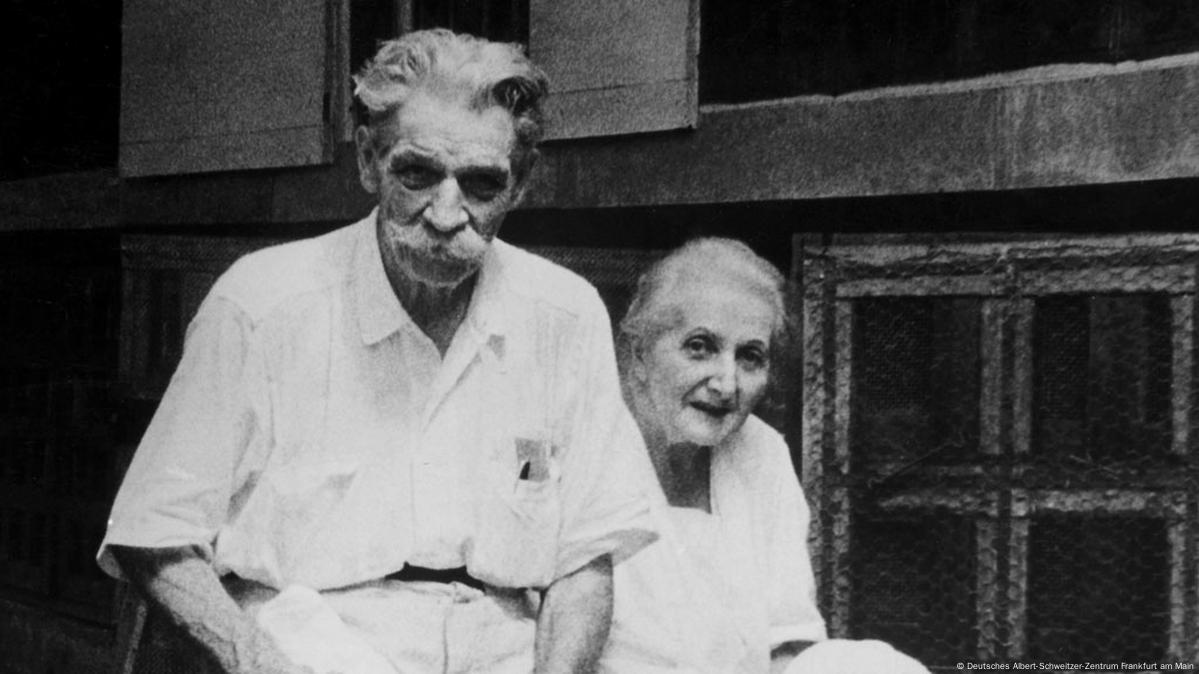
He was the perfect mix of scholarliness and humanity: Nobel Peace Prize winner Albert Schweitzer. One hundred years ago he founded his hospital in Lambaréné, Gabon. DW takes a closer look at Schweitzer's life.Image: Deutsches Albert-Schweitzer-Zentrum Frankfurt am Main


Messenger for humanity

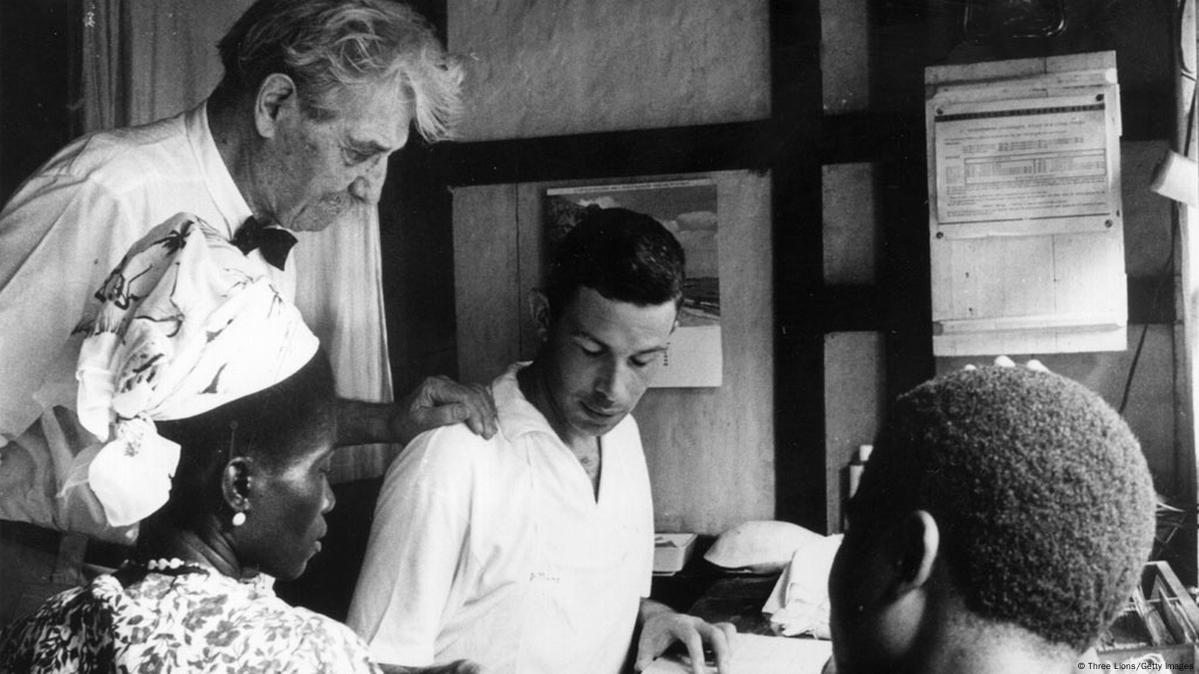
To this day Nobel Peace Prize winner Albert Schweitzer remains a guiding example of the perfect mix of humanity and scholarliness. Born in 1875, he opened his world famous hospital in Lamberéné, Gabon, a century ago to tend to the poor and sick. We have a look back at his unique life.Image: Three Lions/Getty Images


A son of Alsace

Albert Schweitzer grew up in the Alsatian town of Gunsbach. In this family photo from 1885, Schweitzer is standing in the center of the back row. In the years afterward, the Alsace region alternated between French and German rule. Schweitzer spoke both languages, and studied in Paris and Strasbourg.Image: Hulton Archive/Getty Images

This article was originally written in German.

America’s political house can become less divided


A variety of social science interventions can make Democrats and Republicans feel less ire toward each other — at least for a while


University of Texas at Austin


Maytal Saar-Tsechansky was standing a few meters from Israeli Prime Minister Yitzhak Rabin in 1995, when he was assassinated by a right-wing extremist in Tel Aviv.

“At the time, Rabin was promoting peace with the Palestinians,” says Saar-Tsechansky, professor of information, risk, and operations management and the Mary John and Ralph Spence Centennial Professor at Texas McCombs. “The assassination was the result of a lot of incitement, of some people claiming that he was the enemy of the people.”

Although she typically studies artificial intelligence, the traumatic incident planted a seed for a different interest: how to ease political divisions. She began working on an algorithm that would alert social media users to polarizing content. She also approached Christopher Bryan, associate professor of business, government, and society, to design an intervention that could help persuade them to avoid such content once they were alerted to it.

The intervention — an eight-minute interactive e-learning module — became part of a new megastudy, published two weeks before a bruising presidential election. Bryan and Saar-Tsechansky were among 86 co-authors who devised and tested methods for reducing partisan animosity and antidemocratic attitudes, one person at a time.

The megastudy’s lead researchers selected 25 “treatments” from hundreds of submissions. They included informational videos, games, articles, and writing prompts. Many highlighted likable people of the opposing political party or emphasized traits or values that rival partisans have in common.

In the module by Bryan and Saar-Tsechansky, subjects read about how news media exploit polarization for profit. The module included data showing that the more news a person watches, the more exaggerated and inaccurate are that person’s ideas about people with opposing views.

After viewing the information, subjects were prompted to talk about actions they and others could use to “take control back from the media.”

Of the 25 treatments, theirs proved second most effective in reducing partisan animosity: by 10% compared with a control group that received no treatments. It also had smaller effects on attitudes such as social distrust and opposition to bipartisan cooperation.

“The effects were not huge, but it is possible to mitigate some of these issues. I think it’s very, very encouraging,” Saar-Tsechanksy says.

Pulling Back on Partisanship

In all, the megastudy tested its treatments on more than 32,000 self-identified Democrats and Republicans in the U.S. Its overarching finding was that 23 of the 25 efforts led to statistically significant reductions in partisan animosity, which the researchers define as “dislike for opposing partisans.”

The research, citing studies that partisan animosity grew by 22 percentage points between 1978 and 2016, found that:

  • The average reduction in partisan animosity was 5 percentage points — equivalent to eight years of the increase seen in recent decades.
  • The most effective treatment was a video of British people “bonding with one another despite having political disagreements.”
  • For six treatments, the reductions held for at least two weeks. Bryan and Saar-Tsechansky’s treatment was the most lasting, maintaining 90% of its impact.

The treatments were more limited in reducing other negative attitudes.

  • Six significantly lessened support for undemocratic practices. The most effective treatments challenged perceptions that opponents were antidemocratic or highlighted “the potentially disastrous consequences of democratic collapse.”
  • Five reduced support for partisan violence, most notably by showing subjects op-eds in which leaders of their parties rejected violence or campaign ads that endorsed acceptance of election results and peaceful transfer of power.

Both McCombs researchers say the study provides ideas that could be incorporated into civic education or media literacy courses. Saar-Tsechansky hopes it will get the attention of school districts, to help educate teenagers “who already have some critical thinking skills and care about what’s right and what’s wrong.”

She and Bryan see education as the most viable medium for reducing polarization. They say media — particularly cable news — fan the flames of political division to increase ratings, readership, and revenue. Politicians also benefit from this system, so they have little incentive to change it.

Bryan says most Americans are part of an “exhausted majority.” They want Democrats and Republicans to work together to address real problems but feel they’re falling victim to media messaging.

He points to social psychology research around pluralistic ignorance. It’s a phenomenon, he says, in which “people outwardly act as though they’re on board with something, because they think everyone else is, when really they aren’t.”

Bryan hopes the megastudy will encourage more Americans to think beyond media narratives. He says, “If people just understand what they’re consuming and they understand the motives behind the content, then they’re much better equipped to protect themselves.”

Megastudy Testing 25 Treatments to Reduce Antidemocratic Attitudes and Partisan Animosity  is published in Science.

Story by Kiah Collier


Protective actions need regulatory support to fully defend homeowners and coastal communities, study finds


By April Toler


University of Notre Dame

Tracy Kijewski-Correa 

image: 

Tracy Kijewski-Correa, professor of engineering and global affairs at the Keough School of Global Affairs at the University of Notre Dame

view more 

Credit: University of Notre Dame


As climate change drives increasingly severe hurricanes, U.S. coastal communities are bearing the brunt of mounting losses. With regulations failing to curb the damage, homeowners have become the front line of defense — but their efforts often fall short, a recent study reveals.

Led by Tracy Kijewski-Correa, professor of engineering and global affairs at the Keough School of Global Affairs at the University of Notre Dame, the study, published in the International Journal of Disaster Risk Reduction, explored how homeowners respond in the aftermath of hurricanes when reconstruction becomes necessary. Focusing on Calcasieu Parish, Louisiana — a community still recovering from a sequence of disasters beginning with Hurricane Laura — the research introduced a new methodology to document homeowner actions, the damage they experienced and their recovery paths.

Why homeowners are key to reducing losses

“With no mandates to upgrade at-risk homes, homeowners will be responsible for adapting their properties to halt mounting climate-driven losses in the housing sector,” said Kijewski-Correa, who also serves as the director of the Pulte Institute for Global Development at the Keough School. “Unfortunately, we have no idea what decisions households are making and why — this study created a methodology to answer those questions so we can better incentivize them to adapt before the next storm.”

Since 1980, U.S. losses from tropical cyclones have reached $1.3 trillion, exposing how underprepared the country remains in addressing weather and climate disasters. This growing vulnerability is compounded by rapid population growth in coastal areas and outdated or inconsistent building codes. 

Gaps in protection and future risks

Using indices developed for the study, researchers measured protection levels for a number of critical home components at key points: at the time of purchase, pre-disaster and after post-disaster repairs, as well as future intended upgrades.

The study found that, on average, homeowners took proactive steps to protect their properties before the hurricane, enhanced those protections after the storm and expressed intentions to continue investing in resilience. Roofs, windows and other external components were the primary focus of these improvements. However, the typical home achieved only about half the measures needed to withstand future storms effectively.

Visible damage in neighborhoods and the experiences of family and friends also influenced voluntary homeowner decisions to invest in protective measures. Motivated by observing widespread destruction across the community, even homeowners who escaped damage in Hurricane Laura expressed intentions to invest in resilience.

Policy and incentives: closing the protection gap

“Homeowners are making efforts to ‘build back better’ — strengthening roofs, adding hurricane clips or straps and replacing standard windows with impact-rated alternatives,” said Kijewski-Correa. “Unfortunately, most investments still leave homes only moderately protected against future hurricanes.”

The study’s methodology, which includes a flexible survey tool and evaluation methods to analyze homeowner decisions, provides a framework for future research. Next steps include identifying the factors that most effectively motivate homeowners to adopt comprehensive protections.

“Policies need to incentivize comprehensive, whole-house upgrades while ensuring clear messaging about the importance of these measures,” Kijewski-Correa said. “We also need to address barriers such as affordability and awareness, which often prevent households from taking action.”

Study co-authors include civil engineering Ph.D. student Rachel Hamburger and Debra Javeline, professor of political science, both from the University of Notre Dame. The research is funded through a National Science Foundation grant under the Strengthening American Infrastructure program.

Contact: Tracy DeStazio, associate director of media relations, 574-631-9958 or tdestazi@nd.edu

Contact: Jessica Sieff, associate director of media relations, 574-631-3933, jsieff@nd.edu