Thursday, January 16, 2025

In eyeing Greenland, Trump echoes long-held American designs on Arctic expanse

The Conversation
January 15, 2025 

Greenland's flag flies in Igaliku settlement, Greenland, July 5, 2024.
 Ritzau Scanpix/Ida Marie Odgaard via REUTERS/File Photo


At a news conference in early January 2025, President-elect Donald Trump rambled through a grab bag of grievances and proposals, including his disdain for wind power and low-flow showerheads and his thoughts on the possible acquisition of the Panama Canal, Canada and Greenland.

On the latter, he mused, “People really don’t even know if Denmark has any legal right to it, but if they do, they should give it up, because we need it for national security.”

The negative commentary in prominent news outlets was swift. Such “vague threats” and “messianic promises” were “shocking … in their craziness,” a harbinger of a “chaotic and stream-of-consciousness presidency, a succession of opinion writers suggested.

Yet, with respect to Greenland, Trump’s proposal has a long history. Here, he is guilty less of territorial ambitions than of saying the quiet part out loud.

In 1823, President James Monroe established the principle that European powers were to defer to the United States on matters pertaining to the Western Hemisphere. While what came to be called the Monroe Doctrine and its corollaries were employed primarily to assert American interests and ambitions in Latin America, they clearly applied to northern neighbors as well.

After the German invasion of Denmark in April 1940, Secretary of State Cordell Hull made this point clear to his Danish counterpart, asserting that "Greenland is within the area embraced by the Monroe Doctrine.”U.S. Secretary of State Cordell Hull is interviewed on April 9, 1940, after word was received of the invasion of Denmark and Norway by German troops. Hulton Archive/Getty Images

The two countries signed a “Defense of Greenland” agreement in 1941 that allowed the U.S to “construct, maintain, and operate … landing fields, seaplane facilities, and radio and meteorological installations.” The U.S. pressed to retain its bases after the war, a decision that was formalized by treaty in 1951.

Read more: 4 reasons why the US might want to buy Greenland – if it were for sale, which it isn’t

For the U.S., which had a substantial military presence in Greenland by the early 1950s, the territory was crucial as an outpost for the Air Force and as a link in the so-called Distant Early Warning Line that monitored possible Soviet incursions from the north.

In early 1955, almost 70 years to the day before Trump’s recent speech, the Joint Chiefs of Staff proposed a more radical solution to preservation of American interests in the North Atlantic. In a memorandum for the secretary of defense, titled “Possible Acquisition of Greenland by the United States,” the military leaders reiterated the U.S. position: “Geographically, Greenland is part of the Western Hemisphere and has long been regarded so by the United States.”

“As to whether it would be to the military advantage of the United States to acquire title to Greenland,” the memorandum continued, “the Joint Chiefs of Staff believe it to be axiomatic that sovereignty provides the firmest basis of assuring that a territory and its resources will be available for military use when needed. United States sovereignty over Greenland would remove any doubt as to the unconditional availability of bases.”

A few days later, a shorter version landed on President Dwight Eisenhower’s desk, with the summary assessment that “it would be to our military advantage to acquire title to Greenland from a military viewpoint.”

Such musings, in 1955 or 2025, casually assume the universality of American interests and disregard the sovereignty of allies. By the same token, Trump’s proposal is evidently not just another of his frequently outlandish ambitions, when it has been a fixture of U.S. national security for over 70 years.


'Utter nonsense': Expert blows up Trump world's reason for acquiring Greenland


Brad Reed
January 15, 2025
RAW STORY

President Donald Trump at his plane (Photo: Gage Skidmore/Flickr)

President-elect Donald Trump has long mused about bringing Greenland into the United States and recently he and his allies have claimed that America needs the territory due to its rich mineral deposits.

However, Bloomberg columnist Javier Blas examined the potential for significant deposits of precious minerals in Greenland and concluded that this justification for seizing the territory is "utter nonsense."

Among other things, Blas focused on the fact that Greenland's frigid climate makes whatever minerals can be extracted from the territory much more expensive than minerals extracted from countries with warmer climates.

"A 2023 Danish geological survey identified at least 50 locations with mineral potential," he writes. "Of them, more than half are north of the Arctic Circle, making their exploitation very hard and expensive, if not impossible. A handful, however, are in the ice-free southern tip of Greenland, opening the door to development. But most of them are small. Of the potentially large, perhaps the most interesting one is the Tanbreez rare earths deposit.Yet the geological report warns that Greenland has very little chance of developing its commodity deposits due to high production costs."

Blas then knocks down claims that taking over Greenland could help the United States at the very least help America break China's current stranglehold on the rare earths market.

"Are the Greenlandic reserves of rare earths large? Not as far as we know," he argues. "According to the US Geological Survey, considered an authority in the field, the island contains 1.5 million tons. That puts Greenland in the world’s top 10, but well behind the US itself, as well as China, Brazil, Vietnam, India and Australia. Very likely, mining for rare earths in all of those countries would be easier and cheaper than in Greenland."

In fact, Blas identifies nations including the Democratic Republic of Congo, Chile, Peru, Brazil, and Mongolia as nations with the potential for real mineral extraction in a way that Greenland can never reach.

"Sadly, none of them is for sale," he concludes. "But neither is Greenland."
The threats behind the most common blocked workplace websites


By Dr. Tim Sandle
DIGITAL JOURNAL
January 13, 2025


Which websites should be blocked at work? Image by Tim Sandle.

According to data collected by the network security company NordLayer, a significant portion of employers (72 percent) block malicious and adult websites from their employees. Malicious websites can pose severe security threats by spreading malware, while adult websites are often restricted due to concerns over inappropriate content and potential productivity loss.

Research shows that the Domain Name System (DNS) filtering feature is also used for blocking phishing, cryptojacking, illegal, and DDoS as a Service (DaaS) websites. Through the use of such technology, employers seek to protect their networks and systems from cyber threats and illegal activities that their employees can create.

“While blocking adult content might seem like a matter of workplace etiquette, it’s actually a cybersecurity measure,” Andrius Buinovskis, head of product at NordLayer tells Digital Journal. “Many adult websites are hotbeds for malware and phishing attempts. It’s a prime example of how seemingly simple policies can affect an organization’s overall security posture.”

Employers seeking to maintain a professional work environment

Gambling sites are blocked by 43 percent of employers, likely due to concerns over addiction and productivity loss. Other research revealed that 15 percent of online gamblers did so during their workday. Hence it is unsurprising that employers would want to limit their employees from accessing gambling sites.

Besides just blocking adult websites, many managers take a step further to maintain a professional work environment. For example, 30 percent block dating sites, 28 percent do not allow access to sex education websites, and about 12 percent of employers even block lingerie sites.

To lower distractions from work and promote productivity, 19 percent of IT managers restrict access to gaming websites because they can be time-consuming and embedded with ads and hyperlinks to other malicious websites. Additionally, celebrity news websites and social media are blocked by 8 percent and 7 percent of employers.

Why DNS filtering is important

DNS filtering works by intercepting website requests and subjecting them to additional security checks. If a requested site is found on a blocklist or identified as malicious, the DNS resolver blocks the request, preventing access and mitigating potential cybersecurity risks. Managers can choose what types of content shouldn’t be accessible by employees on company-managed networks and the DNS filters will do the rest.

Buinovskis explains that companies can maintain a professional work environment and optimize network performance by controlling access to inappropriate or non-work-related content. It helps to protect company resources and ensure that bandwidth is used for business tasks only.

“Implementing DNS filtering is a win-win for organizations,” says Buinovskis. “It improves cybersecurity by blocking access to potentially harmful websites and helps in protecting sensitive company data. DNS filtering provides a solution that addresses security and productivity concerns, making it an essential component of any network security strategy.”
US bank profits rise as Wall Street hopes for merger boom   

THANKS JOE - BIDENOMICS

ByAFP
January 15, 2025


Large US banks reported soaring profits Wednesday propelled by strength in trading and financial advisory services as Wall Street eyes a potential merger boom under the incoming Trump administration.

Profits climbed for US financial heavyweights including JPMorgan Chase and Goldman Sachs, in part because of the absence of large costs in 2024’s year-ending quarter.

In the equivalent period in 2023, banks set aside large sums to replenish a US rescue program following the collapse of Silicon Vally Bank.

JPMorgan Chase’s fourth-quarter profits jumped 50 percent to $14 billion, while Goldman Sachs’ more than doubled to $3.9 billion.

In both cases, huge increases in revenues tied to trading were a standout category, reflecting a buoyant environment in a period that included the US presidential election and a heady aftermath on Wall Street.

Citi reported profits of $2.9 billion, compared with a loss of $1.8 billion during the 2023 quarter, while Wells Fargo’s profits rose 47 percent to $5.1 billion.

Gains in banking shares helped lift Wall Street stocks Wednesday.

Many financial firms are salivating over the prospects of the shift to the administration of President-elect Donald Trump, who is expected to scale back the confrontational regulatory approach of the outgoing Biden administration.

“There’s no question that were in a kind of animal spirits moment right now,” said JPMorgan Chief Financial Officer Jeremy Barnum, alluding to an uptick in the “pipeline” of merger and acquisition (M&A) activity.

“All eyes are on the US in a big way,” said Citi Chief Financial Officer Mark Mason.

“Generally people are looking at the US with what’s likely to be a pro-growth agenda,” Mason said on a briefing with reporters. The bank’s M&A pipeline is “very strong,” he added.

A wave of corporate mergers would translate into increased advisory fees at banks after the Biden administration’s broadly skeptical view of dealmaking discouraged some transactions.

The industry also stands poised to benefit from an easing of bank regulation that could free up funds currently required to be held as emergency capital. Instead, banks could lend that money, or return it to shareholders.


– US economy ‘resilient’ –


At JPMorgan, a successful fourth quarter lifted annual profits to $58.5 billion, up 18 percent.

Profits increased in JPMorgan’s commercial and investment bank business, driven by higher advising fees and a surge in fixed income and equity trading. JPMorgan also scored higher asset and wealth management fees.

These areas of strength offset a two percent decline in net interest income, the result of lower interest rates. JPMorgan also experienced higher credit charge offs, while adding net reserves of $267 million in case of bad loans.

Chief Executive Jamie Dimon described the US economy as “resilient,” with relatively low unemployment and solid consumer spending.

“Businesses are more optimistic about the economy, and they are encouraged by expectations for a more pro-growth agenda and improved collaboration between government and business,” Dimon said.

However, Dimon pointed to the risk that elevated inflation will persist and to geopolitical conditions that remain “the most dangerous and complicated since World War II.”

Meanwhile, at Goldman, revenues tied to equity and fixed income, currency and commodity trading rose by double digits, while interest rate products were essentially flat.

Goldman also won higher revenues in equity and debt underwriting. While advisory revenues were lower, Goldman said the investment banking fees backlog rose compared with the prior quarter.

A Goldman powerpoint listed an “improving” regulatory backdrop among the supporting factors for the firm’s business.

“With an improving operating backdrop and growing CEO confidence, we are harnessing the power of One Goldman Sachs to continue to serve our clients with excellence and create further value for our shareholders,” said Chief Executive David Solomon.

All four banks rose on Wall Street. At mid-morning, JPMorgan was up 0.8 percent, Goldman Sachs 5.9 percent, Citi 6.2 percent and Wells Fargo 5.2 percent.

Trump’s return threatens resurgence of trade wars


By AFP
January 14, 2025


US President-elect Donald Trump has threatened fresh tariffs on companies, countries and groupings alike - Copyright Lehtikuva/AFP/File Vesa Moilanen

Beiyi SEOW

Donald Trump’s second presidential term promises a return to tariffs as he pressures partners and rivals to tackle everything from migration to drug trafficking, while protecting US industries — in moves that could trigger new trade wars.

Even before taking office, Trump has raised the prospect of fresh levies on companies, countries and groups of states as he seeks to implement his agenda.

He has vowed tariffs on Mexico, Canada and China until they crack down on fentanyl and border crossings, and he threatened “economic force” against Ottawa after suggesting Canada should become the 51st US state.

Trump also warned of 100 percent tariffs on BRICS nations — a bloc including Brazil, Russia, India, China and South Africa — if they create a rival to the US dollar.

New trade wars could rock the global economy, worsen tensions with Beijing and upend ties with allies.

US manufacturers, farmers and small business owners await his first moves, girding for higher import costs on anything from batteries to wines, while bracing for retaliation.

“I’m not necessarily against all tariffs,” said Mark Pascal, a restaurant owner based in New Jersey.

He said he understands the rationale of taxing a country that unfairly suppresses prices.

But “we’re concerned about any tariff that would apply broadly to wine and spirits, which is an industry that is not unfairly competing in any way,” added Francis Schott, who co-runs restaurants with Pascal.

Trump introduced a range of duties in his first term, including on steel and aluminum, and on Chinese imports as he waged an all-out trade war on the world’s second biggest economy.

In 2019, he imposed tariffs on European food and drinks as Washington and Brussels clashed over aviation subsidies.

While these were later suspended, restaurateurs worry their return would batter small establishments.

“It raised our costs, so it raised our prices,” said Pascal.

– Global impact –


Trump has used tariffs as a bargaining tool and will probably do so again, said Joshua Meltzer of the Brookings Institution.

But China is signaling pushback and Europe is more prepared policy-wise, he told AFP.

Governments appear to have “reached a similar conclusion that they are better off threatening retaliation at least at this stage, rather than capitulating,” Meltzer added.

EY chief economist Gregory Daco warned that tariffs and other measures could tip the world economy into stagflation — stagnation with elevated inflation — if pursued to their fullest.

Trump’s other promises include an across-the-board levy of 10 percent or more, with a steeper rate on China.

– Growth risks –

Domestically, Trump has touted tariffs as a means to protect US manufacturing, coupled with policies like tax cuts and deregulation that he says will spur growth.

His Treasury secretary nominee Scott Bessent said in a November interview that tariffs would not be inflationary even if there were a “one-time price adjustment.”

But Daco estimates higher import costs could lift consumer price inflation by 1.2 percentage points after a year.

“The long-run impact is that it shrinks the US economy and it reduces the value of our incomes,” said Erica York of the Tax Foundation.

While the Congressional Budget Office estimated a uniform 10 percent hike and added 50 percent on Chinese goods would slash deficits, this could also lower real GDP.

– Emergency? –

Analysts expect Trump could implement tariffs quickly using the International Emergency Economic Powers Act.

This allows the president to regulate imports during a national emergency, although it could be hindered by lawsuits.

A tried-and-tested method would be the trade law, with Trump previously using Section 301 as justification for tariffs.

But this takes more time as it calls for a government probe.

He could also use Section 232 of the Trade Expansion Act to hike tariffs on goods with national security implications.


Trump unbound: America braces for wild, dark comeback


By AFP
January 13, 2025

Donald Trump has shown little sign of changing his bombastic style in his second term - Copyright Lehtikuva/AFP/File Vesa Moilanen
Danny KEMP

Buckle up: Donald Trump returns to the White House next week for a second term that promises to be even more volatile — and hard-line — than his roller-coaster first presidency.

Buoyed by his historic political comeback, the billionaire Republican has shown no sign of changing the bombastic style that shook the United States and the world from 2017 to 2021.

“If you liked Trump One, you’re going to love Trump Two,” Peter Loge, the director of George Washington University’s School of Media and Public Affairs, told AFP.

For all the talk of a more disciplined Trump, the 78-year-old — who will become the oldest person ever sworn in on January 20 — appears to be much the same mercurial figure as last time around.

Before even setting foot back in the Oval Office, he has spoken of a new “golden age” even as he vows retribution against opponents and the media, and pledges the mass deportation of illegal migrants.

Trump has also set off alarm bells around the globe, issuing outlandish territorial threats against US allies and stoking fears that he will throw Ukraine under the bus to win a peace deal with Russia.

“Trump’s character is fundamentally the same,” said David Greenberg, professor of history and journalism at Rutgers University.

“What we can expect to see is more of the unexpected.”

– New normal –

But if anything, Trump 2.0 is set to be even more powerful, and more extreme.

A Trump presidency shocked many in 2016, but is now the new normal. Big tech and big business have rallied behind the man they largely shunned in his first term,.

Crucially Elon Musk, the world’s richest man and boss of the increasingly right-wing X social media platform, is at Trump’s side.

“Everybody wants to be my friend,” the president-elect said in December.

Many of the guardrails around Trump four years ago are gone, with diehard loyalists replacing the so-called “adults in the room” who tried to moderate his worst instincts.

The Republican Party is firmly behind him in a way that wasn’t the case last time. The US House of Representatives and Senate are both in Republican hands — albeit with a tiny majority in the House — and few dare even murmur dissent.

“Trumpism is the Republican Party today,” said Jon Rogowski of the University of Chicago, adding that Trump was now “more palatable to a wider range of the political spectrum.”

Trump’s stunned critics have largely fallen mute during the transition.

The once fervent accusations of “fascism” and authoritarianism have dimmed while even President Joe Biden, who described Trump as a “threat to democracy,” has toned down his rhetoric.

Barely mentioned for now is the way Trump ended his first term — in disgrace after his election-denying supporters attacked the US Capitol on January 6, 2021 — or the fact that he will be the first convicted felon to be president.

– ‘Professional wrestling’ –

Trump will start his second term in a hurry, knowing that he’s limited to four more years — even if he has mused about a constitution-breaking third term.

He is expected to sign around 100 executive actions in his first hours in office, possibly including pardons for some of the January 6 rioters.

Trump’s first months are likely to focus on immigration and the economy, his electoral strong points, while Musk will lead efforts to gut the federal government.

Trump has also picked an uncompromisingly controversial — and rich — cabinet, including the vaccine-skeptic Robert F. Kennedy Jr. for health secretary.

On the world stage, Trump is more provocative than ever. He has refused to rule out military action against strategic Greenland and Panama, while threatening US trading partners and neighbors Canada and Mexico with huge tariffs.

Conversely, Trump says he wants talks with the leaders of Russia and China, strongmen he has long openly admired.

The question is just how seriously Trump’s threats should be taken.

“A really good metaphor for President Trump is professional wrestling,” said Loge. “The point is not the sport, the point is the spectacle.”

This time around, the world may be more ready to deal with him, Loge added.

“In the first Trump administration people responded to the spectacle. This time we may be responding more to the sport.


Spain sees record 94 million foreign visits in 2024, fuelling backlash

Spain expects further tourism growth in 2025 after a record 94 million foreign tourists visited last year. The boom has led to a backlash in many visitor hotspots around the country, with locals complaining about tourism-related problems of congestion and housing.


Issued on: 15/01/2025
FRANCE24
By: NEWS WIRES
People crowd the beach in Valencia on July 5, 2024.
 © Jose Jordan, AFP/File

A record 94 million foreign tourists craving for sun, sand and culture flocked to Spain in 2024 as the sector drives the country's bullish economy, the tourism minister said on Wednesday.

Tourism represents around 13 percent of the economy in the world's second most-visited country, which this year has sustained growth rates well above a mostly sluggish eurozone.

11:04© AFP


"In 2024, the forecast for international tourists is around 94 million, 10 percent more than 2023. Spain therefore continues to break records," Industry and Tourism Minister Jordi Hereu said in Madrid.

The spend by foreign tourists last year is estimated at around 126 billion euros ($130 billion), a 16-percent increase on 2023, Hereu added.


But the boom has generated a backlash in tourist hotspots. Locals are complaining that surging visitor numbers are driving up rents and changing the fabric of their neighbourhoods.

Read more‘Tourists, go home!’: Mass tourism exasperates locals in Europe and beyond

Barcelona and the popular southern coastal city of Malaga have announced measures to clamp down on short-term tourist rentals in a bid to tame popular discontent at rampant housing prices.

(AFP)
German election will be test for Sahra Wagenknecht and BSW

STALINISM REBORN IN EAST GERMANY

DW


The former parliamentary leader of the Left party is seeking to enter the Bundestag with her BSW. But the party will need to make inroads in the western states where she has always performed weakest.

Sahra Wagenknecht speaks to the party that bears her name
Image: Hannes P Albert/dpa/picture alliance


Last weekend's party conference in Bonn, western Germany, was extra special for the Sahra Wagenknecht Alliance (BSW): The party will take part in its first federal election in February, and this was its chance to present its manifesto.

Founded in January 2024, the BSW made it through the dress rehearsal with flying colors: In September's elections in the eastern German states of Brandenburg, Saxony, and Thuringia, the BSW took 12%-16% of the vote, eclipsing the socialist Left party from which it drew many of its state and federal parliamentarians.

Despite this, Wagenknecht is worried that the party bearing her name will fail to reach the 5% threshold in the early Bundestag elections. This is because only around 10 million of Germany's 59 million eligible voters live in the east, less than one-fifth of the electorate. In the west, support for the BSW is significantly lower.
EU elections as a benchmark for the BSW

This was already evident in the European elections in June, when the BSW received 6.2% of the German vote. The regional differences were huge: In eastern states, support ranged from roughly 13% to 16%, but in western states the BSW averaged well below 5%. Only in the small state of Saarland (1 million inhabitants) and in the city-state of Bremen (580,000 inhabitants) did it surpass this threshold.

The BSW is looking at similar figures in the upcoming Bundestag elections. According to the latest opinion polls, the BSW has no margin for error: Its poll rating are hovering at the 5% mark necessary to enter the German parliament.

Far left? Far right? What is Germany's BSW?


At the party conference in Bonn, BSW founder Wagenknecht blamed the weak poll results on a lack of media coverage. "I think it's pretty undemocratic," she told public broadcaster BR shortly before the convention.

But a look at the TV political talk shows on German broadcasters ARD and ZDF paints a different picture: With 12 appearances, Wagenknecht was the most frequently invited politician on these public broadcasters in 2024.

Despite the polls, the BSW leader appeared confident and combative in Bonn: She reminded members that they are a young party and still do not have a core constituency. Many people do not yet know who they want to vote for, Wagenknecht said. "We are only just getting started in this campaign." The party platform adopted at the convention will now lay the groundwork.

The BSW sees itself as the only peace party

In this newly-minted manifesto, the BSW describes itself as the only "peace party" in the German Bundestag that is consistent in its opposition to the current buildup in arms as well as the supply of weapons into war zones.

That has, however, long been a core tenet of the socialist Left Party, which Wagenknecht and many of her long-standing supporters have turned their backs.

The reason for the split was their opposing views on asylum and migration policy. While the Left Party is the only party represented in the Bundestag that opposes adopting stricter asylum policies, the BSW demands, among other things, that asylum procedures be carried out outside the European Union in so-called safe third countries and that criminal refugees be deported.

Tough words on asylum and migration


In terms of its content and rhetoric, some passages in the BSW's electoral program resemble that of other parties, including the Alternative for Germany (AfD), a party with far-right extremist elements.

The BSW program criticizes the "uncontrolled influx of people," and claims that little is known about the biographies of these immigrants or their willingness to integrate. "The naive policy of welcoming immigrants in recent years has already led to a disproportionate increase in knife crime, sexual offenses, and religiously-motivated terrorism," the BSW election manifesto claims.

On the question of how Russia's war in Ukraine should be ended, there is some overlap with the Left Party. The BSW wants a ceasefire without preconditions, and is warning against stumbling into a new arms race. "We must not prepare for war in the nuclear age," she is said. "A new policy of de-escalation is needed. Wars are ended through negotiations."

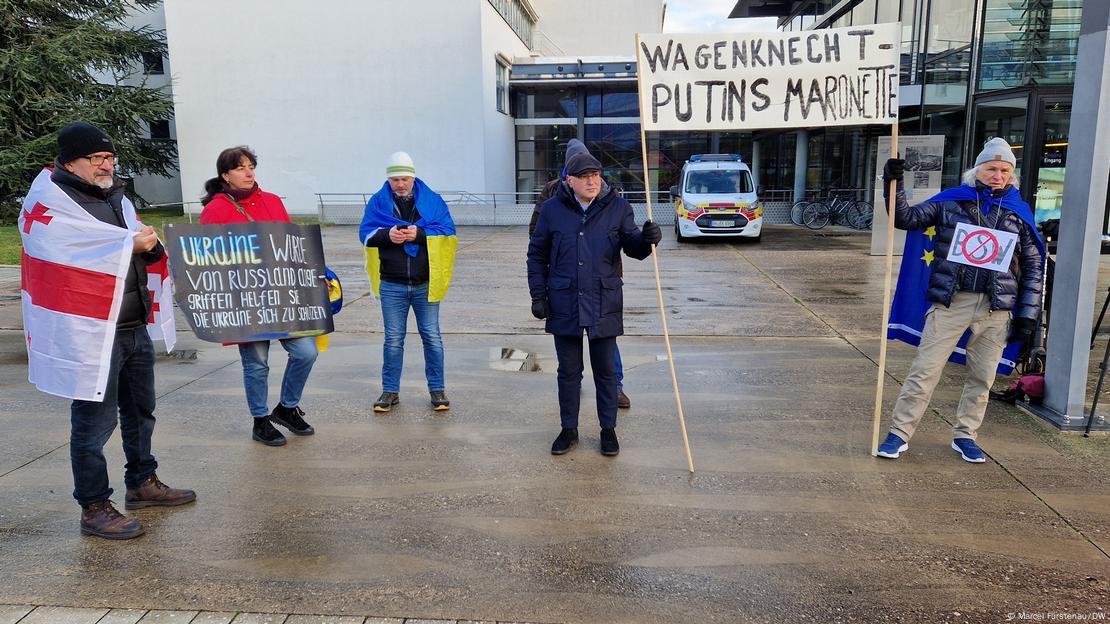
Protesters outside the party conference describe Wagenknecht as "Putin's puppet"
Image: Marcel Fürstenau/DW


Fierce criticism of Israel's military operation


Since the attack on Israel by the Islamist group Hamas on October 7, 2023, the BSW has described the Middle East as a "powder keg." It has said that all the major powers in the region are fighting their conflicts on the backs of the population.

"What began as Israel's self-defense against the Hamas massacre has long since turned into a ruthless campaign of revenge and extermination by the Netanyahu government against women and children in the Gaza Strip," its election manifesto reads.

The BSW also rejects increased military spending: "The narrative of the Bundeswehr being 'cut to the bone' is a myth. German military spending has more than doubled since 2014 and amounted to almost €90 billion ($92 billion) in 2024."

Germany has now reached the target agreed upon by the North Atlantic Treaty Organization (NATO) of investing 2% of its economic output in its defense budget.

Don't mention the Left Party

If the BSW and its official chancellor candidate Sahra Wagenknecht had their way, Germany would disarm. It is questionable whether the new party will be able to commit to this in the next Bundestag, and if the BSW fails to enter the Bundestag at all, it would be a personal defeat for its founder.

Meanwhile, the Left Party, Wagenknecht's former party, may even be able to make it into the Bundestag without crossing the 5% hurdle. To do so, it would have to win at least three constituencies directly, as the Left Party did in 2021. It was thus able to receive almost 40 seats in the Bundestag, though its share of the vote was only 4.9%. Wagenknecht was one of those who benefited from this, and was able to enter parliament as one of these representatives.


At the end of the party's electoral convention, the BSW's leader was bullish as she appealed to the 600 or so delegates to go into the election campaign: "Now let's fight together! For we will make February 23 a huge success!"

This article was translated from German.
Australian miners lose taste for French caterer Sodexo as meals fall flat

French catering giant Sodexo is battling the loss of major contracts in Australia's mining sector amid ongoing complaints about the quality of food served at its remote worker camps.


15/01/2025 - RFI

French catering giant Sodexo's flagship contract is running a camp for Rio Tinto miners in the Pilbara region of Western Australia. AFP - AMY COOPES

The company – which manages accommodation and food for fly-in fly-out (Fifo) mining workers in desert locations – posted a €10 million loss last year as it struggled to meet the expectations of its well-paid clientele.

Its woes deepened when a major contract with Fortescue Metals Group to manage camps at its Chichester iron ore hub in the Pilbara region of Western Australia was awarded to Canadian competitor Civeo.

"The food they serve is pretty much always disgusting, sometimes it's completely inedible and are meals I wouldn't even give to my pets," an unamed employee from Fortescue's Christmas Creek camp told newspaper The West Australian.

Sodexo’s flagship €1.5 billion contract with Rio Tinto, which serves more than 20,000 miners, is set to expire in 2026.

While the company is in late-stage talks to renew the deal, industry rumours suggest Rio management is under pressure to explore other catering options as competitors improve their offerings.

Rival Mineral Resources, known for its "seafood Fridays", has been rolling out an a la carte service at its camps to attract workers in a tight labour market.

Paris's eco-friendly Olympic Village gets mixed reviews from athletes
Service upgrade

Sodexo's setbacks have contributed to total losses of more than €100 million over nine years, despite its revenue more than doubling to over €610 million in the past decade.

In response to its bad press, Sodexo has launched an aggressive upgrade of its services, pumping €130 million of fresh equity into its Australian operations since 2017.

New offerings include American barbecue dishes like beef ribs and brisket at Rio Tinto's Gudai-Darri camp, while Asian chefs prepare Chinese and Vietnamese cuisine. The company is also planning to add yoga classes and hair salons to its facilities.

Rising costs have hit Sodexo hard. Labour expenses doubled over the past decade, climbing from €170 million to €312 million. Food costs, meanwhile, have soared to €141 million.

"Like any other player in the food and facilities management industry, we are not immune to the rising costs of labour and raw materials," said Sodexo Australia chief financial officer Abhi Shan.

While Sodexo struggles, Civeo has reported significant profits over the past two years and secured the Fortescue contract Sodexo lost in 2024.

Despite its losses, Sodexo is doubling down on its resources sector strategy.

The company has renewed key contracts, launched 20 new sites across Australia, and recruited chefs from India to address labour shortages.

Mayotte struggles to recover a month after cyclone Chido devastated the island

A month after Cyclone Chido unleashed devastation across Mayotte, the island continues to contend with extensive damage and a sluggish recovery process, particularly in the northern regions of this Indian Ocean territory. On Wednesday, an emergency bill designed to expedite reconstruction efforts was approved in the French lower house of parliament.


15/01/2025 -  RFI

A local resident looks for some documents in a damaged house in a shanty town destroyed by the cyclone Chido in Mamoudzou, Mayotte, on 31 December, 2024.
© AFP - Julien de Rosa

As cleanup operations continue across the Indian Ocean archipelago, it is clear that no area has been spared the devastation.

"The island was hit particularly hard this time; the damage is clear," said Aramadi Salim, a driver in the capital, Mamoudzou, speaking to RFI.

Amidst the wrecked vegetation and debris-strewn roads, Salim noted some progress: "Things are starting to improve. We spent a week without electricity or water, searching for water wherever we could. Now that the power has been restored, life is getting better."

However, Salim’s return to work is far from easy. "Just getting fuel means waiting in line for hours," he said.

If in Mamoudzou the situation is improving, in the northern part of the archipelago, which bore the brunt of the cyclone, the situation is much more complicated.

"The boat is my livelihood. Without it, I can’t work," says a fisherman, standing near a bay where most of the boats have capsized.

"We’re practically cut off from Mamoudzou, even when it comes to information."

In Mayotte, the 'bangas' in the Kawéni slum were destroyed after Cyclone Chido hit the island. 
© Nicolas Feldmann / RFI


Slums already up’

In Mayotte, information is just as critical as water and food.

In some areas, contact with authorities and insurers remains impossible, fueling frustration.

"Why are they hiding the truth? Half the population of Hamjago still doesn’t have electricity," says Faoulati, a mother of four.

"It’s inhumane. The aid that arrived doesn’t reach us in the north. Everything is concentrated in the slums where illegal immigrants live. And we’re left out," she adds.

The slums, known as bangas, reflect another ongoing issue in Mayotte with illegal immigration, mostly from the Comoros.

"There’s a big problem in Mayotte right now. All the bangas are already up. Now is the time to fix it," explains Mari Atibou, a resident of southern Mayotte.
Emergency bill passed

During his visit two weeks ago, Prime Minister François Bayrou promised to tackle illegal immigration and rebuild Mayotte "within two years".

French PM Bayrou unveils ‘Mayotte standing’ reconstruction plan

His emergency bill, aimed at speeding up reconstruction, was passed in the National Assembly on Wednesday despite criticism from opposition parties. The law also includes temporary social measures.

The newly-appointed Overseas Territories minister Manuel Valls added that a second law, addressing longer-term solutions, was scheduled for March.

Additionally, a bill restricting birthright citizenship in Mayotte will be reviewed on 6 February, proposing to lengthen the residency requirement for parents seeking French nationality for their children.

Nuclear energy

IEA forecasts record nuclear electricity production in 2025

Nuclear-powered electricity generation is on track to reach a record high in 2025, with forecasts indicating it will make up nearly 10 percent of global energy production, the International Energy Agency (IEA) said Thursday.

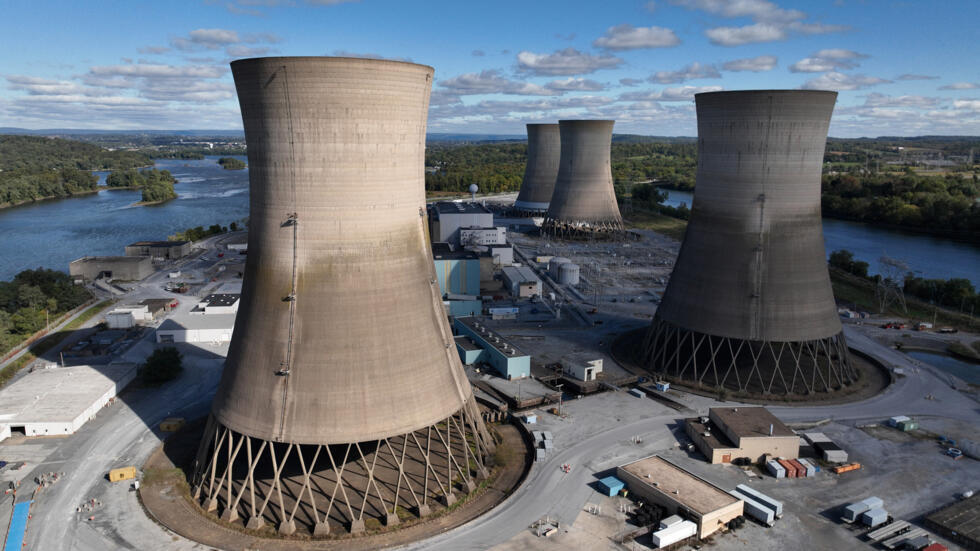
The shuttered Three Mile Island nuclear power plant stands in the middle of the Susquehanna River on 10 October, 2024 near Middletown, Pennsylvania. Getty Images via AFP - CHIP SOMODEVILLA

By: RFI
16/01/2025 - 

The International Energy Agency (IEA) has announced that 70 gigawatts of new generating capacity are currently under construction worldwide, marking one of the highest levels in the past three decades.

In its latest report, the IEA forecasts that nuclear power production will reach a record 2,900 terawatt hours by 2025.
AI, data centres

IEA Executive Director Fatih Birol called it a "new era for nuclear energy," driven by the growing demand for electricity to power advanced technologies like artificial intelligence and data centres.

While China has led the charge in nuclear energy expansion, the United States and France have faced challenges due to the high costs of building nuclear plants.

Birol said nuclear power could help the world transition to non-carbon energy sources to curb climate change.

(with AFP)

Can nuclear energy expansion be a climate game changer?

DW
 January 16, 2025:

Nuclear power is expected to hit record levels in 2025. Calling it "clean energy," advocates are pushing for the power source to play a greater role in global plans to mitigate climate change.

Do we need more nuclear power to help meet the world's climate goals? Or is renewable energy the way forward?
Image: picture alliance/dpa/CTK


Nuclear power releases no carbon emissions during operation and has been touted as a solution to power the world's rapidly growing energy needs.

Though it doesn't pollute in the same way as fossil fuels, nuclear energy comes with its own set of environmental problems: among them, indirect emissions from uranium mines, contaminated water, radioactive waste and the risk of a Chernobyl-style disaster.

Despite the risks, nuclear is expected to make up nearly 10% of global electricity production in 2025, according to new data from the International Energy Agency — a 30-year high.

Fatih Birol, the IEA's executive director, said that growth was bring led by China, boosted in part by the huge energy demand of technologies like artificial intelligence and data centers.

In recent months, tech giants Meta, Amazon, Microsoft and Google have all announced plans to invest in nuclear power under the banner of carbon neutrality — despite earlier pledges to rely solely on renewable energy. And with the clock ticking on curbing greenhouse gas emissions to keep global heating in check, some policymakers and financial backers have also come out in favor of a renewed push for nuclear energy.

Is nuclear energy a realistic climate solution?

Nearly two years after Germany shut down its last nuclear reactors, the country's conservative CDU/CSU opposition has called for more research into nuclear technology. The parties also want to examine the possibility of bringing decommissioned nuclear power plants back online.

With an eye to the German federal election in February, the CDU/CSU election manifesto says nuclear energy "has an important role to play, particularly with regard to climate targets and security of supply."

Friedrich Merz, the CDU's candidate for chancellor, has described Germany's withdrawal from nuclear as a "strategic mistake" but says it's unrealistic to think that the last of the nation's reactors to be shut down could be brought back online.

The far-right Alternative for Germany party is also pushing for a return to nuclear energy as part of a "sustainable, serious energy mix," with chancellor candidate Alice Weidel claiming in a recent interview with German broadcaster ZDF that it has "a CO2 footprint of zero."

The governing coalition of the center-left Social Democrats and Greens, meanwhile, have both ruled out a return to nuclear, which is also connected to indirect emissions from the long and complex construction process of reactors.

Is shutting down nuclear energy a mistake?  07:05

Henry Preston, a spokesperson for the World Nuclear Association (WNA), believes policymakers have become more "pragmatic" in recent years, balancing energy security and the climate emergency while weighing the increased cost and construction timeline with the potential for a "huge amount" of clean energy.

But environmental groups have consistently pointed out that costly new nuclear projects, which typically take around a decade to build after all the planning and permitting, won't come online fast enough to help meet climate goals.

"A rapid transition requires the use of existing technologies and solutions which can most quickly be rolled out such as renewables, primarily solar and wind, energy efficiency, and system flexibility," said global climate campaigners Climate Action Network Europe in an online fact check.

"Renewable energies consistently outperform nuclear power in terms of cost and deployment speed and are therefore chosen over nuclear power in most countries," said the 2024 World Nuclear Industry Status Report (WNISR), which called plans to boost nuclear capacity in the coming decades "unrealistic."

Are small modular reactors a safer alternative?


In the United States, Amazon and Google plan to buy power from small modular reactors (SMRs), advanced nuclear plants with a capacity of less than 300 MW, roughly a third of a standard nuclear plant.

The tech giants have said nuclear will help power the huge energy needs of artificial intelligence and data centers, while also meeting their net-zero climate pledges.

Data centers and AI today consume between 1% to 3% of the world's energy supply — a share that some analysts expect to double by 2030.

Can nuclear power cover AI's energy demands 03:37

Data centers need "an abundance of energy that is carbon-free and reliable every hour of every day, and nuclear plants are the only energy sources that can consistently deliver on that promise," said Joe Dominguez, the CEO of Constellation Energy in the US, announcing a 20-year nuclear energy supply deal with Microsoft in September.

Proponents have said SMRs will be safer, cheaper and quicker to bring online than traditional reactors and can be built on the sites of former fossil fuel plants. The US partnerships with Amazon and Google are projected to be operational by the early 2030s.

But Climate Action Network has argued against the "empty promises" of SMRs, pointing out that "the technology has not been tested yet at commercial scale."

Globally, only two SMR projects have been built so far, each with reactors of different Russian and Chinese designs. They were connected to the grid in 2019 and 2021, respectively.

The WNISR report, funded in part by Germany's Environment Ministry, pointed out that both projects ran into significant construction delays, taking two or three times longer to build than initially planned. They also went over budget and have so far underperformed on power generation.

The nuclear industry, however, has said the delays weren't a surprise as the first SMRs built in Russia and China were pilot projects. Future projects now in the planning stages could "potentially come online quicker," said Preston of the WNA, speaking to DW from London.

But Mycle Schneider, an independent nuclear policy analyst and publisher of the WNISR report, said in an email that this would only be possible with the "reproduction of identical or virtually identical units," and not SMRs of varying designs, like in Russia and China.

Schneider said the rapidly increasing production of solar panels, grid-connected batteries and wind turbines, of which tens of thousands of units are built each year, represented "truly modular manufacturing" allowing those industries to innovate and rapidly lower costs.

"The nuclear industry has learned from the SMR pilots in China and Russia that nobody wants to reproduce them, and there are no attempts to get them licensed in any Western country," said Schneider.


Do we need nuclear energy to meet climate goals?

At the 2023 climate summit in Dubai, nuclear energy was for the first time listed among the low-emission technologies needed to achieve the "deep, rapid and sustained reductions in greenhouse gas emissions."

The UN's Intergovernmental Panel on Climate Change 2022 report also mentioned nuclear, saying it was "unlikely that all low-carbon energy systems around the world will rely entirely on renewable energy sources."

While conceding that wind and solar are expected to play a major role in the push to replace fossil fuels, energy analysts have often spoken of the unreliability of renewable energy, which depends on the availability of sun and wind.

Since the Dubai climate conference, 31 countries — among them major nuclear players like France, the United Kingdom, the United States and Japan — have pledged to triple capacity by 2050. Non-nuclear states like El Salvador, Jamaica, Moldova and Mongolia likewise — though China and Russia, the only countries that began nuclear reactor construction in the last five years, have not.

However, the 2024 WNISR report is skeptical of that pledge. Listing a slew of potential stumbling blocks, including high costs, construction time, a lack of industrial capacity, the report pointed out that more than 1,000 new reactors would be needed to triple the current installed capacity.

Even with SMRs contributing a significant amount of energy, "hundreds or even thousands of these things would need to be built to come anywhere near that objective," Schneider said in a December 2023 interview with the Bulletin of the Atomic Scientists.

Edited by: Stuart Braun

Update, January 16, 2025: This article was first published on January 14, 2025, and was updated with the latest forecast from the International Energy Agency report.
Martin Kuebler Senior editor and reporter
Despite Israel’s threatening presence, Syrians in Golan refuse to leave ‘in exchange for peace’

As Damascus celebrated the fall of Bashar al-Assad, Syrians living in the Quneitra governorate in the Golan Heights looked on as Israeli troops suddenly drove into their villages. The near-daily Israeli raids are scaring the population, who say they now live in constant fear that Israel’s “temporary” occupation of the 50-year-old demilitarised zone will one day become permanent.


Issued on: 15/01/2025
By: Assiya HAMZA
An Israeli military vehicle drives on the Syrian side of the ceasefire line, as seen from Majdal Shams in the Israeli-occupied Golan Heights, January 6, 2025. 
© Shir Torem, Reuters


A mound made up of dirt and rocks blocks the end of the main street. A few hundred metres further down, an even larger man-made black mound stands out against the horizon. The sound coming from the excavators digging nearby is loud and constant.

"They’re digging a trench that is three metres wide and six metres deep," Ahmed Ali Tahar, mayor of the tiny village of Al-Hurriyah, in the governorate of Quneitra in the Syrian Golan, explains. “They started four months ago, as if they knew that Bashar (al-Assad) was going to fall.”

The Israeli army has built mounds of dirt and rocks to prevent passage to the new Golan buffer zone. Al-Hurriyah, on January 12, 2025.
 © Assiya Hamza, FRANCE 24

The construction project is enormous. Al-Hurriyah’s last house on the Syrian Golan Heights is now located just 500 metres from the Israeli border. Before, it was two kilometres away.

Israel announced in October, 2023, that, in a bid to prevent terrorist attacks like the one that Hamas had just unleashed from Gaza, it planned to fortify the so-called Alpha Line that separates the Israeli-occupied Golan from Syria.

‘Israel has spoiled our joy’

But on December 8, 2024, everything changed for the 1,000 residents living in Al-Hurriyah. “We were so happy about the fall of Bashar, but Israel spoiled our joy,” the mayor says. “Two days later they arrived with their tanks and their bulldozers.”

Just hours after Hayat Tahrir al-Sham (HTS, formerly linked to al Qaeda) had seized power in Damascus, Israel’s Prime Minister Binyamin Netanyahu ordered the army to “take control” of the demilitarised buffer zone in the strategic and water-rich Golan Heights, which overlooks northern Israel, Syria and Lebanon.

The 80-kilometre stretch was demarcated through a ceasefire deal between Israel and Syria in 1974, and has since been patrolled by the United Nations Disengagement Observer Force (UNDOF). Israel has long occupied large parts of Golan, which it annexed in 1981, but has – with the exception of Israel’s main ally the United States – never been recognised by the international community.

From this mosque, the village imam was ordered by Israeli soldiers to call on inhabitants to leave Al-Hurriyah. On January 12, 2025. © Assiya Hamza France 24

“The soldiers arrived and asked the imam to make a call (using the microphone he normally uses to call for prayer, editor’s note) to tell everyone to leave. They gave us until 3pm,” the village councillor recalls, noting it was the first time he had ever seen Israelis there since his arrival in 1978. “We made the women and children leave, but the men stayed.”

Maha* says she will never forget that day. “We didn’t even get enough time to get our things, barely enough time to bring clothes to wear,” she says, holding back the tears. “I stayed in Khan Arnabah for five days with the children before going back.”

Maha, who is in her 60s and worried that she and her family could be subject to reprisals if they don’t obey the orders, explains that in 25 years she has never seen Israeli soldiers in the village either. “How would you feel if you were told to leave your home overnight?” she asks, adding that she is afraid the army will come back and tell the villagers to leave their homes once again.

Ahmed Ali Tahar, mayor of Al- Hurriyeh, in the Quneitra governate, in Syria, on January 12, 2025. © Assiya Hamza, FRANCE 24


Almost half of villagers displaced

In just a few short hours, Al-Hurriyah was totally emptied of its women and children. Still, it was not until 10am the next day – long after the evacuation deadline had passed – that Israeli soldiers came knocking on the mayor’s door.

“They asked me why we hadn’t left with the imam. I told them I didn’t want to, and that I had nowhere to go. Then they threatened me, pointing a gun at me: ‘Next time, we’ll blow your head off!’,” Ahmed recalls as he counts the wooden beads of his misbaha, (prayer beads).

“We told them we were only shepherds and farmers, that they could search our houses and that we had no weapons to hide. They only searched my house and that of a bread seller.” Ahmed then did what he was told and left the village. Three days later, he received a phonecall and was told to return to Al-Hurriyah. “When I got home, there were around 20 armed soldiers there. They told me to bring everyone back [to the village], but they didn’t say why.” Some 600 villagers have since returned, but another 400 remain displaced in nearby towns like Khan Arnabah.

This is the same town where Bilal* goes to work every day. He is in his 60s and lives in Jubata al-Khashab, a village where the green military fatigues have become a daily sight since December 8. Only those who live there are allowed to enter. “The soldiers constantly come and go in the village,” he says, once again asking for reassurance that his testimony will remain anonymous.

“I’m afraid they’ll take my house. I don’t trust ‘the enemy’,” he says, adding there is now an obligation to return home early in the evening because “it’s dangerous”. Just like Maha, Bilal is also terrified of reprisals. He keeps touching his hands, most likely to stop them from shaking. “I don’t speak to them. I don’t know how they would react. I could be arrested,” he says of the Israeli troops, and reiterates that they “scare the villagers”.
‘Temporary’ Israeli occupation to ‘secure the borders’

In the past month, Israel has conducted hundreds of strikes aimed at destroying the Syrian military arsenal for fear it could otherwise fall into “hostile” hands. It has also conducted raids in large parts of the Quneitra province, searching for arms that the fleeing Syrian army might have left behind.


“They say we have weapons, but we don’t. There’s no armed group here,” Bilal says, adding that the Israeli troops “prevent people from moving around freely”.

Fatima Mansour poses for a photograph in her shop in Khan Arnabah, in Syria, on January 12, 2025. 
© Assiya Hamza, FRANCE 24

This is the reason why Fatima Mansour decided not to return to Jubata al-Khashab. “I’ve been living in Khan Arnabah for 12 days now because I was afraid I wouldn’t be able to come and open up my shop every day,” she explains from behind the counter of her clothing boutique. “They’re only a kilometre from my house.”

Although Netanyahu has insisted that the presence of Israeli troops in Syrian Golan is temporary, most Quneitra residents believe it could in fact become permanent. Some 30,000 Israelis and 23,000 Druze with Israeli residency permits now live in the Israeli-annexed part of Golan. On December 15, 2023, Netanyahu’s government approved a project to double the Israeli population there for a total of NIS 40 million (€10.6 million).


In the town of Baath, named after the now suspended political party, the road leading to the village of Al-Hamadiyah has been blocked by the Israeli army. 
 © Assiya Hamza, FRANCE 24

“We think they want to take our land, but we won’t let them. We’ll stay in our homes,” Fatima says. Bilal agrees. “They want to expand, take as much land as possible from Lebanon, Palestine and Syria,” he says. “I’m afraid, but I want the world to know the true face of our enemy. They pretend to be the victims, but they’re the aggressors.”

As Syria tries to rebuild itself, the country’s new strongman Ahmed al-Sharaa, better known by his nom de guerre Abu Mohammed al-Jolani, has said that after years of civil war, Syria is “exhausted” and that the country is not in the state “to enter into new conflicts”. In Syrian Golan, these types of statements are enough to send shivers down Quneitra residents’ spines. “Inshallah, (if God wills) that the new government will discuss keeping our land within the 1973 limits,” Maha says. “I don’t want to leave my land in exchange for peace."

This article has been translated from the original in French by Louise Nordstrom.