Thursday, January 16, 2025

GENOCIDE JOE

Report Says Biden's 'Empty Threats' on Gaza Fed Israeli Impunity

One Middle East expert said that it's "hard to avoid the conclusion" that the U.S. administration's ultimatums to Israel "have all just been a smokescreen."
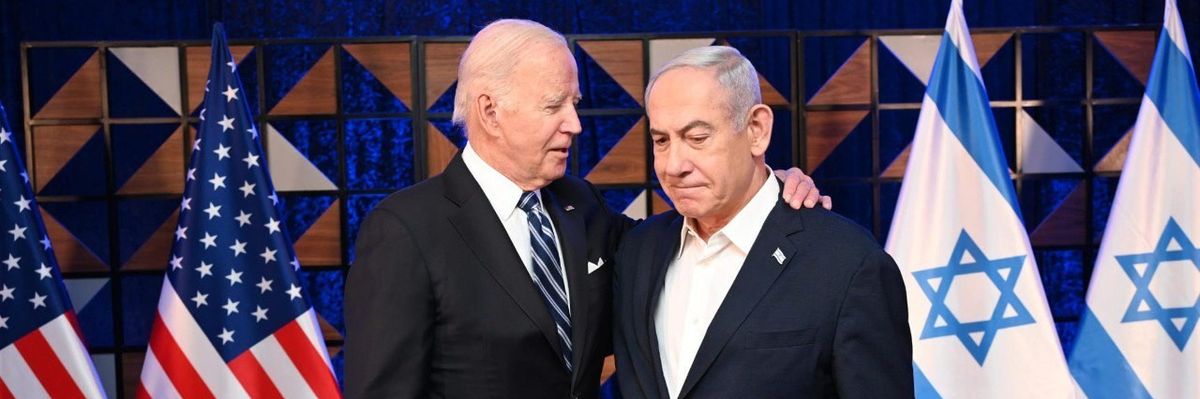

U.S. President Joe Biden (L) and Prime Minister Benjamin Netanyahu (R) meet in Tel Aviv, Israel on October 18, 2023.
(Photo: GPO/ Handout/Anadolu via Getty Images)

Brett Wilkins
Jan 15, 2025
COMMON DREAMS

New reporting published Wednesday details the impotence and insincerity of President Joe Biden's "multiple threats, warnings, and admonishments" to Israel as it annihilated the Gaza Strip, killing tens of thousands of Palestinian civilians while receiving tens of billions of dollars in U.S. arms and unwavering diplomatic support.

Writing for ProPublica, Brett Murphy showed how multiple "red lines" issued by Biden administration officials were ignored by Israel with impunity. Murphy highlighted Secretary of State Antony Blinken's October 2024 demand that Israel take "urgent and sustained actions" to improve humanitarian conditions in Gaza—mainly by allowing far more aid into the embattled strip—within 30 days or face a military aid cutoff.

"Netanyahu's conclusion was that Biden doesn't have enough oomph to make him pay a price."

Thirty days came and went without significant improvement or letup in Israel's onslaught. Yet the Biden administration insisted it found no indication that Israel was using U.S.-supplied weapons illegally. The arms flow continued.

As Murphy reported:

That choice was immediately called into question. On November 14, a U.N. committee said that Israel's methods in Gaza, including its use of starvation as a weapon, was "consistent with genocide." Amnesty International went further and concluded a genocide was underway. The International Criminal Court also issued arrest warrants for Israeli Prime Minister Benjamin Netanyahu and his former defense minister for the war crime of deliberately starving civilians, among other allegations.

"Government officials worry Biden's record of empty threats have given the Israelis a sense of impunity," wrote Murphy.


Ghaith al-Omari, a senior fellow at the Washington Institute, told Murphy that "Netanyahu's conclusion was that Biden doesn't have enough oomph to make him pay a price, so he was willing to ignore him."

"Part of it is that Netanyahu learned there is no cost to saying 'no' to the current president," al-Omari added.

Conversely, Murphy noted: "On Wednesday, after months of negotiations, Israel and Hamas reached a cease-fire deal. While it will become clear over the next days and months exactly what the contours of the agreement are, why it happened now, and who deserves the most credit, it's plausible that [U.S. President-elect Donald] Trump's imminent ascension to the White House was its own form of a red line."

"Early reports suggest the deal looks similar to what has been on the table for months," he added, "raising the possibility that if the Biden administration had followed through on its tough words, a deal could have been reached earlier, saving lives."

As Stephen Walt, a professor of international affairs at Harvard Kennedy School, told Murphy, "It's hard to avoid the conclusion that [Biden's] red lines have all just been a smokescreen."

"The Biden administration decided to be all-in and merely pretended that it was trying to do something," Walt added, as Israel kept killing Palestinians with U.S.-supplied weapons and continued a "complete siege" blamed for widespread starvation and sickness in the Gaza Strip.

Murphy wrote that Trump "will inherit a demoralized State Department" in which many officials who haven't already resignedhave "become disenchanted with the lofty ideas they thought they represented."

As one senior department official told Murphy, Gaza "is the human rights atrocity of our time."

"I work for the department that's responsible for this policy. I signed up for this," the official added. "I don't deserve sympathy for it."

BECOMES GENOCIDE TRUMP

Trump National Security Pick Says Israel Has Green Light to Keep Attacking Gaza

Journalist Jeremy Scahill noted that Mike Waltz's comments echo "a plan Netanyahu has hinted at: Israel views this deal as only one phase to get the Israeli and U.S. hostages out."
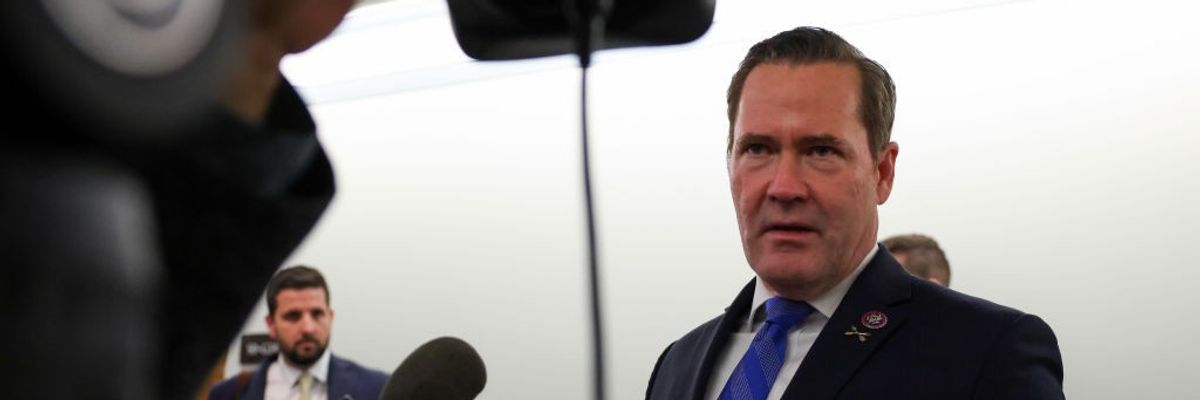

Rep. Mike Waltz (R-Fla.), President-elect Donald Trump's national security adviser pick, walks to a Senate hearing on January 14, 2025 in Washington, D.C.
(Photo: Kayla Bartkowski/Getty Images)

Jake Johnson
Jan 16, 2025
COMMON DREAMS

U.S. President-elect Donald Trump's pick to serve as national security adviser said late Wednesday that the incoming administration will support future Israeli attacks on Gaza even as Trump hailed the tenuous new cease-fire and hostage-release agreement as a signal "to the entire world that my administration would seek peace."

In an appearance on Fox News late Wednesday after the agreement was announced, Rep. Mike Waltz (R-Fla.) said that "we've made it very clear to the Israelis, and I want the people of Israel to hear me on this: If they need to go back in [to Gaza], we're with them."

"Hamas is not going to continue as a military entity and it's certainly not going to govern Gaza," Waltz added.

The national security adviser nominee expressed a similar position in a podcast appearance prior to the announcement of the cease-fire deal, which is currently in jeopardy as Israeli Prime Minister Benjamin Netanyahu accuses Hamas of reneging on the terms of the agreement—a claim Hamas has rejected.

Asked whether a cease-fire agreement would mean "the war is over," Waltz said, "Hamas would like to believe that."

"But we've been clear that Gaza has to be fully demilitarized, Hamas has to be destroyed to the point that it cannot reconstitute, and that Israel has every right to fully protect itself," he added. "All of those objectives are still very much in place."

"We need to get our people out," Waltz continued, "and then we need to achieve those objectives in this war."


Drop Site's Jeremy Scahill noted that the approach Waltz laid out mirrors "a plan Netanyahu has hinted at: Israel views this deal as only one phase to get the Israeli and U.S. hostages out."

Last month, Netanyahu said that Israeli forces would "return to fighting" once hostages are freed.

"There is no point in pretending otherwise," said Netanyahu, "because returning to fighting is needed in order to complete the goals of the war."

Under the first phase of the deal announced Wednesday, a six-week cease-fire would begin as soon as Sunday and 33 hostages would be freed in exchange for the release of more than 1,000 Palestinian detainees. The second and third stages of the deal are contingent upon negotiations that will take place during the first.

The text also stipulates the "withdrawal of Israeli forces eastwards from densely populated areas along the borders of the Gaza Strip" and a reduction of Israeli troop presence in the Philadelphi corridor—an issue that has repeatedly emerged as a sticking point in cease-fire negotiations.

The agreement states that "the Israeli side will gradually reduce the forces in the corridor area during stage 1 based on the accompanying maps and the agreement between both sides."

"After the last hostage release of stage one, on day 42, the Israeli forces will begin their withdrawal and complete it no later than day 50," the text continues.

But Netanyahu's office insisted Thursday that the same number of forces would remain in the corridor during the deal's first phase—a position that critics said runs counter to the agreement.


While Trump and his allies celebrated the announced agreement as a master stroke of dealmaking and aid groups voiced hope for some reprieve for devastated Palestinians in Gaza, Netanyahu's spokesman toldThe New York Times in a text message that "there isn't any deal at the moment."

Israel's cabinet was expected to vote on the deal Thursday, but Netanyahu delayed the meeting and accused Hamas of trying to "extort last-minute concessions."

Hamas officials denied the charge, saying they are committed to the agreed-upon text.

Ruby Chen, the father of a 19-year-old Israeli-American soldier who was taken captive by Hamas on October 7, 2023, suggested Thursday that Netanyahu "might be looking to get out of" the deal as he faces backlash from far-right members of his coalition.

Citing unnamed sources, The Washington Postreported Thursday that "behind closed doors, Netanyahu has been promising his far-right allies that the war could resume after the first, 42-day phase of the cease-fire, when Hamas is to release 33 hostages in exchange for the release of more than 1,000 Palestinian prisoners."

Paul Pillar, a non-resident fellow at the Quincy Institute for Responsible Statecraft, wrote Thursday that "there remains the possibility that a renewed war in Gaza will, beginning a few weeks from now, become a problem for Trump just as it was for Biden."

"But two main factors will incline President Trump not to exert any pressure on the Israeli government to turn away from renewing its devastation and ethnic cleansing in the Gaza Strip," Pillar predicted. "One is Trump's relationship with his domestic evangelical political base, with its unconditional support for most anything Israel does. The other is that his ally Netanyahu has done him a big favor with his handling of the ceasefire negotiations, and now Trump owes Netanyahu favors in return."

According to one Israeli report, Trump offered Netanyahu a "gift bag" of concessions in exchange for accepting a pre-inauguration cease-fire deal, including sanctions relief for violent Israeli settlers in the illegally occupied West Bank.

Naming Oligarchy as Key Threat, Biden Channels Bernie Sanders in Farewell Address

AND EISENHOWER (WITH JOE'S 'TECHNO INDUSTRIAL COMLEX')

Sanders responded that the outgoing president was "absolutely right," adding, "This is the defining issue of our time."


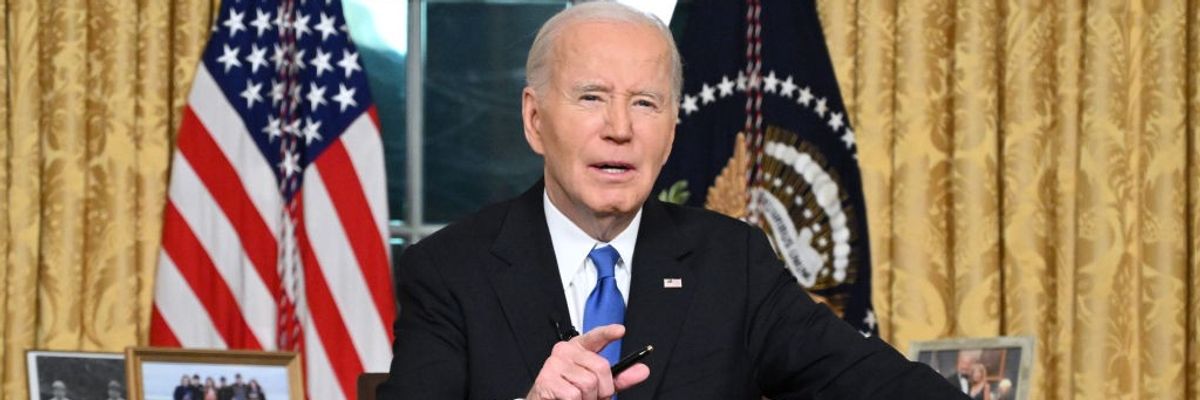
U.S. President Joe Biden delivers his farewell address to the nation from the Oval Office of the White House on January 15, 2025 in Washington, D.C.
(Photo: Mandel Ngan /Pool/Getty Images)


Jake Johnson
Jan 16, 2025
COMMON DREAMS

The farewell address that U.S. President Joe Biden delivered from the Oval Office late Wednesday featured a warning that's been central to progressive Sen. Bernie Sanders' messaging for decades—and particularly in the wake of the 2024 election.

"Today, an oligarchy is taking shape in America of extreme wealth, power, and influence that literally threatens our entire democracy, our basic rights and freedoms, and a fair shot for everyone to get ahead," Biden said, pointing to the "dangerous concentration of power in the hands of a very few ultrawealthy people, and the dangerous consequences if their abuse of power is left unchecked."

"We see the consequences all across America," the president added.

The crisis Biden belatedly identified predated his White House term and would have persisted even if his vice president, Kamala Harris, had defeated billionaire President-elect Donald Trump in November. In his Wednesday address, Biden made no reference to Sanders, who ran for president in 2016 and 2020 on a progressive platform challenging the power of entrenched wealth.

During Biden's four years in power, the wealthiest 0.1% of Americans saw their wealth grow by a staggering $6 trillion, and record federal lobbying by corporate interests—from Big Pharma to Big Tech to Big Oil—continued to derail or undermine even the most tepid reform efforts.

But Trump's victory, aided by more than a quarter of a billion dollars in campaign spending from the world's richest man—who also used his wealth to purchase one of the world's largest social media platforms—laid bare the decisive influence that present-day malefactors of great wealth have on American economic and political life.

"We are moving rapidly into an oligarchic form of society," Sanders (I-Vt.) said in an NBC Newsappearance exactly one month before Biden's farewell address. "Never before in American history have so few billionaires, so few people, had so much wealth and so much power. Never before has there been so much concentration of ownership, sector after sector."

"Never before in American history—and we better talk about this—have the people on top had so much political power," the senator added. "In this last election, in both parties, billionaires spent huge amounts of money to elect their candidates."

In a social media post early Thursday, Sanders thanked Biden for acknowledging the crisis of oligarchy.

"You were absolutely right," Sanders wrote. "This is the defining issue of our time."

Since his election win, Trump has moved to pack his incoming administration with lobbyists and other corporate cronies who stand to benefit from the president-elect's promised tax cuts and deregulatory blitz. Elon Musk, whose wealth has surged since Trump's reelection, has been tasked with leading an advisory commission designed to slash government spending.

The commission, known as the Department of Government Efficiency, is expected to use office space in the White House complex, spotlighting the extent to which the federal government and outside corporate forces are becoming increasingly intertwined.

At Trump's inauguration, American oligarchy will be on open display: The three richest men on the planet—Musk, Amazon founder Jeff Bezos, and Meta CEO Mark Zuckerberg—will be present.

During his speech Wednesday, Biden focused on the growing dominance of a handful of powerful U.S. tech companies and executives, many of whom—including Bezos and Zuckerberg—have pumped money into Trump's inaugural fund and signaled a desire to ally with an incoming president who has said he would let corporations buy their way around federal regulations.

"In his farewell address, President Eisenhower spoke of the dangers of the military-industrial complex. He warned us... about, and I quote, 'The potential for the disastrous rise of misplaced power,'" Biden said. "Six decades later, I'm equally concerned about the potential rise of a tech-industrial complex that could pose real dangers for our country as well."

"The U.S. government is becoming an outright oligarchy, with billionaire business leaders gathering around the billionaire Trump."

The president's comments broadly echoed sentiments expressed by his antitrust chief, Jonathan Kanter, who said in his own farewell address in December that "plutocracy is its own kind of dictatorship" and sounded the alarm over corporate consolidation—something he and other Biden administration officials, including Federal Trade Commission Chair Lina Khanworked to combat over the past four years.

But progressives weren't exactly eager to give Biden credit for using his going-out speech to zero in on a longstanding problem that continued to fester under his leadership, despite the efforts of Kanter, Khan, and others.

The term "oligarchy" was entirely absent from Biden's most prominent speeches over the past four years, including his much-touted remarks on the imperiled state of American democracy.

"One last, tired bid for relevance, as if the U.S. drift into oligarchy is some novel, profound observation he just made—not something he's ignored his whole meandering term's worth of mumbling about democracy or, indeed, the thing that explains his entire career and presidency," Jacobin's Branko Marcetic wrote in response to Biden's farewell speech.

David Moore, co-founder of the investigative outlet Sludgenoted that "when his presidential campaign was flagging in 2019, he embraced a super PAC led by fundraisers from private equity"—benefiting from the political power of corporate interests he decried at the tail-end of his White House term.

Nevertheless, as progressive commentator and radio host Thom Hartmann put it Wednesday, "Biden is right, we are facing a crisis of oligarchy."

In a column published just ahead of Biden's speech, Current Affairs editor-in-chief Nathan Robinson rejected the emerging narrative on the right that the Trump administration and its corporate allies are merely attempting to bring about "the liberation of the country from the shackles of woke oppression."

"The more important thing to pay attention to is the way that the U.S. government is becoming an outright oligarchy, with billionaire business leaders gathering around the billionaire Trump," Robinson wrote. "Linda McMahon will work to privatize the public school system. Vivek Ramaswamy will make sure his fellow fraudsters don't end up in prison. And you, the non-billionaire, will end up being screwed by those who present themselves as the champions of the people."


South Korea's Yoon: from rising star to historic arrest

Agence France-Presse
January 15, 2025 

South Korean President Yoon Suk Yeol, who has staggered from scandal to crisis, was arrested on Wednesday (Handout)

by Claire LEE

South Korea's Yoon Suk Yeol rose from star prosecutor to the presidency in just a few years, but after a series of scandals and a bungled martial law decree, he's become the country's first-ever sitting president to be arrested.

The lurch back to South Korea's dark days of military rule on December 3 only lasted a few hours, and after a night of protests and high drama Yoon was forced into a U-turn by lawmakers.

He has since been impeached -- pending a court trial that began this week -- and resisted arrest until Wednesday, when he backed down to investigators after a tense, weeks-long political standoff.

He said the investigators did not have the authority to arrest him and that he had only complied to avert "bloodshed" -- but his name is now etched in history.

As well as the first sitting South Korean president to be arrested, he is the third to be impeached by parliamentary vote, and, if upheld by the Constitutional Court, would be the second to be removed from office.

- Born in dictatorship -

Born in Seoul in 1960 months before a military coup, Yoon studied law and went on to become a public prosecutor and anti-corruption crusader.

He played an instrumental role in Park Geun-hye, South Korea's first female president, being impeached in 2016 and later convicted for abuse of power and imprisoned.


As the country's top prosecutor in 2019, he also indicted a senior aide of Park's successor, Moon Jae-in, in a fraud and bribery case.

The conservative People Power Party (PPP), in opposition at the time, liked what they saw and convinced Yoon to become their presidential candidate.

He won in March 2022, beating Lee Jae-myung of the Democratic Party, but by the narrowest margin in South Korean history.

- Halloween to handbag -


Yoon was never much loved by the public, especially by women -- he vowed on the campaign trail to abolish the ministry of gender equality -- and scandals have come thick and fast.

This included his administration's handling of a 2022 crowd crush during Halloween festivities that killed more than 150 people.


Voters have also blamed Yoon's administration for food inflation, a lagging economy and increasing constraints on freedom of speech.

He was accused of abusing presidential vetoes, notably to strike down a bill paving the way for a special investigation into alleged stock manipulation by his wife, Kim Keon Hee.

Yoon suffered further reputational damage in 2023 when his wife was secretly filmed accepting a designer handbag worth $2,000 as a gift. Yoon insisted it would have been rude to refuse.


His mother-in-law, Choi Eun-soon, was sentenced to one year in prison for forging financial documents in a real estate deal. She was released in May 2024.

Yoon himself was the subject of a petition calling for his impeachment last year, which proved so popular the parliamentary website hosting it experienced delays and crashes.


- 'You can sing' -


As president, Yoon has maintained a tough stance against nuclear-armed North Korea and bolstered ties with Seoul's traditional ally, the United States.

In 2023, he sang Don McLean's "American Pie" at the White House, prompting US President Joe Biden to respond: "I had no damn idea you could sing."

But his efforts to restore ties with South Korea's former colonial ruler, Japan, did not sit well with many at home.

Yoon has been a lame duck president since the opposition Democratic Party won a majority in parliamentary elections in April last year. They recently slashed Yoon's budget.

In his televised address declaring martial law, Yoon railed against "anti-state elements plundering people's freedom and happiness", and his office has subsequently cast his imposition of martial law as a bid to break through legislative gridlock.

But to use his political difficulties as justification for imposing martial law for the first time in South Korea since the 1980s was absurd, an analyst said.

"Yoon invoked Article 77 of the South Korean constitution, which allows for proclaiming martial law but is reserved for 'time of war, armed conflict or similar national emergency', none of which appears evident," Bruce Klingner, a senior research fellow at the Heritage Foundation, told AFP.

"Yoon's action is a damning reversal to decades of South Korean efforts to put its authoritarian past behind it," he said.

© Agence France-Presse
FOR PROFIT HEALTHCARE

Regulator accuses drug middlemen of wild price hikes, possibly steering business to selves

Marty Schladen, Ohio Capital Journal
January 15, 2025 

(Shutterstock.com)

The Federal Trade Commission on Tuesday released an interim report saying that powerful drug middlemen marked up drugs for cancer, AIDS, multiple sclerosis and other serious maladies far over the going rate — as much as a thousand percent over the going rate in 22% of instances.

The upcharges provided $7.3 billion in additional revenue between 2017 and 2022 to pharmacies owned by the same companies, the report said. Meanwhile, the middlemen usually paid competitor pharmacies less for dispensing the same drugs, it added.

Over that period, costs to commercial plans for the same class of drugs grew by 21%. For Medicare Part D plans, they grew between 14% and 15%, the report said.

The findings are part of an investigation into pharmacy benefit managers, or PBMs, that was undertaken by the FTC in 2022. Tuesday’s was the second interim report issued in the probe. One issued last July said PBM practices appeared to be raising prices and hurting patients.

The latest interim report looked at the prices of “generic specialty drugs.” The middlemen decide how to categorize drugs, but typically, those are drugs used to treat complex conditions such as cancer, but are not under patent. Specialty drugs of all types tend to be a lot more expensive than other medications.

“FTC staff have found that the big-three PBMs are charging enormous markups on dozens of lifesaving drugs,” Hannah Garden-Monheit, the director of the FTC’s Office of Policy Planning, said in a statement. “We also found that this problem is growing at an alarming rate, which means there is an urgent need for policymakers to address it.”

The report was made public just as the FTC met on Tuesday. During the public comment section of the meeting, a spokesman for the Pharmaceutical Care Management Association, a PBM industry group, said he was concerned about how it was done.

“It is rare for the FTC to release an interim… report, and it is unheard of for the FTC to release a second interim report,” the spokesman, Austin Ownbey, said. The Pharmaceutical Care Management Association “is concerned that the second interim report will suffer from the same shortcomings as the first interim report. PCMA has significant concerns that a second interim report regarding specialty drugs is unlikely to be anything other than a piece of advocacy without substantiating evidence.”

The biggest middlemen — CVS Caremark, OptumRx and Express Scripts — are part of huge health conglomerates that also own insurers, pharmacies and providers such as doctors offices.

Their PBMs facilitate drug transactions by negotiating prices with drugmakers, creating pharmacy networks, determining reimbursements and reconciling claims. They work on behalf of insurers — including ones owned by the same corporations — and together, the big-three PBMs control access to nearly 80% of insured patients.

The PBMs say they use that clout to achieve savings for insurers and clients.

“PBMs are the only entities in the supply chain dedicated to lowering the cost of prescription drugs,” Ownbey said.

However, industry critics say the big PBMs use their size and a lack of transparency to extract huge, cost-increasing rebates and fees from drugmakers, and to force pharmacies into contracts on such bad terms that droves are fleeing the business.

In its latest report, the FTC said the PBMs’ parent companies are using the fact that they play a big role in multiple phases of drug transactions to advantage themselves.

The PBMs decide which drugs are covered and which will have the smallest copayments, so patients have a great incentive to buy whichever medicines the PBMs prefer, wherever PBMs want people to buy them.


As part of their “vertical integration,” the big PBMs each own a mail-order specialty pharmacy. The big PBMs often require patients to get expensive specialty drugs at their affiliated mail-order pharmacies if they want to get the lowest copayment. Ownbey said such pharmacies provide better service.

“High-cost medications are often misused or under-utilized without PBM and specialty pharmacy management programs, support systems and monitoring tools,” he said.

But many oncologists and pharmacists say mail-order pharmacies are too unwieldy and error-prone to be a good alternative — especially for complex conditions such as cancer.


For example, Elvin Weir in 2018 told The Columbus Dispatch of weeks-long waits to get his cancer drugs from the mail-order specialty pharmacy he was forced to use. He later died.

“Nobody’s really asking for mandatory mail-order pharmacy,” Chris Hobart, a independent pharmacist in Texas, said during the public comment part of Tuesday’s FTC hearing.

Regardless of whether PBMs’ affiliated mail-order pharmacies provide better or worse care, the FTC’s interim report found that when it came to generic specialty drugs, they’re bringing home big bucks for their parent companies.

Among the findings:

Between 2020 and 2022, the big PBMs’ affiliated pharmacies marked up 63% of the specialty generics they dispensed 100% or more over National Average Drug Acquisition Cost. Twenty two percent were marked up 1,000% or more.The big PBMs “almost always” reimbursed their affiliated pharmacies at higher rates than their competitors, the report said. The disparity was greater in cases where commercial insurance was involved than when Medicare Part D was the payer.Between 2020 and 2022, PBM-affiliated pharmacies dispensed 72% of all drugs marked up by $1,000 or more, while they dispensed just 44% of all generic specialty drugs during that period. “Dispensing patterns suggest that the Big 3 PBMs may be steering highly profitable prescriptions to their own affiliated pharmacies (and away from unaffiliated pharmacies),” the report said.The big three PBMs generated an additional $1.4 billion by charging more for drugs than they paid the pharmacies that dispensed them. Such “spread” pricing ignited a furor in Ohio in 2018, when it was revealed that CVS Caremark and OptumRx billed the state Medicaid system $224 million more for drugs than it paid pharmacies the previous year.Dispensing marked-up drugs from affiliated pharmacies is a key business for their parent companies: UnitedHealth Group, CVS Health and Cigna-Express Scripts. Each of those companies are among the 20 largest in the country and sales from their mail-order pharmacies account for a whopping 12% of their operating profit, the FTC report said.

Douglas Hoey of the National Community Pharmacists Association said employers especially should take note of the FTC’s findings.

“This exploitative behavior is bad for taxpayers who subsidize Medicare prescription coverage, but the FTC report found that commercial employers are getting hosed even worse,” he said in a statement. “It’s no wonder employees are questioning why their employers are listening to insurance brokers who often recommend one of the giant PBMs.”


An eye for an eye: People agree about the values of body parts across cultures and eras

The Conversation
January 14, 2025 

These values seem due more to shared intuitions than local customs or social practices. arturbo/E+ via Getty Images

The Bible’s lex talionis – “Eye for eye, tooth for tooth, hand for hand, foot for foot” (Exodus 21:24-27) – has captured the human imagination for millennia. This idea of fairness has been a model for ensuring justice when bodily harm is inflicted.

Thanks to the work of linguists, historians, archaeologists and anthropologists, researchers know a lot about how different body parts are appraised in societies both small and large, from ancient times to the present day.

But where did such laws originate?

According to one school of thought, laws are cultural constructions – meaning they vary across cultures and historical periods, adapting to local customs and social practices. By this logic, laws about bodily damage would differ substantially between cultures.

Our new study explored a different possibility – that laws about bodily damage are rooted in something universal about human nature: shared intuitions about the value of body parts.

Do people across cultures and throughout history agree on which body parts are more or less valuable? Until now, no one had systematically tested whether body parts are valued similarly across space, time and levels of legal expertise – that is, among laypeople versus lawmakers.

We are psychologists who study evaluative processes and social interactions. In previous research, we have identified regularities in how people evaluate different wrongful actions, personal characteristics, friends and foods. The body is perhaps a person’s most valuable asset, and in this study we analyzed how people value its different parts. We investigated links between intuitions about the value of body parts and laws about bodily damage.


The human body and its parts appear again and again in human thought and culture over time.

(A) Body: Venus of Willendorf, Austria, ~29,500 years ago, Natural History Museum, Vienna, Austria. Photo by M. Kabel (Multi-license with GFDL and Creative Commons) (B) Head: Olmec colossal head, San Lorenzo, Veracruz, Mexico, 1200 to 600 BCE, National Museum of Anthropology, Mexico City, Mexico. (C) Torso: Bust of Nefertiti, Egypt, 14th century BCE, Neues Museum, Berlin, Germany. (D) Head, shoulders, knees, and toes: Head, Shoulders, Knees, and Toes: children’s song, illustrated by M. R. Johnson, written by S. Silver, published by Barefoot Books. (E) Eye: Movie still of L. Buñuel’s An Andalusian Dog (67), photo by A. Duverger and J. Berliet. (F) Eye: Eye on the reverse side of the US $1 bill. (G) Mouth: Rolling Stones logo, designed by J. Pasche, The Rolling Stones. Shutterstock. (H) Heart: Aztec Codex Magliabechiano, approximately mid-16th century, National Central Library, Florence, Italy. (I) Hand and eye: Hamsa amulet against the evil eye, North Africa and Middle East. (J) Thumb: Facebook Like button. Wikimedia Commons. (K) Legs: Agora, by M. Abakanowicz, Grant Park, Chicago, photo by R. Mines. (L) Opening folio of the Law of Æthelberht, Kingdom of Kent, approximately 600 CE, Kent County Archives, Maidstone, England., CC BY-NC


How critical is a body part or its function?


We began with a simple observation: Different body parts and functions have different effects on the odds that a person will survive and thrive. Life without a toe is a nuisance. But life without a head is impossible. Might people intuitively understand that different body parts are have different values?


Knowing the value of body parts gives you an edge. For example, if you or a loved one has suffered multiple injuries, you could treat the most valuable body part first, or allocate a greater share of limited resources to its treatment.

This knowledge could also play a role in negotiations when one person has injured another. When person A injures person B, B or B’s family can claim compensation from A or A’s family. This practice appears around the world: among the Mesopotamians, the Chinese during the Tang dynasty, the Enga of Papua New Guinea, the Nuer of Sudan, the Montenegrins and many others. The Anglo-Saxon word “wergild,” meaning “man price,” now designates in general the practice of paying for body parts.


‘Hand for hand’ is one embodiment of fair retribution. 
mikroman6/Moment via Getty Images

But how much compensation is fair? Claiming too little leads to loss, while claiming too much risks retaliation. To walk the fine line between the two, victims would claim compensation in Goldilocks fashion: just right, based on the consensus value that victims, offenders and third parties in the community attach to the body part in question.

This Goldilocks principle is readily apparent in the exact proportionality of the lex talionis – “eye for eye, tooth for tooth.” Other legal codes dictate precise values of different body parts but do so in money or other goods. For example, the Code of Ur-Nammu, written 4,100 years ago in ancient Nippur, present-day Iraq, states that a man must pay 40 shekels of silver if he cuts off another man’s nose, but only 2 shekels if he knocks out another man’s tooth.

Testing the idea across cultures and time

If people have intuitive knowledge of the values of different body parts, might this knowledge underpin laws about bodily damage across cultures and historical eras?

To test this hypothesis, we conducted a study involving 614 people from the United States and India. The participants read descriptions of various body parts, such as “one arm,” “one foot,” “the nose,” “one eye” and “one molar tooth.” We chose these body parts because they were featured in legal codes from five different cultures and historical periods that we studied: the Law of Æthelberht from Kent, England, in 600 C.E., the Guta lag from Gotland, Sweden, in 1220 C.E., and modern workers’ compensation laws from the United States, South Korea and the United Arab Emirates.


Participants answered one question about each body part they were shown. We asked some how difficult it would be for them to function in daily life if they lost various body parts in an accident. Others we asked to imagine themselves as lawmakers and determine how much compensation an employee should receive if that person lost various body parts in a workplace accident. Still others we asked to estimate how angry another person would feel if the participant damaged various parts of the other’s body. While these questions differ, they all rely on assessing the value of different body parts.

To determine whether untutored intuitions underpin laws, we didn’t include people who had college training in medicine or law.

Then we analyzed whether the participants’ intuitions matched the compensations established by law.

Our findings were striking. The values placed on body parts by both laypeople and lawmakers were largely consistent. The more highly American laypeople tended to value a given body part, the more valuable this body part seemed also to Indian laypeople, to American, Korean and Emirati lawmakers, to King Æthelberht and to the authors of the Guta lag. For example, laypeople and lawmakers across cultures and over centuries generally agree that the index finger is more valuable than the ring finger, and that one eye is more valuable than one ear.

But do people value body parts accurately, in a way that corresponds with their actual functionality? There are some hints that, yes, they do. For example, laypeople and lawmakers regard the loss of a single part as less severe than the loss of multiples of that part. In addition, laypeople and lawmakers regard the loss of a part as less severe than the loss of the whole; the loss of a thumb is less severe than the loss of a hand, and the loss of a hand is less severe than the loss of an arm.

Additional evidence of accuracy can be gleaned from ancient laws. For example, linguist Lisi Oliver notes that in Barbarian Europe, “wounds that may cause permanent incapacitation or disability are fined higher than those which may eventually heal.”

Although people generally agree in valuing some body parts more than others, some sensible differences may arise. For instance, sight would be more important for someone making a living as a hunter than as a shaman. The local environment and culture might also play a role. For example, upper body strength could be particularly important in violent areas, where one needs to defend oneself against attacks. These differences remain to be investigated.


People’s evaluations are precise: They even agree on the relative value of each finger. H. Armstrong Roberts/ClassicStock via Getty Images

Morality and law, across time and space

Much of what counts as moral or immoral, legal or illegal, varies from place to place. Drinking alcohol, eating meat and cousin marriage, for example, have been variously condemned or favored in different times and places.

But recent research has also shown that, in some domains, there is much more moral and legal consensus about what is wrong, across cultures and even throughout the millennia. Wrongdoing – arson, theft, fraud, trespassing and disorderly conduct – appears to engender a morality and related laws that are similar across times and places. Laws about bodily damage also seem to fit into this category of moral or legal universals.

Yunsuh Nike Wee, Ph.D. Student in Experimental Psychology, Oklahoma State University; Daniel Sznycer, Assistant Professor of Psychology, Oklahoma State University, and Jaimie Arona Krems, Associate Professor of Psychology, University of California, Los Angeles

This article is republished from The Conversation under a Creative Commons license. Read the original article.

Do aliens exist? We studied what scientists really think

The Conversation
January 14, 2025 

Aliens (PeopleImages.com - Yuri A/Shutterstock)

News stories about the likely existence of extraterrestrial life, and our chances of detecting it, tend to be positive. We are often told that we might discover it any time now. Finding life beyond Earth is “only a matter of time”, we were told in September 2023. “We are close” was a headline from September 2024.

It’s easy to see why. Headlines such as “We’re probably not close” or “Nobody knows” aren’t very clickable. But what does the relevant community of experts actually think when considered as a whole? Are optimistic predictions common or rare? Is there even a consensus? In our new paper, published in Nature Astronomy, we’ve found out.

During February to June 2024, we carried out four surveys regarding the likely existence of basic, complex and intelligent extraterrestrial life. We sent emails to astrobiologists (scientists who study extraterrestrial life), as well as to scientists in other areas, including biologists and physicists.

In total, 521 astrobiologists responded, and we received 534 non-astrobiologist responses. The results reveal that 86.6% of the surveyed astrobiologists responded either “agree” or “strongly agree” that it’s likely that extraterrestrial life (of at least a basic kind) exists somewhere in the universe.

Less than 2% disagreed, with 12% staying neutral. So, based on this, we might say that there’s a solid consensus that extraterrestrial life, of some form, exists somewhere out there.

Scientists who weren’t astrobiologists essentially concurred, with an overall agreement score of 88.4%. In other words, one cannot say that astrobiologists are biased toward believing in extraterrestrial life, compared with other scientists.

When we turn to “complex” extraterrestrial life or “intelligent” aliens, our results were 67.4% agreement, and 58.2% agreement, respectively for astrobiologists and other scientists. So, scientists tend to think that alien life exists, even in more advanced forms.

These results are made even more significant by the fact that disagreement for all categories was low. For example, only 10.2% of astrobiologists disagreed with the claim that intelligent aliens likely exist.

Optimists and pessimists


Are scientists merely speculating? Usually, we should only take notice of a scientific consensus when it is based on evidence (and lots of it). As there is no proper evidence, scientists may be guessing. However, scientists did have the option of voting “neutral”, an option that was chosen by some scientists who felt that they would be speculating.

Only 12% chose this option. There is actually a lot of “indirect” or “theoretical” evidence that alien life exists. For example, we do now know that habitable environments are very common in the universe.

We have several in our own solar system, including the sub-surface oceans of the moons Europa and Enceladus, and arguably also the environment a few kilometres below the surface of Mars. It also seems relevant that Mars used to be highly habitable, with lakes and rivers of liquid water on its surface and a substantial atmosphere.

It is reasonable to generalise from here to a truly gargantuan number of habitable environments across the galaxy, and wider universe. We also know (since we’re here) that life can get started from non-life – it happened on Earth, after all. Although the origin of the first, simple forms of life is poorly understood, there is no compelling reason to think that it requires astronomically rare conditions. And even if it does, the probability of life getting started (abiogenesis) is clearly non-zero.

This can help us to see the 86.6% agreement in a new light. Perhaps it is not, actually, a surprisingly strong consensus. Perhaps it is a surprisingly weak consensus. Consider the numbers: there are more than 100 billion galaxies. And we know that habitable environments are everywhere.

Let’s say there are 100 billion billion habitable worlds (planets or moons) in the universe. Suppose we are such pessimists that we think life’s chances of getting started on any given habitable world is one in a billion billion. In that case, we would still answer “agree” to the statement that it is likely that alien life exists in the universe.

Thus, optimists and pessimists should all have answered “agree” or “strongly agree” to our survey, with only the most radical pessimists about the origin of life disagreeing.

Bearing this in mind, we could present our data another way. Suppose we discount the 60 neutral votes we received. Perhaps these scientists felt that they would be speculating, and didn’t want to take a stance. In which case, it makes sense to ignore their votes. This leaves 461 votes in total, of which 451 were for agree or strongly agree. Now, we have an overall agreement percentage of 97.8%.

This move is not as illegitimate as it looks. Scientists know that if they choose “neutral” they can’t possibly be wrong. Thus, this is the “safe” choice. In research, it is often called “satisficing”.

As the geophysicist Edward Bullard wrote back in 1975 while debating whether all continents were once joined together, instead of making a choice “it is more prudent to keep quiet, … sit on the fence, and wait in statesmanlike ambiguity for more data”. Not only is keeping quiet a safe choice for scientists, it means the scientist doesn’t need to think too hard – it is the easy choice.


Getting the balance right

What we probably want is balance. On one side, we have the lack of direct empirical evidence and the reluctance of responsible scientists to speculate. On the other side, we have evidence of other kinds, including the truly gargantuan number of habitable environments in the universe.

We know that the probability of life getting started is non-zero. Perhaps 86.6% agreement, with 12% neutral and less than 2% disagreement, is a sensible compromise, all things considered.

Perhaps – given the problem of satisficing – whenever we present such results, we should present two results for overall agreement: one with neutral votes included (86.6%), and one with neutral votes disregarded (97.8%). Neither result is the single, correct result.

Each perspective speaks to different analytical needs and helps prevent oversimplification of the data. Ultimately, reporting both numbers – and being transparent about their contexts – is the most honest way to represent the true complexity of responses.

Peter Vickers, Professor in Philosophy of Science, Durham University; Henry Taylor, Associate Professor, Department of Philosophy, University of Birmingham, and Sean McMahon, Reader in Astrobiology, University of Edinburgh
THE SECURITY STATE

Surveillance tech is changing our behaviour – and our brains

The Conversation
January 14, 2025 


Vector Tradition/Shutterstock

From self-service checkouts to public streets to stadiums – surveillance technology is everywhere.

This pervasive monitoring is often justified in the name of safety and security.

But our recent study, published in Neuroscience of Consciousness, reveals a disturbing side effect. Surveillance isn’t just changing our behavior – it’s altering how our brains process information, operating largely outside our awareness.

Our research shows that simply knowing we are being watched can unconsciously heighten our awareness of other people’s gaze. These findings have potentially significant implications for mental health and social interaction.

They also urge for a deeper consideration of how constant monitoring might shape us – not just consciously, but also in the silent circuitry of our brains.
Subtly amplifying an ancient survival mechanism

Humans have evolved the crucial ability to detect another person’s gaze to navigate social situations. This allows us to discern friend from foe, interpret emotions and understand intentions.

Surveillance may be subtly amplifying this ancient survival mechanism, placing our brains on high alert for social cues.

A total of 54 people participated in our study – all of whom were undergraduate students. They performed a visual task while being monitored by CCTV cameras. A control group performed the same task without surveillance.

Participants in both groups were shown images of faces that were either looking directly at them or away from them.

Using a method called continuous flash suppression, these faces were rendered temporarily invisible by presenting them to one eye only and with a rapidly flashing pattern (a visual mask) presented to the other eye.

The time taken for a participant to register the face under these conditions helps reveal how our brains process this information before we are even aware of it.


Surveillance changes the way we behave – and the way our brains process information. Frippitaun/Shutterstock


A targeted enhancement of our social radar


While participants in both groups detected direct-gazing faces more quickly overall, participants who knew they were being watched became hyper-aware of these faces almost a second faster than the control group.

This perceptual enhancement occurred without participants even realizing.

Crucially, the faster response to visual stimuli was not observed when participants viewed neutral images like geometric configurations.


This specificity to faces highlights that surveillance taps into a more fundamental neural circuit evolved for social processing. It’s not simply a matter of increased alertness; it’s a targeted enhancement of our social radar.
Profound consequences

This seemingly subtle shift in perception may have profound consequences.

A hyper-awareness of gaze is a hallmark of several mental health conditions, including social anxiety disorder and psychosis.

Individuals experiencing these conditions often feel intensely scrutinized, leading to heightened anxiety and paranoia.

Our findings suggest that pervasive monitoring could exacerbate these tendencies. It could add an unseen layer of stress to daily life and potentially contribute to broader mental health challenges.

Furthermore, our study revealed a disconnect between conscious experience and the brain’s response.

Many participants reported feeling relatively unconcerned about being monitored, even though their brains clearly registered the surveillance.

This disconnect underscores how easily we normalize constant observation, accepting it as a ubiquitous feature of modern life. We rarely register the presence of cameras. Yet our brains are constantly adapting to their presence and subtly shaping our perceptions.


The Koepelgevangenis, a former prison in the Netherlands, is one of three Panopticon-style prisons in the country. Milos Ruzicka/Shutterstock


Striking a balance


Our findings are especially timely given recent pronouncements by tech industry leaders for more surveillance. For example, Larry Ellison, the world’s fifth richest man and CEO of computer technology company Oracle, has pitched his vision for an always-on, AI-powered surveillance state.

This vision raises serious questions about the balance between security and personal freedom.

Research has established that people tend to behave differently when they believe they are being watched. For example, they become more generous and less likely to engage in antisocial behavior.

The findings of our new study highlight the potential unintended cost of constant monitoring: a subtle but pervasive shift in how our brains perceive and interact with the world.

The 18th century philosopher, Jeremy Bentham, proposed the Panopticon as a prison design where the mere possibility of observation encourages self-regulation.

Indeed, a large body of psychological research over the past 50 years has shown that the implied social presence rather than a true presence of an observer is key to eliciting behavioural changes.

As surveillance becomes increasingly integrated into the fabric of our lives, we must pay heed not only to its intended effects, but also its subtle, unconscious impact on our minds and wellbeing.

Kiley Seymour, Associate Professor of Neuroscience and Behaviour, University of Technology Sydney and Roger Koenig, Senior Research Fellow, Graduate School of Health, University of Technology Sydney

This article is republished from The Conversation under a Creative Commons license. Read the original article.


'Should be ripped down ASAP': Trump declares war on windmills in angry rant

Brad Reed
January 15, 2025 


Donald Trump. (Photo credit: Gage Skidmore)

President-elect Donald Trump declared on Wednesday that he would declare war on wind power during his second administration.

Writing on his Truth Social platform, the president-elect declared that the purported reign of terror Americans have suffered from having clean energy produced by windmills would soon come to a close.

"Windmills are an economic and environmental disaster," Trump declared without citing any evidence to back up this claim. "I don’t want even one built during my Administration. The thousands of dead and broken ones should be ripped down ASAP. Most expensive energy, only work with massive government subsidies, which we will no longer pay!"

According to statistics provided by the U.S. Energy Information Administration, wind power is currently the third-largest source of renewable energy in the United States, following biofuels and wood.

Additionally, multiple studies have found that onshore wind projects are less expensive renewable energy sources than solar wind projects as measured by cost per kilowatt hour.

Trump for years has made a number of false claims about windmills, even linking them to incidence of cancer at one point.


LAWNORDER

Judge refuses to allow public access to info about Egypt's Trump donation: reports

Sarah K. Burris
January 15, 2025 
RAW STORY

President Donald Trump greets the President of Egypt, Abdel Fattah Al Sisi, prior to their bilateral meeting, Sunday, May 21, 2017, at the Ritz-Carlton Hotel in Riyadh, Saudi Arabia. (Official White House Photo by Shealah Craighead)

Chief Judge Jeb Boasberg submitted a filing refusing to unseal any grand jury information about the investigation into Egypt's alleged attempt to funnel $10 million to Donald Trump's campaign in 2016.

Political and legal affairs reporter Kyle Cheney cited the judge saying that the Washington, D.C. "Circuit's strict interpretation on grand jury secrecy ties his hands."

Ahead of Donald Trump's 2017 inauguration, a corporation linked to Egyptian intelligence asked the bank to "kindly withdraw" nearly $10 million in cash—100,000 hundred-dollar bills. The staff put the bills in two large bags weighing about 200 pounds, records said, according to an Aug. 2024 report by the Washington Post.

"The discovery intensified a secret criminal investigation that had begun two years earlier with classified U.S. intelligence indicating that Egyptian President Abdel Fatah El-Sisi sought to give Trump $10 million to boost his 2016 presidential campaign, a Washington Post investigation has found," the report continued.

Later reports revealed that former Attorney General Bill Barr purportedly inserted himself into the matter and attempted to run interference for Trump.


The judge said in the filing, "The contemnor corporation in question is the National Bank of Egypt; applicants ask the Court for further unsealing of those documents to, at a minimum, reveal the identity of the corporation and nature of the investigation."

Chief Judge Boasberg went on to cite the grand jury's efforts to subpoena information that the corporation fought throughout 2018.

"First, after the corporation refused to produce the pertinent records, the court held it in civil contempt and assessed a daily $50,000 fine against it until full compliance," the documents say.

"The files nonetheless keep secret the identity of the contemnor and the nature of the investigation," said the judge.

Trump remains at the center of the investigation.

Read the full document here.
Research exposes Trump inaugural committee as 'cesspool of special interest financing'
Common Dreams
January 15, 2025 

THE THREE STOOGES 

U.S. President-elect Donald Trump is joined by Tesla and SpaceX CEO and proposed co-chair of the DOGE commission Elon Musk, and Vice President-elect J.D. Vance at the Army-Navy football game in Landover, Maryland, U.S., December 14, 2024. REUTERS/Brian Snyder

With Inauguration Day less than a week away, a watchdog group on Tuesday published research shining light on the unprecedented level of financial support President-elect Donald Trump's inaugural fund has received from corporations and executives seeking to court favor with the incoming administration.

The new research from Public Citizen includes a tracker that lists known corporate donations or pledged contributions to Trump's inaugural committee, which is tax-exempt and not subject to contribution limits.

Amazon, Apple, Chevron, CitigroupBank of AmericaGoldman Sachs, Google, Meta, OpenAI CEO Sam Altman, the pharmaceutical lobby, Pfizer, Microsoft, and Coinbase are among those that have pumped money into Trump's inaugural fund, which has raked in a record-shattering $150 million since Election Day—and could bring in over $200 million by January 20.

"These million-dollar donors come from a small class of very wealthy industries in Big Tech, cryptocurrency, government contractors, and others with lucrative contracts or business pending before the federal government," Public Citizen found. "Some of the biggest donors had long been critics of Trump, especially following the January 6 Insurrection by Trump supporters, and who are now fearful of retributions by a vengeful president."

Some of the companies that have donated to the inaugural fund are also facing federal investigations, amplifying suspicions that the contributions were made with the goal of receiving favorable treatment from the next administration.


"The record-breaking cesspool of special interest financing for the Trump-Vance Inaugural Committee raises serious concerns about the ability of corporations and wealthy special interests to purchase influence over public policy or lucrative government contracts," Craig Holman, a government ethics expert at Public Citizen, said in a statement Tuesday."The record-shattering abuses of the 2025 Trump-Vance Presidential Inaugural Committee, Inc. should signal the immediate need for legislation to prevent this influence peddling."

"The possibility for corruption exists any time an officeholder accepts large donations from those who have business pending before the official."

Trump's inaugural fund has easily surpassed the then-record-setting $107 million he raised for his inauguration in 2017, The New York Times reported earlier this month. On Monday, the Times reported that "Harold G. Hamm, the billionaire oil and gas executive who helped bankroll Donald J. Trump's campaign and stands to profit from his energy policies, is hosting an exclusive fossil fuel industry celebration on Inauguration Day."

"Among the invited guests to Mr. Hamm's celebration is Doug Burgum, Mr. Trump's pick to run the Interior Department," according to the newspaper.

The president-elect has openly boasted that prominent figures in corporate America—from Amazon founder Jeff Bezos to Meta CEO Mark Zuckerberg—have lined up to show support for his second administration, which is set to be packed with billionaires and others with close business ties. Trump is reportedly keeping close track of major companies that have yet to donate to his inaugural fund.

Public Citizen noted Tuesday that "while the self-serving motivations of inaugural donors has a long and troubling precedent, the scope of donations and, in many cases, the fear of retribution driving the donations to the Trump-Vance Inaugural Committee represents a worrying shift."

"Buying access to the president and the president's inner circle is the name of the game," the group says in its new research brief. "For corporations and wealthy special interests attempting to influence public policy or secure lucrative government contracts, writing big checks to Trump's inaugural committee—or any presidential inaugural committee—provides a bonanza of access to leading government officials and influence over public policy. This is a level of influence peddling only available to those who can afford to pay the price and is denied to those who are not wealthy."

To "ensure that undue influence-peddling through Inaugural donations is mitigated," Public Citizen called on lawmakers to pass legislation banning corporate and lobbyist donations to inaugural funds, implementing contribution limits, and strengthening disclosure requirements, among other reforms.

"The possibility for corruption exists any time an officeholder accepts large donations from those who have business pending before the official," Public Citizen said. "Congress should end the double standard for presidential inauguration fundraising. The celebration of an election victory should be viewed as part and parcel of the process of selecting our president."


Coca-Cola commemorates Trump with 'Inaugural Diet Coke' — 4 years after condemning J6

Matthew Chapman
January 14, 2025 
RAW STORY


The Coca-Cola Company appears to have gotten over its outrage about the Jan. 6 attack — and is now helping President-elect Donald Trump celebrate his inauguration.

"Tonight, President Trump received the first ever Presidential Commemorative Inaugural Diet Coke bottle from the Chairman and CEO of Coca-Cola Company, James Quincey," posted Trump campaign spokeswoman Margo Martin on Tuesday, posting an image of Trump and Quincey sitting together and custom Diet Coke bottle, which featured Trump's name, the date of his inauguration, and an image of the White House.

Trump is notorious for his love of Diet Coke; he even had a special button installed on the Resolute Desk that he could press to order staff to bring him a freshly-chilled can, which is set to be reinstated by the time he sets foot inside the Oval Office once more.

Nonetheless, the commemorative inaugural bottle and photo-op are a sharp turnabout from how the Coca-Cola Company reacted four years ago, condemning the mob that stormed the Capitol in reaction to Trump's conspiracy theories that the 2020 presidential election had been stolen from him, calling the event "an offense to democracy."

"For nearly 250 years, the United States of America has stood as a beacon for democracy, shining a light for the world on how differing perspectives and ideas can strengthen society," said the statement at the time. "We are all stunned by the unlawful and violent events that unfolded in Washington, D.C. With the election results now certified, we have faith in America's democratic institutions to ensure a peaceful transfer of power and allow the U.S. to move forward together as one nation."

Coca-Cola isn't alone; a wide variety of CEOs, including some who have been critical of Trump, gave millions to his inauguration.