Thursday, January 23, 2025


Havila Shipping Disputes Allegations of Default by Banks in Refinancing
PSV vessel offshore
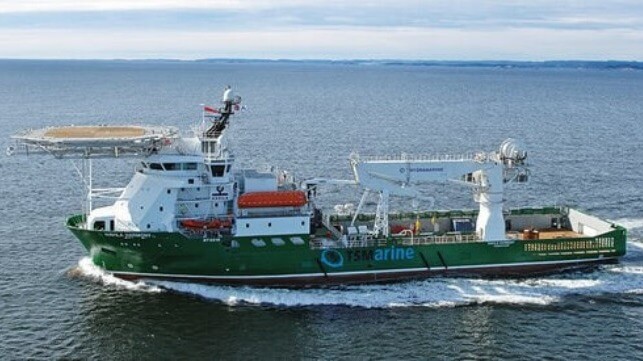
PSV Havila Foresight is one of the two vessels linked to the refinacing that were to be used to service th debt in 2025 (Havila Shipping)

Published Jan 22, 2025 4:13 PM by The Maritime Executive


Offshore services provider Havila Shipping is disputing claims by three of its bank lenders that the company is in default of its refinancing agreements. The company had worked for months before reaching terms in October 2024 to refinance nearly $91 million of debt due at the end of 2024 related to four now sold vessels and two that it continues to operate.

Havila is one of Norway’s large supply service companies to the international offshore energy industry. The company shows a total of 11 vessels, including PSV, subsea, and RRV, on its website and reports it also manages additional ships. It provides subsea construction, platform supply, and multi-field rescue recovery services.

The company asserts under the terms of an agreement announced on October 1, terms were set to refinance the fleet with three bank lenders and bondholders in two bond loans. It said the terms called for settling in cash $44 million and the remaining $46.5 million would be converted to shares. A new 2-year senior secured bond was issued in December valued at approximately $46.5 million to settle the cash debt. The company also reported at the end of December that the conversion for the other portion of the debt had been completed with a registration statement filed for the new shares.

As part of the agreement, Havila Shipping contends the three banks chose to extend the restructuring agreement by one year related to two of its vessels, PSV Havila Foresight and subsea vessel Havila Harmony, as well as four vessels, Havila BorgHavila ClipperHavila Fanø and Havila Subsea, which were sold.

Havila Shipping reported in a filing on January 21 that it had received a letter on behalf of the three banks that extended the restructuring agreement, claiming that the refinancing and issue of bond loan, which was used to redeem the debt of lenders who chose settlement at the end of 2024 in accordance with the agreement, is in breach of the restructuring agreement. It is also alleged that certain other circumstances constitute a breach of the restructuring agreement.

The operations of the Havila Foresight and Havila Harmony it says will service the outstanding debt during 2025. The remainder of the interest-bearing debt was to be refinanced and settled in cash at the end of 2025.

“The company disputes in full the lenders' understanding of the restructuring agreement,” the company writes in its response. “The company will, if necessary, have the matter resolved legally.”

The three banks are asserting that they will be entitled to declare a default on the outstanding debt, as well as to claim default interest and enforce security. 

Havila highlights that there are no cross-collateral agreements or cross-default linked to its new bond loan issued in December. 

It is the latest in a series of financial challenges for the offshore service provider. The offshore industry was challenged by a prolonged downturn which led to financial issues and consolidation. 


"We See You": UK Calls Out Russian Subsea Spying Vessel

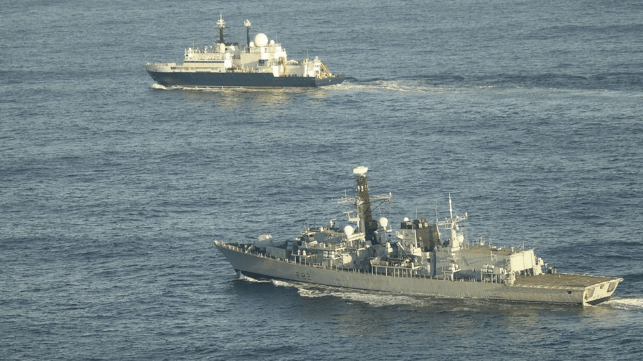
HMS Somerset tracks Yantar closely off the UK (Royal Navy)

Published Jan 22, 2025 3:51 PM by The Maritime Executive


Fresh off her voyage to visit the wreck site of the lost Russian military cargo ship Ursa Major, the Russian spy ship Yantar headed north to map vulnerable subsea infrastructure in British waters, UK Defense Secretary John Healey told Parliament this week. 

Healey said that the Royal Navy has been monitoring Yantar throughout her transit, and he called her presence "another example of growing Russian aggression." 

"I also wanted President [Vladimir] Putin to hear this message: we see you, we know what you're doing and we will not shy away from robust action to protect this country," Healey said. 

Nominally a research vessel, Yantar is operated by the Russian military's secretive Main Directorate of Underwater Research (GUGI), a dedicated subsea warfare division that reports directly to the Russian ministry of defense. GUGI is known best as the operator of Russia's special mission submersibles, notably the deep-diving Losharik and host submarine Belgorod, the world's longest sub. 

Yantar is capable of hosting submersibles for subsea survey, intervention and (analysts suggest) cable tapping or sabotage. Her activities in the North Sea, North Atlantic, Baltic and Irish Sea have prompted widespread suspicions that she is part of Russia's program to map NATO subsea infrastructure. 

HMS Somerset has been tracking Yantar throughout her voyage north, and closely, Healey said. 

"I changed the Royal Navy's rules of engagement so that our warships can get closer and better track the Yantar. So far, the ship has complied with international rules of navigation," he reported. 

Type 23 frigate HMS Somerset located and intercepted Yantar in the entrance to the English Channel, south of the traffic separation scheme at Ushant. Somerset shadowed Yantar as she navigated through waters close to France.

Healey also revealed that he had ordered a Royal Navy attack submarine to surface near Yantar the last time the Russian spy ship was in UK waters. Yantar visited the Irish Sea in November, where she was tracked by HMS Tyne. She also had a surprise visit from an Astute-class submarine, "strictly as a deterrent measure, to make clear that we had been covertly monitoring its every move," he said.  

"Let me be clear, this is a Russian spy ship used for gathering intelligence and mapping the UK’s critical underwater infrastructure," Healey emphasized. 


An IMO Commitment to Polar Fuels Could Cut Black Carbon Emissions

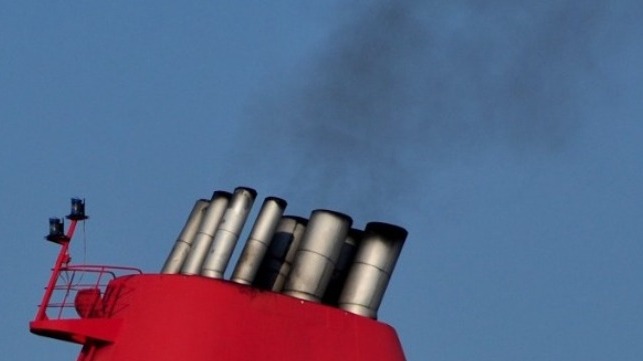
Stack exhaust
File image courtesy Pixabay

Published Jan 22, 2025 4:39 PM by Bill Hemmings


The International Maritime Organization’s (IMO) Pollution Prevention and Response (PPR) subcommittee meets in London from January 27th to 31st to consider important unfinished business related to the environmental and climate impacts of international shipping’s growing presence in the Arctic. With this sensitive region being the canary in the mine for global climate breakdown, and with 2024 marked as the first year the Earth surpassed 1.5 degrees Celsius of warming, it is crucial to pay close attention to what happens - or does not happen - during this meeting.

The question, unresolved since 2011, is whether the IMO should take mandatory action and impose requirements on the shipping industry to cut black carbon emissions in and near the Arctic. The Arctic is already at 2.5oC heating, with international shipping among the sectors contributing to this warming With the Arctic warming now four times faster than the rest of the planet and the short-lived climate forcer black carbon emitted in or near the Arctic being five times more potent a climate pollutant than when emitted outside the Arctic, it’s clear that the shipping sector must act.

Black carbon emissions from the shipping sector’s burning of residual fuels, such as heavy fuel oil (HFO), are a several thousand times more potent climate forcer than CO2 in the short term, and threaten the snow and ice-covered regions of the Arctic, primarily due to loss of albedo when it deposits on reflective surfaces.

Fortunately, fuels like HFO can be replaced with distillates or other cleaner fuels which can cut black carbon emissions by over 50%, and reduces their climate warming impacts drastically - effectively overnight. Thousands of ships already switch between residual fuels and distillates on a regular basis when entering IMO designated emission control areas (ECAs), with any additional fuel cost fully built in and accepted by the shipping industry. In the Arctic, distillate fuel is readily available and in widespread use, mainly by smaller vessels. However, larger ships, oil and chemical tankers, bulk carriers and general cargo vessels can and must implement a fuel switch.

Following IMO discussions in 2024 regarding the concept of ‘polar fuels’ - fuels acceptable for use in polar waters due to the lower emissions of black carbon - the International Organization for Standardization (ISO) proposed to define the characteristics of such polar fuels using four fuel quality criteria, the same that are used to characterize DMA distillates in the 2024 ISO standard. Since DMA dominates the global marine distillate market, these lower black carbon-producing DMA distillates – i.e. ’polar fuels’ - can be supplied to ships and bunkerers anywhere required for Arctic operations. The challenge for PPR12 will be to agree on the fuel quality criteria that would define ‘polar fuels,’ opening the way for a mandatory approach to the use of these fuels and other new and existing non-residual fuels with similarly low black carbon emissions in the Arctic under MARPOL Annex VI.

A second Arctic-specific issue under consideration at PPR12 concerns oil spills. Norway has proposed a possible definition of polar oil fuels which would be acceptable for use and carriage for use as fuel in Arctic waters under MARPOL Annex I. Norway first proposed to expand the output on reducing the risks of use and carriage of heavy fuel oil to include an upper pour point limit (the lowest temperature at which a fuel or lubricant will flow under specific conditions) in the definition of HFO in 2022. New fuel blends created to meet the requirements of the 2020 global 0.5% sulphur fuel cap have pour points above 0oC. Virtually all distillates including the proposed DMA ‘polar fuels’ have pour points of 0oC or less. Norway proposes a slightly different definition for ‘pour point polar fuel distillates’ than the ISO proposal for ‘distillate polar fuels’ which reduce black carbon.

Norway’s proposed MARPOL Annex I amendment encompasses the Polar Code’s Arctic Waters. This area however excludes a large part of the Arctic around Iceland and off the Norwegian coast, where ship activity and black carbon emissions are very high. To be effective at reducing black carbon emissions, a polar fuels regulation would need to cover the whole Arctic and not just the waters where ice cover or loose ice is likely to be present.

The IMO has committed to take global regulatory action to cut ship CO2 and greenhouse gas emissions at a meeting of its Marine Environment Protection Committee (MEPC 83) in April. The fact that black carbon isn’t a greenhouse gas but a form of particulate matter - soot - should not be an obstacle to similar regulatory action to reduce Arctic black carbon ship emissions and the impact on the Arctic.

In fact, in light of the strength of black carbon’s radiative forcing effect and given that the Arctic is facing the likelihood of exceeding multiple climate thresholds or ‘tipping points’ - the loss of summer sea ice, melting of the Greenland ice sheet, slowing of the Atlantic Meridional Oceanic Circulation (AMOC) - the IMO should not hesitate to act now to reduce black carbon emissions.

It is imperative that during PPR 12, member states endorse the concept of polar fuels - including distillate-grade marine fuels such as DMA or new fuels resulting in comparable or lower black carbon emissions - and agree as a matter of urgency to regulate emissions of black carbon from Arctic shipping.

Bill Hemmings is Black Carbon Advisor to the Clean Arctic Alliance.

The opinions expressed herein are the author's and not necessarily those of The Maritime Executive.


Captain of Costa Concordia Seeks Release from Prison After Eight Years

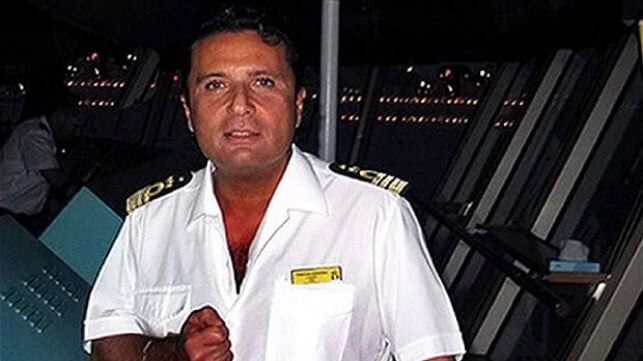
Captain Schettino
Captain Schettino is serving a 16-year prison term for the deaths and abandoning the Costa Concordia

Published Jan 22, 2025 5:00 PM by The Maritime Executive


The captain of the ill-fated cruise ship Costa Concordia is back in the news 13 years after the loss of the ship which created global headlines. Italian media is reporting that Francesco Schettino, now age 64, has petitioned the courts in Italy for a form of early release from his 16-year prison sentence.

Schettino was in command of the cruise ship owned by Carnival Corporation’s Costa Cruises. The ship was in service for just six years built by Fincantieri and delivered in 2006. It was 114,500 gross tons with a capacity for 3,780 passengers and 1,100 crew making a week-long cruise in the Western Mediterranean.

On January 13, 2012, the Concordia left Civitavecchia, Italy, but Captain Schettino decided to deviate from the normal course to make a “salute” sailing close to Giglio island. He later blamed faults with the vessel, problems with the crew and misunderstanding of commands, and other issues, while it was alleged he was distracted by other people on the bridge. 

As they sailed close to the island and the cruise ship sounded its horn, it struck an underwater rock outcropping that fatally ruptured the hull and flooded the electrical controls rendering the ship immediately powerless and drifting. There were 3,200 passengers aboard and over 1,000 crew. A total of 32 people would die as the vessel foundered and during a botched evacuation.

Infamously Schettino abandoned the bridge with other officers. He later claimed he had fallen from the listing ship or that he had gone to shore to oversee the evacuation. A famous recording surfaced of the Coast Guard screaming and cursing at him, and ordering him back aboard the vessel. The cruise ship capsized, leaving passengers to fend for themselves and climb over the hull and down ladders in a rescue organized by the Coast Guard.

Schettino was sentenced in February 2015 to 16 years in prison for dereliction of duty, multiple counts of manslaughter, causing a shipwreck, and abandoning his passengers. His appeals were exhausted in 2017. He was ordered to surrender at a prison in Rome.

Under Italian law, Schettino filed for early release into a state of “semi-liberty” whereby he would be out of prison for the remainder of his sentence. This is available after the prisoner has served at least half their time in jail and has demonstrated good behavior.

The Italian media reports there are mixed reactions. The protests are expected to grow in advance of a court hearing. In addition to the 32 who died, many people were injured and carry emotional scars from the disaster. It was the largest cruise ship lost and led to extensive changes in the management of the industry. Costa Cruises paid a fine of more than $1 million in addition to settlements with the families and passengers. Carnival Corporation overhauled the management and training of its officers and in 2016 established a training center in the Netherlands.

An Italian court has set a hearing for March 4 to decide if Schettino will win his release from prison.


UK Tells Offshore Developers "Make Less Noise" During Bomb Disposal

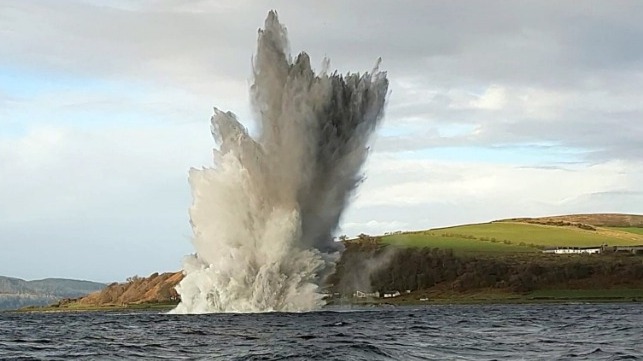
bomb disposal explosion
Offshore development requires removing or exploding ordinace on the UK shores (Royal Navy file photo)

Published Jan 22, 2025 6:06 PM by The Maritime Executive


The UK government is telling the developers of offshore sites including wind farms to adopt new tactics to ”reduce harmful noise” as they continue to build the projects. During surveys and development, they often encounter unexploded shells and bombs left over from the two World Wars that need to be disposed of as well as construction steps such as pile driving which creates underwater noise.

The government reports that there are over 300,000 pieces of unexploded ordnance from the First and Second World Wars that sit on the UK seabed. A 2020 report to Parliament estimated the number as high as 500,000 pieces. If encountered, it must be cleared during the construction of projects including offshore wind farms.

Just over a week ago, Shell reported it had discovered about 40 miles to the east of Shetland an unexploded bomb next to one of its gas lines running across the North Sea. In 2023, more than 70 unexploded ordnance were discovered during surveys in the Scottish North Sea for Ocean Winds’ planned Moray West project. 

“For too long we’ve been using Second World War technology to dispose of underwater unexploded munitions,” said Dame Joanna Lumley, a British actress and activist. For the past few years, she has been leading the campaign Stop Sea Blasts.

The new provisions are part of the UK Government’s Plan for Change launched in December 2024 by the government of Prime Minister Sir Keir Starmer. It focuses on the transition to renewable energy and revitalizing British industry. While setting ambitious goals to fast-track the delivery of clean power systems by 2030, the policy includes steps that call for reducing harmful noise levels in the seas.

Operators are expected to use low-noise disposal methods to clear ordnance by default, with noisy high-order detonations considered a last resort and restricted to extraordinary circumstances only. Developers will also now be required to demonstrate they have made clear efforts to reduce underwater noise during the installation of offshore wind turbines. This will be followed by a public consultation on setting a future noise limit for offshore wind construction. 

“These new measures support the construction of offshore wind that the UK needs, while making sensible changes to stop needless harm to underwater life,” said Marine Minister Emma Hardy. “As we expand offshore wind to make Britain a clean energy superpower through our Plan for Change, we need to protect the vulnerable animals of our seas.”   

The government highlights that it has partnered with The Crown Estate’s Offshore Wind Evidence and Change program and representatives from the explosives and offshore wind industries to test and develop new, quieter technologies for bomb clearance, and pilot proposed noise limits during offshore wind construction.

By defining the policies, the government asserts that it will make the construction process simpler and ensure that future projects can be built at pace. The measures it reports will prevent construction delays caused by breaches in noise thresholds.


High Seas Bust on Russia-Bound Boxship Leaves Spanish Police Empty-Handed

Vigo
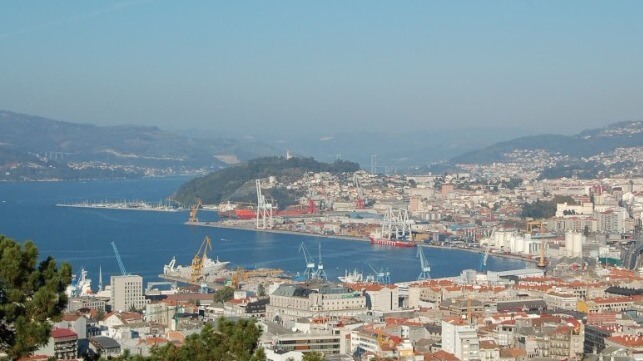
Baltic Summer was brought to Port of Vigo for a search (Dantadd / CC BY SA 2.5)

Published Jan 22, 2025 6:12 PM by The Maritime Executive


After a high seas boarding, Spain's Guardia Civil brought the boxship Baltic Summer into port at Vigo to be searched for drugs - the latest in a series of busts at the quiet port of Vigo, just north of the Portuguese border. This time, however, the authorities came away empty-handed.

Baltic Summer was under way on a voyage from Puerto Bolivar, Ecuador when it was stopped by Spanish authorities and diverted to the harbor at Vigo, with assistance from the U.S. FBI and Homeland Security Investigations. It was not headed to Spain, nor elsewhere in the EU, but to St. Petersburg, Russia. The majority of the crew are Russian and Belarusian, according to Spanish authorities. 

Baltic Summer was suspected to be carrying a consignment of drugs, and was thoroughly searched by the Guardia Civil's Central Operative Unit. The examination turned up nothing, according to local media, and the crew and the vessel will be released to continue their onward journey. 

Baltic Summer's loading port, Puerto Bolivar, is the biggest export hub for bananas in Ecuador. High-volume consignments of bananas are a preferred vehicle for cocaine smugglers: South America's banana-exporting regions are near to cocaine-producing areas, and banana boxes get shipped to the preferred destination - Europe, where drug prices are high. As the world's most-shipped fruit, there are thousands of containers to sort through to find the "dirty" boxes amidst the far more numerous legitimate ones. At the destination port, customs officials face time pressure to release the containers fast because the fruit has a limited shelf life: it only lasts about one month from packing to unpacking before spoilage sets in, and less if precise temperature conditions aren't maintained - leaving little time for detention and searching.

In November, Spanish police in Algeciras seized the country's largest-ever single cocaine shipment. In a container of Ecuadorian bananas, they found 13 tonnes of the expensive drug, one of the largest busts on record anywhere. 

Top image: Port of Vigo / Dantadd / CC BY SA 2.5


Lithuania Launches Pioneering Hydrogen, Electric-Powered Ship

hydrogen, electric tanker
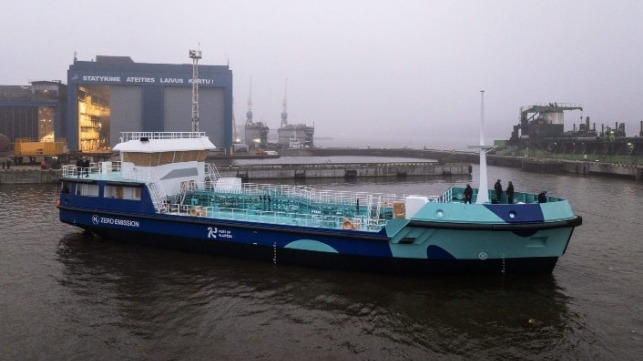
Hydrogen, electric-powered tanker was floated in Lithuania in a innovative project for port services (Klaipeda State Seaport Authority)

Published Jan 22, 2025 7:03 PM by The Maritime Executive


Lithuania is preparing to join the elite ranks of the shipping industry with the launch of a pioneering hydrogen, electric-powered vessel that will provide harbor services. The ship which was recently floated fat the West Baltic Shipyard is among the first to adopt hydrogen technology and will be deployed for the Klaipeda State Seaport Authority in partnership with Baltic Workboats.

This shipbuilding project with a total value of €12 million (US$12.5 million) was commissioned last year by the Port Authority for a tanker that will be 42 meters (138 feet) long. It becomes the first green hydrogen, electric-powered ship in Lithuania and one of only a few in the world.

The ship's power system will consist of two electric motors powered by 2,000 kWh batteries and an innovative hydrogen fuel cell system. Depending on the intensity of the work, the port authority reports the tanker will be able to operate in the port of Klaipeda for up to 36 hours without additional power charging.

"We have not only launched a tanker, but also a new approach to port operations – cleaner, smarter, and more environmentally friendly,” said Algis Latakas, Director General of Klaipeda State Seaport Authority. “This first-ever hydrogen and electricity-powered ship is not only an innovative technological solution but also an important step in strengthening Lithuania's image as a modern maritime nation.”

The tanker's main function will be to collect stormwater, sewage, sludge, and garbage, as well as to ensure efficient waste management. The ship will be equipped with special tanks and a modern rainwater treatment plant that will allow the treated water to be transferred to the city's sewage treatment plants. The tanker will be ready to work around the clock and collect up to 400 cubic meters of liquid waste.

According to the current rules, vessels are obliged to hand over the waste they produce when they arrive and before they leave Klaipeda Port. In June 2024, a symbolic keel-laying ceremony at the West Baltic Shipyard of the West Baltic Shipyard Group marked the start of the ship's construction. The vessel is due to enter service before the end of 2025.


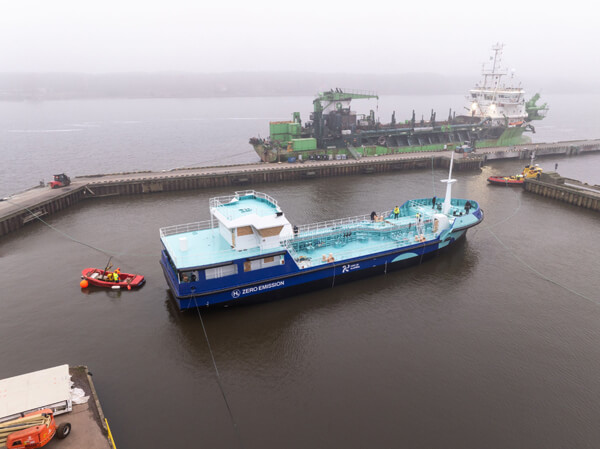
Vessel was floated and will complete outfitting to enter service by the end of 2025 (Klaipeda State Seaport Authority)


The hull has been fabricated and painted, with piping, valves, coolers, shaft lines, rudder feathers, heat and fire insulation installed. Once the tanker was moved into the water, the engine room equipment will be installed, the interior of the wheelhouse will be outfitted, the electrical wiring and the main electrical engines will be installed, the hydrogen system will be installed and other work necessary for the operation of the ship will be carried out. 

The Seaport Authority was charged with collecting waste from incoming ships, and the company decided to use modern and environmentally friendly equipment to further improve the quality of the ship's waste collection service.


New Zealand Does Not Plan to Replace Lost Survey Ship Manawanui

A diver at the Manawanui wreck site (NZDF)
Salvage diver at the Manawanui wreck site (NZDF)

Published Jan 22, 2025 8:50 PM by The Maritime Executive


When the survey ship Manawanui went down off the coast of Samoa in October, New Zealand's small navy lost more than a tenth of its fleet. The vessel will not be replaced, New Zealand's defense minister said early this week, and her missions will be picked up by the patrol boat HMNZS Otago - a much smaller vessel lacking Manawanui's working deck and 100-tonne crane.

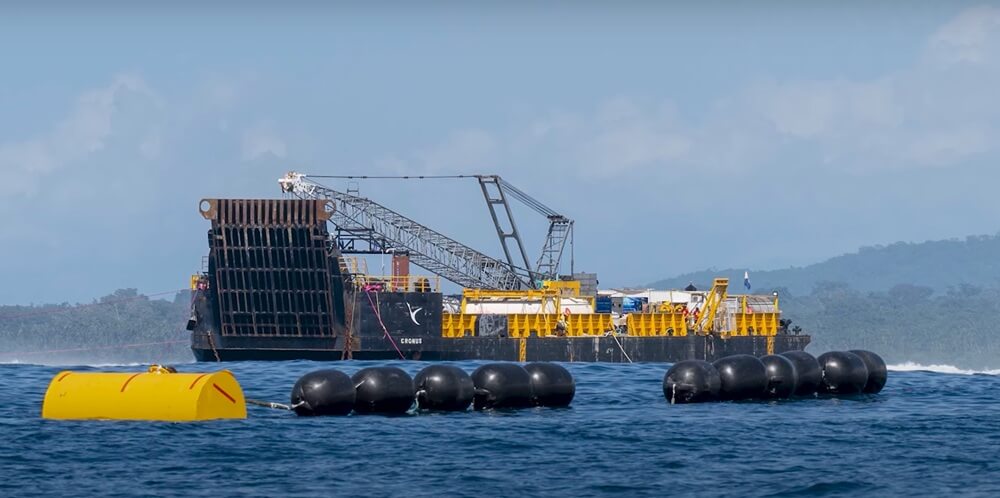
It is as yet unclear whether Manawanui's wreck will be raised, but refueling operations to reduce the risk of pollution are under way. The salvor is using a deck barge carrying tanktainers to store extracted petroleum from the ship, and it recently made its first planned trip back to port to drop off the first set of full tanks. The port backloaded empties onto the barge, and the salvors towed it back out towards the site to continue work. The barge's spread-moor system will remain in place between trips to and from the port, with its mooring cables temporarily hung on buoys so that they can be picked up later. 

Salvage barge on site off Upolu (NZDF)

Despite some early delays due to weather, the "complex and technical" defueling project is proceeding well, NZDF on-scene commander Commodore Andrew Brown said in a statement. He noted that the government of Samoa has reduced the scope of its precautionary restrictions on fishing in areas around the wreck site, which were implemented due to the risk of pollution from Manawanui's diesel fuel. Brown said that with New Zealand's help with water quality testing, further reductions are expected soon. An exclusion area of about 2,000 meters around the wreck will remain in effect. 

The cost of cleanup will be steep, but part of it will be covered by the New Zealand Defence Force's insurers, minister of defense Judith Collins told 1News. "Obviously Defence Force is supplying a lot of staff, a lot of equipment, all these things happening, but a lot of that is working with insurers," she said, declining to put a figure on the exact costs. 


Russia's Hopes for Syrian Naval Base Linger On

Sparta II
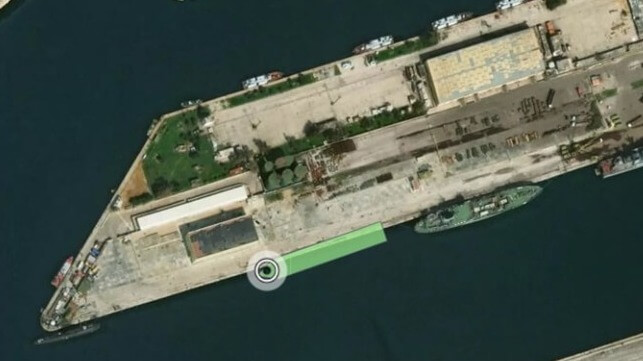
AIS location of Russian military cargo vessel Sparta II (light green overlay) next to the Russian pier in Tartus (MarineTraffic)

Published Jan 22, 2025 9:33 PM by The Maritime Executive


While the new government of Syria has terminated the Russian lease on the commercial seaport of Tartus, Moscow still holds out hope that it can keep a small sliver of the harbor that serves as a naval station, according to Russian outlets Izvestia and TASS.

Russia has had a "support point" at Tartus since 1971, the year that Syrian dictator Hafez al-Assad seized power and signed an accord with the Soviet government. Over the decades, the pier became the Russian Navy's sole base in the Mediterranean, an essential refueling and repair station for the Mediterranean Flotilla. With the overthrow of Hafez's son Bashar al-Assad in December, its future seems in doubt and Moscow is negotiating with former enemies - Islamist group Hayat Tahrir Al-Sham, a banned organization in Russia - over the base's survival. 

Earlier this week, it appeared that negotiations were over when HTS canceled the Russian lease on the port of Tartus' commercial section, which covered the majority of the inner harbor. Assad granted a 49-year lease to Russian engineering company Stroytransgaz in 2019, in exchange for an investment pledge of $500 million. The contract allowed Stroytransgaz to keep 65 percent of the profits of operating the harbor - until HTS ended the agreement and announced a takeover.

Russia may no longer control the commercial harbor, but HTS clarified Wednesday that the naval base is still up for discussion. Syria's new defense minister, Marhaf Abu Qasra, said that talks with Moscow continue. 

"There are negotiations being conducted by the presidency through the Ministry of Foreign Affairs, and until now, the final form is not clear, and we have not received any directive from the presidency regarding dealing with the Russian government," he told Al-Araby. 

Izvestia and TASS both carried the announcement and said that talks were ongoing, with contingency planning under way.

"Syria is under pressure now, so there is a possibility that we will lose the base in Tartus," military commentator Viktor Litovkin told Izvestia.  "And our leadership, knowing about this possible development of events, I think is now looking for a replacement for these bases. But where they will be located is a big question. There is no firm confidence that we will be able to settle in Libya, Algeria,  Egypt [or Eritrea]."

As of Wednesday, two Russian military cargo ships were moored near the naval base section of the port, where Russian vehicles and equipment from the Syrian campaign has been stockpiled for possible evacuation. Cloudy weather prevented a clear view of the piers by satellite (below). During the day, a Russian attack helicopter circled near the base and over the commercial section of the port, according to local journalist Qusay Noor. 


DNV: Energy Companies View Cybersecurity as Greatest Risk

Cyber image
iStock

Published Jan 22, 2025 10:19 PM by The Maritime Executive


Hacking has risen up to dominate the risk landscape for energy companies, according to DNV. The class society's most recent survey found that two-thirds of energy professionals say that their company's leaders view cybersecurity as the greatest current risk to their business, and expect to increase spending on cybersecurity protections. 

The risks are growing with the expansion of new, digitized green power technology, which inherently creates new potential points of entry and exploitation."The whole energy sector – companies and governments alike – are working together on this massive challenge, which is increasingly complex because the technologies underpinning the transition are largely digital and scaling rapidly. With this comes cybersecurity risks,” said Ditlev Engel, CEO, Energy Systems at DNV.

Nearly half of the energy professionals surveyed said that the extra cyber risk is worth it for advancing the green transition, and the risk should be accepted as a cost of innovation. 

Geopolitical factors are also driving cybersecurity concerns in the energy sector, and three quarters of those surveyed said that their companies have paid more attention to cyber risk because of growing tensions (and growing risk of attacks sponsored by foreign powers). However, even more - four out of five - said that they were concerned about criminal hackers. 

Two-thirds also said that their firm's operational technology (OT) - the computer networks that control automated industrial systems- is especially vulnerable to attack, and most said that their OT is less well-defended than their IT networks. 

"In some companies, you can go to an industrial site and find people working on OT who have never spoken to their counterparts in other sites. They are doing what they have always done because that is how you achieve the required production," said Robert Valkama, Senior Manager of OT Cyber Security at Fortum. "The digital maintenance is missing and that’s hindering cybersecurity efforts."

Supply chain attacks are also a serious concern for energy projects. If threat actors can access an energy company's suppliers - or sub-suppliers - they could insert a malicious program or a weak point into an entire series of new equipment, before it leaves the factory. More than a third of those surveyed said that they believe that at least one of their suppliers had been infiltrated in the past and had decided to keep the breach secret.

"From attacks on supply chains, recruitment of malicious insiders, and the use of AI, adversaries are upping their game and the energy industry needs to keep up," said Auke Huistra, Director of Industrial and OT Cybersecurity at DNV Cyber.