Saturday, January 25, 2025

Trump Admin Reportedly Implements Widespread Freeze on Foreign Aid—Except to Israel and Egypt

"Guess which country was exempted…?" wrote the investigative outlet Drop Site News.
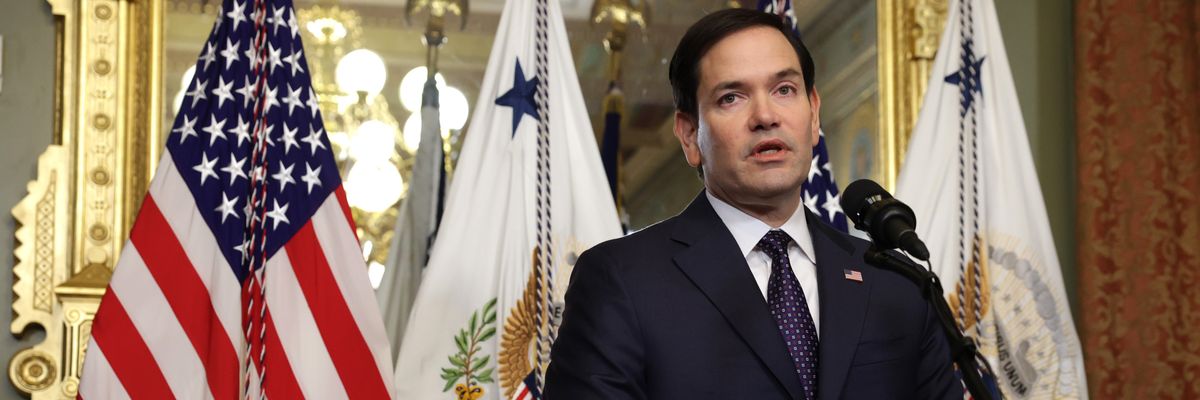


Newly confirmed U.S. Secretary of State Marco Rubio speaks during a swearing-in ceremony at the Vice President's Ceremonial Office at Eisenhower Executive Office Building January 21, 2025 in Washington, DC.
(Photo: Alex Wong/Getty Images)

Eloise Goldsmith
Jan 24, 2025
COMMON DREAMS

The State Department on Friday reportedly issued guidance that it is freezing almost all U.S. foreign assistance—with exceptions for emergency food aid and foreign military financing for two U.S. allies, Israel and Egypt—according to a cable obtained by multiple outlets.

"Guess which country was exempted....?" wrote the investigative outlet Drop Site, in response to the cable, which independent journalist Ken Klippenstein shared on social media.


The aid carve out for Israel follows 15 months of nearly unqualified U.S. support for the Israeli government during its military campaign on the Gaza Strip, which began after Hamas attacked Israel in October 2023, and led to the deaths of tens of thousands of Palestinians, according to the local health officials. A ceasefire between Israel and Hamas went into effect on Sunday, but Israel has since then attacked the city of Jenin in the West Bank.

Other traditional U.S. allies, like Ukraine and Taiwan, are not listed among the waivers to the pause. Trump has been a longtime critic of NATO, which Ukraine hopes to join, and has been critical of the scale of U.S. support for Ukraine as it battles an invasion by Russia.

On Monday, his first day in office, Trump issued an executive order calling for a 90-day pause on U.S. foreign development assistance in order to assess "programmatic efficiencies and consistency with United States foreign policy." But this latest memo, signed by Secretary of State Marco Rubio and sent to embassies worldwide, further fleshes out that directive.

The U.S. "shall not provide foreign assistance funded by or through the department and USAID without the secretary of state's authorization or the authorization of his designee," according to the cable, which was referring to the United States Agency for International Development.

Additionally, "no new obligations shall be made for foreign assistance until such times as the secretary shall determine, following a review" and "for existing foreign assistance awards, contracting officers and grant officers shall immediately issue stop-work orders."

Politico, which also obtained Rubio's memo, reported that "it had not been clear from the president's [Monday] order if it would affect already appropriated funds or Ukraine aid. The new guidance means no further actions will be taken to disperse aid funding to programs already approved by the U.S. government, according to three current and two former officials familiar with the new guidance."

"State just totally went nuclear on foreign assistance," one State Department official toldPolitico.

In fiscal year 2023, the most recent year with complete government reporting, the U.S. spent $68 billion in foreign aid obligations, on topics ranging from economic development, to health and the environment. Ukraine was the top recipient of foreign aid that year, with $17 billion obligated, and Israel came in second, with $3.3 billion.

According to The Associated Press, which also obtained the cable, the order was particularly disappointing to humanitarian officials who hoped that health clinics and other health programs worldwide would be spared from the funding freeze.
'A Pattern of Genocide': Report Details Israel's Systematic Destruction of Gaza Health System

The Palestinian group Al-Haq outlined the "targeting of hospitals and health centers, the denial of adequate medical provisions into and around the Gaza Strip, and the abduction, torture, and killing of medical personnel."


The intensive care unit of the Kamal Adwan Hospital in Beit Lahia in the northern Gaza Strip is shown on January 20, 2025, the day after a cease-fire deal took effect.

(Photo: Omar Al-Qattaa/AFP via Getty Images)


Jessica Corbett
Jan 23, 2025
COMMON DREAMS

Less than a week into a fragile cease-fire between Hamas and Israel in the Gaza Strip, the Palestinian human rights group Al-Haq on Thursday released a report detailing how "Israel has systematically targeted and attacked the healthcare system to the point of its collapse in a campaign of genocide."

The new report—titled The Systematic Destruction of Gaza's Healthcare System: A Pattern of Genocide—builds on previous publications, including from United Nations entities, and testimonies from medical professionals who have worked in Gaza since Israel launched its U.S.-backed assault in retaliation for the Hamas-led October 7, 2023 attack.

"The Israeli occupying forces' (IOF) targeting of hospitals and health centers, the denial of adequate medical provisions into and around the Gaza Strip, and the abduction, torture, and killing of medical personnel is evidence of Israel's genocidal intent to: (i) inflict conditions of life calculated to bring about the physical destruction of the Palestinian people in the Gaza Strip, and (ii) impose measures intended to prevent Palestinian births in the Gaza Strip," states the 116-page report.

"The concerted policy to destroy the healthcare system in Gaza is directly and causally linked to statements made by Israeli officials," the document continues, offering various examples and highlighting how it wasn't just hospitals—Israel also attacked "civilian residences, schools, shelters, mosques, churches, and other protected areas under international humanitarian law."

The report argues that "Israel's systematic campaign against Gaza's healthcare infrastructure as a whole is exemplified by the targeted destruction of al-Shifa Hospital," which is the largest hospital in the occupied Palestinian territory and "older than Israel." The document also addresses Israel's attacks on Adwan, al-Amal, al-Aqsa, al-Awda, Indonesian, Kamal, and Nasser hospitals.


Along with offering a summary of facts and legal analysis of "Israel's systematic attacks on Gaza's healthcare system as acts of genocide," war crimes, and violations of international humanitarian law, the publication features recommendations for other countries and blocs, international tribunals, U.N. experts, companies, and healthcare professionals.

Al-Haq called on the international community to "name and condemn Israel's ongoing genocide," impose an arms embargo, support the United Nations Relief and Works Agency for Palestine Refugees in the Near East, and demand the release of Palestinian political prisoners and those who have been arbitrarily detained by Israel, including healthcare workers.

The report was published as the death toll in Gaza continues to grow, as displaced residents of the Palestinian enclave return to the remnants of their homes and communities decimated by more than 15 months of Israeli bombings and raids.

The Gaza Ministry of Health said Thursday that the official death toll rose to 47,283, after 120 bodies "were recovered from under the rubble" in the past 24 hours, and 111,472 people have been injured. Global experts warn the true death toll is likely far higher.

Israel faces a genocide case led by South Africa at the International Court of Justice (ICJ) over its military assault and restrictions on the flow of humanitarian aid into Gaza. The International Criminal Court (ICC) has also issued arrest warrants for Israeli Prime Minister Benjamin Netanyahu, former Israeli Defense Minister Yoav Gallant, and Hamas leader Mohammed Diab Ibrahim Al-Masri.

Al-Haq's report notes both the ICC warrants and the ICJ case, urging other governments to formally support the latter effort.

Throughout the 15-month assault on Gaza, Israeli settlers and troops also targeted Palestinians in the illegally occupied West Bank—where Al-Haq is based. However, since the cease-fire took effect Sunday, attacks in the West Bank have sparked fresh alarm.

In addition to pushing for the investigation of Israel's assault on Gaza, the new report urges a U.N. commission to probe "genocidal acts in the West Bank, including East Jerusalem, including but not limited to killings of Palestinians, causing serious bodily or mental harm to Palestinians, and deliberately inflicting conditions of life calculated to bring about the physical destruction of the Palestinian people."
Addressing Elites at Davos, UN Chief Says Fossil Fuel Addiction Is a 'Frankenstein Monster'

"All around us, we see clear signs that the monster has become master."


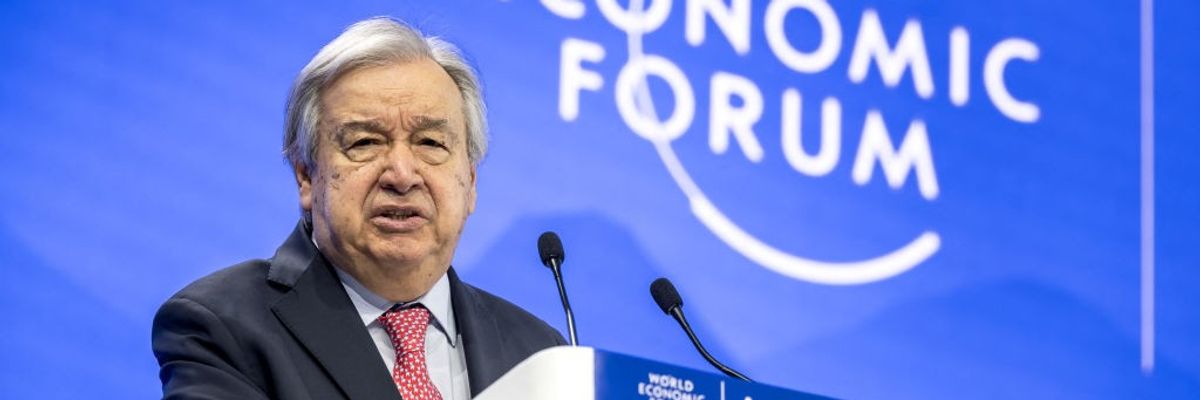
United Nations Secretary-General António Guterres addresses the World Economic Forum's annual meeting in Davos, Switzerland on January 22, 2025.
(Photo: Fabrice Coffrini/AFP via Getty Images)


Jake Johnson
Jan 22, 2025
COMMON DREAMS


United Nations Secretary-General António Guterres said during his address at an annual gathering of global elites on Wednesday that the world's addiction to fossil fuels has become an all-consuming "Frankenstein monster" imperiling hopes of a livable future.

"All around us, we see clear signs that the monster has become master. We just endured the hottest year and the hottest decade in history," Guterres said to the audience gathered at the World Economic Forum in Davos, Switzerland.

"A number of financial institutions and industries are backtracking on climate commitments," Guterres continued. "Here at Davos, I want to say loudly and clearly: It is short-sighted. And paradoxically, it is selfish and also self-defeating. You are on the wrong side of history. You are on the wrong side of science. And you are on the wrong side of consumers who are looking for more sustainability, not less. This warning certainly also applies to the fossil fuel industry and advertising, lobbying, and PR companies who are aiding, abetting, and greenwashing."

"Global heating is racing forward—we cannot afford to move backward," he added.

Guterres' remarks came as President Donald Trump, a fervent ally of the fossil fuel industry, took office in the U.S.—the largest historical emitter—and moved immediately to expand oil and gas production, which was already at record levels.

The U.S. is among a number of rich nations working to build out fossil fuel infrastructure and ramp up production in the face of runaway warming and worsening climate destruction across the globe.

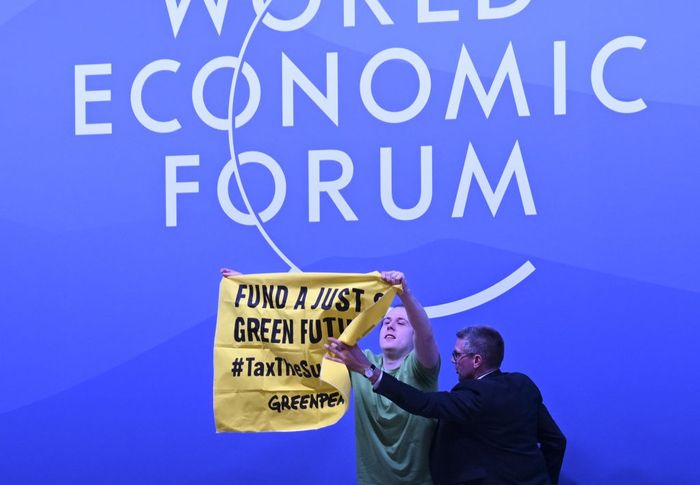
Intensifying climate chaos—and global elites' disproportionate contributions to the planetary crisis—spurred several protests inside and near the Davos forum this week, with activists demanding higher taxes on the mega-rich and a rapid, just transition to renewable energy.


A climate protester calls for taxes on the rich during the World Economic Forum gathering in Davos, Switzerland on January 21, 2025. (Photo: Halil Sagirkaya/Anadolu via Getty Images)

"It is more than obvious that the super-rich must pay their fair share," Clara Thompson, a Greenpeace spokesperson in Davos, said earlier this week. "Especially when they are among the largest contributors to the climate crisis."

"It shouldn't be the people, already struggling to make ends meet, who have to foot the bill and suffer the consequences of worsening climate impacts," Thompson added. "The scarcity narrative is simply not true—there is enough money to fund a just and green future for all but it is just in the wrong pockets."
Even Most Millionaires Think the Superrich Influencing Trump Threatens Global Stability

The polling was released alongside a letter urging attendees of the World Economic Forum's Davos summit to "tax the superrich."


Austrian-German Marlene Engelhorn, who gave much of her inheritance to groups that seek to improve environmental protection, education, integration, health, and social issues, poses with British millionaire Phil White with signs that say "Tax the rich" ahead of the World Economic Forum meeting in Davos, Switzerland on January 19, 2025.
(Photo: Fabrice Coffrini/AFP via Getty Images)


Jessica Corbett
Jan 22, 2025
COMMON DREAMS

As the World Economic Forum held its annual summit in Davos, Switzerland, polling released Wednesday showed that even millionaires are concerned about the wealthy's influence over Republican U.S. President Donald Trump, who started his second term earlier this week surrounded by Big Tech billionaires.

The poll, conducted in November and December by Survation on behalf of the U.S.-based group Patriotic Millionaires, is based on the responses of 2,902 people from G20 countries with investable assets over $1 million, excluding their homes.

Around two-thirds of them strongly or somewhat agreed that "superrich individuals interfered inappropriately in media, public, and political opinion in the 2024 U.S. election" (67%) and "the role the superrich will play in Donald Trump's presidency is a threat to global stability" (63%).

"When a superrich elite is determining the outcome of elections purely to protect their vested interests and accelerate profits, it's clear that we are in a terrifying age of wealth extremism."

Pollsters also found that over half of those surveyed believe that extreme wealth threatens democracy and the democratic stability of their country, and that political leaders lack the will to tackle extreme wealth. Nearly 70% of respondents said that the influence of the superrich is leading to a decline in trust in democracy.

Over 70% think that the ultrawealthy buy political influence and disproportionately sway public opinion through control of the media and social media platforms—and that their influence is leading to a decline in trust of the media and the justice system, according to the poll. Additionally, 72% favor raising taxes on the superrich to help reduce inequality and invest in public services.

The poll results were released alongside a letter to global leaders attending the Davos meeting, signed by more than 370 millionaires and billionaires from 22 countries, who argued that "oligarchy cannot be born from the political fear of upsetting the superrich," so "you must tax us, the superrich."

Signatories include American filmmaker and Patriotic Millionaires member Abigail Disney, who said in a statement that "it's easy to see the election of a figure like Donald Trump as an aberration, but that's not the case. Donald Trump—along with his so-called 'first buddy,' Elon Musk—is the final and inevitable conclusion of decades of inaction on the part of world leaders to put a check on extreme inequality."

Musk, a tech CEO and the richest person on the planet, poured over a quarter-billion dollars into reelecting Trump, has often been seen at the president's side since his November win, and is leading the Republican's Department of Government Efficiency, a controversial presidential advisory commission created to pursue GOP dreams of slashing federal regulations and spending.


"It's hard to be optimistic about what lies ahead over the next four years—and maybe more—but if officials want to do something to ensure the stability of our democracies, they need only find the political resolve to once and for all tax wealthy people like me," said Disney.


Other signatories also shared that call, including Marlene Engelhorn, an Austrian-German who co-founded taxmenow and said Wednesday that "the superrich are buying themselves more wealth and more power while the rest of the world is living in economic fear."

"We no longer have access to free and fair media; our political and legal systems can be bought; and our democracies are on very shaky ground," added Engelhorn, one of the representatives sharing the letter in Davos. "For all our sake, in every country, we have to tackle this now. Politicians need to show their mettle; they need to tax the superrich."

Scottish award-winning actor Brian Cox, who portrayed a billionaire named Logan Roy on the show Succession, also signed on and said that "recent events have shown that the political influence of billionaires and those with extreme wealth is an extreme risk to society."

"The superrich now manage so much more than money: They manage what we read, what we watch, the information we're given, and ultimately, how we vote," he continued. "When a superrich elite is determining the outcome of elections purely to protect their vested interests and accelerate profits, it's clear that we are in a terrifying age of wealth extremism. Our leaders have lacked the backbone needed to rein in political capture and put ordinary people first. It's time we draw the line and tax the superrich."


Watchdogs Argue 'Narrow Profit Interests' Drive Corporate Tax Debate in US

"It is the American people who lose when corporations succeed in keeping their taxes low," according to the report's authors.


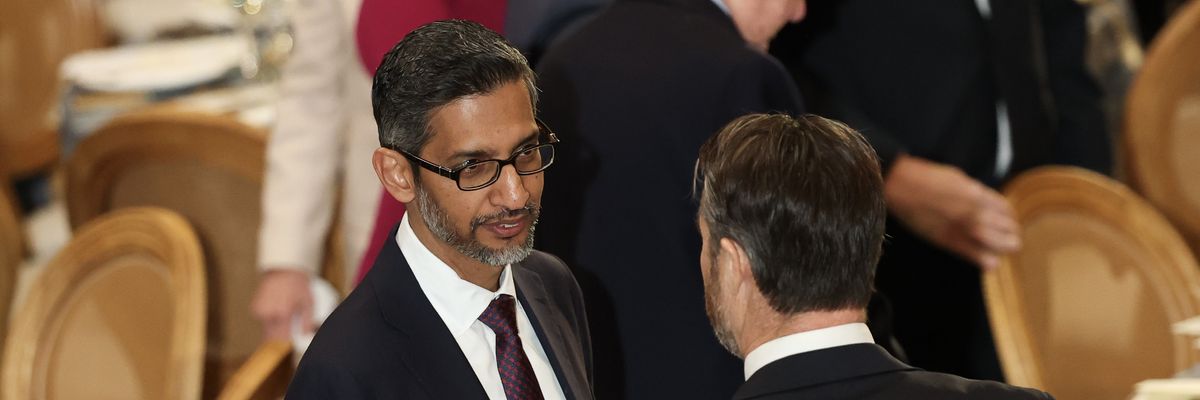
CEO of Google and Alphabet Sundar Pichai attends the inauguration of U.S. President-elect Donald Trump in the Rotunda of the U.S. Capitol on January 20, 2025 in Washington, DC.
(Photo by Kevin Dietsch/Getty Images)

Eloise Goldsmith
Jan 23, 2025
COMMON DREAMS

With portions of President Donald Trump's 2017 Tax Cuts and Jobs Act that favored high income households and corporations set to expire in 2025, the watchdog group Accountable.US and the coalition Americans for Tax Fairness released a report Wednesday detailing how top corporations benefited from corporate tax law in the five years following the 2017 reform.

These corporations, which include household names such as Apple, Bank of America, Microsoft, Meta, and General Motors, make a disproportionate share of national profits and pay a big chunk of total corporate taxes, though at low rates, according to the report—as in, the "corporate tax ten" identified by the report have a lot at stake when it comes to corporate tax policy.

Ahead of the coming debate around taxes in 2025, "the American public should be aware that the debate over corporate tax policy is less about national economic impact—as corporate lobbyists tend to insist—and more about the narrow profit interests of a few mammoth corporations," according to the report's authors.

While Trump's 2017 tax law permanently lowered the corporate tax rate from 35% to 21%—and this provision is not among those set to expire this year—Trump and House Republicans have expressed interest in dropping the corporate tax rate further, to 15%. Researchers at the Institute on Taxation and Economic Policy found that even after Trump dropped the corporate tax rate to 21%, most profitable corporations paid considerably less than that, "mainly due to loopholes and special breaks that the 2017 tax law left in place and, in some cases, introduced."

"We've seen how Trump's tax scam played out before—after promising to deliver for Main Street, he turned around and gave trillions in tax cuts to the ultra-wealthy and mega-corporations," said David Kass, ATF's executive director in a statement Wednesday. Regular American families "will be hurt by Republicans' plans to give trillions in additional tax cuts to make the rich richer and pay for it by cutting essential programs," he added.

Citing the Institute on Taxation and Economic Policy, the report notes that of the hundreds of billions in total subsidies received by corporations from 2018 through 2022—defined as "the difference between what they would owe over that period without special breaks in the tax code and what they actually paid with them in place"—over $150 billion of those total tax breaks were claimed by just 25 corporations, with Bank of America topping the list at nearly $24 billion in subsidies over those five years

Those breaks help explain how Bank of America paid a federal income-tax rate of just 3.8% on almost $139 billion in profits over that time period, according to the report.

Trump's 2017 legislation also lowered the tax rate for corporate income that comes from intangible assets that are held in the U.S. but generate sales overseas, so-called Foreign Derived Intangible Income (FDII) earnings, according to the report. The authors report that "of the over $50 billion the top 15 corporate beneficiaries of the FDII loophole have received over the first six years of the Trump law, almost one-quarter was reaped by Alphabet"—the parent company of Google.

The authors also note that if the 15% corporate tax rate was already in effect, Apple alone would have saved $3.5 billion on its taxes in the most recent annual reporting period.

The report gives other examples of how these top ten corporations benefit from subsidies already in place and how much they stand to gain from a potentially lowered corporate tax rate.

The report's argument that corporations approach tax policy first and foremost with their own profit margins in mind "is an important realization because it is the American people who lose when corporations succeed in keeping their taxes low: through cuts to public services because of the lost revenue; widening income and wealth gaps from increased corporate profits and stock prices; and in the growth of concentrated corporate power," the authors write.


IN THE MIDDLE OF THE NIGHT

Donald Trump fires at least 17 independent federal inspectors

The Trump administration sacked more than a dozen independent inspectors general at government agencies overnight on Friday, a sweeping action to remove oversight of his new administration that some members of Congress say violates federal law. Internal government watchdogs are charged with preventing and detecting fraud, waste and abuse of power.


Issued on: 25/01/2025 
FRANCE24
By:NEWS WIRES

US President Donald Trump steps off Air Force One as he arrives in Las Vegas on January 24, 2025. © Mandel Ngan, AFP


US President Donald Trump fired 17 independent watchdogs at multiple government agencies on Friday, a person with knowledge of the matter said, eliminating a critical oversight component and clearing the way to replace them with loyalists.

The inspectors general at agencies including the departments of state, defence and transportation were notified by emails from the White House personnel director that they had been terminated immediately, the source said on condition of anonymity.

The dismissals appeared to violate federal law, which requires the president to give both houses of Congress reasons for the dismissals 30 days in advance.

The White House did not immediately respond to a request for comment.

An inspector general is an independent position that conducts audits and investigations into allegations of waste, fraud and abuse of power.

Read moreTrump threatens to withhold aid to Democrat-led California on US disaster zone visits

Agencies are pressing ahead with orders from Trump, who returned to the presidency on Monday, to reshape the federal bureaucracy by scrapping diversity programmes, rescinding job offers and sidelining more than 150 national security and foreign policy officials.

Friday’s dismissals spared the Department of Justice inspector general, Michael Horowitz, according to the New York Times. The Washington Post, which was first to report the dismissals, said most were appointees from Trump’s 2017-2021 first term.

Senator Elizabeth Warren, a Massachusetts Democrat, called Trump’s action a “purge of independent watchdogs in the middle of the night,” posting on X: “President Trump is dismantling checks on his power and paving the way for widespread corruption.”


Former Trump lawyer Sidney Powell, an ally of the president, defended the decision on X, saying “existing IGs are virtually worthless.”

“They may bring a few minor things to light but accomplish next to nothing,” she wrote. “The whole system needs to be revamped! They are toothless and protect the institution instead of the citizens.”

Many politically appointed leaders of agencies and departments come and go with each administration, but an inspector general can serve under multiple presidents.

During his first term, Trump fired five inspectors general in less than two months in 2020. This included the State Department, whose inspector general had played a role in the president’s impeachment proceedings.

Last year, Trump’s predecessor Joe Biden fired the inspector general of the US Railroad Retirement Board, after an investigation found the official had created a hostile work environment.

In 2022, Congress strengthened protections for inspectors general, making it harder to replace them with hand-picked officials and requiring additional explanations from a president for their removal.

(Reuters)
Trump's Anti-Trans Order Could Pave Way for National Abortion Ban

"They are going to try to sneak in that fetal personhood language anywhere they can, anywhere and everywhere," said advocate and author Jessica Valenti.


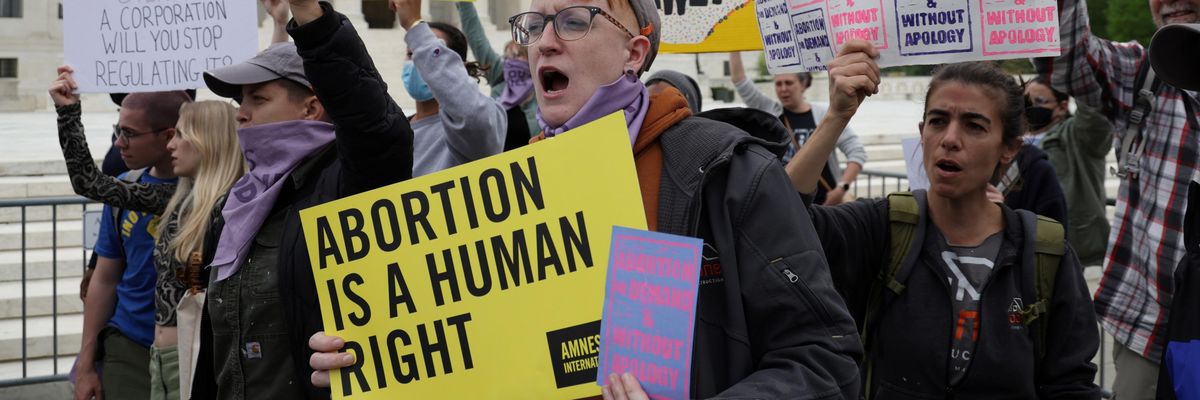
Reproductive rights advocates protest in response to the leaked Supreme Court draft decision to overturn Roe v. Wade on May 3, 2022 in Washington, D.C.
(Photo: Alex Wong/Getty Images)


Julia Conley
Jan 23, 2025
COMMON DREAMS

U.S. President Donald Trump and Vice President JD Vance have insisted that the White House would not sign a nationwide abortion ban—despite the latter's expression of support for one as recently as 2022—but an unrelated executive order Trump signed this week may put the country on the path to outlawing abortion care without the president needing to sign any legislation into law.

Reproductive rights advocates including author Jessica Valenti noticed shortly after Trump signed an executive order stating the government will not recognize transgender people that the document included language that was unmistakably linked to the right-wing push for "fetal personhood" laws.

"'Female' means a person belonging, at conception, to the sex that produces the large reproductive cell," reads the executive order signed on Monday. "'Male' means a person belonging, at conception, to the sex that produces the small reproductive cell."

Aside from the fact that the order suggests the Trump administration will recognize everyone born in the United States as a female—because in the first weeks after conception, explained one 2001 scientific paper, "fetal genitalia are the same and are phenotypically female"—the document claims that a fetus is a "person" from the moment of conception.

"And so it begins," said Valenti after the executive order was issued. "They are going to try to sneak in that fetal personhood language anywhere they can, anywhere and everywhere."


The order's language is in line with the Republican Party's 2024 platform, which did not call for a nationwide abortion ban but expressed support for states that would establish fetal personhood by extending the protections of the 14th Amendment, which guarantees that "no person can be denied life or liberty without due process," to fetuses.

The Texas Republican Party last year asserted in its platform that "abortion is not healthcare, it is homicide," and said the party would push to extend "equal protection of the laws to all preborn children from the moment of fertilization."


Rights advocates have warned that adoption of the fetal personhood doctrine at the national level could ultimately lead to the prosecution of pregnant people who obtain abortion care—something anti-abortion groups have long claimed they wouldn't support.


When the national GOP platform was released last August, Slate journalist Mark Joseph Stern said its language suggested that "the GOP has recognized that this task is too unpopular to enact democratically, so they're outsourcing it to the federal courts."

"Fetal personhood means a nationwide abortion ban imposed by judicial fiat," said Stern.

Anti-abortion advocates aim to ultimately bring fetal personhood to the U.S. Supreme Court, hoping the right-wing majority would rule that the 14th Amendment applies to fetuses from the moment of conception.

Including a reference to fetal personhood in an unrelated executive order is "an intentional way to continue to normalize the idea that embryos are people," Dana Sussman, senior vice president of Pregnancy Justice, told The Guardian.

"This is yet another attempt to codify it in one form or another," said Sussman.
As Trump Nominees Back SNAP and Medicaid Work Requirements, Report Shows Harms

"They do not reliably increase employment, but they do kick people off essential benefits like food assistance and healthcare," said an expert at the Economic Policy Institute.


People shop for food in a Brooklyn neighborhood in New York City on October 16, 2023.
(Photo: Spencer Platt/Getty Images)

Jessica Corbett
Jan 24, 2025
COMMON DREAMS

After nominees for U.S. President Donald Trump's Cabinet this week endorsed work requirements for social safety net programs, an economic think tank released a Friday report detailing the policy's drawbacks.

"Work requirements for safety net programs are a punitive solution that solves no real problem," said Economic Policy Institute (EPI) economist and report author Hilary Wething in a statement about her new publication.

"They do not reliably increase employment, but they do kick people off essential benefits like food assistance and healthcare," she stressed. "If policymakers are genuinely concerned about improving access to work, they should support policies like affordable child- and eldercare."

"The existing safety net is too stingy and tilts too hard toward making benefits difficult to access."


EPI's report explains that recently, congressional Republicans—who now have a majority in both chambers—"have embraced proposals to ratchet up work requirements as conditions for the receipt of some federal government benefits. These proposals are clearly trying to exploit a vague, but pervasive, sense that some recipients of public support are gaming the system to get benefits that they do not need, as they could be earning money in the labor market to support themselves instead."

"However, a careful assessment of the current state of public benefit programs demonstrates that almost none of the alleged benefits of ratcheting up work requirements are economically significant, but that the potential costs of doing this could be large and fall on the most economically vulnerable," the document states. "The most targeted programs for more stringent work requirements are the Supplemental Nutrition Assistance Program (SNAP, popularly referred to as food stamps) and Medicaid, the health insurance program for low-income people."

"EPI has surveyed the research literature on work requirements and how they interact with these two programs in particular, and we find that the existing safety net is too stingy and tilts too hard toward making benefits difficult to access," the report continues. "Tightening eligibility by increasing work requirements for these programs will make this problem even worse with no tangible benefit in the form of higher levels of employment among low-income adults."

Wething found that work requirements generally target nonelderly adults without documented disabilities who don't have official dependents living in their homes, formally called "able-bodied adults without dependents" (ABAWDs).

"While ABAWDs might not have documented disabilities that result in benefit receipt or have dependent children living at home full-time, they often experience health challenges and must take on some caregiving duties, each of which could provide a genuine barrier to finding steady work," the report says. "We find that 21% reported having a disability that affects their ability to find and sustain work, suggesting that adults with genuine health barriers are being swept up in overly stringent work requirements."

Additionally, "13.8% of ABAWDs live with an adult over the age of 65 in their household, suggesting that many are potential caregivers in some form and likely have caregiving responsibilities beyond what is captured on paper," the document notes. "Despite ABAWDs having health challenges and caregiving responsibilities that make participation in the labor market difficult, our current social safety net does very little to support these adults."

The publication highlights that "low-income adults generally face steep labor market challenges, making it difficult to meet work requirements," including that "low-wage work is precarious, making work time hard to maintain."

The report also emphasizes that "by making the process of applying for crucial safety net programs more burdensome, work requirements effectively function like a cut to programs," and "the consequences of losing access to SNAP and Medicaid for low-income adults are severe, often resulting in food and health insecurity."


Despite the abundance of research about the downsides of work requirements, Brooke Rollins, Trump's nominee to lead the U.S. Department of Agriculture—which administers SNAP—expressed support for the policy during a Thursday Senate confirmation hearing, echoing what Russell Vought, the president's pick to direct the Office of Management and Budget, said about Medicaid on Wednesday.

Rather than pushing work requirements, the EPI report argues, decision-makers could advocate for "policies that would measurably improve employment in low-income households," including "macroeconomic policy to maintain full employment."

The publication also promotes policies that increase scheduling predictability, provide better help with caregiving responsibilities, assist formerly incarcerated people with finding and maintaining jobs, reduce unnecessary education mandates for employment, and improve transportation options. It further calls for reducing existing work requirements.

"It is entirely possible that reducing eligibility barriers to safety net programs—barriers like work requirements—may well be more effective in promoting work than raising those barriers would be," the report states. "A majority of adults who gained coverage through Medicaid expansion in Ohio and Michigan found that having healthcare made it easier to find and maintain work."


Trump USDA Pick Backs Mass Deportations and 'Ready to Bow to Corporate Interests'

"As usual, President Trump appears more concerned with buoying business interests than reforming our broken system to deliver safe, affordable food," one advocate said.


President Donald Trump's pick for agriculture secretary Brooke Rollins speaks with the president during his first term in 2018.
(Photo: The White House Official YouTube Account)

Olivia Rosane
Jan 23, 2025
COMMON DREAMS

In her confirmation hearing before the U.S. Senate on Thursday, President Donald Trump's agriculture secretary nominee Brooke Rollins expressed support for the mass deportation of undocumented immigrants, work requirements for federal food aid, and a law that would prohibit states from passing independent regulations of agricultural products.

Her testimony sparked concern from food justice and sustainable agriculture advocates, who said her lack of agricultural experience and pro-corporate worldview would harm farmworkers, animals, public health, and families in need.

"Rollins, as secretary of agriculture, will be a serious setback for farmers, ranchers, and rural communities already burdened by extreme weather events; livestock disease outbreaks; challenges in accessing land, capital, and new markets; food insecure families who rely on federal assistance to reach their nutritional needs; and for small and family farms being squeezed out by powerful food and agriculture corporations," Nichelle Harriott, policy director at Health, Environment, Agriculture, Labor (HEAL) Food Alliance, said in a statement.

"Her history demonstrates a disregard for and lack of commitment to supporting Black, Indigenous, and other farmers and ranchers of color, as well as small and family farmers, farmworkers, and the working people who sustain our food system."

Rollins, who testified before the Senate Committee on Agriculture, Nutrition, and Forestry at 10:00 am Eastern Time on Thursday, was a surprise choice to lead the U.S. Department of Agriculture (USDA) for many agricultural groups as well as other members of the Trump team. While she grew up on a farm in Texas, participated in the 4-H and Future Farmers of America, and earned a bachelor's degree in agricultural development from Texas A&M University in 1994, her career diverged from the agricultural world once she graduated from the University of Texas School of Law. She worked for then-Texas Gov. Rick Perry, served under the first Trump administration in the White House Office of American Innovation and then as acting director of the U.S. Domestic Policy Council, and co-founded the right-wing America First Policy Institute think tank after 2020.

"Essentially, in more than three decades, Rollins has never had a job solely focused on food and agriculture policy," Karen Perry Stillerman, director in the Food and Environment Program at the Union of Concerned Scientists (UCS), wrote in a blog post ahead of Rollins' hearing.

One statement that particularly concerned food and agriculture justice campaigners was Rollins' support for the Ending Agricultural Trade Suppression (EATS) Act. This act would repeal California's Proposition 12, which bans the sale in the state of pork, veal, or eggs from animals "confined in a cruel manner." It would also prevent other states from passing similar laws and is backed by agribusiness lobby firms like the National Cattlemen's Beef Association, the National Pork Producers Council, and the Farm Bureau.

"Brooke Rollins is a well established Trump loyalist, ready to bow to corporate interests on Day One. Her endorsement of the EATS Act signals the dangerous pro-corporate agenda she appears ready to bring USDA, if confirmed to lead the key agency," Food & Water Watch senior food policy analyst Rebecca Wolf said in a statement.

"The USDA has massive leverage in shaping our food system, but, as usual, President Trump appears more concerned with buoying business interests than reforming our broken system to deliver safe, affordable food," Wolf continued. "Congress must stand up to Trump's corporate cronies and their dangerous legislation. That means stopping the EATS Act, which threatens to exacerbate consolidation in the agriculture sector and drive an archaic race to the bottom in which consumers, animals, and our environment lose out to enormous profit-grubbing corporations."

During the hearing, senators questioned Rollins on how her USDA would handle key aspects of Trump's agenda that are likely to impact farmers. His planned 25% tariffs on China, Mexico, and Canada could lead to retaliation from those countries that would block U.S. access to their markets, as happened with China in 2018.

Rollins said that the administration was prepared to give aid to farmers as it did during Trump's first term.

"What we've heard from our farmers and ranchers over and over again is they want to be able to do the work. They want to be able to export. They don't want to solve this problem by getting aid," Sen. Michael Bennet (D-Colo.) responded.

Rollins answered that she would also work to expand access to agricultural markets.

Sen. Dick Durbin (D-Ill.), meanwhile, raised the question of how Trump's USDA would respond to his plan to deport millions of undocumented immigrants, given that around 40% of U.S. farmworkers are undocumented.

"The president's vision of a secure border and a mass deportation at a scale that matters is something I support," Rollins answered. "My commitment is to help President Trump deploy his agenda in an effective way, while at the same time defending, if confirmed secretary of agriculture, our farmers and ranchers across this country... And so having both of those, which you may argue is in conflict, but having both of those is key priorities."

Another major policy area that Rollins would oversee as agriculture secretary is the Supplemental Nutrition Assistance Program (SNAP), formerly referred to as food stamps. SNAP makes up the bulk of federal spending in the Farm Bill, which has been delayed as Congress debates both nutrition and work requirements for the program, according toThe Texas Tribune. While most SNAP recipients are already required to work unless they have child- or eldercare responsibilities, lawmakers are debating stricter requirements.

Rollins told senators that she thought work requirements were "important."

In her pre-hearing article, UCS's Stillerman also expressed concerns about Rollins' history of climate denial and marriage to the president of an oil exploration company.

"In 2018, then-White House aide Rollins told participants at a right-wing energy conference that 'we know the research of CO2 being a pollutant is just not valid'—a perspective that is extreme even in the Trump era," she wrote.

Further, Stillerman noted Rollins' history of repeating "hateful and dangerous conspiracy theories," in particular about Democrats, left-wing organizations, and movements for women's and Black rights.

"Given her apparent antipathy for social justice movements, I have to wonder what Rollins thinks about the 66 recommendations made in early 2024 by the USDA Equity Commission to address a long history of racial discrimination and level the playing field for farmers of all kinds," Stillerman wrote.

After the hearing, Harriott of HEAL Food Alliance said: "Our food and farming communities deserve leadership that champions the needs of everyone, regardless of where we live or what we look like. The next secretary of agriculture must ensure that all farmers, ranchers, farmworkers, and food system workers have the resources they need to thrive."

"Unfortunately, despite her testimony today, Brooke Rollins lacks the agricultural expertise required to effectively lead the USDA. Her history demonstrates a disregard for and lack of commitment to supporting Black, Indigenous, and other farmers and ranchers of color, as well as small and family farmers, farmworkers, and the working people who sustain our food system," Harriott continued.

In the case that Rollins is confirmed, Harriott called on her to "prioritize disaster relief for farmers facing climate-related disruptions; invest in small farms and those practicing traditional, cultural, and ecological farming methods; ensure protections for food and farmworkers; and safeguard vital nutrition programs like SNAP to reduce hunger nationwide."

What would Trump tariffs mean for key trade partner Mexico?


By AFP
January 22, 2025


Trucks queue to enter the United States from Mexico
 - Copyright AFP/File Guillermo Arias


Yussel Gonzalez and Jean Arce

US President Donald Trump has threatened to slap a 25-percent tariff on Mexican goods on February 1, a move that analysts say would deal a heavy blow to Latin America’s second-largest economy.

Mexican President Claudia Sheinbaum called for “a cool head” in response to Trump’s trade and other policy announcements.

What would be the implications for Mexico if its biggest trading partner imposes tariffs?

– Would tariffs tip Mexico into recession? –

Mexico’s economy is “arguably the most vulnerable” to US trade protectionism, according to London-based consultancy firm Capital Economics.

Mexico replaced China in 2023 as the largest trading partner with the United States, which buys 83 percent of its exports.

The electronics and vehicle sectors would be particularly exposed to tariffs because half of their demand comes from the United States, Capital Economics said.

The vehicle sector alone generates five percent of Mexico’s national economic output, it noted.

The two sectors are also “the ones where US security concerns are high about Chinese tech entering the country.”

According to Oxford Economics, another advisory firm, US tariffs and expected Mexican retaliation would weaken the Mexican peso, drive up inflation and “could push Mexico into a technical recession.”

Tourism, however, could benefit if a weaker peso makes vacations in Mexico more attractive, analysts said.

– What leverage does Mexico have? –

Trump said that he was thinking of enacting the tariffs on February 1 because of their failure to stop illegal immigration and drug trafficking into the United States.

His threats are aimed at “exerting pressure and trying to obtain concessions,” according to former Mexican trade negotiator Kenneth Smith.

During his first term (2017-2021), Trump successfully used the threat of tariffs to pressure Mexico to reduce the number of Central American migrants arriving at the southern US border.

Arantza Alonso, an analyst at risk intelligence company Verisk Maplecroft, said that “by pushing back the imposition of tariffs until February 1, Trump is giving Mexico time to make concessions.”

Capital Economics thinks that cooperation on tackling flows of migrants and drugs could “be an effective bargaining chip to stave off tariffs.”

Buying more goods from the United States and fewer from China could also assuage the United States, it said.

Retaliatory agricultural tariffs that would hit Republican states like Texas, Nebraska, Iowa and the Dakotas in particular are another option, Alonso said.

– Is free trade deal dead? –


In theory, Mexico and Canada should be protected against US tariffs by a regional free trade agreement that was renegotiated under Trump.

“Imposing tariffs on all products violates the treaty,” said Diego Marroquin, an international trade expert at the Wilson Center, a Washington-based think tank.

The United States-Mexico-Canada Agreement (USMCA), which replaced the previous NAFTA accord on July 1, 2020, is due to be reviewed by July next year.

“This review now looks poised to become more of a full-fledged renegotiation as President Donald Trump seeks to leverage the discussions to reshape North American trade, migration, and security, as well as address China’s growing influence in regional supply chains,” Council on Foreign Relations experts Shannon K. O’Neil and Julia Huesa wrote in a briefing note.

According to the Mexican political risk consultancy EMPRA, signs that Trump wants an early renegotiation suggest that he does not plan to kill the USMCA.

“Trump remains committed to securing more favorable terms for the US, particularly with regard to the automobile industry,” it told clients.

Sheinbaum recently hailed the USMCA as “one of the best trade agreements in history” and “the only way we can compete with Asian countries, particularly China.”

She presented a plan to replace Chinese imports with domestically produced goods — an apparent bid to ease Washington’s concerns that Chinese companies want to use Mexico as a backdoor into the United States.


Watchdog Says Trump-Backed AI Data Center Push 'Raises Massive Antitrust Concerns'


"Even if it turns out to be structured to avoid antitrust law enforcement, it plainly will concentrate power in a small number of corporate hands," said Public Citizen co-president Robert Weissman.

Eloise Goldsmith
Jan 22, 2025
COMMON DREAMS

U.S. President Donald Trump on Tuesday highlighted a new private-sector initiative to invest as much as $500 billion over four years into developing infrastructure to support artificial intelligence, starting with a raft of power-intensive data centers in Texas. The move drew swift criticism from one watchdog group on antitrust and environmental grounds.

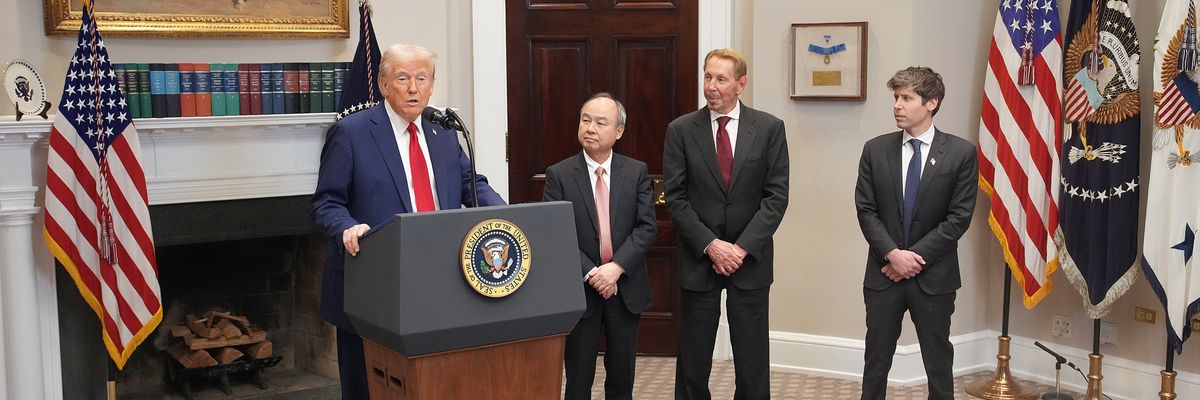
The initiative, Stargate, is a joint venture of the tech firms OpenAI, Oracle, and SoftBank. Trump hosted the leaders of those companies—OpenAI CEO Sam Altman, Oracle Chairman Larry Ellison, and SoftBank CEO Masayoshi Son—at the White House to announce the initiative just one day after he signed an executive order rolling back a Biden-era executive order implemented in 2023 that sought to put safeguards on AI.

"I think this will be the most important project of this era," said Altman, according to the Washington Post. "We wouldn't be able to do this without you, Mr. President," he added, though both the Post and and the Associated Press noted that the creation of the partnership predated Trump's return to the White House.


U.S. President Donald Trump speaks in the Roosevelt Room of the White House while SoftBank CEO Masayoshi Son, Oracle CTO Larry Ellison, and OpenAI CEO Sam Altman look on on January 21, 2025 in Washington, DC.
(Photo by Andrew Harnik/Getty Images)

Biden's 2023 executive order on AI placed safety obligations on AI developers and called on federal agencies to examine the technology's risks. But Biden, too, was interested in boosting AI infrastructure development. Right before he departed, in early mid-January, Biden signed an executive order directing federal agencies to identify government sites that could be leased to private companies for the construction of AI data centers.

Environmental groups and tech advocacy groups have long advocated for greater safeguards on AI, pointing to the technology's potential impact on the climate emergency.

The average query in the AI-powered chatbot ChatGPT requires 10 times the amount of energy a Google search needs, and "in that difference lies a coming sea change in how the U.S., Europe, and the world at large will consume power—and how much that will cost," according to a 2024 analysis published by the investment firm Goldman Sachs. Goldman Sachs analysts believe that AI will represent about 19% of data center power demand by 2028.

AI infrastructure is also water intensive. Global AI demand is projected to require more water extraction in a year than the country of Denmark by 2027, according to one study.

"The alarming surge in these centers' energy demand is on track to extend the fossil fuel era... [and] it is already increasing costs for some consumers and threatens to bring about a larger affordability crisis, while lining the pockets of Big Tech billionaires," said Karen Orenstein, a director at the environmental group Friends of the Earth, following Biden's January executive order. "For the sake of our planet and its people, we need to rein in Big Tech and regulate AI," she said.

Meanwhile, the joint venture to build out AI infrastructure has also drawn scrutiny from one watchdog group over concerns of corporate concentration.

Public Citizen co-president Robert Weissman said Wednesday that "the new Stargate plan—at minimum—raises massive antitrust concerns. Even if it turns out to be structured to avoid antitrust law enforcement, it plainly will concentrate power in a small number of corporate hands."

"Absent a commitment to bring on new, renewable energy to power an even greater spike in AI power demand, the Stargate build out threatens to worsen the rush to climate catastrophe and to drive up consumer electric bills," he added.

Another observer, Jeffrey Westling of the American Action Forum, remarked on the timing of the announcement.

"Interesting to wait to announce this until the Trump Admin. Assuming its all private investment, maybe they were worried about FTC/DOJ antitrust scrutiny?" he wrote on X Tuesday.


Trump Reportedly Picks Medicare Advantage Lobbyist for Top Health Budget Role

Don Dempsey would join Centers for Medicare and Medicaid Services nominee Mehmet Oz and other supporters of privatized Medicare Advantage plans in the new administration.


'This Should Be a National Scandal': For-Profit Medicare Advantage Plans Using AI for Denials
(Photo: Alex Wong/Getty Images)


Jake Johnson
Jan 23, 2025
COMMON DREAMS

U.S. President Donald Trump is reportedly set to appoint a lobbyist for the for-profit health insurance industry for a top White House budget job, a move likely to heighten concerns about the new administration's expected push to bolster Medicare Advantage plans that deny necessary care and dramatically overbill the federal government.

The Financial Timesreported Wednesday that Trump is "poised to appoint" Don Dempsey as associate director of the Office of Management and Budget's health programs. The appointment would give Dempsey "sweeping power over the $1.8 trillion U.S. healthcare budget and responsibilities of the 13 divisions and agencies," the newspaper noted.

Dempsey is currently the vice president of policy and research at the Better Medicare Alliance, a lobbying organization that describes itself as "the nation's leading research and advocacy organization supporting Medicare Advantage." FT observed that the group is "funded by insurance companies including UnitedHealth Group and Humana"—the two largest Medicare Advantage insurers in the United States.

Trump's reported choice represents another potential boon for Medicare Advantage, a program run by private insurers and funded by the federal government. As STATreported last month, "Medicare Advantage insurers thrived under the first Trump administration, and it's expected to happen again now that Trump is returning to the White House and Republicans are taking control of Congress."

The president has nominated Mehmet Oz, who has previously expressed support for a plan dubbed "Medicare Advantage for All," to lead the Centers for Medicare and Medicaid Services (CMS), a move that one watchdog warned would kick Medicare privatization efforts "into overdrive."

Since his inauguration earlier this week, Trump has taken a number of steps that have alarmed healthcare advocates, including rescinding Biden-era executive orders aimed at lowering prescription drug prices and strengthening Medicaid and the Affordable Care Act.

"On one hand, what we see coming from the executive orders by Trump is important because it shows us the direction they are going with policy changes," Sarah Lueck, vice president for health policy at the Center on Budget and Policy Priorities, toldKFF Health News. "But the other track is that on the Hill, there are active conversations about what goes into budget legislation. They are considering some pretty huge cuts to Medicaid."
AMERIKA

Boosting Reform Calls, Judge Finds FISA Section 702 Backdoor Searches Unconstitutional

"This is a major constitutional ruling on one of the most abused provisions of FISA," said one ACLU leader. "Section 702 is long overdue for reform by Congress, and this opinion shows why."


The flag of the U.S. Federal Bureau of Investigation is shown with computer binary code.
(Image: Gwengoat/Getty Images)

Jessica Corbett
Jan 23, 2025
COMMON DREAMS


"Better late than never."


That's how Electronic Frontier Foundation (EFF) surveillance litigation director Andrew Crocker and senior policy analyst Matthew Guariglia responded to a federal court ruling unsealed late Tuesday that found warrantless searches conducted under Section 702 of the Foreign Intelligence Surveillance Act (FISA) violate the Fourth Amendment to the U.S. Constitution.

Section 702 allows for warrantless spying on noncitizens abroad to acquire foreign intelligence information—but that also leads to the collection of Americans' communications. Abuse of the related database, particularly by the Federal Bureau of Investigation (FBI), has led privacy advocates including EFF to demand that Congress pass significant reforms.

The December decision from U.S. District Judge LaShann DeArcy Hall in the Eastern District of New York, unsealed earlier this week, stems from over a decade of litigation in United States v. Hasbajrami. Agron Hasbajrami was arrested at a New York City airport in 2011 and charged with attempting to provide material support to a terrorist group. The U.S. resident pleaded guilty, and after he was serving his sentence, the government revealed some evidence was obtained without a warrant thanks to Section 702.

In 2017, EFF and the ACLU filed an amicus brief arguing to the U.S. Court of Appeals for the 2nd Circuit that "Section 702 surveillance, including the surveillance of Mr. Hasbajrami here, lacks safeguards for Americans that the Constitution requires." In 2019, the appellate court "found that backdoor searches constitute 'separate Fourth Amendment events' and directed the district court to determine a warrant was required," Crocker and Guariglia explained Wednesday. "Now, that has been officially decreed."

Throughout the litigation, Congress has repeatedly reauthorized Section 702 on a bipartisan basis—most recently for two years last April, meaning it is unlikely to be debated on Capitol Hill again before next year. Still, pro-privacy campaigners and experts welcomed the district judge's recent ruling as a crucial victory and used it to renew calls for congressional action.


"This is a major constitutional ruling on one of the most abused provisions of FISA," Patrick Toomey, deputy director of ACLU's National Security Project, said in a Wednesday statement. "As the court recognized, the FBI's rampant digital searches of Americans are an immense invasion of privacy, and trigger the bedrock protections of the Fourth Amendment. Section 702 is long overdue for reform by Congress, and this opinion shows why."

Crocker and Guariglia argued that the Foreign Intelligence Surveillance Court—which has primary judicial oversight of Section 702—should immediately "amend its rules for backdoor searches and require the FBI to seek a warrant before conducting them."

In the longer term, the EFF experts wrote, "we ask Congress to uphold its responsibility to protect civil rights and civil liberties by refusing to renew Section 702 absent a number of necessary reforms, including an official warrant requirement for querying U.S. persons data and increased transparency."

"On April 15, 2026, Section 702 is set to expire," they added. "We expect any lawmaker worthy of that title to listen to what this federal court is saying and create a legislative warrant requirement so that the intelligence community does not continue to trample on the constitutionally protected rights to private communications."

Although Hall's ruling was issued against the Biden administration, it was unsealed a day after Republican U.S. President Donald Trump returned to power—backed by narrow GOP majorities in both chambers of Congress. Patrick G. Eddington, a senior fellow in homeland security and civil liberties at the Cato Institute, a libertarian think tank, wondered Wednesday, "Will the new Trump administration appeal the decision?"

"Attorney general nominee Pam Bondi testified under oath at her confirmation hearing that she supported the FISA Section 702 program, though the issue of warrantless 'backdoor' searches did not come up as I recall," Eddington noted.

Tulsi Gabbard, Trump's pick for director of national intelligence "has gone from FISA Section 702 opponent to supporter in record time," he added. "Assuming Gabbard gets a confirmation hearing, asking her about Hall's ruling should be the first question posed to her."