Saturday, January 25, 2025


Video: USCG Rescues Four from Sinking Boat After Fishing Boats Collide

USCG rescue
Coast Guard rescued four people when it was not able to dewater the vessel (USCG)

Published Jan 24, 2025 2:55 PM by The Maritime Executive


The Coast Guard received a call for assistance Thursday night, January 23, after two fishing boats collided approximately 10 miles south of Block Island, Rhode Island in Long Island Sound. Four people were rescued from one of the vessels after efforts to stop the ingress of water failed.

“The quick thinking and preparedness of the crew, including donning survival suits and readying emergency equipment, played a crucial role in their safe rescue despite challenging conditions,” said Lt. Jonathan Roth, a Sector Long Island Sound command duty officer.  

The distress call was received at approximately 2030 on Thursday evening reporting that two fishing vessels had collided. A 55-foot trawler, the Mattie and Maren II, reported that it had four people aboard and that there was significant flooding in the engine room. They told the Coast Guard that they were unable to keep up with dewatering efforts.

The other vessel in the collision, an 87-foot scalloper named Vanquish, had six people aboard. It reported no damage and no injuries. USCG reports that the Vanquish was able to return to its homeport in New Bedford, Massachusetts.


A Coast Guard Station Montauk 47-foot motor lifeboat reached the damaged trawler at approximately 9:15 p.m. It was told that the four people aboard had donned survival suits and prepared an EPIRB and life raft in case abandoning ship became necessary.

A crewmember from Station Montauk embarked the fishing vessel Mattie and Maren II with a dewatering pump to attempt and assist in the efforts. Weather conditions however were deteriorating with four-to-six-foot seas and 23 mile per hour winds. The Coast Guard reports the dewatering was not successful so it transferred the people from the Mattie and Maren II to its vessel and transported them to shore without injuries.

Sector Long Island Sound has issued a safety marine information broadcast reporting the vessel was adrift. The cause of the collision is currently under investigation.


Quick Response Saves Fisherman From Sinking Vessel off Gloucester
Sector Boston
Courtesy USCG Sector Boston

Published Jan 23, 2025 4:49 PM by The Maritime Executive


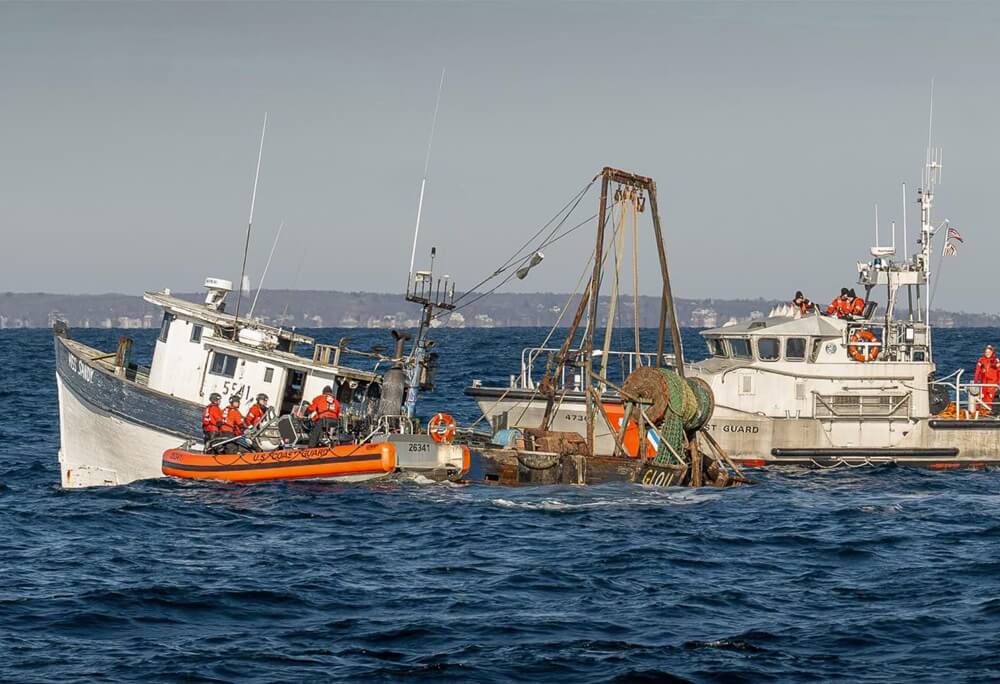
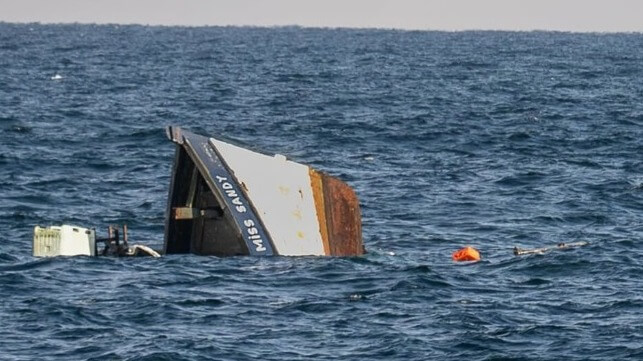
 Last week, the U.S. Coast Guard saved the crew of the fishing vessel Miss Sandy when the vessel began to flood off Gloucester, Massachusetts. Efforts to combat the flooding were unsuccessful, but all were rescued before the vessel went down. 

On Friday, the crew of the Miss Sandy sent a mayday at a position seven nautical miles off Gloucester Harbor. In windy, rough conditions, the vessel began taking on water and was flooding rapidly, with four to five feet of water in the engine room. Dangerous exhaust fumes began to fill the space, according to Coast Guard Sector Boston. 

Within 30 minutes, the cutter William Chadwick and response boats from Station Gloucester were on scene, along with local partners and good Samaritans. The Coast Guard crews attempted to dewater the vessel and get it under tow towards Gloucester Harbor, but they could not keep up with the flooding. The tow was cut to ensure that the sinking fishing boat wouldn't take down the cutter with it, and Miss Sandy sank towards the bottom in 160 feet of water. 
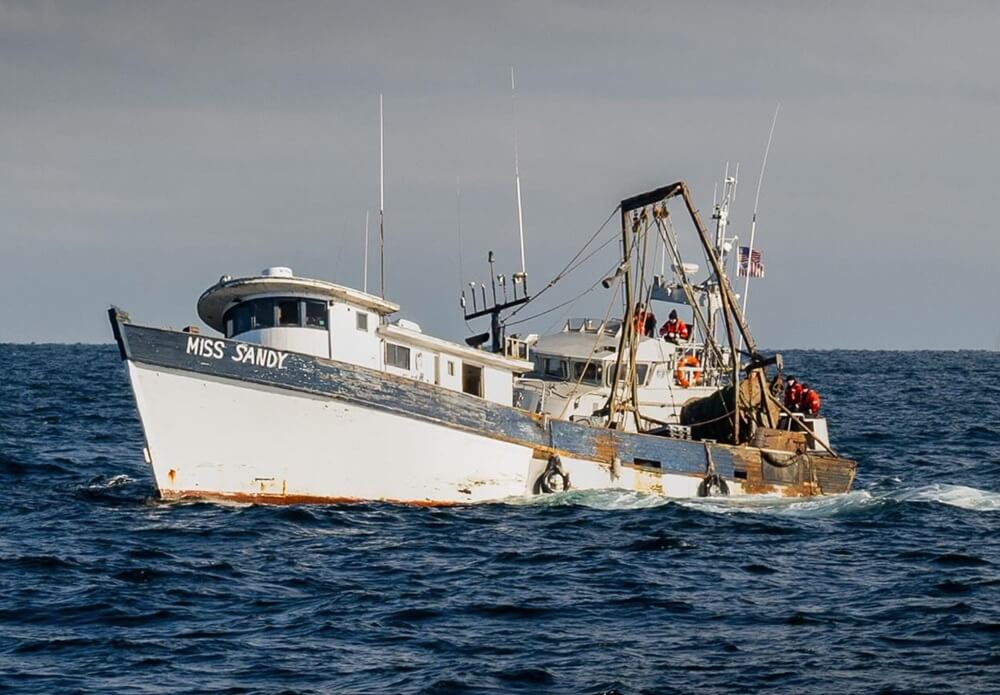
Images courtesy USCG Sector Boston

All crewmembers were rescued, along with one NOAA observer. “The whole response was fantastic,” Good Samaritan skipper Capt. Al Cottone told the Gloucester Times. “It’s just a shame it had to end that way.”

"Had this incident occurred farther offshore or in more severe weather conditions, the situation could have been far more dire," the Coast Guard said in a statement. "This mission highlights the lifesaving dedication of Coast Guard crews and the importance of preparation and safety gear in New England’s harsh winter waters."

 

With Support From Japan, Oceanographers Resume Study of "Dark Oxygen"

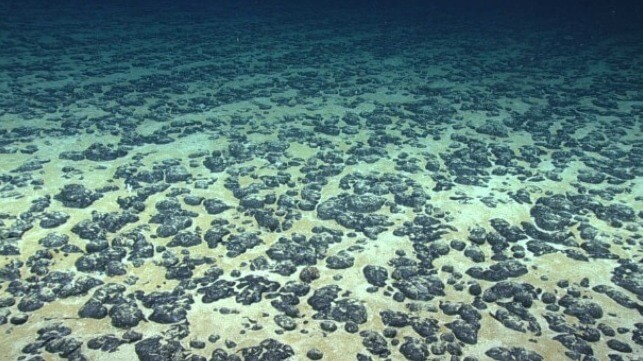
Abundant polymetallic nodules on the bottom in the Clarion-Clipperton Zone (NOAA)

Published Jan 23, 2025 8:13 PM by The Maritime Executive


Japan's Nippon Foundation plans to fund a new study of "dark oxygen," the recently-discovered ability of polymetallic nodules to separate water into hydrogen and oxygen. The small black nodules are coveted by deep-sea miners, who hope to make a fortune off of a new and abundant source of valuable metals - but oceanographers and environmentalists are not so sure.

Last year, a team of researchers led by Prof. Andrew Sweetman of the Scottish Association for Marine Science (SAMS) visited the Clarion-Clipperton Zone on a project funded by The Metals Company, which hopes to mine nodules in the area. In the course of the study, Sweetman's team reported an entirely new source of oxygen production in the abyssal plain, previously unknown to science: the nodules themselves, which appear to have electrolytic properties.

For decades, scientists have believed that photosynthesis created all of the free oxygen in earth's natural environment. A new oxygen source in the pitch-black depths, where photosynthesis is impossible, would have been inconceivable up until last year. Even Sweetman disbelieved his own data during previous trips, writing off the anomalous high oxygen readings as a sensor error - but persistent evidence and multiple tests convinced him otherwise. If proven, his find could force a rethink of science's understanding of the origins of life. 

"Through this discovery, we have generated many unanswered questions and I think we have a lot to think about in terms of how we mine these nodules, which are effectively batteries in a rock," Sweetman said last year. 

His findings are as-yet unconfirmed, and controversial - especially with certain deep-sea mining companies, which have built a business model around removing the nodules for processing and sale. Several attempts to confirm or rebut Sweetman's findings are under way.

Now, with support from the Nippon Foundation, Prof. Sweetman and his team are heading back to the Clarion-Clipperton Zone to answer some additional questions. The team is building a lander that they will deploy at a depth of up to 36,000 feet to collect water samples, which will help confirm their oxygen readings. They will also check for dark oxygen production in other seabed environments, look for signs of extra dissolved hydrogen - the other product of splitting water in two - and will check for possible microbial oxygen-producers to make sure that the nodules really are the source. 

"If we show that oxygen production is possible in the absence of photosynthesis, it changes the way we look at the possibility of life on other planets too," said Sweetman in a statement. "Indeed, we are already in conversation with experts at NASA who believe 'dark oxygen' could reshape our understanding of how life might be sustained on other planets without direct sunlight."


World's Largest Iceberg Drifts Slowly Towards South Georgia

The vast expanse of A23a near South Georgia (BFSAI)
The vast expanse of A23a, near South Georgia (BFSAI)

Published Jan 23, 2025 6:30 PM by The Maritime Executive


The world's largest iceberg is slowing heading towards the island of South Georgia, where it may have serious affects on local wildlife. 

Iceberg A23a is so big that it ihard to visualize: at 1.1 million acres in area, it is about 75 times larger than Manhattan (and shrinking). Fornow, it measures about 40 nautical miles by 32 nautical miles on a side, and it weighs about one trillion tonnes. Its sheer sides tower more than 1,300 feet above the water, and chunks regularly break off in the waves. 

The berg's arrival has been a long time coming. A23a broke off of Antarctica's Filchner-Ronne Ice Shelf in 1986, and began to drift off into the Weddell Sea (taking a Soviet research base with it). It ran aground almost immediately, and stayed anchored to the bottom until 2020, when it finally refloated and began to drift to the northwest. It took three years to reach the tip of the Antarctic Peninsula, and finally reached the Antarctic Circumpolar Current in April 2024. This was expected to shuttle the iceberg northeast into the Atlantic, where it would melt in warmer waters.  

However, A23a stalled in the South Orkney Islands for much of 2024. Oceanographers say that it was likely caught in a Taylor Column - a rotating cylindrical current found above a rise on the bottom. It kicked loose from this spinning water trap late last year and drifted away towards South Georgia, which is now about 180 miles away. 

When it finally breaks up, the iceberg will pose a hazard to the area's sparse vessel traffic - primarily fishermen - and may block in the rugged beaches of South Georgia, home to King penguins and seals. The last megaberg that reached the island broke up in 2023, and its remains still make a mess of commercial navigation. Fishing vessels operating near South Georgia have to negotiate a shifting city of giant ice blocks to get to and from their fishing grounds. "It is in bits from the size of several Wembley stadiums down to pieces the size of your desk," Andrew Newman of fishing company Argos Froyanes told BBC.

The ice can also make it harder for penguins and seals to access the water from their breeding grounds on shore. Mark Belchier, director of fisheries and environment for the government of South Georgia, told CNN that any impact on wildlife from beach obstructions would be "highly localized and transient."


South Georgia - Wikipedia


ECOCIDE

Italian Coast Guard Responds to Fire on Oil Platform in the Adriatic

Guardia Costiera
Courtesy Guardia Costiera

Published Jan 23, 2025 4:19 PM by The Maritime Executive


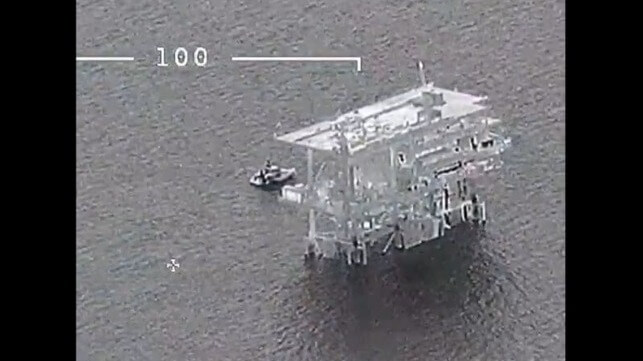
The Italian Coast Guard has overseen a successful response to a fire aboard Rospo Mare B, an oil platform off the coast of Vasto on Italy's Adriatic coast. The fire was swiftly extinguished and all workers safely evacuated from the facility. 

After the fire was reported, the patrol boat CP878 was dispatched to the scene from Termoli, carrying a firefighting team. The commercial supply boat Shark responded and helped evacuate 26 people from the platform and neighboring facilities (as a precautionary measure). 

A second patrol boat, a fixed-wing aircraft and a coast guard helicopter kept watch for signs of environmental pollution. None was observed, but the Coast Guard will continue to monitor with satellite imaging assistance from EMSA. 


All evacuees were in good health, and the fire was contained quickly, Captain of the Port Cmdr. Giuseppe Panico told Termoli Online. The platform's fixed firefighting system worked very well, he said, augmented by other capabilities that were deployed to the scene.

Panico credited the preparedness of the platform operator, the coast guard and their partners for the rapid response and successful outcome. Rospo Mare B had recently played a part in a full-scale emergency response training with the coast guard, and this helped prepare for the real thing, he said. 

Rospo Mare B is the main production platform at Energean's Rospo Mare field, and performs the oil treatment for all of the field's output before it is transferred to an FPSO. It has been in operation since 1982. 


France Faces More Port Strikes to Protest Lack of Action on Pension Reforms

Le Havre France
Dockworkers plan renewed strike across France to protest lack of action on pension reforms (file photo)

Published Jan 24, 2025 1:59 PM by The Maritime Executive


The long-running dispute between the French government and the powerful trade unions over proposed pension reforms is again prompting threats of port strikes across the country. The government has been pushing for pension reforms and changes to France’s work rules since 2023.

The CGT Federation of Ports and Docks filed notice this week that it plans to renew its strikes and work slowdowns to demonstrate its frustration at the lack of movement by the government. According to the union, talks took place between January and July 2023 and again in 2024. The union staged a 24-hour strike in June 2024 blocking the container, bulk, and ro-ro terminals in Le Havre while an estimated 600 dockworkers blocked the main entrance to Marseille-Fos in the south.

The union suspended the protests last summer after the French government collapsed. President Emmanuel Macron dissolved parliament and called special elections which were inconclusive. Macron has vowed to continue through his current term which is due to end in 2027 despite the collapse of two governments and continued instability.

According to the union, there had been talks in December and an indication by the government of a willingness to resolve the dispute. However, the union contends the offer was withdrawn in January.

“This incomprehensible step back is yet another provocation, given the same government has not made any concrete proposals for a year and a half to respect its commitments regarding pension reform,” the union said in a statement. “The government bears full responsibility for the current conflict and its escalation.”

Union members in the Port de Calais walked off the job on Thursday for four hours in support of the national effort and local demands. They interrupted ferry service on the English Channel adding demands for two additional days of paid leave per year and calls for staffing upgrades. Local union leaders fear plans to automate port activities, which are seen as a threat to jobs.

Nationally, the union has filed notice for a 48-hour work stoppage on January 30 and 31. In addition, they announced 13 days including yesterday’s stoppage in Calais, and continuing intermittently on Monday, January 27, and into February. On those days work will be stopped for four hours between 10:00 and 16:00.

This is in addition to a current refusal to take overtime assignments and extra shifts. The union federation reports it will again meet on February 3 to consider additional actions during the month.

Slovakia's peaceful anti-government protests grow nationwide

Sona Macor Otajovicova 
in Bratislava
DW
01/25/2025

After Prime Minister Robert Fico alleged there were plans to escalate anti-government protests into an attempted coup, Slovaks took the streets in over 20 cities to peacefully protest the government's pro-Russia policy.

Slovak media outlets and protest organizers have said about 60,000 attended Friday's demonstration in Bratislava alone
Image: Denes Erdos/AP/dpa/picture alliance


Late on Friday afternoon, people slowly gather at Freedom Square in Bratislava, the capital of Slovakia, to protest against the government of Prime Minister Robert Fico.

The atmosphere is calm. People are streaming into the square from all directions, carrying banners and the flags of Slovakia, the EU and even NATO. Their message is clear: Slovakia belongs in Europe.

This isn't the first rally of its kind being held in Bratislava. The latest series of protests began on December 23, a day after the prime minister's surprise trip to Russia, and have been held at regular intervals ever since.

The protesters here agree on one thing: Slovakia does not belong to Russia. And many feel that Fico's pre-Christmas meeting with Russian President Vladimir Putin in Moscow was an act of treason.

The message at Friday's demonstration in Bratislava was crystal clear: Slovakia belongs in Europe
Image: Sona Macor Otajovicova/DW

Slovakia has been a member of NATO since 2002, and joined the EU in 2004.

The people taking part in the protests in over 20 cities across the country are peacefully demanding that Slovakia remains in these international organizations and that the government stop undermining Slovakia's international position.
Fighting for democracy — again

"I feel really disappointed by our government," says a 47-year-old protester named Richard who has tied an EU flag around his shoulders. "When I was 12 years old, I took to the streets with my father, protesting against communism in November 1989, and here I am, fighting for democracy, once again," he tells DW.

The crowd in the square is getting bigger by the minute. People of all ages have come and are joining in the chants of "Enough of Fico," "We are Europe," "Shame" and "Treason." Some are calling for Fico to step down as prime minister.

'When I was 12 years old, I took to the streets with my father, protesting against communism in November 1989, and here I am, fighting for democracy, once again,' one protester tells DW
Image: Sona Macor Otajovicova/DW

"I feel unhappy about what is happening in this country and the people who rule it, and I want to voice my opinion," says 26-year-old Alexandra. She says she was not put off by the prime minister's talk of increased danger and unrest the previous day. "I have feared for my safety ever since Fico won the election," she says.
Talk of an alleged coup

On Thursday, the day before demonstrations, President Peter Pellegrini convened a meeting of the state's Security Council, claiming he had been given serious information about a threat to the state's security.

"The establishment of our constitution is being threatened; there are groups of people who want to escalate tension within the country and attack the institutions of government," said Pellegrini, adding that these groups are being coordinated from abroad.

Fico made very similar claims, saying that some groups were allegedly planning a coup. "It is an attempt to organize a typical coup in Slovakia so that the government falls and those who cannot get into power through democratic parliamentary elections come to power," he said.

Coup claim roundly rejected by protesters


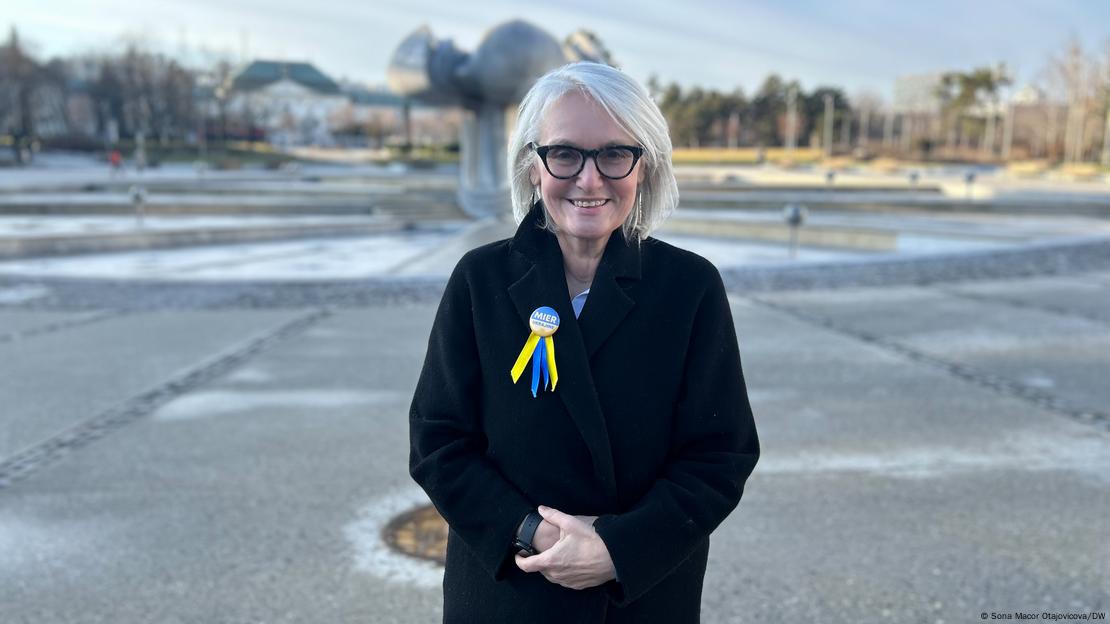
"It's very difficult to react to such delusions," said Lucia Stasselova, one of the organizers of the protest in Bratislava, ahead of Friday's protest. "Nothing of what the prime minister or the president are saying is true."

"It's what all of them say," added Marian Kulich, another of the protest's organizers. "Listen to Erdogan in Turkey, Orban in Hungary, Irakli Kobakhidze in Georgia, Serbia, they all use the same narrative. In my opinion, Slovakia is just one of the countries that are submitting to the Moscow regime — thanks to our prime minister," he told DW.

'Nothing of what the prime minister or the president are saying is true,' says Lucia Stasselova of the organization Peace to Ukraine
Image: Sona Macor Otajovicova/DW

Both Stasselova and Kulich are members of the civic group Peace to Ukraine, which was set up shortly after Russia's invasion of Ukraine in 2022. It is now also campaigning in support of democracy in Slovakia.

"We started to organize the rallies in Bratislava, and slowly, other cities began to coordinate with us. More than 20 cities and towns are currently involved. The protests in each town are organized by different people," said Stasselova.

60,000 take part in Bratislava alone

Apart from a brief interruption due to a power outage on stage, the rally goes off smoothly and peacefully — without rioting, and certainly no attempted coup.

DW spoke with the organizers just a few hours before the protest, who said they were expecting around 30,000 to take part. Most media outlets have estimated that some 60,000 joined the protest in Bratislava — four times as many as took part in the last protest two weeks ago.

In sharp contrast to the prime minister's claims that protests could escalate into a coup attempt, Friday's protests remained entirely peacefu
lImage: Jaroslav Novák/TASR/dpa/picture alliance

But demonstrations were not just restricted to the capital; the numbers taking part in other cities also increased. In Banska Bystrica, for example, attendance on Friday was up to 10,000 from 6,000 two weeks ago.

Indeed, several media outlets estimated that a total of 100,000 people took to the streets of Slovakia's cities in protest on Friday.

On Tuesday, Fico faced a no-confidence vote in the Slovak parliament. However, when the prime minister unexpectedly called for the session to be held in secret on the grounds that he would be sharing confidential information with the parliament, the opposition withdrew its no-confidence motion in protest.

It has said it will call a new no-confidence vote in the near future, and is now demanding another parliamentary session next week.

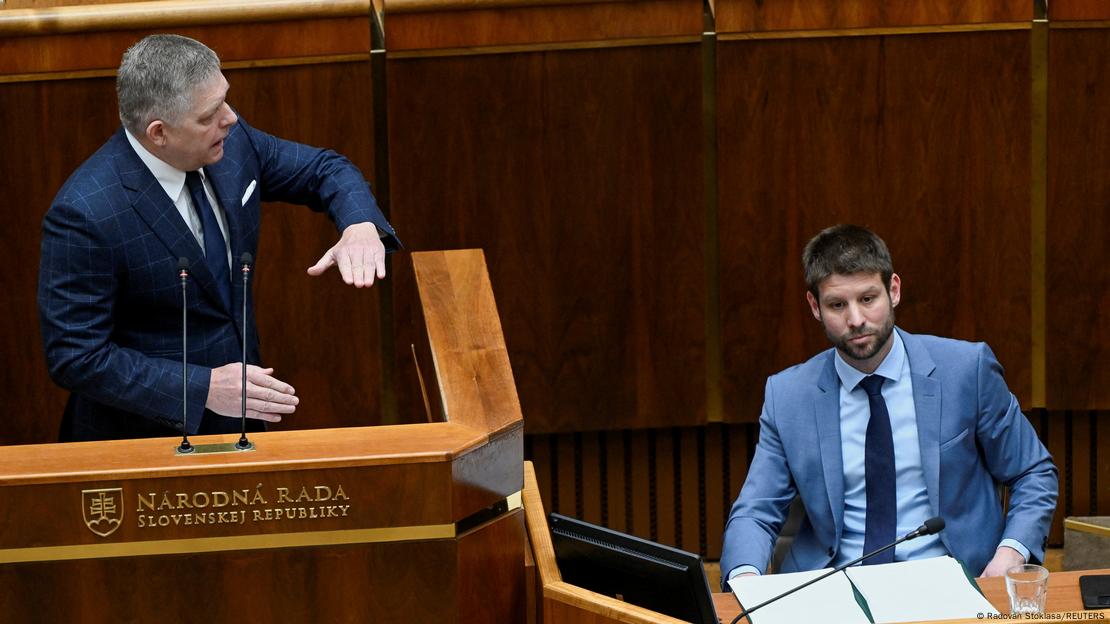
'There is no threat of a coup ... and all know it,' Michal Simecka (right) said on Tuesday, speaking next to Fico (left)
Image: Radovan Stoklasa/REUTERS

Speaking to the media after Tuesday's session, members of the opposition said Fico read a report from the intelligence agency SIS (Slovak Information Service), raising concerns about an uprising similar to the Maidan Revolution in Ukraine in 2014 that resulted in the ousting of President Viktor Yanukovych.
A 'paranoid' prime minister

Opposition leader Michal Simecka, head of the Progressive Slovakia party, called the prime minister's speech "paranoid."

"I'm afraid that the prime minister is suffering from delusions," he said. "He sees things that don't exist. There's no other explanation I can think of. So, this is my takeaway from his speech."

Fico's critics have said there was no genuinely secret information in the report, and some claim the SIS is being instrumentalized for political purposes.

"The SIS is being abused. It serves a political purpose of this government, it spreads hatred and fear of the critics of the government," said lawmaker Maria Kolikova of the center-right liberal Freedom and Solidarity party.

Another protest is already planned for February 6. "The protest will continue as long as the people want to protest," said Stasselova of Peace for Ukraine. "It will depend on the actions of Fico's cabinet, their statements, their politics."

Edited by: Aingeal Flanagan

Sona Macor Otajovicova Bratislava-based Slovakia correspondent


Auschwitz: 
Poland divided on pledge not to arrest Netanyahu
DW
January 23, 2025

Earlier this month, the Polish government pledged not to arrest Benjamin Netanyahu if he attended the Auschwitz ceremony on January 27. DW looks back at the heated debate in Poland triggered by the decision.


There were protests in Warsaw on the day after the Polish government passed a resolution guaranteeing safe conduct for Israeli Prime Minister Benjamin Netanyahu

Image: Jaap Arriens/NurPhoto/IMAGO


There are places on Polish soil that hold a deep significance not only for Poles, but also for Jews and many people in Israel. These places are the concentration and extermination camps where German Nazis murdered millions of Jews during World War II.

This goes some way to explaining a recent heated debate about whether Israeli Prime Minister Benjamin Netanyahu, who is wanted by the International Criminal Court (ICC), should be given safe passage to attend the 80th anniversary of the liberation of Auschwitz on January 27.

The ICC is the international court tasked with prosecuting individuals for genocide, crimes against humanity and war crimes. Last October, it issued an arrest warrant for the Israeli prime minister and his former defense minister, Yoav Gallant, accusing them of war crimes and crimes against humanity in the Gaza Strip.

Polish President Andrzej Duda asked the Polish government to grant safe passage to Netanyahu should he decide to attend the Auschwitz commemoration event
Image: Marian Zubrzycki/PAP/dpa/picture alliance

According to Gaza's Health Ministry, more than 47,000 people have been killed in Israel's military incursion into the enclave, a response to the Hamas attacks on southern Israel on October 7, 2023, that killed some 1,200 people.

Israel is not a member of the ICC, but Poland is a founding member and legally bound to execute the warrant.
Safe conduct for Israeli PM

Citing "absolutely extraordinary circumstances," Polish President Andrzej Duda on January 9 asked Donald Tusk and his government to guarantee safe conduct for Netanyahu should he decide to participate in the event.

In a rare display of unanimity between the government and the president, Tusk's government passed a resolution supporting Duda's request the same day.

However, the resolution did not mention Netanyahu by name, which was understandable given that the Israeli prime minister did not actually plan to attend in person — as The Times of Israel confirmed on January 9.

Nevertheless, the decision was met with opposition and protest in Poland.

So, if Netanyahu was not planning to come, why did the Polish government pass the resolution in the first place?
'Tribute to the Jewish people'

The resolution stated that the guarantee of safety for Israeli representatives was "part of paying tribute to the Jewish people, millions of whose daughters and sons were victims of the Holocaust perpetrated by the Third Reich."

Tusk himself said the case was "very delicate."

"On the one hand," he said, "we have the verdict of an international tribunal, but on the other, it is absolutely clear to me that any representative of the Israeli authorities should have every right to and sense of security when visiting the Auschwitz camp, especially on the anniversary [of its liberation]."

Critical reactions in Poland

One of the first prominent critics of the government's decision was a respected Polish judge, Piotr Hofmanski, a former ICC president.

Hofmanski underlined Poland's unconditional obligation under international law to execute the warrant. However, he stressed that Polish authorities have not so far broken the law and would only do so if Netanyahu set foot on Polish soil but was not arrested.

The resolution pledging not to arrest Netanyahu was also met with widespread opposition across the Polish political spectrum. Journalists, experts, bloggers, political commentators, judicial authorities and the opposition — from the far left to the far right — condemned the decision, albeit for different reasons.

The resolution caused uproar among left-wing activists and politicians, as well as supporters of the Palestinian cause.

"Not in my name," posted Adrian Zandberg, leader of the Polish left-wing Razem (Together) party, on X (formerly Twitter).

This attitude was also reflected in opinion polls.

An opinion poll commissioned by Polish media outlet Wirtualna Polska and conducted by United Surveys showed that almost 60% of respondents felt Poland should arrest the Israeli leader if he attended the Auschwitz commemoration ceremony. Only 24.2% favored guaranteeing Netanyahu safe conduct, and 16.6% were undecided.

Pro-Palestinian activists organized a protest in Warsaw, during which several hundred people chanted "Arrest Netanyahu!" and "The Polish government's got blood on its hands."

A group of NGOs, including the initiative East, a Gen-Z organization fighting for social justice and against climate change, Action for Democracy and All-Poland Women's Strike also wrote an open letter asking Tusk to withdraw the resolution.

The Polish Supreme Bar Council appealed to the president and the government to adhere unconditionally to the rule of law and implement it in word and deed.


In an open letter, the council stressed that the rulings of courts and international tribunals must not be viewed as a matter of choice and that the non-execution of the ICC warrant would undermine "the trust of the citizens in the rule of law in Poland" and is dangerous — even if the external security of the country dictates it.

What's the role of the US?

The reference to Poland's external security could have been a response to media reports about another alleged motivation behind the resolution.

The arrest of the head of the Israeli government at the most notorious and symbolic site of the Holocaust would undoubtedly spark an international outcry and trigger a fierce response from the recently inaugurated Trump administration, a strong ally of both Poland and Israel.

Polish media quoted anonymous sources close to the government who claimed that the resolution was mainly aimed at averting the very real risk of a crisis in US-Polish relations right at the start of the second Trump administration.

Moreover, on January 9, the US House of Representatives passed a bill threatening to impose sanctions against anyone who helps the ICC prosecute US citizens or US allies, which includes Israel.
Did the president set a trap for Tusk?

Whether it was his intention or not, President Duda, due to leave office at the end of his second term in August, created a difficult situation for the government four months ahead of country's presidential election.

This election could determine whether Prime Minister Tusk will have an ally in the presidential palace and, therefore, a potentially easier path to implementing his campaign promises or face the prospect of working with a second president linked to the opposition Law and Justice (PiS) party.

The resolution passed by Tusk and his government might not only cost his ally and preferred presidential candidate, Rafal Trzaskowski, votes, but may have dented Poland's credibility on the global stage — with the notable exception of its relations with the Trump White House.

Edited by: Aingeal Flanagan


Michal Gostkiewicz DW journalist specializing in European affairs
Los Angeles Fires Underscore Activists’ Call: Make Polluters Pay for Disasters


In New York, a “Superfund” law makes fossil fuel firms pay for aid in climate disasters. Could California do the same?
January 24, 2025

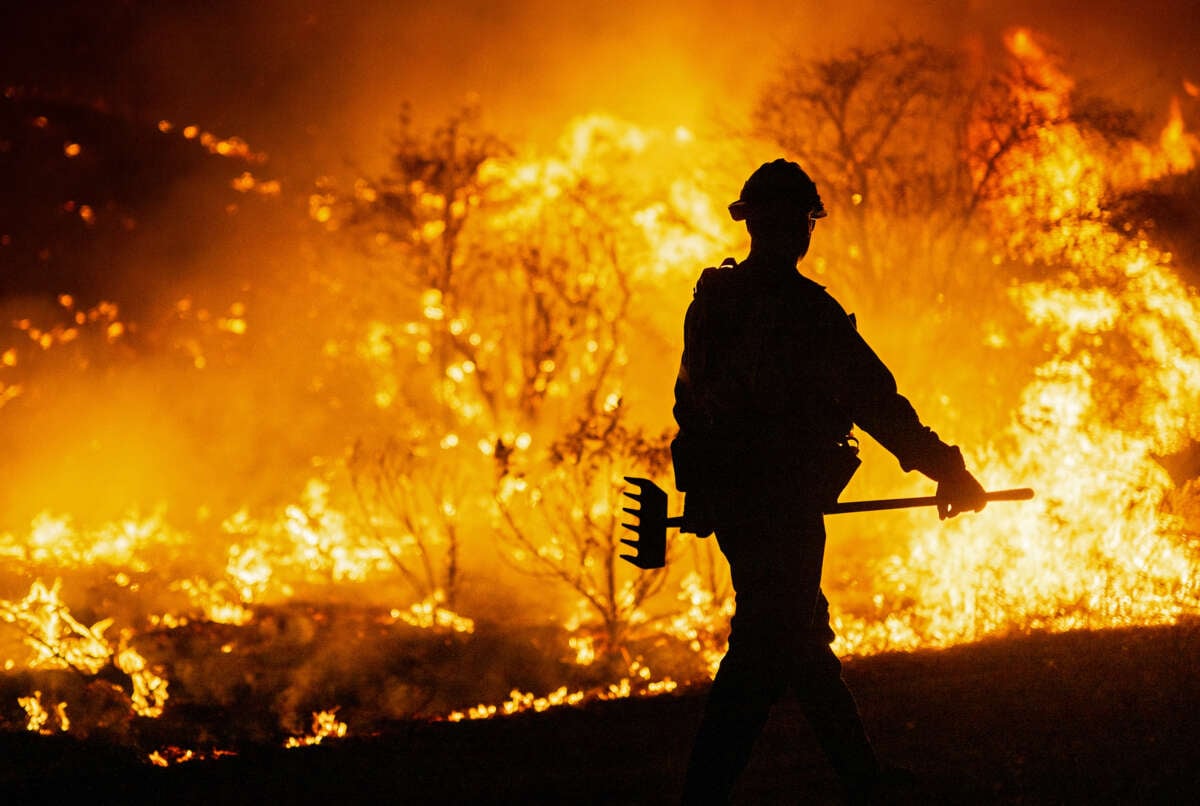
A firefighter works as the Hughes Fire burns on January 22, 2025, in Castaic, California
Brandon Bell / Getty Images

The day after Christmas in 2024, New York Gov. Kathy Hochul signed the Climate Change Superfund Act (CCSA) into law. Widely acclaimed by environmental advocates, the CCSA is a milestone: As the first climate legislation of its kind, it will bring the power of the state to bear on fossil fuel industries, mandating a meaningful degree of corporate accountability for the climate crisis.

The moment seems primed for action, and corporate liability for climate change is of course long overdue. Climate advocates hope that this model can be replicated nationwide, as vast amounts of mitigation and relief funding will be essential in the very near future — as the catastrophic fires still engulfing large areas of Los Angeles County, California have underscored to grim effect.
Novel Restitution

New York’s CCSA is modeled on the 1980 Comprehensive Environmental Response, Compensation, and Liability Act (CERCLA) — popularly known as the Superfund program. Like its noteworthy namesake, the CCSA will charge polluting corporations for the cleanup costs of their noxious effluents. However, the “climate Superfund” policy does differ from its predecessor, by virtue of the fact that the harms of carbon emissions are geographically distributed.

Namely, rather than being obligated to cover the cleanup of a particular site, New York State’s top polluters — the list will be determined by state agency review — will now have to earmark some of their grotesque profits to pay into a fund dedicated to climate-related disaster and mitigation costs in the state. Accruing at a rate of around $3 billion a year for the next 25 years, this is a not-inconsiderable sum, exceeding even the state’s largest single annual climate investment to date.

The oil industry has long hewn to the classic formula of privatizing the profits and socializing the costs, continuing to amass obscene returns while knowing full well that the price is a livable planet. Climate Superfund legislation represents a robust means of rebalancing such warped excesses. Naturally, advocates are eager to replicate this new restitution framework elsewhere.

Related Story

Mutual Aid Networks That Emerged in Housing Crisis Are Mobilizing Amid LA Fires
“If you can make a sandwich, you can start a mutual aid network,” one Los Angeles organizer told Truthout. By Schuyler Mitchell , Truthout  January 16, 2025


The notion that all of the costs incurred by climate change might be dodged by the perpetrators of the crisis is a distasteful one, to say the least. After all, the alternative to making polluters bear the cost of a disaster is to allow it to redound to the taxpayer, as it would more or less by default. That aspect alone helped earn the CCSA a wide base of support. The New York Public Interest Research Group (NYPIRG), a student-led policy research nonprofit that was instrumental in creating the CCSA, counted the backing of over 400 youth, faith and environmental organizations, along with more than 100 in-state elected officials.

“What certainly moved the needle on this was the sheer volume of organizations who were in support,” NYPIRG Executive Director Blair Horner told Truthout.

“It’s in a sense a policy unicorn” because of the way that, in this instance, environmental benefits harmonized with cost savings for local governments, creating an alignment of incentives, as Horner explained. “That’s why we had this widespread support among local elected officials, who [would otherwise] have to raise property taxes when the road gets washed out.”

Not that there weren’t major obstacles. “Any time you advocate for a measure that’s never been done before, it’s a steep hill to climb,” he said. “And when you’re taking on the oil industry, that is a very steep hill to climb.”

Horner described how lawmakers often mistakenly assumed the measure was a carbon tax — a reliably unpopular proposal. There were also questions of legal viability, and of contesting the predictable industry counternarrative that the legislation would cost consumers at the pump. But think tank research found the legal obstacles surmountable, and the latter charge totally baseless.

The concept of the climate Superfund had initially come out of work on climate resiliency that accompanied NYPIRG’s advocacy for the 2019 Climate Leadership and Community Protection Act. High mitigation needs were projected, noted Horner, and yet no funding was in place to meet them.

“Policy makers have just been whistling past the graveyard, talking about the need to do something about it — and no one was doing anything about it,” Horner said. “Unless something was done, the cost would be 100 percent borne by taxpayers. And we didn’t think that was right. We thought the polluters should pay.”


New York State’s top polluters now have to earmark some of their grotesque profits to pay into a fund dedicated to climate-related disaster and mitigation costs in the state.

In conversations with State Sen. Liz Krueger, who would become a co-sponsor of the eventual state-level CCSA, Horner and NYPIRG helped devise the Superfund-based model. In 2021, a federal bill along those lines was introduced in the Senate by Sen. Chris Van Hollen of Maryland and backed by notables like Senators Elizabeth Warren and Bernie Sanders, with companion legislation led by Rep. Jamaal Bowman in the House. The sponsors “worked hard to put that into the reconciliation package that would be in Build Back Better,” said Horner. “But as you know, Build Back Better didn’t go anywhere.”

In response, NYPIRG and other planners and advocates shifted to retarget the state level, with ultimate success. The analogous legislation that was passed around the same time in Vermont, Act 122, was also the result of organizing efforts that were interconnected with and inspired by NYPIRG and other CCSA advocates’ initiatives.

The CCSA quickly became a lodestar, a testament to what is possible. In Massachusetts, Maryland, New Jersey and California, as well as at the federal level in the House and Senate, climate Superfund bills have already been advanced. But so far, these other cases have not met with such swift and comprehensive victory — far from it, unfortunately.

Replicating the wins in New York and Vermont will not be easy, as a number of fortuitous circumstances aided the passage of those bills. Notably, in the case of New York, industry opposition groups were far outnumbered by supporting organizations, and the oil lobby was generally caught off guard. “Now why is that?” ventured Horner. “Well, I think it’s partly because we organized and we did a good job. But partly it’s because I think [oil] people didn’t think it was going to happen. The industry focused on other issues.”

Moreover, even the CCSA and Act 122 will undoubtedly face significant legal and political challenges to their implementation. Already, the industry has “filed a lawsuit to block Vermont,” Horner pointed out. With corporations now aware that such bills are politically feasible, future incarnations will face intensified resistance. Indeed, in opposing California’s climate Superfund effort, the fossil fuel lobby has already proven that its influence is far from spent.
The New Abnormal

Truman Capps, 36, is a writer who has lived in Los Angeles for 15 years. Anticipating some amount of fire is just part of being Californian — but the infernos that have now consumed 40,000 acres and 12,000 structures around metropolitan Los Angeles are jarring outliers, a new and sudden extreme. Capps spoke of how he and his family were forced into a frantic evacuation as a result of the Sunset Fire in Runyon Canyon.

“We’re all used to fires being something that happens nearby, but far away: Santa Clarita, or Santa Barbara, or the Inland Empire,” Capps told Truthout. “A very ‘it can’t happen here’ mindset.” Previous Los Angeles brushfires, he added, “have always been extinguished so quickly that I think I had a certain false sense of security.”

The stunning escalation, and the scale of loss to both culture and human life, involved in these fires has brought the impending toll of climate change into unpleasantly sharp focus for many, shaking complacency and long-held certainties. The fire risk now reaches past the far fringes of the exurbs and into highly developed areas.

“What was most jarring about these fires was how quickly they went from being minor brushfires to massive, existential threats,” said Capps. “In a matter of minutes, we went from hanging out and cooking dinner to running around the apartment in a panic trying to figure out which of our belongings we wanted to bring with us and which ones we’d be fine never seeing again.”

The fires — certain to be a disaster for insurance as well as the state budget and economy — are making an urgent and unsettling case for climate Superfund legislation. Even before the recent fires, studies had anticipated Los Angeles County alone would need approximately $780 million per year in climate protection costs.

A CCSA-like measure, the Polluters Pay Climate Cost Recovery Act, SB 1497, was introduced in the California legislature in February 2024 by Democratic State Sen. Caroline Menjivar; it could have raised tens of billions within two decades. Unfortunately, SB 1497 failed to receive the necessary votes in committee, and Menjivar was forced to render it inactive. California, an oil-producing state, has a fossil fuel lobby of immense power. That might account in part for why, so far, climate Superfund efforts have stalled in Sacramento.

Woody Hastings is the director of the “Phase Out Polluting Fuels” program at the nonprofit advocacy group and think tank The Climate Center (TCC). The TCC was a staunch advocate of SB 1497, and will be pressing for a new version of the bill as the two-year legislative session begins.


So far, climate Superfund efforts have stalled in Sacramento.

As Hastings told Truthout, SB 1497 “was a number-one priority bill for us.… We made sure to do the best we could to get it through the legislature. That meant showing up and speaking in support, signing coalition letters, meeting with legislators, educating legislators, reaching out to constituents — all those things you do in a campaign to try to move the needle.”

Perhaps it’s telling that, as quoted by Politico, one Kevin Slagle of the Western States Petroleum Association (WSPA), echoed Hastings’s words, in the precise inverse: “This was certainly a priority bill for us,” the oil industry spokesperson said. In other words, it was the industry’s priority to eliminate it. The WSPA and the California Chamber of Commerce came out against Menjivar’s bill, releasing a “Floor Alert” to legislators that deemed SB 1497 a “JOB KILLER” in shrieking red capitals. (“A very, very stale talking point from the oil industry,” Hastings remarked.)

Yet even the oil lobby’s threats, though well-worn and predictable, still have purchase: Hastings agreed that the Floor Alert might well have helped keep SB 1497 from winning the necessary votes in committee. Asked if it could have had an impact, he replied, “It always does, it always does … that kind of thing does influence the legislature every single year, yes. It’s going to be an uphill battle.”

Using its obscene profits, Hastings said, the industry has “spent record amounts of money lobbying the California legislature to stop the legislature from adopting or enacting commonsense bills, on everything from clean energy to frontline community support.” Indeed, Chevron and the WSPA top the list of total state lobbying expenses. (California would also be well-served to limit its enormous loopholes for oil companies to fix budget issues that have, among myriad other harms, deprived firefighters of adequate water supply in fighting the Los Angeles blazes.)

But despite the daunting task, the bill’s sponsors, The Climate Center, and other advocates are unswervingly dedicated to taking on the giants of fossil fuels. Their next attempt at moving the Polluters Pay Climate Fund Act forward is just getting started in the legislative session presently underway.

Just as hearteningly, in fact, something similar is occurring at the federal level — the defunct federal climate Superfund legislation that NYPIRG helped create has been reintroduced in the Senate by Sen. Chris Van Hollen, joining its counterpart in the House. While a second Trump administration and a Republican-dominated Congress will make for unpredictable circumstances, climate advocates, who have already won meaningful and real change, have proven that they will refuse to fold.

For his part, Los Angeles evacuee Truman Capps said he, and likely his fellow voters, would be very eager to support a climate Superfund law in his state. “I’d love to see California force corporations to pony up for disaster relief. Forcing big corporations to pay to clean up after climate disasters is an easy sell with California’s electorate.”

As he reflected, “What’s most concerning to me in the wake of these fires is how our elected officials appear to be completely uninterested in making any changes in light of this new reality.… It seems like [leaders’] plan is to just keep doing what we were doing before and hope that nothing bad happens again.”

NYPIRG’s Blair Horner expressed hopes that this sort of complacency will be shaken. “God knows what the fires in California are going to cost, but one thing’s for sure: [the price] will be massive … I would think that if anything, the wildfires in California would make taxpayers in California acutely more sensitive to the overwhelming financial burden of climate change.”

This article is licensed under Creative Commons (CC BY-NC-ND 4.0), and you are free to share and republish under the terms of the license.

On Bluesky? We created a starter pack to make it easy for you to follow Truthout folks there.

Tyler Walicek is a freelance writer and journalist in Portland, Oregon.


LA fires cast light on climate change insurance crisis

David Braneck
DW
January 24, 2025

With wildfires still ongoing, the blazes in California are highlighting how the climate crisis is making it difficult or impossible for those living in risk zones to insure their homes against weather disasters.

Devastating wildfires, like those that have hit Los Angeles, will become more frequent due to the climate crisis
Image: David Ryder/REUTERS

The deadly Los Angeles infernos have laid waste to entire communities, forcing thousands of people to evacuate and destroying at least 16,000 structures, many of them homes.

It's likely to be one of the costliest wildfires in US history, with a preliminary estimate from AccuWeather projecting damages and economic losses of up to $250 billion (€239 billion). The US weather forecasting service calculated the costs based on factors like long-term cleanup, health and medical impacts, and shifting home values.

The fire and its aftermath have also highlighted how increasingly, climate change-related disasters are making homeowners' insurance unaffordable or inaccessible for many in at-risk regions.

California officials have had to announce a yearlong moratorium on insurance companies dropping policyholders in areas affected by the LA fires.

"The home insurance system in the US is fatally flawed," said Moira Birss, a public policy researcher at the Climate and Community Institute, a US climate and economy-focused think tank. "The cost of damage that private insurers cannot or will not insure is either being borne by households and leading to individual financial ruin."
'Climate crisis is an insurance crisis'

In the US, yearly average homeowners' insurance premiums nearly tripled from $536 to $1,411 between 2001 and 2021, largely due to the increased risk in disasters related to planetary heating. They've risen highest and most rapidly in high-risk areas.

In many cases, coverage doesn't include events like fire and flooding, which are often sold separately. Renters are also feeling the pinch, as landlords are likely to pass costs onto their tenants.

"In some cases, we can be talking about many thousands of dollars extra per year. I see it as a working- and middle-class issue that is really widespread," said Zac Taylor, a climate finance expert at Delft Technology University in the Netherlands.

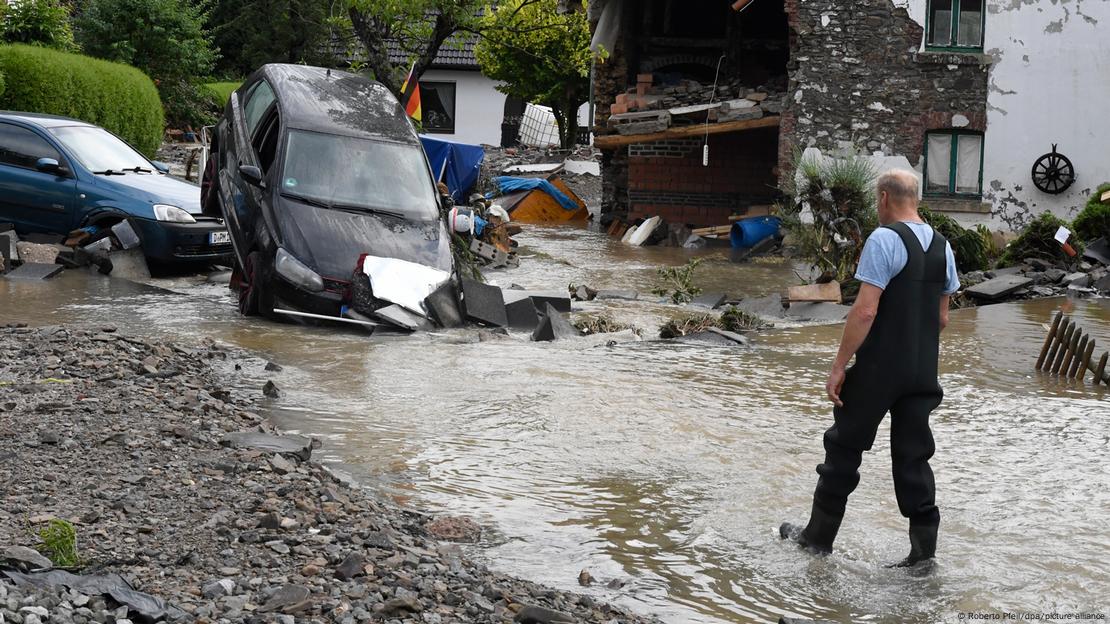
Insurance against damage caused by floods or heavy rainfall will become significantly more expensive everywhere, including in Germany
Image: Roberto Pfeil/dpa/picture alliance

Insurance costs aren't just climbing in the US. In Germany, where floods are striking more often, home insurance premiums are predicted to double in the next 10 years. In Australia — frequently ravaged by wildfires and flooding — 15% of households are experiencing "home insurance affordability stress," which means they're plowing more than four weeks of their annual income into premiums.

Spiraling costs mean many living in at-risk regions are being forced to choose between buying minimal insurance or foregoing it entirely. Moving is another option. But given the difficulty of upping sticks during a global housing crisis, many are choosing to stay put — with no insurance protection — even as disasters become likelier.

In other cases, households decide to forego maintenance and retrofits, so they can afford insurance and other rising housing costs, said researcher Birss.

"When a big disaster hits, those homes are both more susceptible to damage, but also those residents might have fewer resources to recover with," Birss told DW.


Even if people can afford to shell out for homeowner and disaster insurance, major insurers are leaving high-risk regions in California and Florida in droves.

One consequence in the US is that without homeowners' insurance, it's impossible to get a mortgage and without a mortgage, most cannot buy a home. Another is even higher insurance premiums because the vacuum in the market is typically filled with smaller companies that take on the heightened risk in exchange for even more exorbitant fees.

"The climate crisis is an insurance crisis. We're at a tipping point. Many people in the US can actually no longer get insurance in the private sector," said Paula Jarzabkowski, an expert on the insurance industry from the University of Queensland in Australia.

Globally, rising prices and insurers exiting regions as frequent disasters threaten profits have contributed to the "insurance protection gap." That's the difference between insured and uninsured losses. In 2024, global natural disasters, like Hurricane Helene that hit the southeastern US as well as severe monsoon flooding in China, caused $320 billion in damages. Only $140 billion of that was insured.

Fixing insurance and reducing risk

In California, officials have urged insurers to remain in at-risk regions for now, but Jarzabkowski said this is not a long-term solution. Making insurance affordable and accessible would require taking a new approach to the entire industry, rather than leaving insurance to the private market.

"We need to start moving beyond individuals and thinking of insurance as a societal good," said Jarzabkowski.

Designing comprehensive plans that cover all kinds of disasters and are widely available, if not mandatory — like how many countries approach health insurance — would help. Jarzabowski said countries like SpainFrance and Switzerland have taken this tack, often with state backing, to help spread risk and keep costs down.

Reforming insurance can help ease costs and support those struck by climate catastrophe. But more thoughtful risk mitigation, like climate-proofing houses with fire-resistant roofing or sturdy siding in hurricane and typhoon-prone regions, would mean there's less to rebuild in the first place. This could also work for major public infrastructure, and not just retrofitting individual buildings.

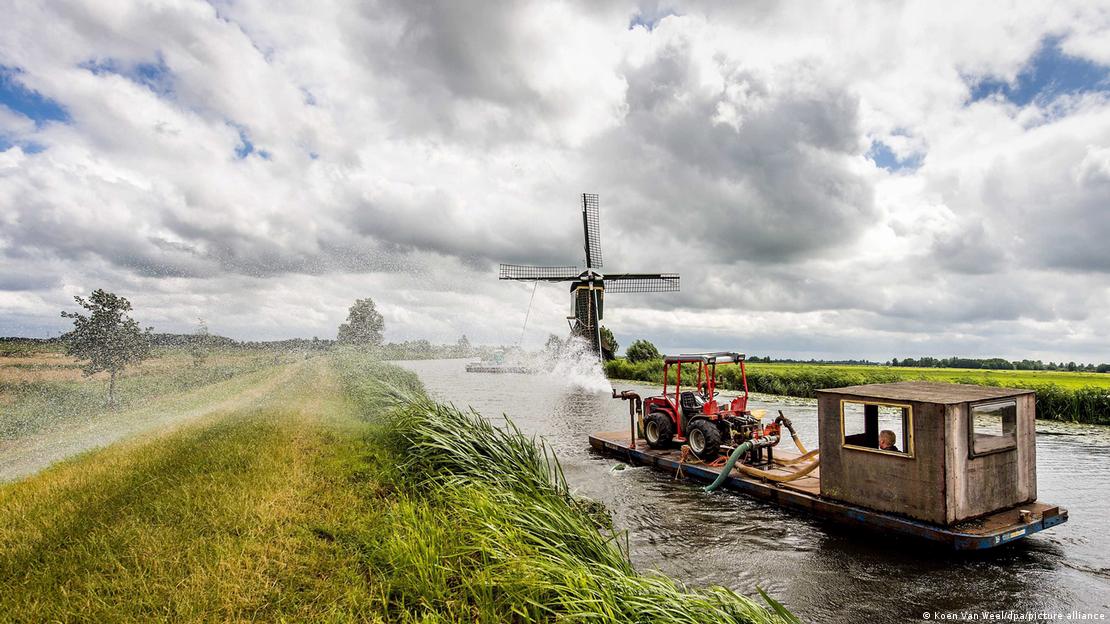
"In the Netherlands, there's a tradition of building strong physical infrastructure to deal with flood risk. Dikes, water gates, complex and large-scale infrastructure to physically reduce risk," said Zac Taylor.

During droughts, dikes in the Netherlands are sprayed with water to prevent them from breaking and stop flooding
Image: Koen Van Weel/dpa/picture alliance

"That means that most people living in the low-lying parts of the Netherlands, large parts of which are below sea level, don't have flood insurance. They just don't need it," he continued.

Another potential long-term solution is encouraging people to relocate to other areas, via initiatives like tax incentives and even state-funded buyouts of houses in disaster-prone areas.

Experts say a broader approach to risk and wider efforts to keep housing and insurance affordable and accessible will require significant state coordination and investment. But with rebuilding after a fire costing more than $100 billion, it could pay off.

"The more we build resistance, the less we need to rely on that safety net of insurance," said Birss.

Edited by: Jennifer Collins