Saturday, January 25, 2025

WinGD Reports Ammonia Engine Progress Targeting First Deliveries in June

ammonia-fueled engine test
WinGD reports progress on testing for its ammonia-fueled engine (WinGD)

Published Jan 24, 2025 6:22 PM by The Maritime Executive


The competition to deliver the first ammonia-fueled engine continues to report progress with Swiss-based WinGD now reporting it expects to complete final validation in time for the first engine deliveries in June 2025. After achieving results with a single-cylinder in line with expectations, the company says in the coming months it expects to conduct multi-cylinder engine tests to validate the full-scale engine, turbocharger configuration, and control systems so that the engine can begin production.

“The single-cylinder X DF A concept is running well, with combustion efficiency, emissions, and pilot consumption within our range of expectations,” reports Sebastian Hensel, WinGD Vice President Research & Development. 

The company highlights that the single-cylinder testing will allow rapid validation of the ammonia combustion system under engine conditions, as well as the optimization of emissions and performance. It will also verify the engine safety concept on the test engine.

WinGD, which is owned by China CSSC Corporation, reports it began its dedicated ammonia development program in 2019. In 2022, the project progressed to experiments using WinGD’s spray combustion chamber and that was followed by a deep investigation of key engine components on the test rigs housed within the company’s Engine Research and Innovation Center (ERIC)’s Future Fuels Lab in Winterthur, Switzerland.

According to the company, its X-DF-A platform is based on the diesel-cycle cpncept that has been well-established for several decades with its diesel-fueled engines. Among the efforts have been the development of new technologies to inject and burn ammonia efficiently while also controlling and minimizing emissions.

“In previous tests, we verified that SCC results were transferable one-to-one to the results on our test engines,” reports WinGD Head of Testing and Validation Sotiris Topaloglou. “As a result, we are in a strong position to make rapid progress through validation of our ammonia technology.”

The company had previously completed testing of the ammonia fuel injectors on test rigs to validate the functional, mechanical behavior, and reliability on a multi-cylinder methanol engine at 100 percent load. They report this permitted testing of the ammonia injection concept under harsh engine conditions and thermal stress before testing with ammonia.

WinGD reports it has nearly 30 orders for X DF A engines in the bulk carrier, containership, tanker, and LPG/ammonia carrier segments. The first engines will be built for four LPG/ammonia carriers owned by Exmar LPG and ten bulk carriers operated by CMB.Tech.

Other engine manufacturers are also reporting progress in their efforts to complete the verification of ammonia-fueled engines. MAN Energy Solutions reported in December 2024 that it had commenced testing of a full-scale, two-stroke engine running on ammonia at its Research Centre Copenhagen. MAN said it had completed more than 12 months of testing on a single cylinder running on ammonia. MAN is focusing on elements including combustion and emissions, engine-tuning, atomizer testing, and control-system verification which it expects to continue till mid-2025.

Wartsila has also reported progress with its single-cylinder engine testing and efforts for a multifuel engine. It has also previously said that it expects the first ammonia engines to be delivered in 2025.

 

Historic WWII UK Warship Secures Grant to Support Revitalization Program

Wellington WWII warship
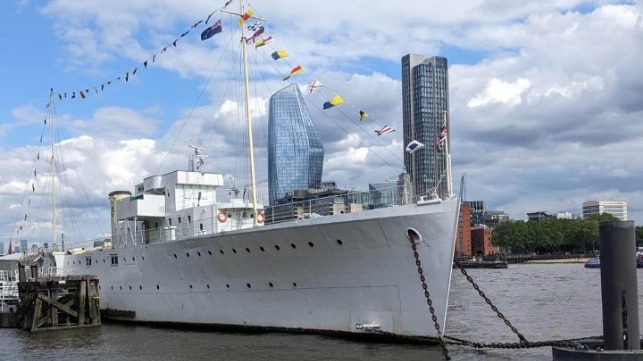
Last survivor of the Battle of the Atlantic, Wellington has been docked on the Thames for the past 77 years (Welington Trust)

Published Jan 24, 2025 5:03 PM by The Maritime Executive


A historic World War II UK warship, HMS Wellington, has won a critical grant which will help to provide a reprieve from a very uncertain future. The last survivor of the “Battle of the Atlantic,” the grant will enable the Wellington Trust to proceed with implementing a revitalization project and a new business model as part of the efforts to save the vessel.

The HMS Wellington, built in 1934 and docked on the Thames since 1948, was on the verge of scrapping last year when King Charles III approved restoring the HMS title in September as part of an effort to build awareness and support for the historic little ship. During the Second World War, it provided escort services and is credited rescuing victims from torpedoed vessels. Among the vessels it responded to was the Royal Mail Liner Highland Patriot sunk in October 1940 about 500 miles west of Bishop Rock. Wellington saved 33 passengers and 136 crewmembers including the vessel’s master. Wellington also participated in the evacuation from Dunkirk.

The Wellington Trust Board announced on January 20 that it has secured a £225,000 ($279,000) grant from the National Lottery Heritage Fund (NLHF). The grant is half of the amount the Wellington Trust has been seeking to raise to save the historic ship currently moored at Temple Stairs, Victoria Embankment, London.

Established in 1994, NLHF uses money raised by lottery players to distribute grants to support projects across the United Kingdom that connect people and communities to their heritage. The organization has awarded £9.2 billion ($11.4 million) of national lottery and other funding to more than 52,000 projects since its establishment.

“The award of this grant enables us to continue implementing the HMS Wellington revitalization project. Expanding access to wider communities and developing a broad range of activities onboard will ultimately lead to the trust becoming financially self-sustaining, so we can conserve this important vessel for all to enjoy and learn from,” said Dominic Tweddle, Wellington Trust Chairman.

Since April 2023, the Wellington Trust has been working on a revitalization project as well as enhancements to its business model. This year, the Trust intends to open the ship to the public to allow more people to learn about her unique history. Starting on October 1, it launched a new business offering a venue for hire as well as a workspace and film location.

The 1,200-ton ship is the last of 13 Grimsby-class sloops built between the wars for the Royal Navy, Royal Australian Navy, and Royal Indian Navy for escort/anti-submarine duties. Wellington is famed for its role in the Battle of the Atlantic, the longest battle of WWII, when she conducted 103 convoy escorts protecting vital maritime supply lines and merchant navy vessels and saving more than 400 lives in the process. She was decommissioned in 1947.


Germany May Build World's First Sub With Anti-Aircraft Missiles

TKMS
Courtesy TKMS

Published Jan 23, 2025 10:04 PM by The Maritime Executive


When it delivers in the early 2030s, Germany's next attack sub will be the only known example in the world with active defenses against sub-hunting helicopters, thanks to a procurement package passed in December.

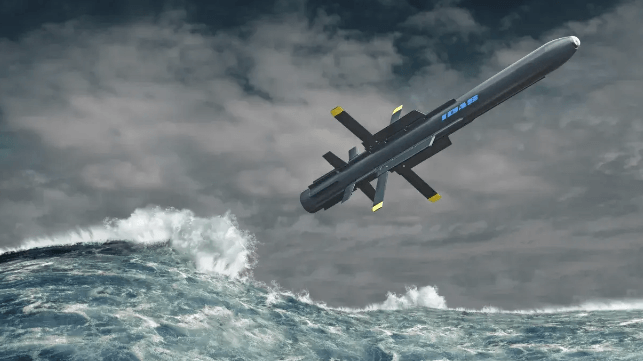
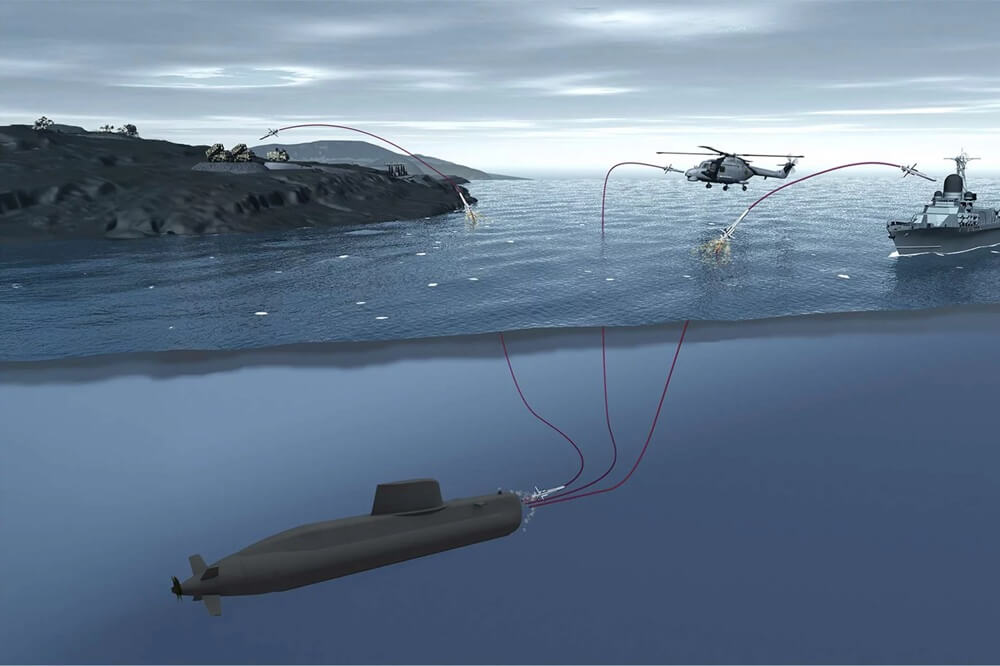
On January 23, Thyssenkrupp confirmed that it has received long-awaited funding for the Interactive Defence and Attack System for Submarines (IDAS). IDAS is a wire-guided antiaircraft missile that can be launched underwater, and is the only publicly known weapon of its kind ever ordered. Some nations' subs have been known to carry man-portable antiaircraft missile launchers for emergency use, but a man-portable unit only works when surfaced - and surfacing removes submarines' key advantage.

Stealth is no longer enough to combat aerial threats, according to Thyssenkrupp. Capable airborne antisubmarine warfare systems have made it much harder for subs to hide and survive. Most advanced nations' surface combatants now deploy with a sonar-equipped, torpedo-carrying helicopter, which can readily track and destroy a submarine in short order. Current defenses include diving deep or hiding in the ocean's layers, but there are no publicly known active defenses that a sub can use to fight an aircraft without first coming to the surface.

Germany's navy operates some of the stealthiest diesel-electric subs in the world, and it has been working on a solution to this problem for decades.  In partnership with Germany's Federal Office for Defense Technology and Procurement (BAAINBw), Thyssenkrupp, Deihl Defense and Kongsberg decided to develop an antiaircraft missile that could be launched out of a standard torpedo tube. Based on Deihl's IRIS-T air-to-air missile, the sub-launched IDAS has folding winglets and sits in a canister the size of a torpedo. Once the munition launches and reaches the surface, the operator can guide the missile by fiber-optic data link throughout its flight, aided by an infrared seeker.

Deihl Defense

Work got under way in the 2000s, and the first successful underwater test launch occurred in 2006. IDAS was so impressive that it won a national defense-tech award in 2007, and appeared slated for production in 2009. The original plan was to retrofit the system onto existing subs, and to have it in operational service by 2014.

In December 2024, ten years later, Germany's parliament signed a $5 billion funding package to build four new Type 212CD submarines for the German Navy. The package included $26 million to finish development work on IDAS, which will now make its first appearance on the 212CD. 

"We are delighted that this innovation project can now also be launched. At Thyssenkrupp Marine Systems, we are contributing to a completely new capability in the field of submarine self-defense, while at the same time strengthening the safety of people and materials in challenging future deployment scenarios," said Oliver Burkhard, CEO of Thyssenkrupp Marine Systems.

ECOCIDE

A reputational stain: The oil spill in the Black Sea

Alexey Strelnikov
DW
24/01/2025

Russians are ditching their summer holiday plans at popular Black Sea destinations because of an oil spill, while local volunteers complain that the government is interfering with their clean-up efforts.


Clean-up operations in the Black Sea beach town resort of Anapa
Image: Dmitry Feoktistov/dpa//TASS/picture alliance


A wave of cancellations is sweeping through spas and children's camps in Anapa, a Russian town on the Black Sea, as many Russians abandon their holiday plans in the southern Krasnodar region because of pollution from a huge December 2024 oil spill washing onto the beaches.

According to the Telegram channel Kub Mash, "parents don't want to send their children to the hazardous coastline." It also reported that companies that had issued travel vouchers to employees as bonuses were now demanding refunds.

Speaking to the Russian paper Parlamentskaya Gazeta, the head of Russia's State Duma Committee on Family Affairs, Nina Ostanina, said that bookings at Anapa's children's recreation and health retreats had plummeted by more than 27% in January and 40% for the summer.

The oil spillbegan when a storm hit two aging Russian tankers traveling through the Kerch Strait, which separates Russia from the Crimea, a peninsula in Ukraine currently occupied by Russia. One ship sank and the other was damaged when it ran aground.
Ongoing environmental disaster

Fuel oil continues to leak into the sea from the sunken tanker with Russian authorities reporting that they couldn't weld the damaged part of the ship closed because it was too close to the oil.

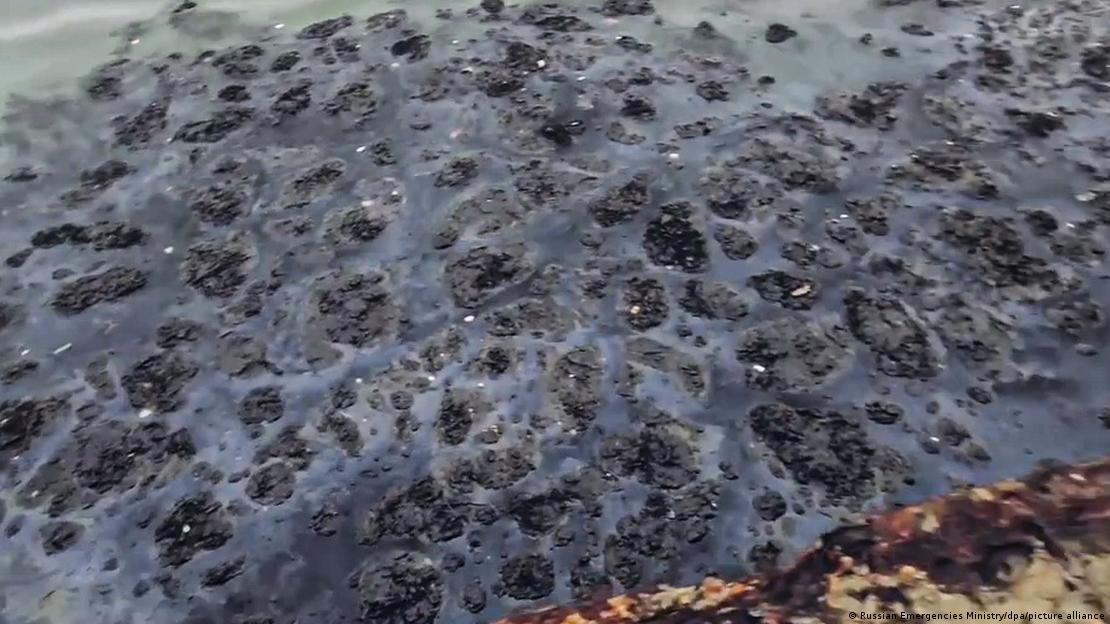
According to official reports, up to 5,000 of the 9,200 tons of mazut, a heavy, low-quality oil product, being transported by the tankers may have already leaked into the sea.

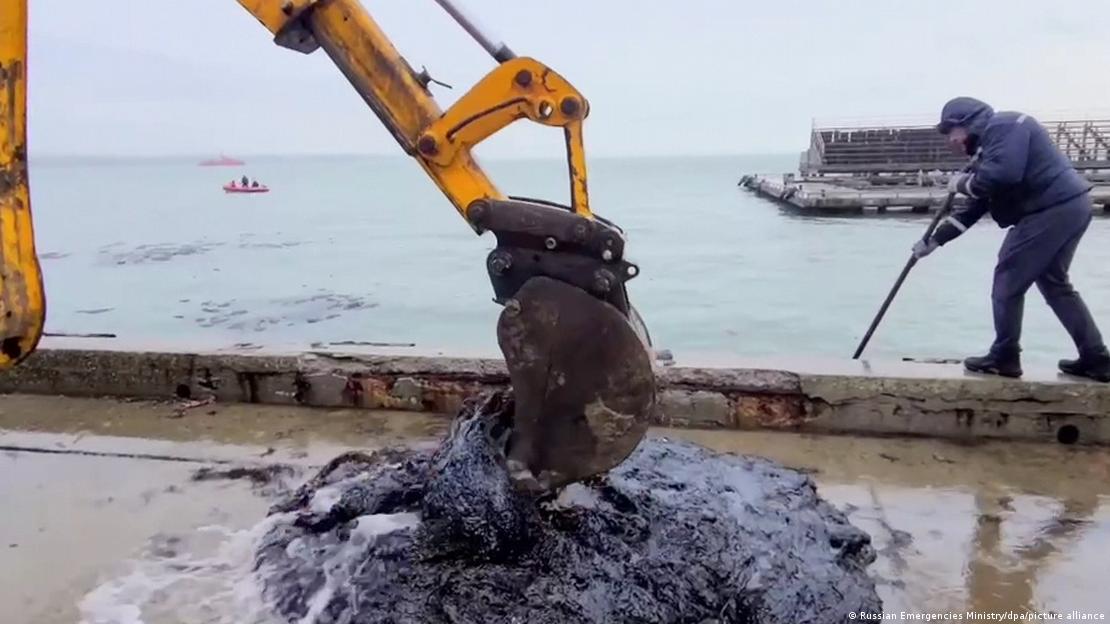
The mazut has been settling on the seabed and washing ashore, contaminating at least 50 kilometers (31 miles) of coastline, mostly around Anapa.

IT IS BITUMIN LIKE THE TARSANDS
The low-quality fuel oil mazut has contaminated over 50 kilometers of coastline.
Image: Russian Emergencies Ministry/dpa/picture alliance

While Russia's Emergencies Ministry claims that there is no effective method to clean up this type of oil, environmental experts have said that appropriate methods have been available since 2002, when the Prestige tanker carrying similar heavy fule oil sank off the Spanish coast, polluting some 2,000 kilometers of coastline.

Meanwhile, Russian officials are warning of further problems in the summer, when rising temperatures cause the oil to dissolve and wash ashore in greater amounts.
Severe consequences for wildlife and people

Eugene Simonov, of the environmental protection group Ukraine War Environmental Consequences Work Group, told DW it could take a decade for ecosystems to recover. "This oil spill could have disastrous consequences for some species," he said.

The environmental organization Greenpeace reported the deaths of 32 dolphins and 1,355 birds as of early January. Anna Jerzak, an expert with the organization for Central and Eastern Europe, told DW that high concentrations of hydrocarbons had a toxic effect on fish, disrupting food chains and causing populations to decline.

"In the long term, oil products poison seaweeds, which destroys the habitats of a number of organisms," she said.

The oil spill is affecting entire ecosystems, and is a threat to humans, as well
Image: Russian Emergencies Ministry/dpa/picture alliance

Looking to the upcoming summer, Simonov said that the heavy fuel also posed health risks to swimmers. "People may experience a bad smell, for many, it will worsen existing respiratory issues, and all of this can have carcinogenic effects," he said.

Greenpeace's Jerzak also warned that toxic fumes, allergic reactions and skin inflammation were also likely.
Volunteers step in despite government inaction

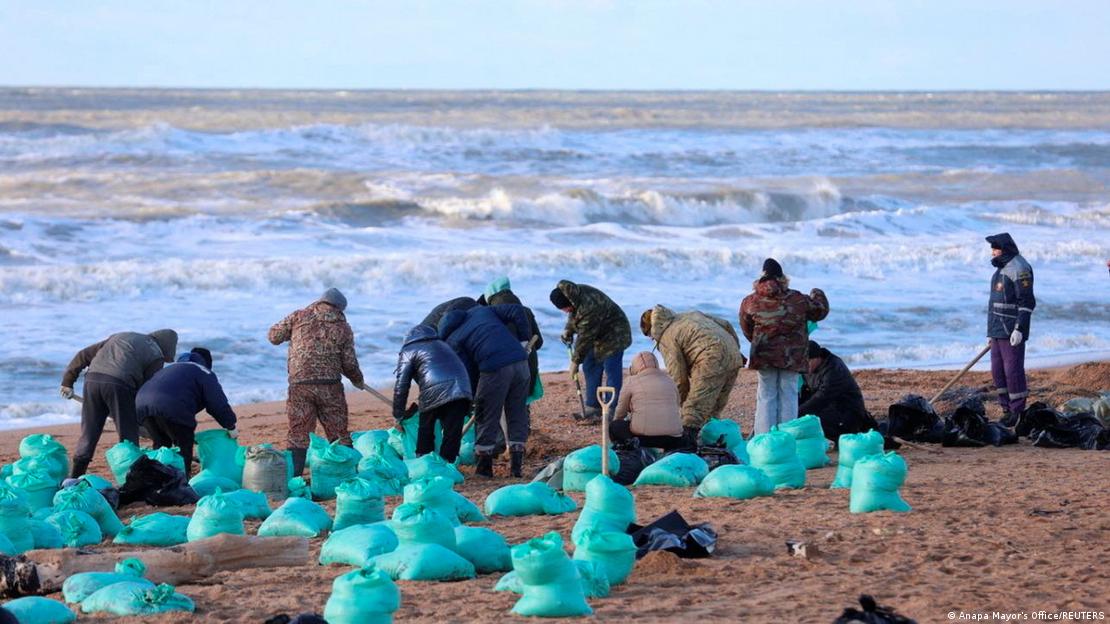
Some 10,000 volunteers are helping with the clean up movement, which arose spontaneously, said ecologist Evgeny Vitishko.

Some 2,500 birds have been rescued so far, he said.

"That's about half the birds affected by the oil spill, which is higher than the global average. Usually, only about 10-12% are rescued," Vitishko said, adding that he was lobbying for a bird rehabilitation center where the rescued wildlife could be kept for three to six months.

"We've only got a month left before there are no more birds left to save," he said.

One helper explained that the volunteer network had initially been funded by donations. In time, volunteers began asking donors to order the necessary supplies and gear online and have it shipped directly to the volunteer center.

All volunteers receive free lodging and provisions from local hotels, whose own survival depends on the upcoming summer season.

Authorities call for stricter monitoring

Initially, authorities had provided volunteers with protective suits from China, as DW learned, and the distribution of special gear was slow at best.

But even if these issues have since been resolved, many volunteers are under the impression that they, not the state, are the ones doing most of the clean-up. They complain that government representatives are only interfering with their work.

Apparently, in a ministerial meeting, Russia's President Vladimir Putin had called upon those in office to engage more actively in clean-up duties.

When employees of Russian Environment Ministry visited Anapa in early January, they caused a scandal when they released some 160 rescued birds without consulting local volunteers in advance.

"They did it as a PR stunt," one helper told DW. The incident took a tragic turn, when nearly all the birds that had been released were found dead along the coast the following day. Experts explained that the oil had damaged the natural insulation lining in the birds' feathers, which hadn't had the chance to recover in such a short period.
Volunteers say they have been doing the majority of the clean-up
Image: Anapa Mayor's Office/REUTERS

Following the tragic event, the volunteer center installed a representative responsible for liaising with authorities and the media. But helpers say the representative is actually responsible for monitoring the content of their internal group chats.

One volunteer recalls that there had initially been an open atmosphere at the center. "I was amazed at how friendly people were to each other. Some did the heavy lifting, other washed birds, and still other distributed protective gear," he said. "It felt great to be a part of it."

But once authorities began pressuring the volunteer center, he starting doubting the official statistics and work practices. Instead, the helper suspects that local authorities are trying to cover up numbers and activities.

"Despite the free food and lodging, I barely have any savings left over," he said. But he still wanted to stay, if only for the sense of contributing to something important.

This article was translated from German.
WWIII

Malaysia’s Anwar says don’t single out China in sea tensions


By AFP
January 22, 2025


Malaysia's Anwar Ibrahim told Davos that China is an important neighbour that must be engaged with - Copyright AFP JUSTIN TALLIS

There will always be border disputes in Asia, and China should not be singled out because of tensions in the South China Sea, Malaysian Prime Minister Anwar Ibrahim said Wednesday.

Speaking at the World Economic Forum in Davos, Switzerland, Anwar said that Malaysia had border issues with Singapore and its other neighbours in Southeast Asia but they still managed to cultivate good relations.

While Malaysia also has maritime issues with China, it will push ahead with improving ties because it is an important country, he said.

“We have excellent relationship with Singapore. We still have border issues with them,” Anwar said.

“I treat the Thais as my family members, the leaders, but still we have some border issues with them. So it is with Indonesia, with the Philippines.

“(But) we don’t go to war, we don’t threaten. We do discuss. We get a bit… angry, but we do focus on the economic fundamentals and move on,” he added.

“Why is it that we must then single out China as an issue?” Anwar asked.

“That’s my only contention. Do I have an issue about it? Yes, but do I have a problem? No. Do we have any undesired tensions? No,” he said.

He said that while Malaysia has strong ties with the United States, China is an important neighbour that it must also engage with.

“Of course, people highlight the issue of the South China Sea… But may I remind you that Malaysia is a maritime country,” he said.

China has been “very reasonable” in dealing with Malaysia, Anwar added.

“They take us seriously, more seriously than many of the countries of our old allies and friends,” he said, without mentioning any country.

China has ruffled diplomatic feathers in Southeast Asia because of its assertion that it owns most of the strategic waterway despite an international ruling that the claim has no legal basis.

This has pitted it against Brunei, Malaysia, the Philippines, Taiwan and Vietnam, which have partial claims to the sea.

In recent years, China and the Philippines have seen an escalation of confrontations, including boat-ramming incidents and Chinese ships firing water cannons on Filipino vessels.

The clashes have sparked concern they could draw the United States, Manila’s long-time security ally, into armed conflict with China.


Nice to ban cruise ships in fight against overtourism and pollution

The mayor of Nice is moving to ban large cruise ships from docking in its port, aiming to tackle pollution and overtourism. The decision mirrors Venice's 2021 ban, introduced to protect its fragile environment and infrastructure.


Issued on: 25/01/2025 -  RFI

Cruise ships in Marseille, on France's Mediterranean coast. 
AP - Daniel Cole

By:Isabelle Martinetti

Mayor Christian Estrosi, of the centre-right Horizons party, announced this week during his New Year’s address that he plans to ban cruise ships exceeding 190 metres in length and carrying more than 900 passengers, starting this summer.

The ban will apply to Nice and the Villefranche-sur-Mer bay in the Alpes-Maritimes region, on France's Mediterranean coast.

Estrosi confirmed that a municipal order would be issued, effective from 1 July, instead of the initially planned date of 1 January, 2026.

Royal Caribbean's 'Icon,' world's largest cruise ship, sets sail

The United Nations Ocean Conference, which is to focus on conservation and sustainability, will take place in Nice from 9 to 13 June.

Estrosi emphasized that these measures are also part of a broader fight against overtourism. "Cruise ships that pollute and unload low-cost tourists who consume little but leave their waste behind, have no place here," he said.

Some 40 cruise ships, carrying between 900 and 5,000 passengers each, are already scheduled to dock in Nice from 1 July, with the move to banning them raising concerns in the tourism sector over lost revenue.

France unveils plan to fight 'overtourism' at its most popular attractions

The restrictions on cruise ships in Nice follow a growing trend across Europe, where several ports have either already enacted similar measures or are planning to do so.

Venice banned cruise ships in August 2021 due to concerns over pollution and damage to the city's historical infrastructure, and Barcelona closed its north terminal to cruises in October 2023. Santorini and Dubrovnik have also tightened restrictions on cruise companies, while cruise ships visiting Scottish ports will be charged a new tax.
Impact on climate

Cruise ships are known to be major polluters. According to Fanny Pointet of the European NGO Transport & Environment, in 2023 a total of 214 cruise ships visited European ports, emitting 7.4 million tonnes of CO2, "equivalent to 50,000 round-trip flights between Paris and New York".

That year, Marseille ranked as the most polluted port in France in terms of cruise activity.In 2022, 50,000 people in the city signed a petition against cruise ships, according to campaign group Stop Croisières.

Environmental protesters block French cruise liner port

Pointet added: "These emissions not only affect the climate but also degrade air quality."

The NGO suggests one solution could be to "decarbonise the industry to accelerate the ecological transition," and to impose taxes on passenger tickets that would fund environmental initiatives.

Meanwhile, environmentalists in Nice have praised Estrosi’s decision.

Juliette Chesnel-Le Roux, president of the Ecologist Group at the Metropolitan Council, said: "This achievement, the result of a long fight, proves that persistence pays off. It shows that the repeated warnings have finally been heard."

However, she cautioned that the victory should not distract from "the ongoing issue of mega-yachts polluting the Villefranche bay".

French Mayor Calls for Cruise Ship Ban on French Riviera

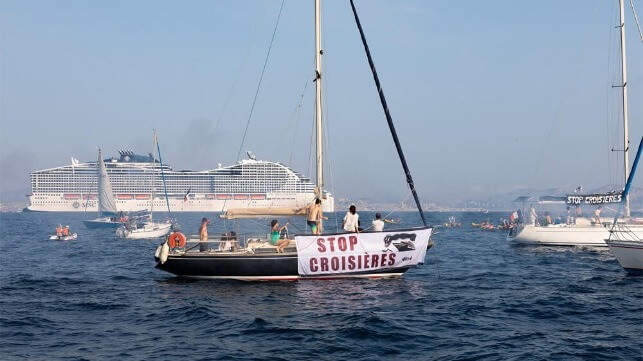
cruise ship protest
Protestors from the group Stop Croisieres blocking MSC's mega cruise ship in 2023 (Stop Croisiers)

Published Jan 23, 2025 6:40 PM by The Maritime Executive


The mayor of Nice, France, a popular tourist destination along the French Mayor Calls for Cruise Ship Ban on French Riviera, joined the growing number of destinations calling for restrictions on cruise ships. He cited the now familiar complaints of overtourism and pollution while proposing a ban starting this summer to stop large cruise ships from anchoring in the picturesque bay between Nice and Villefranche long known as a destination for the rich and famous.

“Tourism yes, overtourism no,” Mayor Christian Estrosi said during his annual New Year’s address outlining the political goals for the coming year. Estrosi is also president of the Nice Côte d'Azur Metropolis but would require the support of other local mayors to enact his bans which focused on large cruise ships as well as house sharing through the popular site Airbnb.

“The cruises that pollute and dump their ‘low-cost clientele’ who consume nothing, but leave their waste behind have no place with us,” Estrosi declared. Already known for his criticism of the cruise industry, the mayor simply said “Nice no longer wants ‘low-cost cruises,” to stop in its port.

Speaking on a local radio program, the mayor reiterated his position saying efforts were underway to “cancel all cruises that can still be canceled ahead of drafting a banning order.” He called for a ban effective July 1 but clarified his position was specifically to stop cruise ships with a capacity of over 900 passengers or over 190 meters (690 feet) in length. 

The proposed ban targets the contemporary segment of the industry with large ships carrying 4,000 or more passengers while seeking to maintain the business of the small, ultra-luxury cruise ships which are more in keeping with the image Nice seeks to project. Estrosi contends the size restriction would eliminate about 70 percent of the cruise ship passengers scheduled to land in Nice.

Estrosi declared “I don’t want these floating hotels putting down their anchors in Nice.” A spokesperson for the trade group Cruise Lines International Association however responded with surprise noting “No large cruise ships are scheduled to call at the Port of Nice in 2025.”

While a popular destination, Nice and Villefranche without docking facilities have already seen a decline in the number of cruise ship calls as the ships must tender passengers ashore. Estimates are the port had about 650,000 cruise passengers and approximately 100 cruise ship visits down from 200 or more a decade ago. French media reports indicate there are a total of 125 cruise ship calls scheduled for Nice in 2025.

Estrosi is not calling for cruise ships to stop visiting the French Mayor Calls for Cruise Ship Ban on French Riviera, but just his little part of the coast. He suggested the ships could proceed to Cannes, which already has more than two times the number of annual cruise ship calls. The large commercial port at Marseille would also be a possibility but it is about a two-hour driving distance to the west from Cannes, Nice, and Villefranche. 

Local officials were quick to point out that even if Estrosi could build support for his ban, he lacks the authority to change many cruise ship visits. Local authority only extends 300 meters from the shore (less than 1,000 feet) and many of the large cruise ships anchor further out putting them in waters controlled by the federal authorities. 

It is not the first attempt to limit cruise ships along France’s Mediterranean coast. The group Stop Croisières, which calls itself environmentalists, has been staging protests. The group used Greenpeace tactics taking to small boats to block the arrival of cruise ships.

Advocates point to the impact on Venice, Italy after the city was forced into banning large cruise ships while other destinations such as Key West, Florida also moved to block large ships. Bar Harbor, Maine continues to be locked in a debate and legal actions after imposing a ban on most cruise ships while other destinations such as Juneau, Alaska reached a voluntary agreement with the cruise industry. European cities ranging from Amsterdam to Barcelona have also proposed moving cruise ship docks out of the center of the city.


Vessels Approached and Hailed as Iran Stages Persian Gulf Naval Exercise

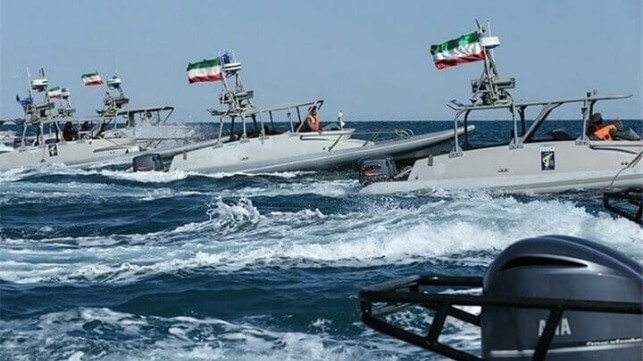
Iranian speed boats
Iran is conducting a large scale exercise in the Persian Gulf (Mehr - CC BY 4.0)

Published Jan 24, 2025 9:26 AM by The Maritime Executive


Reports coming from the Persian Gulf and the area around the vital Strait of Hormuz indicate that one vessel was approached and others contacted and instructed to alter course toward Iranian territorial waters. The incidents came as Iran highlighted its naval exercises in the region.

UK Maritime Trade Operations (UKMTO) which coordinates and monitors security in the region issued two warnings on Friday, January 24, while reporting the authorities were investigating. In the first, it reported a vessel was approached while underway approximately 86 nautical miles northeast of Ras Tanura, Saudi Arabia. In the second alert issued a short time later, they reported receiving notification of several incidents involving VHF radio challenges to vessels in the Northern Arabian Gulf.

The vessel that was approached reported that a small military craft flashed a green laser toward the bridge. The master told UKMTO that they had been instructed to turn towards Iranian territorial waters.

Unconfirmed reports indicate the vessel was the U.S.-flagged Ro-Ro cargo vessel Liberty Power. The vessel’s AIS signal shows that it departed Shuaiba, Kuwait on January 23. The 46,600 dwt vessel built in 2011 as the Jolly Diamante operating for Linea Messina was acquired in 2022 by U.S.-based Liberty Maritime. The vessel was enrolled in the U.S. Department of Transportation’s Maritime Security Program. MARAD reported the vessel with 220,586 square feet of militarily useful cargo capacity would be used “to deliver vital supplies to support military missions across the globe.”


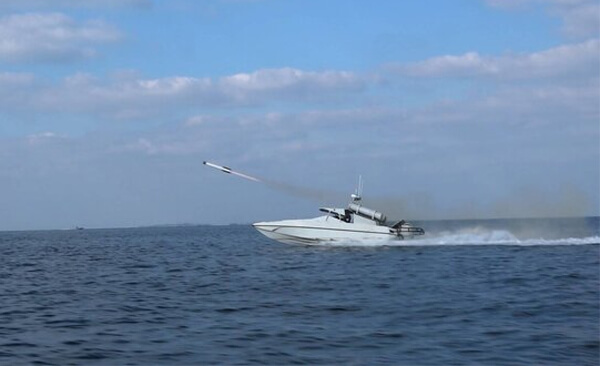
Iran reports it is testing high-speed boats capable of launching missiles (Mehr - CC BY 4.0)


UKMTO assesses that both incidents “are most likely” part of the ongoing large-scale exercises being staged this month by Iran’s Islamic Revolutionary Guard Corps. Today’s incident came as Iranian media was hailing the exercise.

In an interview with Iranian TV, Rear Admiral Alireza Tangsiri of the IRGC Navy said, “This exercise demonstrates our ability to establish security in the region… This show of strength of the forces participating in this exercise is a very small portion of the capabilities of the IRGC Navy.”

He reported that speed boats capable of 75 to 90 knots were participating in the exercise. He said they would be using land-to-sea and surface-to-surface missiles demonstrating the capabilities of the speed boats to fire missiles. Iran’s Mehr news agency released pictures of the exercise.


Experts Scrutinize "Accident" Explanation for Baltic Cable Damage

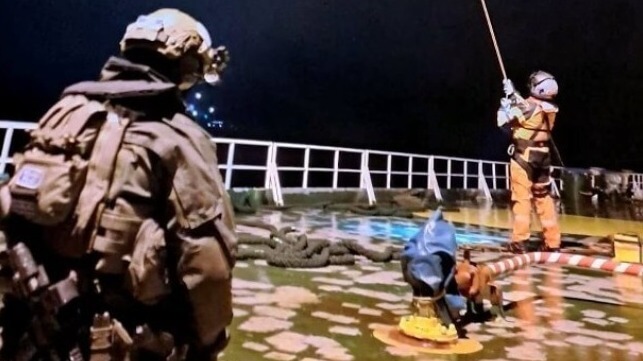
Finnish tactical team boards the Eagle S by helicopter, Dec. 25-26 (Finnish Border Guard)

Published Jan 23, 2025 10:09 PM by The Maritime Executive


Over the past week, U.S. and Finnish intelligence officials have told media that there is no evidence that Russia was behind the cutting of five subsea cables in the Gulf of Finland on Christmas Day, and that the tanker that caused the damage likely dragged anchor for 50 miles by accident. But the "accident" claim is drawing pushback in Finland and Sweden, which were affected most by recent suspected subsea sabotage. 

The incident on Dec. 25-26 was the third time in a year that a Russia-linked ship has been accused of severing multiple subsea cables by dragging an anchor under power for unusual distances. This time, NATO has assembled a large naval task force to monitor the area and ensure the security of Baltic subsea infrastructure. 

"If all of these are really just accidents, why are they being monitored militarily?" Finnish MEP Mika Aaltola asked in a conversation with Ilta-Sanomat. "It's obvious why there's a military response to it. You'd have to be pretty stupid not to understand that."

The U.S.-sourced "accident" explanation was likely intended to reduce tension with Russia, said Aaltola. He suggested that the Biden administration's outgoing national security team may simply have wanted to minimize risk during the presidential transition. "Russia is waging war in Ukraine, we are focusing on the essentials, we do not want to cause a painful, or geographical, escalation elsewhere. Russia's damage [to subsea infrastructure] is limited and can be repaired, so we would rather accept these attacks than make a big fuss about them," Aaltola surmised.

Others suggest that the "accident" announcement was simply premature, and that the investigation is still far from completed. "This kind of information comes and goes," Swedish Minister of Defense Pal Jonson told SVT.

Multiple outlets have reported that the Finnish investigation has found no evidence yet of a Russian "hybrid" sabotage attack, after four weeks of looking. A lack of evidence would be expected in a well-run sabotage operation, explains Lieutenant Colonel Juhani Pihlajamata (ret'd) - and is not itself proof of an accident. 

"Efforts have been made to keep the matter as secret as possible. In other words, the lack of results in the investigation only leaves the perpetrator or the person who ordered it open. It does not rule out Russian involvement," Pihlajamata told Ilta-Sanomat.

Given the technical odds of having an anchor lower itself to the bottom and secure itself, without the crew's detection - three times in one year - some experts are ready to rule out accidental causes.

"When the numerous breakdowns are combined with the fact that Russian reconnaissance vessels have been exceptionally careful in examining these areas before the events, I personally cannot believe in coincidence or accident," said Prof. Kari Liuhto, professor of intelligence research at the University of Turku, speaking to IS. 

Finnish police continue to pursue a criminal sabotage investigation aboard Eagle S, and have issued travel bans to nine crewmembers suspected of causing the damage. The master and one other crewmember appealed the travel ban on Friday, attempting to have it reversed. 

Sanctioned Russian Oil Tankers Get Temporary Reprieve in India


By Michael Kern - Jan 24, 2025

India has been granted permission to unload sanctioned Russian oil at its ports until February 27.

The US sanctions have disrupted India's access to cheap Russian oil, and Indian refiners are scrambling for alternative supplies.

India will continue to buy Russian oil only if it meets certain conditions, including a price cap of $60 per barrel and the use of non-sanctioned tankers.


India has received clarification from the U.S. that the Russian oil tankers sanctioned earlier this month are allowed to discharge their crude at Indian ports until February 27, Indian oil secretary Pankaj Jain said on Friday.

“There was a round of clarification by OFAC (the U.S. Office of Foreign Assets Control). Formally they did clarify that Feb. 27 is the deadline,” Reuters quoted the Indian official as telling reporters in response to questions about the end of the wind-down period.

The wind-down deadline for completing the financial transactions is March 12, according to Jain.

The outgoing U.S. Administration on January 10 imposed the most severe sanctions on Russia’s oil yet, designating two major Russian oil companies, Gazprom Neft and Surgutneftegas, as well as 183 vessels, dozens of oil traders, oilfield service providers, insurance companies, and energy officials.

The sanctions caught a few million barrels of crude oil en route to India in a precarious situation.

At least 4.4 million barrels of crude from Russia are currently being shipped to India, according to ship-tracking data compiled by Bloomberg and Kpler. Some of these are traveling on newly-sanctioned tankers and the fate of part of the cargoes is unknown.

For India, which imports more than 80% of the crude it consumes daily, the costs are spiking and the cheap Russian barrels are disappearing as Indian refiners steer clear of tankers explicitly sanctioned by the U.S.

The U.S. clarification about the deadline for sanctioned vessels to discharge their crude could be a relief for India, for the next month at least.

But Indian refiners are already scrambling for supply for arrival after February.

India will continue to buy Russian oil if it is sold below the $60 per barrel price cap and delivered on non-sanctioned tankers and without any involvement of sanctioned companies or individuals, the Indian official said today.


By Michael Kern for Oilprice.com


Russian Tanker Abandoned in Poland Draws Renewed Interest

Russian tanker in Poland
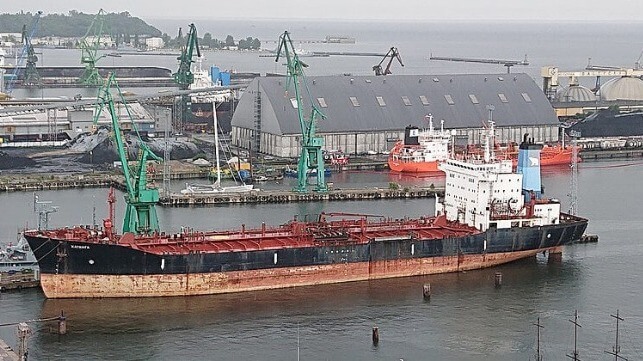
Khatanga has been languishing in Poland since 2017 (Braveheart - CC BY-SA 4.0)

Published Jan 24, 2025 1:01 PM by The Maritime Executive


A Russian-registered product tanker languishing in the Port of Gdynia is drawing renewed interest from Polish authorities. According to a report on Poland’s Radio ZET, new security concerns as well as safety issues with the tanker were raised in light of the ongoing investigation in Finland into the Eagle S tanker and a lack of maintenance on the vessel which has been docked in Gdynia since 2017.

The product tanker Khatanga (23,000 dwt) was detained at the Port of Gdynia in October 2017 after a failed Port State inspection. Structural issues were identified during the inspection along with questions regarding the training and competence of the crew. Owned by the Murmansk Shipping Company, the vessel was being held pending repairs.

The Murmansk Shipping Company however in 2020 declared bankruptcy with control of the vessel passing to the trustee for the company. The radio report says the owners have periodically checked on the vessel but appear to have lost interest. From the report, it does not appear to have even a skeleton crew aboard.

During recent winter storms, the tanker parted its lines on December 15 and again on January 12. The report says an offshore service vessel docked nearby raised the alarm fearing the tanker would drift and hit the service ship. Tugs from the Port of Gdynia were able to secure the vessel with the port telling the radio reporter that the situation was controlled and the vessel was not posing a threat to the port.

Poland’s Military Counterintelligence Service (SKW) and the Internal Security Agency (ABW) however are reported to now be looking into the circumstances surrounding the tanker. Radio ZET says that members of parliament from the Special Services Committee have also become interested in the case of the Khatanga.

The Gdynia Seaport Authority reports it has taken legal action to resolve the vessel which is languishing in the port. They have reportedly explored moving to seize the ship for the debt owed by the owners for unpaid port fees. 

Under Polish law, the authorities have not been able to inspect the ship. The radio report highlights safety concerns because the oil tanks have not been degassed creating the possibility that explosive gasses have built up onboard. 

Radio ZET also points to the strategic nature of the Port of Gdynia including its role as a main port for the Polish Navy. They also report that NATO equipment is transshipped at the Baltic Container Terminal. With the revelations that the Eagle S was loaded with Russian spying equipment, they are questioning what could be aboard the Khatanga.

Another possible course of action being explored is adding the shipping company to the list of sanctions. That would also allow the Polish authorities to take over the Khatanga.

For now, the Khatanga continues to languish at its berth in the Port of Gdynia. Brokers list the vessel as potentially for sale.
 

(Top photo in Gdynia harbor in July 2020 by Braveheart - CC BY-SA 4.0)


Sistership to Containership Dali Breaks Down in Pacific

Maersk containership
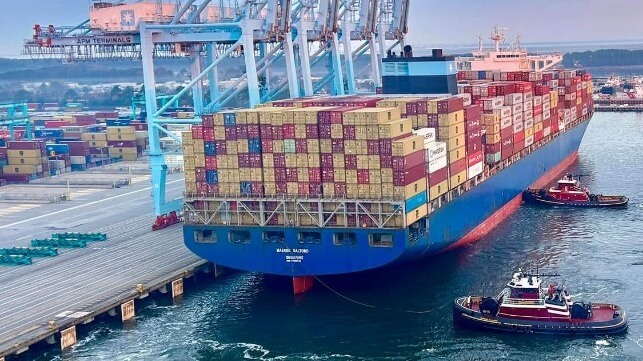
Maersk Saltoro is experiencing engine troubles in the Pacific (2023 photo from Independent Docking Pilots)

Published Jan 24, 2025 4:06 PM by The Maritime Executive


One of the sisterships to the containership Dali which destroyed Baltimore’s Francis Scott Key bridge is reporting engine troubles in the Pacific. The vessel which is also managed by Synergy Marine and sailing under charter as the Maersk Saltoro is reported to have experienced an engine problem which is delaying the ship and risking a cargo of Chilean cherries bound for China.

The details of the vessel’s current issues came to light because of concerns by the Chilean shippers. According to the vessel’s AIS signal, it departed Chile on December 27 and was due in China on January 19 providing time to offload before the Chinese New Year Holiday on January 29. 

“We can confirm that the Maersk-chartered vessel, Maersk Saltoro, reported a technical issue with its main engine on January 13, 2025, while en route from San Antonio, Chile, to Nansha New Port, China,” Maersk wrote to the Chilean publication PortalPortuario. “The vessel is currently undergoing repairs in order to resume its voyage. We are in close communication with the ship owners to monitor the status of the repairs.”

According to the report, the ship was one of 25 container ships that loaded cherries at the Port of San Antonio and has 1,300 containers aboard of the perishable cargo. Chile reports a record season shipping 17,000 containers of cherries. The shipping lines even maintain a season route known as the Cherry Express for the export of the fruit.

The outlet AsiaFruit reports concerns of an economic loss for Chilean exporters. Maersk responded to the publication acknowledging “This situation has raised concerns in the Chilean fruit export sector, as timely delivery is essential to maintain the quality of the cherries and meet the stringent requirements of the Chinese market.” Maersk emphasized that it has teams available and will assist the shippers should claims need to be filed.

The containership was built in 2015 by Hyundai in South Korea and like the Dali is also sailing under the flag of Singapore. Like its sistership, the vessel has a capacity of 9,971 TEU.

The ship first drew attention in September 2024 when it made a port call in Baltimore less than six months after the Dali destroyed the bridge. Investigators from the U.S. Coast Guard, the Federal Bureau of Investigations (FBI), and the EPA boarded the ship on September 21. They declined to comment on what they were looking for, but it was linked to the investigation into the Dali. Reports indicated that the teams had found significant electrical system issues and faults with the Dali during their investigations.

Maersk Saltoro underwent a Port State inspection in Chile on December 20 and received a clean report. Previously, USCG cited issues while the vessel was in Baltimore with oil accumulation in the engine room and electric devices in the living and working areas during its September 2024 inspection and issues with the radar during an inspection in Norfolk, Virginia. The vessel has a history of 14 inspections in its career with only those issues in the U.S. recorded. No detentions have been issued.

As of the reports from Chile this week, the vessel was still undergoing repairs while in Micronesia's exclusive economic zone. It is unclear when it will arrive in China. Her sistership, Dali, returned to service this week beginning her first trip from China after extensive repairs.