Saturday, January 25, 2025

Bertrand Russell: Redefining the Public Intellectual in an Era of Rising Authoritarianism


 January 24, 2025
Facebook

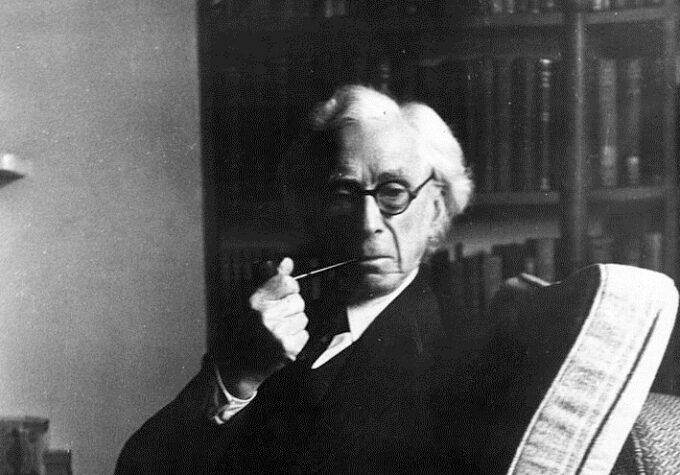
Bertrand Russell – Public Domain

Within days of his return to office, President Donald Trump unleashed a chilling display of authoritarianism, providing a stark reminder of the specter haunting the United States: the specter of fascism. As reported in the New York Times, his actions underscored a vision of governance steeped in cruelty and unchecked power.  With the stroke of a pen, Trump pardoned 1,500 individuals involved in the January 6th insurrection, dismantled environmental protections, opened Alaska’s wilderness to expanded oil and gas drilling, terminated Diversity, Equity, and Inclusion (DEI) programs across federal agencies, and signed an executive order ending birthright citizenship. He erased recognition of gender diversity on official documents, escalated attacks on transgender Americans, withdrew the U.S. from the Paris Climate Agreement and the World Health Organization, declared a national emergency at the southern border, dispatched thousands of troops, and initiated mass deportation orders targeting immigrants. Each action exemplified not only the brutalities of gangster capitalism but also a profound disregard for human rights, social justice, and the preservation of the public good.

What makes these assaults even more alarming is their widespread support. Trump’s war on civil rights, immigrants, the rule of law, the environment, and gender equity is endorsed by the MAGA Party, a significant portion of the American public, billionaires seeking deregulation, and a chorus of complicit pundits and politicians. This is more than a moral collapse or a democracy on life support—it reflects the deliberate cultivation of civic ignorance and the institutional erosion that allowed fascism’s seeds to take root, with Trump’s presidency representing its most visible end point.

At the core of this culture of gangster capitalism lies an interconnected web of anti-public intellectuals, media personalities, cultural influencers, and powerful apparatuses—including the legacy press and online platforms—that actively promote or tacitly enable an authoritarian agenda. Their complicity contrasts sharply with historical figures who resisted tyranny with unflinching courage. Bertrand Russell, for instance, serves as a reminder of intellectual bravery in dark times. Today, such moral clarity is rare but not extinct. Bishop Mariann Edgar Budde, who led the National Prayer Service at Washington National Cathedral, embodies a bold and energized resistance, challenging the silence and submission that so often accompany the rise of authoritarianism.

During the service, Bishop Mariann Edgar Budde addressed President Trump directly, urging him to embrace justice, compassion, and care in his policies, particularly toward immigrants and those most vulnerable under his administration. With a solemn yet hopeful tone, she declared:

“Millions have placed their trust in you. As you said yesterday, you have felt the providential hand of a loving God. In the name of that God, I implore you: have mercy on the people of this nation who now live in fear. There are gay, lesbian, and transgender children in families across the political spectrum—Democrat, Republican, and Independent—some who fear for their very lives. Have mercy upon them.”

As her sermon neared its conclusion, she continued, her words both a plea and a moral indictment:

“I ask you, Mr. President, to have mercy on the children who fear that their parents will be taken away. I ask you to extend compassion and welcome to those fleeing war zones and persecution, seeking refuge on our shores. Our God commands us to be merciful to the stranger, for we too were once strangers in this land.”

Trump’s response was as predictable as it was venomous. He dismissed the service as “boring and uninspiring,” deriding Budde as a “radical left hardline Trump hater.” His words, steeped in scorn and his trademark disdain for critique, encapsulated the spirit of his administration—a politics of division, cruelty, and vindictiveness.

This spirit found an echo in Republican U.S. Representative Mike Collins of Georgia, who weaponized Budde’s sermon on social media. Posting a video clip of her heartfelt appeal, he coldly remarked: “The person giving this sermon should be added to the deportation list.”

In these exchanges, the chasm between Budde’s call for mercy and Trump’s politics of malice became starkly evident—a collision of two opposing visions for the nation. One rooted in compassion, the other in the unrelenting embrace of cruelty.

The spirit, boldness, and courage embodied in Budde’s speech echo a long and vital history of resistance. Under every regime of domination, there have always been voices that refuse to be silenced—public intellectuals and everyday citizens who, together, stand against the tides of bigotry, hatred, war, and state violence. These voices remind us that even in the darkest times, resistance is not only possible but necessary.

One such voice, whose life and work illuminate the enduring power of civic courage, moral responsibility, and the willingness to risk everything for justice, equality, and freedom, is Bertrand Russell. His legacy offers us profound lessons for navigating our current moment, where the stakes of resistance feel as urgent as ever. My connection to Russell’s work feels especially personal, as my own writings are housed in McMaster University’s Mills Library, alongside a significant archive of Russell’s papers. In reflecting on his life, we are reminded that the struggle for justice is a continuum—one that demands not only bold ideas but also the bravery to act upon them.

One of the most unexpected and meaningful moments of my personal and scholarly life was standing beside a towering image of Bertrand Russell during the ceremony marking the donation of my personal archives to McMaster University Library’s William Ready Division of Archives and Research Collections. It felt like a quiet dialogue across time—a convergence of lives committed to ideas, justice, and the unyielding pursuit of truth. Libraries and archives hold a special kind of magic, especially in an age when historical memory is eroded by an avalanche of information, the unceasing churn of emotional overload, and a culture entrapped by what Byung-Chul Han calls “the immediate presence.”

In stark contrast to this frenzy of hyper-communication and ephemeral data, the archive stands as a sanctuary for depth and reflection. It safeguards not just the fragments of the past but the larger arc of its story, providing a sense of wholeness and continuity. Here, time stretches beyond the fleeting moment, offering a context that embraces the works, personal artifacts, and relationships that shape the lives of artists, intellectuals, and cultural workers. The archive resists the tyranny of the present, reminding us that the threads of history weave a fabric far richer and more enduring than the fleeting snapshots and soundbites of our digital age.

Having my work archived along with Russell’s was particularly moving since he was a model for me as a public intellectual as I began teaching and writing in the 1960s. I came of age when intellectual, political, and cultural paradigms were shifting. Protests were advancing on university campuses and in the streets against the Vietnam War, systemic racism, the military-industrial complex, the corporatization of the university, and the ongoing assaults waged on women, the poor, and the vulnerable. Intellectuals and artists such as Jean-Paul Sartre, Allen Ginsberg, Norman Mailer, Ellen Willis, Susan Sontag, Paul Goodman, James Baldwin, Angela Davis, and Martin Luther King, Jr. were translating their ideas into actions and exhibiting a moral courage that both held power accountable and refused to be seduced by it. This was an age of visionary change, civic courage, and democratic inclusiveness; it was a time in which language translated into actions that enabled people to understand how power operated on their daily lives and how their daily existences and relationships to the world could be more engaging in critical and radically imaginative ways.

For me, Bertrand Russell stood out among these intellectuals in a way that was both iconic and personal. Russell was not only a rigorous scholar but also a public intellectual who moved with astonishing ease through a range of disciplines, ideas, and social problems. He embodied a new kind of public intellectual, one who functioned as a border crosser and traveler who, like another great public intellectual, Edward Said, refused to hold on to scholarly territory or a disciplinary realm in order to protect or bolster his fame or ego. Careerism was anathema to Russell and it was obvious in his willingness to push against conceits and transgressions of power—whether it was contesting World War I as a conscientious objector, dissenting against the authoritarian populism consuming much of Europe in the 1930s, protesting against the threat of nuclear weapons, or criticizing the horrors and political depravity that marked the United States’ war against the Vietnamese people.

In pushing the boundaries of civic courage and the moral imagination, Russell took risks, put his body on the line, and made visible the crimes of his time, even if it meant going to jail, which he did as late in his life as the age of 89 after protesting against nuclear weapons. Russell lived in what can be called dangerous times and he responded by placing morality, critical analysis, collective struggle, and a profound belief in democratic socialism at the center of his politics.

I was always moved by his courage, and his belief in the political capacities of everyday people and the notion that education was central to politics itself. Russell believed that people had to be informed in order to act in the name of justice. He believed that politics could be measured by how much it improved people’s lives, gave them a sense of hope, and pointed to a future that was decidedly better than the present. Russell, like Václav Havel, another towering public intellectual, believed that politics followed culture and that there was no possibility of social change unless there was a change in people’s attitudes, consciousness, and how they live their lives. Russell believed that a critical education could teach young people not to look away and to take risks in the name of a future of hope and possibility. Russell’s radical investment in the power of education was more than simply a strong conviction. Not only did he start his own progressive school in the 1920s, but he believed that one demand of the public intellectual was to be rigorous and accessible and to make one’s work meaningful in order for it to be critical and transformative. Russell connected education to social change and believed that matters of identity, desire, power, and values were never removed from political struggles.

Not only did he write incessantly as a public intellectual, but he was always willing to throw his body and mind into the thick and fray of the social problems he addressed. As a writer and political activist, he was overtly derided and even condemned by other intellectuals. One episode that moved me immensely when I learned of it was that he was denied a position at the College of the City of New York. At the time, powerful conservatives both in and out of the Catholic Church saw his ideas as dangerous, going so far as to claim if he took up the job at CCNY, he would be occupying a “Chair of Indecency.” I read about this period in Russell’s life soon after I was denied tenure for political reasons at Boston University by the notorious right-wing president, John Silber.

Russell’s willingness to keep going in the face of such attacks nurtured in me both energy and faith in my convictions. As a radical educator, Russell inspired me and gave me the courage to address issues animated by a fierce sense of justice and the political and moral imperative to fight against “the texture of social oppression and the harm that it does.” Like Russell, I learned that thinking can be dangerous and that it demands a certain daring of mind and willingness to intervene in the world. Russell convinced me that to be an educator, you had to be willing to cause trouble in times of war and upheaval and just as willing to disturb the peace in moments of quiet acquiescence. At a time when public intellectuals seem to be in retreat, Russell’s legacy and work are even more important given the darkness now engulfing much of the globe.

Russell is more important to me today than he was when I first read his works in the 1960s. He is a reminder of a type of engaged intellectual that crossed boundaries far removed from the university with its sometimes deadly specialisms, corporatism, conformism, and separation from the problems of the day. While public intellectuals still exist today, too many of them speak from narrow specializations, narrate themselves in soundbites appropriate for the digital age, and often refrain from speaking to the broad audiences and tangled issues of the day. Too many of them advocate for single issues and lack the knowledge or willingness to speak in terms that are comprehensive, willing to do the hard work of connecting a vast array of issues and common concerns. Russell’s claim that his three passions were “the longing for love, the search for knowledge, and unbearable pity for the suffering of mankind” seem quaint in today’s fast-paced culture of consumerism, unchecked individualism, and a crippling obsession with self-interest.

Russell is a crucial reminder of the value of historical consciousness and memory because his life, writing, actions, and moral courage remind us of the work that public intellectuals can do and how they can make a difference. Russell provides a model of what it means to talk back, scorn easy popularity, and refuse to wallow in the discourse of comfortable platitudes. Russell was not merely a witness and, like Martin Luther King, Jr. and other notable figures of his generation, refused to keep silent and was equally appalled by the “silence of good people.” He made clear that there had to be a crucial element of love and solidarity in the ability to feel passionate about freedom and justice. Erich Fromm, one of the great Frankfurt School theorists, called Russell a prophet because his “capacity to disobey is rooted, not in some abstract principle, but in the most real experience there is—in the love of life.” In an age of “fake news,” emergent fascism, systemic racism, and engineered destruction of the planet, militarism, and genocide, Russell is an extraordinary and insightful reminder of the power of informed rationality, critical education, and evidence. At a time when the threat of a nuclear disaster looms larger than ever, Russell offers both in words and deeds the recognition that security cannot be gained through a culture of fear, fraud, armaments, and armed struggle.

At a time when democracy teeters under siege, authoritarian populism surges, public values are eroded, and trust in democratic institutions falters, Bertrand Russell’s writings, actions, and struggles offer an enduring reminder of what is necessary to confront the present darkness. He calls us to civic courage, moral outrage, and the critical thinking required to bridge private troubles with broader social transformations. His life and work stand as a testament to the unyielding pursuit of justice and the recognition that no society, no matter how idealized, is ever just enough.

For Russell, politics was not just about economic structures; it was a battle for the meaning and dignity of humanity itself —over agency, identity, values, and the ways we see ourselves in relation to others. These concerns resonate profoundly today, as unbridled individualism, the fetishization of privatization, and a narrow devotion to self-interest have been elevated to virtues in many Western societies. These forces have paved the way for a moral void, a nihilism that fuels the resurgence of authoritarianism across the globe. Against this collapse into despair, Russell’s vision remains a vital antidote—expansive, hopeful, and profoundly life-affirming.

Russell’s legacy is not just a lesson in intellectual brilliance or political acumen, but in the audacity of hope paired with the courage to act. He reminds us that history bends not by passive observation, but by collective struggles, solidarity, and the refusal to accept injustice as inevitable. To remember Russell is to embrace a moral clarity that resists indifference and cynicism, and to imagine a world where dignity, equity, and joy are not luxuries but foundational principles.

Standing beside his archives was, for me, an extraordinary honor. It was not merely an encounter with history but an invitation to carry forward the weight of its lessons. In that moment, I felt the enduring shadow of a life devoted to justice and civic responsibility, a shadow that challenges us to live with greater purpose.

To remember Russell is to remember the indispensable role of hope in the face of despair, the necessity of resistance when the specter of fascism is with us once again, and the moral obligation to imagine and fight for a world yet to be born. His legacy is a call to action—a reminder that even in the darkest of times, the power of ideas, the courage of individuals, and the collective force of mass movements can light the way forward.

Note.

This essay draws from an earlier essay on Russel that appeared in Hamilton and Arts Letters 11:1 (2018).

Henry A. Giroux currently holds the McMaster University Chair for Scholarship in the Public Interest in the English and Cultural Studies Department and is the Paulo Freire Distinguished Scholar in Critical Pedagogy. His most recent books include: The Terror of the Unforeseen (Los Angeles Review of books, 2019), On Critical Pedagogy, 2nd edition (Bloomsbury, 2020); Race, Politics, and Pandemic Pedagogy: Education in a Time of Crisis (Bloomsbury 2021); Pedagogy of Resistance: Against Manufactured Ignorance (Bloomsbury 2022) and Insurrections: Education in the Age of Counter-Revolutionary Politics (Bloomsbury, 2023), and coauthored with Anthony DiMaggio, Fascism on Trial: Education and the Possibility of Democracy (Bloomsbury, 2025). Giroux is also a member of Truthout’s board of directors.


TikTok and the Freedom of Speech

January 23, 2025


“Congress shall make no law …abridging the freedom of speech or of the press…”
~ First Amendment to the U.S. Constitution

During the oral argument before the Supreme Court in the famous Pentagon Papers case, a fascinating colloquy took place between Justice William O. Douglas and the lawyer for the government. The case was about whether the government could prevent The New York Times and The Washington Post from publishing secret documents that demonstrated that American generals had been misleading President Lyndon Johnson and he had been lying to the American public during the Vietnam War.

The documents had been stolen by Daniel Ellsberg, a civilian employee of the Department of Defense, in an act of great personal courage and constitutional fidelity, and then delivered to both newspapers. Two federal judges had enjoined the newspapers from publishing the documents, and the Supreme Court was hearing appeals by the newspapers.

When Justice Douglas asked the government lawyer if the phrase “no law” in the First Amendment literally means no law, he was unable to answer. The court found his mumbo jumbo reasoning so telling that it actually published the transcript of the Q and A in the court’s opinion itself – something it had not done before in modern times nor since.

The court ruled in that landmark case that freedom of speech and the right to know what the government is doing and the right to consult whatever source one chooses when forming an opinion each trump the government’s concerns for protection of state secrets. Thus, it matters not how the media obtains information; if it is material to the public interest, the media may publish it, without fear of civil or criminal liability.

The Pentagon Papers case was the high watermark for the freedom of speech: Freedom trumps safety. But the court studiously avoided answering Justice Douglas’ question about no law. If the Constitution means what it says, then no law literally means no law, and thus all sorts of legislation about speech – from defamation to treason to silencing TikTok – is unconstitutional. But if no law doesn’t really mean no law, then what does it mean?

Regrettably, today, no law means whatever the court says it means. That’s what happened last week when the court upheld congressional legislation silencing TikTok.

The legislation was based on Congress’ authority under the Commerce Clause to ban offensive products. Yet, rather than analyzing the legislation based on that, the court – mouthing similar mumbo jumbo as the DoJ lawyer in the Pentagon Papers case – ruled that if Congress decides that some commonly used instrument is detrimental to national security, then the court will not second guess Congress, even if this has the ancillary effect of abridging upon the freedom of speech.

This ruling, which effectively overruled the Pentagon Papers case, turns First Amendment jurisprudence on its head.

The courts have long recognized the freedom of speech as a natural human right. James Madison, who drafted the Constitution and wrote the First Amendment, understood that the right comes from our humanity. The First Amendment does not grant the freedom of speech; rather, it bars Congress from abridging it. Since the ratification of the 14th Amendment and subsequent judicial opinions, the prohibition upon interfering with speech restrains all levels of government – federal, state and local – and to all branches of government – legislative, executive and judicial.

Those of us who believe that the Constitution means what it says also recognize that the freedom of speech encompasses ancillary rights – such as the right to silence, the right to read and gather information from whatever source one chooses, and the right to transmit free speech using whatever means one chooses. Under this Madisonian view of free speech, Congress can no more tell any person how and where to express an idea than it can tell any person what to read or not read.

Yet the Supreme Court, whose principal job is to preserve personal liberty and private property from the reach of the government – the judiciary in this respect is the anti-democratic branch of government – utterly failed to do its job, bowing to undemonstrated congressional fears of Chinese Communist party officials hacking into the mobile devices of youthful TikTok users.

People who live in glass houses shouldn’t throw stones.

The greatest computer-hacking enterprise on the planet is the federal government’s own National Security Agency. That’s your friendly 60,000-person strong domestic spying apparatus, which unconstitutionally captures without search warrants every keystroke on every device and all data transmitted into, out of and within the United States. All of this is funded by the same Congress that will crush the free speech rights of adults because it fears foreign hacking of their children.

Do you see what has happened here? The same government that cannot audit its own Department of Defense, that can’t balance its own budget, that can’t even deliver the mail is going to protect us from the Chinese – even if free speech is impaired in the process!

The legislation Congress enacted and that the Supreme Court upheld is profoundly at odds with basic American values. Among those values is that nothing trumps the freedom of speech. Without it, we cannot fulfill our aspirations as human beings or pursue happiness (remember that?).

This week, President Donald Trump directed his Department of Justice not to enforce the TikTok ban for 75 days in the hope of some pro-free speech resolution.

Doesn’t the Constitution mean what it says? Doesn’t no law mean no law? Isn’t the Constitution Madison gave us the supreme law of the land? The answer to all these questions is: YES. But the Constitution and its guarantees are only as vital as is the fidelity of the folks in whose hands we have reposed it for safekeeping.

In that respect, we have failed miserably.

Andrew P. Napolitano, a former judge of the Superior Court of New Jersey, is the senior judicial analyst at Fox News Channel. Judge Napolitano has written seven books on the US Constitution. The most recent is Suicide Pact: The Radical Expansion of Presidential Powers and the Lethal Threat to American Liberty. To learn more about Judge Andrew Napolitano, visit https://JudgeNap.com.

COPYRIGHT 2021 ANDREW P. NAPOLITANO – DISTRIBUTED BY CREATORS.COM


The Entire Cold War Was an Avoidable Mistake

This is the second part of a three-part article.   Read part one here.

The war-weary Washington policy makers were absolutely correct when they brought America’s 12 million-man expeditionary force home from Asia, Europe and the Seven Seas after August 1945. So doing, of course, they also abruptly closed the sluice-gates to what was America’s Brobdingnagian $1.7 trillion war budget in today’s dollars (FY 2025 $). But as we noted in Part 1, that figure had shrunk by a stunning 93% to just $125 billion by 1948 as post-war demobilization proceeded apace.

And well it should have. Among the burned out and exhausted lands abroad after V-E Day and V-J Day there was absolutely no military threat anywhere on the planet to the homeland security and liberty of America.

Japan’s leading cities had been fried alive by horrendous nuclear and conventional bombing assaults; Germany’s industrial and urban areas had been laid waste by bomber storms night after night for months on end; Italy had long since hung its wartime leader in a convulsion of political upheaval; France was barely functioning economically and politically after four years of brutal Nazi occupation; England was utterly bankrupt and so demoralized that its electorate had thrown its wartime leader, Winston Churchill, to the political wolves; and that is to say nothing of the prostate corpus of Stalinist Russia.

And we do mean prostrate. During WWII Soviet Russia had suffered 27 million military and civilian deaths due to bombs, bullets, starvation, disease, pestilence, atrocities and other barely imaginable inhuman afflictions. And that was atop 32,000 industrial enterprises that had been pulverized, along with upwards of 70,000 towns and villages destroyed by the marauding Nazi armies. In all, at war’s end tens of millions of Soviet citizens had been left destitute owing to the brutality of both their communist rulers at home and the German invaders who had descended upon them from the west for the second time in 25 years.

In some kind of ghoulish absolution, therefore, the slate had been wiped clean. There was not even a scant reason for American expeditionary forces to remain outside the homeland. And that’s to say nothing of maintaining bases, alliances and commitments to intervene anywhere abroad that would put American servicemen in harms’ way and involve Washington in the “entangling alliances” against which Jefferson and Washington himself had forewarned.

And yet and yet. Exactly 11 months after Hitlers’ demise at his own hand in his bunker and eight months after Armageddon had been visited upon Hiroshima and Nagasaki, the inveterate out-of-power war-mongering Winston Churchill delivered his “Iron Curtain” speech in Fulton Missouri. That was the opening call to the Cold War, which was powerfully seconded barely 10 months latter when the then accidental US president from the same state delivered his “Truman Doctrine” speech to a joint session of Congress. That latter was a belligerent oration which ignited the Cold War and the costly, suffocating web of entangling alliances that it fostered and the post-1947 American Empire that grew therefrom.

In light of all that was known then and which has transpired since, however, it can be well and truly said that the ruckus in Greece and Turkey caused by local communist parties, which was the basis for Truman’s declaration, didn’t amount to a hill-of-beans with respect to the homeland security of America. These long ago political skirmishes should get but a scant mention in world history books, and none at all in America’s.

That is to say, with respect to Turkey Stalin wanted a port on the Dardanelles, as had the Russian Czars for generations before him. But so what? The only thing he could have choked off was his own minuscule export shipments from the Black Sea regions.

Likewise, after a decade of brutal political and economic oppression by a homegrown dictatorship during 1936 to 1941 (the Fourth of August Regime of Ioannis Metaxas) and then the Nazi, Italian Fascist and Bulgarian occupiers during WWII, the Greek people were seeking more relief than could be delivered by the sickly exiled King George II whom the British put back on the Greek throne in 1946.

As it happened, the population of Greece at the time was 7.3 million and its GDP was barely $4 billion. Even in today’s dollars that would have been just $50 billion and $7,000 per capita. In short, Greece was a museum piece of western history that had seen its better days but by then was an economic cipher. Had the local communist party come to power absent Truman’s intervention – even with the help and aid of Stalin – that misfortune for the Greek people would have had no bearing on America’s homeland security 5,000 miles away on the far side of the Atlantic moat.

As it happened, of course, the Truman Doctrine and its $400 million of aid in support of anti-communist causes in Greece and Turkey, which were really none of Washington’s business, was the handiwork of Undersecretary of State Dean Acheson. The latter was a pompous Yale-trained international lawyer from Washington’s elite Covington & Burling, who had been a New Dealer during the early 1930s and then came back as an assistant secretary of state for economic policy in February 1941.

From that perch he had designed the American/British/Dutch embargo that cut off 95% of Japan’s oil supply and paved the way to Pearl Harbor. Indeed, he was actually the “trigger man” for America’s entry into World War II when he unilaterally acted to shut-off 100% of Japan’s oil while FDR was away meeting with Churchill at the famous “Atlantic Charter” confab in Newfoundland in August 1941.

Acheson was also an inveterate anglophile who imagined that America should step into Great Britain’s imperial shoes when it emerged economically crippled and politically fractured from WWII. So when in February 1947 the British Embassy informed U.S. State Department that Great Britain could no longer provide financial aid to the governments of Greece and Turkey, Acheson had sprung into action.

In a pivotal meeting shortly thereafter between Congressmen and State Department officials, Undersecretary of State Dean Acheson articulated what would later become known as the “domino theory.” He stated that more was at stake than Greece and Turkey, for if those two key states should fall, communism would likely spread south to Iran and as far east as India. Acheson reportedly concluded that “not since the days of Rome and Carthage” had such a polarization of power existed.

That was utter poppycock, but even then neither Iran nor India had any meaningful bearing on America’s homeland security. Should their people have made the stupid mistake of voting in the small but noisy communist parties that had taken root in both countries after 1919 it would have been of little note and no occasion for threats at all to the liberty and security of Americans from Bangor Maine to San Diego California.

Nevertheless, the stunned legislators agreed to endorse the aid program on the condition that President Truman stress the severity of the crisis in an address to Congress and in a radio broadcast to the American people. So addressing a joint session of Congress on March 12, 1947, President Harry S. Truman asked for the aforementioned military and economic aid to Greece and Turkey, which amounted to the rather middling sum of $4 billion in today’s dollars.

Unfortunately, this misbegotten doctrine and the related “domino theory” would guide U.S. foreign policy around the world for the next 40 years. In fact, in a bald-faced repudiation of the no entangling alliances doctrine, Truman declared that even civil wars in marginal far-away places were now the business of US foreign policy:

“It must be the policy of the United States to support free peoples who are resisting attempted subjugation by armed minorities or by outside pressures.”

Worse still, the subsequent sanctioning of aid to Greece and Turkey by a Republican Congress under the influence of the Vandenberg principle of stopping partisan debate at the waters’ edge gave rise to a long and enduring UniParty (bipartisan) Cold War foreign policy. Future presidential administrations readily employed similar reasoning to justify actions in Korea, Cuba, and Vietnam, among countless others.

The Greek-Turkey aid gambit of March 1947, of course, was just the opening salvo. Soon the idea that communist political gains anywhere in democratic Europe were to be viewed as cause for national security alarms gathered momentum on the banks of the Potomac, especially among the wartime dandies and policy potentates who had fashioned and led America’s global mobilization during WWII.

Accordingly, the modest start in the form of aid to Greece and Turkey quickly ballooned into the Marshall plan announced in June 1948. Now the economic dislocations in France, Italy and elsewhere in western Europe and the resulting political gains of the communists and other leftist parties became the basis for drastically expanded US intervention.

Again, in today’s dollars of purchasing power the Marshall plan provided upwards of  $175 billion to Western European countries between 1948 and 1951. Consequently, Washington was soon knee-deep in the domestic politics, economics and inter-country relationships and intrigues of post-war Europe.

But why? There was not a snowballs’ chance in the hot place at the time that a communist Italy or France or Luxembourg would have been a military threat to the US. Or even that in league with Soviet Russia they would have posed a conventional military challenge on the New Jersey shores 4,000 miles to the further side of the Atlantic moat—most especially as the United States still had a monopoly on the A-bomb.

Indeed, the US had left WWII with the greatest assemblage of naval power in human history. This included 28 aircraft carriers, 23 battleships, 72 cruisers, 377 destroyers, and numerous other vessels. Altogether this amounted to 10 million tons of naval vessel capacity or more than six times the 1.5 million tons of the Soviet Navy, whose fleets consisted of far fewer and far less lethal warships.

Needless to say, therefore, neither the Truman Doctrine nor the Marshall plan advanced America’s homeland security in any material manner, even as it did grease the slippery slope to NATO and entangling alliances and interventions stretching to all four corners of the world in the years ahead.

But while it did nothing for America’s homeland security, it did send off alarm bells in the Kremlin, where the hyper-paranoid Joseph Stalin everywhere and always expected treachery from friend and foe alike. Given the slippery, blood-soaked path by which he had climbed to absolute power in the Soviet Union itself and the treachery of Hitler’s double-cross after the Molotov-Ribbentrop Pact of August 1939, it is not surprising that Stalin soon suspected that his wartime allies – especially with FDR and Churchill gone – were laying the groundwork for the isolation and encirclement of Soviet Russia, exactly as the US, England and France had attempted after WWI.

To be sure, Stalin was among the most wretched, evil rulers ever to oppress a decent-sized chunk of mankind, and would have remained a blight on his own countrymen and ogre before the world during the remaining six years of his despicable life. But he was no threat to the American homeland as the now open archives of the old Soviet Union prove in spades.

We will delve into that evidence in Part 3, but suffice it here to say that these documents prove the creation of NATO was a giant historical mistake, and that it was the error of this alliance-based approach to national security policy that inexorably led to the Washington-based Empire that now batters the world and burdens America’s very fiscal solvency.

It is in the nature of human history, it seems, that a wrong path taken like Wilson’s error in plunging America into the Great War, frequently begets another baleful turn. In this case, the necessity for Britain and America to align with the vile red tyrants of Moscow to rid the world of the Hitlerian nightmare after 1941.

Indeed, the need for this wartime alliance with the devil seemed so urgent at the time to both Churchill and FDR that they more or less ceded the nations of eastern Europe to the then advancing Red Army at the Yalta Conference in February 1945. In return for Stalin’s continued march toward Berlin and promise of help in vanquishing Japan in the far east as well, the  Big Three principals at the conference reached an understanding that the Soviet Union would exert significant influence over Eastern Europe. This included countries like Poland, Hungary, Romania, Bulgaria, and parts of Czechoslovakia and Yugoslavia.

Of course, the deal at Yalta also provided that free elections and democratic governments would be permitted to arise in areas then or soon to be occupied by the Red Army, but neither Churchill nor FDR went to any length to provide the machinery and enforcement mechanisms to ensure this would happen. It was a case of Eastern Europe is your sphere of influence, Joe – by wink from the cynical Churchill and by nod from the doddering Roosevelt.

For his part, of course, Stalin was then in the business of rescuing his bloody regime from the near extinction event that had accompanied the Nazi invasion. His aim, therefore, was not about the ideological project of extending communism westward. Instead, it was focused on driving the remnants of the Wehrmacht from the land and establishing an invincible “cordon sanitaire”  from Stettin in the Baltic (Poland) to Trieste on the Adriatic, as Churchill himself later charged, so as to never again allow marauding armies from western Europe to invade and plunder the Russian motherland.

Needless to say, the arrival of the Truman Doctrine, the Marshall Plan and NATO – within 25 months between March 1947 and April 1949 when the NATO Treaty was signed in Washington – sent Stalin’s wartime understandings into a tailspin. Slowly at first and then aggressively in the end his initial fear that the wartime alliance was being abandoned by his capitalist allies gave way to a paranoid certainty that they were once again in the business of attempting to encircle and destroy the Soviet Union.

So the Cold War was on and Washington soon became entwined in the business of entangling alliances all around the planet. And yet as the Soviet archives also show Moscow never had a plan of global conquest, there were never any dominoes to fall and Stalin’s real motivation was the fear that NATO’s actual purpose was to liberate the Eastern countries and demolish his cordon sanitaire.

Accordingly, the entire Cold War was an avoidable mistake as we will amplify in Part 3.

David Stockman was a two-term Congressman from Michigan. He was also the Director of the Office of Management and Budget under President Ronald Reagan. After leaving the White House, Stockman had a 20-year career on Wall Street. He’s the author of three books, The Triumph of Politics: Why the Reagan Revolution FailedThe Great Deformation: The Corruption of Capitalism in America, TRUMPED! A Nation on the Brink of Ruin… And How to Bring It Back, and the recently released Great Money Bubble: Protect Yourself From The Coming Inflation Storm. He also is founder of David Stockman’s Contra Corner and David Stockman’s Bubble Finance Trader.