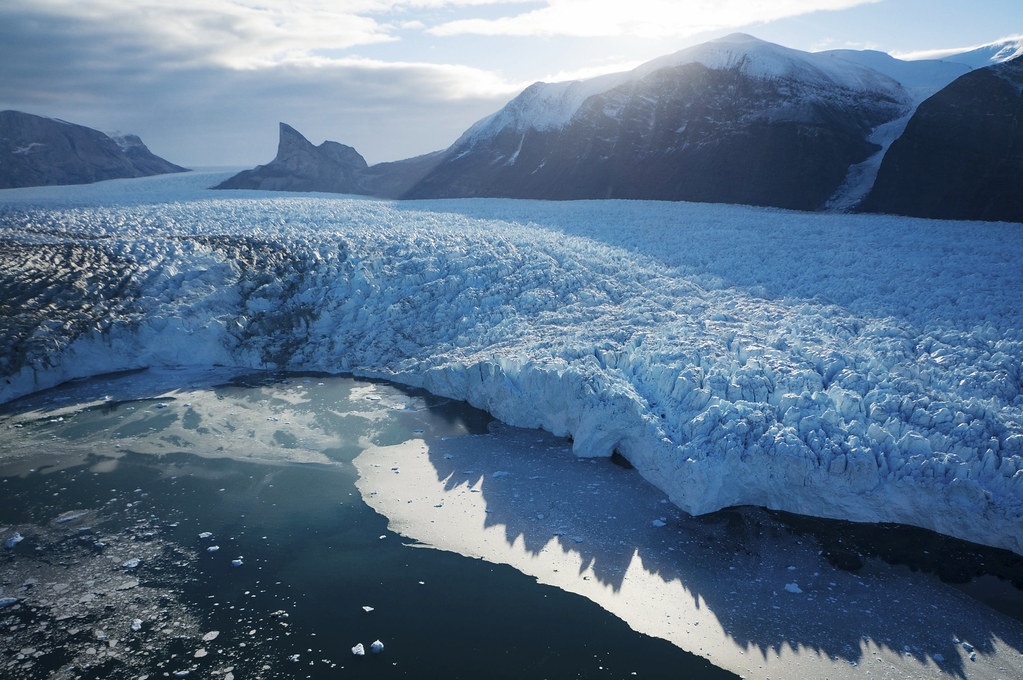
Canada, Who Will Stand On Guard For Thee?
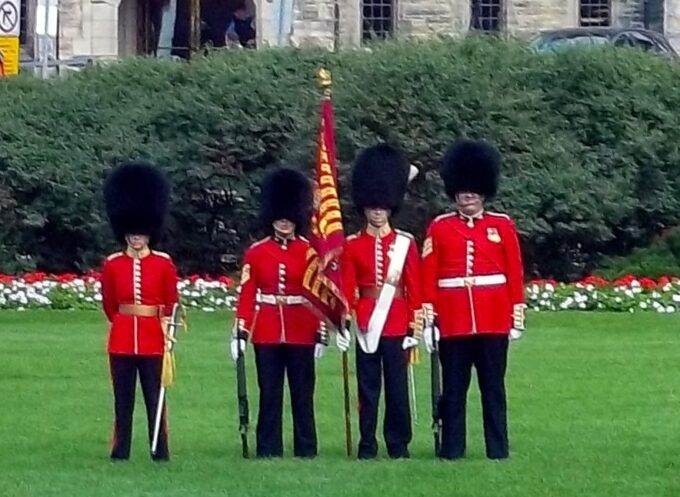
Photograph Source: mark.watmough – CC BY 2.0
The melodic Canadian national anthem proclaims that its sons and daughters “stand on guard for thee”. Well, now is the time as Canada faces insults, lies and threats from Trump. The idea that the US would annex Canada and make it one of its states, has provoked palpable indignation among Canadian people, Indigenous and non-indigenous. Ironically, Canada which celebrates its ‘special relationship’ with the USA, has been thrust into the category of nations vilified by the US: the long-standing animosity towards Cuba, Venezuela, and Nicaragua remains, but now Trump has added US allies Canada, Panama, Denmark (EU), and Colombia. One can only wonder who’s next.
Canadian spokespersons deny these outrages but at the same time add with a bit of a whine: “but, but, we are your best friends!” To its detriment, Canada has long ignored Henry Kissinger, well-known former US Secretary of State, who declared that the US has no friends, only interests.
It has been a rude awakening for all Canadians especially its elites. Suddenly, they are mentioning “Canadian sovereignty”, a concept that it seemed only the Quebecois and indigenous peoples understood. Certainly, sovereignty is a concept that Canadian governments have often willfully ignored or belittled with respect to other countries such as Venezuela, Nicaragua, Cuba, Haiti, among others.
Unlike his father Pierre, who was a Canadian nationalist, in 2017 Trudeau the younger astonishingly expressed the view that Canada is a “post-national” country and that “there is no core identity, no mainstream in Canada”.
This would not have been acceptable to the working classes in towns, cities, farms, factories, logging camps, fishing towns, throughout the country where the Maple Leaf flag flies proudly, had Trudeau’s concept been actually discussed in participation with the people of Canada. It was a sheer urban elitist commentary. An example of how far the Canadian political elites especially, have problems listening to their own people. In fact, the real defense of Canada will lie as it always has done, in the hands of its working and middle classes, and ironically, with the indigenous peoples, and their pressure and votes upon the political elites. Unlike in the US, there is in Canada a working Parliament where, despite lobbyists, votes do count, and not vast fortunes of the billionaires.
Trudeau is an ideological product of the financial and commercial elites that embraced globalization and the US empire, wanting to “play with the big boys”. After the II World War, Canadian political and cultural elites basically decided to join US imperial capitalism. In the 1960s. the Canadian intellectual, George Grant, railed against this situation mourning what he felt was the end of Canada as an independent state as the ruling class looked to the US for its final authority in politics and culture. (George Grant, “Lament for a nation, the defeat of Canadian nationalism”1965) Through the years, the US has attempted repeatedly to dominate Canada over lumber, water, fishing rights and other trade issues.
Although there have been almost constant US/Canada trade disagreements that federal and provincial officials have had to contend with, at another level Canadian elites threw their hat and their county, into the hands of the US empire that was consolidating south of their borders. So, they send their children to Ivy League universities, approve of mergers with US corporations, and take vacations in Florida. Canadian media increasingly relies on USA outlets such as Reuters and Associated Press, for much of its news, and most significantly, Canada backs the US in almost every vote at the UN and backs US foreign policy, whether it be a sensible one or an irresponsible regime change adventure. There were exceptions with two Liberal Prime Ministers who withstood tremendous US pressure: Pierre Trudeau who refused to break relations with China or Cuba during the Cold War and Jean Chretien who refused to join the US invasion of Iraq.
The US has, to a certain extent, already “invaded” Canada in a back handed, quiet, sort of way. The symbol of US “takeover” is plainly visible in Ottawa, where the enormous, ugly, US fortress-like embassy was planted in the middle of the nation’s capital, like a giant carbuncle proclaiming: “we are a permanent feature of your nation”.
It is surprising, especially to many of us in Canada of Latin American origin, how unconcerned most Canadians have been about the encroaching US influence in its political and cultural life. A great scandal was whipped up when there were accusations of China influencing Canadian politics, but when US ambassadors publicly weigh-in with their opinions, nobody bats an eye.”
As to the Canadian military establishment, it has long been integrated to a great degree with that of the US. Rory Philip Garnice of Michigan University, examining the direct and indirect US influence on Canada, states that, “During the course of the 20th century, American influence has pervaded all areas of the Canadian military and defense policy, up to and including border defense, national security, and international obligations
The way the US has influenced Canadian government policies can be viewed as “unanticipated militarism”, as Morris Janowitz coined it, whereby a gradual acceptance of policies that do not always coincide with the government’s own assessments.
The problem of course, is not so much the unequal power in the relationship between the nations, which happens all the time between trading nations, but its exclusivity. When Canadians talk politically about “south of the border” it means exclusively the United States. Most of Canada’s trade is directed at the USA, not the world at large. Certainly, it has to do with the convenient geographical location, but this concentration of trade has placed Canada in a most dependent position. For a nation that supposedly espoused globalization, the globe seemed very circumscribed to its immediate south, not even Europe as before.
There appears to be a veritable blind spot toward the other half of the hemisphere: Latin America and the Caribbean. These areas seem to exist in the Canadian imagination only in so far as their beaches and cerveza could be enjoyed; not as real, substantial political, cultural, and trade partners. Except lately, and quite neglected by Canadian media, when Canada did some imperial “housekeeping” for the US overthrowing the government in Haiti, (see: https://yvesengler.com/category/haiti/) and with the Lima Group and its attempts to overthrow the legitimate Venezuelan government by rounding up regional right-wing governments to help in the “regime change” policy of the United States.
It was not always so. In 1921 Canada had a full plan of defense against the USA and between 1939-1951, “The primary preoccupation of military intelligence and planning was in response to an attack by the United States.” ( See: Yves Engler, Canada’s Military Spending”, counterpunch, 10 Jan 2025) Times changed after the second World War. A “defense” plan was concocted together with the only country that can realistically invade Canada: the USA. Hundreds of treaties and accords were signed between the two countries, allowing Canada into NORAD to be counted with the big boys. (Yves Engler, op cit) The word “sovereignty” was essentially absent from political discourse. The elite became partners of the empire, turning Canada into a sort of “branch plant of US capitalism”. Canada abandoned a “middle power strategy” of the Cold War period and peacekeeping and shifted to aligning itself to US militarism, and priorities of hegemonic power. (Jerome Klassen, “Joining Empire”, U of T, 2014)
Economically, this meant that commercial elites did not exert themselves much to buy and sell to the rest of the world. Rather they entrusted the bulk of Canada’s economic fortunes to the US market almost exclusively, it being so close and so accessible. And the NAFTA/USMCA trade deal with US and Mexico consolidated those ties.
Canada’s multiculturalism is a source of cultural enrichment as well as labour necessity. Although unfortunately, the far right since then has tried its best to malign multiculturalism, the fact remains that Canada has added to its British, French and Indigenous roots, the cultural and social benefits of a diverse, cosmopolitan population. Even though officially little effort has been given to “nation building”, except in Quebec, i.e. actively promoting the sense and essence of shared fellowship, this has not stopped a fierce loyalty to Canada, not just among those born there, but also and perhaps especially, by those who have found a new haven and welcoming home. And since “The wealthy rarely maintain their nationalism when it is in conflict with the economic drive of the day”, the elite thus became basically anti-nationalistic, more than that, anti-national. (See: George Grant, “Lament for a nation, the defeat of Canadian nationalism”, 1965).
Until Trump.
Now it must be said, peace is a definite, indisputable, social and moral good, and peace between such adjacent neighbors as the USA and Canada is without a doubt something that should be treasured. But it needs to be supported by both parties. Well intentioned, but ineffective UK Prime Minister Neville Chamberlain found out too soon that there is no appeasing a bully and today, the US is governed by a bully and his cabal of self-serving billionaires. To Canadian dismay the erstwhile “nice neighbour” has morphed into a monstrous plutocracy.
Trump has threatened not just economic war with a 25% tariff on all Canadian goods, but also actual annexation. He insulted the prime minister of Canada calling him “a governor” and Canada a state, and his sidekick Musk called him “girl”. He wrongly accuses Canada of “robbing” the US because they (population of +300 m) buy more from Canada (population 40 m) than Canada buys from them. It’s called trade, not robbery, but this subtleness escapes Trump’s understanding. He does not know the real significance of a trade imbalance and has not figured out that his own population would have to pay the tariffs. He ignores the closeness of both country’s armed forces, the unique support Canada gave the US on 9/11 and ignores that most of the US energy imports come from Canada.
In typically Canadian fashion, Trudeau hurried to assure Trump that Canada was the US’s best friend, but Trump took this as a sign of weakness and submission. Since ‘being nice’ did not work, Justin Trudeau asserted that, “there is not a snowball’s chance in hell” that Canada could be annexed by the USA, which is quite true. He has also threatened to stop Canadian oil, gas and electricity to flow to the US. President Claudia Sheinbaum of Mexico and the king of Denmark did not try “nice”; both immediately, in no uncertain terms, rebuffed and rebuked Trump’s insulting proposals regarding their countries. As for Trump’s threat to take over the Panama Canal, it has caused indignation not just in Panama, but has widely united Latin America and the Caribbean, regardless of ideologies, against Trump’s annexation ambitions. As well, his demeaning treatment of the Latin American migrants he is deporting in handcuffs and chains on military planes has united the region against the USA.
Trump is stomping on US key allies. So, what should Canada do these next 4 years of the Trump presidency now that this farce of being the US’s best friend has ended?
I have two recommendations:
First: Canada should take a good look at the disastrous example of the captain of the Titanic. After hitting an iceberg, the captain did nothing but wait to be rescued; a rescue that did not come fast enough. (https://www.history.com/news/titanic-captain-edward-smith-final-hours-death) His big mistake was to think there was no alternative. Yet he had resources, expertise and manpower at his fingertips. He had carpenters, engineers, plenty of manpower; he had resources of all sorts: wood, tools, chairs, furniture that could be turned into rafts and boats; he had all sorts of floatable objects; he had warm clothing and plenty of food to distribute. He could have tried to block the incoming water; he could have built the missing lifeboats and rafts. He even could have transported people onto the gigantic iceberg or anchored makeshift lifeboats onto it. The ship may have sunk anyway but he could have saved many lives.
Instead of thinking that the sky will fall on the Canadian economy if Trump imposes a 25% tax on its goods, we should realize that a 25% tariff on Canadian goods is not enough to bankrupt resource rich Canada. It may do some damage, but it will not come close to destroying the economy as Trump threatens. Canada should examine what its assets are and what alternatives it has. Canada is one of the most resource rich countries in the world: it has immense natural resources (wood, oil, gas, minerals, agriculture, manufacturing capacity), immense human resources with a highly educated and skilled population due to its superb public education system, telecommunications industry, stable government and social peace federally and provincially. There is an entire world out there of markets to buy and sell to with nations that have no design on Canada’s sovereignty and with whom it can develop a more sustainable and less dependent economy.
Second: Canada should humbly realize that it can learn from a country very far south of it: Venezuela. For Venezuela, a 25% tariff on its goods would have been a light slap on the wrists. Instead, this country -that is no threat to USA nor any other country- has been criminalized, demonized and excluded from the international financial system, by more than 1000 illegal sanctions thrust upon it.
Venezuela has the misfortune of having the largest oil reserves in the world which the US covets. Therefore, under false excuses about defending democracy, the US imposed illegal economic sanctions and an economic and financial blockade that are far reaching, malicious and a crime against humanity as UN human rights raconteurs have decried. ( Alfred de Zayas https://www.counterpunch.org/2022/03/18/economic-sanctions-kill/; Alina Douhan: https://www.cnn.com/2021/02/12/world/us-venezuela-sanctions-alina-douhan-intl/index.html)
The country was barred from the international financial system by being denied access to SWIFT, all its assets in foreign banks (7 billion $) were stolen, its assets at the IMF stolen (5 billion $, its CITGO oil company stolen (10 billion $), and its 31 tons of gold in the Bank of England stolen (2 billion $). Venezuela was prevented from buying and selling on the international market; it could not produce nor sell its oil; it could not buy food nor medicines, and even during the pandemic COVID vaccines were denied it. The government’s income was reduced by 95% and Venezuela’s GDP suffered the greatest drop by any country even in war time. In the last 7 years the blockade and sanctions have cost the nation a total of $642 billion. (Yvan Gil, Ultimas Noticias, 16 Sept. 2024) An estimated 100,000 Venezuelans have died as a direct result of the inhuman US sanctions that were fully backed by Canada and the EU. (https://www.counterpunch.org/2022/03/18/economic-sanctions-kill/)
This was a catastrophic situation, driving many to leave the country, and yet the economy did not collapse, there was no famine, the government did not fall. Today, in 2025, Venezuela has risen from the ashes like the Phoenix. The government of Venezuela, led by President Nicolas Maduro, looked at its resources and alternatives. It developed strategies to diversity the economy, promote its agriculture, export other natural resources, promote domestic manufacturing and commerce, and open other international markets for its products. It was helped by the solidarity and support it received in aid and loans from allies such as China, Russia, India, Iran, and many others, and it survived and eliminated hyperinflation. The Venezuelan government was joined in this patriotic economic endeavour by millions of Venezuelans organized in many grassroots organizations including communes as well as private enterprises that helped withstand the sanctions. Venezuela now has the fastest growing GDP in the region – according to Credit Suisse it is at 8% per year and rising, exceeding even the government’s expectations. (Roger Harris, “How Venezuela is Overcoming the United States Blockade”, Popular Resistance, 27 June, 2024 https://popularresistance.org/how-venezuela-is-overcoming-the-united-states-blockade/.
Venezuela is now virtually self-sufficient in food. It delivered more 132 million food boxes in 2024 alone. It has[PV1] built about 5 million housing units in the past 7 years, and during COVID had one of the lowest death rates in the entire continent. [1] (https://mazo4f.com/venezuela-presenta-el-menor-numero-de-infectados-y-muertos-diarios-por-covid-19-en-america; https://www.telesurtv.net/datafactory/covid/es/venezuela.html; https://cotejo.info/2020/09/diosdado-muertes-xmillon-hab/)
Venezuela looked at the wide world beyond the United States, which had been practically its only oil buyer in the past and survived. The USA, Canada and their allies failed to isolate it diplomatically or economically. And its population according to consistent polls, has a positive, optimistic outlook of their future. https://www.instagram.com/hinterlacesnet/reel/C_yXgm8sKMo/
In mid-December of 1999 Venezuela suffered a very unusual natural weather event: for three days a rain cloud remained stationary over a large part of its coast. Torrential rains saturated the land provoking fearsome floods and landslides, killing perhaps up to 30,000 people. Hugo Chávez had just won the presidential elections that month and with a very inexperienced new government had to contend with this terrible emergency. President Chávez, a military man, was able to command soldiers and military experts to help with the situation with expediency. But it was a huge task.
The United States offered soldiers and bulldozers; Cuba offered physicians. President Chávez declined the US offer and accepted the Cuban doctors. The oligarchy was enraged, but he simply explained: they had sufficient soldiers and bulldozers could not be used because the land was too slippery and there were still buried people; but there was a stark need for experienced doctors. Venezuela’s existing private health care system was incapable of dealing with the emergency. (Today the public health care covers about 90% of the population, for free.) However, Chávez also suspected a Trojan Horse: that once US soldiers entered, it would be very hard to get them to leave.
This is the type of precaution, or suspicion if you like, that comes from a knowledge of the long history of US and Latin American/ Caribbean relationships which,
“…the most important lesson taught by the history of the United States in Latin America: democracy, social and economic justice, and political liberalization have never been achieved through an embrace of empire but rather through resistance to its commands.” (G. Grandin, “Empire’s Workshop”, p.222, 2006)
Hugo Chávez was for many years a history professor at the Venezuelan Military Academy and he knew and understood its lessons.
Canada does not have to resign itself to almost complete reliance on the US economy. Its diverse and highly educated and well-trained population can flourish without being so dependent on the US. Why tie Canada to a nation that betrays trust, and is in decline which those who voted to its highest office a convicted felon and sexual predator cannot yet see? The US has debilitating social divisions due to stark inequality, rampant racism and crime, has dangerous underfunded infrastructure, and its working class is hobbled by lack of social security and health services and antagonism towards its unions. It would seem to be contrary to Canadian self-interest to persist in a policy of adhering itself entirely to US hegemonic goals. This is demonstrating to be counter-productive and harmful to the welfare, and even existence of the Canadian state.
The political structure of the Canadian parliamentary system is not in crisis, billionaires do not own it, and the legitimacy of its political institutions are not in question despite problems and challenges. The planet needs a Canada that does not deny climate change and can add its expertise in confronting the many environmental problems the world faces. Canada can begin now to set a course toward other international markets and allies, to sell Canadian goods and services and buy what is needed, to diversify its economy and make it more sustainable and equitable. It could also bolster its governance by reforming its first-past-the-post electoral system. There is every indication that it will remain an open society that aspires to justice and equality, even in the face of setbacks and obstacles.
My hope is that the good Canadian working people will demand backbone and creativity from our leaders and make them really look at the hemisphere that Canada is part of, respect the sovereignty of all Latin American and Caribbean nations, be a better neighbour to them, and stop doing the US’s dirty work in the region. Canada should not look to its immediate, unfriendly and exploitative southern neighbor for lessons in well-being or prosperity.
Maybe, under the heavy load of incompetent leadership, the US will at last discover that it can learn from other nations and help build a world of mutual support rather than division and conflict.