Wednesday, February 05, 2025


The meaning of Trumpism for Mexico and the world


Published 

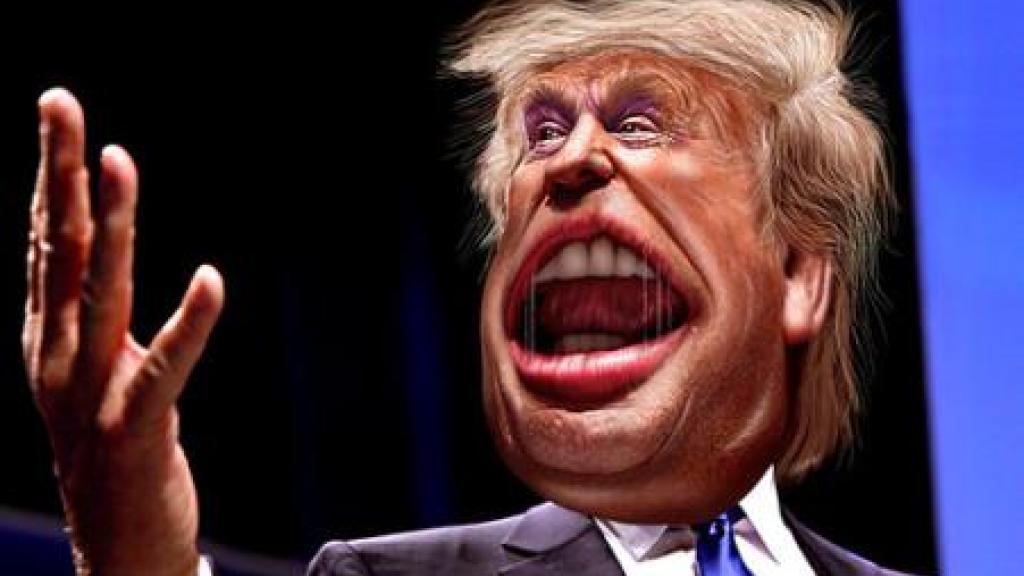
Donald Trump caricature by Donkey Hotey CC-BY-2.0

First published at Solidarity (US).

Donald Trump’s second victory in the 2024 U.S. presidential elections, with more social and legislative power and experience than his first presidency from 2017 to 2021, is a political milestone that has shaken the world because of what the arrival of such a reactionary, toxic and malignant character to the White House in Washington represents for the world — and specifically for Mexico, the direct southern neighbor of the North American power.

Trump proclaimed that his MAGA movement (Make America Great Again) was the beginning of a new US, the beginning of the US’s “golden years.” What has happened in the US? How has the American power elite changed? Where is the US going?

Democratic defeat

Trump’s victory represents, first and foremost, a colossal defeat for the Democratic Party, which many polls considered could hold on to power with its candidate Kamala Harris. In fact it was crushed more than electorally, above all politically, not only in the peculiar and anachronistic Electoral College that decides the results of presidential elections in the US but, for the first time in 20 years, even in the popular vote.

There are numerous facts that make Trump’s second coming to power a representative case of powerful political changes whose consequences are visible and very worrying for a complex and already very dangerous world situation.

The pro-Trump vote cut across all social sectors, from the traditional white working class who turned their backs on the Democrats, to large sections of the Hispanic population (including those of Mexican origin) and inroads among Asian and even Black communities. Women who might have been expected to support Kamala abstained in large numbers and many voted for Trump.

An explanation of these events is vital in order to gauge as precisely as possible what has happened and what the outlook is. The complex and contradictory nature of this situation has led to a flood of information and interpretations.

Let’s start by explaining the causes of the Trumpist Republican victory. Everything indicates that the main one is in the economy, specifically in the inflationary explosion that began in 2022 as a consequence of the Biden administration’s measures to quickly bring about the economic recovery that was needed to overcome the depression caused by the ravages of the Covid epidemic.

In fact, the result of these measures was contradictory because the U.S. economy did indeed recover with great success, expressed above all in the extraordinary profits of powerful capitalist sectors. Further, this recovery coincided with the two wars that broke out during the Democratic administration of Biden, in Ukraine and the genocidal Zionist offensive of the Netanyahu government against the people of Gaza and other places in Palestine.

These wars required huge amounts of weaponry. The resulting spectacular economic boom in the key military-industrial complex of the U.S. economy also had inflationary effects. The resulting high cost of living hit the working population hard.

The punishment of the Biden administration was expressed in various ways. For example, the vote for Harris was lower than that obtained by Biden four years earlier, showing higher than traditional abstention, and the Democrats lost in key states they had were previously won, such as Arizona, Georgia and Pennsylvania, among others.

The harshness with which the Democratic government navigated the four years of Biden’s presidency also played a notable role, and the astute manipulator of popular sentiment that is Trump took great advantage of it. The actions initiated against Trump for his numerous violations, both criminal and political, especially his participation in the coup staged by his supporters in January 2021 in the Capitol in Washington to prevent the proclamation of Biden’s victory, was turned by the orange tycoon into a spectacle in which he was the victim of a “witch hunt.”

The way in which the liberal establishment dealt with the two wars that broke out in Ukraine and Palestine exposed their blatant hypocrisy. The onslaught against Putin, the Russian invader of Ukraine, was paralleled by absolute support for the genocide of the Zionist government of Israel against the Palestinian people, painting Putin as a sinister gangster figure and Biden embracing Netanyahu in Tel Aviv.

The grotesque spectacle certainly weighed on the Democratic defeat and was evident in the wave of protests against Washington’s support for the Israeli government at many American universities. In this situation, where did “truth,” human rights, pluralism, democracy and reasoned dialogue lie? This blatant cynicism did not pass the test in November 2024.

The orange gale

At his inauguration ceremonies as the new tenant of the White House, Trump presented the most over-the-top version of himself, just as he had shown in his campaign. It was in his speeches, starting with his main address, that he expressed his political positions… up to that moment.

He spared no fierce criticism of the administration of Biden, who listened to him with contrition. Tactically, he did not talk about the wars in which the U.S. government is currently intervening decisively, albeit indirectly. Instead, he referred at length to what he called “the invasion” of immigrants treated as criminals who are infiltrating through the southern border with Mexico, endangering U.S. security, for which he has immediately militarized it with thousands of soldiers.

His arrogance made it clear that all the previous and subsequent statements he has made about buying Greenland, reclaiming the Panama Canal, annexing Canada as a new state of the American Union, changing the name of the Gulf of Mexico to the Gulf of America, and imposing high tariffs on imported goods were not just provocations but are the expression of a prevailing situation which is also marked by struggles within U.S. ruling groups.

Trump immediately set about issuing “decrees” for immediate execution:

  • banning the right to citizenship by birth for the children of undocumented immigrants
  • cancelling the so-called CPOB Plan that scheduled appointments for thousands of immigrants who wish to enter legally and who are now staying in Mexico
  • a general pardon for more than 1500 defendants, many of them already in prison, for participating in the occupation of the Capitol to prevent the proclamation of Biden’s victory in January 2021
  • U.S. withdrawal from the Paris Climate Accords and the World Health Organization

The cruelty of many of these measures is evident. They are directed against five million fellow citizens and as many more from the Caribbean, Central and South America, and even against immigrants from Asia and Africa. The authoritarian unilateralism of these measures was immediately expressed in the renewal, without any consultation with the Mexican government, of the Remain in Mexico Plan repealed by Biden.

The discussion about the viability of Trump’s stated goals of expelling millions of undocumented immigrants is ongoing, as are the reactions of the workers themselves who are under threat. However, whatever the practical development of these measures, one thing is already certain: much damage, pain and suffering will be the reality for tens of thousands of workers and their families.

In Chicago, for example, there has already been a demonstration against these anti-human and anti-democratic measures. “We have been working here for 40 years and we are not leaving,” many millions of immigrant workers are already saying, and others will soon say the same as the fear of the announced repression, persecuting all immigrants in churches, in shelters, in workplaces, is transformed into resistance and a fighting spirit.

For Mexico the challenge is great for many reasons. The situation that may arise in the northern border region, with those expelled and the caravans of those who want to cross, will not be easy to manage. A possible decrease in remittances will also affect thousands of families who depend on them for their subsistence. Embryonic chaotic situations will be inevitable.

The policy during president Andres Manuel Lopez Obrador’s government from the beginning in 2019 was to agree to collaborate with the U.S. Border Patrol in controlling the flow of immigrants entering through Mexico’s southern border, preventing them from reaching the north. Thousands of national guards were sent by AMLO to contain the flow. How will President Claudia Sheinbaum react?

The threats to Mexico

As was evident in the same central speech of the inauguration on January 20th, Trump considers Mexico as one of the fundamental spaces in which to deploy his toxic policies. There are two areas in which Trump’s threats represent a real danger: the economy and security.

The previously renegotiated U.S.-Canada-Mexico trade agreement will be brought up for discussion by Trump’s decision to raise tariffs on imports into his country. Since last year, Mexico has become the US’s main trading partner, so it is clear that the challenge for the Mexican government and companies that do business with U.S. companies is enormous.

Many things will depend on the agreements or disagreements that arise. Trump believes that in his fierce commercial competition with China, surveillance of the southern border with Mexico is fundamental. The Mexican government has begun to react and has closed busy Chinese shopping centers.

But it is in the area of security where the most delicate situation has arisen, with the potential for tough and dangerous confrontations. This is the executive order in which Trump declares the Mexican cartels Foreign Terrorist Organizations that represent a danger to US national security, controlling huge territories of Mexico and acting as de facto governments in them.

The order signed by Trump on January 20 set a maximum period of 14 days for the State Department, after consulting with the Justice and Treasury Departments, and the Intelligence Directorate, to recommend whether the cartels should be designated as such organizations. For the purposes of the aforementioned order, these cartels work with China as fentanyl distributors.

It is a threat to national sovereignty because the interpretation of this type of law allows for U.S. intervention anywhere in the world where such organizations operate. Such is his concern that Trump resorted to invoking an Act Against Foreign Enemies issued in Washington in 1798, more than two centuries ago!

This type of law is broad in its application, aimed at punishing any physical or moral entity that has relations of any kind, from financial to personal for example, with the cartels. Today, the Trump administration’s relationship with the cartels will be very different from that of AMLO’s six-year term, both with Trump’s first term and later with Biden.

In fact, it was in the latter’s last term that these relations underwent an abrupt change with the arrest of Mayo Zambada in Sinaloa as a result of an operation in which U.S. law enforcement agencies clearly intervened.

The situation is serious because the interpretation of this law can affect the “hugs not bullets” treatment that the cartels received throughout the six-year term of the AMLO government. The result, which was not at all positive, was that there was indeed no policy of fighting the criminals (“hugs”), but the “bullets” did not stop — and at the end of AMLO’s government the murders of the cartels exceeded the numbers under both the Calderón and Peña Nieto administrations.

The contest for world domination

The colossal transformations that have taken place in the world over the last three decades, let’s say since the fall of the Soviet Union, the restoration of capitalism in the vast territories that made up the Soviet Union, but above all this restoration in the People’s Republic of China, have culminated in the emergence of two main blocs, one led by the US and the other by China, with their respective satellite allies. The hegemony of the US as the dominant central pole of imperialist-capitalist globalization, exercised for more than a century, came to an end.

During the Cold War era of 1945-1991 the challenge of the Soviet bloc was above all political and ideological rather than economic, because these countries in transition between capitalism and socialism were not integrated into the capitalist world market. But the latter of course influenced them, largely causing their failure as was demonstrated precisely by the capitalist restorations that took place in most of them.

The US more than maintained its dominance until the new situation, emerging in the wake of the 2008 financial crisis, made it clear that China, together with Russia, was successfully starting to compete economically in world markets. U.S. world domination was clearly maintained in the military sphere with its army and its control over the production of the Pentagon’s military-industrial complex, which accounts for half of the world’s arms.

But the United States was beginning to lag behind China in technological and industrial production. Although financially the dollar was still the unchallenged universal monetary equivalent, powerful sectors in the United States realized that China had become a real rival in the struggle for world domination.

This new situation began to be a matter of discussion and the emergence of currents within the two hegemonic ruling parties of the U.S. imperialist class. But it has been in the Republican Party where this current of thought has emerged, which considers that the US must react to China with determination and force to prevent it from snatching U.S. dominance of the world.

This situation became evident already in Trump’s first term in office, and is being corroborated today at the beginning of his second term. The not very transparent plans that have emerged in economic matters speak of a protectionist thread that is at the heart of his vision in this respect.

Trump is a man of the U.S. oil lobby. Extractivism and contempt for issues of environmental care, as well as those of health, are present.

But this protectionist thread is most evident in his vision of economic renewal. An outstanding fact that clearly points to the direction of Trumpian strategic initiatives is his aim to strengthen the fundamental and powerful core of the industrial-technological complex, in which U.S. hegemony is almost total — a decision that has been very well received by most of the companies that have changed their previous preferences for the Democratic Party and have moved closer to Trump.

Apple, Microsoft, Alphabet (Google), Amazon, Oracle and Meta (Facebook) are all American and leaders in their fields. Just two days after his inauguration he met with the heads of a project called Stargate, which focuses on the development of Artificial Intelligence (AI) led by Softbank, owned by Japanese magnate Masayoshi Son, and involving Oracle and OpenAI.

They stated that their initial investment is 100 billion dollars, which they consider will reach 500 billion dollars in the coming years. They also said that they would not have started such a project if the Democrats had won the elections.

And what can be said about the exhibitionist presence of Elon Musk at the inauguration ceremonies, next to the president, boasting of his closeness to power — he, the richest man in the world who, flaunting his arrogance without shame, gives the Nazi salute, showing with his mere presence who the orange man really represents?

Twenty-first century anti-imperialism

Four days after Trump’s inauguration, the global shock he has caused is still raging. In Mexico, a country directly affected by what he does and does not do in his presidency, the strategic position of those of us who are fighting for a new Mexico and a new world will be to assert our democratic, socialist, libertarian, feminist and internationalist program.

Our anti-imperialism is anti-capitalist, it is internationalist because it fights and will fight with the millions of Mexicans and other immigrants threatened in the US, and we demand humane and dignified treatment by the Mexican government of the men and women who will arrive in our country expelled from the US. Because they are workers, because only united here and with them across the border in a single struggle, will we be able to overcome and win the hard class battles that are to come.

In the face of direct threats to intervene directly with their police and military agencies in Mexican territory, we call for a United Front to defend ourselves together against imperialist aggression with all those who fight against possible intervention. We, the Mexican workers, will be in charge of cleaning the country of the scum and evil that the hypocritical policy of the bourgeois governments has allowed to strengthen and expand organized crime.

We will be struggling together with all those who oppose Trump and his agents, above parties and ideologies but maintaining our political and ideological independence, especially with respect to the current Mexican government which, like the previous ones of the PRI, the PAN, the PRIAN and AMLO, have been responsible for the situation in which we find ourselves with their conciliatory and complicit policies.

Manuel Aguilar Mora is the author of several books on Mexico’s social and political history. A veteran revolutionary left activist, he’s a member of the Socialist Unity League (LUS). This article is slightly edited for clarity from a machine translation of the Spanish text.

What Does US National Security Have To Do With Soaring Defense Spending?


Paraphrasing Thomas Jefferson, the natural progress of things is for prices to yield and for quality to gain ground.  Technology is what enables this natural progress.  Do televisions cost more now than they did in the early ‘90s?  What about mobile phones?  Same answer for both questions: both are better and less expensive today than they were in the early ‘90s, which is why one will conclude that something is awry when reading headlines like “Global Military Spending Has Almost Doubled Since the Early ‘90s.”

Why has military spending almost doubled since the early ‘90s?  Arguably for the same reason hospital services have: government intervention.  Those who ‘serve’ in government endlessly tax the present because they arrogantly claim to know what the future should be rather than allow the future to unfold via voluntary exchange between producers and consumers.  Against all reason and historical precedent, they claim that, in order to stay safe, ‘defense’ spending must increase.  But that’s like claiming that, in order for eggs to contain yolks, the cost of raising chickens must necessarily outpace the rate of inflation.

“But but but” the unthinking screech, “the world is much more dangerous today!”  Perhaps, but is warfare immune from technological advance?  No, as Jefferson’s actual quote helps explain: “The natural progress of things is for liberty to yield and government to gain ground.”  The world’s danger stems from governments’ interventions.  Wars aren’t cheap; governments don’t engage in them for fun.  The people would rather not fight, but instead of consulting with the people, governments conscript them.  Increased military spending is inversely proportional to market forces – the will of the people.

Military spending has almost doubled because the government that allegedly serves us trades our present liberty for its imagined, grotesque future.  Weapons manufacturing is one of the most regulated – if not the most regulated – industries in the “land of the free,” and that regulation paves the way for the most perverse incentive imaginable: though the maiming, killing, and destruction of “them” and their cities equates to the decimation of their economy, “our” business relies on it.

But work divided – not obliterated – is what enables the natural progress of things.  And when the number and duration of wars are unknown, and when that uncertainty is combined with the fact that war – at least its initial phase – is entirely devoid of market forces, weapons manufacturers can charge whatever they like, considering the governments that purchase their products spend their citizens’ money and not their own.  Governments have only what they’ve taken from the people they claim to serve, and they spend that money in the same way they obtained it: without consent.

There’s nothing natural about military spending nearly doubling; it’s a choice, just like inflation.  But these are not choices freely made by citizens; they’re choices imposed on citizens by those who claim to serve citizens.  Where citizens do have a choice, however, is whether to enlist, but increasingly more patriots have decided to abstain from military enlistment.  Why, then, would military spending increase while the number of those ‘serving’ decreases?  Because, again, military spending is not the product of billions of freely transacting individuals but of a handful who claim with a straight face that they know better than the billions engaging in voluntary exchange (the global economy).

“That’s just the way things are” is what the parasites hope you’ll keep chanting, but that song is better ascribed to things subjected to market forces.  “This is the way things will be” is why global military spending has doubled and will continue to increase.  As long as the government—not the people – decides which weapons will be purchased and which wars will be funded, the people will continue to fund the increasingly expensive suffering of others worldwide for the benefit of their governments.

This first appeared on RealClearMarkets.

Casey Carlisle writes in the Pacific Northwest.


Russia, Iran, and the Caucasian Chalk Circle


Reprinted from the American Committee for US-Russia Accord.

It was only a few weeks ago that Russian President Vladimir V. Putin and Iranian President Masoud Pezeshkian met to ink the historic Russo-Iranian Treaty on Comprehensive Strategic Partnership.  The pact itself was a milestone, so much so that commentators around the world are still widely discussing its implications.  Perhaps one of the most striking elements of the treaty is the major focus on Eurasia.  Although Western analysts tend to focus on Russo-Iranian cooperation in the Middle East, the treaty indicates that Eurasia is of even more immediate geopolitical significance to both Moscow and Tehran.  To historians and long-time observers of Iran and Russia, this is hardly a surprise.  The Eurasian region – that is, the Caucasus, Central Asia, and the Caspian Sea – forms an integral part of the common Russo-Iranian neighborhood.

For the security of both countries, the Caucasus region in particular is especially critical. Defined by its protective mountainous geography and central location between the Black and Caspian seas, the area has long played a major role in the security architecture of both Russia and Iran.  This major geostrategic significance has certainly not been lost on the current Russian leadership, and President Putin in particular.  From the defeat of Islamist terrorists in Chechnya to the success of the 2014 Winter Olympics in Sochi, the Caucasus has always held an especially important place in Moscow’s geopolitical outlook. Sochi in particular has served as a standard for Russian revival following the freefall of the Yeltsin years.  The region is no less significant to Iran and has always served as a critical security and commercial link for successive Iranian leaders, dating back to the age of Cyrus the Great and his Achaemenid Empire. In this regard, President Pezeshkian’s native Iranian Azerbaijan played a particularly vital role in facilitating Iran’s historic connections with the Caucasus, linking the area to the great trade routes of the Persian Gulf, the Indian Ocean, and the Silk Road.

Thus, it is hardly a surprise that the Caucasus continues to be a major strategic priority for both Moscow and Tehran.  For the Kremlin, its importance is second only to Ukraine and has been amplified at a time when Western political leaders have called for a “strategic defeat” of Russia.  Especially important for both Tehran and Moscow are the three independent former Soviet republics of the South Caucasus, or Transcaucasia – Georgia, Armenia, and Azerbaijan. These countries have been of particular interest to war hawks, neoconservative intellectuals, and big energy interests in Washington and London for decades. All of these groups hold an especially strong desire to realize a Trans-Caspian gas pipeline. The aim is to use the Caucasus as a bridgehead to access the energy riches of post-Soviet Central Asia, as a means of “containing” Russia, Iran, and ultimately, China.  Israel – and especially the hard-right of the Israeli political elite – has likewise long held interests in the region, with an eye toward using post-Soviet Azerbaijan as an instrument against Iran’s territorial integrity.  Baku regularly receives generous military aid from Tel Aviv in exchange for sending oil to Israel, all while keeping conspicuously mum on the atrocities against Palestinian civilians in Gaza.  Azerbaijan’s closest ally, Turkey, is another major player interested in weakening Russian and Iranian influence in Caucasia. In fact, NATO has delegated to Ankara the task of projecting Western influence into the region, given that Turkey is the one alliance member in closest proximity to the Caucasus.  Ankara pursues this task alongside its own interests, which nevertheless correspond with those of NATO.

From Tbilisi to Yerevan

In the current geopolitical configuration, the one country in the Caucasus that is quickly emerging as the most reliable for both Moscow and Tehran is, perhaps surprisingly, Georgia.  Once upon a time, Georgia, under its erstwhile president Mikheil “Misha” Saakashvili, was the darling of the American neoconservative movement.  This love affair reached its peak in 2008, when the Bush administration encouraged the bungling Misha into a failed crusade against the breakaway region of South Ossetia.  In the end, Saakashvili was handed a resounding defeat, first by Russia in the 2008 war, and then by the Georgian people in 2012, with the ascendancy of Bidzina Ivanishvili’s Georgian Dream party.  Although Tbilisi today still officially voices aspirations for NATO and the EU, it has de facto diversified its foreign policy, maximizing Georgian independence by opening up the country to greater cooperation with Russia, Iran, and, most significantly, China. An attempted Western-backed “Maidan” in Tbilisi ended in failure in 2024 and only brought Georgia closer to Moscow and Tehran. Nevertheless, full reconciliation between Tbilisi and Moscow has yet to be achieved, and Georgia’s conflicts with the breakaway regions of Abkhazia and South Ossetia remain unresolved.

Moscow and Tehran face much greater challenges in their relations with Armenia and Azerbaijan. A member of the Russian-led Eurasian Economic Union (EAEU), Armenia once served as the unquestioned bedrock of the geopolitical security architecture for both Russia and Iran in the Caucasus.  However, since his arrival in office, Armenian Prime Minister Nikol Pashinyan has actively worked to undermine this historical position.  Pashinyan came to power in what was effectively an NGO-instigated “color revolution” in 2018, just as the incumbent Armenian President Serzh Sargsyan began implementing a plan of military modernization. Although Pashinyan and his team insisted that their “revolution” had “no geopolitical context,” they have actively worked to undermine Armenia’s national security architecture ever since.

Initially, the supposed “populist” Armenian PM took the rhetorical position of a hardline Armenian nationalist on the issue of Nagorno-Karabakh (Artsakh), a stance that later proved to be less than sincere.  His talking points served to endanger the Karabakh Armenians by provoking the 2020 war with Ilham Aliyev’s Azerbaijan.  At the same time, Pashinyan dismissed some of Armenia’s best military commanders and willfully ignored all warnings of an impending war from his own military, as well as from Russia and the CSTO. Pashinyan poorly managed the war itself, while Azerbaijan gained the upper hand, with extensive support from Turkey and NATO.  Had it not been for major Russian diplomatic pressure, Armenian Nagorno-Karabakh would have fallen completely to Azerbaijan already in November 2020.  However, as subsequent events have clearly shown, losing Nagorno-Karabakh was Pashinyan’s intention all along.

The resulting November statement of 2020 effectively “froze” the Karabakh conflict along new lines that were severely disadvantageous not only for Armenia, but also for Russia and Iran.  Russian peacekeepers, together with the Karabakh Armenian self-defense forces, were left in control of a dramatically weakened, amoeba-like Nagorno-Karabakh.  Lost to Azerbaijani control was the historic city of Shushi as well as the Hadrut district and a broad overland link to Armenia via the districts of Kelbajar and Lachin, leaving a single road – the Lachin corridor – as Nagorno-Karabakh’s sole lifeline to Yerevan.  Districts that Karabakh Armenian forces had controlled along the Iranian-Azerbaijani border were also lost, and Baku wasted no time in providing Israel access to these strategic areas overlooking Iran’s northern provinces. On the eve of the war in Ukraine in February 2022, Russia sought to dissuade Aliyev from provoking further clashes. However, no Russian concessions could stop Aliyev from his determined effort to undermine the tenuous peace.

For his part, the pro-Western Pashinyan was already eyeing the possibilities of using the new geopolitical outcomes of 2020 to push Russia and Iran out of the region. Almost too conveniently, Aliyev provided Pashinyan with the perfect excuse to fully “break” from the Russian embrace.  In September 2022, Azerbaijan launched an all-out attack on Armenia proper.  Given Russia’s focus on Ukraine, the response from Moscow and the CSTO could only be of a limited nature, but Pashinyan, being Pashinyan, took full advantage of these circumstances to blame Russia and the CSTO for “abandoning” Armenia.  Only one month later, the Armenian PM, with no consultation from Armenian voters or the Armenian public, moved to promptly recognize the entirety of Nagorno-Karabakh as part of Azerbaijan in the Prague statement of October 2022. Pashinyan’s unprecedented act of national betrayal enabled Aliyev’s subsequent blockade of Nagorno-Karabakh, culminating in Baku’s full ethnic cleansing of the Karabakh Armenian population in September 2023.  Conveniently for the Armenian PM, it also resulted in Baku’s arrest of major Karabakh Armenian political figures, including Pashinyan rival Ruben Vardanyan.

Since that time, Pashinyan has openly declared his intention to move Armenia toward the US and the EU. However, much like Saakashvili at the end of his tenure in Georgia, the Armenian PM has faced a series of opposition protests, including a recent movement led by an Archbishop of the Armenian Apostolic Church. Although Armenia has yet to reach its “Ivanishvili moment,” Pashinyan’s popularity has plummeted, and the vast majority of Armenians remain sympathetic to Russia and Iran. Thus, Pashinyan’s plot to pivot to the West has only further eroded his standing in Armenian society as social discontent continues to grow.  Most recently, the Armenian PM’s controversial remarks calling into question the 1915 Armenian Genocide have prompted strong rebukes and condemnations, both in Armenia and in the Armenian Diaspora.

Militarism, Chauvinism, Instability

In the larger regional view, the progressive weakening of Armenia under Pashinyan has led to a relative strengthening of the positions of NATO, Turkey, and Israel at Russian and Iranian expense.  Moreover, Aliyev’s ability to achieve successive “victories” by military aggression without any consequence makes the prospect of any lasting peace between the peoples of Armenia and Azerbaijan much more distant.  Virtually nobody in Armenia, aside from Pashinyan and his government, perceives Azerbaijan’s hostile takeover of Nagorno-Karabakh and its subsequent ethnic cleansing as a legitimate form of “conflict resolution.”  As far as the Azerbaijani government is concerned, the use of military force has been legitimized and is now perceived by Baku as preferable to dialogue and diplomacy.  Thus, rather than promoting peace in the Caucasus, the recent “victories” of Azerbaijan have only emboldened Baku to press its advantage, by laying claim to the strategic southern Armenian province of Syunik.  Even more ambitiously, official Baku has also laid claim to the entire Armenian Republic itself as “Western Azerbaijan.” The claims do not stop with Armenia. Historical Iranian Azerbaijan is claimed by Baku as “Southern Azerbaijan,” with not-so-subtle encouragement from Israel.

To long-time observers of the Caucasus, the ambitiously aggressive agenda of Aliyev is a hardly a surprise. Enabled by a good dose of “caviar diplomacy” and Western “expert neutrality,” Aliyev’s regime has long promoted national hatred to the level of a state ideology. From a young age, schoolchildren in Azerbaijan are taught to hate the “Armenian enemy,” while the books of Azeri authors calling for dialogue with their Armenian neighbors are burned in Baku. In the exclave of Nakhichevan, the khachkars (stone crosses) of the medieval Armenian cemetery at Djulfa (Jugha), which had stood for centuries untouched, were turned to dust in a matter of years by the sledgehammers of Aliyev’s army.  The scene was caught on camera by eyewitnesses in Iran and was described as a “crime” by Mikhail Piotrovsky, the director of the Hermitage in St. Petersburg. The seeming ease with which Aliyev’s government destroyed Djulfa’s centuries-old cemetery raises serious concern about the fate of historical monuments in now-Azerbaijani-controlled Nagorno-Karabakh.  More ominously, it also calls to mind the words of Heinrich Heine, which in this case, one might paraphrase as “where they destroy monuments, they will also ultimately destroy people.”

The destabilizing force of such state-backed chauvinism is matched only by Aliyev’s newfound hubris in his relations with Russia and Iran, as his attitude on the Caspian plane incident recently demonstrated.  The proposal to run the Russo-Iranian north-south pipeline through Azerbaijan therefore runs the risk of further empowering, rather than subduing, Baku.  This risk will make alternative routes of north-south connectivity, such as through Turkmenistan and Kazakhstan, much more attractive to Moscow and Tehran.

Preventing a “Second Syria” in the Caucasus

The ethnic cleansing of the Karabakh Armenians – historically one of the most pro-Russian populations in the Caucasus – was predictably met with a muted response in the West. Privately, however, neoconservatives in Washington were giddy with delight.  The visible weakening of Armenia and the strengthening of Azerbaijan via Turkey, NATO, and Israel prompted strong protests from Tehran. Iranian leaders expressed particular concern that Russia was being too cautious and too restrained in its policy toward the region. Yet, despite Russia’s reserved official reaction, the concern was also palpable in Moscow. Indeed, as Putin himself likely knows, the historical weakening of Armenia had in the past played a crucial role in the demise of Russia’s spiritual and political predecessor, the Byzantine Empire. Tehran’s vocal concerns thus served to bring Russia and Iran even closer together and reflected the degree to which Pashinyan had undermined the region’s long-standing security architecture. Earlier, when the more reliable Serzh Sargsyan was in office in Yerevan, neither Moscow nor Tehran felt compelled to get so directly involved in Transcaucasian affairs.

The recent fall of Bashar al-Assad in Syria, orchestrated jointly by Ankara, Tel Aviv, and Washington, has further underscored the need for coordination between Moscow and Tehran to prevent a similar scenario in the Caucasus.  At the center of such a potential scenario is Armenia’s southern Syunik province, known in Baku and Ankara as the “Zangezur corridor.” This highly strategic province is the only overland link between Iran and the EAEU and, if seized by Baku and Ankara, would provide NATO with direct access to the Caspian Sea, a point not lost on Tehran.  This critical link is now threatened both by Pashinyan’s pro-EU overtures and Aliyev’s threats of military aggression.  Ironically, both Baku and Yerevan are strikingly aligned in their apparent desire to cut off Iran from Russia, a dynamic that is compounded by the fact that both states have aligned themselves with anti-Russian and anti-Iranian interests. However, if Aliyev and Pashinyan are hoping for passive acceptance by Moscow and Tehran of “new regional realities,” then they are making a very serious miscalculation. As Article 12 of the Russo-Iranian partnership pact underscores, Russia and Iran will never tolerate a “second Syria” in the Caucasus.

Pietro A. Shakarian, PhD is a historian of Russia and the Soviet Union and a postdoctoral fellow at the Centre for Historical Research at the National Research University–Higher School of Economics in St. Petersburg, Russia.


Did We Just See Trump’s Ukraine Peace Plan?


A leaked document has given us a first glimpse at Trump’s peace plan for Ukraine. According to the Ukrainian online newspaper Strana, U.S. officials handed the plan to European diplomats who then passed it on to Ukraine.

The existence of the plan has not been verified, and Andriy Yermak, head of the Office of the President of Ukraine, has said “no ‘100-day peace plan’ as reported by the media exists in reality.”

If the plan is real, if it is being put on the table by the Trump administration as a finished product that, if rejected, will lead to more sanctions on Russia and more weapons for Ukraine, as Trump has threatened, then the war will go on, and Trump’s promise to quickly end the war will vanish in a puff of delusion. But if the plan is put on the table as a starting point for negotiations, then there is hope. And there is suggestion that it is a starting point.

Here is an item by item analysis of what each side may consider acceptable in the plan and what each side may insist on negotiating further.

The process begins with an immediate phone call between Trump and Putin followed by discussions between Washington and Kiev. That the plan may be intended as a starting point for negotiations is suggested by the fork in the schedule that negotiations will continue if common ground is found or pause if it is not. Further negotiations would lead to an Easter truce along the front line, an end of April peace conference, and a May 9 declaration of an agreement.

Russia has said that the Istanbul agreement could still be “the basis for starting negotiations.” In June, 2024, Russian President Vladimir Putin set out a peace proposal based on the Istanbul agreement, but adjusted for current territorial realities. Putin’s proposal had four points. Ukraine must abandon plans to join NATO, they must withdraw from the four annexed territories, they must agree to limits on the size of their armed forces, and they must ensure the rights of ethnic Russians in Ukraine.

The alleged Trump plan can be evaluated by comparison to Putin’s proposal and to recent statements made by Ukrainian President Volodymyr Zelensky.

1. Ukrainian troops must withdraw from Kursk at the time of the April Truce

This would be acceptable to Russia who would insist on Ukrainian troops leaving its territory.

For Ukraine, this would be a difficult concession, not because of the withdrawal but because of the timing. Aside from the strategically catastrophic hope that the Kursk invasion would divert Russian troops away from the Donbas, the point of taking Russian territory was to use it to barter for the return of Ukrainian territory. Giving up the bargaining chip before the negotiations begin would nullify Ukraine’s hope of using it to force the return of more of its land.

  1. Ukraine must end martial law and hold presidential elections by the end of August and parliamentary elections by the end of October

This could be a bitter pill for Zelensky. Recent polling has shown that Zelensky could well lose that election.

Elections would be welcomed by Russia who see Zelensky’s government as intransigently hostile and anti-Russia. This would legally transfer hope for regime change to Ukrainians.

  1. Ukraine must declare neutrality and promise not to join NATO. NATO must promise not to expand to Ukraine

Ukraine was willing to abandon its NATO hopes in Istanbul. Though accepted by Kiev as inevitable, it would now be a painful concession. In the absence of NATO membership, it would be a hard sell to Ukrainians that the war after the Istanbul talks was worth the devastation.

For Russia, this point is key, and there can be no negotiations without it. It would be the key accomplishment to get the two sided promise that Ukraine will not ask for membership and NATO will not offer it.

  1. Ukraine will become a member of the EU by 2030

This item is acceptable to both. EU membership will be necessary for Zelensky to present to Ukrainians as something that was worth fighting for. Ukraine is now free to pursue its ambitions to turn west and join Europe.

Though Russia had concerns in 2014 with the EU’s Association Agreement with Ukraine because of its implied integration of Ukraine into the European security and military architecture, Putin has long left EU membership on the table for a postwar Ukraine, and that was specifically agreed to in the Istanbul agreement.

  1. Ukraine will not reduce the size of its armed forces and the U.S. will continue modernizing the Ukrainian armed forces

While Ukraine will welcome this, it may not be enough. Russia will have a hard time with this one.

This is like “the Israeli model” that then Israeli Prime Minister Naftali Bennett says Putin and Zelensky were both open to in the early days of the war. But, in the absence of NATO, Zelensky has been adamant about U.S. supported security guarantees. And, already by Istanbul, Russia was demanding limits on Ukraine’s armed forces. At the very least, modernized Ukrainian weaponry would have to be defensive with a cap on firing into Russian territory.

  1. Ukraine refuses military and diplomatic attempts to return the occupied territories but does not officially recognize Russian sovereignty

This item goes not far enough for Russia and too far for Ukraine. Zelensky has accepted that “De facto, these territories are now controlled by the Russians. We don’t have the strength to bring them back.” So, he will accept not attempting to return the occupied territories militarily. He has also insisted that Ukraine would never officially recognize Russian sovereignty over those lands. But the added clause, that he will not attempt to return them diplomatically, may be going further than Zelensky has been willing to go. In the case of Crimea, he has reserved the right to try to bring territory back diplomatically.

For Russia, the de facto recognition of the territory it occupies will likely be enough. In his proposal, Putin insisted on the complete withdrawal from the territories while saying nothing about Ukraine officially recognizing Russian sovereignty over them. However, though Russia may be willing to negotiate over Kherson and Zaporizhzhia, they are less likely to accept only the lands east of the current front without it including all of the Donbas.

  1. Some sanctions on Russia will be lifted, including EU bans on Russian oil

This item will likely be acceptable to Ukraine, especially since temporary duty on sales of oil will be used to restore Ukraine. It will likely be acceptable, at least as a starting point, for Russia.

  1. Parties that support Russian language and peaceful relations with Russia can participate in Ukraine’s elections. State actions against the Ukrainian Orthodox Church and Russian language must cease

Though difficult for Zelensky and some forces in Ukraine to accept, protection of language, religious and cultural rights is the second key Russian demand along with NATO.

  1. The idea of a European peacekeeping force is to be discussed separately

The recognition that security guarantees is both key and difficult for both parties is realistic. Neither side will agree to a European security force: Russia because it goes too far; Ukraine because it goes not far enough.

If this plan is a final draft whose rejection means negotiations end, then the war will not end. But if Trump’s plan is intended as a starting point to negotiations – the most difficult of which may be the security guarantees – then there is hope.

Ted Snider is a regular columnist on U.S. foreign policy and history at Antiwar.com and The Libertarian Institute. He is also a frequent contributor to Responsible Statecraft and The American Conservative as well as other outlets. To support his work or for media or virtual presentation requests, contact him at tedsnider@bell.net.

 SYRIA

‘Scorecard, Scorecard, You Can’t Tell al-Qaeda Without a Scorecard’


When I was a child attending Cleveland Indian baseball games at the old Municipal Stadium a thin man in an Indians’ baseball cap ran up and down the aisles hawking scorecards and calling out, “Scorecard, scorecard, you can’t tell the players without a scorecard.”

He was right. The scorecards would give you the player’s name, number, and position. Then you would open to a page where you could engage in the fine art of keeping score, tracking the runs, hits and errors, through esoteric notations on the scorecard.

Baseball has changed over time. Designated hitters changed the game’s strategy; limits on visits to the mound and the pitch clocks sped up play. Scorecards are now digital. And the Cleveland Indians changed their name to the Guardians.

Which brings me to Syria.

The topic of Syria seems to have the full attention of the Senate Intelligence committee when it comes to reviewing the deposed Assad Regime, but lacks an understanding of the role that the CIA has played in putting al-Qaeda, or whatever you want to call it, in the driver’s seat in Damascus.

Yes, you read that right, U.S. tax dollars, errantly or not, poured into the hands of jihadists, al-Qaeda consorts, motley adventurers and soldiers of fortune, with the end of ousting Assad.

Former Rep. Tulsi Gabbard of Hawaii and Senator Rand Paul brought this to the attention of Congress through the introduction of the ‘Stop Arming Terrorists Act.’ Unfortunately, the bill went nowhere and the U.S. kept arming terrorists.

Of course, the U.S. was by no means the only nation state playing in Syria, which became a staging area for Great Power competition. Russia and Iran tried to bolster Syria while Turkey provided support to Hayat Tahrir al-Sham (HTS).

The deadly and deceptive machinations of state under the guise of “freeing the world from the threat of al Qaeda,” are not to excuse any of the glaring shortcomings or terrible abuses of the Syrian regime.

But when al-Qaeda, their heirs and assigns, somehow made the surrealistic journey from crashing planes into buildings at the World Trade Center, the Pentagon and into a field in Somerset County, Pennsylvania – to being ushered into power with the help of the bungled regime-change-conniving of a U.S. intelligence agency, it should be time out on the field.

I don’t think any American who was above the age of six on September 11, 2001 can ever forget what happened on that day, and who was responsible. I certainly have not forgotten.

As a member of Congress for 16 years, I kept track of the runs, hits and errors in the Middle East, to warn about the consequences of U.S. policy in the region, so here is a scorecard on Syria, which my readers can digitize and forward it to their Member of Congress:

The new self-declared leader of Syria was born Ahmad Joulani. As a member of al Qaeda in Iraq, working under al-Zarqawi, his name was Abu Mohammad al-Jolani, a name he kept, while al-Qaeda in Iraq (a branch of the original al-Qaeda, founded by Osama bin Laden in 1988) shape-shifted into the Islamic State of Iraq (ISI) and then into ISIS, the Islamic State.

As al-Qaeda in Iraq expanded in 2011, Jolani, received Al-Qaeda’s Syrian franchise, and renamed it Jabhat al-Nusra (Nusra Front). In 2016 news reports allege that Jolani split from al-Qaeda. The move was more like a stock split than a break. Jolani rebranded his group Hayat Tahrir al-Sham (HTS), took over Syria, and even rebranded himself as Ahmed al-Sharaa.

In summary, Al-Qaeda has permutated and morphed like a rotisserie baseball league of jihadis, into al-Qaeda in Iraq, the Islamic State of Iraq (IS), the Islamic State of Iraq and the Levant (ISIL), (which originated as Jaish al-Ta’ifa al-Mansurah), the Islamic State of Iraq and Syria, (ISIS), (Arabic acronym “Daesh”) then Jabhat al-Nusra, and now is known as Hayat Tahrir al-Sham. Jolani, has transitioned from Ahmad Joulani, to jihadist Abu Mohammad al-Jolani, and is now Ahmed al-Sharaa, the President of Syria.

You cannot tell these players without a scorecard.

The CIA – is still the CIA. It scored big in Syria. After President Obama signed the presidential finding in 2011, instructing the agency to execute regime change in Syria, and spending billions of U.S. tax dollars over thirteen years, the Agency managed to destroy the Syrian State, remove Bashar al-Assad and install a plantation of terrorism in the heart of the Levant.

The Agency financed much of the jihadi activity in Syria, through Operation Timber Sycamore, an ambitious name, since some Sycamore trees are said to live over 500 years. This particular Sycamore was felled by President Trump in 2017, a short time after he first took office.

The bad news is that, like al-Qaeda arising from U.S. taxpayers’ support of Islamist fighters against the Soviets, and like the Taliban arising from the mujahideen, the blow back from the U.S.’ Middle East enterprise in Syria is also likely to end in a murderous game of consequence.

When it does, the names will change, to protect the guilty.

Will the game change?

Keep this scorecard for reference and decide for yourself.

Reprinted with permission from The Kucinich Report. Subscribe and support here.

Dennis John Kucinich was a U.S. Representative from Ohio from 1997 to 2013, he was also a candidate for the Democratic nomination for president of the United States in 2004 and 2008.

ACLU sues over Trump shutting down asylum access at the southern border

REBECCA SANTANA
 Mon, February 3, 2025 


WASHINGTON (AP) — Immigration advocacy groups on Monday sued the Trump administration over its ban on asylum access at the southern border, saying the sweeping restrictions illegally put people who are fleeing war and persecution in harm's way.

The decision outlined in one of President Donald Trump’s immigration-related executive orders is “as unlawful as it is unprecedented,” the groups — led by the American Civil Liberties Union — said in the complaint, filed in a Washington federal court.

“The government is doing just what Congress by statute decreed that the United States must not do. It is returning asylum seekers — not just single adults, but families too — to countries where they face persecution or torture, without allowing them to invoke the protections Congress has provided,” lawyers wrote.

The ACLU and other groups filed the complaint on behalf of Arizona-based Florence Project, El Paso-based Las Americas Immigrant Advocacy Center and Texas-based RAICES.

The Department of Homeland Security said in a statement that it does not comment on impending legislation. The White House defended the president's actions.

“President Trump was given a resounding mandate to end the disregard and abuse of our immigration laws and secure our borders. The Trump administration will continue to put Americans and America First," said White House spokesman Kush Desai.

In an executive order, Trump declared that the situation at the southern border constitutes an invasion of America and that he was “suspending the physical entry” of migrants until he decides it's over.

The executive order also suspended the ability of migrants to ask for asylum.

In the executive order, Trump argued that the Immigration and Nationality Act gives presidents the authority to suspend entry of any group that they finds “detrimental to the interests of the United States.”

It was the latest blow to asylum access that began under the Biden administration, which severely curtailed the ability of people who entered the country between the official border crossings to qualify for asylum. But they also had a system by which 1,450 people a day could schedule an appointment at an official crossing with Mexico to seek protection in America.

Trump ended that program on his first day in office as part of a wide-ranging strategy aimed at carrying out mass deportations of immigrants in the country illegally, overturning policies from former President Joe Biden that offered some immigration pathways and protections and locking out immigration access at the southern border.

Advocates say the right to request asylum is enshrined in the country's immigration law and that denying migrants that right puts people fleeing war or persecution in grave danger.

Critics have said relatively few people coming to America seeking asylum actually end up qualifying and that it takes years for overloaded immigration courts to come to a determination on such requests. People seeking asylum must demonstrate a fear of persecution on a fairly narrow grounds of race, religion, nationality, or by belonging to a particular social or political group.

In the lawsuit, the groups argued that immigration “even at elevated levels” does not constitute an invasion and noted that the number of people entering the country between the ports of entry had fallen to lows not seen since August 2020.

“The proclamation makes the sham claim of an invasion to justify wiping away all means of seeking asylum, with no regard for the fact that Congress has taken pains over four plus decades to create a safe haven for those fleeing danger," said Lee Gelernt, lead attorney for the ACLU who’s argued many of the key asylum-related cases during the past two administrations. "No President, including President Trump during his first Term, has ever claimed the power to unilaterally eliminate asylum."

The groups argued that Trump's declaration was an “extreme example of presidential overreach." They said the government is “summarily expelling noncitizens” — often in just a few hours — without giving them the opportunity to apply for asylum or other forms of protection they're legally entitled to and without giving them the opportunity to make a phone call


Meta workers are quietly rebelling against Mark Zuckerberg after he eliminated DEI initiatives by bringing their own tampons to men’s bathrooms

Alena Botros
Mon, February 3, 2025 

Mark Zuckerberg at a Meta event in September.


To protest their boss Mark Zuckerberg and his recent company-wide changes, Meta employees are reportedly sneaking tampons back in men’s bathrooms in its offices. But it isn’t the only tech company seeing some resistance amid Trump 2.0.

Meta founder and chief executive Mark Zuckerberg had a prime seat for the inauguration of President Donald Trump. Before the big event, he made a number of changes at his company. He killed its diversity, equity, and inclusion initiatives, ditched fact-checking for community notes, and made some notable hires: Dana White to the board, and Joel Kaplan to lead global policy.

Zuckerberg appeared on Joe Rogan’s podcast, too, where he claimed corporate America had embraced “feminine energy,” and that it needed more “masculine energy.”

It seems part of the rolling back of DEI initiatives meant removing tampons and pads and other sanitary products from men’s bathrooms at all Meta offices. But to protest their billionaire boss, workers are reportedly bringing their own tampons into men’s bathrooms and circulating a petition to save them, five people familiar with the matter told the New York Times.

The recent pushback from workers against their billionaire Big Tech bosses goes beyond Meta, the parent company of Facebook and Instagram. Across Silicon Valley, tech employees are subtly dissenting after their leaders sat behind Trump when he was sworn in.

A Google employee was reportedly asked to approve an animation of fireworks that would be featured on the search engine for Trump’s inauguration. The employee did it, but buried in the code itself, the worker disclosed it was done unwillingly, as an order from CEO Sundar Pichai, two people with knowledge of the incident told the outlet.

“With the understanding given to me from my leadership that Sundar Pichai has personally required that this team launch this feature at this time, I give my approval,” the Google worker wrote in the system for tracking updates to its code, according to the New York Times, which viewed a copy of the message.

Meta and Google did not immediately respond to Fortune’s request for comment.

Apart from its executives attending the inauguration and sitting behind the Trump family, the companies each made a million-dollar donation to the inaugural fund, according to multiple reports.

That said, not all companies are falling in line with Trump’s anti-DEI efforts. Goldman Sachs, JPMorgan Chase, Costco, Salesforce, Apple, and Microsoft, among others, continue to advocate for their diversity policies.

This story was originally featured on Fortune.com