Monday, February 10, 2025


Charting the Course for the Maritime Energy Transition in the Nordics

Leveraging the collaborative spirit for innovation
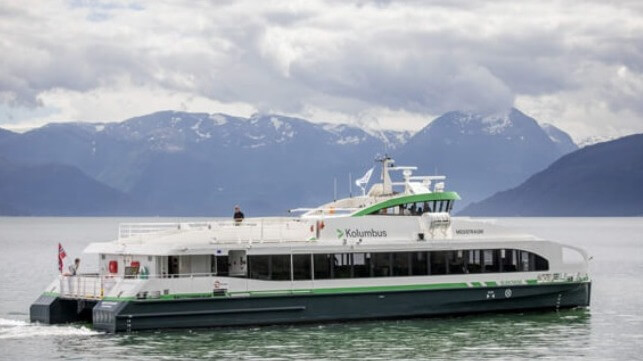
Medstraum, the world’s first fully electric fast ferry,
Medstraum, the world’s first fully electric fast ferry (Kolumbus / Tram)

Published Feb 9, 2025 1:41 PM by Mikael Lind et al.


[By Mikael Lind, Wolfgang Lehmacher, Andreas Bach, and Nina Egeli]

The maritime industry is vital for global trade but significantly contributes to greenhouse gas (GHG) emissions. The Nordic countries, renowned for their innovative and sustainable practices, are taking decisive strides toward decarbonizing maritime transport. However, technological limitations, regulatory gaps, and infrastructure bottlenecks challenge the journey. This article explores the state-of-the-art maritime energy transition in the Nordics, the policies driving this change, and the resulting future opportunities.

The Case for Change

Shipping accounts for approximately 3% of global GHG emissions, projected to rise with economic growth. With their extensive maritime sectors, the Nordic nations are uniquely positioned to lead the energy and maritime transition through strategies such as:

  • Fuel Switching: Transitioning to new energy carriers, e.g. methanol and biofuels
  • Electrification: Fully or hybrid
  • Wind assisted ship propulsion (WASP)
  • On board carbon capture (OCC)
  • Collaboration: Decarbonization will require coordinated efforts among governments, industry players, and research institutions to overcome barriers, such as resource scarcity, infrastructure gaps, and competition for low-carbon energy sources. A collaborative approach between the Nordic nations is essential for a sustainable future.

Policy Landscape

Nordic countries are setting ambitious GHG reduction targets for maritime transport, supported by a complex web of international, European Union (EU), and national policies:

International Regulations: The International Maritime Organization’s (IMO’s) GHG reduction strategy aims for net-zero emissions by 2050, but gaps in regulatory frameworks for emerging technologies like hydrogen and ammonia persist. The IMO has introduced measures like the Energy Efficiency Design Index (EEDI) and the Carbon Intensity Indicator (CII) to improve efficiency. The EEDI applies to newly constructed vessels, affecting a limited portion of global shipping tonnage. The CII was implemented to promote the reduction of CO2 emissions from ships in service.

EU Initiatives: The "Fit for 55" package integrates maritime transport into the Emissions Trading System (ETS) and mandates onshore power supply (OPS) for major ports by 2030. Complementary measures include the FuelEU Maritime initiative, which sets carbon intensity targets for ships, and the Alternative Fuels Infrastructure Directive, aiming to ensure infrastructure readiness for alternative fuels.

National Actions: Each Nordic country has tailored strategies. Norway’s Action Plan for Green Shipping emphasizes zero-emission ferries and hydrogen hubs, while Denmark’s "Towards Zero" strategy focuses on sustainable fuels like ammonia and methanol. Sweden and Finland invest in electrification and biofuels; Iceland is leveraging its renewable energy resources to drive maritime innovation.

Nordic initiatives: The Nordic governments have joined forces under a shared vision, stating that the Nordic region will become the world’s most integrated and sustainable region by 2030. Decarbonizing the maritime sector is an essential part of this vision, and Nordic collaboration and joint innovation are key enablers. Nordic Innovation, an organization under the Nordic Council of Ministers, has been running a Nordic Smart Mobility and Connectivity program since 2018, including a Green Shipping and a Sea Meets Land Mobility Mission for the maritime sector.  In 2022, all Nordic Ministers for Environment and Climate approved a Declaration on zero-emission shipping routes between Nordic countries. Finland could become a neutral technology provider.

Innovation in the Nordics

The Nordics are at the forefront of maritime innovation, advancing electrification, alternative fuels, and other solutions like onboard carbon capture (OCC) and wind assisted ship propulsion (WASP).

Regarding electrification, Norway is leading with extensive onshore power supply (OPS) facilities and a growing fleet of hybrid and fully electric ships. Since 2020, Norway has funded 263 battery-powered aquaculture ships, 39 battery-powered fishing ships, and 12 battery-powered offshore ships. Today, 103 out of Norway’s 230 ferries are electrified. Medstraum, the world’s first fully electric fast ferry, indicates the potential for high-speed, zero-emission passenger transport.

Other Nordic nations are increasing their investments in battery-electric ferries and charging infrastructure. Denmark has innovated the delivery of electricity offshore, e.g., at green anchorage zones or wind farms.

Hydrogen is another area of focus, with Norway operating a hydrogen-powered ferry, Hydra, while supporting the development of hydrogen hubs for maritime use. The first pilot for a hydrogen value chain will be operational in 2025, featuring the first approved filling station for pressurized hydrogen and the first ocean-going hydrogen vessel. Aimed for operation between Oslo and Rotterdam, two container ships operating on liquid hydrogen are being developed. By also exploring zero-emission trucks on both ends, a green transport route will be established.

Ammonia-powered ships and associated fuel infrastructure are explored within the Norwegian Green Shipping Program, and the Ammonia Fuel Bunkering Network project. Like hydrogen, ammonia has a zero-carbon combustion profile, although life-cycle emissions associated with its production must be considered, and challenges to safety and regulatory standards remain. To accelerate regulatory development, a complete base document for draft Interim Guidelines on the safety of ships using ammonia as fuel was developed in the Nordic roadmap project and submitted to IMO. In 2022, Norway provided support for 5 hydrogen hubs and 16 ships. However, the allocated funding only led to investment decisions for one hub and two ships. The 2024 call for applications, in which funding was allocated to six ammonia-powered ships, offers an increased investment support rate. However, the industry continues to highlight significant challenges related to OPEX and high market uncertainty.

Sweden has pioneered the adoption of methanol, notably with Stena Germanica, which has driven new projects throughout the region. The use of methanol requires the retrofitting of engines and tank systems. Methanol for the propulsion of cargo ships has been assessed by prominent Danish engine designers and global container carriers, and major classification societies and the Danish Maritime Authority have given approvals. Internal combustion engines for the world fleet operating on methane, methanol, or ammonia have been developed in Finland and Denmark.

A concern with methanol and ammonia is their toxicity, which has profound health implications upon exposure. On the other hand, the maritime industry transports hazardous chemicals. Both ammonia and methanol can be considered common industry chemicals and, therefore, not extremely difficult to handle onboard.  Instead, compared to traditional ones, the high costs associated with zero-emission fuel solutions are by many considered the main barrier to implementation, which is also valid for hydrogen and methanol.

Meanwhile, biofuels, including liquefied biogas (LBG), are increasingly blended with liquified natural gas (LNG) to lower emissions, offering a transitional solution as infrastructure for other alternatives develops.

Three interrelated maritime value chains (Figure 1) are critical in decarbonizing shipping: marine fuel, shipbuilding, and maritime operational value chains. The marine fuel value chain provides sustainable fuel, the shipbuilding value chain produces ships and engines that run with green fuels, and the maritime operational value chain operates the ships with alternative fuels.
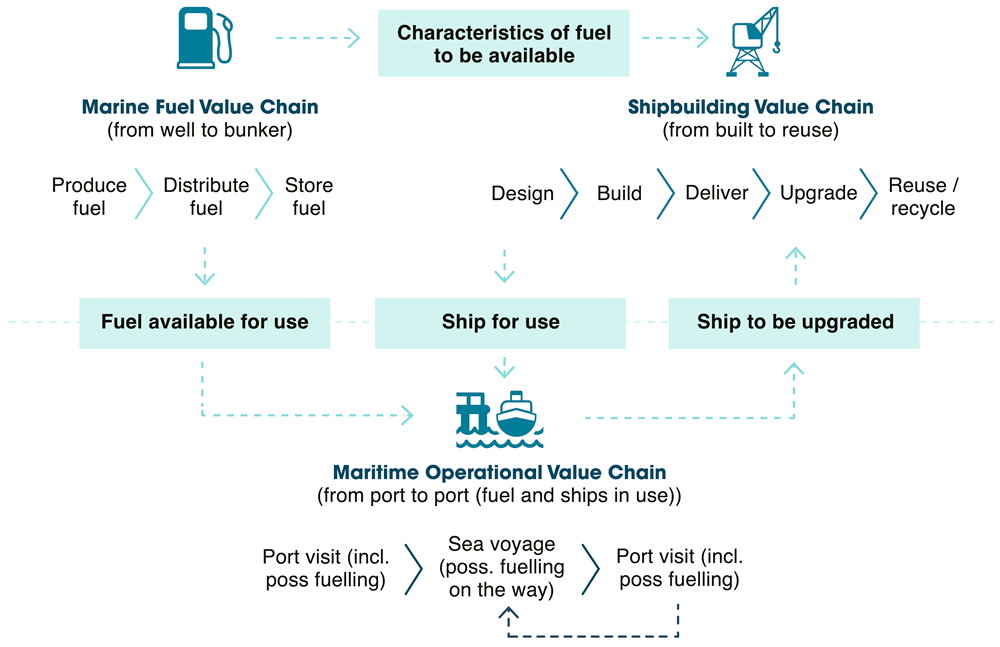
Figure 1: Three interdependent value chains and their dependency in the maritime sector

Production of sustainable fuels must be ramped up. While green methanol is hardly available, current green ammonia production would have to nearly double to switch 30% of shipping to this alternative fuel. In Finland, several projects are targeted to produce hydrogen to meet the increasing demand for ammonia.

Onboard carbon capture and storage (OCCS) can be applied as an alternative/complement to fuel switch. Sweden is emphasizing OCCS through the Stena Impero project which demonstrated the technical feasibility of OCCS systems, showing a reduction in CO2 emissions by up to 20% annually, with a manageable fuel consumption penalty of under 10%. OCCS systems require significant energy to operate. The initial capital expenditure (CAPEX) for installing OCCS systems is high, and operational expenditures (OPEX) increase due to higher fuel consumption and maintenance costs. Storing and offloading infrastructure remains to be built, and solutions such as ship-to-ship or ship-to-shore transfer of captured CO2 must be developed. Transportation and storage of captured CO2 is taking place in the Danish underground. Project Greensand has demonstrated that safe transportation of CO2 for injection into a depleted oil field is possible. The goal of Greensand is to store up to 400,000 tonnes of CO2 annually in the initial phase, with plans to increase capacity to up to 8 million tons annually by 2030.

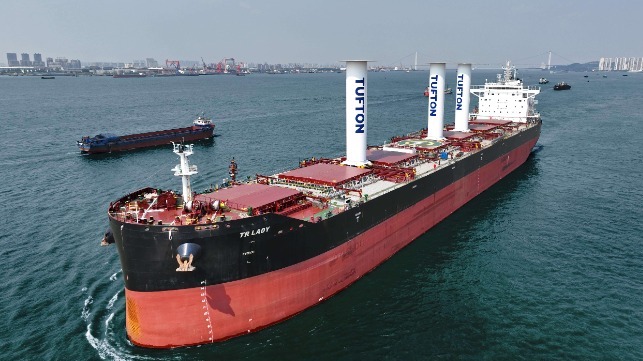
Nordic countries are also making strides in wind assisted ship propulsion (WASP) technologies. Installing rotor sails on commercial vessels has demonstrated significant fuel savings and emission reductions, and amortization periods are reasonable. These innovative solutions harness wind energy to complement conventional propulsion systems, offering an immediate and scalable pathway to reducing maritime carbon footprints, with no unwanted consequences and infrastructure to be built. Some bridges and port equipment represent limited constraints. By leveraging advanced materials and aerodynamic designs, these systems align with the region's commitment to sustainable innovation and exemplify how traditional practices can be reimagined for modern sustainability goals.

The Green and Digital Corridor Initiative

Several Nordic-level maritime initiatives and innovation projects have been conducted over the years; some have been founded on well-established collaboration structures, while others have entailed the establishment of new cross-border ecosystems and networks. Building on insights from the Nordic Innovation-funded Maren project and its follow-up extension and the ambitions of the Clydebank declaration signed at COP26, Nordic countries are planning to establish a "Green and Digital e2e-Corridors in the Nordics" initiative as a transformative step towards sustainable transport. Anchored in the Umeå-Vasa maritime corridor and extending to the Umeå-Trondheim rail corridor, this initiative connects the Baltic Sea with the Atlantic Ocean via the Trondheim Fjord, exemplifying a multimodal green and digital corridor, reducing dependency on road freight while increasing the efficiency of transport.

This initiative's heart is the Umeå-Vasa maritime corridor, a critical route linking the Nordic region’s eastern and western transport systems. This corridor, complemented by the Umeå-Trondheim rail connections, exemplifies the integration of maritime and adjacent transport modes, forming a seamless end-to-end (e2e) logistics chain emphasizing sustainability, digitalization, and resilience. This corridor will significantly contribute to integrating the Nordic region and to seamless and connected cross-border mobility.

The corridor’s digital capabilities use the Virtual Watch Tower (VWT) initiative, enabling:

  • Real-Time Emissions Tracking: Utilizing VWT technology for emissions calculations and transparency.
  • Sustainability Leadership: Incorporating fossil-free fuels with clean ships while utilizing electricity-powered trains to minimize carbon footprints.

By integrating real-time emissions tracking, data-sharing technologies as the foundation for the use of advanced supply chain optimization tools, VWT fosters transparency, enhances disruption management, and is expected to support synchronized fuel provision as an additional use case to VWT. This community-driven approach enables stakeholders to co-create solutions and share primary data, optimizing logistics operations and reducing GHG emissions.

The corridor is also a sustainability leader, incorporating fossil-free fuels with one of the cleanest ships, Aurora Botnia. It also uses electricity-powered trains and onshore power supply systems to ensure the ship runs on electricity while docked and during operations in and out of the port.

The Umeå-Vasa-Trondheim corridor is a collaborative Living Lab for green and digital solutions that solve real-life problems. The initiative will be aligned with the efforts pursued in the Vinnova-funded “Green node in a Green Corridor”, capturing the ports’ emissions in Umeå and Vasa. Stakeholders such as shippers, transport operators, port authorities, fuel providers, and terminal operators work together to validate prototypes and refine technological solutions for scalability.

As a pilot project, the corridor expanded beyond the maritime corridor, will demonstrate how integrated green and digital corridors can operate at scale. The insights will inform similar initiatives across the Nordic region and beyond, positioning the Nordics as a global leader in sustainable logistics.

Market Formation Challenges and Policy Recommendations

Despite continuous progress, the market for alternative fuels is still in its infancy. High initial investments and limited production capacity hinder adoption, as many alternative fuels remain considerably more expensive than conventional marine fuels. Regulatory uncertainty further slows development, particularly around standards for emerging fuels like hydrogen and ammonia. Harmonizing regulations across countries and ensuring compatibility with international standards are critical to overcoming these barriers. Additionally, infrastructure gaps pose a significant challenge. Ports require substantial upgrades to support bunkering and OPS for alternative fuels. Developing hydrogen and ammonia bunkering facilities necessitates coordinated planning and significant capital investment. The participating stakeholders must be digitally integrated to coordinate and optimize their activities.

The MAREN project addresses these challenges by emphasizing several policy priorities.

  • Strengthen Market Incentives: Enforce GHG taxation, promote green public procurement, and implement stricter environmental requirements for offshore operations that encompass the entire lifecycle and fishing licenses.
  • Level the Playing Field for Alternative Fuels: Introduce the polluter-pays principle.
  • Build Regulatory Capacity: Develop standards for alternative fuels and build emerging technology expertise to address cross-sectoral value chain bottlenecks
  • Mobilize Resources: Fund research and development (R&D) and support port infrastructure upgrades.
  • De-Risk Investments: Use contracts for difference (CfD)[1] to accelerate innovation.
  • Adopting a holistic value chain approach: Consider the interrelated value chains (Figure 1) to ensure the alignment of renewable energy production with maritime decarbonization goals. and consider the entire lifecycle of alternative fuels, from production to end use, to create a comprehensive framework for sustainable maritime energy transition.

Conclusion – The Corridor Ahead

The maritime energy transition in the Nordics reflects the region’s commitment to sustainability and innovation. Innovation is more than just creating new technologies—it involves building markets, mobilizing resources, and gaining societal acceptance, all crucial for the success of sustainable solutions in maritime transport.

Collaborative initiatives like the "Green and Digital e2e-Corridors in the Nordics" provide a roadmap for scaling green and digital technologies. By addressing regulatory gaps, fostering innovation, and investing in infrastructure, the Nordics can set a global benchmark for sustainable shipping. The collaborative model rooted in the Nordics can be seen as a role model for the world in terms of how actors could come together to tackle grand challenges.

Decarbonizing maritime end-to-end supply chains is a global imperative. The Nordics' proactive approach—supported by ambitious policies and collaborative frameworks—demonstrates that sustainable maritime transport is achievable. As these nations continue to innovate, their experiences will serve as a blueprint for global efforts toward a zero-emission maritime industry.

Acknowledgment

We are grateful for the comments provided by Valdemar Ehlers (Danish Maritime), Cecilia Gabrielii (SINTEF Energy), Ida Kallmyr Lerheim (RENERGY), Teemu Manderbacka (VTT), Lasse Pohjala (VASEK), and Jon Björn Skulason (Icelandic New Energy Ltd), in the development of this article.

About the authors

Mikael Lind is the world’s first (adjunct) Professor of Maritime Informatics engaged at Chalmers, and Research Institutes of Sweden (RISE). He is a well-known expert frequently published in international trade press, is co-editor of the first two books on Maritime Informatics, and is co-editor of the book Maritime Decarbonization.

Wolfgang Lehmacher is a global supply chain expert, partner at Anchor Group, and advisor at Topan AG. The former director at the World Economic Forum, and CEO Emeritus of GeoPost Intercontinental, is an advisory board member of The Logistics and Supply Chain Management Society, ambassador F&L, and advisor Global:SF and RISE. He contributes to the knowledge base of Maritime Informatics and co-editor of the book Maritime Decarbonization.

Andreas Bach is Director of Maritime Systems Innovation at RISE, Research Institutes of Sweden and Manager of Swedish Maritime Technology Forum, SMTF. Andreas has long experience in the maritime domain focusing on leadership, the transition towards a sustainable industry and maritime innovation systems.

Nina Egeli is head of Nordic Smart mobility and Connectivity at Nordic Innovation. Nordic Innovation aims to make the Nordics (Denmark, Finland, Iceland, Norway and Sweden) a pioneering region for sustainable growth and works to promote entrepreneurship, innovation and competitiveness in Nordic business. Nordic Innovation is an organisation under the Nordic Council of Ministers.

[1] A Contract for Difference is a private law contract between a low-carbon fuel producer and a government entity, designed to stabilize prices and encourage investment in renewable energy technologies.

The opinions expressed herein are the author's and not necessarily those of The Maritime Executive.

Propelled by Innovation

The maritime sector is evolving at the pace of technology, reducing its environmental impact while improving speed and efficiency.

Innovation
Courtesy Anemoi

Published Feb 9, 2025 8:13 PM by Chad Fuhrmann

(Article originally published in Nov/Dec 2024 edition.)

The maritime sector is evolving at the pace of technology, reducing its environmental impact while improving speed and efficiency. Pioneering companies like MAN and Anemoi – with long histories in the industry – are championing unique solutions that honor tradition and learn from the past.

Government perspectives, social attitudes and regulatory efforts aimed at the maritime industry’s environmental impact are shifting and swaying. Meanwhile, manufacturers with deep roots across industry sectors are leaning on their long experience to carry them through uncertain times.

MAN Energy Solutions has been at the forefront of marine propulsion for over a century. From pioneering the first diesel engine in collaboration with Rudolf Diesel to adapting to greener propulsion technologies, the company unites tried and true power with innovation to meet the changing demands of an evolving industry.

"Today, over half of global trade is moved by our engines," says Bjarne Foldager, Senior Vice President & Head of Two-Stroke Business. The company’s portfolio now includes advanced two- and four-stroke engines, hybrid propulsion systems and exhaust after-treatment technologies, all designed to enhance operational efficiency and environmental performance.

Anemoi Marine Technologies represents a different twist on propulsion based on an ancient concept – harnessing the power of the wind. The U.K.-based company is championing a resurgence in rotor sail technology as a means of reducing carbon emissions and fuel consumption.

Anemoi traces its origins to Costas Apodiakos, who envisioned wind propulsion as a cleaner alternative during the 1970s. The company has since become the leader in rotor sail development, demonstrating that wind-propulsion technology can align with modern shipping operations.

“Rotor sails have been around for a century,” says CEO Kim Diederichsen, “but are only now emerging as a practical solution.”

Energy Transition

The shipping industry is at a crossroads with alternative propulsion systems and fuels reshaping vessel design at both the concept stage as well as retrofits.

A key player in the energy transition, MAN is spearheading the global effort to decarbonize shipping. Orders for its methanol-powered engines have surged in 2024. Additionally, the company is developing the first ammonia-powered engine with successful test runs completed and production underway in Japan.

Retrofitting also plays a crucial role in the transition. In a milestone project, MAN supported the Maersk Halifax in becoming the first large in-service vessel to be converted to methanol propulsion. “The transition isn’t just about newbuilds,” Foldager states. “It’s about retrofitting the existing fleet to operate efficiently with green fuels.”

While some alternatives may spur controversy, MAN advocates for flexibility as the maritime sector explores fuel substitutes. “We see a diverse fuel mix shaping the future with ammonia, methanol and LNG leading the way,” Foldager says, projecting that ammonia will surpass methanol by 2035. MAN’s dual-fuel engines are designed to support this flexibility, ensuring vessels remain adaptable as the industry evolves.

Similarly, Anemoi plays a significant role in the energy transition.

Designed to harness wind power for auxiliary propulsion, rotor sails represent a confluence of engineering expertise and operational adaptability. The sails can reduce fuel consumption and emissions and offer flexible deployment systems including folding and rail-mounted configurations.

"Our designs ensure that cargo operations remain unaffected, which is critical for adoption across vessel types,” Diederichsen explains. Installations can be completed in as little as 23 days, demonstrating the readiness of wind propulsion to make an immediate impact.

Both companies approach propulsion technology from different perspectives but share similar objectives. They aim not just to improve efficiency and emissions today but are committed to long-term sustainability. It’s a commitment that aligns with evolving social views on environmental stewardship and the IMO’s goal of net-zero shipping by 2050.

Focus on Sustainability

This focus on sustainability comes at a pivotal time for the shipping industry with mounting regulatory pressures and a collective push for decarbonization by regional and international authorities.

Many stakeholders simply wait to see what those changes will entail. Forward-looking companies, however, are making a point of sitting at the table and assisting in developing rules that will not only have the desired impact on the environment but also make sense for the industry.

Anemoi’s ability to navigate stringent maritime standards has bolstered its position as a trusted industry partner. Collaborations with classification societies like Lloyd’s Register and DNV ensure its rotor sails meet rigorous safety and operational standards. Where those standards may not exist, Anemoi is working to develop them, working closely with regulatory bodies to facilitate compliance with measures such as EEDI (energy efficiency design index) and EEXI (energy efficiency existing ship index).

Alternative fuels are faced with their own level of scrutiny.

Ammonia, for example, is highly toxic. As a groundbreaking manufacturer of ammonia-capable engines, MAN Energy Solutions works tirelessly to ensure that robust safety measures including sensors, double-walled pipes and system ventilation are not just installed but required by classification societies and regulatory bodies.

“Safety comes first, and we must ensure crew protection while maximizing operational efficiency,” says Foldager.

MAN is not only driving innovation but advocating for policy changes that will accelerate decarbonization, pushing the IMO to define concrete measures to meet its decarbonization targets by 2025. A global CO2 mechanism for shipping is viewed as essential to making green fuels and efficiency technologies viable.

Building Value Chains

The global pandemic brought to light not just the critical importance of the shipping industry but also the overarching challenge of shifting supply chains. Some of these lessons resulted in incredible innovations with far-reaching impact across the industry.

The rising demand for rotor sails prompted Anemoi to scale production capacity to 75 units annually. The company has further streamlined its global supply chain. Combined with efficient installation practices, Anemoi can supply new construction as well as ensure minimal vessel downtime during retrofits.

In late 2023, MAN launched its “Value Chain Resilience” program to facilitate a unified, robust global value chain capable of supporting decarbonization efforts. “Our vision is to deliver a stable supply chain that supports customers and drives growth,” Foldager notes.

Digitalization is a cornerstone of MAN Energy Solutions’ forward-leaning strategy. The company’s MAN CEON platform offers real-time monitoring and predictive maintenance to optimize engine performance. Complementary tools like PrimeServ Assist and Asset+ further enhance efficiency by limiting unnecessary maintenance via condition-based monitoring and reducing fuel consumption through advanced engine-control technologies.

As in the age of sail, wind-powered vessels benefit most when able to take advantage of prevailing weather conditions. Anemoi’s partnership with NAPA, a Finnish-based global maritime software company, combines its wind-assisted innovation with NAPA’s weather-routing and voyage optimization. The combination further enhances both companies’ value propositions and maximizes the efficiency of rotor sails, achieving fuel savings of up to 25 percent when combined with favorable routing.

Reshaping the Future

With their rich histories and forward-looking approaches, industry pioneers like Anemoi Marine Technologies and MAN Energy Solutions share a vision that transcends individual projects and lays out a course toward an efficient maritime industry.

As the industry transitions to a greener future, these companies are poised to lead the way through groundbreaking technologies, strategic collaborations and a commitment to safety and innovation.

Both MAN and Anemoi share similar perspectives – that the future is much more than a technological challenge. It represents an opportunity to redefine the industry. Anemoi’s Diederichsen sums it up best, saying, “It’s not just about technology. It’s about reshaping the future of shipping.” 

Chad Fuhrmann is the founder of Revolution Consulting X Engineering.

The opinions expressed herein are the author's and not necessarily those of The Maritime Executive.


Tech Enhancements Bring Smoother Sailing to International Commerce

Synovus

Published Feb 4, 2025 12:44 PM by Jeffrey Beisler-Snell, PhD


The difficulties facing global trade and the global supply chains have been widely documented over the past few years. The outlook for global trade remains murky in 2025 with the threat of tariffs and ongoing shifts in geopolitics. Despite headwinds, the World Trade Organization is projecting world merchandise trade growth to increase three percent this year. 

With growth in the market, however, comes an even greater influx of information. This is especially true for businesses engaged in maritime transport, as a projected oversupply of available shipping space will likely lead to more options for businesses to parse through. This increase in options comes at a time of increasingly complex supply chains, which only adds to the information that businesses must evaluate and can decrease the visibility businesses have into the process from start to finish. How businesses handle the influx of information that comes with more options can make all the difference between profit and loss, and visibility into the process is key to making informed decisions.

Digital Transformation of Maritime Finance

As globalization and international trade have expanded in recent decades, innovation has been a critical part of the process nearly every step of the way. Maritime trade in particular has evolved tremendously, from large wooden ships to steamer ships to the massive container ships we see on the waters today. Other innovations, such as the magnetic compass and the Panama Canal, have helped to simplify navigation and shipping routes along the way. 

Today, maritime trade is experiencing a technological renaissance as businesses look for increased transparency and flexibility along with decreased costs. According to a report from PwC, the maritime software market is expected to reach $2.9 billion by 2028. While some innovations, such as autonomous ships, are still in the final stages of testing and early stages of use, other technologies are already changing the game. For example, e-documents are currently being used to save as much as $5.5 billion. Like many industries, artificial intelligence is also revolutionizing maritime trade through cost negotiations, negotiating purchasing terms, compliance checks, freight audits, and route optimization.

Similar to the physical processes of maritime trade, the financing aspect is always evolving. On the one hand tariffs and other fees associated with cross-border trade are always in flux. A recent development worth noting is the number of parties that can be involved in trade financing has increased. Initially, banks, importers, and exporters dominated maritime trade finance. Today, however, trade financing companies, insurers, and export credit agencies have entered the fold to increase options for businesses. The drawback to this development is that maritime trade financing has become somewhat fragmented, and many businesses do not have end-to-end transparency into the process.

For all the investment in navigational and tracking technology across the maritime trade landscape, there is also tremendous opportunity to deliver digital payments innovations to streamline the financial side of maritime trade and increase transparency—and banks are the perfect candidate to lead this charge.

Accelerate Trade: A New Way to Bank

One example of banking technology designed to help revolutionize maritime trade financing is AccelerateTM Trade, an advanced, automated, digital trade finance portal from Synovus Bank. 

As global trade—and maritime trade in particular—became increasingly digitalized, Synovus recognized the need to digitalize the payments process to help bring the entire trade operation online. Accelerate Trade does just that by allowing banks to initiate and monitor transactions 24/7 without having to call the bank or submit paperwork. Through this product, businesses can maximize efficiency, optimize processing and reduce risk for commercial letters of credit (import and export), standby letters of credit, guarantees, bankers’ acceptances, documentary collections, financing, and more. Accelerate Trade users can also leverage features such as user-driven reporting, alerts and calendaring to track their trade financing process.

For maritime trade specifically, Accelerate Trade can be combined with another Synovus offering, AccelerateTM FX, to conduct foreign exchange and trade activities securely. 

By bundling all of these services into one solution, Synovus offers businesses a high degree of visibility into their trade financing activities from start to finish. Accelerate Trade also helps businesses see the entire picture of their trade financing operation by consolidating key information for multiple transactions into one view. Access to all of this information gives business decision-makers the insights they need to improve operational efficiency and enter the new era of maritime trade.

In spite of economic and geopolitical headwinds, global trade, driven by maritime trade, appears poised to continue its steady growth. Automation and emerging technology have begun to revolutionize maritime trade operations throughout the process. Through products like Accelerate Trade, banks are making sure that the financing for these operations evolves to meet the needs of the modern market, too.

For more information or to schedule a demo of Accelerate Trade, please visit: https://www.synovus.com/corporate/accelerate-trade/


This article is sponsored by Synovus Bank. Jeffrey Beisler-Snell is Head of International Banking at Synovus Bank.
 

The opinions expressed herein are the author's and not necessarily those of The Maritime Executive.


 IT'S GREEN, REALLY GREEN

Corvus ESS Will Power the World’s First Fully Electric Offshore Vessel

electric SOV

Published Feb 9, 2025 9:20 PM by The Maritime Executive


[By Corvus Energy]


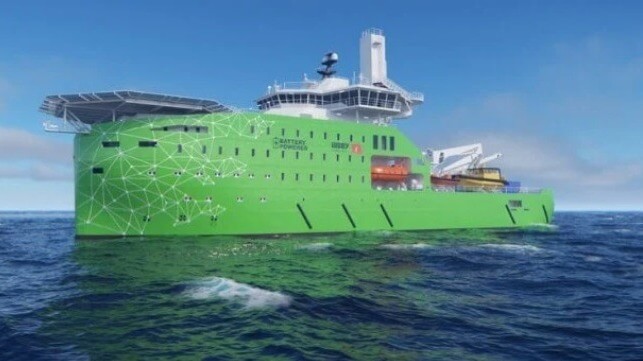
Corvus Energy, the leading supplier of zero emission solutions for the offshore and marine industry, is proud to announce that it will deliver a mega-size battery system for the first fully electric offshore vessel ever to be built. 

The vessel is an electric Commissioning Service Operation Vessel (eCSOV) that will be constructed by Armon shipyard in Spain for the UK-based shipowner Bibby Marine Ltd.  

World`s first of its kind

Corvus Energy will supply its Blue Whale Battery Energy Storage System (BESS) delivering close to 25MWh of power for the vessel. It will be the largest LFP (Lithium Iron Phosphate) battery system ever delivered to a maritime project. 

“A fully electric offshore vessel is something the industry has been working towards for a long time and marks a major milestone in offshore vessel operations," said Pål Ove Husoy, VP Sales at Corvus Energy. 

“This eCSOV will be the first offshore vessel that can operate fully electric for a full day and will set a new standard for future offshore vessels. The unique system design incorporating both battery power and dual-fuel methanol engines will significantly reduce carbon emissions and increase energy efficiency while providing the reliability and performance needed for demanding offshore wind and renewable operations.”

Unique and optimized power distribution system

Corvus Energy has been cooperating closely with the shipowner, designer and integrator to dimension and optimize the system design. Unlike conventional hybrid systems, the vessel will utilize its large battery pack as the primary power source, with engines running solely for charging at a constant, optimized load that maximizes efficiency, extends battery lifespan and significantly reduces emissions. The innovative DC grid architecture further enhances overall system performance by minimizing energy losses and ensuring seamless power distribution. Additionally, offshore charging capabilities will enable simultaneous battery charging while maintaining DP for station-keeping, representing an industry first in the SOV market.

Accelerating the path to net zero

Gavin Forward, New Build Director at Bibby Marine, commented: “We are excited to collaborate with Corvus on this pioneering eCSOV project, setting a new benchmark for sustainable offshore operations and driving the future of zero-emission vessel technology."

He added that Bibby Marine selected Corvus Energy "for its proven track record in delivering complex vessel projects, while the LFP battery chemistry was chosen for its alignment with our eCSOV’s operational profile, offering enhanced safety, longevity and reliability for a project that promises to accelerate the path to net-zero for the maritime sector."

Equipment from Corvus Energy will be delivered to the shipyard in 2026, and the vessel is scheduled for operation in 2027 supporting the commissioning and operation of windfarms.
 

The products and services herein described in this press release are not endorsed by The Maritime Executive.


DLR Awards Contract for New Research Ship to Lloyd Werft

Deutsche Zentrum für Luft- und Raumfahrt - DLR
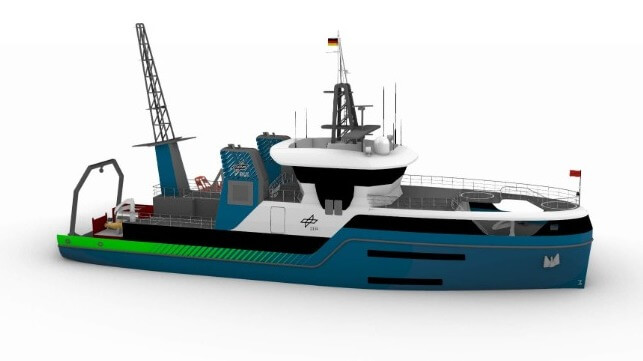
The research ship will measure 48 metres long and 11 metres wide, with a draught of 3.2 metres. It will primarily be used for research voyages lasting from one to several days in the North Sea and Baltic Sea, accommodating up to 20 people onboard. DLR wil

Published Feb 9, 2025 1:50 PM by The Maritime Executive


[By: DLR]

The German Aerospace Center (Deutsche Zentrum für Luft- und Raumfahrt; DLR) has commissioned Lloyd Werft in Bremerhaven to build a new research vessel, with both parties signing the contract on 3 February 2025. The ship is expected to cost approximately 36 million euros, and with it, DLR aims to provide the maritime industry with a platform for collaborative research into innovative, climate-compatible propulsion technologies. The vessel is scheduled for completion in summer 2027.

"The new DLR research ship will serve as a unique laboratory for real-world experiments," said Anke Kaysser-Pyzalla, Chair of the DLR Executive Board. "At the same time, it will create new opportunities for public stakeholders in the transition towards digital, climate-compatible, competitive and safe maritime mobility and industry. With its interdisciplinary research approach, DLR is also highly sought after in the maritime sector by industry and the public sector. With Lloyd Werft, we have found an experienced shipbuilder for this unique project, bringing together tradition and innovation at the Bremerhaven site.

Friedrich Norden, Managing Director of Lloyd Werft Bremerhaven, added, "We are delighted to support DLR's valuable research projects through this unique initiative. We will soon be delivering an innovative platform for testing future maritime energy systems under realistic onboard conditions. This flagship project highlights the importance of maritime research in Germany and actively contributes to shaping the maritime energy transition. Both the Lloyd Werft workforce and the entire Rönner Group share this commitment. This contract also demonstrates that Lloyd Werft is not only a strong partner in ship repair and conversion but also a key player in the construction of specialised vessels and complex custom-built structures."

A floating laboratory for climate-compatible propulsion technologies

The DLR Institute of Maritime Energy Systems, based in Geesthacht and Kiel, is dedicated to researching and developing new solutions for the integration of renewable energy into the maritime sector. In collaboration with the Hamburg-based engineering firm SDC Ship Design & Consult, DLR has developed the overall design for the new research vessel, which is now under construction at the Lloyd Werft shipyard.

With this initiative, DLR is advancing climate-compatible shipping, as the new vessel relies on alternative propulsion technologies without fossil fuels. 

The vessel will feature a specially designed test engine room, where DLR researchers, along with cooperating companies from the maritime industry, will trial hydrogen-based and battery-powered propulsion systems. It will also enable the real-world testing of uncertified components, such as energy converters and reformers. A key focus will be ensuring that the energy generated can be safely integrated into the onboard power system and used for propulsion.

The research ship will be 48 metres long and 11 metres wide, with a draught of 3.2 metres. It will primarily operate in the North Sea and Baltic Sea on test voyages lasting from one to several days, accommodating up to 20 people onboard. Once completed, the vessel will be based in Kiel.

Innovative, digitalised transport systems on the water

The research vessel will be equipped with a digital twin – a virtual replica that will enable DLR researchers to conduct extensive computer simulations to ensure the ship's safe and efficient operation. This technology will allow researchers to, for example, analyse propulsion components and digital navigation systems in preparation for and alongside practical trials.

With this initiative, DLR is providing the maritime industry with a platform for the development, integration, testing and certification of resource-efficient, digital and intelligent maritime systems. Authorities responsible for security will also benefit, as the vessel will support DLR's research in civil security and defence applications.

The products and services herein described in this press release are not endorsed by The Maritime Executive.


Fincantieri Hands Over Innovative LNG Cruise Ship to Germany’s TUI Cruises

Mein Schiff cruise ship
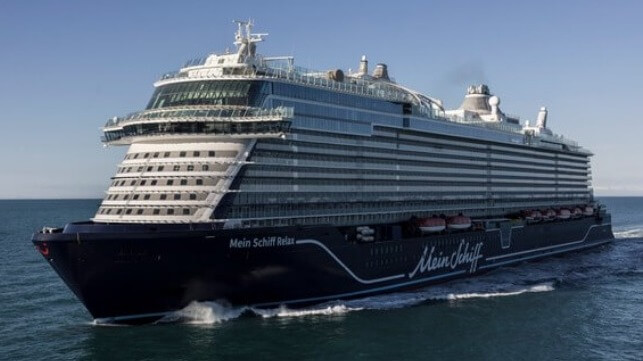
Mein Schiff Relax was delivered continuing the rapid growth of the German cruise market (Fincantieri)

Published Feb 7, 2025 7:20 PM by The Maritime Executive


Germany’s TUI Cruises took delivery today, February 7, on the first of two new LNG dual-fuel cruise ships launching a new class of ship for the 16-year-old partnership between TUI and Royal Caribbean Group. The new ship named Mein Schiff Relax marks the first time the line has worked with Fincantieri after a long-term partnership with the shipyard in Turku, Finland.

At 161,000 gross tons, Mein Schiff Relax is the largest for the German brand and the first of the company’s ships to operate on LNG. It was built as a dual-fuel ship immediately capable of operating on LNG or Marine Gas Oil and it will be able to transition to alternatives including bio- or e-LNG when it becomes available in the market. Last year, TUI also introduced the first methanol-ready cruise ship, Mein Schiff 7, which was built at Meyer Turku and with the addition of some pending components is expected to commence operations with methanol.

Fincantieri received the order for the two ships from TUI in July 2018 with the steel cutting for the first ship commencing in June 2022. The ship was floated out from the yard in Monfalcone, Italy in November 2023 and began its first sea trials last October. The first trials focused on the performance of the vessel and especially maneuverability. In December, it received its first LNG load and at the end of the month commenced sea trials operating on LNG. Mein Schiff Relax is the second cruise ship delivered by Fincantieri fueled with LNG.

The Mein Schiff operation has been one of the fast-growing taking advantage of the strength of the cruise market in German-speaking countries. It was launched as a rival to Carnival Corporation’s successful AIDA brand with TUI’s first ship, acquired from Celebrity Cruises, sailing on its first cruise in May 2009. Today the brand has eight ships including Relax, with the oldest having been built just a decade ago.

“Eleven years ago, we took delivery of our first newly built ship,” says Wybcke Meier, CEO of TUI Cruises. “With the Mein Schiff Relax, we are now opening a whole new chapter in the field of premium cruises.”

The new ship is 1,070 feet (326 meters) in length with 1,945 passenger cabins and accommodations for 3,984 passengers and 1,535 crew. In addition to being the largest ship of the fleet, it has innovations for relaxation, 14 restaurants including more variety and a new Asian restaurant, and redefined spa and wellness areas. The ship features the cruise line’s first two-deck “freedom suites,” as well as introducing inside, outside, and balcony cabins for solo travelers.

In addition to the dual-fuel configuration, Mein Schiff Relax features new catalytic converters meeting Euro 6 standards, a generative turbine using residual heat from the diesel generators, and a shore power connection for ports. It also has a highly efficient waste treatment system capable of transforming organic materials into recyclable components through a thermal process.

The cruise ship enters service at the beginning of March and will sail for the first year around the Canary Islands before moving to Germany in mid-2026. TUI has planned an innovative christening ceremony for the new ship on April 9 in Malaga. She will meet up with fleet mates Mein Schiff 5 and Mein Schiff 7. In addition to a celebrity performance, the three cruise ships will share the event with a gala dinner and cocktail aboard each ship and special culinary dishes from the restaurants on the new ship being served aboard all three ships.

Mein Schiff continues its rapid growth after introducing Mein Schiff 7 in June 2024. The next introduction, Mein Schiff Flow will take place in Spain in August 2026.