Monday, February 10, 2025


Therapy helps peanut-allergic kids tolerate tablespoons of peanut butter


NIH trial informs potential treatment strategy for kids who already tolerate half a peanut or more


NIH/National Institute of Allergy and Infectious Diseases

Peanut butter 

image: 

Container of peanut butter with a spoon.

view more 

Credit: NIAID


Eating gradually increasing doses of store-bought, home-measured peanut butter for about 18 months enabled 100% of children with peanut allergy who initially could tolerate the equivalent of at least half a peanut to consume three tablespoons of peanut butter without an allergic reaction, researchers report. This easy-to-implement treatment strategy could potentially fulfill an unmet need for about half of children with peanut allergy, who already can tolerate the equivalent of at least half a peanut, considered a high threshold. The findings come from a trial sponsored and funded by the National Institutes of Health’s National Institute of Allergy and Infectious Diseases (NIAID) and published today in the journal NEJM Evidence

“Children with high-threshold peanut allergy couldn’t participate in previous food allergy treatment trials, leaving them without opportunities to explore treatment options,” said NIAID Director Jeanne Marrazzo, M.D., M.P.H. “Today’s report focuses on this population and shows that a very safe and accessible form of therapy could be liberating for many of these children and their families.”

The food allergy treatments currently approved by the Food and Drug Administration were tested in children with low-threshold peanut allergy, who cannot tolerate the equivalent of even half a peanut. These treatments are designed to decrease the likelihood of a reaction to a small amount of peanut despite efforts to avoid it, as might occur with accidental exposure. This approach is not relevant to the estimated 800,000 U.S. children who may have high-threshold peanut allergy, leaving them with only one management strategy prior to the new report: peanut avoidance. 

To address this need, researchers tested whether a low-cost, convenient treatment strategy could help children with high-threshold peanut allergy tolerate a much greater amount of peanut protein than they already did. The mid-stage trial involved 73 children ages 4 to 14 years. Based on parent or guardian report, nearly 60% of the children were white, 19% were Asian, 1.4% were Black, and 22% were more than one race. The study team assigned the children at random to either test the new treatment strategy or continue avoiding peanut.

Those in the peanut-ingestion group began with a minimum daily dose of 1/8 teaspoon of peanut butter. They gradually increased their dose every eight weeks up to 1 tablespoon of peanut butter or an equivalent amount of a different peanut product, such as peanut flour or candies. Dose increases took place under medical supervision at the study site. None of the children in the peanut-ingestion group needed epinephrine to treat severe allergic reactions during home dosing, and only one child needed epinephrine during a supervised dosing visit at the study site. 

After undergoing the treatment regimen, the peanut-consuming children participated in an oral food challenge carefully supervised by the study team to see how much peanut butter they could eat without an allergic reaction. All 32 children who participated in the challenge could tolerate the maximum amount of 9 grams of peanut protein, the equivalent of 3 tablespoons of peanut butter. By contrast, only three of the 30 children in the avoidance group who underwent the oral food challenge after a similar amount of time in the trial could tolerate 9 grams of peanut protein. Three additional children in the avoidance group tolerated a challenge dose at least two doses greater than the amount they could tolerate at the start of the study.

The trial took place during the COVID-19 pandemic, and some families preferred to avoid indoor close contact with others at that time, so some children did not return to the study site for the oral food challenge. Using a common statistical technique to account for those missing challenge results, 100% of the ingestion group and 21% of the avoidance group tolerated at least two doses greater than they could at the outset.

Children in the peanut-ingestion group who could tolerate 9 grams of peanut protein during the oral food challenge consumed at least 2 tablespoons of peanut butter weekly for 16 weeks, then avoided peanut entirely for eight weeks. At that point, they were asked to return to the study site for a final oral food challenge. 

Twenty-six of the 30 treated children (86.7%) who participated in the final challenge continued to tolerate 9 grams of peanut protein, indicating they had achieved sustained unresponsiveness to peanut. The three children in the avoidance group who could eat 9 grams of peanut protein without a reaction at the earlier challenge were considered to have developed natural tolerance to peanut. Analyzing these outcomes and including all 73 children who began the trial, regardless of whether they participated in the final challenge, investigators found that 68.4% of the peanut-ingestion group achieved sustained unresponsiveness, while only 8.6% of the avoidance group developed natural tolerance.      

Based on these encouraging results, the investigators want to learn if the same treatment strategy would work for food allergens other than peanuts. Future follow-up is needed to determine the therapy’s effectiveness at inducing long-lasting tolerance of peanut. 

Scott H. Sicherer, M.D., and Julie Wang, M.D., led the trial, which took place at the Elliot and Roslyn Jaffe Food Allergy Institute in Mount Sinai Kravis Children’s Hospital, New York. Dr. Sicherer is director of the Institute and the Elliot and Roslyn Jaffe Professor of Pediatric Allergy and Immunology. He is also chief of the Division of Allergy and Immunology in the Department of Pediatrics and medical director of the Clinical Research Unit in the ConduITS Institute for Translational Sciences at Icahn School of Medicine at Mount Sinai. Dr. Wang is a professor of pediatric allergy and immunology in the Elliot and Roslyn Jaffe Food Allergy Institute.  

More information about the clinical trial, called the CAFETERIA study, is available at ClinicalTrials.gov under study identifier NCT03907397.

Reference: SH Sicherer et al. Randomized trial of high dose, home measured peanut oral immunotherapy in children with high threshold peanut allergy. NEJM Evidence DOI: 10.1056/EVIDoa2400306 (2025).


NIAID conducts and supports research—at NIH, throughout the United States, and worldwide—to study the causes of infectious and immune-mediated diseases, and to develop better means of preventing, diagnosing and treating these illnesses. News releases, fact sheets and other NIAID-related materials are available on the NIAID website. 

About the National Institutes of Health (NIH): NIH, the nation's medical research agency, includes 27 Institutes and Centers and is a component of the U.S. Department of Health and Human Services. NIH is the primary federal agency conducting and supporting basic, clinical, and translational medical research, and is investigating the causes, treatments, and cures for both common and rare diseases. For more information about NIH and its programs, visit https://www.nih.gov/. 

NIH...Turning Discovery Into Health®


Fly with a fake termite face capable of infiltrating and socialising in a termite mound


An international team led by the Institute of Evolutionary Biology (IBE) has discovered fly larvae that infiltrate termite nests by mimicking their features and smell


Spanish National Research Council (CSIC)


Nature is full of impostors, and many of them are found in the insect world. Certain species, such as the bee fly or the ant spider, are experts at misdirection and their ability to confuse predators or prey is on a par with that of John Travolta in Face/Off and Arya Stark in Game of Thrones. However, never before has a blow fly been observed successfully living in cognito among termites.

Now, for the first time ever, an international study led by the Institute of Evolutionary Biology (IBE), a joint centre of the Consejo Superior de Investigaciones Científicas (CSIC) (the Spanish National Research Council (CSIC)) and Pompeu Fabra University (UPF), in conjunction with the Botanical Institute of Barcelona (IBB, CSIC-CMCNB), has discovered a species of blow fly (family Calliphoridae) whose larvae infiltrate colonies of harvester termites.

Published in Current Biology, the discovery was made in the Anti-Atlas mountain range in southern Morocco, and reveals unique morphological and chemical adaptations. The research sheds light on the evolution of flies and the adaptations of termite-related species.

"This is a chance finding. In our research group we mainly study butterflies and ants. As it had rained a lot and the butterflies were not flying, we looked for ants. When we lifted a stone we found a termite mound with three fly larvae that we had never seen before. The water had probably flooded the deeper layers of the nest and the larvae had emerged onto the surface", says Roger Vila, the IBE researcher who led the study. "It must be an extremely rare species, because we have made three more expeditions in that area and, despite lifting hundreds of stones, we found only two more flies, together, in another termite mound.

A "termite mask" on the tail aids infiltration

The team has described the morphological adaptations of this species of blow fly. In particular, the larvae of this calliphorid have developed a unique disguise to help them infiltrate termite mounds.

On the back of the body, the larvae display a "termite mask": a non-functional "head" with antennae and palps the same size as those of a large harvester termite. They also have two false eyes, which are actually the larvae's breathing holes.

"Most termites live several metres deep and have no visual perception. However, harvester termites come out at dusk to collect grass, so they have functional eyes that the larvae are able to mimic with their spiracles", says Vila.

In addition, the larvae have unusual "tentacles" around their bodies that mimic termite antennae in great detail, which the team was able to demonstrate using scanning electron microscopy. The numerous tentacles surrounding the body of the larvae facilitate simultaneous communication with several termites.

The larvae also mask themselves with the smell of their nest mates

Inside the nest, everything is dark, so the termites recognise each other using their antennae, with which they detect the shape and smell of their siblings. All the members of the nest share this scent, and the soldier termites attack and dismember any intruders from other colonies. These maggots, however, also manage to mimic the distinctive odour of their hosts.

"We quantified the chemical composition of these larvae and the result is surprising: they are indistinguishable from the termites in the colony where they live; they smell exactly the same. In addition, the larvae and termites in a particular colony have slight differences in their chemical profile that differentiate them from other termite mounds. This odour is key to interacting with the termites and benefiting from their communal life. It is a chemical disguise."

Termites tend and groom the intruding maggots

When the team found the larvae in Morocco, they were occupying the termite mound's food chambers. Once in the laboratory, they observed that the fly larvae tended to settle in the most populated areas of the nest, where they received constant attention from the termites, which preened them using their mouthparts.

Although the team was unable to reveal their diet, they were able to observe trophallaxis-like behaviour: the termites appeared to transmit food to the larvae using their mouths. "The larvae are not only tolerated, but they constantly communicate with the termites through contact with their antenna-like tentacles. The termites even seem to feed them, although this has not yet been unequivocally demonstrated", explains Vila.

The team stresses the difficulty of keeping these insects in the laboratory, as it involves maintaining colonies of desert termites, which live in very special conditions. "The larvae we studied eventually died without metamorphosing, so there may be elements of the nest and the symbiotic relationship between the termites and the flies that we were unable to transfer to the laboratory. Their diet is currently unknown, and their adult form remains a mystery", adds Vila.

The "termite mask" is an evolutionary leap for blow flies

The relationship between the blow fly larvae and termites appears to be a form of social parasitism or symbiosis. The most similar case is found in humpback flies. However, in humpback flies it is the adults, not the larvae, that mimic termites, representing a case of independent evolution of a relationship with termites, or termitophilia.

"The common ancestor of blow flies and humpback flies dates back more than 150 million years, much further than that which separates humans from mice. We are therefore confident that we have discovered a new case of social integration evolution", explains Vila.

The team used phylogenomic studies to prove that the fly they have discovered belongs to the genus Rhyncomya. Since none of the known species of this genus share the unusual lifestyle or the incredible morphology of the newly discovered fly, the study suggests that this new species must have evolved very quickly.

"This discovery invites us to reconsider the limits and potential of symbiotic relationships and social parasitism in nature. But, above all, we should realise how much we still do not know about the vast diversity and specialisation of insects, which are essential organisms in ecosystems", concludes Vila.

This international study is the result of a collaborative effort between the Institute of Evolutionary Biology (IBE) and the Botanical Institute of Barcelona (IBB, CSIC-CMCNB) in Barcelona, together with the University of Florence in Italy, the University of Minnesota and North Carolina State University in the United States, and the Natural History Museum Denmark.

Reference article: Schär S, Talavera G, Dapporto L, et al. Blow fly larvae socially integrate termite nests through morphological and chemical mimicry. Current Biology. 2024; https://doi.org/10.1016/j.cub.2025.01.007


CSIC Communication

Trump Plans to Impose 25 Percent Tariffs on Steel and Aluminum

USN
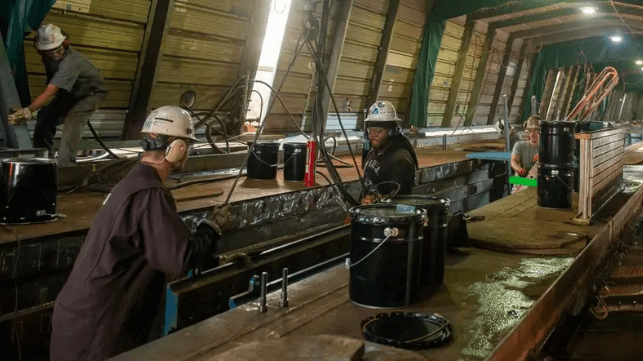
Contractors move thick steel plate during repairs in a catapult trench aboard carrier USS John C. Stennis, 2023 (USN)

Published Feb 9, 2025 11:08 PM by The Maritime Executive


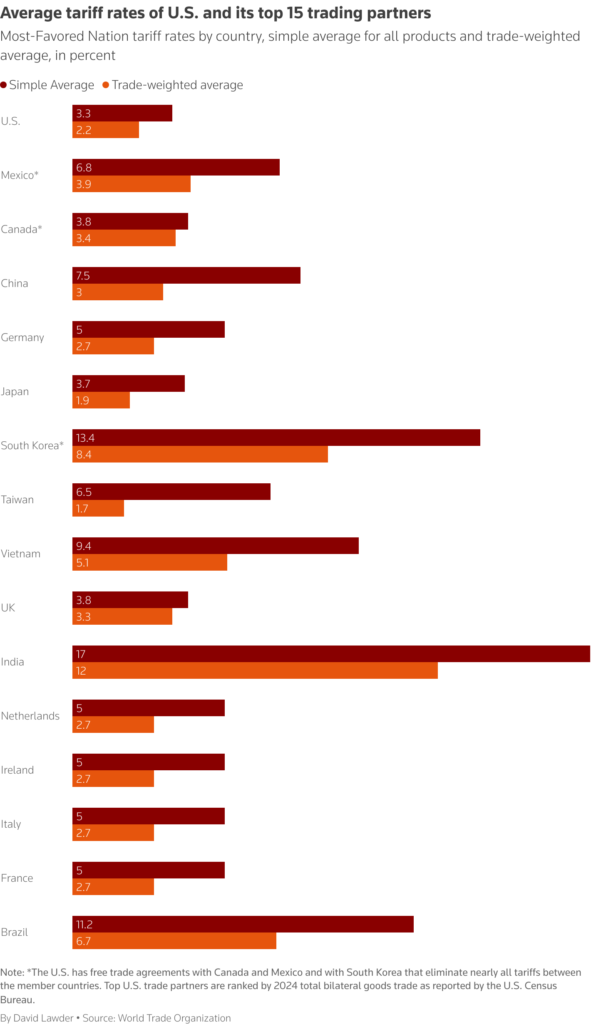
On Sunday, U.S. President Donald Trump announced plans to impose a 25 percent tariff on all steel and aluminum imports, repeating a policy from his first term. The announcement includes metal imports from Mexico and Canada, the largest foreign suppliers for the American steel market.

U.S. steelmakers stand to benefit from the announcement. Independent economists say tariffs will allow U.S. producers to raise prices, strengthening American steelmakers' balance sheets. The tariffs Trump imposed in his first term increased prices by nine percent and raised American steelmakers' earnings by $2.4 billion in 2018 alone, according to the Peterson Institute for International Economics. American steel consumers' costs increased by an estimated $5.6 billion during the same period, the institute estimated.

Shares in America's biggest steel producer, Nucor, have risen by 10 percent over the last month following news of tough tariff policies, and the company is supportive of Trump's approach. "Nucor applauds the first steps taken by President Trump in his America first trade agenda," Nucor President Leon J. Topalian said in a statement last week. "We look forward to working with President Trump to enforce our trade laws and strengthen American manufacturing!"

Trump's Sunday announcement was greeted with disapproval in Canada, which has the most to lose from higher import prices in the U.S. market. "This is the next four years. Shifting goalposts and constant chaos, putting our economy at risk," responded Ontario Premier Doug Ford in a statement. 

Overall, more than $80 billion worth of steel and iron imports and nearly $30 billion worth of aluminum imports will be affected. If the metals tariffs are not reversed in negotiations, as occurred earlier this month with blanket tariffs on Canada and Mexico, American shipbuilders will be among the steel users most affected by an increased cost of materials. The U.S. shipbuilding industry's biggest customer by value - the U.S. Navy - will likely see future newbuild and repair costs rise if tariffs take hold, according to defense analysts. 

"Costs [for shipbuilding] are going to go even higher," said Todd Harrison, a senior fellow at the pro-business think tank American Enterprise Institute, speaking to Navy Times last month. "Delays will get even longer. Nothing good is going to come from this for shipbuilding; it can only make a bad situation worse."

Tariffs are part of Trump's plans for a revival at U.S. Steel, the second-largest producer in the United States and a onetime icon of American industry. On Friday, Trump said he would block plans by Japanese giant Nippon Steel to purchase U.S. Steel, as the Biden administration did in January. However, he said he would "mediate and arbitrate" a lesser investment by the Japanese firm. "Tariffs are going to make [U.S. Steel] very successful. And I think it has good management," Trump said. 

Sources close to U.S. Steel and Nippon Steel told the Pittsburgh Post-Gazette that executives at both firms were surprised by Trump's plans.  

There may be additional tariffs coming soon: On Sunday, Trump briefly previewed a plan to impose reciprocal tariffs when other nations place duties on U.S. goods. "It won't affect everybody, because there are some where we have similar tariffs, but the ones that are taking advantage of the United States, we're going to have a reciprocity," he said. 

(By Jeff Mason, David Lawder and Lidia Kelly; Editing by Lisa Shumaker)

CURSED

Frustrations as Departure of Famed Ocean Liner SS United States Delayed

ss United States
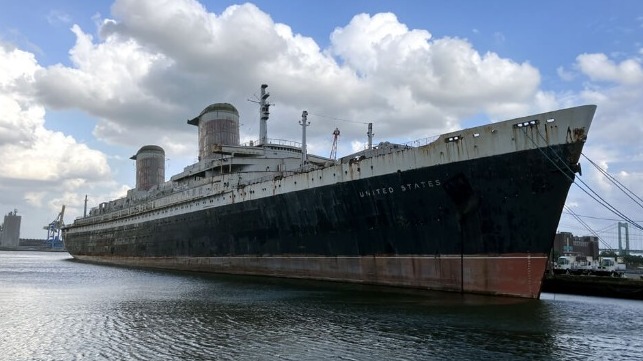
USS United States as been at the berth in Philadelphia since 1986 (Allan Jordan photo)

Published Feb 9, 2025 4:59 PM by The Maritime Executive

Excitement over the impending departure of the famed ocean liner ss United States was building last week before a further delay appeared prolonging her stay in Philadelphia. The new owners of the liner, Florida's Okaloosa County, have been trying for months to start the final voyage of the now 75-year-old liner as she heads toward a new chapter as the largest artificial reef.

On Wednesday, February 5, Okaloosa County announced that after months of delay, it had finally received all the necessary approvals for a large ship dead tow as defined by the U.S. Coast Guard. At high tide around 0600 on Thursday, February 6, the plan was to yank the 53,000 gross ton liner from Pier 82 where she has been docked since July 1986 after the vessel returned from having been stripped of her interior fittings in Turkey and Ukraine. 

The ss United States despite having been out of service since 1969 remains fabled in the annals of shipping history. Design by American’s renowned naval architect William Francis Gibbs, she entered service in 1952. On her maiden voyage, she shattered the Atlantic speed record for a passenger liner with an average speed of over 35 knots and 72 years later remains the fastest passenger liner to have ever crossed the Atlantic. The liner is rumored to have touched 40 knots during her “top secret” speed trials.

The non-profit SS United States Conservancy, which acquired the ship in 2011 and sold her to Okaloosa County in October last year for $1 million, wrote in an announcement, “After completing comprehensive due diligence involving extensive testing and reporting to local, state, and federal agencies, Okaloosa County has now received final approval from the U.S. Coast Guard to begin moving the ss United States.”

The delays had centered on concerns from the U.S. Coast Guard to ensure a proper dead ship tow plan was in place for the nearly 1,000-foot liner. The review included safety precautions and planning for the tow as well as questions regarding the stability, appropriate amount of ballast, and the structural integrity of the vessel.

The first step of the complicated tow plan calls for a lateral move from the north side of Pier 82 to the south side of Pier 80. That would ensure she was floating freely, and final preparations would be completed for the next phase which starts her final trip with her next stop in Mobile, Alabama.


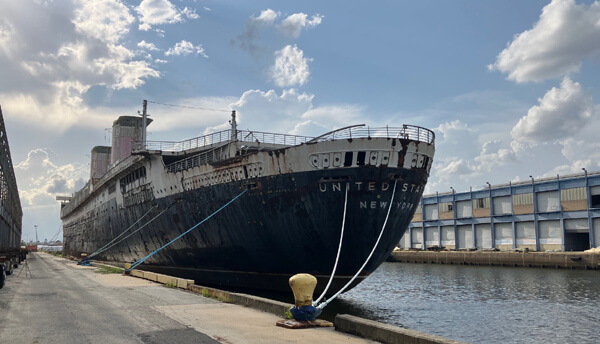
The liner's first move will be lateral from Pier 82 to Pier 80 before being moved into the Delaware River (Allan Jordan photo)


The departure from Philadelphia was scheduled for February 8, which in an odd quirk of fate is 75 years to the day from when her keel was laid in the dry dock at New Port News Shipbuilding and Dry Dock Company. Tugboats were to maneuver the ss United States from Pier 80 into the Delaware River at approximately 0330. She was due to proceed downriver during low tide at approximately 0430. Complicating the maneuver are the roadway bridges passing over the river (Walt Whitman Bridge (I-76), Commodore Barry Bridge (U.S. 322), and the Delaware Memorial Bridge (I-295) along her route. The Delaware River Port Authority (DRPA) has determined it will suspend traffic on the bridges as the liner passes underneath. On at least one of the bridges, the liner’s funnels and mast only have a few feet of clearance to the underside of the bridge. Near the mouth of the Delaware River, she will be secured to an ocean-going lead tug for the trip to Alabama.

First, it was announced that the lateral move was delayed to the second high tide of the day at approximately 2020 on Thursday, February 6. Then, during a last-minute meeting with the U.S. Coast Guard and others, further questions arose related to the towing of the vessel.

“Plans to move the ss United States from Philadelphia, Pennsylvania, to Mobile, Alabama, have been delayed due to follow-up details requested by the U.S. Coast Guard to ensure a proper tow from Pier 82 to Pier 80. Because of the delay of the pier transition, the departure tow out of Philadelphia originally planned for February 8 has been delayed. A new date has not been set for departure,” the Conservancy announced in a follow-up posting on social media. 

The Conservancy added that it understands the frustrations brought about by the continuous delays of the vessel’s voyage and called for more patience. The delay is indefinite with no target date announced for the next attempt to move the liner. 

Okaloosa County has estimated it will be a two-week journey for the liner to reach Mobile, Alabama. Upon arrival, the vessel will undergo an extensive remediation removing oil from her fuel tanks and other contaminants. Her iconic profile will be lost as her two massive funnels and her radar mast are to be dismantled and all the windows removed. There are also plans for unspecified modifications to ensure that when the vessel is deployed, it will land upright underwater. The preparation processes are anticipated to take about 12 months.

Okaloosa County highlights that the exact location along the Gulf Coast where the ss United States will be deployed as an artificial reef has not been set. It is expected to be about 20 nautical miles south of the Destin-Fort Walton Beach area.

“As the world’s largest artificial reef, the story of the ss United States will be told to thousands of divers from around the world as they explore her unique design and features. She will also benefit her surrounding ecosystem and become home to countless marine species that will thrive from the presence of her structure,” said Okaloosa County.

The County added that due to her size and the depth, the vessel will be home to a wide variety of marine life from iconic reef fish such as red snapper to pelagic species of fish like wahoo. The County is also helping the Conservancy with plans to establish an on-shore visitor’s center and museum dedicated to the liner and American design.


Syria's New Regime Renews CMA CGM's Terminal Lease at Latakia

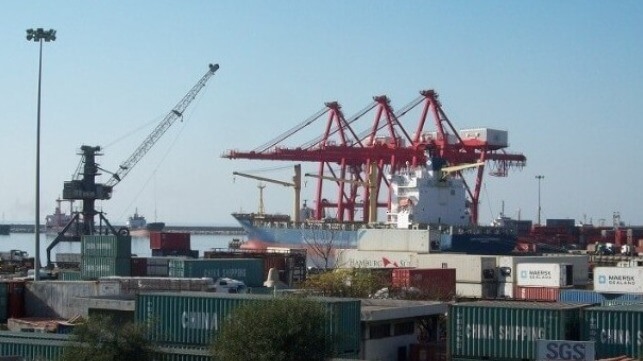
Latakia harbor
File image

Published Feb 5, 2025 9:40 PM by The Maritime Executive


The new governing power in Syria, Islamist group Hay'at Tahrir Al-Sham, has renegotiated CMA CGM's container terminal lease at the port of Latakia and will allow the French liner to continue to operate the facility under modified terms. 

CMA CGM signed a contract to run Latakia’s container terminal back in 2009, under the regime of then-President Bashar Al-Assad. The initial lease was for a period of ten years, renewable for five years upon mutual agreement. Upon expiration of the contract in 2019, CMA CGM renewed it until 2024, despite the intense international pressure on Syria over the ongoing civil war. In 2024, CMA CGM was invited by the Assad regime to renew once more, this time for a far longer term of 30 years. 

Assad's Ministry of Transport favored allowing CMA CGM to renew the contract, and noted at the time that CMA CGM did not withdraw its investment when sanctions and economic collapse hit Syria. By contrast, Philippine operator ICTSI backed out of its long-term lease at the Tartus Container Terminal in 2013, after the start of the Syrian civil war. After ICTSI's departure, the Tartus lease was transferred to a Russian operator (since revoked by HTS). 

According to Reuters, HTS' ports authority has decided to keep CMA CGM on at Latakia, with changes. The authority announced Wednesday that it had reached terms on a revised contract for the French liner's participation at Latakia. The changes are said to include a revised lease duration and revised revenue split between the operator and the government. 

The European Union is moving gradually to lift sanctions on the Syrian economy, allowing EU shippers to resume regular cross-Mediterranean trade with Latakia and Tartus for the first time in a decade. The prospects of economic renewal in a peaceful Syria may be attractive for business interests and for CMA CGM; Karam Shaar Advisory, a consultancy specializing in the Syrian economy, noted that CMA CGM founder Jacques Saade's family had ties to Latakia, potentially giving the firm an additional reason to stay.

INVASIVE SPECIES LAW

Alfa Laval Acquires Anti-Fouling Tech as Attention Grows Toward Biofouling

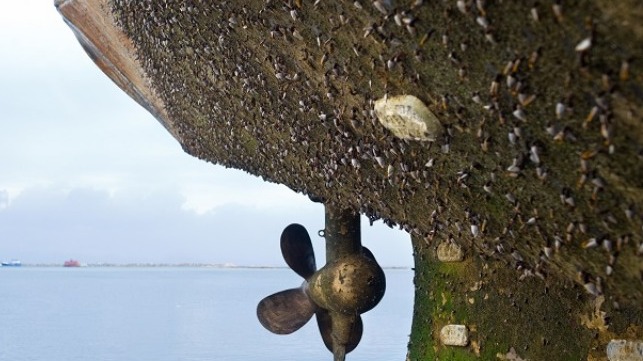
biofouling
Alfa Laval is adding an anti-fouling solution to its portfolio as biohazards are gaining greater focus and regulations (file photo)

Published Feb 5, 2025 8:31 PM by The Maritime Executive


Alfa Laval which has been working to expand its solutions to aid the maritime, offshore, and other heavy industries with the challenges of decarbonization is adding anti-fouling solutions to its offerings. The company based in Sweden has signed an agreement to acquire NRG Marine and its Sonihull Ultrasonic Antifouling solutions.

The acquisition is part of Alfa Laval’s strategy to provide customers with environmentally friendly solutions that can contribute to improving operations and addressing goals for net zero operations and decarbonization. Alfa Laval is adding applications that contribute to improving operational efficiency, reducing costs, and extending the lifecycle of assets for the maritime sector as well as offshore oil and gas operations.

Biofouling is becoming an increasing concern both due to its operational impact as well as the growing focus on environmental considerations. Key regions such regions such as Australia and New Zealand have increased their biofouling regulations creating concerns for ships operating in the region. Several cruise ships drew attention when they were turned away from ports primarily in New Zealand due to biohazards that were identified on their hulls. It resulted in delays and costly impromptu efforts to clean the underwater surfaces.

The International Maritime Organization is also discussing the issues and the risks of spreading invasive species while operators are also seeking solutions to save fuel and operating costs. Similarly, the oil and gas sector continues to seek safe applications to prevent and clean growth from its stationary underwater surfaces.

NRG Marine reports it set out in 2006 to develop an environmentally friendly anti-fouling technology against a backdrop of increasingly stringent legislation governing the use of poisonous biocides in marine coatings. Its offering is a proactive technology that utilizes ultrasonic microscopic bubbles that implode, creating agitation that disrupts the surface environment. The system operates continuously and is a non-invasive method that passively cleans the surface.

Ultrasonic anti-fouling technology they report is emerging as a promising alternative to other methods. It does not require harsh chemicals or removing the ship from the water to clean the hull. The companies highlight it is a sustainable technology that is cost-effective for the operators and can be installed on any ship with no requirements for through-hull fittings. 

“The inclusion of ultrasonic anti-fouling technology into our portfolio is another addition to our decarbonization toolbox,” said Sameer Kalra, the President Marine Division of Alfa Laval. “By addressing the critical problem of biofouling with this advanced technique, we will enable our customers to meet both business and environmental objectives.”

Alfa Laval, which traces its origins to the 1880s, is well-known in the marine sector for its pumps, as well as its systems for fuel, oil, water, and other applications. It has been expanding its product lines with solutions including ballast water treatment, air lubrication, heat transfer, and exhaust gas as well as its participation in Oceanbird, a wind-assisted propulsion technology. The company expects to close the acquisition of NRG Marine in the second quarter of 2025.


Windward Launches AI Solution to Counter Maritime Infrastructure Threats

Windward AI

Published Feb 9, 2025 10:19 PM by The Maritime Executive


[By Windward]

Windward, the leading Maritime AI company, today announced the launch of its Critical Maritime Infrastructure Protection solution, a first-of-its-kind AI-powered solution designed to protect the world's essential maritime infrastructure including cables, pipelines, and rigs against growing threats.

Recent suspected attacks on undersea cables globally, as well as the sabotage of oil pipelines in recent years, have demonstrated the vulnerability of global energy and data networks and the vital need to secure them. The solution combines the Windward-mapped proprietary cable layer and integrated user data with its best-in-class AI-based behavioral pattern detection to empower organizations ranging from government and intelligence agencies to telecommunication and energy companies to identify, monitor, and mitigate risks before they cause disruption. It also supports post-investigations, providing evidence to insurers and law enforcement agencies.

Maritime infrastructure is the backbone of global connectivity and economic stability. Deep sea cables transmit approximately 95% of all international data and underwater pipelines transport critical energy resources, including natural gas and crude oil, across continents. According to a threat analysis by Insikt Group, there is an average of more than 100 cable faults a year, and the proximity of recent faults to areas of geopolitical conflict and reports of suspected intentional damage are causes for concern. Recent examples of cables damaged by anchors in the Baltic Sea and near Taiwan as well as the explosion that severely damaged the Nord Stream 1 and 2 pipelines in 2022 highlight the need for increased monitoring of critical infrastructure at sea.

Windward's Critical Maritime Infrastructure Protection solution addresses three primary threats to maritime infrastructure, deep-sea research operations, shallow-water sabotage, and attacks on offshore oil rigs and platforms. The AI-powered solution monitors high-risk vessels to flag suspicious activities, be it a rogue state research vessel in the deep sea, or a shadow fleet vessel in shallow waters or in close proximity to oil rigs. The platform accesses historical data, behavioral patterns, and predictive analytics with real-time monitoring alerts, powered by the integrated Dataminr feed, to enable users to proactively assess and mitigate threats. MAI Expert™, Windward's virtual subject matter expert provides comprehensive risk analysis and context.

For enforcement agencies—including defense and intelligence organizations, coast guards, and navies—Windward's Critical Maritime Infrastructure Protection solution provides the tools and insights to detect, monitor, and mitigate hostile activities targeting subsea infrastructure. The platform enables real-time tracking of high-risk areas and protected zones, delivers detailed threat intelligence, and facilitates post-incident investigations through proprietary data layers, risk models, and advanced analytics.

For private organizations stakeholders, such as telecom infrastructure providers, energy companies, oil and gas operators, and tech giants with subsea assets, Windward's solution offers monitoring capabilities to safeguard extensive cable, pipeline networks, and offshore rigs. Organizations can add their proprietary data, set customized risk parameters, and define alerts based on their specific infrastructure needs above or under the waters.

"The economic and geopolitical implications of undersea infrastructure sabotage are staggering," said Ami Daniel, Co-Founder and CEO of Windward. "Beyond the immediate disruptions, national stability and financial implications for businesses relying on cables for connectivity and operational continuity are immense. While recent incidents remain under investigation, the growing risks—whether accidental or intentional—underscore the urgent need for advanced monitoring. With our Critical Maritime Infrastructure Protection solution, we aim to defend all stakeholders from this new kind of warfare."
 

The products and services herein described in this press release are not endorsed by The Maritime Executive.


Maersk Forecasts Container Volume Growth While Profits Decline in 2025

Maersk
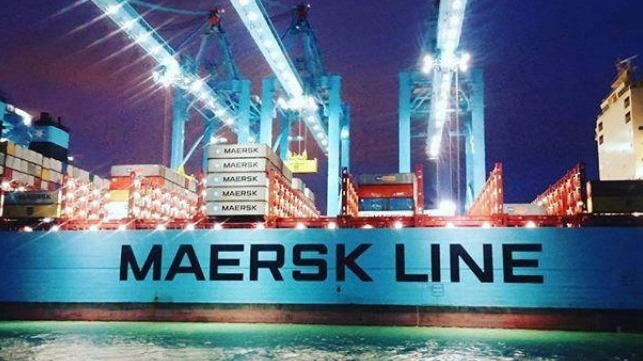
Maersk predicts it will grow volumes in pace with the industry but foresees declining profits in the year ahead

Published Feb 6, 2025 4:52 PM by The Maritime Executive


Despite continued global uncertainties, Maersk is forecasting the container market will grow by a healthy four percent in 2025 and that the company will remain at pace with the market. The company gave a positive outlook for 2025 after highlighting that 2024 was the third-best financial performance in its history.

Starting 2024, Maersk had issued a cautious note citing the factors disrupting the market and a collapse in rates that overtook the market in the latter part of 2023. Faced with the problems in the Red Sea, the prospects of dramatically higher costs, and a potential slowdown in the global economy, Maersk like its peers forecast a difficult year. Instead, the company highlights all three of its business segments performed well benefitting from a significant increase in freight rates, strong volume demand, and cost discipline.

Reporting financial results for 2024 today, Maersk dramatically outperformed analyst forecasts with earnings (EBIT) up 65 percent to $6.5 billion. Revenues from the ocean shipping business were over $37 billion for the year while total revenues across all the business were nearly $55 billion. Despite longer steaming distances for the routes going around Africa and increased fuel costs, it was able to stabilize operating costs and benefit from the higher freight rates.

“Our ability to navigate shifting circumstances and ensure steady supply chains for our customers was put to the test throughout 2024,” noted Vincent Clerc, CEO of A.P. Moller – Maersk. “We successfully capitalized on increased demand while enhancing productivity and rigorously managing costs — all of which contributed to our strong financial performance.”

Speaking with reporters, Clerc downplayed the focus on tariffs saying more of the outlook depends on how consumers react and demand. For the industry, he cites the continued imbalance in supply and demand as new, larger vessels continue to be delivered but he said the potential remains to largely offset the supply-side drivers with strong market demand.

The Red Sea and its impact on the market continues to be one of the largest uncertainties according to Maersk, which like all the major carriers, continues to divert around Africa. On the optimistic side, Clerc said they might see a mid-year return but noted that with increased capacity, rates were likely to decline and drive Maersk to the low end of its outlook. However, if the return to the Red Sea continues to be deferred till the end of the year, Maersk believes the market remains strong and it will be driven to the high end of its forecast.

Based on the uncertainties and the “considerable macroeconomic” issues, Maersk however foresees strong declines in profits in 2025. In the worst scenario, EBITDA could be at $6 billion which would be half 2024 levels. In the strongest case, the forecast calls for EBITDA of $9 billion which would still be below 2023 levels.

Investors were encouraged by the performance and did not show strong concern about the outlook. At one point during the day, they drove the stock price up by 10 percent and it settled up more than six percent on the day. Maersk is seen by many as an indicator not only for the industry but also for the broader economy and trade.

Management emphasized its ability to adapt to the market in what will be a challenging year. While the company remains committed to its strategy, it is also taking a large risk in its shipping operations as it abandons the alliance with MSC Mediterranean Shipping and begins a challenging transition to a new approach with an overhauled route system. Most of the first half of the year will be spent transitioning to the new Gemini Cooperation with Hapag-Lloyd which uses a hub and feeder system on its key routes. The goal is to drive schedule reliability with a goal of 90 percent on time believing it will differentiate the service and support higher freight rates due to the reliability of the service.