On the need for radical honesty
February 26, 2025
LONG READ

(Originally published in German as part of the book “Klima, Kollaps, Kommunikation”.)
Why Climate Science is a Trap
It was the year 1992 when the assembled heads of state heralded the era of climate negotiations in Rio de Janeiro. At that time, after a short stint in theoretical physics, I had started as a climate scientist at the Max Planck Institute in Hamburg, Germany. After 27 years of inventing new models and methods and improving climate models, I couldn’t take it anymore. A kind of mass apathy, the opposite of mass panic, had spread in the scientific community.
I can hear it again, the mantra uniting everyone from fossil-fuel execs to politicians to the radical climate movement: ‘1.5 is alive!’. Ever since the world’s governments agreed on the goal of limiting global warming to 1.5°C, optimism has spread like wildfire. ‘Together we can do it!’ Whether it’s Al Jaber, head of the last world climate conference COP28 and head of the Abu Dabi National Oil Company, the German government or Fridays-for-Future: everyone agrees that one-point-five must live on.
Yet the reality out there is a different one. 2024 was the first year officially to be declared warmer than 1.5 degrees above pre-industrial levels. We have been heating up our planet for well over 100 years, and instead of taking effective action, we are, at a global level, doing quite the opposite: greenhouse gas emissions continue to rise up to this day.
When a gulf of such a size opens between enthusiasm and reality, an uncomfortable question arises: has proclaiming the 1.5-degree target actually increased the likelihood that we will ultimately do something to avert the worst consequences of the climate catastrophe?
Climate science quickly adopted the target after it was agreed upon in 2015. This is usually done in the following way: climate models are used to produce a large number of future scenarios, and it is then determined that we can still emit X tonnes of CO2 globally until we reach the 1.5-degree threshold. In other words, the focus is on how long we can continue to do what we have been doing – and not on what we have to do to avert catastrophe.
To a certain extent, this is understandable, because we have known for a long time what needs to be done, so there isn’t really much to find out. Nevertheless, viewed from an angle of every-day experience, this kind of approach seems a little odd. Let’s say I’m lying in bed with a fever of 39.8°C. Feeling sick, I set myself a temperature target of 37.3°C to be reached within 48 hours. Would that be better in any way than simply doing everything I can to get better as quickly as possible? What is the point of setting a precise numerical target anyway?
I recently asked an acquaintance – a retired Swiss doctor and former Green Party politician – what role prognoses play in medicine. He told me that they are very important, because in an emergency situation you often have to decide which patients should be prioritised. Such predictions have to be made precisely but also extremely quickly.
However, speed is certainly not something that climate science could claim for itself. Back in 1896, the Swedish physicist Svante Arrhenius calculated the expecte warming from a doubling of the atmospheric carbon dioxide content. His result, plus 4°C compared to pre-industrial temperature levels, is fully still within today’s published range. This astonishingly early realisation has not prevented CO2 levels from increasing by slightly more than 50%. From around 280 parts per million at the time of Arrhenius time to over 420 today.

It seems paradoxical: climate heating has taken off right when climate scientists started publishing their findings. Currently, warming happens at a faster rate (orange line) compared to previously (red curve). Source: Berkeley Earth Land and Ocean Data (Temperature anomalies above sea ice from air temperature records.)
The figure here shows that the Earth’s global average temperature has increased significantly since Arrhenius’ calculations. The climate here is shown as a 20-year running mean, and the climate trend as linear fit to the last 20 years of data. Earth’s climate is fully on its way to breaking through the assumed 1.5°C threshold. And this trend has a lot of momentum to it, because most of the heat generated by the greenhouse effect goes into the oceans, whose gigantic heat capacity greatly delays the rise in air temperatures. But maybe more importantly, there is also the inertia of human habits.
Here is a case where climate science is crystal clear: to ultimately stop the rise in temperatures, we must first stop the further increase in greenhouse gas emissions – which we still haven’t, almost ten years after the Paris Agreement. But this is only the very first step. The second step is to halt the continued rise in greenhouse gas concentrations, and for that emissions must be reduced to somewhere around half the current level. But that will still not stop the heating. Ultimately, emissions must be reduced to zero.
We know from daily experience how difficult it is to change our lifestyle, let alone our economic system or political institutions. And so it should be clear that each of these steps is an extremely difficult undertaking, especially the last one. There is no guarantee we will succeed even with the first one. And in the meantime, the Earth’s temperature continues to rise.
A comparison of the red curve with the orange line also shows that the rate of warming continues to accelerate, i.e. Earth’s fever curve is pointing ever more steeply upwards in the longer term. This means that the extrapolation shown as an orange line onwards is actually too optimistic because it assumes that there will be no further acceleration of the temperature rise. We know that this is not true because we are continuing to increase the CO2 content of the atmosphere. Despite of this, our simple extrapolation brings us beyond 2°C in 2050, and to around 3.5°C by 2100, a degree of planetary warming that is generally regarded as ‘catastrophic’ and whose consequences are almost impossible to estimate. This means that massive reductions in greenhouse gas emissions — far beyond those we briefly saw during the pandemic — will be necessary to achieve an optimistic scenario that ultimately leads to a warming that will likely be catastrophic.
So far, the necessary political measures to even achieve the first step have failed to materialise. I put myself in the shoes of our friend, the doctor, and imagine the following situation: More and more of his patients come to him with chronic conditions, let’s say with type II diabetes. What is there to do? Imagine our friend decides to commission a never-ending number of meticulously studied future scenarios from his epidemiologist colleagues, each one supported by complicated mathematical models. These scenarios tell him in great detail how many new cases of the disease will occur in which year and decade, in which region and within which age group. However, the underlying complex calculations differ considerably from model to model, and it is these differences that most interests our friend the doctor. What he doesn’t dare to do, however, is prescribe a healthier diet for his patients.
This more or less is the state of climate science today. So is climate research perhaps a form of problem avoidance? Is the point of collecting more data to get closer to solving the problem, or is it rather a kind of escape from the realisation that we are facing a practically unsolvable task? Perhaps it is precisely the continued and never ending preoccupation with the goal of 1.5 degrees, supported by a most highly sophisticated mathematical apparatus, that inevitably gives researchers a sense of familiarity with the scenario under investigation. And that familiarity, and all the time and effort invested, makes it more and more difficult to entertain the idea that all those scenarios from the start have been utterly unrealistic. And thus the scientific community more and more lulls the wider public into a sense of security, which in turn gives politicians the license to carry on as before.
Why Net Zero is a Trap

Clearcut forest in Estonia. Photo by Maksim Shutov on Unsplash
Modern science is repeatedly confronted with problems that are simultaneously very simple and devilishly difficult. These give us a hint of the limitations of science as a guide for taking action. Of these, climate change probably presents itself as the ultimate ‘wicked problem’. We are no longer simply dealing with a ‘problem’ for which there are technical or organizational ‘solutions’. The issue we are dealing with is so intricate and has so many aspects and levels that it challenges our notions of what is meant by ‘solutions’ in the first place. The question is: what is there to do for us in the climate change profession?
During the 1940s and 50s, the seemingly simple solution to the risks associated with the military use of nuclear power was deterrence. Consequently, the nuclear physics elite assembled at Los Alamos was to develop first the atomic bomb and then the hydrogen bomb, as quickly as possible in order to prevent the other side from using them first. But what presents itself first as a straightforward problem-solution pair, in the long term creates extremely challenging problems that are almost impossible to solve. The confrontational course itself will sooner or later undermine the effectiveness of the deterrence. In a general climate of increasing tensions, the willingness to use nuclear weapons as a means of political or military pressure inevitably increases. Cooperation is undermined, and there is no chance of a general easing of tensions.
The wicked problem of planetary heating – the energy released through the enhanced greenhouse effect corresponds to over one million nuclear detonations per day – also has a seemingly simple solutions: simulations by computer models show that more or less shortly after reaching global net zero emissions, warming would stop. Where ‘net zero’ means that all human-made emissions of carbon dioxide, or CO2, where they still exist, will be compensated by equally large fluxes of CO2 into so-called ‘carbon sinks’. Because CO2 mixes rapidly in the atmosphere, it does not matter where the greenhouse gas is emitted, and where it is taken up. In other words, zero emissions are unnecessary, net zero is already good enough.
This is exactly the point where it gets tricky: the seemingly insignificant prefix ‘net’ was initially meant to apply to only very few essential but difficult to mitigate carbon emissions, for example from essential agriculture. In purely mathematical terms, however, the little word ‘net’ allows someone to hide arbitrarily large emissions, such as from fossil-fuel burning. The only requirement is to find equally large carbon sinks – ready is the net-zero scenario. Ready only in a mathematical sense, because until today no realistic plans exist for the deployment of the massive carbon sinks that would allow a continuation of business-as-usual. This does not prevent the latest IPCC report from containing a whole range of essentially science-fiction scenarios, where fossil fuel burning persists decades beyond the point where ‘net zero’ is supposed to have been reached.
The IPCC and the technical capture of CO2: carbon capture and storage (CCS)
In the IPCC’s integrated assessment model (IAM) scenarios, carbon dioxide removal is dominated by BECCS, the most cost effective negative emissions technology, with the next most significant option, Direct Air Carbon Capture and Storage (DACCS) contributing typically only about one tenth of BECCS for Paris compliant scenarios (IPCC AR6 WGIII Section 3.4.7). The median CO2 removal by BECCS in those scenarios is 12Gt of CO2 per year, about one third of current fossil-fuel emissions.
Total Carbon Capture and Storage (CCS), which includes BECCS, DACCS and CCS in combination with fossil fuel burning, amounts to 665 billion tons of CO2 until 2100 in Paris Compliant IPCC scenarios, of which half is accounted for by BECCS (330 billion tons of CO2, IPCC AR6 WGIII Table 3.6). For comparison, about 0.2 billion tons of CO2 were captured by CCS between 1996 and 2020. At this rate, it will take 79,800 years to capture the CO2 needed to comply with the Paris Agreement, according to IAM scenarios. There is no BECCS scheme in operation today.
The land requirements modelled in IAM (integrated assessment modelling) scenarios due to BECCS-based carbon removal amount to 25 to 80% of current cropland area, or between 1.2 and 3.7 times the size of India (0.4 to 1.2 billion hectares) – in other words, it creates a world where a growing population will be unable to feed itself.
If BECCS is established on forest land, instead, it requires first clearing the forest, which creates a “carbon debt” that will take many decades to be paid back – making forest based BECCS unsuitable for the type of rapid mitigation required to meet the Paris Agreement.
There is growing use of tree biomass for energy production, and plans to expand such schemes into BECCS. Therefore, even the prospect of BECCS is likely doing countless damage to intact forest ecosystems, including logging of old growth forests in the EU and Canada. The commercial viability of this practice depends on taxpayer subsidies as well as an accounting loophole by the IPCC that classifies biomass energy as carbon neutral, while the emissions from clearing the forest and from the biomass operations are being accounted for elsewhere.
Land, nitrogen, phosphorus, and water requirements of BECCS in IAM scenarios are so great that existing mitigation scenarios using biological carbon dioxide removal (essentially BECCS) may “largely transfer environmental risk from the atmosphere to the land”, i.e. mitigate against planetary heating but create similar or greater risks in the land sector instead.
As a recent example, a 2021 modelling study found that removing carbon with BECCS would create more water shortage than the climate change it mitigates against – in other words, current “safe” mitigation scenarios do more harm than good.
A look at the consequences, should such sinks actually be used for climate mitigation, shows not only their lack of realism, but also how dangerous such scenarios would be. Since there is not enough land for reforestation, the CO2 would inevitably have to be captured in some way, and then stored long-term in geological formations. The sequestration is either done with the help of biofuels – in which case the approach is called BECCS – or using machines: DACCS, see above. Both BECCS and DACCS are being deployed lavishly within most IPCC scenarios, precisely because all of them operate on a fixed and immutable assumption, that the future will inevitably look very much like a modified status quo. Under such assumption, any rapid shift away from fossil fuels is made impossible. Negative consequences of the resultant massive demand for energy (to operate DACCS) and fertile land (for BECCS) are interestingly not taken into account in those models. Net zero thus becomes a trap: if it succeeds, the price will be famine, water shortages and the immense destruction of our remaining ecosystems. If it doesn’t, global warming will spiral out of control.
For a long time, net zero looked like an unrivalled success story. After protests by Fridays for Future, Extinction Rebellion and other groups led to a series of climate emergency declarations, there are now existing or soon-to-exist net zero plans that cover as much as 90% of all global human-made CO2 sources. Most of them set themselves a target of reaching net zero by the year 2050.
Only problem is: neither the plans not the emergency declarations are legally binding. Net zero by 2050 is also not anywhere near sufficient to reach the goals of the Paris Agreement to limit warming to well below 1.5C. There is also evidence that the oil and gas industry has never actually believed in the large-scale deployment of carbon capture and storage, irrespective of what their PR campaigns look like. And so there is immense pressure to cut costs and therefore further undermine and weaken the standards of carbon projects, all the way to large-scale fraud.
The long-term effects of a failed reliance on net zero are already becoming apparent. The eternally delayed measures are being abandoned one-by-one and replaced by even more grandiose ‘solar radiation management’ schemes: the artificial manipulation of the Earth’s radiation balance and consequently large-scale weather patterns by way of spraying massive amounts of sulfur dioxide aerosol particles into the upper atmosphere.
Similar to the development of nuclear weapons, there is opposition from large parts of the scientific community: an open letter signed by over 350 researchers calls for a halt to research into solar geoengineering, as the consequences of manipulating the climate are incalculable. There is no responsible global political structure to regulate such an endeavour.
Even the original 1.5C goal of the Paris Agreement has distorted the public discourse on climate – as if it had been the goal to stabilize the global mean temperature, and not the climate. Because this global average is no more than a product of abstract thought, and never actually experienced directly by anyone. Similar to ‘net zero’, there can be an awful lot of climate destabilization hiding between mathematically keeping to the 1.5C goal – if the goal is not reached by stabilizing the climate, but by large-scale weather manipulation. And so, slowly but surely, we fall into the net zero trap.
The Morality Trap
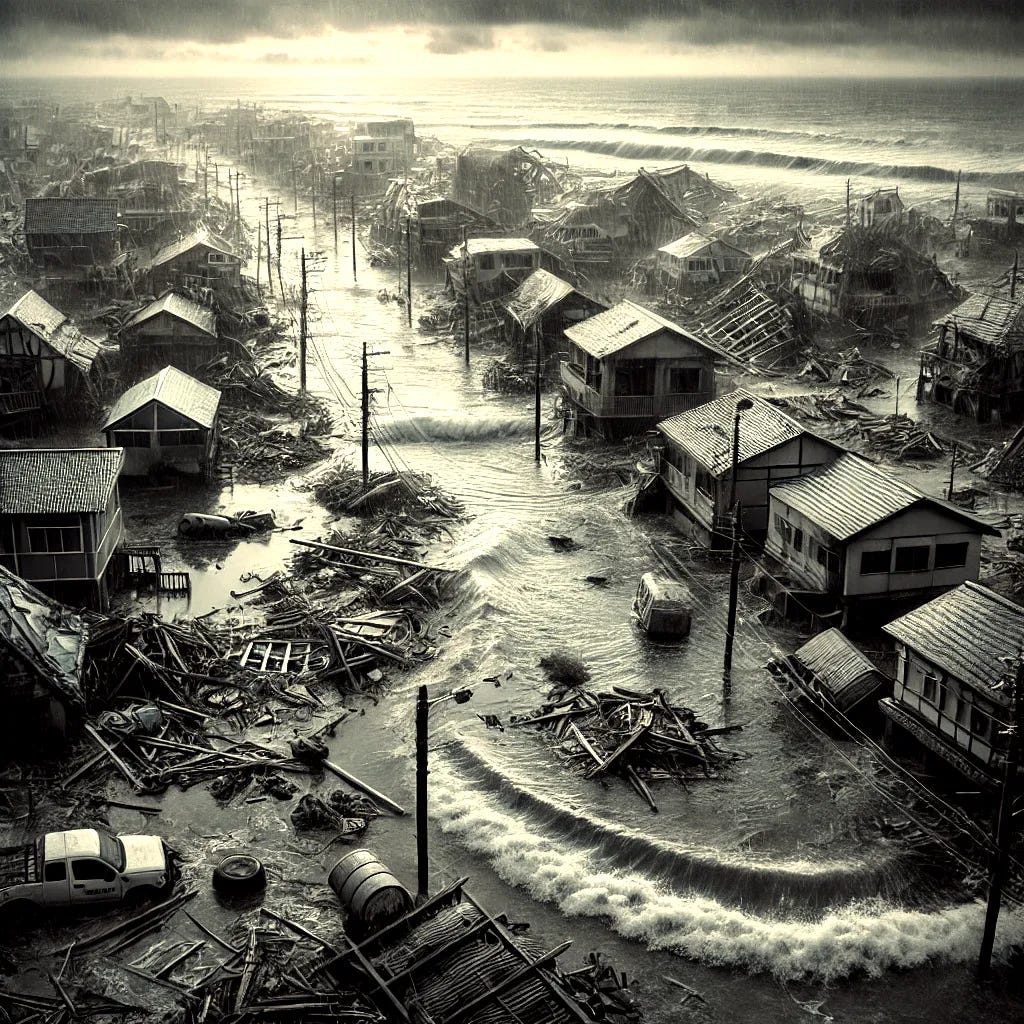
The longer I look at the climate issue, the more it reminds me of the quantum physics problems I worked on at the beginning of my science career: Whenever I thought I’d understood something, it was an unmistakable sign that I was on the wrong track. As soon as I thought I had grasped the essence of it, I invested all my energies in this new realisation and started to derive everything else from it – and in this way lost sight of the bigger picture. The same now happens with my endeavors to get my head around the climate “problem”.
Although I didn’t know any climate researchers who thought it was possible to limit global warming to 1.5°C back in 2015, I welcomed the decision. It is a mark that, while not 100% safe, promised to limit the consequences of climate change to such an extent that we could live with it in the long term. Today, almost ten years after the Paris Agreement, I can see that even this well-intentioned resolution has turned out to be a trap.
I know no IPCC author who has not taken on this burden of unpaid work with the best of intentions. Writing the report requires an enormous amount of diligence and coordination with colleagues, and authorship generally doesn’t further your career because it is not considered original research. (I myself contributed to the third report.) However, despite of, or maybe due to its good intentions, the IPCC itself has a morality problem. Like the proverbial road to hell, the road to climate collapse is paved with good intentions.
The IPCC’s morality problem
Current global mitigation science, as defined by the IPCC’s Working Group III’s (WGIII) 6th Assessment Report (AR6), Chapter 3, presents itself with the following problems:
- Facilitation of delay by radically downplaying the scale of the challenge of mitigation through reliance on unproven “sci fi” scenarios, such as global net negative emissions through massive deployment of carbon dioxide removal
- A general unwillingness to engage with concepts that deviate from business-as-usual, such as supply-side management of carbon emissions, non-monetary allocation principles such as rationing of fossil fuels, energy or other goods, degrowth, or widening of the scope of the commons
- The unfairness of the scenarios used where the rich remain rich and the poor poor, post-colonial power structures are maintained, and scenarios of convergence of living standards are sidelined.
- The enormous potential for land grab, ecosystem destruction, water and food system disruption due to massive deployment of bioenergy and bioenergy with carbon capture and storage (BECCS) in the promoted scenarios.
- The democratic deficit in secret datasets and limited community engagement on a research issue impacting citizens’ futures world-wide, with real impact on policy.
If the whole climate issue proves to be such a minefield, what is there left to do or say? Firstly, I believe there are a number of well-established facts that can serve as an anchor in this sea of daunting complexity. Here, I’d like to list the essential ones:
- The Earth’s CO2 content and temperature have always risen and fallen together in the geological past, so the two are clearly linked.
- The climate problem is an extreme example of a collective problem: because greenhouse gases mix rapidly in the atmosphere, we can only solve the problem globally and together.
- If we continue to burn oil, gas and coal until supplies are exhausted, the earth will warm by well over ten degrees, making agriculture impossible and large parts of the earth directly uninhabitable due to the humid heat.
- Rapid global warming of several degrees Celsius has only occurred once in the known history of the earth, but the pace of warming today is believed to be at least ten times faster.
- On the other hand, at the end of the last ice age, the climate did warm at a similar rate to today, but only regionally, and before the widespread introduction of agriculture and the associated rapid increase in human population. Since then, the Earth’s climate has been extremely stable – an era that has now finally come to an end.
- Decades of warnings, appeals, good intentions and climate policy have done nothing to change the fact that we are continuing to heat up our planet at an increasing rate.
But what does that mean, is there anything I can learn from this? What dawns on me is that we are conducting a monstrous collective experiment together – with vastly differing degrees of complicity – with an almost entirely uncertain outcome. The best analogy I can find is the story of the Sorcerer’s Apprentice. Just as the apprentice thought it was important to be good at magic, we still think that the most important thing is to understand the climate system or to develop the right technologies. And that is the reason why, to this day, climate scientists – or tech-fantasizing billionaires – are the main people consulted on climate issues.
If it is the case that we will only react to the climate crisis when we all, right up to the richest and most powerful, feel the negative consequences directly, then it is completely irrelevant how dangerous climate change actually is. We will simply continue on our current path until the system breaks1. And at the moment, it doesn’t look as if we are collectively in a position to escape this diabolical mechanism of self-destruction.
For me personally, the main conclusion I can draw is to look at my own motivation. And there, I make some interesting observations: on the one hand, I always had maintained that climate science tends to oversell its own importance, that there was far more uncertainty out there than what is usually admitting and there was usually an unwillingness to confront one’s own failures and complicity – but on the other, I also have it in me that I want to show off as an ‘expert’.
It is precisely this assumption of knowing or understanding more than others, this sense of academic privilege, that makes climate scientists like myself fall into the morality trap time and again.
So my path initially led from climate science to what we commonly call activism. Only to realise that exact same fallacies apply there, too. A good example are the often repeated warnings from scientists about an impending climate catastrophe, which I myself took part in. It is seldom asked: What is my motivation here, who am I communicating with and what is the message? The problem with such warnings is that they are usually launched in such a way that they come across as warnings to the general public. However, the lack of any real influence that ordinary citizens could exert is usually ignored, making the warnings appear elitist and arrogant. It would therefore be more honest if we as climate scientists were to go on strike and occupy the Ministry of the Environment or Economics. But we usually don’t dare to do that, and so the effect fizzles out and the communicated emergency situation immediately seems much less urgent.
A lack of honesty also comes in the way when I think I have to appeal to the common sense of my fellow human beings. Do I really know what motivates either me, or my fellow human beings? When I listen to myself, I find a longing for harmony and closeness to nature on the one hand, but also a lot of anger, powerlessness and despair. And this anger, I sometimes feel, can also be directed against nature or my fellow human beings. What if dominance over nature – and the climate crisis is just one expression of this – stems from a deep-seated anger, a despair that is fuelled by this very alienation from nature? Then perhaps appeals to people’s self-interest will backfire. Because it feels in their self-interest to destroy and vent their anger.
And so, neglecting the unspoken, subliminal messages can easily backfire. If I define myself as an activist and make demands on the existing authorities, then I am taking part in an unspoken collective agreement that creates these authorities in the first place. The moment nobody believes in them anymore, they no longer exist as authorities. And so, as an activist, I automatically take part in a social game that further cements the existing power structures.
The Nigerian philosopher Báyò Akómoláfé has described this situation as a ‘death spiral’. The failure of our imagination – that more can go wrong in the climate crisis than the IPCC is telling us, or that we don’t realise what we want – is only leading us deeper and deeper into this spiral. We are so attached to our privileges, to the existing power structures, and can imagine so little radical change that we end up being more afraid of new ideas than of the impending climate and ecological catastrophe. But the radical changes will come, either through climate change itself or through our response to it.
In a situation like this, only crazy ideas that call everything into question can help. Akómoláfé calls this ‘trickster energy’, the power of the magician, and talks about ‘post-activism’. For me, this means three things above all: moving away from a purely rational approach and giving the immediate experience its rightful place; saying goodbye to the idea that something has to stay the way it is at the moment; and realising that nothing and no one exists completely separately.
I came much closer to my first goal than I had hoped for, when I was caught up in the worst extreme rainfall event ever recorded in Europe, in September 2023. At that time, it rained as much in just over 24 hours on the Greek peninsula of Pelion as it usually does in an entire year. I had just arrived from Germany with my then eight-year-old daughter when we realised that we were cut off from the rest of the family for days. The stench from thousands of decaying animal carcasses that had spread along the route home is still etched deep into my memory. It was then that I realised that I also suffer from climate anxiety.
And then there are those things that seem to be immovable and never change, but which prevent us from finally breaking out of the death spiral. At the top of my personal list is the way climate scientists communicate with the public. The approach always seems to be the same: Experts, and above all the IPCC, warn of the impending catastrophe, but then follow up with a positive message that if we just try hard enough, we can still make it
But do climate scientists have to take on the role of parents who have to tell off their children but at the same time protect them from messages that are too frightening? How about turning citizens into experts and scientists into listeners? The founder of the Potsdam Institute for Climate Impact Research, Hans Joachim Schellnhuber, once warned that many climate scientists suffer from ‘Betriebsblindheit’ (professional blindness) and are therefore unable to recognise the true dangers associated with the climate crisis. People who have recently been victims of climate disasters are perhaps much better qualified to do this. What if we had suitable public fora in which such an exchange, which is unusual for us, could take place regularly?
And that brings me to my third and final point: we should overcome the many divisions that separate us humans in the climate crisis. For example, the division between those who know and those who have to learn, or between the enlightened ones and the doubters. And if I’m completely honest, my indignation at those who have the ‘wrong’ views is always hypocritical, because there is always something of the ideas, values and feelings of the others als in me. I’m also, secretly, tempted by the prospect that net-zero declarations could still work in the end. And somewhere inside me there is also the angry anti-establishment climate denier, the doubter of expert opinions, or the enthusiastic or angry activist.
I believe there is a need to overcome the boundary between climate activists and other citizens, to define the concept of climate activism much more broadly. It is also climate activism when we campaign for more citizen participation and democracy. Or when we take care of local issues and directly experience how we and others react to and deal with problems. In my case, this has meant putting my energies where I carry immediate responsibility: towards my family, the land we farm here in Greece.
What remains is the feeling of powerlessness in the face of a task that far exceeds my strength. But it is precisely this kind of doubt that is rooted in the erroneous assumption that we are dealing with a question of individual responsibility. Which is why we need community – and spaces for dialogue and discussions. Several years ago, we provided such spaces to academics who felt powerless, as part of Faculty for a Future, which I co-founded – but such spaces rarely ever exist at scientific conferences. What gives me hope, however, is that more and more such spaces are emerging in many places, as part of citizens’ assemblies or grassroots movements.
The climate crisis is not only an extreme case of a collective challenge, but also an extremely complex one. Conventional notions of expertise and specialisation are therefore failing. The essence of radical honesty is to recognise this failure of our conventional ideas and to draw lessons from it.
1And if it comes to this, very likely there will be so much chaos that collective action will be impossible to achieve, so the action will mainly consist of various forms of adaptation.