Thursday, February 27, 2025

UN rejects ‘annexation’ proposals for Palestinian territories

KUSHNER PROPERTIES PROMOTING GAZA BEACH FRONT

By AFP
February 26, 2025


'We must resist any normalisation of unlawful conduct,' said Volk - Copyright AFP RODGER BOSCH

Nina LARSON

The UN rights chief on Wednesday rejected as “unlawful” proposals for the annexation of or forced transfer from Palestinian territories, warning they posed a threat to the entire region.

“We must resist any normalisation of unlawful conduct, including proposals for annexation or forced transfer,” Volker Turk told the United Nations Human Rights Council.

Such proposals “could threaten the peace and security of Palestinians and Israelis, and of the wider region”, he warned, insisting that “this is the moment for voices of reason to prevail”.

Turk did not give details, but there have been rising levels of violence by Israeli settlers in the West Bank and calls for annexation after Israel announced expanded military operations in the occupied Palestinian territory.

US President Donald Trump has repeatedly proposed emptying war-ravaged Gaza of Palestinians.

He has floated the idea of a US takeover of Gaza under which its Palestinian population would be relocated — a proposal met with widespread condemnation, but welcomed by Israeli Prime Minister Benjamin Netanyahu.

Trump later appeared to soften his plan, saying he was only recommending the idea, and conceding that the leaders of Jordan and Egypt — the proposed destinations for relocated Gazans — had rejected any effort to move Palestinians against their will.

But the US president’s official social media accounts on Wednesday posted an apparently AI-generated video depicting war-ravaged Gaza rebuilt into a seaside resort, replete with a towering golden statue of Trump himself.


– ‘Impunity begets more violence’ –


Presenting a fresh report on the rights situation in the Palestinian territories, Turk said Wednesday: “We urgently need to end the conflict.”

To do so, he said it was vital to hold accountable perpetrators of a vast array of abuses committed since the war in Gaza erupted after Hamas’s deadly October 7, 2023 attacks inside Israel.

“Israel’s means and methods of warfare have caused staggering levels of casualties and destruction, raising concerns over the commission of war crimes and other possible atrocity crimes,” he said.

But he raised “serious doubts” about the Israeli justice system’s ability to deliver justice “notably in relation to the unlawful killing of Palestinians in Gaza or in the West Bank”.

He also noted that “Hamas and other Palestinian armed groups have taken, held, and tortured hostages in Gaza, and have indiscriminately fired projectiles into Israeli territory, amounting to war crimes”.

To his knowledge, none of these groups had taken measures to punish those responsible, he said, adding that such “impunity begets more violence”.

So to did “delegitimising and threatening international institutions that are there to serve people and uphold international law also harms us all”, he warned.

All violations and abuses need to be investigated independently, he said.

While Turk mentioned no names, earlier this month Washington sanctioned the chief prosecutor at the International Criminal Court Karim Khan over the ICC’s investigations targeting US personnel as well as alleged Israeli war crimes in Gaza.

Khan was responsible for the request that led the ICC to issue arrest warrants late last year for Netanyahu and his former defence minister Yoav Gallant.

Op-Ed: ‘Trump Gaza’ — Another disaster-in-waiting?


By Paul Wallis
February 27, 2025


The Gaza Strip requires tens of billions of dollars in recovery and renovation aid after more than a year of war, according to the United Nations - Copyright AFP BASHAR TALEB

The AI-generated Trump Gaza video is arguably a joke in the worst taste possible. It may never be possible to duplicate the sheer level of crassness involved.

You need to watch it to fully appreciate it and maybe lose a few dozen pounds surprisingly quickly.

A synopsis:

big gold statue of Trump in case your meds aren’t working for some reason.

Hezbollah-like guys with full beards hula dancing.

Trump and Netanyahu sitting by the pool in shorts.

And Elon! And Elon! And Elon! And Elon! And Elon!

Surprise!

A semi-traditional Arabic architecture with a subtle hint of Dubai Meets Old Chicago in a dive bar.

A few supposedly Palestinian people on the remarkably deserted strangely Caucasian-looking beach with at least one custom palm tree.

“But what if it’s true?”, you ask shrewdly, as the phalanx of stern armed guards keep an eye on your cunningly hoarded single remaining inherited aspirin from the 1970s.

If it’s true:

It’ll be the single biggest terrorist target in the Middle East. The poor little dears won’t have to do all that commuting.

It’ll require lots of “money” if you remember that weird-looking word at all.

It’ll require infrastructure on the scale of Miami and therefore can be built easily overnight.

It cannot possibly benefit anyone at all except investors and easy-bake contractors.

It’ll be expensive to look at, let alone visit.

There’s more money in the video than has ever been used for the Palestinian people or anyone else still alive in the area.

It epitomizes the true depth of intellect and sincerity of rich kids with nothing better to do.

It’s almost as elegant as a person in a red cap trying to outwit a KFC bucket but less melodramatic.

Yes, if you’re thinking of being blown up in an overpriced pretentious non-existent two-dimensional farce, this is for you!

Rush out and ask your friendly idiotic local ideological psychopath about bookings today!

Bring a friend, if there are any survivors.


Cory Doctorow on Elon Musk’s “Chaotic Blitz” at DOGE, Living in a Tech Dystopia, Luigi Mangione & More


DEMOCRACY NOW!

GuestsCory Doctorow
science fiction author, activist and journalist.

Story
February 26, 2025
This is viewer supported news. Please do your part today.Donate

Links "Picks and Shovels: A Martin Hench Novel"

We speak with the acclaimed science fiction author, activist and journalist Cory Doctorow, who has spent decades writing and thinking about the impact of technology on our lives. He coined the term “enshittification” to describe how online platforms degrade the user experience over time in search of profits, though it has been widely adopted to describe a larger sense of decline and decay across society. He discusses his new book Picks and Shovels, Silicon Valley’s big bet on artificial intelligence to discipline its workers, and billionaire Elon Musk’s work in the Trump administration. “The point of this chaotic blitz is to demoralize their opponents,” Doctorow says of Musk’s work through DOGE, which has gutted government agencies and wide swaths of the federal workforce. “In the reality-based world, even if you are worried about government waste, even if you want to make government smaller, you have to acknowledge the empirical fact that payroll accounts for 4% of the federal budget.”


Transcript
This is a rush transcript. Copy may not be in its final form.


AMY GOODMAN: President Trump is holding his first Cabinet meeting today. The White House has confirmed attendees will include Elon Musk, the world’s richest man, who’s expected to talk about DOGE, the so-called Department of Government Efficiency, which is working to dismantle the entire U.S. government agencies and reduce government services.

Earlier this week, 21 staffers at DOGE resigned in protest over Musk’s actions. In a joint resignation letter, the engineers, data scientists, designers and product managers wrote, quote, “We will not use our skills as technologists to compromise core government systems, jeopardize Americans’ sensitive data, or dismantle critical public services. We will not lend our expertise to carry out or legitimize DOGE’s actions,” they wrote.

The mass resignation comes amidst growing questions over the legality and effectiveness of DOGE’s actions. Last week, DOGE claimed it had saved taxpayers $8 billion by canceling a single immigration-related contract. In fact, it wasn’t $8 billion; the contract was $8 million. DOGE has since removed references to this and four other large contracts it had highlighted on its so-called wall of receipts, removing all top five.

While Musk is attending today’s Cabinet meeting, the White House claims — it’s claiming the actual head of DOGE is a little-known government employee named Amy Gleason, currently on vacation in Mexico. She reportedly was not aware the White House was planning to reveal her name.

Meanwhile, Musk has given a new ultimatum to federal workers to justify their jobs or risk being fired, this despite pushback from several agency heads.

As Elon Musk tries to reshape the federal government much like he did after taking over Twitter, we’re joined by a prominent critic of Big Tech, Cory Doctorow. He’s a science fiction author, activist and journalist. He works for the Electronic Frontier Foundation. He has a new book out. It’s called Picks and Shovels: A Martin Hench Novel.

Cory, it’s great to have you with us at the table here in New York. Why don’t you start off by responding to what Elon Musk is doing? He’ll be apparently at this Cabinet meeting — though he’s not a Cabinet member approved by the Senate — today with President Trump. When did you first come to know Elon Musk? And tell us his story.

CORY DOCTOROW: Oh, it’s a funny story. So, I’m a science fiction writer. I write, broadly speaking, cyberpunk novels. I’ve also been involved in digital rights for about 25 years. And one day, Elon Musk tweeted that he considered himself a utopian socialist in the model of Iain M. Banks. Now, I knew Banks a little. He was a friend and a friendly colleague of mine, a socialist science fiction writer from Scotland. And I said, “You know, I knew Iain. He was an ardent trade unionist. You’re under innumerable investigations by the NLRB. I don’t think you can call yourself a utopian socialist in his model, in his mode.” And Musk replied —

AMY GOODMAN: Remember, no curses.

CORY DOCTOROW: Yeah, indeed. Musk replied, “Well, I’ve read his classic Culture novel series, and there are no trade unions there.” And I said, “Yes, but it takes place in a far future where you have giant spaceships with a trillion people on them traveling at a thousand times the speed of light, controlled by artificial intelligences with many millions of times the capacity of human beings.” And he said, “Well, I have very advanced factories to make my Teslas.” And I said, “There is an enormous difference between the world imagined by Iain Banks and the process of eking out very tiny gains in the efficiency of making electric vehicles.” And he called me an “enemy of humanity” and blocked me. So, that was my only experience with him.

But, you know, like innumerable tech bros, he has mistaken cyberpunk for a suggestion rather than a warning. As someone who is in the business of writing a lot of warnings, I find this baffling and, indeed, very demoralizing.

JUAN GONZÁLEZ: And, Cory, you also work for the Electronic Frontier Foundation, which tries to defend freedom in technology, law and policy. How do you respond to Musk’s claim that he believes in free speech absolutism?

CORY DOCTOROW: Well, I’m very proud to have worked with EFF for 23 years. We are the first organization to have filed a lawsuit that names Musk and DOGE by name. We are suing over the Privacy Act for the privacy of Americans and federal workers.

You know, this idea that Musk is the apotheosis of a kind of tech ethic, it’s easy to fall into if all you pay attention to are tech bosses and the odd, you know, broccoli-haired brown shirt that they send into our federal agencies. But when you look at what tech workers have historically done, you find a cohort of people who, by and large, got interested in tech because they themselves experienced something profound and liberatory by connecting to networks that connected them to people all over the world and to, you know, disfavored political views, like the idea that Black lives matter or women shouldn’t be routinely sexually harassed by their bosses, all of these things that have come to the fore thanks to the ability of people to organize over tech. And they want to bring that liberatory power to other people.

And often they’ve been able to hold the line against their bosses, even as their bosses opted for this very callow, you know, rent-seeking approach to things, because tech workers were in such high demand. They weren’t unionized, but they had a lot of power that arose from their scarcity. The fact that you could walk across the street from any Big Tech shop and get another job the same day that paid just as well, if not better, as the job you were in meant that tech workers often told their bosses to go to hell, when their bosses told them to screw up the things that they had missed their mothers’ funerals to ship on time.

And so, even as we saw the dismantling of other forces that disciplined tech companies — the dismantling of antitrust law, that allowed these companies to buy all their competitors, merge to monopoly and reduce the internet to five giant websites filled with screenshots of text from the other four; the regulatory capture that sees grotesqueries like Keir Starmer firing their top tech trust buster and replacing him last month with the former head of Amazon UK; as we saw the expansion of IP law that made it illegal to jailbreak devices and add ad blockers and privacy blockers and do other things that allow, say, gig workers to refuse to take jobs unless the wage rose to a threshold that all the gig workers in a region agreed was sufficient for a living wage — even as those forces melted away, you saw tech workers holding the line against their bosses.

And I think this is one of the reasons that tech bosses are so horny about AI. If you listen to the rhetoric carefully, you’ll hear that what they really are excited about is not just the idea of generically replacing labor with AI, but specifically replacing coders with AI. And if you talk to experienced coders about what it’s like to copilot your programming session with AI, very experienced coders say, “Oh, well, I can get a little bit of efficiency gains around the edges.” But the idea that you replace all those very experienced coders and replace them with low-level coders without much experience who just supervise the AI is a recipe for producing tech debt at scale, where you have lurking bugs that eventually come back to bite you in the butt. But for tech bosses, firing this uppity workforce, adding to the quarter-million that they fired in 2023, the 150,000 they fired in 2024, the tens of thousands they fired this year, the ones that Facebook has just announced they’re going to fire with a 5% across-the-board wage cut that’s coupled with double bonuses for their executives this year — you know, this is the thing that excites them, is the ability to get rid of the last group of people who, like these tech workers who just resigned from the U.S. government, have said, “I will not allow my boss to harm my users.”

JUAN GONZÁLEZ: I wanted to ask you — a speech you gave in Toronto on Monday evening, you talked about the Trump presidency as an existential crisis, but also one that presents opportunities. What kind of opportunities?

CORY DOCTOROW: Yeah, sure. You know, when life gives you SARS, you’ve got to make sarsaparilla. And if you look at the worst tech policies around the world, they came at the end of a coercive process delivered by the U.S. trade representative, who said that if you want free trade with the U.S., if you don’t want to have to pay tariffs when your goods are exported to the U.S., you are going to have to agree that it’s illegal to reverse engineer and modify U.S. tech products, which means that you can’t modify the digital diagnostic system in a car so that any mechanic can fix it without buying $10,000-per-vendor tools from the official vendors. It means that if you want to refill printer ink cartridges so that you can make your own generic ink in country rather than paying the American firms, like HP, the incredible premiums they charge on ink — I mean, I know ink is not our biggest issue here, but ink costs $10,000 a gallon. It’s the most expensive fluid you, as a civilian, can purchase without a permit. Ink is so expensive that now you print your grocery lists with colored water that costs more per milliliter than the semen of a Kentucky Derby-winning stallion. And the only reason that Canada, Mexico, European countries, countries in the Global South can’t refill their ink cartridges is reverse engineering the lock on the ink cartridge is illegal.

Now, if the only reason we have these laws is because these countries have pursued a tariff-free relationship with the U.S., and if Trump is engaged in this, like, unscheduled midair disassembly of the global trade system, and now we have Canadians faced with 25% across-the-board tariffs to ship their goods to the U.S., why bother keeping these laws on the books? And if they do remove these laws, if we do allow domestic tech competitors all over the world to reverse engineer, modify and erode the high monopoly rents extracted by these American tech firms, we do something very effective in this trade war, because the only thing keeping the S&P 500 afloat are these tech monopolists. If you take the Big Tech stocks out of the S&P 500, you’ve got a stock market that has been in decline for a decade. And when you decompose their balance sheets and you see where they get all their money, it’s from price gouging on repairs, service, parts, consumables, software.

You know, every time a Canadian software author writes an app and a Canadian customer buys that app, 30 cents of every dollar that Canadian customer spends makes a round trip through Cupertino, California, where Apple takes 30 cents out of it. We could just abolish that system and create a 30% premium for every newspaper that collects subscription dollars through an app, every software author, every musician, every book author, every music or games creator who runs through these big U.S. app stores. And if you did this, you would kick American big industry right in the dongle.

You know, if you’re angry at Elon Musk, don’t just get performatively offended about his Nazi salutes. Make it legal for mechanics all over the world to jailbreak Teslas, so that every subscription feature in that Tesla that generates the recurring revenue source that creates Tesla’s ridiculous earnings-to-valuation ratio — all of those car owners can just for one price get all that service unlocked. Elon Musk never gets another dime from them. That really hits him where it hurts. He loves the attention that he gets from the Nazi salute. He’s going to be a lot less happy if he can’t get, you know, a couple hundred bucks every month from every Tesla owner for access to the full battery or the acceleration curve or any of the other things that he sells as a subscription in his cars.

AMY GOODMAN: Elon Musk recently appeared on Fox News, as usual alongside President Trump, defending his actions at DOGE.


ELON MUSK: One of the biggest functions of the DOGE team is just making sure that the presidential executive orders are actually carried out. And this is — I just want to point out, this is a very important thing, because the president is the elected representative of the people, so he’s representing the will of the people. And if the bureaucracy is fighting the will of the people and preventing the president from implementing what the people want, then what we live in is a bureaucracy and not a democracy.

AMY GOODMAN: So, that’s what — some of what Elon Musk said. But I also want to follow up with what just happened at HUD, Housing and Urban Development, the agency. All the workers were ordered back. Washington Post reporting that the Trump administration plans to slash, what, half of the workforce of HUD. Current and former employees said the cuts are likely to upend housing markets, make homes less affordable, roil mortgage transactions. On Monday, when workers returned to work, the screens all over HUD on all the floors at HUD headquarters were apparently hacked to show a looped AI-generated video portraying — and we’re going to show this — President Trump kissing the feet of Elon Musk. The video was labeled, in big white letters, “long live the real king.” Even as a science fiction writer, Cory Doctorow, could you have imagined anything more strange than this reality we’re living in right now?

CORY DOCTOROW: Well, as a science fiction writer, I especially appreciate the fact that Elon Musk has two left feet in that AI-generated image. You could not ask for a stupider timeline than the one in which you get these AI gonks in your weird propaganda videos. Look, this is a funny spectacle. It’s very interesting to see, and I’m sure this gave heart to a lot of demoralized HUD workers. And the point of this chaotic blitz is to demoralize their opponents, right?

You know, in the reality-based world, even if you are worried about government waste, even if you want to make the government smaller, you have to acknowledge the empirical fact that payroll accounts for 4% of the federal budget. If Elon Musk manages to cut 50% of the federal workforce, a move that would leave us without functional roads or aviation or any of these other things that you kind of need if you’re going to make money out of the economy, he would cut 2% of the federal budget. You know, you can find a couple trillion dollars in government waste. All you have to do is look for Beltway bandits who are marking up their services to the U.S. government by triple-digit margins. Unfortunately, those aren’t the people that they’re pursuing.

JUAN GONZÁLEZ: And, Cory, I wanted to ask you about Luigi Mangione, the 26-year-old suspect, or charged with the shooting death of UnitedHealthcare CEO Brian Thompson. This is eerily reminiscent of one of your novels, Radicalized, in 2018. Could you talk about that novel and also how this issue personally relates to your own life?

AMY GOODMAN: And, Juan, Cory is having a little trouble hearing you. But he’s asking about Luigi Mangione and if you can relate it to what happened there with also your own experience.

CORY DOCTOROW: Yeah, sure. So, I’m going to have to out myself here: I’m a Canadian. Like all the best Americans, we’re everywhere. We’re just like serial killers. We look just like everyone else.

And in 2019, I published this book called Radicalized, and there’s a novella in it, this title novella, Radicalized, which was a rumination on my experience as a Canadian moving to the United States and for the first time encountering this gun culture firsthand and being somewhat baffled, not just by the, you know, obvious problems of having guns everywhere, but by the very strange nature of gun violence, right? We have a country in which very heavily armed, very angry men shoot people for the most absurd reasons, right? In my local subreddit for the town I live in, in Burbank, you will see people saying, “Well, I hate the people who use their phones in the movie theater, but I wouldn’t dare say anything to them about it, because they might shoot me.” You know, I was only in country for a few days before someone told me, “You must never flip off someone in traffic. They’re going to kill you.”

And yet you have these guys — mostly guys — heavily armed, who have the people they love most in the world, their wives, their children, who are being condemned to die by insurance executives who’ve taken thousands of dollars out of their paycheck every month since they entered the workforce, and those people walk around seemingly without ever fearing anything. So I wrote this novella about a message board where these guys hang out, a message board for men whose wives and children are dying of cancer and who’ve been denied care through the insurance market, and who — just like a lot of other online communities full of very angry people, turns into a festering pit of violence — and who then embark on a campaign of suicide bombings and killings across the country, men who’ve lost everything, lost their families, and find themselves with nothing else to live for.

It was a thought experiment. It was a way of reflecting on something that I found odd here in America. And when Luigi Mangione allegedly shot that insurance executive, I certainly felt a bit of the cold grue. When they found his Goodreads, I was very hopeful and ultimately gratified to see that he hadn’t read my book and mistaken it for an instruction manual. But, really, I think the strangest question about this is: How did it take so long for this to happen? Right? How did it take so long for people who are so angry to target the people who hurt them the most, instead of their intimate partners or the guy who cut them off in traffic or the person using their phone in the movie theater?

AMY GOODMAN: And finally, Cory Doctorow, we’re talking about the old book, Radicalized. You’ve got a new book. You’re traveling the country and the world promoting Picks and Shovels: A Martin Hench Novel, wearing your mask so you can be safe. Very quickly, summarize it for us and what it’s like to be going around this country at this moment.

CORY DOCTOROW: Sure. So, Martin Hench is this recurring forensic accountant character that I’ve written now in three different books. His story is that from the 1980s to the mid-2020s he has been in Silicon Valley unwinding every scam that every tech bro could cook up. And he’s kind of the Zelig of high-tech crime. So, wherever you have a scam, you’ve got Martin Hench.

In this novel, I go back to his origin story, the early 1980s, where as an MIT dropout who leaves the computer science program because he’s too busy programming computers to do his computer science homework, he ends up getting a CPA, following his genius programmer roommate to Silicon Valley and getting embroiled in one of the weird PC fights of the days, because the PCs were very weird when they first kicked off.

He ends up in a battle between two companies. One’s called Fidelity Computing. It’s a pyramid selling scheme that targets faith groups, run by a Mormon bishop, an Orthodox rabbi and a Catholic priest, who recruit parishioners to prey upon one another to sell each other crappy PCs that are locked into their ecosystem forever. They’re sort of a primitive pyramid scheme Apple, where you can only use their special fanfold paper with slightly wider sprockets on their printers, their special floppies in their floppy drives. Their software is incompatible with anything else. And there is a rival company, founded by three women who were his top sales reps, who have left this company to found a rival company to rescue these parishioners who have been trapped in this grift. One is an Orthodox woman who’s left the faith because she came out as a lesbian, and her family kicked her out. One is a Mormon woman who’s left the LDS over its opposition to the Equal Rights Amendment. And one — your next guest will like this — is a nun who’s left her order because she’s gotten involved with liberation theology movements in Central America during the Dirty Wars. And they are kicking off what seems like a commercial battle, but which turns into a shooting war, because people who are willing to make millions of dollars stealing from their parishioners are not above spectacular acts of violence to maintain that grift.

What I think of this book as is a return to the first days of computing, when the seeds of a word I coined that I can’t say on the air, for reasons that anyone who’s watched a famous George Carlin sketch will know, a word we can euphemistically call “enpoopification.”

AMY GOODMAN: You’re famous for this word.

CORY DOCTOROW: This word that was the word of the year by the American Dialect Society, Australia’s Macquarie Dictionary, the British New Scientist magazine. Enpoopification, soon coming to a book from Farrar, Straus and Giroux next October, is a theory that describes platform decay, how these platforms lock people in and then abuse them and become worse and worse, but we can’t seem to leave them, until they’re just a giant pile of crap. And we’ve all experienced this decay of platforms that we relied on in so many ways.

And, you know, the seeds of that were planted back in the 1980s. There were always people who looked at computers and thought about how they could use them to exploit, surveil and lock in the people around them. And then there were people who looked at them and saw in them the potential for a great liberatory project. And that fight between good and evil has been underway since the '80s. But in the ’80s, something remarkable happened. You had the ascent of neoliberalism and the dismantling of antitrust law. You know, we forget this, but the Apple II Plus went on sale the same year Ronald Reagan went on the campaign trail. And this was the moment in which we started to legalize predatory — new predatory forms of capitalism. It's the moment where pyramid schemes were legalized by Jerry Ford. And so, that’s why I find myself writing about this now.

AMY GOODMAN: Well, Cory Doctorow is who you’re listening to. He’s a science fiction author, activist, journalist. His new book, just out, is Picks and Shovels: A Martin Hench Novel. Cory Doctorow has been working at the Electronic Frontier Foundation for over 20 years.

This is Democracy Now! When we come back, we look at a rare victory for death row prisoner Richard Glossip before the U.S. Supreme Court. It threw out his conviction and called for a new trial. We’ll speak with his spiritual adviser, anti-death penalty crusader Sister Helen Prejean. Back in 20 seconds.

[break]

AMY GOODMAN: “Mama’s Cryin” by Territorial, from the album Tlaxihuiqui, released by Die Jim Crow Records and recorded by incarcerated people at the Colorado prison, the Territorial Correctional Facility.
Musk and DOGE Are Following the Big Tech Playbook: Use AI to Justify Mass Layoffs

The message these tactics send is clear: Decades of public service experience can be dismissed in minutes if an AI system suggests your role is redundant.

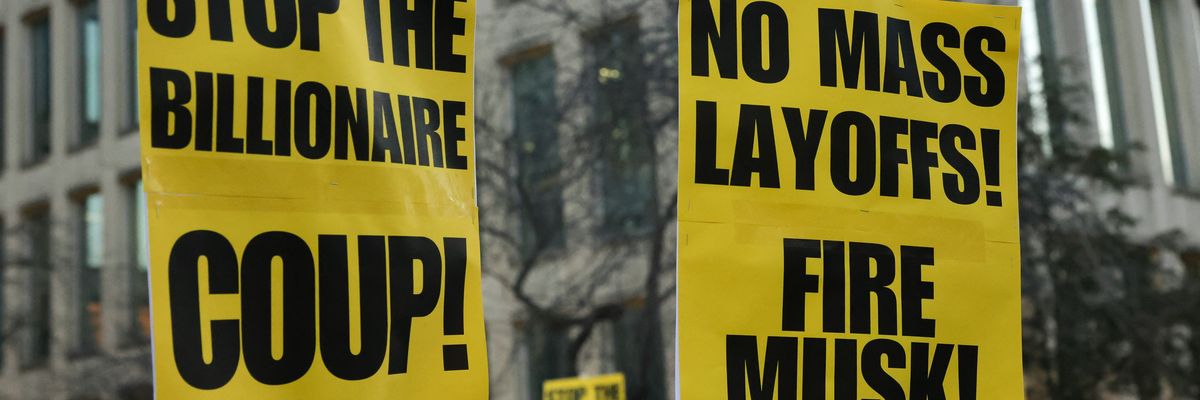
Demonstrators gather outside of the Office of Personnel Management in Washington, D.C. on February 7, 2025 to protest federal layoffs and demand the termination of Elon Musk from the Department of Government Efficiency (DOGE).
(Photo by Bryan Dozier/Middle East Images/AFP via Getty Images)

Dane Gambrell
Feb 27, 2025
Common Dreams

Earlier this month, software firm Workday announced that it would be laying off more than 1,700 workers—or about 8.5% of its workforce—to redirect investment toward artificial intelligence. The announcement was the latest in a series of mass layoffs that have put hundreds of thousands of workers at Amazon, Intel, Microsoft, and other tech companies out of work over the past several years. Google and Meta are among the tech giants that have cited the need to invest resources in AI development as the reason for cutting jobs. AI is also a part of the rationale behind the raft of mass federal employees layoffs.

Much of the narrative about AI and jobs has focused on the threat of automation: What can AI do as well as—or better than—humans? Research on AI-driven job displacement often focuses on forecasting which jobs or tasks machines could perform in the future, and then estimating how many workers might be displaced due to this automation. A report might tell us that 30% of work hours could be automated by 2030, or a study might predict that 5% of work tasks across the economy could be performed by AI in the next 10 years.

While automation is a risk that needs to be understood and taken seriously, this framing misses a key aspect of what's happening in the economy now. After many tech firms overhired during the pandemic, companies are cutting jobs and investing in AI not to directly replace workers with machines, but to signal to investors that they're focused on future growth and profitability.

Fortunately, workers and unions are fighting back, both against AI-driven job displacement in private industry and against DOGE's attempts to dismantle the public service.

Mass layoffs are nothing new. As Les Leopold argues in his book Wall Street's War on Workers, for decades corporations have carried out mass layoffs not out of fiscal desperation, but as part of a strategy to further enrich wealthy shareholders through stock buybacks and leveraged buyouts. But now we are seeing how AI hype has become the latest justification for firing workers en masse. Tech firms aren't waiting around to see what roles AI can and can't replace before laying workers off. Instead, they're slashing jobs and redirecting resources to AI initiatives because the mere promise of AI-driven efficiency is enough to excite investors and drive up stock prices.

This strategy creates a self-fulfilling prophecy where tech firms devalue human labor to make automation seem inevitable. By carrying out mass layoffs, tech firms signal to investors and workers themselves that workers are replaceable. By reinvesting those resources in AI, firms make it more likely that AI will eventually become capable enough to replace the workers they already decided to eliminate.

The strategy of hyping AI to justify mass layoffs is exemplified by Swedish tech firm Klarna. As Noam Scheiber reports in The New York Times, when the company laid off 700 customer service workers last year, CEO Sebastian Siemiatkowski didn't just announce the cuts—he celebrated them. In media appearances and investor calls, Siemiatkowski proudly predicted that the company's workforce would eventually shrink to less than half its size thanks to AI-enabled productivity gains. As Scheiber reports, Siemiatkowski may even have overstated Klarna's progress in automating jobs to try to make the company more appealing to investors. For example, while the CEO claimed that AI enabled the company to become so efficient that it halted all new hiring a year and a half ago, journalists have found that the company continues to post job listings for vacant positions. The Klarna example shows how, for some companies, automation isn't just about replacing workers with machines; it is about redefining human labor as a temporary necessity to be tolerated until AI makes it obsolete. Like many tech firms, Klarna is betting that by hyping AI's potential while disinvesting in workers, they can make their vision of an automated future into a self-fulfilling prophecy.

Elon Musk's so-called Department of Government Efficiency( DOGE) is now bringing the AI-fueled mass layoff strategy to the federal government. Through DOGE, Musk and his allies are experimenting with AI tools "to identify budget cuts and detect waste and abuse," in agencies like the Department of Education and the General Services Administration (GSA). Staffers report that DOGE aims to reduce GSA's budget by up to 50%. As The Washington Post reports, "DOGE associates have been feeding vast troves of government records and databases into artificial intelligence tools, looking for unwanted federal programs and trying to determine which human work can be replaced by AI, machine-learning tools, or even robots." In other words, Musk is exploring how he can use AI as justification for carrying out mass layoffs across the federal government. The message these tactics send is clear: Decades of public service experience can be dismissed in minutes if an AI system suggests your role is redundant.

The DOGE-led mass layoffs are part of a decades-long conservative project of shrinking the federal workforce and weakening the administrative state. But what's new is how AI hype, and the guise of Silicon Valley efficiency, is being used to add a veneer of technological inevitability to this political project. "The federal government is suddenly being run like an AI startup," writes Kyle Chayka in a recent piece in The New Yorker. When DOGE staffers cite AI assessments as justification for eliminating positions, they're following the same playbook as tech CEOs: using speculative claims about AI capabilities to make workforce reduction seem like an unavoidable consequence of progress rather than a deliberate choice. DOGE's promises of AI-driven efficiency mask the reality that many government functions still require human judgment, institutional knowledge, and public service experience that no algorithm can replace. This combination of hostile management and AI hype isn't just about cutting costs—it's about redefining public service as something that can be evaluated by an algorithm and eliminated at the whims of a tech oligarch.

Fortunately, workers and unions are fighting back, both against AI-driven job displacement in private industry and against DOGE's attempts to dismantle the public service.

Workers are successfully using collective action to establish guardrails around AI usage and ensure technology serves rather than replaces human labor. The nearly five-month strike by the Writers Guild of America (WGA) and the Screen Actors Guild-American Federation of Television and Radio Artists (SAG-AFTRA) in 2023 was motivated in large part by concerns that Hollywood studios would seek to use AI in ways that undermine workers or replace them altogether. SAG-AFTRA and WGA eventually won contracts that established frameworks for how studios can and cannot use AI during the production process, ensuring that AI cannot replace human writers and actors without their consent and fair compensation. As labor journalist Alex Press reports, similar fights have played out across workplaces in the hospitality, tech, and logistics industries. Through effective strikes and collective bargaining, workers can influence how AI is implemented in the workplace, and secure protections against mass layoffs.

Unions representing federal employees are also mounting a host of legal challenges to protect workers and preserve government services. The American Federation of Government Employees (AFGE) and several other unions filed suit to block what it called "arbitrary and capricious" job cuts laid out in the Trump administration's federal worker buyout program. Meanwhile, the National Treasury Employees Union, which represents workers at the Consumer Financial Protection Bureau, has filed a lawsuit challenging Trump's directive to halt the bureau's operations, which the union alleges violates the constitutional separation of powers. While not directly a response to DOGE's use of AI, the lawsuits show how unions are taking action to oppose efforts to weaken federal agencies and devalue the work of career civil servants. As DOGE looks to use AI to justify mass layoffs, these lawsuits could establish important legal precedents to help protect workers from arbitrary dismissal based on algorithmic assessments.

Recent job cuts in the tech sector and in the federal government show how AI hype is being used to justify mass layoffs. Through collective action, workers are showing that AI's impact isn't predetermined by technology—it can be shaped through worker power.

This article first appeared on Power at Work and is republished here with permission.

Our work is licensed under Creative Commons (CC BY-NC-ND 3.0). Feel free to republish and share widely.

Dane Gambrell is a writer and editor for Power at Work.
Full Bio >
In Viral Campaign, Anti-Musk UK Group Urges Public: 'Don't Buy a Swasticar'

The Tesla, promises an advertisement posted in London, "goes from zero to 1939 in three seconds."


An ad on a bus stop in London advertises Tesla vehicles as "swasticars" on February 26, 2025.
(Photo: @everyonehateselon_/Instagram)


Julia Conley
Feb 27, 2025
COMMON DREAMS

With the motto, "Pissing off Elon Musk, one small action at a time," a U.K.-based campaign group unveiled an advertisement this week promoting what it called a "swasticar": the Tesla vehicles sold by the billionaire mogul who has taken a front-and-center role in U.S. President Donald Trump's administration.

The ad, which first appeared Monday, features an image of Musk standing in one of his cars while displaying a Nazi salute—as he appeared to do twice at an event for Trump shortly after the president's inauguration last month.

The Tesla, the ad promises, "goes from zero to 1939 in three seconds."


The image has been displayed on at least one bus stop in Bethnal Green, London, by a group called Everyone Hates Elon.

Pictures of the ad have gone viral online, and the group called on supporters to help ensure its message spreads far and wide as Musk's dismantling of U.S. government agencies and services, including its foreign aid agency, and his support for far-right political parties in Europe sparks outrage.

"Not happy with fueling the far-right in the USA, Elon Musk is now doing the same in Europe," wrote organizers on a GoFundMe page, where they are attempting to raise £10,000 ($12,632) to plaster its "swasticar" ad in more public places.

"We can't let the richest man in the world poison our politics. While nurses use food banks, his wealth grew by $200 billion last year," wrote the group, referring to the U.K.'s cost-of-living crisis.

In the U.K., Musk has expressed support for the far-right, virulently anti-immigrant Reform Party and attacked officials from the Labour government, spreading what Prime Minister Keir Starmer decried last month as "lies and misinformation" about crimes allegedly committed by immigrants.

This week, Musk's favored party in Germany, Alternative for Germany, lost the elections but caused international alarm as it doubled its vote share since the last nationwide vote. The party has platformed candidates who have used Nazi slogans and diminished the Holocaust, and has been classified as a suspected extremist group by Germany's intelligence service.

Musk's encroachment in European politics has been met with contempt, with Tesla sales dropping by more than half in Germany last month.

Everyone Hates Elon wrote sardonically in an Instagram post that it would "be a shame if [the swasticar ads] popped up around the world." Organizers have also plastered hundreds of Teslas in London with stickers telling passersby, "Don't buy a swasticar."

The group's GoFundMe page had raised more than £9,000 as of Thursday morning.
'Chainsaw anyone?' Analysis details $38 billion in taxpayer gifts to world's richest man


REUTERS/Nathan Howard TPX IMAGES OF THE DAY/File Photo
 Elon Musk holds up a chainsaw onstage during the Conservative Political Action Conference (CPAC) in National Harbor, Maryland, U.S., February 20, 2025.

February 27, 2025

A group of Washington Post journalists on Wednesday published what appears to be the most comprehensive readout to date of the government contracts, loans, subsidies, and tax credits that the companies of Elon Musk, who has helped carry out the Trump administration's punishing cuts to government personnel, have secured over the past two decades.

The world's richest man is also "one of the greatest beneficiaries of the taxpayers' coffers," per the Post, which reported that Musk's various companies received at least $38 billion from the U.S. government since 2006—prompting a number of observers to argue that cutting off this spigot ought to be the focus of government saving efforts.

Tim Wu, who worked on competition policy at the National Economic Council under former President Joe Biden, shared the Post's reporting and wrote: "Can anyone think of another way to save over $38 billion that doesn't involve vandalizing agencies."

Since Trump was inaugurated, Elon Musk has helped oversee personnel cuts carried out by the Department of Government Efficiency, an advisory group. Just last week, federal workers received an Musk-backed order, asking them to detail their work in an email or face termination.

So far, the Trump administration has culled some 30,000 federal employees, according to an analysis from Bloomberg Law.

In the public eye, Musk is also closely associated with the effort to slash government spending and personnel. Musk recently appeared on stage at the Conservative Political Action Conference (CPAC), brandishing a chainsaw that was given to him by Argentine President Javier Milei—a nod to Milei’s "chainsaw plan" to slash public spending and implement austerity measures.

One Democratic lawmaker used the CPAC gimmick to highlight Musk's own hypocrisy. "Chainsaw anyone? They're on sale at Home Depot," wrote Sen. Amy Klobuchar (D-Minn.) on X. She included a link to the Post's article and also wrote that "Musk's business empire is built on $38 billion in government funding.'

Rep. Greg Casar (D-Texas), who has previously criticized Musk for benefiting from government funds while working to scale back government, also posted the Post's reporting and highlighted other recent reporting that, in Casar's words, show "Trump & Elon are corrupt."

The Post's analysis notes that the government contracts, loans, subsidies, and tax credits helped "seed the growth" that eventually turned Musk into the world's richest man. The $38 billion is likely an undercount because the analysis does not include classified defense and intelligence work for the government, and an additional 52 ongoing contracts with various agencies are slated to potentially pay Musk's ventures an additional $11.8 billion over the next few years.

The electric vehicle company Tesla in particular, according to the Post, benefited from the government's largesse in its path to profitability.
'Collapse': Trump official blasted as he moves to 'demolish' Social Security
 Administration


REUTERS/Carlos Barria TPX IMAGES OF THE DAY
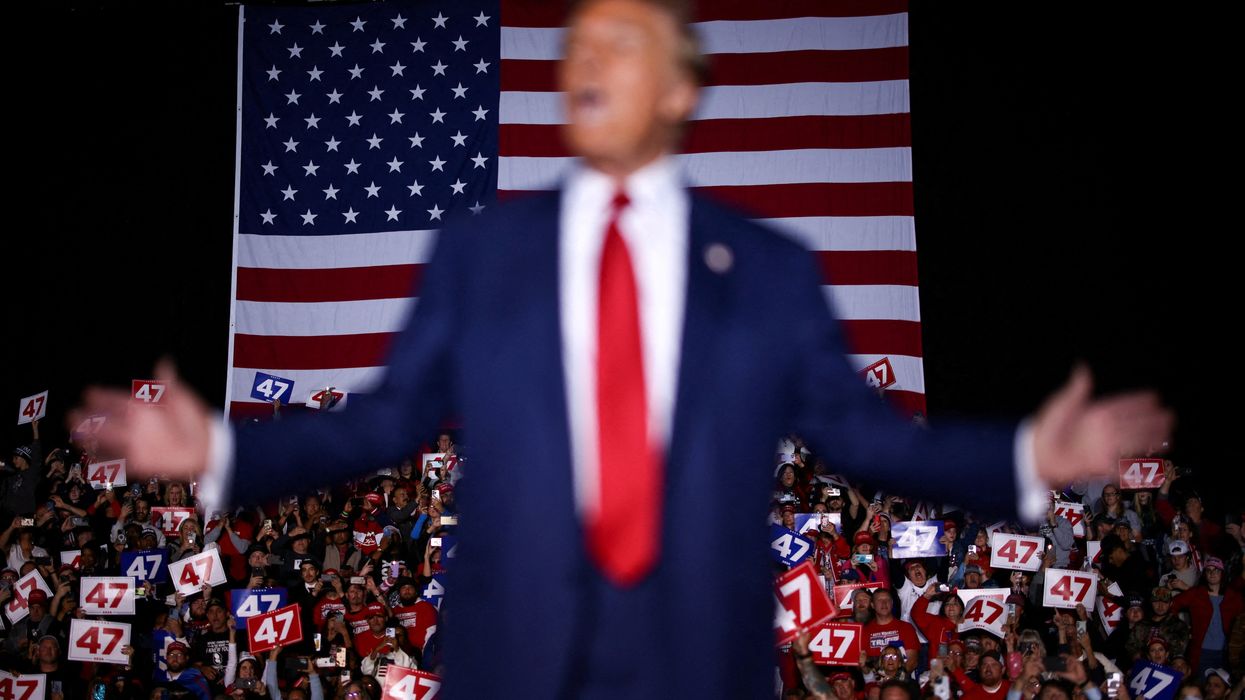
Supporters react as Republican presidential nominee and former U.S. President Donald Trump speaks during a campaign rally in Novi, Michigan, U.S. October 26, 2024.

February 27, 2025

The acting leader of the Social Security Administration reportedly instructed managers earlier this week to draw up plans for a 50% cut to the agency's workforce, a push that advocates and lawmakers said would result in the gutting or total closure of local field offices—and likely benefit disruptions.

The American Prospect first reported the request from Leland Dudek, whom Trump installed as SSA commissioner earlier this month after the agency's former head resigned following a clash with Elon Musk's deputies over their attempts to access highly sensitive personal data. At the time he was elevated to the helm of SSA, Dudek was under investigation for allegedly sharing information with Musk's team improperly.

According to the Prospect, the deadline for SSA managers to comply with Dudek's request for mass-firing plans was Wednesday afternoon.

"The decision could target one of the government's most prominent public-facing initiatives: SSA field offices, where seniors, people with disabilities, and survivors whose parents have died can sign up for benefits and get information," the outlet noted. "In an email to the Prospect, SSA would not confirm any reductions in its workforce beyond the abolition of two small internal offices announced this week... Sources have speculated to the Prospect that the terminations are being done piecemeal to avoid headlines of tens of thousands of jobs lost."

"Laying off half of the workforce at the Social Security Administration and shuttering field offices will mean the delay, disruption, and denial of benefits."

Nancy Altman, president of the progressive advocacy group Social Security Works, said in a statement Wednesday that Dudek's push for large-scale staff cuts shows the Trump administration and Elon Musk want to "demolish" SSA.

"Contrary to what Elon Musk and his acolytes may believe, AI chatbots are no substitute for in-person service from a human being," said Altman. "Americans apply for Social Security benefits at the most vulnerable times of their lives. Moreover, many people who seek information may have trouble articulating or even knowing what questions they need to ask."

"If Musk's plan goes through, it will deny many Americans access to their hard-earned Social Security benefits. Field offices around the country will close. Wait times for the 1-800 number will soar," Altman warned. "DOGE claims to be concerned about fraud, but the best way to detect fraud is through face-to-face contacts with humans who can detect suspicious responses and can read body language. It's not too late to stop this disaster. We urge everyone to call their members of Congress and tell them that local Social Security offices must stay open and fully staffed."

In the wake of the Prospect's story, Government Executivereported that five of the eight regional SSA commissioners "whose offices oversee and support the agency's frontline offices across the country" have decided to leave their posts at the end of this week amid the Trump administration's onslaught against the federal workforce.

"Their departures come amid rumors of impending staff cuts at SSA, where the workforce is already at a 50-year low and has toiled amid a customer service crisis born of lack of funding," Government Executive noted. "Decades of congressional neglect have seen the agency's administrative budget, which for decades sat at 1.2% of benefit outlays, shrink to under 1%."

The outlet added that "regional commissioners aren't the only ones leaving SSA. An unknown number of other employees are also leaving the agency, which shuttered its civil rights and transformation offices this week."

Martin O'Malley, the former Maryland governor who served as SSA commissioner under the Biden administration, wrote late Wednesday that "Social Security is being driven to a total system collapse."

"I give the DOGE kids and co-President Musk 30-90 days before they crater it to the point of interruption of benefits," O'Malley added.

Rep. John Larson (D-Conn.), a champion of Social Security and vocal supporter of expanding benefits, said in a statement that "Donald Trump pledged no cuts to Social Security on the campaign trail, but now he and Elon Musk have plans to do exactly that."

"Let me be clear—laying off half of the workforce at the Social Security Administration and shuttering field offices will mean the delay, disruption, and denial of benefits," said Larson. "This is nothing more than a backdoor benefit cut and an insult to Americans who have paid into the system and earned their Social Security—all to pay for trillions in new tax cuts for the wealthy. This has nothing to do with 'governmental efficiency.'"
'Surgeries are being canceled!' Senator sounds alarm on Trump's veteran health care layoff


Matthew Chapman
February 26, 2025 
RAW STORY

President Donald Trump's interference with the Veterans Health Administration is having real and dire consequences, despite the administration's claims to the contrary, Sen. Tammy Duckworth (D-IL) told CNN's Jake Tapper on Wednesday.

Trump has already had to reverse multiple cuts to the VA after public outcry, including the termination of 875 contracts that included cancer coverage, burial services for veterans, and doctor recruitment. Nonetheless, they are moving forward with a round of layoffs of people they claim are nonessential.

"Last time you were on the show, we talked about people in the veterans crisis line that had been told they were laid off, although a number of them got their jobs back," said Tapper. "The Department of Veterans Affairs announced today that 1,400 people in non-mission-critical positions are getting laid off. This comes after the department, the VA, laid off 1,000 people earlier this month. Tell us your view of these additional layoffs."

"Well, what they're calling non-mission-critical, I think you and I and the average American would disagree with them that these are non-mission-critical," said Duckworth, herself a disabled double-amputee veteran. "How does a surgeon perform an operation without a surgical nurse, without a surgical assistant?"

"We're already hearing that surgeries are being canceled or postponed at the VA," Duckworth continued. "I have one person who is a crisis hotline supervisor. This is someone who did such a good job, they were promoted. Now they're training other crisis hotline — the people who answer the phones there with them, they're being trained up to answer the phones. And that person is still laid off?"


The bottom line, she said, is that "Donald Trump has fired more veterans than any other president in our recent history. And this has to stop, because these are hardworking people. And it's really an insult to all of the federal employees who are making sure that the system is running. You know, some of these folks are people who do claims processing, making sure the veterans have access to their benefits that they've earned, they've been laid off."

Watch the video below or at the link here.

'No efforts to turn on anything': Ebola officials say Musk never 'restored' prevention


Erik De La Garza
February 26, 2025
RAW STORY

Elon Musk attends the first cabinet meeting hosted by U.S. President Donald Trump, in Washington, D.C., U.S., February 26, 2025. REUTERS/Brian Snyder

Elon Musk’s claim that his Department of Government Efficiency initiative “very quickly” corrected an accidental cancellation of Ebola prevention funding to the U.S. Agency for International Development got a dose of reality Wednesday evening

The tech billionaire and DOGE head admitted to the snafu during the first cabinet meeting of President Donald Trump’s new administration, where he conceded that his team would make mistakes – and promised to quickly correct them.

“So, for example, with USAID, one of the things we accidentally canceled very briefly was Ebola prevention,” Musk said Wednesday. “I think we all want Ebola prevention, so we restored the Ebola prevention immediately.”

But that claim is being roundly disputed by current and former officials inside the agency. Initiatives to combat Ebola and other diseases “have been gutted,” they told The Washington Post.

“There have been no efforts to ‘turn on’ anything in prevention” of Ebola and other diseases, according to Nidhi Bouri, who served as a senior USAID official during the Biden administration.


“The full spectrum — the investments in disease surveillance, the investments in what we mobilize … moving commodities, supporting lab workers — that capacity is now a tenth of what it was,” Bouri, who oversaw the agency’s response to health care outbreaks, told the Post.


Other current and former officials also called into question Musk’s assertion Wednesday.

“There was a waiver for Ebola, but USAID funds have never been back online,” one current agency official told the Post. “USAID has been frozen: staff and money.”

A former agency official worried about the lack of readiness if a response happened to be necessary.

“If there was a need to respond to Ebola, it would be a disaster assistance response team, or DART,” the former official is quoted as saying. “There is no longer a capability to send a DART or support one from Washington. Many of those people are contractors who were let go at the very beginning.”

The Trump administration’s recent actions were described as “a double whammy” to global efforts to prevent Ebola, according to Beth Cameron, a senior adviser to the Pandemic Center at the Brown University School of Public Health. She told the publication that the agency’s “critical” purposes to stop outbreaks abroad had been frozen or gutted.
'Does not bode well': Doctor slams Trump's response as child dies in measles outbreak

Jennifer Bowers Bahney
February 26, 2025 
RAW STORY

Before the measles vaccine was introduced in 1963, the disease sickened an estimated three to four million Americans annually and killed hundreds (Johannes EISELE/AFP)

The Trump administration is hampering efforts to fight the measles outbreak that took the life of a an unvaccinated school-aged child this week in Texas, according to an MSNBC medical consultant Dr. Davita Patel.

The child's death was the first linked to an outbreak in West Texas that has infected more than 100 people. ABC News reported that most all of the cases "are in unvaccinated individuals or individuals whose vaccination status is unknown."

In an article Wednesday, Patel, a physician and health policy researcher, wrote, "The current Texas outbreak mirrors 2019’s surge in New York, where 1,274 cases nearly cost the U.S. its designation as a country that had eliminated the disease."

She continued, "Health experts stress that measles’ 90% transmission rate demands rapid, well-resourced responses. With hospitalizations rising and containment protocols delayed, the window to preserve this public health milestone is narrowing. Investment in immunization programs and disease surveillance remains critical to preventing measles from regaining endemic status.

However, the Trump administration's reluctance to encourage vaccines while simultaneously cutting public health outreach efforts, "does not bode well for the next four years," she wrote.

"In a normal presidency, this would be a time for action, with federal support for local public health programs or maybe the president using the bully pulpit to encourage people to get their children a safe and effective vaccine that prevents a brutal disease that can cause deafness, intellectual disabilities or even death," Patel wrote.

Patel also laid blame with President Donald Trump's own "vaccine skepticism" that led the president to reinstate military service members who refused the Covid vaccine during the pandemic. Trump has also echoed concerns about vaccines espoused by his Health and Human Services Secretary Robert F. Kennedy Jr., who has spread conspiracy theories about vaccine safety.

In the piece, Patel wrote that, "Vaccination rates continue to decline nationally, with exemptions reaching record highs in 12 states." And, although a push to vaccinate would certainly save more lives, Patel concluded, "Unfortunately, we will not get the kind of response we need from the Trump administration soon."

Read the MSNBC article here.

'Something unusual is happening': Expert singles out RFK Jr. over measles deaths

Tom Boggioni
February 27, 2025 
RAW STORY

MSNBC medical analyst Dr. Vin Gupta (MSNBC screenshot)

MSNBC medical contributor Dr. Vin Gupta called out newly installed Health and Human Services Secretary Robert F. Kennedy Jr on Thursday morning after the Donald Trump appointee tried to downplay the alarming growth of measles cases that has now resulted in children dying.

Addressing the outbreak that is devastating counties in parts of Texas where vaccination rates are low, Kennedy, who is not a medical professional, stated, "Incidentally, there have been four measles outbreaks this year in this country, last year there were 16. So it’s not unusual.”

During an appearance on MSNBC's "Morning Joe," a visibly fuming Gupta took issue with Kennedy's glib and purportedly uninformed comments.

king RFK, it's important to realize between the years 2020 and 2023, on average we saw about anywhere from 50 to 100 cases in total in those years between 2020 and 2023," the pulmonologist stated. "So, no, this is no just business as usual, this is unusual."

"We've seen 124 cases and its February 26th," he added. "So something unusual right now is happening and let's just also put a finer point on it. His former organization that he just resigned from is actively putting out information as we speak this week, stating that somehow the vaccine itself, because quote unquote, 'it's ineffective,' to use their words, is the reason why this is happening in Texas, this outbreak versus the low vaccine rate. "

"So this is happening," he accused. "This organization is putting out this information. I don't know a single credible doctor that you would want caring for your family or for your loved one that believes or wants any of this."

You can watch below or at the link.


'God help us all': Infectious disease experts panic after Trump FDA cancels vaccine meeting


REUTERS/Leah Millis
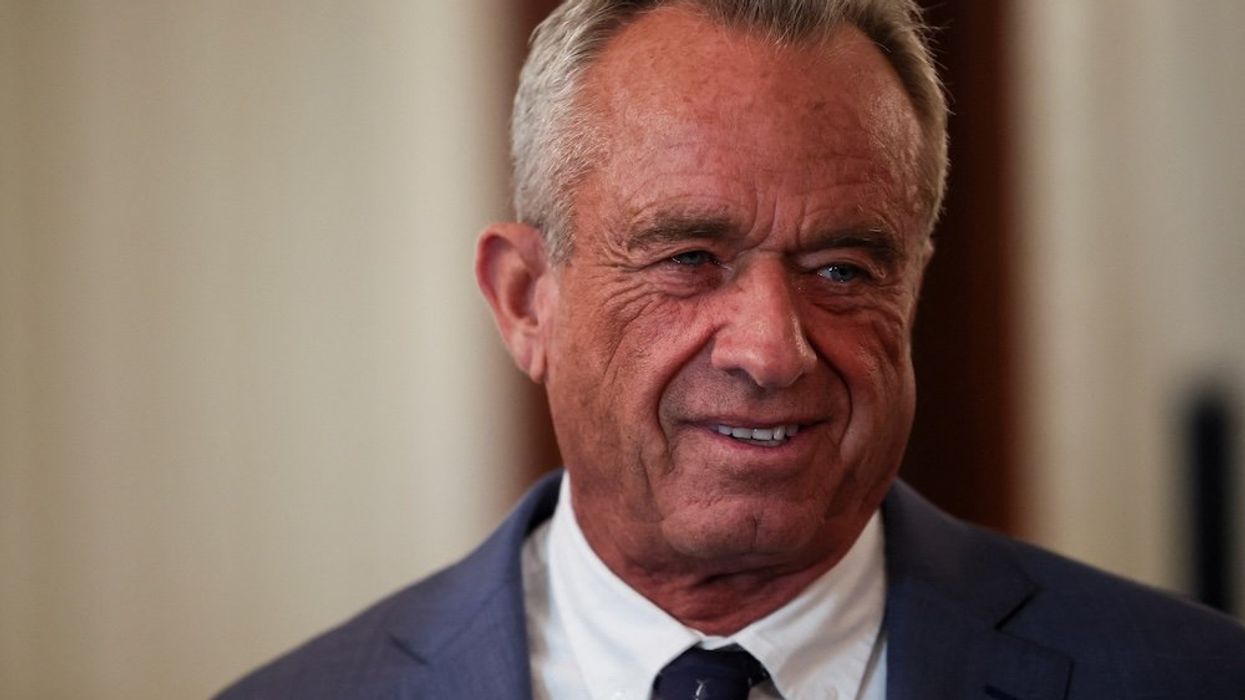
Secretary of Health and Human Services Robert F. Kennedy reacts, on the day U.S. President Donald Trump hosts a business session with U.S. governors who are in town for the National Governors Association's (NGA) annual winter meeting, at the White House in Washington, D.C., U.S., February 21, 2025.

February 27, 2025
ALTERNET

Despite this being the worst flu season in 15 years, President Donald Trump's administration has abruptly cancelled a critical meeting that infectious disease experts were counting on to make sure the latest flu vaccine is the strongest.

NBC News reported Wednesday that a scheduled March meeting of a key Food and Drug Administration (FDA) vaccine committee has been scuttled without explanation, and no future date has been set. Members of the Vaccines and Related Biological Products Advisory Committee were told about the cancellation in an email. Wednesday's announcement followed the news of a similar meeting hosted by the Centers for Disease Control and Prevention (CDC) being unexpectedly delayed.

The meeting typically happens in the spring, so experts can decide which strains of the flu to include in the version of the vaccine that is normally ready for the public by the fall. Dr. Eric Feigl-Ding, an epidemiologist who chairs the New England Complex Systems Institute, noted in a Bluesky post that the FDA is under the umbrella of the U.S. Department of Health and Human Services, which is run by anti-vaccine conspiracy theorist Robert F. Kennedy Jr.

"Any delays will jeopardize next year’s vaccine supply chain," Dr. Feigl-Ding wrote. "God help us all."

The FDA's March meeting was slated to happen after the World Health Organization's (WHO) flu vaccine meeting this Friday, which typically influences what strains of the virus the FDA chooses to include in the updated vaccine. Even though Trump withdrew the United States from the WHO on the first day of his second term, officials from the FDA and the CDC will attend Friday's meeting.

"I feel like the world is upside-down," Dr. Paul Offit, a member of the FDA's vaccine committee, told Dr. Jeremy Faust's Inside Medicine Substack newsletter. "We aren't doing the things we need to do to protect ourselves."

According to NBC, 86 children and 19,000 adults have died from the flu this season alone. And the news of the vaccine committee meeting being called off comes on the heels of a school-age child in Texas dying of measles — the first measles-related death in a decade. The child was not vaccinated for measles.

READ MORE: 'I have no idea': RFK Jr.'s former staffers question his ability to run a federal agency

"It's a bad day for infectious diseases," Boston Children's Hospital's Dr. Ofer Levy, who has advised the FDA on vaccines, told NBC.

Click here to read NBC's report in full.

SHEA encourages rescheduling postponed Advisory Committee on Immunization Practices (ACIP) Meeting


Society for Healthcare Epidemiology of America


The Advisory Committee on Immunization Practices (ACIP) plays a crucial role in protecting childhood and adult health by developing vaccination recommendations based on scientific evidence. SHEA encourages timely rescheduling of the ACIP’s meeting that was scheduled for February 2025 to ensure patients and healthcare providers  are getting the most up to date recommendations based on the latest scientific evidence review regarding vaccination. 

The ACIP’s recommendations are foundational to public health, guiding pediatric and adult vaccine schedules that have significantly reduced the prevalence of highly communicable infectious diseases such a measles, mumps, rubella and pertussis. This is especially crucial for older adults, pregnant women, those with chronic conditions, and those that work in healthcare settings treating patients and interacting with caregivers.  ACIP recommendations acknowledge and accept religious exemptions and recognized medical contraindications as reasons for not receiving recommended immunizations.  The ACIP recommended updates to the vaccination schedule are important for medical insurance coverage of vaccines which is often contingent upon these recommendations.  Any perceived mistrust in the safety and effectiveness of vaccines leads to significantly lower immunization coverage and increases the chances of more outbreaks, hospitalizations, and deaths from serious, preventable diseases such as measles. Vaccines save lives and are an important tool in protecting the public, patients, and healthcare personnel.

About SHEA 

The Society for Healthcare Epidemiology of America (SHEA) works to advance the science and practice of healthcare epidemiology and infection prevention. Founded in 1980, SHEA promotes education, research, and advocacy to improve patient care and safety. For more information, visit www.shea-online.org.   

Contact: Lindsay MacMurray, lmacmurray@shea-online.org

Fears of U.S. public health crises grow amid falling vaccination rates

Agence France-Presse
February 25, 2025 

Before the measles vaccine was introduced in 1963, the disease sickened an estimated three to four million Americans annually and killed hundreds 


by Charlotte CAUSIT

Plummeting immunization rates, outbreaks of once-vanquished childhood diseases, and the appointment of a vocal vaccine skeptic as health secretary have U.S. experts sounding the alarm about a looming public health crisis.

Since the start of the year, nearly 100 cases of measles have been reported in Texas and neighboring New Mexico, raising fears that the highly contagious and potentially serious illness is making a comeback

"The measles is the canary in the coal mine," warned leading pediatrician and immunologist Paul Offit, highlighting the decline in vaccination rates since the Covid-19 pandemic.

Amid growing distrust of health authorities and pharmaceutical companies, more parents are opting not to vaccinate their children.

The proportion of preschool-aged children vaccinated against measles -- which is mandatory -- has dropped nationally from 95 percent in 2019 to less than 93 percent in 2023. Some regions show even steeper declines, such as Idaho, where rates have fallen below 80 percent.

Experts warn that this trend could worsen under the leadership of newly appointed Health Secretary Robert Kennedy Jr., who has repeatedly questioned vaccine safety and promoted misinformation.

"It is a disaster waiting to happen, and it will happen," Offit told AFP.

- Religious exemptions -

In Louisiana, whooping cough has resulted in the deaths of two children, according to local media. As with measles, experts attribute the resurgence to vaccine exemptions.

"This is already happening. Our immunization rates are already low enough that vulnerable children are getting these diseases," said Jennifer Herricks, a scientist and board member of the nonprofit Louisiana Families for Vaccines, in an interview with AFP.

Across much of the country, parents can opt out of mandatory vaccinations for reasons beyond medical contraindications.

Many states allow exemptions on religious grounds, while others permit "philosophical" objections -- or both.

"In Texas, you can just, pretty much say, I object," explained Terri Burke of the Texas-based Immunization Partnership.

The recent measles cases have been reported in a Texas county with a large Mennonite population -- a conservative Christian sect.

The situation is reminiscent of the 2019 measles outbreak, which saw more than 1,200 cases, primarily among unvaccinated Orthodox Jewish communities in New York and New Jersey.

While the reasons behind these exemptions vary -- ranging from religious beliefs and fear of side effects to distrust in health authorities or difficulties accessing health care -- there is an undeniable trend linked to a "pandemic backlash," said Richard Hughes, a health policy expert at George Washington University.

- Legislative offensives -

Mixed messaging on masking, frustration over lockdowns and Covid vaccine mandates -- some of which remained in place long after it was clear the shots didn't fully prevent transmission -- have eroded public trust, he said.

"We might have done better by just continuing to encourage people to be vaccinated than requiring it," Hughes added.

But any missteps were amplified by an overwhelming spread of misinformation, which thrived in the era of social media and podcasts.

These factors have turned vaccinations into a flashpoint in America's culture wars. Across the country, lawmakers are introducing bills aimed at either enshrining vaccine mandates at the local level, banning certain types of vaccines, or expanding exemptions.

The number of such bills has more than doubled compared to pre-Covid levels, said Herricks, who tracks the issue nationally.

Notable shifts include Montana's decision to halt vaccination statistics and Louisiana's cessation of vaccine promotion -- both signs of the growing marginalization of a practice that was once a cornerstone of public health policy.

According to Offit, Americans may soon face a harsh reality check.

Before the measles vaccine was introduced in 1963, the disease sickened an estimated three to four million Americans annually and killed hundreds.

It was declared eliminated in the United States by 2000, thanks to widespread immunization.

"People don't realize how sick and dead that virus can make you," he said.
Trump's latest move made U.S. 'irrelevant' on world stage: foreign policy expert


Brad Reed
February 27, 2025 


FILE PHOTO: Donald Trump attends a press conference, the day after a guilty verdict in his criminal trial over charges that he falsified business records to conceal money paid to silence porn star Stormy Daniels in 2016, at Trump Tower in New York City, U.S., May 31, 2024. REUTERS/Brendan McDermid/File Photo

Max Bergmann, the director of the Stuart Center at the Center for strategic and International Studies, told CNN's Sara Sidner on Thursday that President Donald Trump is increasingly making the United States irrelevant as an international power.

When asked about the mineral deal that Trump has reportedly reached with Ukraine, Bergmann downplayed it as more aspirational than a real contract.

"Frankly, I don't think it means very much," he said of the deal. "I think in some ways it's more of a symbolic deal... it's essentially a deal on paper. Right now, the minerals that this deal would capture, uh, aren't out of the ground... the mines would have to be built in Ukraine. That can take more than a decade and you're not going to start building those mines until the fighting stops. I think Ukraine initially offered this, this deal to the Trump administration, hoping it would entice the Trump administration to keep providing military support to Ukraine. That didn't work."

Bergmann then predicted that Trump would increasingly remove the United States from the conflict, but he also believed that Europe would start to step up.

"I think in some ways we're making ourselves fairly irrelevant in the entire conflict, because once you stop providing military aid, with the destruction of USAID, we've already stopped providing economic and development assistance to Ukraine," he said. "Ukraine was the largest recipient of our development aid. So, you know, we don't have that much leverage now over the Ukrainians... but there is this thing called Europe. They have resources. We've been wanting them to step up and do more and they have in response to this war. And they have the resources to ensure that Ukraine doesn't lose the war and can continue fighting. And i think that's what they're going to do."

Watch the video below or at this link.