Thursday, February 27, 2025

Sister Helen Prejean Demands End to Death Penalty as US  Supreme Court Tosses Glossip Murder Conviction


DEMOCRACY NOW!
February 26, 2025

This is viewer supported news. Please do your part today.Donate


GuestsSister Helen Prejean
anti-death penalty activist and spiritual adviser to Richard Glossip.

Links


"River of Fire: My Spiritual Journey"


We look at a rare victory for a death row prisoner before the U.S. Supreme Court. On Tuesday, three conservative justices joined with the three liberals to overturn the murder conviction and death sentence of Richard Glossip, who has spent nearly 30 years on Oklahoma death row and had exhausted all other appeals to stay his execution. The justices said Glossip was entitled to a new trial after errors in his original prosecution. Glossip’s conviction stems from the 1997 murder of his former boss, who was killed by another man who accused Glossip of masterminding the killing. Glossip has always maintained his innocence, and even Oklahoma Republican Attorney General Gentner Drummond has said Glossip did not get a fair trial. We speak with Glossip’s spiritual adviser, Sister Helen Prejean, renowned anti-death penalty activist, who says the case has brought together a remarkable coalition to fight for justice and helped to highlight the problems with capital punishment. “We don’t need this thing,” says Prejean. “It’s time to shut it down.”


Transcript
This is a rush transcript. Copy may not be in its final form.


AMY GOODMAN: This is Democracy Now!, democracynow.org. I’m Amy Goodman, with Juan González.

We look now at a rare victory for a death row prisoner before the U.S. Supreme Court. On Tuesday, three of the court’s conservative justices joined with the three liberals to throw out the conviction and death sentence of Oklahoma death row prisoner Richard Glossip, who has maintained his innocence for nearly three decades after being convicted as the mastermind behind the 1997 murder-for-hire of his former employer, a motel owner.

Glossip’s appeal was actually supported by Oklahoma’s Republican Attorney General Gentner Drummond, who said he didn’t receive a fair trial. Drummond’s formal “confession of error” and request for a new trial was rejected by Oklahoma’s Court of Criminal Appeals. But on Tuesday, the Supreme Court found long-suppressed evidence had undermined the case. And Justice Sonia Sotomayor wrote in the majority opinion, quote, “Glossip is entitled to a new trial.”

Richard Glossip has faced execution nine times, has eaten three last meals. Someone who’s been with him through much of that is his spiritual adviser, Sister Helen Prejean, one of the world’s most well-known anti-death penalty crusaders. She’s the author of the best-selling book Dead Man Walking: An Eyewitness Account of the Death Penalty and, most recently, River of Fire: My Spiritual Journey.

Sister Helen, welcome back to Democracy Now! Why don’t you lay out how you believe this happened?

SISTER HELEN PREJEAN: Well, I’ll take it from the beginning. Early January 2015, I get a phone call, and it was from this man Richard Glossip. And he goes, “Sister Helen, I apologize. I didn’t ask your permission, but I think Oklahoma is going to kill me, and I put you down to be with me. I’m sorry. I didn’t ask your permission.” And that’s how we began. So I talked to him.

Then I began — I looked into his case. I had heard a little bit before. Got into bed, bolted awake at 2:00 in the morning, going, “I can’t just be with a man and accompany him to death.” I had enough experience with innocent people on death row that I decided I’d go visit him. And right away, from what I had heard of the case, we set up a press conference.

In the beginning, you are up against every odd. What chance did we have? But everything in the case depended on this man, Justin Sneed, who had already admitted that he had killed Barry Van Treese, this motel owner. And then, later, you find out that the investigators, the detectives are feeding to him, “But wasn’t Richard Glossip behind him, the whole murder?” And so, then they went after Richard as the mastermind.

Ten years later now — this is with lawyers working, trying to get the evidence of what happened — they clearly exposed — it was the last box of evidence. They kept this box of evidence from them that showed that the prosecutor knew that Justin Sneed was unreliable, had a bipolar disorder, and kept that from the jury. And if the jury had known that, it would have impeached his credibility. He was the lying meth addict. But they kept it. And it’s called Napue. When a prosecutor is aware that a lie is being told, they have a duty to correct that to the jury. And they didn’t. And they got the evidence in that last box of evidence. It showed that the prosecutor knew and lied.

And on that basis, Sotomayor based the case, saying that’s against due process. They knew the lie that he was telling, and they hid it from the jury. And that’s what saved him. This is 10 years later. This is every court in Oklahoma, you know, upholding it. It’s so hard to go after these prosecutors, because they have immunity, and they are seldom censored. I mean, look, almost 30 years Richard has lost his freedom, and he came close to death three times.

JUAN GONZÁLEZ: And, Sister Helen, what about the significance of several conservatives on the Supreme Court joining with the liberal justices on this?

SISTER HELEN PREJEAN: Oh, yeah, thank you for that. Yeah, not to mention an attorney general of this Republican conservative state, Gentner Drummond, who hopes to run for governor. And he did a brave, courageous, moral act, because he could see that Richard really did not get a fair trial. And he spoke out. And then, when the defense lawyers filed with the Supreme Court, he entered into it, saying, “I’m the attorney general of the state.” And he’s had huge backlash for that. And he stands out. It’s such a rare thing in this country that politicians of a certain ideological stance are willing to make moral decisions.

The legislators in the state also, all of them are Republicans, all of them pro-death penalty. Don Knight is the shining hero, this lawyer. And he went duck hunting with the lieutenant governor, and then he met people in the Legislature. Then Joe Berlinger did a fantastic two-part documentary, Killing Richard Glossip, which is out there. And the legislators could see the documentary, and then they met Richard in that personal meeting. And then they began to assemble the facts, and they stood up. Amazing. I had never heard of it before, that this kind of coalition of people willing to make the right moral decision and standing up happened. It’s an amazing story.

And it just highlights what’s so terribly wrong with the death penalty, especially in the killing states, the Deep South killing states. Oklahoma had had all these executions. And we in Louisiana are facing that now. We have a governor who’s installing gas. The veterinarians’ association two days ago had a press conference with little puppies and cats with a sign around their necks saying “Don’t gas humans,” because they don’t use gassing even for euthanasia of animals, because it’s cruel. And here we’ve got a governor is going gung-ho to kill as many people as he can with gas.

So, Richard Glossip, God bless him, I believe he’s going to be a free man. But look at it. Look at that whole system. The way the Supreme Court set up the death penalty and its administration, it gives this huge discretionary power to prosecutors to seek death or not, then for governors to initiate deaths if they feel they’re not happening fast enough. And that’s the state we’re in. But we’re working.

JUAN GONZÁLEZ: And, Sister? Sister? I —

SISTER HELEN PREJEAN: The more you educate the people — go ahead.

JUAN GONZÁLEZ: Sister, I wanted to ask you also — we’ve been covering a lot the first weeks of the Trump administration. At the end of Trump’s first term in office, he carried out 13 executions, more than any other president in modern history. What are your thoughts on his executive order to pursue the death penalty for all crimes of a severity demanding its use?

SISTER HELEN PREJEAN: That’s that huge discretionary power I was talking about that the Supreme Court allowed. He lined up 13 people to kill, and then he went and killed them, with Bill Barr as his attorney general. And there’s almost nothing to stop it, except what you’re doing in Democracy Now!, what I do with books, and getting to the people to educate them. I mean, we don’t need to kill these people in Louisiana. We haven’t had an execution in 17 years, one consensual one. The fire has gone out of this. I know the guards at Angola. And how you can involve good people in taking a fellow human being and rendering him defenseless and killing him, it’s not fair to them, either. We don’t need this thing. It’s time to shut it down. And take my state, Louisiana, and take Oklahoma. Look at the millions they spend every year in their budget to keep the death penalty in place. It’s the most expensive way, that in Louisiana, it’s $13 million 600 above what it would cost for a person just to be in prison for life.

AMY GOODMAN: Sister Helen Prejean, we thank you so much for being with us, one of the world’s most well-known anti-death penalty activists, spiritual adviser to Richard Glossip. The Supreme Court ruled yesterday that he will get a new trial. And to see our extremely rare interview with a death row prisoner earlier this week, Keith LaMar, in Youngstown, Ohio, in supermax, scheduled to die at the beginning of 2027, also professing his innocence, go to democracynow.org


Nitrogen gas is banned in Louisiana to euthanize dogs. The state plans to use it to kill a death row inmate next month

‘This is a state that hasn't executed anybody in 15 years, and suddenly there’s this rush to kill,’ Jessie Hoffman’s attorney told The Independent

Justin Rohrlich
in New York
THE INDEPENDENT
Wednesday 26 February 2025 

open image in galleryJessie Hoffman is set to be gassed to death as his method of execution in Louisiana on March 18 (AP)

The use of nitrogen gas is considered too barbaric and inhumane for euthanizing dogs and cats, according to veterinarians, and has been banned in all but two states.

But, on March 18, Louisiana – after a decade-and-a-half death penalty moratorium – is set to execute a person this way.

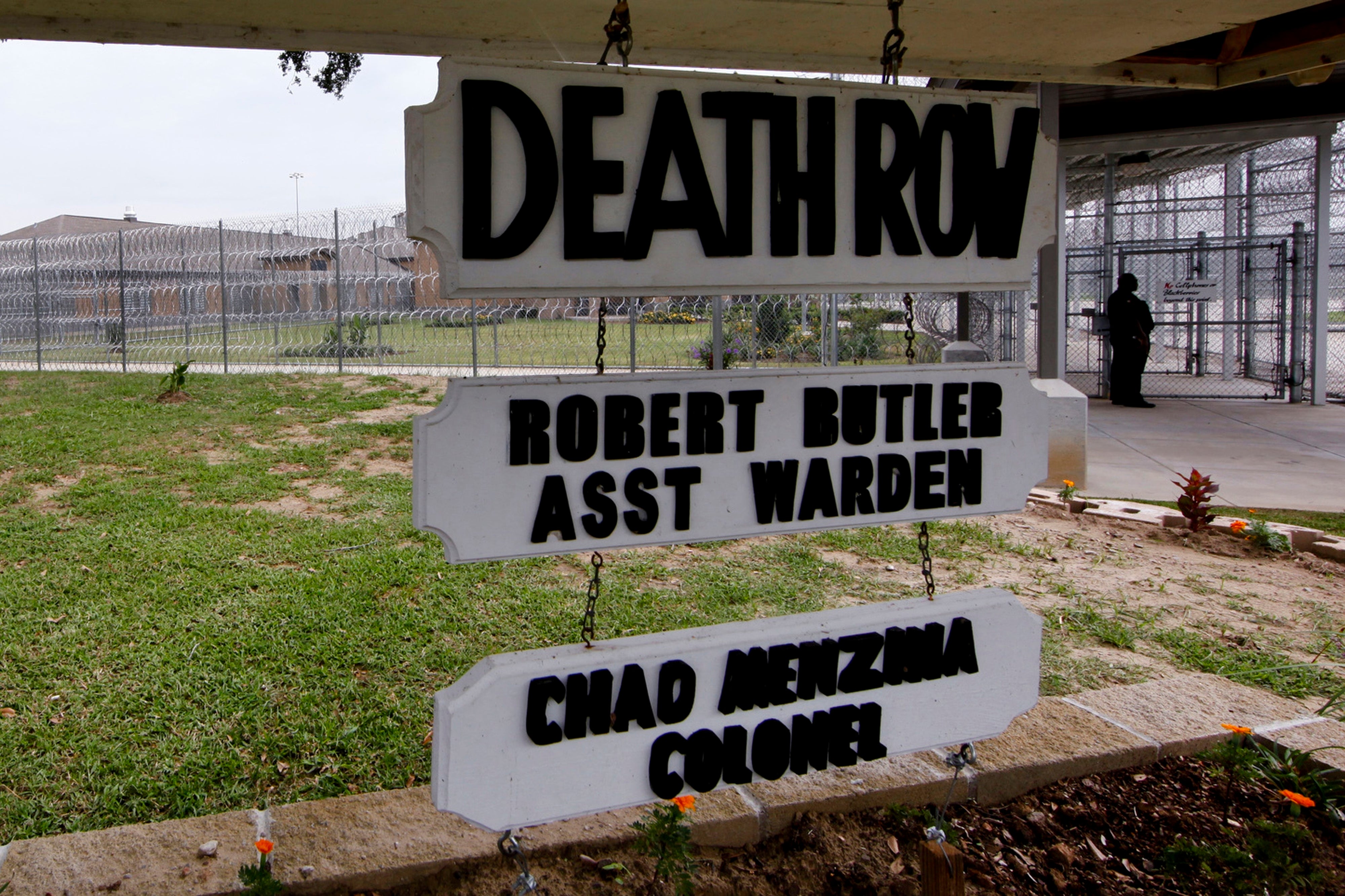
Jessie Hoffman has spent the better part of three decades behind bars at the Louisiana State Penitentiary, a maximum-security prison in the remote town of Angola. Now 46, Hoffman was sentenced to death following his 1998 conviction on a first-degree murder charge.

A jury found Hoffman guilty of kidnapping, robbing, raping, and fatally shooting 28-year-old New Orleans advertising exec Mary Elliot, whose body was discovered on Thanksgiving Day near the Middle Pearl River. Hoffman ultimately confessed to the killing, and DNA evidence linked him to the crime scene, according to prosecutors. While Hoffman’s defense team did not dispute the fact that he had shot Elliot, they argued in court that the gun went off accidentally during a struggle over the weapon.

Attorney Cecelia Kappel, executive director of the Capital Appeals Project and the Loyola University Center for Social Justice, is challenging Louisiana’s execution protocol on behalf of Hoffman. Louisiana paused executions due to broad political pushback on top of an inability to procure lethal injection drugs. Last year, Alabama carried out the nation’s first-ever execution using nitrogen gas, and has since put a total of four people to death using the method, which saw each of the condemned gasping, thrashing and convulsing for up to 20 minutes as they were slowly suffocated.

Hoffman, according to Kappel, “experienced torture as a child, and now the state wants to torture him to death.”

“They know what [nitrogen gas] does to animals, we shouldn't be doing that to human beings,” Kappel told The Independent. “This is a state that hasn't executed anybody in 15 years, and suddenly there’s this rush to kill. And with that rush comes a brand new, untested, execution method.”


open image in galleryJessie Hoffman has been behind bars since 1998, but has an execution date set for next month (Louisiana Board of Pardons)

Louisiana Governor Jeff Landry, a Trump-endorsed Republican who last year forced the state’s public schools to display the Ten Commandments in all classrooms, announced the new gassing protocol on February 10. Execution by nitrogen hypoxia, the technical term for the method, is carried out by placing a mask over the condemned’s face and replacing the flow of oxygen with pure nitrogen gas “for a sufficient time period necessary to cause the death of the inmate,” according to a summary of the protocol issued by the governor’s office.

“For too long, Louisiana has failed to uphold the promises made to victims of our State’s most violent crimes; but that failure of leadership by previous administrations is over,” Landry said in a statement at the time. “The time for broken promises has ended; we will carry out these sentences and justice will be dispensed... I anticipate the national press will embellish on the feelings and interests of the violent death row murderers, we will continue to advocate for the innocent victims and the loved ones left behind.”

The decision was, in Kappel’s words, “incredibly arbitrary,” and she said Landry and Louisiana Attorney General Liz Murrill are barreling forward with Hoffman’s execution without hearing from opponents. The Independent has reached out to Landry’s office for comment.

If the two were truly concerned with upholding the law, as they have stated, then they should “have no problem allowing this new execution protocol to be reviewed in the courts,” Kappel said.

Instead, they have thus far prevented it from happening. Kappel believes their insistence on using nitrogen gas is “politically motivated,” and asks, “Why now, why this moment, and why the rush? Why is the state in such a hurry to roll out this new protocol and use Jessie Hoffman as the test case?”

Kappel went on, “We have never had a court rule on the merits as to whether Louisiana’s [planned] method of execution is cruel and unusual. And that’s all we’re asking for… I think there is a small minority of people in this state who say, ‘Hang ‘em all,’ but they don't speak for the vast majority of Louisianans.”


open image in galleryGassing animals to death is banned in Louisiana, but Hoffman is set to be executed that way (Getty Images)

Hoffman himself is no longer the same person he was when he was arrested at the age of 18, according to his supporters. Since entering prison, Hoffman has co-founded a prayer group for fellow inmates, works as a mentor to younger men incarcerated at Angola, and has expressed profound remorse for his actions, advocates contend.

These qualities “really set him apart from a lot of other people on death row,” Kappel argued. “I represent people on death row, and he’s really a unique person.”

She said Hoffman “is beloved by both his fellow inmates and the prison staff,” a sentiment that emerges in messages of support released by Hoffman’s legal team.

“Jessie was very respectful of me and the other guards,” one former correctional officer at Angola said in a statement on Hoffman’s behalf. “He is also very thoughtful and understanding of other people. He would share food with other inmates and help stretch the phone into a cell so the other guys could talk to their families. I think Jessie deserves a chance.”

Kappel is concerned not only for Hoffman, but also for those who will watch him die, including prison staff, the media, and members of the victim’s family, she told The Independent.

“Nobody wants to witness a death happening in that horrible, gruesome way,” Kappel said.

Hoffman is scheduled to be executed on March 18.
'Not equipped': Analyst warns the press is sleepwalking through MAGA autocracy

Matthew Chapman
February 26, 2025
RAW STORY

People attend a protest march against U.S. President Donald Trump and New York City Mayor Eric Adams in Manhattan's Washington Square Park in New York City, U.S., February 22, 2025. REUTERS/Eduardo Munoz

The American press is "not equipped" to cover a true authoritarian strongman presidency like President Donald Trump is creating, warned Huffington Post senior White House correspondent S.V. Dáte in a dire analysis Wednesday.

"The Washington, D.C., press corps, used to playing small ball for small exclusives, has been suddenly thrust into a presidential administration that appears hell-bent on transforming our constitutional republic into something entirely different," wrote Dáte. "For decades, the coin of the realm in political journalism was access. Who you knew determined what you knew, and especially what 'inside' information the people you knew were willing to give you."

That kind of reporting can often lead to big scoops in a political environment where politicians play by the rules and care about norms and democracy. But it's wholly inadequate for the beast the free press, and the American people at large, now face, he wrote.

"In the before days, if a reporter had the opportunity to get a new tax proposal from Mitt Romney’s campaign a day before he announced it, OK, whatever. If President Barack Obama’s campaign had some research they wanted to plant about Romney’s businesses, sure," he wrote. "In the end, the source relationships that led to that genre of stories were harmless. Whether Obama won or Romney, the future of the republic was secure. That is no longer the case. Before our very eyes, Donald Trump and his administration, with what so far has been an extraordinarily pliant Republican Congress, are taking those exact steps that autocrats who were initially democratically elected take to consolidate power."

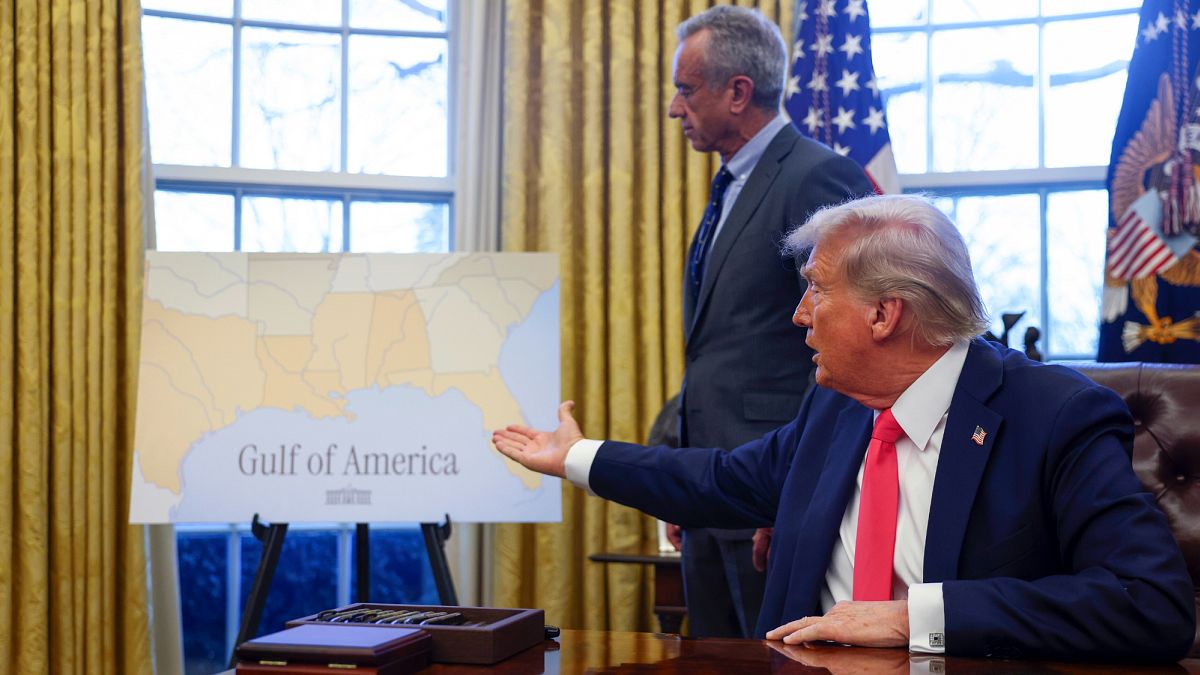
The problem, he wrote, is that the old strategy requires reporters to schmooze with Trump loyalists who are working to undermine both constitutional rights and the free press itself, and that's simply unsustainable. This is evidenced by Press Secretary Karoline Leavitt's increasingly ruthless crackdown on any press criticism of Trump, from barring the Associated Press from using the name "Gulf of Mexico," to decreeing the White House itself chooses who sits in the press pool — and kicking out the Huffington Post for asking Trump about Jan. 6 pardons.

White House reporters can no longer just fiddle while Rome burns, Dáte warned — they have to stop playing the old games and be straight with their readers about what is happening.

"Trump made clear what he thought of democracy when he tried to end it four years ago by trying to overturn an election he had lost. Far too many of us accepted the bargain to leave out that context in our coverage for the sake of access to Trump’s campaign and the chance for an interview," he wrote. "That was then, when the idea of a nation careening toward autocracy might have seemed just a wildly remote possibility. It seems neither wild nor remote now."

White House seizes control of press pool that covers Trump


Copyright AP Photo

By Rory Sullivan
Published on 26/02/2025 - 

Critics say the decision, which breaks with decades of tradition, will undermine independent journalism.

The White House has said it will decide which reporters get access to US President Donald Trump in intimate settings such as the Oval Office, a move that some warn could be “dangerous” for the future of American democracy.

For decades, the White House Correspondents' Association (WHCA), an independent group of journalists, has overseen the rotating pool of reporters that is granted access to the US president when space is limited.

However, White House White House Press Secretary Karoline Leavitt announced on Tuesday that the Trump administration will end this system.

“The White House press team, in this administration, will determine who gets to enjoy the very privileged and limited access in spaces such as Air Force One and the Oval Office,” Leavitt said.

Trump’s press secretary attempted to justify the decision as a modernising move.

“A select group of DC-based journalists should no longer have a monopoly of press access at the White House,” she told reporters.

“It's beyond time that the White House press operation reflects the media habits of the American people in 2025, not 1925,” she added.


Her announcement came the day after a Trump-appointed judge refused a request from the Associated Press to be reinstated to pooled presidential events.

The Trump administration barred the news agency from having reporters on Air Force One and in the Oval Office due to its decision to continue using “Gulf of Mexico” instead of “Gulf of America”.

Trump, who ordered the name change early in his second presidential term, has tied the AP court case to the press pool decision announced by Leavitt on Tuesday.

“We're going to be now calling those shots,” Trump said.

Media experts are troubled by the development, since it gives Trump the power to choose who covers him.

Jon Marshall, a media history professor at Northwestern University, described the change as “a dangerous move for democracy”.
R

Meanwhile, Eugene Daniels, the president of the WHCA, said that the decision “tears at the independence of a free press in the United States”.

Peter Baker, a journalist at the New York Times, also criticised the move.

“Every president of both parties going back generations subscribed to the principle that a president doesn't pick the press corps that is allowed in the room to ask him questions,” he tweeted. “Trump has just declared that he will.”

Jeff Bezos Is Greasing America’s Slide Toward Autocracy

Titans like Bezos who control mainstream media are pandering to Trump in ways that compromise their publications.


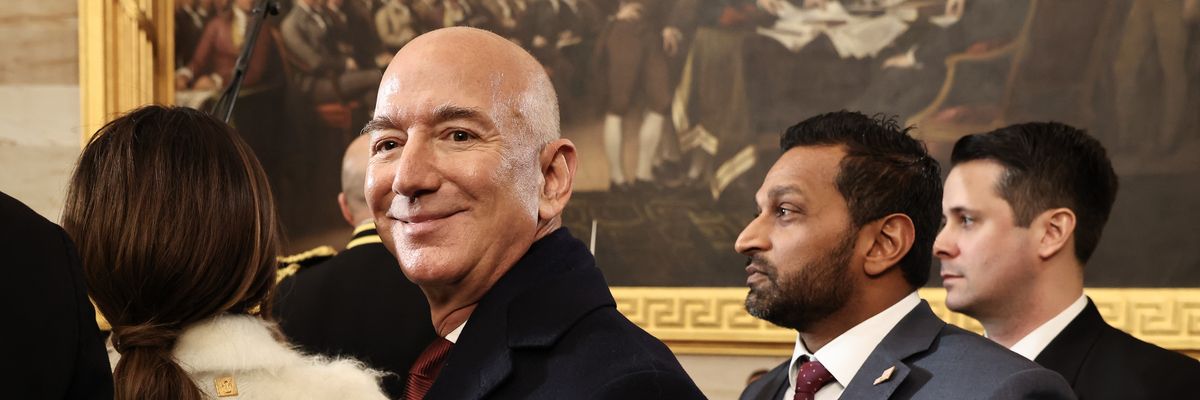
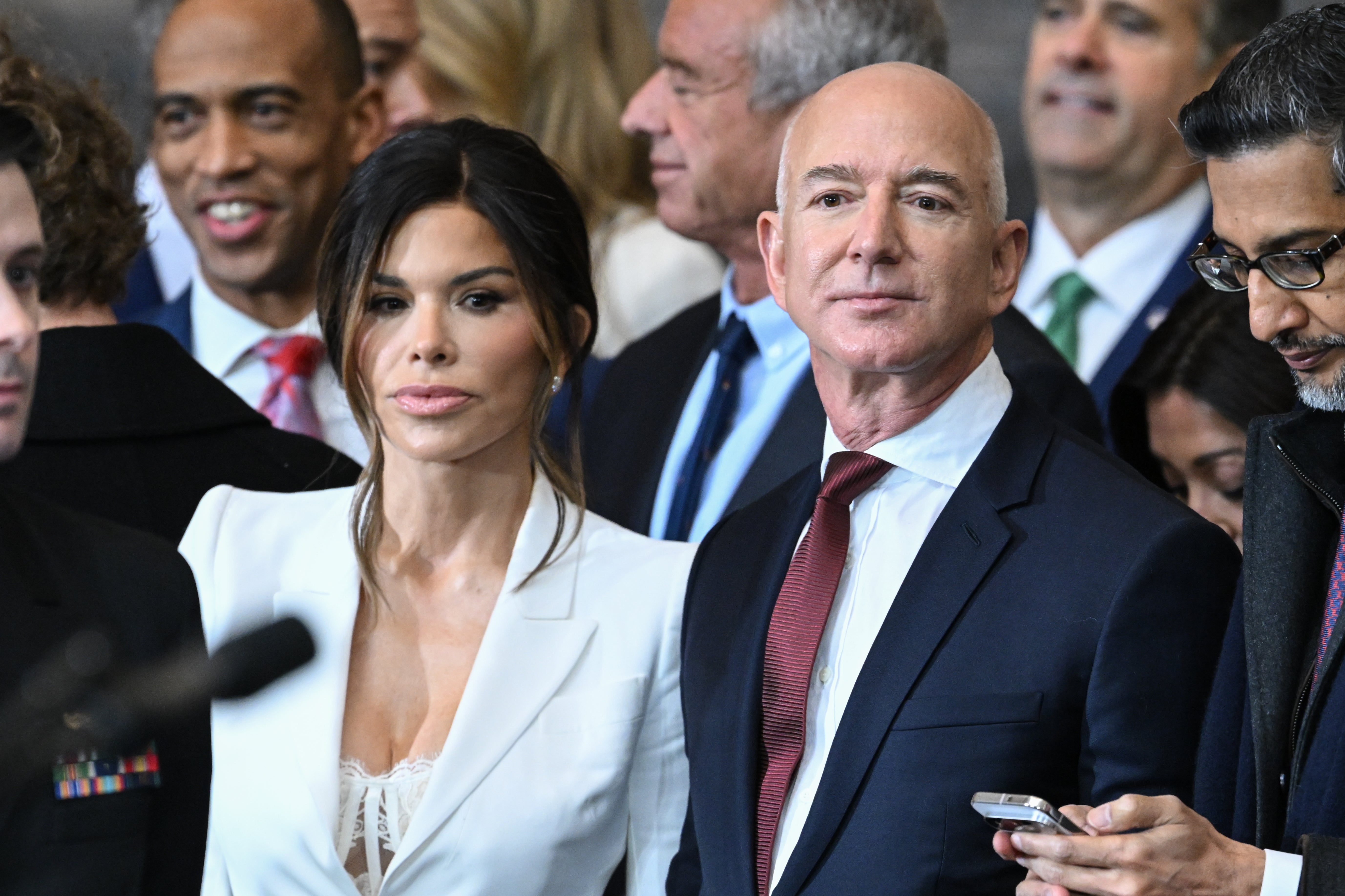
Founder of Amazon and Blue Origin Jeff Bezos departs the inauguration ceremonies in the Rotunda of the U.S. Capitol on January 20, 2025 in Washington, D.C.
(Photo: Chip Somodevilla/Getty Images)


Steven Harper
Feb 26, 2025
Common Dreams

Billionaires controlling key elements of the media are helping U.S. President Donald Trump establish an authoritarian regime. Jeff Bezos, owner of The Washington Post, has become a poster child for the phenomenon.

American democracy may be a casualty.

From the beginning of Trump’s political career, Fox News, Newsmax, Sinclair Broadcasting, and other right-wing outlets have spread his propaganda. But now titans who control mainstream media are pandering to Trump in ways that compromise their publications.
Once a Hero

Not so long ago, Bezos was on the correct side of a historic struggle. In August 2013, he bought The Washington Post and boosted its investigative reporting staff. After Trump won the 2016 election, the Post adopted the first slogan in the paper’s 140-year history: Democracy Dies in Darkness.

In May 2016, Bezos discussed his reasons for buying the paper: “I think a lot of us believe this, that democracy dies in darkness, that certain institutions have a very important role in making sure that there is light.”

For the next eight years, the Post honored that mission relentlessly. The paper fact-checked Trump’s assertions and documented his lies. By its count, Trump had made more than 30,000 “false or misleading claims” during his first four-year term alone.

Prior to the 2020 election, the Post’s editorial page had characterized Trump as a threat to the American democratic experiment. The editorial board described Trump as “the worst president of modern times” and endorsed former Vice President Joe Biden to replace him.

The board continued:
Mr. Trump’s negative example has demonstrated how essential in a president are decency, empathy, and respect for other human beings.

Democracy is at risk, at home and around the world. The nation desperately needs a president who will respect its public servants; stand up for the rule of law; acknowledge Congress’ constitutional role; and work for the public good, not his private benefit.
And Now a Sycophant

All of the Post’s criticisms of Trump in 2020 were even more on point in 2024. Shortly before the 2024 election, the Post’s editorial board had signed off on the paper’s endorsement of Vice President Kamala Harris for president. But it never ran. Bezos personally killed it and, for the first time in decades,The Washington Post did not endorse a U.S. presidential candidate.

The fallout was immediate. Prominent columnists resigned, and more than 250,000 readers canceled their subscriptions.

A few hours after Bezos’s “no endorsement” decision became public, officials from his Blue Origin aerospace company, which has a multi-billion dollar contract with NASAmet with Trump. Bezos claimed that he didn’t know about that meeting.

In December, Bezos flew to Mar-a-Lago where he and his fiancée dined with President-elect Trump. A few weeks later, another Bezos company—Amazon—paid $40 million to license a documentary about Melania Trump, who personally will receive $28 million. At Trump’s inauguration, she told CEOs in attendance that they could be mentioned as “sponsors” at the end of the film and receive invitations to the yet-to-be-produced film’s premiere. The price: $10 million each.

And on February 26, Bezos announced a new rightward shift: The Post would now advocate for “personal liberties and free markets” and not publish opposing viewpoints on those topics.

The paper’s opinion section editor, David Shipley, resigned in response to the change.
A Dangerous Anti-Democratic Theme

Bezos is not alone among the moguls who are helping Trump along the road to autocracy. In future posts, I’ll discuss some of Trump’s other major media accomplices.

Meanwhile, on February 25, Trump announced that he would break decades of precedent and handpick the media outlets that would be allowed to participate in the presidential press pool—the small, rotating group of reporters who relay the president’s day-to-day activities to the public. Previously, the White House Correspondents’ Association, a 111-year-old group representing journalists who cover the administration, determined which reporters would participate in the daily pool. Most often, the pool has consisted of journalists from major organizations such as CNN, Reuters, The Associated Press, ABC News, Fox News, and The New York Times.

Except, of course, in early February Trump banned the AP from the Oval Office and Mar-a-Lago because it continued referring to the “Gulf of Mexico” instead of Trump’s new name for that body of water, the “Gulf of America.”

Democracy dies in sunlight too.

Our work is licensed under Creative Commons (CC BY-NC-ND 3.0). Feel free to republish and share widely.

Steven Harper is an attorney, adjunct professor at Northwestern University Law School, and author of several books, including Crossing Hoffa -- A Teamster's Story and The Lawyer Bubble -- A Profession in Crisis. He has been a regular columnist for Moyers on Democracy, Dan Rather's News and Guts, and The American Lawyer. Follow him at https://thelawyerbubble.com.
Full Bio >


Washington Post Opinion Editor quits as Jeff Bezos sets goals for 'new chapter'

In a post on X, Jeff Bezos clarified that while The Washington Post would continue to explore a variety of topics, perspectives opposing these core values would no longer find a place in its opinion pages.


Jeff Bezos, founder and executive chairman of Amazon and owner of the Washington Post. (File photo: Reuters)


India Today News Desk
New Delhi,
 Feb 26, 2025 
Written By: Sahil Sinha

In Short

Editorial page editor David Shipley quits post amid changes

Opinion pages to focus on personal liberties and free markets

Jeff Bezos cites digital platforms' role in opinion diversity


The Washington Post owner Jeff Bezos on Wednesday announced a "significant shift" to the newspaper’s opinion section, prompting the departure of editorial page editor David Shipley. The overhaul in policy marks a dramatic break from tradition, further unsettling the media organisation already grappling with years of instability and leadership changes.

In a note addressed to the publication’s team, Bezos clarified that while the paper would continue to explore a variety of topics, perspectives opposing these core values would no longer find a place in its opinion pages.

"I'm writing to let you know about a change coming to our opinion pages. We are going to be writing every day in support and defense of two pillars: personal liberties and free markets. We'll cover other topics too of course, but viewpoints opposing those pillars will be left to be published by others," Bezos stated in a message shared on X.

The Amazon boss also elaborated on the reasoning behind this editorial pivot, pointing out that the role of newspapers in curating diverse opinions has evolved with the advent of digital platforms.

"There was a time when a newspaper, especially one that was a local monopoly, might have seen it as a service to bring to the reader’s doorstep every morning a broad-based opinion section that sought to cover all views. Today, the internet does that job," Bezos explained.

"I am of America and for America, and proud to be so. Our country did not get here by being typical. And a big part of America’s success has been freedom in the economic realm and everywhere else. Freedom is ethical — it minimizes coercion — and practical — it drives creativity, invention, and prosperity," he added.

Furthermore, Bezos also shared that David Shipley would part ways with the company. Shipley had been offered a role in leading Bezos' planned changes, but decided not to continue with the role.

"I offered David Shipley, whom I greatly admire, the opportunity to lead this new chapter. I suggested to him that if the answer wasn't 'hell yes', then it had to be 'no'. After careful consideration, David decided to step away. This is a significant shift, it won’t be easy, and it will require 100% commitment — I respect his decision," Bezos said.

Shipley had helmed the section since 2022.

During Donald Trump's first term, The Washington Post, along with Bezos, frequently clashed with the President over its critical coverage. Trump repeatedly targeted Bezos, even threatening antitrust action against Amazon. However, in Trump's second term, Bezos appeared to have shifted his approach, notably attending the President's inauguration alongside other prominent tech leaders.

The Washington Post's editorial move was applauded by Telsa chief Elon Musk, who wrote on X: "Bravo @JeffBezos!"


Washington Post opinion page shift:
Full text of Jeff Bezos's note to staff

Jeff Bezos announced a sweeping overhaul of The Washington Post opinion section, prioritising personal liberties and free markets. The shift led to editorial page editor David Shipley's immediate resignation.


Jeff Bezos' decision mirrored a broader trend, following in the footsteps of Patrick Soon-Shiong, the owner of the Los Angeles Times. (File photo: Reuters)


India Today World Desk
New Delhi,
 Feb 26, 2025 
Written By: Sahil Sinha

In Short

Jeff Bezos announced revamp of The Washington Post's opinion section

Editorial page editor David Shipley resigned following the announcement

Opinion pages to focus on personal liberties and free markets


Jeff Bezos, owner of The Washington Post, on Wednesday announced a major revamp of the newspaper's opinion section, signalling a sharp departure from tradition. The policy shift led to the immediate departure of editorial page editor David Shipley, adding to the turbulence at the media outlet, which has faced years of instability and leadership turnover.

In a memo to staff, the Amazon boss emphasised that while the paper would maintain a broad range of discussions, viewpoints that contradict its fundamental values would no longer be accommodated in its opinion pages.
advertisement

Here's the full text of Jeff Bezos's note to The Washington Post staffer:

I shared this note with the Washington Post team this morning:

I’m writing to let you know about a change coming to our opinion pages.

We are going to be writing every day in support and defense of two pillars: personal liberties and free markets. We’ll cover other topics too of course, but viewpoints opposing those pillars will be left to be published by others.

There was a time when a newspaper, especially one that was a local monopoly, might have seen it as a service to bring to the reader’s doorstep every morning a broad-based opinion section that sought to cover all views. Today, the internet does that job.

I am of America and for America, and proud to be so. Our country did not get here by being typical. And a big part of America’s success has been freedom in the economic realm and everywhere else. Freedom is ethical — it minimizes coercion — and practical — it drives creativity, invention, and prosperity.
advertisement

I offered David Shipley, whom I greatly admire, the opportunity to lead this new chapter. I suggested to him that if the answer wasn’t “hell yes,” then it had to be “no.” After careful consideration, David decided to step away. This is a significant shift, it won’t be easy, and it will require 100% commitment — I respect his decision. We’ll be searching for a new Opinion Editor to own this new direction.

I’m confident that free markets and personal liberties are right for America. I also believe these viewpoints are underserved in the current market of ideas and news opinion. I’m excited for us together to fill that void. Jeff

'Hundreds' of people at Washington Post are trying to 'flee' Jeff Bezos: Pulitzer winner


Tom Boggioni
February 27, 2025 
RAW STORY

Jeff Bezos, founder of Amazon and Blue Origin speaks during the JFK Space Summit, celebrating the 50th anniversary of the moon landing, at the John F. Kennedy Library in Boston, Massachusetts, U.S., June 19, 2019. REUTERS/Katherine Taylor

According to Pulitzer Prize winner David Remnick, the Washington Post is facing the possibility of an exodus of hundreds of employees who have no faith in owner Jeff Bezos after his latest controversial move.

Moments after legendary Washington Post editor Marty Baron appeared on MSNBC's "Morning Joe" to criticize the billionaire Amazon owner's ruling that the venerable paper's editorial page will only parrot his "particular point of view," Remnick, who got his big break at the Post, joined the pile-on.

While speaking with the MSNBC hosts, Remnick claimed more employees with follow editorial page editor David Shipley out the door as soon as they land jobs with the Post's competitors.

"The thing that concerns me the most about what Bezos announced yesterday, and you mentioned the word fear, was that the fear that he must have that he obviously does have and other billionaires have it, other tech pros have it that it creeps onto the reportorial product," MSNBC regular Mike Barnicle prompted Remnick. "That is a real fear that I have. Do you share?"

"Of course, I have that fear," Remnick exclaimed. "I haven't seen it, to be honest, in the newsroom of the Washington Post, but I do know that the fear and anxiety has leached onto the newsroom floor so that, according to people at the Washington Post, not a few people have applied to flee the Post for the New York Times, but hundreds of people at the Washington Post have applied for jobs elsewhere, particularly the Times, the Post and so on."

"They know that this is just not one event in the same way that killing the endorsement of Kamala Harris was not just one event," he added.

You can watch below or at the link.


Washington Post staffers outraged at Jeff Bezos’ stunning plan for opinion pages that prompted top editor to quit

“I have a feeling this isn’t gonna bring back the 250K subs,” one Post reporter wrote in the paper’s Slack channel on Wednesday.

Justin Baragona
in New York
THE INDEPENDENT
Wednesday 26 February 2025 

open image in galleryWashington Post owner Jeff Bezos attending Donald Trump’s inauguration. (Saul Loeb-Pool/Getty Images)

From reproductive rights to climate change to Big Tech, The Independent is on the ground when the story is developing. Whether it's investigating the financials of Elon Musk's pro-Trump PAC or producing our latest documentary, 'The A Word', which shines a light on the American women fighting for reproductive rights, we know how important it is to parse out the facts from the messaging.

At such a critical moment in US history, we need reporters on the ground. Your donation allows us to keep sending journalists to speak to both sides of the story.

The Independent is trusted by Americans across the entire political spectrum. And unlike many other quality news outlets, we choose not to lock Americans out of our reporting and analysis with paywalls. We believe quality journalism should be available to everyone, paid for by those who can afford it.Your support makes all the difference.Read more

The Washington Post’s billionaire owner Jeff Bezos left many of his paper’s staffers enraged on Wednesday after he announced a shocking new direction for the paper’s opinion content that resulted in a top editor resigning.

Bezos’ latest mandate comes amid concerns among the publication’s journalists that the Amazon founder is currying favor with Donald Trump by softening the Post’s coverage of the anti-media president, which began when he blocked the editorial board’s endorsement of then-Vice President Kamala Harris last October.


In a memo sent to staff Wednesday morning, Bezos noted that he was letting them “know about a change coming to our opinion pages,” which revolved around what topics columnists would now be allowed to write about.


“We are going to be writing every day in support and defense of two pillars: personal liberties and free markets,” he noted. “We’ll cover other topics too of course, but viewpoints opposing those pillars will be left to be published by others.”

Bezos added: “There was a time when a newspaper, especially one that was a local monopoly, might have seen it as a service to bring to the reader’s doorstep every morning a broad-based opinion section that sought to cover all views. Today, the internet does that job.”

Bezos added that opinion editor David Shipley did not embrace this decision to focus on the two topics, prompting his resignation. Shipley was the editor who decided not to publish an editorial cartoon showing Bezos on bended knee before Trump, prompting the cartoonist to quit.

“I offered David Shipley, whom I greatly admire, the opportunity to lead this new chapter. I suggested to him that if the answer wasn’t ‘hell yes,’ then it had to be ‘no.’ After careful consideration, David decided to step away,” Bezos stated. “This is a significant shift, it won’t be easy, and it will require 100% commitment — I respect his decision. We’ll be searching for a new Opinion Editor to own this new direction.”

He concluded: “I’m confident that free markets and personal liberties are right for America. I also believe these viewpoints are underserved in the current market of ideas and news opinion. I’m excited for us together to fill that void.”

In a separate statement, embattled publisher Will Lewis insisted to the staff that Bezos’ opinion mandate had nothing to do with partisanship. “This is not about siding with any political party. This is about being crystal clear about what we stand for as a newspaper,” Lewis wrote.

Needless to say, especially since the paper’s journalists have been begging Bezos to visit the newsroom and restore “trust that has been lost” under his watch, the ultra-wealthy businessman’s sudden and shocking mandate was not well received.

“Massive encroachment by Jeff Bezos into The Washington Post’s opinion section today - makes clear dissenting views will not be published or tolerated there,” Washington Post chief economics reporter Jeff Stein tweeted on Wednesday.

“I still have not felt encroachment on my journalism on the news side of coverage, but if Bezos tries interfering with the news side I will be quitting immediately and letting you know,” he added.

Other Post staffers told The Independent that the announcement was “being received badly” by the newsroom, with many reporters expressing their “anger” at Bezos’ further meddling in the editorial process of the paper.

“I have a feeling this isn’t gonna bring back the 250K subs,” one reporter wrote in the Post’s Slack channel, referencing the quarter-million readers that canceled their subscriptions after Bezos pulled the Harris endorsement days before the 2024 election.

Besides the lost subscriptions, the spiked endorsement also led to several editorial board members resigning in protest, while a number of star journalists and editors left for other opportunities. At the same time, the beleaguered paper recently laid off four percent of the staff, mostly from the business and public relations divisions.

Meanwhile, Washington Post video producer Dave Jorgenson – who is the face of the paper’s YouTube and TikTok accounts – took to his Bluesky account on Wednesday to repost a video he made a few months ago about “why some billionaires are going soft on Trump.”

“Using my ‘personal liberties’ to repost this,” Jorgenson noted, adding that followers could check out his personal YouTube and social media channels going forward. “Echoing Jeff (Stein), if Bezos interferes with my work on the news side - I'm out,” he added.

Military affair reporter Dan Lamonthe reiterated that the paper’s “hard-news” division would continue to plug along and keep reporting on the important stories of the day. “As a hard-news journalist at The Washington Post, there's no shortage of important news to cover. I will keep digging in. As I've stated before: Nothing changes. We ask hard questions and hold those in power to account. That's the job, whether those in power like it or not,” he tweeted.

The Independent has reached out to the Post for comment.

While staffers are outraged over this move, MAGA world was elated over Bezo’s new mandate for the Post’s opinion pages.

“He says that viewpoints which disagree with those positions will be written elsewhere. David Shipley has stepped down as the paper’s opinion editor as a result of the shift,” far-right provacatuer Charlie Kirk posted on X (formerly Twitter.)

“Bezos also affirms that he is “of America” and wants to celebrate these uniquely American values that have lead to innovation and prosperity. He believes these viewpoints are underserved in the current newspaper environment (he’s right),” he continued. “Good! The culture is changing rapidly for the better.”

DOGE chief and “first buddy” Elon Musk, one of the only men in the world wealthier than Bezos, also expressed his explicit approval.

“Bravo,” he tweeted.


Trump admin plans to 'permanently cripple' US climate protections in single blow: report

David Edwards
February 26, 2025 
RAW STORY

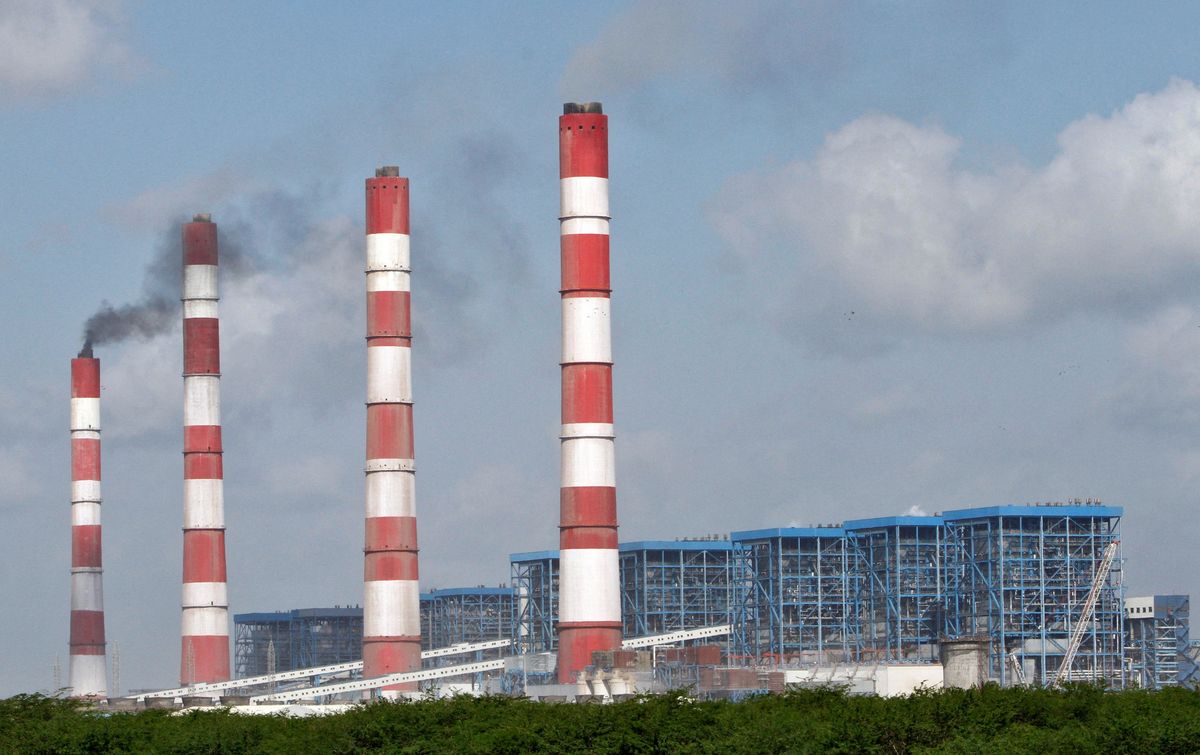
 A general view of Adani Power Company thermal power plant is pictured at Mundra in the western Indian state of Gujarat 
 REUTERS/Amit Dave/File Photo

President Donald Trump's Environmental Protection Agency administrator, Lee Zeldin, is reportedly pursuing plans that would wipe away most federal climate change rules with a single move.

According to Bloomberg, the EPA considered scrapping "its formal conclusion that greenhouse gases endanger the public, a move that would sweep away the legal foundation for regulations limiting planet-warming pollution from power plants, automobiles and oil wells."

The EPA would rewrite the so-called endangerment finding at the heart of most climate change rules if Zeldin has his way, sources told Bloomberg.

Trump has frequently referred to the rules as the "green new scam," but it was unclear if he had signed on to the plan.

"This is the holy grail of the climate agenda," prominent climate change denier Marc Morano told the outlet. "If you want to permanently cripple the United States climate agenda you have to go at the heart of it. This is the heart of it: the endangerment finding."

From building new power plants to eliminating incentives for electric vehicles, most climate change initiatives could quickly be reprioritized if Zeldin has his way.


Ignoring 'Science and the Law,' Trump EPA Readies Chainsaw for Key Climate Finding

"Lee Zeldin is willing to go so far as to break established law to pay back the corporate executives and polluters who spent millions to get Donald Trump elected," said one climate leader.


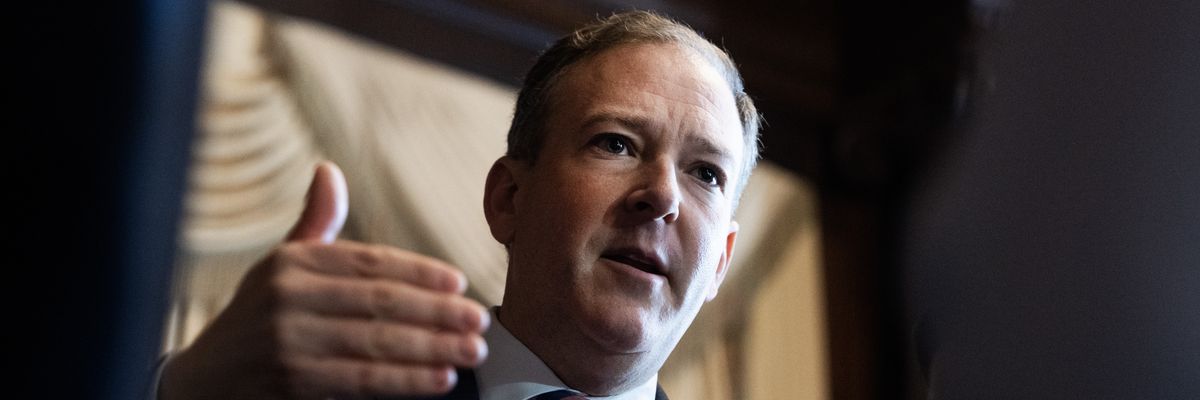
Lee Zeldin, administrator of the Environmental Protection Agency, talks with reporters in Washington, D.C. on February 18, 2025.
(Photo: Tom Williams/CQ-Roll Call, Inc. via Getty Images)

Julia Conley
Feb 26, 2025
COMMON DREAMS

Climate advocates said Wednesday that the Trump administration will be abdicating its "clear legal duty to curb climate-changing pollution" if it moves forward with repealing the 16-year-old scientific finding that has underpinned the federal government's actions to protect people and the planet from fossil fuel emissions.

As The Washington Postreported, Environmental Protection Agency (EPA) Administrator Lee Zeldin is pushing the White House to repeal the endangerment finding, an official determination announced in 2009 that affirmed what the fossil fuel industry had known for decades: that emissions of greenhouse gases including carbon dioxide and methane cause planetary heating and threaten public health.

The finding gave the government the authority to regulate such pollution.

For several days, the White House and EPA refused to release the results of a 30-day review of the endangerment finding, which President Donald Trump called for under an executive order he issued on his first day in office.

Three people with knowledge of the issue, who remained anonymous, told the Post that former EPA Chief of Staff Mandy Gunasekara—who wrote the chapter on the agency in the right-wing policy agenda Project 2025—has been advising the administration on the potential repeal of the endangerment finding.

Another former official from Trump's first term, attorney Jonathan Brightbill, is also providing legal advice on repealing the scientific finding, which has provided the basis for federal regulations on automobile, aircraft, and power plant emissions.

By repealing the endangerment finding in place, the administration would throw out thousands of scientific studies showing how fossil fuel emissions heat the planet and are linked to heart disease, lung cancer, asthma, and other life-threatening health problems—and clear the way to overturn climate policies introduced by former President Joe Biden.

Denying the science underpinning the finding, said Green New Deal co-sponsor Sen. Ed Markey (D-Mass.), makes the administration "a danger to our country."


Rachel Cleetus, policy director with the Union of Concerned Scientists' Climate and Energy Program, said that any attempt by the Trump administration to gut the endangerment finding would be "fully challenged in court."

"Eliminating the endangerment finding would be a giveaway to the fossil fuel industry, which has spent decades lying to the public about the harms of their product," said Cleetus. "The science backing the EPA's finding is rigorous and unequivocal—heat-trapping emissions pose serious threats to public health and well-being. EPA has the authority and legal obligation under the Clean Air Act to regulate sources of these pollutants, including vehicles, power plants, and oil and gas operations."

Ben Jealous, executive director of the Sierra Club, also warned that the organization "will meet [the EPA] in court" if it moves forward with the repeal.

"Lee Zeldin is willing to go so far as to break established law to pay back the corporate executives and polluters who spent millions to get Donald Trump elected," said Jealous. "This breathtakingly illegal power grab defies both the Supreme Court and Congress, and if Trump agrees to this plan, the Sierra Club will meet them in court. We will never allow any administration to sell out the climate, our health, our clean air, and our future."

Zeldin is reportedly recommending that the finding be repealed weeks after wildfires destroyed more than 12,000 homes and other buildings in the Los Angeles area and after meteorologists reported a record 143 days last year of 100°F heat or higher last year. More than 100 people were killed last year by Hurricane Helene, which damaged about 74,000 homes.

"If the Trump EPA proceeds down this path and jettisons the obvious finding that climate change is a threat to our health and welfare, it will mean more polluted air and more catastrophic extreme weather for Americans."

Experts found that the fires that devastated Los Angeles were made 35% more likely by dry, hot weather conditions and that planetary heating made Helene more dangerous and destructive.

"Any recommendation to strike the finding would be a bad-faith attempt to circumvent the law and best available science with the sole aim of boosting fossil fuel use and the profits of polluting companies," said Cleetus. "Meanwhile, people around the nation, especially in communities acutely exposed to climate impacts or pollution, will pay the price."

Dominique Browning, director and co-founder of Moms Clean Air Force, said the new reporting revealed that Zeldin "is contaminating EPA with a virulent strain of climate denial that has seized hold of many of the Trump administration's Cabinet members."

Browning noted that the EPA issued its determination in 2009 in response to the 2007 U.S. Supreme Court case Massachusetts v. EPA, which established that the agency has the authority to regulate greenhouse gases.

"EPA's action respected the ruling of the U.S. Supreme Court," said Browning. "It respected the bedrock science and respected what we all know to be true: Families across the country are experiencing the extreme weather fueled by climate emissions. With every new supercharged wildfire, hurricane, flood, and heatwave, the danger takes on a terrifying intimacy: Think of the summers that have become too hot for children to play outside, of the lifetime trauma of losing a home in a flood or fire."

"Administrator Zeldin's recommendation to strike down the endangerment finding will only bolster the billions of dollars of profit being made by the oil and gas industry—while ransacking our children's safety," Browning said.

David Doniger, senior strategist and attorney for climate and energy at the Natural Resources Defense Council, said Zeldin's reported plan "only makes sense if you consider who would benefit: the oil, coal, and gas magnates who handed the president millions of dollars in campaign contributions."

The fossil fuel industry poured nearly $450 million into Trump's campaign, and the president promised to roll back climate regulations if oil and gas companies donated heavily to him in what critics called a quid pro quo.

"This decision ignores science and the law," said Doniger. "Fifteen years ago, the EPA determined that climate pollution endangers our health and well-being. The Denali-sized mountain of scientific evidence behind that decision has only grown to Mount Everest–size since then. The courts have repeatedly upheld the EPA's legal authority and its scientific conclusions."

"This is the clearest example of the Trump administration putting polluters over people, and that's saying a lot," Doniger added. "If the Trump EPA proceeds down this path and jettisons the obvious finding that climate change is a threat to our health and welfare, it will mean more polluted air and more catastrophic extreme weather for Americans. We will see them in court."
Trump's Ukraine Rhetoric Reinforces Imperialism, Not Peace

By suggesting that Russia's land seizures should be accepted due to its military losses, he legitimizes conquest as a political norm.

A small protest takes place outside the U.S embassy of Ukraine on February 26 2025 in Kyiv, Ukraine.
(Photo: Paula Bronstein/Getty Images)

Robert Francis
Feb 27, 2025
Common Dreams

In discussions of Ukraine, it is important to decolonize Western perspectives and recognize that Russia's ongoing imperialism has only served to strengthen NATO rather than weaken it. This expansionist agenda did not begin in 2022, 2014, nor did it emerge solely as a reaction to NATO enlargement, an argument that Mikhail Gorbachev himself has dismissed. Instead, it has deep ideological roots, as outlined in the geopolitical strategies of figures like Aleksandr Dugin. The vision of a "Eurasian" empire has informed Russian imperial ambitions for decades. This influence has manifested not only in ideological writings but also in concrete actions, including the activities of Eurasian youth movements operating within Ukraine and earlier efforts by members of the National Bolshevik Party, who faced charges for threatening Ukraine's territorial integrity.

These fringe ideas gradually became part of Russian President Vladimir Putin's political strategy as he embraced nationalism for ideological support, similar to how far-right ideologies from the 1990s have been absorbed into today's Republican Party in the United States. This is evidenced by his speech at the World Russian People's Council, where he framed the war in Ukraine as a "holy war" to preserve Russia's cultural and spiritual dominance. The rhetoric of protecting the "Russian World" (Russkiy Mir) has justified expansionist policies under the guise of historical and religious continuity. In his 2014 speech following the annexation of Crimea, Putin likened Crimea's significance to that of the Temple Mount in Jerusalem, underscoring the sacralization of territorial conquest. More recently, the World Russian People's Council's declaration affirmed that Russia was engaged in a holy mission to shield the world from Western "Satanism" and that Ukraine was destined to fall under Russia's exclusive sphere of influence.

Understanding this broader history reframes Russia's aggression not as a reaction to NATO but as part of a long-standing effort to reassert imperial dominance. This colonial project aims to subjugate Ukraine and other former Soviet republics, treating them not as independent nations but as territories to be absorbed into a " Greater Russia." The narrative that Russia is merely defending itself against Western encroachment ignores the reality that its own actions have consistently driven its neighbors further toward NATO and Western alliances. Finland and Sweden's NATO bids, for example, are direct consequences of Russian militarism, not preemptive Western schemes.

A truly decolonial approach affirms Ukraine's struggle as one of self-determination against imperial rule, not merely a proxy in great-power politics.

The left has historically fought against imperialism in all its forms. Yet, some sections of the contemporary Western left have failed to apply their anti-imperialist principles to Russian expansionism, viewing NATO as the primary antagonist. True anti-imperialism requires solidarity with those resisting colonial domination, which in this case means supporting Ukraine's right to self-determination against Russian aggression. This aligns with the struggles of grassroots movements in Ukraine who have been on the frontlines of defending their communities from occupation and repression.

Resistance movements in Ukraine, such as those documented by Avtonom, 161 Crew's Ukraine War Reader, Solidarity Collectives, and the Ukraine Solidarity Campaign, provide vital perspectives that counter the dominant geopolitical framing of the war. Avtonom's reporting emphasizes the need for direct antiauthoritarian resistance to both Russian imperialism and NATO militarization. It argues that we should not be caught in a binary trap but should instead prioritize grassroots solidarity with those directly resisting occupation. The 161 Crew Ukraine War Reader offers firsthand accounts from antifascist fighters, showcasing the diverse composition of Ukrainian resistance, which includes feminist, queer, and anti-racist activists.

Solidarity Collectives highlight the crucial role of mutual aid and self-organization in sustaining resistance efforts. They argue that the war is not just about state survival but about defending communities against violent colonial erasure. Their work provides material aid to resistance groups, ensuring that grassroots fighters have the resources to continue their struggle. The Ukraine Solidarity Campaign's feminist manifesto demonstrates the gendered dimensions of war and occupation, highlighting how Russian aggression exacerbates patriarchal violence and restricts bodily autonomy. These perspectives disrupt the simplistic portrayal of the war as a clash of geopolitical blocs, instead framing it as a fight for the survival of marginalized and oppressed communities.

In juxtaposition, Russia's imperial vision is deeply intertwined with the Russian Orthodox Church, which has provided ideological justification for war. Patriarch Kirill, a key figure in the Russian Orthodox hierarchy, has framed the invasion of Ukraine as a holy war against Western decadence. This fusion of nationalism and religious orthodoxy reflects broader patterns of colonial domination, where cultural and spiritual narratives are weaponized to justify expansion and subjugation.

One of the most insidious justifications for Russia's aggression has been the portrayal of Russian-speaking populations in Ukraine as oppressed minorities in need of protection. This mirrors tactics used by Russia in Transnistria, Georgia's breakaway regions, and other former Soviet territories, where Moscow has manufactured narratives to justify humanitarian intervention. From a historical perspective, Ukraine has faced centuries of colonial domination by Russia. This suppression dates to the Russian Empire's Russification policies, which sought to erase Ukrainian language, culture, and autonomy. The Soviet era continued these efforts, most notably through the Holodomor, which devastated the Ukrainian population and remains a defining trauma in the nation's collective memory. Recognizing this colonial history is critical in understanding why Ukraine's fight for sovereignty is not merely a geopolitical contest but a struggle against historical oppression.

One of the central arguments put forth by some in the "pro-peace" camp is that NATO expansion provoked Russia into invading Ukraine. This claim assumes that Russia's security concerns are legitimate while ignoring the desires of Eastern European nations. Countries like Ukraine have sought NATO membership not due to Western coercion but because of real and ongoing threats. The claim that NATO provoked Russia also misrepresents historical facts: While verbal discussions about NATO's role in post-Cold War Europe occurred, no legally binding agreement prohibited NATO expansion. Gorbachev himself later clarified that NATO expansion was not a topic of formal negotiation during German reunification.

This should not be misconstrued with support for NATO. However, even those on the left that had previously favored neutrality and condemned NATO had a change of heart after Russia's hybrid, and then full-scale invasion of Ukraine. It was not only out of fears for security, but lack of other options. As a member of the Finnish political party Left Union stated "The consensus, as I understand it in discussions with comrades, is that we have not been able to provide any credible alternatives to NATO. We always emphasized that we had an independent, strong army that Russia would not dare to challenge—and since we were outside NATO, they had no reason to challenge us. After the invasion of 2022, such a defense policy was no longer perceived as adequate."

Ultimately, demands for Ukrainian neutrality and territorial concessions ignore the imperialist nature of Russia's war. Portraying Ukraine's resistance as merely a NATO-driven proxy war dismisses the agency of Ukrainians fighting against colonization. A truly decolonial perspective must acknowledge that Ukraine is not just a piece on a Western geopolitical chessboard but a people with a long history of resisting Russian domination.

That history informs current skepticism. Why should Ukraine trust new security assurances? The 1994 Budapest Memorandum was supposed to guarantee Ukraine's territorial integrity in exchange for giving up its nuclear weapons. Signed by the United States, the United Kingdom, and Russia, it offered security assurances against military aggression in return for Ukraine's commitment to denuclearization. However, the failure to uphold these guarantees severely damaged the credibility of international security agreements. The same applies to the Minsk agreements, which Russia also disregarded, claiming they were not bound by them.

For Ukraine, the failure of past assurances serves as a stark reminder of the limits of nonbinding diplomatic guarantees, especially in the context of an anti-colonial struggle. Despite explicit commitments from major powers to uphold Ukraine's sovereignty, Russia blatantly violated the agreement, while the United States and the United Kingdom, though condemning Russia's actions and providing military aid, did not fully uphold their commitments under the Budapest Memorandum. As global powers attempt to influence Ukraine's decisions, it is entirely understandable that Ukraine would be skeptical of security promises, particularly those tied to concessions like territorial loss.

The implications of U.S. President Donald Trump's rhetoric heighten concerns about the normalization of imperialism. In recent statements, Trump suggested that because Russia took land and suffered military losses, its territorial conquest should be accepted. This perspective does not oppose imperial power but instead reinforces it by treating territorial expansion through war as a natural part of global politics. Such a stance directly contradicts anti-imperialist principles, which reject land grabs as a means of legitimizing power.

This concept of imperialists taking land is not peace, it is domination. It legitimizes conquest under the guise of diplomacy and excuses similar policies elsewhere. Trump's rhetoric extends beyond Ukraine, as seen in his proposal that the U.S. should " own Gaza" after having funded its destruction. Such suggestions reduce the right to self-determination to a bargaining chip for powerful nations. Moreover, his policies on extraterritorial detention, such as using Guantánamo Bay for mass deportations, reflect the same colonial logic where land, borders, and even human lives are treated as assets to be shuffled and controlled by imperial powers. This is not about security or peace; it is about consolidating power through force and coercion.

While some in Ukraine and Eastern Europe may be bewildered by a segment of the Western left's inability to stand in solidarity with their struggles, there are deeper reasons for this disconnect. These deeply held beliefs are not merely the product of internet conspiracy theories, flawed praxis, or misinformation. The Western left is keenly aware of its own governments' history of exploiting humanitarian intervention, breaking promises to foreign nations, and engaging in imperialism. This skepticism dates to the Cold War era, when it resisted red scare tactics and anti-communist propaganda that were wielded to justify war and nationalism.

Building solidarity and trust between the Western left and Ukrainians requires bridging this divide. While those in the West best understand their own governments and institutions, Ukrainians fighting for survival are confronting a different imperial force, Russia. Yet to many on the Western left, Russia has long been the manufactured boogeyman used to justify imperialist wars.

Decolonizing the narrative on Ukraine means rejecting the imperialist framing that treats territorial conquest as an inevitable outcome of war and instead centering Ukrainian voices. Too often, discussions are shaped by Western geopolitical anxieties rather than the perspectives of those resisting Russian domination. A truly decolonial approach affirms Ukraine's struggle as one of self-determination against imperial rule, not merely a proxy in great-power politics.

Trump's rhetoric reinforces imperialism, not peace. By suggesting that Russia's land seizures should be accepted due to its military losses, he legitimizes conquest as a political norm. This logic extends beyond Ukraine—his proposal that the U.S. should "own Gaza" and his calls to use Guantánamo Bay for mass deportations further reflect a colonial mindset where land, borders, and human lives are bargaining chips for the powerful.

Solidarity demands more than opposition to Western militarism; it requires confronting Russia's colonial ambitions and supporting those fighting for sovereignty. A just peace cannot be built on the normalization of land grabs and forced submission. Instead, it must be rooted in resisting empire in all its forms and standing with those asserting their right to self-determination.
Trump rift opens floodgates of disinformation on Ukraine


By AFP
February 26, 2025


Disinformation targeting Ukraine and President Volodymyr Zelensky continues to flourish three years into the war with Russia 
- Copyright AFP Tetiana DZHAFAROVA


Bill MCCARTHY

Disinformation targeting Ukraine and its leader Volodymyr Zelensky is surging as US President Donald Trump’s shift on the war frays relations with Kyiv and threatens to cripple support for the battle-worn nation.

Deepfakes, specious videos of Ukrainian soldiers and false narratives about Zelensky buying luxury properties — some of which have circulated for years — have resurfaced online, inflaming anti-Ukraine sentiment three years into Russia’s invasion.

AFP has also debunked fresh lies, including false claims that Zelensky banned Trump’s Truth Social platform in Ukraine.

Researchers say much of the disinformation spreading among Americans was previously seeded by Russia, with some of the influence campaigns that sought to affect US elections increasingly focused on the Ukrainian president.

“We have observed a notable resurgence in anti-Ukraine disinformation narratives across US social media, many of which appear to be repurposed content from prior Russian influence campaigns,” said McKenzie Sadeghi, an analyst with the misinformation watchdog NewsGuard.

The claims intensified following Trump’s attacks on Zelensky, whom he called a “dictator.”

“Trump’s comments seem to have sparked renewed interest in anti-Ukraine narratives that had faded,” Sadeghi told AFP.

The president’s son Donald Trump Jr and conservative influencer Kyle Becker promoted a long-debunked deepfake of Zelensky dancing.

Another Trump ally, Republican Senator Mike Lee, amplified dubious footage that purported to show Ukrainian soldiers setting fire to a Trump effigy, while other prominent X accounts shared a clip supposedly depicting the country’s troops burning copies of Trump’s “The Art of the Deal.”

Ukraine’s Center for Countering Disinformation called both clips “fake,” saying they were staged and by “Russian propagandists.”


– Russian influence campaign –


The videos appear to be the work of a Russian disinformation operation dubbed Storm-1516, said Clemson University’s Darren Linvill, whose team uncovered the network in 2023.

The campaign previously targeted the US election with staged videos intelligence officials attributed to the Russians, including some claiming to show voter fraud.

As with some other Storm-1516 fakes, the two clips feature Ukrainian military insignia prominently but do not reveal “even a flash of an actual person’s face, even a hint of an indication of where these things are filmed,” Linvill said.

Both were disseminated last year by accounts Linvill said frequently launder Storm-1516 videos.

“Storm-1516 narratives have a lot of consistencies. It’s how they’re crafted, the narrative they’re telling, how they’re distributed.”


Fake yachts


The Storm-1516 operation has also maligned Zelensky and his wife with tales of lavish purchases as Ukraine relies on Western military assistance.

“These false narratives show up in the top searches around Zelensky each month,” Linvill said.

“The number of villas this guy has bought at this point, according to Storm-1516, is outrageous.”

The claims spiked again after Trump questioned Zelensky’s legitimacy.

Between February 18 and 24, NewsGuard counted nearly 28,000 social media posts and articles that mentioned Zelensky and either a villa, yacht, winery or mansion — more than 26 times the mentions over the previous six-day period, Sadeghi said.

The group reported that an American-turned-Kremlin propagandist who runs hundreds of phony websites has helped spin 14 narratives accusing the Zelenskys of corruption since the war began.

Joseph Bodnar, a researcher at the Institute for Strategic Dialogue, said the Russian influence efforts are focused “on fostering animosity between the Trump and Zelensky administrations.”

“Russia wants to convince US negotiators that Ukraine is their enemy, not their partner. It’s a means for the Kremlin to extract favorable terms in whatever peace settlement comes.”

Some suspected Russian disinformation has reached Elon Musk.

In early February, the billionaire tasked by Trump with slashing government expenditure shared a made-up report saying the US paid celebrities to visit Zelensky in Ukraine.

It is the payoff of what Linvill said has been years of Russian disinformation about Ukraine.

“The fruits of this constant pressure campaign are being born.”

Trump’s Plan for Gaza Would Make Colonial Plunder Great Again

In an interview, economist James K. Boyce discusses the relationship between war and economics, and how Trump’s talk of taking over Gaza and turning it into the “Riviera of the Middle East” is similar to the U.S. dispossession of Native Americans.


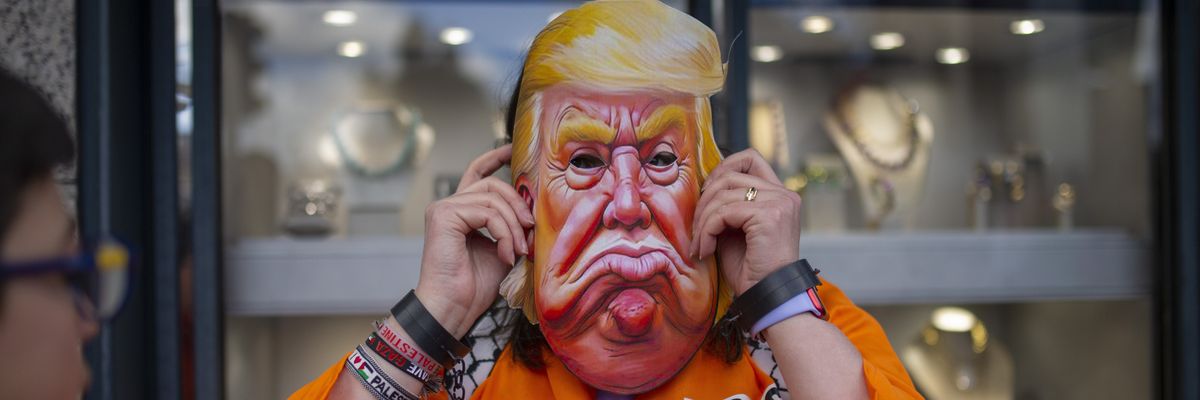
A protester in a prisoner's suit puts a Donald Trump mask on his face during a demonstration in front of the U.S. embassy in Madrid, protesting President Donald Trump's proposal that the United States would "take over" and "own" Gaza after the removal of Palestinians, claiming it could be transformed into "the Riviera of the Middle East."
(Photo: Luis Soto/SOPA Images/LightRocket via Getty Images)

C.J. Polychroniou
Feb 27, 2025
Common Dreams

Can economics fuel conflict and war? Absolutely, and history is full of such examples. But economics can also pave the way to lasting peace, according to progressive economist James K. Boyce.

In the interview that follows, professor Boyce discusses the economics of war and the role that economics can play in peacemaking, including in places like Ukraine and Gaza, although he acknowledges that daunting challenges lie ahead for these two war-torn areas of the world. As for U.S. President Donald Trump’s plan for Gaza, Boyce puts it side by side with the disposition of Native Americans in the United States.

James K. Boyce is professor emeritus of economics at the University of Massachusetts Amherst and a senior fellow of the Political Economy Research Institute (PERI). He is the author of Investing in Peace: Aid and Conditionality after Civil Warsand editor of Peace and the Public Purse: Economic Policies for Postwar Statebuildingand Economic Policy for Building Peace: The Lessons of El Salvador.He received the 2024 Global Inequality Research Award and the 2017 Leontief Prize for Advancing the Frontiers of Economic Thought. This interview is based on his seven-part video series released by the Institute for New Economic Thinking.

C. J. Polychroniou: Conflicts across the world have surged since 2020, making this one of the most violent periods since the end of the Cold War. The wars in Ukraine and Gaza have been most visible in the news, but there have been dozens of other conflicts, too. What lessons can we draw from history about the economics of war, the topic of your recent video series from the Institute for New Economic Thinking? How about if we start with the wars of conquest during the era of colonialism?

James K. Boyce: Economics is not just about mutually beneficial exchanges entered into by mutually consenting adults, though you could be forgiven for thinking so if your only acquaintance with the subject was a typical textbook. Real-world economics also is about coercive relationships in which one side benefits and the other loses. Such interactions—which can be grouped under the general rubric of plunder—involve not only outright force but also the manipulation of governments and markets, often occurring in the grey area between what is legal and what is not.

Trump often is described as “transactional” with good reason: For him, policy is about making deals.

The colonial wars of conquest were a particularly naked example of plunder. Slavery, the appropriation of lands and minerals, and the monopolization of commerce were common features of the time, thinly cloaked, if at all, by the pretense of a “civilizing” mission. But it would be wrong to imagine that plunder disappeared with the end of formal colonial rule. It remains a ubiquitous feature of the world economy, now sometimes cloaked by the veneer of “modernization” or “development.” Because plunder is inherently antagonistic—it pits the plunderers against the those whose resources and livelihoods are plundered—it can and often does morph into violence and war.

C. J. Polychroniou: What about more recent conflicts, like the wars in Bosnia (1992-1995) and Afghanistan (2001-2021)? How did economics figure into these?

James K. Boyce: Economics is not the whole story in these or most conflicts, but it is an important part of why they begin, how long they persist, and how they finally end.

Bosnia emerged as an independent nation during the breakup of Yugoslavia in the 1990s. Some commentators blamed “ancient ethnic hatreds” for the violence that accompanied Yugoslavia’s dissolution, but tensions arising from economic disparities among its provinces were also at play. Within Bosnia, three main “ethnic” groups lived side by side—Muslim Bosniaks, Catholic Croats, and Orthodox Serbs—and the fighting largely devolved along these lines (I place “ethnic” in quotation marks, because apart from religious origins the three were hard to distinguish). But another underlying axis of conflict was the deep economic gulf between urban Bosnians (often Bosniaks), who benefited in Yugoslavia from good education, health, and pension systems, and rural Bosnians (often Serbs), who were excluded from the benefits of engagement in the formal economy.

Once war broke out, opportunities for plunder became a key driving force in the conflict. Hardliners who engaged in ethnic cleansing—killing minorities and driving them out—not only sought to establish homogeneous enclaves for “their” people but also to gain personally from seizing the businesses, homes, land, and other property the victims left behind.

Economic incentives, in the form of promises of postwar reconstruction aid, played a key role in the end of the war, too, persuading the warring parties to sign the 1995 Dayton Peace Accord. Dayton, in a sense, was an aid-for-peace bargain. So economics was very much implicated in all phases of the Bosnian conflict.

The 2001-2021 war in Afghanistan was in many ways a resumption of the 1979-1989 war, with the difference that now it was the United States instead of the Soviet Union that occupied Kabul while the countryside largely remained under the control of the Taliban and regional warlords. As in Bosnia, pronounced economic disparities between urban and rural areas fueled the Afghan conflict, and the Taliban tapped into rural discontent. Wide disparities between Kabul and the rest of the country predated the Soviet and American invasions, and were further exacerbated by the wartime influx of foreigners and their money. Meanwhile, by controlling the opium traffic and taxing cross-border trade, the Taliban built a viable economic base of their own.

Economics played a central role in the U.S. war strategy, but it was not a pretty picture. In 2002, then-U.S. Defense Secretary Donald Rumsfeld instructed his senior aides to come up with “a plan for how we are going to deal with each of these warlords—who is going to get money from whom, on what basis, in exchange for what, what is the quid pro quo, etc.” The U.S. government poured nearly $1 trillion into Afghanistan—$145 billion in reconstruction aid plus $837 billion in military expenditures—this in a country with a GDP of less than $20 billion. War “became the Afghan economy,” as The New York Times put it. The Afghan leadership, unsurprisingly, was more attentive to the demands of foreign donors than to the needs of their own citizens. Massive corruption fueled by external assistance fatally undermined any possibility of building a legitimate and effective state. “Our money was empowering a lot of bad people,” a senior U.S. official recalled. “There was massive resentment among the Afghan people. And we were the most corrupt.”

Today 85% of Afghanistan’s people subsist on less than one dollar a day. Whether the Taliban government or the so-called international community will act to address their deprivation and build a lasting peace is an open question.

C. J. Polychroniou: What role can economics play in peace building?

James K. Boyce: There is much to be said on this topic—it is the focus of the video series—and space precludes a full answer here. Let me highlight just two points.

First, economic policies can either reduce inequalities and the accompanying tensions or exacerbate them. This means not only “vertical” inequality between rich and poor, but also “horizontal” inequalities between groups defined on another basis, such as region, ethnicity, race, or religion. A single-minded focus on the total size of the economic pie—the conventional goals of growth and efficiency—is misplaced when conflicts over how it is sliced threaten to smash the pie.

Second, economic policies can either strengthen or weaken the bargaining power of pro-peace forces vis-à-vis those who seek to perpetuate the conflict. In Bosnia, for example, a crucial postwar issue was the return of refugees and internally displaced persons to their former homes. In some municipalities, local leaders welcomed them; in others, they actively obstructed returns, in part to protect their ill-gotten loot. In its “Open Cities” program, the United Nations High Commission for Refugees used reconstruction aid to reward municipalities that welcomed returns and to induce leaders on the fence to come down on the pro-peace side. The program’s implementation was not perfect, but the idea was sound. Again, “who” matters as much as “what.”

C. J. Polychroniou: How can we apply economics to the wars in Ukraine and Gaza? Can economic policies help to drive peace in those two war-torn areas?

James K. Boyce: The Trump administration’s “America first” stance seems likely to lead to a U.S. pullback from engagement in the tasks of peace building and state building in war-torn societies. In part, this reflects a disillusionment born of the dismal failures in Afghanistan and Iraq, and as those experiences suggest, disengagement may not be entirely a bad thing. But Ukraine and Gaza continue to loom large on the U.S. foreign policy agenda.

Trump often is described as “transactional” with good reason: For him, policy is about making deals. In both Ukraine and Gaza, economic considerations will be a big part of any deals we see. But it is by no means clear that forging a lasting peace will be the top priority for the dealmakers. If not, the end of the current wars could merely set the stage for future ones.

The Ukraine war is exhibit No. 1 of the dangers of fossil-fueled oligarchy. In addition to enormous environmental costs, fossil fuels carry a high political cost: They enable the autocratic rulers of petrostates to govern with little accountability to either their own citizens or norms of international law. Vladimir Putin’s Russia is a case in point. As Ukraine illustrates, fossil fueled-oligarchy can metastasize into fossil-fueled war.

Putin has oil and gas; Netanyahu has the United States.

Oil and gas revenues have sustained the Putin regime, notwithstanding international sanctions. The sanctions do, however, drive a wedge between the world market price and what Russia receives, so the prospect of lifting them could act as an incentive for Russia to accept a negotiated settlement. But if the Trump administration eases the sanctions without a peace agreement, while at the same time cutting military and financial aid to Ukraine, this will tilt the terms of the settlement in Russia’s favor.

On the Ukrainian side, the prospect of large-scale reconstruction assistance—as well as an end to the carnage—may provide an incentive, too. It now appears that the responsibility for funding Ukraine’s postwar reconstruction will fall mainly on Europe; whether the European nations will be willing and able to shoulder this burden remains to be seen. In an effort to shore up U.S. support, Ukrainian President Volodymyr Zelensky has offered a minerals-for-aid deal that would give the U.S. access to Ukraine’s deposits of lithium, uranium, and other critical minerals. But the minerals will be in the ground regardless of who controls the land above them, and it is not evident that the Trump administration will care much about that.

In Gaza, the latest war tragically illustrates what I call the “partition dilemma.” The 1994 Oslo Accord sought to resolve the Israeli-Palestinian conflict by establishing the Palestinian Authority as a step toward a two-state solution. In the short run, partition can be an appealing way to stop the shooting. But in the longer run, it can set the stage for renewed conflict, as demagogues on both sides invoke fear of the other to enlist public support from their own people. Partition severely undermines the viability of leaders and parties that would appeal to pro-peace constituencies on both sides.

It is not surprising that 30 years after Oslo, we find Hamas on one side and the Netanyahu government on the other. The two feed off each other in a de facto alliance, each holding up the other as justification for its own politics of demonization. This helps to explain why the Netanyahu government not only tolerated but actively facilitated the flow of cash from Qatar to Hamas. In a candid moment back in 2015, Bezalel Smotrich, who is now Prime Minister Benjamin Netanyahu’s finance minister, said that “Hamas is an asset.”

The chances that partition will lead to a lasting peace grow even slimmer if one side receives large-scale financial and military support with no strings attached—without peace conditionality—while the other does not. By emboldening one side and embittering the other, the resulting imbalance is a recipe for renewed conflict. Putin has oil and gas; Netanyahu has the United States. Rather than a negotiated settlement, the Israeli government now appears to be seeking a winner-take-all victory. Under the new U.S. administration, Netanyahu will face even fewer constraints than under the last one.

Trump’s talk of taking over Gaza and turning it into the “Riviera of the Middle East” is reminiscent of plunder during the colonial era, including the dispossession of Native Americans in the United States. Yet in purely economic terms it makes a certain amount of sense: Beach resort development would indeed be a more profitable use of the land than maintaining Gaza as a place of confinement for 2 million refugees. Where other politicians see territory, Trump sees real estate.

The problem, of course, is what to do with Palestinians. There is one place that many of them might go willingly: the land of their grandparents, Israel. The fact that option this is unmentionable, even unthinkable, tells us a lot.

If the war in Gaza and ongoing displacement in the West Bank do not end with the complete expulsion or annihilation of the Palestinians—a prospect that still seems inconceivable—the eventual outcome will be a single state in which the surviving Palestinians have a subordinate and marginalized status. Their struggle will then become one for equal rights. Economic policies could prove helpful at that point, but history suggests it will be a long, hard road.