Monday, March 03, 2025

UK
Report: Ability of seniors to live self-sufficiently impacted by funding cuts


ByDr. Tim Sandle
DIGITAL JOURNAL
March 1, 2025


A carer helps an elderly resident - one of three alzheimer sufferers in the establishment- in a house at L'Hay-les- Roses on the outskirts of Paris - Copyright AFP STR

Health experts warn of a crisis of isolation and declining mental health among the elderly in the UK, highlighting the importance of addressing home accessibility before it becomes an even more urgent need. This comes amongst British government spending restraint, including Prime Minster Kier Starmer’s controversial decision to scrap winter fuel payments for millions of pensioners.

One area where the elderly are at risk when alone at home is from tripping and slipping. With falls being a leading cause of hospital admissions, there is also a critical opportunity to ease pressure on the NHS and social care services.

This tallies with new research by home lift specialists Stiltz, which shows the growing challenges faced by older adults in the UK.

Mobility problems

The survey finds that 92.4 percent of those surveyed (aged 60–99) said maintaining independence at home is crucial, yet 64.4 percent admitted their mental health is suffering due to the struggle to live self-sufficiently.

Furthermore, 80 percent of those polled expressed a preference to stay in their current homes as they age. Despite this, one in six said they have to avoid certain parts of their home due to mobility issues. In addition, the survey of 1,000 people aged 60 to 99 people found that 44.7 percent of respondents struggle with tasks like climbing stairs, increasing their risk of falls and injuries.

This data ties directly to the recent news about families reassessing their loved ones’ living situations, highlighting the need for better education and support to help older adults age safely and comfortably in their homes. According to the charity Age UK:

10% (1.1 million) of older people have difficulty dressing
5% (500,000) of older people have difficulty walking across a room
6% (640,000) of older people have difficulty bathing
1% (140,000) of older people have difficulty eating
6% (600,000) of older people have difficulty getting in and out of bed
4% (440,000) of older people have difficulty going to the toilet

There are around 22 million people aged over 50 in England, equivalent to two in five of the total population and this is rapidly increasing. with the population aged 85 and over growing the fastest.

Reducing strain on the NHS and social care services

Campaigners and experts are urging more to be done to address these barriers. Jayne Armstrong, Brand Supervisor at Stiltz tells Digital Journal: “These figures show the importance of helping older adults feel secure and capable in their own homes. Without greater efforts to address these challenges, we risk a crisis of isolation and declining mental health among the elderly, preventing them from fully enjoying their later years.”

“We need to encourage conversations about home accessibility before it becomes an urgent need,” Armstrong adds. “Simple changes, like installing mobility aids or adjusting home layouts, can make a big difference. Yet too often, these decisions are delayed until it’s too late and challenges come about.”

At the heart of the matter is the UK needing a properly funded and joined-up health and social care system.

“Supporting older people to age in place isn’t just about meeting individual needs, it’s also about reducing strain on the NHS and social care services,” Armstrong concludes. “By helping people live safely in their homes, we can prevent falls, injuries and hospital admissions, ultimately benefiting both individuals and the wider healthcare system.”

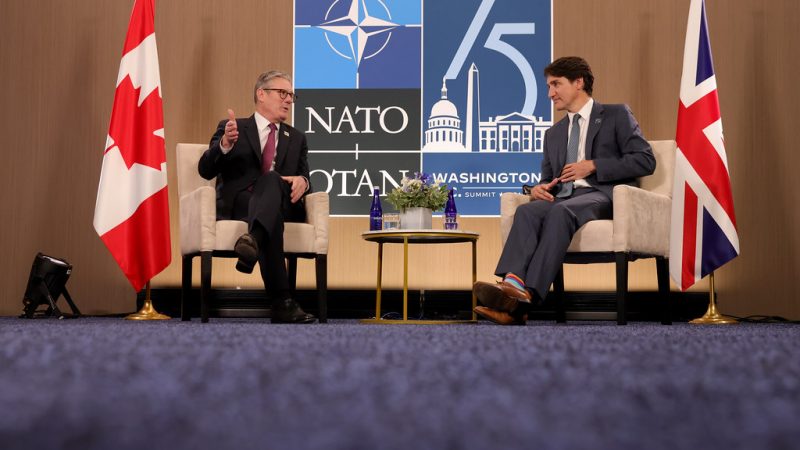

‘Keir Starmer should stand up for Canada and other Trump tariff targets’


LabourList - 

Photo: Number 10/Flickr

Along with golden curtains and much else ejected during Joe Biden’s presidency, Donald Trump has returned a portrait of Andrew Jackson to the Oval office. America’s populist seventh president shattered the political establishment set up by its revolutionary founding fathers – a cast of often well-educated, Enlightenment liberals. In his second term in office, is Mr Trump now finding historical inspiration in Jackson’s forthright support for ‘Manifest Destiny’?

The belief that the US had a God-given right to expand its boundaries to bring ‘freedom’ throughout the north American continent is one of the only observable origins for Trump’s new imperialism.

First considered laughable, Mr Trump has repeatedly threatened Canada’s sovereignty – with outgoing Liberal prime minister Justin Trudeau believing Trump is indeed serious about annexing the US’s northern neighbour. Not unlike his wild proposal to ‘own’ Gaza, there is little if any clear source for these ideas. 

Despite the severity of these threats to a NATO ally and Commonwealth country, Canada’s closest allies – including the UK – have been noticeably silent. 

There are few obvious reasons for why the US should annex Canada. Mr Trump’s bogus $200bn ‘subsidy’ for Canada is actually a $45bn trade deficit tied to Canada’s export of cheap energy to the US – which American consumers are the beneficiaries of at the pump. The border issue, where Trump blames Canada for migrant and drug flows, is a problem that works both ways and could be managed through cooperation – which he knows. Grasping at straws to justify his alarming proposal, Mr Trump threw in access for US banks to high street Canadian consumers. He’s making this up as he goes along.

READ MORE: ‘Starmer’s US trip was a diplomatic triumph but many more challenges lie ahead’

The other possibility, as with his shock Gaza proposal, is his strategy of changing the bounds of negotiations by starting the bidding with an inconceivable demand – only to make his desired preference, however untenable, more palatable. But Mr Trump forced Canada and Mexico to renegotiate north American free trade during his first term, which both countries grudgingly did. It’s not clear what years of further negotiation, even with such a big stick, would achieve to benefit the US.

Canada represents no political or security threat to the US – it will never align with a US rival like Russia or China. Canada is as advanced and predictable a trading partner as they come – the US couldn’t ask for a better backyard. From a US domestic politics perspective, a Canadian 51st state would vote Democrat more reliably than California. 

There is Canada’s abundant resources, including critical minerals, oil and also, water. However, again, the US already has greater access to these reserves than any other state. It is therefore hard to explain the president’s annexation threat as anything other than stone-cold imperialism. As Keir Starmer tries to navigate Mr Trump’s unpredictability, presumably with a view to keeping the UK’s head down as he fires at the EU and other states – he also needs to remember his commitment to protecting the rules-based international order.

It also ostrich-in-the-sand approach that ignores Mr Trump’s time-honoured strategy of pitting allies and enemies alike against one another to divide and rule. The UK would be far better off uniting with allies against these tariff and annexation threats and leading constructive negotiations with the new administration. 

When it comes to Canada, Mr Trump would do better to draw inspiration from another fixture in his Oval Office: Sir Winston Churchill, who called Canada the “linchpin of the English-speaking world”.  


Canada, Germany working on diversifying trade in face of U.S. threats
February 26, 2025 

President of the European Commission Ursula von der Leyen speaks at the opening ceremony of the Hannover Messe in the Hannover Congress Centrum (HCC), Germany, Sunday April 21, 2024. THE CANADIAN PRESS/Michael Matthey/dpa via AP

OTTAWA — Canadian companies and diplomats are working with their European colleagues to find ways to diversify trade as the U.S. threatens to impose steep tariffs.

“We want to be part of the solution, in terms of creating new business opportunities and diversifying trade,” said Tjorven Bellmann, Germany’s ambassador to Canada.

She was speaking at a press briefing Wednesday ahead of the Hannover Messe, the world’s largest trade fair. It’s an annual event in Germany and Canada is this year’s partner country.

“It’s a truly timely opportunity, given the geopolitical circumstances and all the discussion here in the country about the need to diversify trade,” Bellmann said.

She said she’s one of the European ambassadors in Ottawa who have talking with each other and with corporations, researchers and government officials on both sides of the Atlantic about ways to boost trade.


Bellmann said there’s a lot of interest in capitalizing on a trade deal that Canada and the European Union signed in 2017 - the Comprehensive Economic and Trade Agreement, known as CETA.

“I’m asking the question to interlocutors throughout Canada that I meet with - how can we make CETA even more operational?” she said.

“Both sides have work to do on identifying opportunities.”

She said Canadian universities are playing a large role in increasing trade as both countries look to move forward in fields like green energy and quantum computing.

Liberal MP Ryan Turnbull said Canada is looking to Europe as a counterbalance as U.S. President Donald Trump threatens to impose damaging tariffs on Canada and its European partners.

“The rise of protectionism and (the) economic uncertainty that brings us, it’s shaken us up,” said Turnbull, who is parliamentary secretary to the industry minister.

“The geopolitical tensions that we currently experience, I think, make this timely in terms of an opportunity for Canada to seize strengthening a diverse set of relationships that will make us more resilient in the future.”

Bellmann said the Hannover Messe trade show brings together about 130,000 in-person attendees, such as engineers and CEOs, along with 4,000 exhibitors from 156 countries.

During a 2022 visit to Newfoundland to sign a deal to import Canadian hydrogen, German Chancellor Olaf Scholz announced that Canada would take centre stage at this year’s event.

Since then, Industry Canada has been doing briefings with Canadian corporations and possible partners on multiple continents to lay the groundwork for deals to be signed at Hannover Messe.

Canadian companies will have a prominent physical space at the fair, and they will help lead various sessions.


They include the Eureka summit on research projects geared toward commercialization; Canada will be the first non-European country to co-chair that session. Canada joined the EU’s large Horizon Europe research fund in late 2023.

Stephane Lessard, acting director-general for European affairs at Global Affairs Canada, said Germany shares with Canada values that are “being challenged around the world” and Ottawa is seeking partnerships on innovation and research that have longer timelines than trade in goods.

“Canada is looking for friends that share our values, so this really matters,” he said.

Jayson Myers, head of Next Generation Manufacturing Canada, said he’s gone to the event in previous years and saw one Canadian company get a $5 million investment on the spot.

“It’s an opportunity for Canadian companies to meet with new suppliers, new innovation partners, to see what is the leading edge,” said Myers, whose group leads one of Ottawa’s five innovation clusters.

“These discussions are much more important than ever.”

He said Canadian companies are looking to partner this year with companies using artificial intelligence, quantum technology and robotics to improve their products, especially in Germany’s large automotive and machinery sectors.

Myers said he was pleasantly surprised to see few companies have pulled out of the Canadian delegation since Trump’s tariffs threats began. He said nearly 250 companies are sending roughly 280 delegates, along with 1,000 Canadian attendees.

Earlier this month, Germany’s diplomatic missions and trade agency released a joint statement with the Canadian-German Chamber of Industry and Commerce saying that Berlin wants more trade and investment with Canada.

It noted that bilateral trade endured throughout the COVID-19 pandemic and there is “room to improve.” “We don’t reap CETA’s full potential,” the statement reads.

Bellmann said Trump’s trade threats haven’t hurt German investment in Canada but corporations elsewhere are waiting for more certainty.

“A lot of investment decisions are not being taken at the moment, which is something we regret,” she said, adding that the EU is ready to impose retaliatory tariffs but hopes the Trump administration backs down.

“We don’t believe we should start dividing the world up into mutual tariff barriers and tariff threats.”

This report by The Canadian Press was first published Feb. 26, 2025.

Article written by Dylan Robertson, The Canadian Press
Provinces have roughly $100B at hand for tariff relief, Desjardins estimates 

February 25, 2025 

A Caisse populaire Desjardins sign is seen in Montreal
THE CANADIAN PRESS/Paul Chiasson

OTTAWA — Canada’s provincial governments have enough fiscal firepower to respond to looming U.S. tariffs without supersizing their debt burdens, a new report says.

The analysis released Tuesday from Desjardins Economics predicted upcoming provincial budgets will be dominated by plans to prepare for an unknown 2025 as promised tariffs from U.S. President Donald Trump put a cloud over fiscal forecasts.

“The provinces are heading into a budget season with the type of uncertainties we haven’t seen since the pandemic,” said Laura Gu, senior economist at Desjardins, in an interview.

Nova Scotia kicked off provincial budget season last week and offered the first peek at how the provinces are preparing for threats of sweeping tariffs on Canadian exports to the U.S.

Nova Scotia Finance Minister John Lohr said the province was entering “a period of heightened uncertainty and heightened risk” as he unveiled plans for a $200-million reserve fund to respond to the threat of U.S. tariffs.


Desjardins projects that the provinces collectively have up to $100 billion in free fiscal firepower to put toward relief for industries and individuals affected by tariffs. The report expects a similar amount of support is available from the federal government.

Desjardins anticipates that provincial governments could deploy those funds without the net debt-to-GDP ratio across all provinces rising above 35 per cent — levels last seen during the COVID-19 pandemic.

Debt-to-GDP is a metric that broadly reflects a government’s ability to pay down debt by tracking the size of its loans against growth in the economy. Desjardins forecast that these figures would stabilize at 30 per cent across the provinces for the next two years, barring potential tariff impacts.

Gu said that Desjardins does not see the economic hit tied to U.S. tariffs being as stark or broad-based as the pandemic downturn, instead comparing its scale to the global financial crisis of 2008-09.

“It is reassuring to say that the provincial and federal governments have the firepower to respond, but on the other hand, we don’t see the necessity of a pandemic-level stimulus,” she said.

Provinces ought to be “mindful” of keeping any relief efforts targeted and temporary, Gu said, lest they risk the progress made taming debt levels since the pandemic.

Before the prospect of U.S. tariffs, most provinces had been expecting their fiscal situations to improve in 2025 amid forecasts for renewed economic growth, the Desjardins report said.

How sharply tariffs would impact the provinces' bottom lines varies depending on how tied a provincial economy is to its manufacturing sector and to U.S. exports more broadly.

Central provinces including Ontario, Quebec and Manitoba, in addition to Prince Edward Island, are forecast to take the steepest hit under Desjardins' analysis, while British Columbia and Nova Scotia would avoid the sharper downturns because they’re relatively less reliant on U.S. trade.

The Desjardins report also assumes Canada will secure a carve-out for energy products before tariffs come into effect, protecting Alberta, Saskatchewan, Newfoundland and Labrador and, to an extent, New Brunswick, from the worst of the hits.

The magnitude and scope of possible U.S. tariffs against Canada remain uncertain. Canada secured a month-long pause on Feb. 4 after Trump signed an order for blanket tariffs on Canadian goods, though he later imposed additional 25 per cent tariffs on all steel and aluminum imports, set to take effect on March 12.


Desjardins' baseline scenario assumes a “partial” imposition of the threatened tariffs at 10 per cent on all goods except energy, 35 per cent on steel and 25 per cent on aluminum.

This outcome would see total employment fall by one per cent in the hardest-hit provinces, though Desjardins warns more severe scenarios could have job losses hit “recessionary levels” in Central Canada and P.E.I.

The likes of Ontario, Quebec and Manitoba could therefore require more fiscal support than other provinces in the event of a prolonged trade dispute with the U.S.

“The theme of this budget season would be to respond to these immediate threats in the most timely manner to avoid the very severe economic fallout,” Gu said.

Alberta is on deck for the next provincial budget release on Thursday.

---

Craig Lord, The Canadian Press

This report by The Canadian Press was first published Feb. 25, 2025.

CANADA

Weak productivity, trade issues could spur ‘structural damage’ in the economy: economist

February 26, 2025


Loading the player instance is taking more time than usualRetryRBC economist Claire Fan discusses her outlook for Canada's investment landscape as fears of a trade war looms over the economy.

Ongoing trade uncertainty could extend decades of underinvestment in Canada, according to one economist.

Royal Bank of Canada Senior Economist Claire Fan said in a report Wednesday that following a difficult two decades, overall real business investment is essentially unchanged since 2005, despite a rebound in planned business capital expenditures recorded in a Statistics Canada survey.

“Overall, another round of weak investment spending risks extending Canada’s decades long productivity crunch, turning trade threats in the near-term into structural damage in the economy that can’t be easily reversed,” she said.

Statistics Canada’s annual survey on business investment intentions, released Wednesday, indicated that private firms have planned to spend 5.5 per cent more on investments this year, to reach $388.6 billion.

However, Fan noted that the survey results pre-date escalations in trade tensions between Canada and the U.S. As a result, she said it means planned investments in 2025 are “likely overstated,” especially for the manufacturing sector due to its heightened exposure from integration with the U.S.


“As much as a tick higher in planned spending in 2025 is good news, it isn’t nearly enough to reverse the slump in Canadian business investment over what has already been a (mostly) challenging two decades – spanning the 2008/09 financial crisis, the 2015 oil price collapse, the 2020 pandemic, and the 2022/23 inflation/interest rate shock,” Fan said in the report.

Recently, the report noted the level of real investment has lagged behind? rapid increases in population, meaning real investment on a per-worker basis has been “outright contracting” and has reached levels similar to that of two decades ago.
Low investment to ‘reverberate’

The report says weak investment levels are likely to “reverberate” and weigh on productivity growth in Canada’s economy going forward.

“Weak business investment trends among Canadian businesses are not a result of a lack of funds. In fact, businesses as a whole are still sitting on a stockpile of cash,” the report said.

“By our count, non-financial corporations’ holding of cash and deposits was at $992 billion as of Q3 2024, or 32 per cent of Canadian GDP (gross domestic product), comparing to an average of 26 per cent of GDP in pre-pandemic 2019.”

Without productivity gains, Fan says Canadian wages and living standards will not rise.

“This is one way that near-term trade uncertainties, outside of dampening investment decisions and GDP growth in this moment could also have further-reaching negative impact on the economy down the road,” she said in the report.

“The structural underperformance in productivity growth, due to persistent under-investment basically means there will be a speed limit on how fast the Canadian economy can growth in the long run, beyond the next four years.”


How do Canada’s critical minerals fit into tariff tensions?
February 15, 2025 
BNNBLOOMBERG

Pieces of potash are shown at a surplus pile in Esterhazy, Sask.
 (Liam Richards/THE CANADIAN PRESS)

Critical minerals have become a point of tension between Canada and the U.S. amid an ongoing trade dispute and the resources, which are used to power modern economies, are essential to Canada’s national security, according to experts.

Last week, Prime Minister Justin Trudeau informed a group of executives that U.S. President Donald Trump wasn’t joking about the annexation of Canada, citing critical minerals as a reason.

Following Trump’s election in November, he stated Canada could avoid tariffs by becoming the 51st state.

On Feb. 1, Trump imposed 25 per cent tariffs on most goods imported from Canada into the U.S. and placed a 10 per cent tariff on energy and resources, including uranium and certain critical minerals, according to Canadian business law firm Stikeman Elliott.

On Monday, 25 per cent tariffs were placed on steel and aluminum, with the White House saying tariffs on those imports would be stacked on top of other levies.

What are critical minerals?

The Critical Minerals Centre of Excellence sets out criteria for what a critical mineral is and says to be considered a critical mineral, the supply chain must be threatened and a there needs to be “reasonable chance” for the mineral to be produced in Canada.

It also says the material must either be essential to Canada’s national or economic security, be needed for the transition to a low-carbon digital economy or position Canada as a sustainable strategic partner within the global supply chain.

“As the world moves toward adopting these technologies with even more frequency, demand for critical minerals is skyrocketing,” a spokesperson for Natural Resources Canada said in a statement to BNNBloomberg.ca Thursday.

The spokesperson added that investing in critical minerals creates economic growth while positioning Canada as a leader in energy, mining, national security and the modern economy.

“At the same time, Canada’s sustainable mining development practices ensure long-term environmental and social benefits,” the statement reads.
The centre defines 34 minerals and metals as critical
Aluminum Antimony Bismuth Cesium
Chromium Cobalt Copper Fluorspar
Gallium Germanium Graphite Helium
High-purity iron ore Indium Lithium Magnesium
Manganese Molybdenum Nickel Niobium
Phosphorus Platinum group metals Potash Rare earth elements
Scandium Silicon metal Tantalum Tellurium
Tin Titanium Tungsten Uranium
Vanadium Zinc

What are critical minerals worth?


According to the International Energy Agency (IEA), demand for critical minerals is expected to expand as more clean technologies are adopted. The IEA says the aggregate market value of key energy transition minerals is around US$325 billion.

If countries around the world fully implement energy and climate pledges that have been announced, the IEA expects demand for critical minerals for clean energy to more than double by 2030 and triple by 2040 hitting nearly 35 million tonnes each year.


TD Economics said in a June report that critical minerals will have a “crucial role” in powering technologies needed to decarbonize, while Canada has significant reserves of these materials.

“We estimate the potential gross value at a minimum of $300 billion just for six priority critical minerals cited in provincial, territorial, and federal strategy documents,” the report reads.

“Developing these resources alone will contribute over $500 billion in GDP (gross domestic product) over the life of these potential mines and can help support economic reconciliation with Indigenous communities across the country.”
What are the most important critical minerals in Canada?

Natural Resources Canada said that six of Canada’s 34 critical minerals are prioritized for “their distinct potential to spur Canadian economy growth.”

Those six include lithium, graphite, nickel, cobalt, copper and rare earths.

Tom Timmins, the leader of Gowling WLG’s energy group, told BNNBloomberg.ca in a statement Tuesday that certain critical minerals are essential for strategic manufacturing, including cobalt, nickel, copper, rare earth elements, graphite and manganese.

“Many of these are sourced from a limited number of geographic locations, particularly for high-quality deposits, making them ‘strategic minerals’ due to potential supply chain disruption risks,” he said.

Timmins said Canada is a “global leader in critical minerals production.”

This includes potash from Saskatchewan, which he said is used as fertilizer, niobium in Quebec, which is used to make steel alloys and MRI magnets as well as uranium from Saskatchewan, which is used for nuclear energy.

Underground at the Mosaic potash mine in Esterhazy, Sask. 
THE CANADIAN PRESS/Liam Richards

Where are critical minerals found?

Natural Resources Canada says critical mineral mines, smelters, refineries or advanced projects are located in nearly every Canadian province and territory.

The Critical Minerals Centre of Excellence lists the development of critical minerals across the country.

- Alberta: lithium, nickel, cobalt and titanium

- British Columbia: molybdenum, niobium, aluminum, copper, zinc, bismuth, indium and germanium

- Manitoba: nickel, copper and cobalt

- New Brunswick: tungsten and molybdenum

- Newfoundland and Labrador: rare earth elements, nickel, cobalt, antimony and fluorspar

- The Northwest Territories: rare earth elements, cobalt, bismuth, and copper

- Nova Scotia: tin, copper and zinc

- Nunavut: copper, nickel, cobalt, and platinum group metals

- Ontario: chromium, graphite, nickel, cobalt, and platinum group metals

- Quebec: lithium, magnesium, rare earth elements, graphite, nickel, cobalt, platinum group metals, vanadium, molybdenum, niobium, scandium and aluminum

- Saskatchewan: uranium, potash and helium

- Yukon: zinc, copper and tungsten


Why are critical minerals so valuable and what are they used for?

The Critical Minerals Centre of Excellence says critical minerals are the “foundation on which modern technology is built”.

They are used across a variety of essential products like mobile phones, electric vehicle (EV) batteries, medical devices, solar cells, catalytic converters, semiconductors, fiber optics, renewable energy technologies and in defence applications, according to experts.

“Without them, work arounds would need to be developed for industry applications, and it is possible that certain types of products would become unavailable,” said Timmins.

A House Natural Resources Committee Report on critical minerals notes that Canada is the only western nation that has all the minerals and metals required to make advanced batteries for EVs.

Why does the U.S. want access?

Tim Pickering, the founder and president of the Auspice Capital Advisors, said in an interview with BNNBloomberg.ca Tuesday that there is interdependence between Canada and the U.S. on critical mineral supply chains, as the U.S. wants to source those materials domestically or from allied nations.

Pickering said Canada is a major producer of critical minerals, which see high demand for use in renewables.

He says the U.S. wants these resources because it needs them in its supply chain where it might have previously sourced those items from other nations like Russia and China.

“Ultimately, they want to secure friendly supply chains…And when you get to the U.S. military, seeking domestic or allied mineral supply chains and avoiding reliance on these potential adversaries (it) is a no brainer,” he said.

Meanwhile Timmins notes that the U.S. “already has full and ready access to Canadian resources” through a complex and cost competitive supply chain that is stable and reliable.

He added that tariffs have “complicated the discussion,” saying a trade war “could be the silliest thing I’ve ever seen,” and they could add regulatory and administrative burdens to trade.

Over the short term, he said the changes are likely to disrupt existing supply networks and “throttle” early-stage investments in critical mineral mining and processing in both countries.

Additionally, Timmins said tariffs could “force Canadian suppliers to look at markets outside North America”, which would drive up costs “across virtually every single industry.”

Some energy investors say Trump’s move to lower initial tariff threats on raw materials acknowledges the reliance by the U.S. on Canadian resources.


Daniel Johnson


Journalist, BNNBloomberg.ca


When are tariffs expected, and on what? Key dates in the Canada-U.S. trade dispute
February 27, 2025 


OTTAWA — U.S. President Donald Trump on Thursday said he still intends to slap Canada with tariffs next week after a monthlong reprieve.

But Canadians confused about Trump’s plans aren’t alone, with the U.S. president at times contradicting himself about his own tariff plans.

Timelines for when countries are hit with what level of tariffs have shifted since the original threats were made and orders were signed, and it remains unclear whether Canada can negotiate exemptions or further delays.

Here are the key dates to keep in mind right now, with the caveat that they may change along with Trump’s evolving timelines.

March 4

Trump initially signed an order on Feb. 1 imposing blanket tariffs of 25 per cent on virtually all goods entering the U.S. from Canada and Mexico, and a reduced 10 per cent tariff on energy exports, set to begin on Feb. 4.


But a few days later on Feb. 3, he “paused” the implementation of those tariffs for 30 days as Canada pledged action to secure the border.

Trump’s Feb. 1 order also imposed 10 per cent tariffs on goods entering the U.S. from China, which have gone ahead.

Trump said in a post on his Truth Social platform on Feb. 27 that, citing his concerns about fentanyl flowing into the U.S., the proposed tariffs on Canada and Mexico will go into effect on March 4, “as scheduled.”

China will also be hit with an extra 10 per cent tariff on that date, he said in the post.

March 12

Trump followed up his initial tariff orders with a new salvo launched against steel and aluminum exporters.

On Feb. 10, he signed a plan to institute 25 per cent tariffs on all steel and aluminum entering the U.S., ending previous exemptions for Canada.

Those tariffs would take effect on March 12.

If Trump makes good on his promise to levy blanket tariffs on Canadian goods a week earlier, he said the new taxes on steel and aluminum would stack on top of the existing tariffs.

That would bring the effective import tax on Canadian steel and aluminum to 50 per cent as of March 12, if both sets of tariffs move forward.

April 1

On Trump’s first day in office, he signed an executive order to enact the “America First Trade Policy.”

That order called for his trade and commerce officials to report back to him by April 1 on a sweeping review of U.S. trade policy and relationships.

That date does not come with an imposition of any tariffs by default, but does direct Trump’s administration to begin examining the Canada-U.S.-Mexico Agreement, which Trump signed in 2018, ahead of a planned 2026 review.

April 2

In his Feb. 27 Truth Social post, Trump said that April 2 would mark the start of “reciprocal” tariffs — taxes on foreign products entering the U.S. that match levies on American goods.

Trump has given little indication on the scope these reciprocal tariffs would take, but he signed a memorandum on Feb. 13 directing his trade czar to examine what he perceives as unfair trade practices from other nations.

A fact sheet accompanying that memorandum flagged Canada’s digital services tax targeting tech giants doing business in the country as one such measure the U.S. might like to see addressed with reciprocal tariffs.

Trump has also threatened to levy tariffs on imported automobiles coming into the U.S.

He said on Feb. 14 that those tariffs could come “around April 2,” adding the following week that the levies would be “in the neighbourhood of 25 per cent.”

Around the same time, he floated imposing similar tariffs on pharmaceuticals and semiconductors, but has yet to provide a timeline for those.

With files from Kelly Geraldine Malone in Washington

This report by The Canadian Press was first published Feb. 27, 2025.

Craig Lord, The Canadian Press

Canada can legally challenge tariffs, but will Trump fall in line with the ruling?

By The Canadian Press

February 21, 2025

t
Rolls of coiled coated steel are shown at Stelco, in Hamilton on June 29, 2018. THE CANADIAN PRESS/Peter Power


If U.S. President Donald Trump imposes tariffs on Canadian goods as he’s repeatedly threated to do, experts say Canada has a strong case to challenge it under the Canada-U.S.-Mexico free trade agreement.

The question, though, is how quickly any decision may come through the process — and more importantly, whether the U.S. would respect any decisions from the outcome.

“A rules-based system is only as good as the willingness of the government who’s subject to it, to comply with it,” said Wendy Wagner, a partner at Gowling WLG.

The free trade agreement is a nation-to-nation agreement, so there’s no one else to appeal to if a country decides not to respect a decision.

America’s past performance on adhering to trade decisions has been mixed. Areas of contention include complicated measures such as figuring out how much foreign content is in an automobile or the long-running softwood lumber dispute.


What Trump has threatened, though — blanket 25 per cent tariffs on Canadian goods, with the exception of 10 per cent tariffs on energy — doesn’t contain much grey area, said Wendy.

“We’re not arguing around the edges here,” she said.

“There couldn’t be anything more offensive to a free trade agreement than a 25 per cent across-the-board tariff on all the products that originate from that country. It’s the most blatantly antithetical measure that you could impose.”

Enforcing the law

The blatancy of the threatened measures do bring into question whether any ruling through treaty channels will have much impact, Wagner said.

“There’s a larger issue about the extent of adherence to a rules-based system, both internationally and domestically.”

The U.S. has already shown a disregard to findings in the past. When it imposed metal tariffs in 2018 the World Trade Organization ultimately ruled in favour of China that the move wasn’t allowed, but the U.S. refused to comply.

Canada could also decide to challenge this round of tariffs at the WTO, as well as through CUSMA.

Based on the rules of the regional treaty, Canada could launch a challenge which would prompt mandatory consultations between countries within 30 days of filing the complaint.

If there’s no resolution through that step, the next would be to establish a dispute settlement panel. It acts as a sort of tribunal and goes through the process of hearing arguments and evaluating the evidence and produces a report on its findings.

The time it takes to get through a complaint varies, but past cases have generally run around a year to a year and a half, Wagner said.


The complaints process

The dispute panel’s report sets out what the offending country needs to do to fix the trade issue.

If the U.S. didn’t comply, then Canada would be allowed under the system to impose dollar-for-dollar counter measures.

This is something Prime Minister Justin Trudeau has already said the government will do as soon as the U.S. imposes tariffs, but technically Canada will also be in violation of the treaty if it imposes counter-tariffs ahead of the process.

While Canada may have to get ahead of the process to respond given the scale of the threat, it’s still important it goes through the treaty steps to get to the same result, said Clifford Sosnow, a partner at Fasken Martineau DuMoulin.

“Ultimately the result of the (grievance) process is compliance, and if there’s no compliance, retaliation, and so in many ways, you’re back to square one,” he said.

“But symbolically and legally, it has important aspects to it, because it effectively for Canada is an affirmation of the importance of the agreement.”

Going through the process will also force the U.S. to participate and submit to the process. That makes it harder for it to say it’s abandoning the whole treaty, said Sosnow.

“Effectively it creates some stickiness between a president who’s already poorly disposed towards the agreement, and at the same time affirms the legitimacy of the agreement.”

Committing to the treaty

For Canada, following the legal steps also affirms that the legal structure is the way to resolve disputes, he said.

“In other words, a rules-based system as opposed to a power-based system. So there’s both strategic value to this (and) there’s symbolic value to it.”

A U.S. refusal to participate in the process would effectively renounce the whole treaty, a sharp contrast to Trump’s apparent position that he wants a better version of the treaty he originally agreed to when negotiations open up on June 1, 2026.

“It would be effectively a highly, highly controversial, and in fact I would suggest an unprecedented, repudiation of the agreement.”

A full abandoning of the treaty would be much more significant than Trump’s tariffs, which he claims to be doing over national security concerns at the border. While the claims are tenuous at best, Sosnow said, they’re at least still within the framework of the treaty.

“The logic of that is very poor, the logic of that is very weak, but that’s the tenuous connection to the agreement.”

When Trump last imposed tariffs on Canadian steel and aluminum in 2018, the process was resolved through counter-tariffs and diplomacy, not through the treaty process.

The last round had Canada agree to several measures to limit exports of what the U.S. considered subsidized metal, but Sosnow said Trump has made it clear he’s not interested in a measured solution.

“That seemed to mollify the president (in 2018). Right now, the president is saying, ‘I won’t be mollified by that the second time around.’”

This report by The Canadian Press was first published Feb. 21, 2025

Ian Bickis, The Canadian Press

Modest Cocoa Surplus to Ease Record Global Shortage, ICCO Says
 
By Bloomberg News       
February 28, 2025 at 4:58PM EST

A farmer attends to cocoa beans drying on a rack at a farm in Kwabeng, Ghana, on Wednesday, July 31, 2024. (Paul Ninson/Bloomberg)

(Bloomberg) -- Global cocoa shortages are set to ease this season into a small surplus following three years of shortages, providing limited relief to strained stockpiles.

Supply will surpass demand by 142,000 tons in the 2024-25 year, the International Cocoa Organization said in its first estimate for the current season that runs through September. The surplus comes as higher prices have boosted production and harmed demand.

“High cocoa prices which have prevailed for the past several years have incentivized farmers to put in more efforts and resources in cocoa farming despite the challenges they face,” the ICCO said. “On the contrary, declines in demand are expected as high cost of raw materials for cocoa users seems to be causing reduced demand.”

The ICCO estimates production to rise 7.8% to 4.84 million tons in 2024-25. Grindings — a proxy for consumption — are seen falling 4.8%.

Still, the increase may not be enough to replenish low inventories after last year’s record deficit, and market players including Barry Callebaut AG, the world’s biggest cocoa processor, see potential for further tightness. Supply fell short of demand in the 2023-24 season by 441,000 tons, the ICCO said, revising its estimate slightly higher from a prior forecast of 478,000 tons.

Cocoa futures surged to a record of over $12,000 a ton in New York in December, driven by renewed supply fears in Ivory Coast and Ghana, where the majority of the crop is grown. However, prices have fallen about 16% this month as the prospects of even higher chocolate prices sour the demand picture.

©2025 Bloomberg L.P.
WORKERS CAPITAL
Omers writes down US$325 million investment in bankrupt Northvolt
P3 PUBLIC PENSIONS FUND PRIVATIZATION

By Bloomberg News
February 28, 2025


The Ontario Municipal Employees Retirement System booked a loss on its US$325 million investment in Northvolt AB, the Swedish electric vehicle battery maker that filed for bankruptcy protection last year.

“At the time we made the investments, Northvolt represented an attractive growth opportunity supported by several other of the world’s most respected investors,” a spokesperson for the pension manager said by email. “Like many others, Omers has now written down its stake.”

The $138.2 billion (US$95.8 billion) pension fund made three investments in Northvolt, including participating in a private placement of equity and a convertible note.

Canadian pension funds were significant investors in the startup. Earlier this week, the Caisse de Depot et Placement du Quebec disclosed that it wrote down its US$150 million investment in Northvolt to zero, and Investment Management Corp. of Ontario has also marked down its investment, which was US$400 million.

Layan Odeh and Paula Sambo, Bloomberg News

©2025 Bloomberg L.P.
Canada Post and union say no deal reached during mediated talks this weekend

March 02, 2025

A Canada Post worker arrives for work in Montreal on Tuesday, Dec.17, 2024. 
THE CANADIAN PRESS/Christinne Muschi

Canada Post is accusing the union representing its more than 55,000 workers of showing “little meaningful movement” during mediated negotiations this weekend to end a labour dispute that saw employees ordered back to work late last year.

A statement from Canada Post on Sunday says the Crown corporation put forward “a workable and affordable weekend delivery model” it says would make it competitive for parcel delivery, using a dedicated part-time workforce.

But it says the Canadian Union of Postal Workers “failed to acknowledge the significant challenges” facing Canada Post and says it is disappointed no deal could be reached this weekend.

The union says in its own statement on Sunday that Canada Post “continued to push for serious rollbacks” that it claimed would gut its agreements, “explode part-time and temporary work,” and threaten full-time jobs.

Both sides began mediated talks after a countrywide strike, which ended in December when the government directed the labour board to order the employees back to work if a deal couldn’t be reached before the end of the year.


The two parties are also in the midst of hearings as part of a federal inquiry looking at the structural and business issues facing Canada Post, and the union says it will continue with its constitutional challenge before the Canada Industrial Relations Board of December’s back-to-work order.

This report by The Canadian Press was first published March 2, 2025.

The Canadian Press
19TH  CENTURY REDUX
Google co-founder wants employees to work 60 hours a week in office

By Tammy Ibrahimpoor
March 02, 2025


Sergey Brin, the co-founder of Google, claims that a 60-hour workweek is the “sweet spot” for productivity in a recent memo sent to employees.

In the note, shared internally and viewed by the New York Times, Brin urges staff working on Google’s Gemini AI projects to put in long hours to help the company lead the race in artificial general intelligence (AGI).

His suggestion sparked mixed reaction.

Some have praised Brin’s commitment to pushing the company’s success, but others argue that his approach reflects an outdated and harmful mindset.

“The hustle-centric 60-hour week isn’t productivity—it’s burnout waiting to happen,” wrote workplace mental health educator Catherine Eadie in a post shared by LinkedIn’s news editors.

Others said they feel that hard work is essential for success, with a COO of a business analytics business writing, “Brin is just being honest—successful people have always put in long hours.”

But for some, the irony is too much to ignore.

“It’s strange to push for longer hours when the very AI models they’re building might replace their jobs,” wrote a marketing executive in a post highlighted by LinkedIn’s news editors.

JACK MA DEMANDED ALIBABA WORK 60HRS


Tammy Ibrahimpoor

Tammy Ibrahimpoor

CTVNews.ca National Digital Producer